
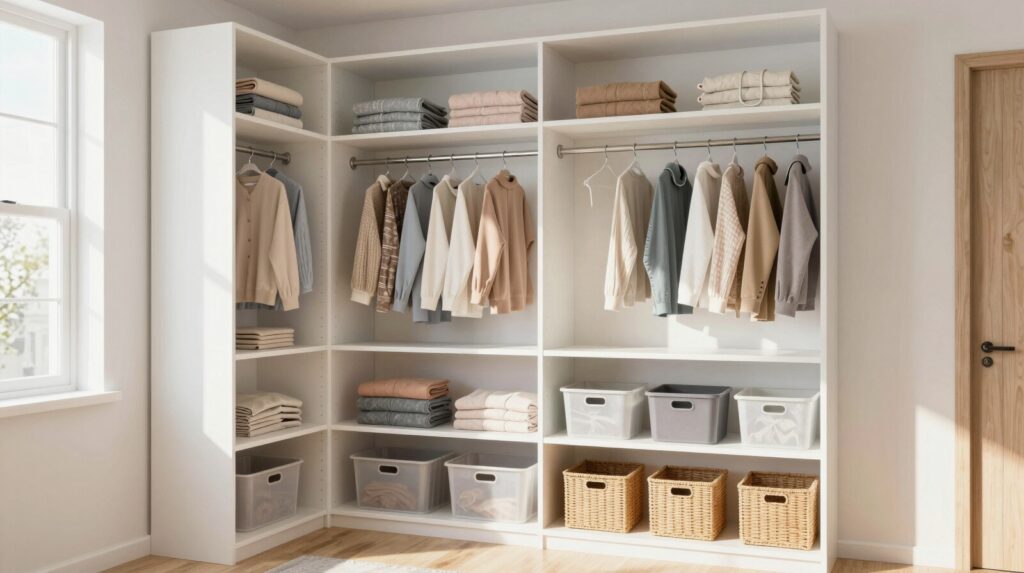
You’ve got this. Start by measuring your closet and pulling everything out, yeah, everything, to see what you actually wear. Toss duplicates and items you haven’t touched in a year. Then install double hanging rods and floating shelves to use that vertical space smartly. Add hooks inside your door, grab slim hangers, and organize by color for quick outfit picks. Monthly resets keep things tidy. There’s plenty more specific tricks to discover.
Map Your Closet Space Before Buying Anything
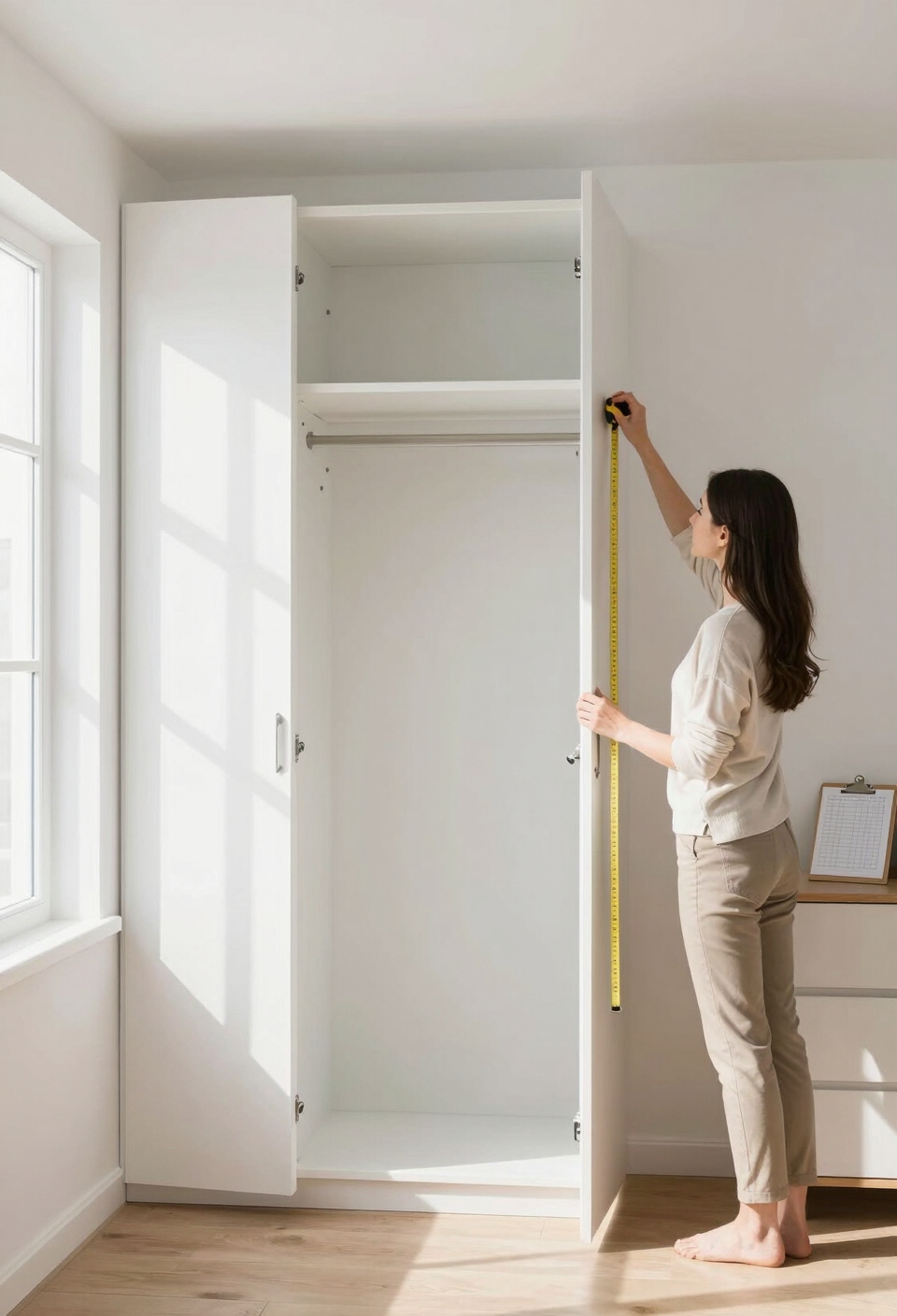
Before you buy a single shelf, hook, or bin, you’ll want to measure your closet space, and I mean really measure it. Grab a tape measure and note your width, depth, and height. This closet layout assessment prevents costly mistakes and wasted money.
Next, map out your actual space. Where does sunlight hit? How’s the ventilation? These details matter. Identify problem areas like awkward corners or low ceilings that’ll limit your organization options. Consider implementing adjustable shelving to work around these spatial constraints and adapt to your specific layout challenges.
Finally, think about what you’re storing. Do you have lots of hanging clothes or mostly folded items? Your space assessment should match your actual needs, not Pinterest dreams.
Remove What You Don’t Wear First
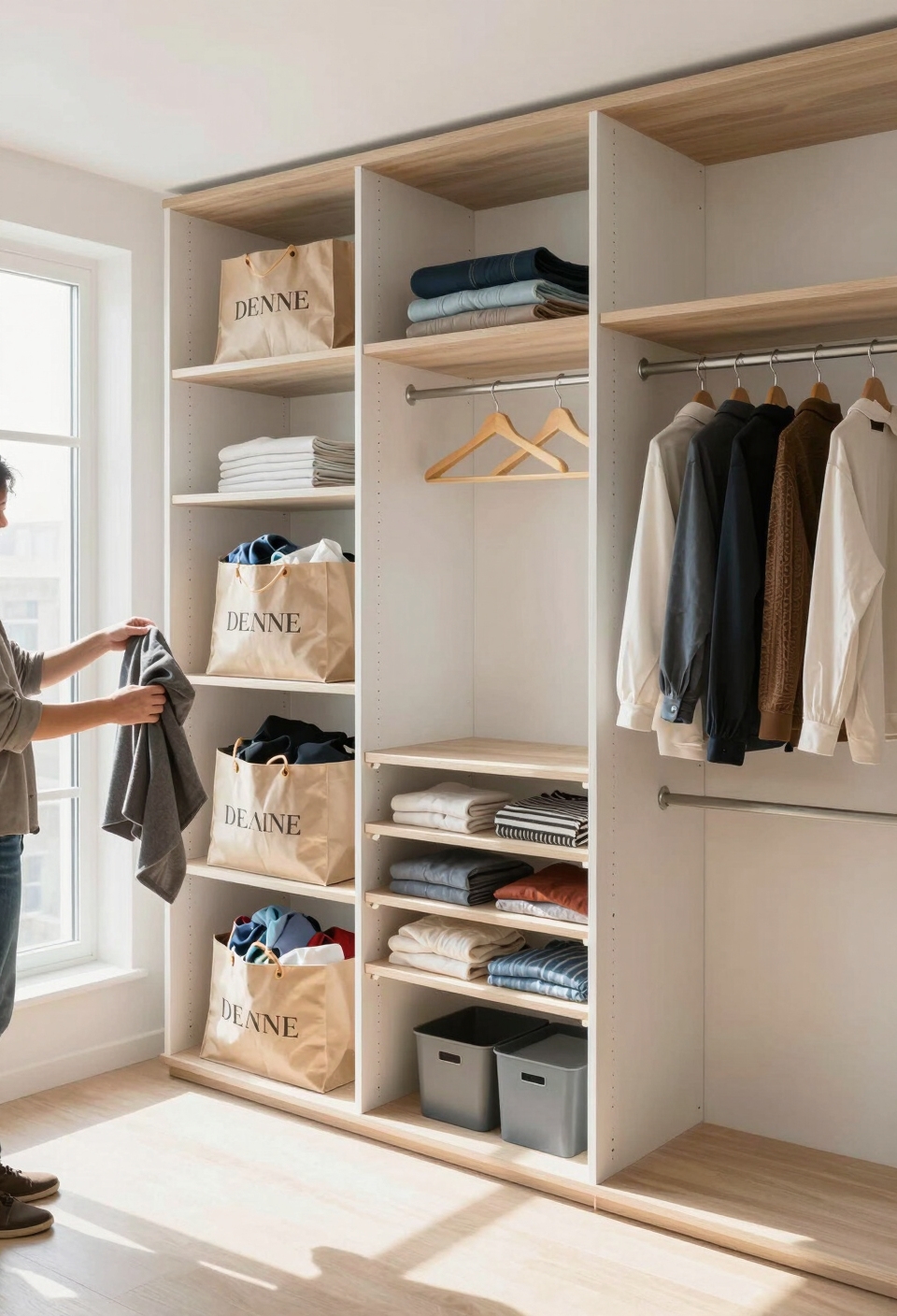
The next step, and honestly, the most important one, is to pull everything out and be honest about what you actually wear. Start your wardrobe assessment by trying things on; if you haven’t worn it in a year, it’s probably going. This declutter strategy saves space for pieces you’ll genuinely use.
Be ruthless. That sweater you’re keeping “just in case”? You’re not wearing it. Remove duplicates, items that don’t fit, and anything requiring excessive ironing. Your small closet’s real estate is valuable. Create a list of closet contents to track what you’re keeping and what goes, ensuring nothing gets lost in the process.
Don’t feel guilty. Donate usable items so someone else benefits. You’re creating room for your actual style, making getting dressed faster and easier.
Install Double Hanging Rods to Maximize Vertical Space
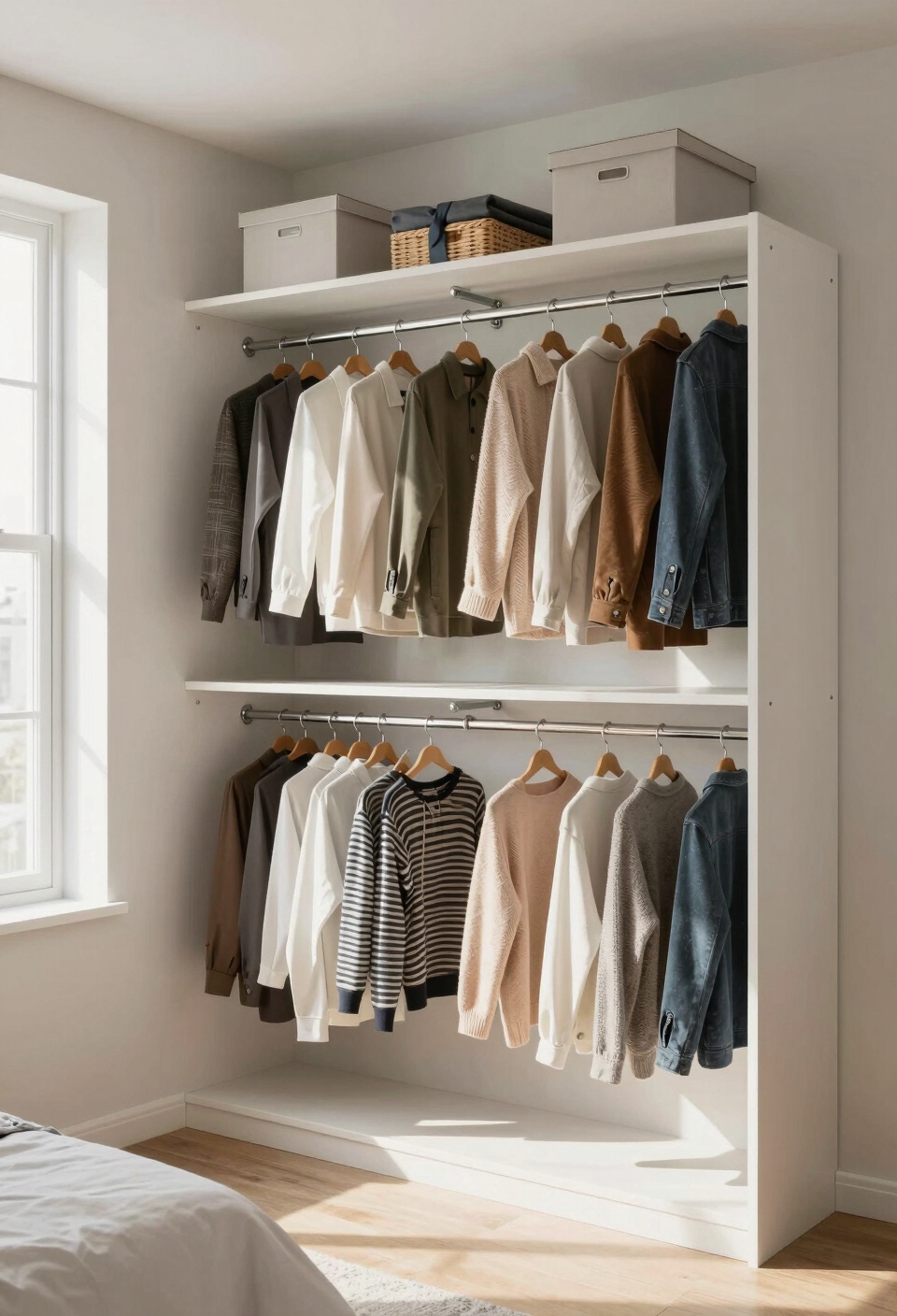
Once you’ve cleared out the items you don’t wear, it’s time to work smarter with your space by installing double hanging rods. This simple space optimization strategy doubles your vertical storage without taking up extra floor area. You’ll install a second rod about three feet below your existing one, creating two hanging levels instead of one. Short items like shirts and folded pants fit perfectly on the lower rod, while longer pieces like dresses and coats stay on top. This vertical storage approach transforms cramped closets into functional spaces where everything has its place, making getting dressed way easier. Pairing your double rods with slimline velvet hangers prevents garments from slipping and allows you to fit even more items on each level.
Choose Slim, Non-Slip Hangers to Save Space
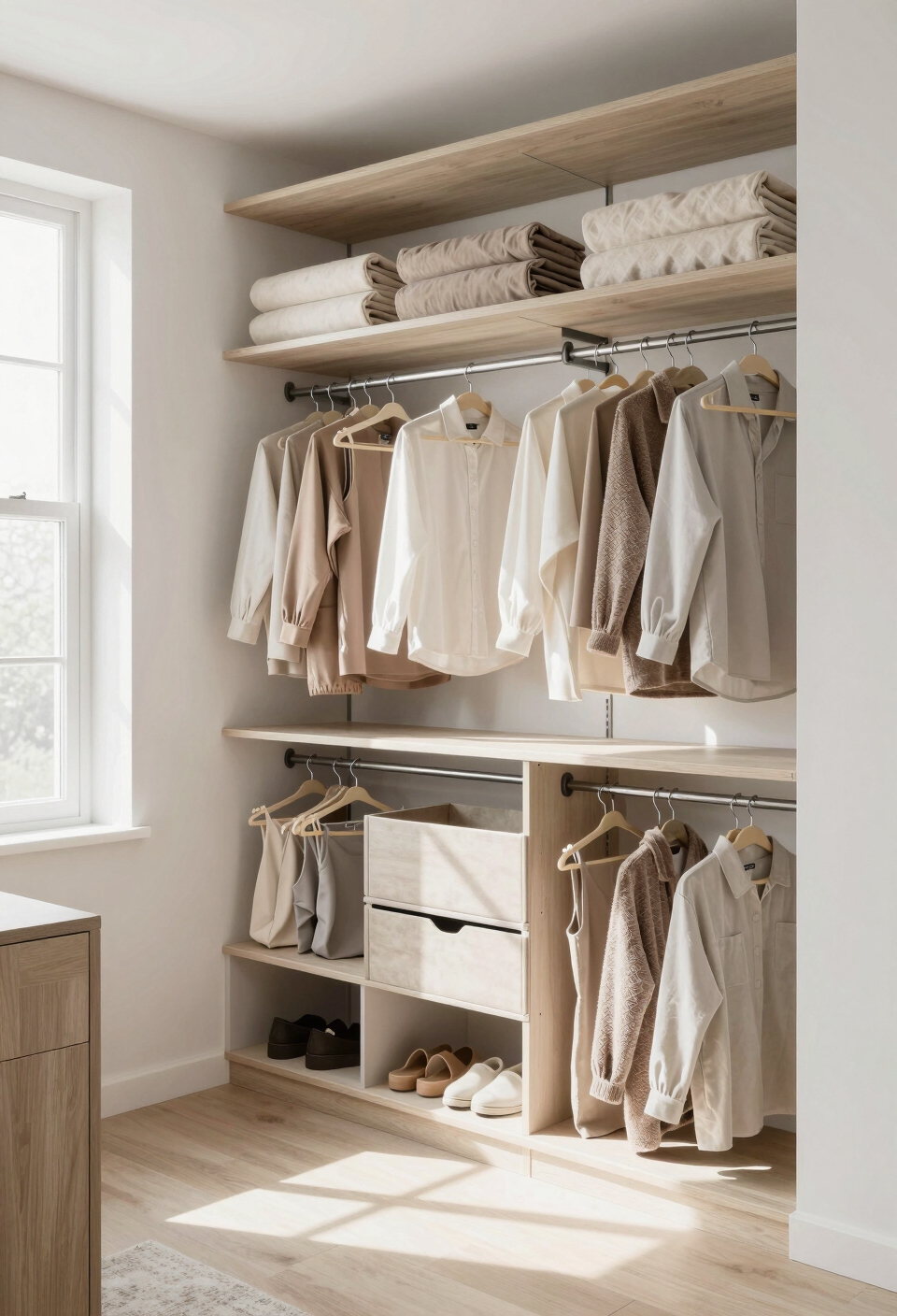
Installing those double rods gives you more space, but here’s the thing, what you hang them on matters just as much. Regular bulky hangers eat up valuable real estate and cause clothes to slip off constantly. That’s where slim design hangers come in. They’re narrower, taking up less room while holding your clothes securely.
Non-slip grip hangers prevent frustrating wardrobe disasters. They keep delicate fabrics, silky shirts, and lightweight pants exactly where you want them. You’ll stop chasing fallen clothes across your floor. These hangers cost slightly more, but they’re totally a smart choice for your small closet’s organization and your sanity. Pairing slim hangers with other smart storage solutions ensures your bedroom maximizes every inch of available closet space.
Add Floating Shelves Above the Closet Rod
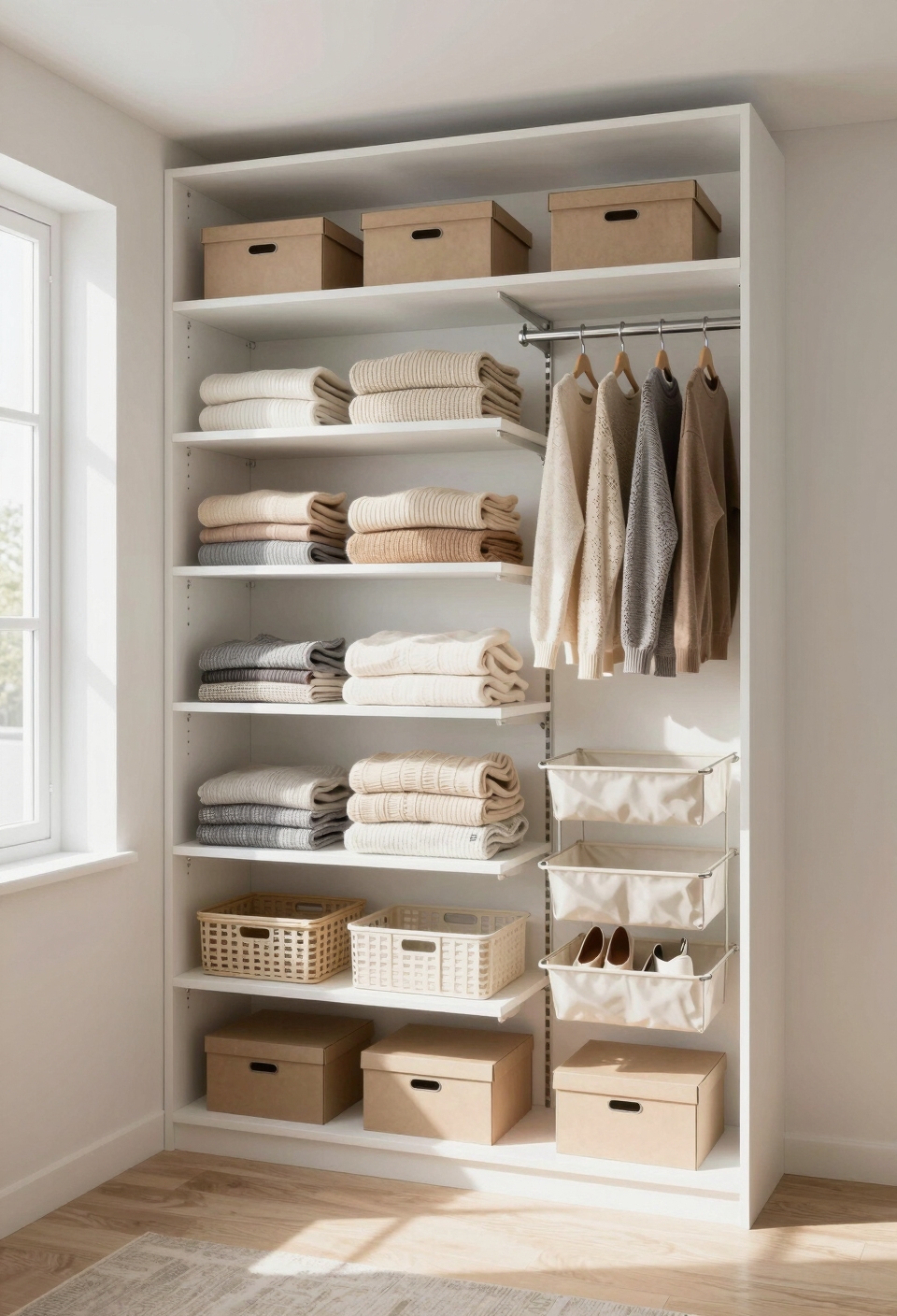
Vertical space is your secret weapon in a cramped closet, and floating shelves are the perfect way to claim it. Installing shelves above your closet rod gives you real estate for folded items, shoes, or seasonal storage without eating floor space.
Consider floating shelf materials carefully, wood offers warmth, while metal provides durability and a modern look. Aim for shelves about 12-18 inches above your rod, giving you breathing room for hangers below.
Your shelf placement strategies matter too. Group similar items together, keeping heavier things on lower shelves for safety. Drawer and shelf dividers can further enhance organization by compartmentalizing your stored items. This simple addition transforms wasted overhead space into functional storage that actually works.
Use Shelf Dividers to Keep Folded Stacks From Toppling
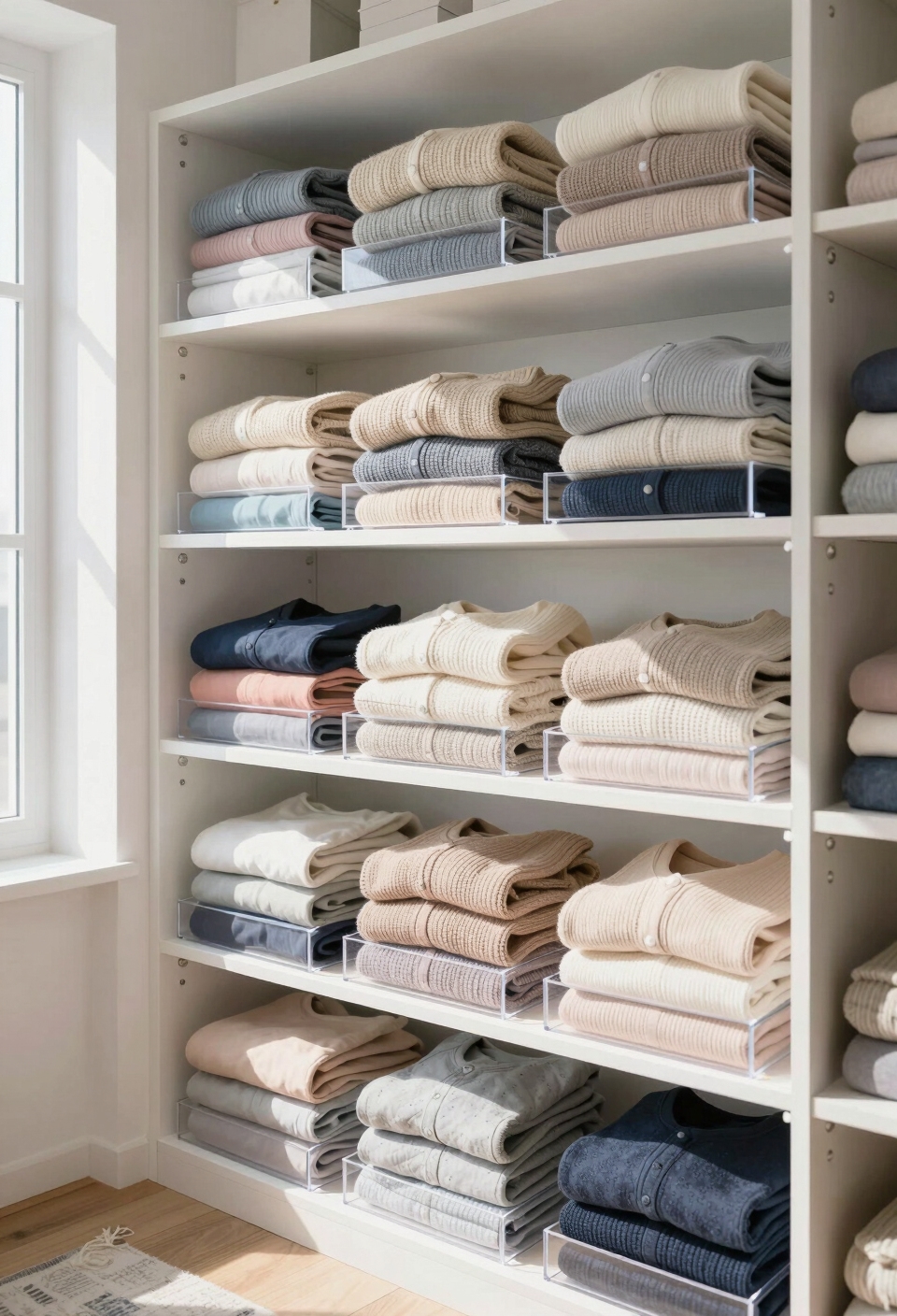
When you’ve got shelves packed with neatly folded clothes, they’ll eventually start leaning like the Tower of Pisa unless you’ve got something holding them up. Shelf dividers are your secret weapon here. These simple barriers, made from plastic, wood, or metal shelf materials, keep your stacks upright and organized. Use proper stacking techniques by placing dividers every four to six inches, then sliding your folded items between them. This setup prevents that annoying topple effect where one shirt falls and takes down your entire pile. You’ll appreciate how much easier it becomes to grab what you need without causing an avalanche.
Try Vacuum Storage Bags for Off-Season Clothes
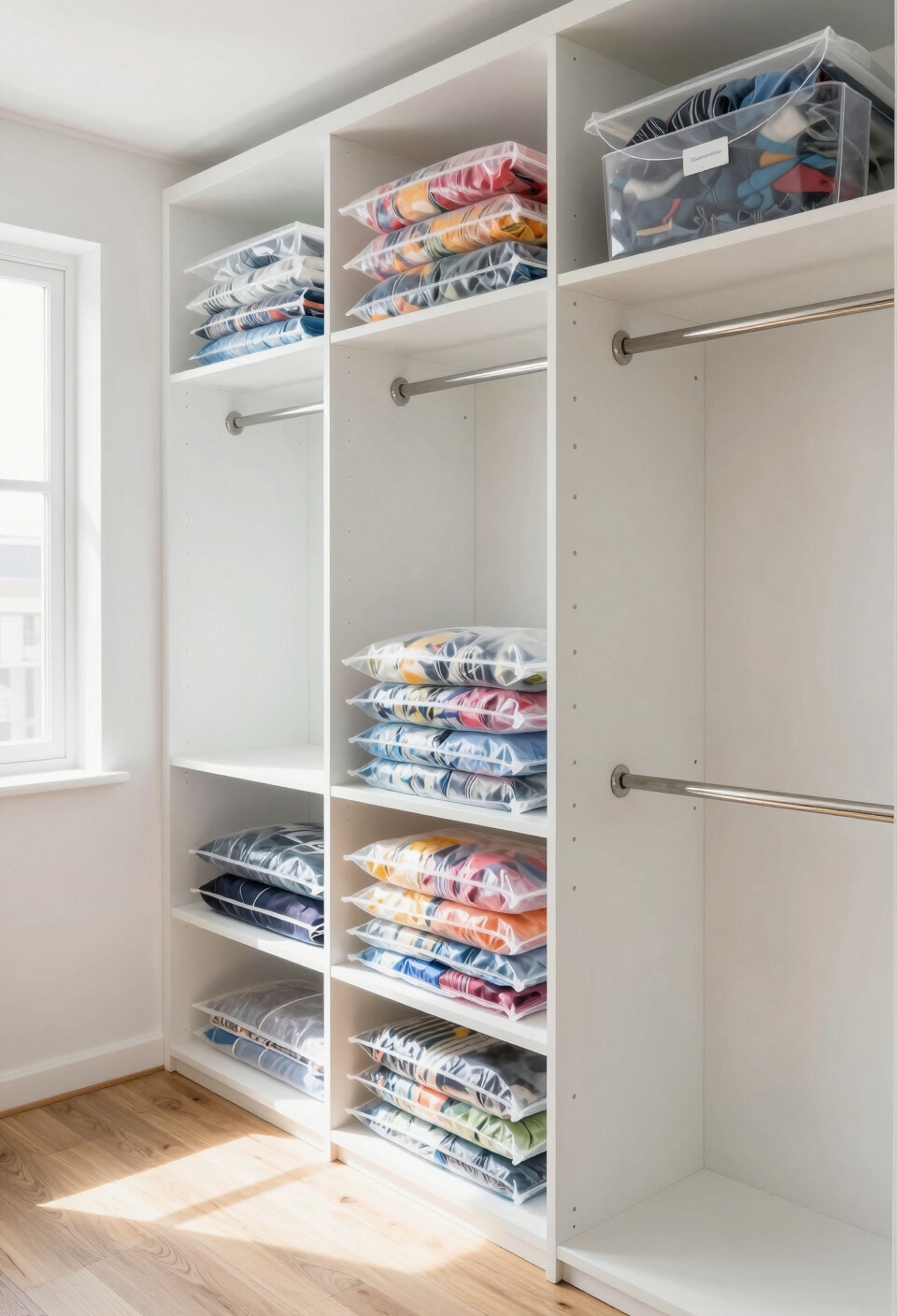
Because seasonal clothes take up way too much closet real estate, vacuum storage bags are a breakthrough for keeping winter sweaters and summer shorts out of your way. You’ll compress bulky items down to a fraction of their size, freeing up valuable shelf and hanging space for everyday wear.
Simply fold your seasonal storage clothes, place them in vacuum bags, and seal them tight. A regular vacuum cleaner sucks out the air, creating compact, flat packages you can stack under beds or tuck into upper shelves.
These vacuum bags protect your clothes from dust and moisture too, keeping everything fresh until next season arrives.
Hang Shoes on an Over-the-Door Organizer
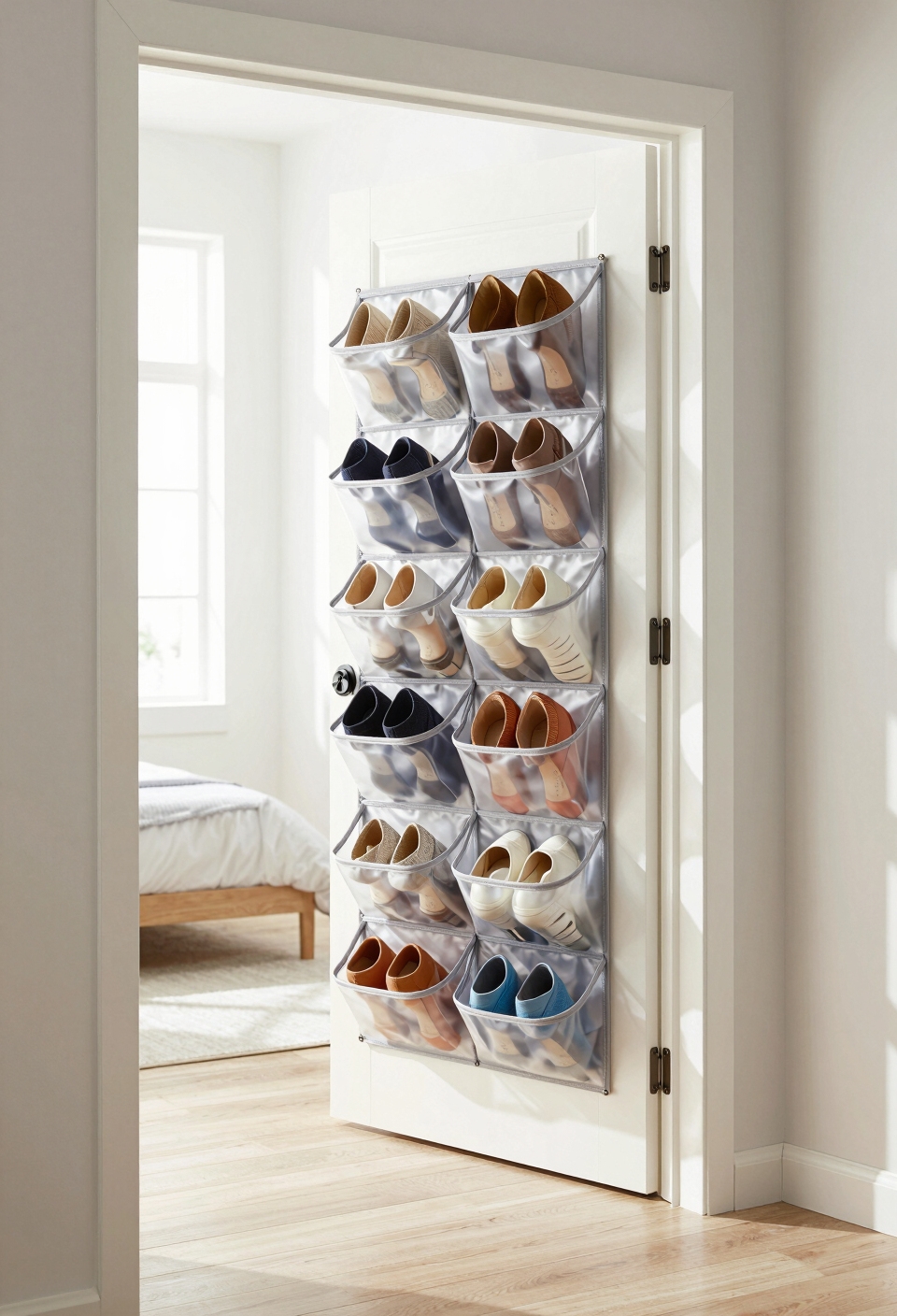
Now that you’ve tackled your seasonal clothes, let’s address another closet space hog: shoes. Over-the-door organizers are revolutionary for shoe organization, especially when floor space is tight. These clear-pocket holders hang easily on your closet door, storing twelve to twenty pairs depending on the organizer style. You’ll see every shoe at a glance, making mornings less chaotic. The best part? You’re using door space that’d otherwise sit empty. Installation takes minutes, just hang and fill. Your shoes stay protected from dust while staying accessible, and you’ve instantly freed up valuable closet floor real estate for other storage needs.
Use Clear Storage Bins to See Everything at a Glance
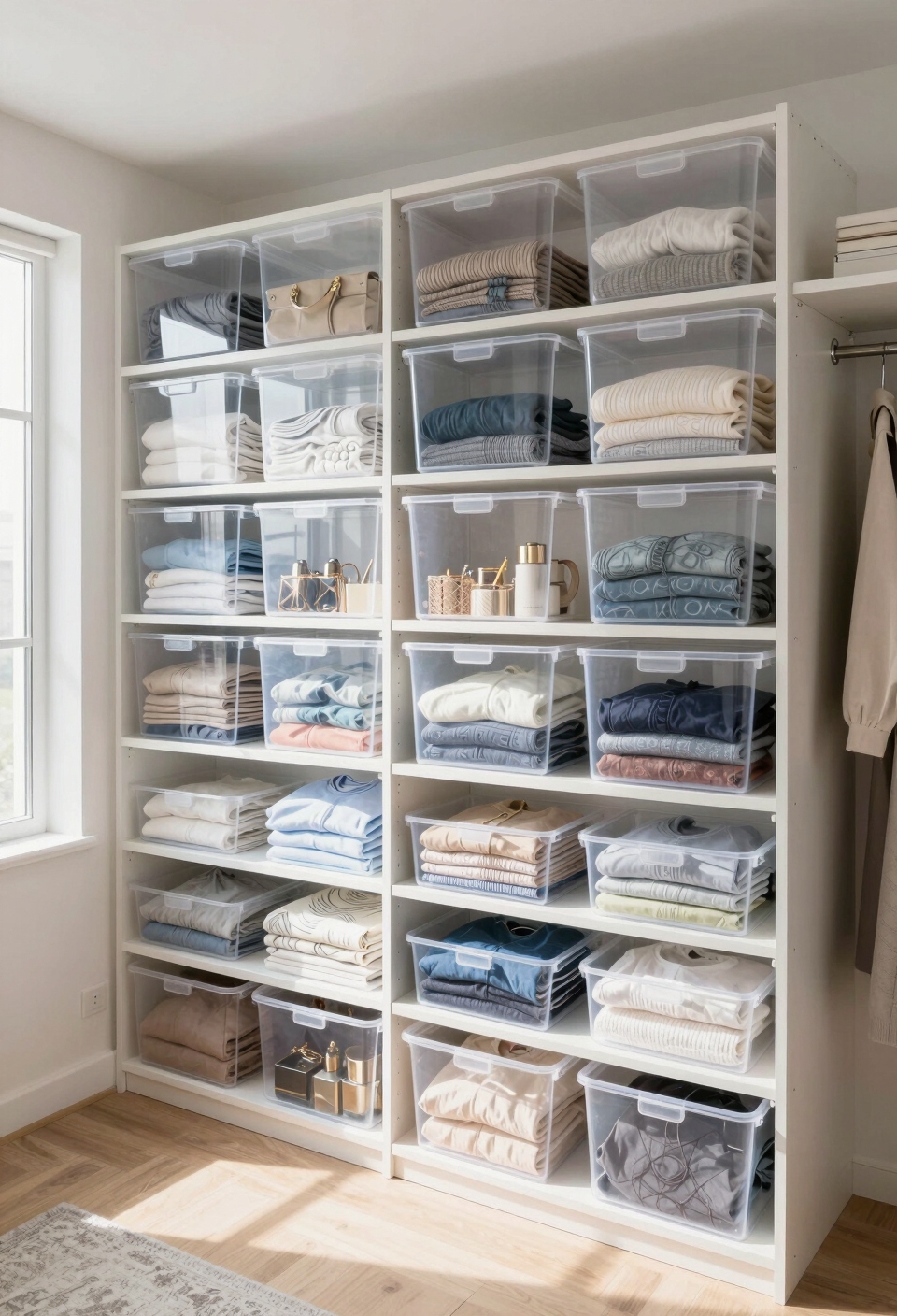
If you’ve still got items crammed into opaque boxes where you can’t remember what’s inside, clear storage bins are your answer. These transparent containers give you clear visibility of sweaters, seasonal clothes, and accessories without opening a single lid. Stack them on shelves or under your bed, and you’ll instantly know what’s stored where. Label each bin by category, ”Winter Scarves” or “Summer Tops”, for organized storage that actually makes sense. You’ll spend less time digging through mystery boxes and more time getting dressed. Plus, clear bins maximize your small closet space while keeping everything visible and accessible.
Organize by Color to Find Items Faster
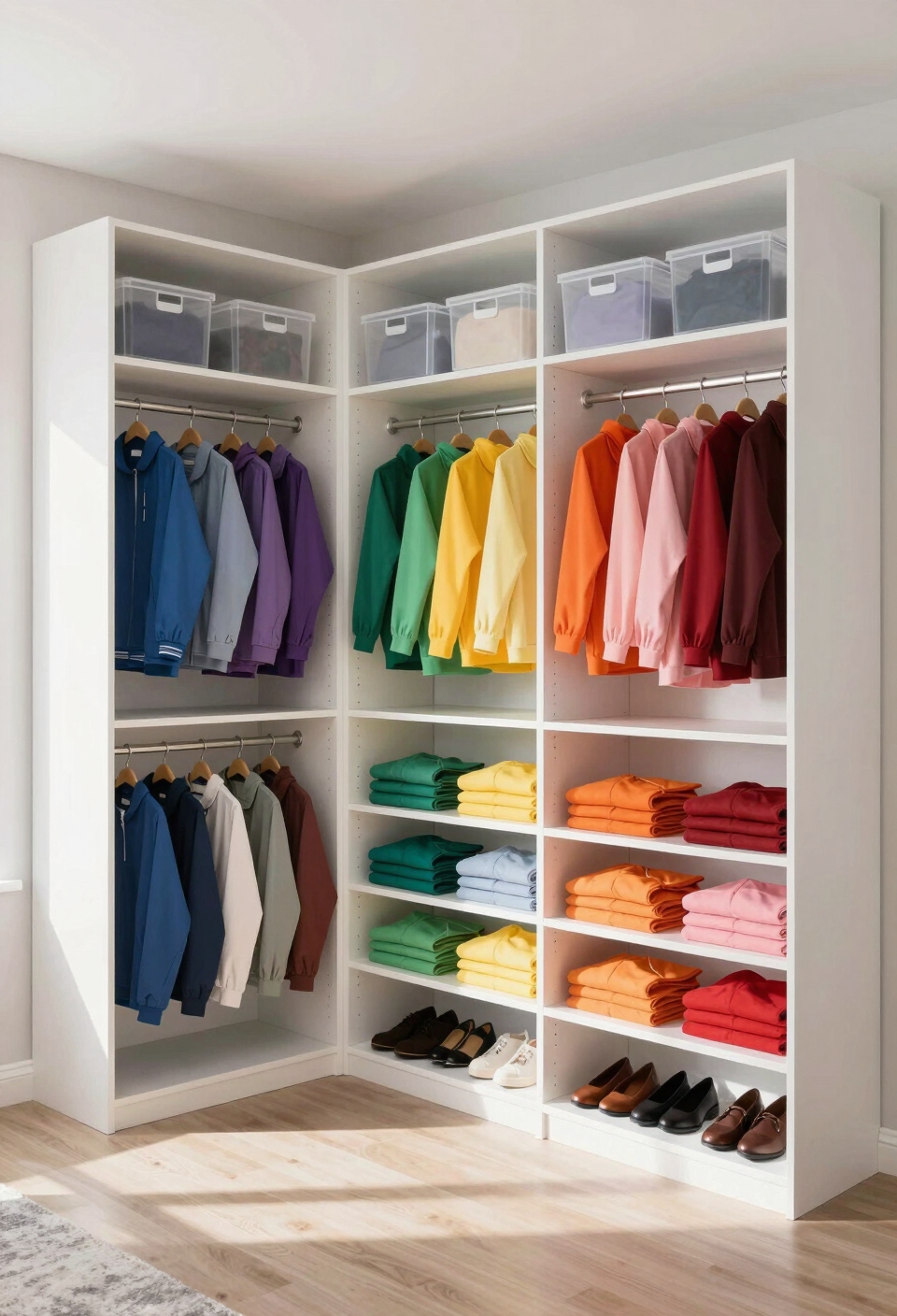
Once you’ve got everything visible in those clear bins, organizing by color makes finding your favorite outfit ridiculously easy. When your clothes are arranged by color coordination, you’ll spend less time digging through piles and more time getting ready.
Group similar hues together, all blacks, blues, whites, and neutrals in their own sections. This system enables faster retrieval since your brain naturally searches by color first. You’ll quickly spot that perfect shirt or sweater without shuffling through unrelated items.
Try grouping warm tones separately from cool tones if you want extra organization. This method works particularly well in small closets where space is tight and every inch counts.
Install Pull-Out Baskets for Easy Access
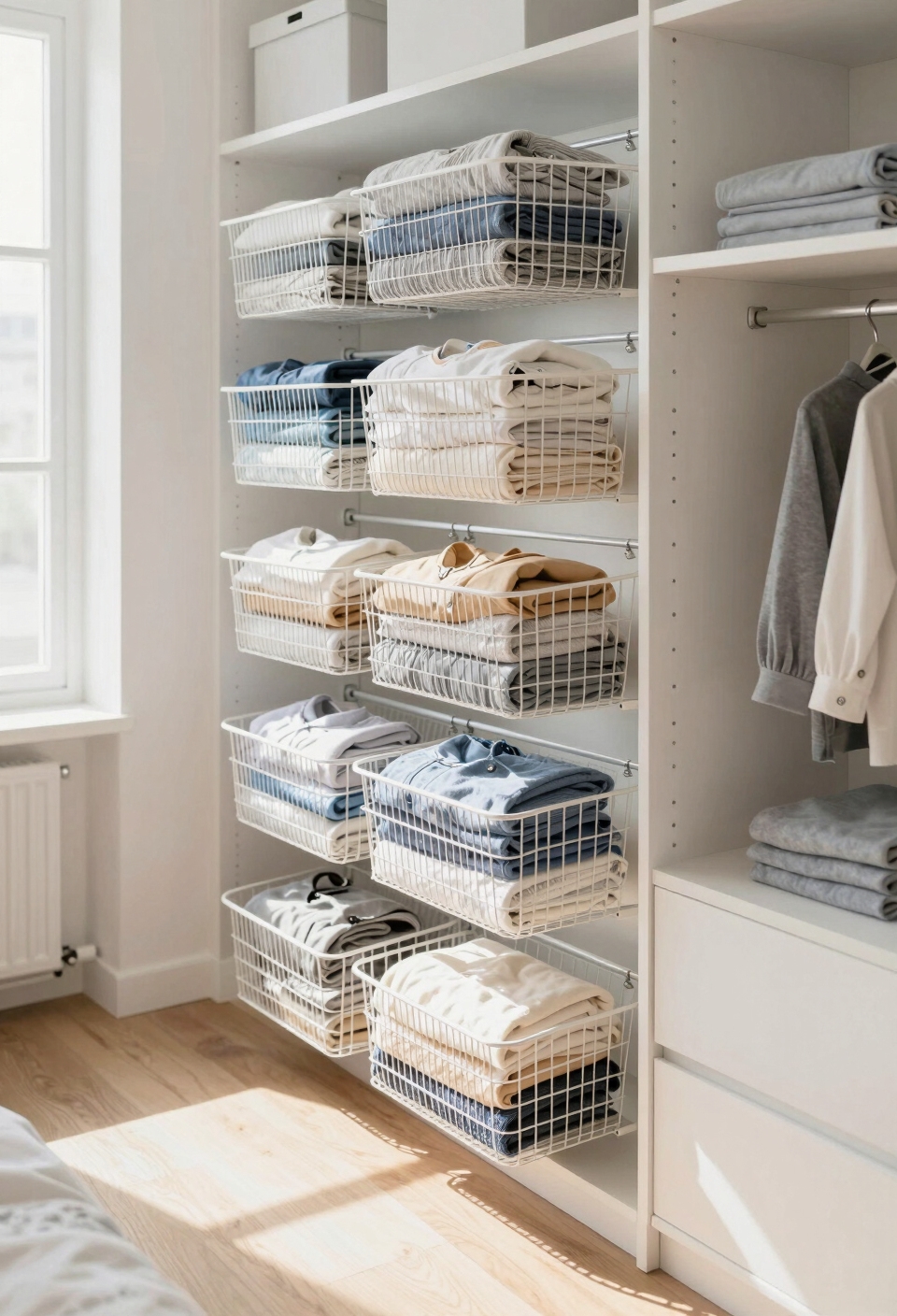
While color organization helps you spot items quickly, pull-out baskets take that convenience even further by keeping frequently used pieces within arm’s reach. You’ll love how easy organization becomes when everything slides right out toward you.
Pull-out storage transforms deep shelves into accessible zones. Install baskets on sliding rails so you’re not constantly reaching into dark corners, hunting for that one sweater. Standard 12-by-18-inch wicker or plastic baskets work great for most closets.
These baskets hold seasonal items, accessories, or workout clothes without taking up floor space. You’ll spend less time searching and more time getting ready. That’s the whole point, right?
Hang Scarves and Belts on Hooks or Rings
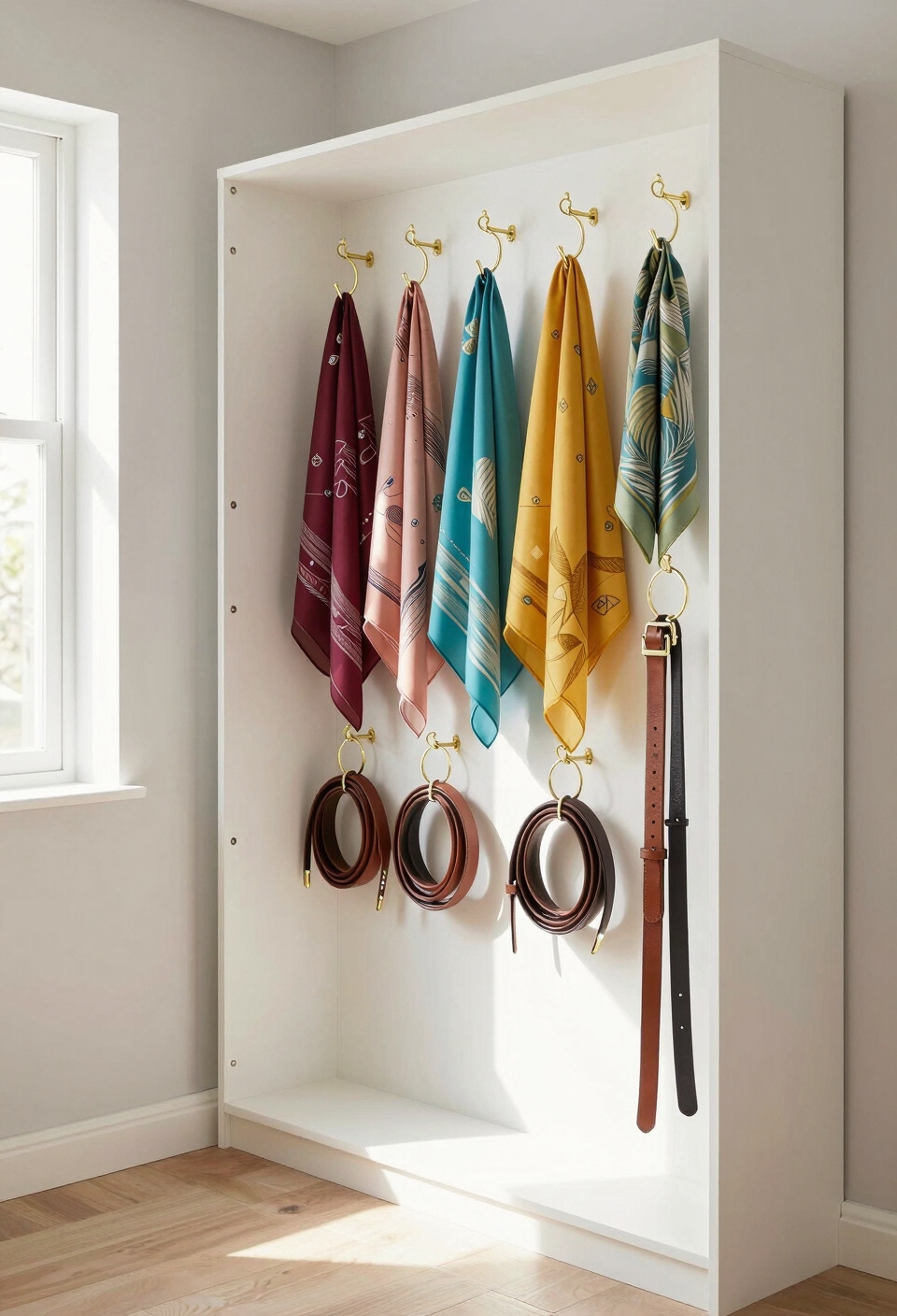
Scarves and belts are closet space-stealers that deserve their own dedicated spots. Instead of tangling them in drawers, you’ll want to hang them where you can actually see what you’ve got.
Install hooks or adhesive rings inside your closet door or on the wall. This scarf storage method keeps everything visible and accessible. You can hang scarves by looping them through rings, or drape belts over hooks.
For belt organization, try spacing hooks about six inches apart. This prevents tangling and makes getting dressed faster. You’ll spend less time searching and more time feeling organized.
Add a Tension Rod for Extra Hanging Space
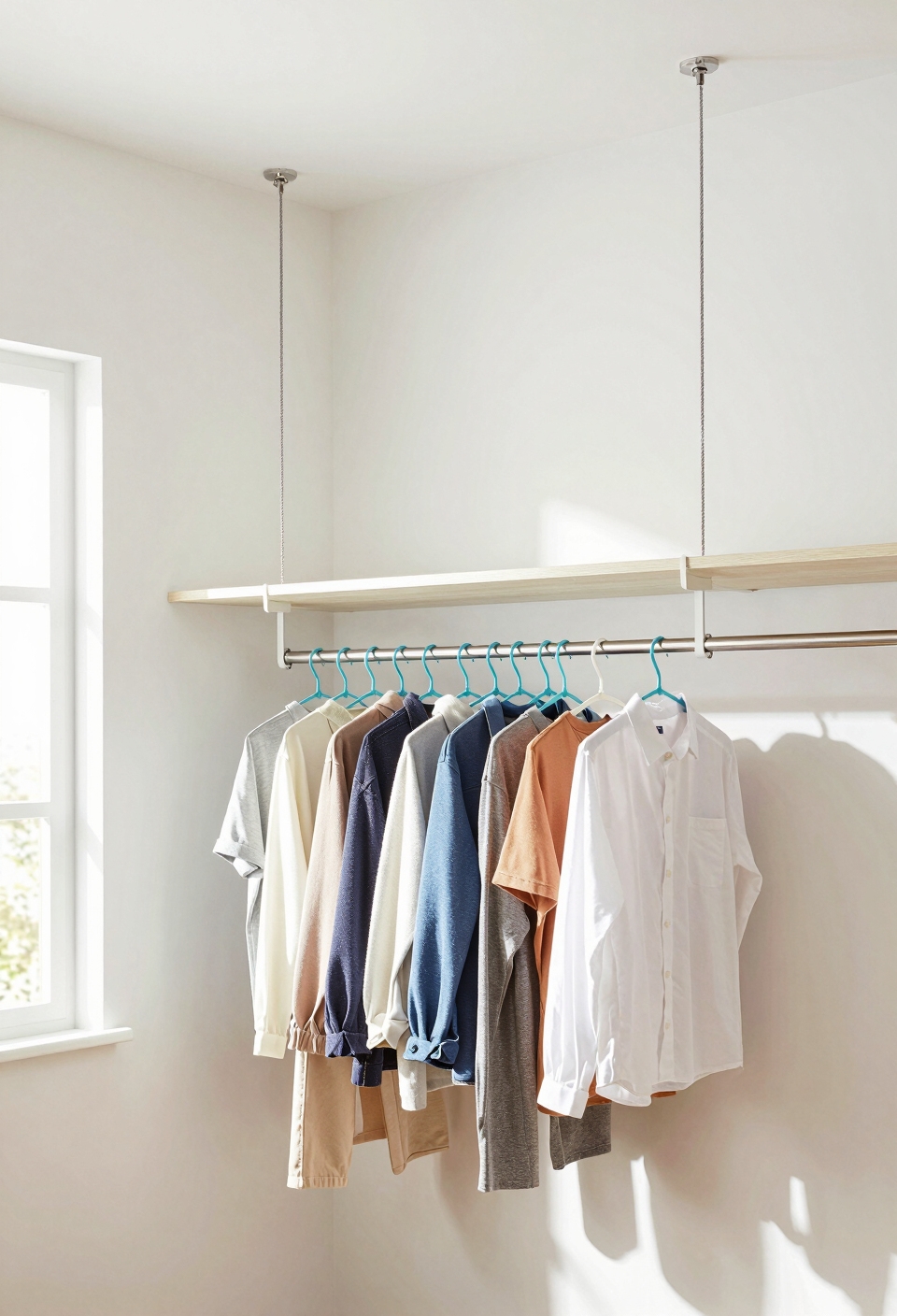
One simple addition can transform your closet’s hanging capacity: a tension rod. You can install it horizontally between two walls, creating an extra rail for lightweight items like tank tops, camisoles, or scarves. The tension rod benefits include affordable pricing and tool-free installation, no drilling required. Consider creative uses beyond clothes: hang belts, lightweight jackets, or even accessories. Position it at different heights to maximize your vertical space. This smart solution works particularly well in small closets where every inch counts. You’ll instantly gain valuable hanging room without permanent damage to your walls.
Use Drawer Dividers Inside Closet Drawers
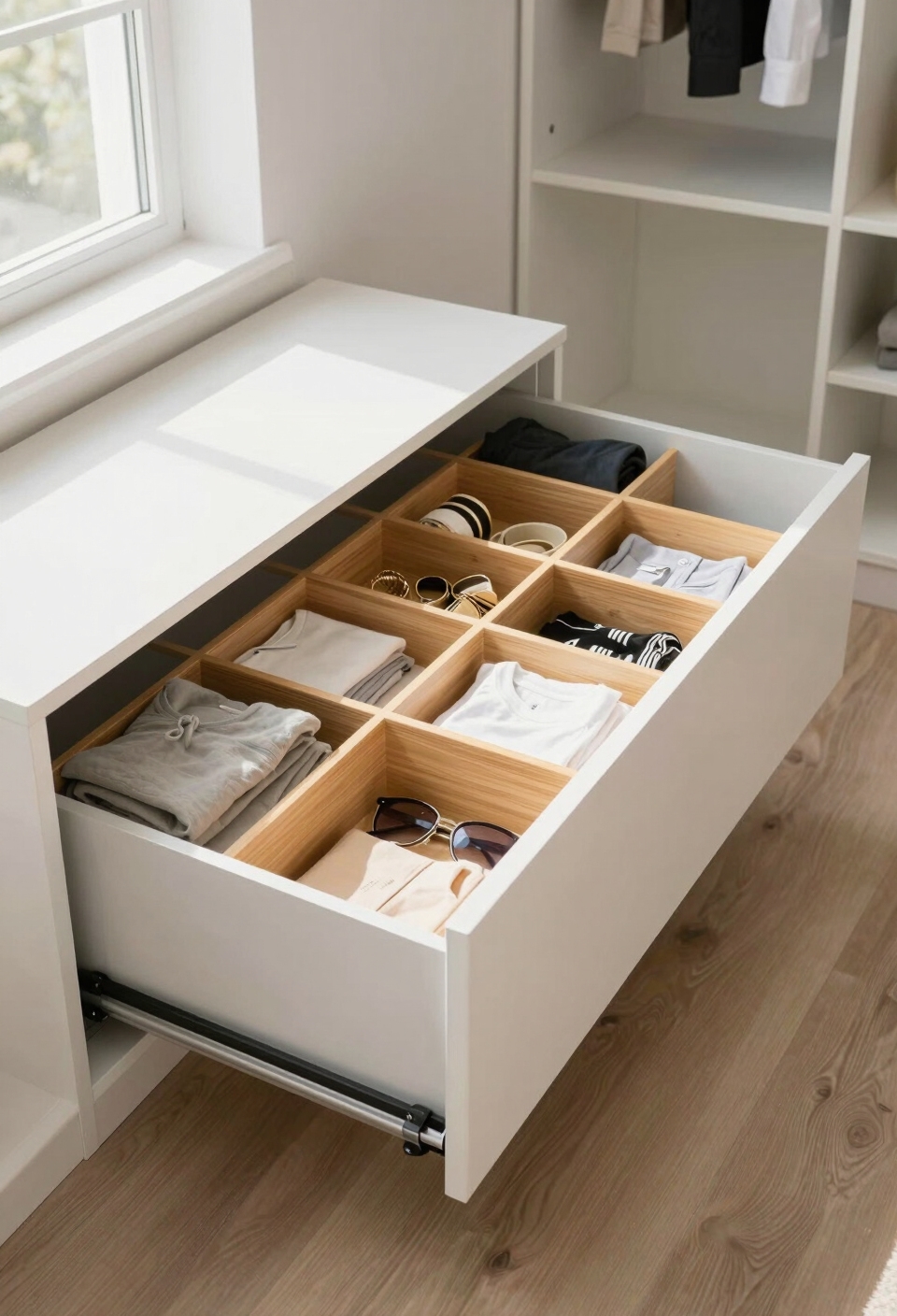
If your closet drawers’ve become a jumbled mess of socks, underwear, and accessories, drawer dividers can be a transformative solution. These simple organizers create designated sections for different items, making drawer organization straightforward and efficient.
You’ll find dividers in various materials, plastic, wood, or fabric, at affordable prices. Install them to separate socks from underwear, scarves from belts, and jewelry from hair accessories. This space management approach prevents endless searching when you’re getting dressed.
Dividers work especially well in deep drawers where items tend to shift around. You’ll maintain order longer and actually see what you own. Your mornings become simpler, and your closet stays functional.
Fold Clothes Vertically for Better Visibility
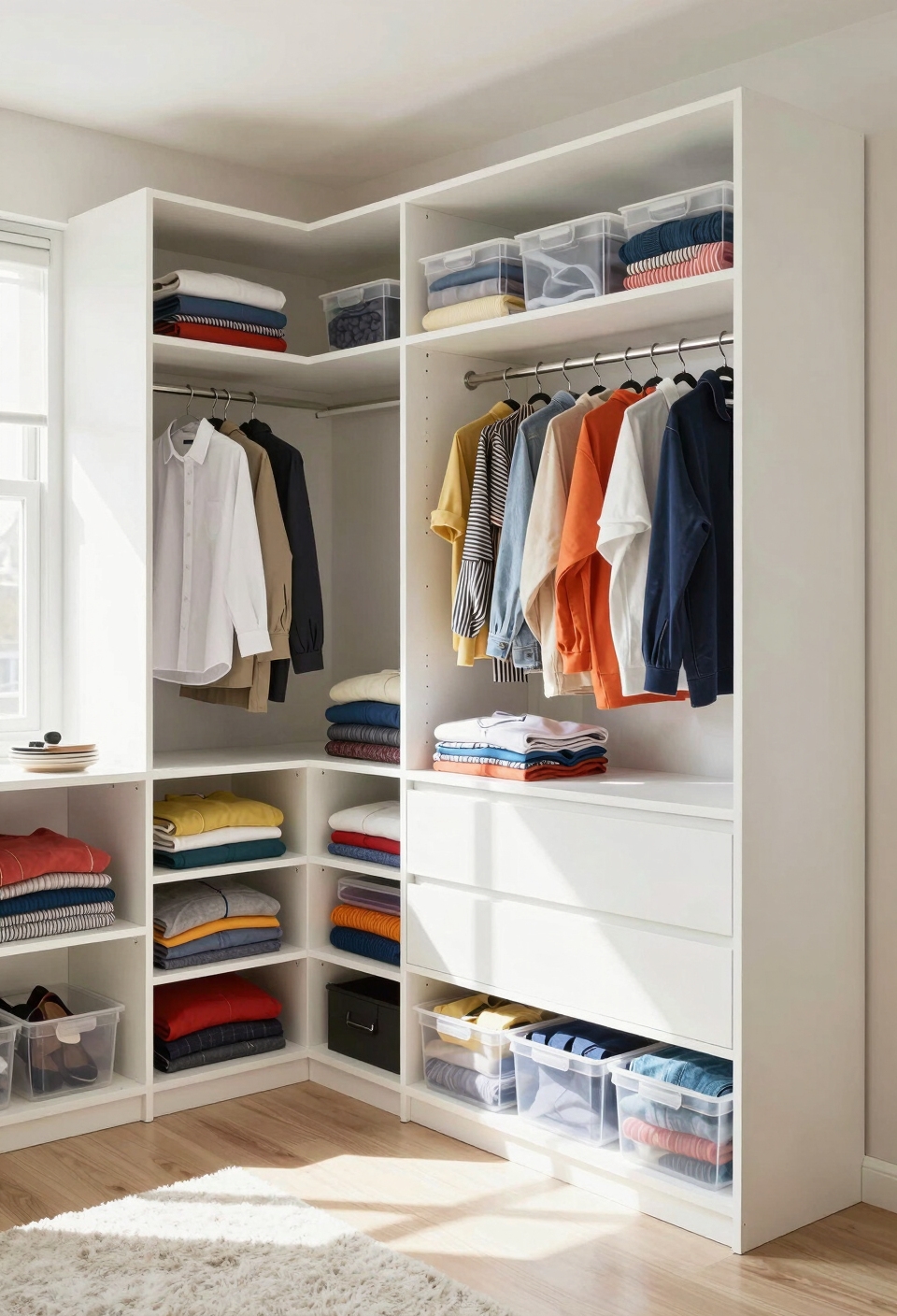
While drawer dividers keep small items organized, vertical folding transforms how you store clothes in tight closet spaces. Instead of stacking shirts in messy piles, you’ll fold them into compact rectangles that stand upright like files in a cabinet.
This vertical folding method dramatically improves clothing visibility. You’ll see every shirt, sweater, and pants option instantly without digging through layers. Stack folded items so the front faces outward, making identification easier.
You’ll fit nearly double the clothes in the same drawer space, which is a transformative element for small bedrooms. Plus, you’ll spend less time searching and more time actually getting dressed.
Label Everything So It Stays Organized
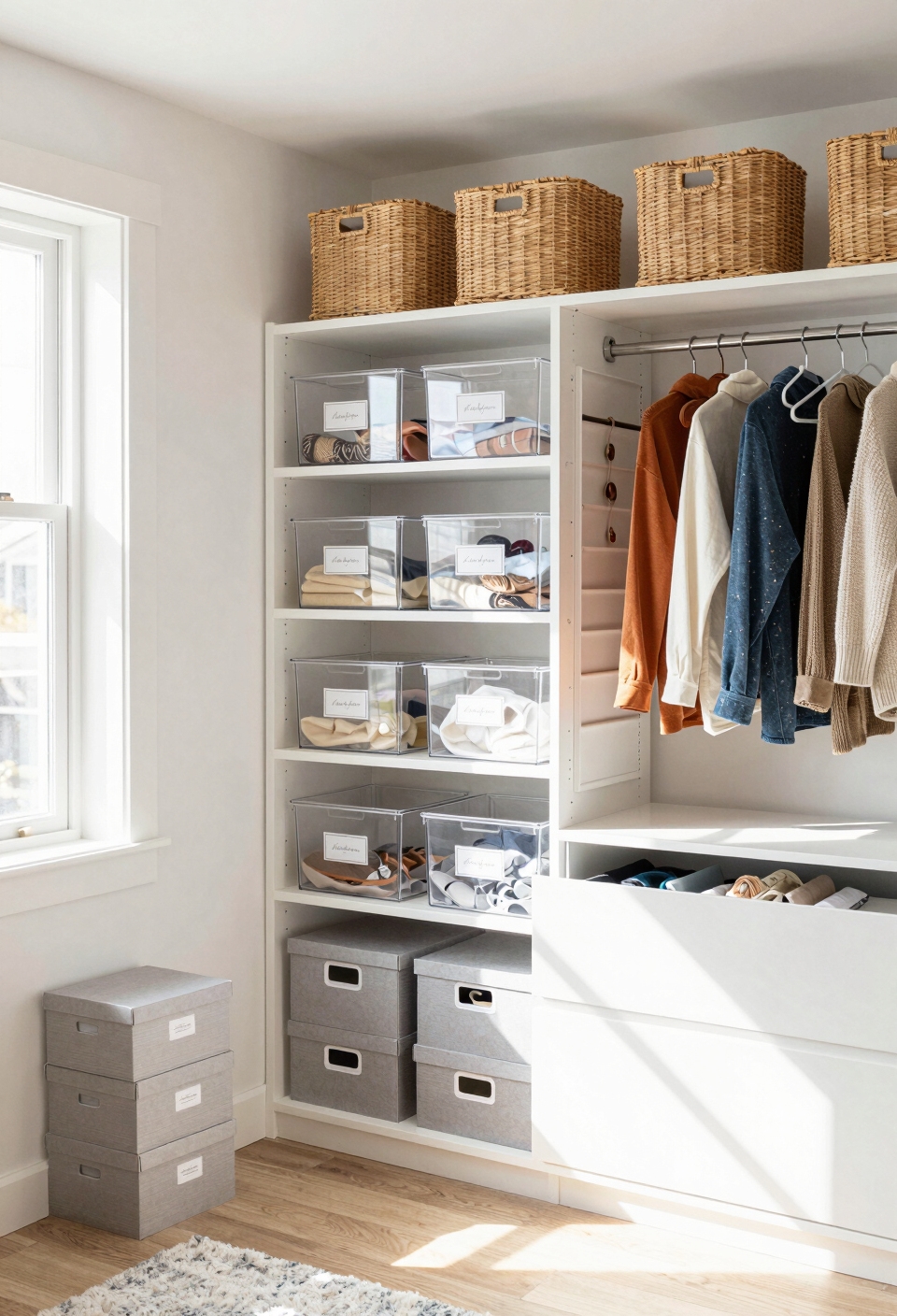
Labeling is your secret weapon for keeping everything in its place, especially when you’re working with limited closet space. You’ll want to use different label types, color-coded stickers, printed tags, or write-on labels, depending on what works best for you.
Create organized categories like “Work Shirts,” “Weekend Wear,” or “Workout Clothes.” This system prevents you from forgetting what you’ve stored on higher shelves or in bins. When you can quickly identify sections, you’ll spend less time searching and more time getting ready.
Label your shelves and storage boxes clearly. You’ll maintain your organization longer when everything has a designated spot and name.
Hang Jewelry and Accessories on the Inside Door
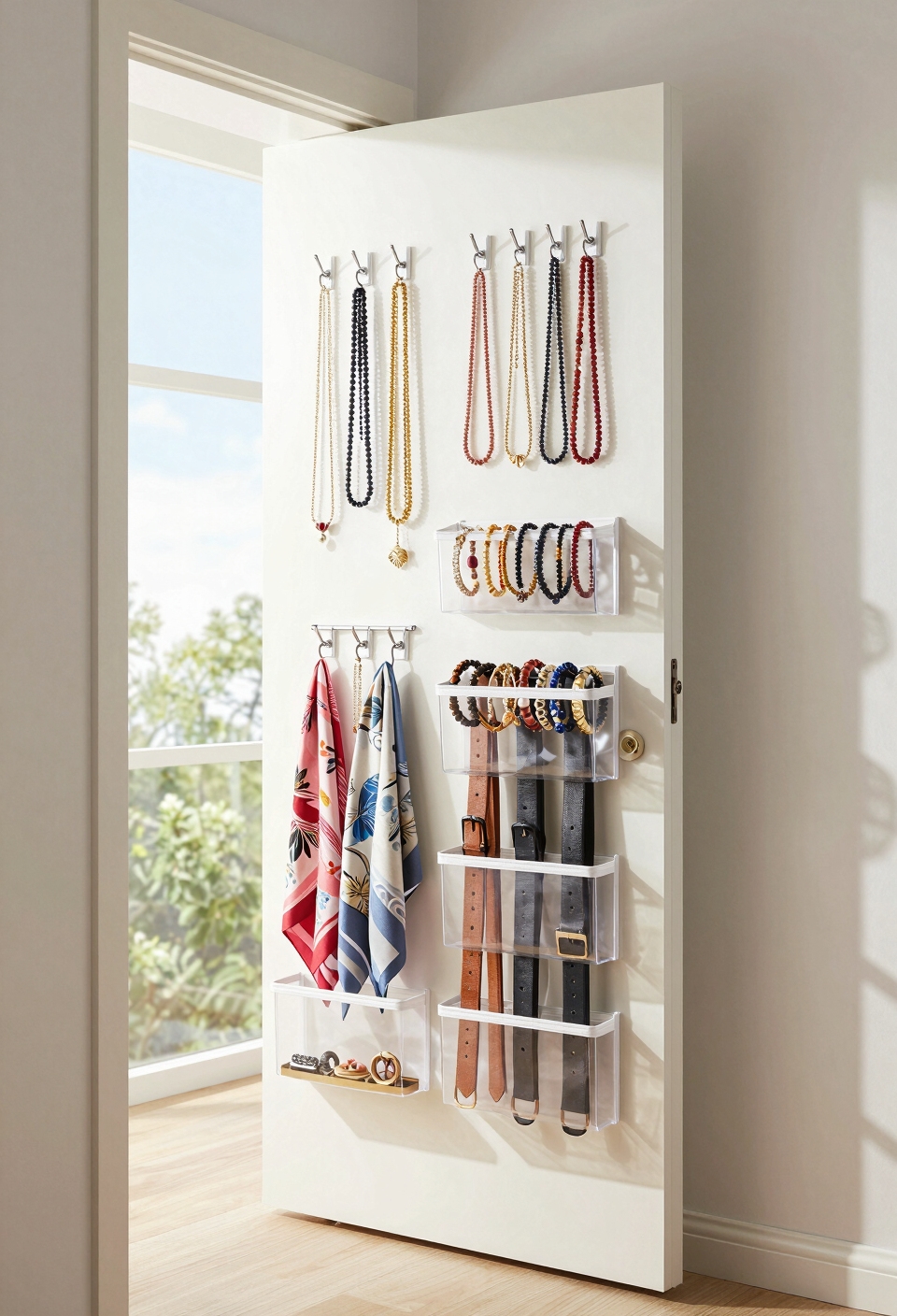
Your closet door’s inside surface is prime real estate that most people completely ignore. You’ve got valuable space just sitting there, waiting to help you. Install adhesive door hooks or a slim organizer to display your jewelry organization system. Hang necklaces, bracelets, and scarves on these hooks so you can see everything at once. This setup keeps accessories visible and prevents tangling. You’ll actually wear those pieces you forgot about. Small over-the-door racks work great too, offering multiple compartments for rings, earrings, and belts. It’s a simple solution that transforms wasted space into functional storage.
Don’t Waste Those Awkward Corners With Angular Shelving
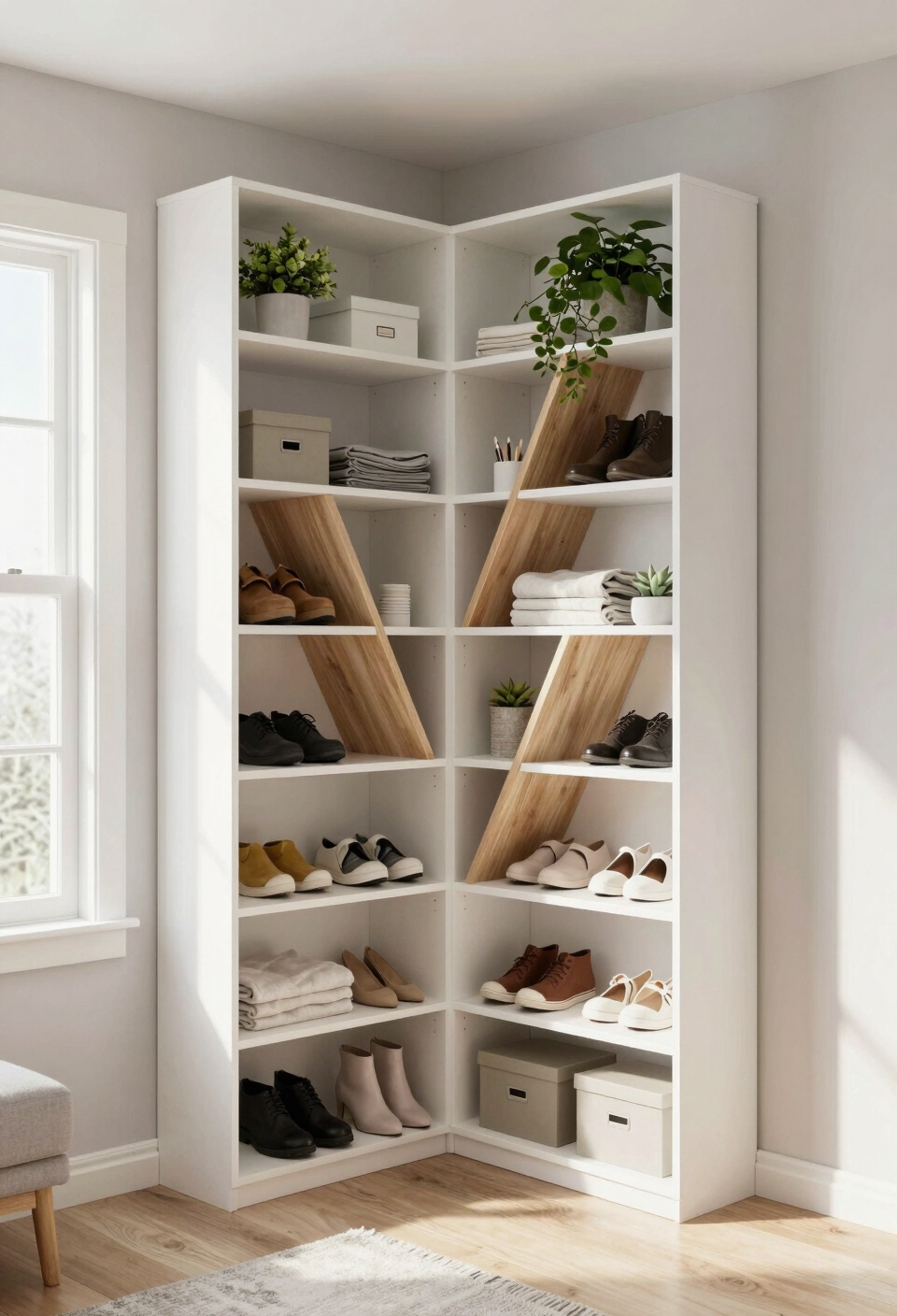
Once you’ve maximized that door space with hooks and organizers, it’s time to tackle the corners of your closet that seem to disappear into shadow. Angular shelving benefits are real, these L-shaped units fit snugly into tight spaces, giving you usable storage where straight shelves won’t work. Corner shelving ideas include angled designs that follow your closet’s geometry, turning wasted areas into functional zones. You can store seasonal items, shoes, or folded sweaters on these angular shelves. They’re typically made from wood or metal, fitting most closets without renovation. This approach maximizes every inch you’ve got, making small spaces suddenly feel bigger.
Assign One Spot for Pants, One for Tops, One for Dresses
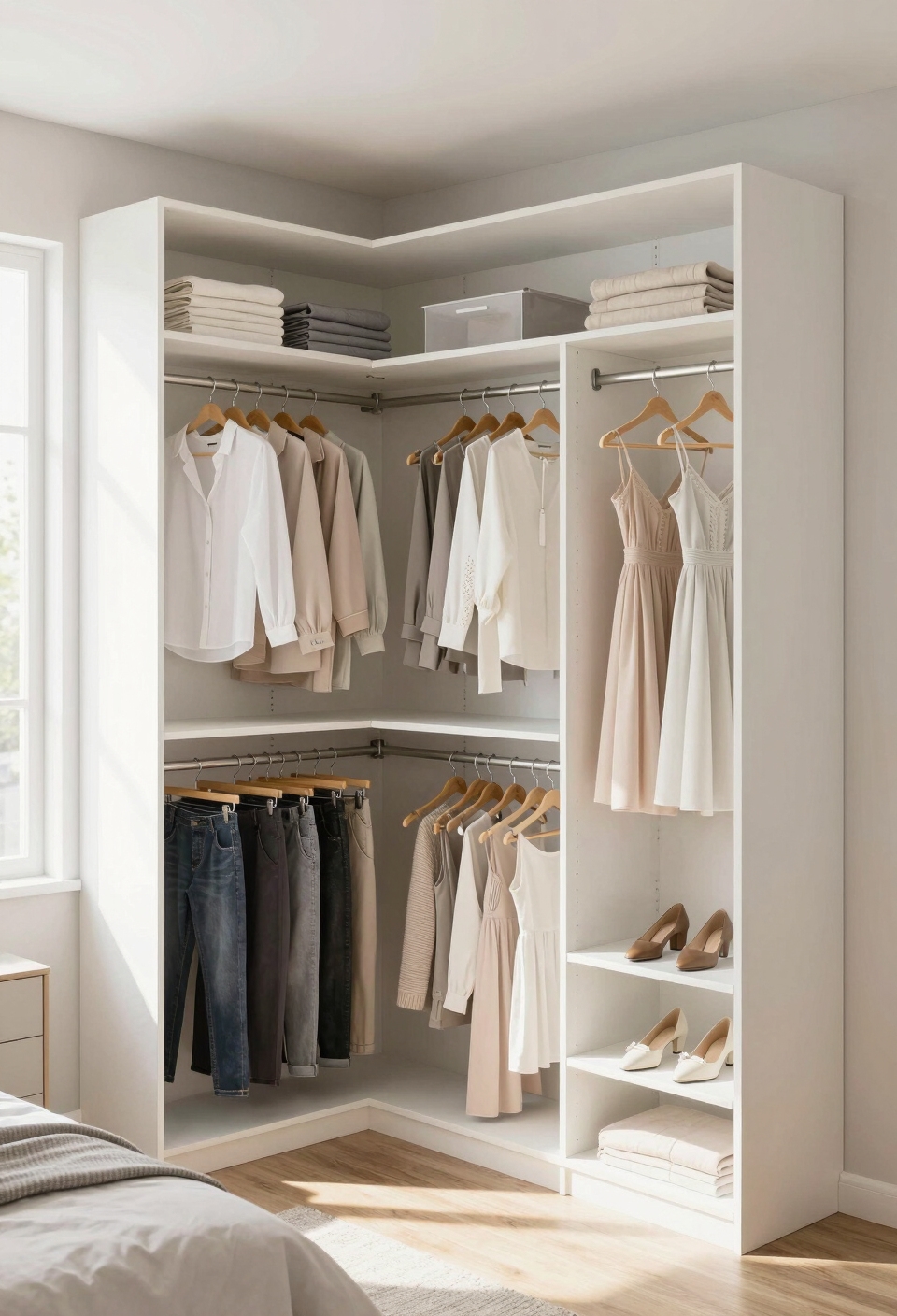
The best way to stop digging through your entire closet for one shirt? Create designated areas for different clothing categories. Assign one shelf or rod section specifically for pants organization, keeping them grouped by color or style. Your tops placement should occupy another dedicated zone, making outfit coordination seamless. Establish a separate dress storage area where all your dresses hang together. This efficient sorting system transforms how you get ready each morning. You’ll know exactly where everything lives, eliminating frustration. Small closets benefit most from this approach because you’re maximizing every inch while keeping clothing categories clearly separated and accessible.
Use Wall-Mounted Pegboards for Flexible Storage
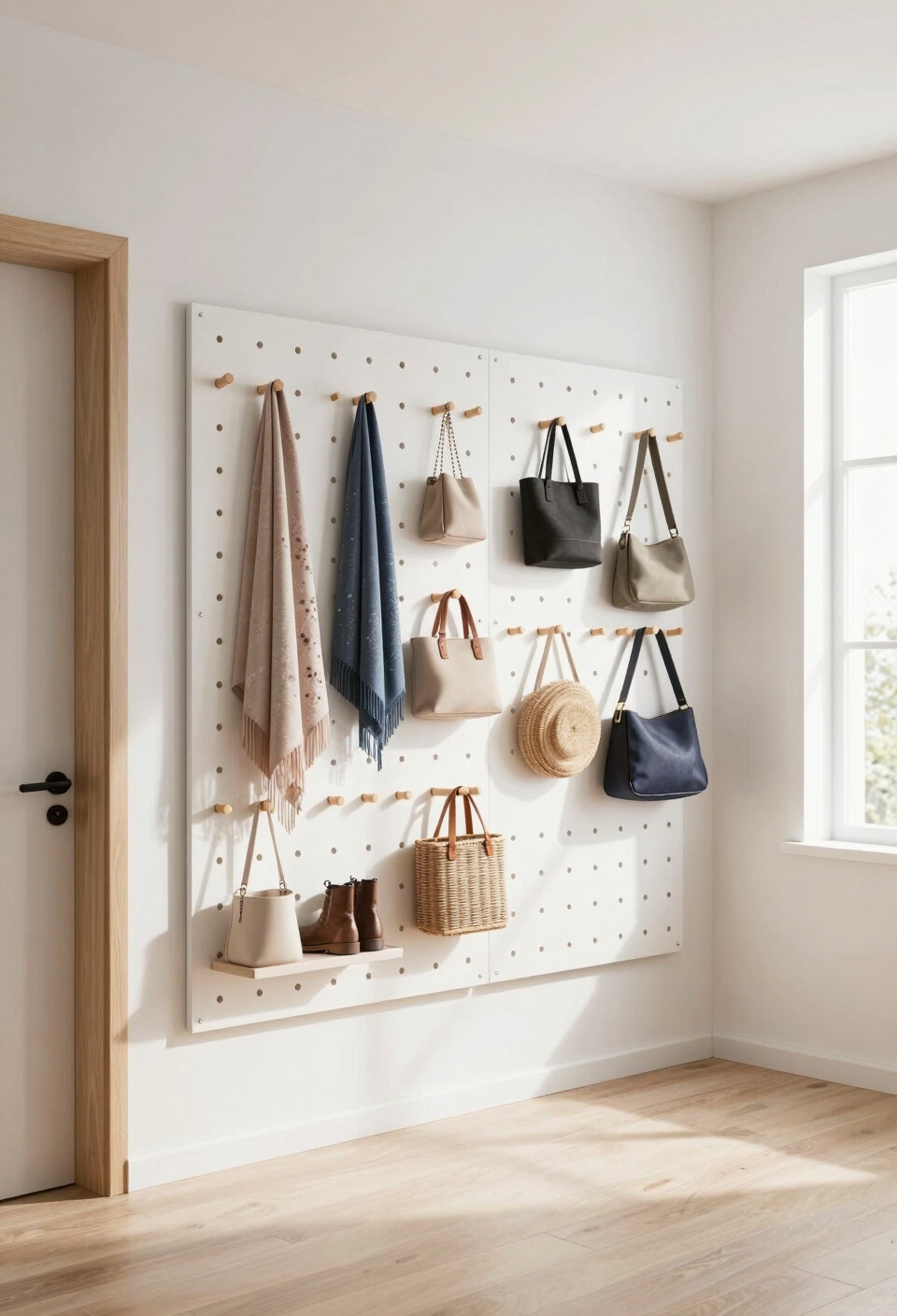
Wall-mounted pegboards give you flexibility that traditional shelves just can’t match. You’ll hang hooks, baskets, and shelves exactly where you need them, then rearrange whenever your storage needs change. This vertical organization maximizes your closet’s unused wall space without eating into floor area.
Pegboard designs come in various styles, wood, metal, or colorful options, so you’ll find something matching your room’s vibe. Start by installing one pegboard above your dresser or in a corner. Hang scarves, belts, bags, and accessories where you can actually see them. The beauty? You’re not locked into permanent decisions. Simply move pieces around as your collection grows or your preferences shift.
Stack Pants Neatly on Clip Hangers
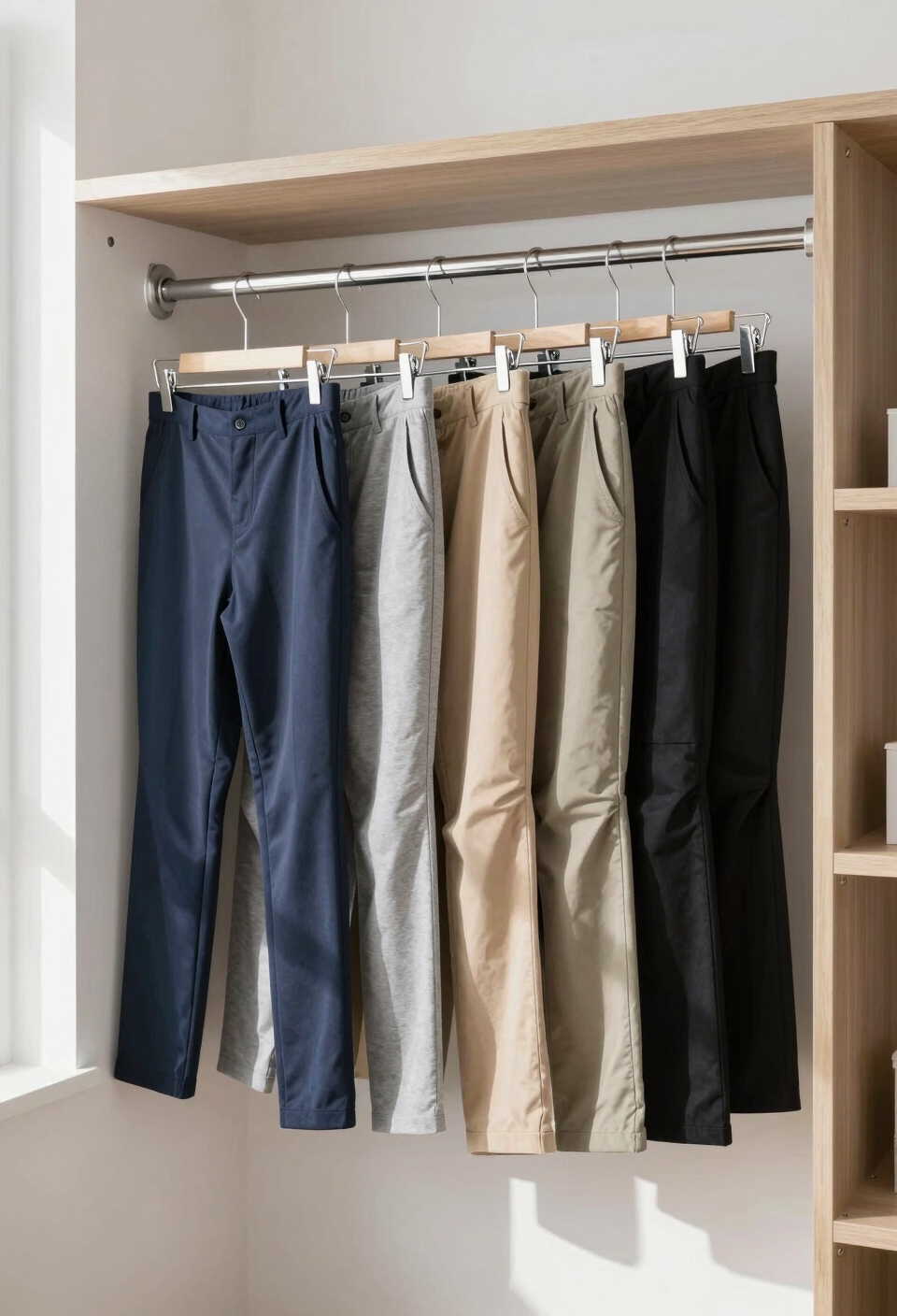
Clip hangers work wonders for pants, especially when you’re cramped for space and need every inch to count. You’ll find several clip hanger options available, from basic plastic to sturdy wooden versions, each holding two to three pairs vertically. This pants organization method saves considerable closet real estate compared to traditional hangers.
Start by grouping similar styles together: jeans, work pants, and casual wear. Clip each pair at the waistband, then hang them in rows. You can stack these hangers closely without damaging fabric. Lighter fabrics benefit from padded clip options, preventing creases and marks. This approach keeps everything visible and accessible while maximizing your limited closet space efficiently.
Store Off-Season Clothes in Under-Bed Containers
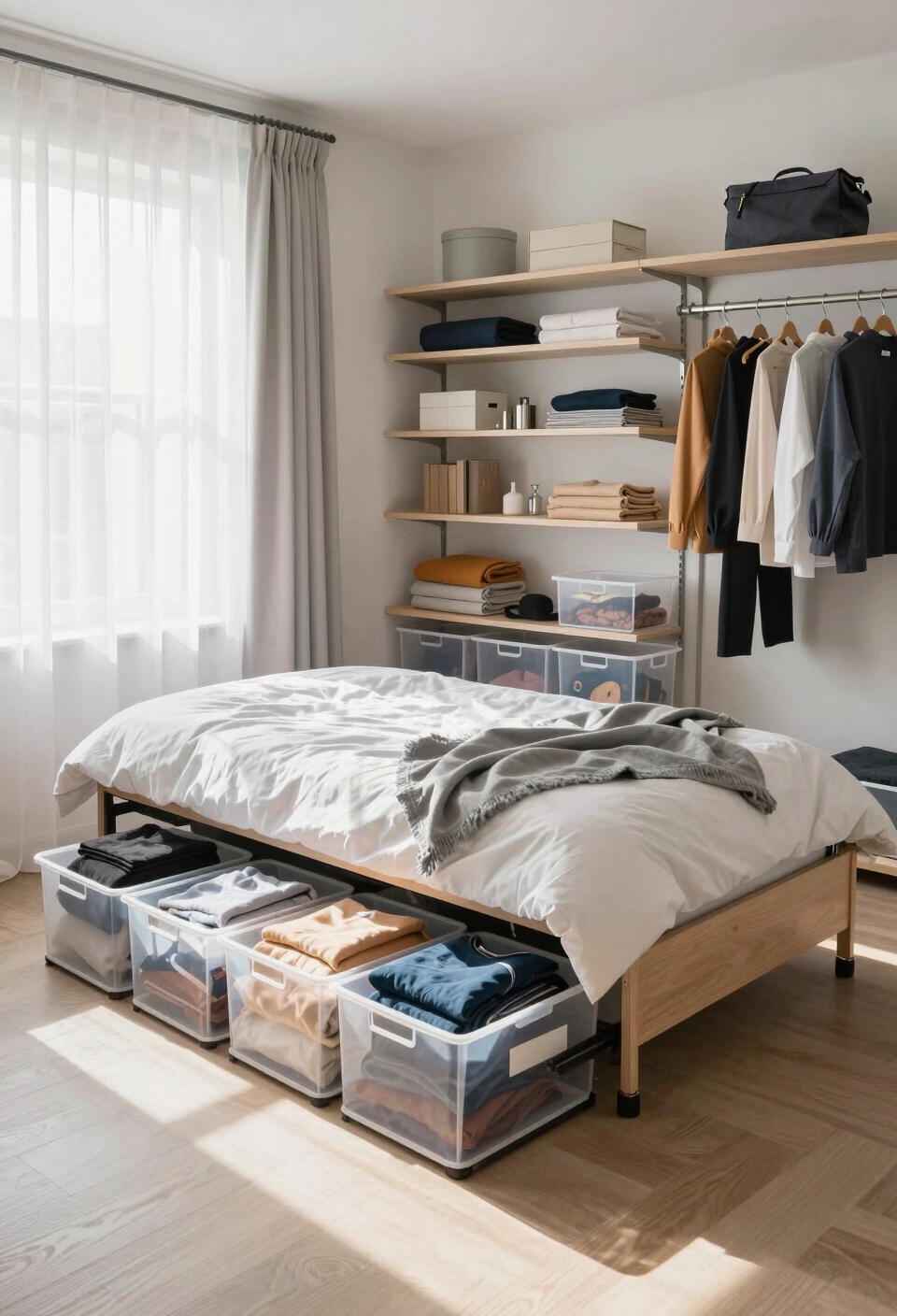
One of your closet’s best-kept secrets? Under bed storage. You’ve got valuable space hiding right underneath, perfect for seasonal rotation of clothes you’re not wearing now.
Grab some flat, clear containers, they’re transformative for under bed storage. Label them by season: “Winter Coats” or “Summer Dresses.” This way, you’ll know exactly what’s stored without digging around.
Clear containers let you see what’s inside without opening them. Stack heavy items on bottom, delicate pieces on top. Seasonal rotation becomes simple when everything’s organized and accessible.
You’ll free up closet space for current-season favorites while keeping off-season clothes protected and ready for their turn.
Install LED Lighting to See Your Whole Closet
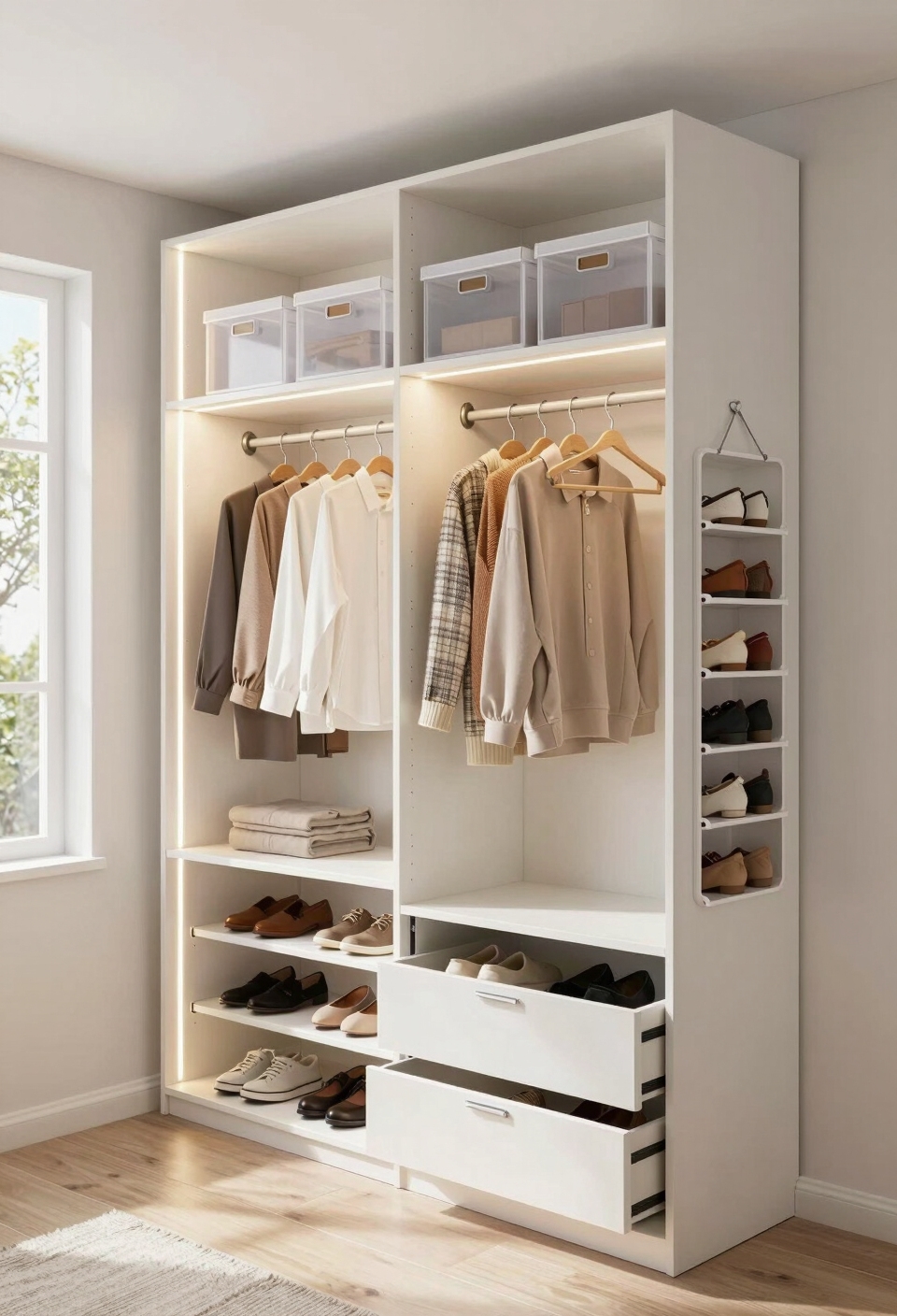
Now that you’ve organized what you’re storing, let’s focus on what you’re actually wearing, and that means you need to see it. Poor closet visibility makes getting dressed harder than it needs to be. Installing LED strip lighting along your shelves or rods solves this problem instantly. These energy-efficient lights brighten every corner, helping you spot colors and patterns easily. You’ll find that matching outfits becomes simpler when you’re not squinting in shadows. LED strips stick on with adhesive backing, requiring zero installation skills. They’re affordable, last years, and use minimal electricity. Better lighting transforms your closet from frustrating to functional.
Group Similar Items Together by Type
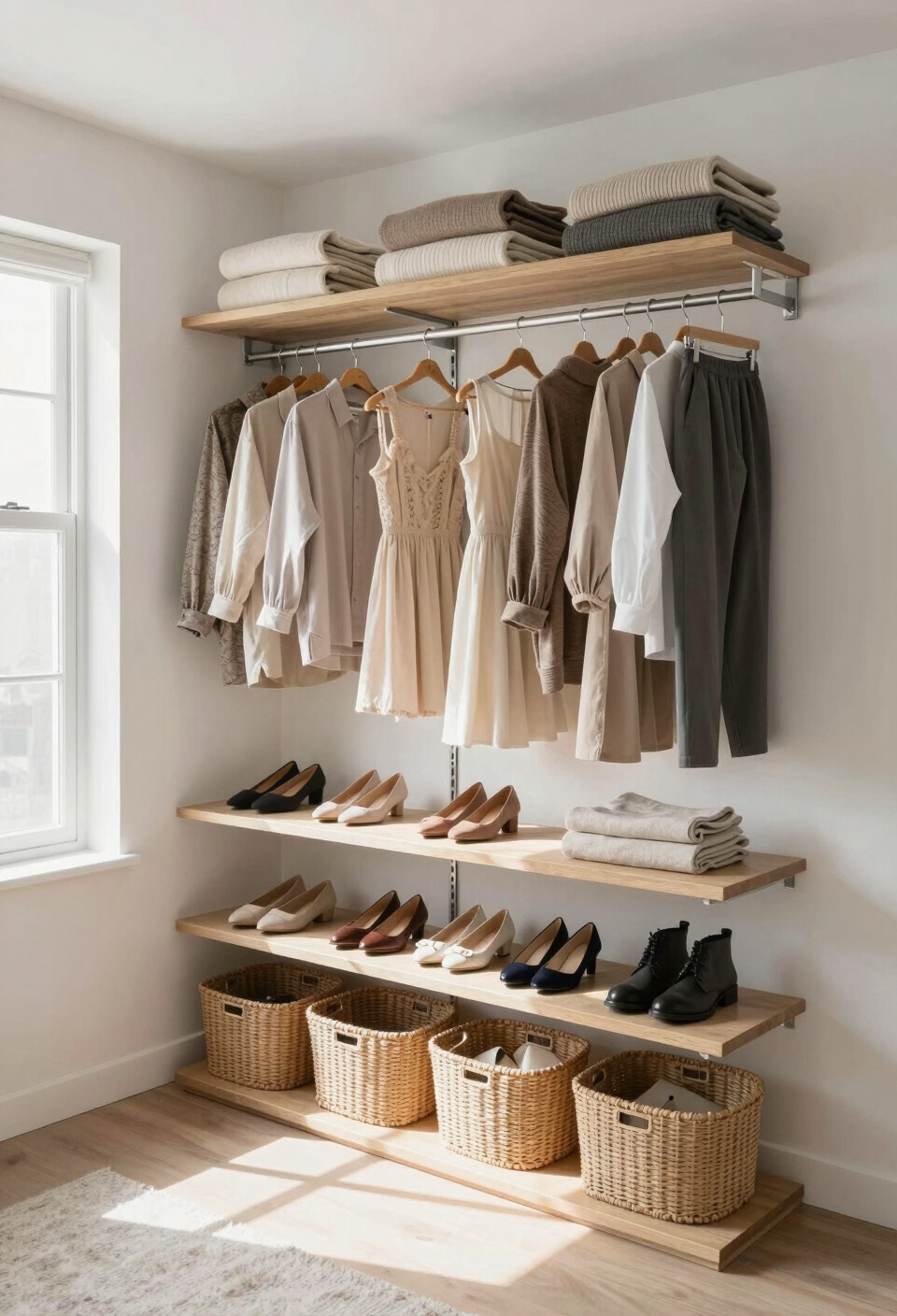
Once your closet’s lit up nicely, organizing by category makes everything easier to find and grab. You’ll want to group similar items together, keeping all your shirts in one section, pants in another, and dresses elsewhere. This approach saves you time when you’re getting ready, since you won’t waste minutes searching through jumbled clothes.
Try using shelf dividers or hanging organizers to keep grouped separately items from sliding around. Stack sweaters by color, arrange shoes on a lower shelf, and hang jackets together. When everything has its own designated spot, you’ll actually know what you own and reach for pieces confidently.
Use Cascading Hangers to Stack More Clothes
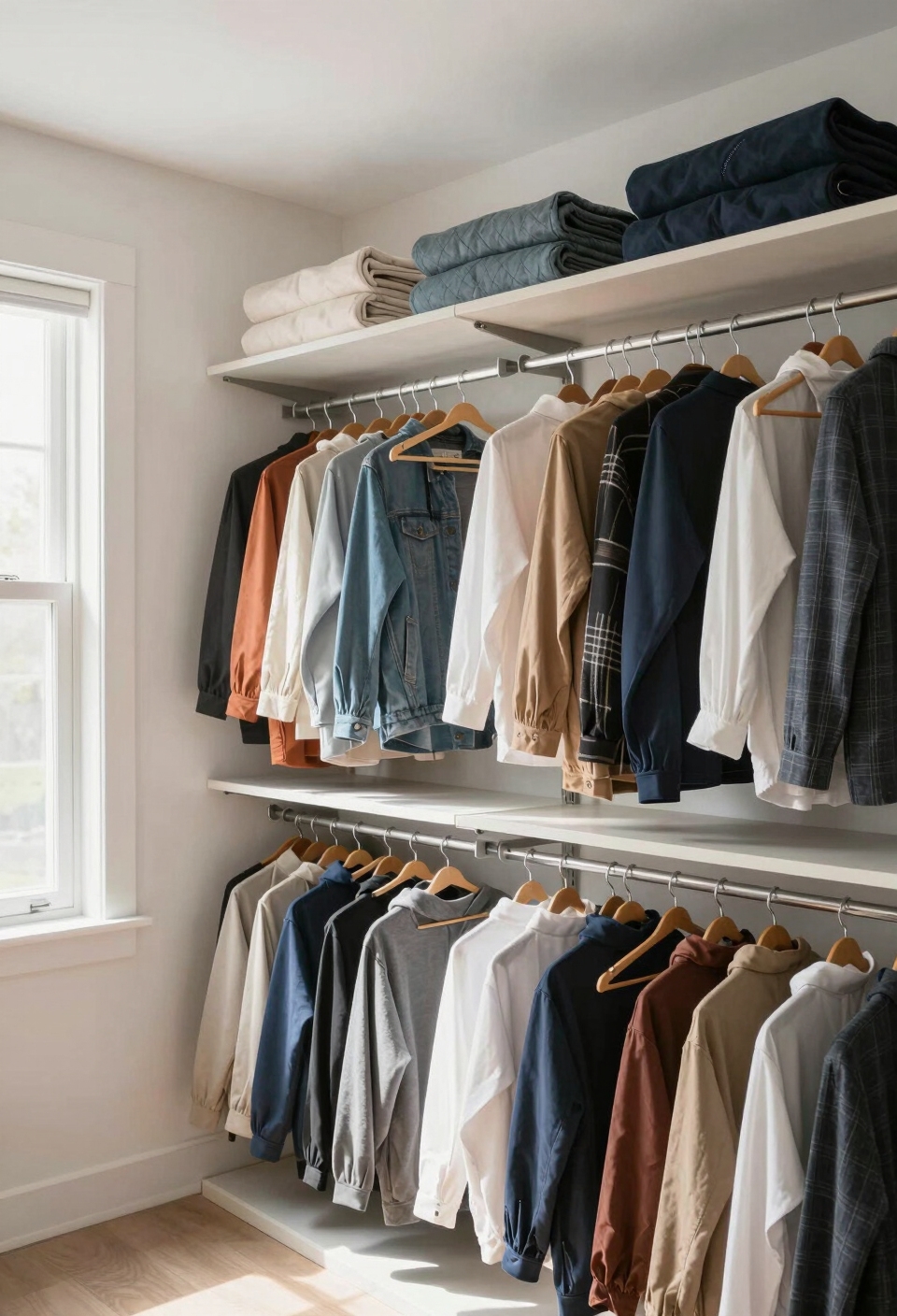
Cascading hangers solve the vertical space problem that even organized closets face, especially when you’re working with limited square footage. These space saving solutions let you hang multiple items on a single hook, doubling or tripling your hanging capacity without expanding your closet walls.
You’ll find cascading hangers in various styles, tiered designs, clip systems, or hook chains, each working similarly to stack clothes vertically. They’re perfect for pants, skirts, scarves, and tank tops. Start with heavier items on bottom hooks, lighter pieces above, preventing wrinkles and tangling.
The best part? You’re not cramming everything together chaotically. Instead, you’re smartly maximizing every inch of available rod space.
Add Hooks to the Inside of Closet Doors
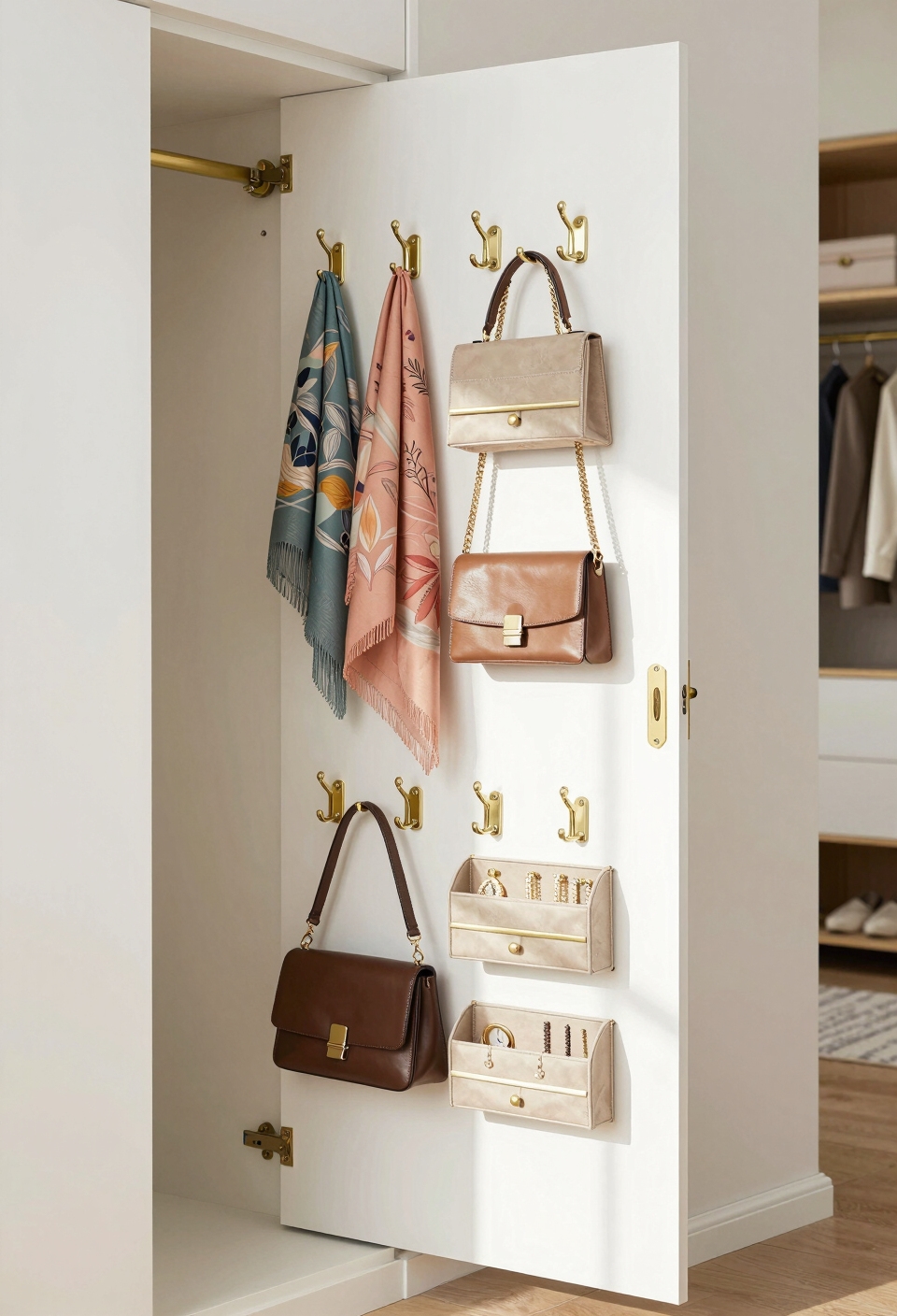
Don’t overlook the space hiding right in front of you, the inside of your closet doors. This prime real estate is perfect for adding door hooks that’ll maximize space without eating into your room. Install adhesive hooks or small metal rods along the inner panels to hang scarves, belts, bags, or lightweight clothing items. You can fit roughly 8-12 hooks per door, depending on spacing. This simple solution keeps frequently worn accessories visible and accessible while freeing up valuable closet rod space. It’s an easy upgrade that makes a real difference in small bedrooms.
Double-Check Your Donation Box Monthly
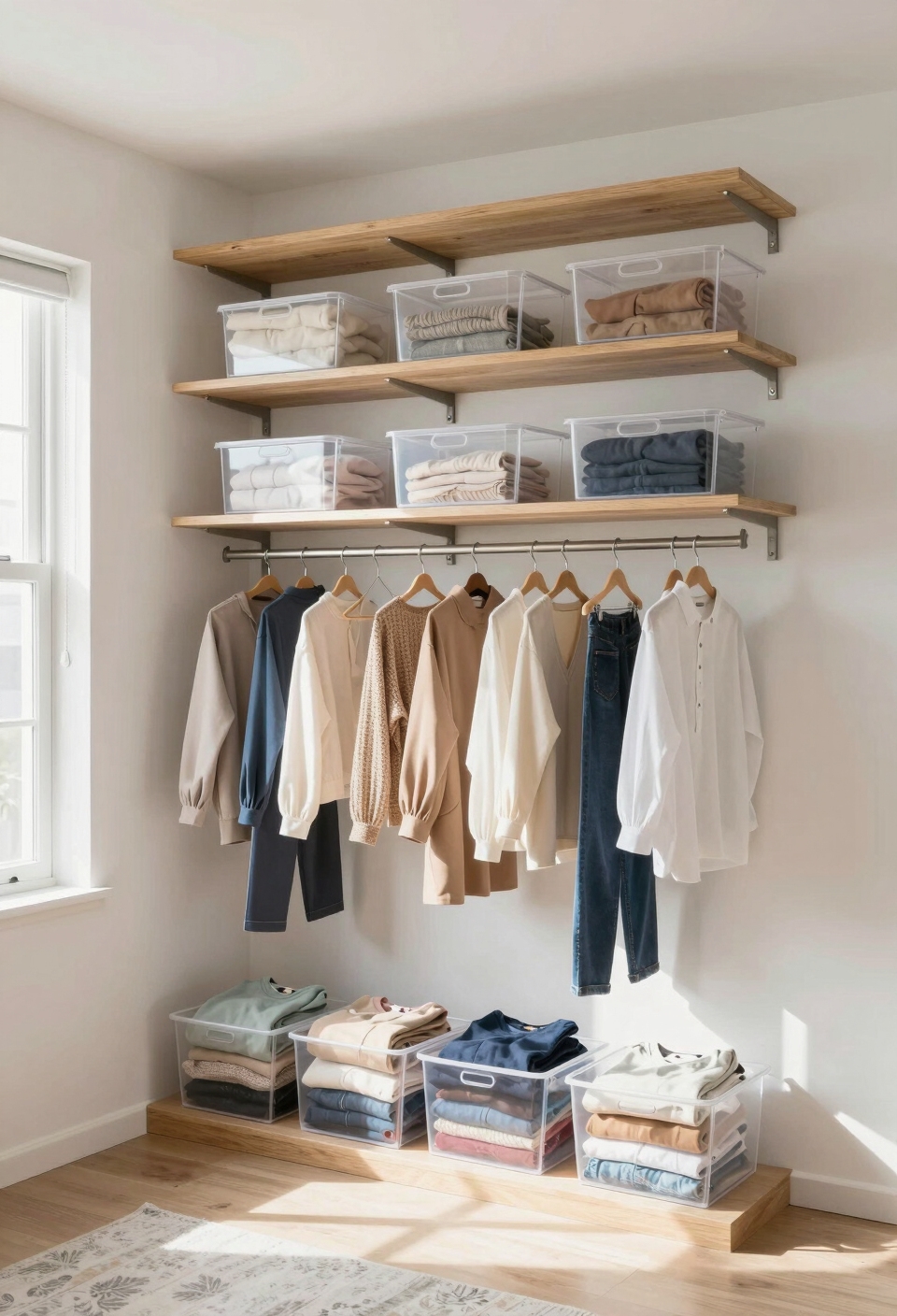
While those door hooks keep your everyday items within reach, you’ll also want to maintain the bigger picture of what’s actually in your closet. Set up a donation box in your closet corner, then check it monthly to keep your space intentional. You’ll prevent items from sitting there forgotten for years, which honestly happens to everyone. Research charity options in your area, local shelters, thrift stores, or community centers often accept gently used clothing. Establishing donation schedules, like the first Saturday of each month, makes the process easier. This habit keeps your small closet from becoming a storage unit for things you don’t actually wear anymore.
Do a Quick Reset Every Month
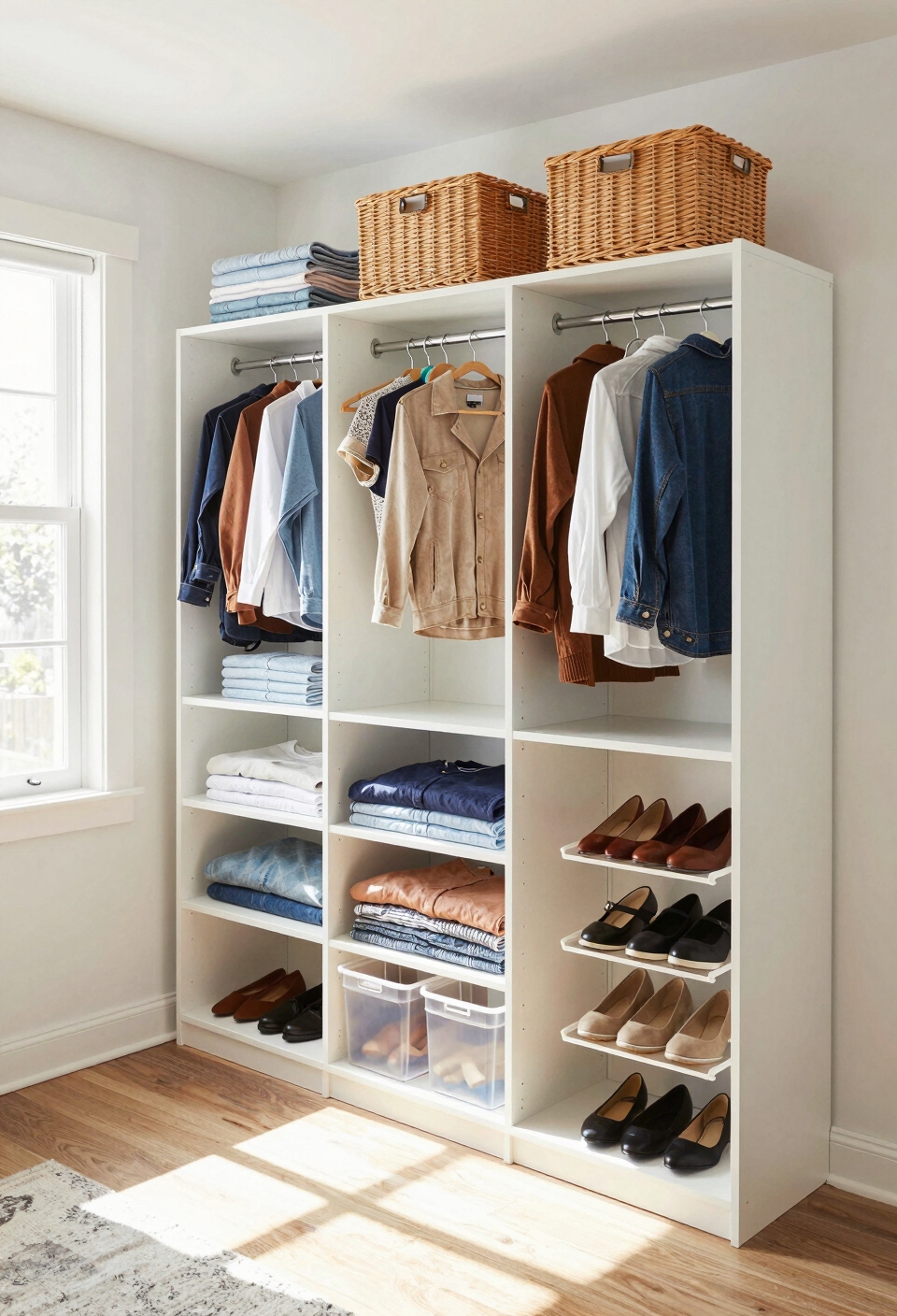
Beyond monthly donations, your closet needs a quick tune-up every few weeks to stay organized and functional. During your monthly review, spend fifteen minutes straightening hangers, refolding items, and checking for anything that’s shifted out of place. Your closet reset doesn’t require major changes, just small adjustments keep everything accessible. Look for clothes that’ve migrated to wrong sections, then return them. Check if your shelves need realigning or if doubled-up hangers need spacing. This quick maintenance prevents clutter from sneaking back in and keeps your small space working smoothly. You’ll feel accomplished, and your closet stays guest-ready.
Create a Closet Maintenance Checklist
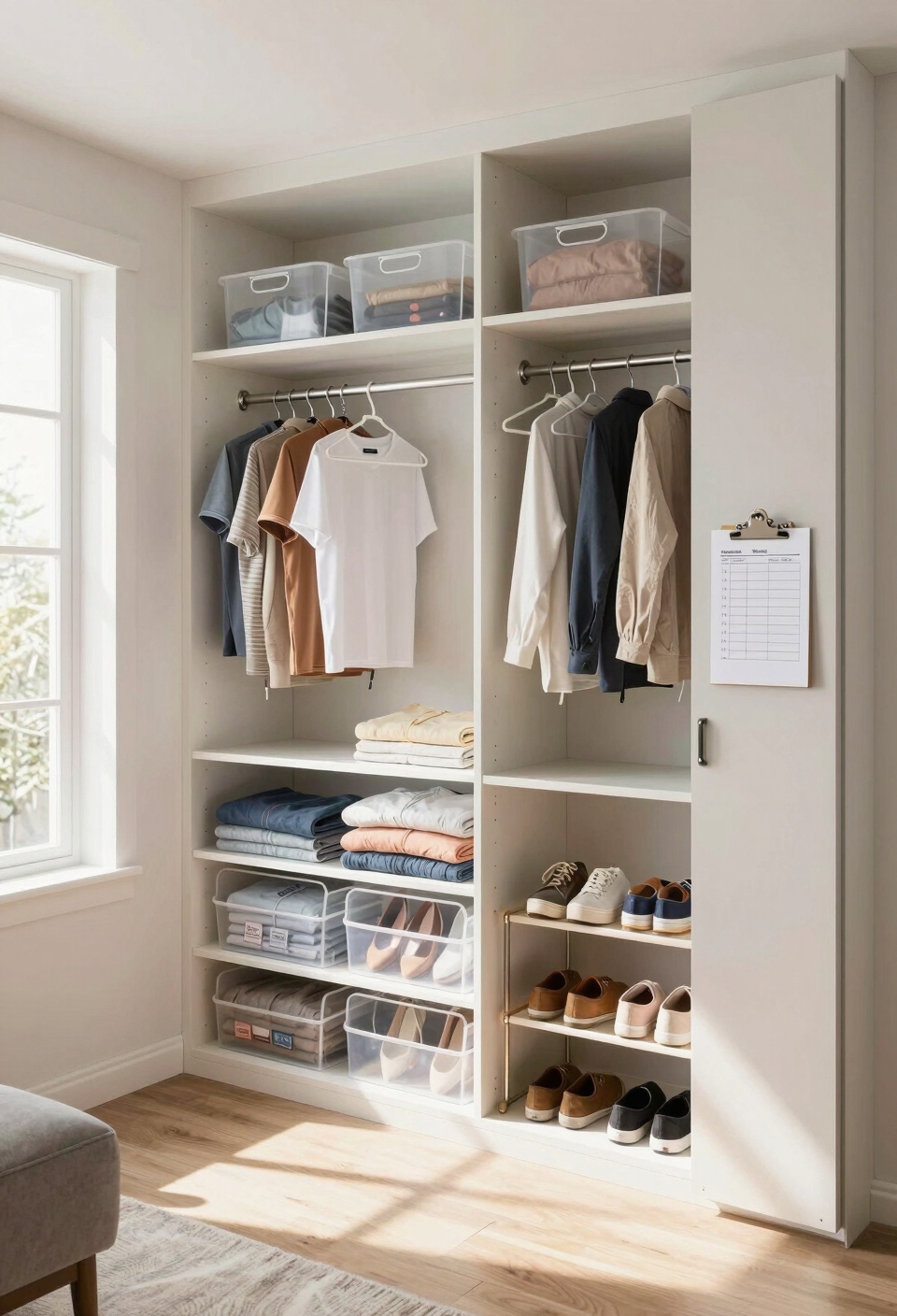
To keep your monthly reset on track, create a simple checklist you’ll actually use, one that takes the guesswork out of closet maintenance. Your checklist should include checking for stains, repairing loose seams, and rotating hangers. Include a seasonal wardrobe checkup twice yearly, swapping summer and winter clothes based on your climate and schedule. You’ll want to note which items need dry cleaning or tailoring. List any pieces you’re donating or selling. Set phone reminders for these maintenance dates so you won’t forget. A straightforward checklist keeps your small closet functioning smoothly without overwhelming you.
Frequently Asked Questions
How Often Should I Reorganize My Small Closet to Maintain the System?
You’ll want to reorganize your small closet every season to manage seasonal rotation effectively. Establish a monthly upkeep schedule for quick adjustments, ensuring you’re maintaining your system and maximizing limited space consistently.
What’s the Best Way to Measure My Closet Before Purchasing Organizational Products?
You’ll need to get your act together by measuring your closet dimensions with a tape measure. Record width, depth, and height using precise measurement techniques to ensure organizational products fit perfectly in your compact space.
How Do I Decide Which Clothes to Keep Versus Donate Permanently?
You’ll evaluate your clothing criteria by asking yourself: Do you wear it? Does it fit? Is it damaged? You’ll donate pieces you haven’t worn in a year, gaining donation benefits like tax deductions and closet space.
Can I Use These Organization Methods in Closets With Awkward Shapes or Sizes?
Like a puzzle adapting to fit its frame, you’ll find tailored solutions work brilliantly in awkward spaces. You can customize shelving heights, use corner organizers, and install angled rods to maximize your unique closet’s layout effectively.
What Budget Should I Allocate for Closet Organization Supplies and Installations?
You’ll want to allocate $200-$500 for basic organization supplies. Your budget priorities should include shelving ($100-$200), storage bins ($50-$100), and hanging systems ($50-$200). This cost breakdown ensures you’re maximizing your small space efficiently.
Final Takeaways
You’ve gone from cramped chaos to calm order, that’s the real win here. Your small closet doesn’t need to feel small anymore when you’re working smarter, not harder. Those slim hangers, floating shelves, and monthly check-ins? They’re your tools for keeping things tight. Stick with your maintenance checklist, and you’ll notice getting dressed becomes way easier. You’ve got this.

- 22 Small Space Vanity Ideas Bedroom Setup Hacks - March 10, 2026
- 23 Small Space Coffee Table Ideas With Soft Curves - March 9, 2026
- 21 Small Space Fireplace Ideas in Tactile Stone - March 8, 2026