
Dining gear spreads fast in a small room. Plates stack on the table, and linens land on chair backs. These small dining room storage ideas give every piece a fixed home.
Here are 55 spots for dishes, glasses, linens and serving tools. Most cost under $60, and many need no drill at all. Measure your walls first, then pick one idea to copy.
1. Give Every Table Item a Tray Home
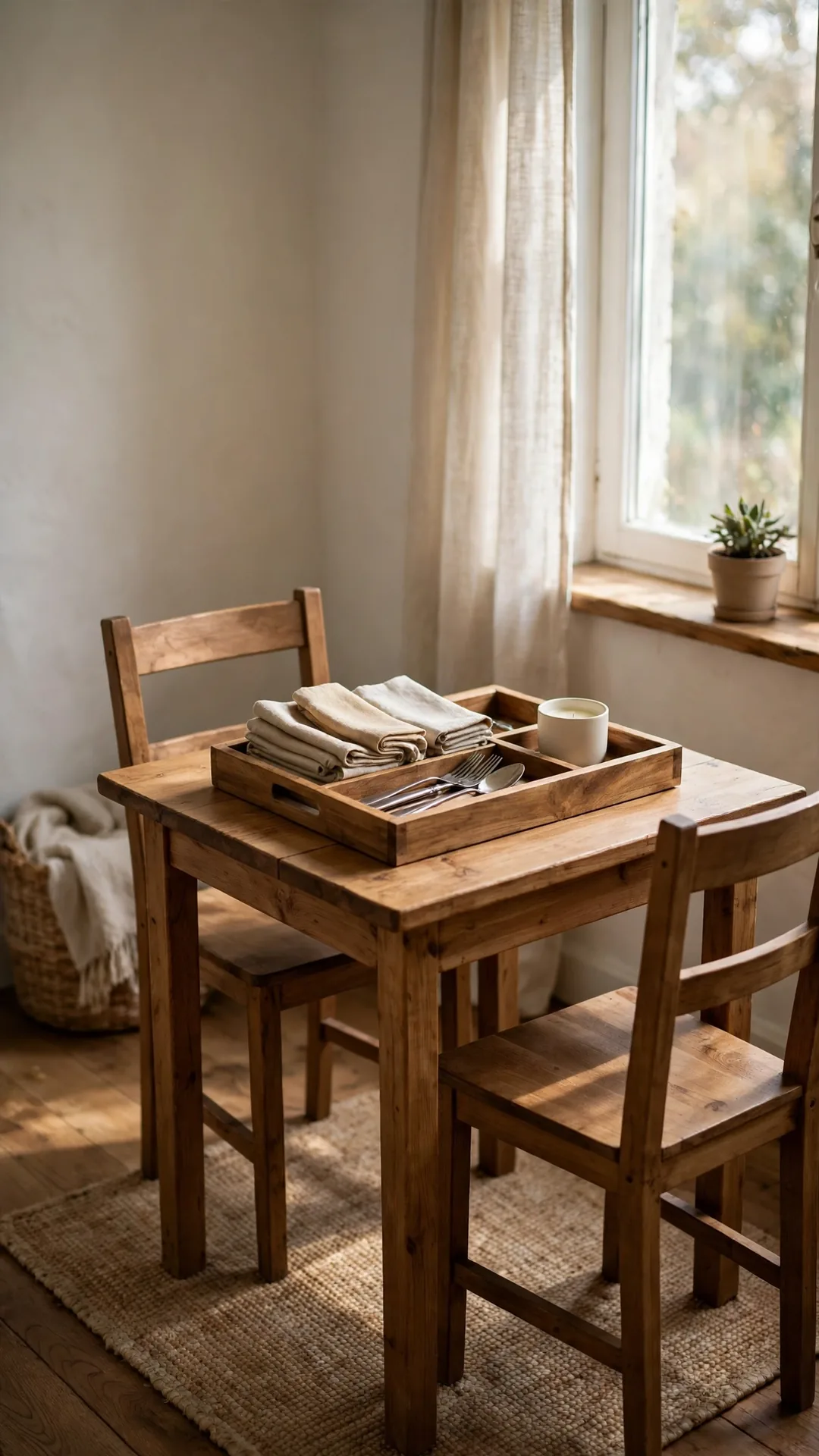
The best small dining room storage ideas start by clearing the table surface. A single tray corrals napkins, cutlery and the salt cellar into one lift-away spot. Dinner setup takes seconds when everything travels together.
How to do it:
- Pick a tray about 18 by 12 inches with low sides.
- Stand napkins upright in one corner of the tray.
- Keep daily cutlery in a small crock beside them.
- Slide the tray to the sideboard when guests sit down.
Best for: Tiny tables that double as desks.
Budget: $10 to $25
Quick tip: Choose a tray with handles so one trip clears the table.
2. Choose a Slim Sideboard for Dishes

A shallow sideboard holds full sets without eating into chair space. Depths of 14 to 16 inches fit plates and platters along one wall. Guides on how to pick the perfect dining room storage compare door styles and depths before you buy.
How to do it:
- Measure the wall and keep 36 inches clear for chairs.
- Pick doors that slide if walk space feels tight.
- Store daily plates on the lowest shelf.
- Keep heavy platters flat at the bottom.
Best for: Dining rooms with one long free wall.
Budget: $150 to $400
Quick tip: Cardboard mock-ups on the floor test the depth fast.
3. Park a Rolling Cart Beside the Table
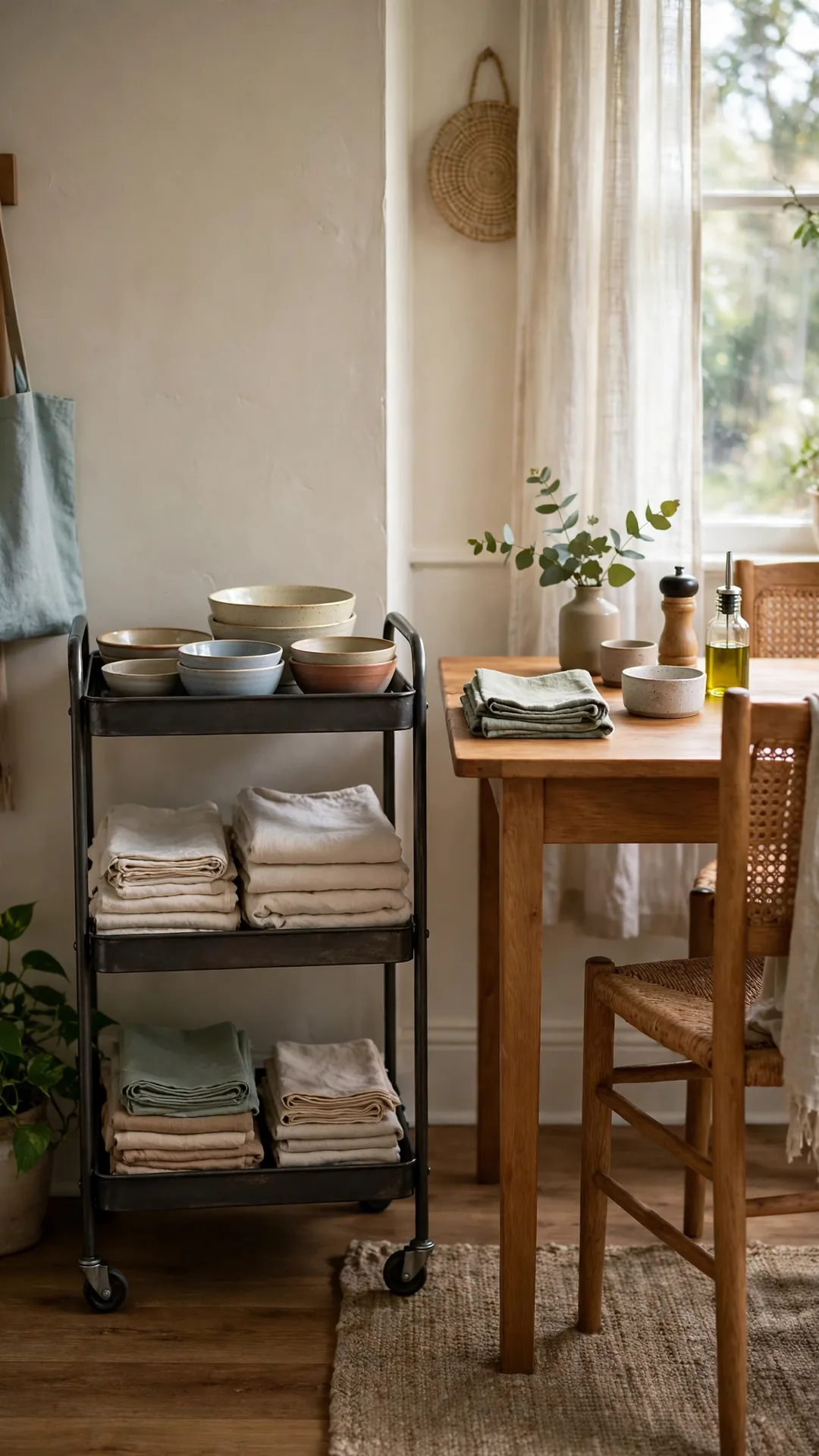
A slim rolling cart adds serving storage that moves when you do. Roll it beside the table for meals, then park it in a corner. Each tier takes one job, so nothing stacks up.
How to do it:
- Choose a cart about 12 inches wide with locking wheels.
- Put bowls and serving spoons on the top tier.
- Keep folded linens on the middle tier.
- Store candles and spare napkins on the bottom tier.
Best for: Renters who need storage without fixings.
Budget: $25 to $60
Quick tip: Lock two wheels so the cart stays put during meals.
4. Hang a Wall Rail for Serving Tools

Some small dining room storage ideas live on the wall, not the floor. A rail with hooks holds serving spoons, trivets and a small basket. Everything hangs within reach of the table.
How to do it:
- Fix a rail 24 to 36 inches long above the sideboard.
- Use S hooks spaced about 4 inches apart.
- Hang only tools you use every week.
- Add one small basket for napkins or corkscrews.
Best for: Bare walls above existing furniture.
Budget: $15 to $40
Quick tip: Felt pads behind hooks stop marks on painted walls.
5. Keep Placemats in a Shallow Table Drawer
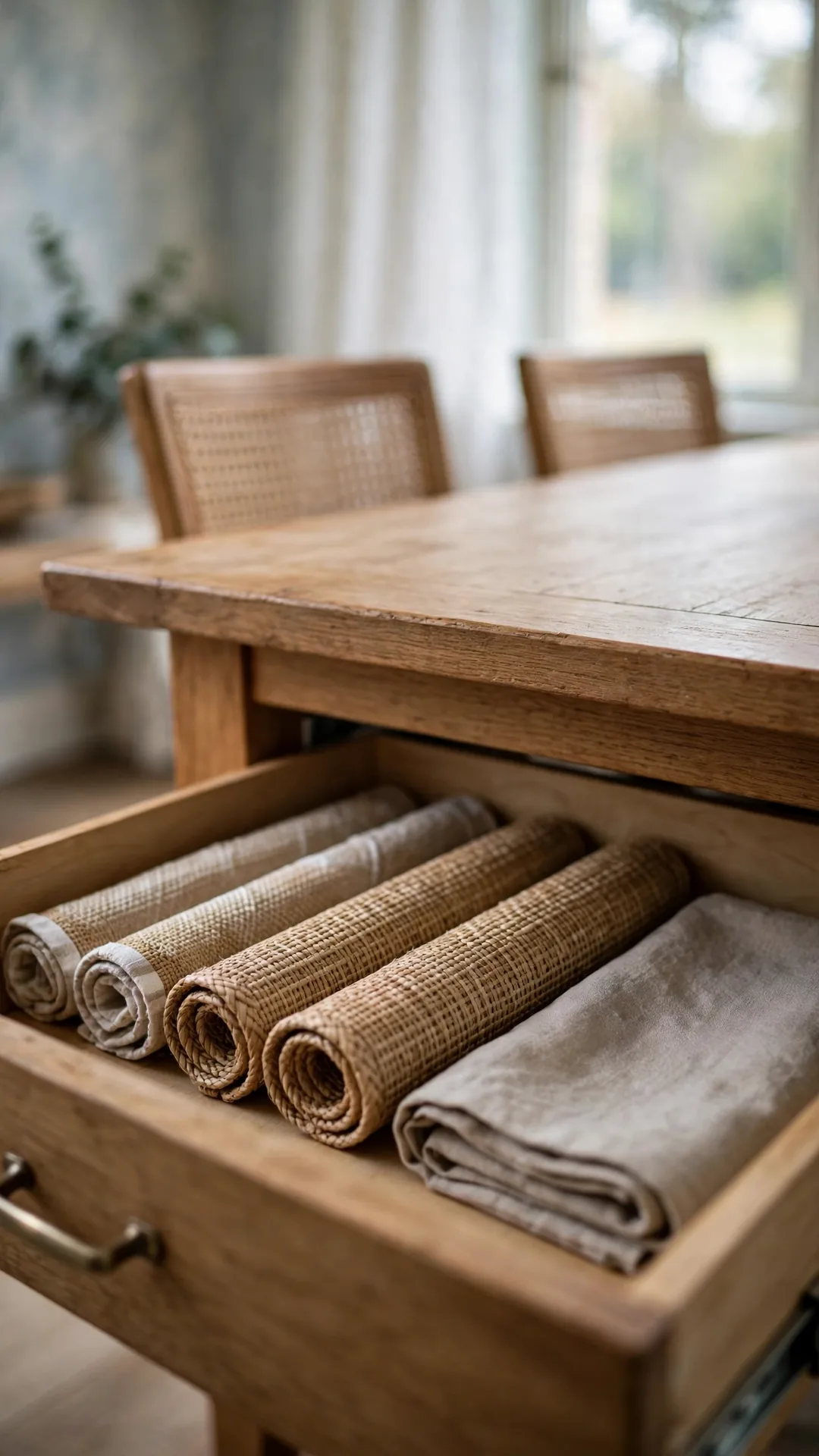
Many small tables hide a shallow drawer under the top. Flat storage stops the curled edges that stacked piles cause. The set stays dust free between meals.
How to do it:
- Measure the drawer depth before buying placemats.
- Roll fabric placemats around a cardboard tube.
- Keep one runner folded flat at the back.
- Add a cedar block to keep linens fresh.
- Keep daily placemats at the front for fast setting.
Best for: Tables with a built-in apron drawer.
Budget: Under $10
Quick tip: Line the drawer with felt so pieces slide quietly.
6. Use a Bench With a Lift-Up Seat
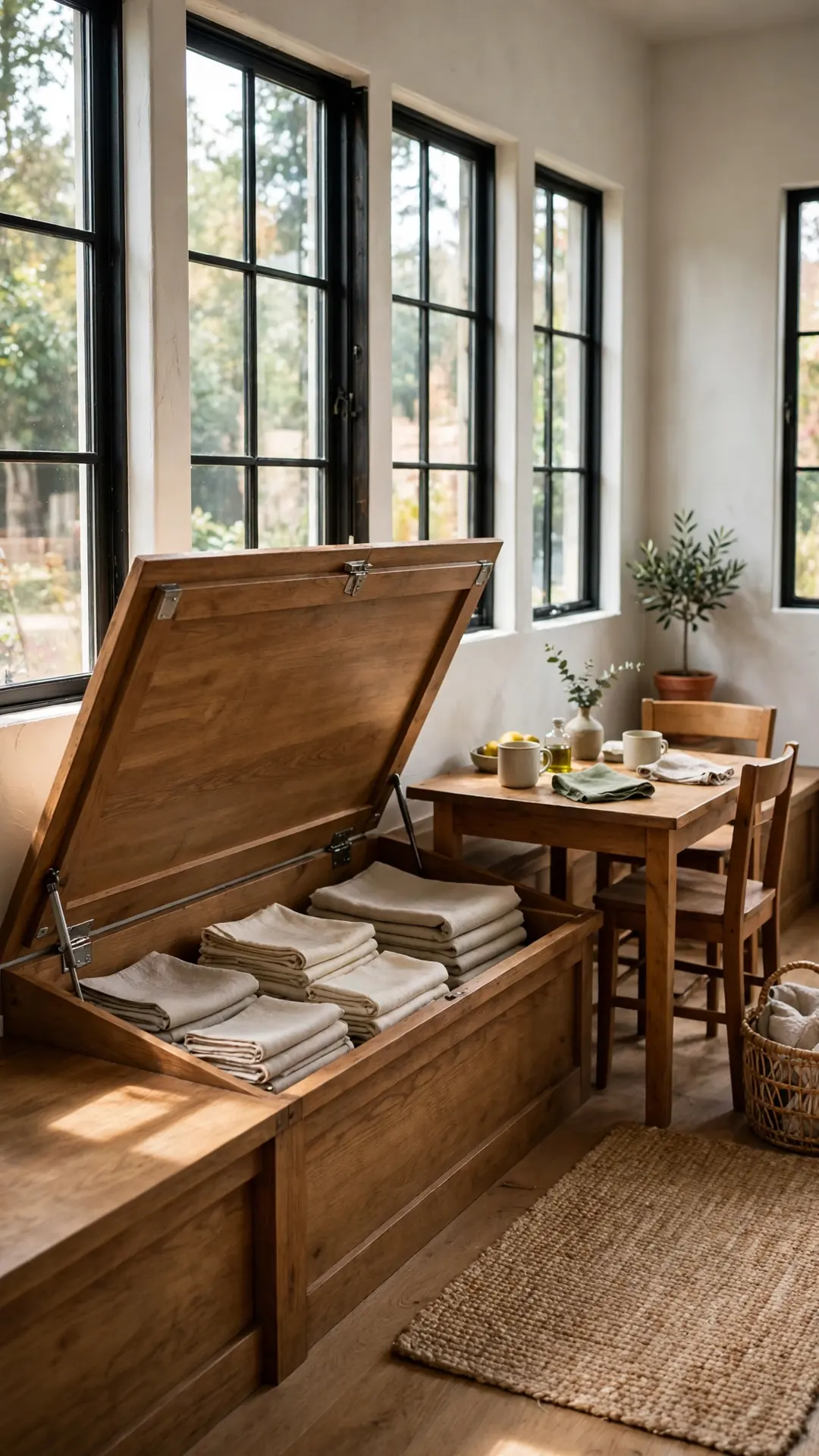
Hidden storage earns its place in small dining room storage ideas like this bench. The seat lifts to reveal a deep box for tablecloths and spare cushions. One piece seats two and stores a full linen set.
How to do it:
- Pick a bench about 48 inches long and 16 inches deep.
- Check the hinges open past 90 degrees.
- Store cloths in cotton bags to stop dust.
- Keep the heaviest items at the ends for balance.
Best for: Banquette corners and window walls.
Budget: $80 to $200
Quick tip: Add a finger gap at the front so the lid lifts easily.
7. Set a Basket for Daily Table Clutter
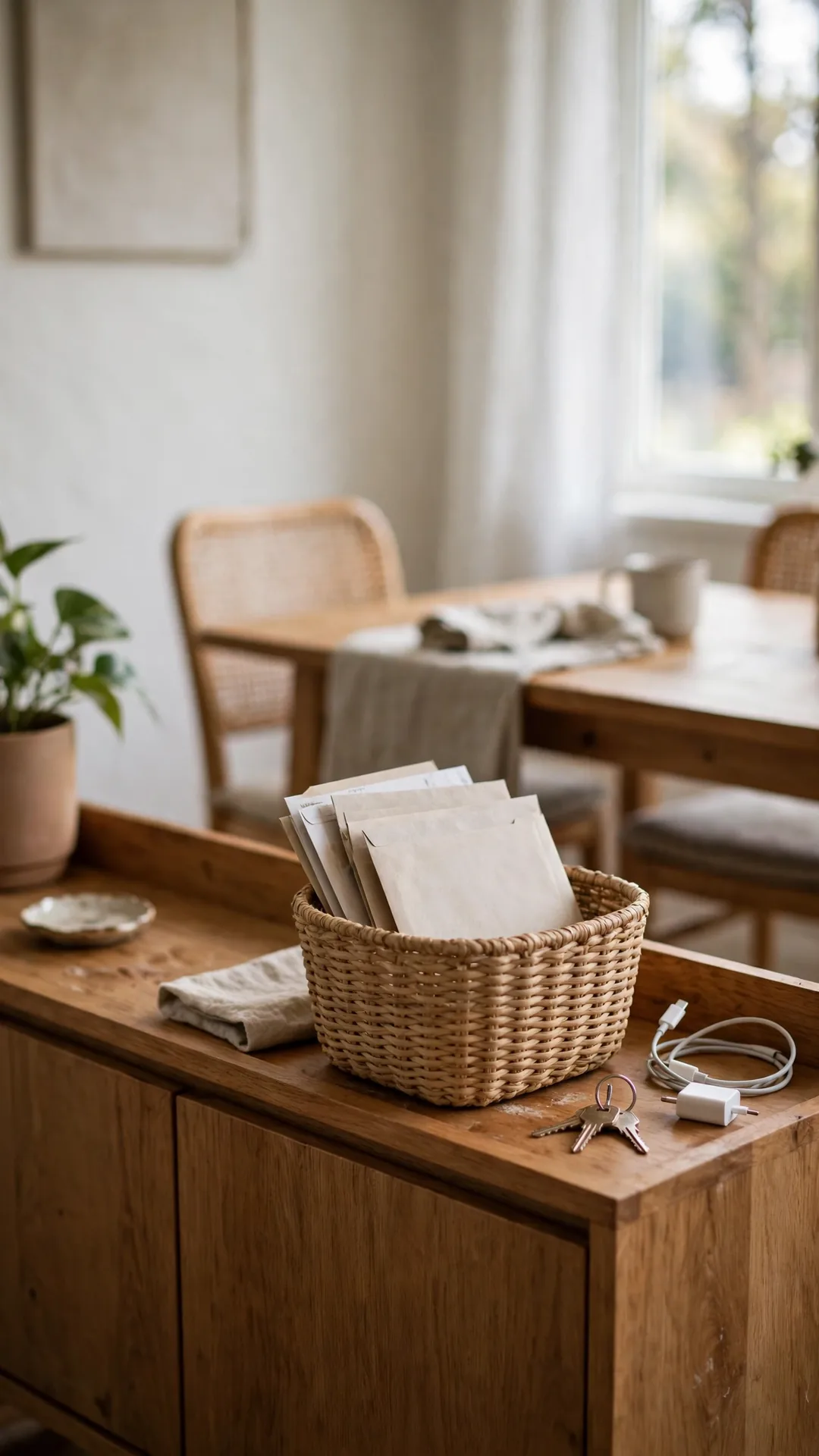
Mail, keys and chargers land on dining tables by habit. One basket gives that clutter a border it cannot cross. The table reads clear even on busy days.
How to do it:
- Choose a basket about 12 inches wide with handles.
- Place it at the end of the sideboard or bench.
- Sort the contents every Sunday night.
- Move anything unused to its real home.
- Line the base so crumbs shake out easily.
Best for: Homes where the table doubles as a desk.
Budget: $8 to $20
Quick tip: A lidded basket hides the mess from guests fully.
8. Hang Folding Chairs on Wall Hooks
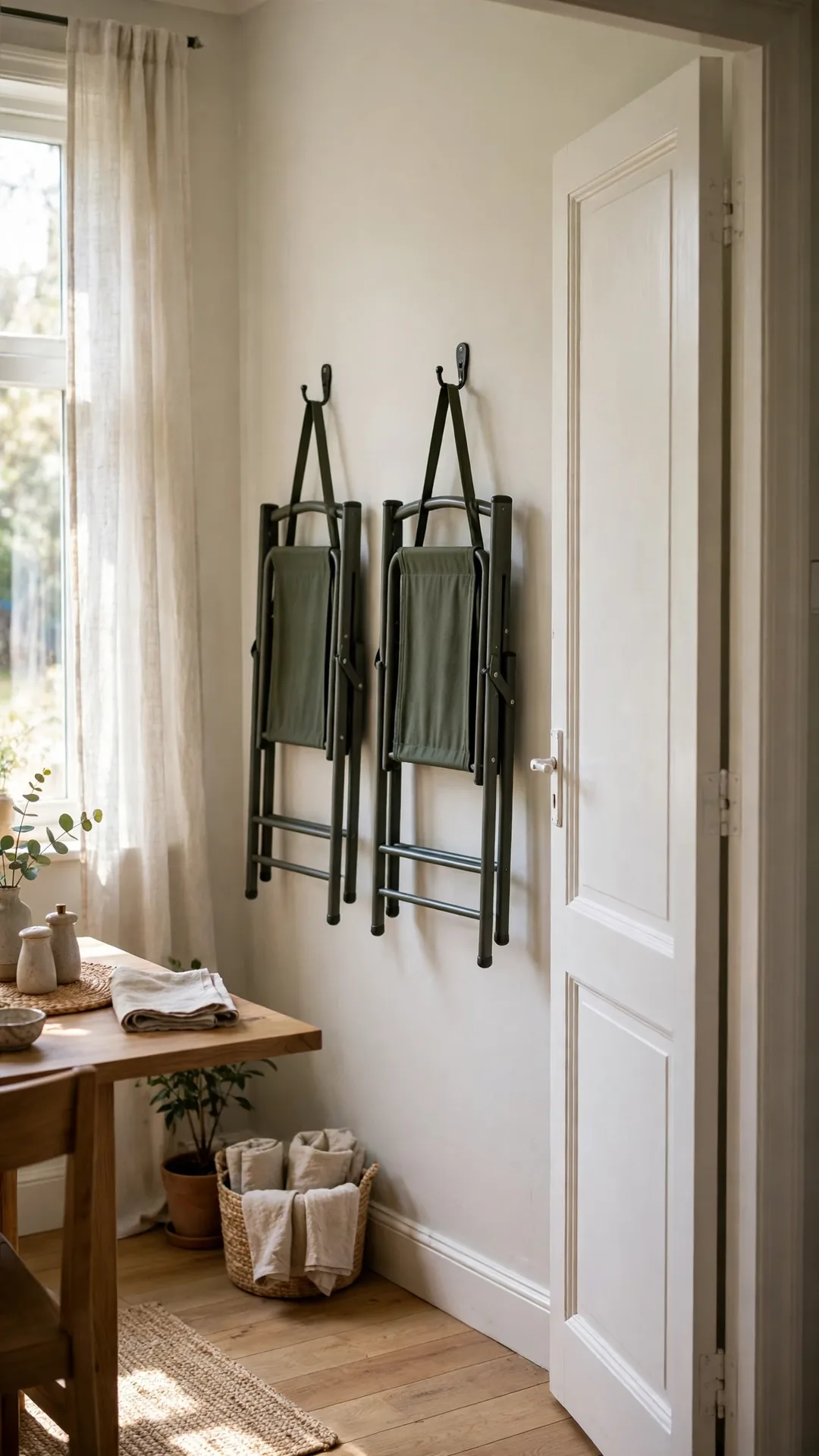
Spare folding chairs eat floor space in most small dining rooms. Two strong hooks lift them flat against the wall instead. The chairs stay ready for guests without a closet.
How to do it:
- Fit hooks rated for 35 pounds each into studs.
- Space the pair about 14 inches apart.
- Fold each chair flat before you hang it.
- Keep the hooks behind a door or curtain line.
- Keep one chair unfolded if guests visit weekly.
Best for: Homes that host six only a few times yearly.
Budget: $10 to $25
Quick tip: Felt strips on chair legs stop wall scuffs.
9. Add Two Floating Shelves for Glassware

Open shelves count among the lightest small dining room storage ideas you can add. Two short shelves above the sideboard hold daily glasses and bowls. Depths stay shallow, so nothing hides at the back.
How to do it:
- Use shelves 10 to 12 inches deep and 30 inches long.
- Leave 15 inches between shelf levels for tall glasses.
- Anchor brackets into studs for a full load.
- Keep daily glasses on the lower shelf.
Best for: Walls above a sideboard or cart.
Budget: $30 to $70
Quick tip: Shelf liner stops glasses chipping on wood.
10. Hang a Plate Rack for Everyday Dishes
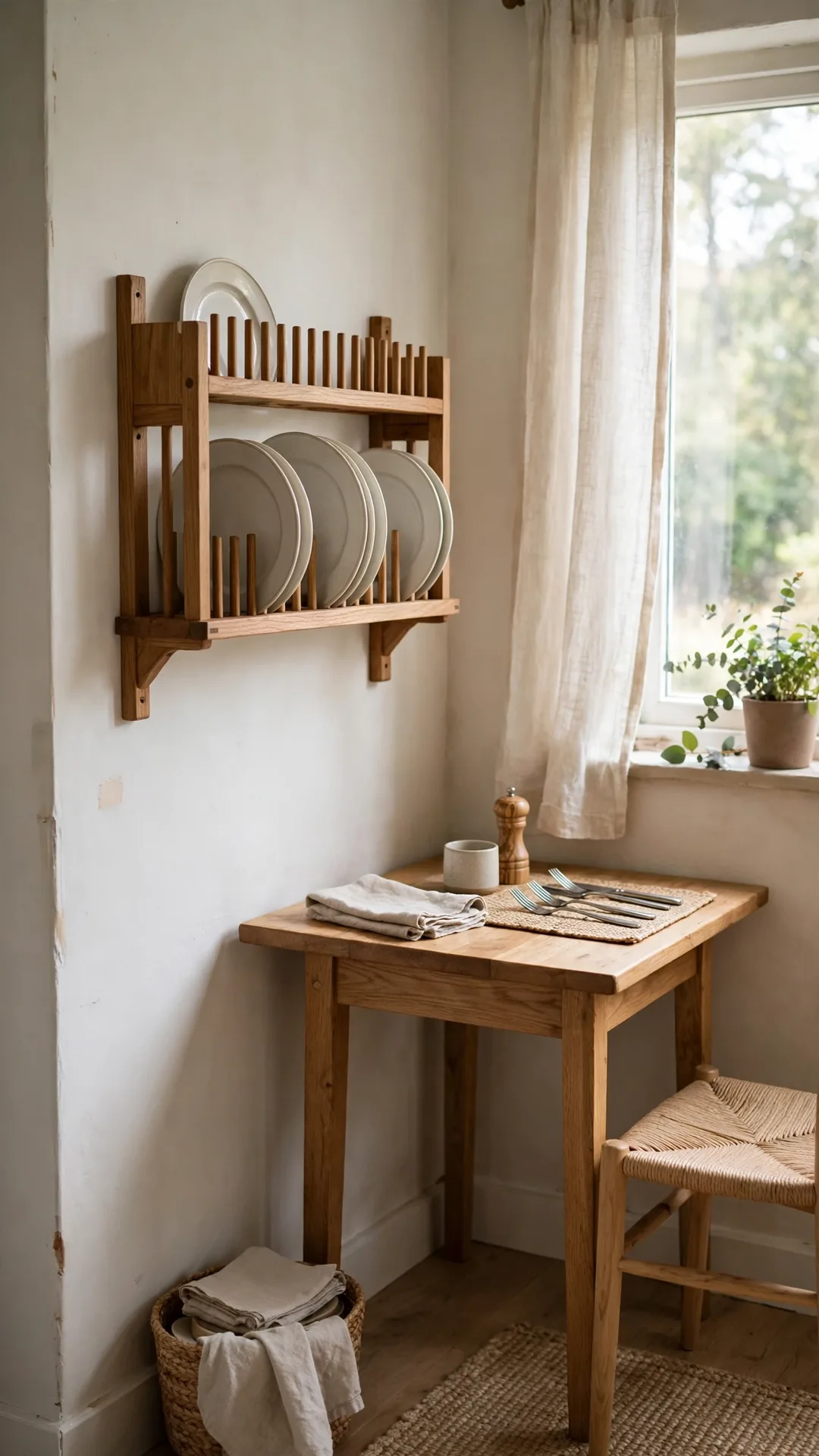
A wall plate rack stores plates upright like files in a drawer. Rails keep each plate apart, so chips happen less often. The rack frees a full cabinet shelf elsewhere.
How to do it:
- Choose a rack sized for your largest plate diameter.
- Mount it at shoulder height beside the table.
- Slide plates in with the rims facing out.
- Leave one slot free for the serving platter.
- Wipe the rails weekly so plates stay dust free.
Best for: Daily dishes used at most meals.
Budget: $25 to $60
Quick tip: Wood racks suit plates better than thin wire ones.
11. Mount Corner Shelves in the Dead Corner
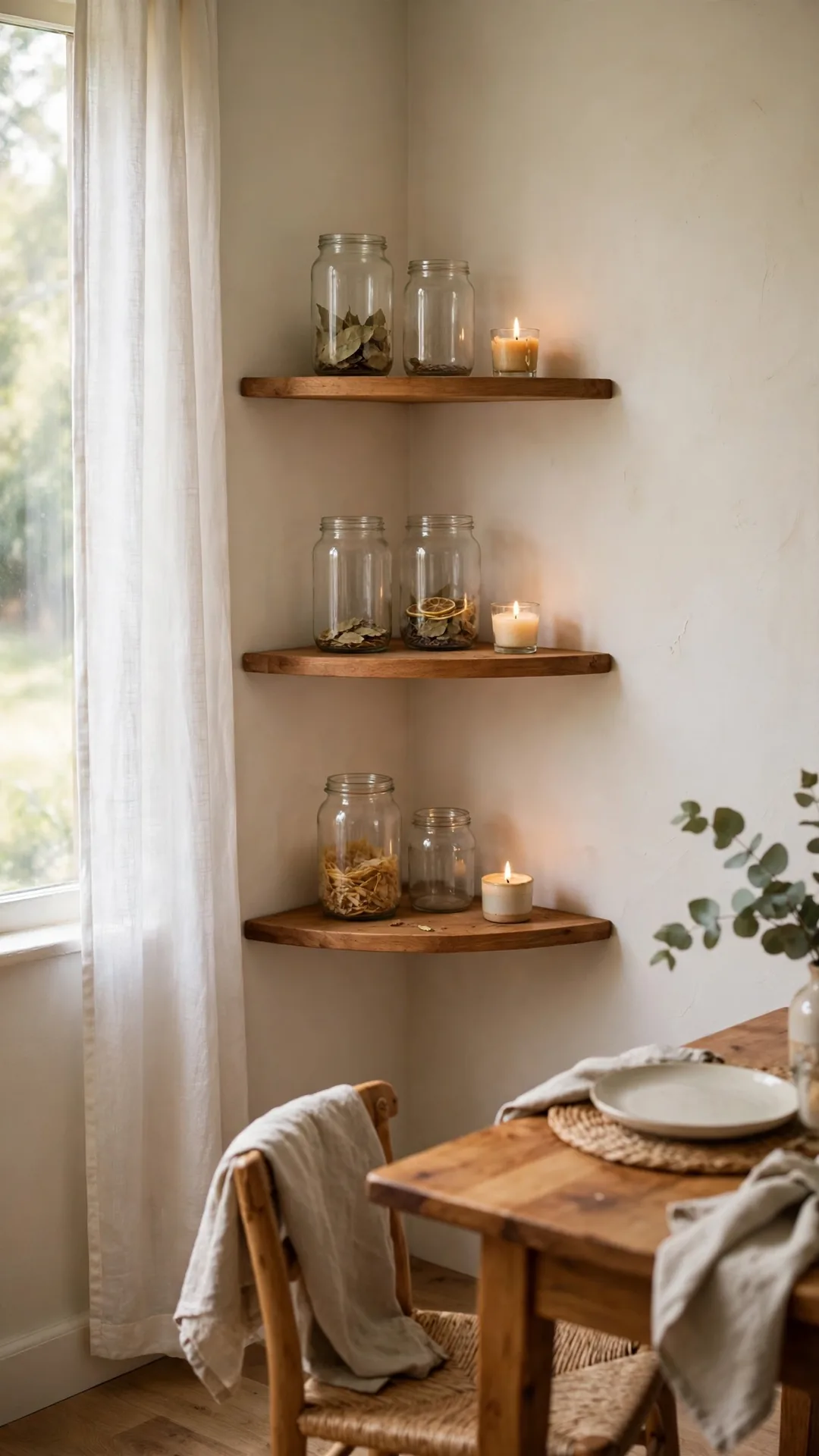
The corner beside the table usually holds nothing at all. Three small corner shelves turn it into storage for jars and candles. The same corner thinking powers these small kitchen corner storage ideas next door.
How to do it:
- Pick triangular shelves with sides of 12 inches.
- Space shelves about 14 inches apart vertically.
- Store candles, jars and small vases on them.
- Keep the lowest shelf clear of chair backs.
Best for: Square rooms with one empty corner.
Budget: $20 to $50
Quick tip: Round the front edge choice for tight walk paths.
12. Build a Shelf Above the Doorway
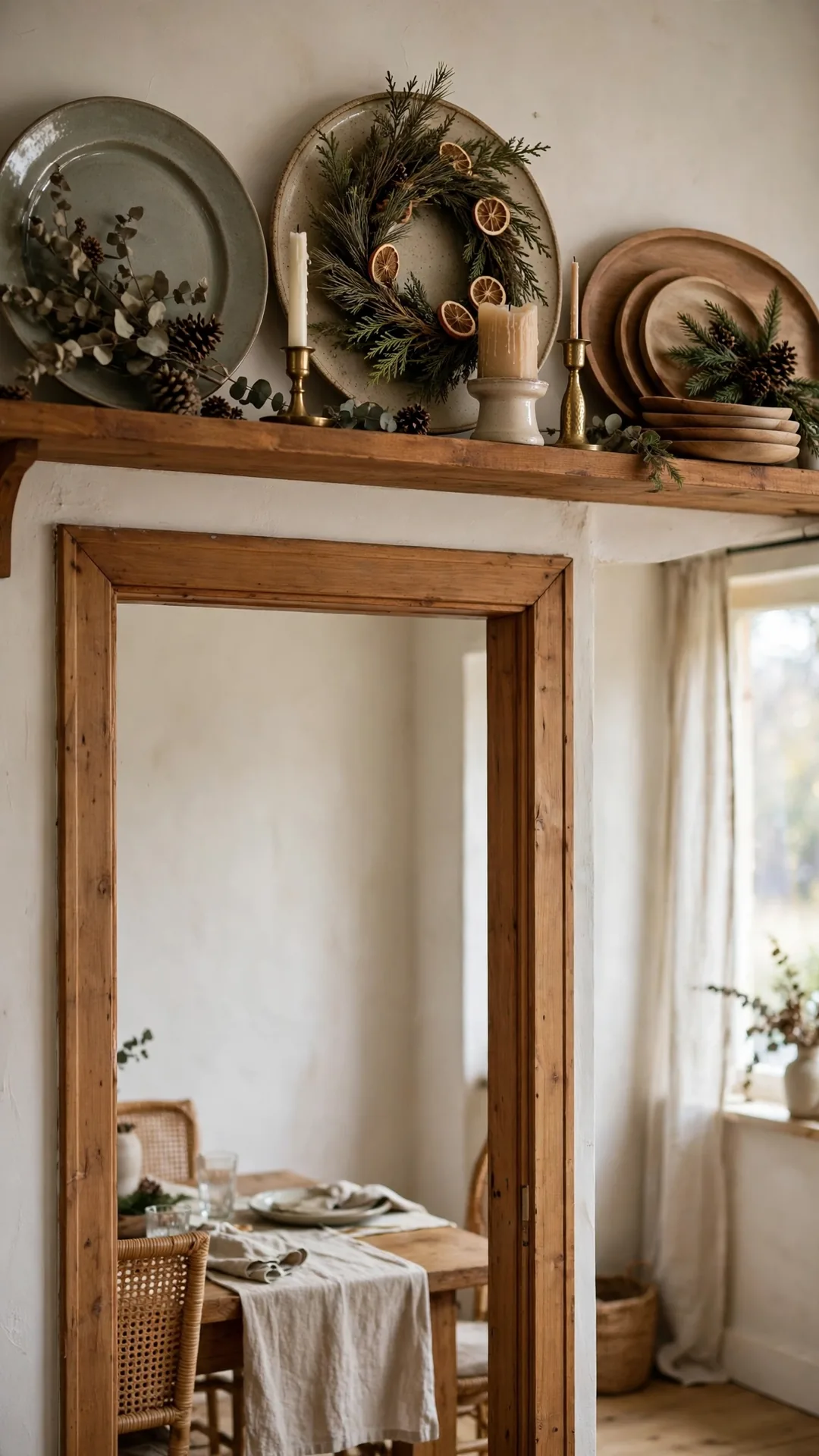
The strip above the dining room door fits one long shelf. Small dining room storage ideas like this suit pieces used only at holidays. A step stool keeps the shelf safe to reach.
How to do it:
- Measure the gap between door frame and ceiling first.
- Fit a shelf 8 inches deep on two small brackets.
- Store holiday platters and candle holders up there.
- Keep stacks under 10 inches tall for safety.
Best for: Rooms with tall ceilings and spare headroom.
Budget: $20 to $45
Quick tip: Bring items down one at a time, never in stacks.
13. Use a Picture Ledge for Candles and Vases

A picture ledge has a raised lip that stops items sliding off. Candles, small vases and spare coasters line up in one row. The ledge adds storage that looks like display.
How to do it:
- Choose a ledge 4 inches deep and 36 inches long.
- Mount it above chair rail height on one wall.
- Group candles in odd numbers for a calm look.
- Leave gaps so the row never reads crowded.
Best for: Narrow walls between windows or doors.
Budget: $15 to $35
Quick tip: Battery candles store safely with no wax drips.
14. Install a Peg Rail for Mugs and Boards
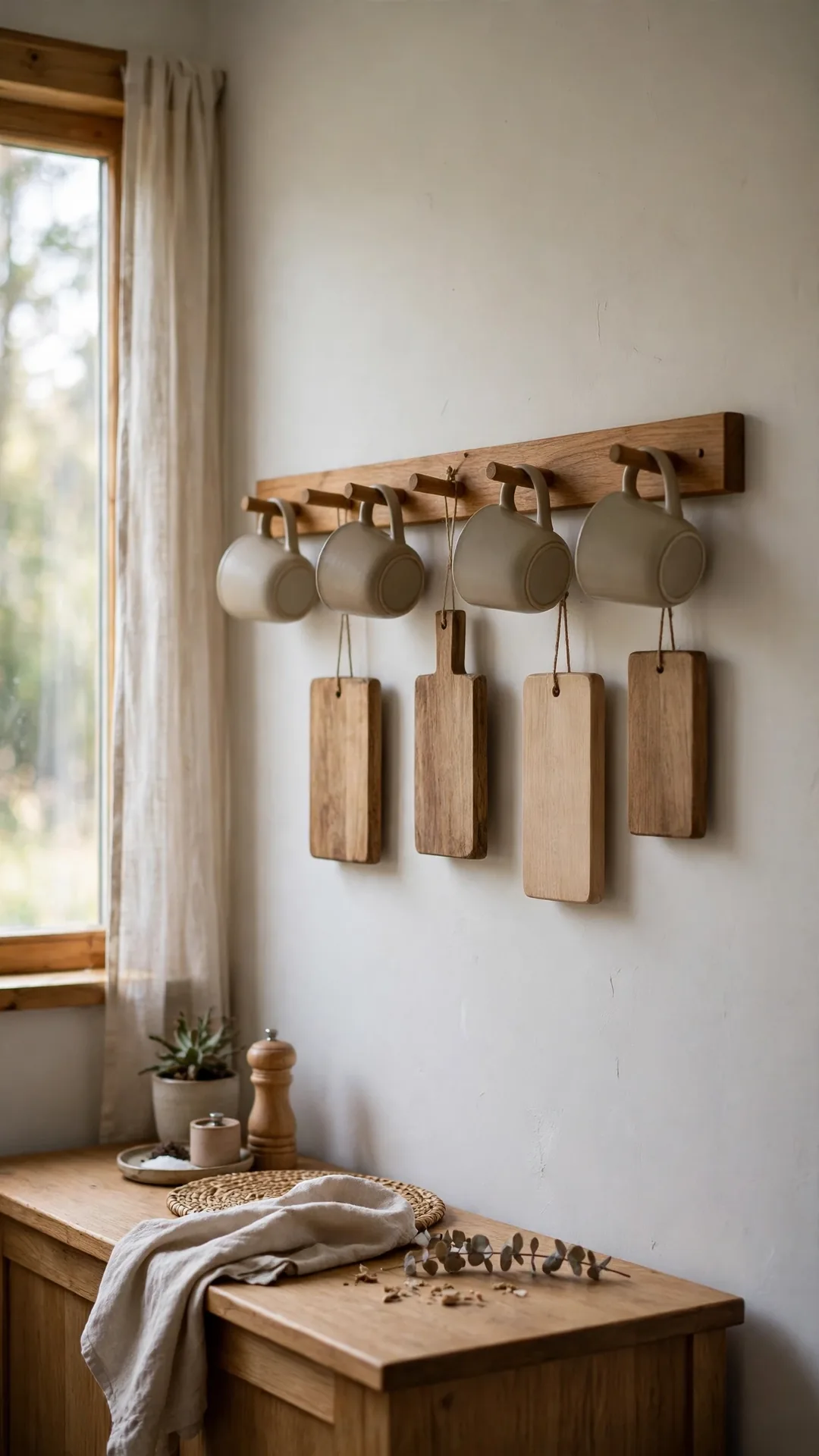
A peg rail turns one wall strip into flexible hanging storage. Mugs, small boards and tote bags hang from sturdy pegs. You can shift the layout in seconds.
How to do it:
- Fix a rail about 48 inches long into studs.
- Space pegs 6 inches apart for mugs.
- Hang boards on the end pegs to save depth.
- Keep heavy items on the lowest pegs only.
- Mark one end peg for guest mugs.
Best for: Casual dining rooms with a relaxed feel.
Budget: $20 to $50
Quick tip: Sand peg ends smooth so mug handles never chip.
15. Add Hooks Under a Wall Shelf
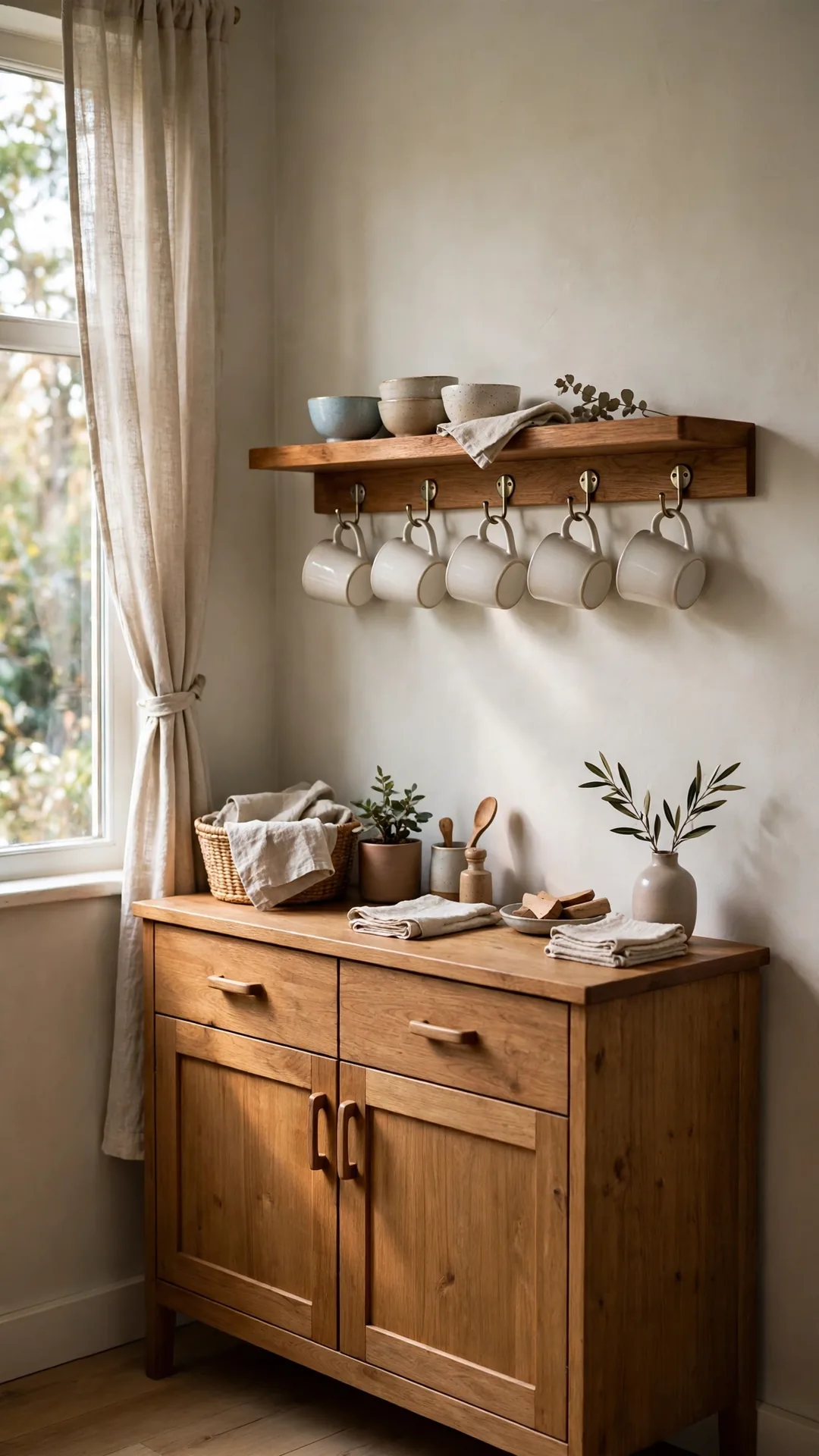
The space under a wall shelf often goes to waste. Small dining room storage ideas can claim it with a row of cup hooks. Mugs hang below while glasses sit above.
How to do it:
- Screw cup hooks 3 inches apart under the shelf.
- Check the shelf board is at least 3/4 inch thick.
- Hang mugs by the handle, largest in the middle.
- Keep the row clear of the walk path.
Best for: Shelves above a sideboard or serving cart.
Budget: Under $10
Quick tip: Hooks with a swivel base suit thick mug handles.
16. Use a Narrow Bookcase for Serving Pieces
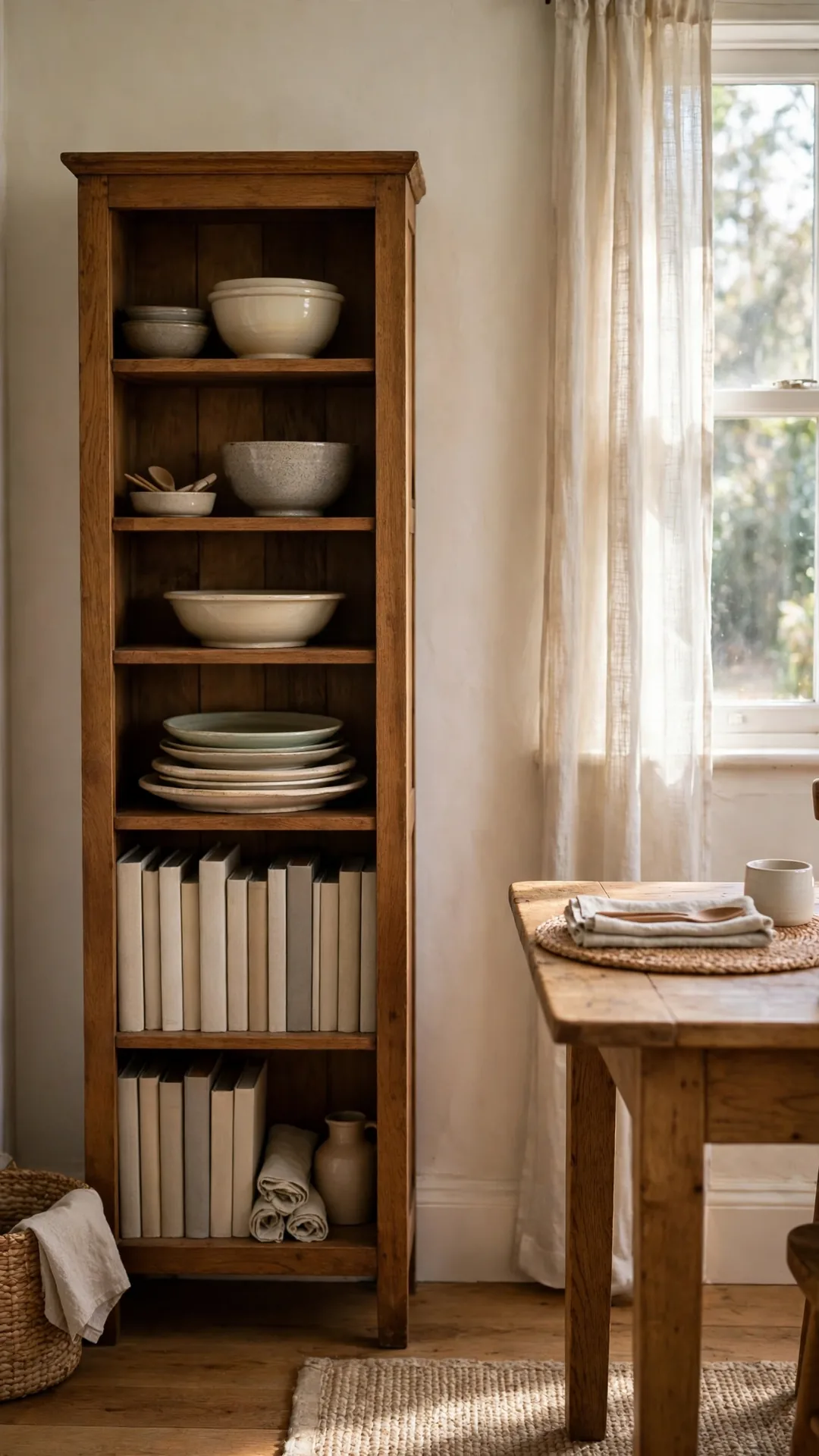
A narrow bookcase fits walls that reject full cabinets. Shelves hold serving bowls, cookbooks and spare glasses upright. The open front keeps every piece visible.
How to do it:
- Pick a case about 24 inches wide and 10 inches deep.
- Anchor the top to the wall for safety.
- Put heavy bowls on the lowest shelf.
- Stand cookbooks at one end with a bookend.
- Leave the top shelf for light serving baskets.
Best for: Renters who cannot build or drill much.
Budget: $40 to $120
Quick tip: Baskets on lower shelves hide less pretty items.
17. Hang Baskets on the Wall for Napkins
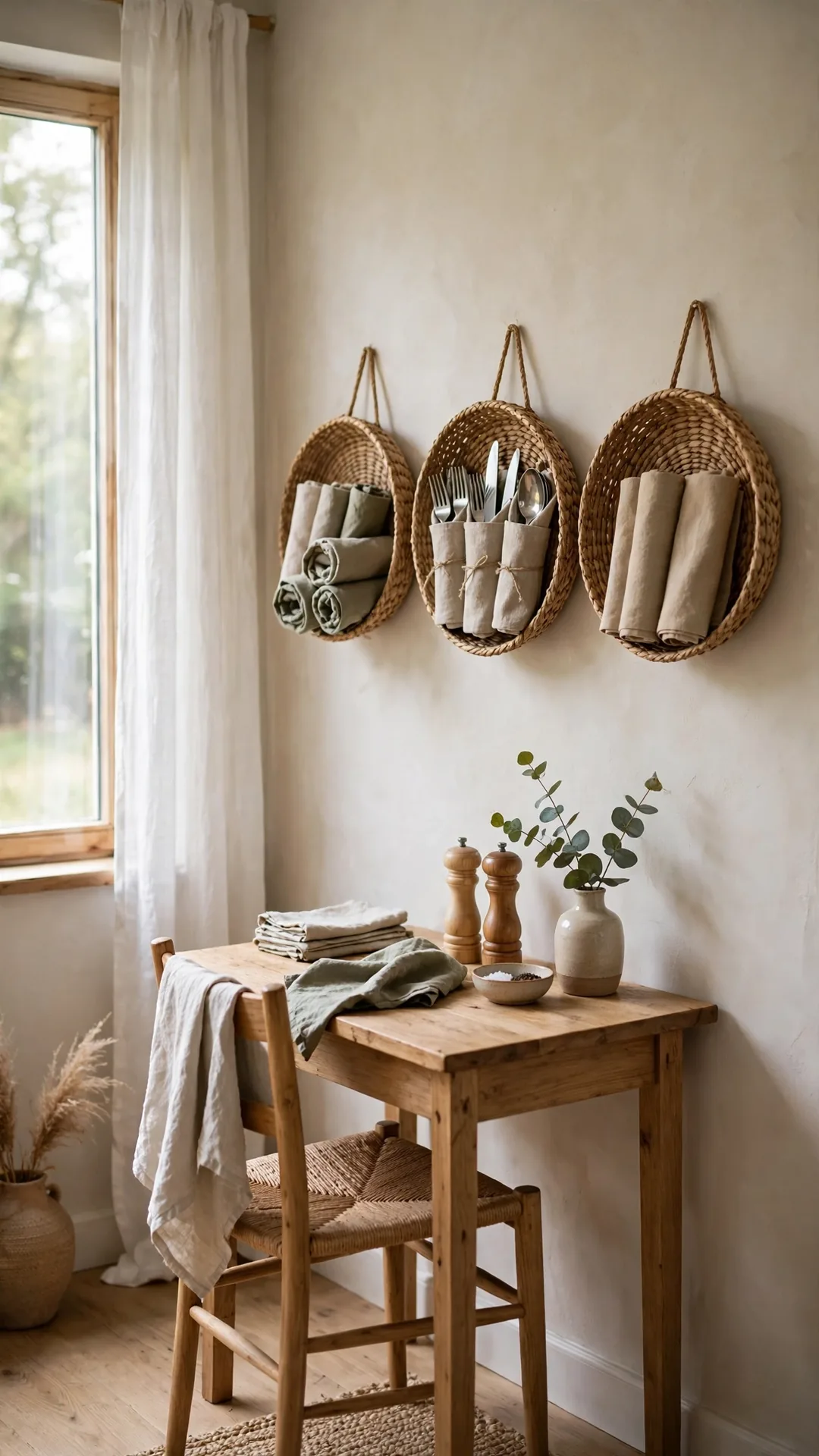
Flat wall baskets hold napkins, cutlery rolls and mail neatly. Woven texture softens hard dining room walls. Each basket takes one category, so sorting stays simple.
How to do it:
- Choose baskets about 12 inches wide with flat backs.
- Hang them at hand height beside the sideboard.
- Keep napkins in one and cutlery rolls in another.
- Dust the weave monthly with a dry brush.
- Rotate baskets by season to keep colors calm.
Best for: Small walls beside the table or door.
Budget: $12 to $30
Quick tip: Cloth liners stop woven edges snagging napkins.
18. Mount a Glass Holder Under a Shelf
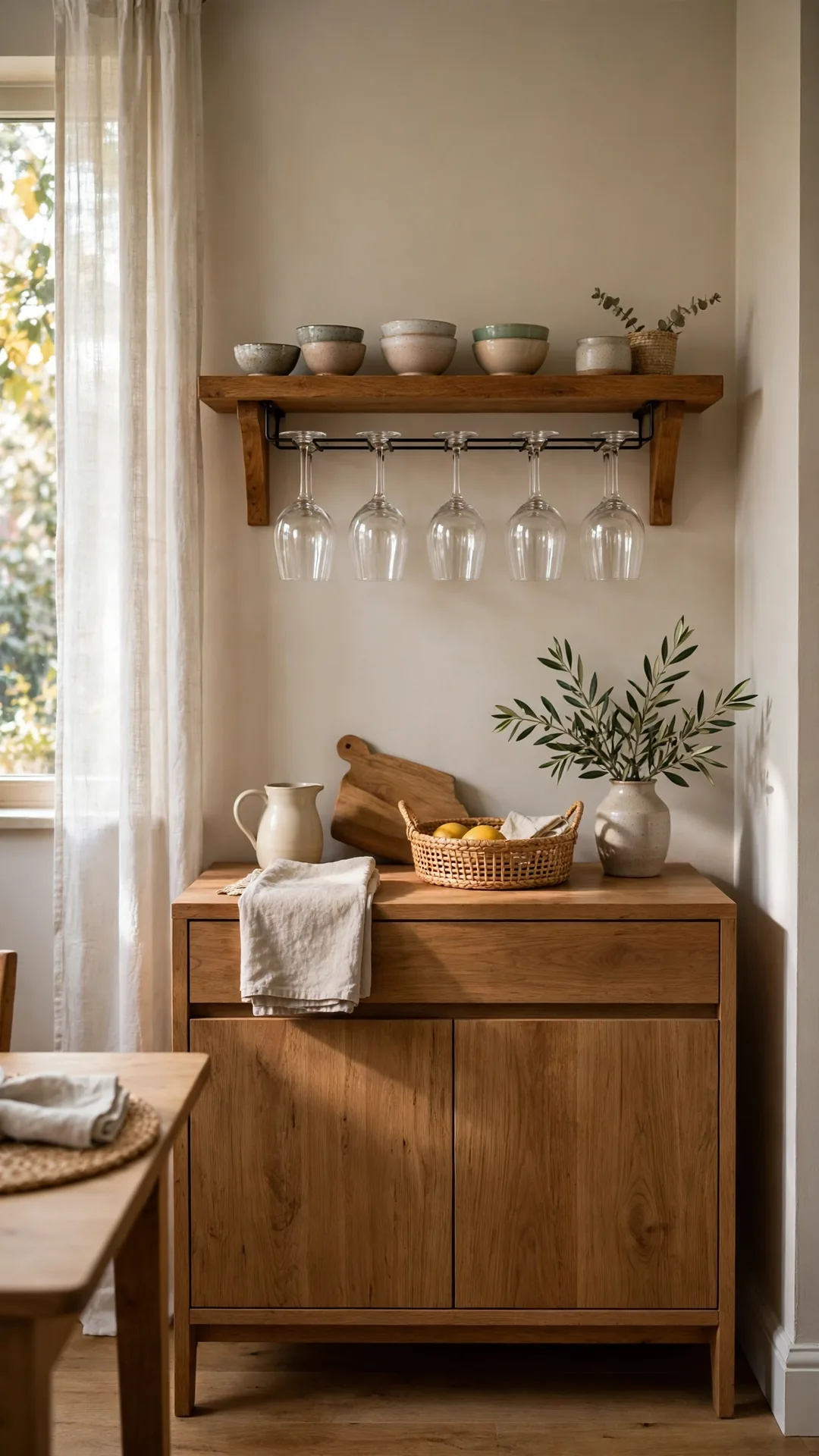
Stemware takes shelf room that bowls need more. Small dining room storage ideas move glasses under the shelf instead. A stemware rack screws up into the board above.
How to do it:
- Pick a rack with rows spaced 4 inches apart.
- Screw it under a shelf at least 3/4 inch thick.
- Slide glasses in base first, two per row.
- Keep the rack away from heat and steam.
- Keep daily glasses in the center rows.
Best for: Wine glasses stored near the table.
Budget: $12 to $30
Quick tip: Measure your tallest glass before you fix the rack.
19. Divide Sideboard Drawers for Cutlery

Loose cutlery wastes half of every sideboard drawer. Adjustable dividers give forks, knives and serving spoons fixed lanes. The end lane holds the table spray and cloth, sorted like these cleaning supplies organization ideas for small spaces.
How to do it:
- Measure drawer width, depth and height first.
- Fit dividers with slots about 2 inches wide.
- Keep daily cutlery at the front of the drawer.
- Lay serving spoons flat in the longest lane.
Best for: Sideboards with two or more shallow drawers.
Budget: $10 to $30
Quick tip: Felt bases stop the rattle when drawers close.
20. Stand Plates Upright With a Rack
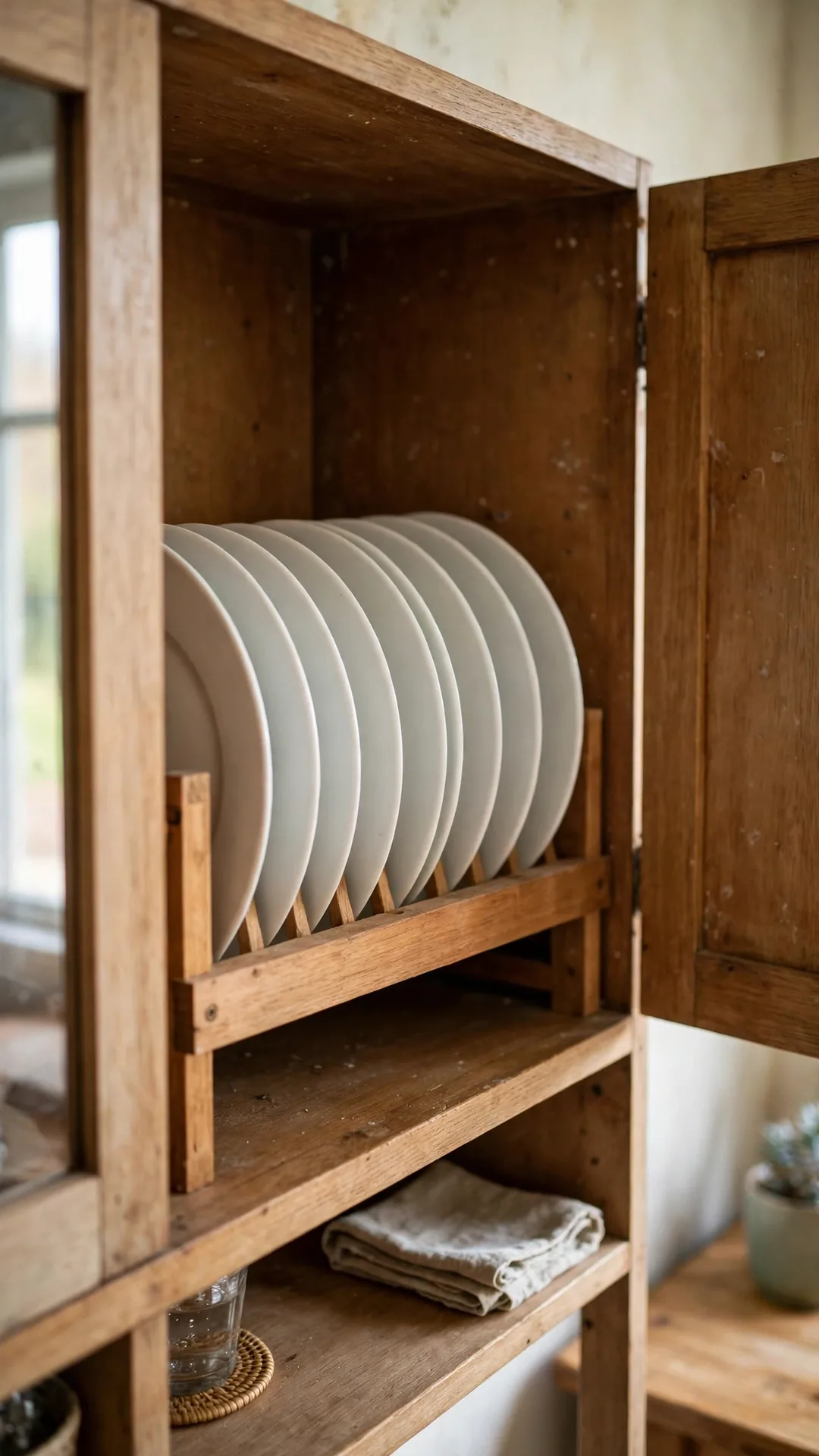
Stacked plates chip and hide the pattern you want. An in-cabinet rack stands them upright in a row. You pull one plate out without lifting five.
How to do it:
- Choose a rack that fits your cabinet depth.
- Space the slots about 1 inch apart.
- Put daily plates at the front slots.
- Keep platters in the widest rear slot.
- Leave one slot empty for new pieces.
Best for: Cabinets and deep sideboard shelves.
Budget: $12 to $28
Quick tip: Bamboo racks grip plates more gently than metal wire racks do.
21. Hang Tablecloths on Padded Hangers

Folded tablecloths crease along every fold line. Small dining room storage ideas hang them on padded hangers instead. Fresh cloths come back from the wash ready to hang, like these farmhouse small space laundry room ideas show.
How to do it:
- Use wide padded hangers to stop shoulder marks.
- Hang one cloth per hanger for fast picking.
- Clip a plain card to each hanger for size notes.
- Keep the rod inside the sideboard or closet.
Best for: Hosts who rotate several tablecloths.
Budget: $8 to $18
Quick tip: Air cloths for an hour before you hang them.
22. Roll Napkins in a Shallow Drawer

Rolled napkins fit shallow drawers that reject flat stacks. Each roll stands upright, so colors stay easy to scan. A full set of twelve fits one small drawer.
How to do it:
- Roll each napkin into a tube about 2 inches wide.
- Stand rolls upright in tight rows.
- Sort by color from light to dark.
- Keep rings in a small box at the front.
- Iron cotton napkins before rolling for crisp edges.
Best for: Hosts with big cloth napkin sets.
Budget: Under $10
Quick tip: A rubber band per roll keeps travel sets tidy.
23. Sort Serving Spoons in a Utensil Crock

Serving spoons and ladles tangle inside deep drawers. A sturdy crock on the sideboard top keeps them upright and visible. Grabbing the right tool takes one second.
How to do it:
- Pick a crock at least 6 inches tall and heavy.
- Keep only tools you use every week inside.
- Stand the tallest tools at the back.
- Wash the crock monthly to clear dust.
- Dry tools fully before storing to stop rust.
Best for: Sideboard tops with a free corner.
Budget: $10 to $25
Quick tip: A cloth at the base stops metal clinks.
24. Stack Bowls With Shelf Risers Inside

Deep sideboard shelves waste the air above short bowls. Small dining room storage ideas add a riser to split that height. Two layers of bowls fit where one stack sat.
How to do it:
- Measure the shelf height before buying a riser.
- Choose a riser about 10 inches deep.
- Put daily bowls on the lower layer.
- Keep mixing bowls on the top layer.
- Mark each layer on the riser front edge.
Best for: Tall cabinets with fixed shelves.
Budget: $10 to $25
Quick tip: Non-slip mats keep bowl stacks steady.
25. Keep Chargers Flat in a Low Drawer
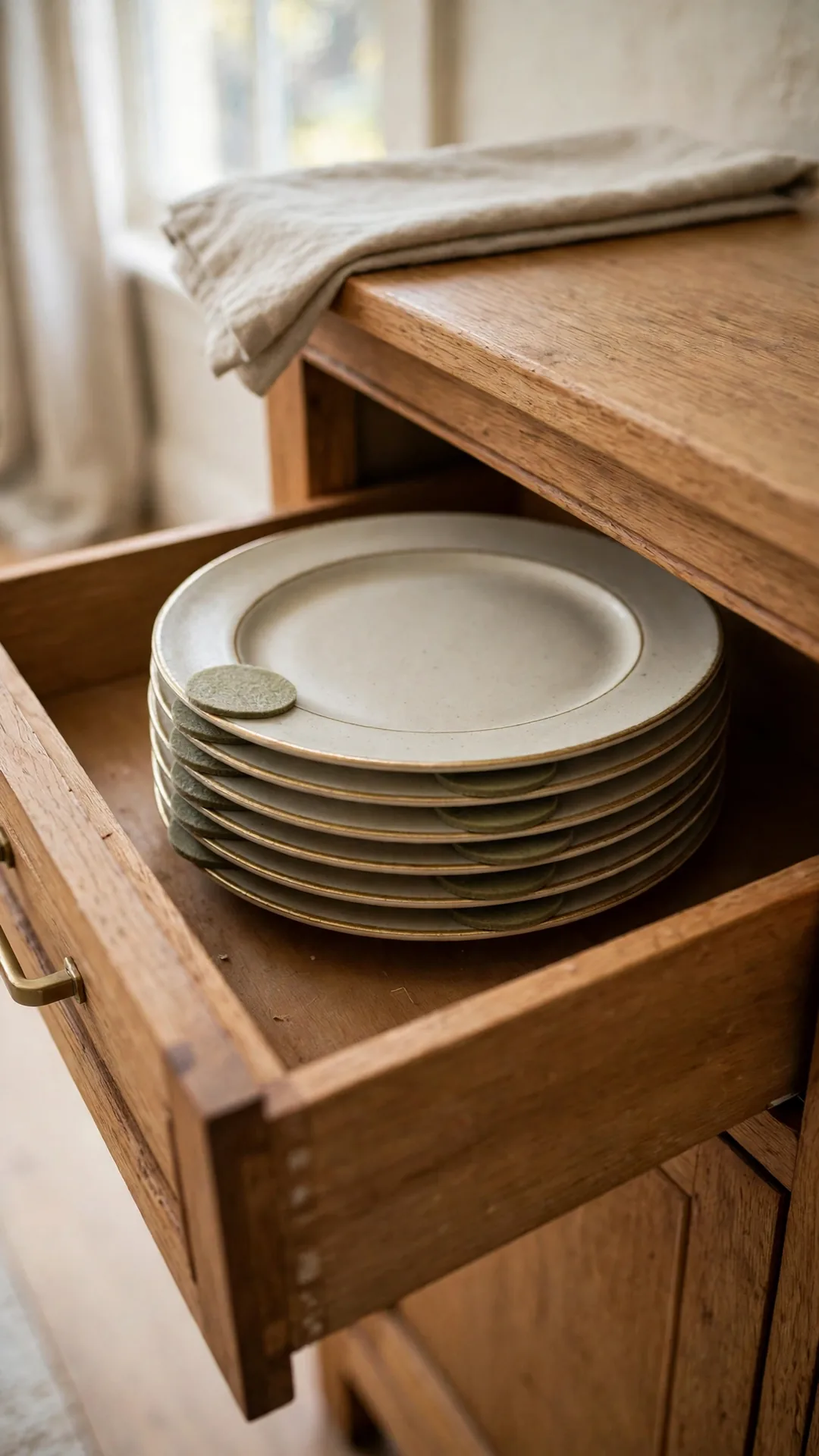
Chargers and placemat rounds bully other storage spots. A low drawer under the sideboard shelf swallows the whole stack. Flat storage stops warping and edge chips.
How to do it:
- Measure your largest charger before choosing the drawer.
- Stack chargers with felt pads between each one.
- Keep the stack under twelve pieces for safe weight.
- Write the contents on the inside drawer edge.
- Slide the drawer out fully before lifting stacks.
Best for: Hosts who set formal tables often.
Budget: $15 to $40
Quick tip: Store chargers upside down to protect the finish.
26. Hide Party Supplies in a Lidded Box
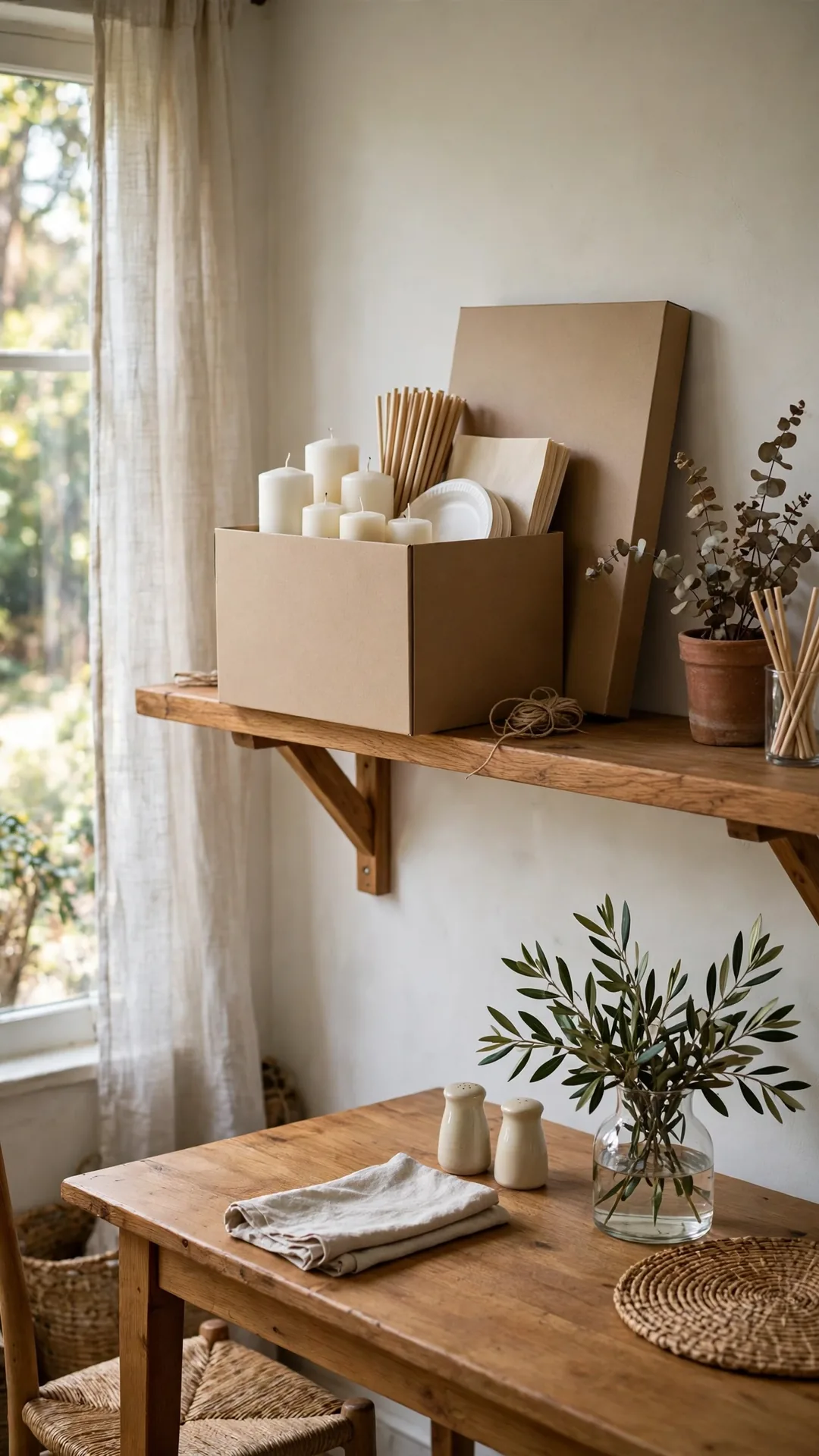
Candles, balloons and paper straws scatter across drawers fast. One lidded box on a shelf keeps party gear together. You grab the whole box when a birthday lands.
How to do it:
- Choose a box about 14 inches long with a snug lid.
- Sort candles, holders and straws into zip bags.
- Keep matches in a small tin inside.
- Store the box on the highest shelf.
- Keep spare candles upright in a plain glass jar.
Best for: Families who host small parties at home.
Budget: $8 to $20
Quick tip: Restock the box the day after each party.
27. Add a Pull-Out Tray for Heavy Platters
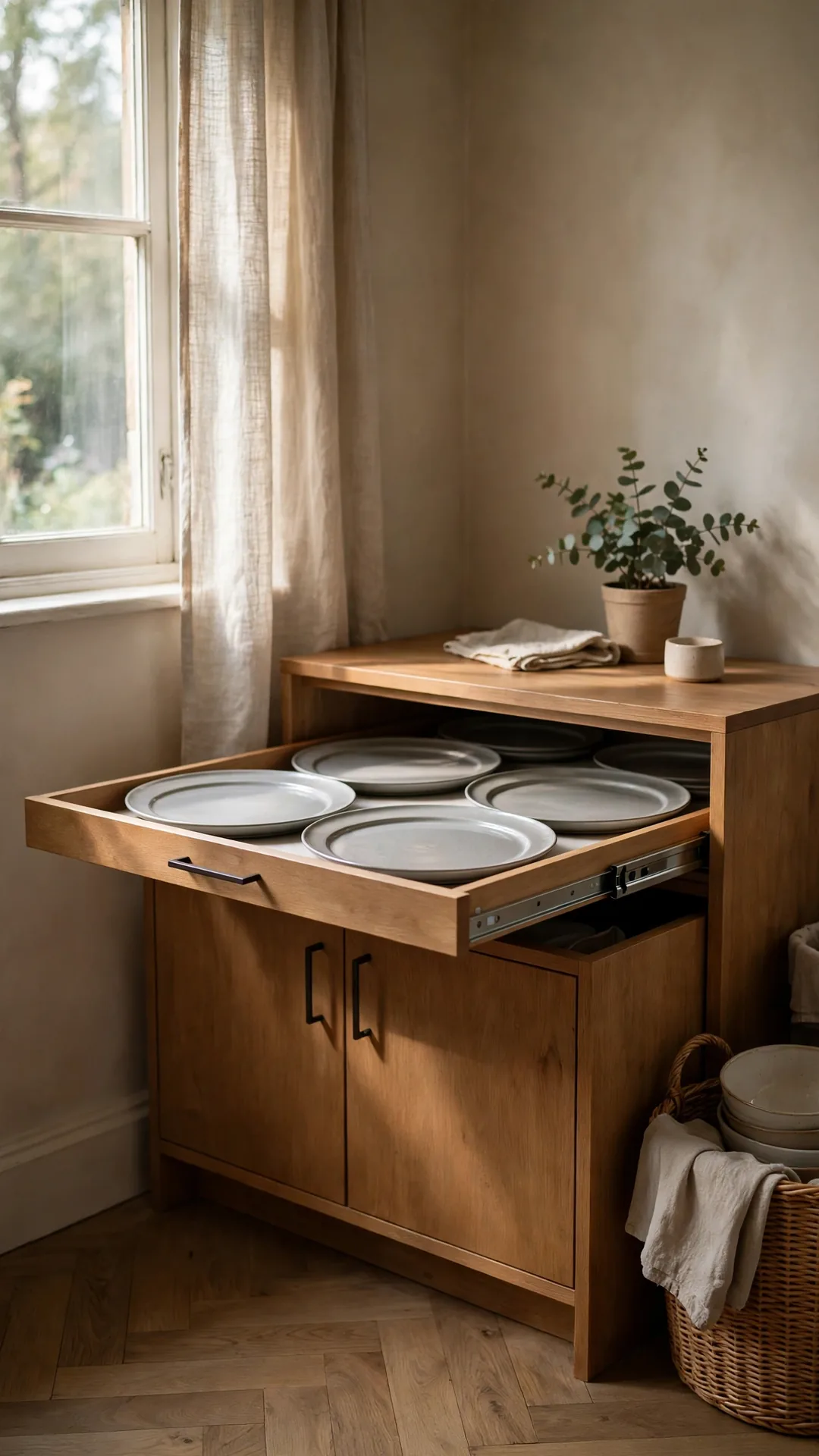
Heavy platters hide at the back of low cabinets. Small dining room storage ideas mount them on a pull-out tray instead. The tray slides out, so you lift with both hands.
How to do it:
- Fit tray rails to the cabinet side walls.
- Choose a tray rated for at least 30 pounds.
- Keep platters flat in a single layer.
- Leave 2 inches of clearance above the tray.
- Oil the rails yearly so the tray runs smooth.
Best for: Low cabinets and sideboard bases.
Budget: $30 to $70
Quick tip: Felt pads under platters stop sliding scrapes.
28. Use the Top Hutch Shelf for Rare Pieces
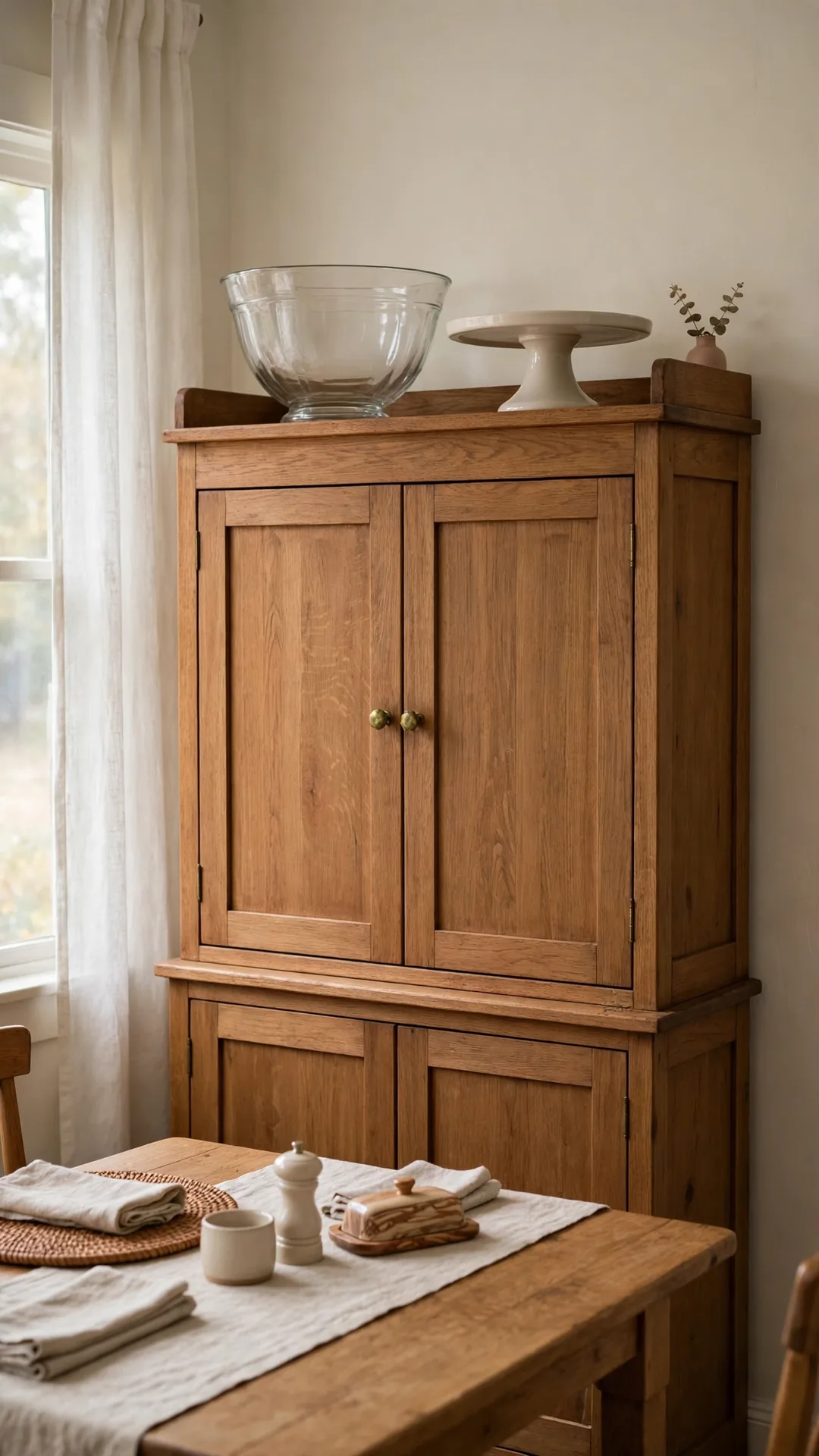
The top shelf of a hutch suits pieces used twice yearly. Punch bowls and cake stands wait up there safely. Daily items stay low, where hands reach easily.
How to do it:
- Measure head clearance before lifting anything up.
- Place the heaviest rare piece in the center.
- Wrap glass pieces in cloth for dust cover.
- Use a step stool with both hands free.
Best for: Hutch owners with tall top shelves.
Budget: Under $10
Quick tip: Note the contents on a plain card taped inside the hutch door.
29. Stack Spare Chairs in a Corner
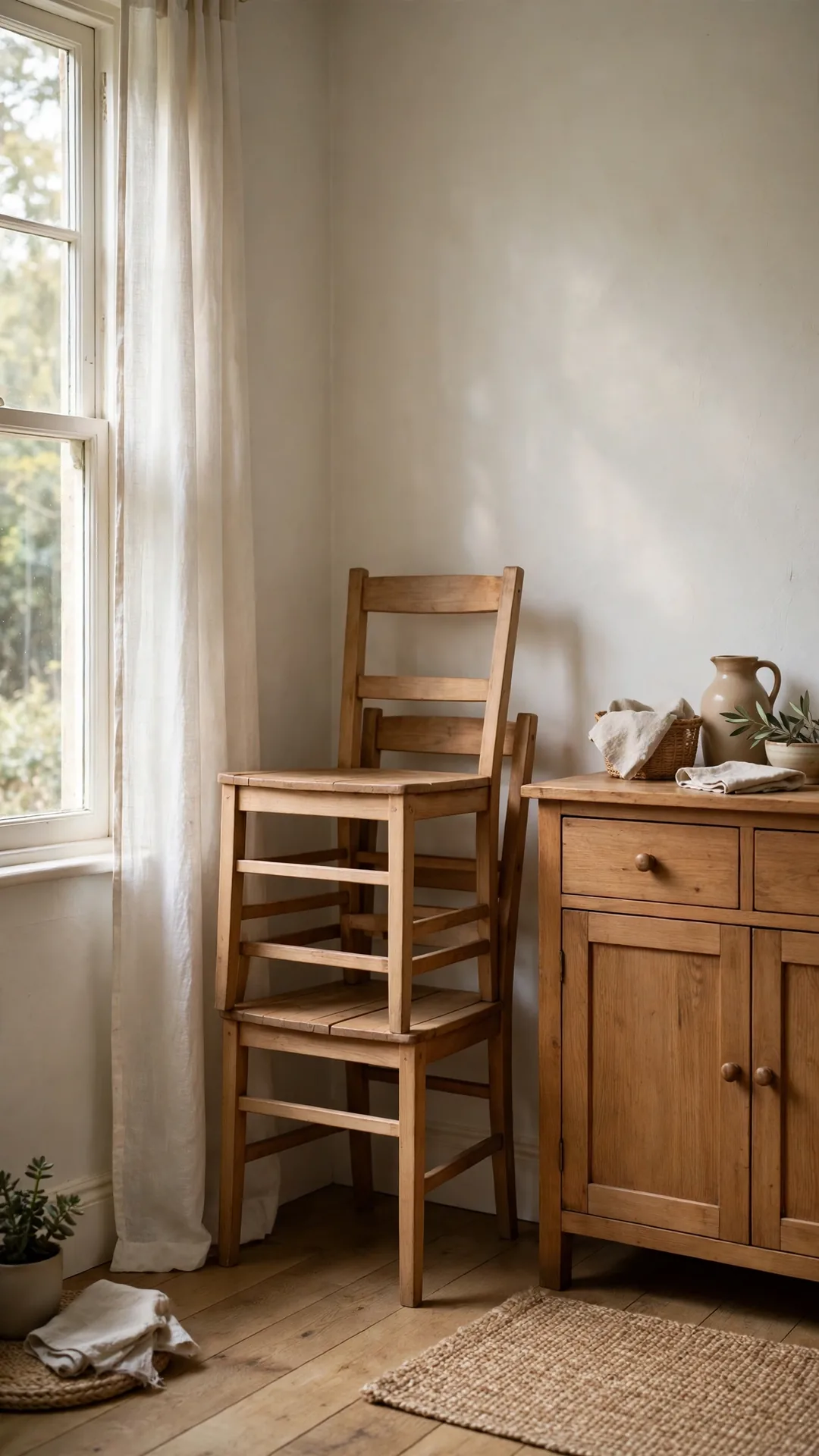
Two spare chairs stack neatly in one corner footprint. The stack waits behind a curtain or beside the sideboard. Guest seating appears in under a minute.
How to do it:
- Choose chairs made to stack at least four high.
- Stack only two high in a lived-in corner.
- Face the stack toward the wall for calm lines.
- Add felt pads between stacked seats.
- Angle the stack so chair legs align neatly.
Best for: Corners beside the sideboard or door.
Budget: $40 to $120
Quick tip: A washable cover keeps stacked chairs dust free.
30. Slide Storage Ottomans Under the Window
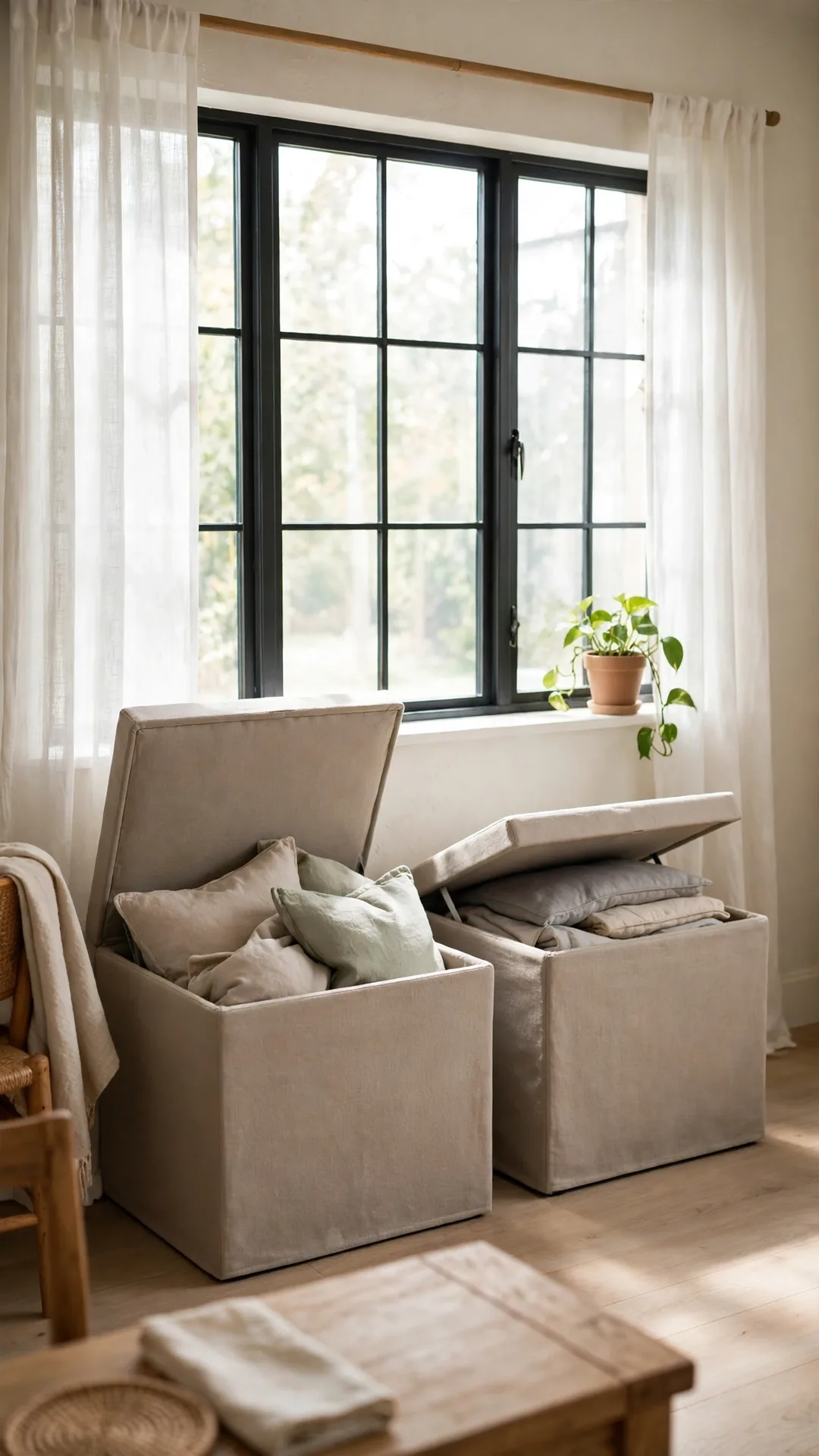
Storage ottomans earn floor space twice in small dining room storage ideas. Each one seats a guest and hides spare cushions inside. Two ottomans slide under the window between meals.
How to do it:
- Pick ottomans about 18 inches wide with lift lids.
- Store spare cushions and throws inside.
- Keep the pair clear of radiator heat.
- Use them as footrests on movie nights too.
- Store spare throws in the second ottoman.
Best for: Window walls in open plan dining areas.
Budget: $35 to $90
Quick tip: Match fabric tones to the chairs for a calm look.
31. Fill the Banquette Base With Drawers

A banquette base hides a long, low storage run. Drawers under the seats hold placemats, candles and spare cutlery. The storage sits exactly where meals happen.
How to do it:
- Plan drawers about 18 inches deep under each seat.
- Use side runners rated for 25 pounds each.
- Keep daily items in the drawer nearest the kitchen.
- Add finger pulls so knees never catch handles.
- Keep candle holders in the far drawer.
Best for: Built-in corner seating in small nooks.
Budget: $120 to $300
Quick tip: Soft close runners stop drawers slamming mid meal.
32. Slide a Low Crate Under the Bench
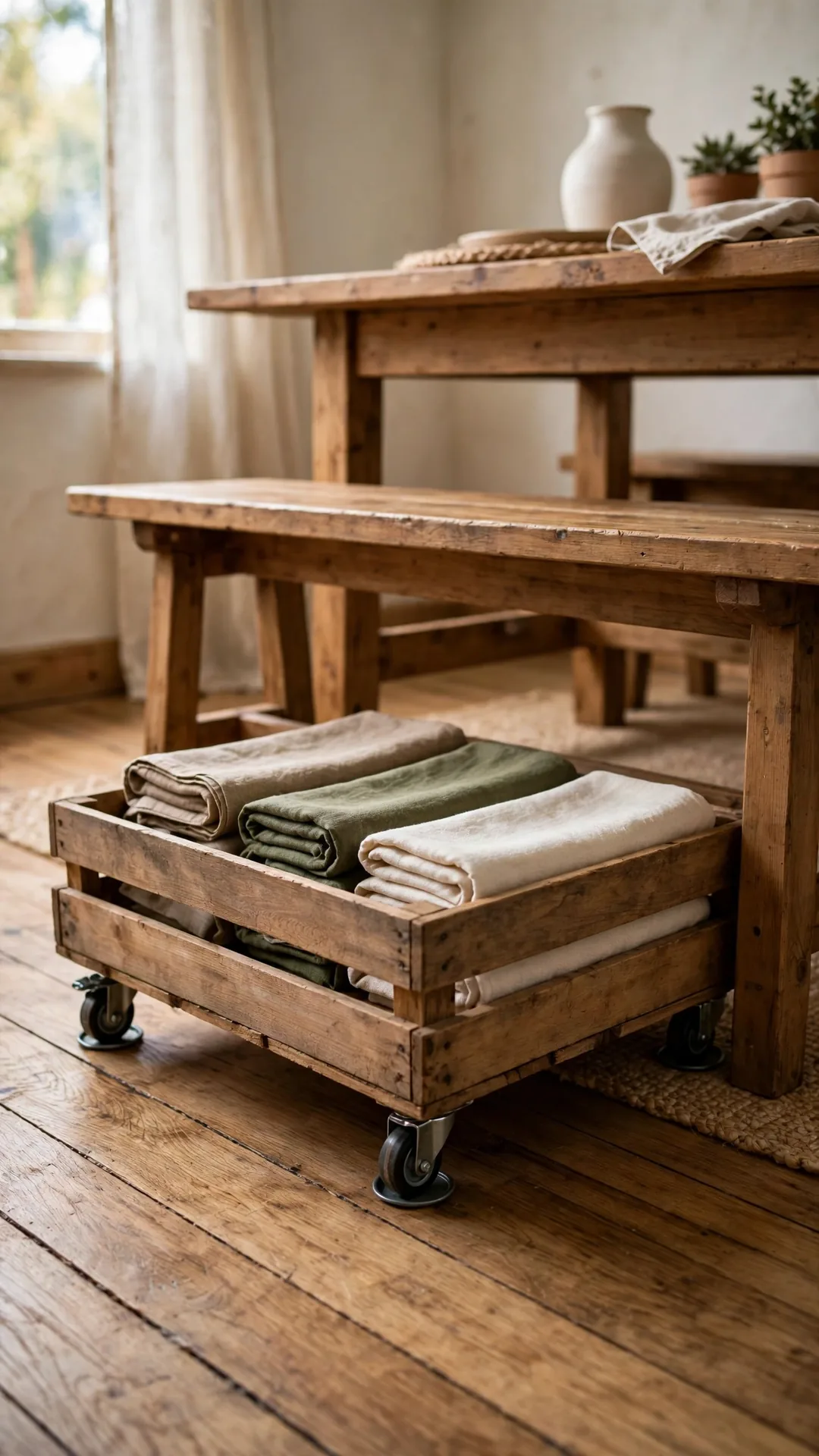
The gap under a bench fits a low crate on casters. Table runners and seasonal napkins ride inside the crate. One pull brings the whole set to hand.
How to do it:
- Measure the under-bench height before buying the crate.
- Choose a crate about 5 inches tall with small wheels.
- Fold runners flat in a single layer.
- Keep the crate front flush with the bench legs.
- Dust the crate monthly since runners sit open.
Best for: Benches with at least 6 inches of clearance.
Budget: $15 to $35
Quick tip: A rope handle makes the pull easier on knees.
33. Pick a Storage Stool for Extra Seats

A storage stool solves two small room problems at once. Small dining room storage ideas count it as seating and as a linen box. The lid lifts for tablecloths between meals.
How to do it:
- Choose a stool about 16 inches tall with a padded top.
- Check the inside depth fits folded cloths.
- Keep the stool beside the sideboard daily.
- Move it to the table when guests arrive.
- Test the lid hinges before loading it full.
Best for: Tiny dining nooks with two regular seats.
Budget: $30 to $70
Quick tip: A washable cover keeps the seat guest ready.
34. Store Cushions in a Bench-End Basket
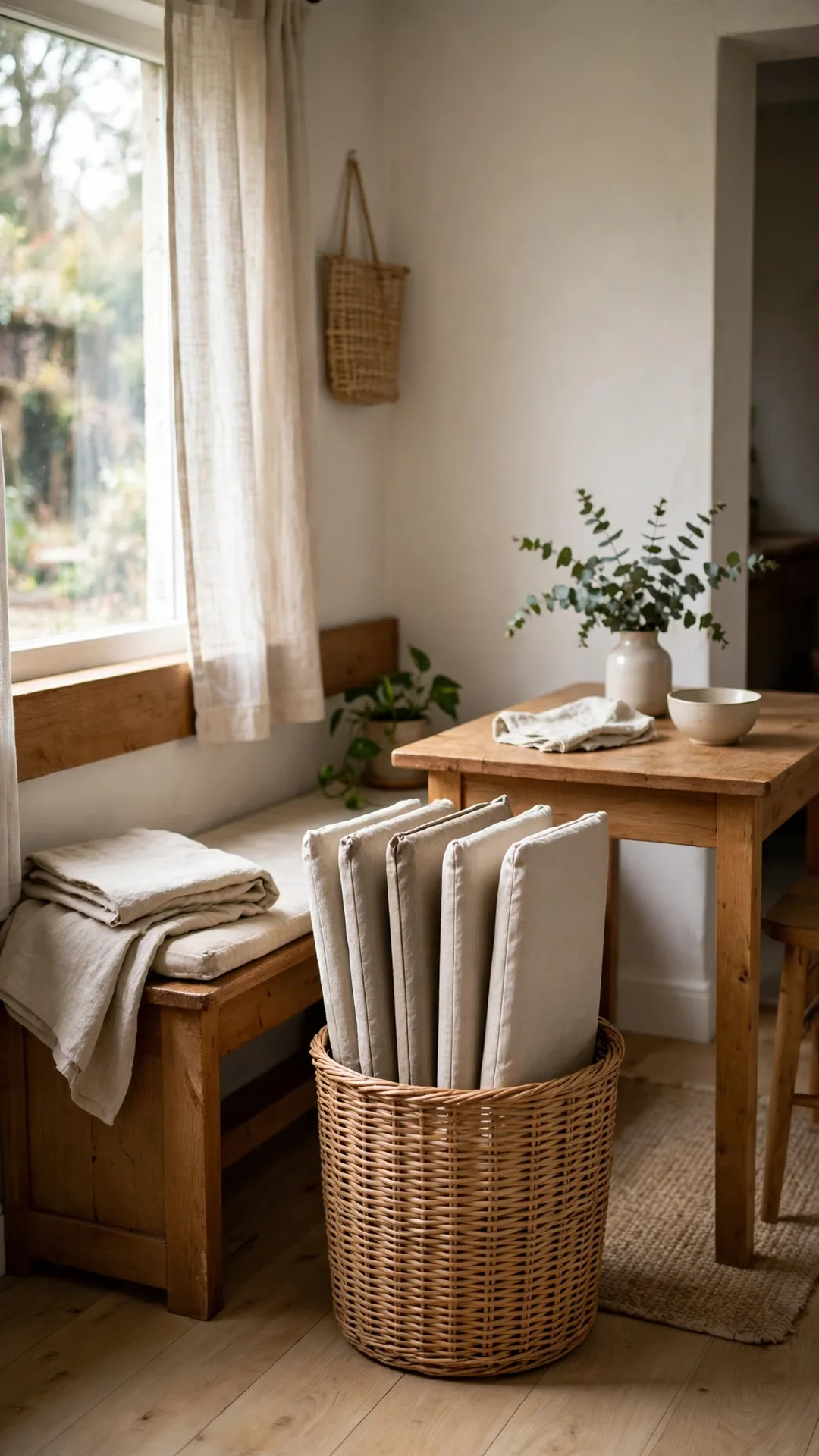
Chair cushions pile up on seats between meals. A tall basket at the end of the bench corrals them upright. The set stays clean and off the table.
How to do it:
- Pick a basket about 20 inches tall with stiff sides.
- Stand cushions on edge like files in a drawer.
- Keep the basket clear of the walk path.
- Shake cushions out weekly to clear crumbs.
- Air cushions outdoors on dry days monthly.
Best for: Benches and window seats with cushion sets.
Budget: $15 to $35
Quick tip: A cotton liner keeps woven edges off fabric.
35. Store Seasonal Tableware Under the Banquette
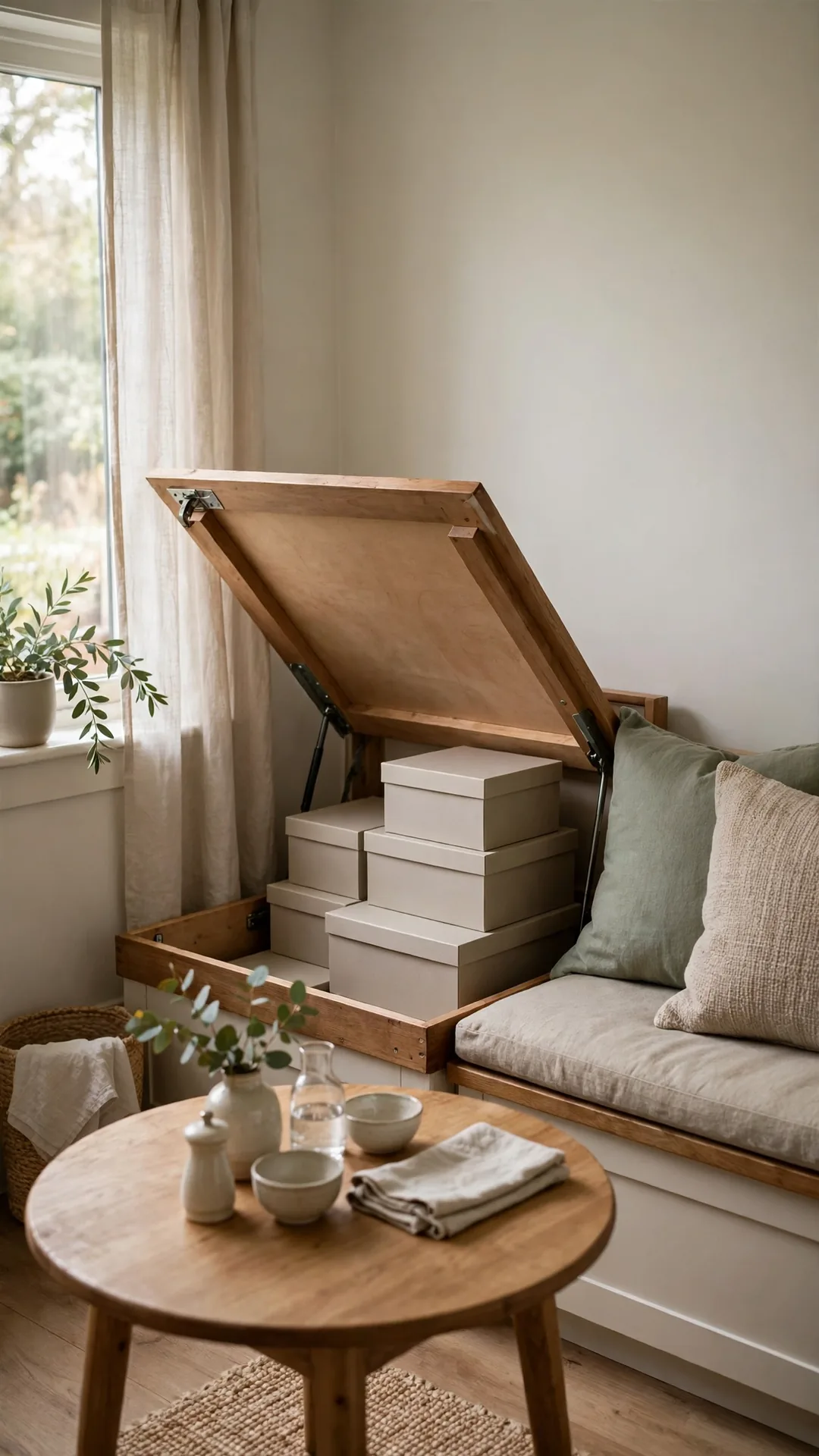
Holiday dishes need a home outside the daily cabinets. The deep space under a hinged banquette seat swallows boxed sets. Plain notes on each box end the yearly hunt.
How to do it:
- Pack each set in a box with padding between plates.
- Write the contents on two sides of each box.
- Keep the heaviest box at the bottom.
- Leave one hand gap at the front for lifting.
- Add silica packs inside to guard against damp.
Best for: Banquette owners who host holiday meals.
Budget: $10 to $30
Quick tip: Photograph each set before packing for fast resets.
36. Park a Bar Cart in the Corner
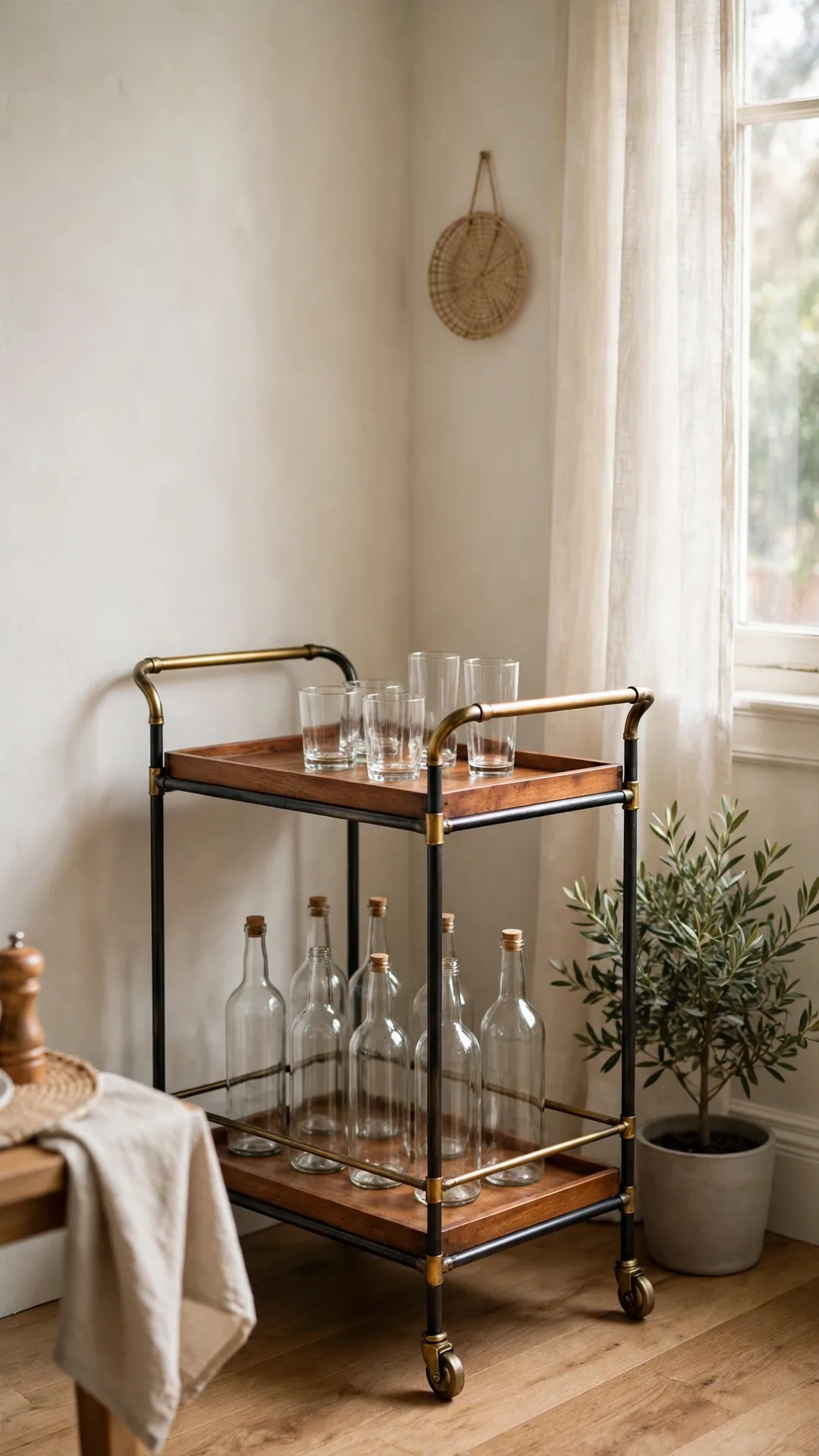
A bar cart gives bottles and glasses one rolling home. Small dining room storage ideas park it in the corner between parties. The top tier doubles as a serving station.
How to do it:
- Choose a cart about 28 inches tall with two tiers.
- Keep bottles on the lower tier for balance.
- Stand glasses upside down on the top tier.
- Lock the wheels once the cart sits in place.
Best for: Corners near the dining table.
Budget: $50 to $130
Quick tip: A tray on the top tier catches drips and rings.
37. Stand a Corner Cabinet for Glassware
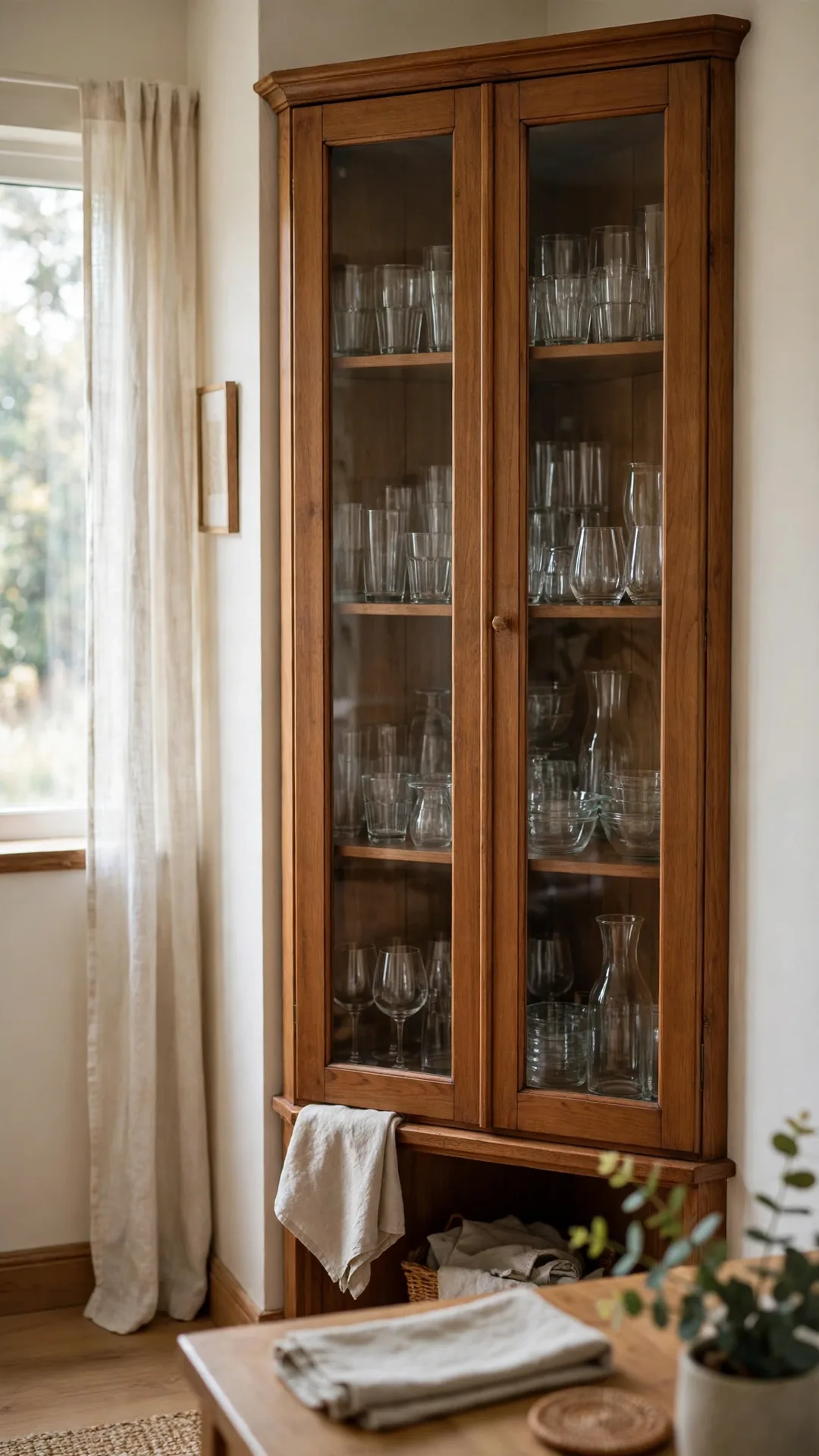
A tall corner cabinet claims the triangle nobody uses. Glass doors keep glassware visible and dust free. The footprint stays under two square feet.
How to do it:
- Measure both walls before choosing the cabinet size.
- Anchor the top to the wall for safety.
- Put daily glasses at hand height inside.
- Keep rare pieces on the top shelf.
- Store a step stool beside it for top shelves.
Best for: Square dining rooms with one dead corner.
Budget: $90 to $220
Quick tip: A battery light strip brightens the inside shelves.
38. Borrow One Closet Shelf for Party Pieces
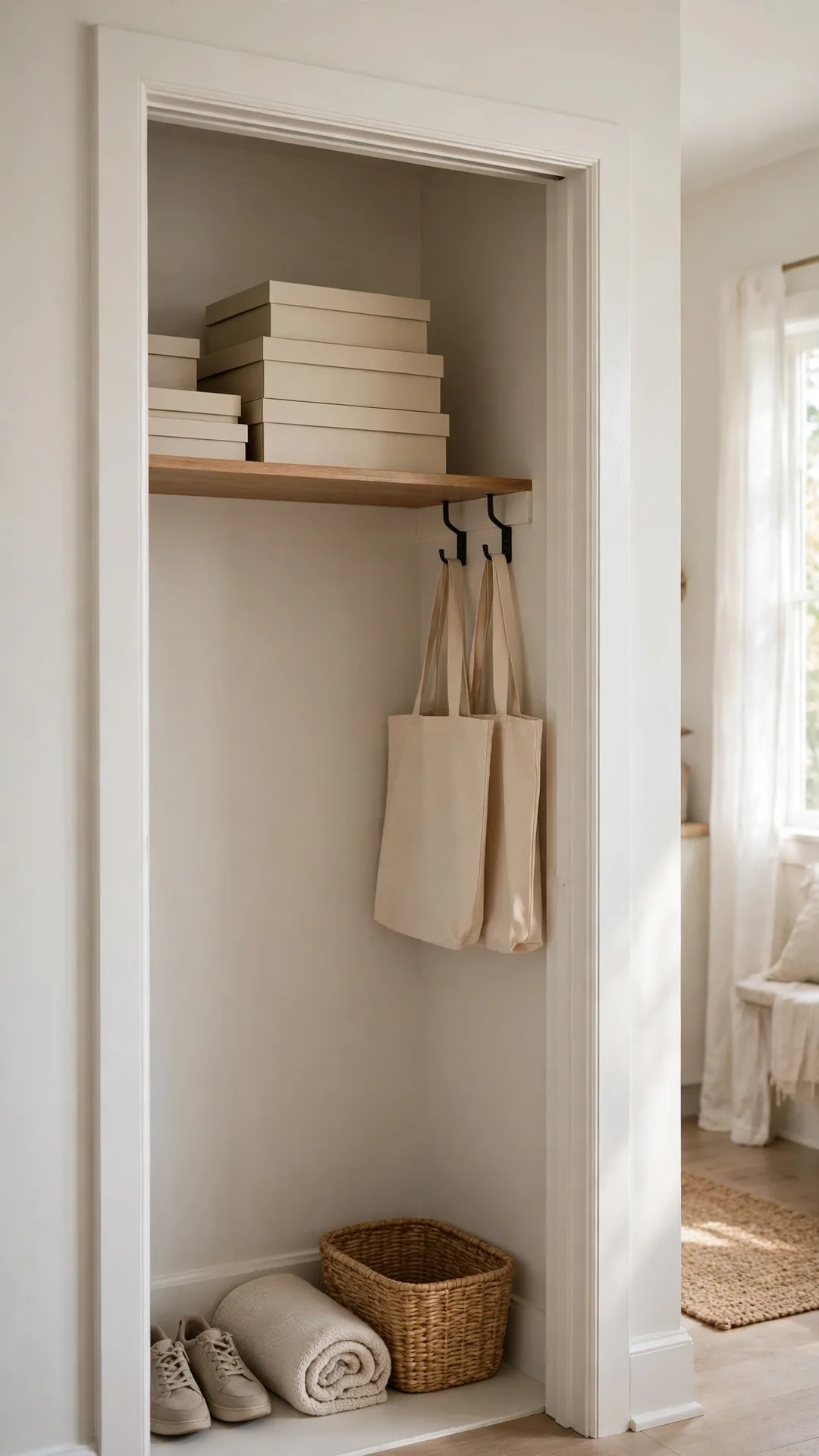
The hall closet can spare one shelf for dining overflow. Gift wrap and spare tote bags share that shelf well. These bag storage ideas for a small space sort the bag half neatly.
How to do it:
- Clear one shelf at hand height in the closet.
- Pack party pieces in two flat boxes.
- Hang spare bags on a hook beside the boxes.
- Keep a plain list inside the closet door.
Best for: Homes with a closet near the dining room.
Budget: Under $15
Quick tip: Flat boxes slide out like drawers on the shelf.
39. Turn a Coat Closet Into a Serving Closet
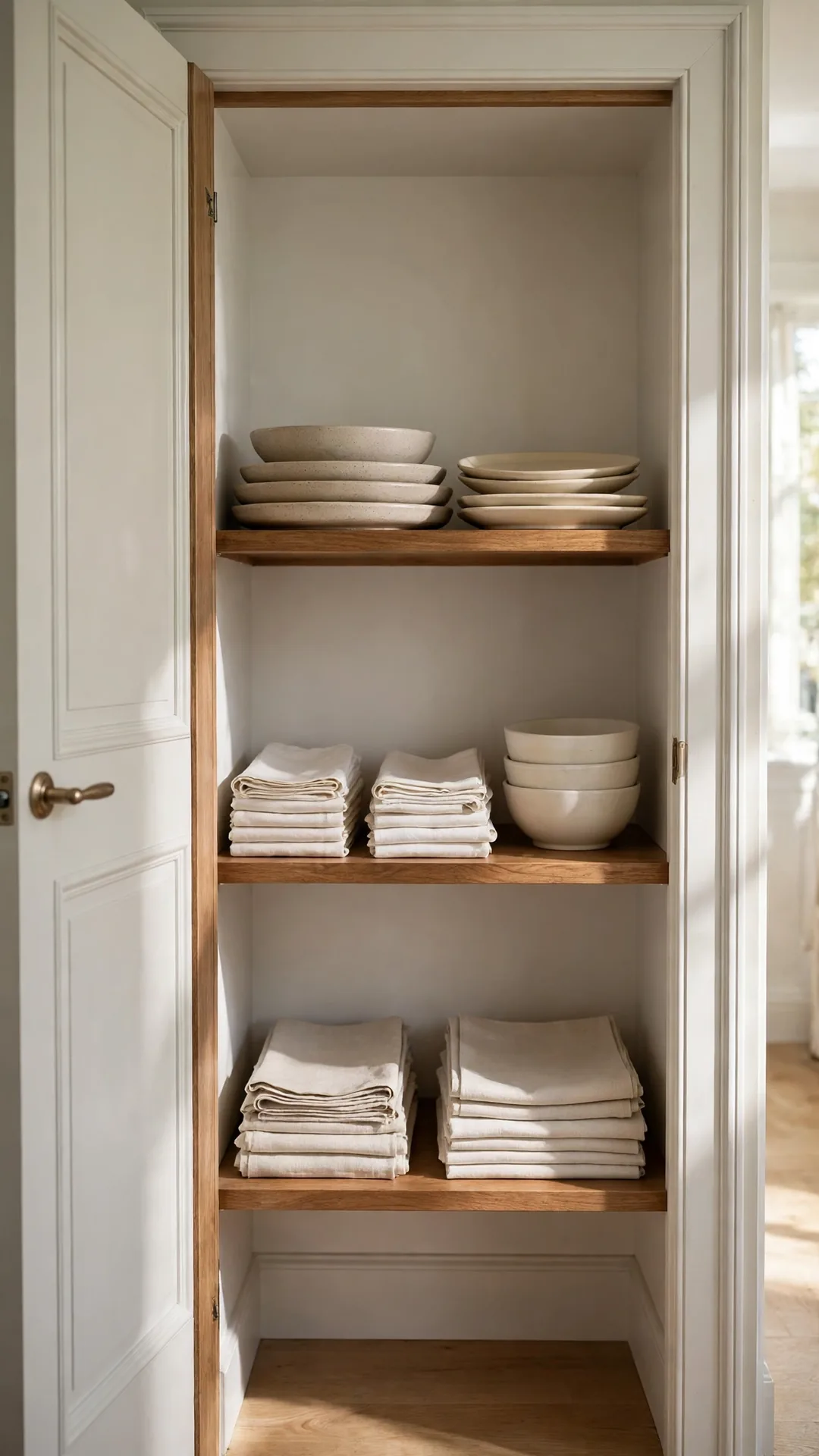
A small coat closet near the dining room converts well. Small dining room storage ideas swap the rod for shelves of serving ware. Coats move to hooks behind the bedroom door.
How to do it:
- Fit three shelves about 12 inches deep inside.
- Store platters and bowls at waist height.
- Keep table linens on the top shelf in bags.
- Leave the floor free for the folding chairs.
Best for: Homes with a closet beside the dining area.
Budget: $40 to $110
Quick tip: A battery light makes the deep shelves usable.
40. Stack Crates in the Corner for Linens
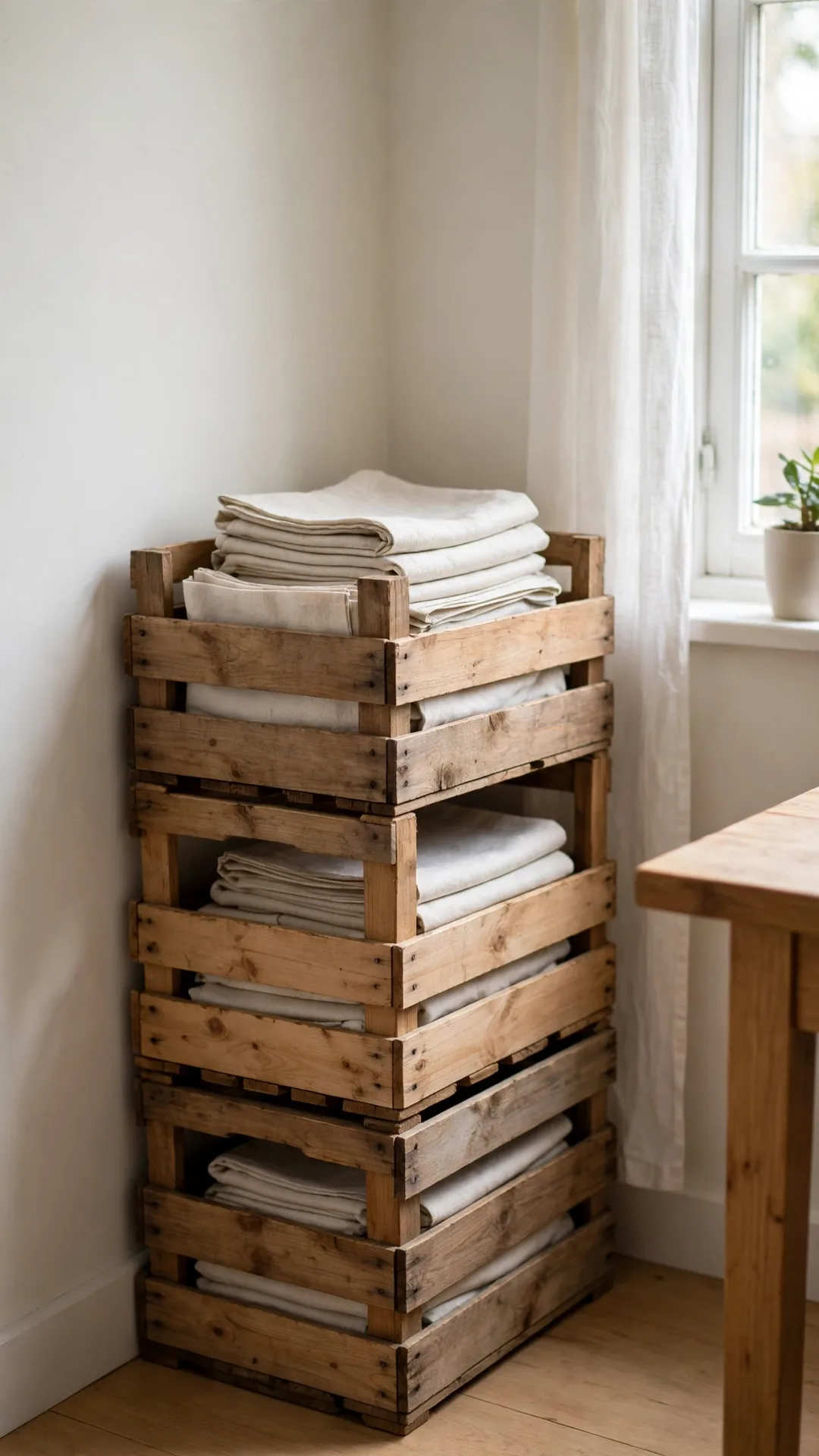
Two or three wooden crates stack into a linen tower. Each crate holds one type: cloths, napkins or runners. The stack builds up, never out.
How to do it:
- Choose crates about 16 inches wide with solid sides.
- Sand rough edges so fabric never snags.
- Stack no more than three crates high.
- Anchor the top crate to the wall.
- Line each crate with cotton cloth for linens.
Best for: Rustic rooms and rental corners.
Budget: $20 to $50
Quick tip: Turn the top crate sideways for a display shelf.
41. Use an Armoire for Table Linens and Dishes
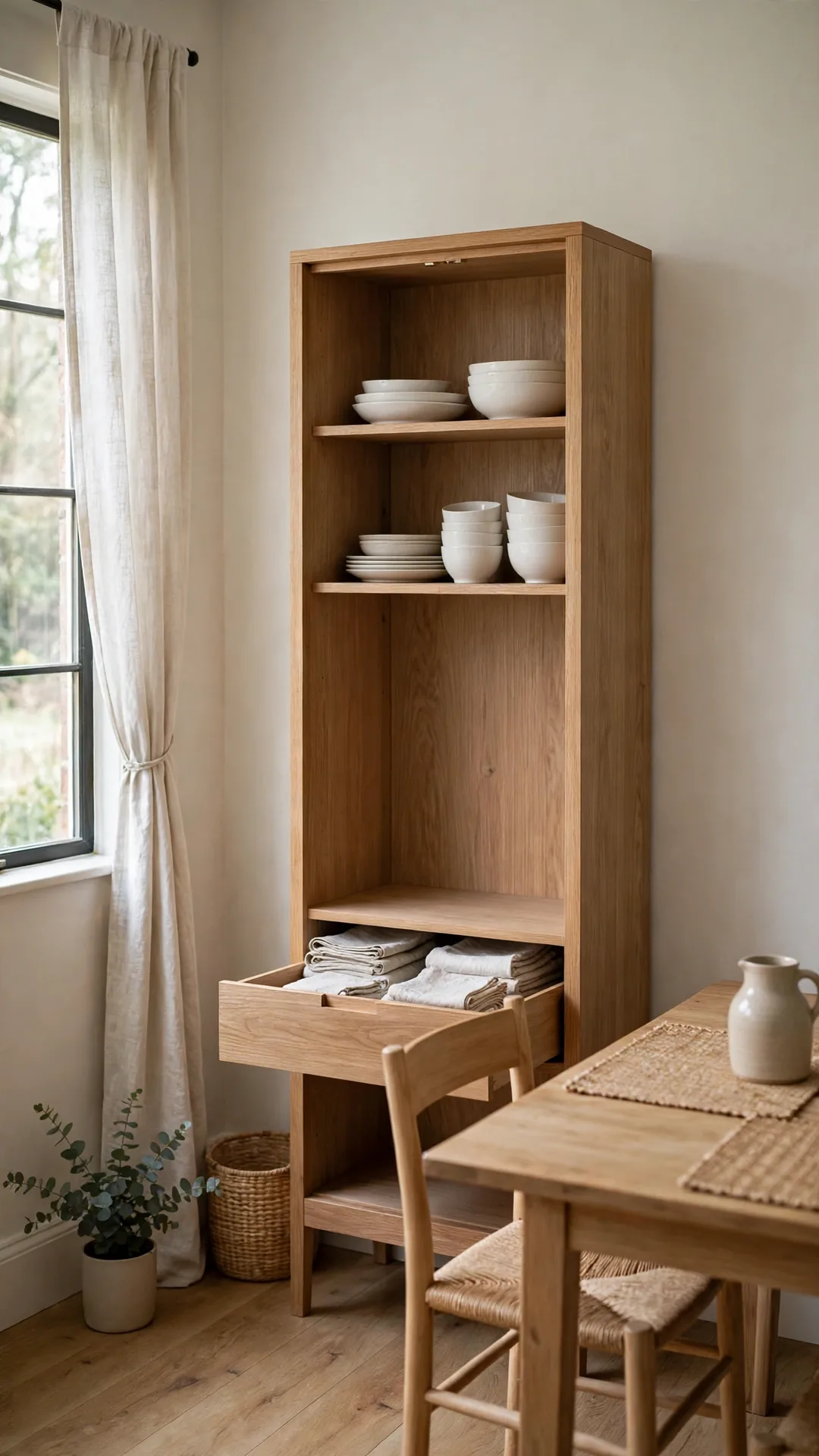
A slim armoire swallows a full dining storage set. Shelves take dishes while the drawer takes linens. Closed doors keep the room calm and tidy.
How to do it:
- Pick an armoire no deeper than 18 inches.
- Anchor it to the wall before loading shelves.
- Put heavy dishes on the lowest shelf.
- Keep linens in the drawer with cedar blocks.
- Air the inside monthly to keep linens fresh.
Best for: Rooms with no built-in storage at all.
Budget: $150 to $450
Quick tip: Secondhand armoires cost far less than new cabinets.
42. Zone an Open Plan With a Low Cabinet

A low cabinet can mark where dining starts in open plans. Small dining room storage ideas use it as both border and buffet. Dishes store on the dining side only.
How to do it:
- Choose a cabinet about 30 inches tall and 14 inches deep.
- Face the doors toward the dining table.
- Keep the top clear for serving dishes.
- Leave 36 inches of walk space behind chairs.
- Keep the dining side shelves for dishes only.
Best for: Studio and open plan apartments.
Budget: $120 to $300
Quick tip: A runner on top protects the finish at parties.
43. Tuck a Cabinet Behind the Door Swing
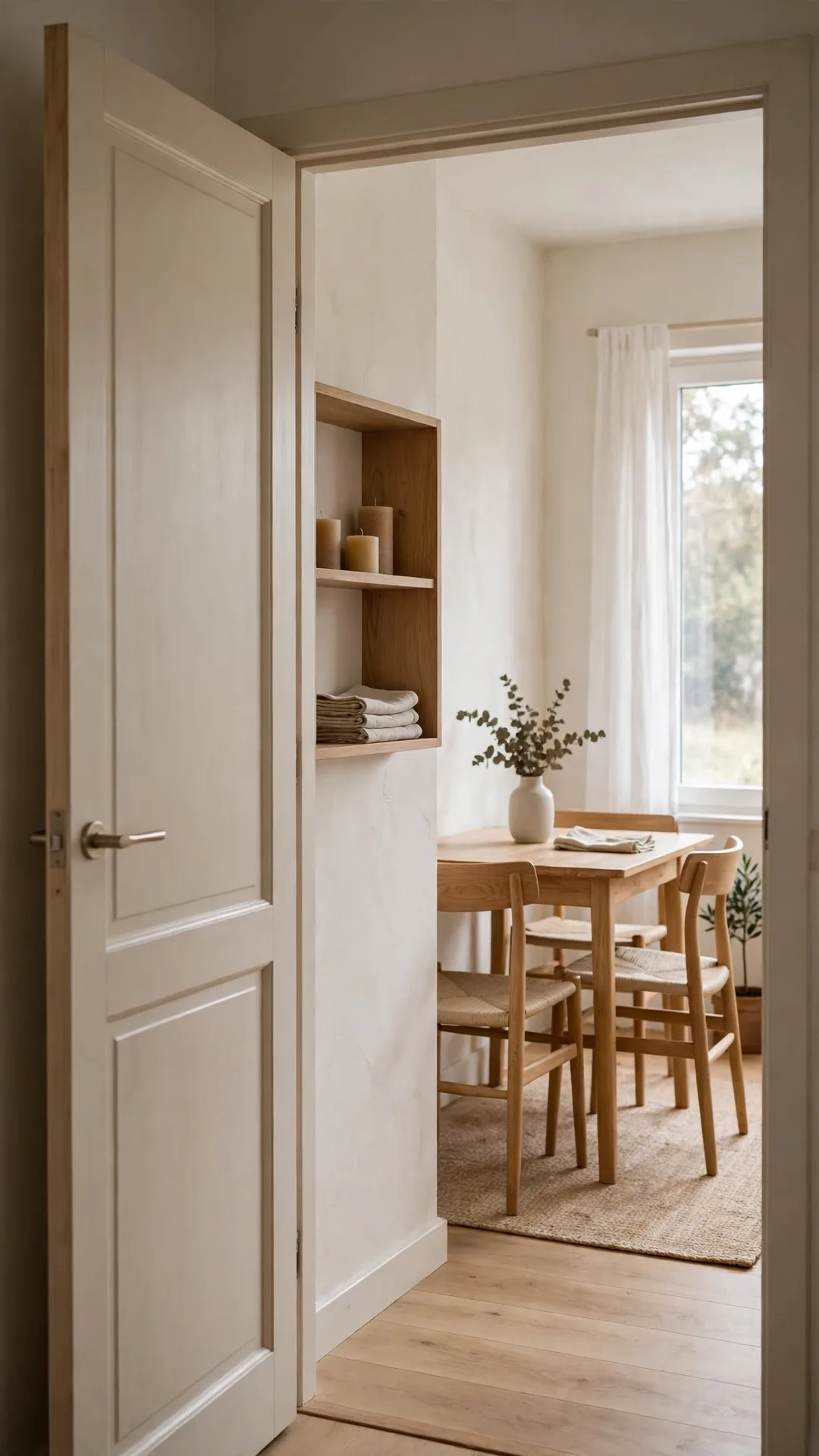
The wall behind the dining room door hides a slim cabinet. The door swing covers it, so the depth stays shallow. Spare candles and napkins live there quietly.
How to do it:
- Measure the door swing arc before you buy.
- Choose a cabinet no deeper than 8 inches.
- Fit a door stop to protect the cabinet front.
- Store flat, light items on every shelf.
- Fit the top shelf for spare candle jars.
Best for: Rooms where every other wall is taken.
Budget: $45 to $110
Quick tip: Paint the cabinet the wall color to blend in.
44. Turn an Unused Fireplace Into Storage

A blocked fireplace makes a deep, dry storage nook. Baskets of candles and spare linens fit the opening well. The surround frames the storage like a display.
How to do it:
- Sweep the opening clean before you store anything.
- Line the base with a washable mat.
- Set two baskets inside, one for candles.
- Confirm the flue stays sealed before you store.
- Vacuum the nook monthly to clear dust.
Best for: Rooms with a sealed, unused fireplace.
Budget: $15 to $40
Quick tip: A plant on the hearth softens the look.
45. Use Cabinet Tops for Vase Storage
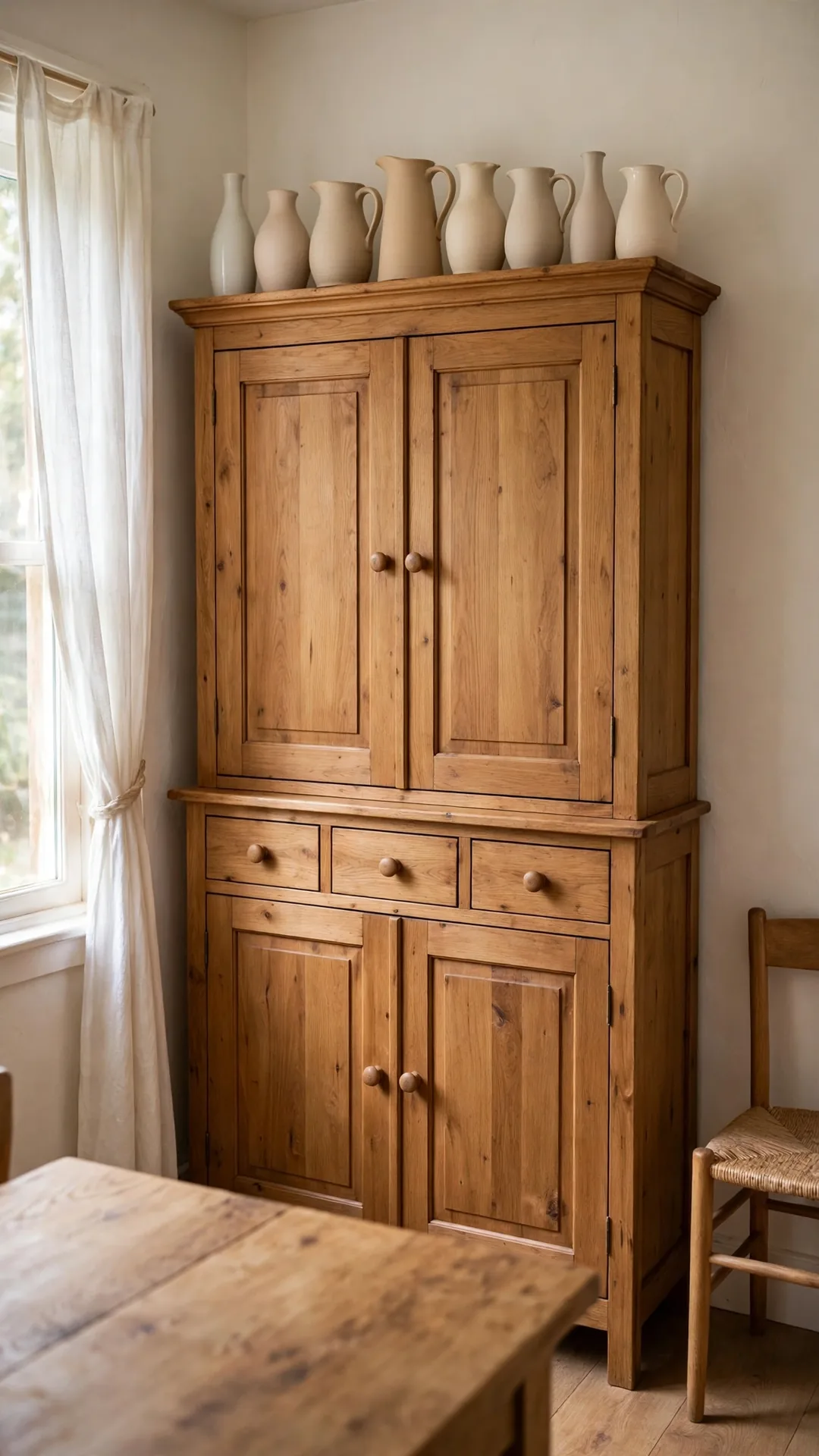
The tops of tall cabinets hold vases and spare pitchers well. Small dining room storage ideas treat that strip as a display shelf. Pieces stay visible and out of the cabinets below.
How to do it:
- Keep only light, stable pieces on top.
- Group vases in threes for a calm line.
- Leave 3 inches between pieces and the ceiling.
- Dust monthly with a long handled duster.
- Rotate the front pieces by season for variety.
Best for: Tall hutches and armoires in small rooms.
Budget: Under $10
Quick tip: Museum putty dots stop tall vases wobbling.
46. Borrow the Hallway Console for Overflow
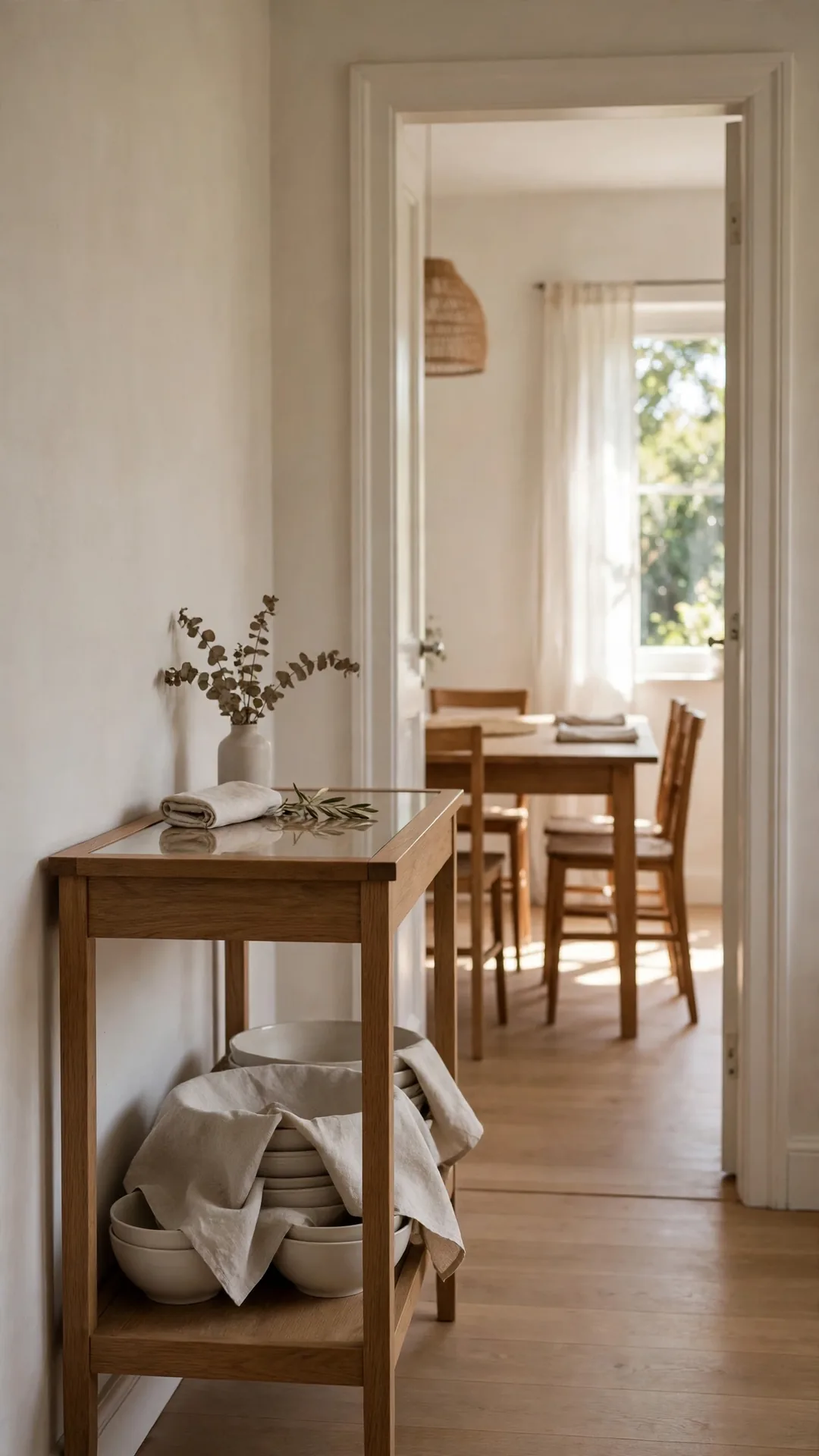
A hallway console can hold dining pieces you use monthly. Serving bowls wait there under a runner or cloth. The dining room keeps only daily items.
How to do it:
- Choose the console nearest the dining room door.
- Store bowls in the console drawers or shelf.
- Cover open pieces with a cloth against dust.
- Walk the pieces in on a tray at parties.
- Keep guest napkins in the top console drawer.
Best for: Apartments with a wide entry hallway.
Budget: Under $20
Quick tip: Keep one tray free for the trip between rooms.
47. Build In a Window Seat With Cabinets
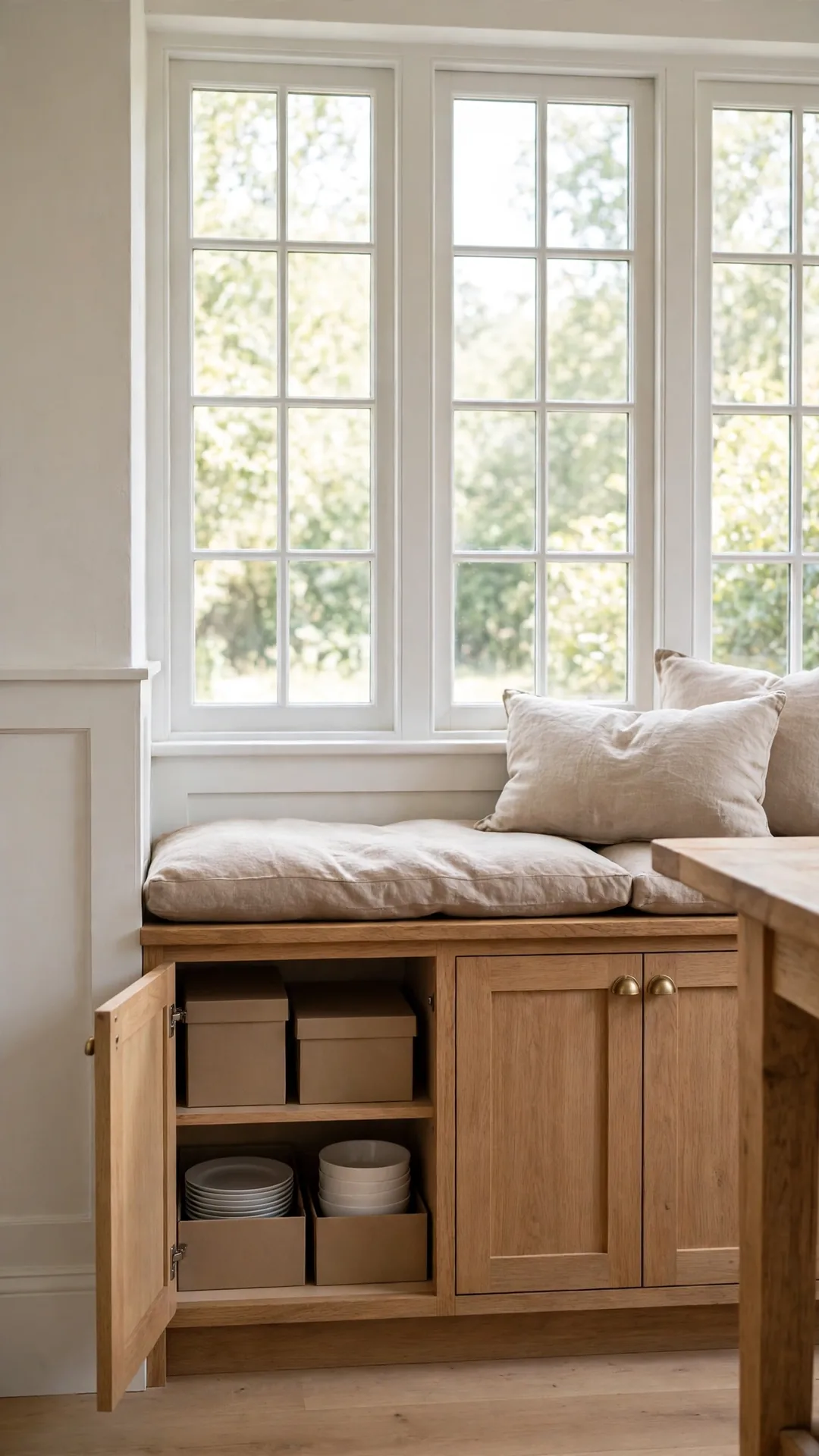
A window seat with cabinets below seats guests and stores sets. Pros share built-in buffet ideas for dining rooms that pair seating with deep base cabinets. The build uses a wall that held nothing before.
How to do it:
- Plan the seat about 18 inches high and 18 inches deep.
- Fit two cabinet doors under the seat front.
- Store spare dishes in boxes inside the base.
- Add cushions with washable covers on top.
Best for: Bay windows and wide window walls.
Budget: $300 to $800
Quick tip: Vent slots keep stored linens smelling fresh.
48. Add a Full Wall of Shallow Cabinets
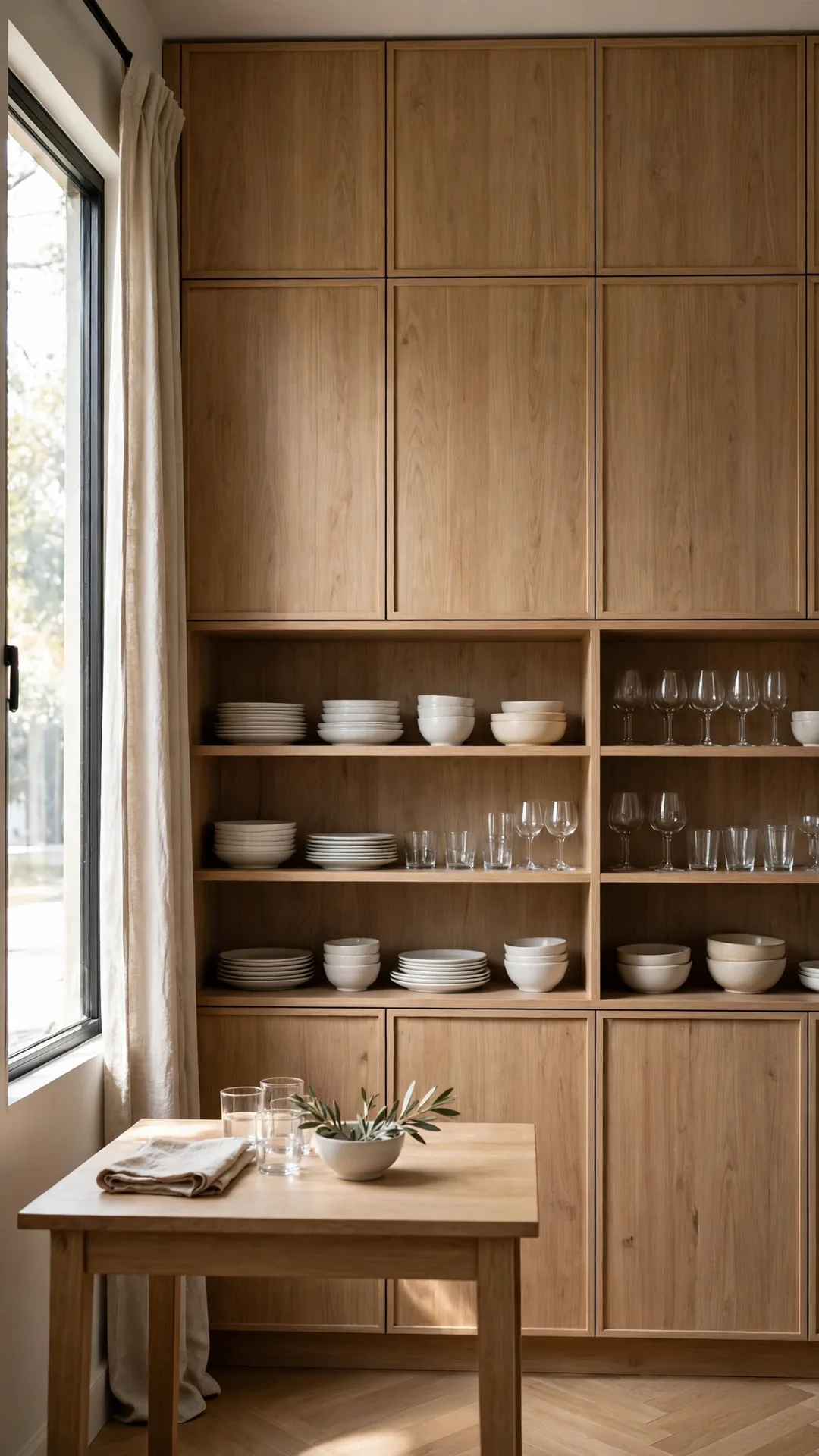
One full wall of shallow cabinets changes a small dining room. Small dining room storage ideas gain a pantry grade run without deep units. Every dish, glass and cloth gets a fixed shelf.
How to do it:
- Keep cabinets 12 to 14 inches deep throughout.
- Mix open shelves with closed doors for balance.
- Anchor every unit to studs along the wall.
- Put daily sets between waist and eye height.
Best for: Owners planning a long term storage fix.
Budget: $600 to $1,500
Quick tip: Flat pack units cut the cost by half or more.
49. Fit a Banquette With Hinged Seats
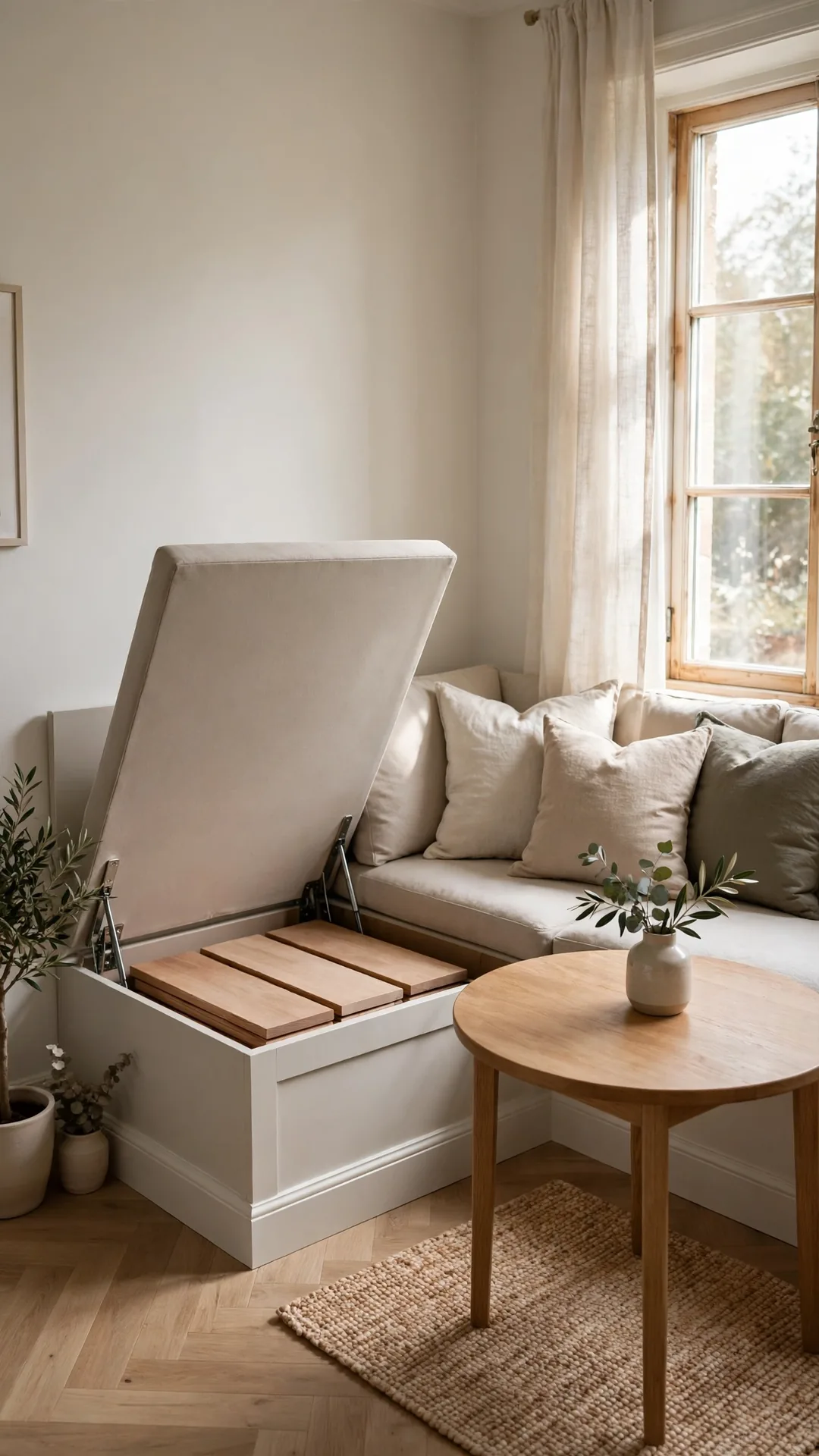
Hinged banquette seats hide the bulkiest dining storage. Extra leaves, pads and party gear fit the long base. The seats lift with one hand between meals.
How to do it:
- Build the base about 17 inches high inside.
- Fit piano hinges along the back edge.
- Add a finger hole so the lid lifts fast.
- Store the table leaf flat at the bottom.
- Store party gear in bags so lifting stays tidy.
Best for: Corner nooks built for family meals.
Budget: $200 to $600
Quick tip: A stay-open hinge keeps fingers safe while loading.
50. Mount a Fold-Down Serving Shelf
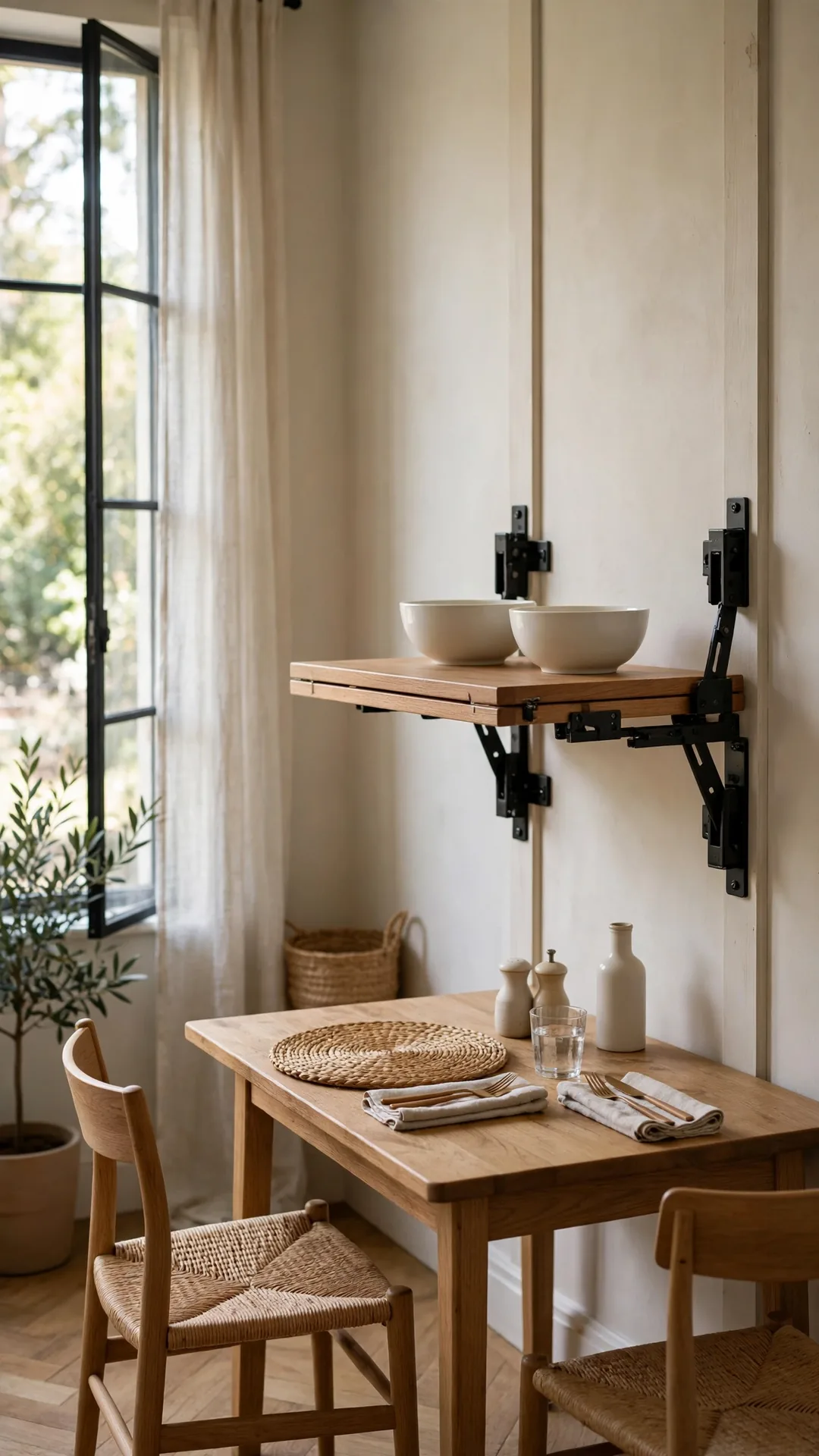
A fold-down shelf gives serving space only when needed. It mounts beside the table and drops flat after meals. Platters rest there during busy dinners.
How to do it:
- Choose a shelf board about 30 by 14 inches.
- Fit folding brackets rated for 40 pounds.
- Mount the board at table height, 30 inches.
- Test the fold with weight before serving day.
- Fold it down before mopping the floor weekly.
Best for: Tiny rooms where a sideboard cannot fit.
Budget: $35 to $80
Quick tip: Round the front corners for tight walk paths.
51. Build a Plate Rail Above the Sideboard

A plate rail shows off dishes while storing them safely. Small dining room storage ideas borrow this old kitchen trick for dining walls. A grooved shelf plus a rail keeps plates upright.
How to do it:
- Fit a shelf 5 inches deep with a front groove.
- Screw a rail 6 inches above the shelf board.
- Stand plates upright between groove and rail.
- Keep the largest platter in the center spot.
- Load daily plates first so they sit lowest.
Best for: Walls above sideboards and buffets.
Budget: $25 to $60
Quick tip: Felt in the groove stops plates chipping.
52. Convert a Dresser Into a Buffet

A low dresser works as a buffet in a small dining room. Deep drawers swallow linens, candles and serving tools. The top serves as a drinks or dessert station.
How to do it:
- Choose a dresser about 34 inches tall and 18 inches deep.
- Sand and paint it to match the room.
- Line drawers with washable paper before loading.
- Keep heavy items in the bottom drawer.
- Keep serving boards flat on the dresser top.
Best for: Secondhand finds and budget makeovers.
Budget: $50 to $180
Quick tip: Swap the knobs for a fast, finished look.
53. Add Under-Stair Shelves for Serving Ware
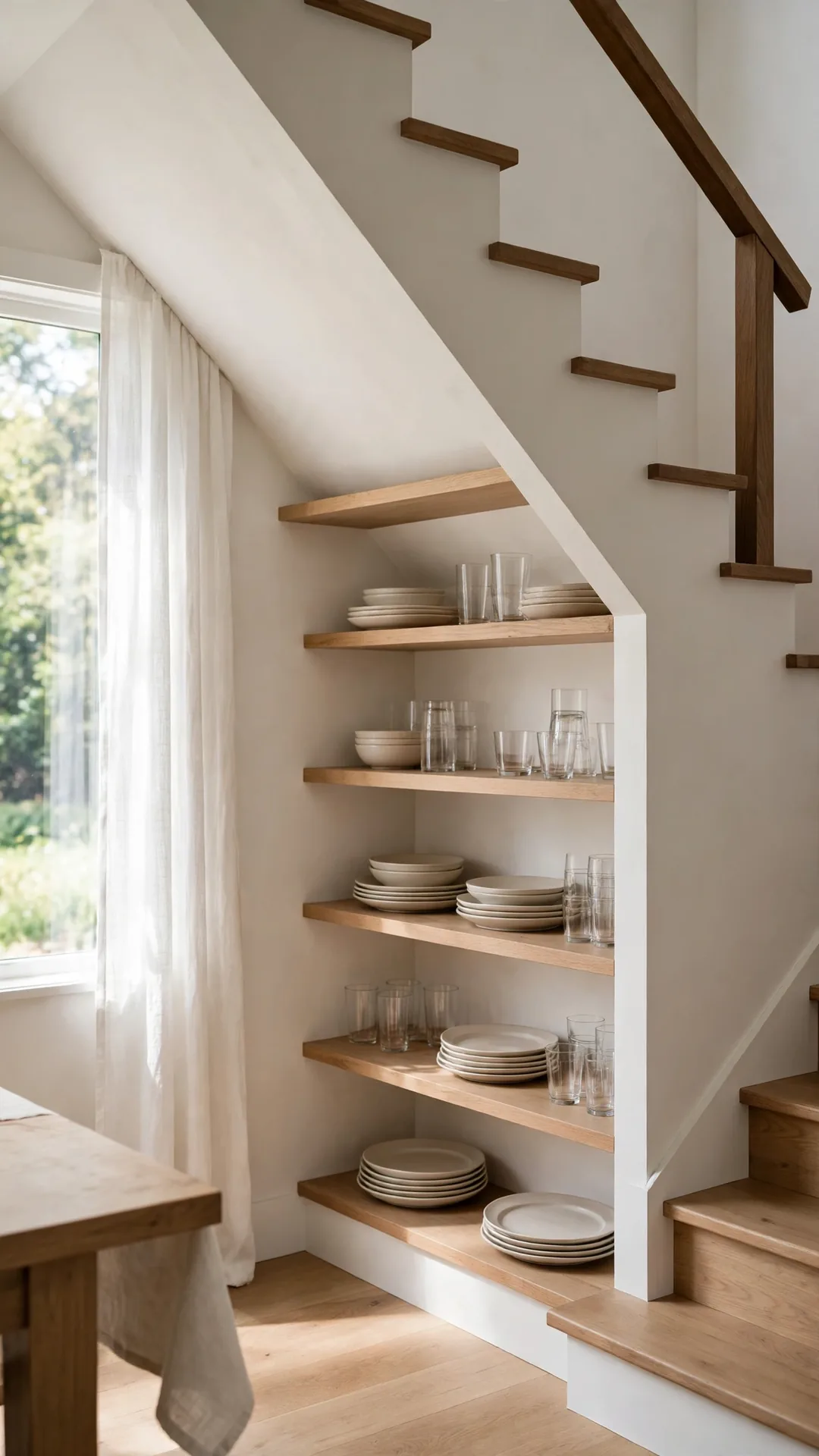
The wall under a staircase near the dining room sits empty. Shallow shelves there hold serving ware within a few steps. Shelves follow the slope, tallest at the high end.
How to do it:
- Measure the slope before cutting any shelves.
- Fit shelves 10 inches deep along the wall.
- Store platters low and glasses higher up.
- Add a battery light for the deep corner.
- Keep a small step nearby for the highest shelf.
Best for: Dining rooms beside a staircase wall.
Budget: $40 to $120
Quick tip: Baskets on the lowest shelf hide mixed items.
54. Create a Butler Pantry Strip on One Wall

A narrow pantry strip turns one wall into a serving hub. Open shelves, a small counter and hooks work as one run. Coffee gear and serving pieces share the strip.
How to do it:
- Plan a counter about 14 inches deep along the wall.
- Hang two shelves above it for glasses and jars.
- Keep daily coffee gear on the counter.
- Fit hooks under the lower shelf for mugs.
- Keep a small plant at the counter end.
Best for: Long walls between kitchen and dining spots.
Budget: $150 to $450
Quick tip: A washable runner protects the counter strip.
55. Assign Each Wall One Storage Job

Storage works when each wall takes one clear job. One wall holds dishes, one holds linens, one holds serving gear. These small space dining ideas show how a whole room plan comes together.
How to do it:
- List every dining item you own on paper first.
- Group the list into dishes, linens and serving gear.
- Match each group to the nearest free wall.
- Move one group per weekend until it sticks.
Best for: Anyone starting a full dining storage reset.
Budget: Under $25
Quick tip: A photo of each finished wall keeps the system honest.
Start With One Wall This Weekend
You do not need a bigger dining room to store things well. Pick one wall, one shelf or one bench from these small dining room storage ideas and set it up today. Save this post or pin your favorite idea so the plan is ready when you shop.

- 55 Brilliant Small Dining Room Storage Ideas to Try Now - November 14, 2026
- 59 Holiday Decoration Storage Ideas for Small Spaces - November 14, 2026
- 52 Smart Small Mudroom Laundry Room Combo Ideas to Copy Now - November 14, 2026