
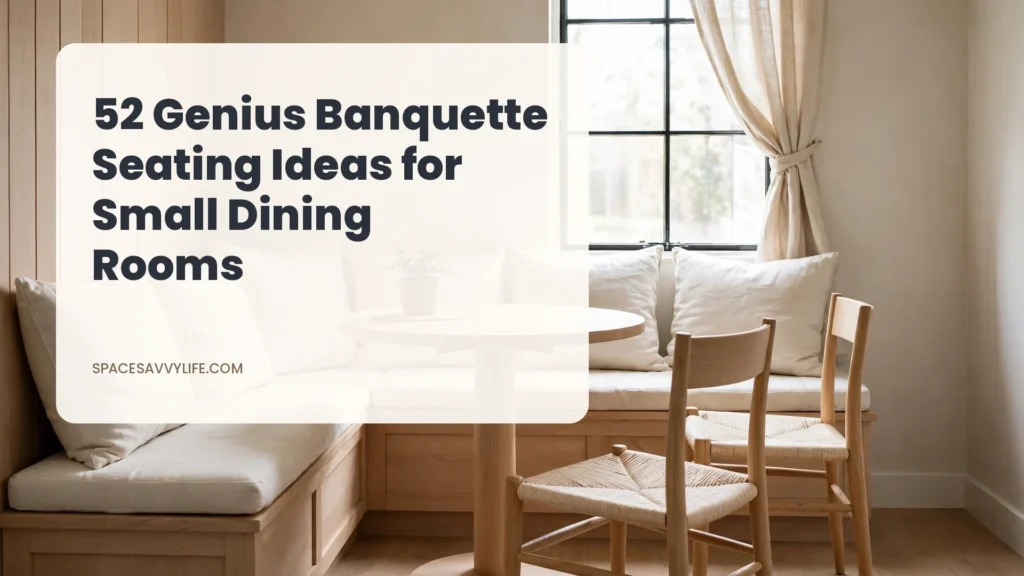
Chairs eat floor space every time someone sits down. A bench against the wall seats more people in less room.
These banquette seating ideas for small dining rooms cover quick buys, corner builds and storage seats. Most use a bench 16 to 18 inches deep and 18 inches high.
1. Push a Store-Bought Bench Against the Wall

Some of the best banquette seating ideas for small dining rooms start with a bench you already own. A ready-made bench slides flat to the wall and seats three where two chairs once fit.
How to do it:
- Measure your wall run before you shop for the bench.
- Pick a bench 16 to 18 inches deep.
- Keep the seat height close to 18 inches.
- Leave 24 inches between table edge and wall.
- Add felt pads so the bench slides without marks.
Best for: Renters who want new seating this weekend.
Budget: $60 to $180
Quick tip: Test the bench height with a cushion before you buy.
2. Move a Hallway Bench to the Dining Wall

That spare bench in the hall can work much harder at the table. It needs no build time and no new holes in the wall. It also costs nothing beyond a cushion and pads.
How to do it:
- Check the bench depth sits between 16 and 18 inches.
- Confirm the seat height is close to 18 inches.
- Add a long cushion if the top feels hard.
- Keep 36 inches of walkway behind the chairs.
- Check the bench sits flat with no wobble.
Best for: Homes with an unused bench already on hand.
Budget: Under $30
Quick tip: Add a washable cushion cover for daily meals.
3. Try a Backless Bench in the Tightest Spot
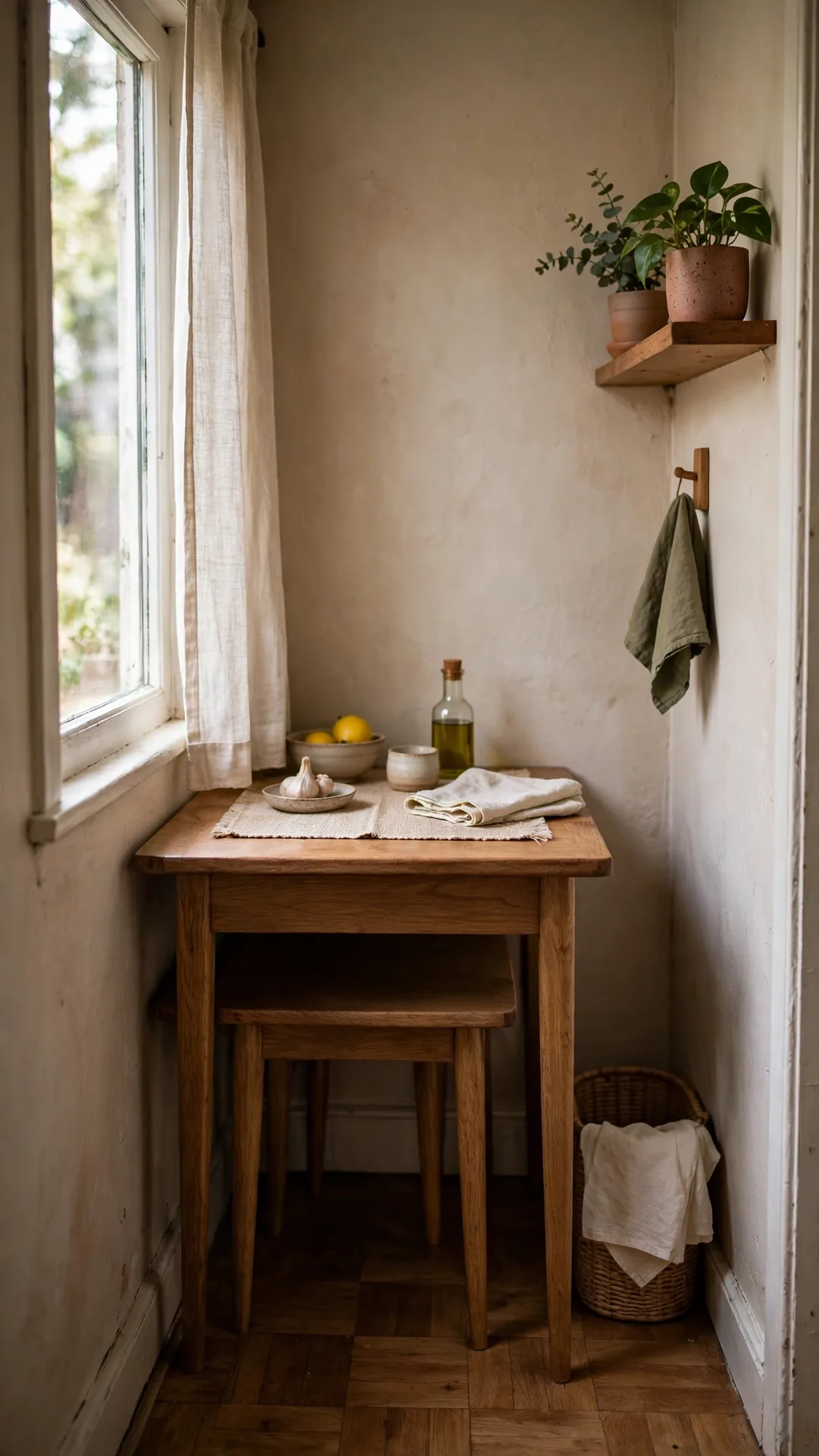
The simplest banquette seating ideas for small dining rooms often skip the backrest entirely. The bench tucks fully under the table when meals end. The low profile keeps small rooms feeling open.
How to do it:
- Pick a depth of 14 to 16 inches for backless styles.
- Keep the seat height at a full 18 inches.
- Check the bench slides under the table apron.
- Add wall cushions later if backs need support.
- Pick a bench with a solid, flat seat top.
Best for: Narrow rooms where chairs crowd the walkway.
Budget: $40 to $120
Quick tip: Hang two flat cushions on the wall as a soft back.
4. Add Thick Cushion Pads to a Plain Bench

A hard bench seat sends people away from the table early. Foam pads two to three inches thick fix that fast. Two pads can cover a bench up to 48 inches long.
How to do it:
- Choose foam pads 2 to 3 inches thick.
- Pick pads with ties or a grip backing.
- Cover them in a wipeable, washable fabric.
- Match the pad length to the bench run.
- Measure the bench top before you order pads.
Best for: Plain benches that feel hard after ten minutes.
Budget: $25 to $70
Quick tip: Pick pads with ties so they stay put during meals.
5. Layer Throw Pillows as a Soft Backrest

Soft banquette seating ideas for small dining rooms often use pillows in place of a built back. Pillows fill the gap between seat and wall for real back support. The setup moves in minutes if you change your mind.
How to do it:
- Use square pillows about 18 inches wide.
- Line up one pillow per seat place.
- Choose firm inserts that hold their shape.
- Pick covers you can wash after spills.
- Angle the end pillows slightly for arm support.
Best for: Backless benches that sit against a flat wall.
Budget: $20 to $60
Quick tip: Use firm inserts so the backrest does not sag flat.
6. Line Up Two Storage Ottomans as Seating

Two storage ottomans in a row form a short, flexible bench. Each one hides blankets, games or spare table linens. You can split the pair apart again any time you like.
How to do it:
- Match both ottoman heights near 18 inches.
- Line them flat against the dining wall.
- Store spare linens or games inside each one.
- Add felt pads so they do not creep apart.
- Check each lid opens fully without hitting the table edge.
Best for: Studio corners that need seating plus storage.
Budget: $50 to $140
Quick tip: Match both ottoman heights so the seat line stays level.
7. Bring a Garden Bench Indoors for the Season
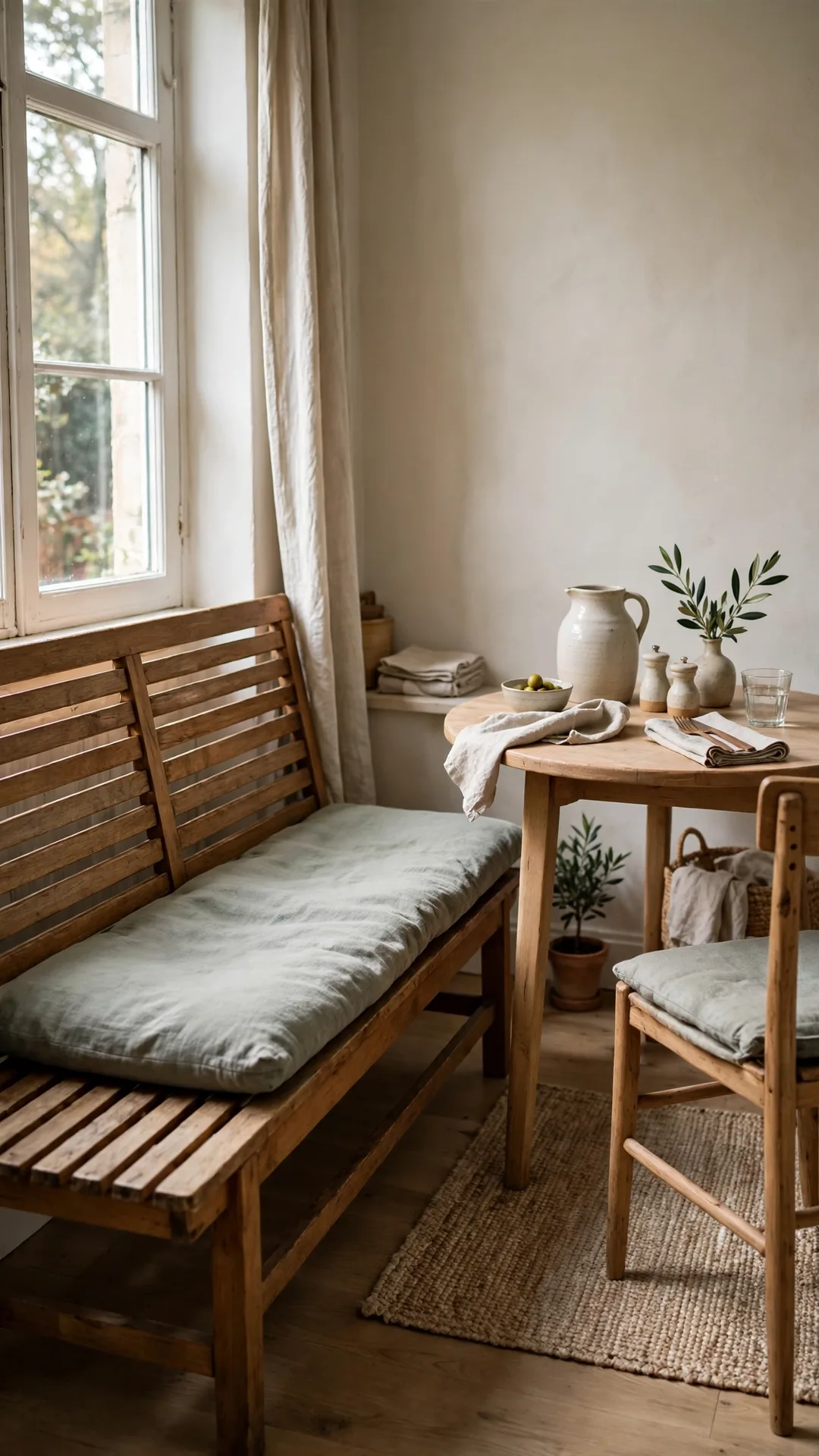
A sturdy garden bench already has the right seat height for dining. Brought inside, it seats three along one wall with ease. Weatherproof frames shrug off spills at family meals.
How to do it:
- Check the seat height is 17 to 18 inches.
- Wash and dry the bench fully before moving it.
- Add a long cushion over the slatted top.
- Fit felt pads to protect your indoor floors.
- Check the full bench length fits your dining wall run.
Best for: Homes with a spare bench on the patio.
Budget: Under $25
Quick tip: Sand any rough slat edges before the first meal.
8. Build a Bench from Two Low Cube Shelves
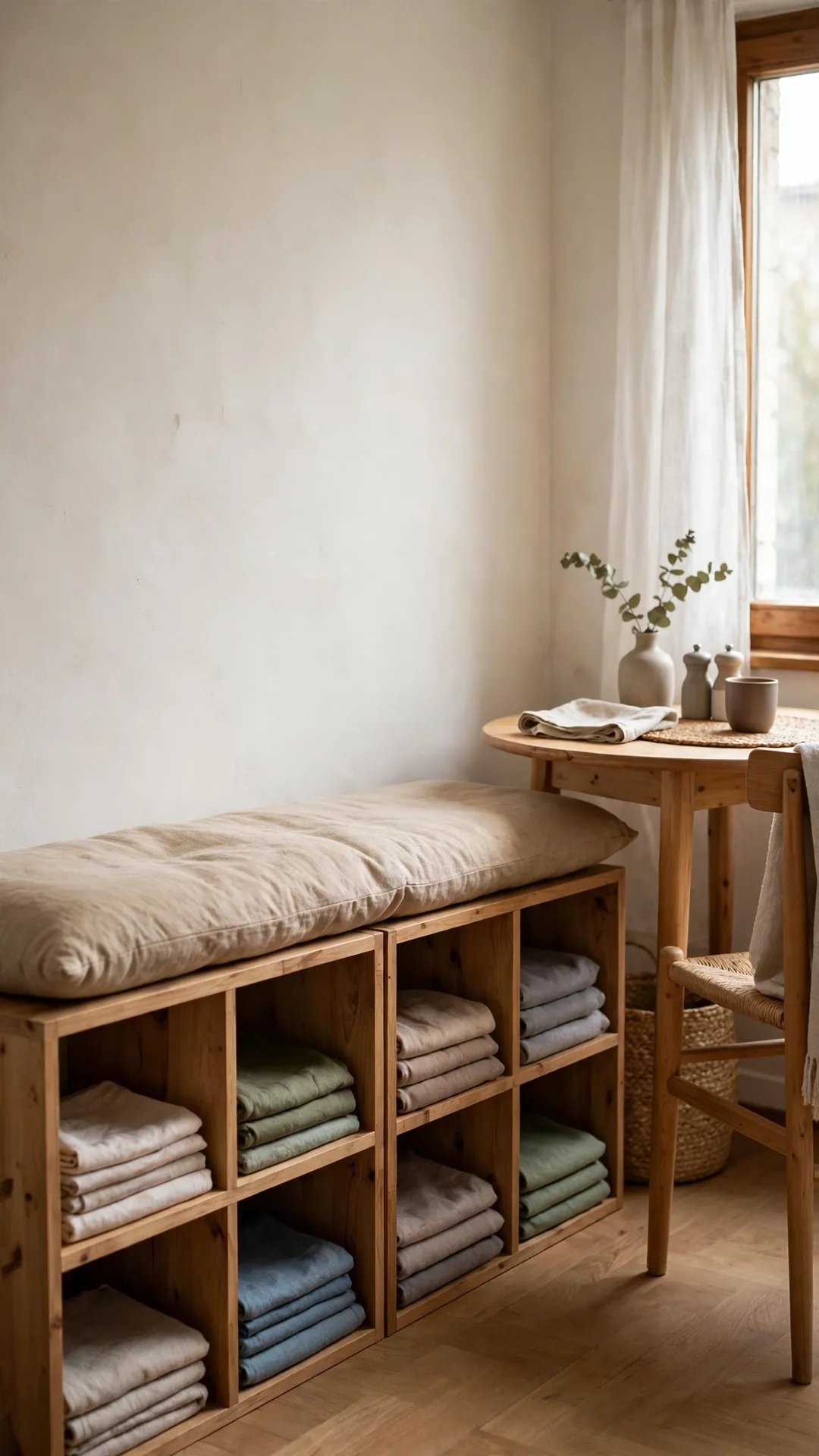
Two low cube shelves laid side by side make a strong bench base. The cubbies below hold placemats, napkins and board games. The low build keeps sight lines open across the room.
How to do it:
- Use shelves about 16 inches deep for the base.
- Join the two units with flat brackets.
- Screw a plywood sheet across the top for strength.
- Top it with a cushion about 3 inches thick.
- Test the top with real weight before adding cushions.
Best for: DIY fans with cube shelves to spare.
Budget: $45 to $110
Quick tip: Face the cubbies outward so storage stays easy to reach.
9. Fit an L-Shaped Corner Banquette
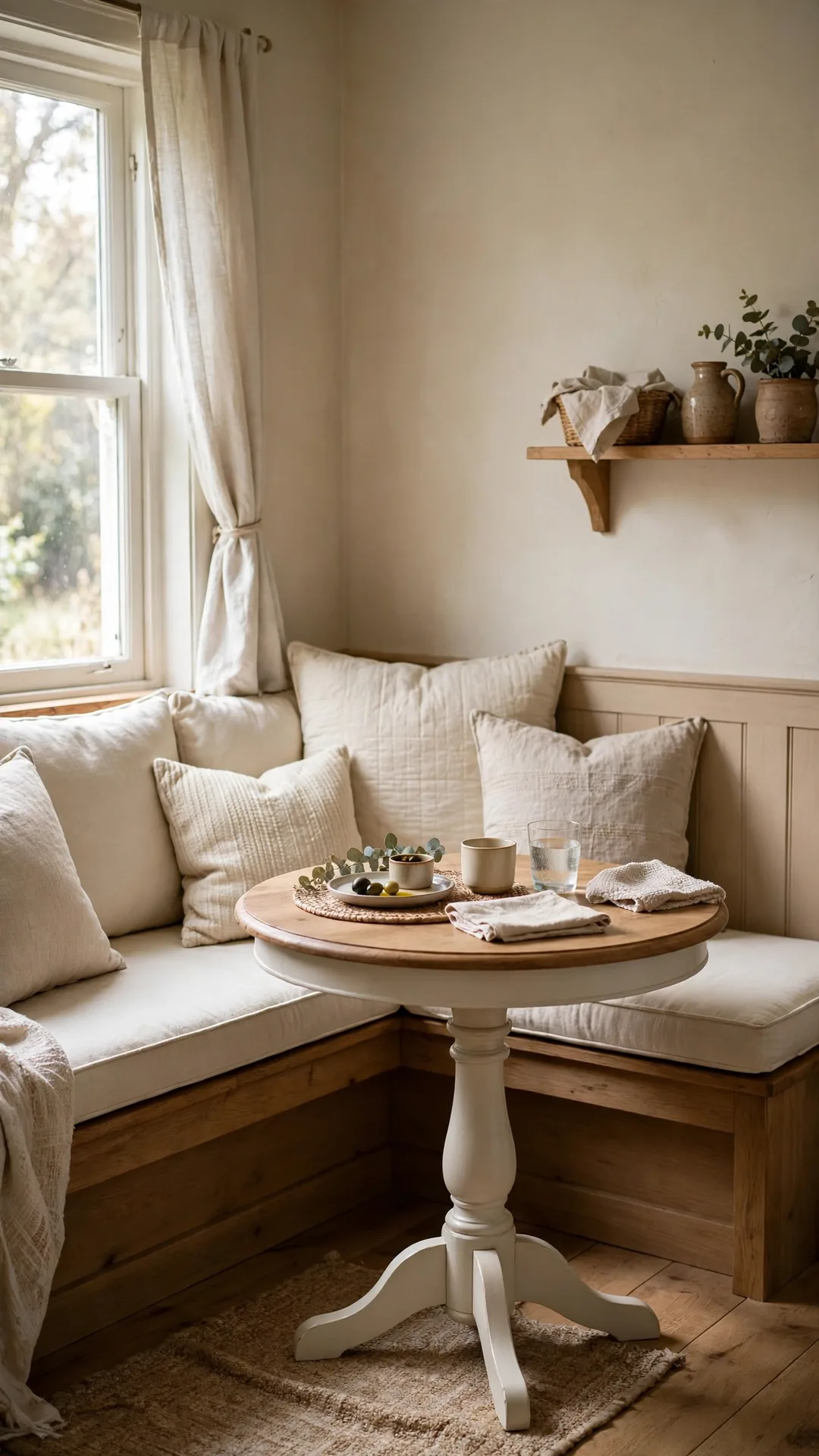
Corner banquette seating ideas for small dining rooms turn dead corners into the best seats. You can see more layouts in these small space dining ideas for tight rooms. Two bench runs meet in the corner and seat five with ease.
How to do it:
- Plan runs of about 48 and 36 inches.
- Keep bench depth at 16 to 18 inches.
- Hold the seat height at 18 inches.
- Fill the corner joint with a wedge cushion.
- Keep the corner seat free of thick seams.
Best for: Square corners in open-plan dining areas.
Budget: $300 to $900
Quick tip: Start with the longer wall run when you measure.
10. Wrap the Bench Around a Bay Window
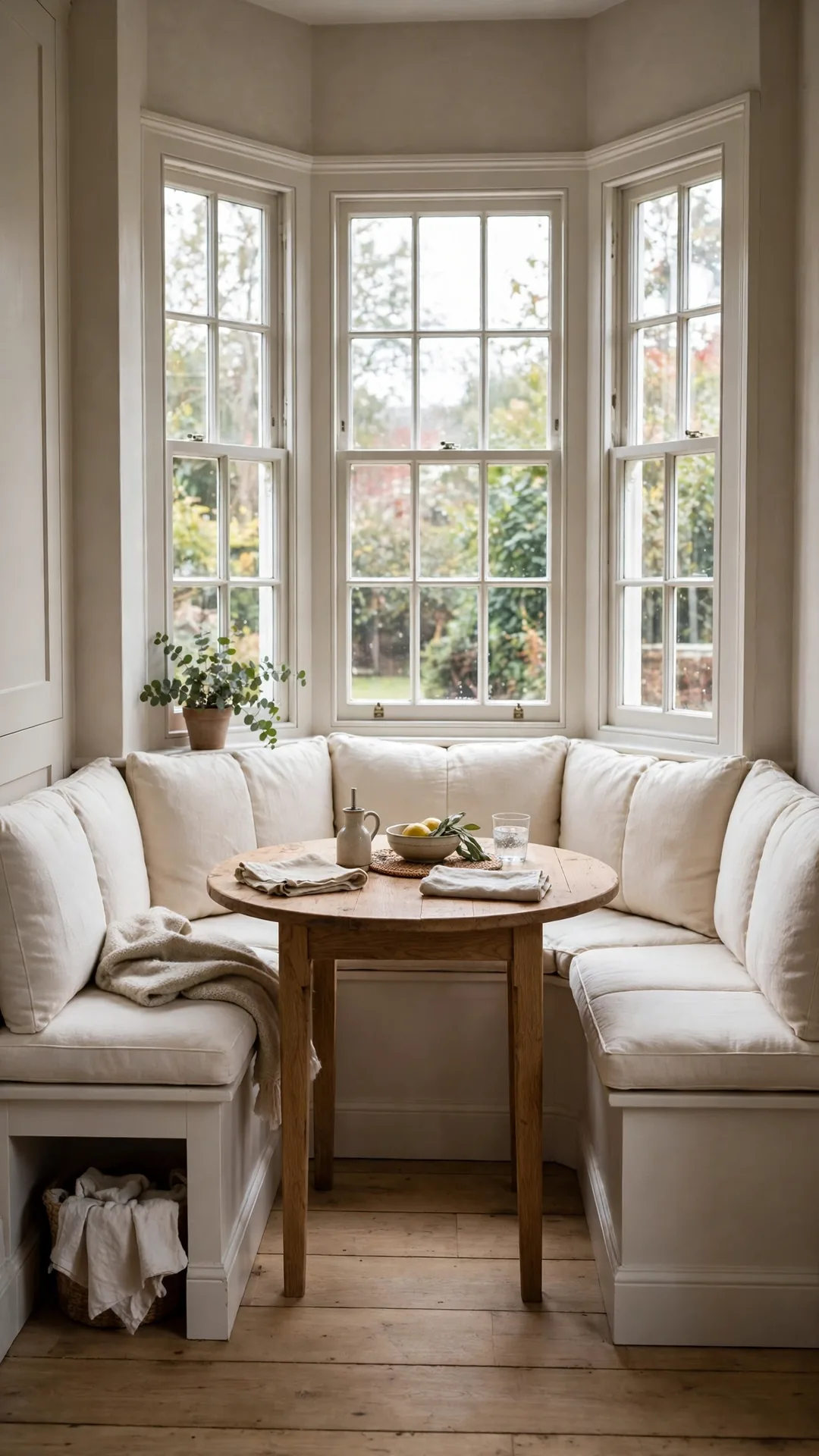
A bay window already angles the wall out for extra seats. A bench that follows the angles uses every inch of it. The angled run seats more people than one straight bench would.
How to do it:
- Measure each bay angle before you order parts.
- Keep the bench depth near 16 inches.
- Cut cushions in segments to match each angle.
- Leave heating vents under the bay fully open.
- Keep the cushions thin and firm where the angles turn.
Best for: Dining rooms with a shallow bay window.
Budget: $250 to $700
Quick tip: Keep the bench back below the window sill line.
11. Tuck a Short Bench into an Alcove

Alcove banquette seating ideas for small dining rooms use walls on three sides for support. The nook feels separate from the room without any new walls. A small rug under the table softens the hard edges.
How to do it:
- Measure the alcove width wall to wall first.
- Fit the bench snug between the side walls.
- Hang a pendant centered over the small table.
- Choose a table about 30 inches wide.
- Leave 24 inches to slide into the far seat.
Best for: Alcoves and old fireplace nooks near the kitchen.
Budget: $150 to $450
Quick tip: Paint the alcove one shade deeper for a nook feel.
12. Join Two Benches in a Corner Nook
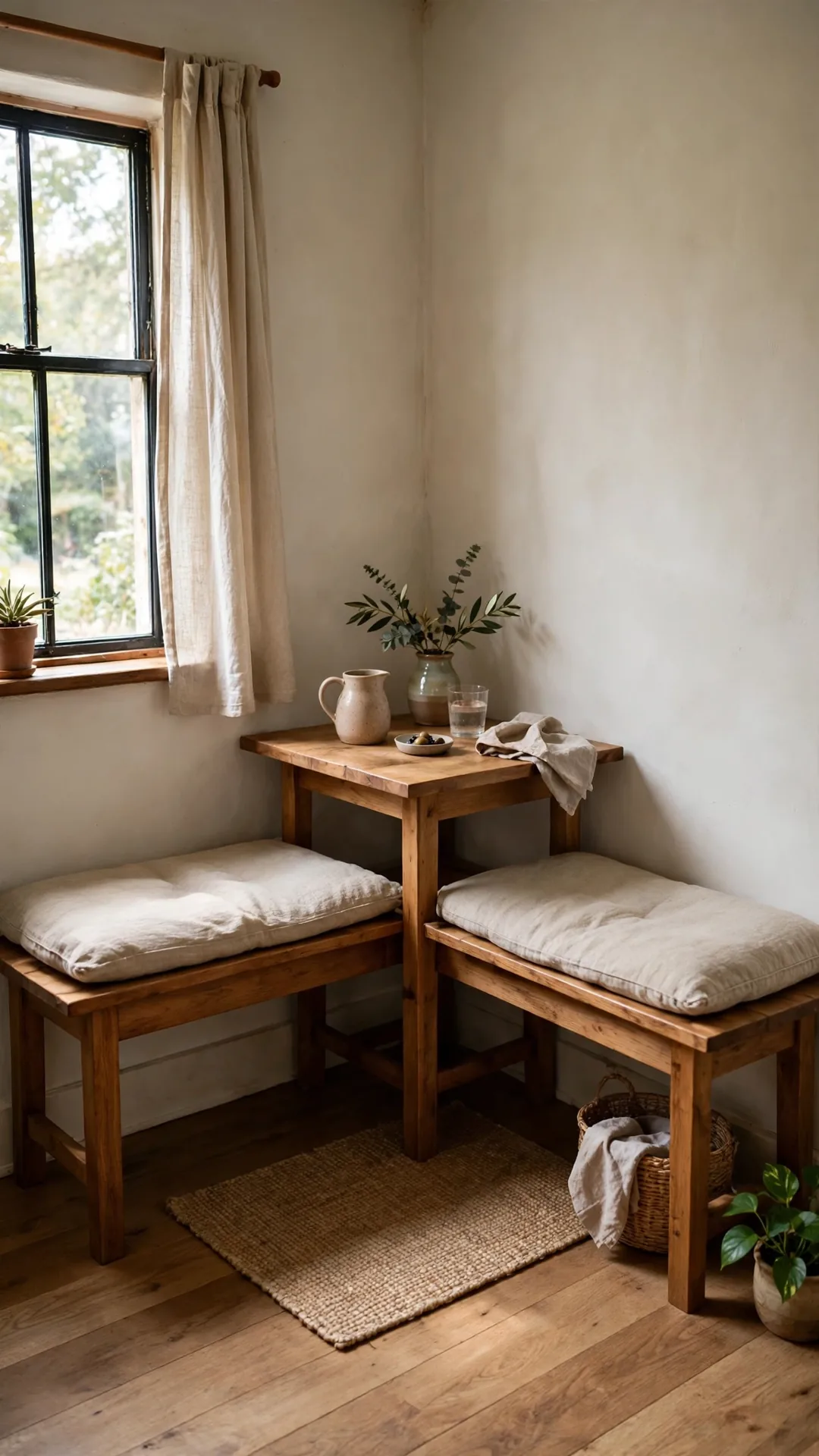
Two straight benches can meet in a corner without custom work. A square table bridges the gap and seats four to five. It is the fastest corner fix in this whole list of ideas.
How to do it:
- Match both bench heights at 18 inches.
- Overlap one bench end into the corner.
- Use a square table about 36 inches wide.
- Add a corner cushion where the benches meet.
- Add a small bracket underneath where the two benches meet.
Best for: Renters who cannot build into the corner.
Budget: $120 to $320
Quick tip: Put the longer bench on the longer wall run.
13. Curve the Bench Around a Round Table
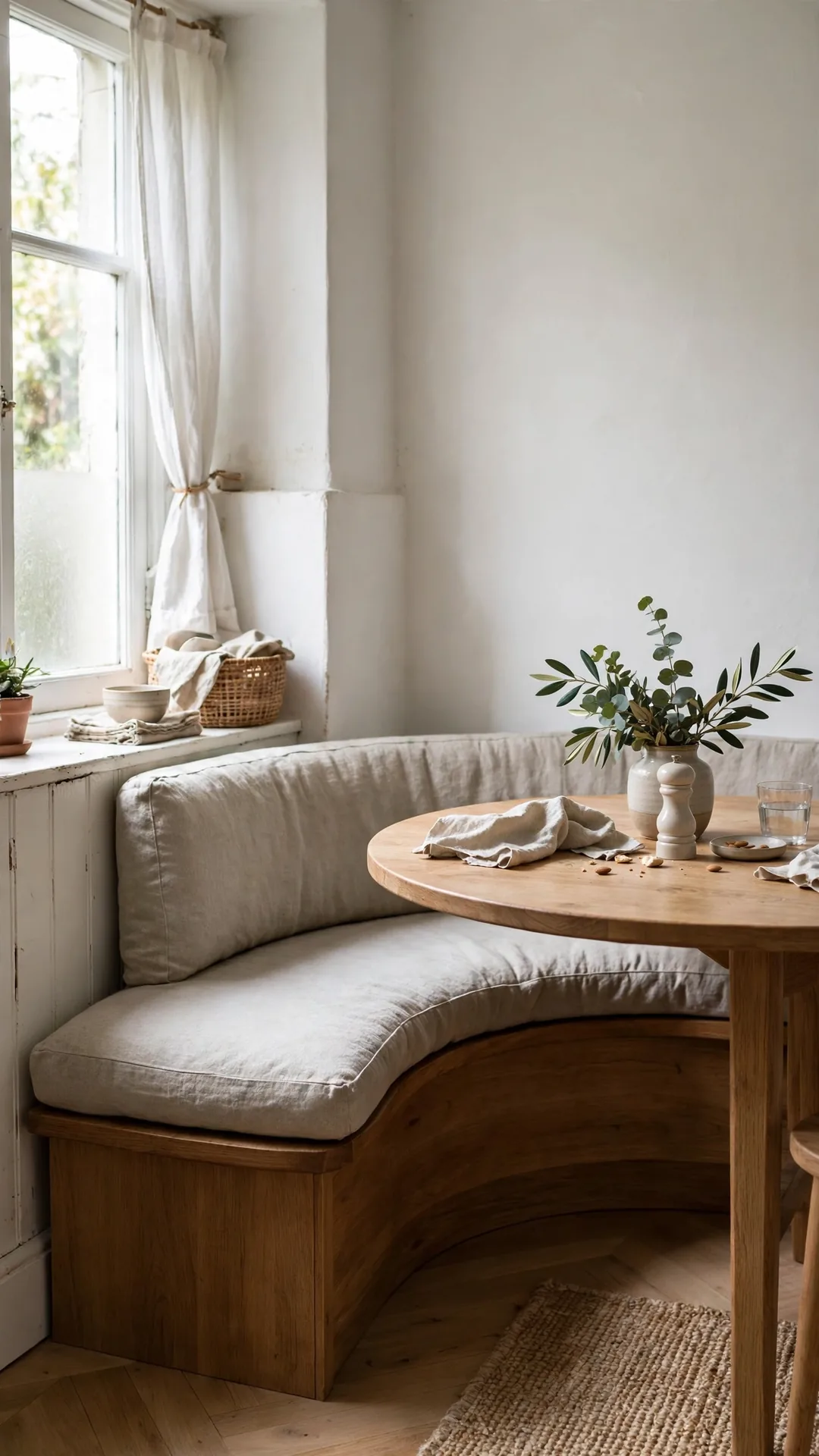
A curved bench follows the table edge and wastes no corner space. These inspiring banquette designs from Houzz show many curved layouts. Guests slide along the arc instead of squeezing past chair legs.
How to do it:
- Match the bench curve to your table size.
- Keep seat depth at 16 to 18 inches.
- Order the bench in two or three segments.
- Pair it with a pedestal table base.
- Allow extra slide-in room at the widest point of the arc.
Best for: Round tables in wide corners or bays.
Budget: $400 to $1,200
Quick tip: Order the bench in segments for easier delivery.
14. Build a Half-Round Booth in a Wide Corner
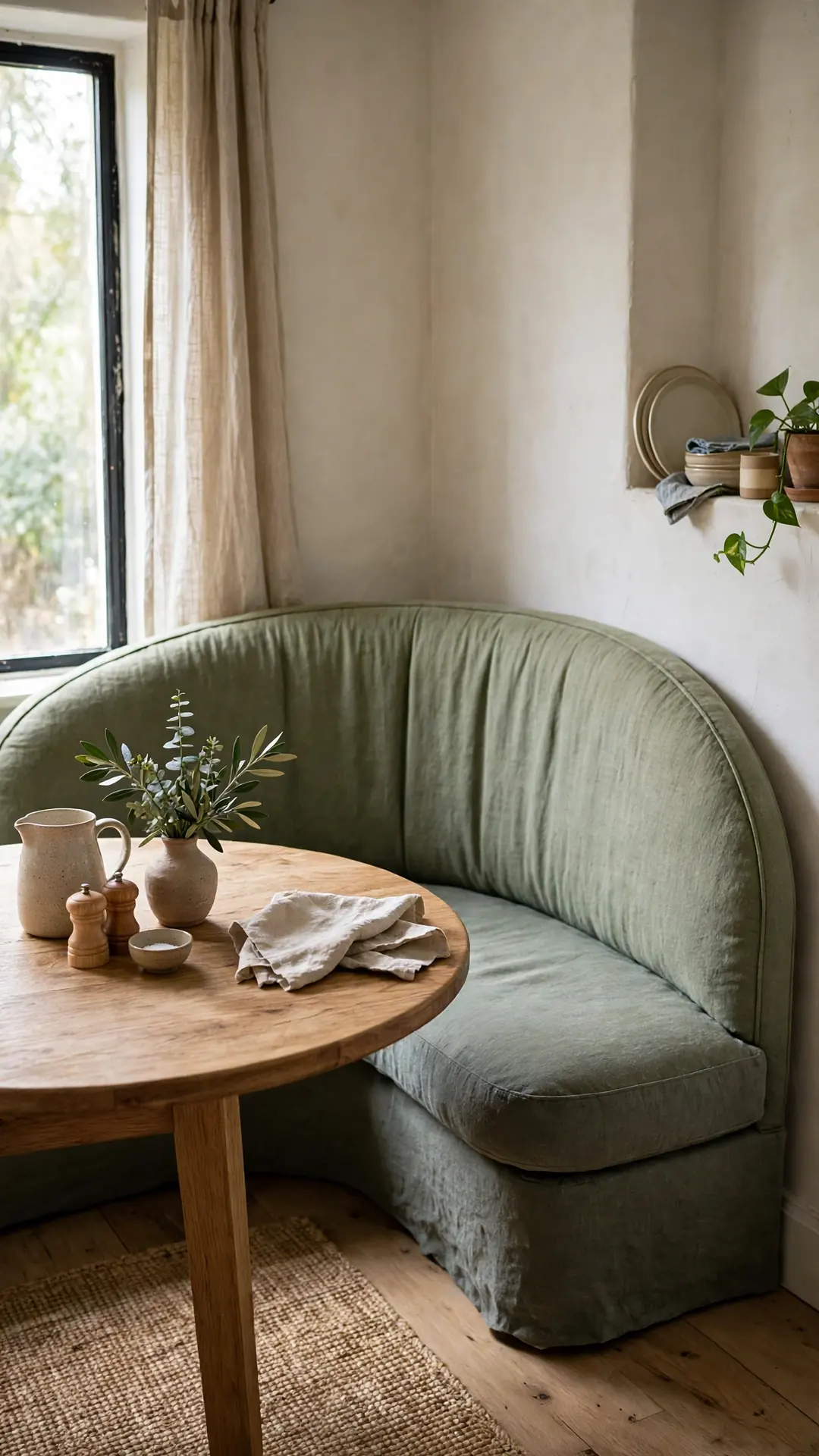
Booth style banquette seating ideas for small dining rooms borrow the best trick from cafes. The high curved back makes a small corner feel private. Guests tend to pick the booth seat first.
How to do it:
- Measure the corner radius before you order.
- Set the back height between 36 and 42 inches.
- Pair it with a round table about 36 inches wide.
- Keep one open side wide for slide-in access.
- Vent the back panel if it sits on an outside wall.
Best for: Wide corners that feel lost with plain chairs.
Budget: $500 to $1,500
Quick tip: Keep the entry side fully clear of chair legs.
15. Run Benches Along Two Walls
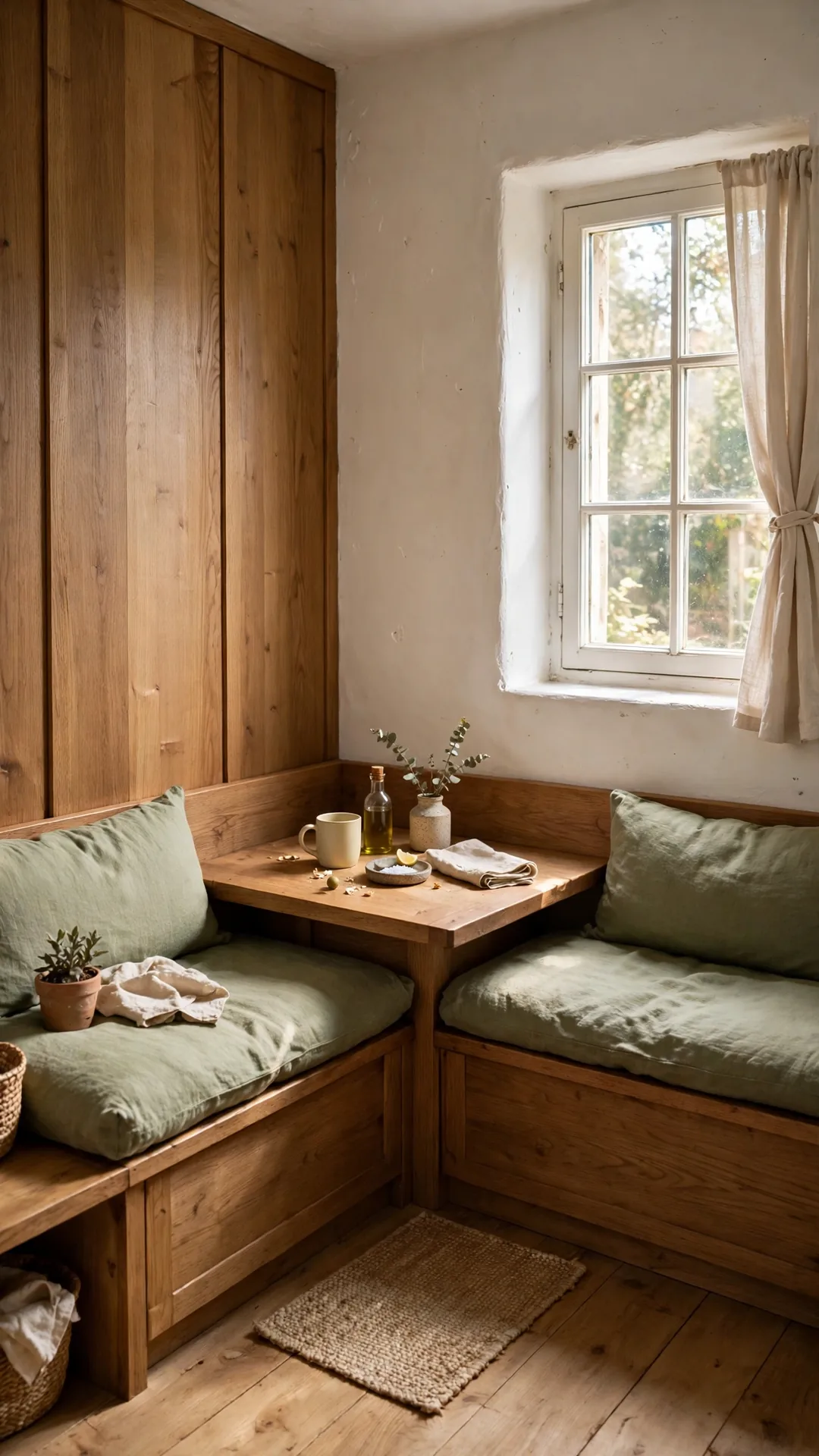
Two full wall runs give a small room its maximum seat count. A rectangular table sits in the middle and stays clear of walkways. It suits rooms where the table never really moves.
How to do it:
- Run each bench wall to wall for full use.
- Keep both benches 16 to 18 inches deep.
- Leave 36 inches of walkway on open sides.
- Leave one corner open so people can slide in.
- Keep place settings evenly spaced along both runs.
Best for: Square dining rooms that seat family daily.
Budget: $350 to $1,000
Quick tip: Seat the larger group along the longer wall.
16. Place a Corner Bench by the Kitchen Door

The corner beside the kitchen door often sits empty all day. A short bench there catches breakfast traffic without blocking the swing. Breakfast, homework and laptop work all land well in this corner.
How to do it:
- Tape the door swing arc on the floor first.
- Set the bench fully clear of that arc.
- Keep bench depth near 16 inches here.
- Pair it with a small round table.
- Keep the bench top clear of bags and daily clutter.
Best for: Eat-in kitchens with one free corner.
Budget: $100 to $300
Quick tip: Test the door swing with the bench in place.
17. Lift the Seat for Hidden Storage
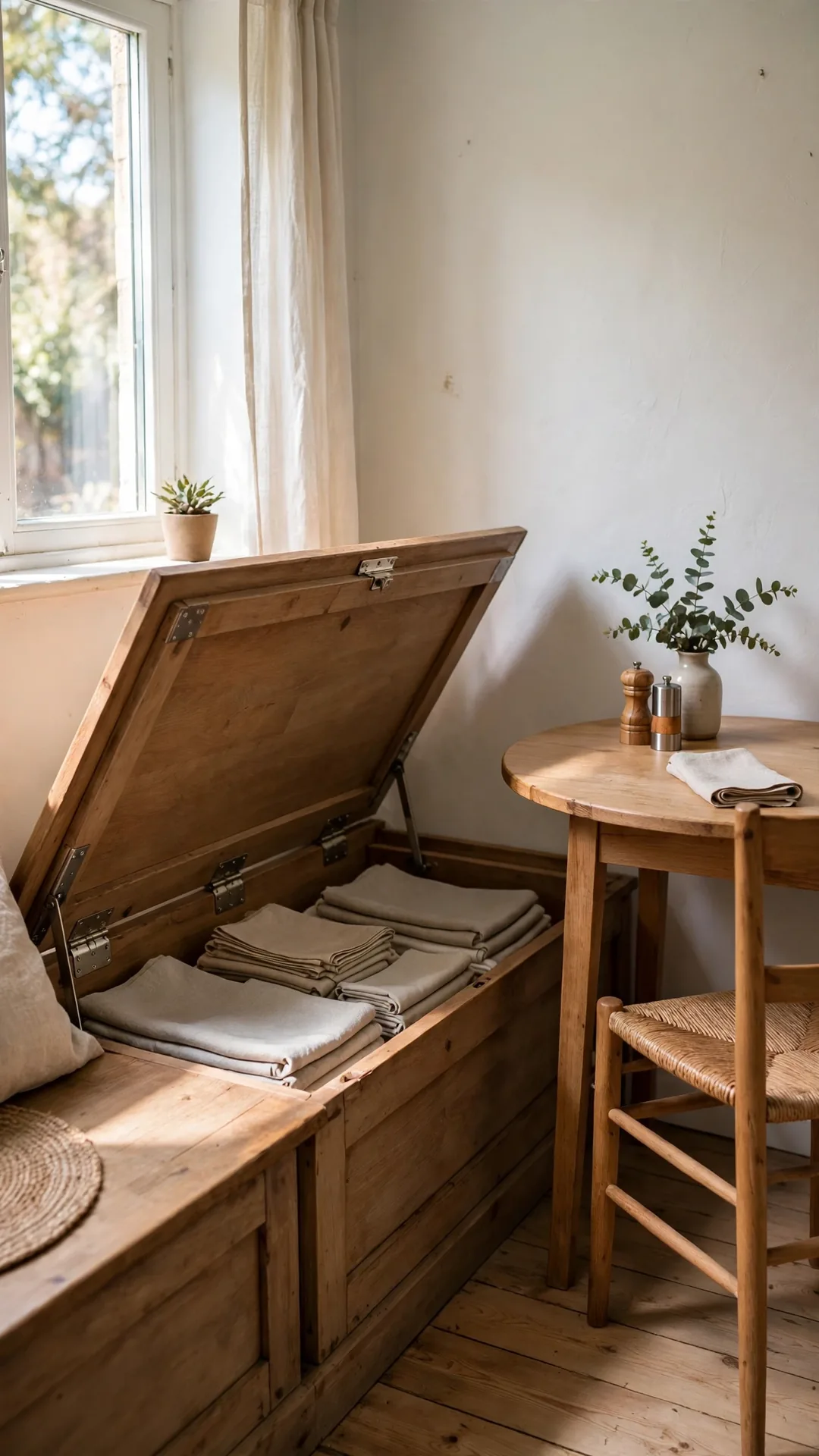
Storage banquette seating ideas for small dining rooms hide clutter inside the bench itself. A hinged top opens to a box as long as the bench. The storage hides in space you already sit on.
How to do it:
- Fit a long piano hinge along the back edge.
- Leave a finger gap at the front lip.
- Store table linens and games inside the box.
- Add a soft-close stay for small fingers.
- Line the box floor with a washable mat.
Best for: Small rooms with no spare closet space.
Budget: $200 to $600
Quick tip: Keep daily items near the top of the box.
18. Add Drawers Under the Bench Seat
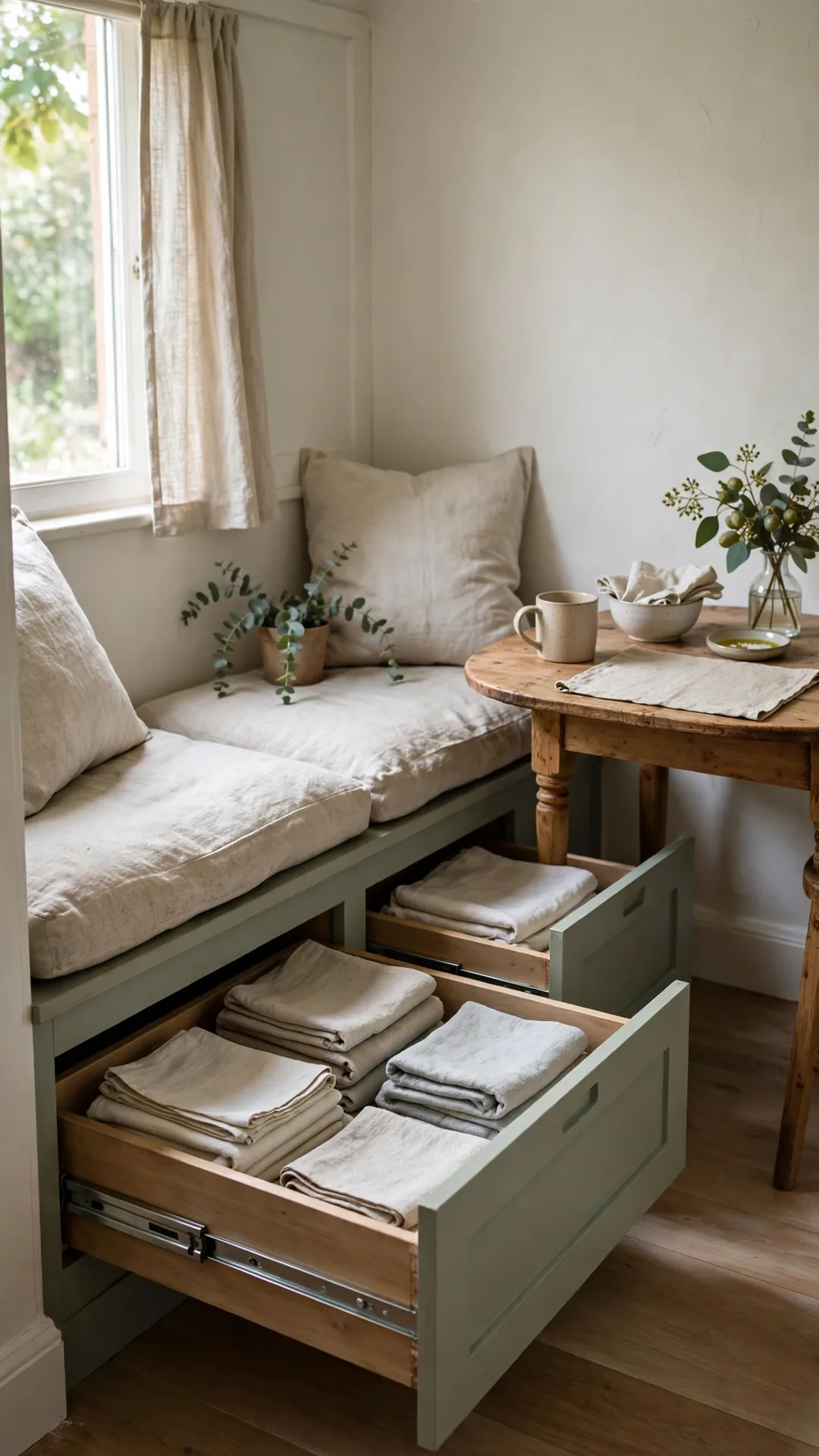
Drawers beat a lift-up top when people sit on the bench daily. You can reach stored items without asking anyone to stand. Drawers also keep stored items cleaner and dust free for much longer.
How to do it:
- Build drawers about 14 inches deep.
- Use full extension slides for easy reach.
- Pick low profile handles that catch no knees.
- Check each drawer holds at least 25 pounds.
- Leave a slim gap at the back so drawers clear the baseboard.
Best for: Families who use the nook every day.
Budget: $300 to $800
Quick tip: Use drawer liners so stored linens stay clean.
19. Store Table Linens Inside the Bench

Deep banquette seating ideas for small dining rooms give table linens a home near the table. Tablecloths and napkins then live steps from where you use them. One deep box can hold four full table settings.
How to do it:
- Fold each cloth flat to the box width.
- Sort napkins into one small inner bin.
- Keep the most used set on top.
- Add a cedar block to keep linens fresh.
- Keep a spare set folded for surprise guests.
Best for: Homes with no linen closet near the dining area.
Budget: $15 to $40
Quick tip: Roll tablecloths to stop deep crease lines forming.
20. Keep Board Games in the Seat Box
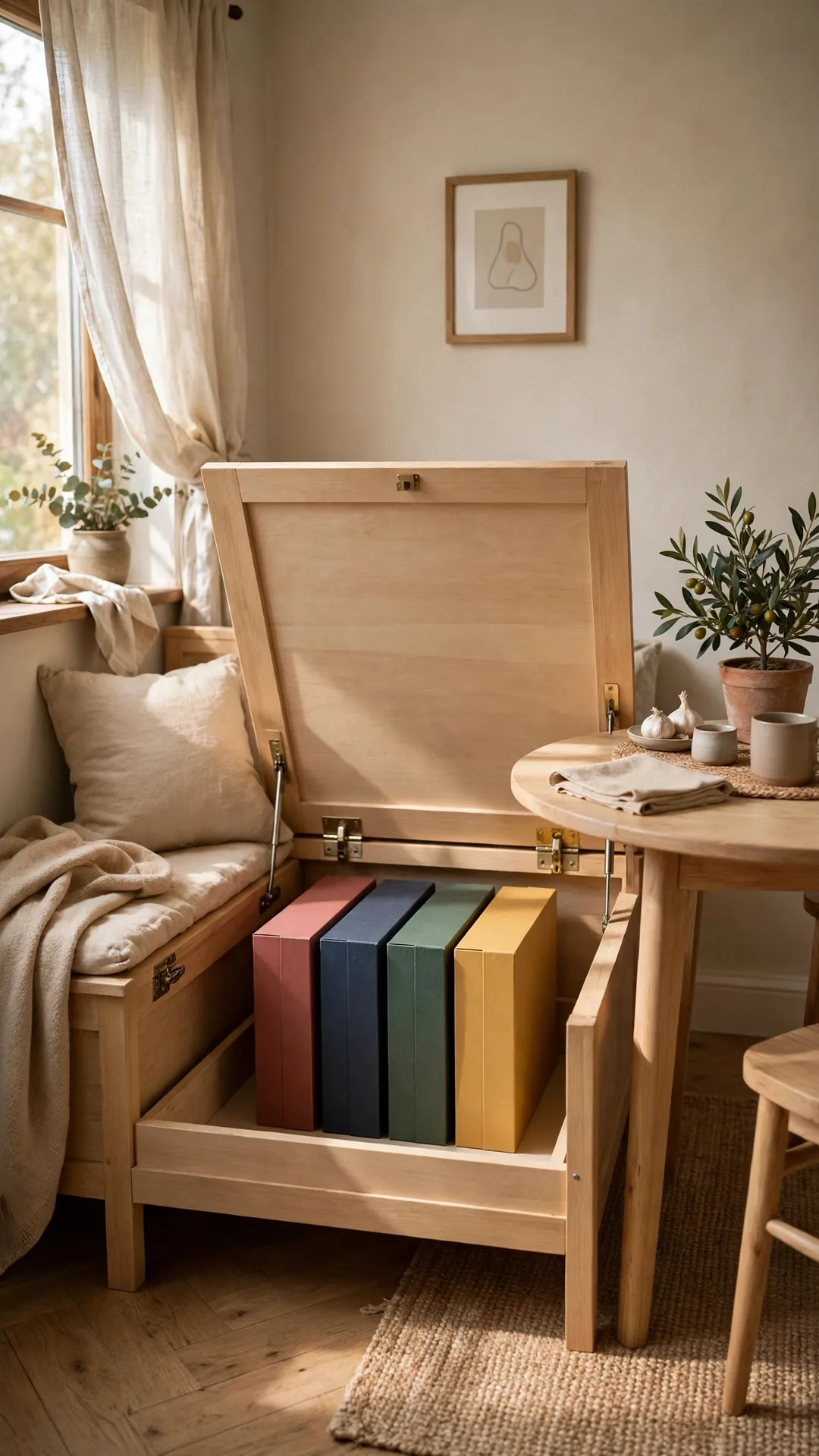
Game boxes stack flat and fit the long seat box well. Game night setup then takes minutes, not a closet raid. The long box depth suits most standard family game boxes very well.
How to do it:
- Measure your largest game box before building.
- Stand boxes upright like files for fast picking.
- Keep small pieces in sealed bags inside boxes.
- Check the lid closes with games stacked flat.
- Keep dice and small parts in one lidded tub.
Best for: Families who play games at the dining table.
Budget: $10 to $30
Quick tip: Keep the two favorite games at the front.
21. Store Spare Chair Pads Under the Seat
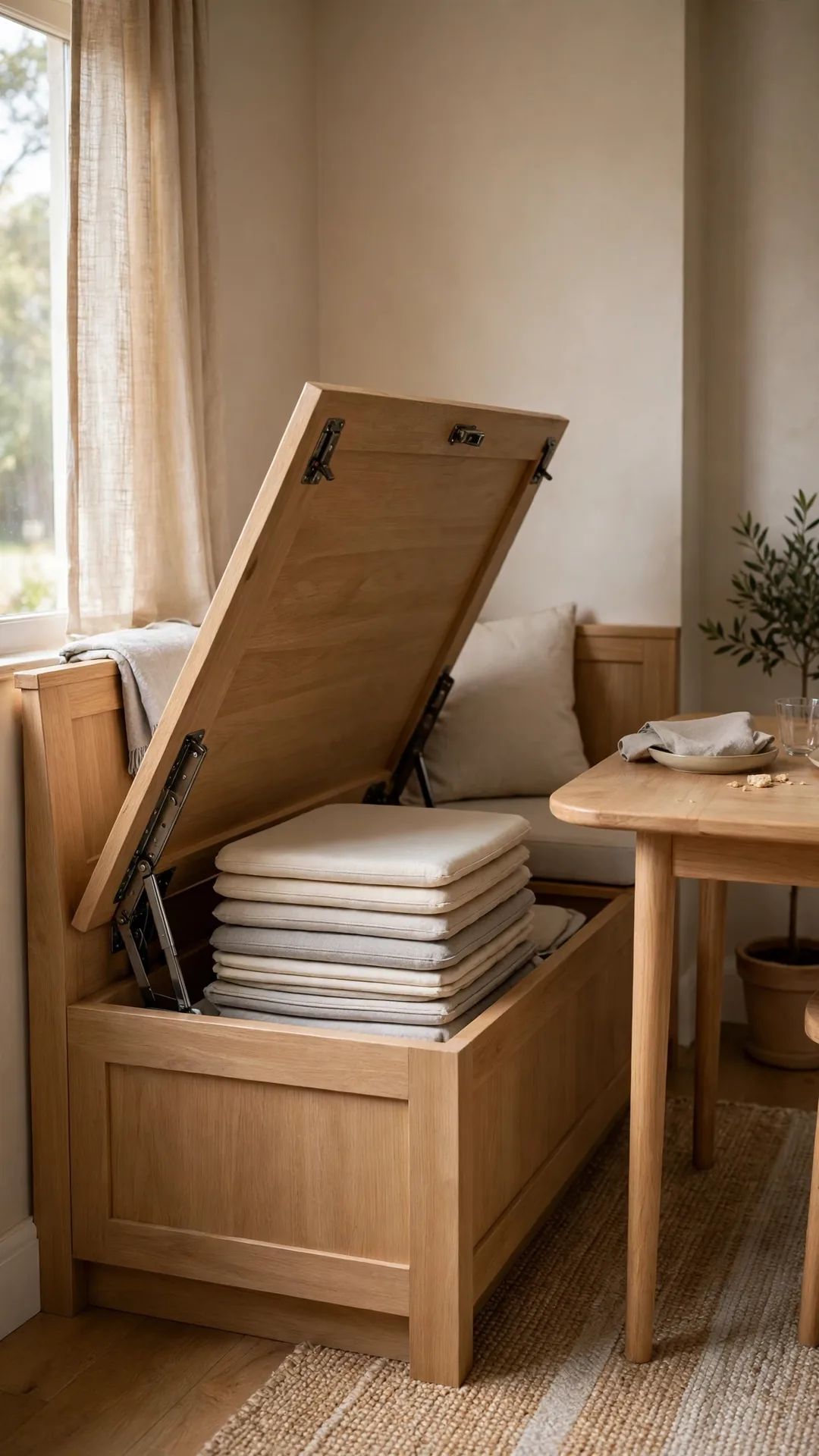
Spare pads for the open-side chairs need a dry home too. The bench box keeps them flat, clean and close by. Flat storage stops the pads from creasing, curling or cracking over time.
How to do it:
- Stack pads flat so they keep their shape.
- Check the box stays dry before storing fabric.
- Rotate pads so each set wears evenly.
- Slip thin pads into a vacuum storage bag.
- Lay pads with ties tucked in to stop tangles.
Best for: Nooks with chairs on the open table side.
Budget: Under $20
Quick tip: Air pads in sunlight before you store them away.
22. Slide Baskets Under an Open Bench
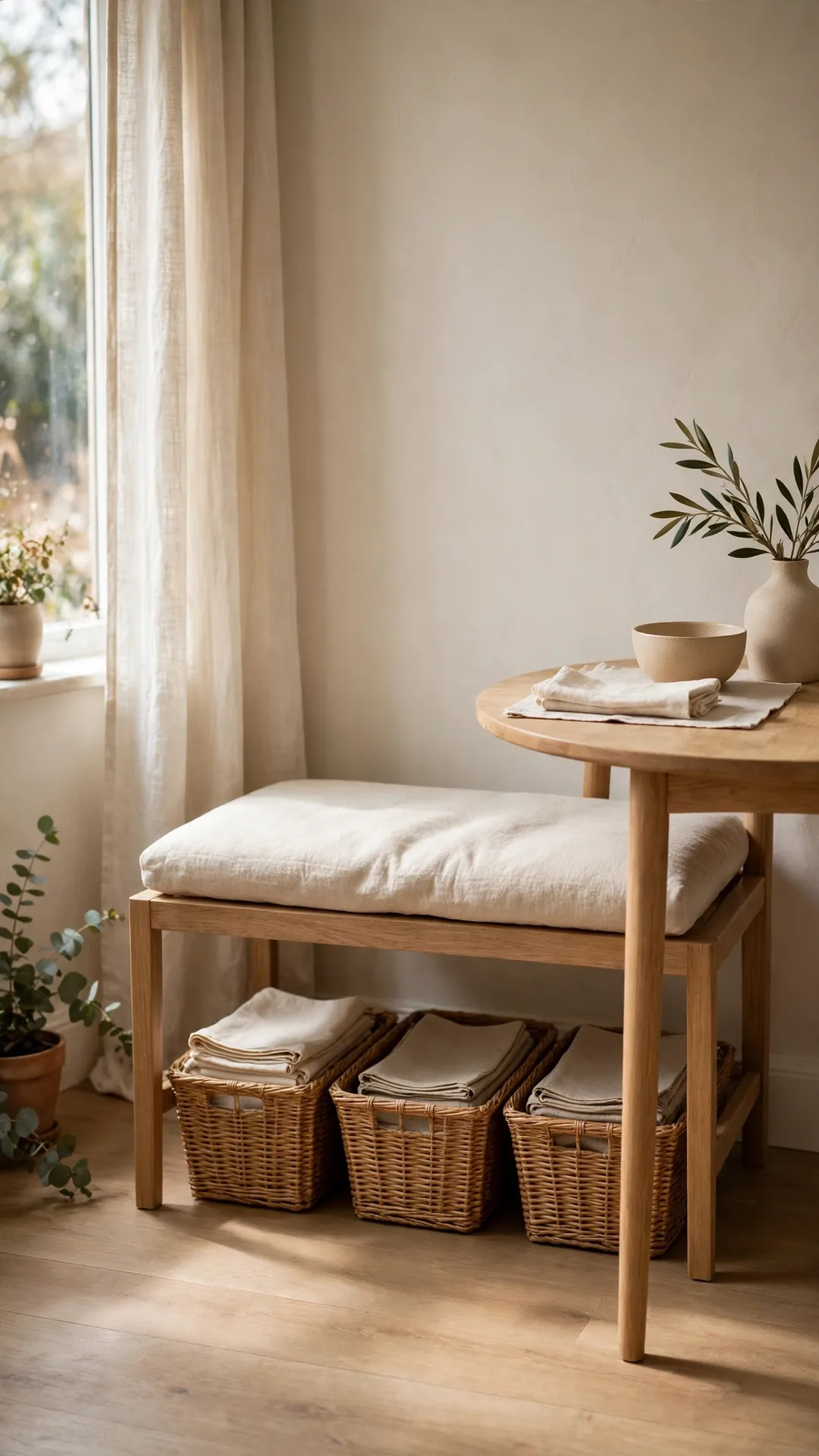
Open frame banquette seating ideas for small dining rooms pair well with simple baskets below. Baskets slide out fast and cost far less than drawers. The open base also keeps the nook feeling light.
How to do it:
- Measure the clear height under the bench first.
- Choose baskets with handles on both ends.
- Sort one basket for napkins and placemats.
- Add felt glides so baskets slide quietly.
- Match basket widths closely to the spacing between the bench legs.
Best for: Renters who want storage without any build.
Budget: $30 to $80
Quick tip: Leave one basket empty for quick tidy-ups before meals.
23. Build Open Cubbies Into the Bench Base
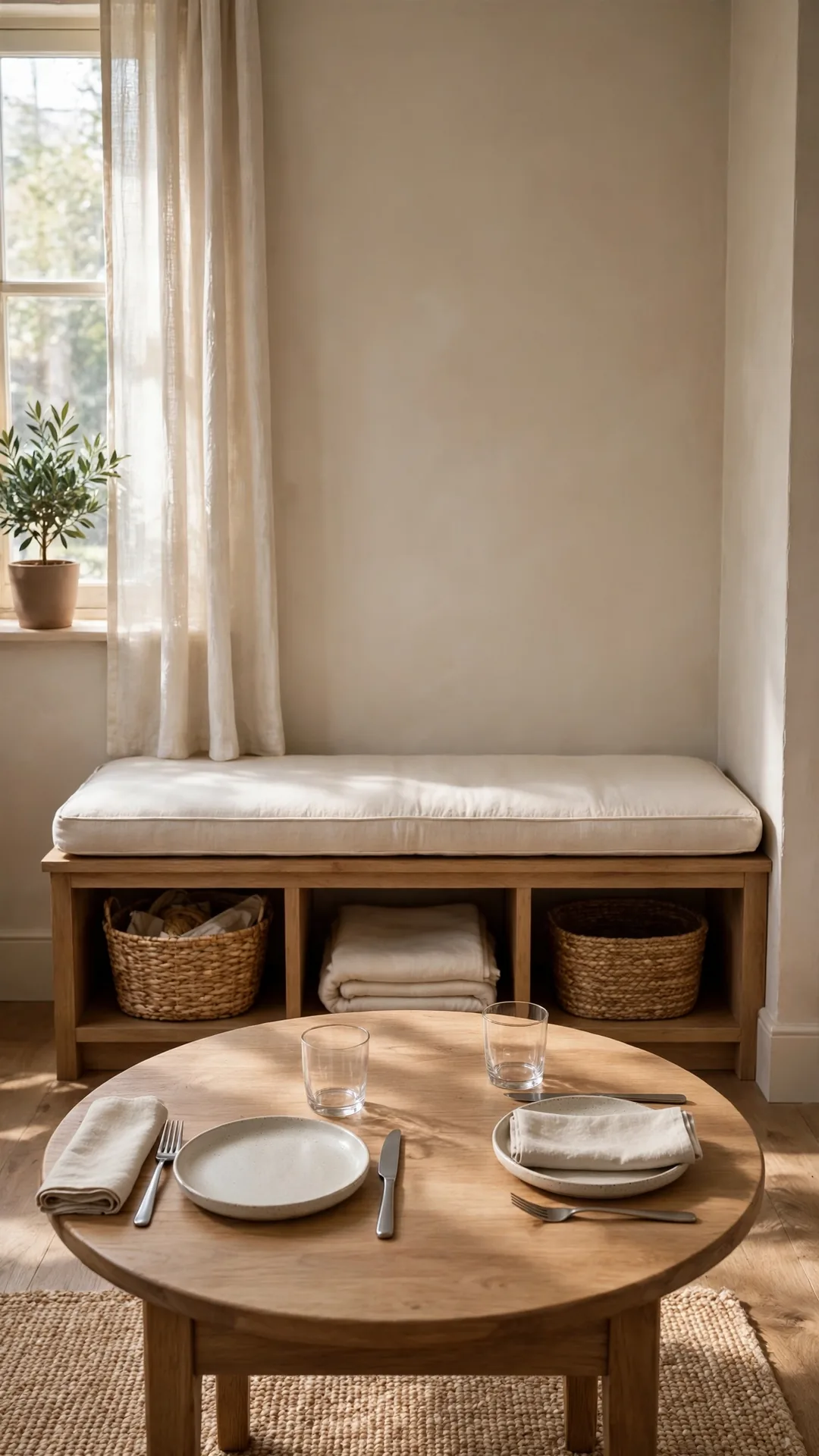
Open cubbies in the bench base keep daily items in reach. Each cubby can hold one basket or one neat stack. Open fronts mean no lids to lift and no drawers to pull.
How to do it:
- Size cubbies about 12 inches square.
- Use thick dividers that carry real weight.
- Fit one basket per cubby for a tidy front.
- Keep the middle cubby empty for stretching legs.
- Keep the heavier items in the lowest cubbies only.
Best for: Open-plan rooms where the nook works all day.
Budget: $180 to $500
Quick tip: Put daily items in the cubbies nearest the kitchen.
24. Use the Bench Base for Seasonal Items
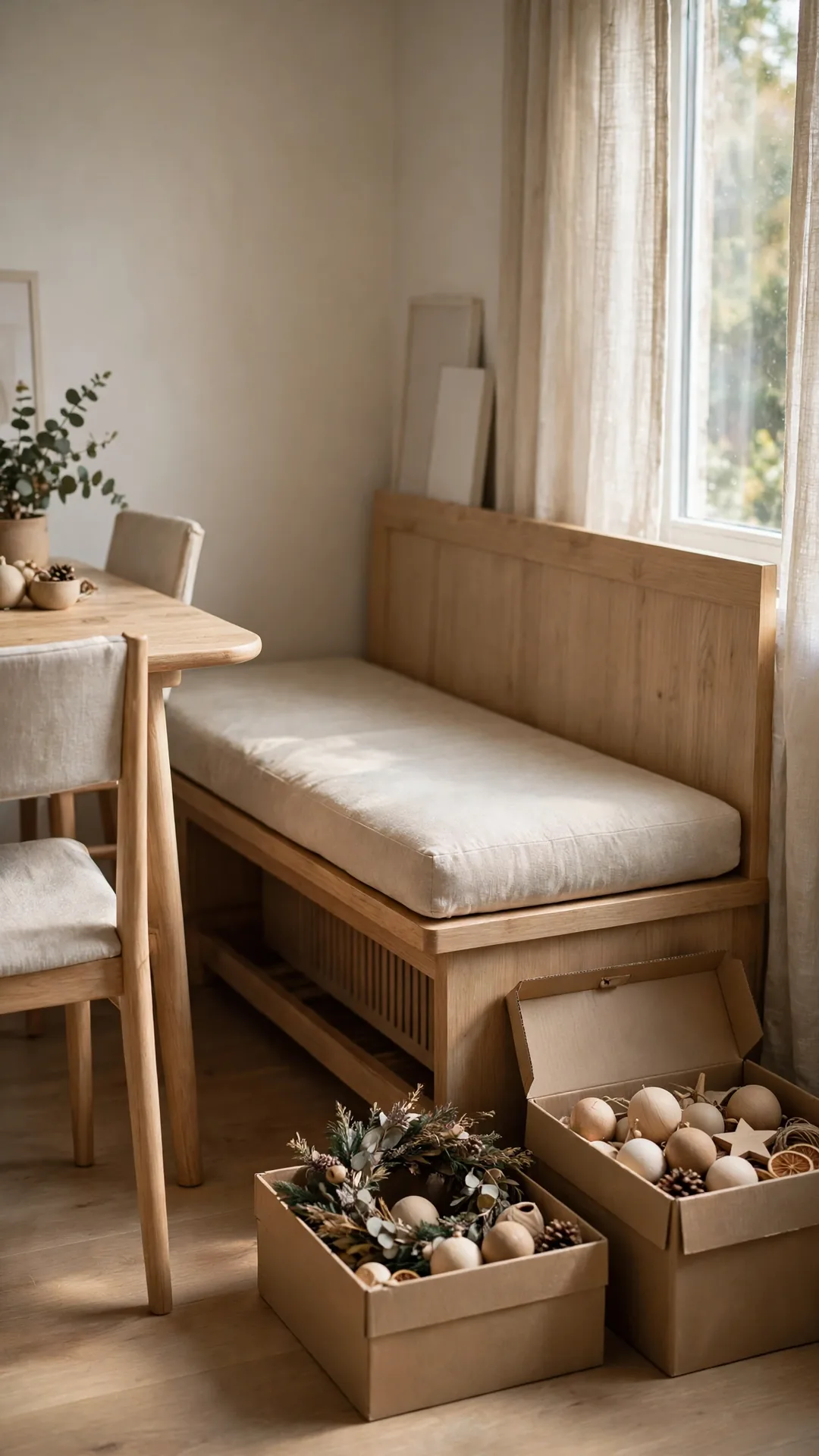
Seasonal items need storage only twice a year, so depth is fine. The long bench base swallows boxes that crowd small closets. Deep base storage works best for things you only need twice a year.
How to do it:
- Use flat boxes that fit the base height.
- Place the heaviest boxes in the middle.
- Check the seat lid clears the tallest box.
- Tape a contents list inside the bench lid.
- Keep a small step stool near the nook.
Best for: Holiday decor with no attic or garage space.
Budget: $20 to $50
Quick tip: Store the tape and labels with the boxes.
25. Build a Plywood Bench with a Hinged Top
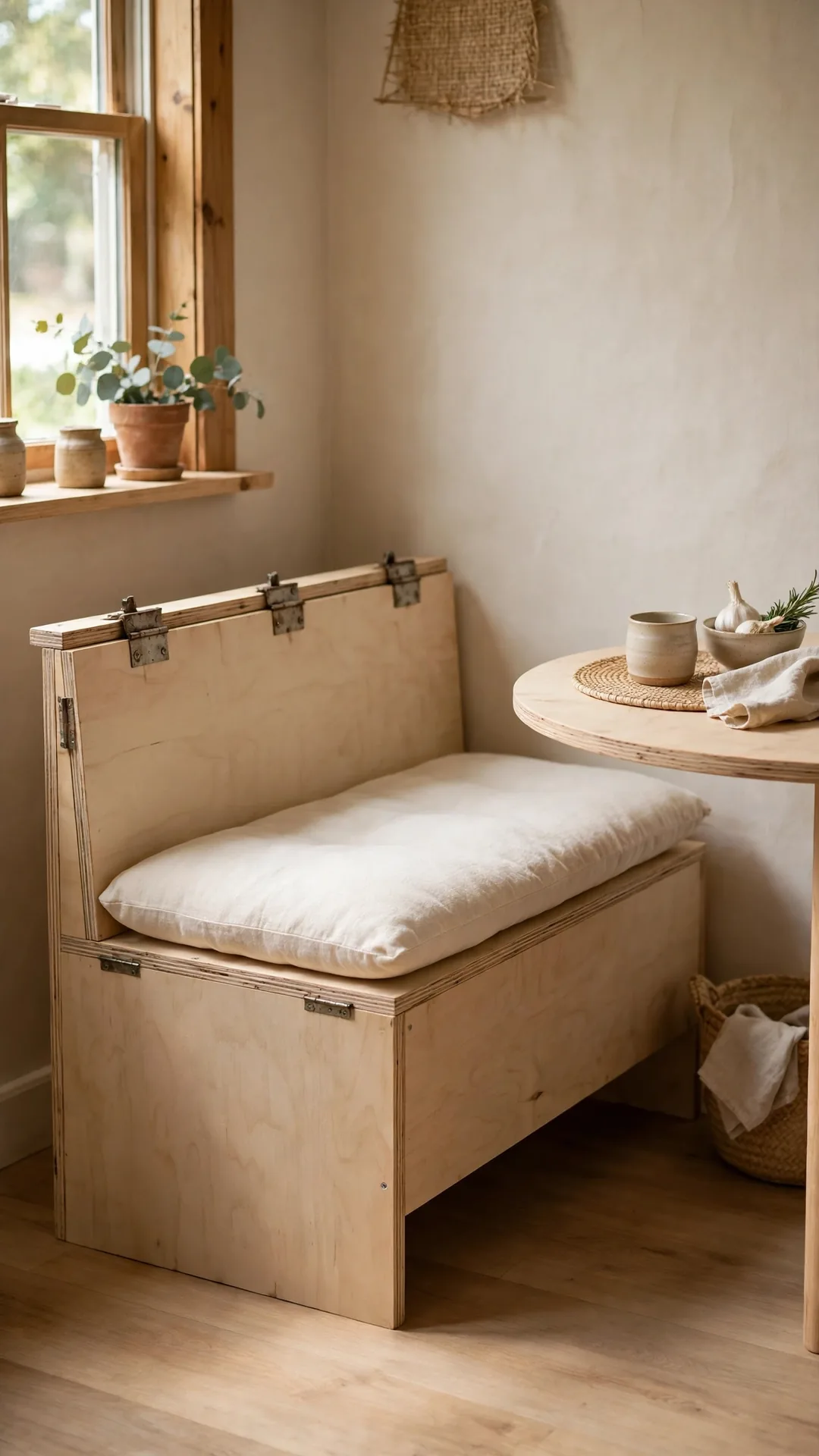
Basic banquette seating ideas for small dining rooms can start with one sheet of plywood. These built-in banquette ideas from Better Homes and Gardens show finished builds. The box frame is strong, cheap and easy to size.
How to do it:
- Use plywood at least three quarters thick.
- Build the box 17 inches deep and 18 high.
- Join panels with screws and wood glue.
- Sand every edge smooth before painting.
- Use screws, not nails, for a stronger box frame.
Best for: First-time builders with basic tools at home.
Budget: $80 to $200
Quick tip: Have the store cut the plywood to size.
26. Frame a Bench from Boards in a Weekend
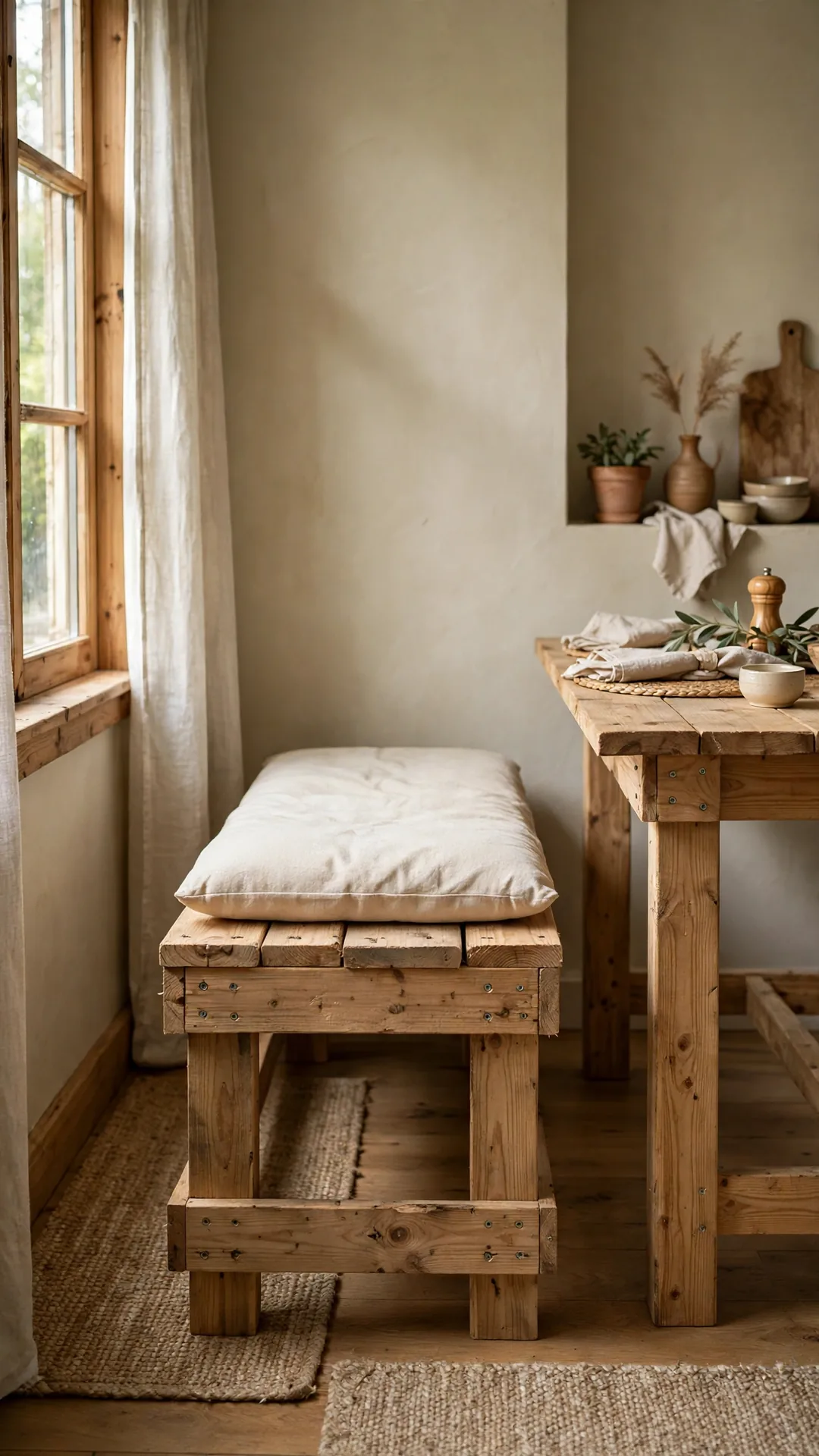
A framed bench uses simple boards and a strong inner skeleton. The same basic framing skills appear in these diy bedroom ideas for small rooms with cats. Two people can finish the frame in one weekend.
How to do it:
- Build the inner frame from two by fours.
- Brace every corner with a diagonal block.
- Fix the seat board with screws from below.
- Paint or stain the frame before adding cushions.
- Pre-drill hard boards so the ends never split.
Best for: DIY fans who want a custom fit.
Budget: $90 to $220
Quick tip: Build the frame in the room if halls are tight.
27. Cover the Seat in Wipeable Vinyl
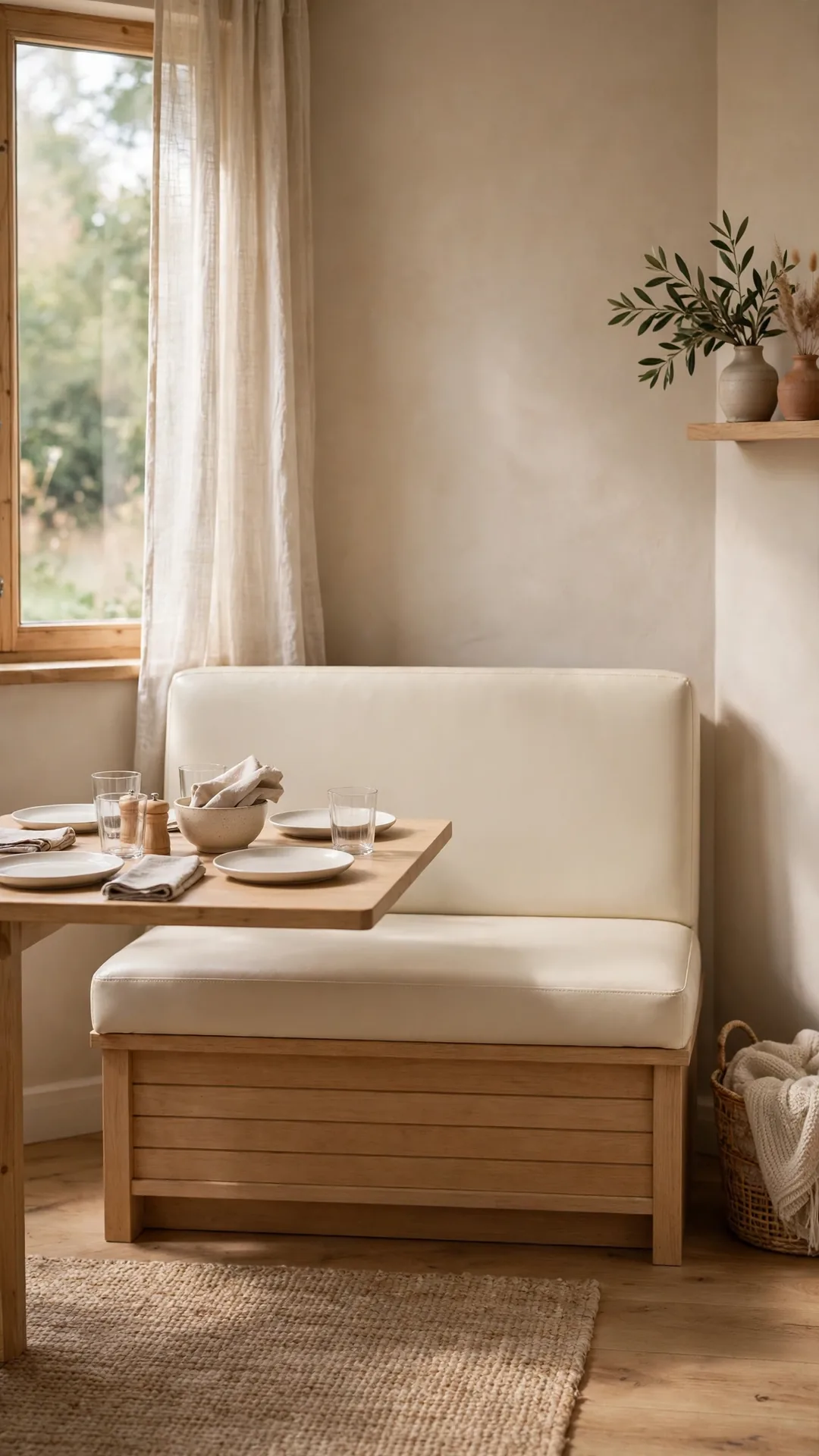
Vinyl wipes clean after pasta night, juice spills and craft days. It suits busy family nooks better than pale linen ever will. A matte finish also hides small scuffs, marks and fingerprints very well.
How to do it:
- Buy vinyl by the yard in a matte finish.
- Staple it under the seat board, pulling tight.
- Fold corners flat so they sit neatly.
- Clean it with mild soap and warm water.
- Warm the vinyl slightly so it stretches smooth.
Best for: Families with young kids at every meal.
Budget: $30 to $90
Quick tip: Choose matte vinyl so the seat looks like fabric.
28. Upholster the Seat with Foam and Fabric
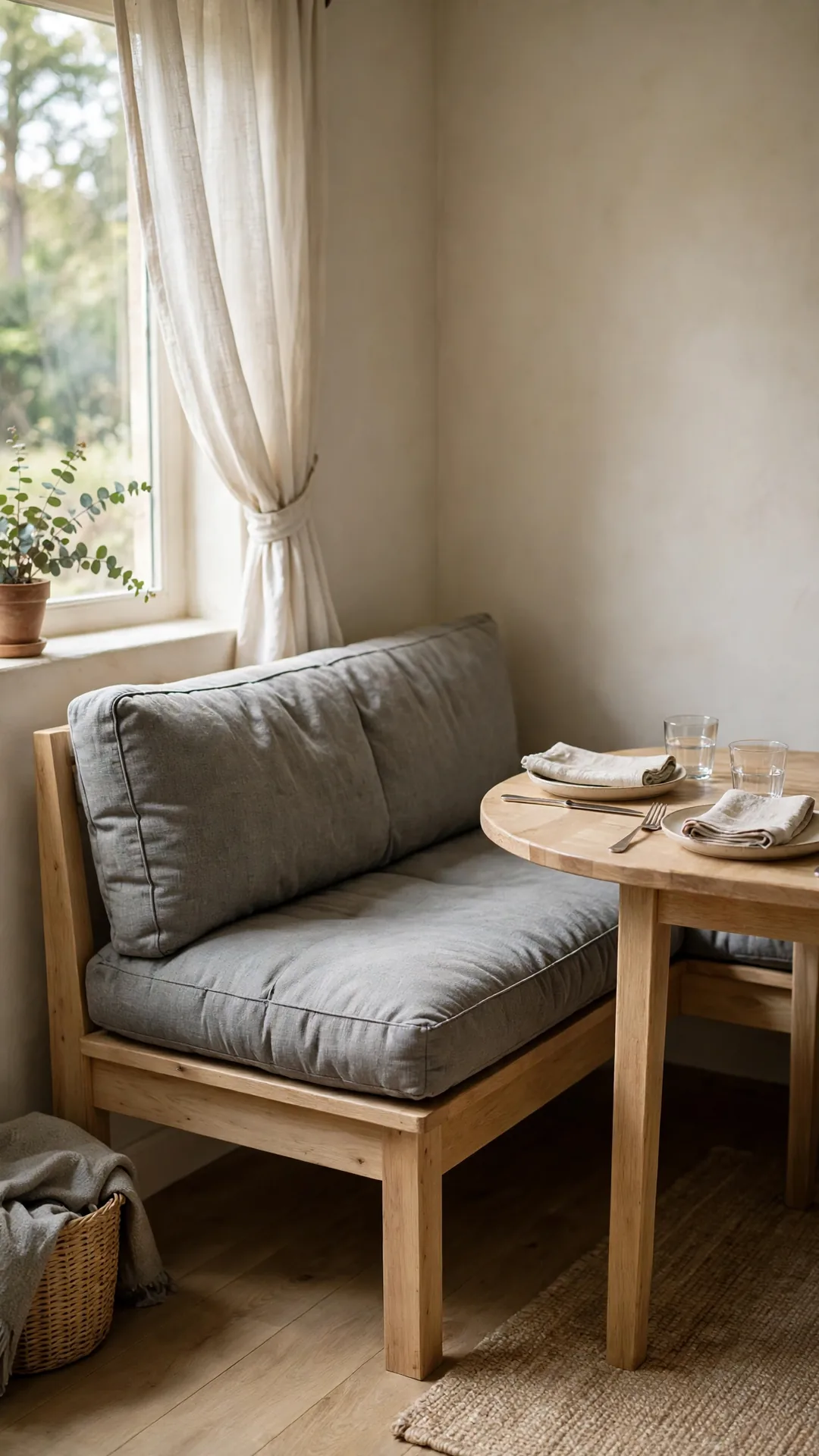
Padded banquette seating ideas for small dining rooms feel like cafe booths at home. Foam three inches thick keeps long dinners comfortable. A firm, well fitted seat also supports much better posture during long meals.
How to do it:
- Use high density foam about 3 inches thick.
- Add a thin batting layer over the foam.
- Staple washable fabric under the seat board.
- Make the seat board removable for re-covering.
- Order the foam cut to your exact bench size.
Best for: Long family dinners and homework sessions.
Budget: $60 to $160
Quick tip: Keep spare fabric for patching worn spots later.
29. Add a Tall Padded Back Panel

A tall back panel turns a plain bench into a booth seat. It also shields the wall from scuffs and food splashes. The tall panel also adds a block of color without painting the walls.
How to do it:
- Set the panel 18 to 24 inches above the seat.
- Use foam about 2 inches thick inside.
- Fix the panel to wall cleats for strength.
- Pick a fabric you can spot clean fast.
- Round the top corners for a softer look.
Best for: Benches against walls that mark easily.
Budget: $70 to $180
Quick tip: Stop the panel below any wall art or shelves.
30. Panel the Bench Back with Beadboard
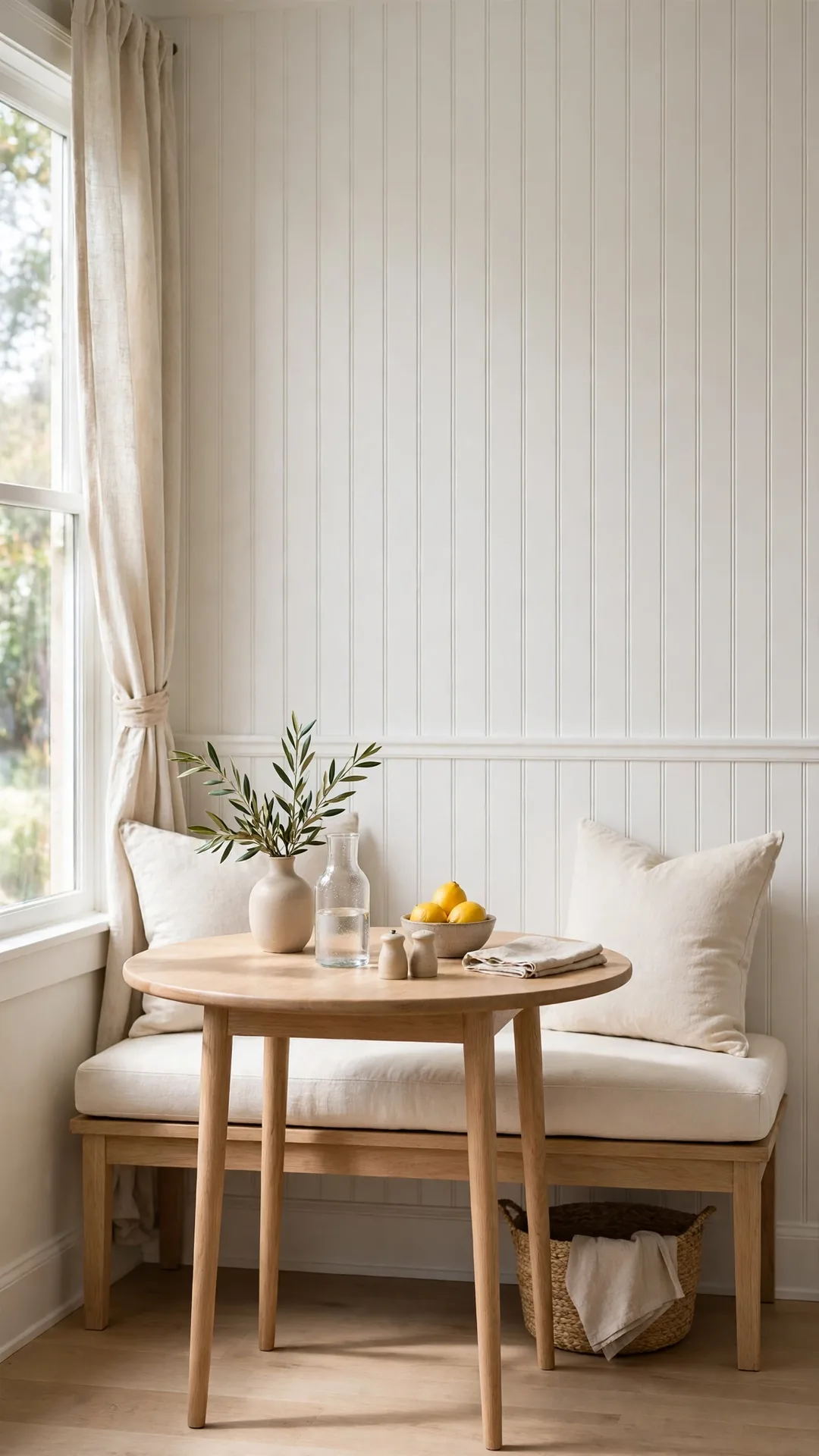
Beadboard on the wall behind the bench reads as a built back. It costs little and paints to match any trim color. The cap rail doubles as a narrow display ledge.
How to do it:
- Cut beadboard to rise 18 inches above the seat.
- Top it with a simple cap rail.
- Paint it with a scrubbable semi-gloss finish.
- Caulk the edges where it meets the wall.
- Fill every nail hole and sand before the final paint coat.
Best for: Cottage style nooks on a small budget.
Budget: $40 to $110
Quick tip: Add a cap rail wide enough for a small plant.
31. Paint the Bench to Match the Walls
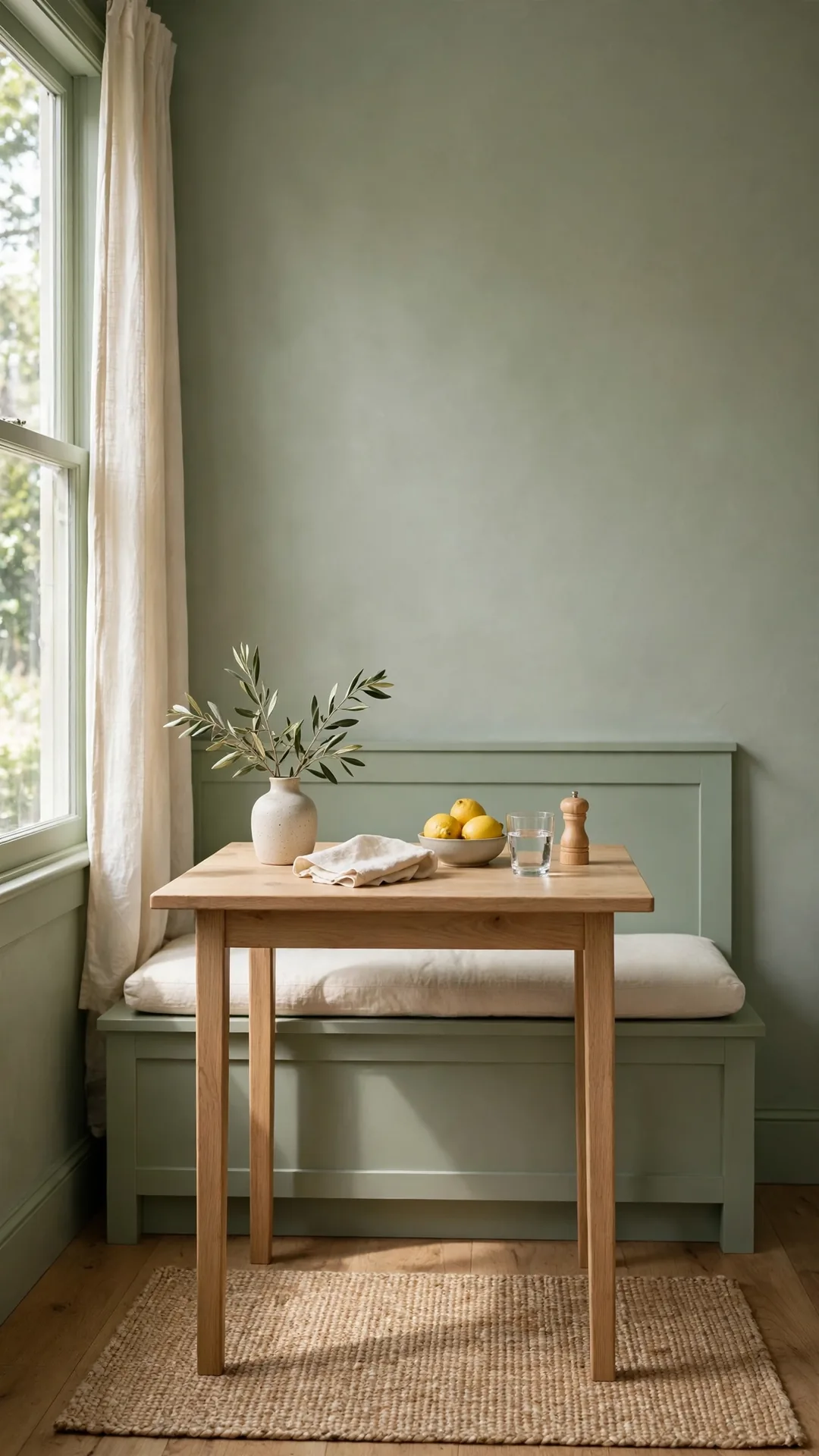
Painted banquette seating ideas for small dining rooms can blend the bench into the wall. One color makes the nook feel wider and calmer. Loose cushions then carry all the color and pattern in this calm setup.
How to do it:
- Use the exact paint color from the wall.
- Choose a scrubbable finish at seat height.
- Add contrast with cushions, not paint.
- Keep a small touch-up pot in the bench.
- Test the color match in daylight before painting.
Best for: Small nooks that feel busy with contrast.
Budget: $25 to $60
Quick tip: Paint the table base too for one calm block.
32. Add Baseboard Trim for a Built-In Look
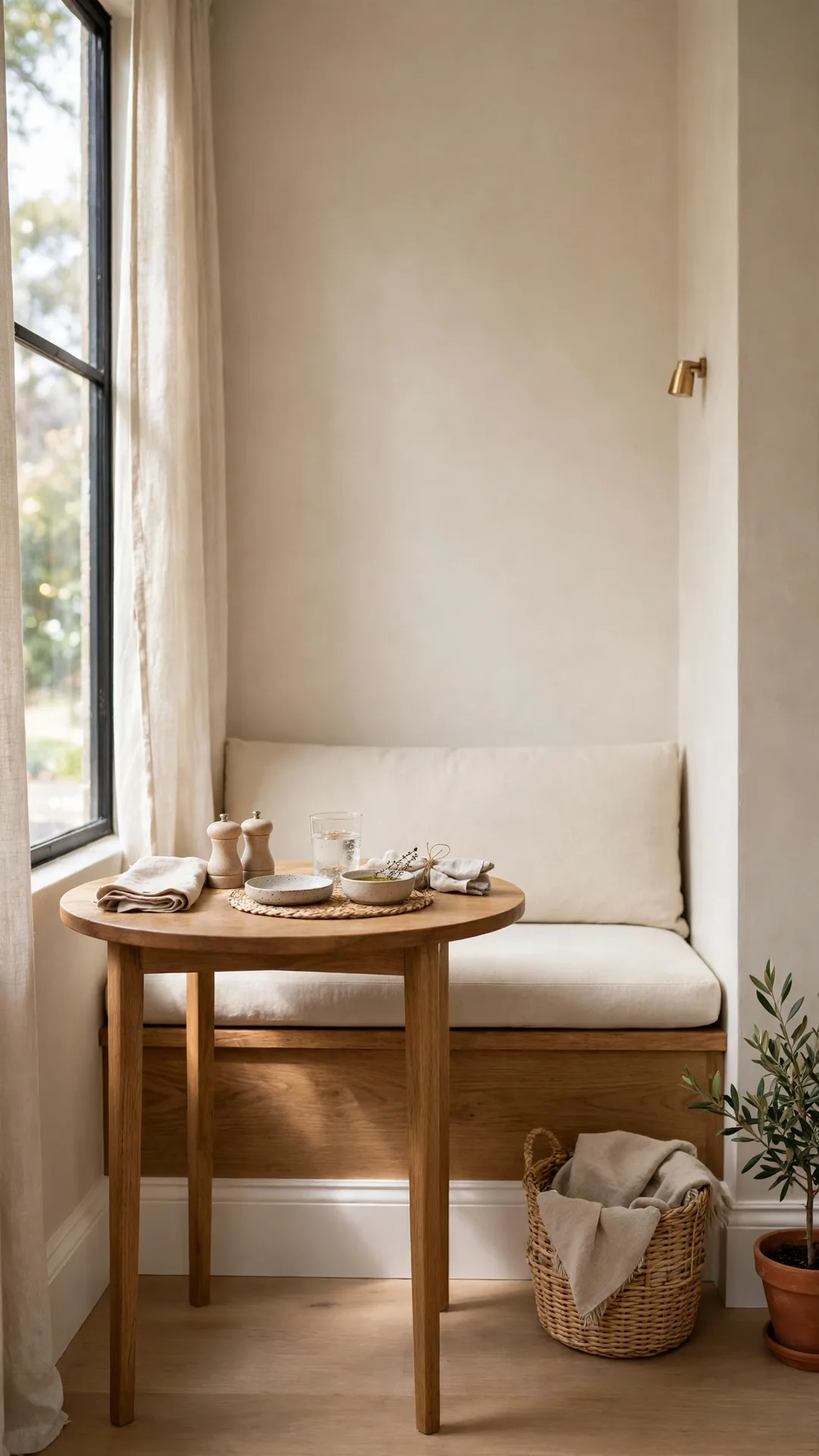
Baseboard trim along the bench base fools the eye well. The bench then reads as part of the room, not an add-on. It is a one-hour job with a surprisingly big visual payoff.
How to do it:
- Match the trim profile used in the room.
- Miter the front corners for a clean join.
- Caulk small gaps before the final paint coat.
- Paint the trim to match the wall trim.
- Start the trim run at the front center for even joins.
Best for: Store-bought benches that look temporary.
Budget: $15 to $45
Quick tip: Leave the back side untrimmed to save money.
33. Turn a Window Seat into Dining Seating
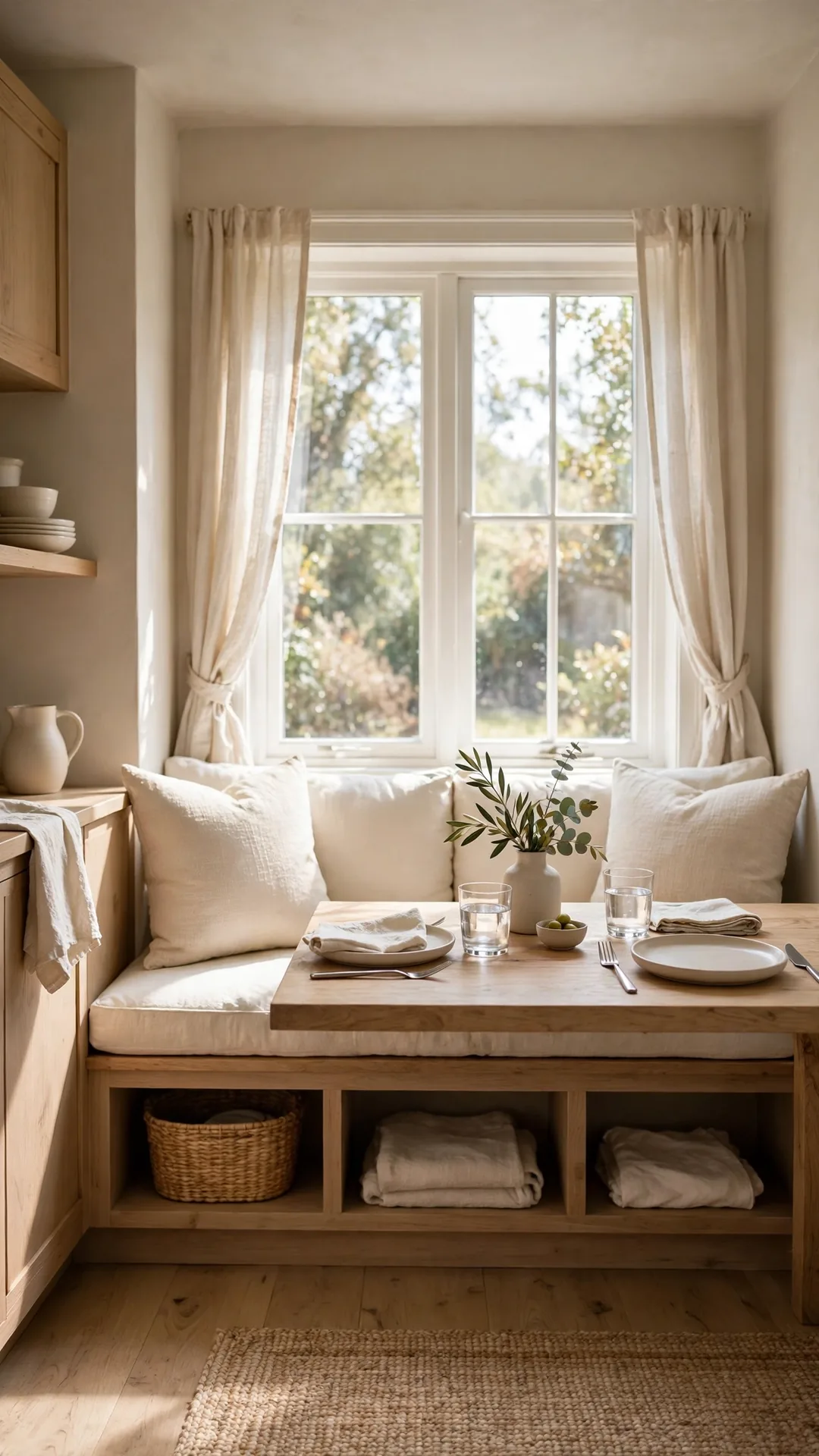
A window seat with the right height can host daily meals. Deep window seats also shine in these bed ideas for small rooms as reading spots. Just pull a small table close and add two chairs.
How to do it:
- Check the seat height sits near 18 inches.
- Add one thick cushion if the seat sits low.
- Let the table edge overlap the seat slightly.
- Keep two light chairs on the open side.
- Keep the table light enough to move daily.
Best for: Homes with a deep window seat already built.
Budget: $40 to $120
Quick tip: Test one full meal before you commit the layout.
34. Line the Window Wall with a Long Bench
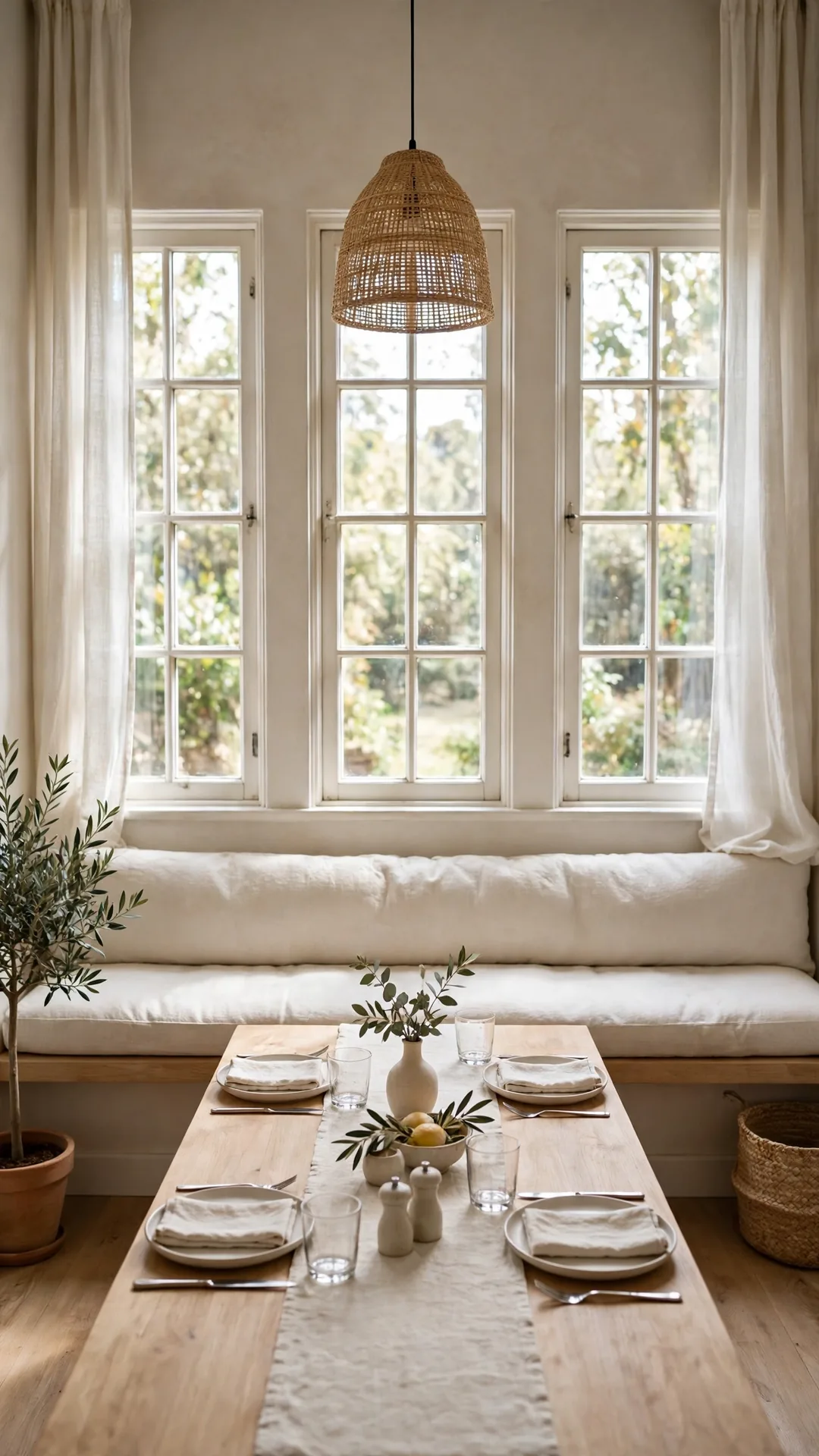
Window banquette seating ideas for small dining rooms put the best light at the table. Every seat faces the room while daylight falls behind. Low backs keep the window light fully open.
How to do it:
- Run the bench under the full window width.
- Keep the bench back below the sill line.
- Hold bench depth at 16 to 18 inches.
- Pair it with a narrow table about 30 inches wide.
- Leave a finger gap behind the bench for curtains.
Best for: Dining rooms with one long window wall.
Budget: $200 to $550
Quick tip: Leave vents below the windows fully uncovered.
35. Hang a Pendant Low over the Nook
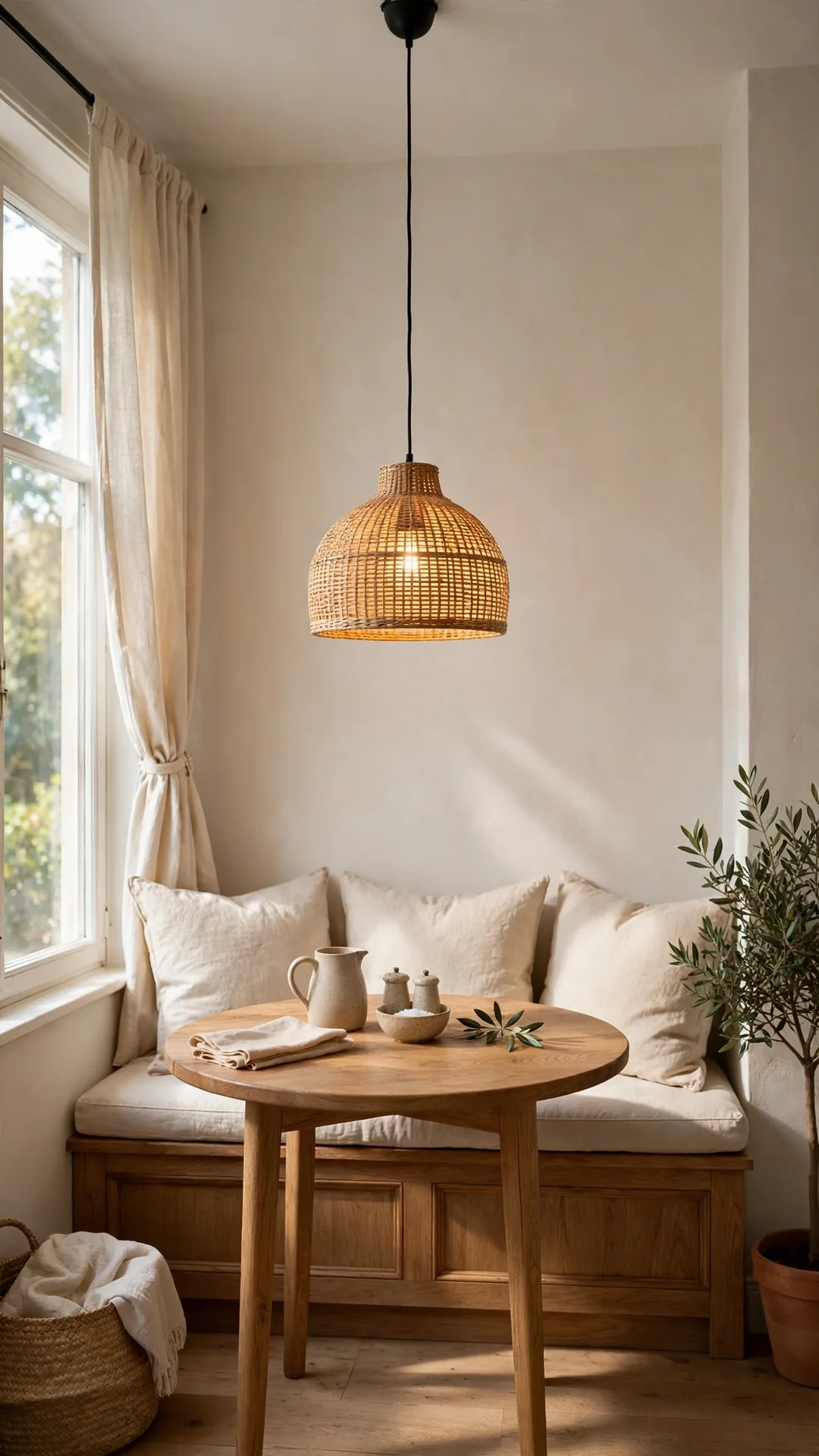
One pendant centered over the table marks the nook as its own zone. It also frees the table from lamp clutter and cords. The light pool makes the small table feel bigger.
How to do it:
- Hang the shade about 30 inches above the table.
- Center the light on the table, not the room.
- Add a dimmer for softer evening light.
- Pick a shade at least 12 inches wide.
- Use a cord cover if the pendant is plug-in.
Best for: Open-plan corners that need a clear zone.
Budget: $50 to $160
Quick tip: Use a warm bulb so food looks its best.
36. Add Two Sconces Beside the Bench Back
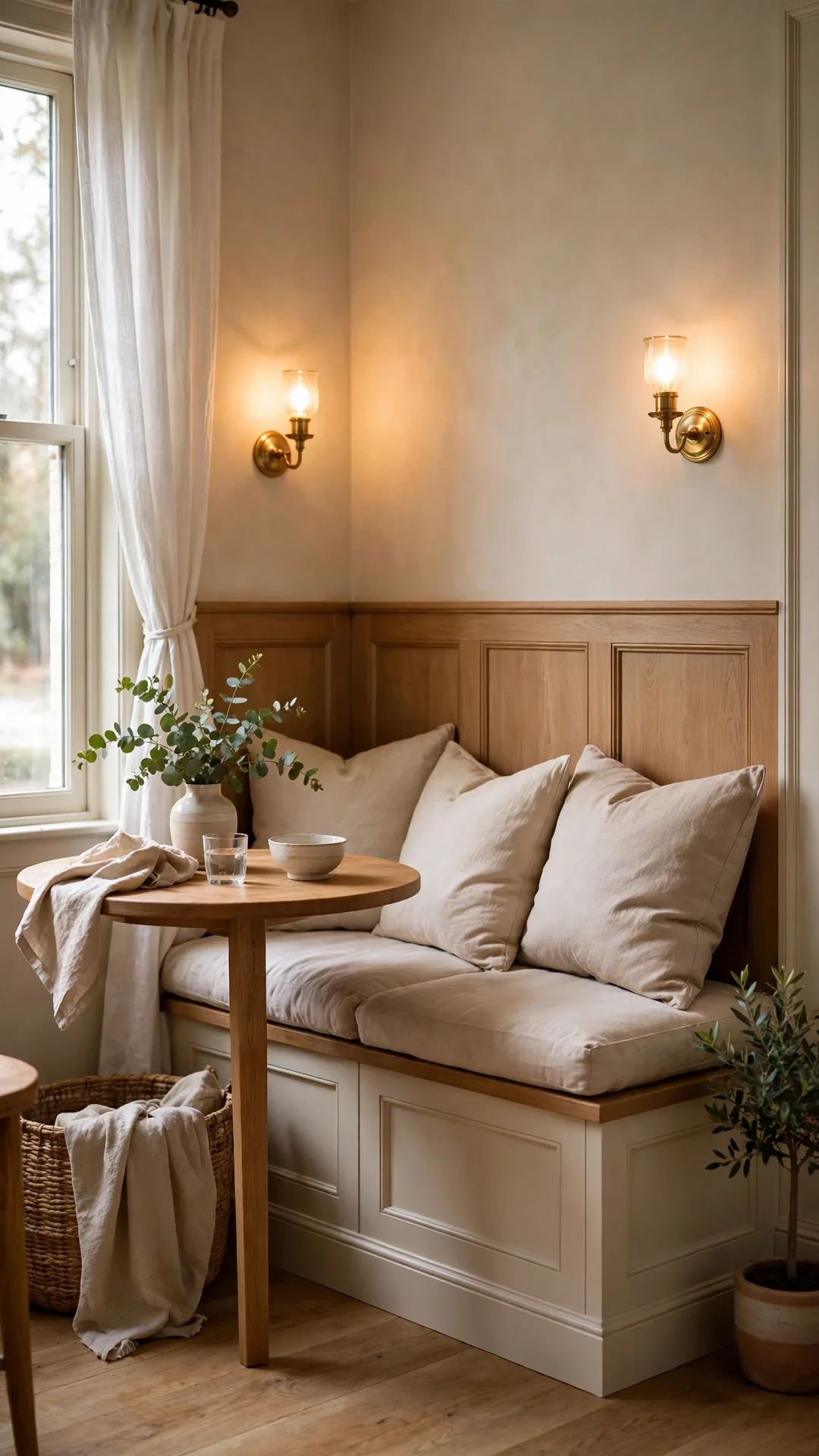
Sconces at head height make bench seating feel like a cafe booth. Plug-in styles keep the job renter friendly and simple. Warm, low light makes evening meals at the nook feel slower and calmer.
How to do it:
- Mount each sconce about 60 inches from the floor.
- Space the pair to frame the bench ends.
- Cover cords with paintable cord channels.
- Aim shades downward for soft, low light.
- Fit bulbs that closely match the color tone of other lights.
Best for: Nooks that feel dark in the evening.
Budget: $40 to $120
Quick tip: Use cord covers painted to match the wall.
37. Keep Window Coverings Short Above the Bench
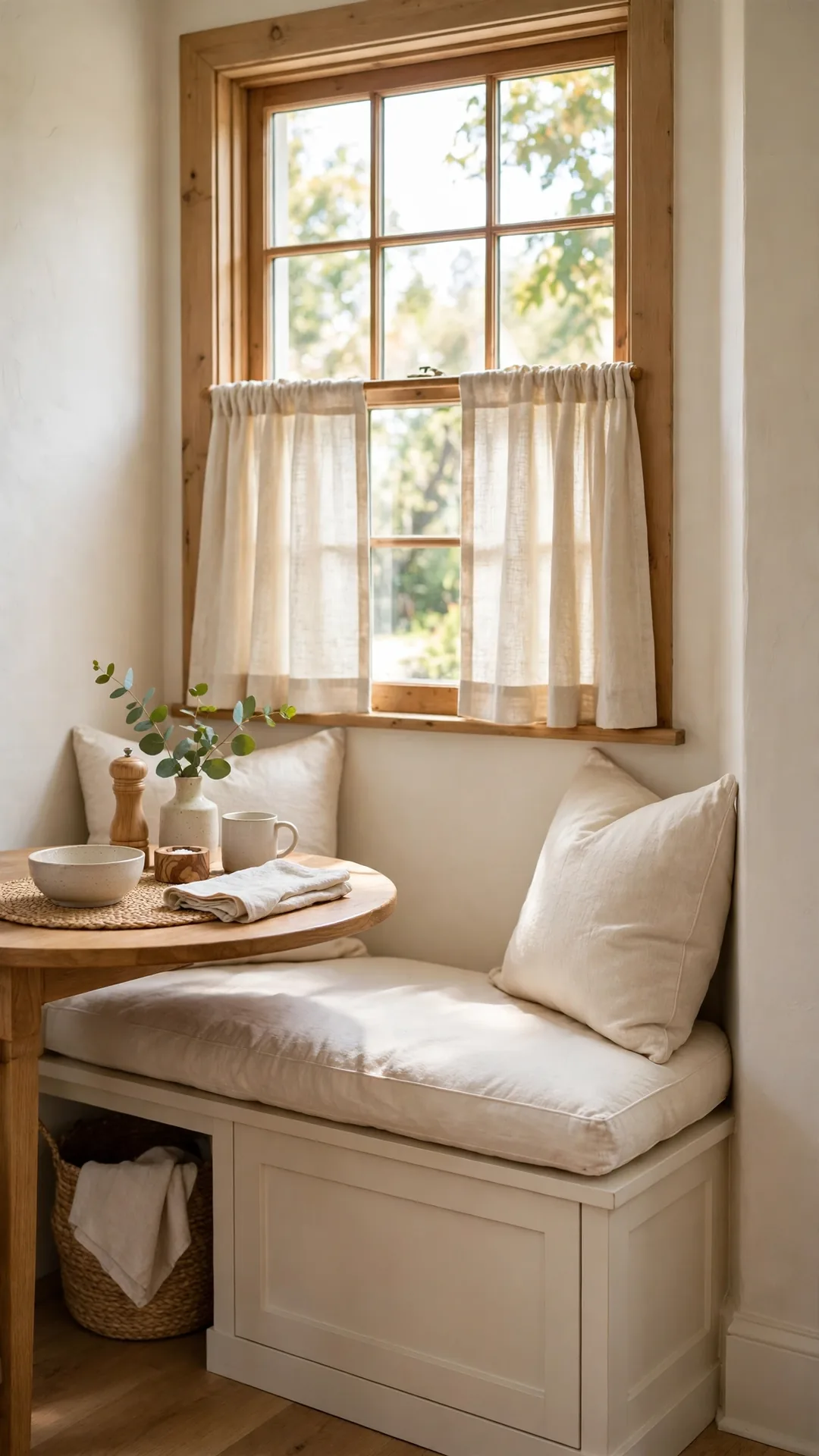
Practical banquette seating ideas for small dining rooms keep fabric clear of the seat back. Cafe curtains or short shades stop cushions from bunching fabric. Short coverings also let in more daylight overall.
How to do it:
- Hem panels to end at the window sill.
- Keep fabric 2 inches clear of the bench back.
- Use an inside mount shade for a neat line.
- Pick washable fabric for kitchen-side windows.
- Wash cafe panels monthly in kitchen-side rooms.
Best for: Window benches with tall back cushions.
Budget: $20 to $70
Quick tip: Hem panels to end one inch above the bench back.
38. Lay a Washable Rug Under the Whole Nook
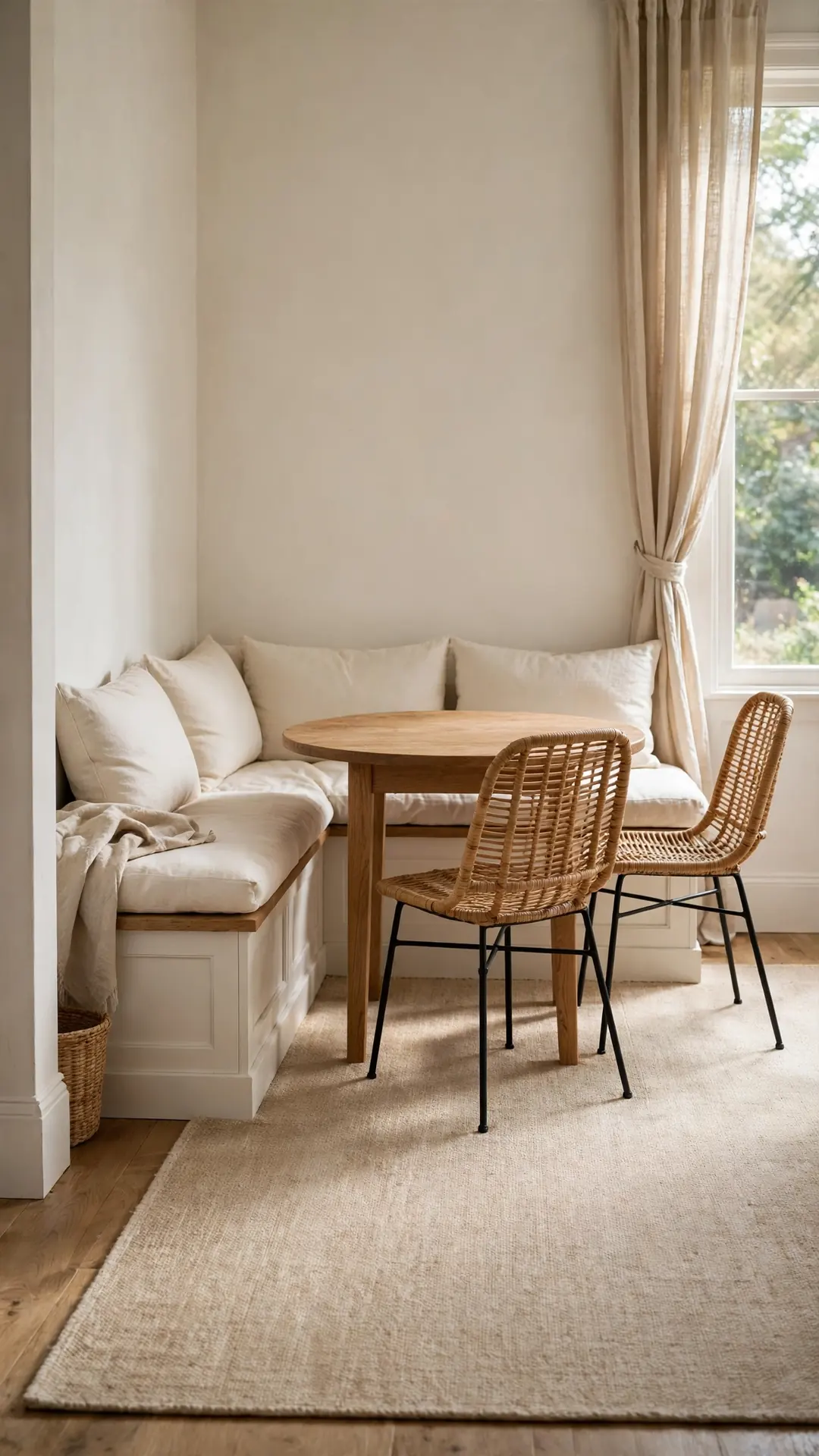
A flat washable rug grounds the nook and catches crumbs. It slides under the bench without bunching at the legs. The rug edge also marks exactly where the open-side chairs should stop.
How to do it:
- Extend the rug 24 inches past the table edges.
- Choose a flat weave with no thick pile.
- Add a thin rug pad to stop sliding.
- Check the rug fits your washing machine.
- Pick a low, flat edge binding that never trips passing feet.
Best for: Hard floors in eat-in corners.
Budget: $45 to $130
Quick tip: Pick a pattern that hides crumbs between washes.
39. Pair the Bench with a Pedestal Table

A pedestal base leaves the slide-in path fully open. Nobody knocks knees on table legs at the bench side. A round pedestal top pairs best with this kind of bench seating.
How to do it:
- Pick a round table 36 to 42 inches wide.
- Let the table edge overlap the seat by 2 inches.
- Check the base width so feet rest flat.
- Keep chairs light on the open side.
- Check the table seats four with real place settings.
Best for: Corner nooks where legs would block entry.
Budget: $150 to $450
Quick tip: Test the slide-in path before you fix the bench.
40. Choose an Oval Table for Easy Slide-In
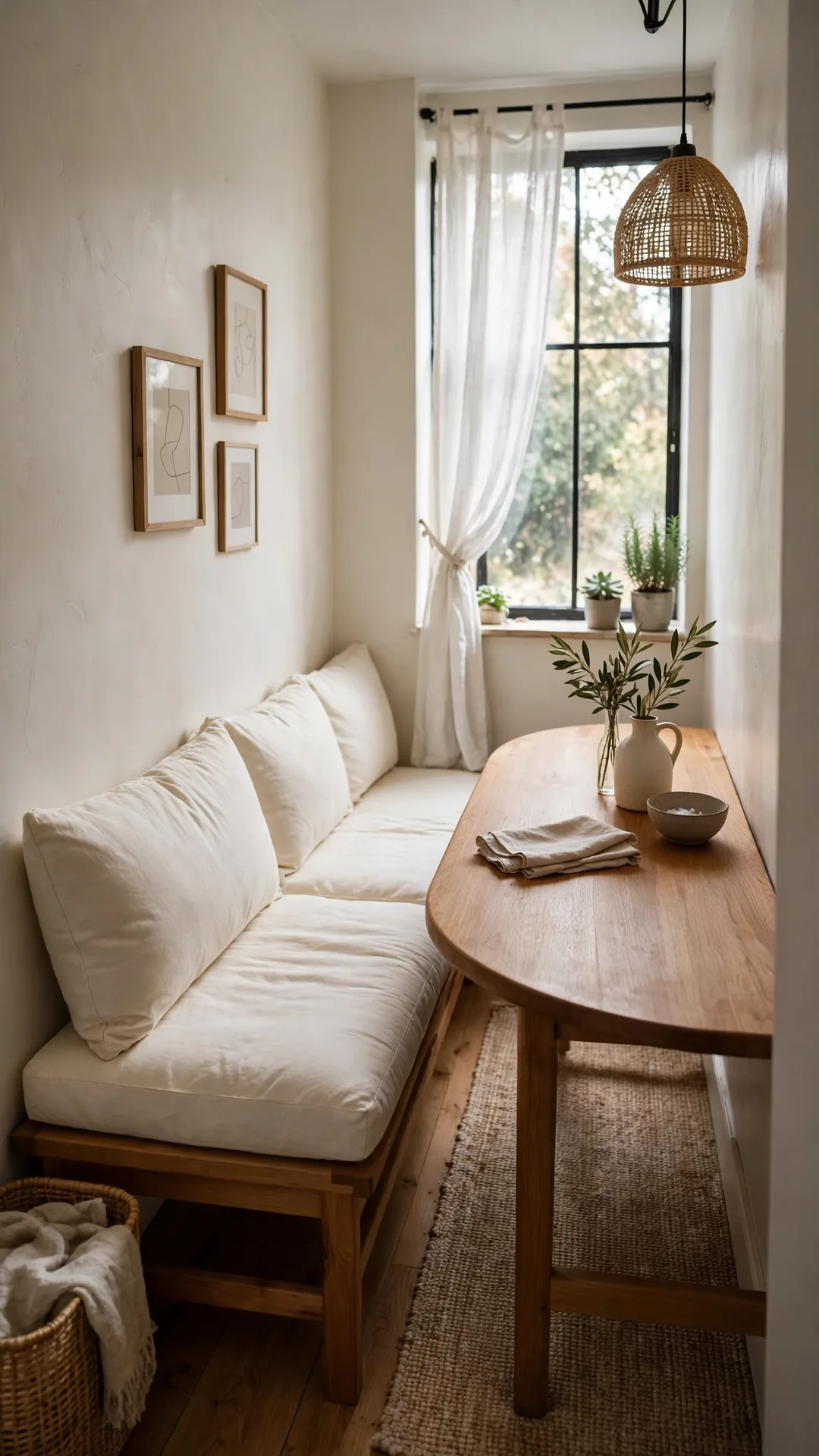
Oval banquette seating ideas for small dining rooms soften corners in tight walkways. The curved ends let people slide in without sharp corners. The bench side stays straight while both curved ends fall away.
How to do it:
- Pick an oval table 48 to 54 inches long.
- Run the bench along the long side.
- Keep the walkway end curved and clear.
- Add end chairs only when guests arrive.
- Center the bench carefully along the long straight side.
Best for: Narrow rooms with traffic passing one end.
Budget: $180 to $500
Quick tip: Point the rounded end toward the walkway side.
41. Keep Two Feet of Room to Slide In

Slide-in space decides whether a nook feels easy or cramped. Keep the gap honest and test it before you fix the bench. Tape marks cost nothing and prevent build mistakes.
How to do it:
- Set bench depth at 16 to 18 inches.
- Let the table edge overlap the seat by 2 inches.
- Leave 36 inches behind chairs on the open side.
- Test the slide-in path with the tallest family member.
- Sit at every place to test the knee room.
Best for: Nooks planned on paper before any build.
Budget: Under $10
Quick tip: Mark the full layout in tape on the floor first.
42. Angle the Table in a Tight Corner
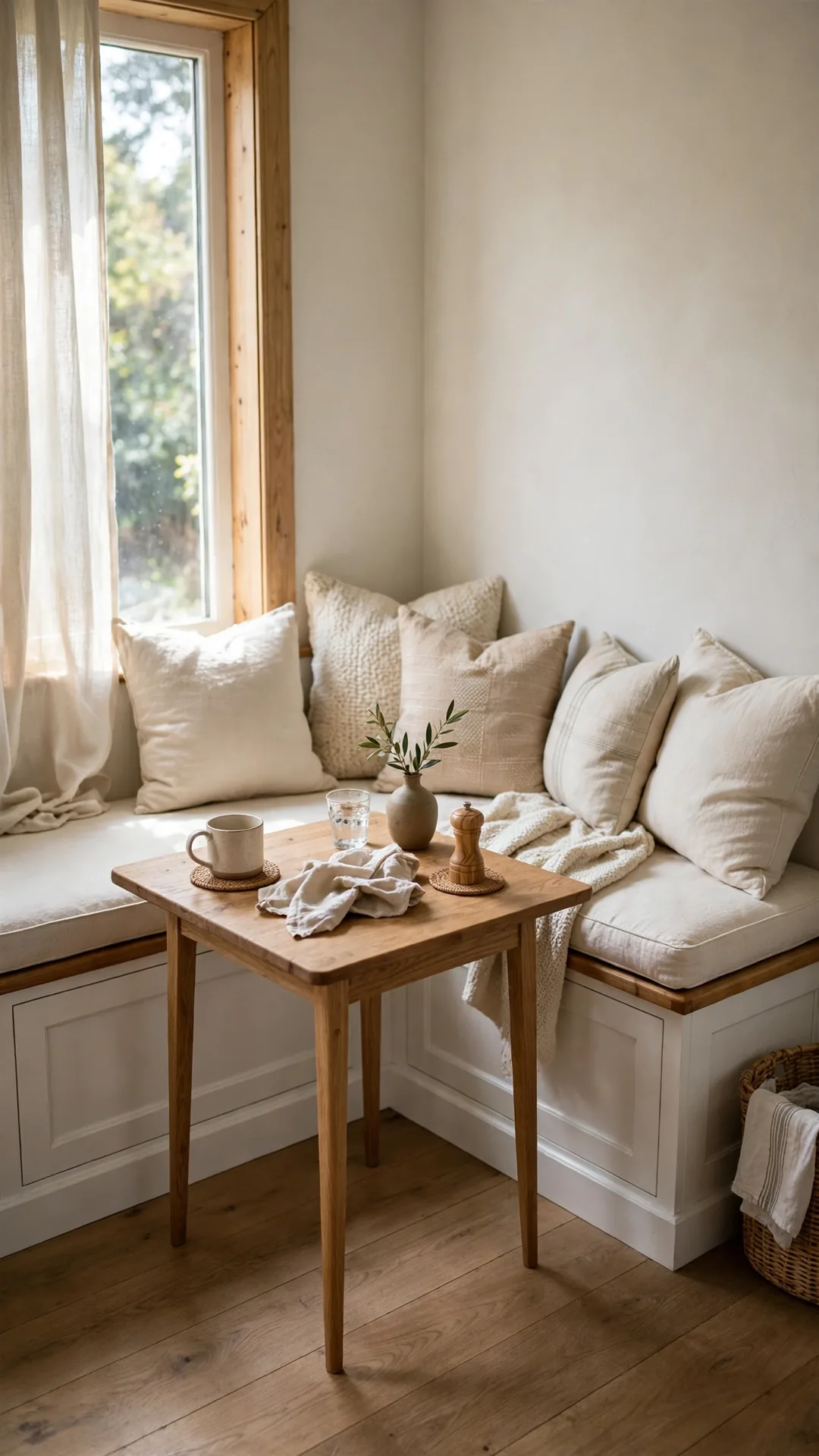
A slight angle can open the entry side of a corner nook. It also breaks the boxy feel of a square room. Even small shifts can change how a tight corner flows at mealtimes.
How to do it:
- Turn the table about 15 degrees off square.
- Keep the bench fixed flat to the walls.
- Check walkway space on both open sides.
- Anchor the look with a rug under the table.
- Mark the final angle with tape before moving chairs.
Best for: Square corners that feel stiff and blocked.
Budget: Under $20
Quick tip: Angle the table, never the bench, for best fit.
43. Count Two Feet of Bench per Person

Long banquette seating ideas for small dining rooms seat more people than chairs ever could. A 48 inch bench seats two adults in real comfort. This count stops benches built too short for guests.
How to do it:
- Allow about 24 inches of bench per adult.
- Count about 20 inches for each child.
- Match place settings to the same spacing.
- Add end chairs before you extend the bench.
- Write the seat count down before you order any materials.
Best for: Sizing a bench before you build or buy.
Budget: Under $10
Quick tip: Count growing kids at the full adult measure.
44. Use a Drop-Leaf Table Beside the Bench
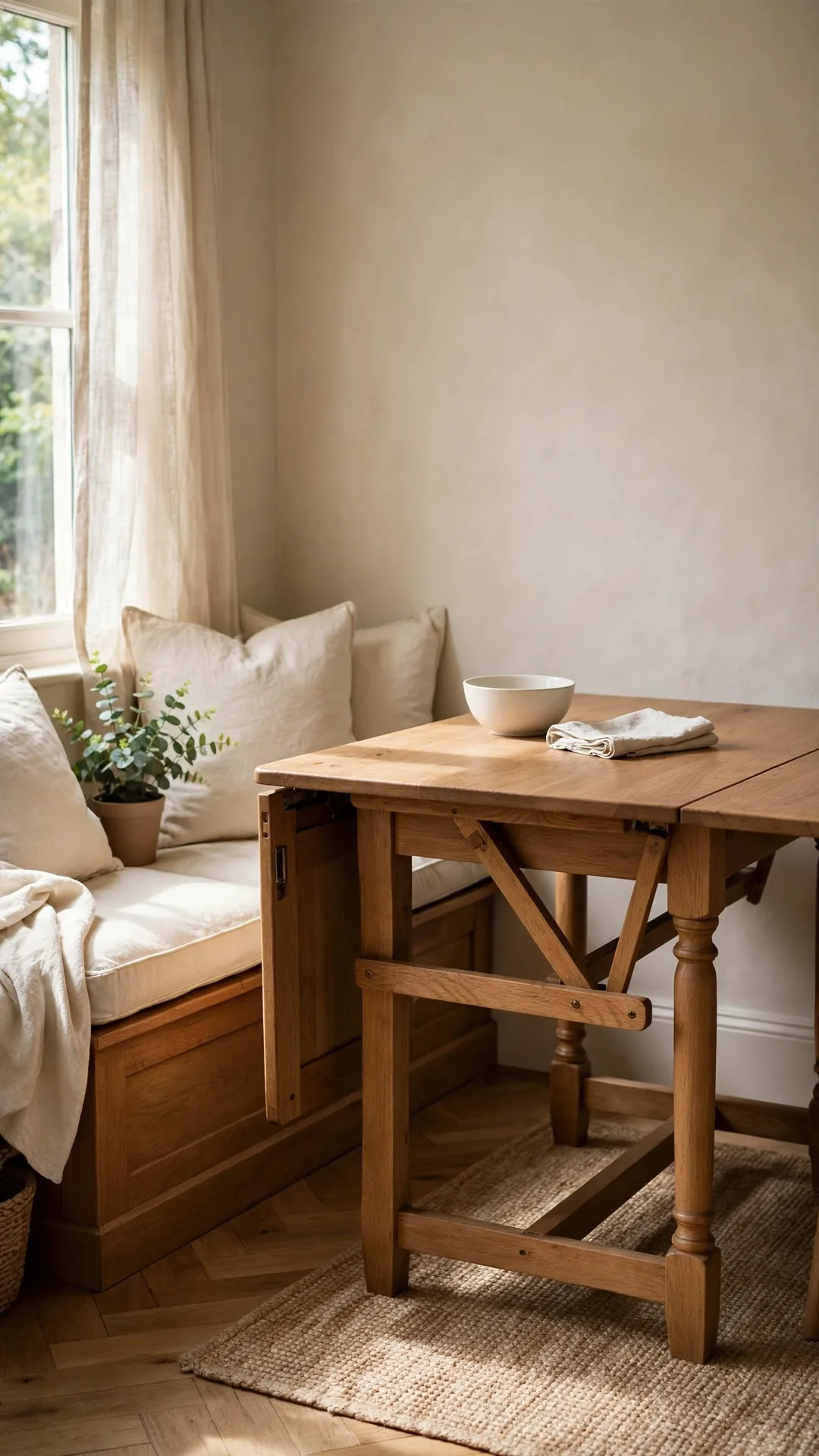
A drop-leaf table shrinks for daily meals and grows for guests. The bench side stays fixed while the leaf does the work. One modest table then serves two very different group sizes with ease.
How to do it:
- Keep the fixed edge against the bench side.
- Check the raised leaf clears the walkway.
- Test hinges so the leaf sits fully level.
- Store spare chairs away from the nook.
- Keep the lowered leaf clear of the walkway.
Best for: Nooks that host guests a few times a year.
Budget: $120 to $350
Quick tip: Raise the leaf the day before guests arrive.
45. Push the Table to the Bench on Weekdays
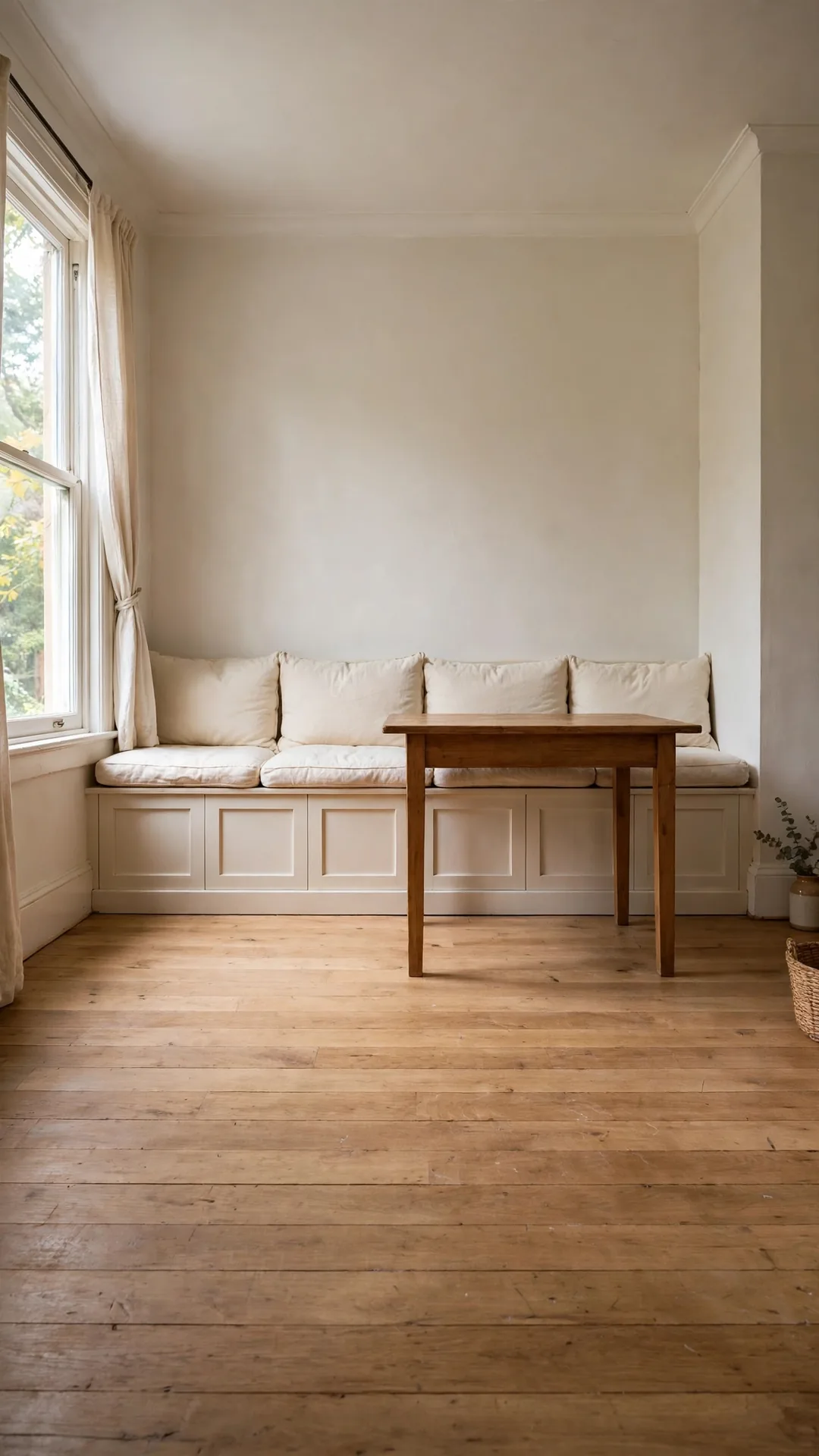
On quiet days the table can hug the bench side fully. That frees a wide lane for passing and play. This simple trick costs nothing at all once the felt pads are fitted.
How to do it:
- Fit felt pads under every table foot.
- Push the table in after breakfast each day.
- Pull it out about 12 inches for meals.
- Keep the table centerpiece low and light.
- Keep just one chair out for quick solo meals.
Best for: Open-plan rooms where the nook shares floor space.
Budget: Under $15
Quick tip: Add pads once and the daily slide stays quiet.
46. Add One Chair at Each Table End

End chairs add two seats without crowding the open side. They also give the nook a finished, balanced look. End seats also help older guests sit down and stand up easily.
How to do it:
- Pick armless chairs about 18 inches wide.
- Leave 12 inches between chair and side walls.
- Match chair seat height to the bench.
- Tuck both chairs fully in after meals.
- Check that both end chairs fully clear nearby doors and walkway turns.
Best for: Long benches that need two extra seats.
Budget: $60 to $200
Quick tip: Pick armless end chairs so they tuck in fully.
47. Add a Booster Seat on the Bench for Kids
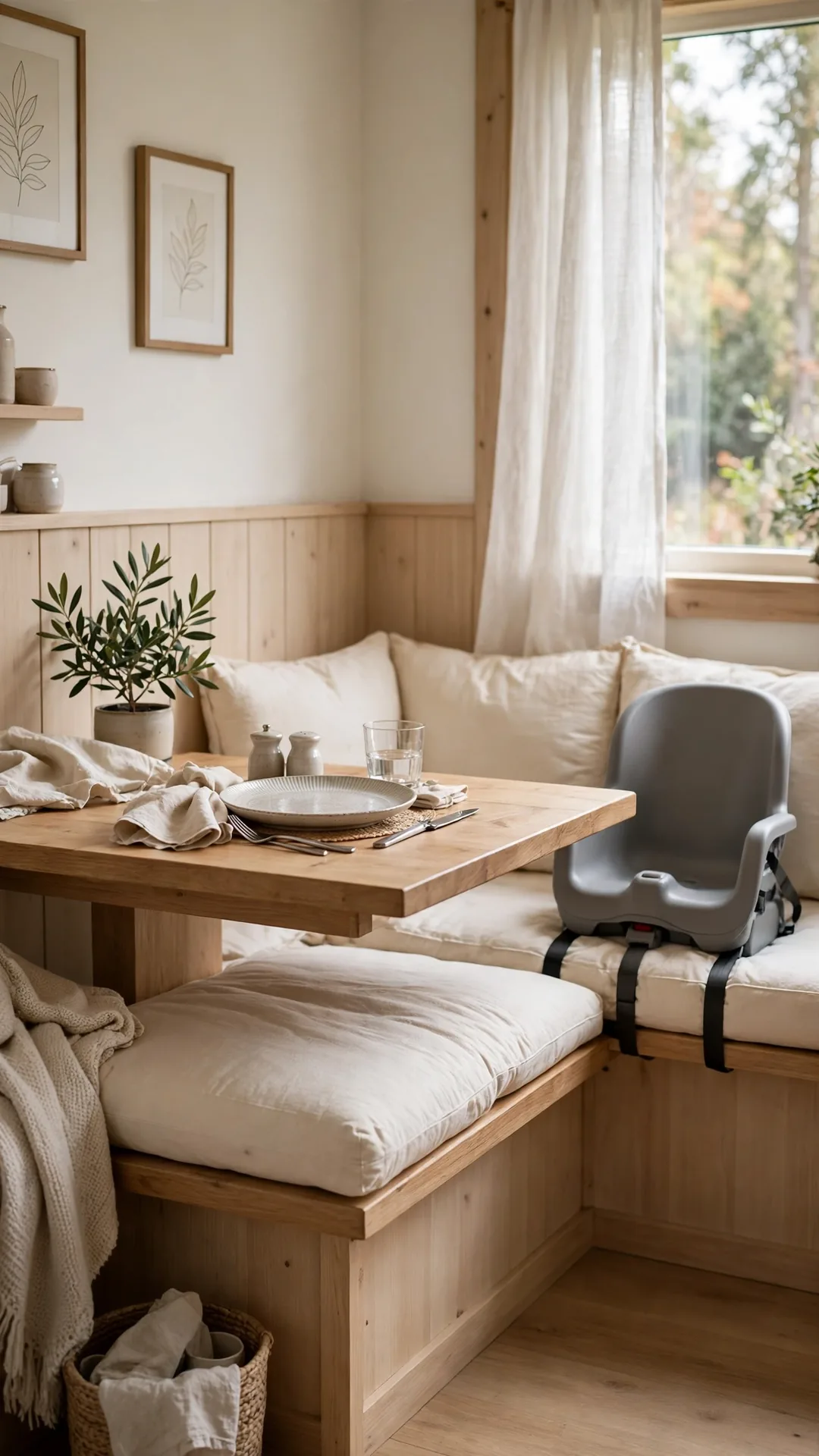
Family banquette seating ideas for small dining rooms work best when kids sit at table height. More kid friendly setups appear in these small kids bathroom ideas for tight family rooms. A strapped booster keeps toddlers steady on a flat bench.
How to do it:
- Pick a booster with straps that fit benches.
- Set the booster at the open bench end.
- Check the child reaches the table with ease.
- Wipe the booster base after every meal.
Best for: Families with toddlers joining table meals.
Budget: $25 to $60
Quick tip: Seat the booster at the bench end for fast lifts.
48. Set Up a Homework Spot at the Nook
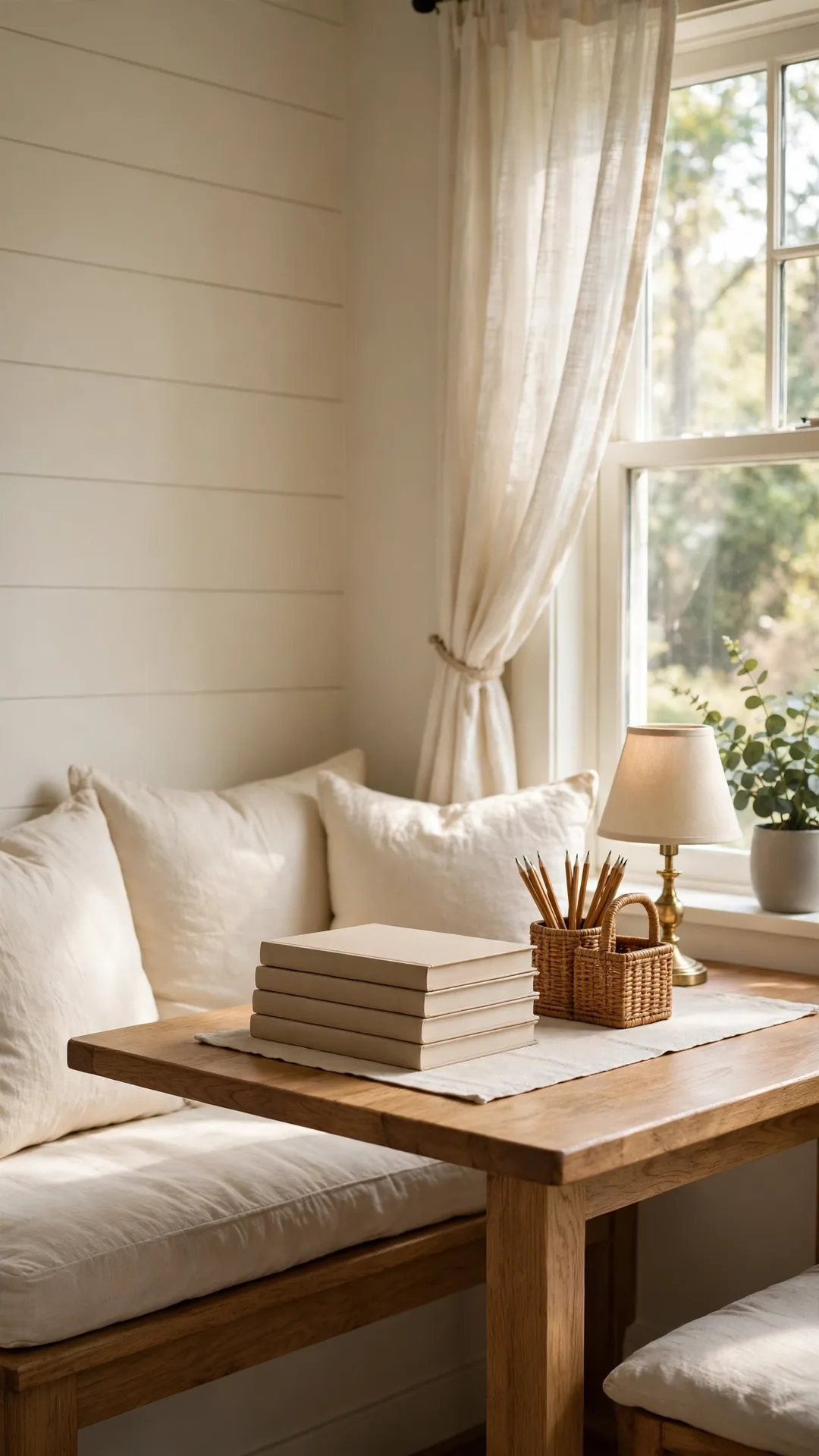
The long bench and wide table suit homework better than a desk. Kids can spread books out and still leave room for dinner. The bench gives kids room to spread out side by side.
How to do it:
- Keep supplies in one caddy that lifts away.
- Set a small lamp at the bench end.
- Add a firm cushion for long sitting sessions.
- Clear the full table before dinner each night.
- Keep drinks at the far end from books.
Best for: Homes with no spare desk space for kids.
Budget: $20 to $55
Quick tip: Keep supplies in one caddy that lifts away fast.
49. Work from the Nook on Quiet Days
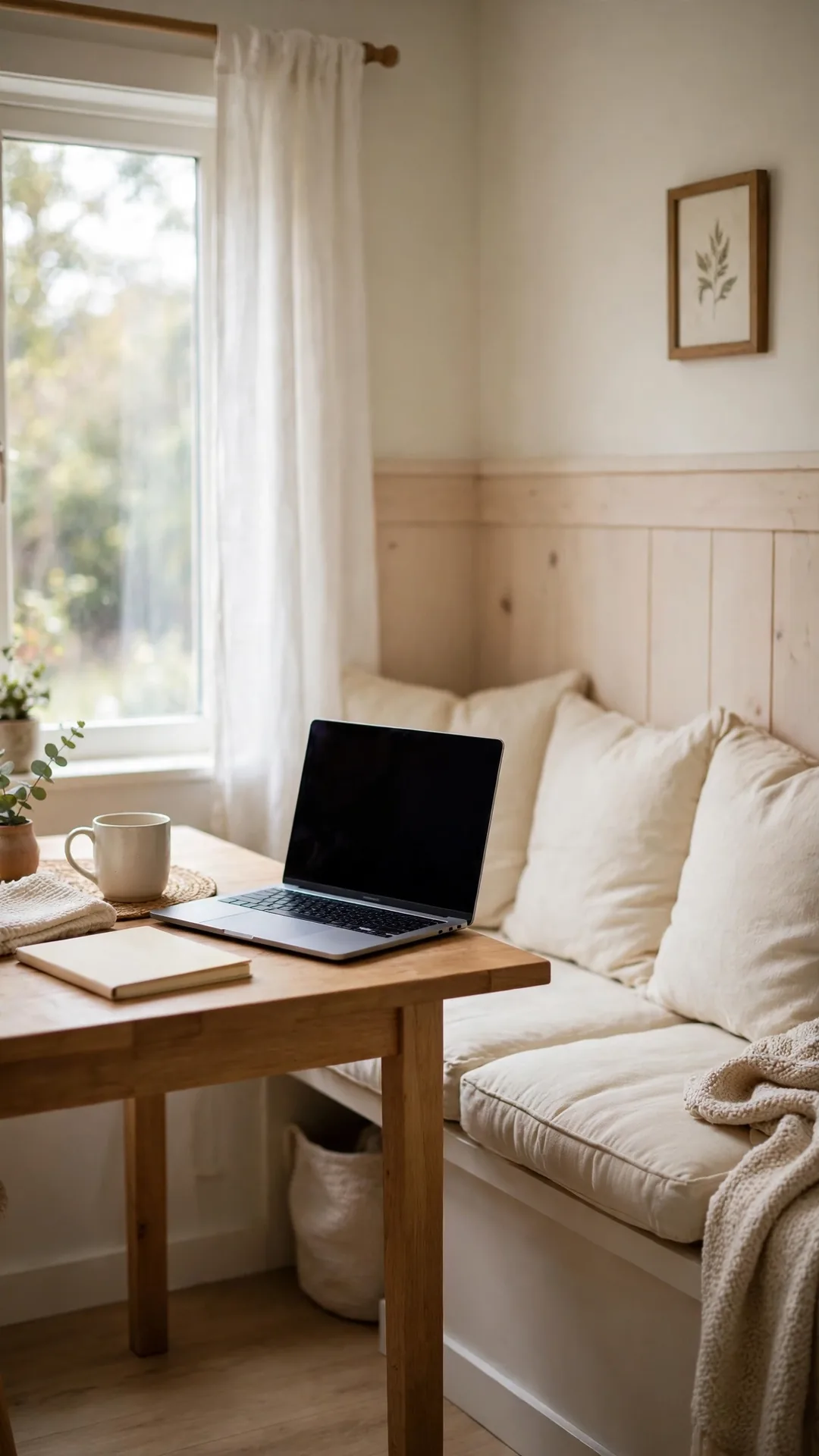
A cushioned bench makes a decent work seat for laptop hours. Small homes often pair work and rest, like these bunk bed ideas for adults small rooms. Face the room and keep the table clear by lunch.
How to do it:
- Use a firm cushion for upright posture.
- Set a small footrest box under the table.
- Keep chargers in one basket beside the bench.
- Clear work gear away before family meals.
- Take a standing break every hour or so.
Best for: Studio homes with one table for everything.
Budget: $15 to $50
Quick tip: Sit near the window end for the best light.
50. Style the Bench with a Washable Throw
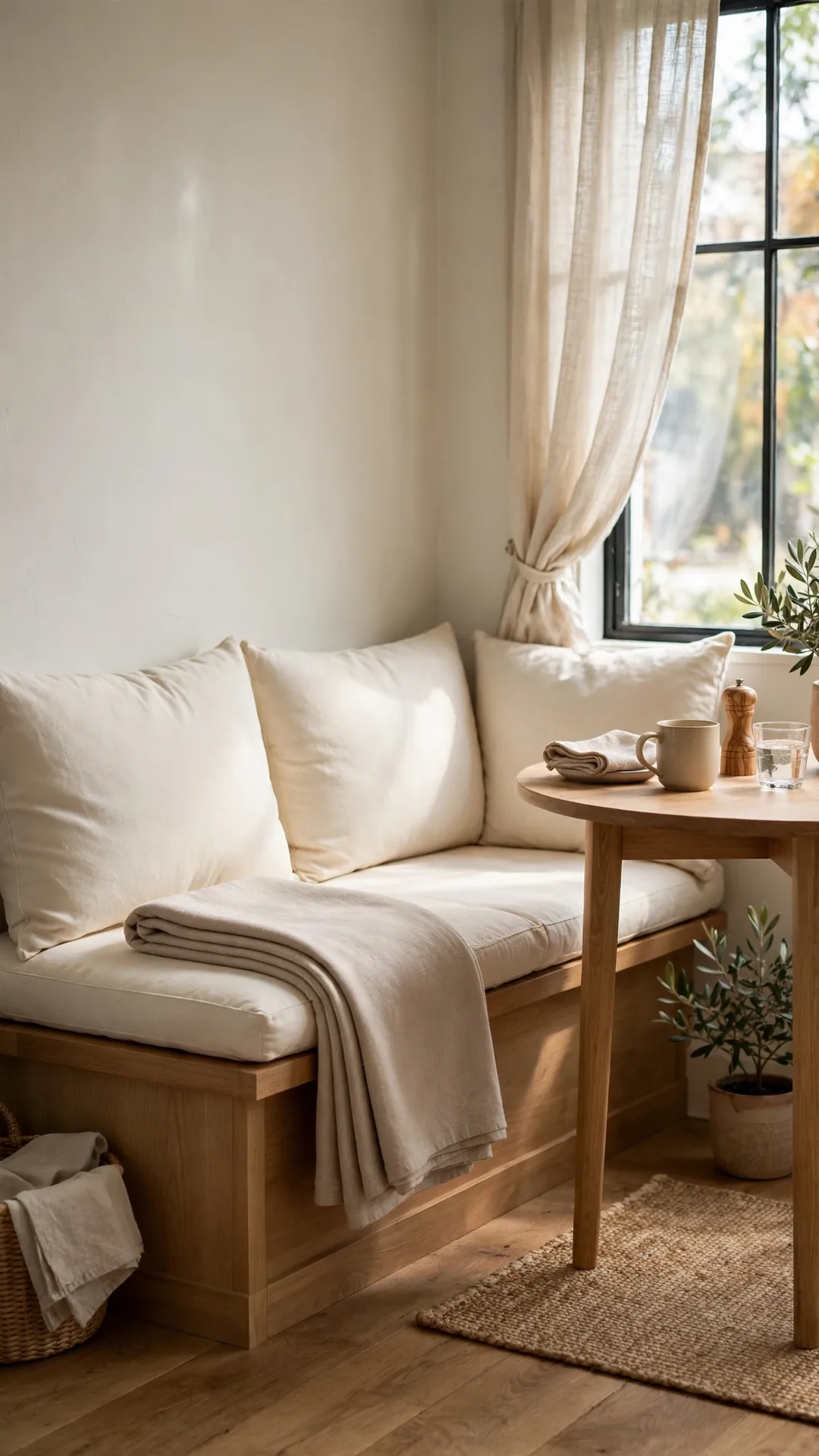
Simple banquette seating ideas for small dining rooms still deserve one soft layer. A throw over one end adds color and protects the fabric. It also guards the seat fabric from bag scuffs.
How to do it:
- Pick a throw about 50 by 60 inches.
- Fold it lengthwise over the bench end.
- Choose a color that matches your cushions.
- Keep a second throw ready for wash days.
- Fold the throw over the most used seat spot.
Best for: Plain benches that need color without paint.
Budget: $15 to $40
Quick tip: Fold the throw slim so it never blocks seating.
51. Rotate Cushion Covers with the Seasons
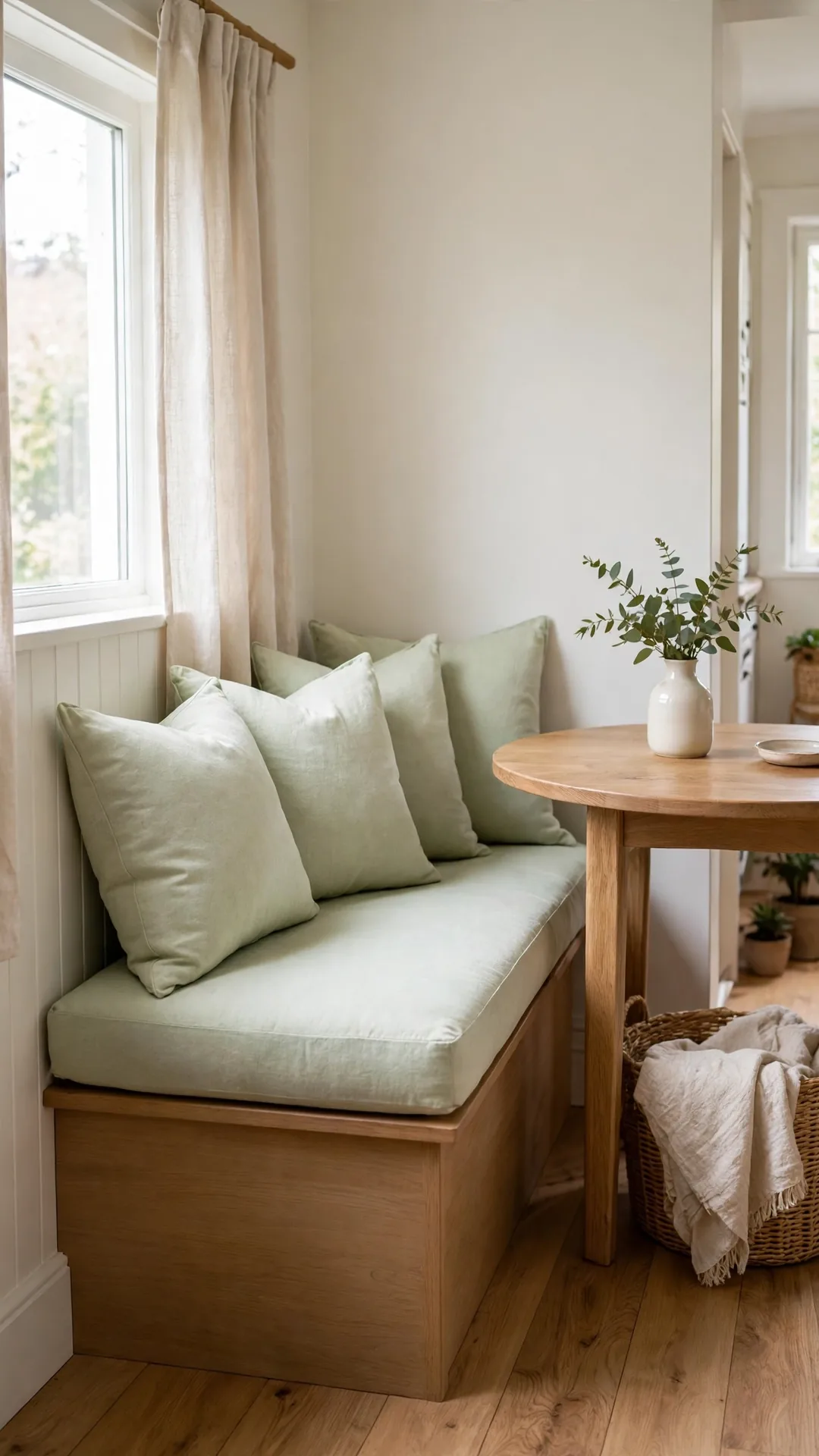
Zip-off covers let one bench wear two looks a year. Light cotton suits summer, while heavier weaves suit winter. Two full cover sets cost far less than a second bench ever would.
How to do it:
- Buy covers in matching pairs for the set.
- Check zips match your cushion sizes first.
- Store the spare set inside the bench.
- Wash covers before you store them away.
- Label each stored set clearly so seasonal swaps take just five minutes.
Best for: One nook that must suit every season.
Budget: $30 to $75
Quick tip: Store the spare set inside the bench itself.
52. Keep Three Feet of Walkway Behind Chairs
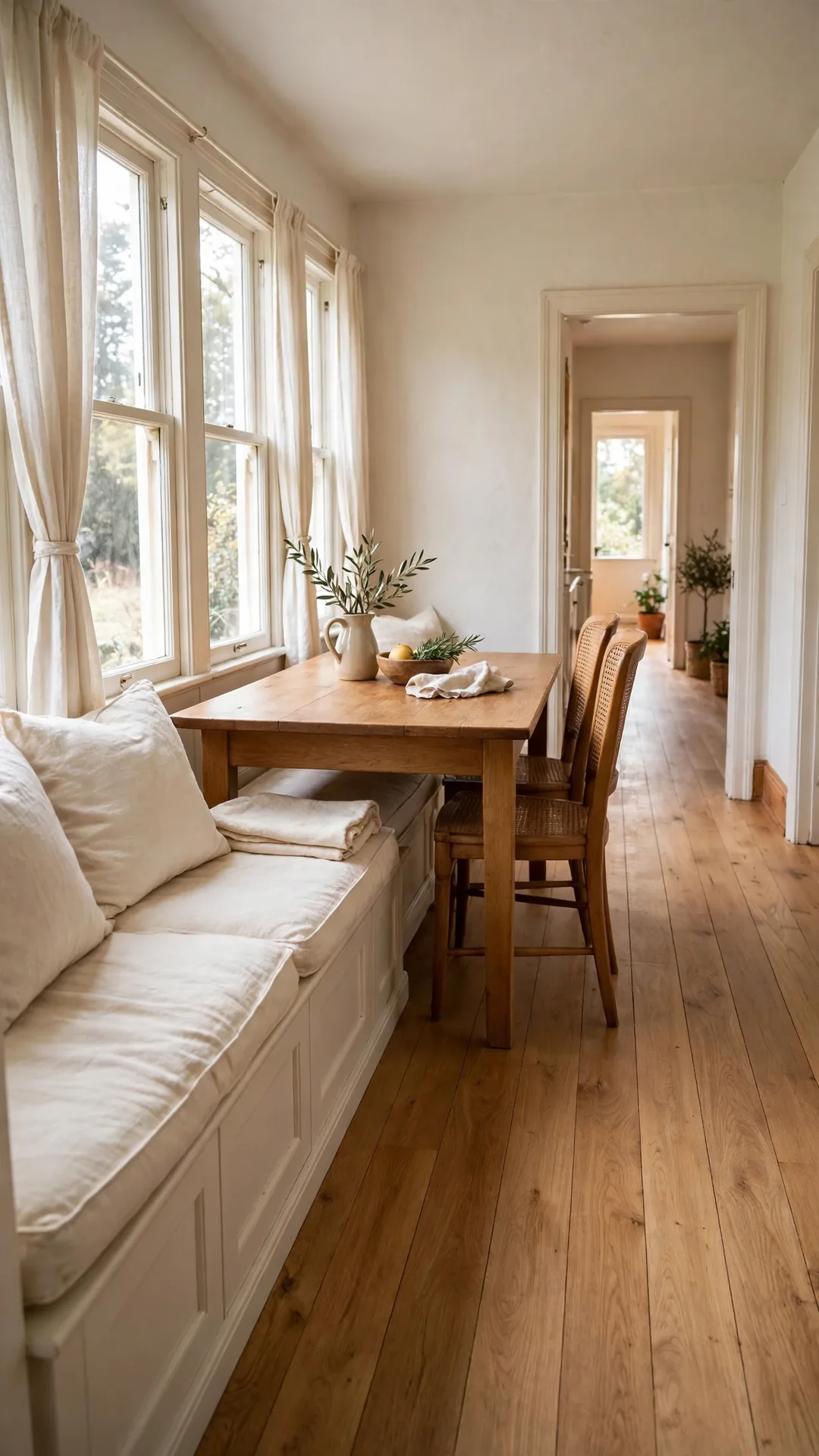
The open side needs a full walking lane behind its chairs. Three feet lets people pass with plates in hand. The fixed bench side saves all the space that pulled-out chairs would waste.
How to do it:
- Measure with the chairs pulled out fully.
- Keep a full 36 inches behind the chairs.
- Remember the bench side needs no lane at all.
- Check the lane stays clear of door swings.
- Re-measure the lane after any table or bench change.
Best for: Nooks placed between the kitchen and a doorway.
Budget: Under $10
Quick tip: Test the lane while carrying a wide tray.
Pick One Bench Idea and Start This Weekend
You do not need a full remodel to gain real dining seats. Pick one of these banquette seating ideas for small dining rooms and measure your wall today. Save this post or pin your favorite idea so the plan is ready when you shop.
- 53 Genius Small Patio Storage Ideas That Look Expensive - November 25, 2026
- 58 Brilliant Small Living Room Lighting Ideas Made Easy - November 24, 2026
- 51 Small Living Room Color Ideas That Change Everything - November 24, 2026