
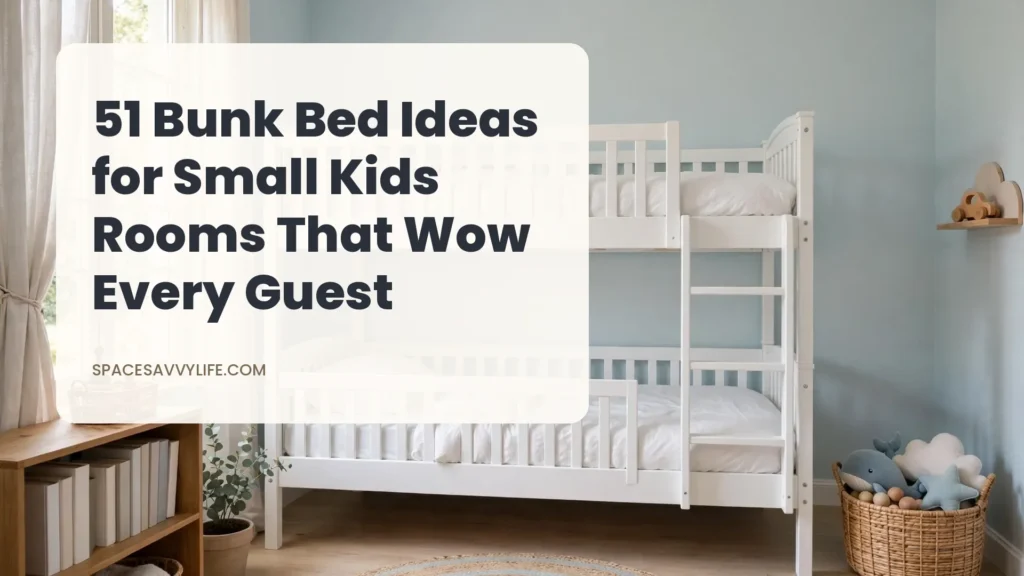
Two kids, one small room, and only one floor to share. That math gets hard fast when beds eat half the space. These bunk bed ideas for small kids rooms stack sleep up high and hand the floor back for play.
Here are 51 ways to pick, place, and style bunks for kids. Most need one weekend and a clear plan. Start with safety, then add storage and fun.
1. Start With a Low Twin Over Twin Bunk

A low twin over twin bunk sleeps two kids in the space of one bed. Start with that simple frame and build from there. This Old House rounds up fun bunk bed ideas for kids bedrooms that show the style range.
How to do it:
- Pick a frame under 65 inches tall for an 8 foot ceiling.
- Leave at least 30 inches between the top mattress and the ceiling.
- Check that the frame meets current safety standards before you buy.
- Choose solid wood or steel for a frame that lasts years.
- Measure the room first and tape the footprint on the floor.
Best for: Two kids sharing a room under 120 square feet.
Budget: $250 to $600
Quick tip: Buy the frame first, then pick bedding to match it.
2. Add Full Length Guard Rails on Top

Guard rails keep a sleeping child from rolling off the top bunk. Full length rails cover the whole open side with no gaps. Fit them before the first night, and check the bolts each month.
How to do it:
- Rails should rise at least 5 inches above the top mattress.
- Leave no gap wider than 3.5 inches between rail bars.
- Use rails on both long sides if the bed stands away from a wall.
- Tighten every bolt with a wrench for a firm hold.
- Replace bent or cracked rails right away, never later.
Best for: Top bunk sleepers age 6 and up.
Budget: $30 to $90
Quick tip: Test the rail with a firm push before bedtime.
3. Swap the Ladder for Wide Flat Steps
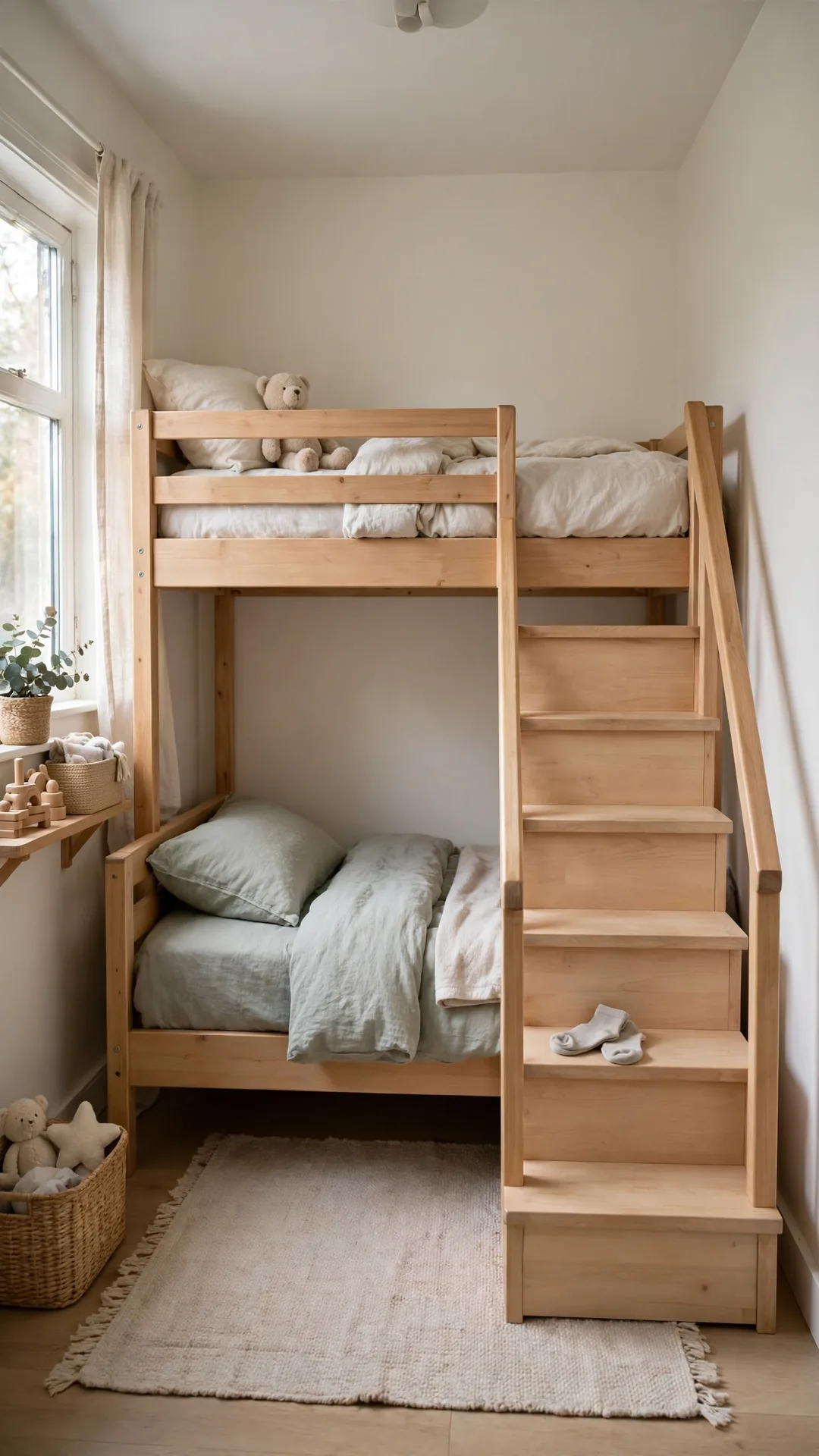
Narrow round rungs hurt small feet and invite slips at night. Wide flat steps feel like real stairs to a child. These bunk bed ideas for small kids rooms favor steps with a handrail for safer climbs.
How to do it:
- Pick steps at least 4 inches deep and 12 inches wide.
- Add a handrail at child height on the open side.
- Stick non slip tread tape on each step for grip.
- Angle the steps out so little legs climb with ease.
- Keep the path at the base clear of toys and shoes.
Best for: Younger climbers and sleepy midnight trips.
Budget: $60 to $200
Quick tip: Let your child test the steps in socks first.
4. Anchor the Bunk Frame to the Wall
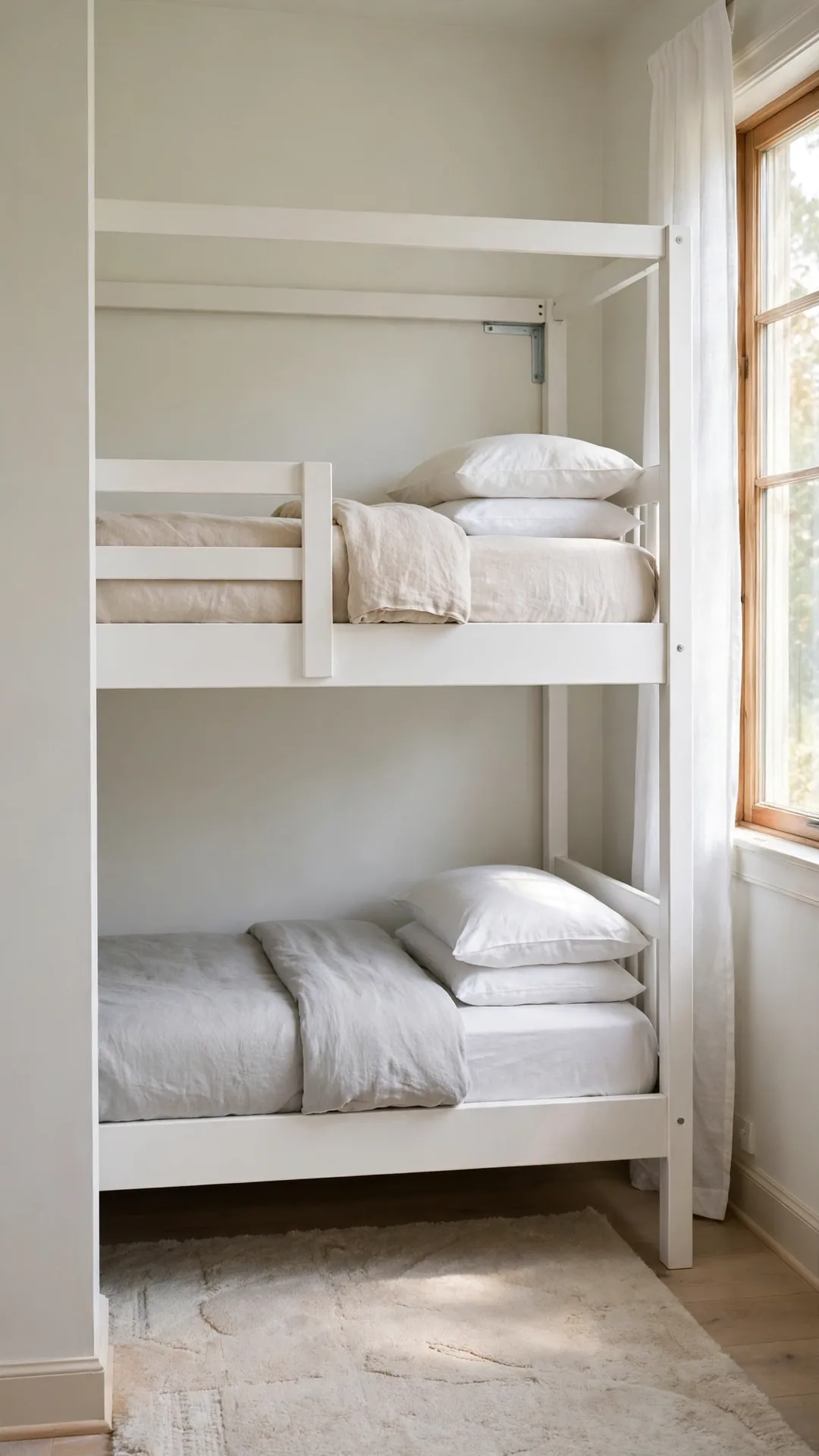
Kids climb, bounce, and swing on bunks, so the frame must stay put. A wall anchor stops the whole bed from tipping forward. Most kits cost little and take under an hour to fit.
How to do it:
- Use the strap or bracket kit that ships with the frame.
- Drive screws into a wall stud, never drywall alone.
- Anchor both top corners for the steadiest hold.
- Recheck the anchor each time you move the bed.
- Renters can ask the landlord before drilling one hole.
Best for: Every bunk bed, in every kids room.
Budget: $10 to $30
Quick tip: Mark stud spots with painter tape before you drill.
5. Pick a Low Profile Frame for Young Kids

A low profile bunk is one of the safest bunk bed ideas for small kids rooms with young children. Short climbs mean fewer falls and calmer bedtimes. For the youngest sleepers, pair it with these space-saving small nursery ideas to plan the whole room.
How to do it:
- Look for a top bunk under 50 inches from the floor.
- Keep the top bunk for kids age 6 and older only.
- Place a soft rug below in case of a tumble.
- Skip the top bunk until your child climbs with ease.
- Choose rounded corners and smooth sanded edges.
Best for: Kids ages 4 to 7 moving out of a toddler bed.
Budget: $200 to $450
Quick tip: Let your child nap on the lower bunk first.
6. Give Each Bunk Its Own Reading Light
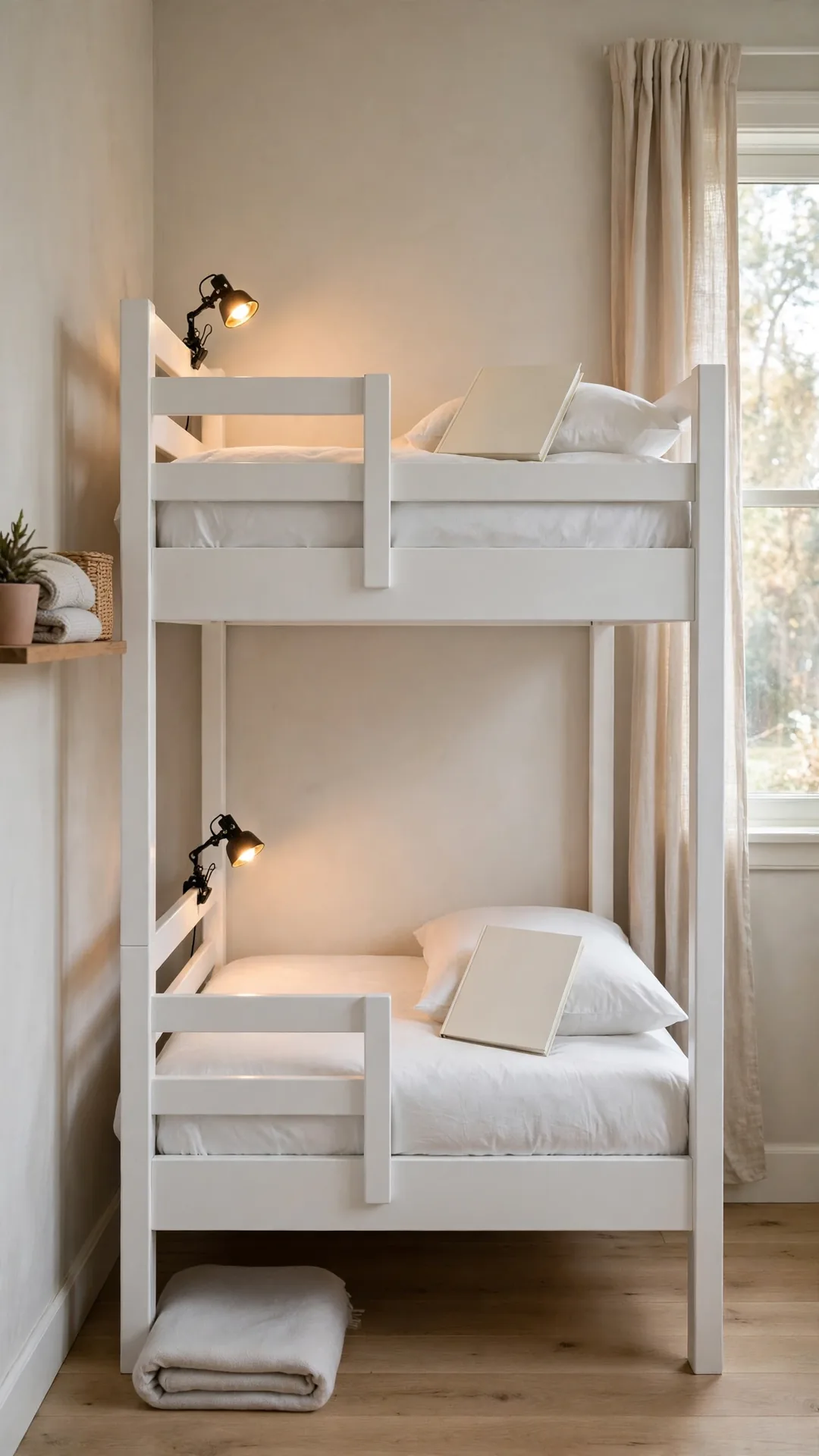
A small light at each bunk ends fights over one lamp. Each child can read or wind down on their own clock. Clip lights work best, since they need no table space.
How to do it:
- Pick clip lights with a warm bulb and a dim switch.
- Clip the light to the headboard, out of reach of pillows.
- Use battery lights if no outlet sits near the bed.
- Set a lights out time and stick to it nightly.
- Keep cords tucked behind the frame, away from hands.
Best for: Siblings with different bedtimes.
Budget: $15 to $50
Quick tip: Tape the cord flat so it never dangles.
7. Add a Bedside Pocket Organizer to Each Bunk
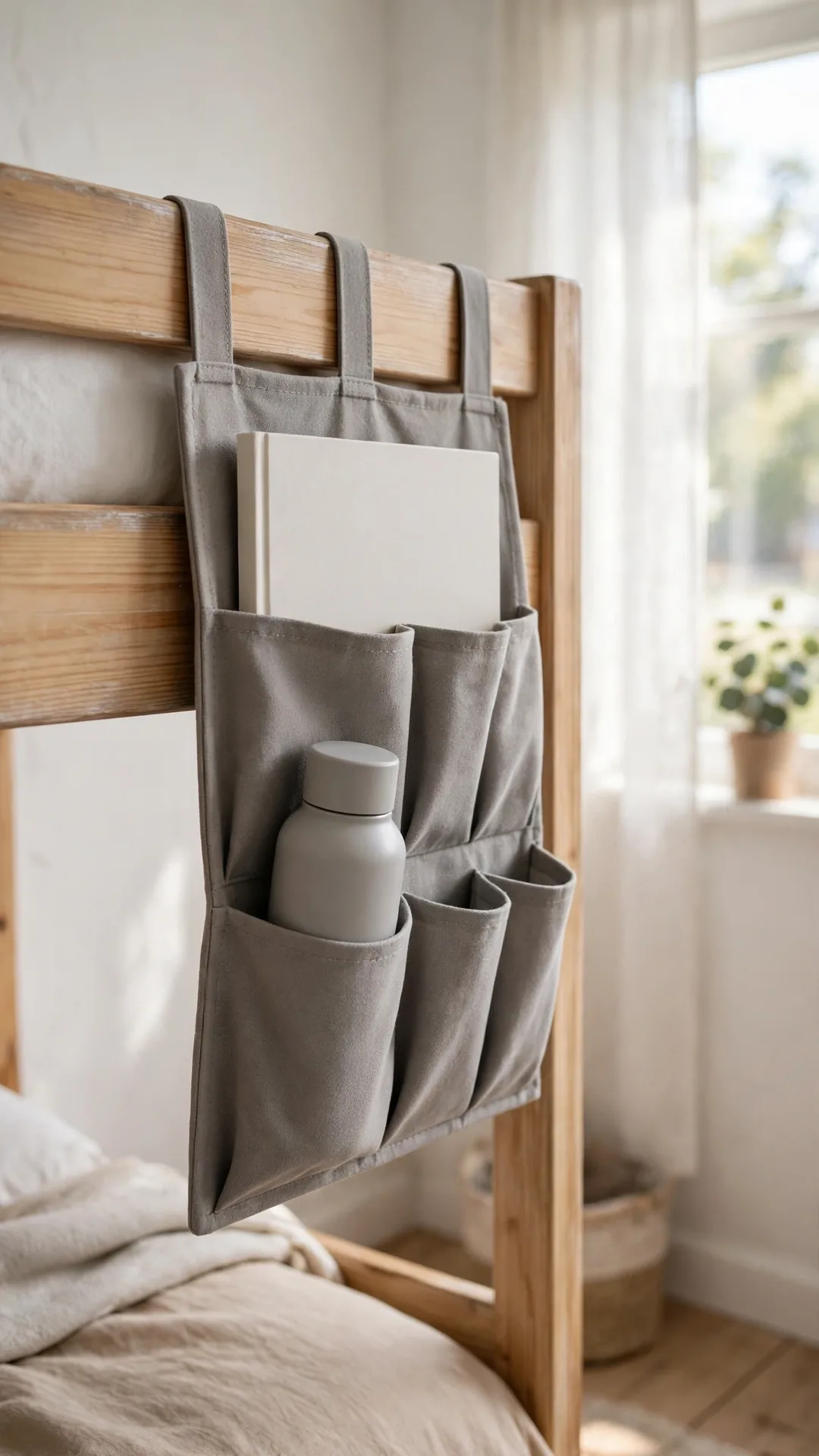
A hanging pocket organizer gives each child a nightstand without the furniture. Books, water, and a flashlight stay within reach. It hangs on the rail and moves with the bed.
How to do it:
- Hang it on the inside rail so pockets face the sleeper.
- Pick canvas or cotton with at least four pockets.
- Keep a water bottle in the widest pocket each night.
- Wash the organizer with the bedding once a month.
- Label each pocket set with a color per child.
Best for: Bunks with no room for a nightstand.
Budget: $12 to $35
Quick tip: Skip heavy items so the pockets stay flat.
8. Hang Curtains on the Lower Bunk
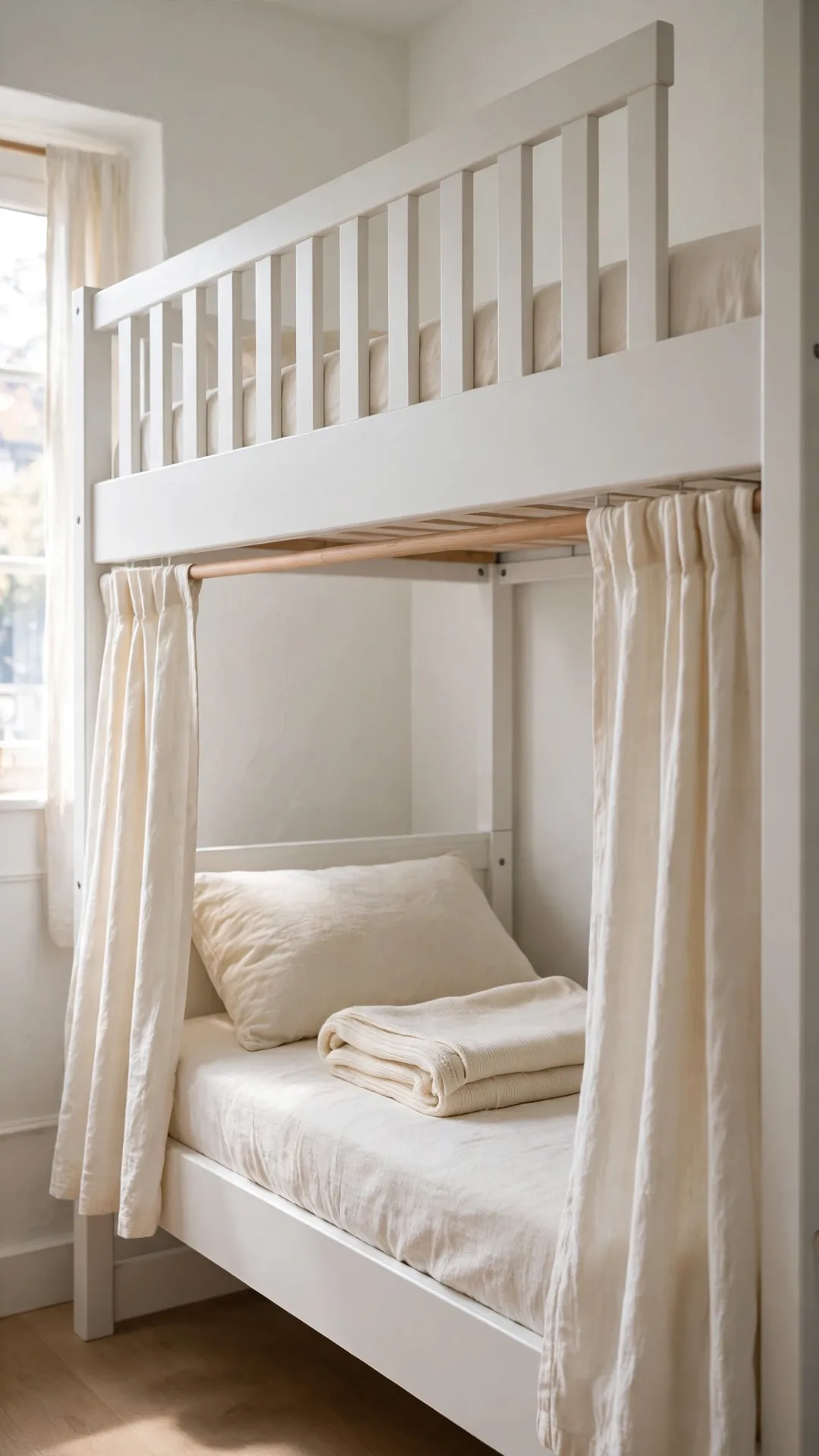
Curtains turn the lower bunk into a private little room. They block light and give each child a door of their own. Domino shows how three brothers fit in a 120 square foot bedroom with bunks that feel like personal nooks.
How to do it:
- Mount a slim tension rod inside the bunk opening.
- Use light cotton so air still flows through.
- Hem curtains to stop just above the mattress edge.
- Pick a print each child chooses for their own bunk.
- Wash the panels often, since small hands touch them daily.
Best for: Shared rooms where privacy matters.
Budget: $20 to $60
Quick tip: Tie back the curtain each morning for fresh air.
9. Push the Bunk Into a Corner
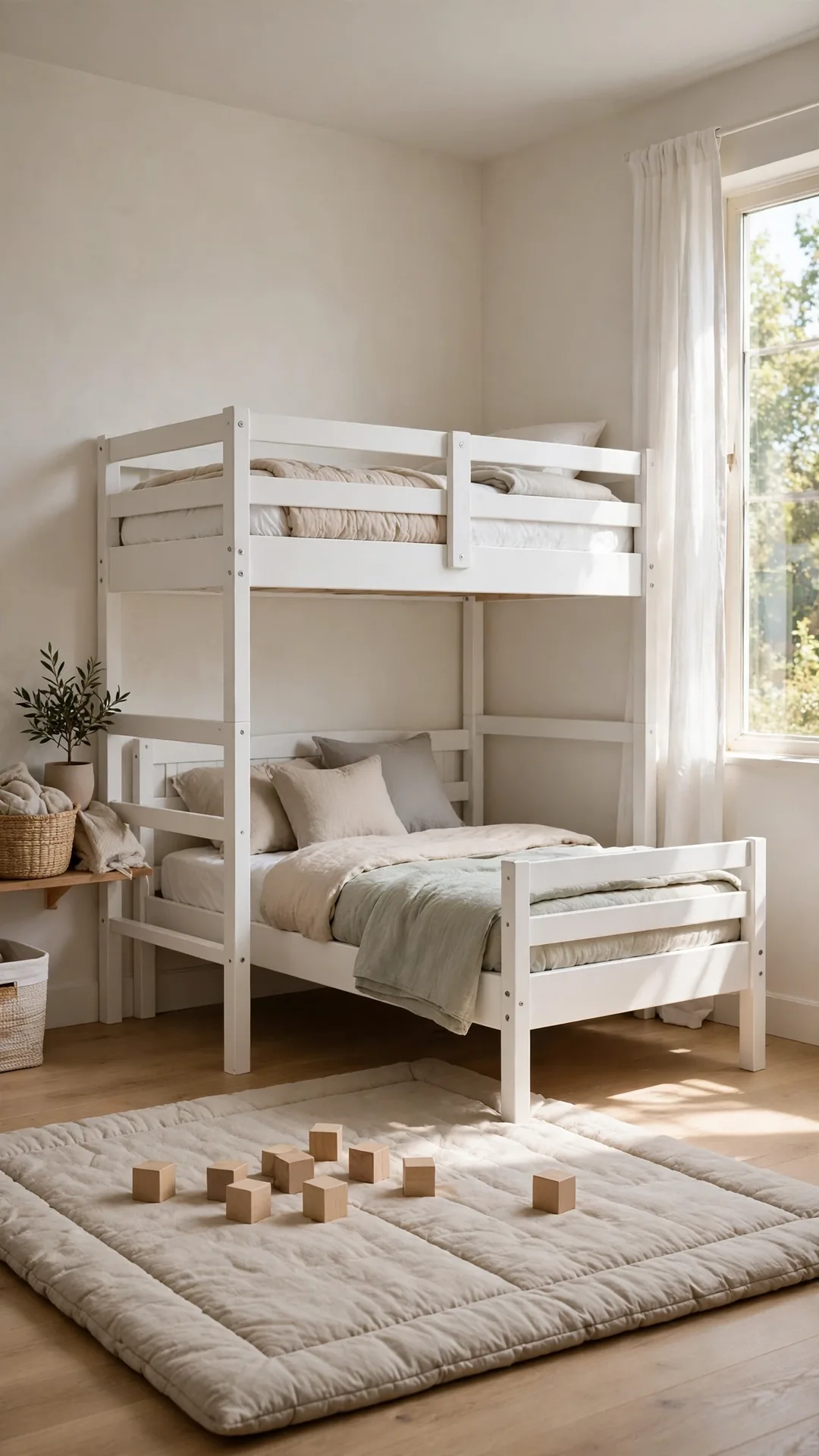
A corner spot uses two walls as natural guard rails. It also opens the middle of the room for play. These bunk bed ideas for small kids rooms work best when the bed hugs the longest wall.
How to do it:
- Leave 24 inches clear at the foot for the ladder.
- Keep the bunk away from windows and blind cords.
- Push the long side flat against the wall.
- Add a corner shelf above for books and toys.
- Vacuum behind the frame once a month.
Best for: Square rooms with one clear corner.
Budget: $0 to $20
Quick tip: Try the corner first before you buy more furniture.
10. Try an L Shaped Bunk in a Tight Corner
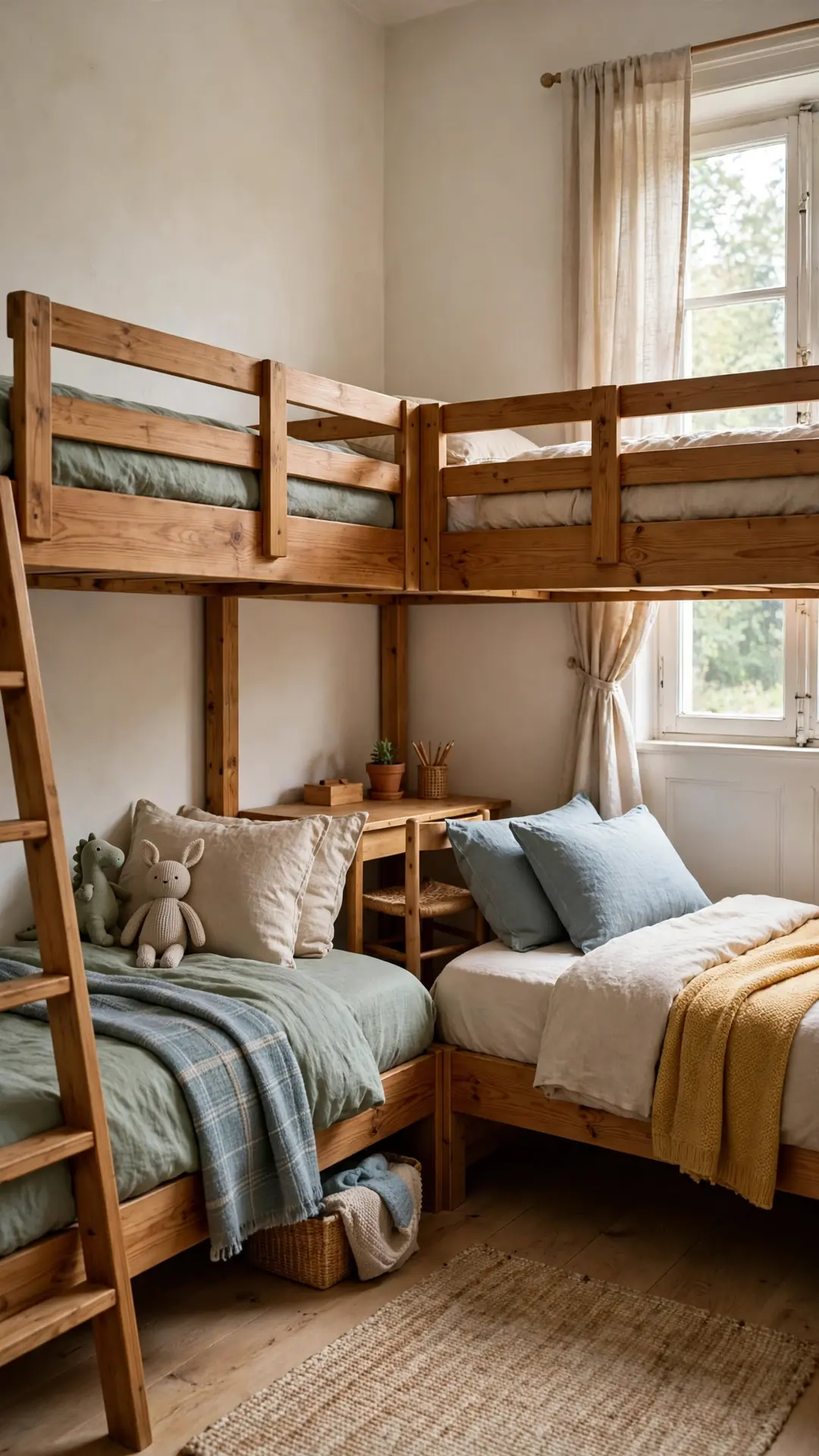
An L shaped bunk turns one bed along each wall. The corner gap becomes a desk, a shelf, or a reading spot. It fits rooms where a straight bunk blocks the door.
How to do it:
- Measure both walls before you order the frame.
- Place the taller bed on the longer wall.
- Use the corner space for a small desk or cubby.
- Keep the ladder on the open side for easy access.
- Match bedding on both beds to calm the look.
Best for: Rooms with a door that swings near the bed.
Budget: $400 to $900
Quick tip: Tape both bed outlines on the floor first.
11. Choose a Twin Over Full Bunk for Mixed Ages
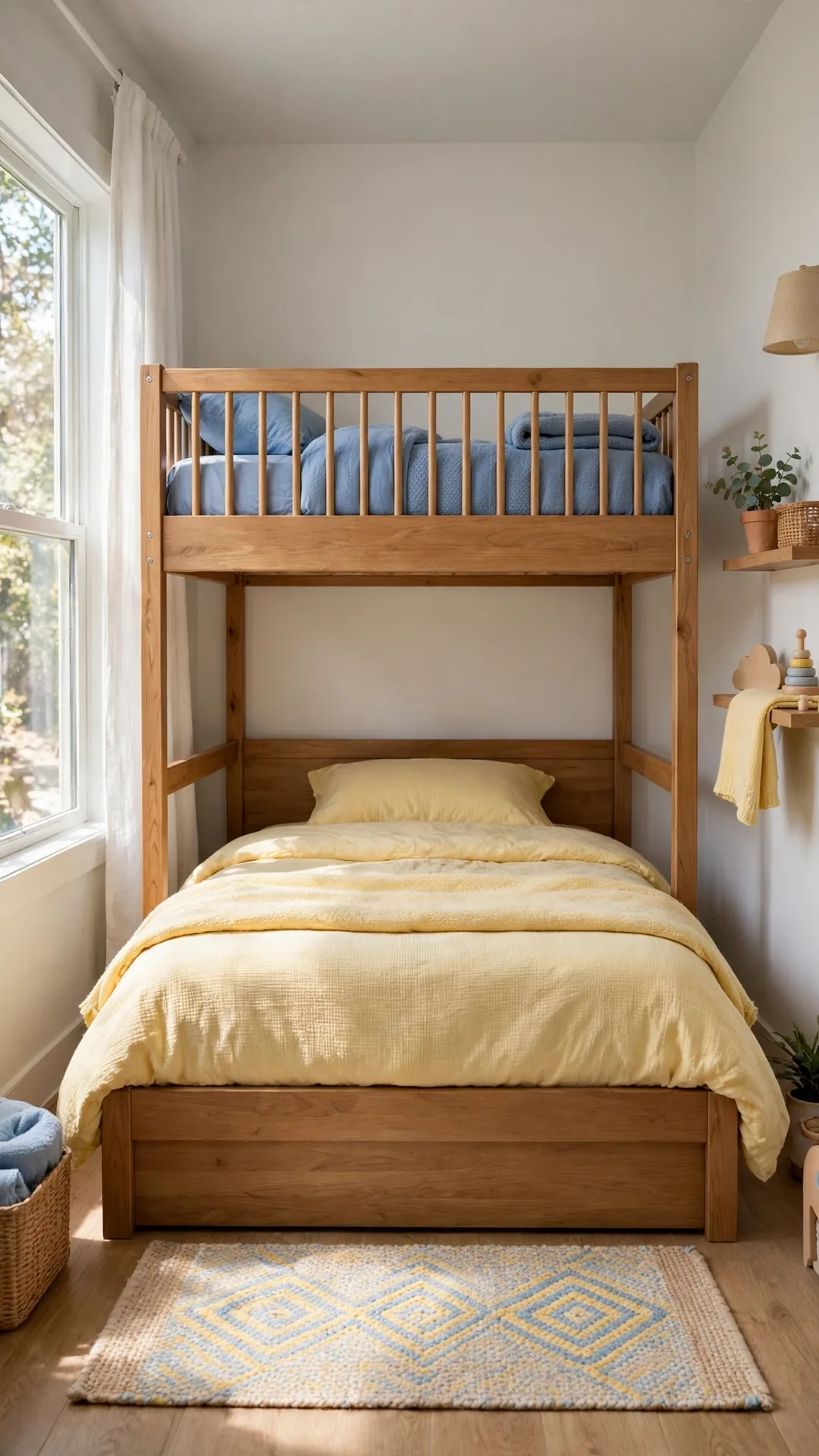
A twin over full bunk gives the older child room to spread out below. The younger child takes the top twin once old enough. One frame can serve both kids for years.
How to do it:
- Put the older child on the full bed below.
- Check that the full mattress fits the frame size.
- Leave 36 inches of headroom above the lower bed.
- Use a firmer mattress below for a growing child.
- Add a guard rail on the open side of the full bed.
Best for: Siblings with a four year age gap or more.
Budget: $350 to $800
Quick tip: Flip and rotate both mattresses each season.
12. Turn the Lower Bunk Into a Daybed
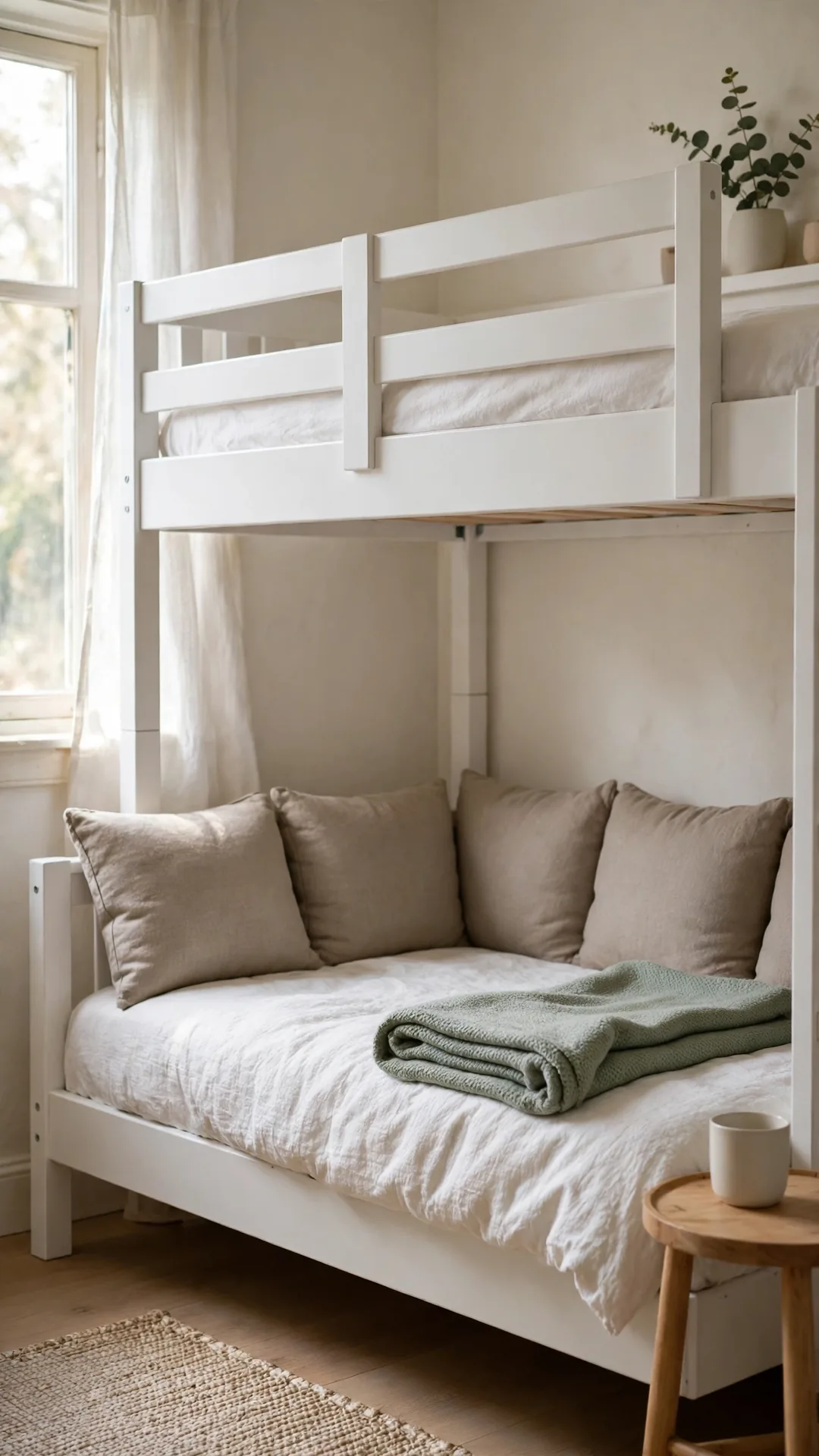
Style the lower bunk with back cushions and it works as a sofa by day. Kids can read, draw, or chat there after school. These bunk bed ideas for small kids rooms double the use of one bed.
How to do it:
- Add three firm back cushions along the wall side.
- Use a washable cover so snacks leave no stain.
- Tuck a folded throw at one end for naps.
- Keep one small side table within arm reach.
- Swap cushions for pillows at bedtime each night.
Best for: Rooms that double as a playroom by day.
Budget: $40 to $120
Quick tip: Pick cushion covers you can toss in the wash.
13. Raise One Bed as a Loft Over a Desk
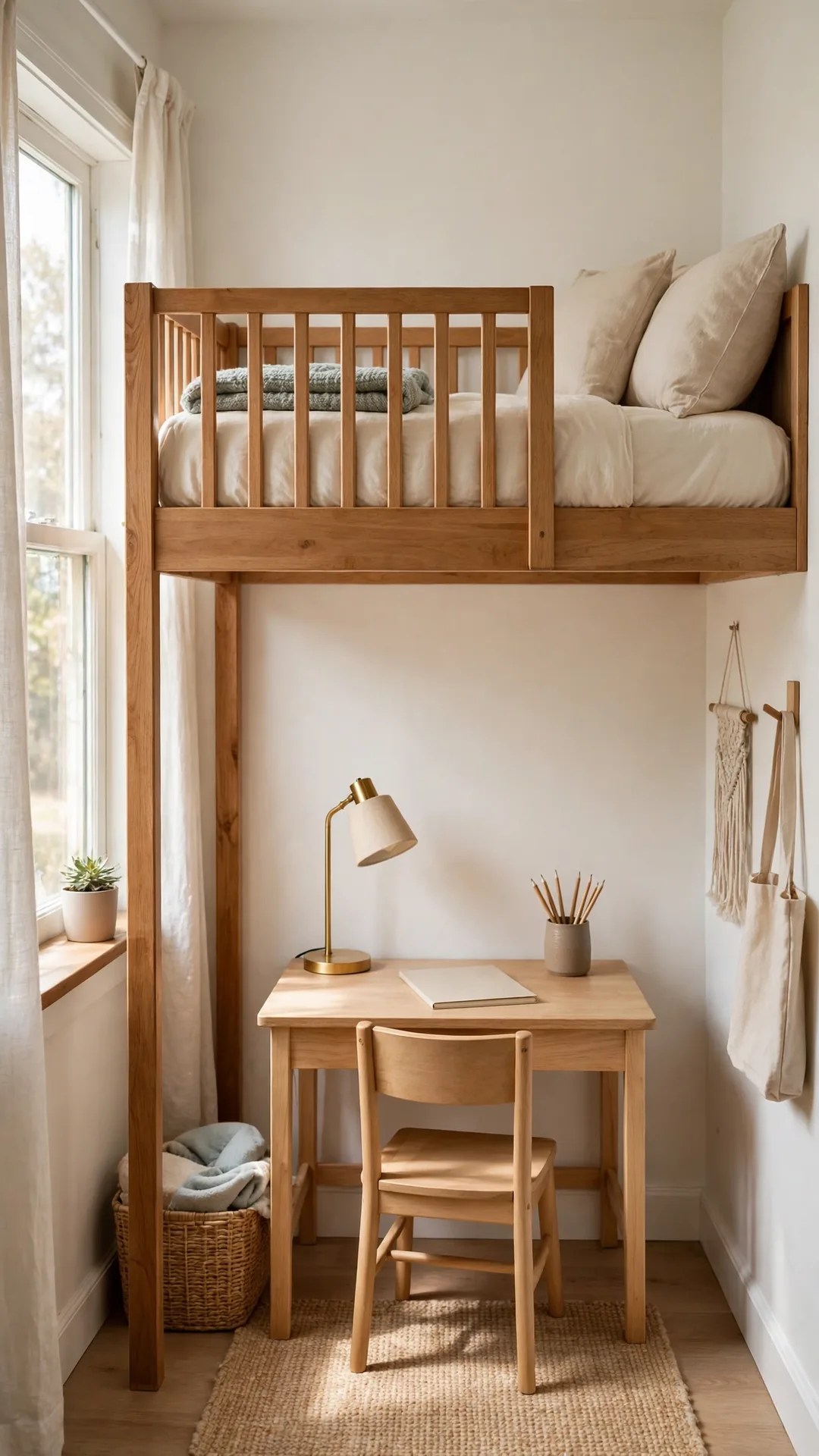
A loft bed lifts sleep up high and frees the floor below. A small desk fits right under it for homework and art. For more layouts, try these loft bed ideas for small rooms to plan the space under the bed.
How to do it:
- Keep the desk under 30 inches deep so chairs fit.
- Add a clip lamp to the desk edge for homework.
- Leave 36 inches of headroom above the desk chair.
- Use a loft only for kids age 6 and older.
- Anchor the loft frame to the wall for safety.
Best for: One child rooms that need a study zone.
Budget: $300 to $700
Quick tip: Measure your child sitting at the desk first.
14. Fit a Triple Bunk for Three Kids
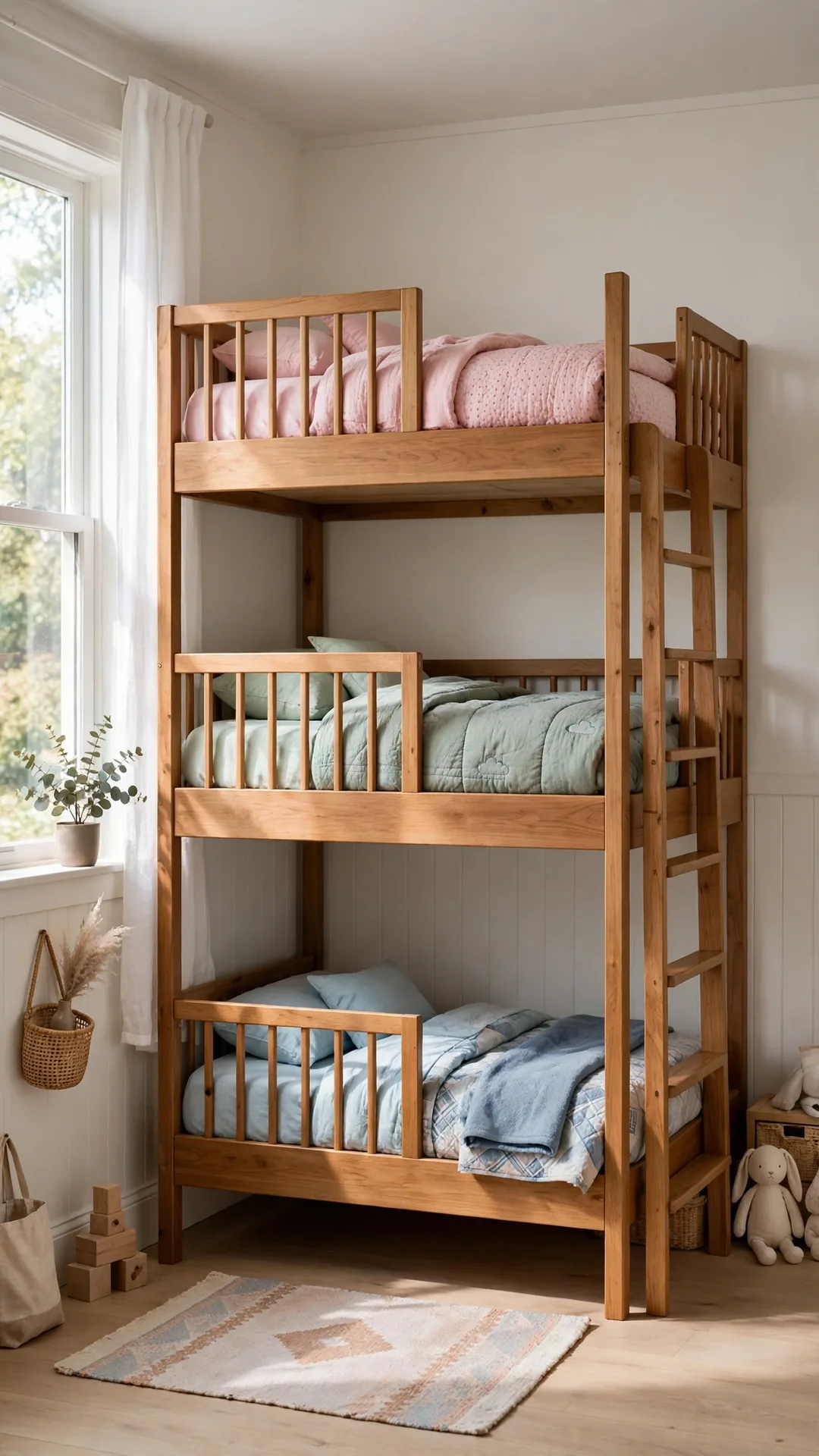
A triple bunk stacks three beds in one tight footprint. It suits three kids sharing one small room. Each level needs its own rail, light, and shelf.
How to do it:
- Check ceiling height first, since you need 9 feet or more.
- Put the oldest child on the top level.
- Use stairs, not a ladder, for the highest climb.
- Give each level a small shelf for water and books.
- Keep the middle bunk for the calmest sleeper.
Best for: Three kids in one room under 150 square feet.
Budget: $600 to $1,200
Quick tip: Test the top climb yourself before the kids do.
15. Place Two Low Lofts Foot to Foot
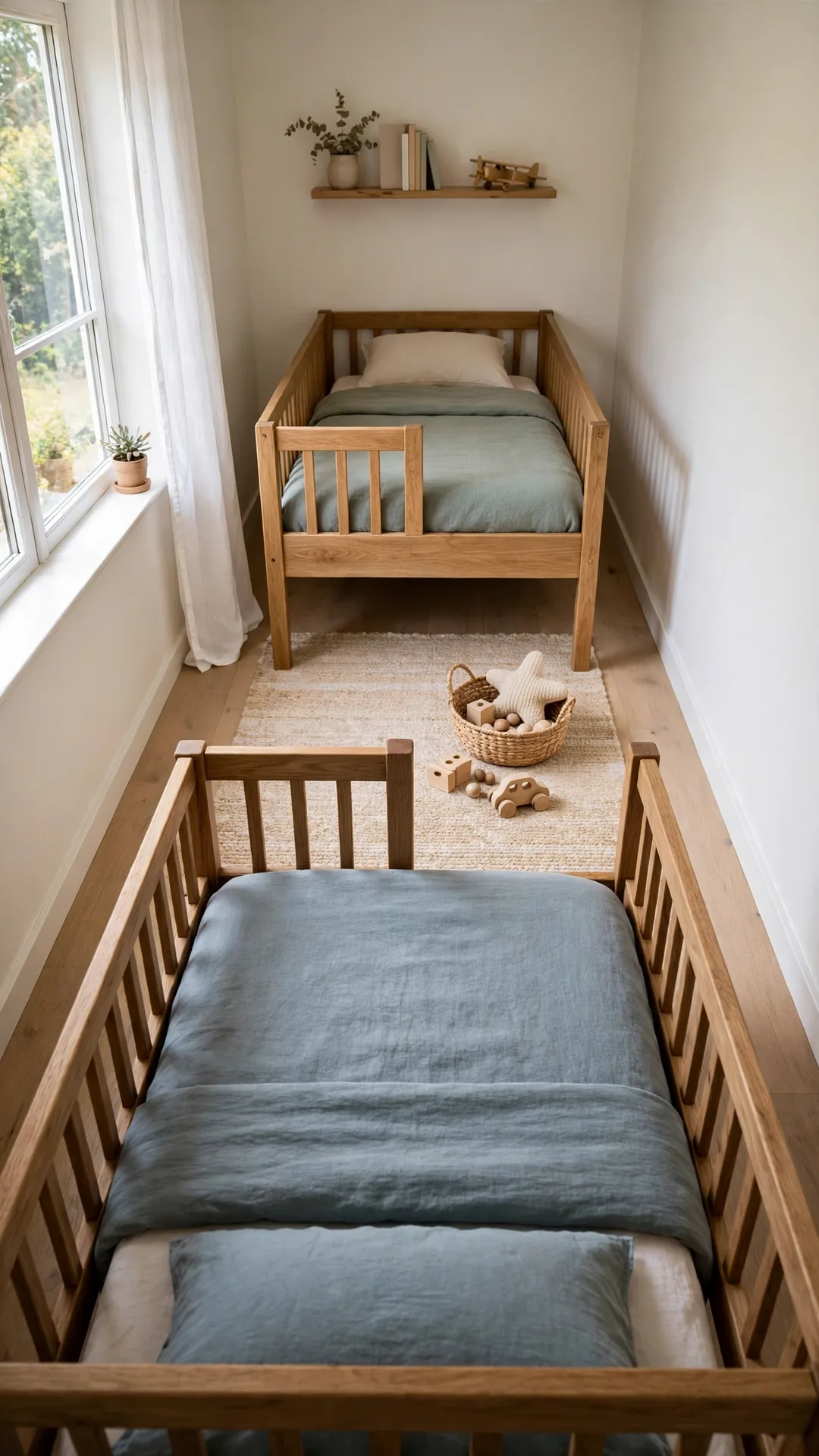
Two low lofts facing foot to foot give each child their own zone. The gap between them becomes a shared play strip. It works in long narrow rooms with two kids.
How to do it:
- Leave 36 inches between the beds for a walkway.
- Add a shared rug down the middle strip.
- Give each loft its own small shelf and light.
- Keep both lofts the same height for a calm look.
- Use matching bedding to tie the pair together.
Best for: Long rooms with two kids and one window.
Budget: $500 to $1,000
Quick tip: Face the ladders toward the room door.
16. Slide a Trundle Under the Lower Bunk
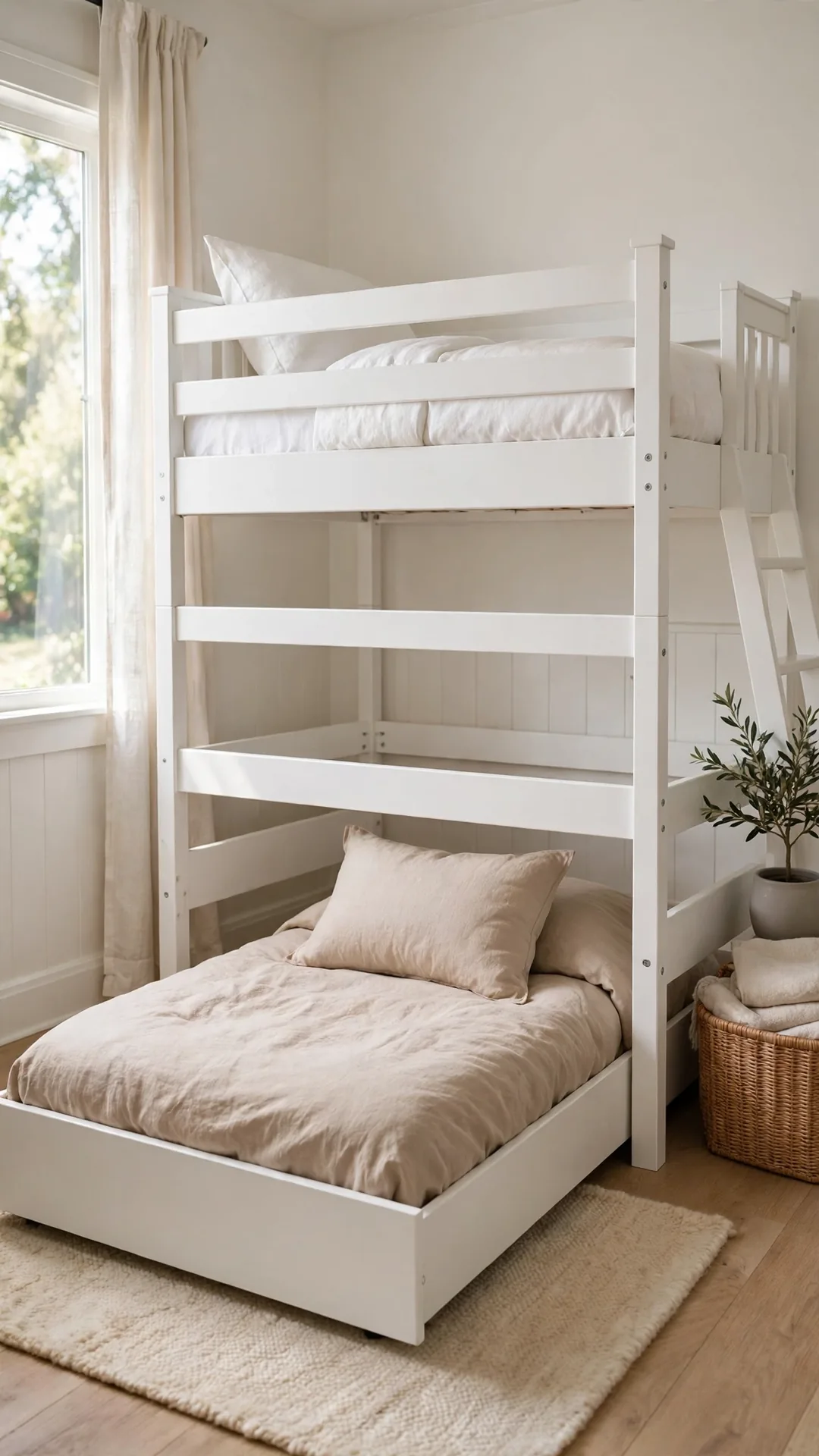
A trundle hides a third bed under the lower bunk. Pull it out for sleepovers and push it back by morning. These bunk bed ideas for small kids rooms make guest nights easy without a spare room.
How to do it:
- Pick a trundle with wheels that roll with ease.
- Use a mattress under 8 inches thick for a smooth slide.
- Store the trundle bedding in a bin beside the bed.
- Check the floor is clear before you pull it out.
- Lock the wheels once the trundle is in place.
Best for: Sleepover fans with no guest room.
Budget: $150 to $400
Quick tip: Keep a spare sheet set in the trundle bin.
17. Split the Bunk Into Two Twin Beds Later
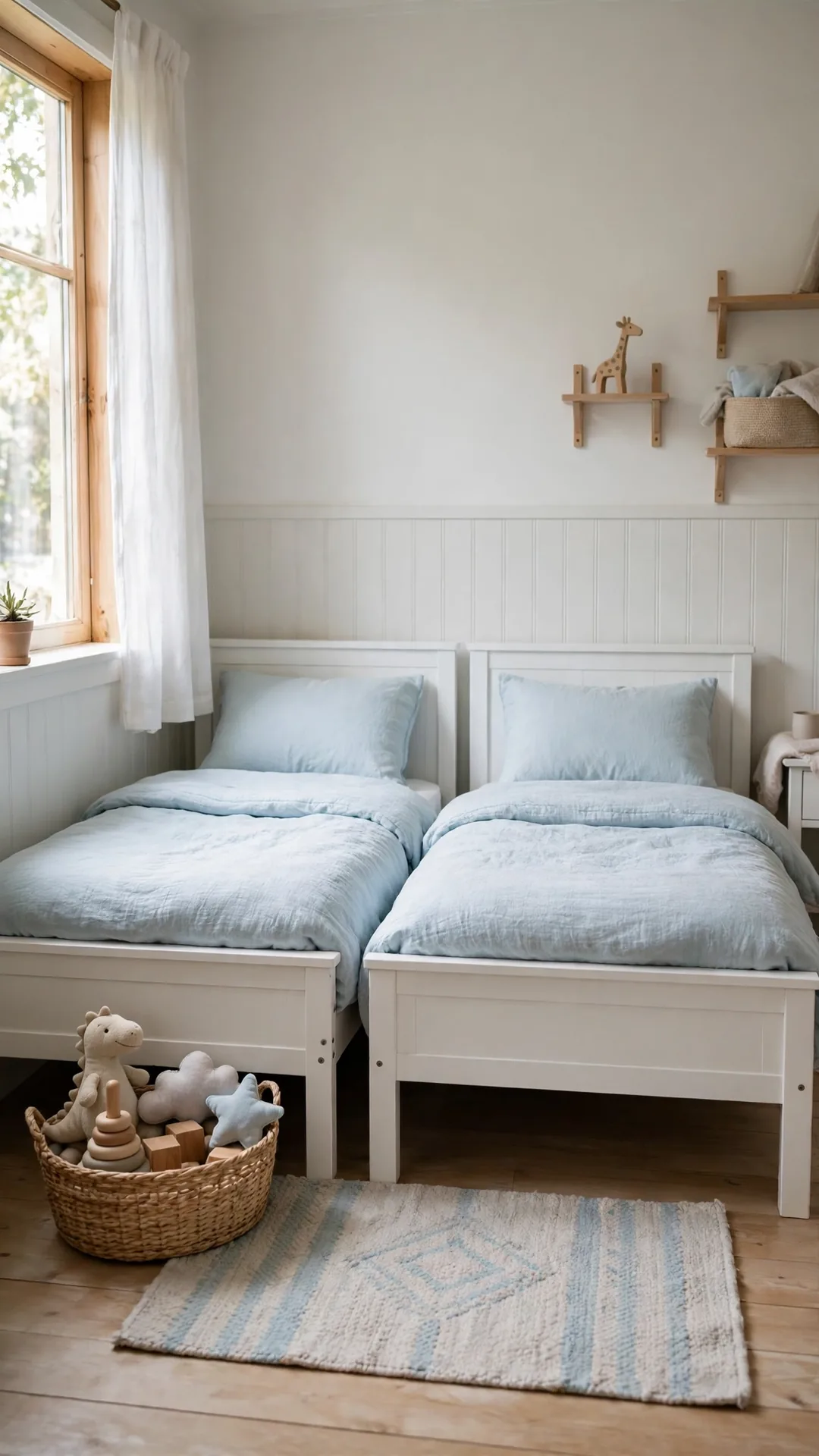
Many bunk frames split into two twin beds when kids grow. Buy a frame that converts, and you skip a second purchase. When the time comes, these bed ideas for small rooms help you place two twins well.
How to do it:
- Check the frame manual for a split kit before you buy.
- Keep all bolts and rails in a labeled bag.
- Place the twins along one wall or in an L shape.
- Reuse the ladder as a blanket rack or shelf.
- Plan the split for a school break weekend.
Best for: Families who want furniture that lasts.
Budget: $0 to $80
Quick tip: Save the manual in the closet for later.
18. Build Bunks Into a Wall Alcove

Built in bunks inside an alcove feel like a tiny cabin. The walls on three sides add safety and calm. A carpenter can frame them in a weekend with plywood and trim.
How to do it:
- Measure the alcove to the inch before you order wood.
- Add a small sconce and shelf inside each bunk.
- Paint the alcove a light color to keep it bright.
- Leave 30 inches above each mattress for sitting up.
- Add curtains on a rod for a private nook feel.
Best for: Rooms with a deep closet or dead alcove.
Budget: $800 to $2,500
Quick tip: Ask the carpenter to round all exposed edges.
19. Add Drawers Under the Lower Bunk
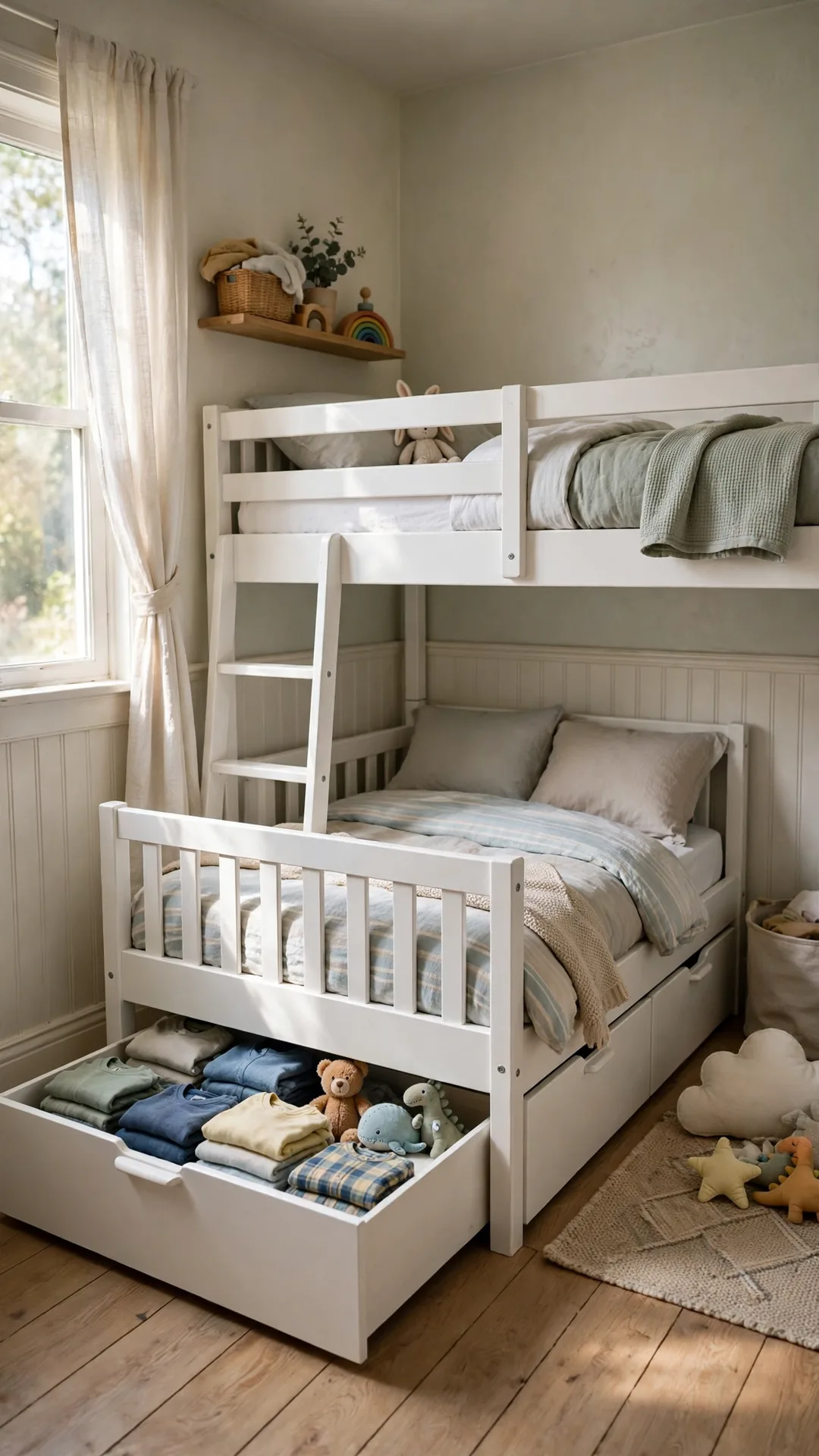
The space under the lower bunk is prime storage real estate. Two wide drawers can hold clothes, toys, or spare bedding. Kids can reach them alone, so cleanup stays easy.
How to do it:
- Pick drawers on smooth glides that little hands can pull.
- Use one drawer per child to end mix ups.
- Label each drawer front with a picture or color.
- Keep daily clothes in the top drawer for fast mornings.
- Leave 2 inches of clearance so drawers slide with ease.
Best for: Rooms with no dresser space.
Budget: $80 to $250
Quick tip: Roll clothes instead of folding them to fit more.
20. Use the Stair Risers as Toy Drawers

Bunk stairs can hide a drawer in every riser. Toys, books, and games tuck away inside the climb itself. These bunk bed ideas for small kids rooms turn the stairs into storage your kids will use.
How to do it:
- Fit a drawer in each riser, sized for toys and books.
- Add soft close glides so small fingers stay safe.
- Put daily toys in the lowest drawer for easy reach.
- Label each drawer with a picture for young readers.
- Keep the top step clear so climbs stay safe.
Best for: Bunks with stairs instead of a ladder.
Budget: $150 to $400
Quick tip: Sort toys by type, one drawer per kind.
21. Hang a Slim Shelf at Each Bunk Head
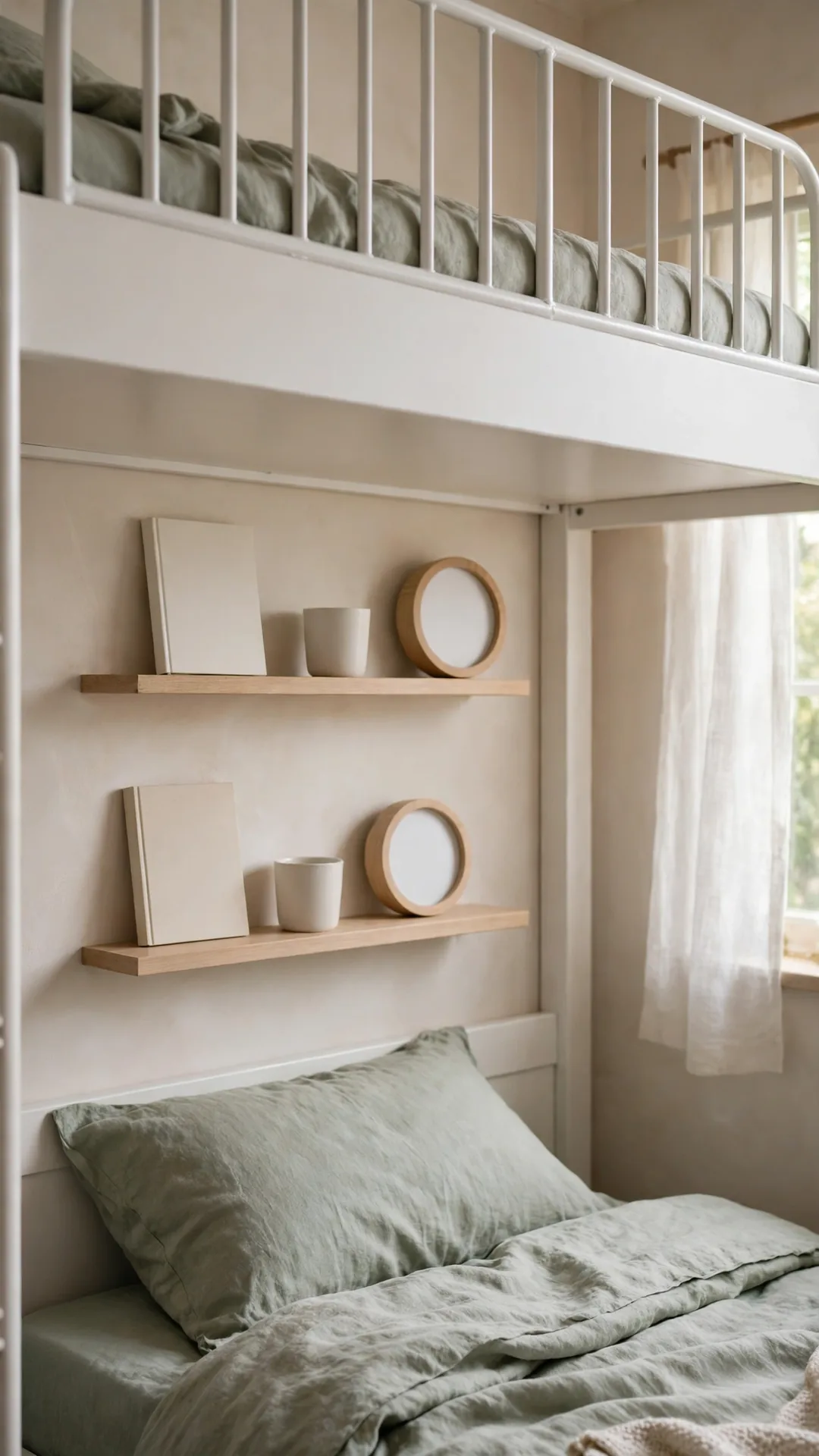
A slim shelf at each bunk head holds water, a book, and a clock. It replaces a nightstand that would crowd the floor. Mount it at arm height so kids reach it from bed.
How to do it:
- Pick a shelf 8 to 10 inches deep, no more.
- Mount it 12 inches above the mattress top.
- Add a small lip so cups cannot slide off.
- Use wood or metal brackets rated for 10 pounds.
- Keep the shelf clear of heavy or sharp items.
Best for: Bunks with no nightstand space.
Budget: $20 to $60
Quick tip: Round the shelf corners with sandpaper first.
22. Add a Cubby Tower at the Bunk End
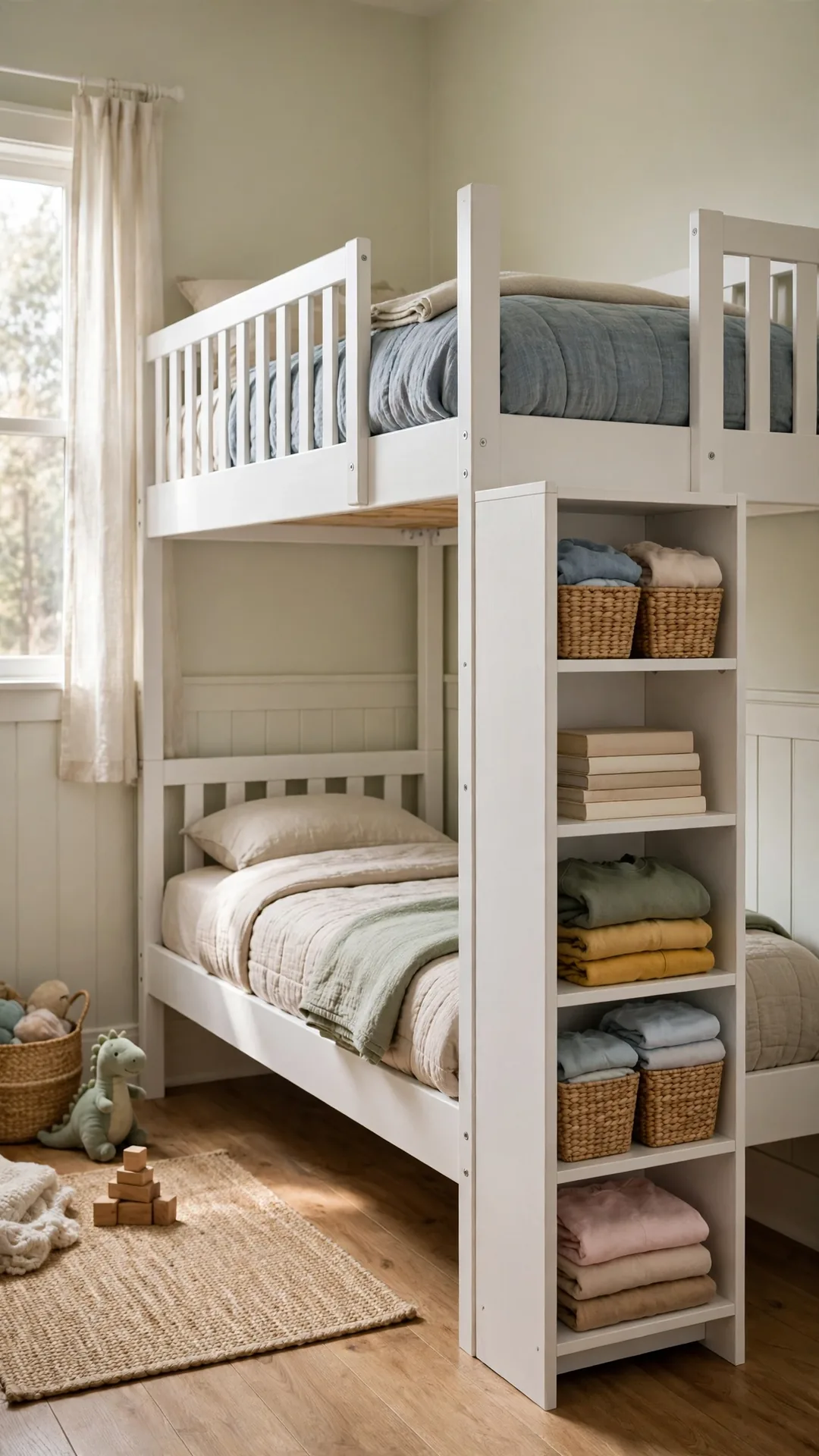
A tall cubby tower at the bunk end stores clothes, books, and toys in one spot. Each cubby gets a basket or a folded stack. It anchors the bed and fills a bare wall.
How to do it:
- Pick a tower 12 to 15 inches deep for small rooms.
- Anchor the tower to the wall so it cannot tip.
- Give each child two cubbies at their own height.
- Use fabric bins to hide the mess in a flash.
- Leave the top cubby for items adults handle.
Best for: Rooms with no closet or a tiny one.
Budget: $60 to $180
Quick tip: Turn the tower sideways as a low bench later.
23. Slide Rolling Bins Under the Bottom Bunk
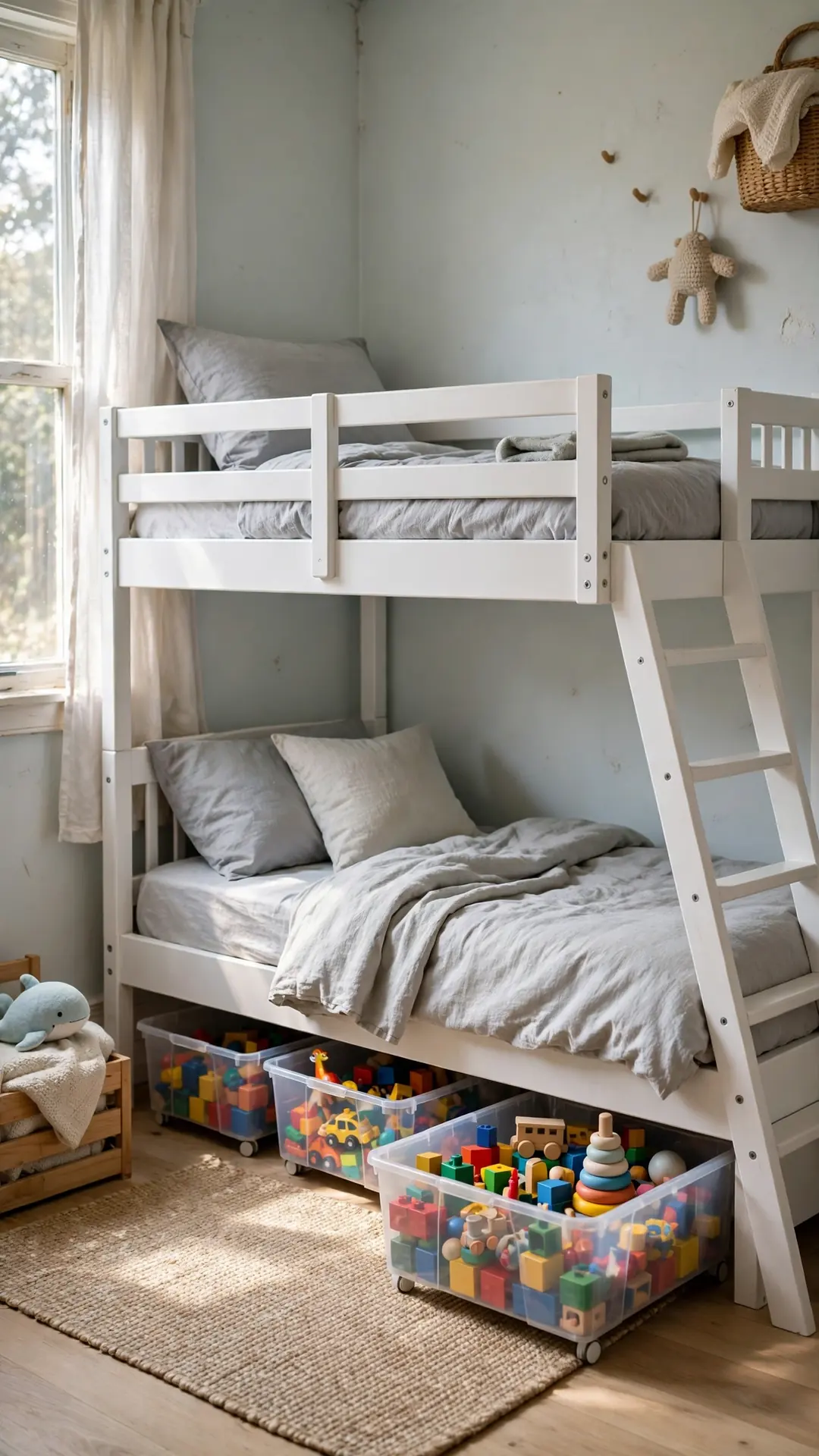
Rolling bins slide under the bottom bunk and vanish from sight. They hold blocks, dolls, or art supplies in easy reach. Clear bins help kids find toys without dumping them out.
How to do it:
- Measure the clearance under the bed before you shop.
- Pick bins with wheels and a low flat lid.
- Use clear bins so kids see what sits inside.
- Limit each bin to one toy type for fast cleanup.
- Add a small label with a picture on the front.
Best for: Toy heavy rooms with no closet space.
Budget: $25 to $70
Quick tip: Pull bins out fully once a week to sort.
24. Mount Hooks on the Bunk End for Bags
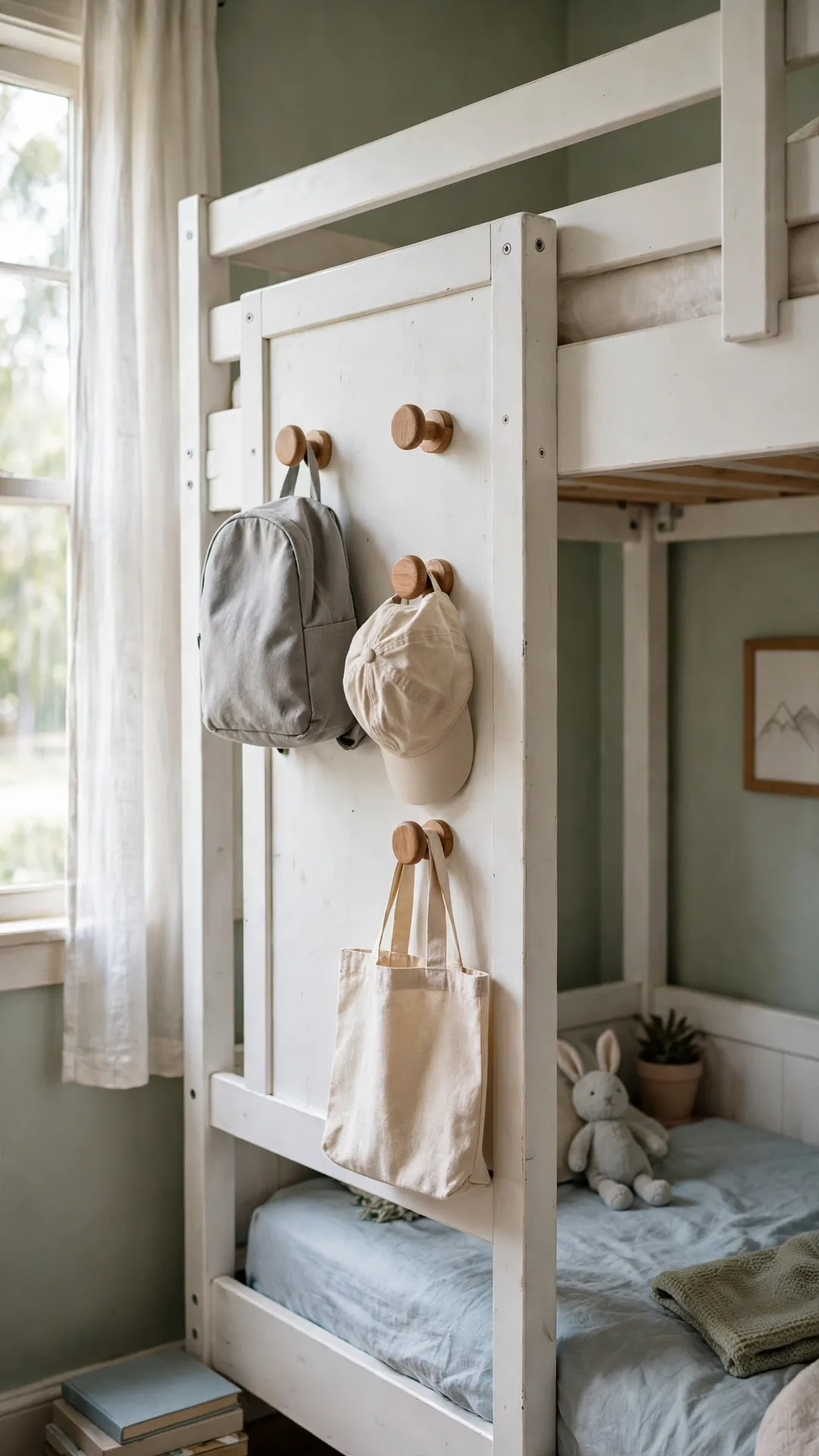
Three hooks on the bunk end hold bags, caps, and tomorrow's outfit. They keep the floor clear and mornings quick. These bunk bed ideas for small kids rooms use every inch, even the bed ends.
How to do it:
- Mount hooks at your child's shoulder height.
- Pick rounded hooks with no sharp points.
- Space hooks 6 inches apart so bags hang free.
- Use one hook per child plus one spare.
- Check screws monthly, since bags pull hard.
Best for: School age kids with bags and gear.
Budget: $10 to $30
Quick tip: Hang tomorrow's outfit on a hook each night.
25. Add a Book Ledge Along the Top Rail

A narrow book ledge on the top rail turns books into decor. Kids can pick tonight's story without leaving the bed. It holds five or six picture books facing out.
How to do it:
- Pick a ledge 3 inches deep with a small lip.
- Mount it below the rail top so books stay put.
- Rotate the books each week to keep the shelf fresh.
- Keep heavy books on a lower shelf instead.
- Sand the ledge smooth so no splinters catch skin.
Best for: Young readers who love bedtime stories.
Budget: $15 to $40
Quick tip: Let your child choose the books on display.
26. Hang a Peg Rail Beside the Bunk

A wood peg rail beside the bunk holds pajamas, robes, and dress up clothes. It costs little and hangs in an hour. Kids can reach every peg without a stool.
How to do it:
- Mount the rail at your child's eye level.
- Space pegs 8 inches apart for coats and bags.
- Pick a rail 24 to 36 inches long for one wall.
- Drive screws into studs for a firm hold.
- Add a basket below for shoes and slippers.
Best for: Rooms with no closet rod space.
Budget: $15 to $45
Quick tip: Hang pajamas on the rail each morning.
27. Color Code Each Child's Storage Bins
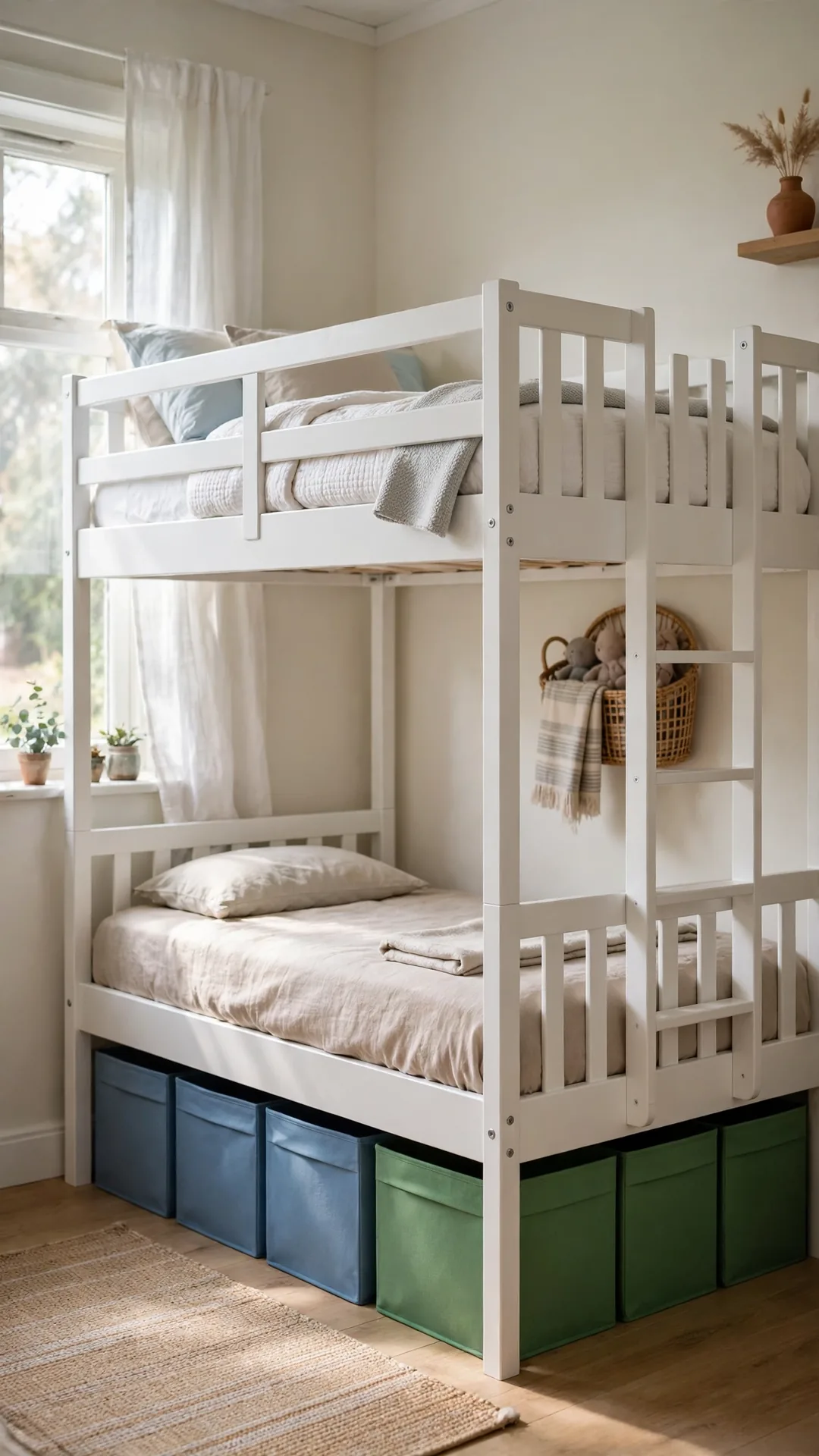
Give each child a bin color and cleanup gets simple. Blue bins belong to one child, green to the other. Even young kids can sort by color alone.
How to do it:
- Pick two bold colors that are easy to tell apart.
- Use the same colors on hooks, shelves, and labels.
- Let each child pick their own color.
- Keep shared toys in a third neutral bin.
- Swap bin colors only when a child asks to.
Best for: Siblings who mix up their stuff.
Budget: $20 to $60
Quick tip: Tape a color dot on each toy box lid.
28. Store Spare Bedding in a Labeled Tote
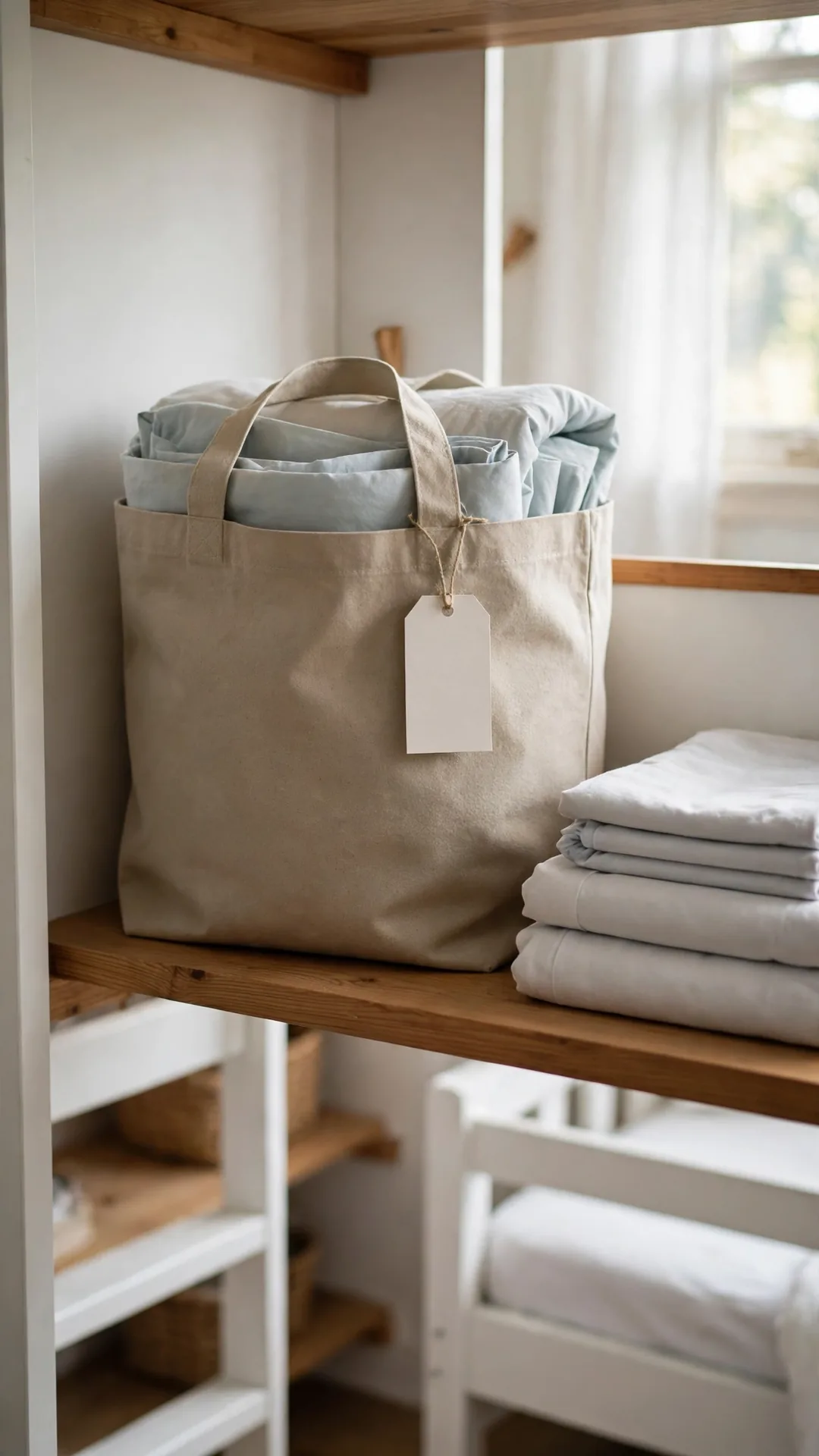
Spare sheets and blankets need a home near the bunks. A labeled tote on a closet shelf keeps them close. These bunk bed ideas for small kids rooms keep midnight sheet swaps fast and calm.
How to do it:
- Pick a tote that fits your closet shelf with ease.
- Pack one full sheet set per bunk inside.
- Label the tote with a picture and a word.
- Add a spare pillowcase and a small blanket too.
- Wash and refill the tote once a month.
Best for: Kids who spill, sweat, or get sick at night.
Budget: $15 to $40
Quick tip: Fold sheets with the pillowcase inside the set.
29. Turn the Space Below a Loft Into a Reading Nook
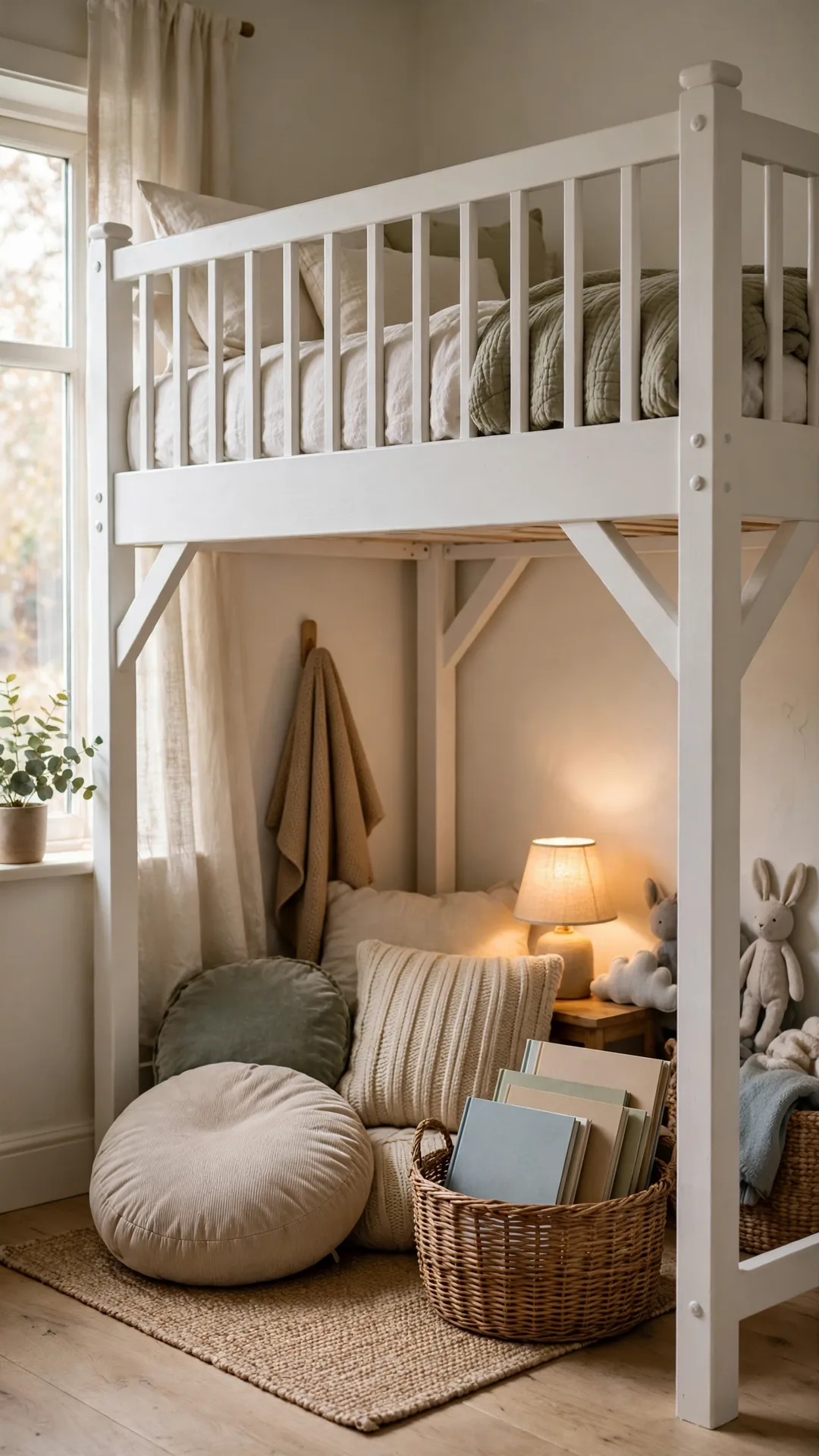
The floor under a loft bed makes a perfect reading nook. Floor cushions, a basket of books, and a lamp are all it takes. Kids will claim it as their own quiet corner.
How to do it:
- Lay a soft rug or two floor cushions below.
- Add a basket of books at child height.
- Clip a small lamp to the loft frame above.
- Hang a curtain on one side for a den feel.
- Keep the nook free of screens and loud toys.
Best for: Kids who love books and quiet time.
Budget: $40 to $120
Quick tip: Rotate the book basket every two weeks.
30. Add a Fold Down Desk to the Bunk End
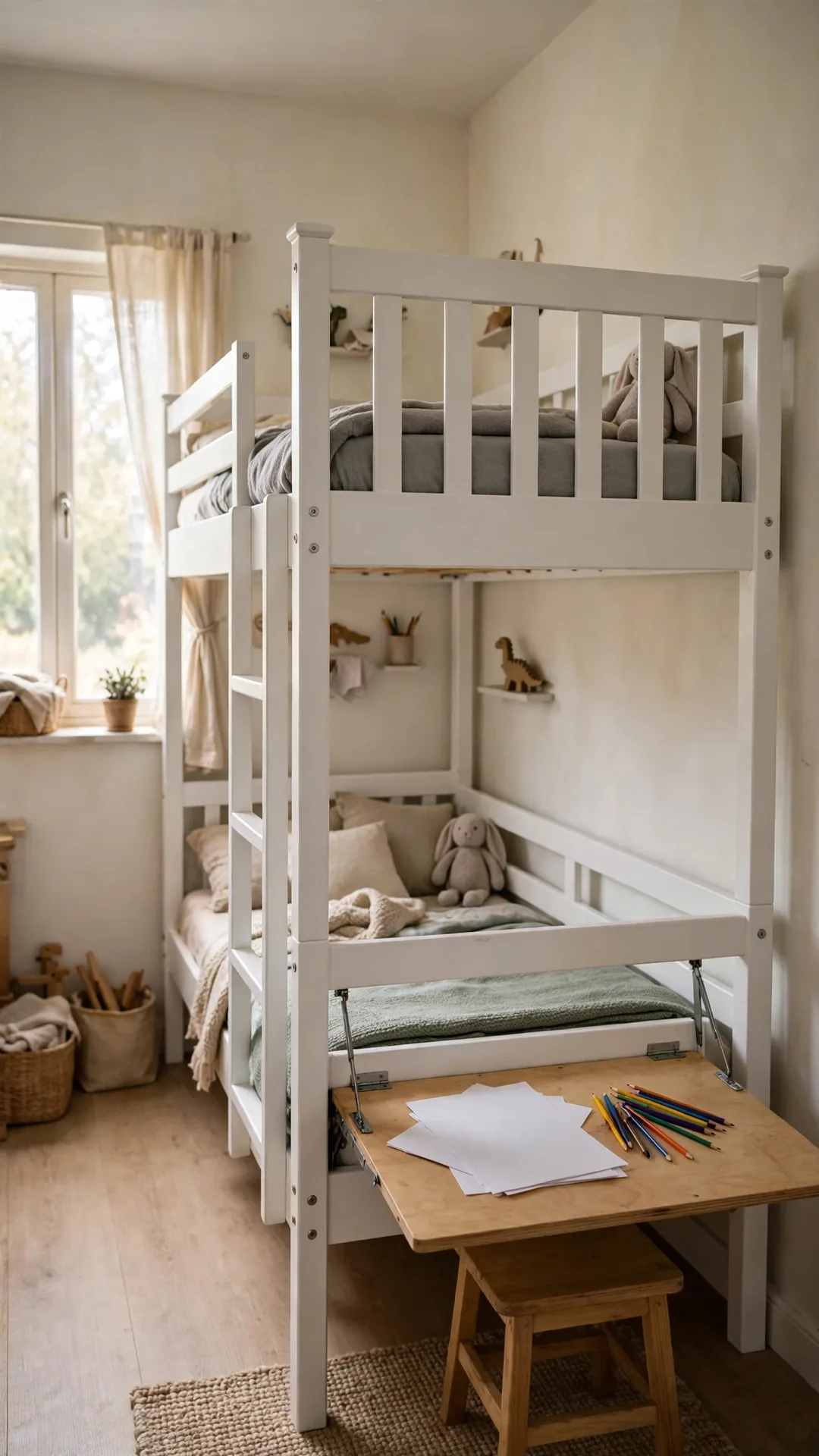
A fold down desk at the bunk end gives homework a home. Fold it up when work ends and the floor is free again. It needs just one wall stud and two brackets.
How to do it:
- Pick a desk top 24 inches wide and 16 inches deep.
- Mount it at 22 inches high for young kids.
- Use folding brackets rated for at least 30 pounds.
- Add a small stool that tucks under the bunk.
- Keep pencils in a cup hung on the bed end.
Best for: School age kids in rooms with no desk space.
Budget: $40 to $110
Quick tip: Fold the desk up each night to reset the room.
31. Build a Small Art Table by the Bunk
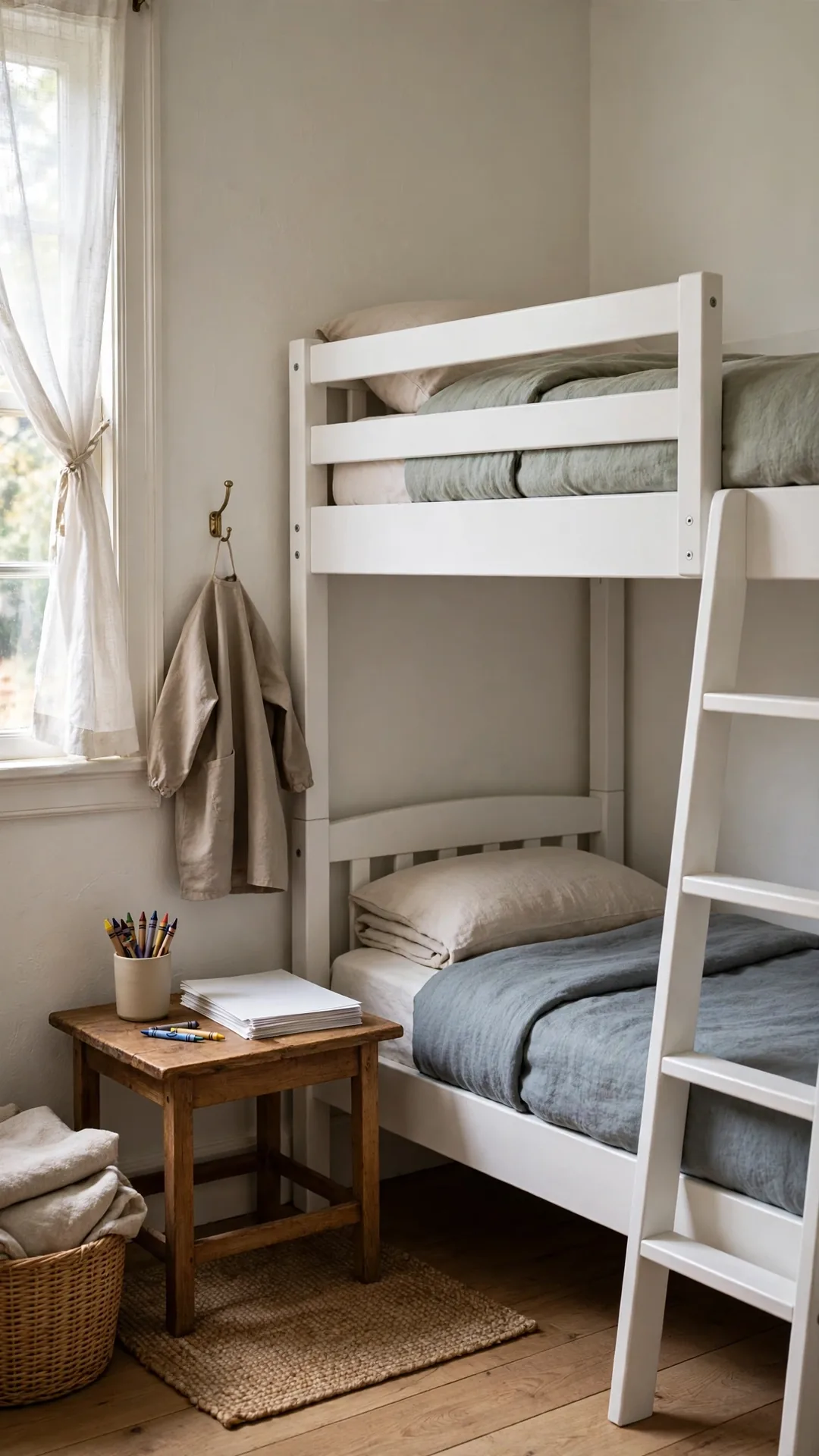
A small art table beside the bunk keeps crafts off the beds. Paper, crayons, and paint stay in one tidy zone. A wipe clean top makes cleanup a two minute job.
How to do it:
- Pick a table 24 inches high with a smooth top.
- Add two small stools so friends can join in.
- Hang a smock on a hook beside the table.
- Store supplies in a caddy on the table end.
- Lay a washable mat under the table for spills.
Best for: Craft loving kids with no playroom.
Budget: $50 to $140
Quick tip: Keep a damp cloth in a cup on the table.
32. Make the Lower Bunk a Fort With a Canopy

A soft canopy over the lower bunk turns it into a fort. Kids can read, play, and nap inside their hideaway. These bunk bed ideas for small kids rooms prove that play space can hide in plain sight.
How to do it:
- Drape light muslin from the top bunk frame.
- Tie the fabric back with soft ribbons by day.
- Add two floor cushions inside for seating.
- Skip battery lights inside the fabric for safety.
- Wash the canopy with the bedding each month.
Best for: Kids who love hideaways and pretend play.
Budget: $25 to $70
Quick tip: Let your child pick the canopy color.
33. Add a Snack and Craft Table Near the Bunk
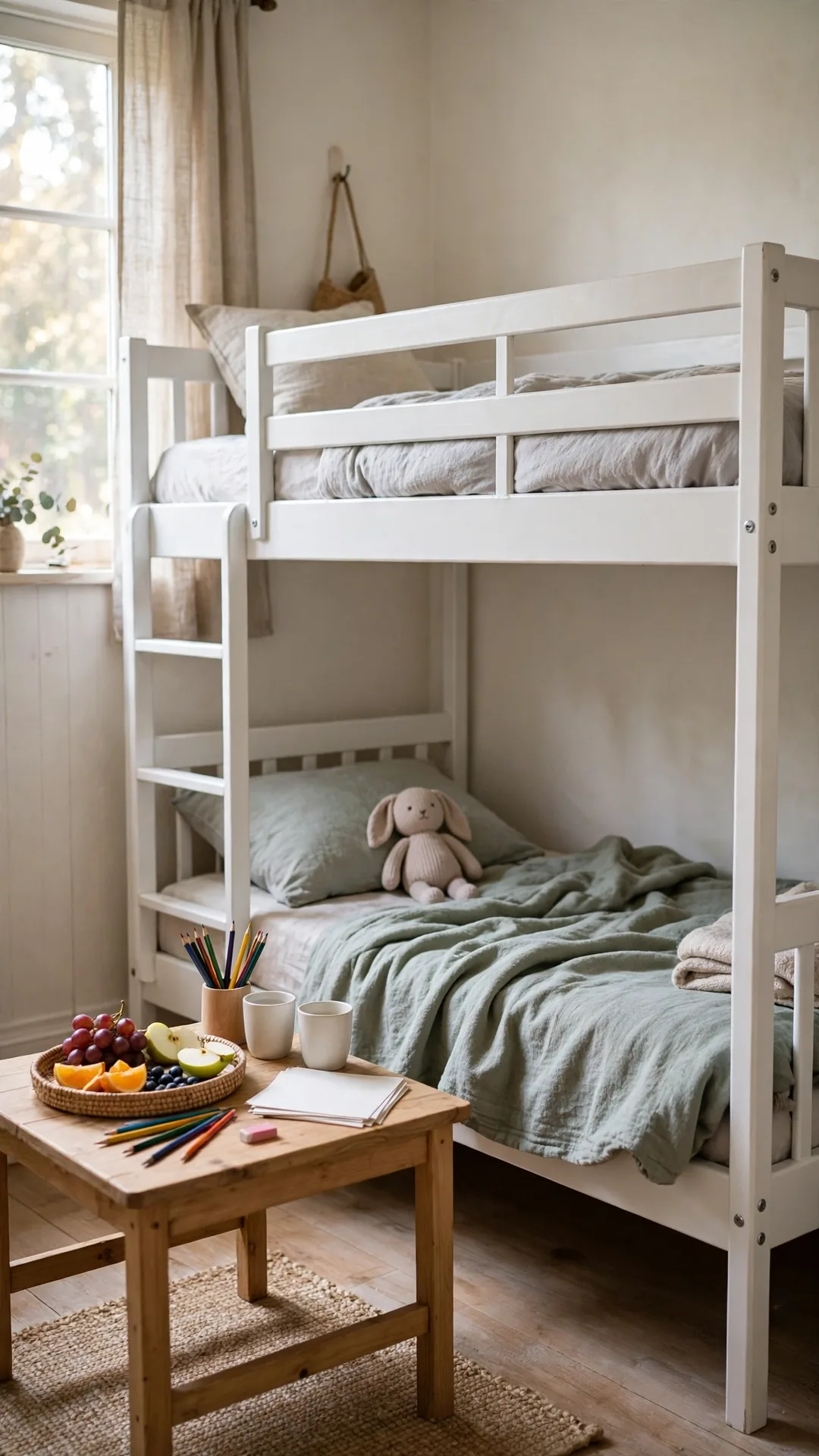
A small table near the bunk holds snacks, crafts, and water for playtime. It keeps crumbs off the beds and gives kids a spot of their own. For real meals, these small eat in kitchen ideas fit a family table in a tight kitchen.
How to do it:
- Pick a table 20 inches high with a wipe clean top.
- Add a spill proof cup and a small snack tray.
- Keep the table 3 feet from the bunks for clear paths.
- Store craft supplies in a bin under the table.
- Wipe the top clean after every snack time.
Best for: Kids who snack and craft in their room.
Budget: $40 to $100
Quick tip: Use a tray for snacks so crumbs stay put.
34. Add a Slide to a Low Bunk for Mornings
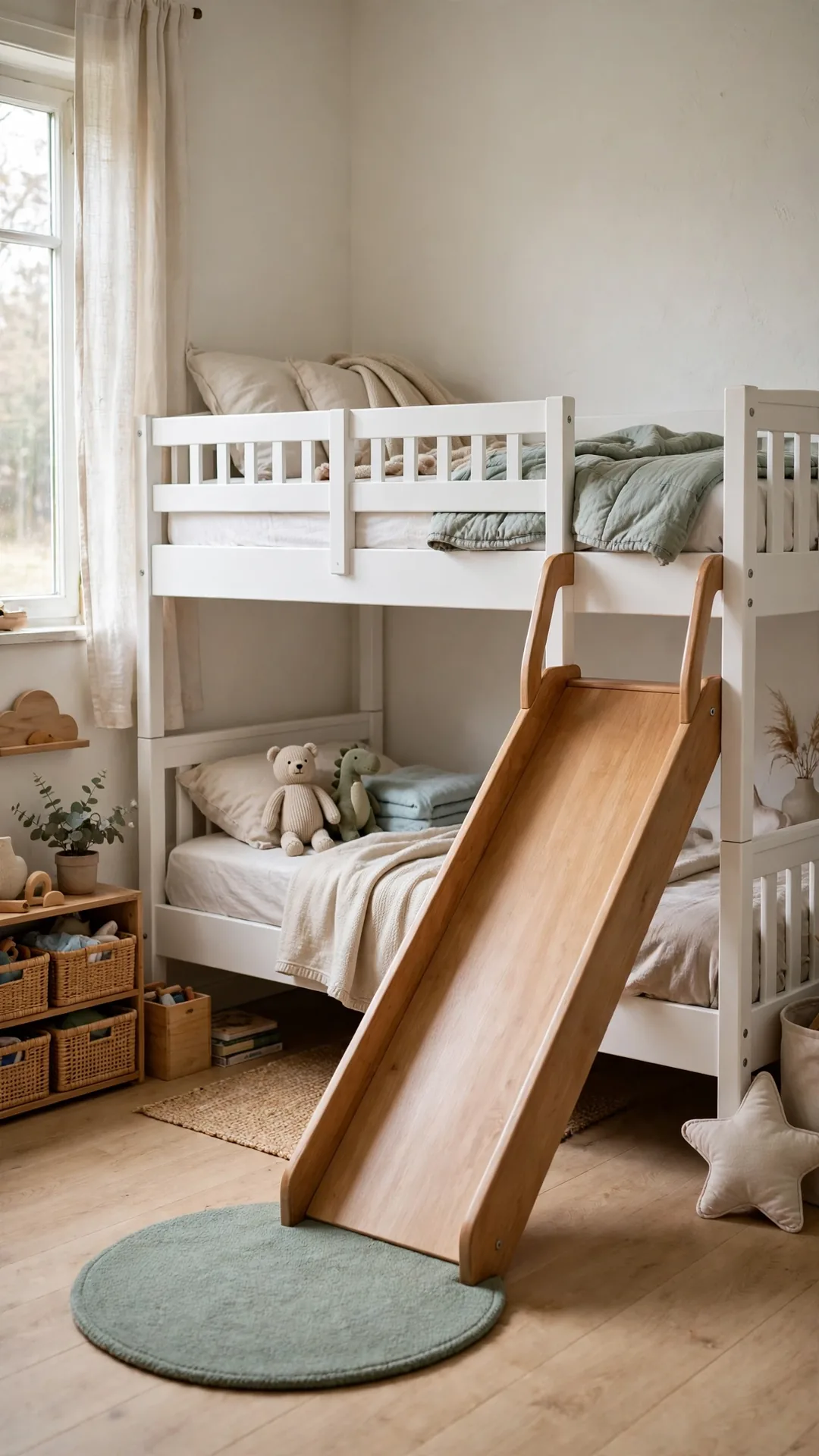
A short slide on a low bunk makes mornings fun. Kids slide down instead of climbing off the ladder. It needs a soft mat and clear floor at the base.
How to do it:
- Pick a slide made for the frame height you own.
- Place a thick mat at the slide base for landings.
- Keep 4 feet of clear floor past the slide end.
- Use the slide for kids age 5 and up only.
- Check the slide bolts each week for a firm hold.
Best for: Low bunks in rooms with open floor space.
Budget: $80 to $250
Quick tip: Set a one child at a time rule for the slide.
35. Add a Fold Flat Table for Puzzles and Games
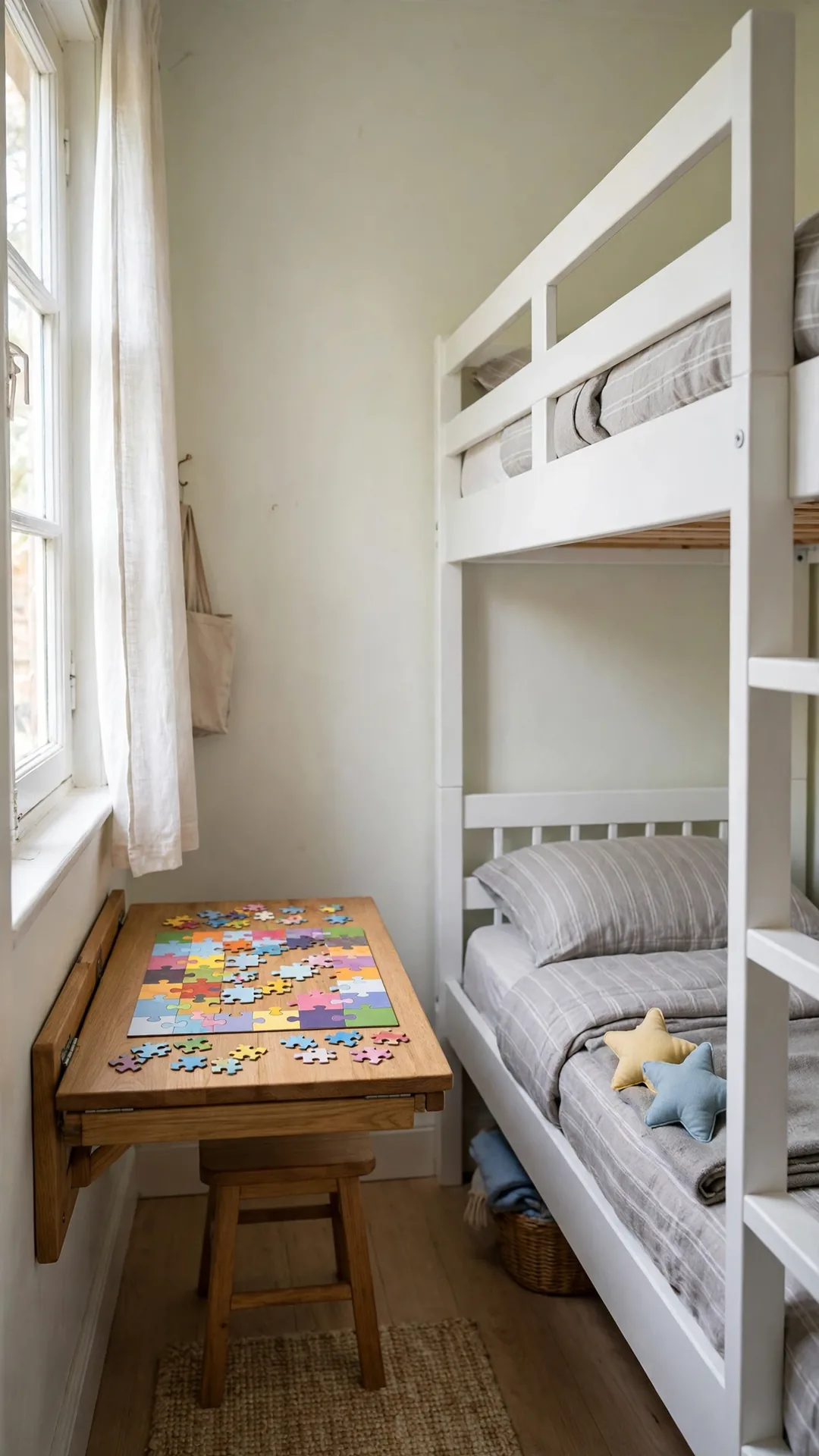
A fold flat table leans on the wall until game time. Open it for puzzles, board games, or building sets. Fold it back and the floor is free for play.
How to do it:
- Pick a table 30 inches wide with a smooth top.
- Mount it on folding brackets rated for 25 pounds.
- Store puzzle boxes in a bin beside the table.
- Add two small stools that stack in a corner.
- Keep the table clear of clutter between games.
Best for: Game loving kids with small rooms.
Budget: $50 to $130
Quick tip: Leave a puzzle out for a week of play.
36. Add a Magnetic Board to the Bunk End

A magnetic board on the bunk end holds art, photos, and school notes. Kids can swap the display without tape or pins. These bunk bed ideas for small kids rooms give each child a gallery of their own.
How to do it:
- Pick a board 18 by 24 inches for one bunk end.
- Mount it at your child's eye level for easy reach.
- Use large flat magnets that small hands can grip.
- Keep small magnets away from kids under age 3.
- Rotate the art display once a month for fresh looks.
Best for: Kids who love to show off their art.
Budget: $20 to $55
Quick tip: Frame one favorite drawing with washi tape.
37. Hang a Growth Chart on the Bunk Post
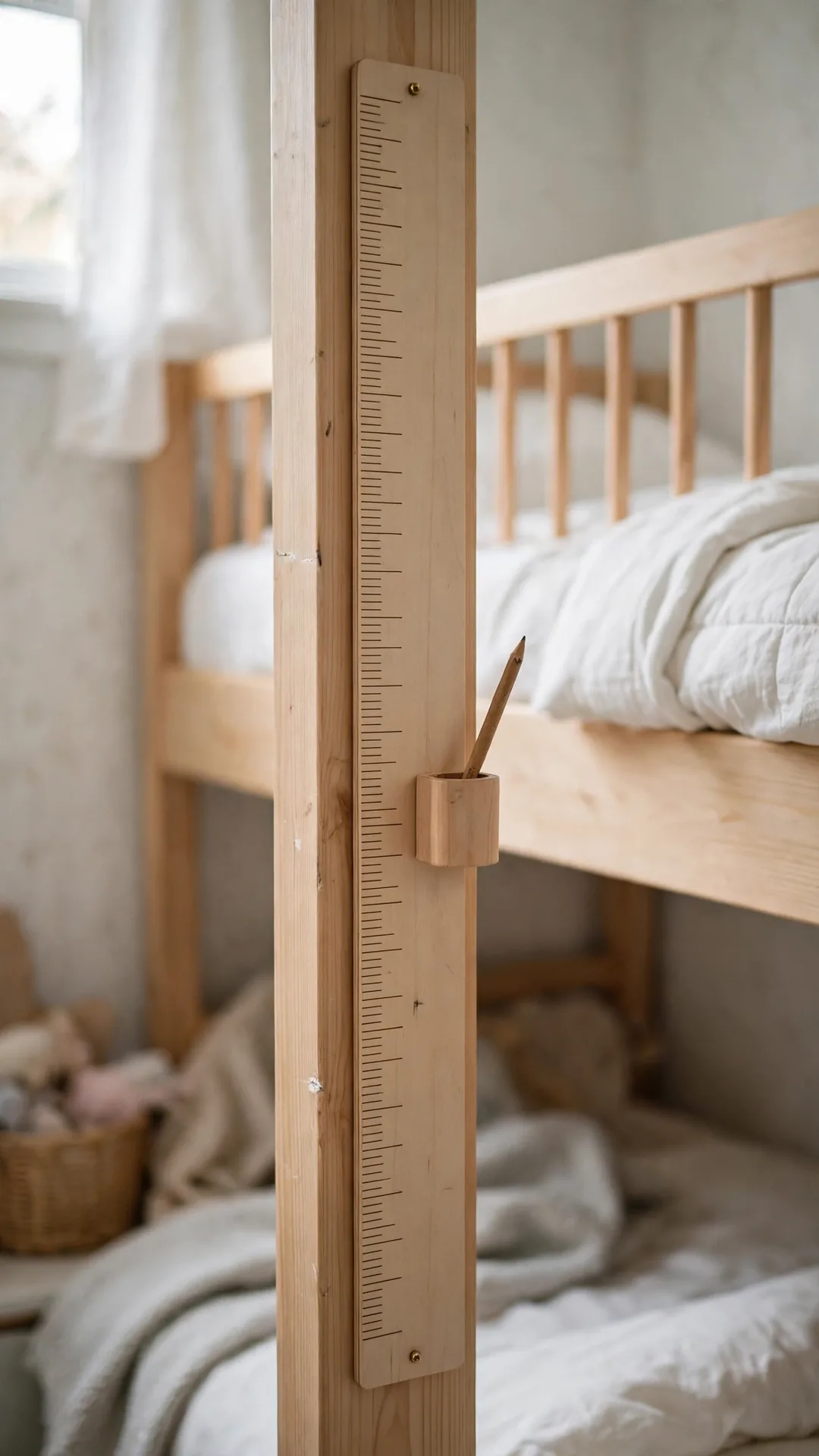
A growth chart on the bunk post turns the bed into a keepsake. Mark each birthday and watch the lines climb. A wood ruler chart suits the room and lasts for years.
How to do it:
- Pick a chart 6 feet tall with clear inch marks.
- Mount it 6 inches above the floor for true reads.
- Mark heights with a pencil and the date.
- Seal the marks with clear tape so they last.
- Move the chart to a new room when bunks go.
Best for: Families who love tracking milestones.
Budget: $15 to $45
Quick tip: Measure on the same date each year.
38. Give Each Child a Display Shelf for Art

One short shelf per child holds art, trophies, and favorite finds. Each child picks what goes on their own shelf. It ends fights over whose art goes where.
How to do it:
- Pick shelves 24 inches long and 4 inches deep.
- Mount each shelf at its owner's eye level.
- Add a small lip so items cannot slide off.
- Rotate the display when new art comes home.
- Keep fragile items on the higher shelf.
Best for: Siblings who each want their own space.
Budget: $20 to $50
Quick tip: Photograph old art before you swap it out.
39. Paint the Bunk Frame a Cheerful Color
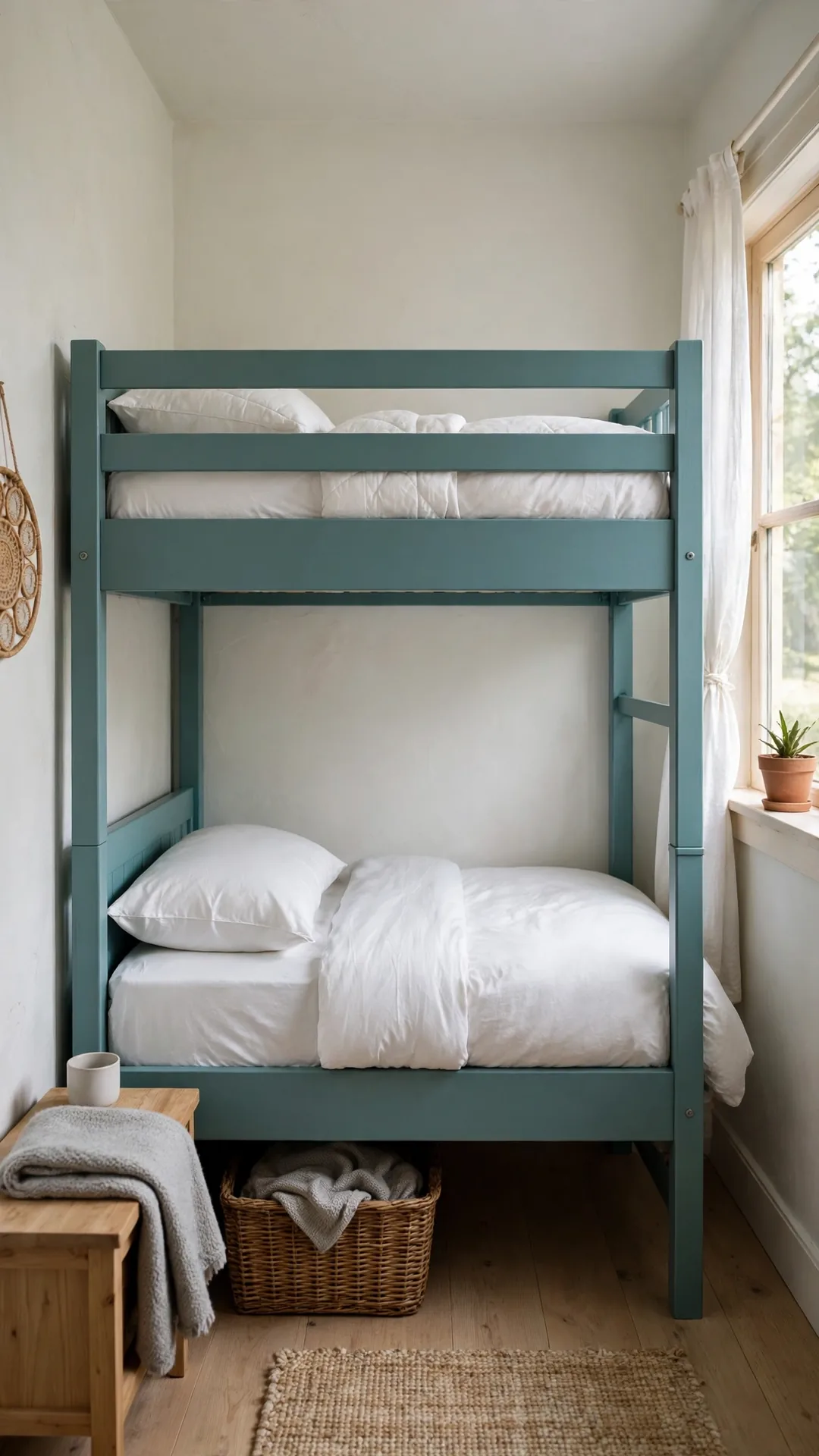
A coat of paint turns a plain bunk into the star of the room. Soft teal, sunny yellow, or sage green all work well. These bunk bed ideas for small kids rooms use color to make small rooms feel bright.
How to do it:
- Sand the frame lightly so paint grips well.
- Use low odor paint made safe for kids rooms.
- Add two thin coats and let each dry fully.
- Paint the ladder a bold accent color for fun.
- Seal high touch spots with clear topcoat.
Best for: Plain wood or dated metal frames.
Budget: $30 to $80
Quick tip: Test the color on the back rail first.
40. Mix Bedding Colors So Each Bunk Feels Own

Different bedding colors give each bunk its own identity. One child picks yellow, the other picks blue. The room still looks tidy when both sets share one pattern.
How to do it:
- Pick two colors from the same palette family.
- Use one shared pattern, like stripes or dots.
- Match pillowcases to each child's bunk color.
- Keep sheets white so the mix stays calm.
- Wash both sets together to keep colors even.
Best for: Siblings who want their own look.
Budget: $40 to $120
Quick tip: Let each child pick their own color.
41. Add Kid Safe Plants Beside the Bunk
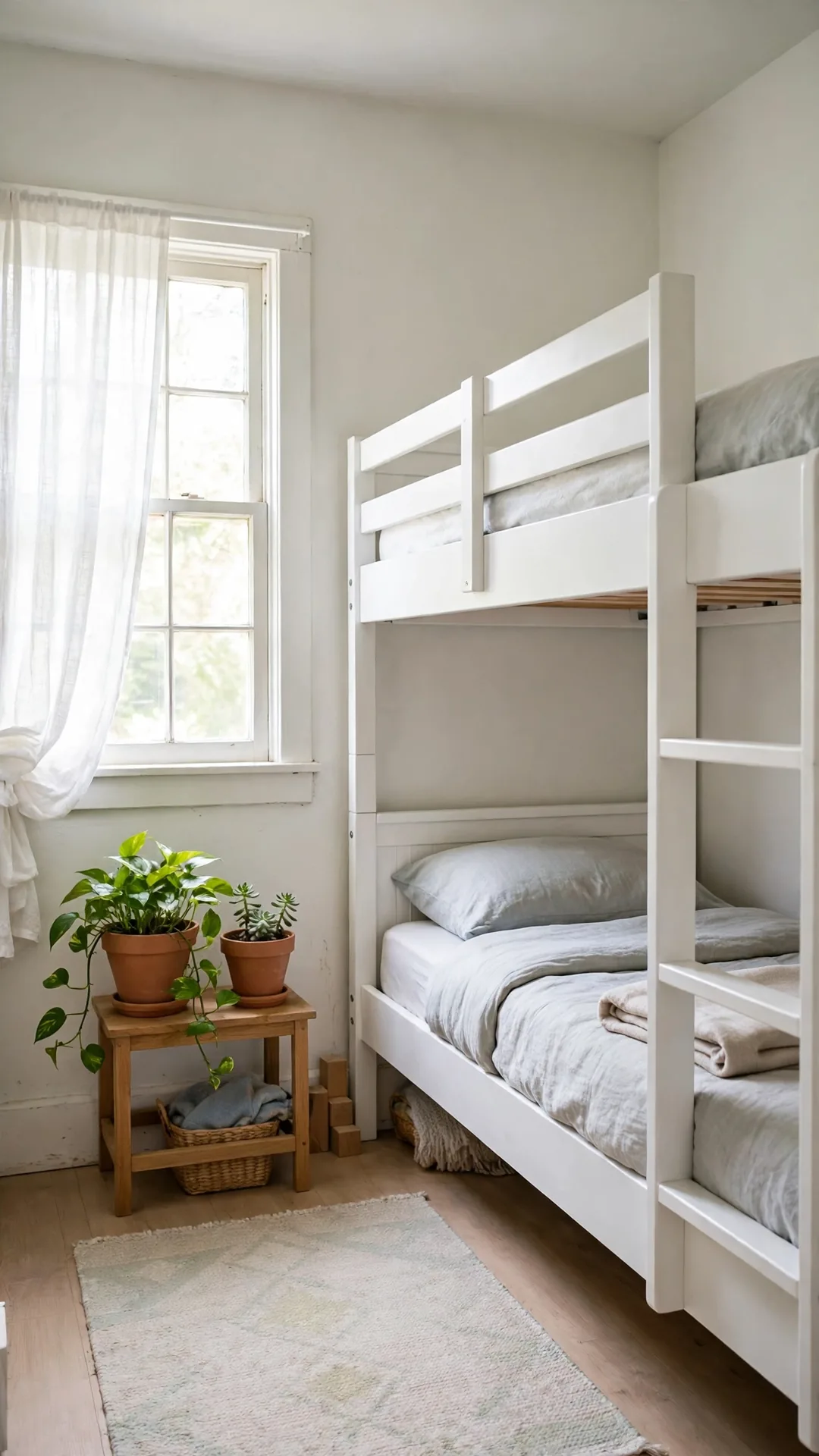
Two potted plants beside the bunk teach kids to care for living things. Pick tough, non toxic plants that forgive missed waterings. If your kids catch the growing bug, these small greenhouse ideas for backyards help them grow more outside.
How to do it:
- Pick spider plants or parlor palms for kid safe rooms.
- Use heavy pots that cannot tip with ease.
- Place plants out of reach of the top bunk.
- Water on a set day each week with your child.
- Wipe leaves clean once a month for healthy growth.
Best for: Sunny rooms with a curious young gardener.
Budget: $20 to $60
Quick tip: Name each plant with your child for fun.
42. Use White Bedding to Keep the Room Bright
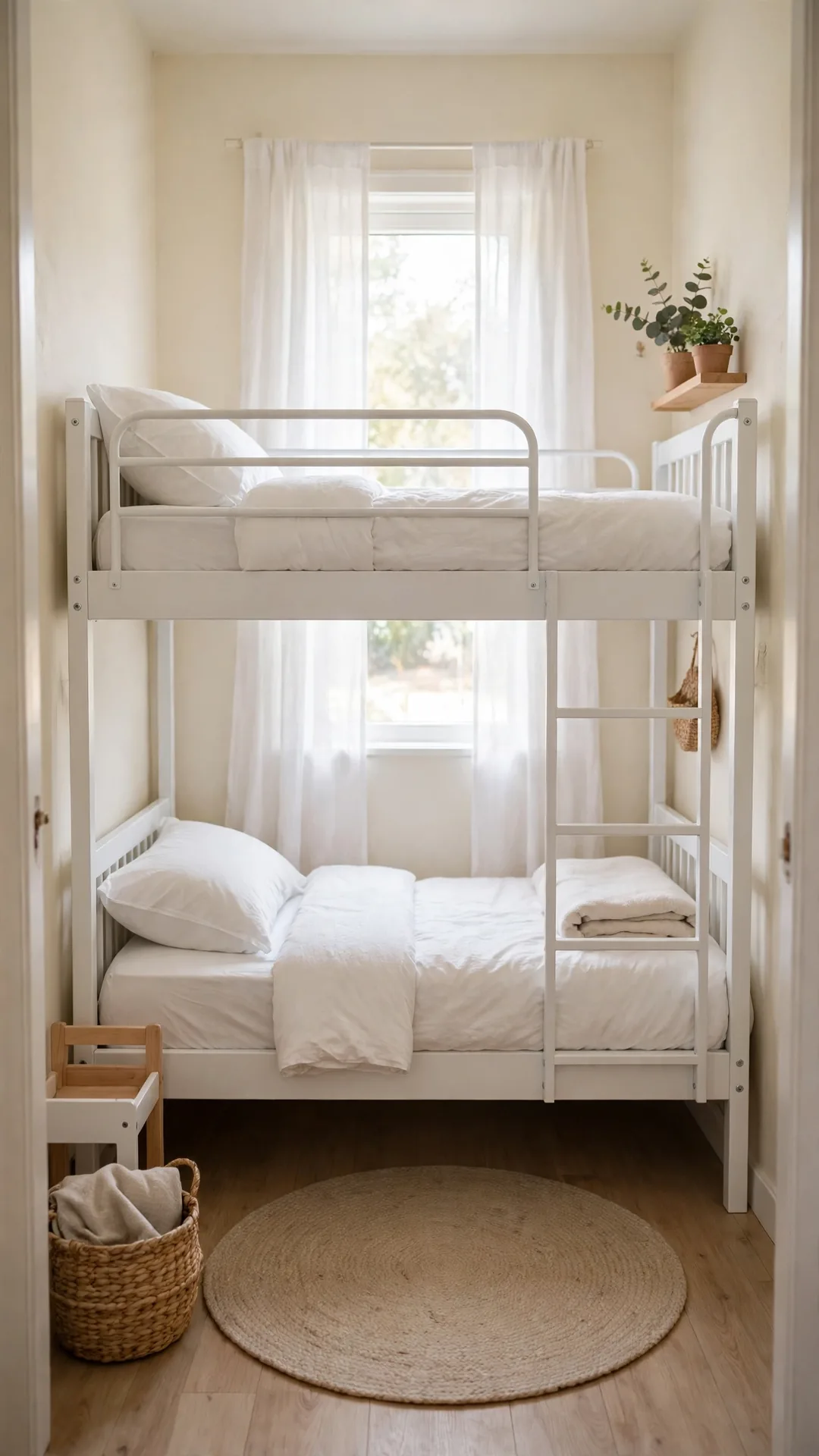
White bedding bounces light around a small room. It makes bunks look fresh and gives color room to pop elsewhere. Add one bright throw per bunk for personality.
How to do it:
- Pick white cotton that washes hot and stays bright.
- Add a colored throw at the foot of each bed.
- Use white pillowcases with a colored trim.
- Keep a stain stick handy for small marks.
- Wash whites together with warm water weekly.
Best for: Dark rooms with one small window.
Budget: $50 to $130
Quick tip: Sun dry whites to keep them bright.
43. Add a House Frame Roof Over the Top Bunk
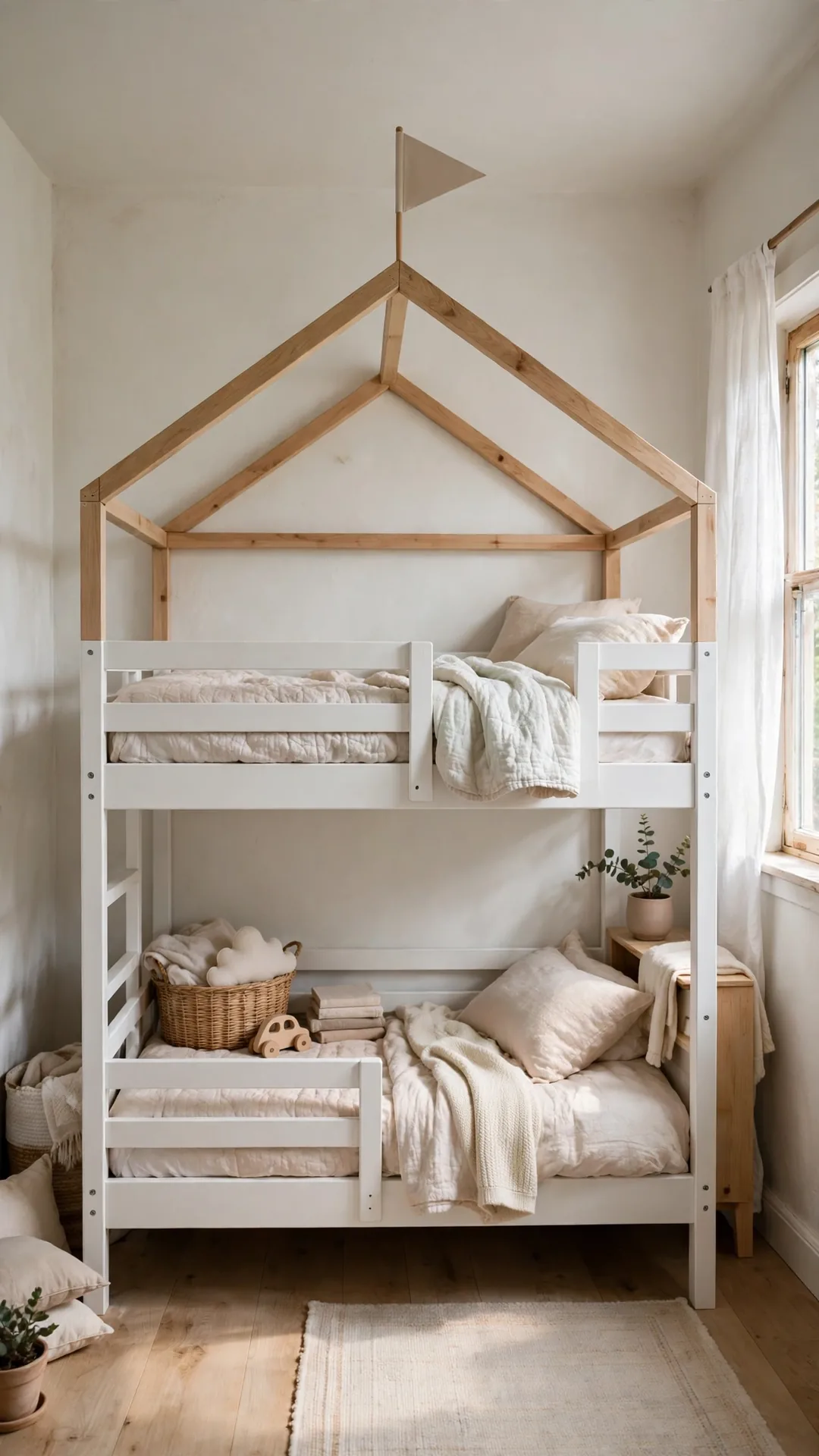
A wood house frame roof turns the top bunk into a tiny house. Kids sleep under a peak that feels made for them. These bunk bed ideas for small kids rooms add play value without taking more floor.
How to do it:
- Build the frame from light pine boards and screws.
- Keep the peak 12 inches below the ceiling.
- Sand every edge smooth for safe climbs.
- Paint the frame white to match the bunk.
- Hang a small flag or star at the peak.
Best for: Kids who love playhouses and forts.
Budget: $60 to $180
Quick tip: Skip the roof if your ceiling sits under 8 feet.
44. Try a Nautical Theme With Rope and Navy

A nautical theme suits bunks, since ships stack beds too. Navy bedding, rope details, and a round mirror set the scene. Keep the theme light so the room still feels calm.
How to do it:
- Use navy and white bedding with one red accent.
- Wrap rope around the ladder rails for grip and style.
- Hang a round mirror like a ship porthole.
- Add a woven basket for toys and stuffed animals.
- Keep wall art to two or three plain prints.
Best for: Kids who love boats and the sea.
Budget: $60 to $150
Quick tip: Swap the theme pieces as tastes change.
45. Use Glow in the Dark Stars on the Ceiling

Glow stars on the ceiling make bedtime feel like camping. They charge by day and glow soft at night. The top bunk gets the best view of the sky.
How to do it:
- Stick stars in loose clusters, not neat rows.
- Place them above the top bunk for the best view.
- Use removable stickers so walls stay clean.
- Add a moon or two for a focal point.
- Replace faded stars once a year for a fresh glow.
Best for: Kids who fear the dark at bedtime.
Budget: $10 to $25
Quick tip: Charge the stars with a lamp before bed.
46. Add a Small Rug to Define the Sleep Zone

A small rug in front of the bunks marks the sleep zone. It warms cold floors and softens morning landings. These bunk bed ideas for small kids rooms use rugs to split one room into clear zones.
How to do it:
- Pick a rug 4 by 6 feet for most bunk rooms.
- Use a low pile rug that vacuums with ease.
- Add a non slip pad under the rug for safety.
- Pick a washable rug for spill prone rooms.
- Match the rug to the bedding colors for calm.
Best for: Hard floors and cold morning feet.
Budget: $40 to $120
Quick tip: Shake the rug outside once a week.
47. Keep a Night Light on the Ladder Path
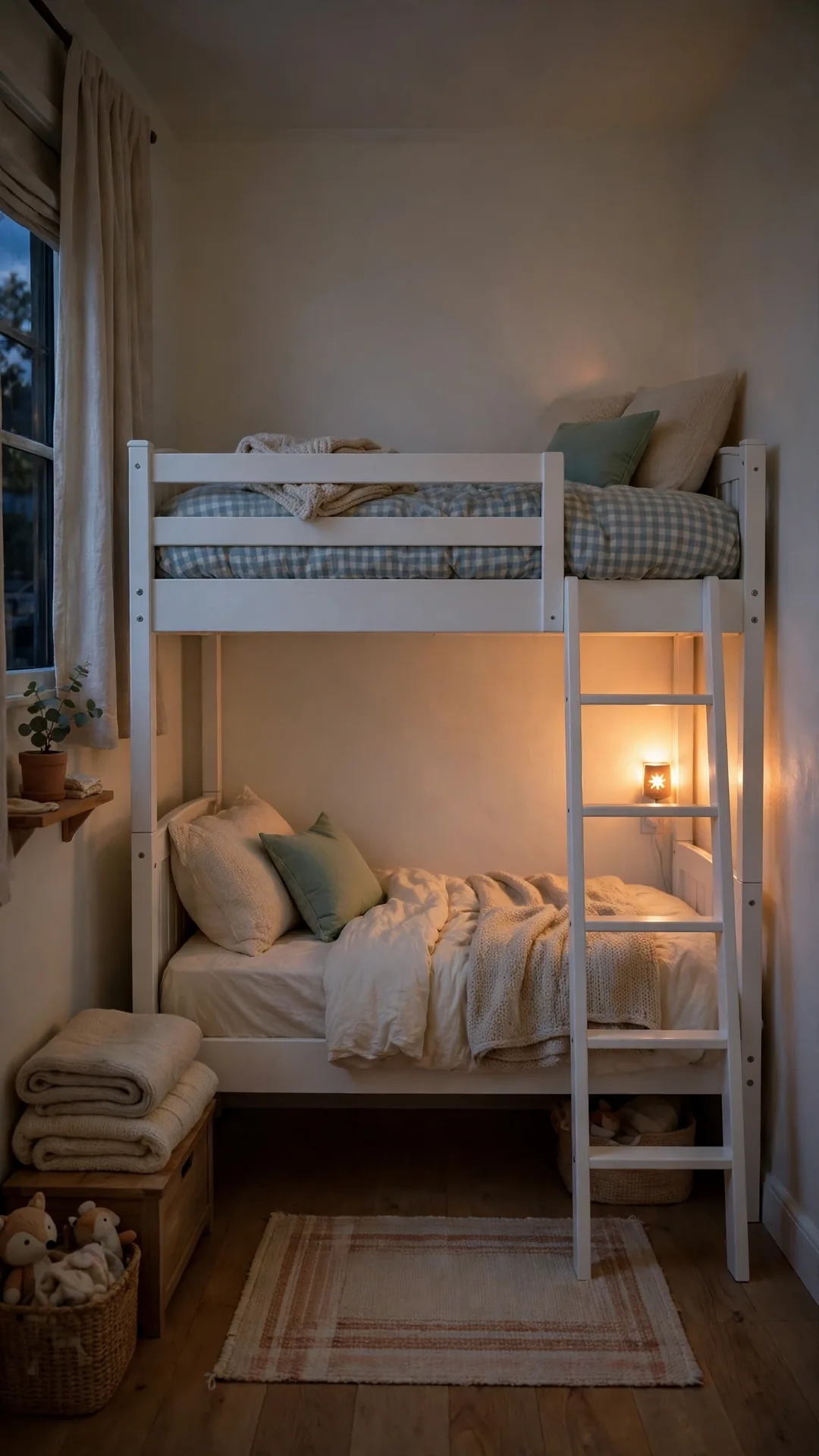
A warm night light beside the ladder keeps midnight climbs safe. Kids can see each step without waking a sibling. Pick a soft glow, not a bright bulb.
How to do it:
- Place the light at floor level near the ladder base.
- Pick a warm bulb under 5 watts for soft light.
- Use a timer plug so it fades by morning.
- Keep the light out of reach of small hands.
- Test the glow from the top bunk at night.
Best for: Night wakers and early risers.
Budget: $10 to $30
Quick tip: Use one light per room, not per bunk.
48. Add Soft Panels Behind the Bunk for Quiet
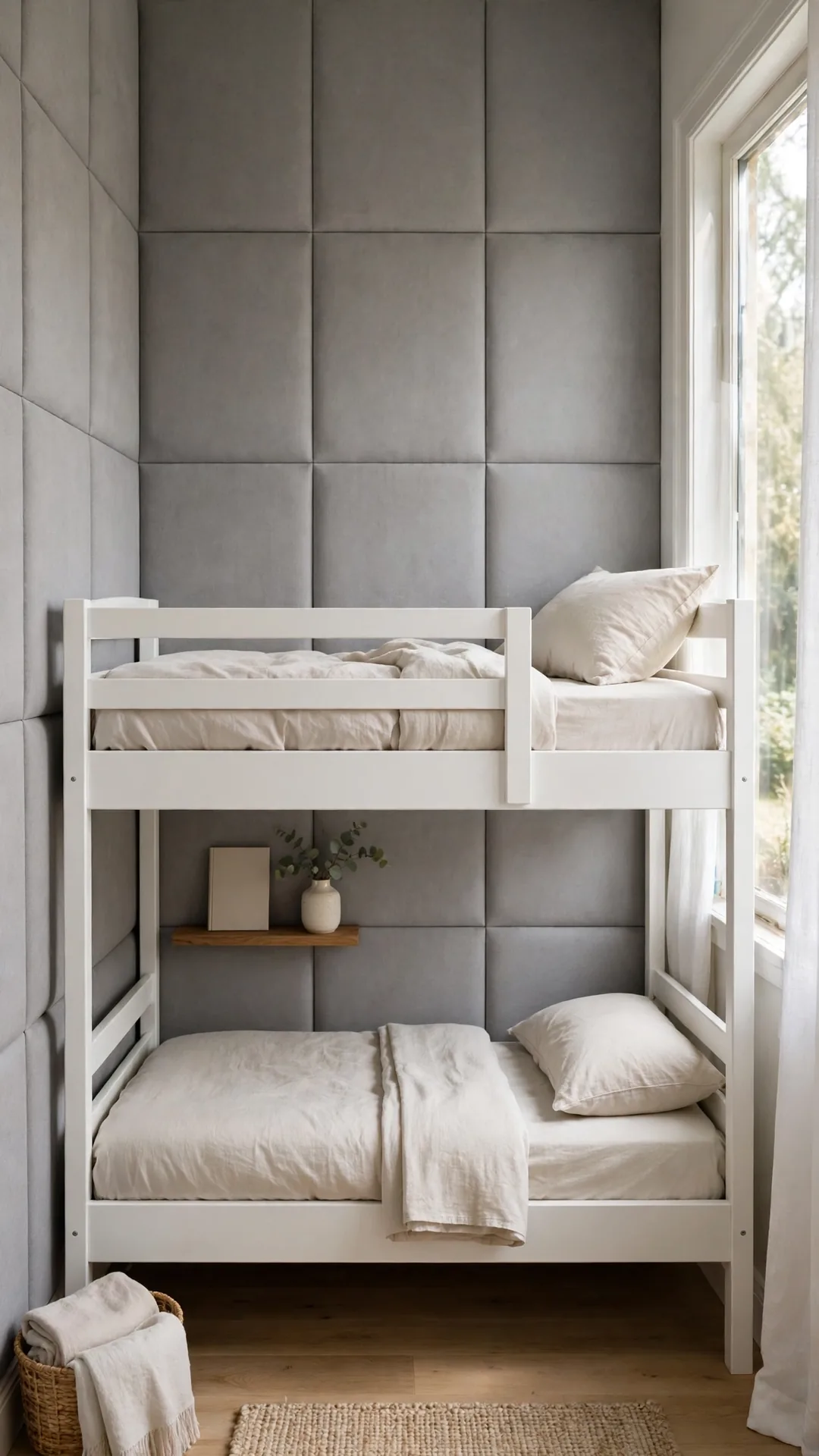
Fabric panels behind the bunk soften noise and add warmth. They help siblings sleep through each other's sounds. Felt or quilted cotton panels work best.
How to do it:
- Pick panels 12 by 12 inches for easy fitting.
- Mount them with adhesive strips for a no drill fix.
- Cover the wall behind the bunks, not the whole room.
- Pick a soft gray or cream to match the bedding.
- Vacuum the panels monthly to keep dust down.
Best for: Light sleepers sharing one room.
Budget: $40 to $120
Quick tip: Start with four panels and add more later.
49. Rotate Toys With a Weekly Swap Bin

A weekly swap bin keeps toys fresh without buying more. Each week, swap five toys out and five back in. These bunk bed ideas for small kids rooms keep small rooms tidy with less stuff in sight.
How to do it:
- Pick a bin that fits under the lower bunk.
- Store the swap bin in a closet between weeks.
- Let each child pick one toy to swap each week.
- Donate toys no one picks for a month.
- Keep the bin labeled so kids find it fast.
Best for: Toy heavy rooms that overflow each week.
Budget: $15 to $35
Quick tip: Swap toys on Sunday night for a fresh week.
50. Use a Bed Tent for a Cozy Top Bunk

A fabric bed tent turns the top bunk into a private den. It blocks light and gives the top sleeper a hideaway. Pick a tent made for your exact bunk size.
How to do it:
- Measure the top bunk before you order a tent.
- Pick breathable cotton so air flows through.
- Leave the front open at night for airflow.
- Wash the tent with the bedding each month.
- Skip the tent if the ceiling feels too close.
Best for: Top bunk kids who want privacy.
Budget: $30 to $80
Quick tip: Let your child pick the tent print.
51. Plan a Bunk Room That Grows With Kids

Kids outgrow themes fast, but good bunks last for years. Pick neutral walls and a solid frame that suits teens too. These bunk bed ideas for small kids rooms end with a room that grows as your kids do.
How to do it:
- Paint walls a soft neutral that suits any age.
- Pick a frame rated for teen weight and height.
- Swap bedding and art as tastes change each year.
- Plan the split into twin beds from the start.
- Keep one wall free for a future desk or shelf.
Best for: Families planning for the long haul.
Budget: $0 to $100
Quick tip: Revisit the room plan each birthday.
Pick One Bunk Idea and Start This Weekend
You do not need to rebuild the whole room at once. Pick the idea that fixes your biggest pain, then try it this weekend. These bunk bed ideas for small kids rooms work one change at a time. Save this list or pin your favorite bunk to plan your next step.

- 59 Over the Door Storage Ideas for Small Spaces to Try Now - November 27, 2026
- 55 Genius Jewelry Organization Ideas for Small Spaces - November 27, 2026
- 55 Genius Small Greenhouse Ideas for Backyards Done Right - November 26, 2026