
Tiny living room walls can do more than hold paint. The right paper adds pattern, depth and light without moving a single chair. These small living room wallpaper ideas focus on rolls, murals and borders that suit compact rooms.
Most picks here are peel and stick, so renters can join in too. Prices stay honest, with many single walls costing under $100. Measure your walls first, then pick one idea to copy.
1. Paper One Wall Behind the Sofa
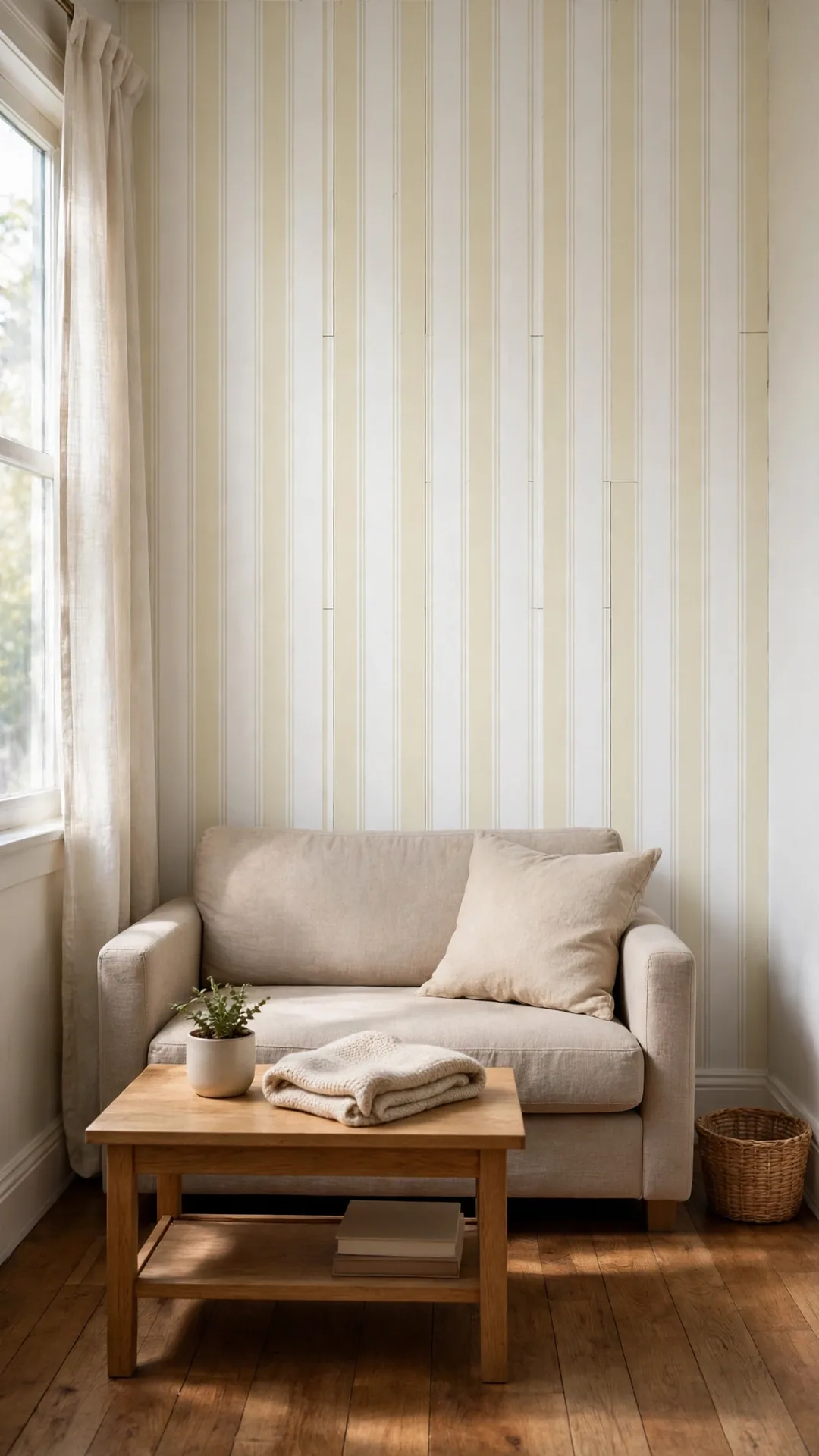
The wall behind your sofa is the safest first wall to paper. Peel and stick paper goes up in an afternoon and peels off cleanly later. It is the classic starting point for small living room wallpaper ideas.
How to do it:
- Measure the wall width and height in inches.
- Order rolls that are 20.5 inches wide to match.
- Start the first strip in the corner behind the sofa.
- Smooth each strip down with a plastic smoother.
- Trim the edges with a sharp snap blade.
Best for: Renters and first-time paper hangers.
Budget: $40 to $110 per wall
Quick tip: Buy one extra roll so pattern repeats always match.
2. Test a Single Panel Before Committing
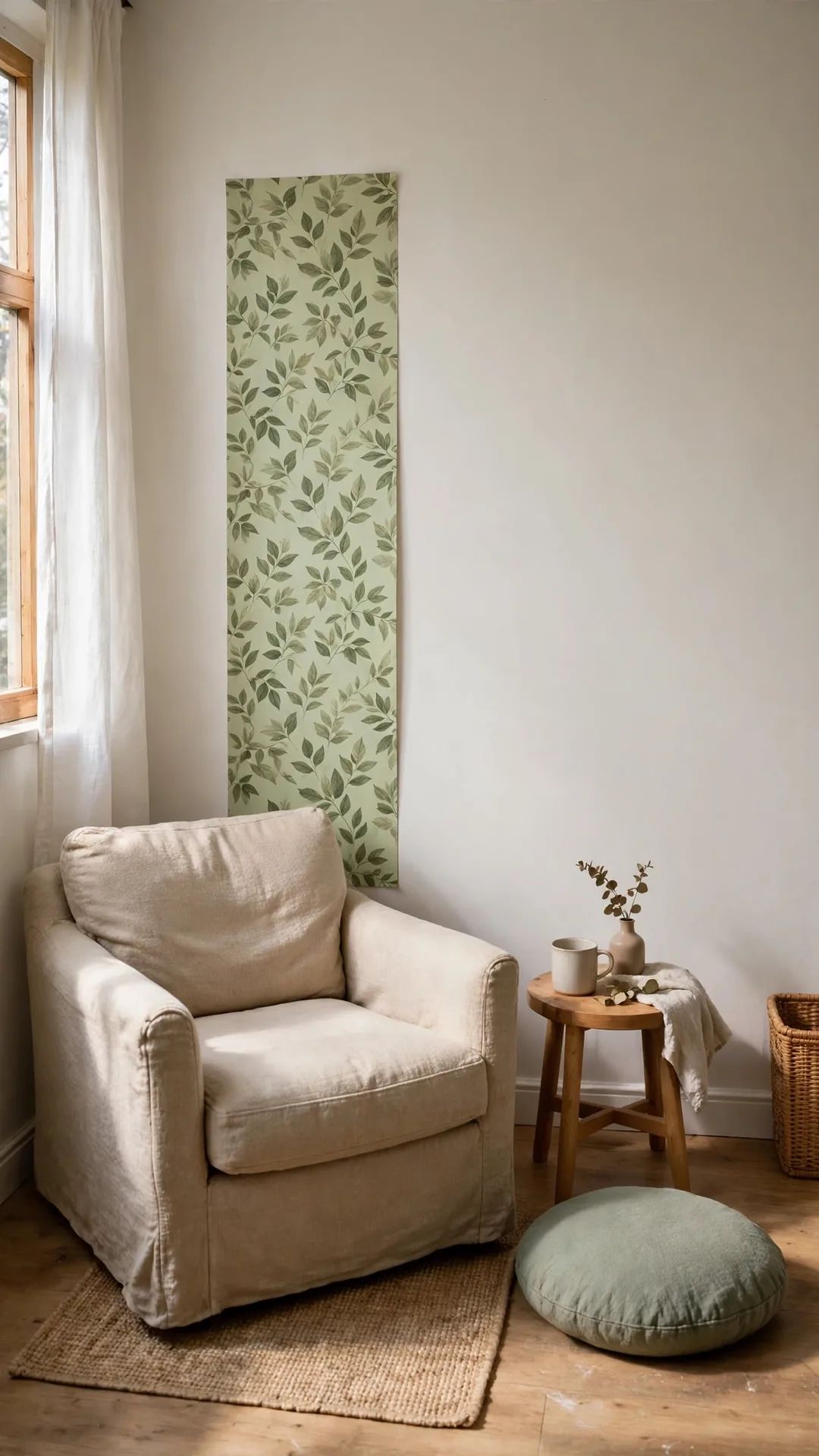
A single panel lets you live with a print before you buy ten rolls. Hang one width beside your chair and watch it for a week. Light changes through the day, and so does the pattern.
How to do it:
- Cut one panel to your full wall height.
- Hang it with removable strips or two small pins.
- Check it in morning, noon and evening light.
- Sit across from it at your normal seat distance.
- Order the full batch only when it still feels right.
Best for: Bold prints you are not sure about yet.
Budget: $10 to $30 for one panel
Quick tip: Take a phone photo each day to spot glare.
3. Line Bookcase Backs With Leftover Paper
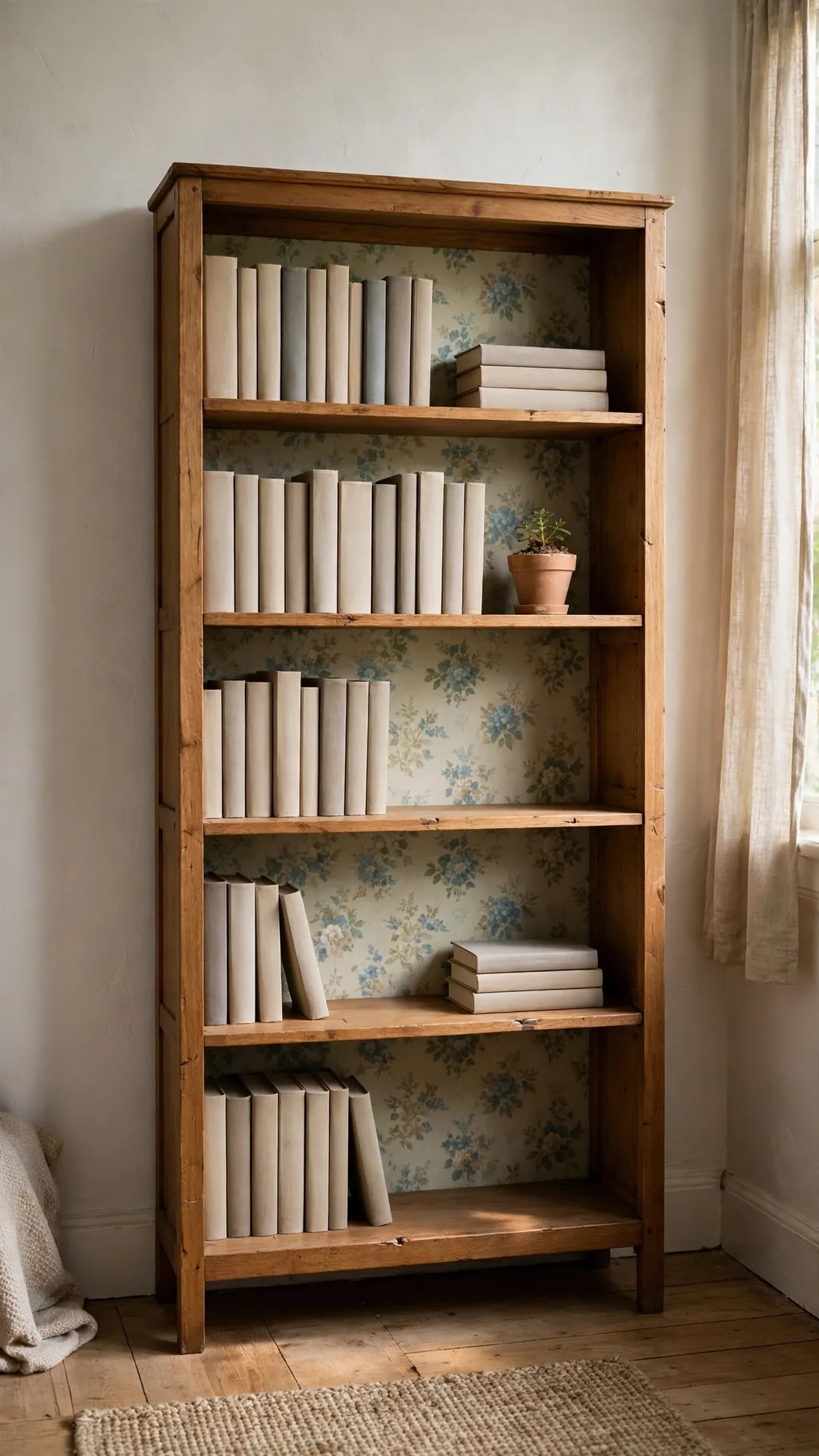
The back panel of a bookcase is a tiny wall that begs for pattern. Paper offcuts fit the space, so this idea often costs nothing extra. It is one of the cheapest small living room wallpaper ideas to try.
How to do it:
- Empty the shelves and dust the back panel well.
- Measure each shelf opening in width and height.
- Cut paper pieces half an inch larger than each opening.
- Stick or paste each piece, then trim the edges.
- Let it dry fully before the books go back.
Best for: Using up offcuts from a bigger wall job.
Budget: Under $15 with leftover paper
Quick tip: A busy print hides shelf scuffs and old screw holes.
4. Wrap a Folding Screen for Instant Zones
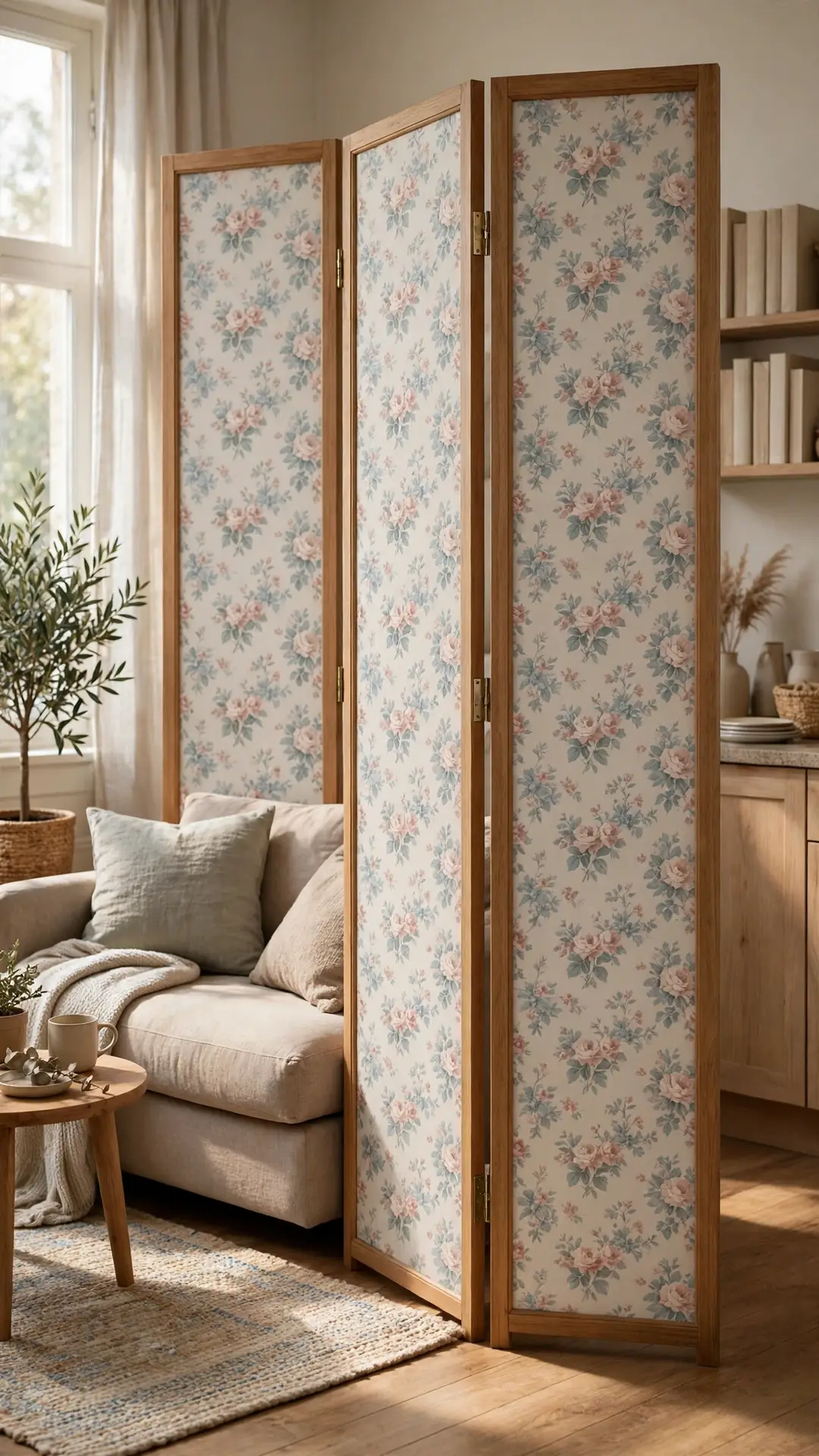
A folding screen splits a studio into clear zones without any building work. Paper each panel and the screen becomes a moving feature wall. Fold it flat and store it when guests need floor space.
How to do it:
- Pick a screen with flat panels about 16 inches wide.
- Sand rough spots so the paper grips well.
- Cut one paper piece per panel, plus an inch spare.
- Wrap the edges around the frame for a clean finish.
- Stand it behind the sofa end or beside a desk.
Best for: Studios that need a living and sleeping split.
Budget: $30 to $70
Quick tip: Paper both sides so the screen looks good from bed too.
5. Paper an Alcove for a Snug Nook
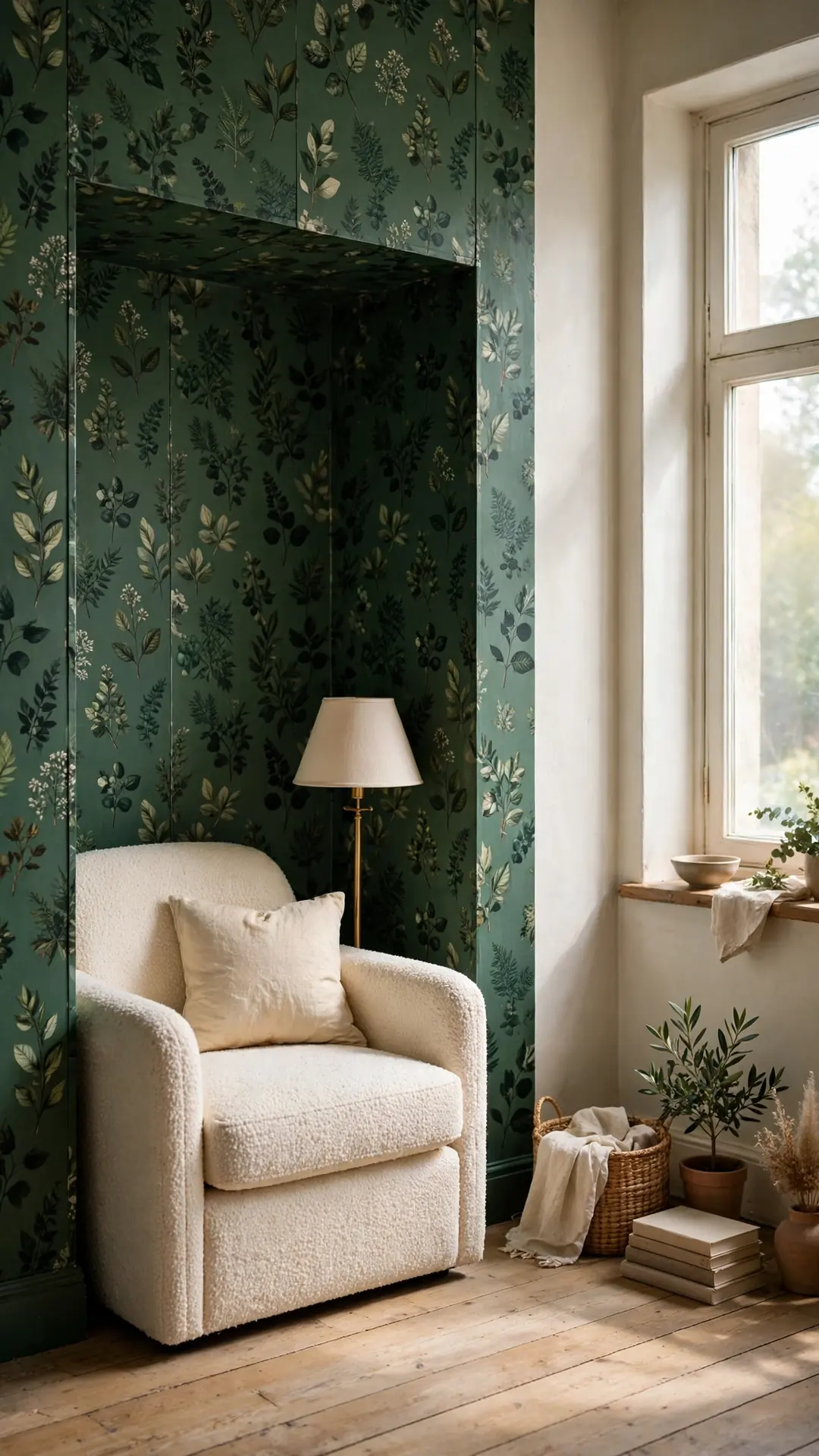
An alcove already feels separate from the rest of the room. Paper inside it and the gap becomes a clear reading nook. Darker prints work here because the area is small and contained.
How to do it:
- Measure the back wall and both side returns.
- Pick a print that can handle two inside corners.
- Start on the back wall and wrap into each side.
- Add one chair, a small lamp and a side table.
- Keep the paper line level with the alcove opening.
Best for: Odd alcoves that collect clutter right now.
Budget: $35 to $90
Quick tip: A plug-in wall lamp saves floor space in the nook.
6. Frame Paper Panels Like Wall Art
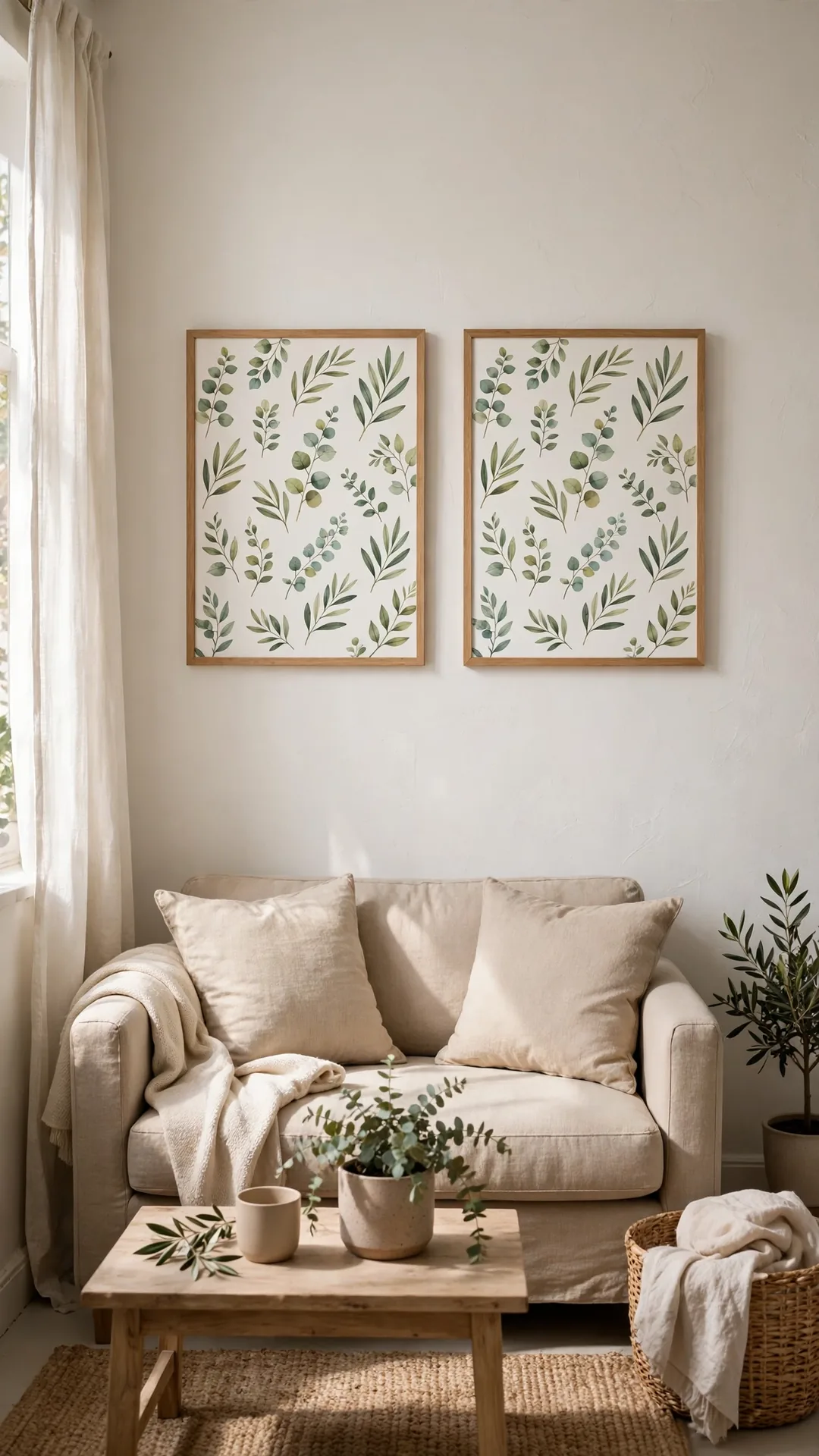
Framed panels give you pattern with zero wall coverage. Two large frames above the sofa read like one wide artwork. They rank among the most rental-safe small living room wallpaper ideas.
How to do it:
- Choose frames around 24 by 36 inches each.
- Cut paper to fit the backing board of each frame.
- Fix the paper flat with spray adhesive or tape.
- Hang both frames 6 inches above the sofa back.
- Leave 3 inches of wall between the two frames.
Best for: Renters who cannot hang paper at all.
Budget: $25 to $60 for two panels
Quick tip: Use the same print in both frames for calm.
7. Run a Border Along the Ceiling Line
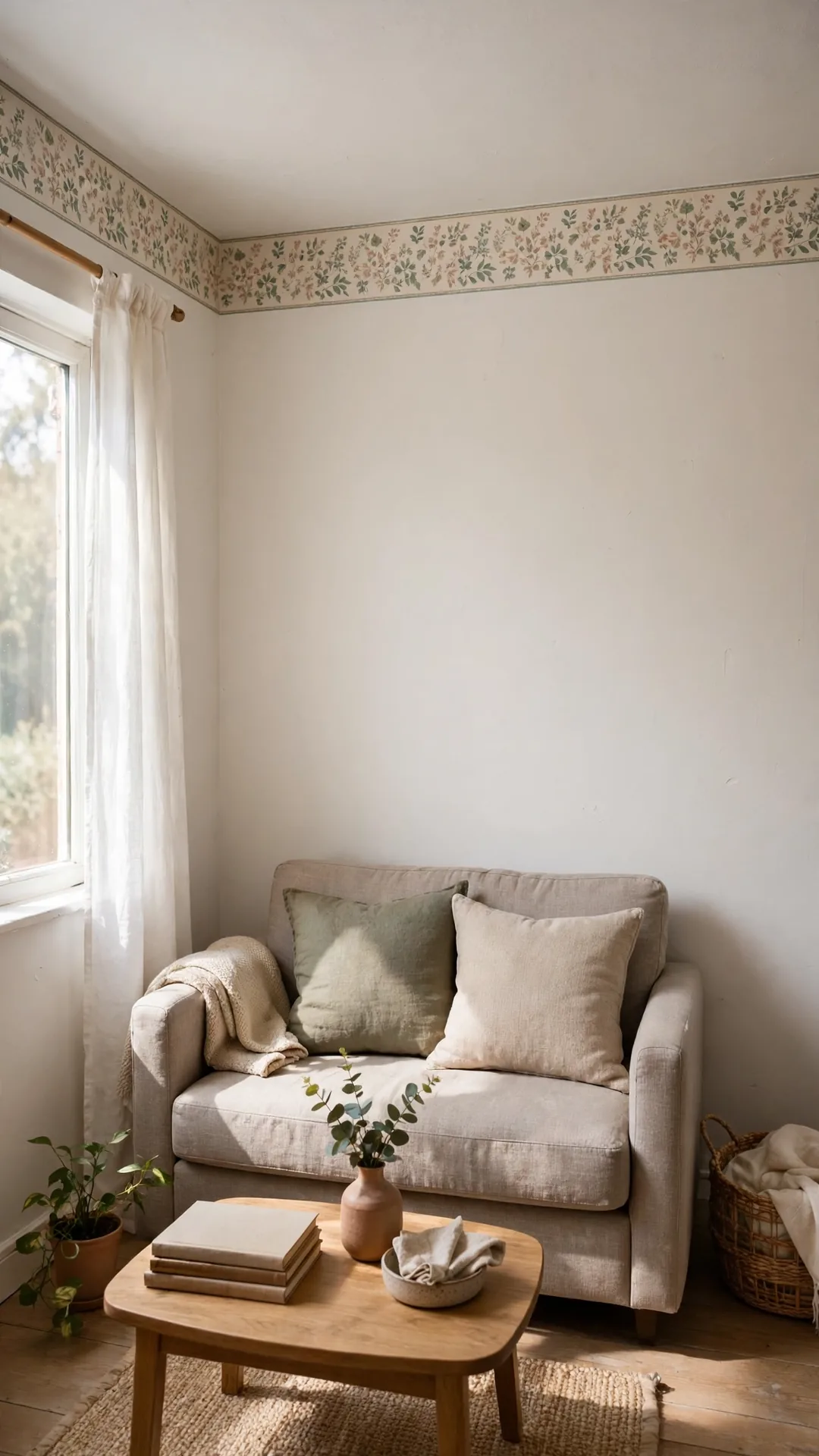
A border roll is the cheapest way to add pattern up high. It pulls the eye upward, so the ceiling feels a touch taller. Borders also forgive shaky hands, since the strip is narrow.
How to do it:
- Measure the full run of wall at ceiling height.
- Pick a border 6 to 9 inches deep.
- Paste or peel one wall length at a time.
- Keep the top edge flush with the ceiling line.
- Miter the corners with a sharp blade for neat joins.
Best for: Plain rooms that need one soft detail.
Budget: $15 to $40 per room
Quick tip: A border with a vertical motif adds more height.
8. Cover a Side Table Top With Offcuts
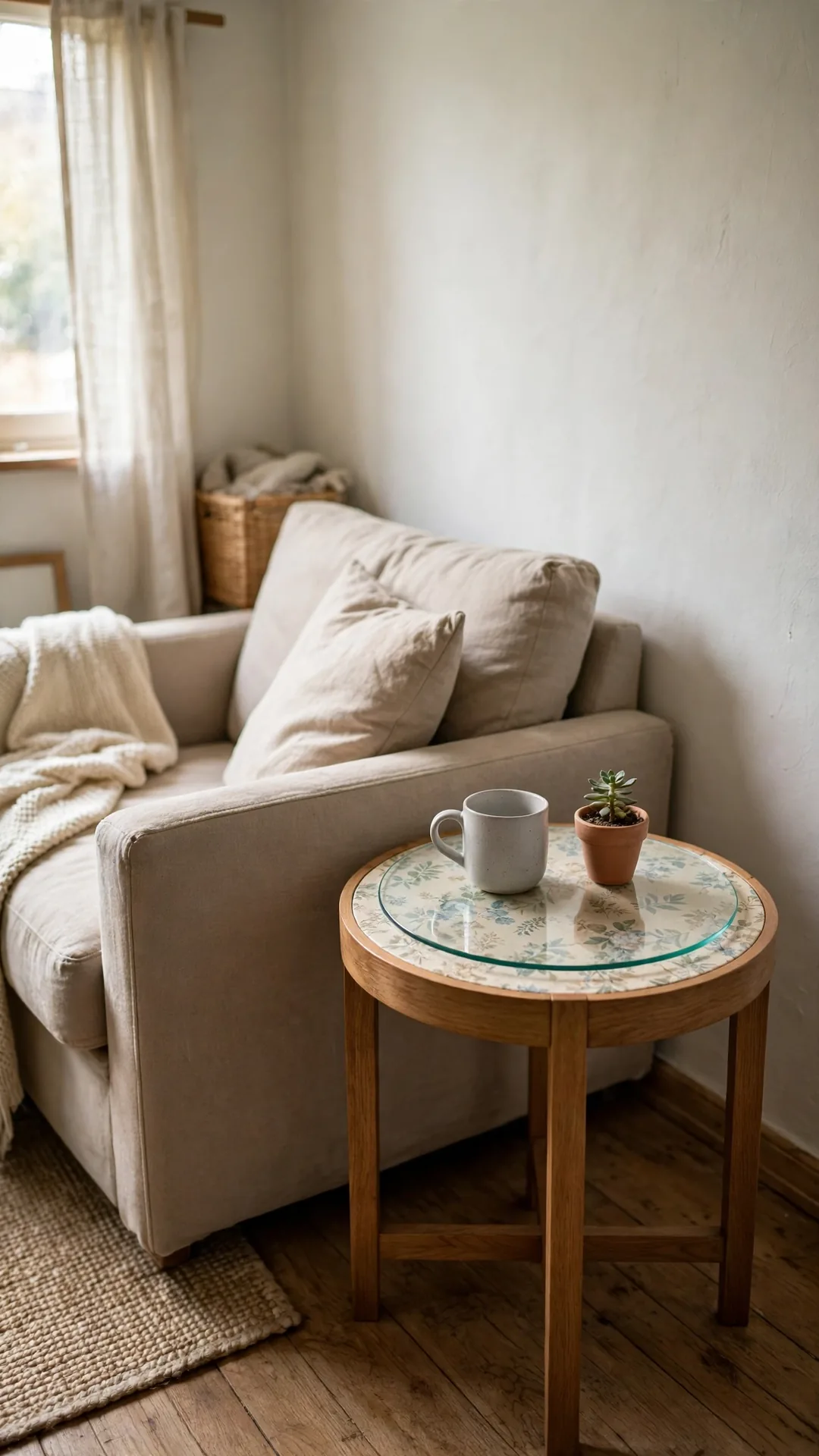
A papered table top turns an offcut into a custom piece of furniture. A glass disc on top protects the paper from cups and keys. The pattern ties the table to your papered wall nearby.
How to do it:
- Measure the table top and cut paper 1 inch wider.
- Glue the paper down and smooth out every bubble.
- Trim the edge flush with the table rim.
- Set a clear glass or acrylic disc on top.
- Keep coasters handy for hot mugs and glasses.
Best for: Plain thrifted tables that need a lift.
Budget: Under $20 with offcuts
Quick tip: Seal the paper edge with clear varnish for wear.
9. Pick Vertical Stripes for Low Ceilings
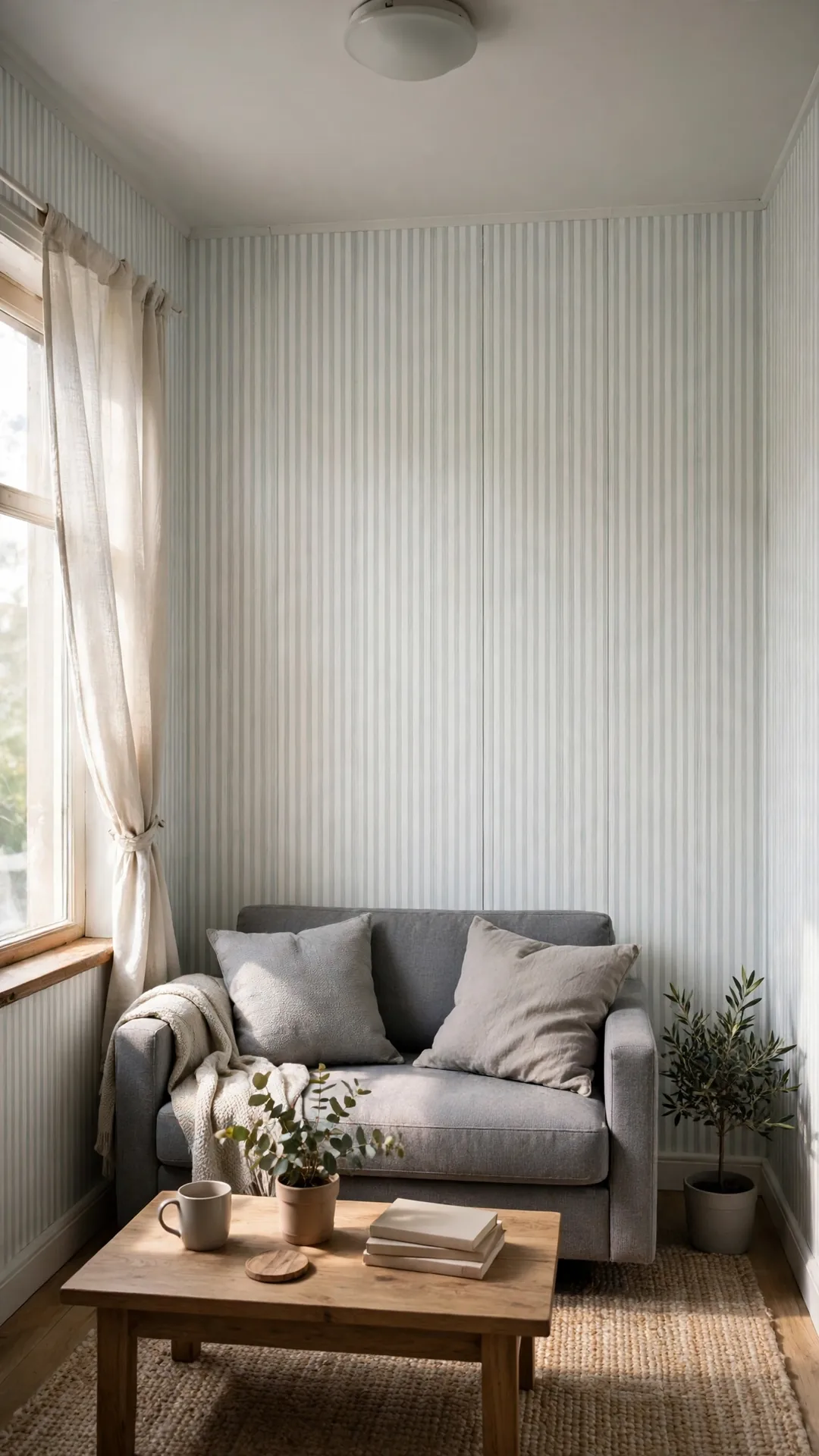
Vertical stripes pull the eye up and make low ceilings feel higher. Pale stripes keep the trick soft, so the room stays calm. Many stylists treat stripes as core small living room wallpaper ideas.
How to do it:
- Measure ceiling height and count the stripe repeat.
- Choose stripes 2 to 6 inches wide for small rooms.
- Hang the first strip plumb beside the main window.
- Match stripes carefully at every seam line.
- Paper all four walls for the full height effect.
Best for: Rooms with ceilings under 8 feet.
Budget: $90 to $220 for four walls
Quick tip: Thin pinstripes read as texture from across the room.
10. Stretch a Narrow Wall With Horizontal Stripes
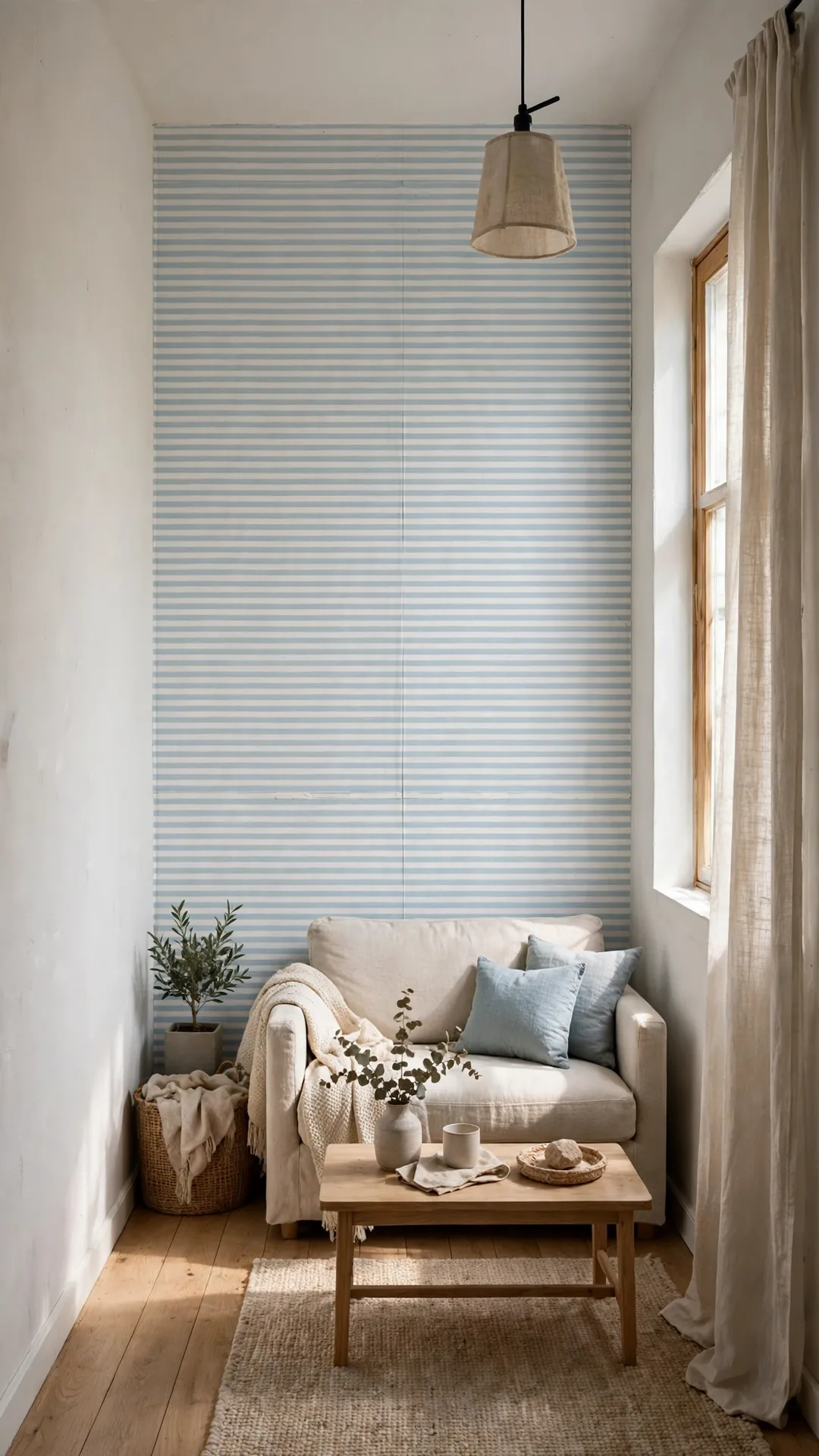
Horizontal stripes lead the eye sideways, so a short wall feels wider. Use them on the end wall of a long, narrow room. Keep the colors soft so the stretch feels gentle, not loud.
How to do it:
- Pick the shortest wall as your stripe wall.
- Choose wide stripes, about 6 to 10 inches apart.
- Hang strips level, checking with a long spirit level.
- Keep the other three walls plain and light.
- Stop stripes at the corners for a clean edge.
Best for: Long, narrow rooms that feel like hallways.
Budget: $40 to $100 for one wall
Quick tip: Wide stripes work better than thin ones here.
11. Use a Small-Scale Print on Every Wall
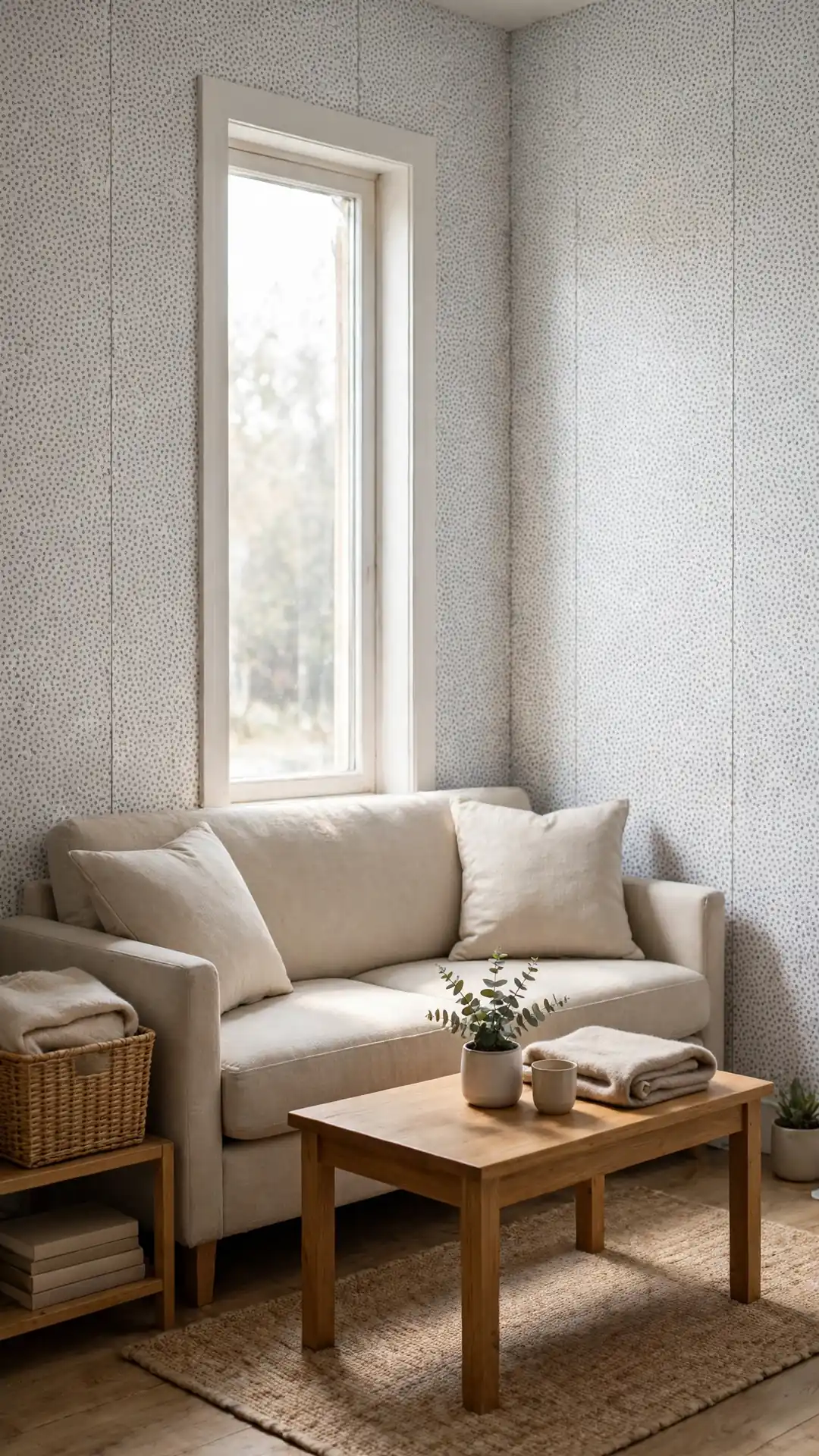
A small-scale print reads as texture once you step back. That makes it safe for all four walls in a tiny room. Dots, sprigs and tiny grids all count as small living room wallpaper ideas.
How to do it:
- Pick a repeat that is under 6 inches across.
- Choose two colors at most for the whole room.
- Order about 10 percent extra for pattern matching.
- Keep furniture plain so the walls carry the pattern.
- Hang the busiest wall last, once your eye adjusts.
Best for: Tiny rooms with plain, simple furniture.
Budget: $120 to $300 for four walls
Quick tip: Hold the sample at arm's length to judge scale.
12. Go Large-Scale on One Wall Only
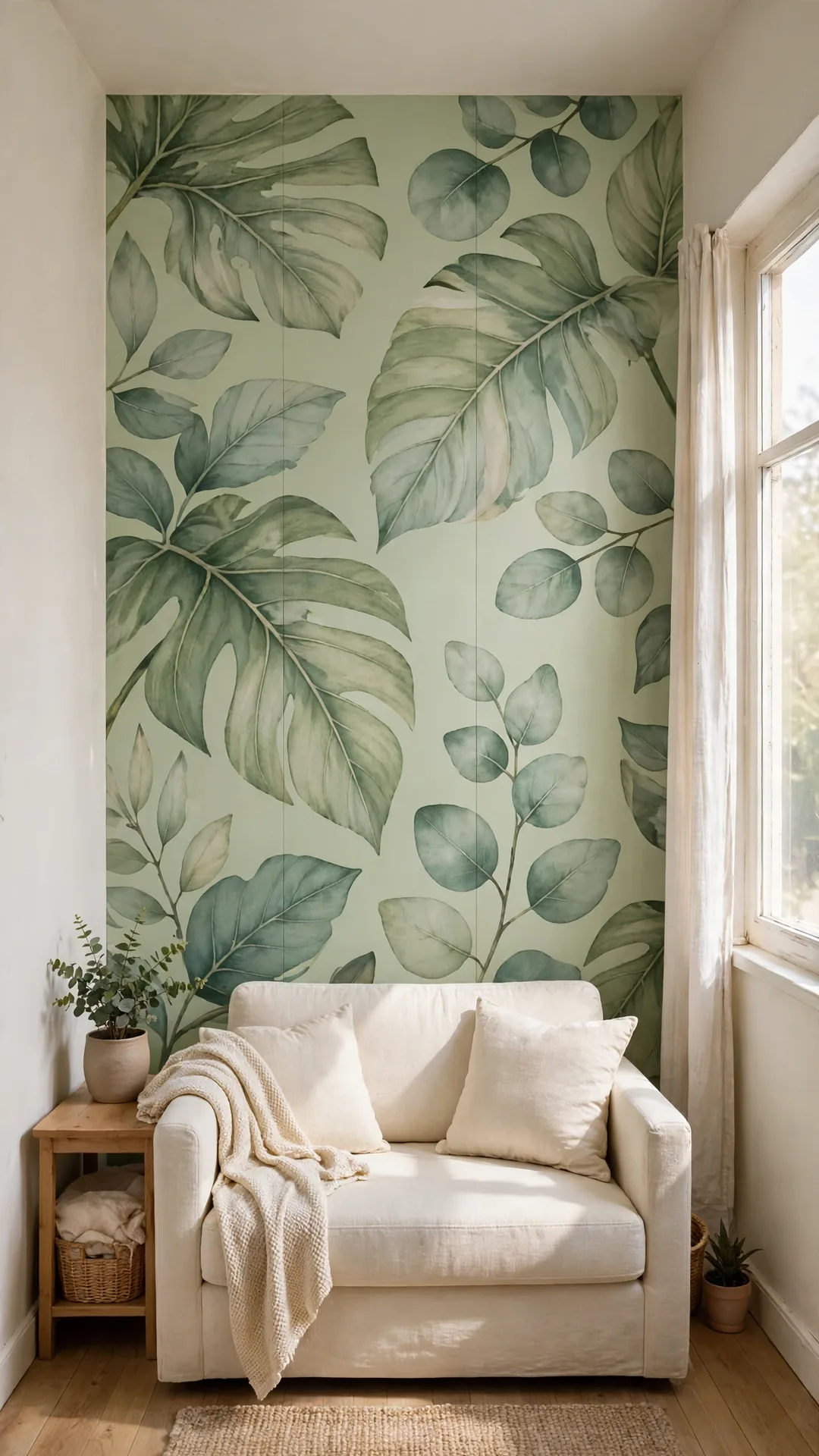
Big prints need breathing room, so give them one wall only. A large leaf or flower print turns that wall into the view. The plain walls around it keep the room feeling open.
How to do it:
- Choose the wall you see first from the doorway.
- Center the main motif at sitting eye level.
- Keep large furniture off this wall where you can.
- Order by the wall size, not by room size.
- Match repeats slowly, since big prints show errors.
Best for: One blank wall that needs a clear job.
Budget: $60 to $150 for one wall
Quick tip: Big prints can make a wall feel closer, so pick the far wall.
13. Try Tone-on-Tone Paper for Calm Walls
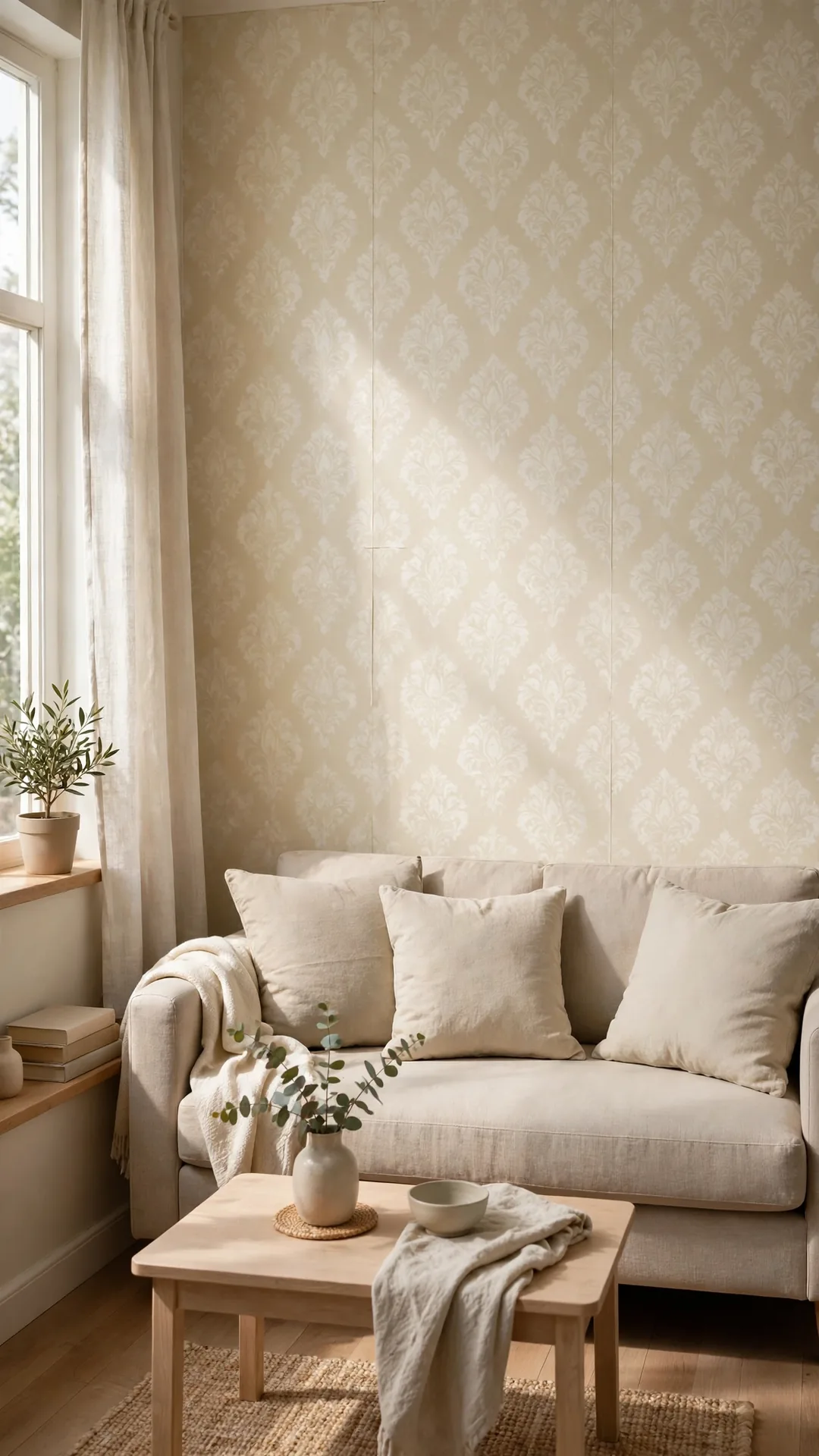
Tone-on-tone paper pairs one color with a slightly deeper shade. The pattern shows in changing light but never shouts for attention. It suits rooms where the sofa and rug already carry color.
How to do it:
- Pick a base color that matches your trim paint.
- Choose a pattern one or two shades deeper.
- Test the sample beside your sofa fabric first.
- Hang on all walls for a soft, wrapped feel.
- Add texture with cushions instead of more pattern.
Best for: Busy rooms that need quieter walls.
Budget: $100 to $260 for four walls
Quick tip: Matte and sheen mixes show the pattern best.
14. Add a Scenic Mural for Faux Depth
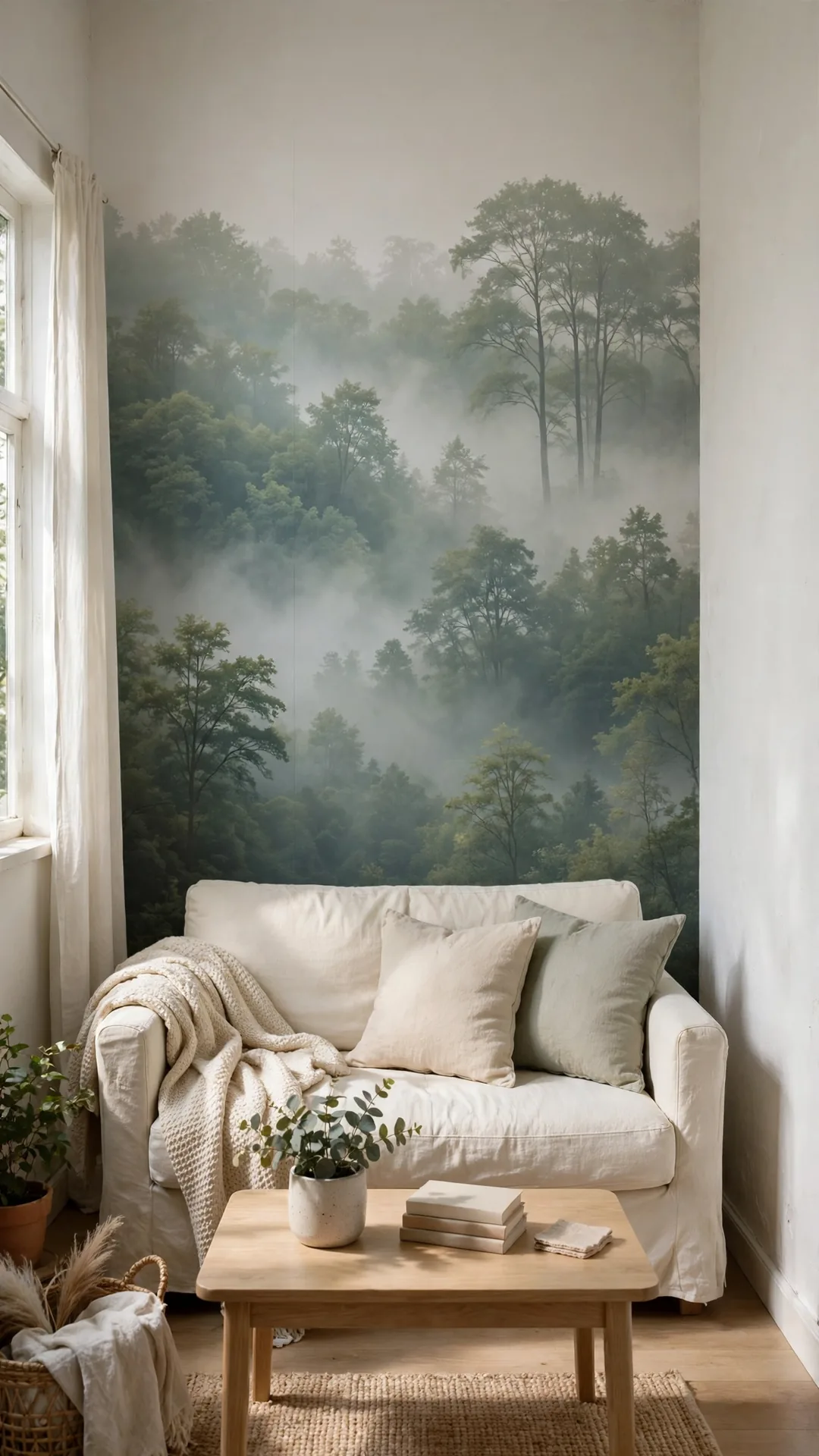
A mural fakes a view where your room has none. Misty hills or a soft forest scene push the wall back visually. Murals are bold small living room wallpaper ideas that still feel calm.
How to do it:
- Measure the wall in inches, width and height.
- Order the mural printed to your exact wall size.
- Check the scene center sits behind your sofa center.
- Hang panels in order, working left to right.
- Keep lamps low so they do not block the scene.
Best for: Rooms with no window view at all.
Budget: $120 to $300 for one wall
Quick tip: Pale, hazy scenes add more depth than dark ones.
15. Climb the Walls With a Trellis Pattern
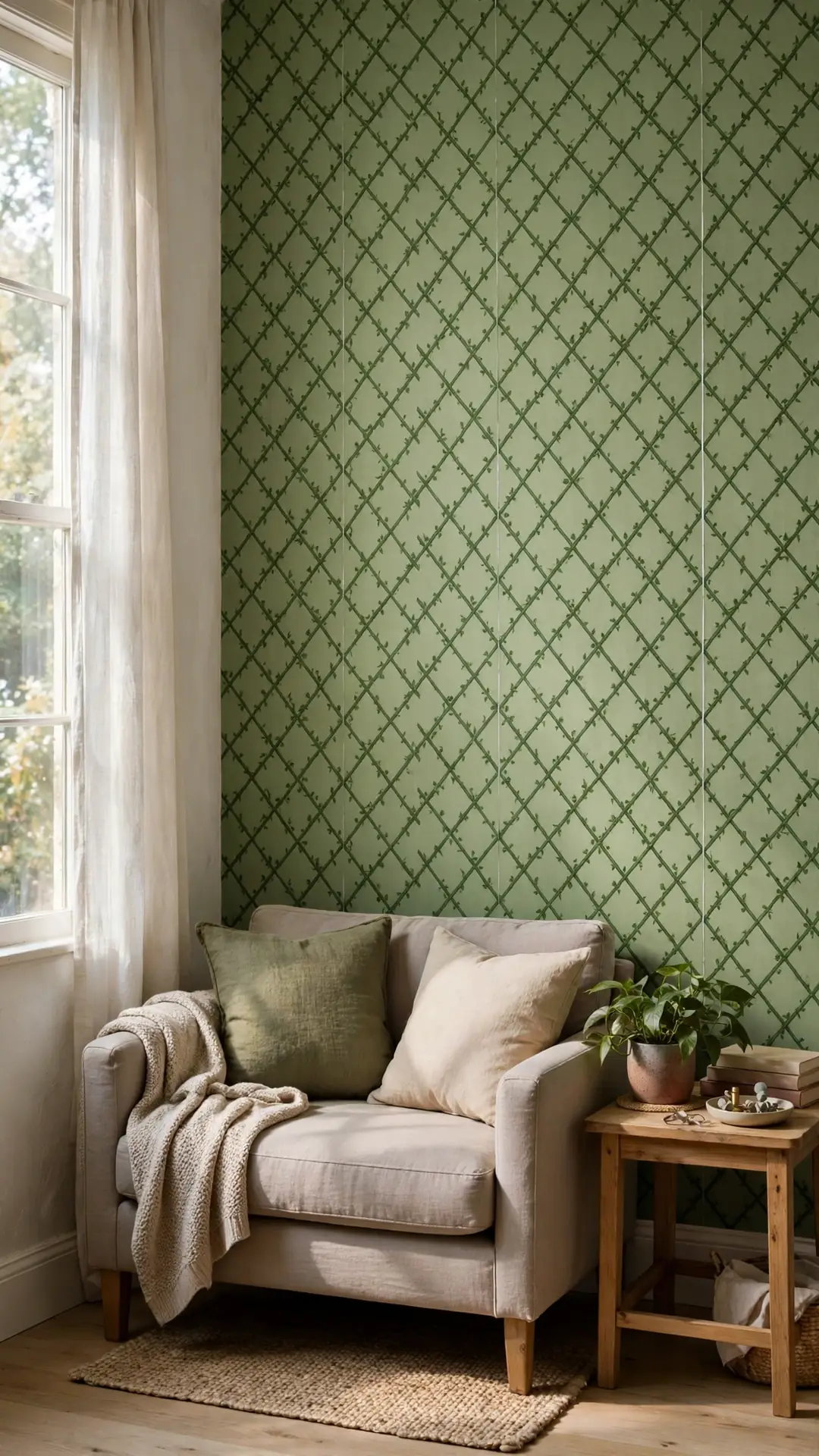
A trellis print stacks shapes upward like a garden lattice. The repeat pulls your eye to the ceiling in steady steps. Green trellis paper also brings a garden feel indoors.
How to do it:
- Choose a trellis with an open, airy repeat.
- Keep the background light so the lines stay soft.
- Start the repeat level at the top of the wall.
- Paper one or two walls, not all four.
- Pair it with plain linen cushions and wood tones.
Best for: Rooms that feel boxy and flat.
Budget: $80 to $200 for two walls
Quick tip: A white trellis on pale green reads freshest.
16. Fade Upward With an Ombre Paper
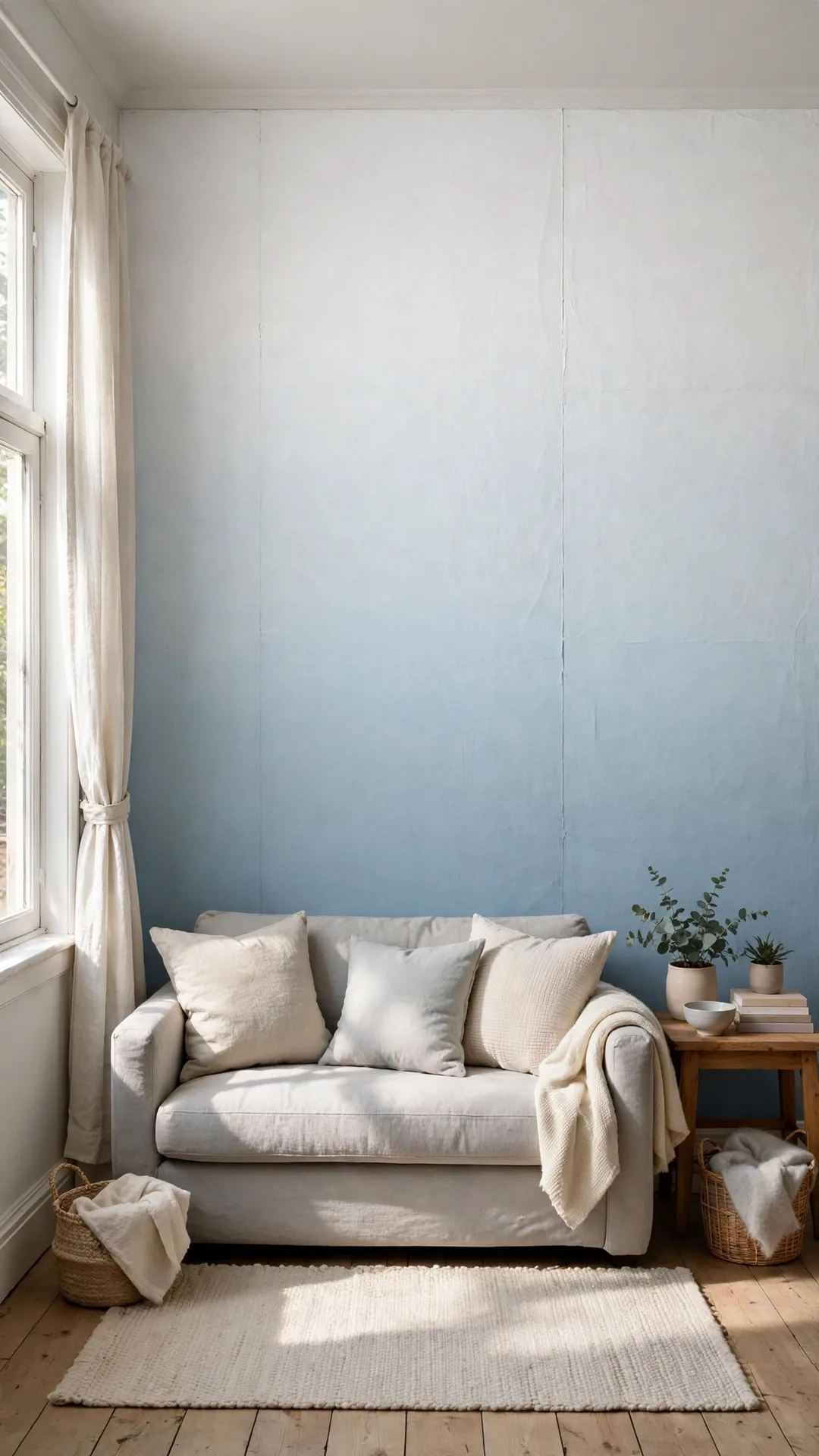
Ombre paper starts deeper at the floor and fades near the ceiling. The pale top edge makes walls feel taller and lighter. It is a gentle way to use color in a small room.
How to do it:
- Check the fade direction before you cut any strip.
- Keep the darkest band at skirting board level.
- Order all rolls from one batch for even color.
- Hang strips in order so the fade stays smooth.
- Keep the ceiling and trim plain bright white.
Best for: Rooms with heavy, dark flooring.
Budget: $70 to $160 for one wall
Quick tip: Soft blue fades feel calm behind a TV seat.
17. Choose Pale Paper to Bounce Light
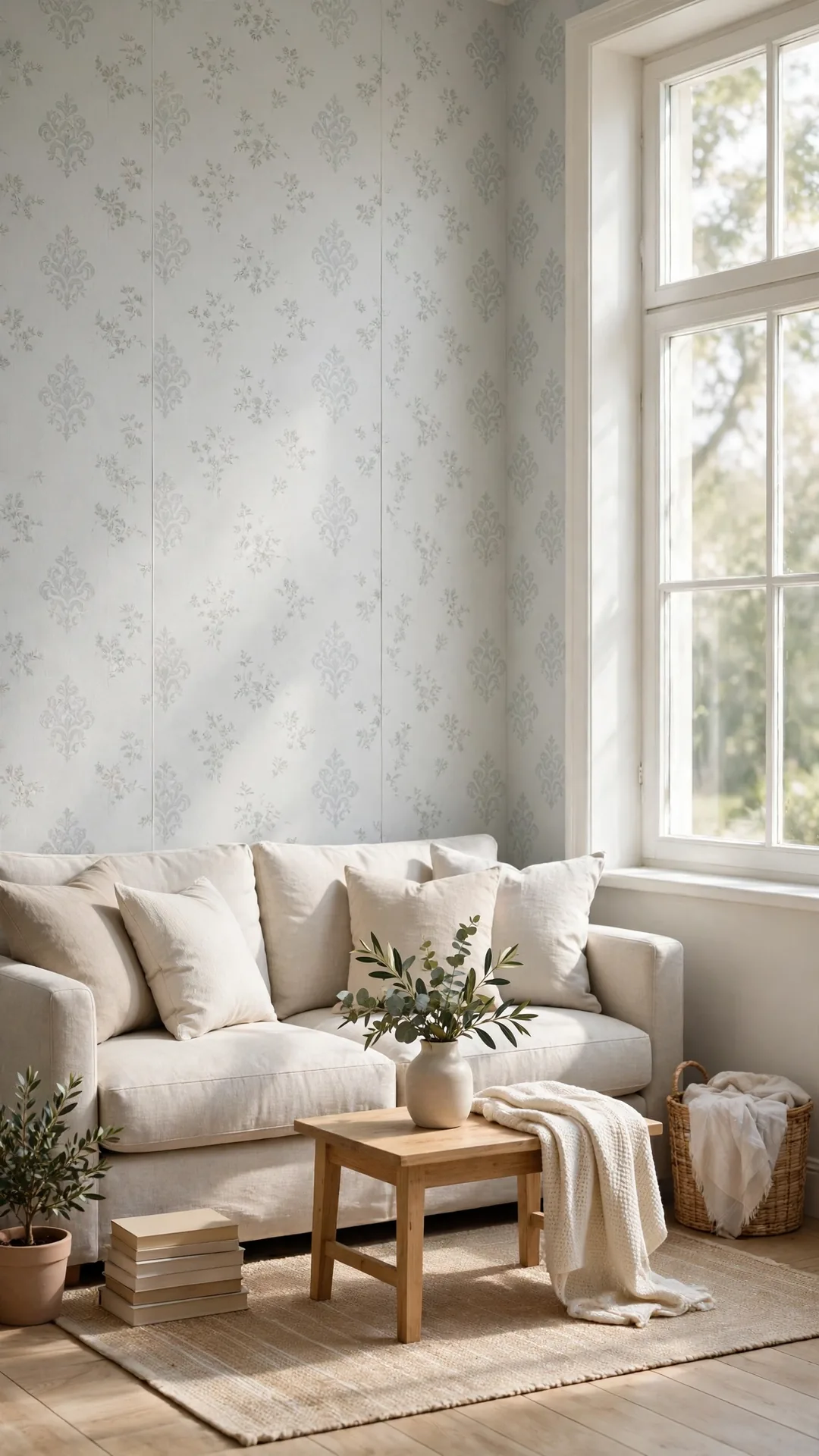
Pale paper throws window light back into the room. A faint pattern stops pale walls from feeling flat or cold. Light grounds are the backbone of small living room wallpaper ideas.
How to do it:
- Pick papers with a white or cream base color.
- Hold samples against your darkest corner first.
- Add a slight sheen finish for extra bounce.
- Paper the wall facing the window for best effect.
- Keep curtains sheer so light reaches the paper.
Best for: North-facing rooms with weak daylight.
Budget: $90 to $240 for four walls
Quick tip: A pearl finish bounces more light than matte.
18. Try One Dark Wall for Real Depth
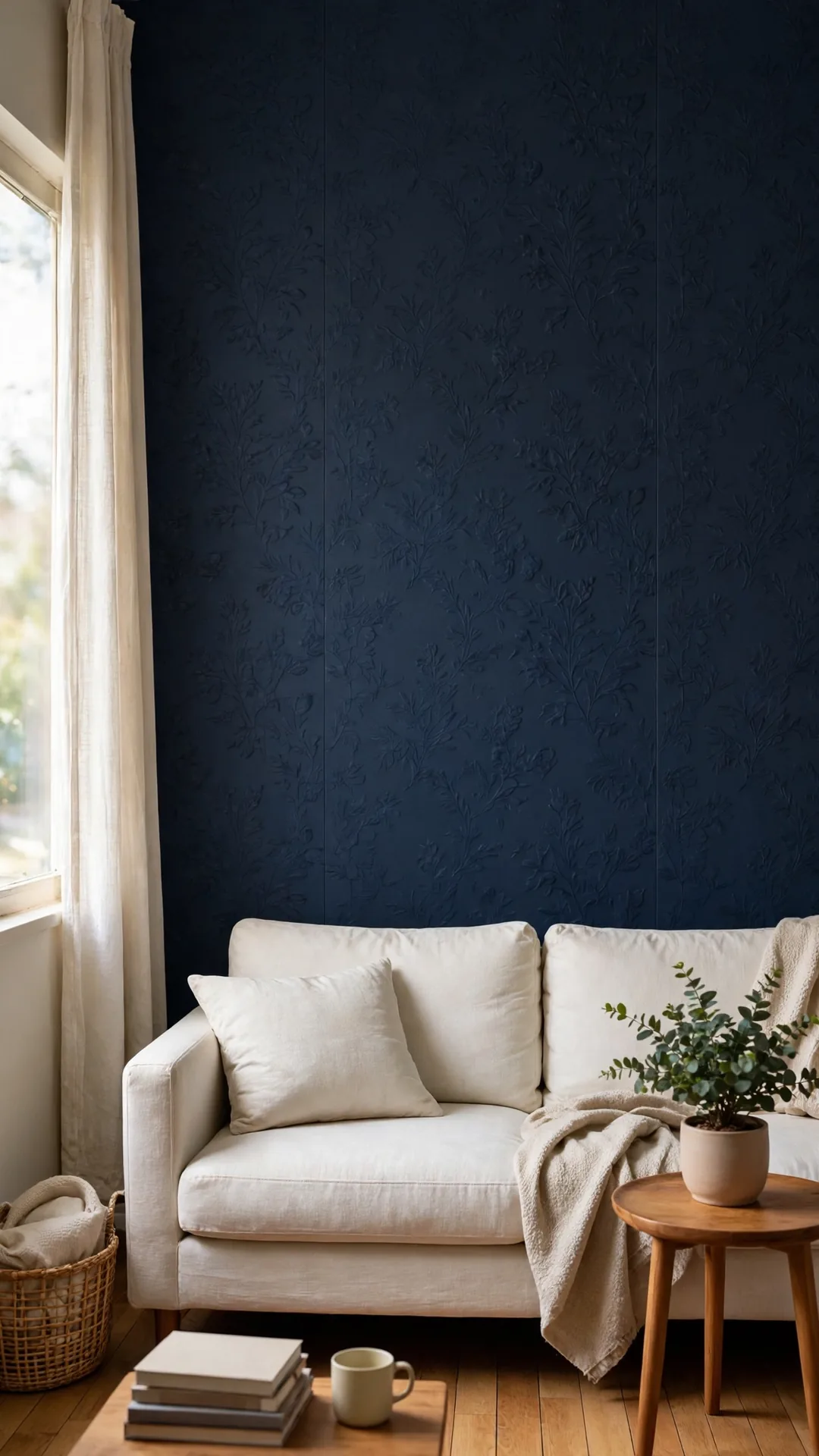
A dark papered wall can feel farther away than a pale one. Navy, forest and charcoal all add depth behind light furniture. Designers share more clever tricks to make a small living room feel bigger in the same spirit.
How to do it:
- Pick the wall behind your lightest sofa or chairs.
- Keep the other walls and ceiling bright white.
- Add one warm lamp near the dark wall.
- Choose a matte paper so the color stays rich.
- Test a large sample at night under lamp light.
Best for: Pale rooms that feel washed out.
Budget: $50 to $130 for one wall
Quick tip: Dark paper hides TV cables and scuffs well.
19. Soften the Room With Sage Botanicals
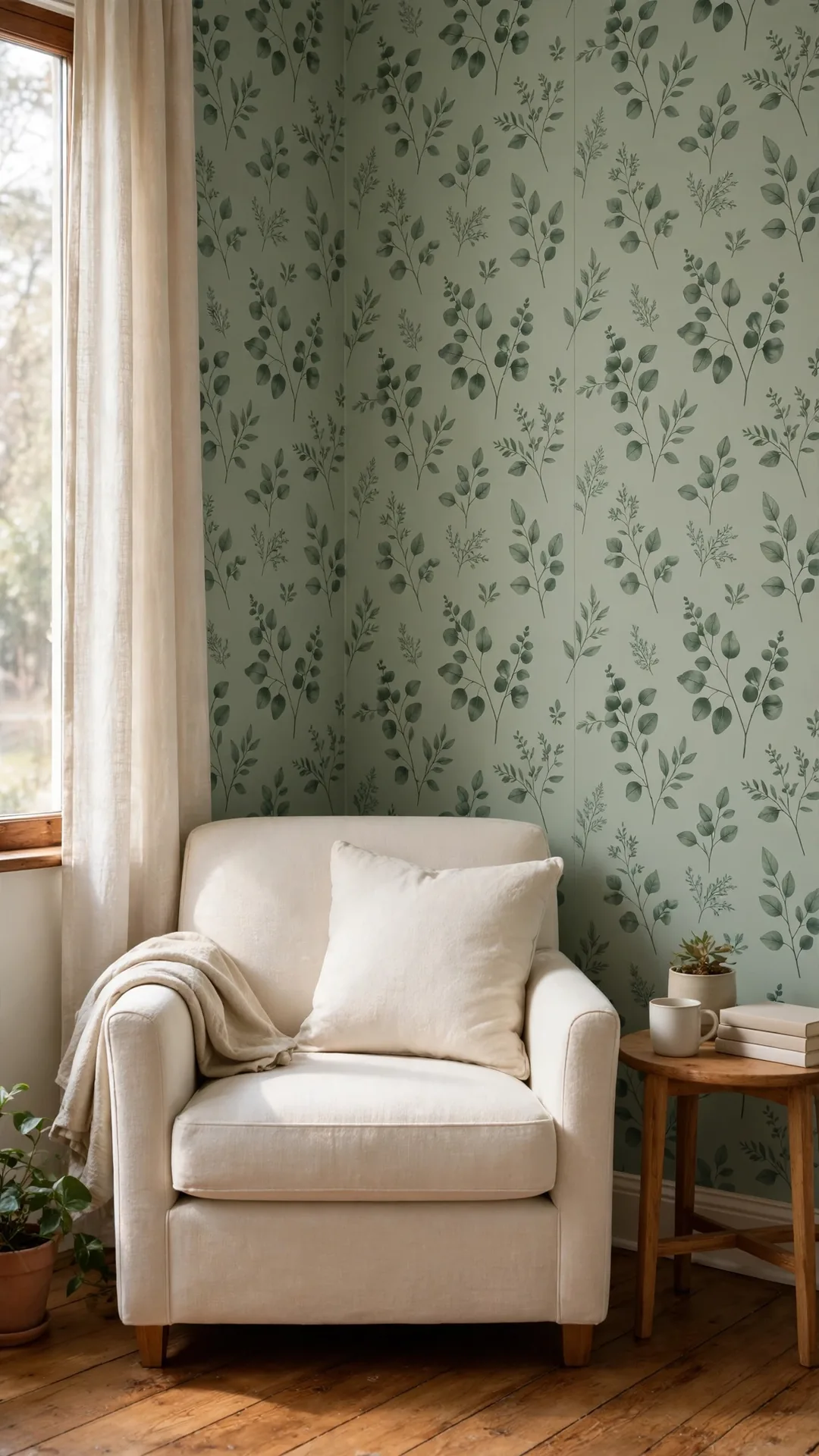
Sage green suits small rooms because it stays soft in any light. A leafy print adds life without the noise of bright color. Sage prints anchor many gentle small living room wallpaper ideas.
How to do it:
- Choose a print with plenty of white space.
- Keep leaf shapes medium, about 4 to 8 inches.
- Paper the wall behind your main seat first.
- Pair with cream, oak and rattan pieces nearby.
- Add one real plant to echo the print.
Best for: Rooms that face a garden or trees.
Budget: $60 to $150 for one wall
Quick tip: Sage hides minor seam lines better than white.
20. Catch the Light With Metallic Threads
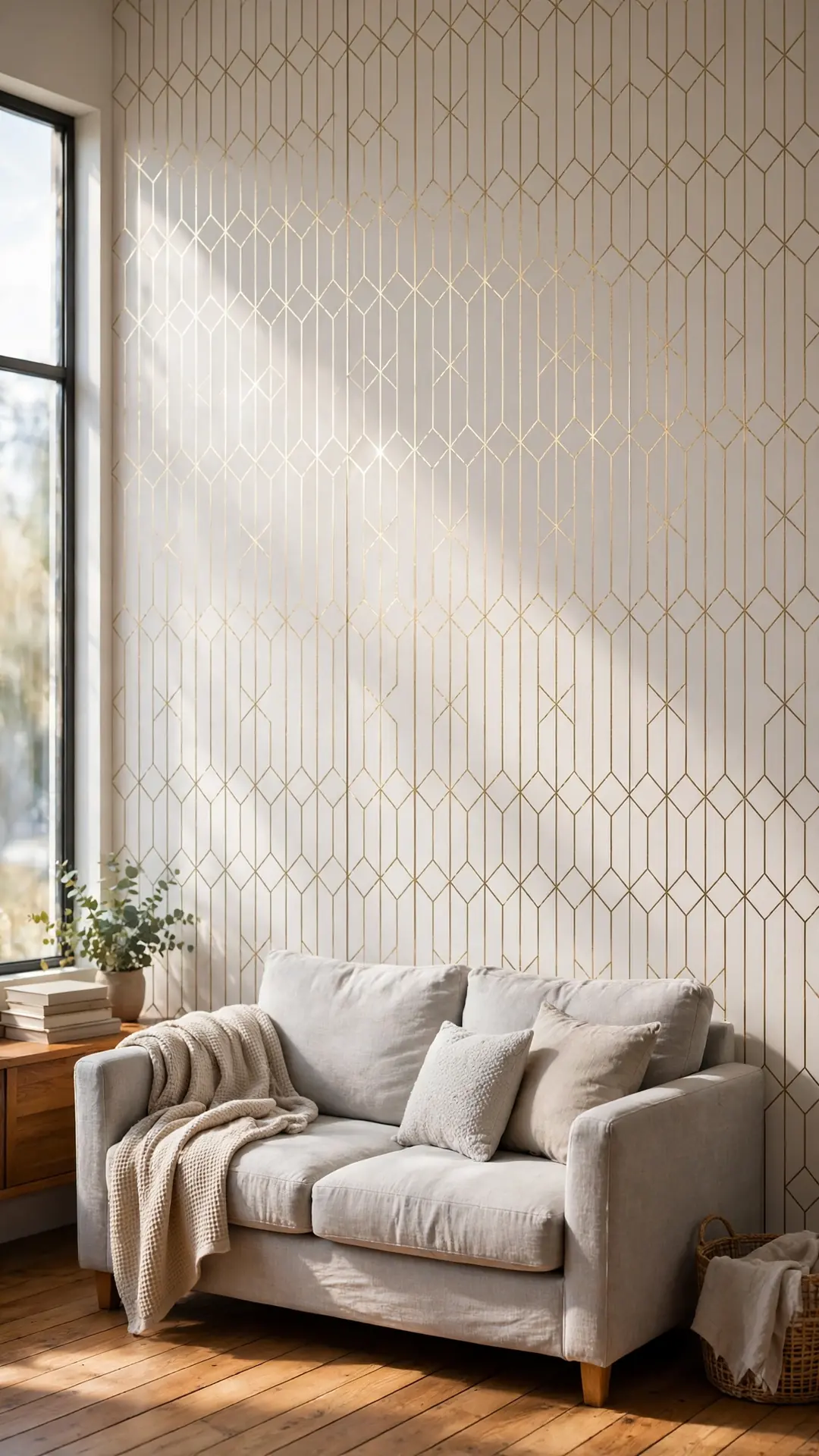
Thin metallic lines flash softly as light moves across the wall. That shimmer makes a flat wall feel deeper and richer. Keep the metal subtle, since a little shine goes far.
How to do it:
- Choose papers with lines, dots or small motifs in foil.
- Paper the wall that catches morning or evening sun.
- Avoid full foil sheets, which can glare at noon.
- Pair with matte furniture so the wall stays special.
- Wipe with a dry cloth only, never a wet one.
Best for: Dim rooms with one good light source.
Budget: $70 to $180 for one wall
Quick tip: Gold tones warm up north-facing light nicely.
21. Pick Warm White Over Stark White
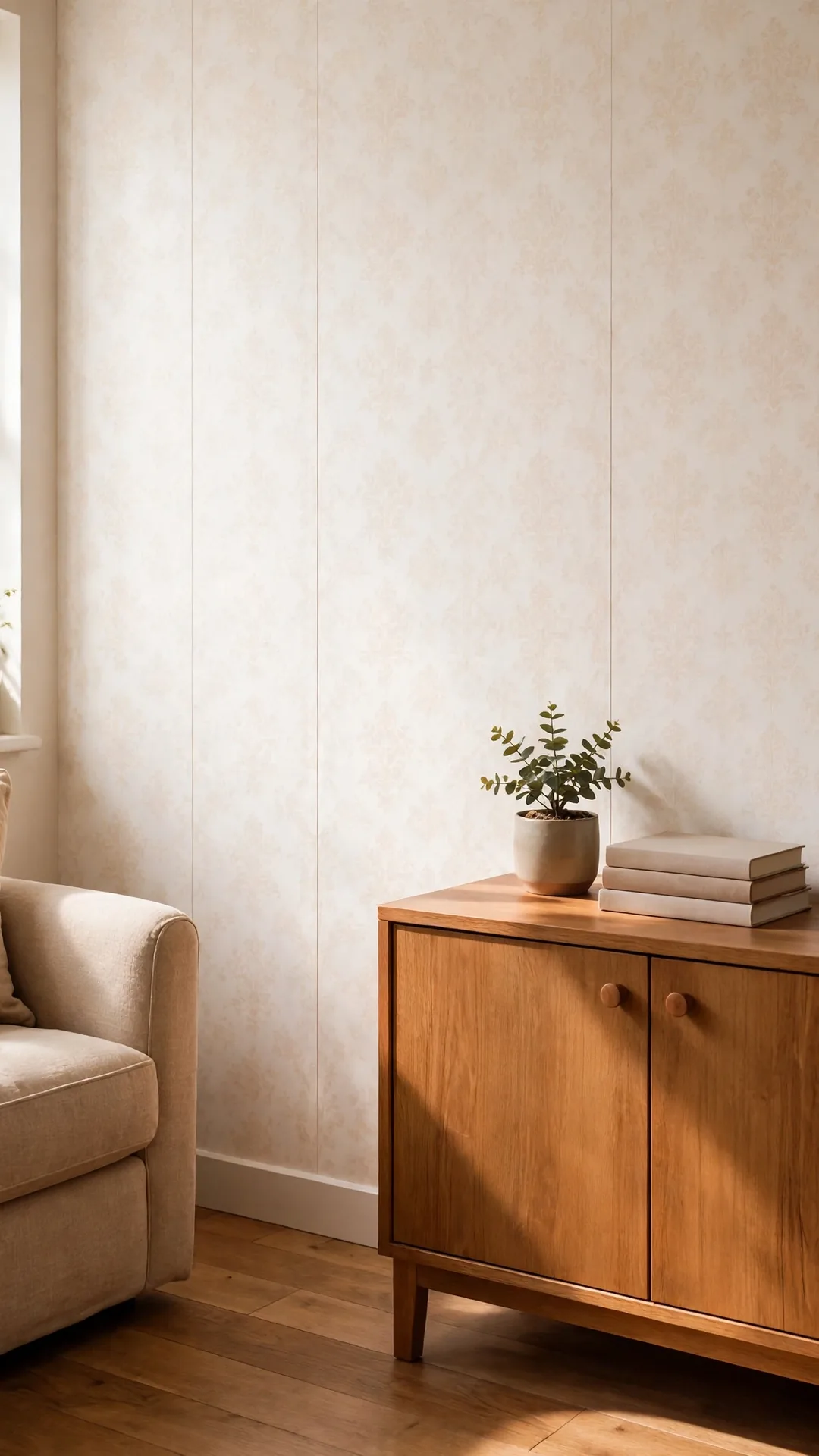
Stark white paper can feel cold under gray daylight. Warm white keeps the light bounce but adds a soft glow. A faint pattern in the same tone adds quiet detail.
How to do it:
- Compare samples against your ceiling paint chip.
- Pick whites with cream, not blue, undertones.
- Test beside wood furniture for a warm match.
- Use the same paper on all four walls.
- Keep bulbs warm white, around 2700K, for balance.
Best for: Rooms with lots of gray winter light.
Budget: $90 to $230 for four walls
Quick tip: Warm white forgives small seams and patches.
22. Calm the Room With Soft Blue Paper
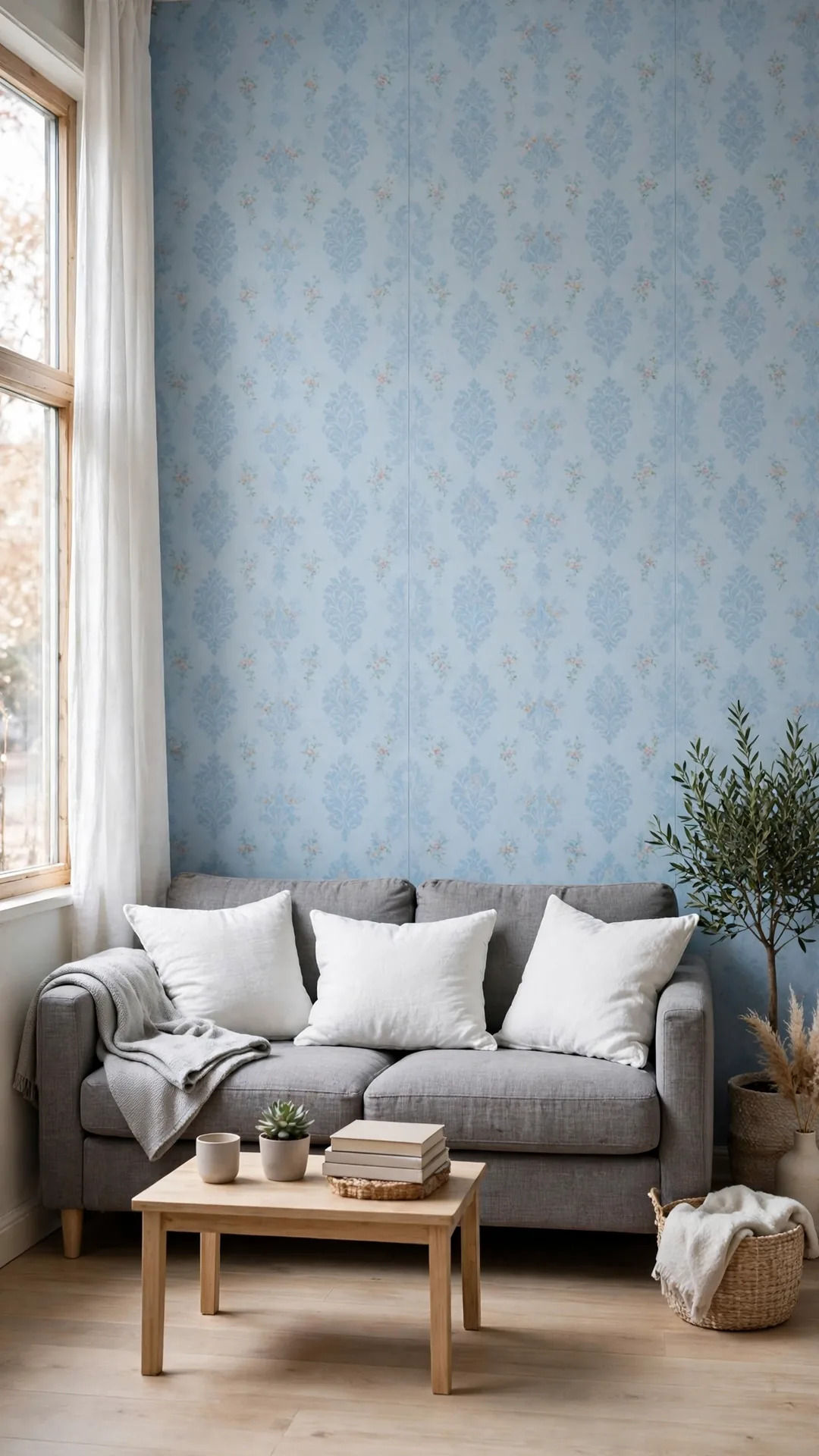
Soft blue walls feel cool, calm and open in small rooms. Blue also pairs well with gray sofas and white trim. Powder blue prints are steady small living room wallpaper ideas for renters.
How to do it:
- Pick blue with a gray base, not a bright base.
- Keep the pattern white or pale silver for calm.
- Paper the longest wall to stretch the calm across.
- Add white cushions to lift the whole scheme.
- Skip blue paper in rooms with cold blue light.
Best for: Sunny rooms that feel too warm.
Budget: $60 to $150 for one wall
Quick tip: Pale blue makes white trim look extra crisp.
23. Warm Neutral Furniture With Blush Paper
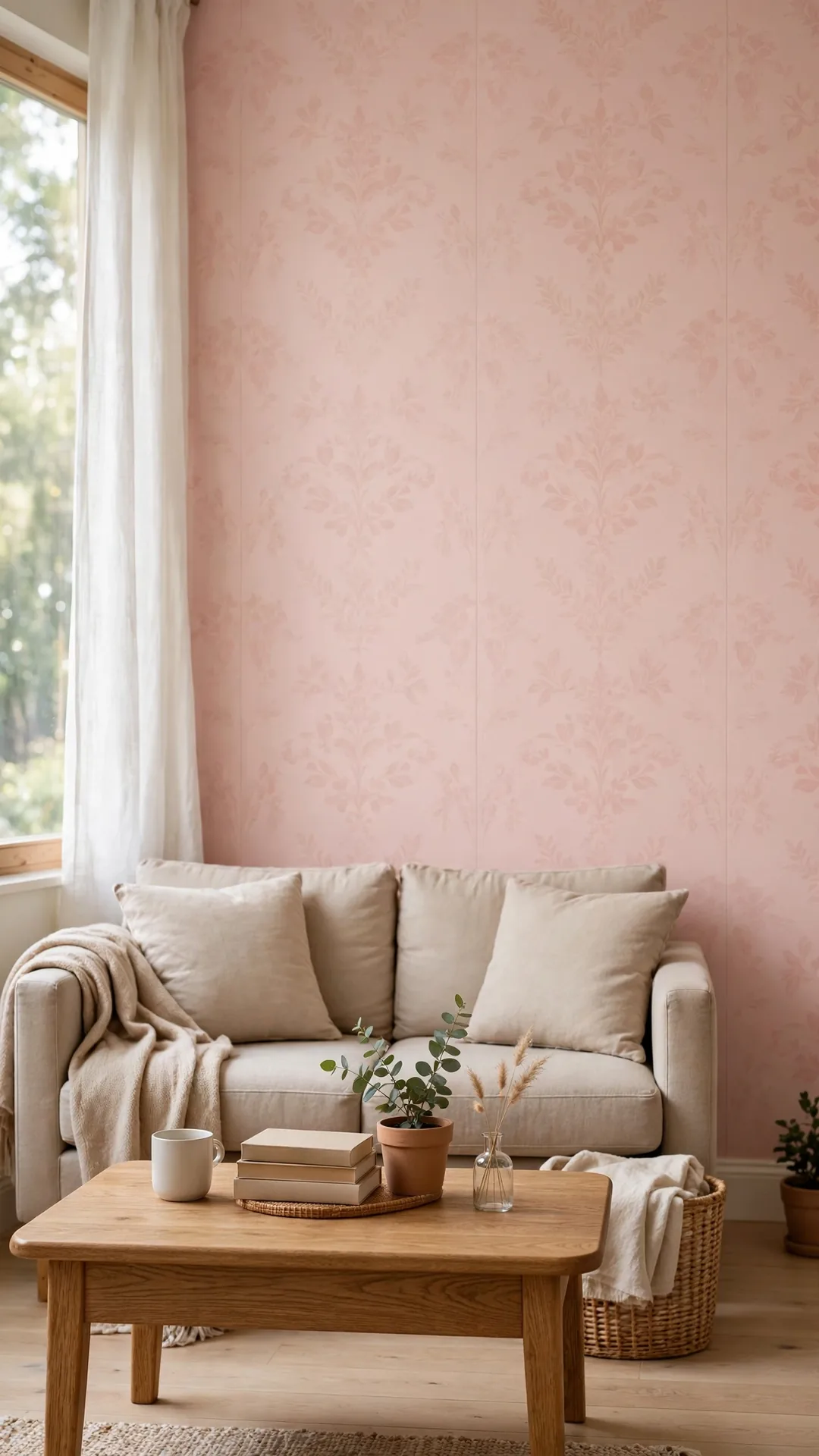
Blush paper warms up beige and gray furniture fast. The pink stays soft, so the room still reads neutral overall. It glows kindly under evening lamp light too.
How to do it:
- Choose blush with a beige base, not a candy base.
- Paper one wall behind the sofa or chairs.
- Add one deeper rose cushion to deepen the tone.
- Keep metals warm, like brass or brushed gold.
- Test the sample at night before you commit.
Best for: Gray rooms that feel a bit chilly.
Budget: $55 to $140 for one wall
Quick tip: Blush and oak are a reliable warm pair.
24. Build a Flexible Base With Gray Paper
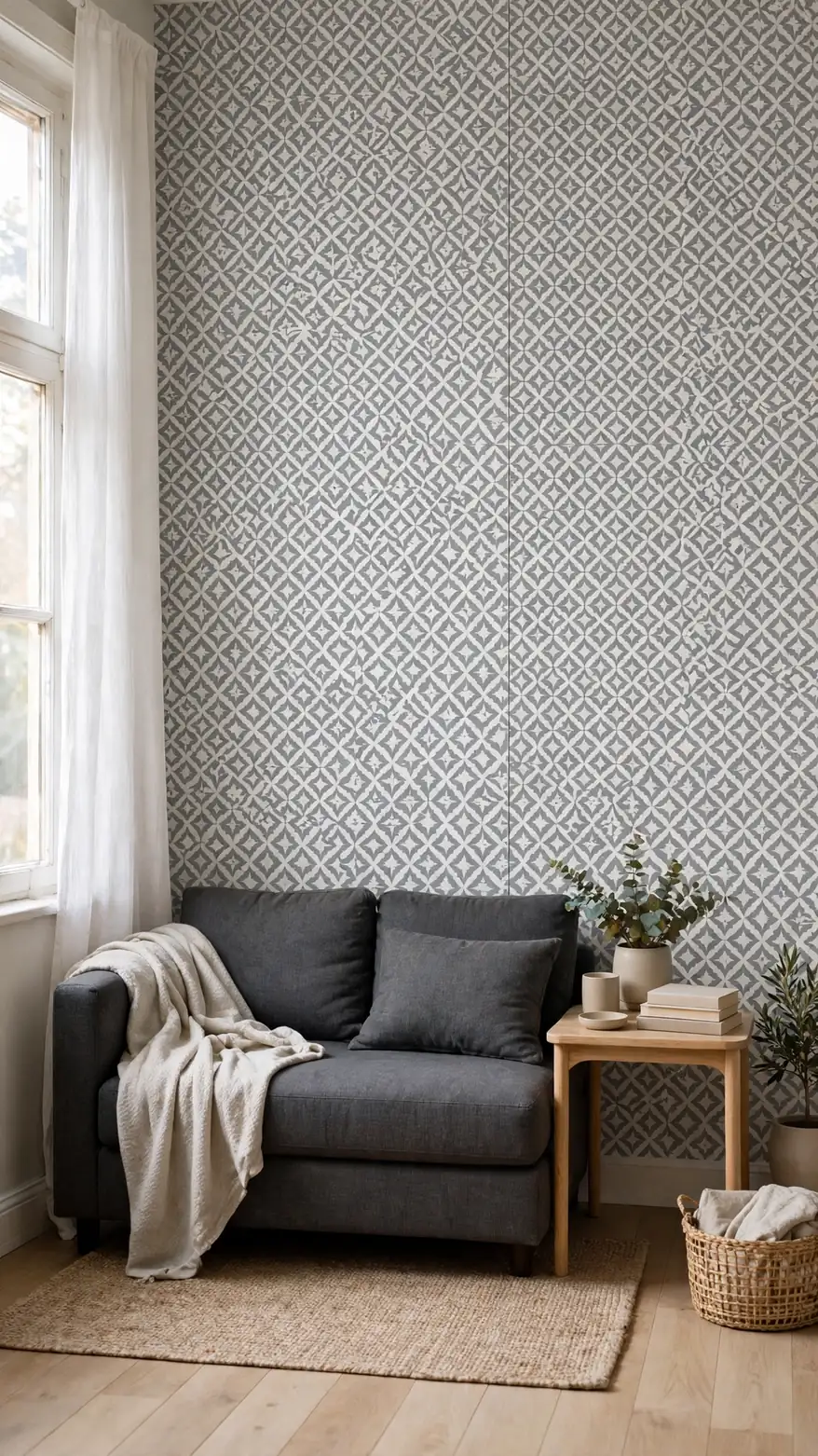
Gray paper sits happily behind almost any sofa color. A white pattern on gray keeps the wall light but defined. It is a safe base if you swap cushions often.
How to do it:
- Pick a mid gray if your sofa is pale.
- Pick pale gray if your sofa is dark.
- Keep the pattern simple, like a grid or sprig.
- Paper two facing walls for balance in square rooms.
- Add color with art, plants and throws instead.
Best for: Renters who change decor with the seasons.
Budget: $80 to $200 for two walls
Quick tip: Gray paper makes colorful art pop harder.
25. Fake Exposed Brick With a Printed Roll
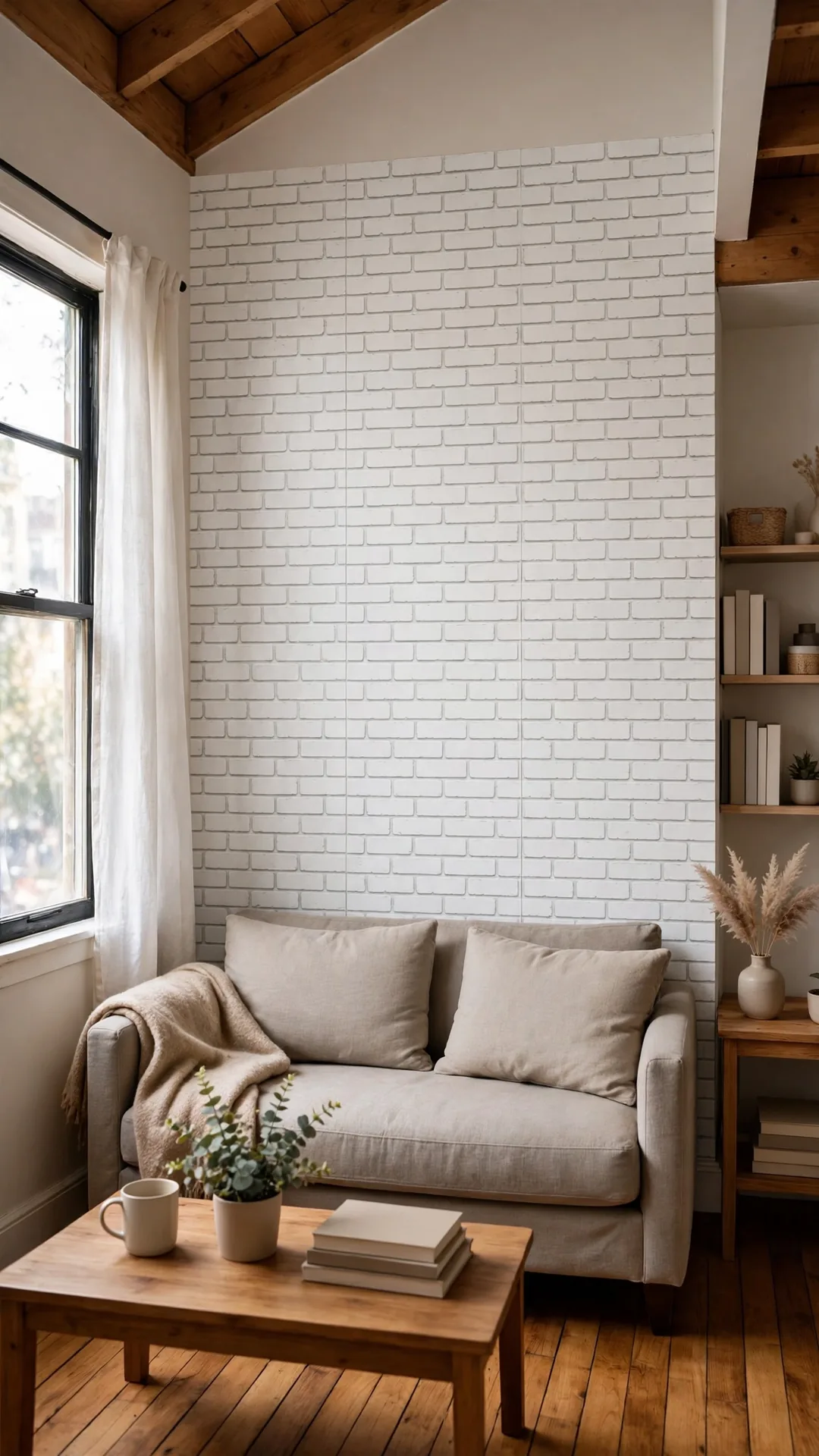
Brick print adds texture that a flat wall cannot give. White or pale brick keeps the look light in small rooms. Good prints are among the most copied small living room wallpaper ideas.
How to do it:
- Choose prints with soft shadows, not harsh black lines.
- Check the brick size looks true, about 8 inches long.
- Paper one wall, since brick gets busy fast.
- Align mortar lines level across every seam.
- Add real texture nearby, like a woven throw.
Best for: Plain new-build rooms with no features.
Budget: $45 to $120 for one wall
Quick tip: Matte prints look far more real than glossy ones.
26. Add Warmth With Grasscloth Texture
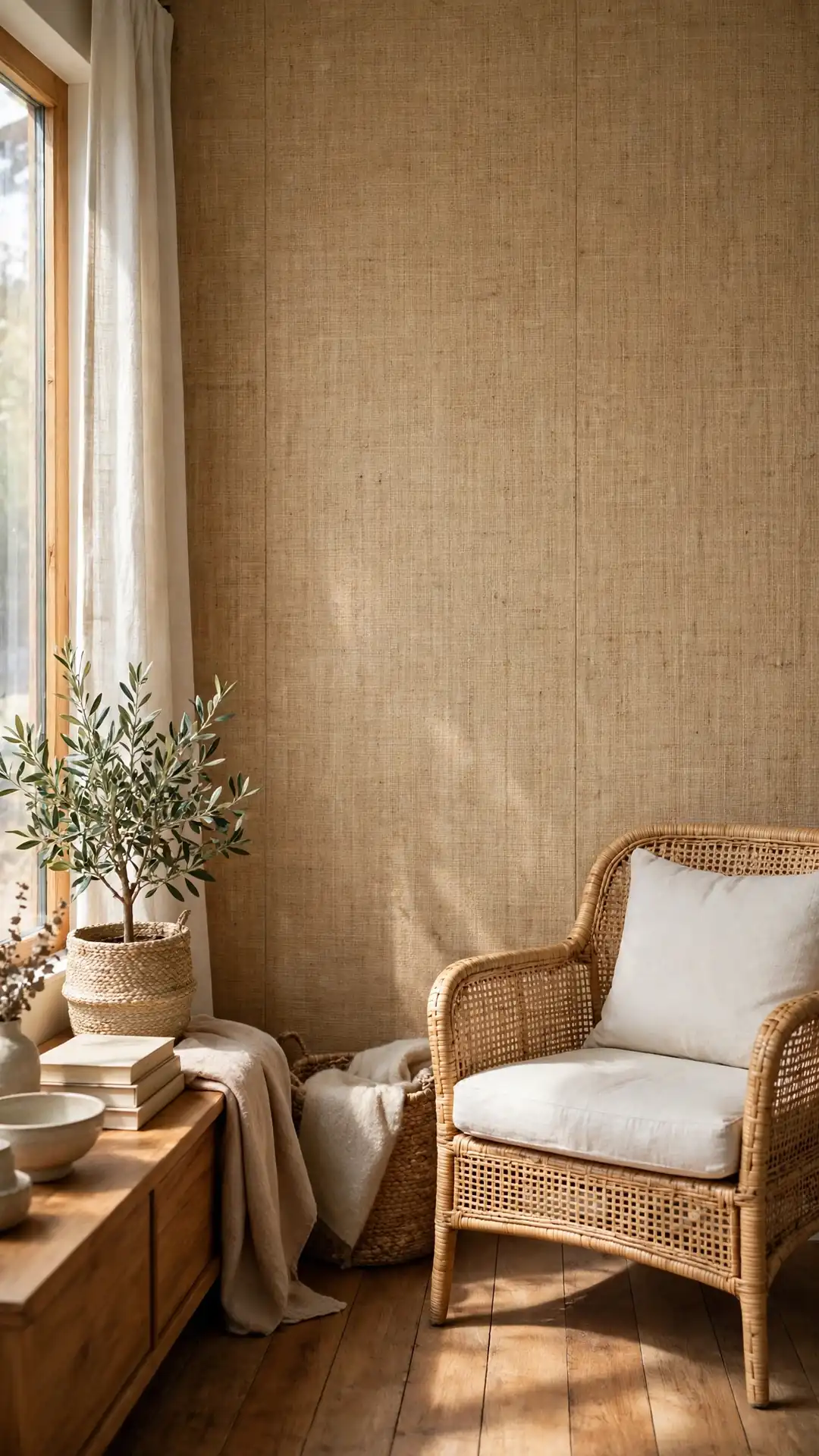
Grasscloth brings real woven texture to a flat wall. The natural fibers soften echoes and hard corners in small rooms. Dyed pale shades keep the texture light and calm.
How to do it:
- Pick vinyl grasscloth if you need easy cleaning.
- Expect visible seams, since real grasscloth shows them.
- Paste the wall, not the paper, for real grasscloth.
- Keep it away from damp walls and radiators.
- Pair with wood, rattan and linen pieces nearby.
Best for: Quiet rooms that feel a bit echoey.
Budget: $90 to $240 for one wall
Quick tip: Seams are normal with grasscloth, not a flaw.
27. Fake Wood Panels With Printed Paper
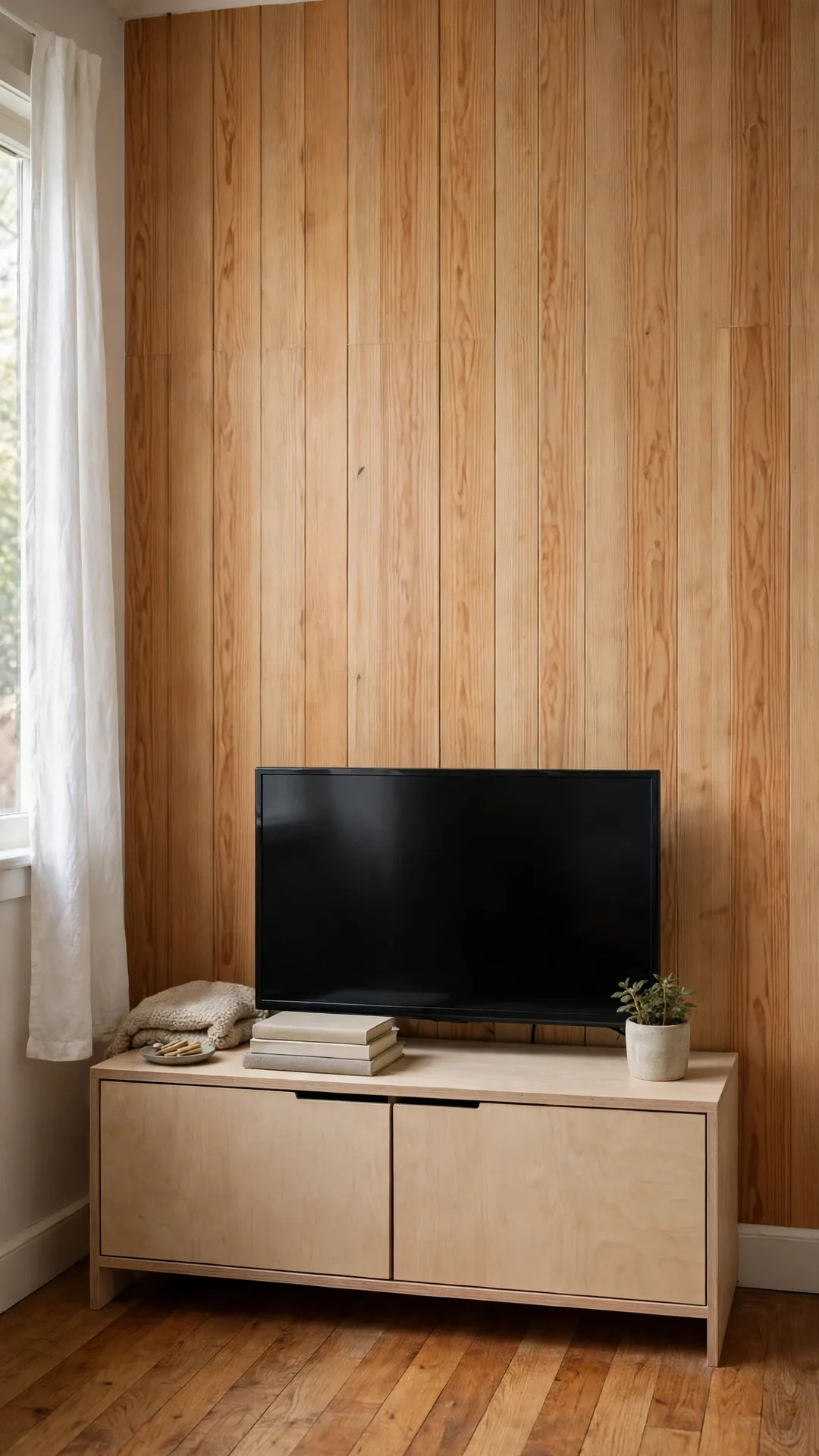
Panel print paper copies the look of wood wall panels for far less. It adds structure to plain walls behind a media unit. Pale oak prints keep the effect light and modern.
How to do it:
- Measure your wall so panel widths divide evenly.
- Center one printed panel on the TV or sofa.
- Keep vertical lines plumb at every seam.
- Add a real wood shelf to sell the effect.
- Skip dark walnut prints in windowless rooms.
Best for: Renters who want a panelled look.
Budget: $50 to $130 for one wall
Quick tip: Pale wood prints suit small rooms best.
28. Soften Walls With a Linen-Look Paper
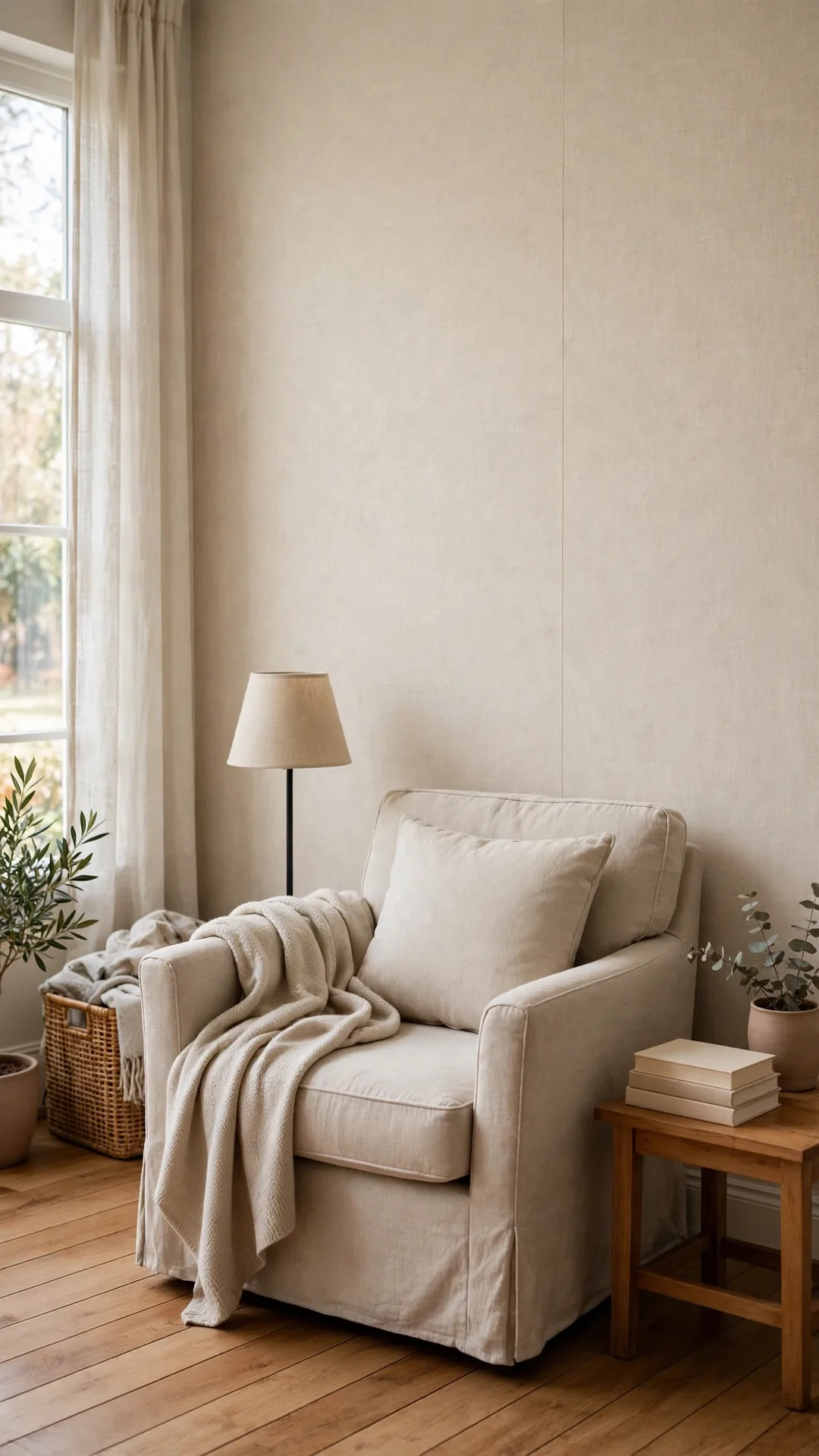
Linen-look paper adds a woven feel with none of the fabric fuss. The fine texture catches light softly and hides minor wall flaws. It suits calm small living room wallpaper ideas that favor texture.
How to do it:
- Choose beige, stone or pale gray colorways.
- Run your hand over a sample to check the weave.
- Paper all walls for a wrapped, fabric feel.
- Keep patterns elsewhere simple and plain.
- Add one chunky knit throw to echo the weave.
Best for: Walls with small bumps and old patches.
Budget: $85 to $220 for four walls
Quick tip: Linen looks hide scuffs better than flat paper.
29. Keep It Classic With Subtle Damask
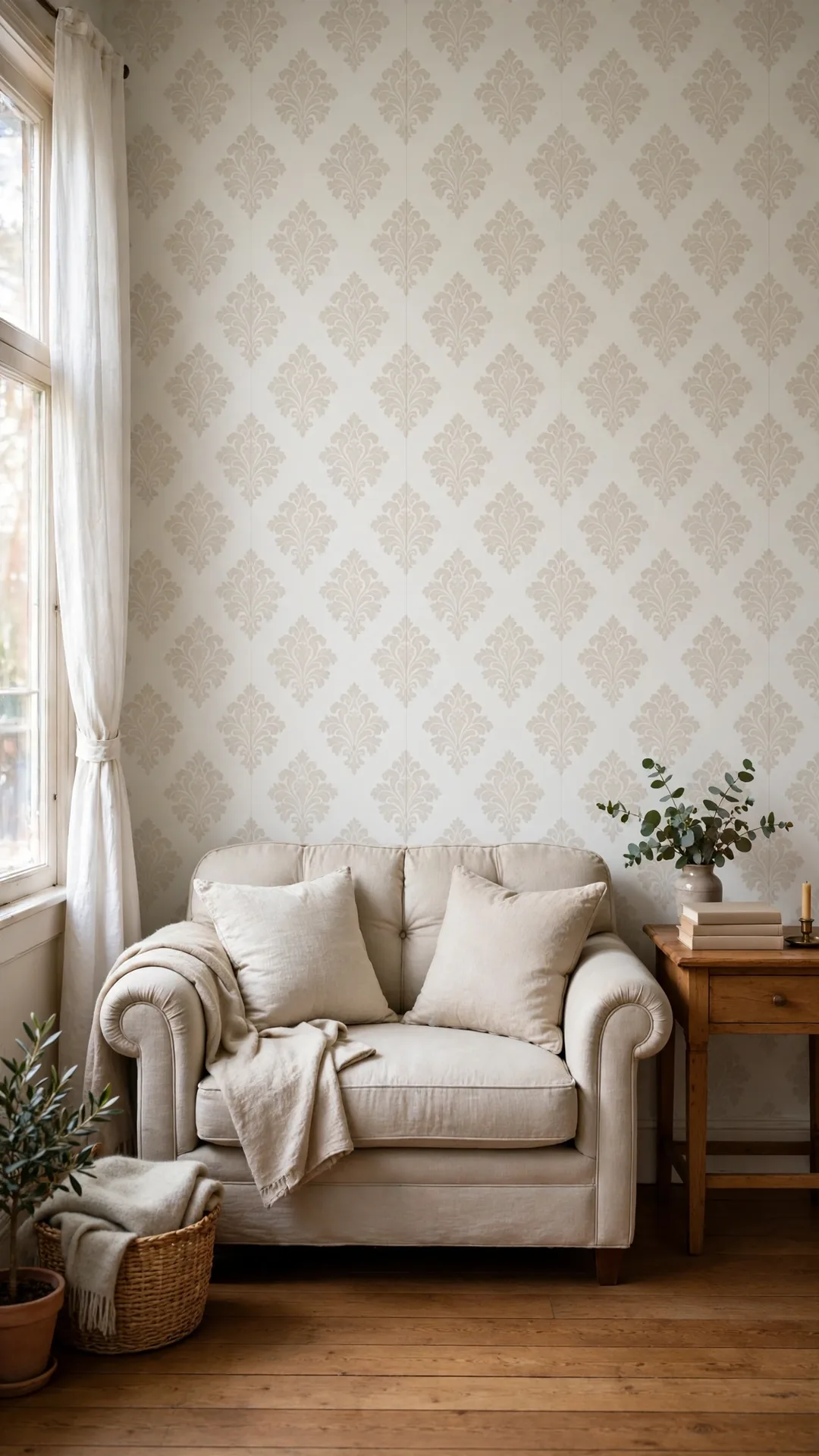
A pale damask gives a small room a classic, finished feel. Keep the contrast low so the motif stays gentle. It works well in older homes with period trim.
How to do it:
- Pick damask in two close tones, like cream on white.
- Keep the motif under 12 inches tall for small rooms.
- Paper the sofa wall or all walls in tiny rooms.
- Match with plain cushions in one accent color.
- Align the motif center with the sofa center.
Best for: Older homes with crown molding and trim.
Budget: $70 to $170 for one wall
Quick tip: Low contrast damask reads as texture, not fuss.
30. Back Shelves With a Marble Print
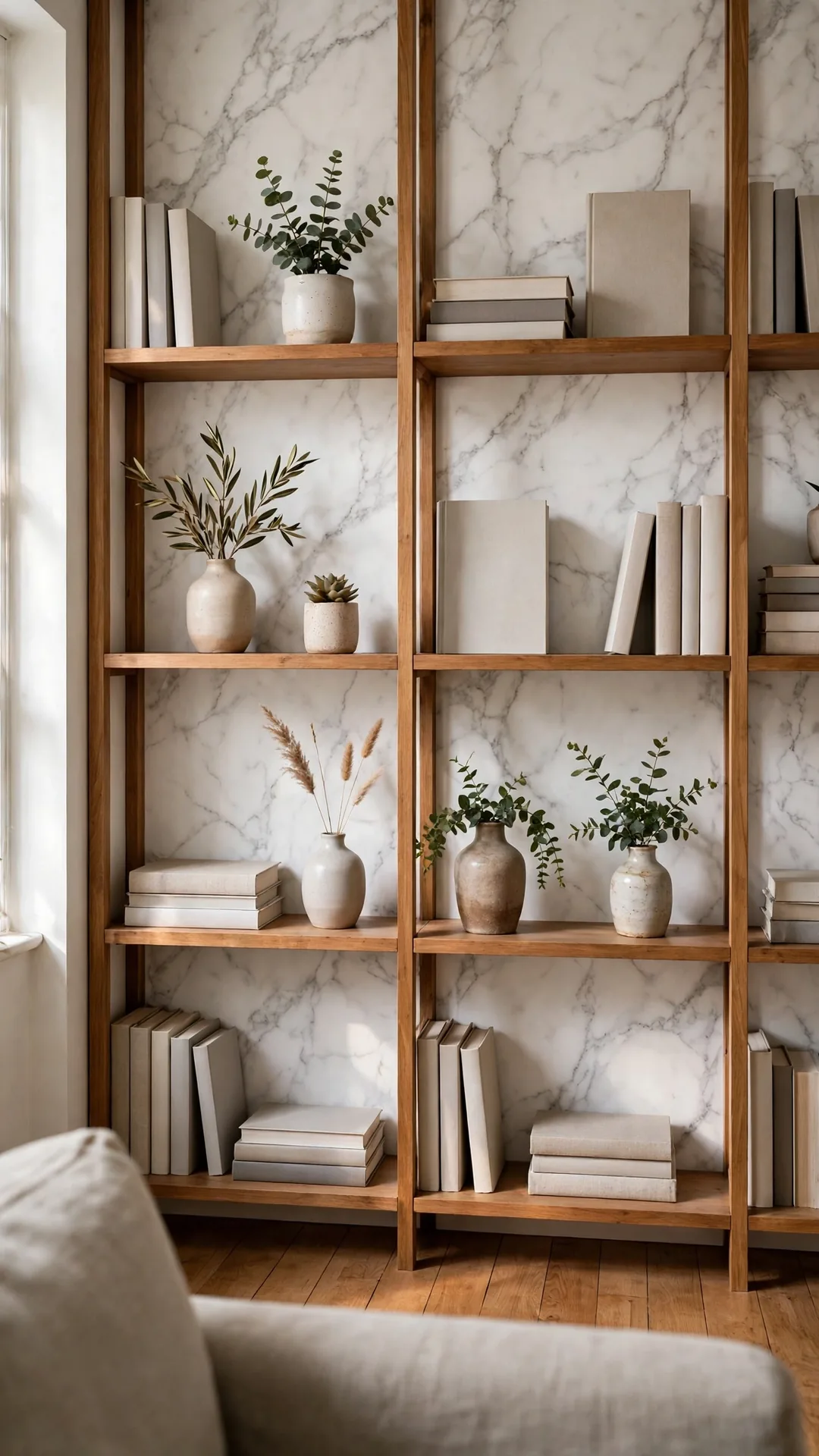
Marble print behind open shelves looks pricey for very little money. The pale stone pattern keeps shelves bright and shows off objects. Use offcuts if your shelf wall is narrow.
How to do it:
- Measure the wall strip behind your shelf unit.
- Pick soft gray veining, not bold black veins.
- Paper the strip before you mount the shelves.
- Leave 2 inches of paper spare at each edge.
- Style shelves with space between objects for air.
Best for: Plain shelf walls that look unfinished.
Budget: $25 to $70 for one strip
Quick tip: Matte marble print avoids a fake shiny look.
31. Warm a Reading Corner With Cork Paper
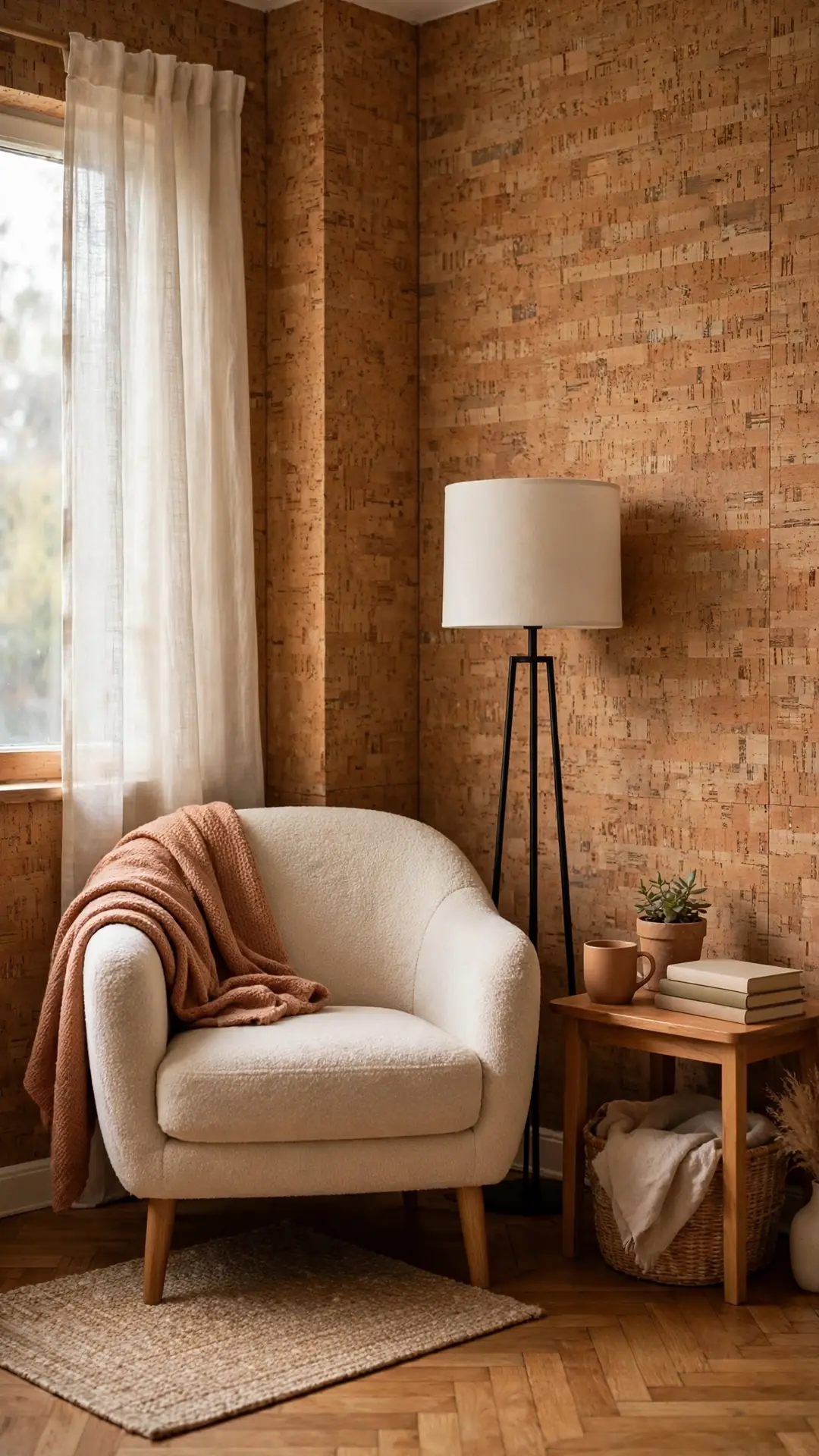
Cork-look paper brings warm brown texture to a quiet corner. Real cork paper also softens sound a little in echoey rooms. It turns a spare corner into one of the coziest small living room wallpaper ideas.
How to do it:
- Measure both walls of the corner you read in.
- Pick thin cork veneer paper for easy cutting.
- Add a warm floor lamp to light the texture.
- Keep the chair pale so the corner stays open.
- Pin nothing into real cork paper without testing first.
Best for: One empty corner near a window.
Budget: $40 to $100 for one corner
Quick tip: Cork tones pair well with cream and camel.
32. Copy Old Plaster With an Effect Paper
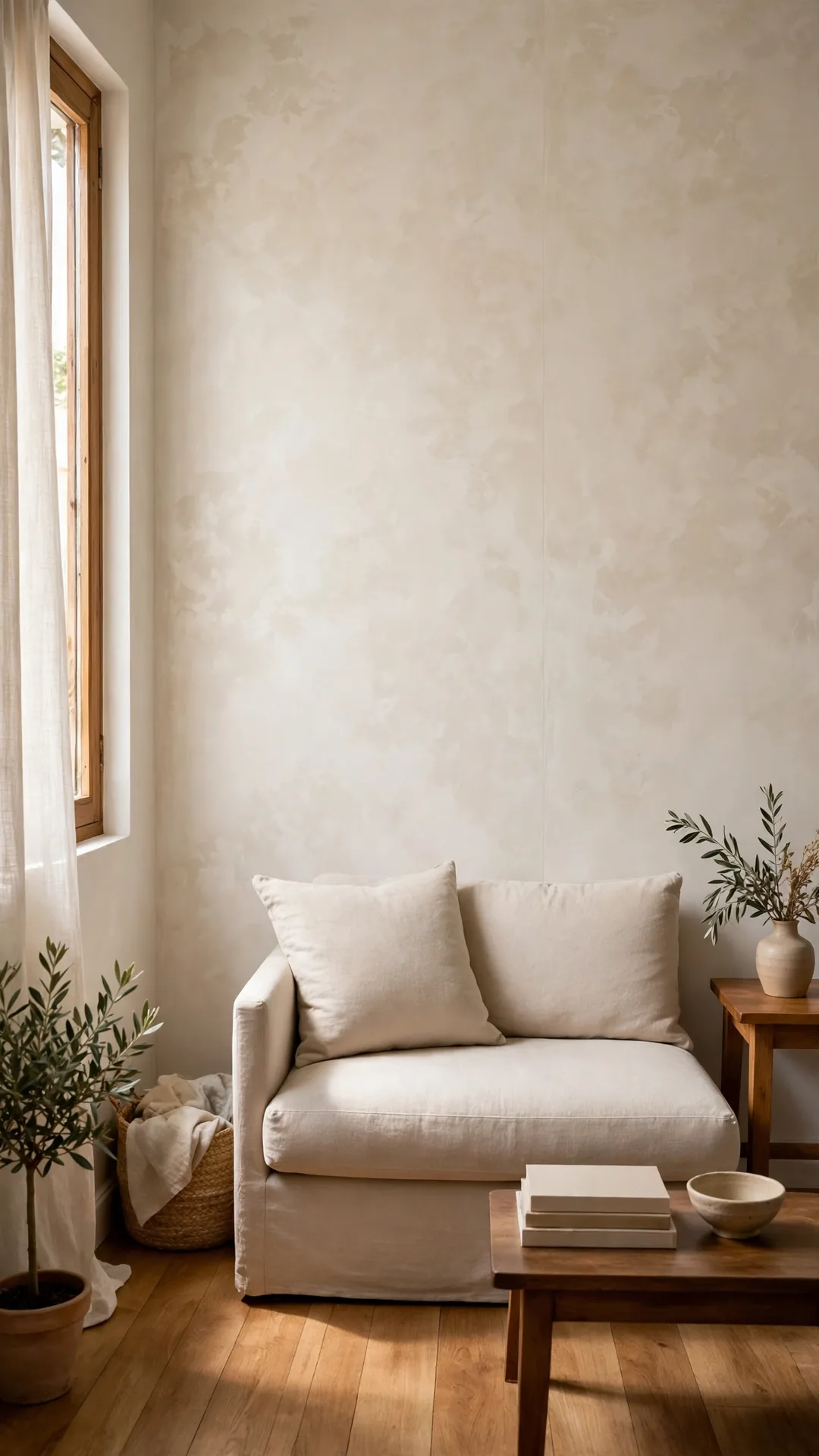
Plaster effect paper copies the soft mottling of old lime walls. It suits small rooms in older buildings with uneven charm. The finish hides minor wall flaws better than flat prints.
How to do it:
- Choose soft, cloudy tones like bone or pale clay.
- Avoid prints with hard lines or strong repeats.
- Order a large sample to check the mottling scale.
- Hang with seams offset from main sight lines.
- Pair with simple modern furniture for contrast.
Best for: Character homes with plain replacement walls.
Budget: $65 to $160 for one wall
Quick tip: Big cloudy patterns hide patches best.
33. Paper the Ceiling as a Fifth Wall
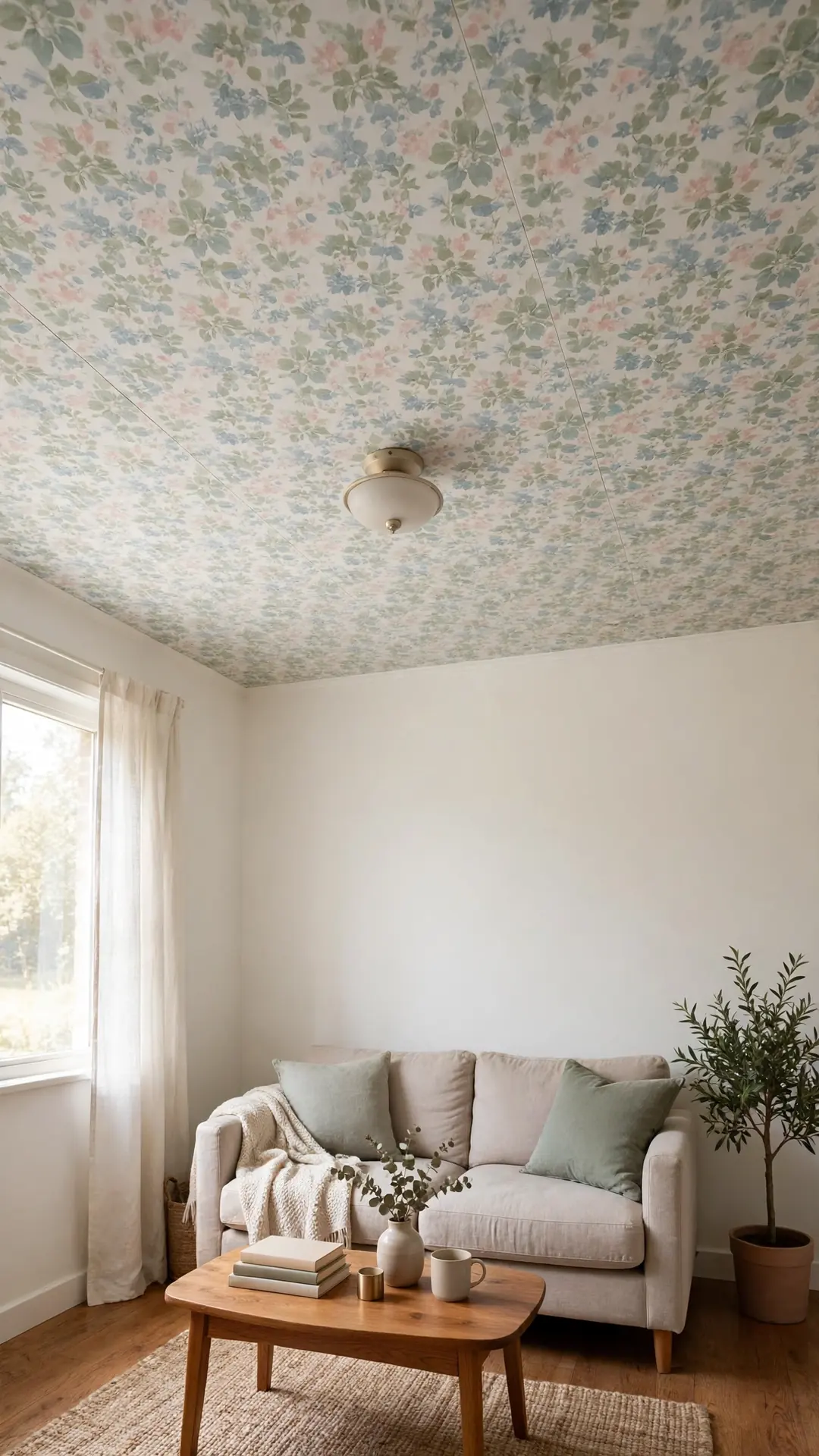
A papered ceiling draws eyes up and leaves walls free for art. Small prints and soft colors keep the ceiling from feeling low. Browse ceiling wallpaper ideas for more patterns that suit overhead use.
How to do it:
- Pick a light print with a small, even repeat.
- Use paste-the-wall paper to keep strips manageable.
- Work in pairs, since ceiling strips need two hands.
- Start from the window wall and work away from light.
- Keep walls plain white so the ceiling stays the star.
Best for: Rooms with plain walls you cannot change.
Budget: $60 to $150 per ceiling
Quick tip: A pale print makes ceilings feel higher, not lower.
34. Paper a Reading Corner Into Its Own Nook
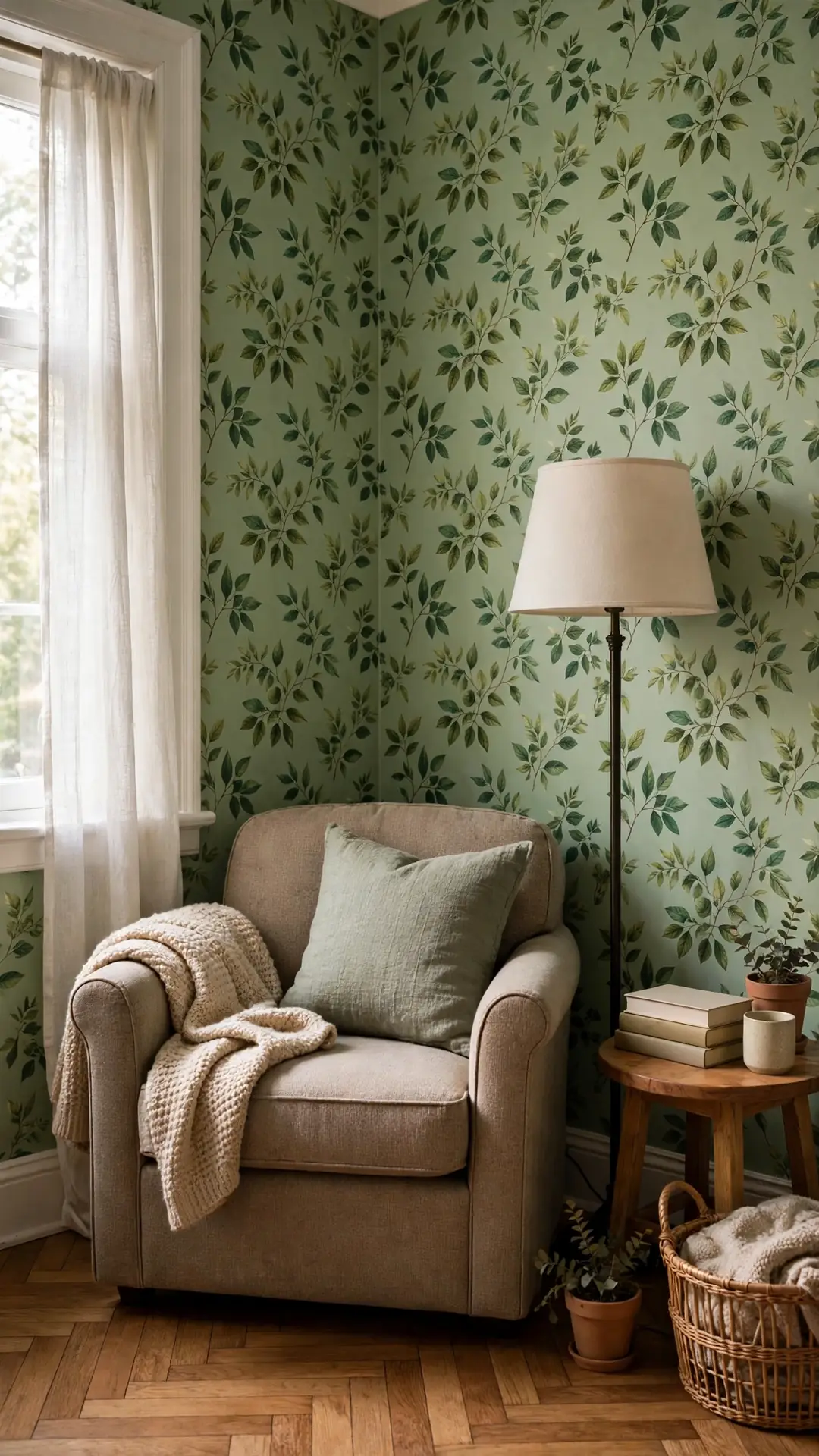
Two papered corner walls mark out a reading spot without any divider. The pattern wraps the chair and makes the corner feel planned. Build on these small space corner ideas for the living room to finish the spot.
How to do it:
- Paper both walls that meet at your reading corner.
- Stop the paper at a natural break, like a doorway.
- Add one chair, a floor lamp and a small table.
- Keep the print medium scale so it wraps neatly.
- Choose washable paper if kids use the corner too.
Best for: Open rooms that need clear zones.
Budget: $45 to $110 for one corner
Quick tip: A corner shelf above the chair saves table space.
35. Keep the TV Wall Calm and Quiet
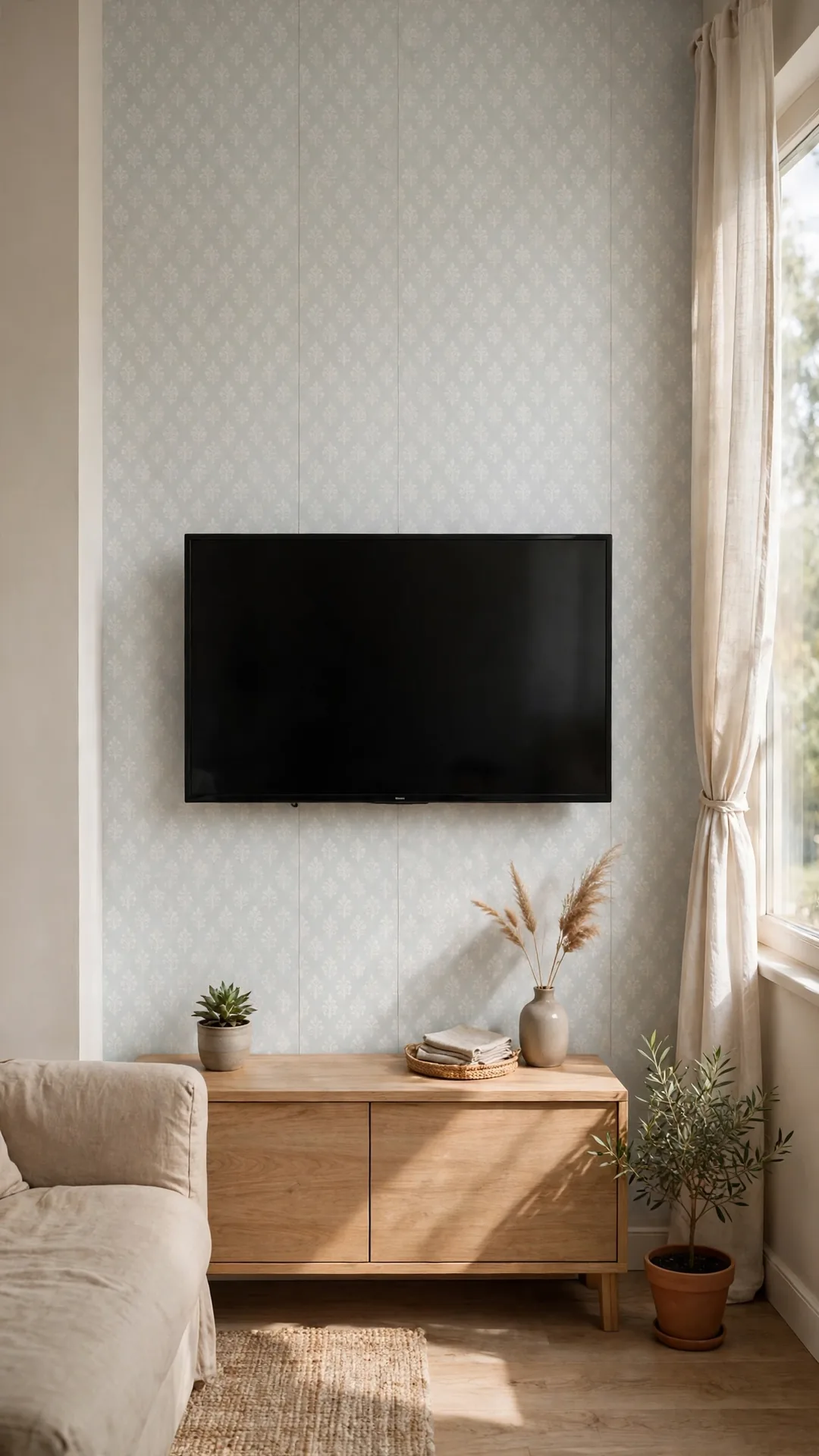
The TV wall needs paper that never fights the screen. A faint texture or tone-on-tone print adds finish without glare. Calm backgrounds are underrated small living room wallpaper ideas for media walls.
How to do it:
- Choose matte paper with almost no shine.
- Keep contrast between pattern and ground very low.
- Paper the full wall so edges frame the TV evenly.
- Run cables inside a slim cord cover painted to match.
- Test the paper with the TV on before committing.
Best for: Media walls in small open plan rooms.
Budget: $55 to $140 for one wall
Quick tip: Darker quiet paper makes screen blacks look deeper.
36. Paper the Wall Behind Open Shelves
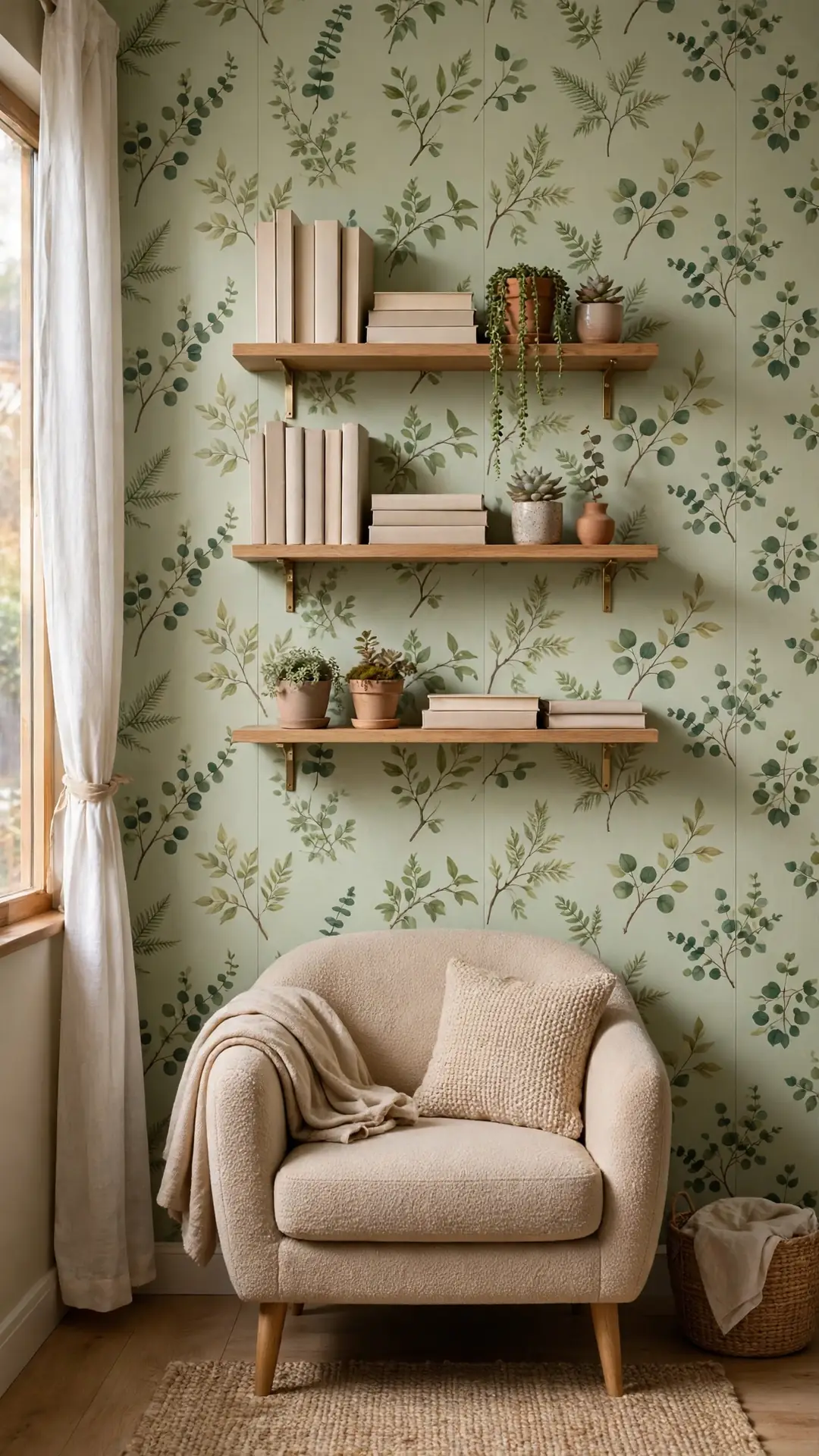
Open shelves show a lot of wall between the boards. Paper there turns storage into a styled feature. Small prints work best, since shelves break the pattern up.
How to do it:
- Paper the wall before you fix the shelves.
- Pick a print with repeats under 8 inches.
- Space shelves 12 to 14 inches apart for books.
- Repeat one paper color in a vase or bowl.
- Leave some gaps empty so the pattern can breathe.
Best for: Blank walls that hold your book storage.
Budget: $35 to $90 for one wall
Quick tip: Paper first, since papering around brackets is fiddly.
37. Wrap the Fireplace Breast in Pattern
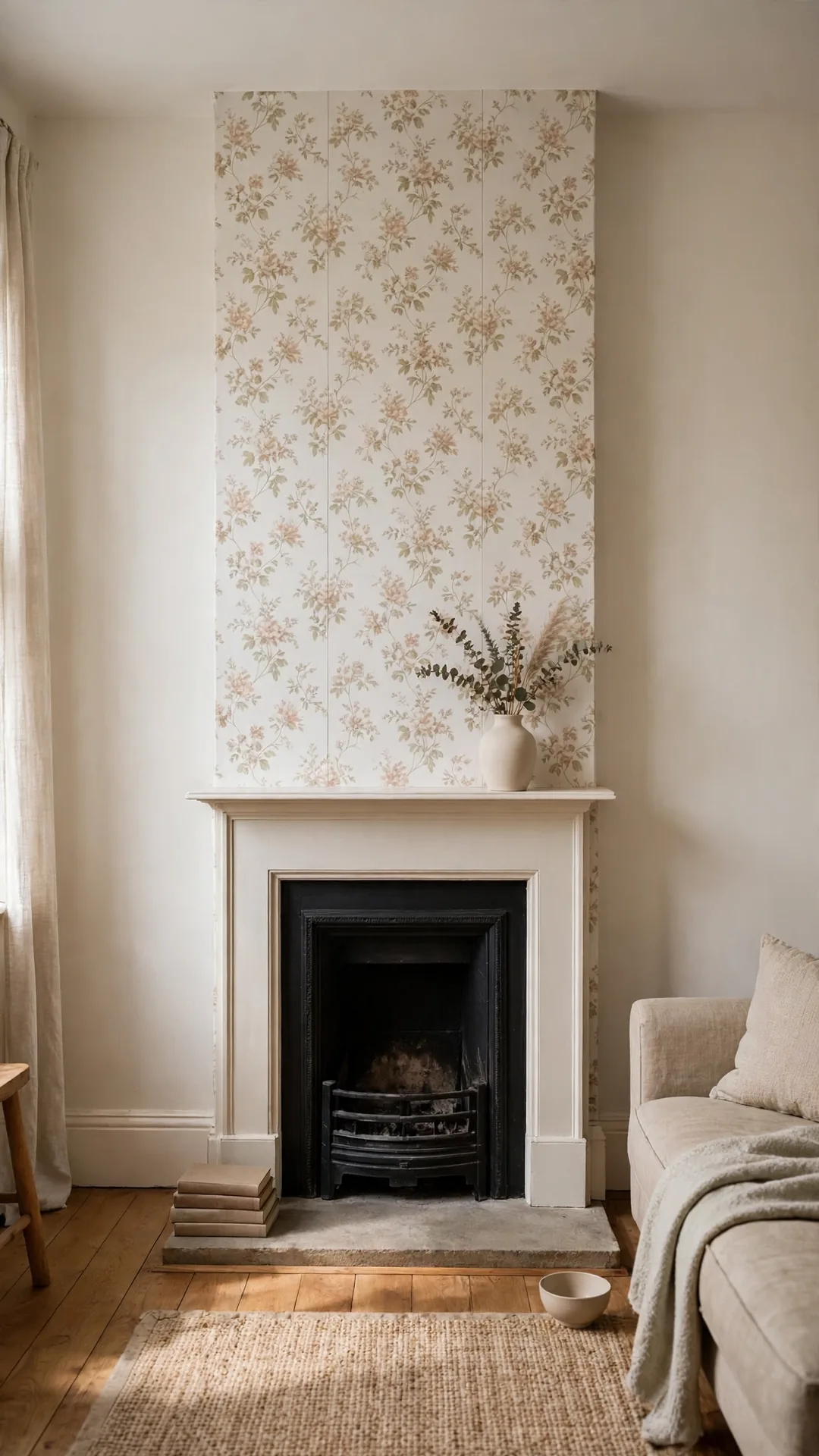
The chimney breast is a natural feature wall in many small rooms. Paper wraps its face and turns the fireplace into the focal point. Keep the alcoves on each side plain for balance.
How to do it:
- Measure the breast face plus both side returns.
- Pick heat-safe paper and keep it off the firebox.
- Start at the center line above the mantel.
- Wrap the returns neatly for a built-in look.
- Hang one simple mirror or print above the mantel.
Best for: Rooms with a plain, unused fireplace.
Budget: $30 to $80 for one breast
Quick tip: A centered motif above the mantel looks sharpest.
38. Back a Desk Nook With Pattern
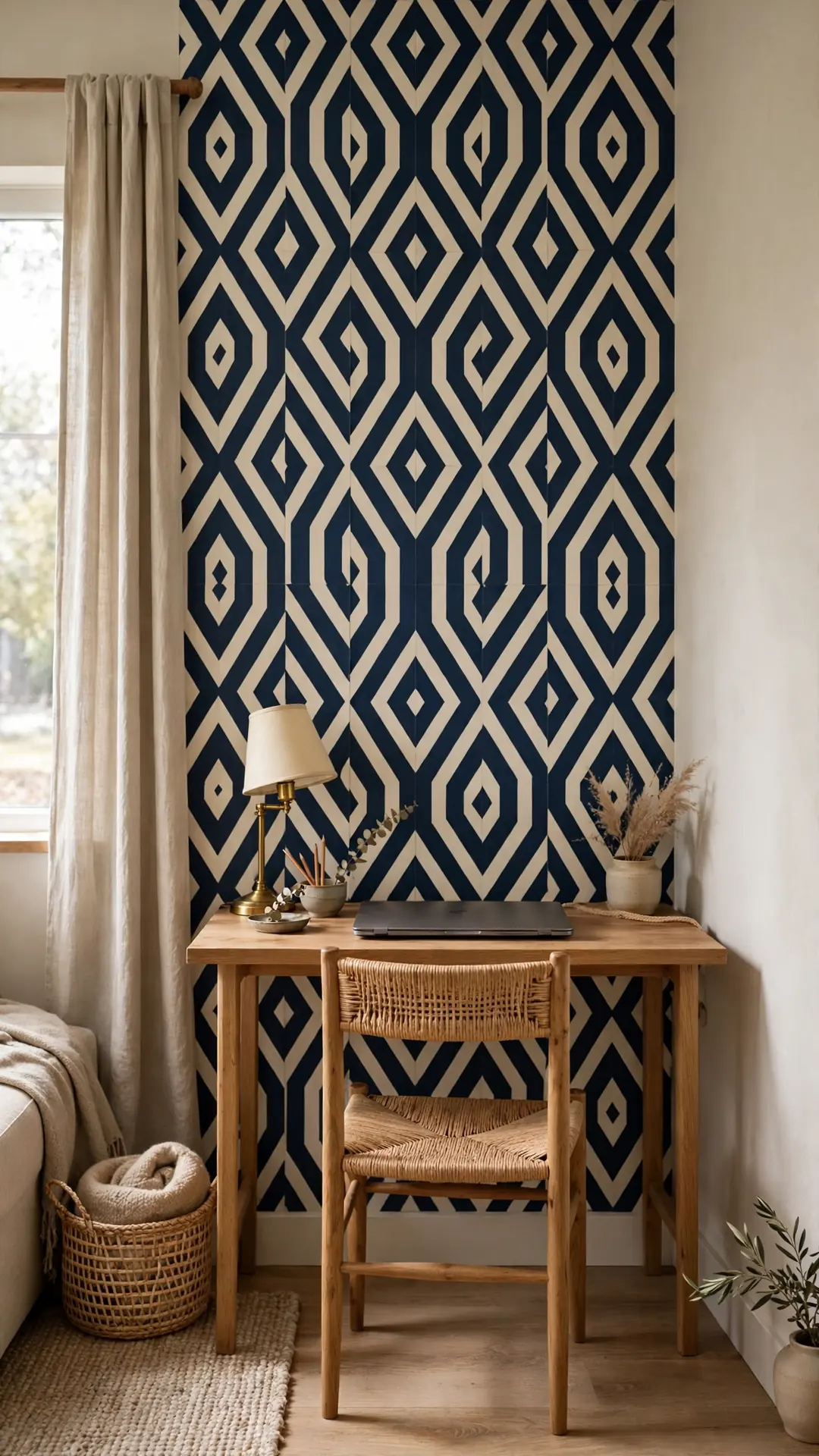
A desk nook feels like its own room with paper behind it. The pattern marks the work zone inside your living space. If the nook doubles for guests, these small office guest room combo ideas help the space flex.
How to do it:
- Paper the wall strip behind the desk only.
- Stop the paper where the desk zone ends.
- Pick a print that stays calm behind a screen.
- Add a small shelf above the desk for supplies.
- Keep desk items plain so the paper stays the feature.
Best for: Living rooms that double as work space.
Budget: $25 to $65 for one strip
Quick tip: A bold print needs only two or three feet of width.
39. Split the Wall at a Chair Rail
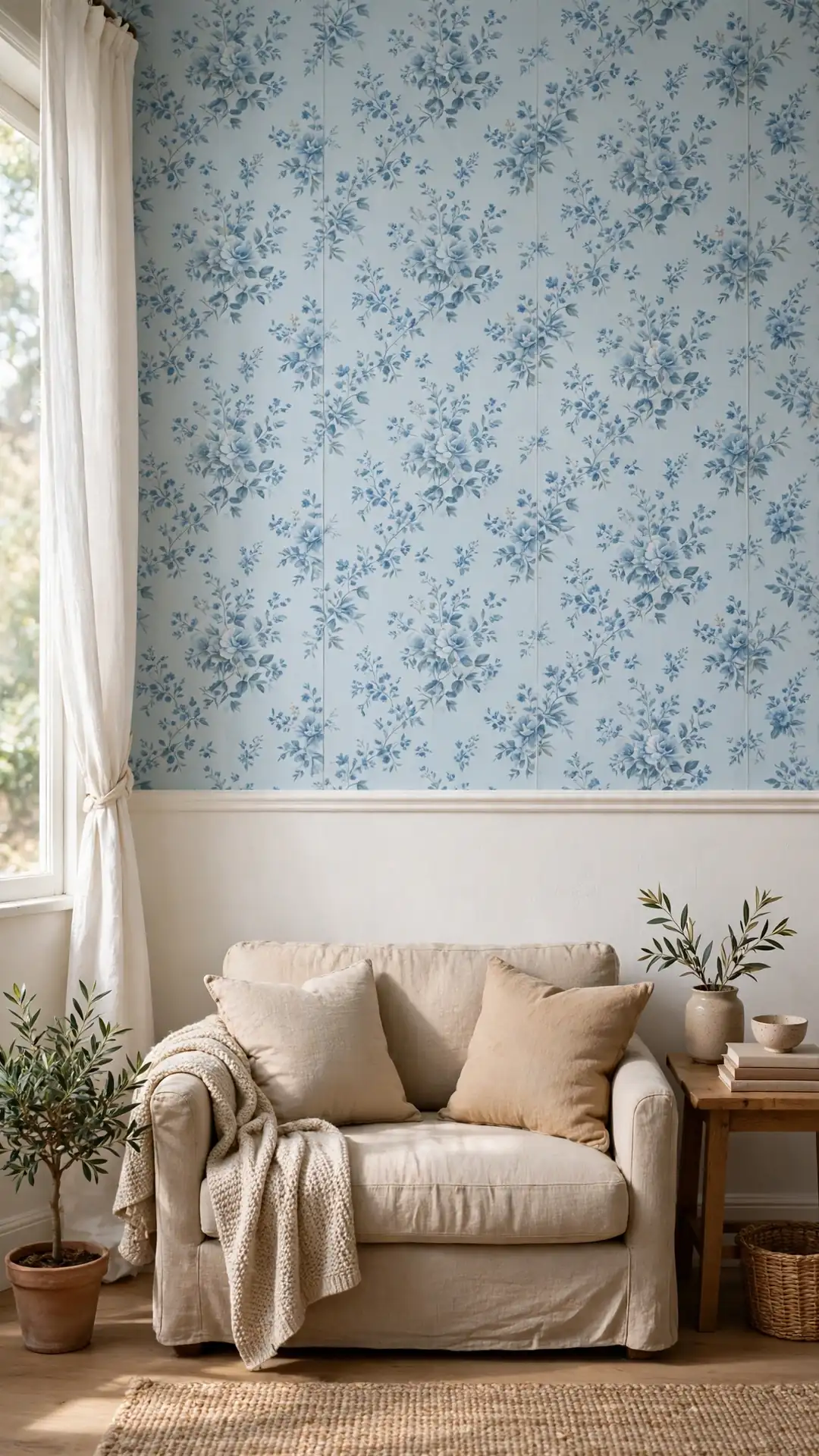
A chair rail lets you paper half a wall and still get the effect. Paper above the rail keeps pattern at eye level. Many half-wall small living room wallpaper ideas suit tight budgets.
How to do it:
- Fit a slim rail about 32 inches from the floor.
- Paint the rail and lower wall one soft color.
- Paper the upper section with your chosen print.
- Use peel and stick above the rail for easy swaps.
- Keep lower walls washable for scuffs and bags.
Best for: Hallway-style living rooms with heavy traffic.
Budget: $35 to $90 per wall
Quick tip: Half walls use half the rolls, so buy bold.
40. Zone an Open Plan With One Papered End
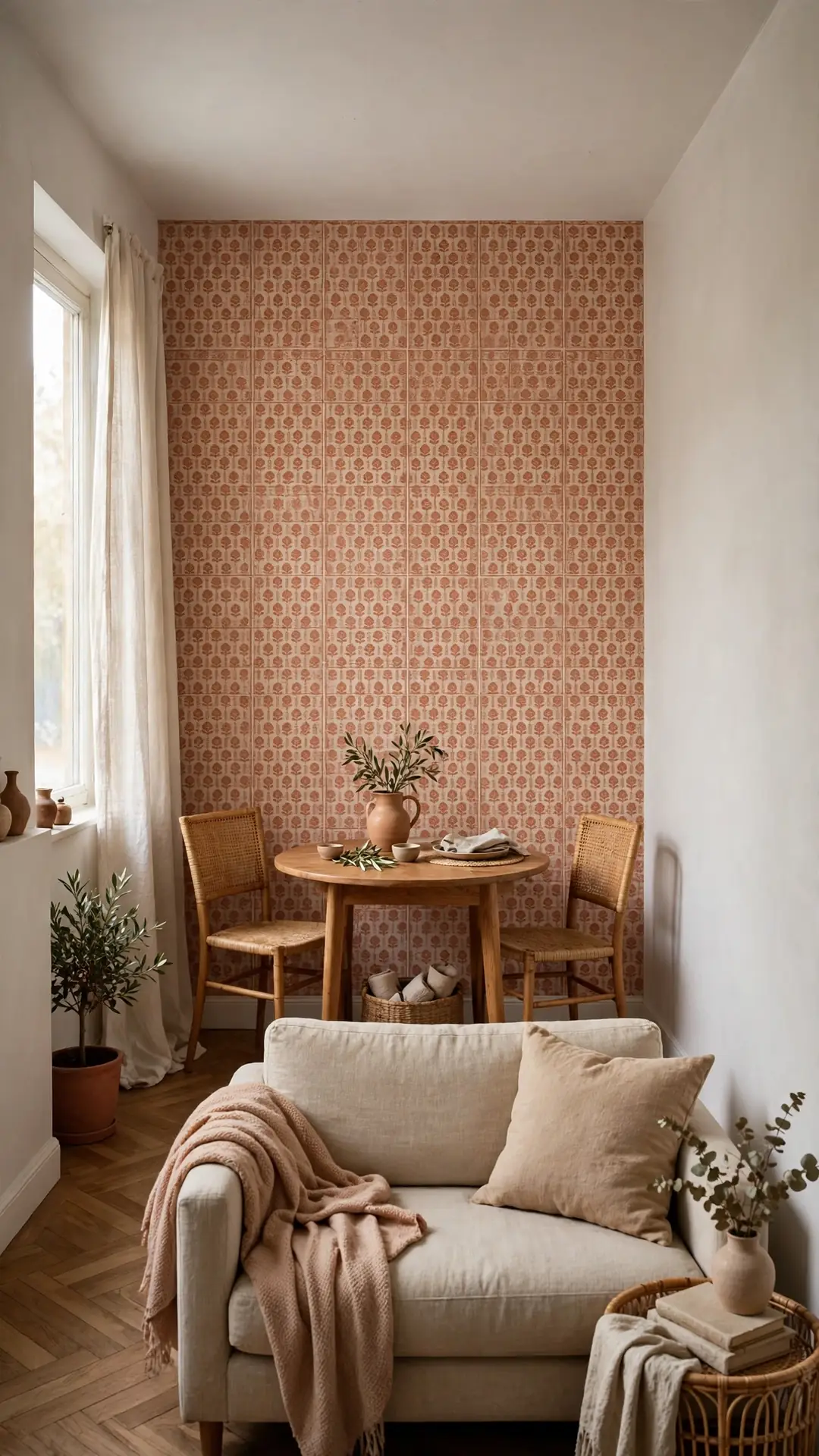
Open plan rooms feel vague without clear zones. Paper the dining end and the eating spot gains its own identity. Pair it with these small dining room lighting ideas to finish the zone.
How to do it:
- Paper the full end wall behind the dining table.
- Stop the pattern where the living zone begins.
- Hang a pendant low over the table center.
- Repeat one print color in the table linen.
- Keep the living end walls plain and pale.
Best for: Studio flats with one long room.
Budget: $50 to $130 for one wall
Quick tip: A rug under the table strengthens the zone edge.
41. Paper the Alcove by the Front Door
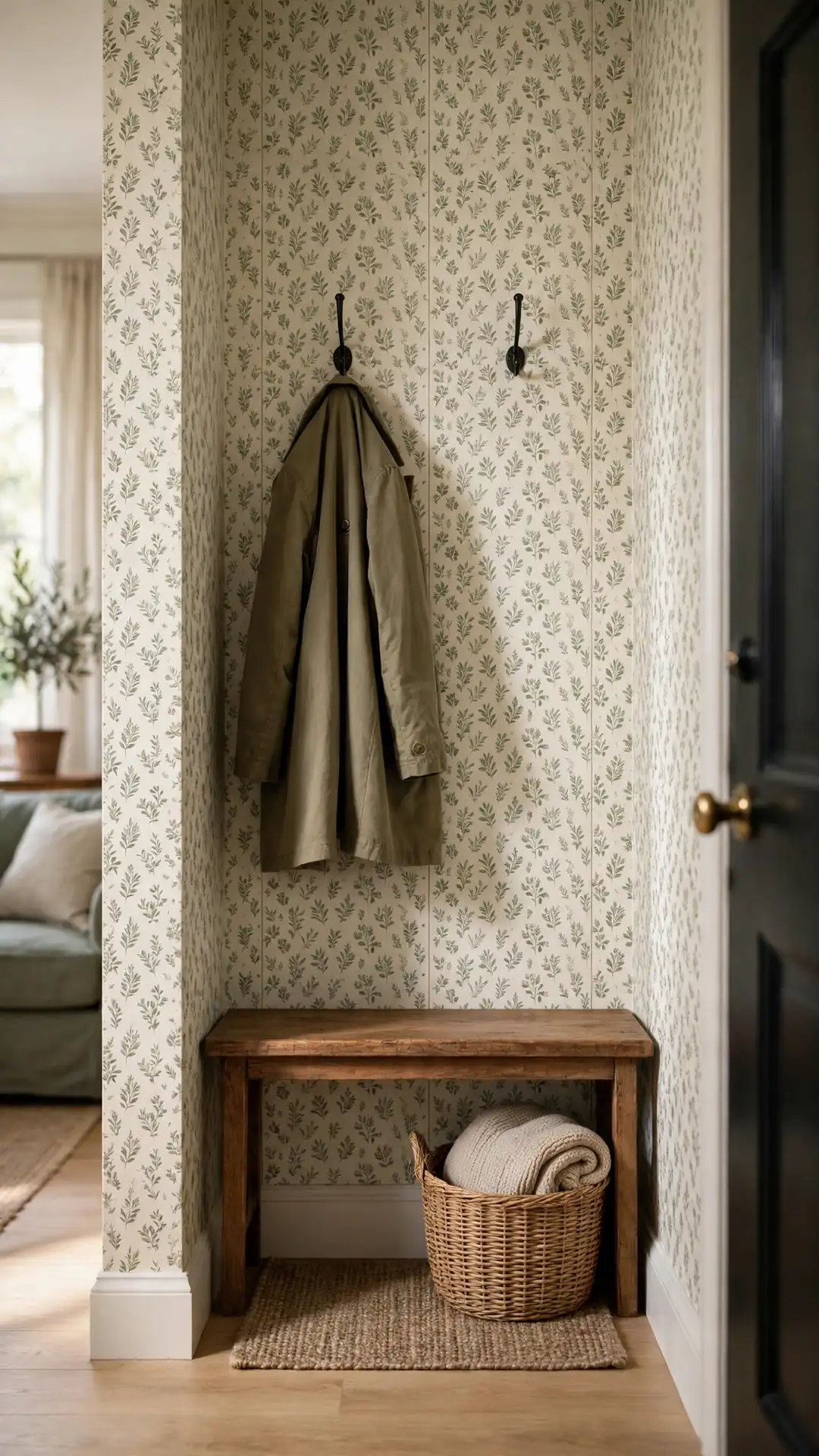
The entry alcove sets the tone for the whole home. A small print there handles bags, coats and daily wear well. Entry zones are smart small living room wallpaper ideas for busy homes.
How to do it:
- Choose washable or vinyl paper for this zone.
- Paper the back wall of the alcove only.
- Add hooks and a small bench under the print.
- Keep the print small scale for a shallow space.
- Seal cut edges near the floor with clear varnish.
Best for: Flats where the door opens into the lounge.
Budget: $30 to $75 for one alcove
Quick tip: Vinyl paper wipes clean after muddy days.
42. Back a Display Cabinet With Pattern
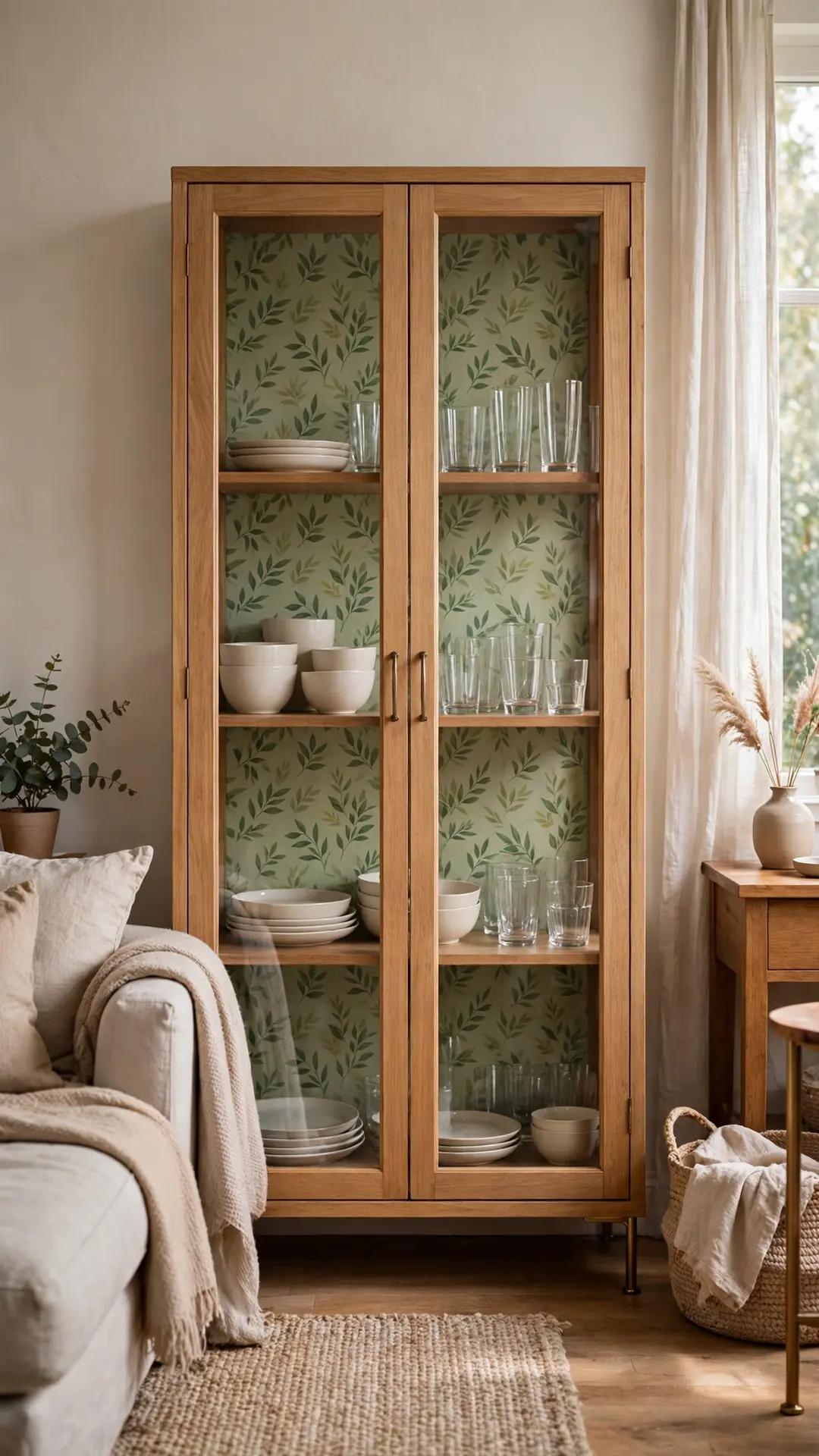
Paper inside a glass cabinet turns plain storage into a display. The print shows between dishes and books as a soft backdrop. Offcuts from a wall job often cover the whole back.
How to do it:
- Remove shelves and measure the cabinet back panel.
- Cut paper to size, plus half an inch spare.
- Stick it flat, working from the top down.
- Trim edges with a sharp blade once dry.
- Style items with gaps so the print shows through.
Best for: Glass cabinets with plain, dull backs.
Budget: Under $20 with offcuts
Quick tip: Pale prints make glass shelves look brighter.
43. Match the Paper to Your Sofa Tone
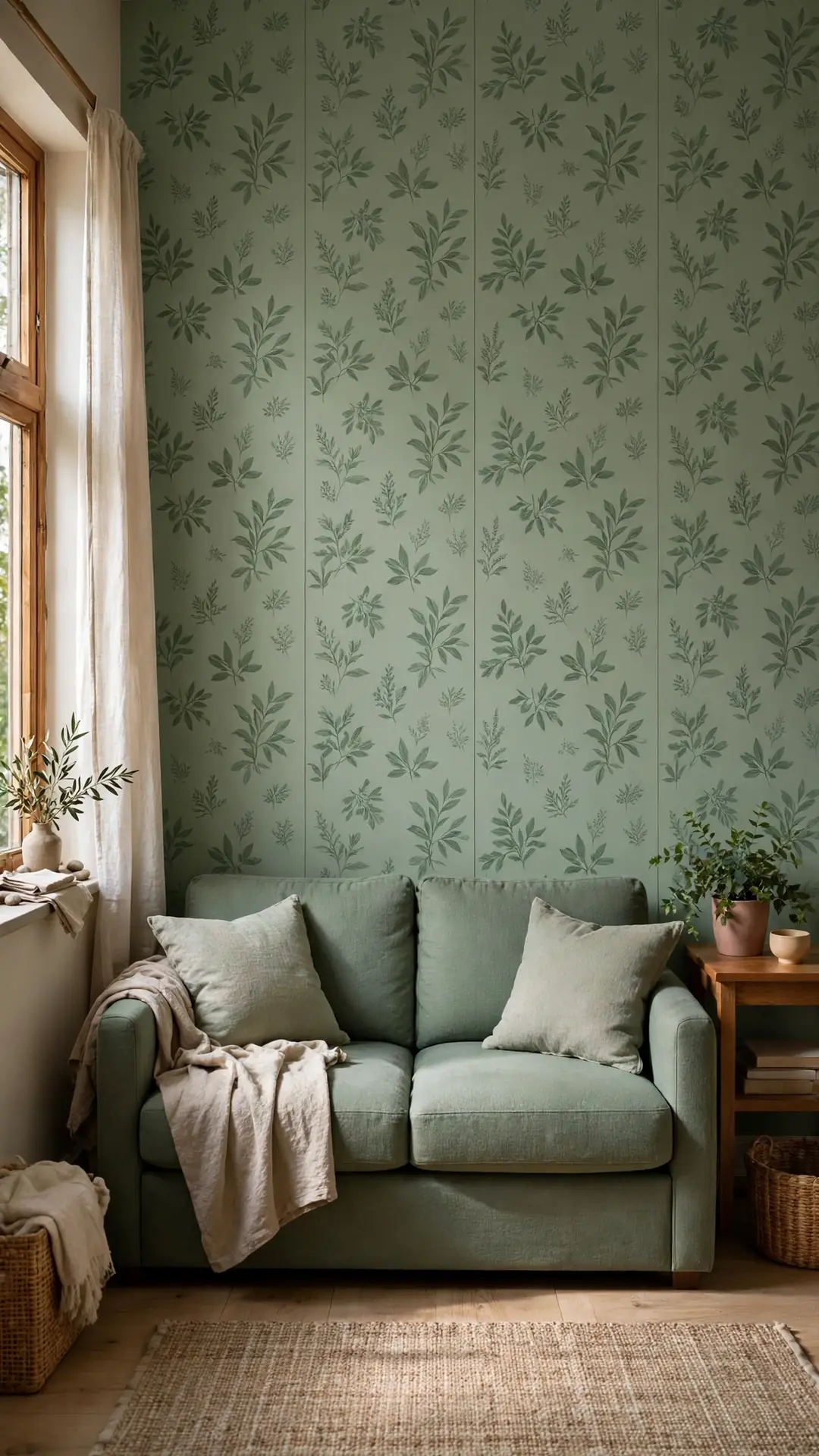
Paper in your sofa's color family makes the room feel planned. The wall and seat read as one calm block of color. For more pairing help, browse home decor ideas for a living room in a small space.
How to do it:
- Take a cushion cover to the shop for matching.
- Pick paper one or two shades lighter than the sofa.
- Keep the pattern tone-on-tone for a soft match.
- Add contrast with pale cushions and a light rug.
- Test the sample behind the sofa arm first.
Best for: Plain sofas in strong, solid colors.
Budget: $55 to $140 for one wall
Quick tip: Lighter paper behind a dark sofa adds glow.
44. Repeat One Paper Color in Cushions
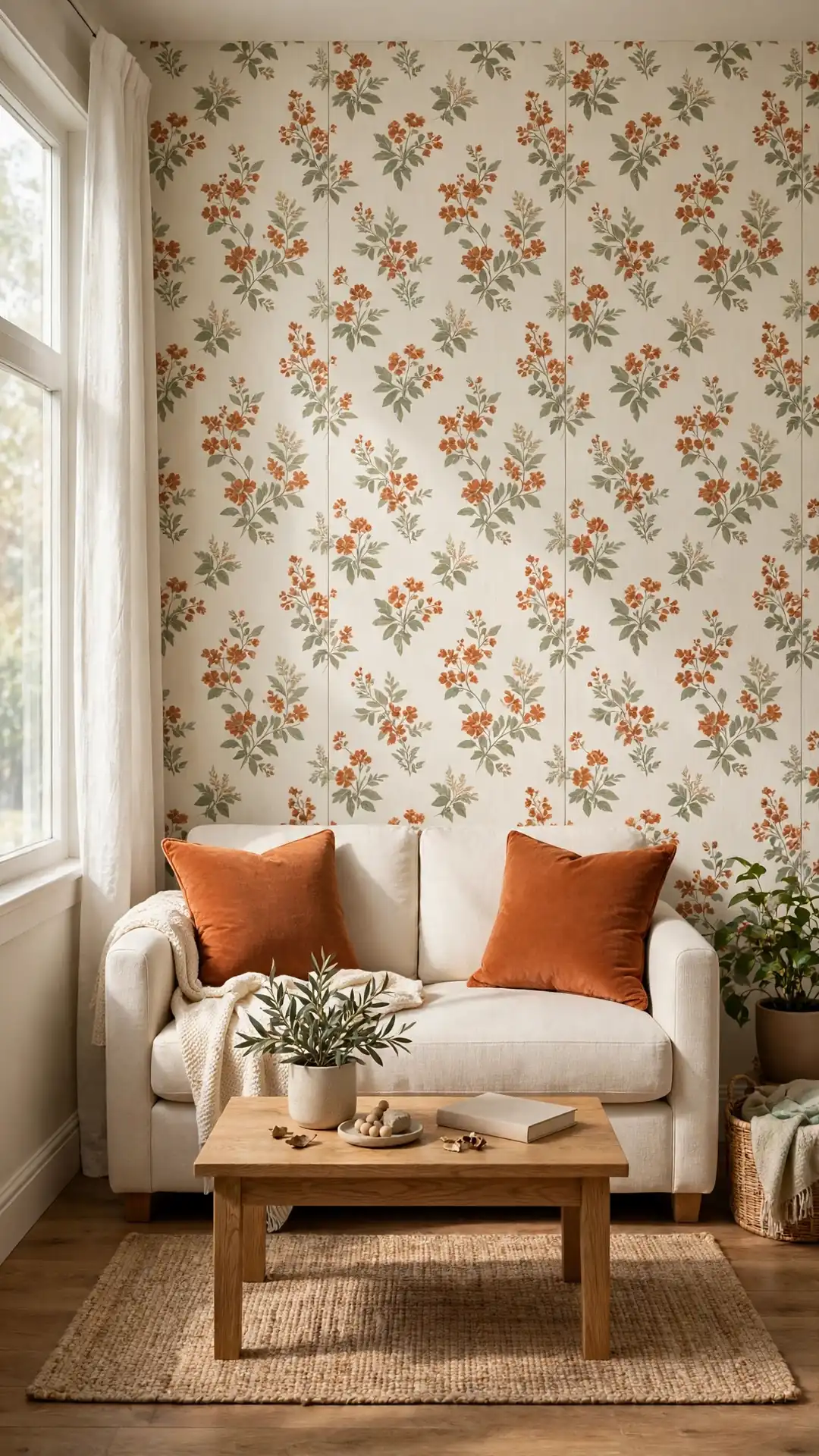
One repeated color ties a bold wall to your furniture. Pick the print's minor color, not the main ground. Follow-through like this makes small living room wallpaper ideas feel designed.
How to do it:
- Name the three main colors in your print.
- Choose the least used color for cushions and throws.
- Add that color in two or three spots only.
- Keep other textiles plain and neutral.
- Swap the accent pieces seasonally for a fresh feel.
Best for: Bold prints that feel separate from the room.
Budget: $60 to $150 for one wall
Quick tip: Two cushions and one throw are usually enough.
45. Break Up Patterns With Plain Stretches
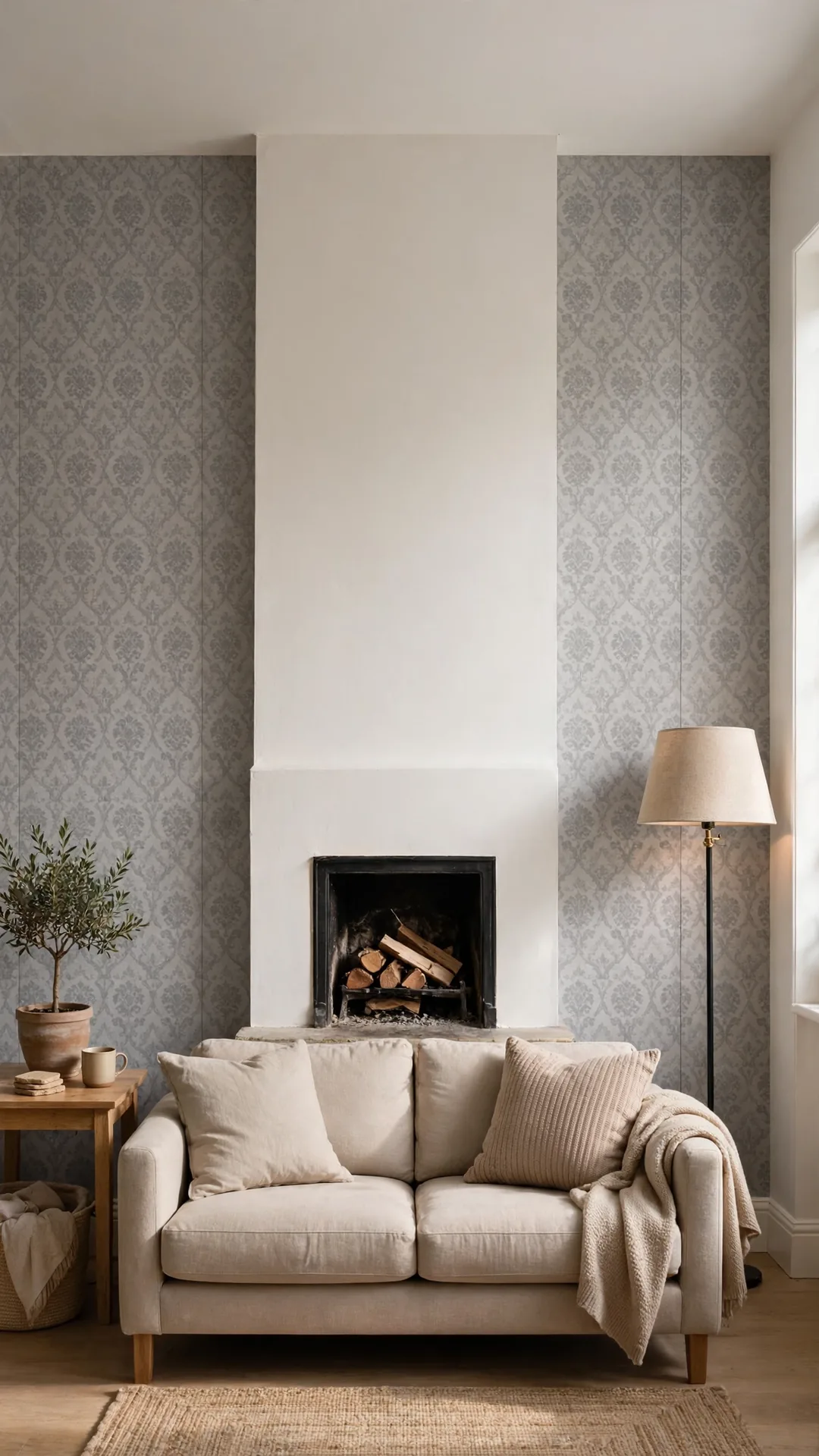
Plain stretches give a busy print room to breathe. Paper two walls and leave a chimney breast or column plain. The breaks make the pattern feel richer, not weaker.
How to do it:
- Map your walls and mark plain breaks first.
- Paper the longest unbroken walls for full effect.
- Paint breaks in a color pulled from the print.
- Keep breaks at least 20 inches wide.
- Hang plain walls with one large simple artwork.
Best for: Bold prints in rooms with many angles.
Budget: $70 to $170 for two walls
Quick tip: Plain breaks also cut your paper bill.
46. Hang Sheer Curtains Over Papered Windows
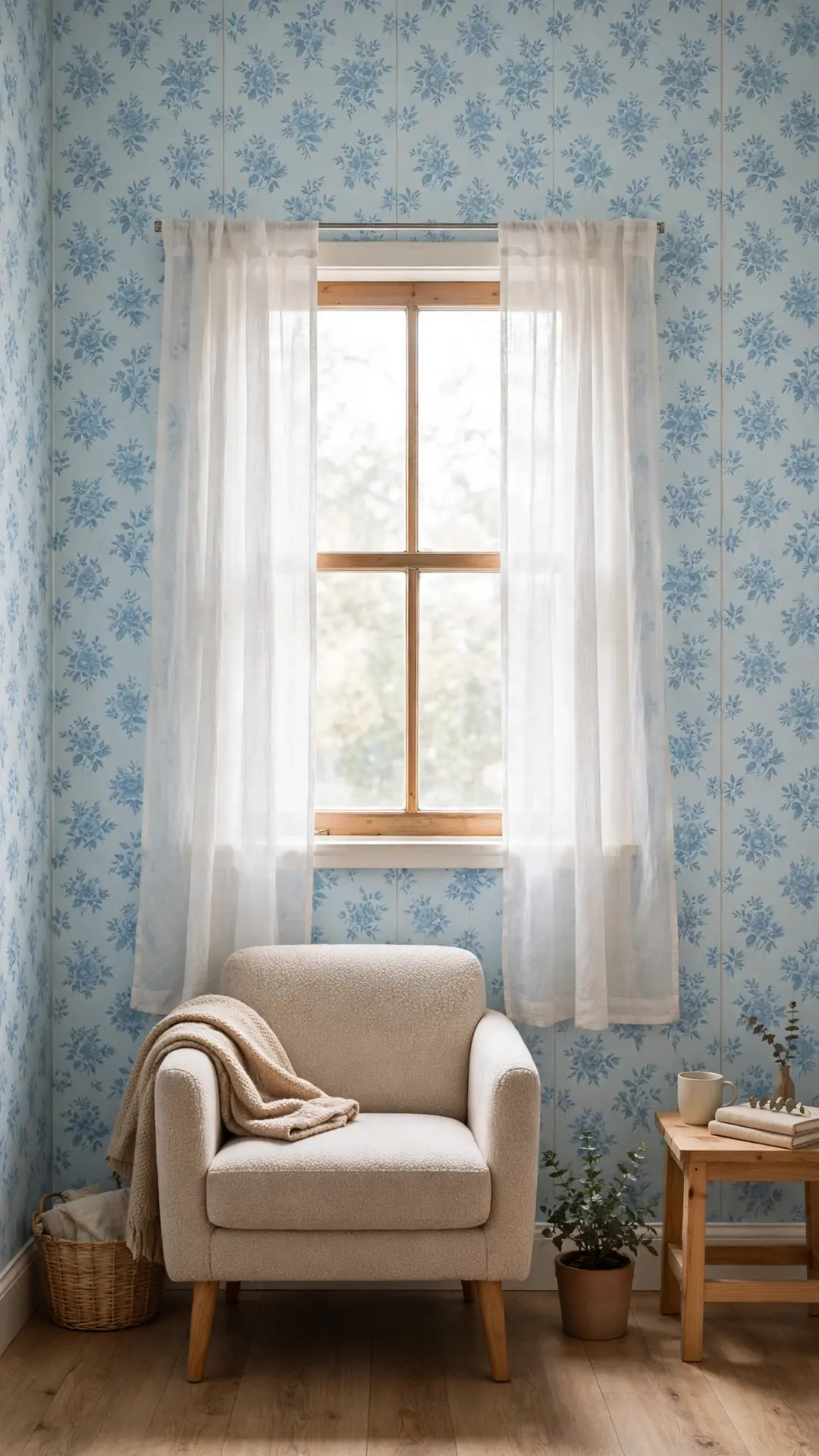
Paper around a window wall needs soft light control. Sheer curtains diffuse glare and let the pattern glow gently. They also hide the paper edges beside the frame.
How to do it:
- Paper the window wall, cutting neatly around the frame.
- Hang a rod 4 inches above the window top.
- Choose plain white or cream sheers, no pattern.
- Let sheers hang to the sill or the floor.
- Keep the rod wider than the frame by 6 inches.
Best for: Papered walls with harsh direct sun.
Budget: $60 to $150 for one wall
Quick tip: Sheers protect paper color from fading too.
47. Choose Washable Vinyl for Busy Homes
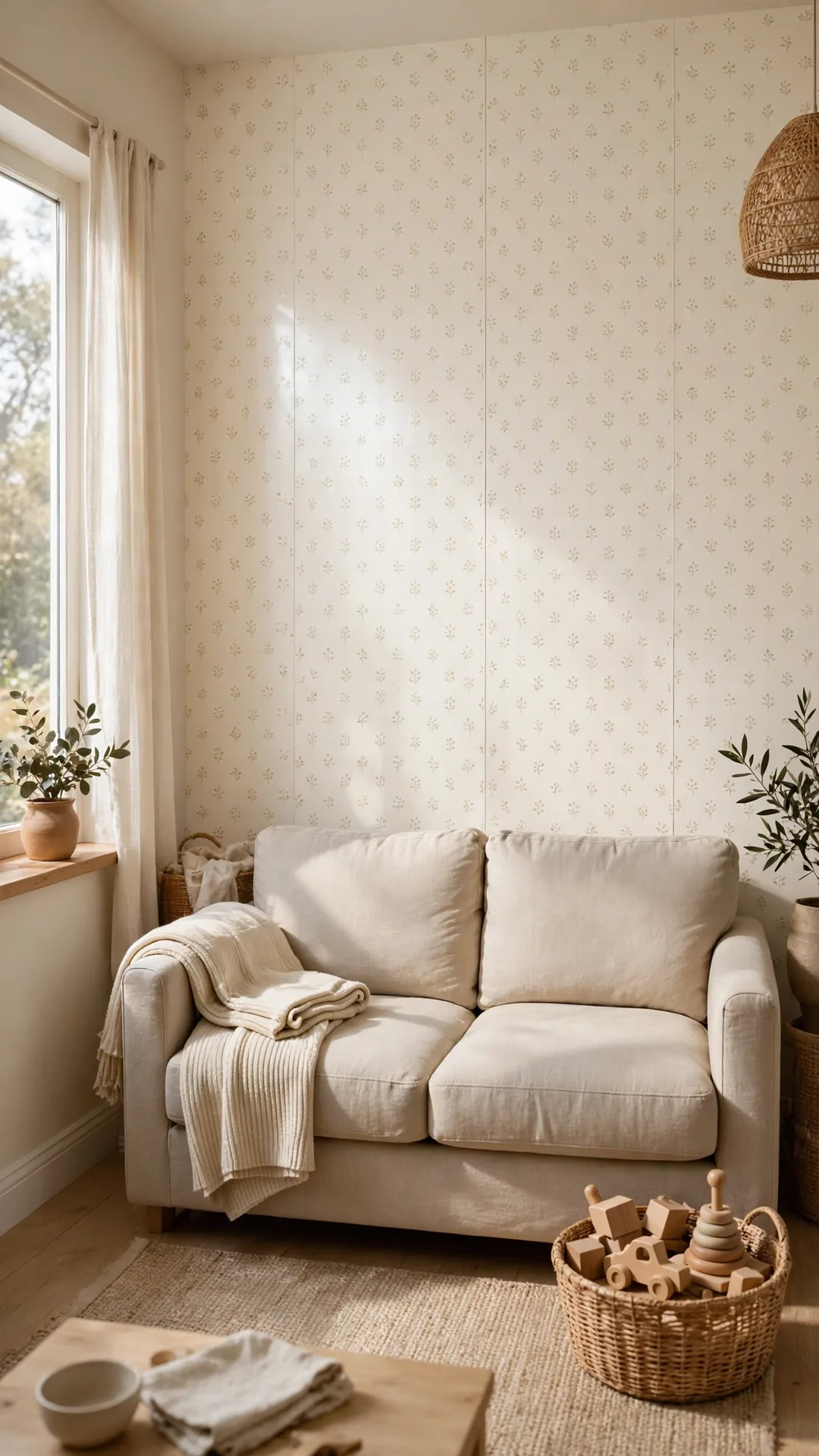
Washable vinyl paper shrugs off sticky fingers and pet paws. A damp cloth lifts most marks without harming the print. Practical picks matter in small living room wallpaper ideas for families.
How to do it:
- Look for scrubbable ratings on the roll label.
- Keep a sample and test it with a damp cloth.
- Paper the sofa wall and the entry side first.
- Avoid delicate foils and grasscloth in play zones.
- Keep one spare roll for patch repairs later.
Best for: Homes with toddlers, dogs or both.
Budget: $50 to $130 for one wall
Quick tip: Mid-tone prints hide daily marks best.
48. Plan Seams Where Furniture Hides Them
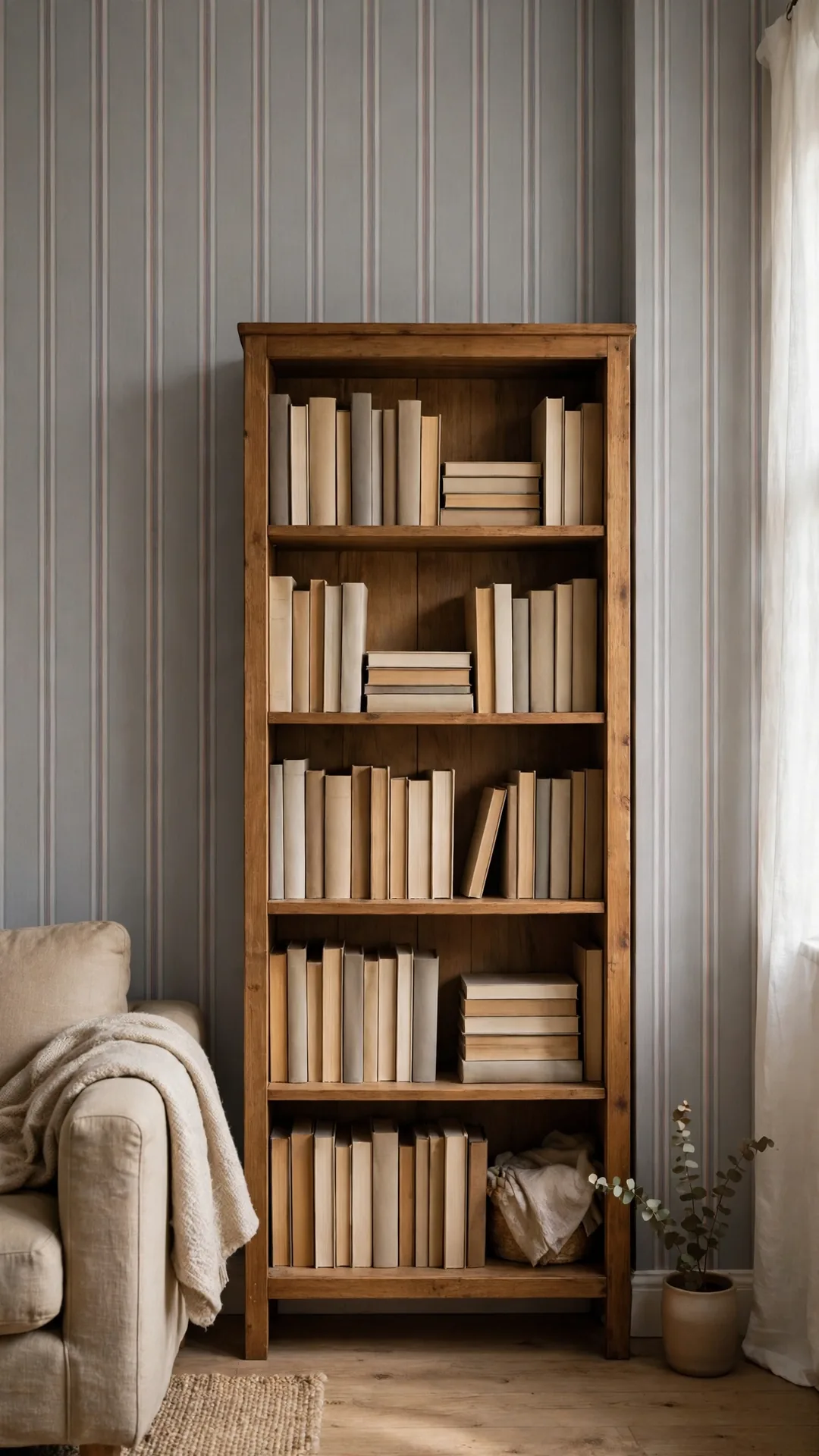
Seams show least when tall furniture covers them. Plan strip order so joins land behind bookcases and cabinets. A little measuring saves a lot of visual fuss.
How to do it:
- Mark furniture positions on the wall in pencil.
- Plan your strip layout on paper before cutting.
- Shift the start point so seams fall behind furniture.
- Keep seams away from window light, which rakes across.
- Save the boldest motif for open wall areas.
Best for: Walls with bookcases and tall cabinets.
Budget: $55 to $140 for one wall
Quick tip: Raking light shows seams, so check at sunset.
49. Store Offcuts Flat for Future Repairs
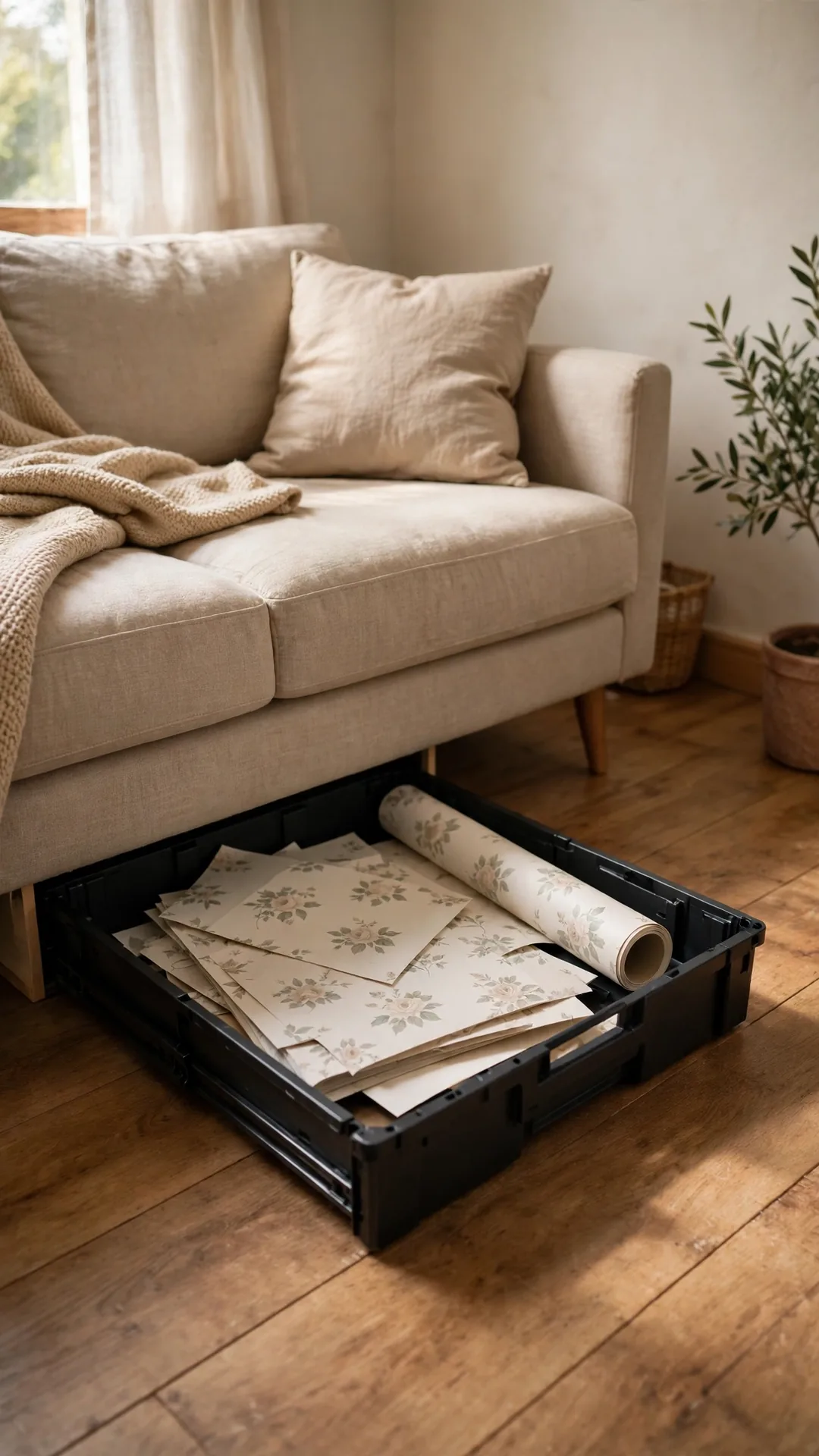
Offcuts fix tears, stains and moved-furniture surprises in minutes. Store them flat, labeled and out of damp air. Keeping spares is one of the quiet habits that pays off.
How to do it:
- Keep at least one full-width strip from each batch.
- Roll offcuts loosely around a cardboard tube.
- Label each roll with the room and batch number.
- Store under a sofa or bed in a slim box.
- Keep scraps away from radiators and damp walls.
Best for: Busy rooms where walls take knocks.
Budget: Under $10 for a storage box
Quick tip: A photo of the label helps reorders match.
50. Wrap All Four Walls in a Small Print
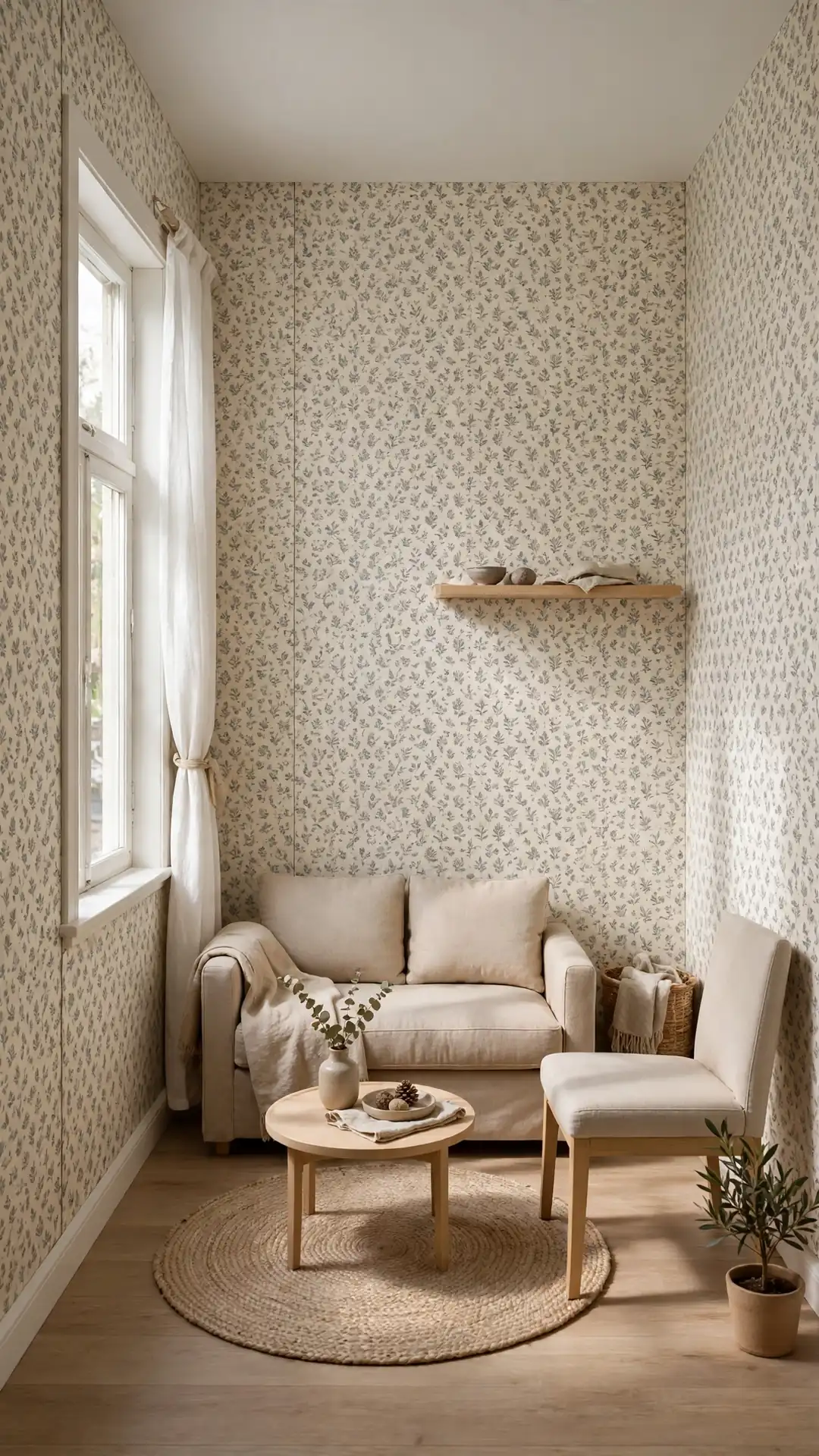
A small print on all four walls wraps the room like fabric. The even pattern erases the box edges and feels cozy. Full wraps close our list of small living room wallpaper ideas.
How to do it:
- Choose a tiny print with low contrast colors.
- Order all rolls from one batch for even color.
- Start beside the door and work around the room.
- Keep furniture pale so the wrap stays light.
- Break the pattern only with art and mirrors.
Best for: Tiny box rooms with no feature wall.
Budget: $140 to $340 for four walls
Quick tip: Low contrast is the rule that makes wraps work.
Pick One Wall and Start This Weekend
You do not need to paper the whole room to change it. Start with the wall behind your sofa, then live with it for a week. Save these small living room wallpaper ideas or pin your favorite print for the weekend. For layout help beyond the walls, browse small living room ideas for tiny apartments when you plan the furniture.

- 59 Brilliant Small Living Room Curtain Ideas Done Right - November 17, 2026
- 56 Small Dining Room Lighting Ideas That Look Expensive - November 17, 2026
- 55 Stunning Small Office Guest Room Combo Ideas Done Right - November 17, 2026