
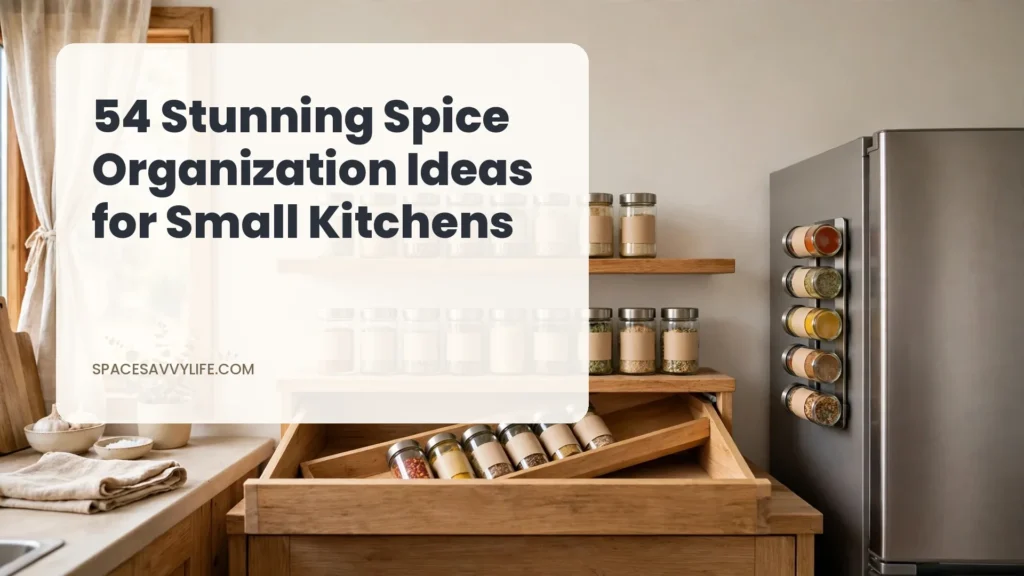
Your spice shelf is a mess and dinner is already late. You push jars aside and still cannot find the cumin. These spice organization ideas for small kitchens fix that without a remodel.
Here are 54 ways to sort jars, racks, drawers and labels. Most cost under $30 and take less than an hour. Pick one idea and start with the jars you use most.
1. Label Every Jar Lid the Same Way
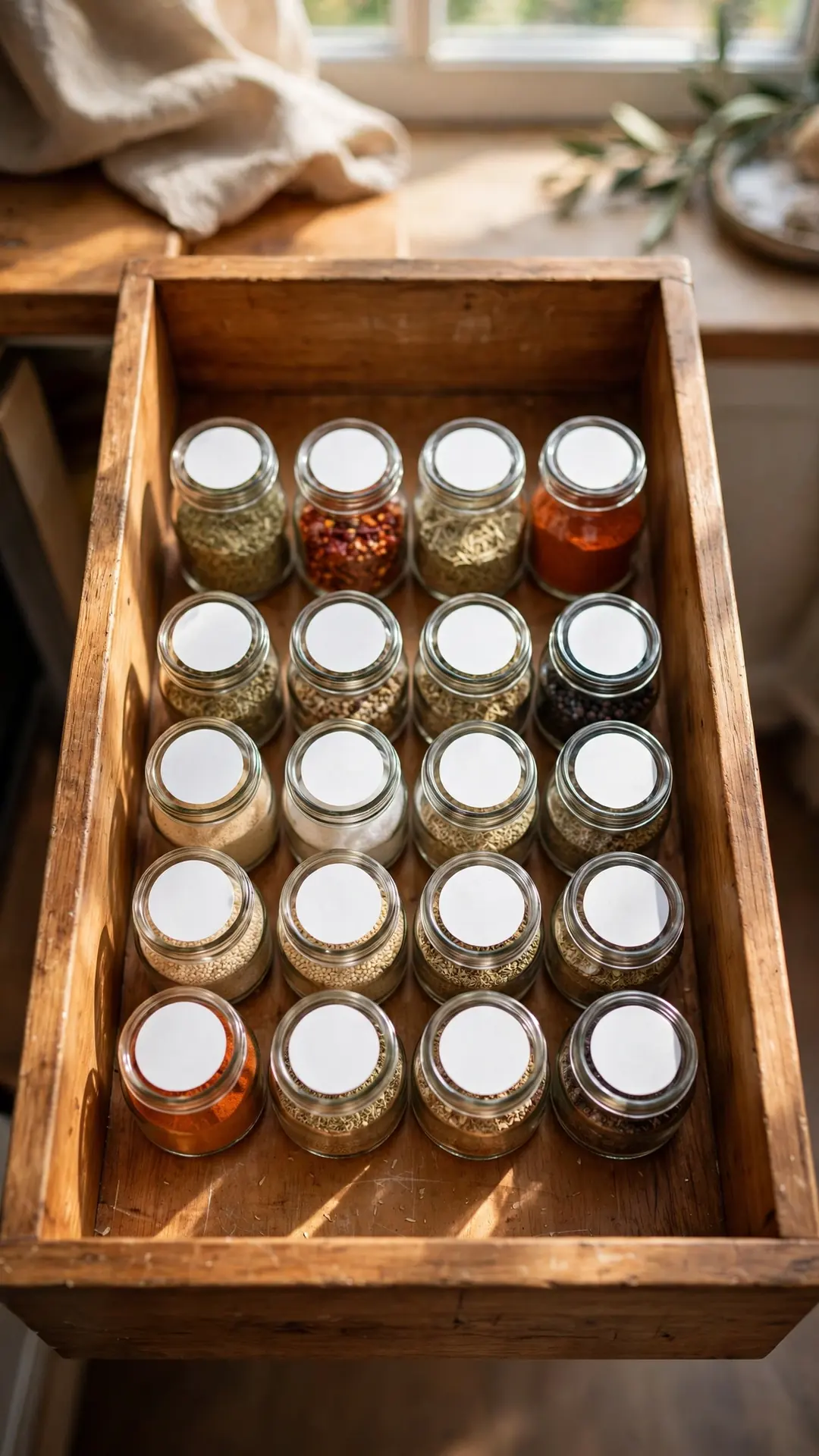
You cannot read a side label when jars sit in a drawer. A label on every lid turns the whole drawer into a quick scan. Houzz rounds up 24 ideas for stashing spices, and lid labels show up again and again.
How to do it:
- Print or write labels in one size and one font.
- Stick each label in the center of its lid.
- Use plain white labels so the text stays easy to read.
- Add the spice name only, not the brand or store.
- Replace a label as soon as it starts to peel.
Best for: Drawers and deep shelves where side labels hide.
Budget: $5 to $15
Quick tip: Label the lid before you fill the jar, not after.
2. Decant Spices Into Matching Glass Jars

Store jars come in ten shapes and none of them stack well. Matching glass jars turn a jumble into a calm row. These spice organization ideas for small kitchens start with jars that all fit the same shelf.
How to do it:
- Pick one jar size for most spices, such as 4 ounce jars.
- Choose square jars if your shelf is tight, since they waste less space.
- Move spices with a small funnel to avoid spills.
- Keep the old label until the new jar is filled and named.
- Wash and dry each jar fully before you fill it.
Best for: Open shelves and anyone who hates mismatched jars.
Budget: $20 to $45 for a set of 12
Quick tip: Buy two extra jars for blends you mix at home.
3. Purge Stale Spices Before You Organize
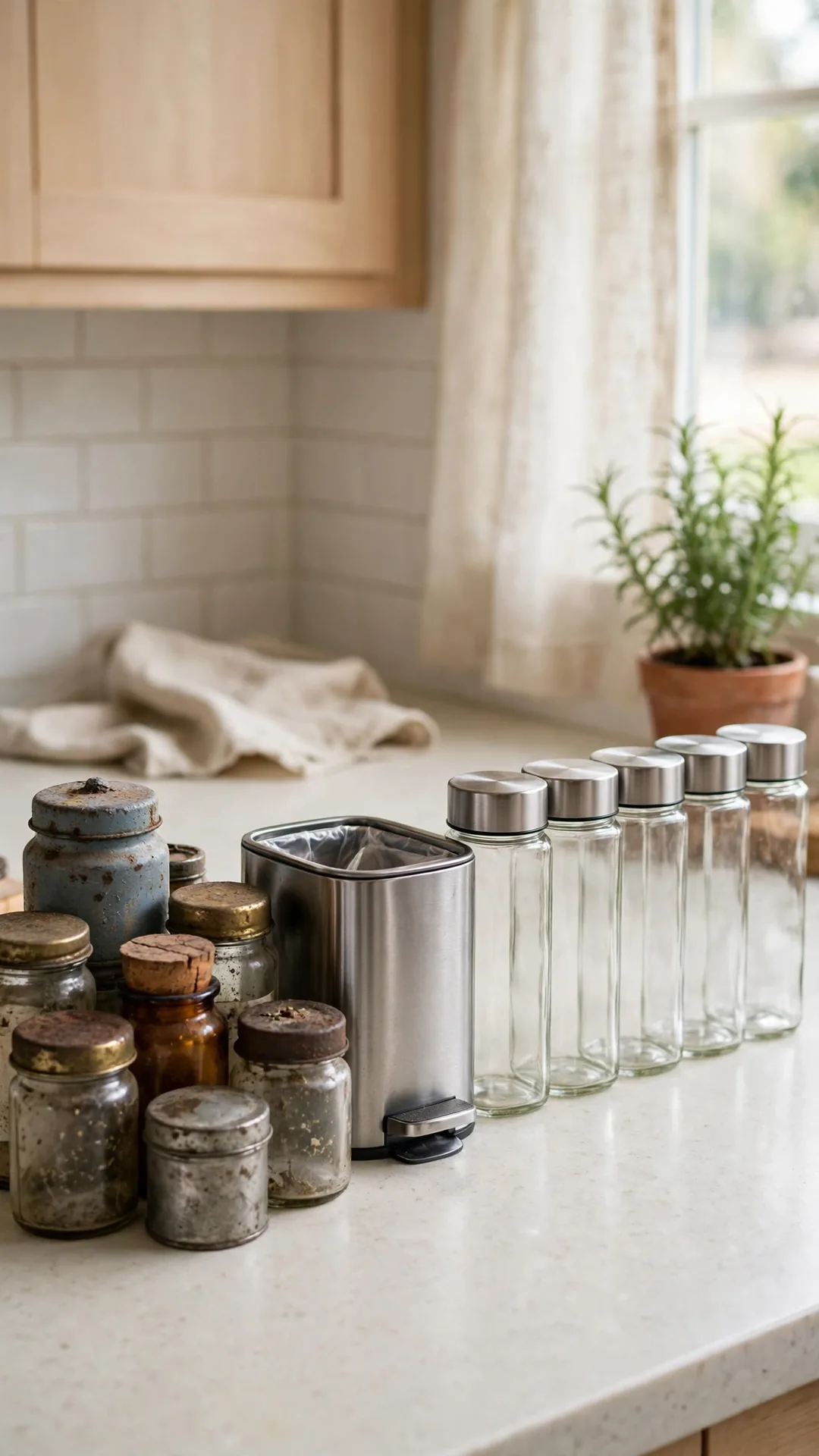
Organizing stale spices just moves the clutter around. A quick purge frees space before you buy a single rack. Smell each jar and toss what smells like dust.
How to do it:
- Pull every spice jar out onto the counter at once.
- Sniff each jar and toss any that smell flat or musty.
- Check dates and toss jars older than two years.
- Keep only the spices you used in the past year.
- Wipe the shelf clean before jars go back.
Best for: Anyone whose shelf holds jars from years ago.
Budget: Free
Quick tip: Toss the duplicates first, since most kitchens hold two paprikas.
4. Group Spices by How You Cook
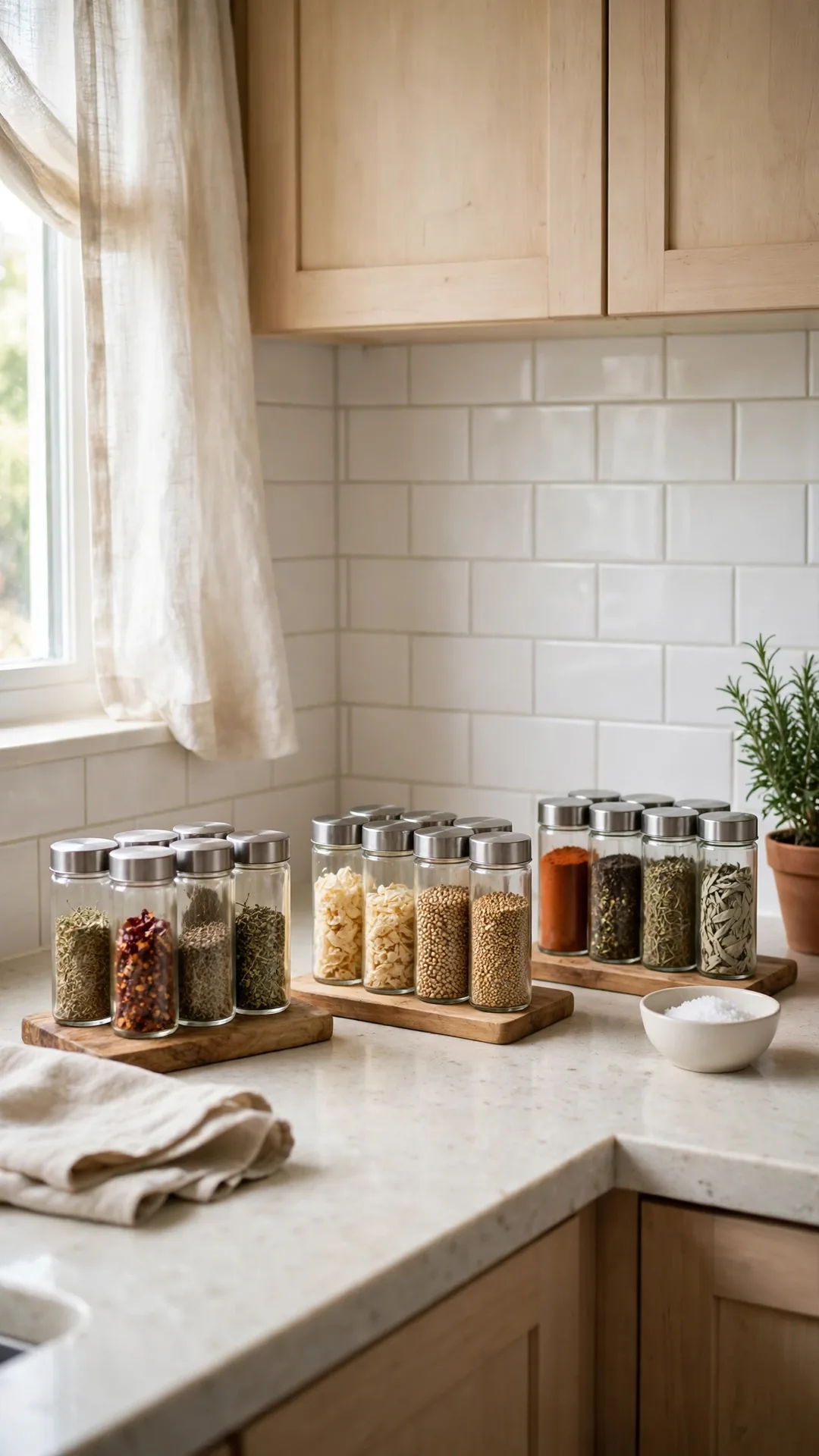
Alphabetical order looks neat but it does not match how you cook. Group by meal instead, so taco night needs one reach. These spice organization ideas for small kitchens work best when each group matches a real habit.
How to do it:
- Sort jars into daily, baking, heat and world flavor groups.
- Keep the daily group closest to the stove or prep spot.
- Put baking spices together near the mixing bowls.
- Use small bins or trays to hold each group apart.
- Re-sort once a season as your cooking changes.
Best for: Cooks who make the same five meals each week.
Budget: $10 to $25
Quick tip: Name each group on a small card until the habit sticks.
5. Alphabetize One Shelf and Keep It That Way
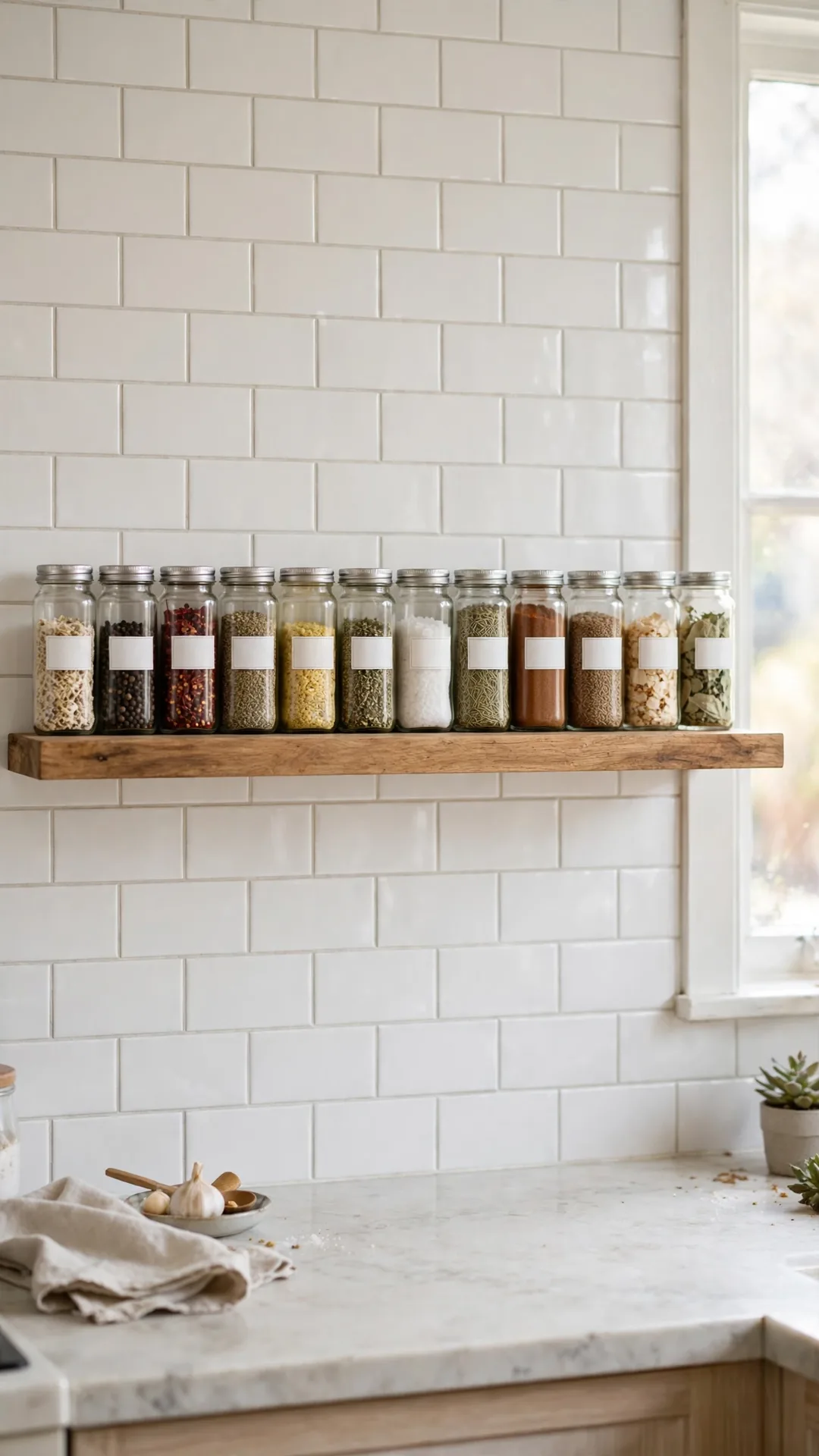
You know the name, so alphabetical order is the fastest find. One shelf in A to Z order beats a full cabinet search. The system only works if every jar goes back to its spot.
How to do it:
- Line jars up from A on the left to Z on the right.
- Leave one empty gap at the end for new jars.
- Put the most used letter groups at eye level.
- Re-alphabetize once a month, which takes five minutes.
- Keep the same order after every grocery run.
Best for: Big collections over 30 jars.
Budget: Free
Quick tip: A tiny letter sticker on the shelf edge keeps the order clear.
6. Date Each Jar When You Fill It
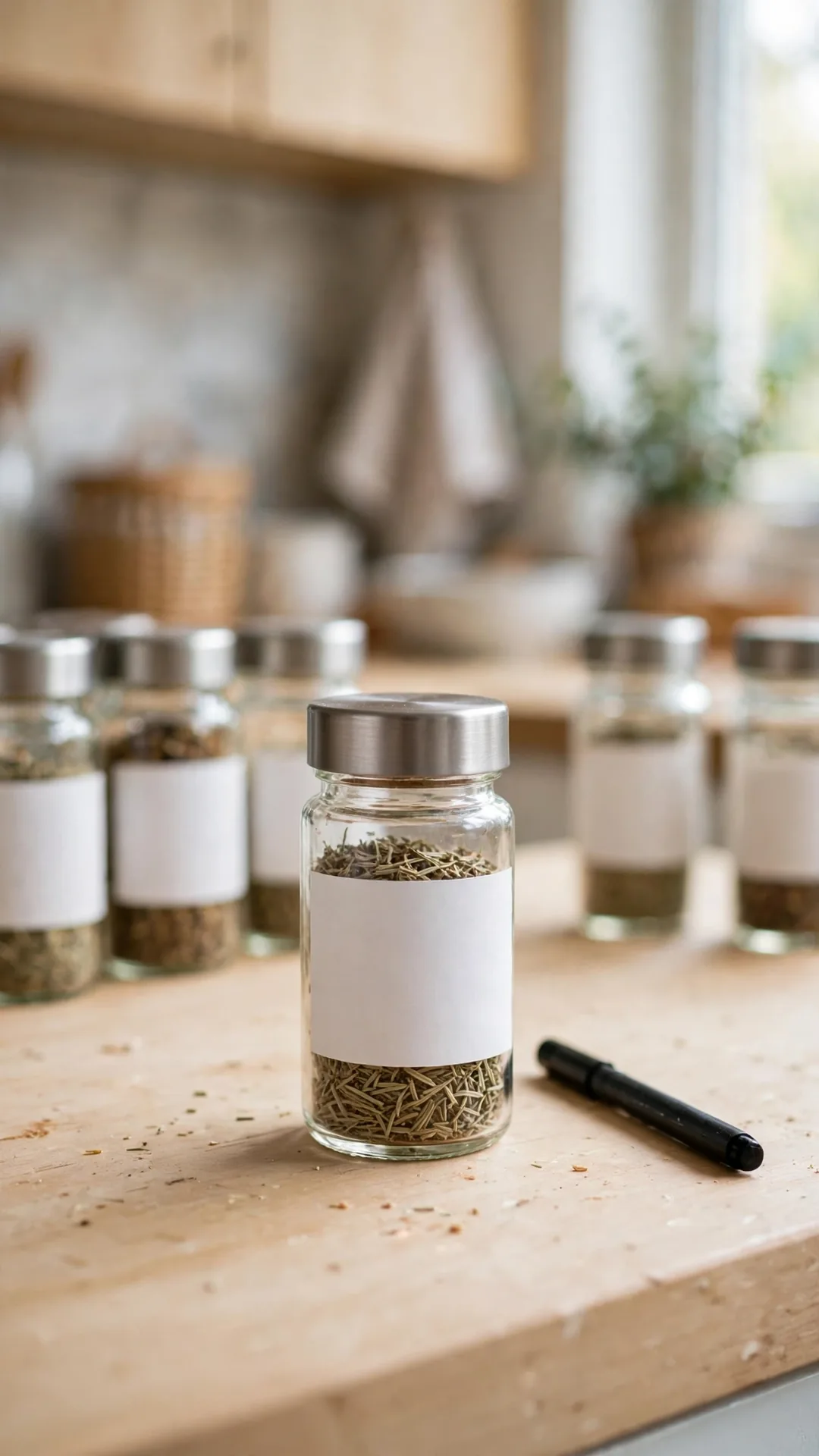
Spices lose flavor slowly, so you never notice the fade. A date on the jar tells you when to refill or toss it. These spice organization ideas for small kitchens stay fresh because every jar carries its own clock.
How to do it:
- Write the fill date on the lid with a fine pen.
- Use month and year only, such as 03/26.
- Set a phone reminder to check dates each spring.
- Toss ground spices after about one year.
- Keep whole spices up to two years if they still smell strong.
Best for: Anyone who buys spices in bulk bags.
Budget: $2 to $5 for a pen and labels
Quick tip: Date the refill bag too, so the next jar starts fresh.
7. Color Code Lids by Spice Family
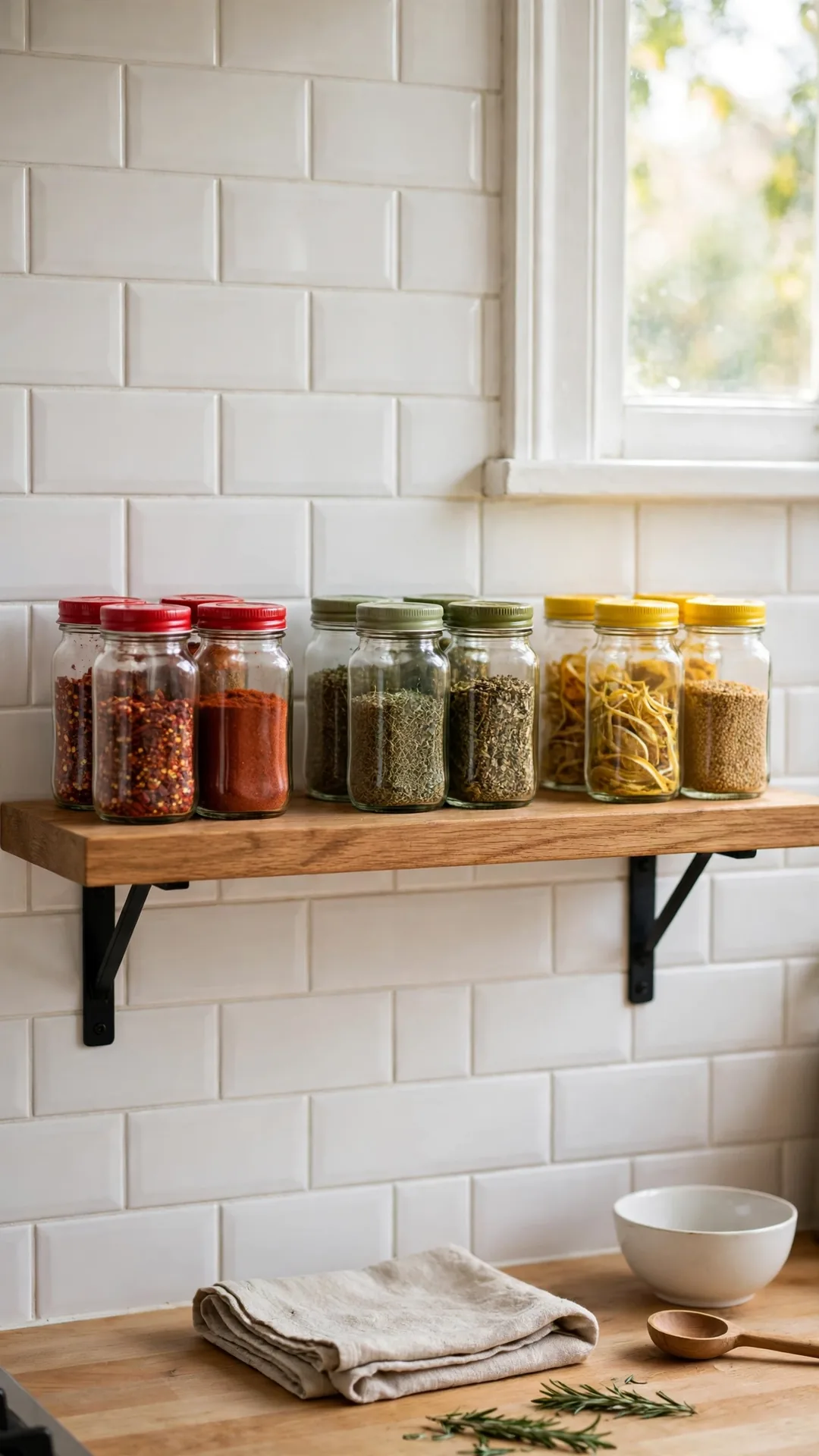
Color is faster than reading when your hands are busy. Red lids for heat, green for herbs and yellow for baking works at a glance. Color schemes calm small rooms, as these small bathroom color ideas show.
How to do it:
- Pick three lid colors for your three biggest groups.
- Use red for hot spices, green for herbs and yellow for baking.
- Buy colored lids or paint plain lids with craft paint.
- Keep the code on a small card inside the cabinet door.
- Stick to the same colors when you buy new jars.
Best for: Families where more than one person cooks.
Budget: $8 to $20
Quick tip: Keep salt and pepper in white lids so they stand apart.
8. Keep a Small Everyday Spice Caddy
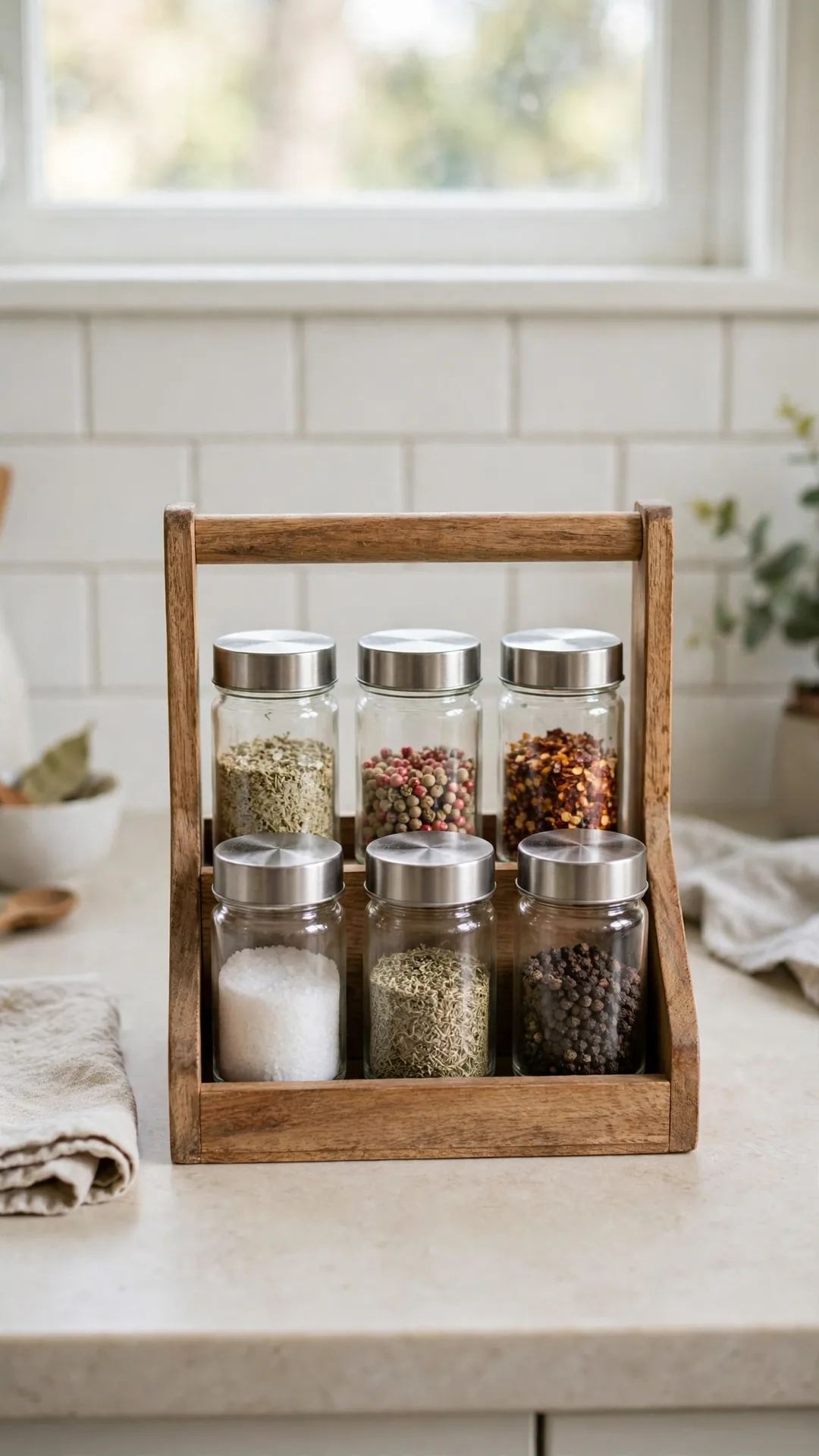
Most meals use the same six spices, so keep them close. A small caddy on the counter ends the daily cabinet hunt. These spice organization ideas for small kitchens save the most time on the jars you grab every day.
How to do it:
- Pick the six spices you use at least three times a week.
- Choose a caddy about 8 inches wide with a handle.
- Set it by the stove but at least 12 inches from the heat.
- Refill the caddy jars from bulk stock once a week.
- Wipe the caddy clean when you wipe the counters.
Best for: Daily cooks with almost no counter space.
Budget: $10 to $25
Quick tip: Swap the caddy lineup when the season changes your cooking.
9. Turn One Shallow Drawer Into a Spice Drawer
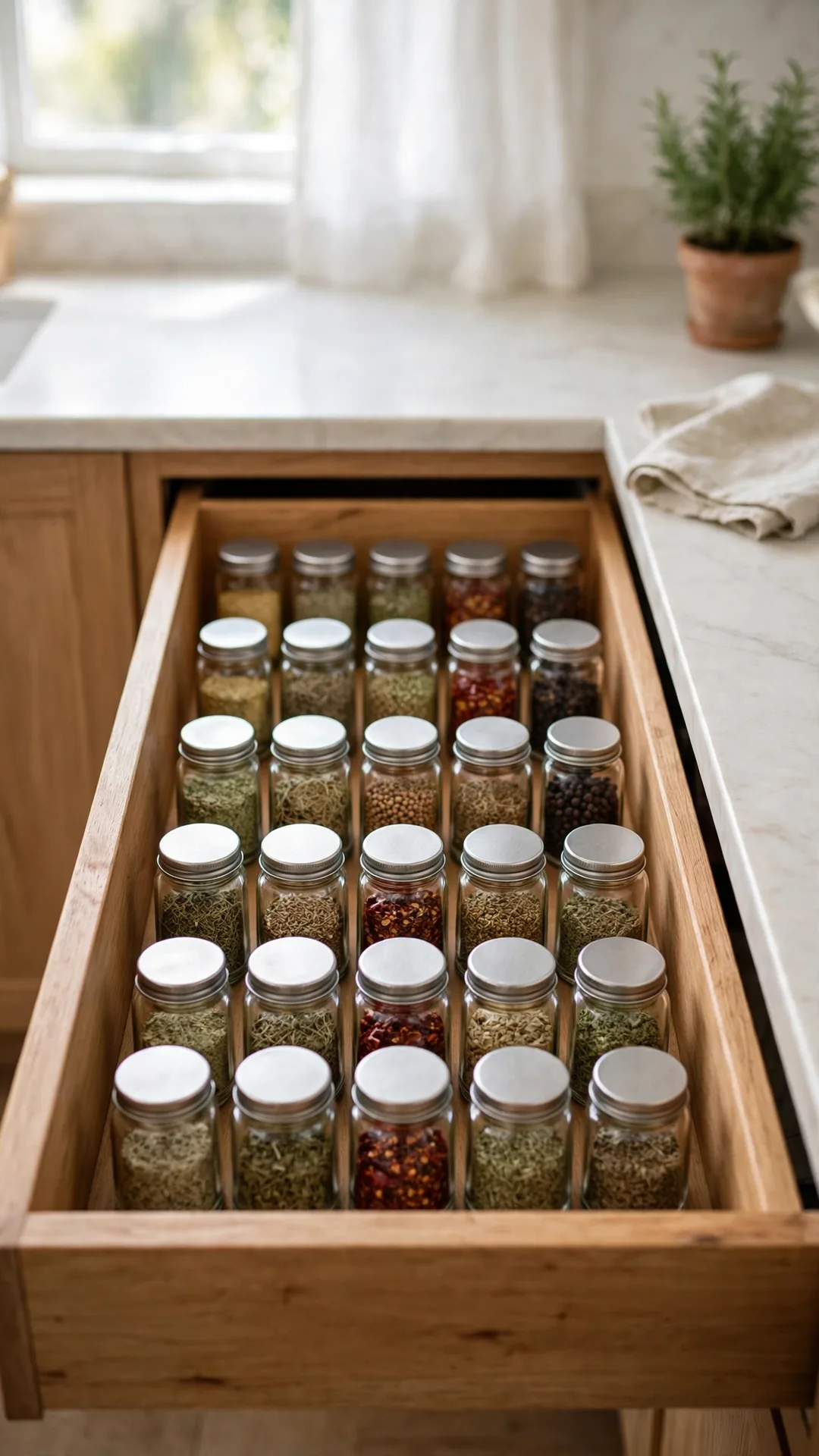
A shallow drawer near the stove beats a high cabinet. You see every jar at once when you pull it open. The drawer keeps jars dark and cool, which keeps flavor strong.
How to do it:
- Pick the shallow drawer closest to your prep spot.
- Clear it out and wipe it clean first.
- Lay jars flat or stand them in rows.
- Label the lids so you can read them from above.
- Keep the drawer free of other kitchen tools.
Best for: Kitchens with one spare shallow drawer.
Budget: $15 to $40
Quick tip: Measure the drawer depth before you buy any jars.
10. Add a Slanted Insert So Labels Face Up
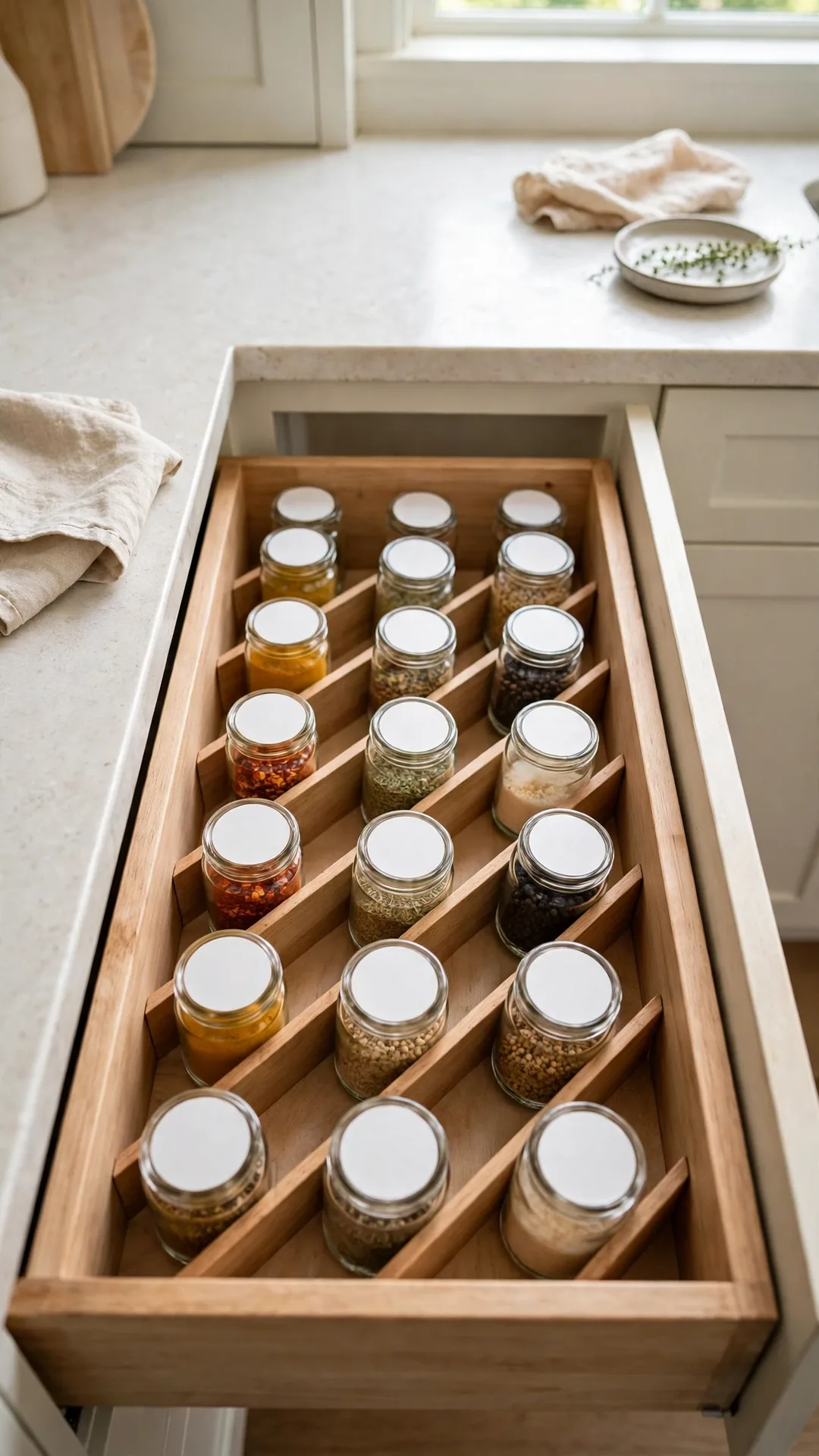
Flat jars hide their labels and standing jars waste depth. A slanted insert tilts each jar so the label faces you. This Old House shares creative spice rack ideas that show the same tilt trick in drawers and cabinets.
How to do it:
- Measure the drawer inside width before you shop.
- Pick a bamboo or plastic insert with two or three tiers.
- Set jars with labels up on each slanted row.
- Leave the front row for the jars you grab most.
- Trim the insert with a saw if it runs long.
Best for: Deep drawers where jars roll around loose.
Budget: $15 to $35
Quick tip: Test the tilt with one jar before you load the whole drawer.
11. Lay Jars Flat in Rows With Lids Up
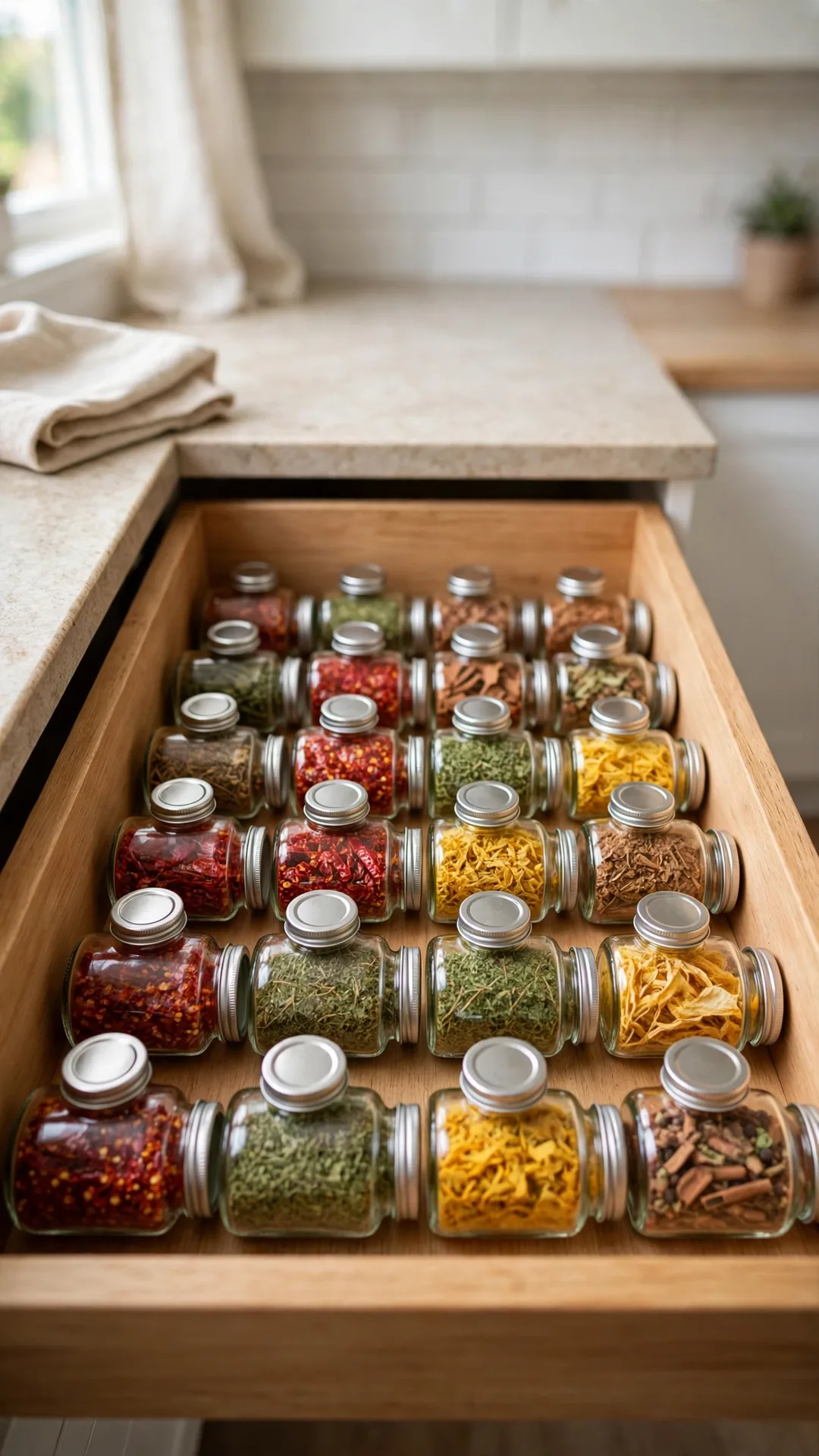
Lying jars flat uses the full width of a wide drawer. Lids face up, so you read the whole drawer in one look. These spice organization ideas for small kitchens shine in a drawer that is too shallow for standing jars.
How to do it:
- Line the drawer with non slip shelf liner first.
- Lay jars in straight rows with lids facing up.
- Sort rows by group, such as baking on the left.
- Add a thin wood strip to stop jars from rolling.
- Keep tall jars out, since they block the rows behind.
Best for: Wide drawers under the cooktop or counter.
Budget: $5 to $15
Quick tip: Small jars fit two rows deep in most standard drawers.
12. Divide a Drawer With a Simple Grid
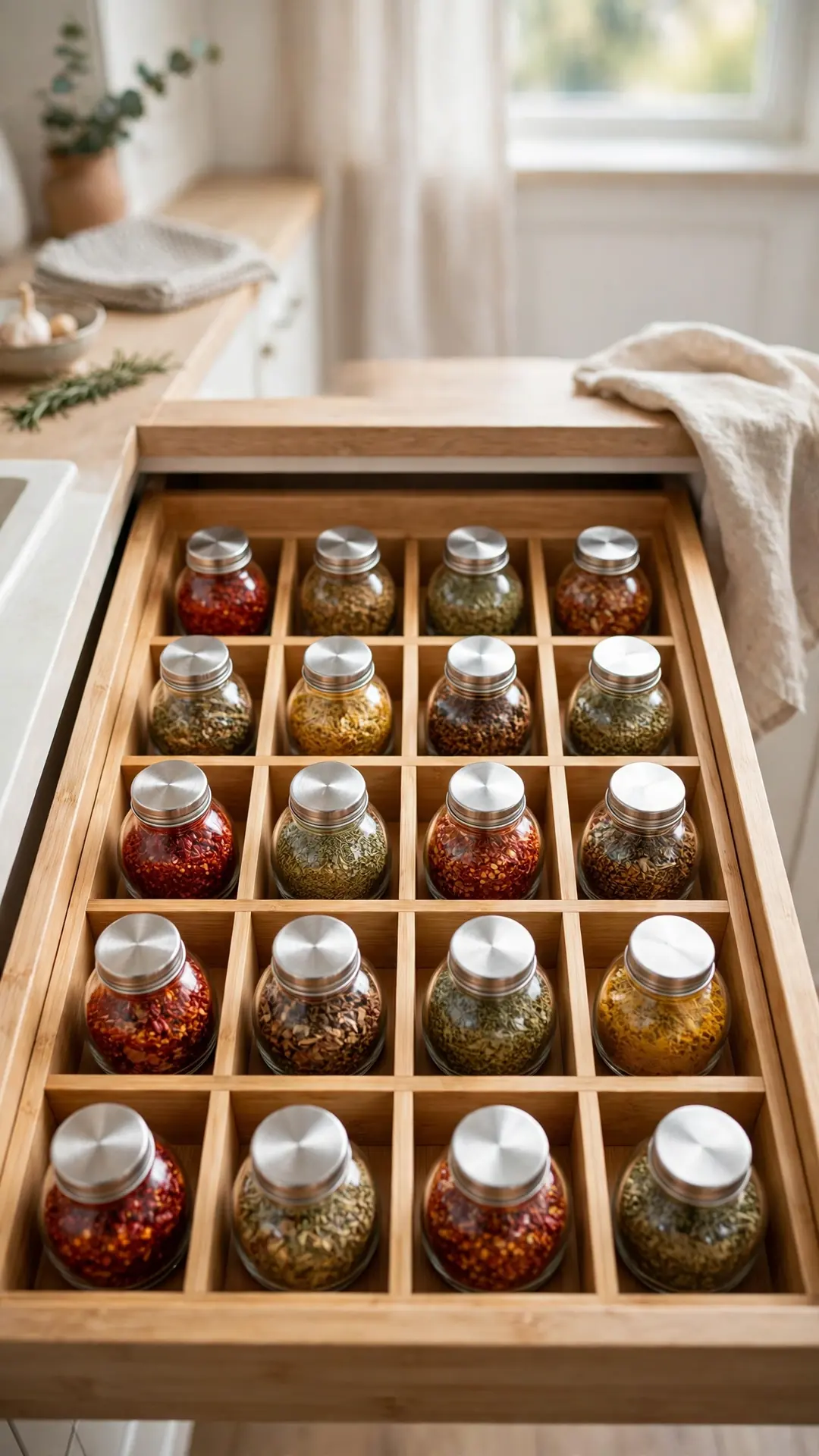
Jars slide around in a big open drawer. A simple grid gives each group its own box. You can lift one section out to cook and drop it back when done.
How to do it:
- Measure the drawer, then buy an adjustable bamboo grid.
- Set one section for daily spices and one for baking.
- Keep packets and small tins in the narrowest section.
- Leave a gap at the back for new jars.
- Pull the grid out to wipe the drawer each month.
Best for: Renters who cannot add built in inserts.
Budget: $12 to $30
Quick tip: A grid made for desk drawers works just as well.
13. Cut Foam to Fit Odd Shaped Jars
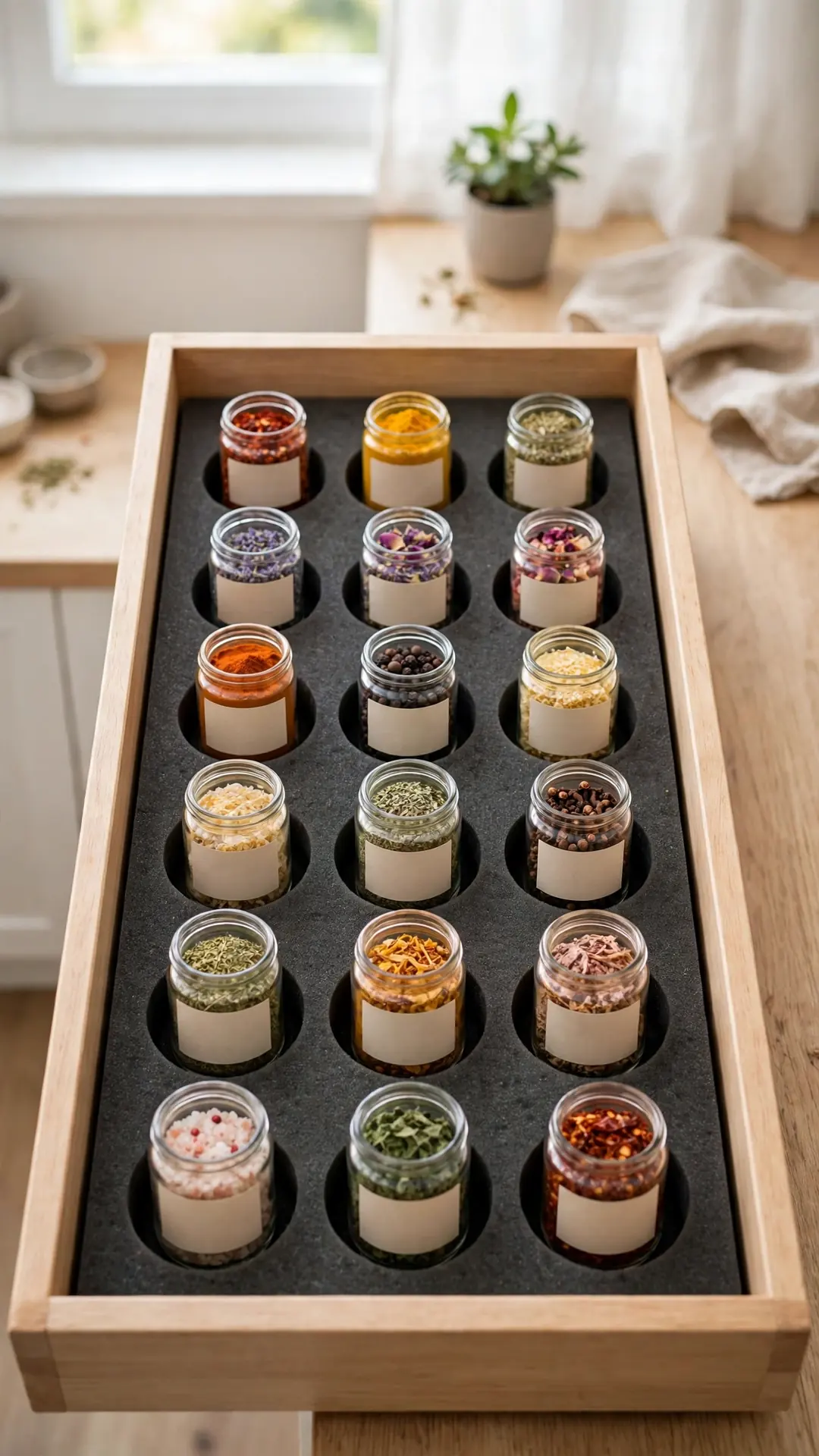
Odd jars roll, tip and waste space in a drawer. A foam insert cut to fit holds each jar snug. The fix costs little and takes one afternoon.
How to do it:
- Buy a sheet of firm foam about 2 inches thick.
- Trace each jar base on the foam with a pen.
- Cut the holes with a sharp craft knife.
- Drop the foam into the drawer and test each jar.
- Trim any tight holes a little wider.
Best for: Mixed jar shapes from markets and bulk stores.
Budget: $8 to $18
Quick tip: Cut the holes a touch small, since foam stretches.
14. Keep Bulk Refills in a Deep Drawer Bin
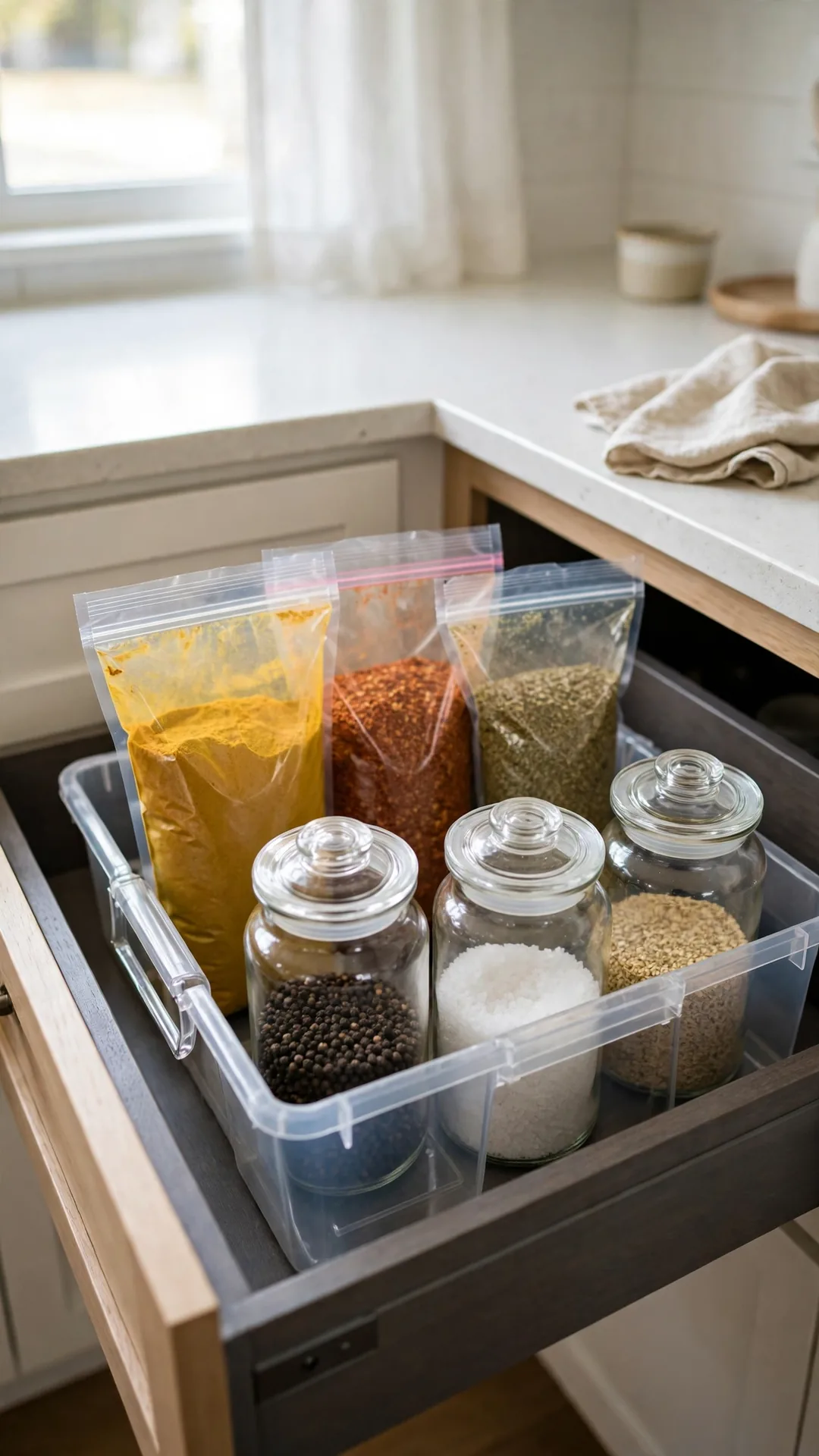
Bulk bags save money but they flop around in a cabinet. One deep drawer bin holds all the refills in one spot. These spice organization ideas for small kitchens keep the daily jars small and the bulk stock out of sight.
How to do it:
- Pick a bin that fits the drawer with room to spare.
- Stand refill bags upright with labels facing out.
- Clip each bag shut with a small binder clip.
- Keep a scoop in the bin for fast refills.
- Refill small jars over the bin to catch spills.
Best for: Bulk buyers and cooks who refill often.
Budget: $8 to $20
Quick tip: Write the spice name on each bag with a marker.
15. Add a Stepped Riser Inside a Cabinet
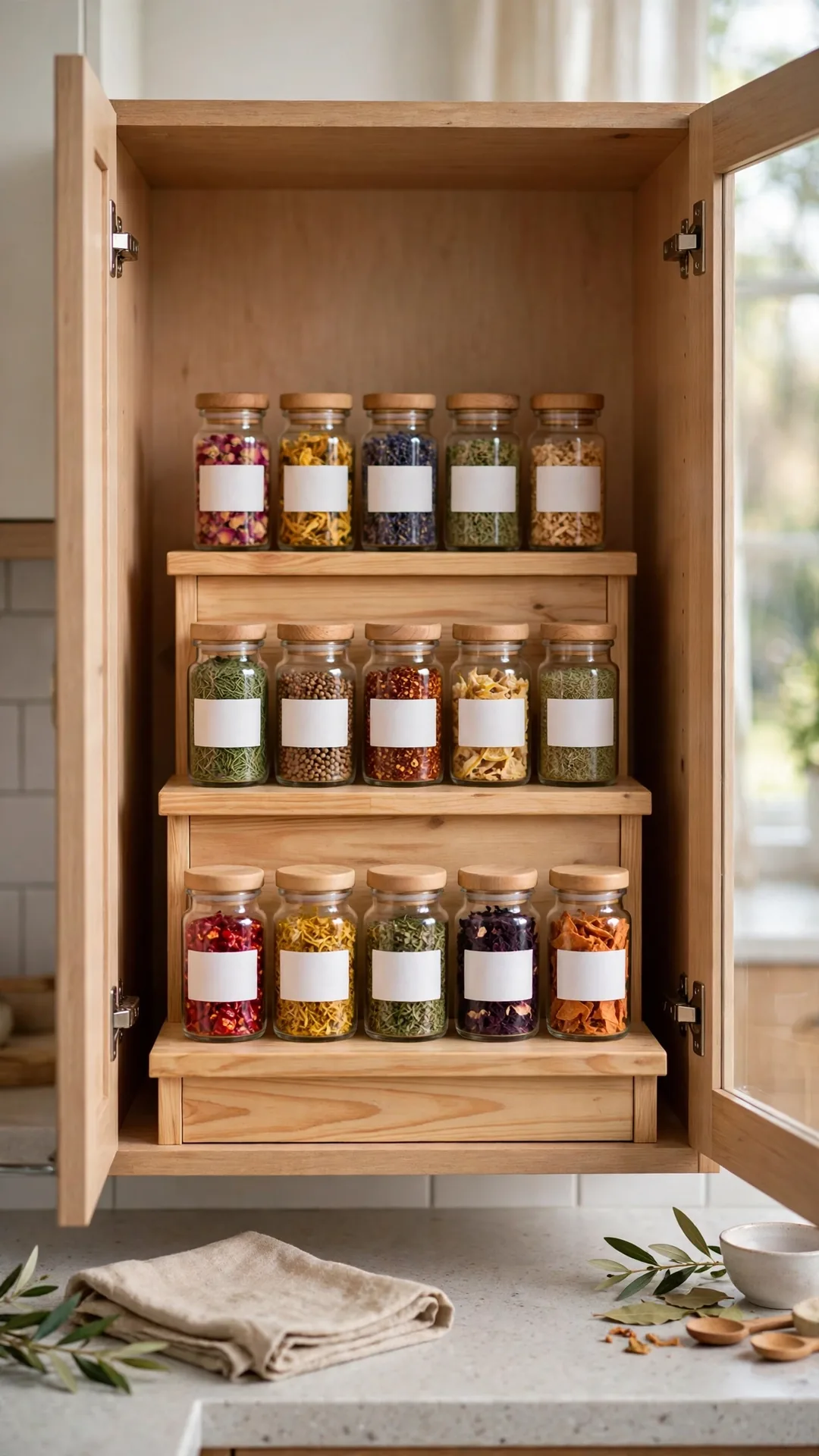
Back rows vanish in a flat cabinet shelf. A stepped riser lifts each row so you can see all three. The riser costs less than most racks and needs no tools.
How to do it:
- Measure the cabinet width and depth before you buy.
- Pick a three step riser in bamboo, wood or plastic.
- Set tall jars on the back step and short jars in front.
- Leave the top step for the spices you use least.
- Wipe the riser when you wipe the shelf.
Best for: Deep wall cabinets with one dark back row.
Budget: $12 to $30
Quick tip: Two small risers beat one wide riser in a narrow cabinet.
16. Spin a Turntable Inside a Deep Cabinet
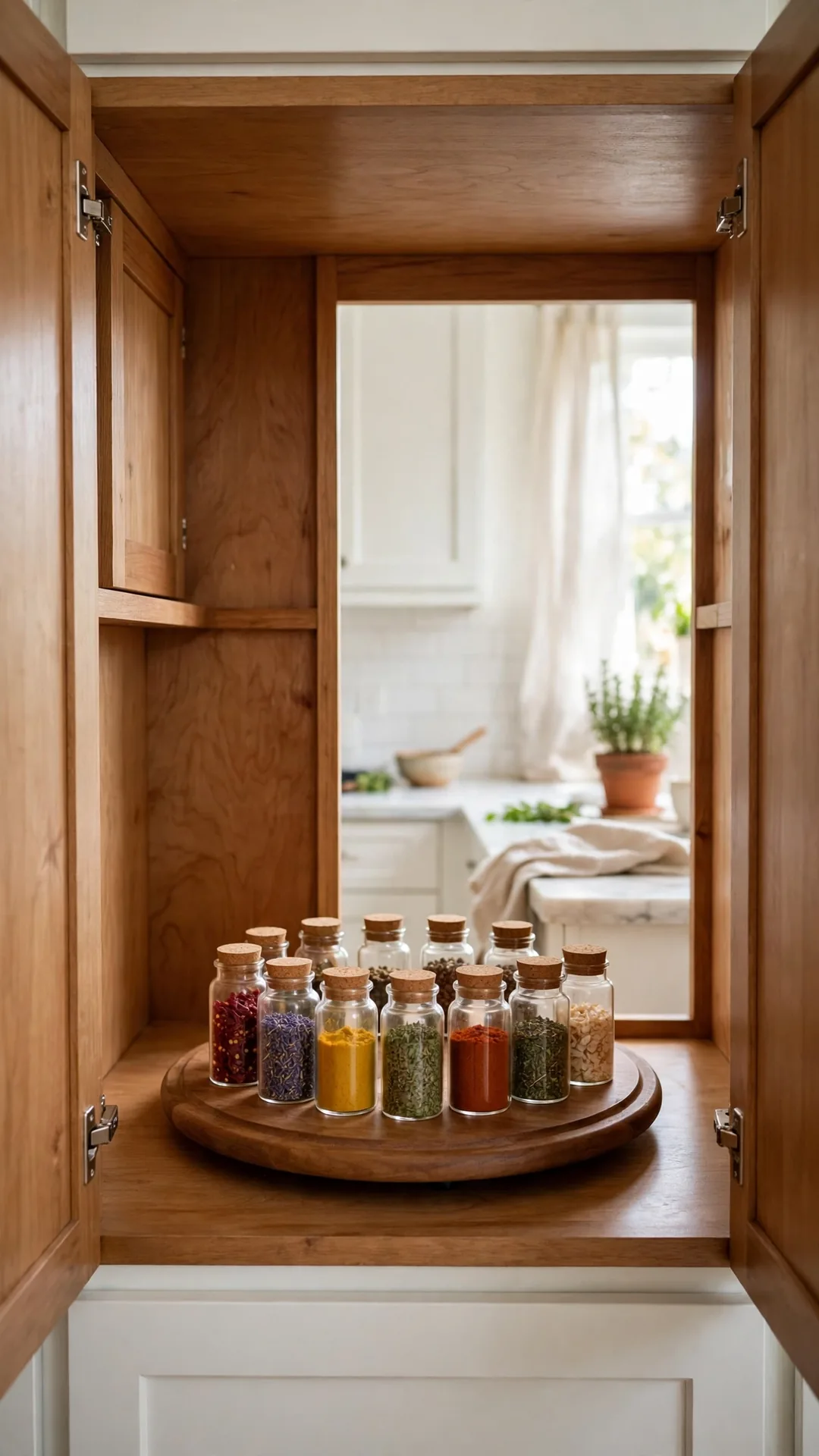
Deep cabinets bury jars in the back corner. A turntable brings the back row to the front with one spin. Pair it with these small space kitchen ideas to make the whole kitchen work harder.
How to do it:
- Measure the cabinet floor and pick a turntable 1 inch smaller.
- Choose a turntable with a low rim to stop jars sliding.
- Group jars by use, with daily spices on one half.
- Keep tall jars near the center so they clear the door.
- Spin it once a week to check what runs low.
Best for: Deep corner cabinets and blind shelves.
Budget: $12 to $28
Quick tip: A non slip mat under the turntable stops wobble.
17. Mount a Rack on the Cabinet Door
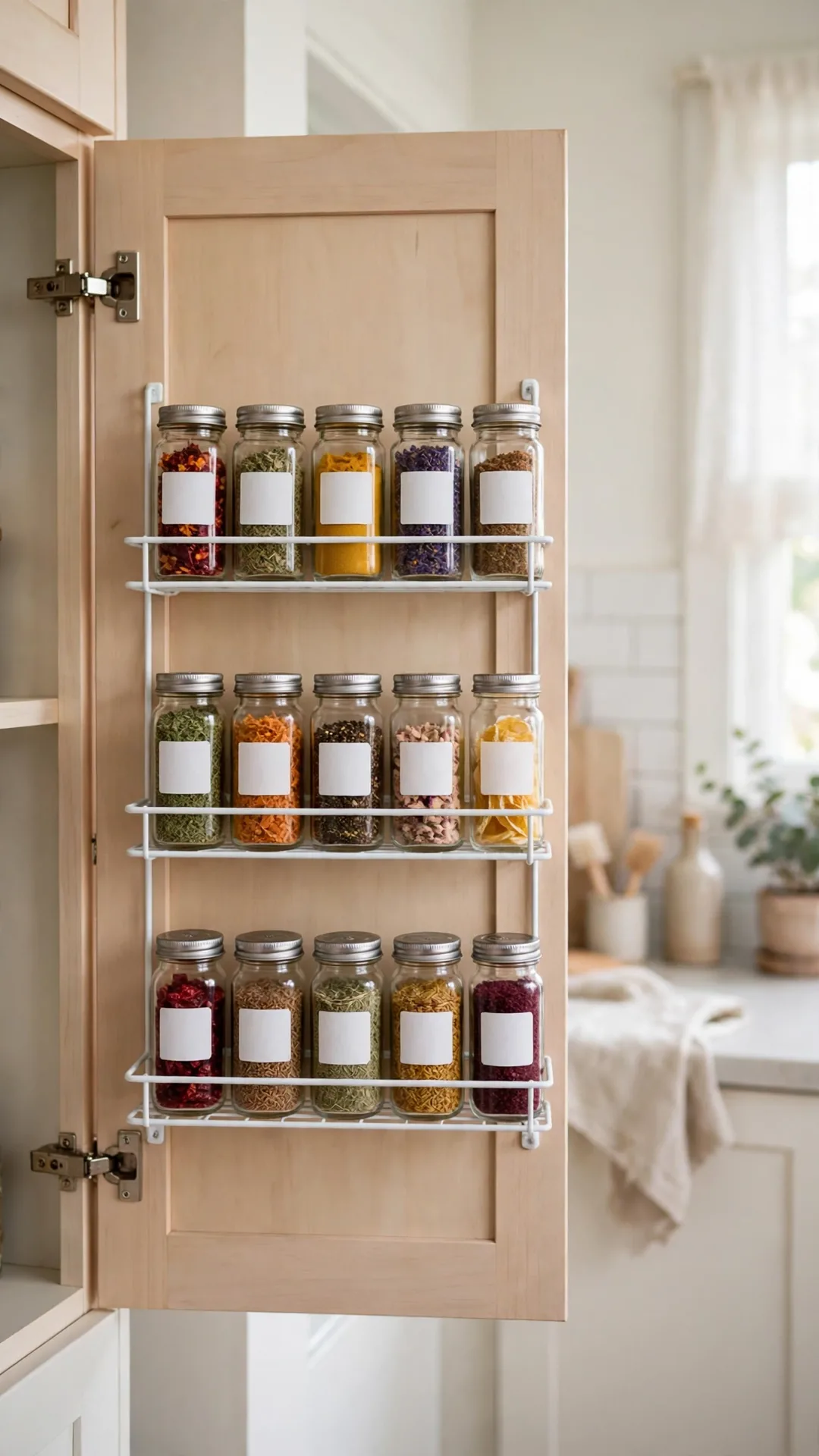
The inside of a cabinet door is free storage space. A slim rack there holds ten jars without taking a shelf. These spice organization ideas for small kitchens use door space that most kitchens waste.
How to do it:
- Measure the door inside and the shelf depth first.
- Pick a rack no deeper than 3 inches so the door still shuts.
- Mount it with screws or strong adhesive strips.
- Load light jars first and test the door swing.
- Keep heavy jars on a shelf, not on the door.
Best for: Renters using adhesive mounts and small cabinets.
Budget: $15 to $35
Quick tip: Test the door with a full rack before you load it for good.
18. Hang a Basket Under a Cabinet Shelf
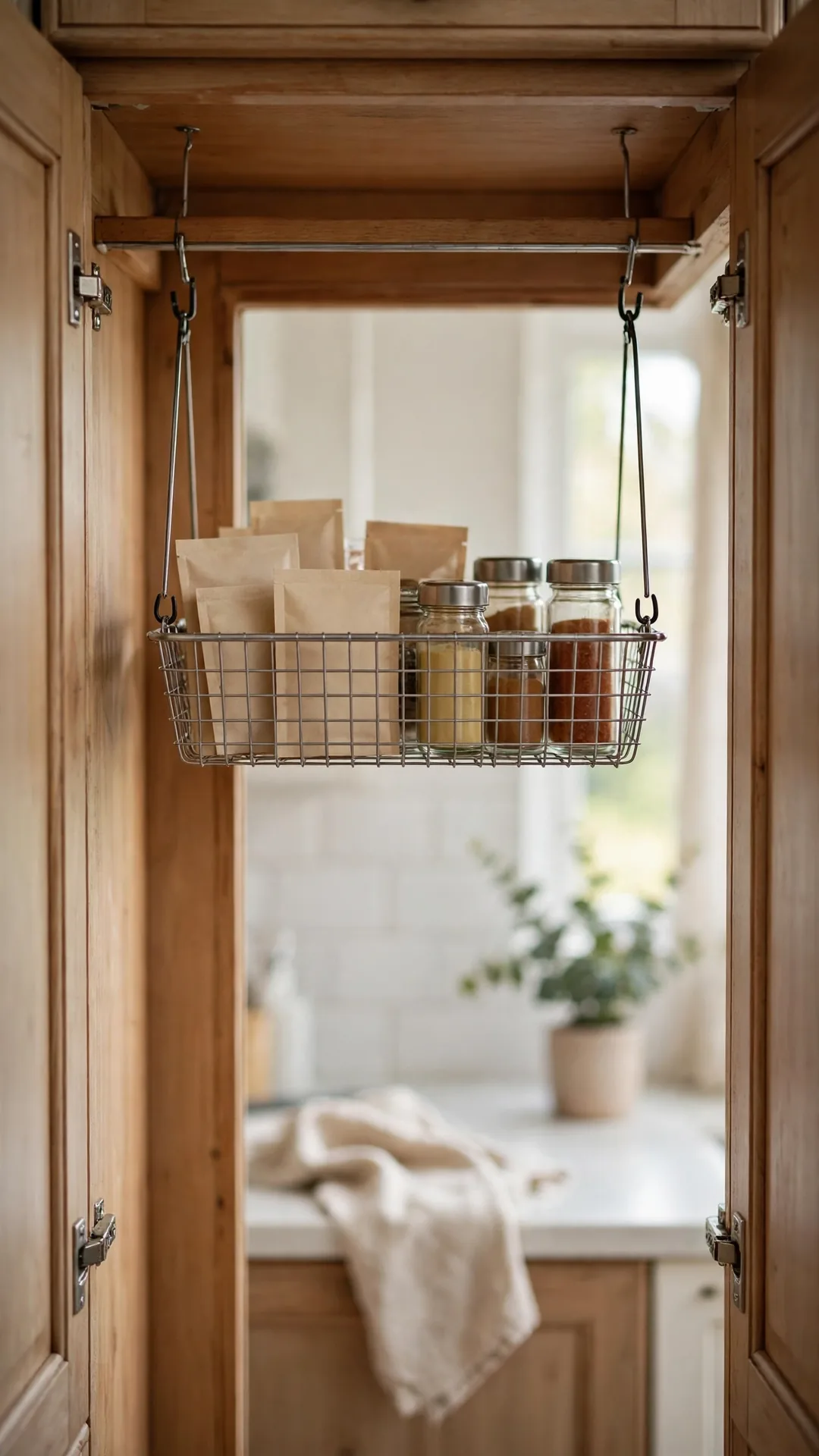
Tall shelves leave dead air above short jars. A wire basket hooks under the shelf and fills that gap. It holds packets and small tins without a single screw.
How to do it:
- Measure the shelf thickness so the hooks grip well.
- Pick a wire basket about 10 inches wide.
- Slide the arms over the shelf edge and press firm.
- Keep light packets and small tins in the basket.
- Pull the basket out like a drawer to grab items.
Best for: Tall cabinets with wasted air above jars.
Budget: $8 to $18
Quick tip: One basket per shelf is plenty, since two crowd the jars.
19. Label the Shelf Edge Below Each Row
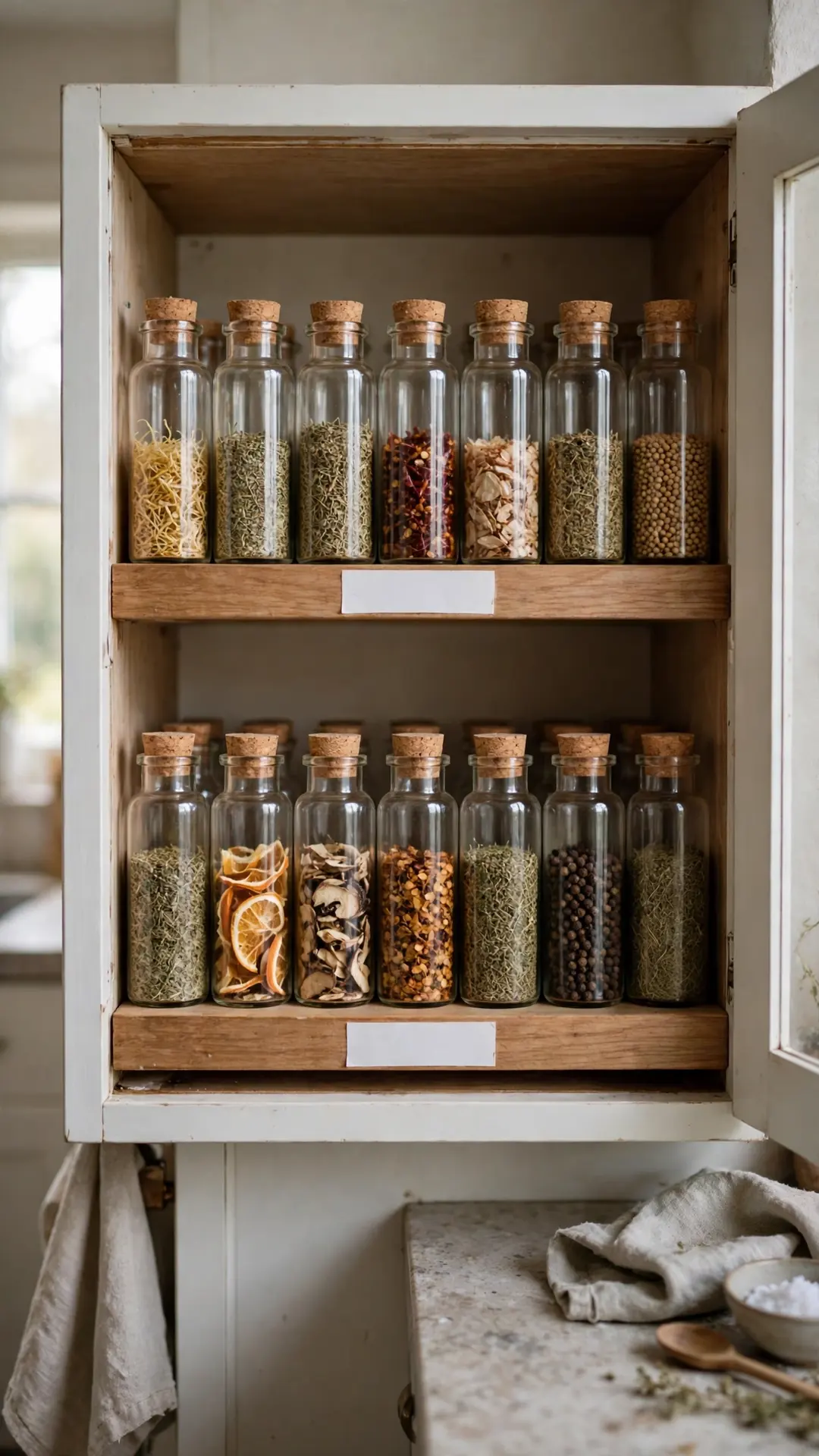
Jar labels face the wrong way after one busy week. A label on the shelf edge tells every jar where it lives. These spice organization ideas for small kitchens stay tidy because each jar has a marked home.
How to do it:
- Write each spice name on a small strip of tape.
- Stick the strip on the shelf edge below its jar.
- Use one label per jar spot, even for spares.
- Replace the tape when you swap a spice.
- Keep the writing short, just the spice name.
Best for: Shared kitchens where jars drift out of place.
Budget: $2 to $5
Quick tip: Masking tape and a fine pen beat fancy label makers here.
20. Use Clear Bins for Spice Packets
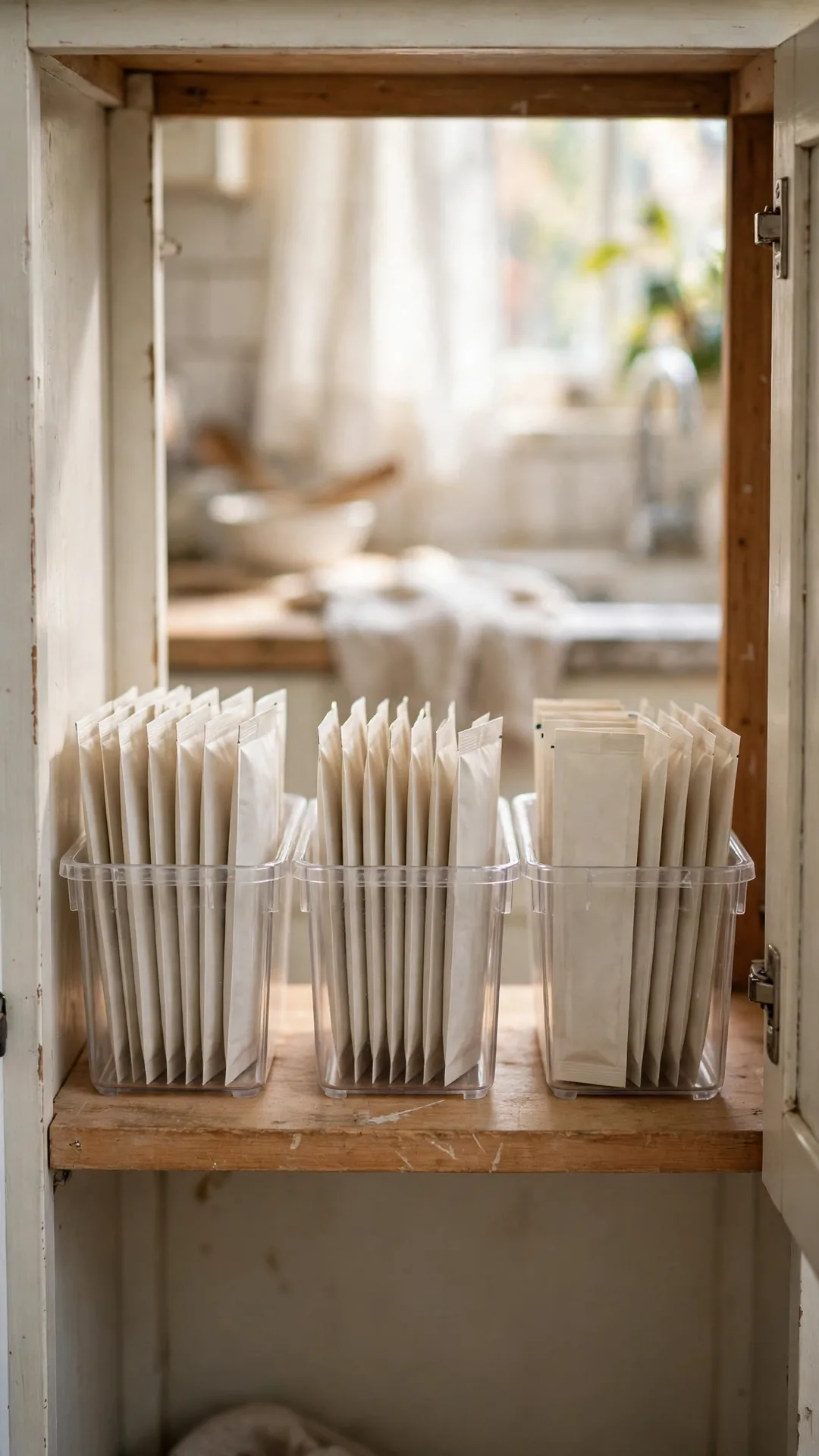
Loose packets slide to the back and get lost. Clear bins corral them where you can see each one. Pull the bin out, grab a packet and slide it back.
How to do it:
- Pick bins about 4 inches wide and 10 inches deep.
- Sort packets by type, such as taco, curry and soup.
- Stand packets upright so the labels face out.
- Label each bin on the front edge.
- Keep one bin for half used packets.
Best for: Packet heavy cooks and small cabinets.
Budget: $8 to $20 for a set of four
Quick tip: Cut the bin height down if packets flop over.
21. File Spice Packets Upright Like Cards
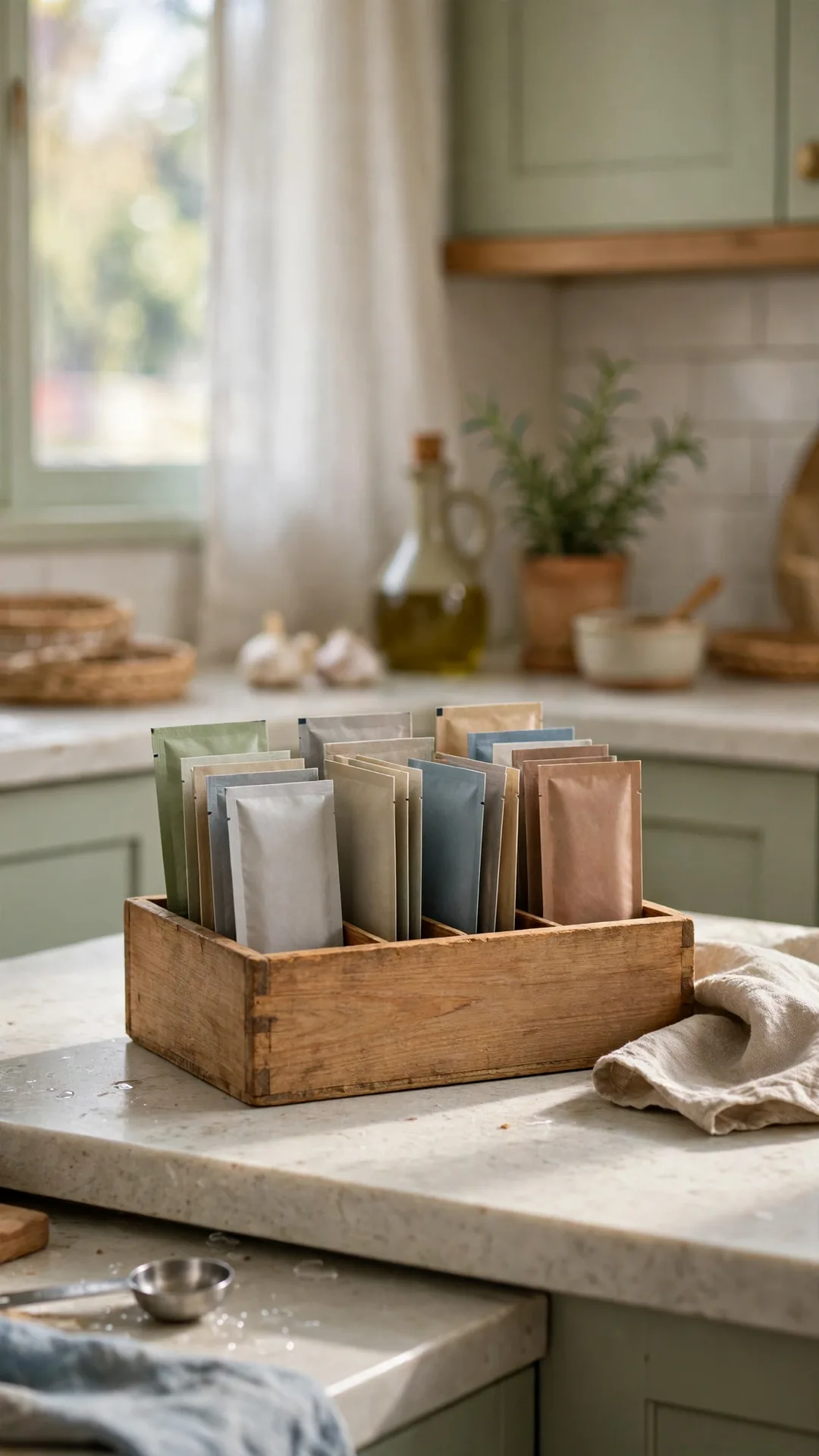
Packets stacked flat hide the one you need. Filing them upright like index cards shows every label. Flip through them like a recipe box to find the right one.
How to do it:
- Use a small box about 6 inches wide.
- Stand packets in rows with labels facing forward.
- Add small dividers for each flavor group.
- Keep the box in the cabinet nearest the stove.
- Toss empty packets right after you cook.
Best for: Cooks with lots of seasoning packets.
Budget: $5 to $15
Quick tip: A small recipe box works as the file box.
22. Add a Half Shelf Inside a Tall Cabinet
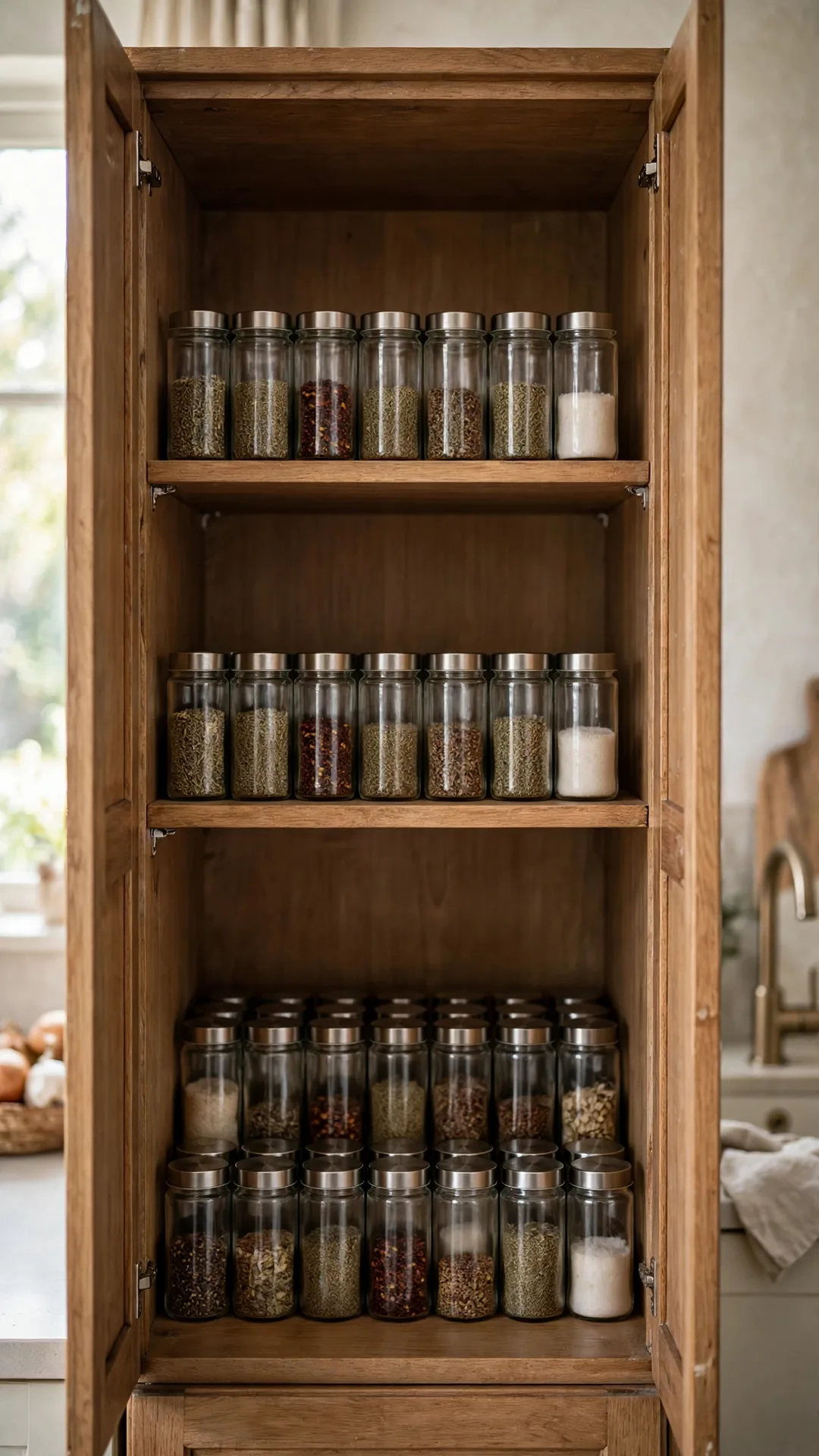
Tall cabinets waste half their height on short jars. A half shelf splits the gap and doubles the jar rows. These spice organization ideas for small kitchens add storage without a single new cabinet.
How to do it:
- Measure the cabinet height and depth first.
- Pick a freestanding half shelf in wire or bamboo.
- Set it on the shelf floor with jars above and below.
- Keep short jars on the half shelf top.
- Leave headroom so jars slide out with ease.
Best for: Tall wall cabinets with one big empty gap.
Budget: $10 to $22
Quick tip: Two half shelves side by side fill a wide cabinet.
23. Use Stackable Square Tins to Save Space
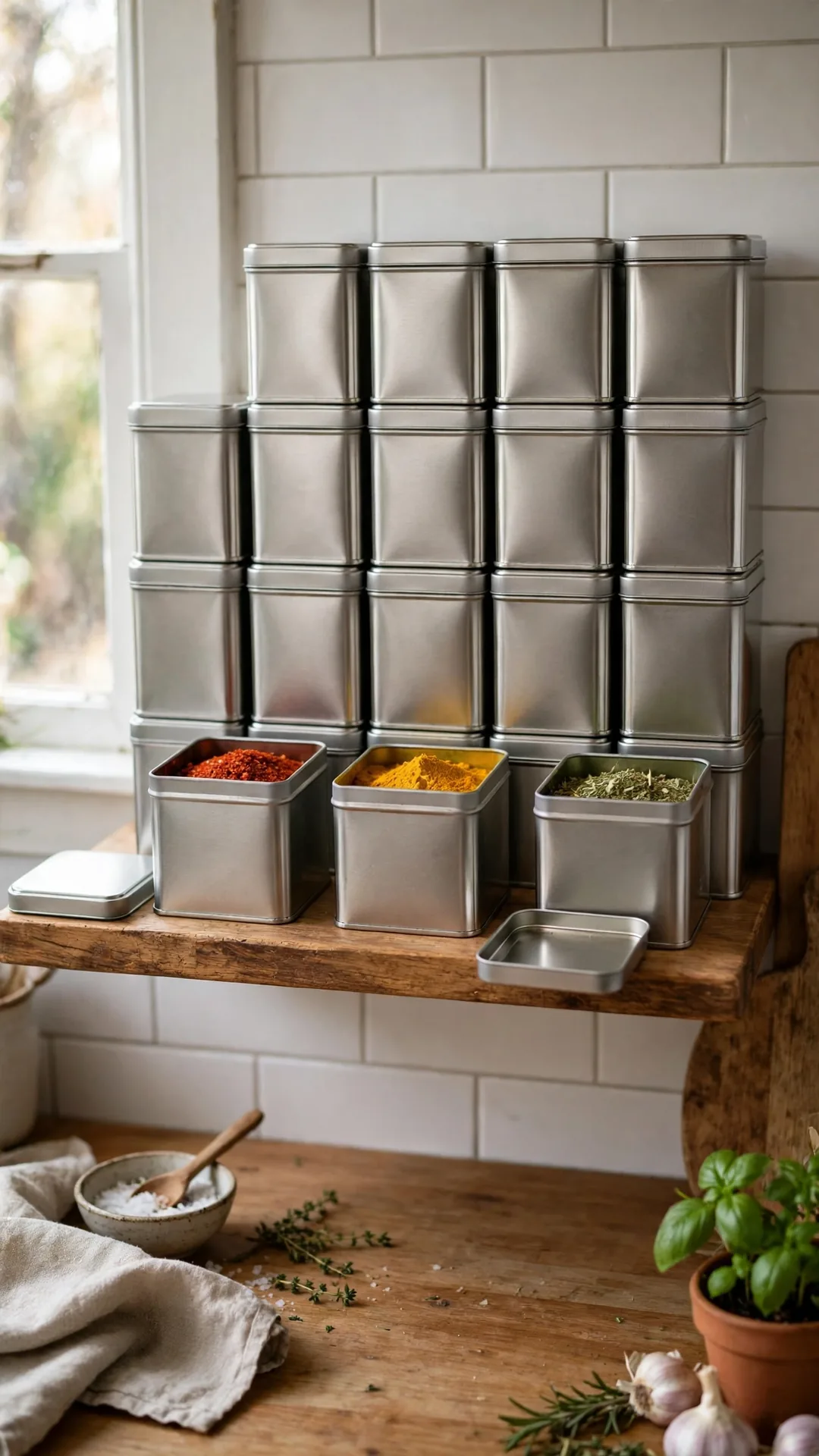
Round jars leave dead corners on every shelf. Square tins sit flush and stack two high with ease. The flat lids take labels well and stay easy to read.
How to do it:
- Pick square tins in one size, such as 4 ounce.
- Fill each tin and press the lid on tight.
- Label the lid and the front face.
- Stack no more than two high for safe grabs.
- Keep the bottom row for daily spices.
Best for: Narrow shelves and deep drawers alike.
Budget: $18 to $40 for a set of 12
Quick tip: Magnetic tins can double as wall storage later.
24. Keep Whole Spices Apart From Ground Ones
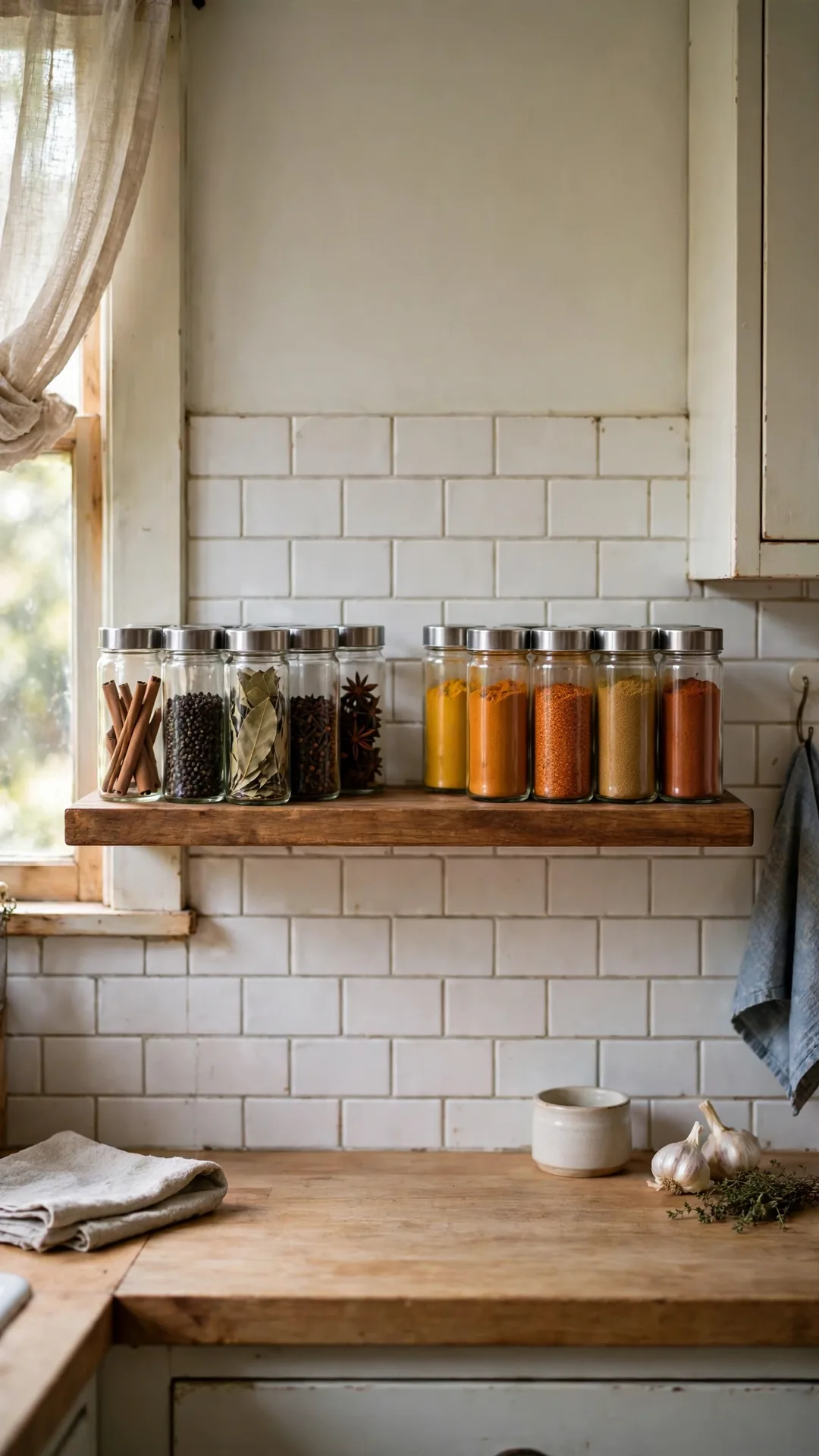
Whole and ground spices look alike in a rush. Mixing them slows you down and doubles the clutter. These spice organization ideas for small kitchens split the two groups so each grab is fast.
How to do it:
- Put whole spices on the left and ground on the right.
- Use different jar shapes for each group if you can.
- Label whole spice jars with a small dot on the lid.
- Keep a grinder near the whole spice group.
- Refill ground jars from whole stock when you can.
Best for: Cooks who grind their own spices.
Budget: Free
Quick tip: Whole spices last longer, so buy them whole when the price is close.
25. Hang a Magnetic Strip for Metal Tins
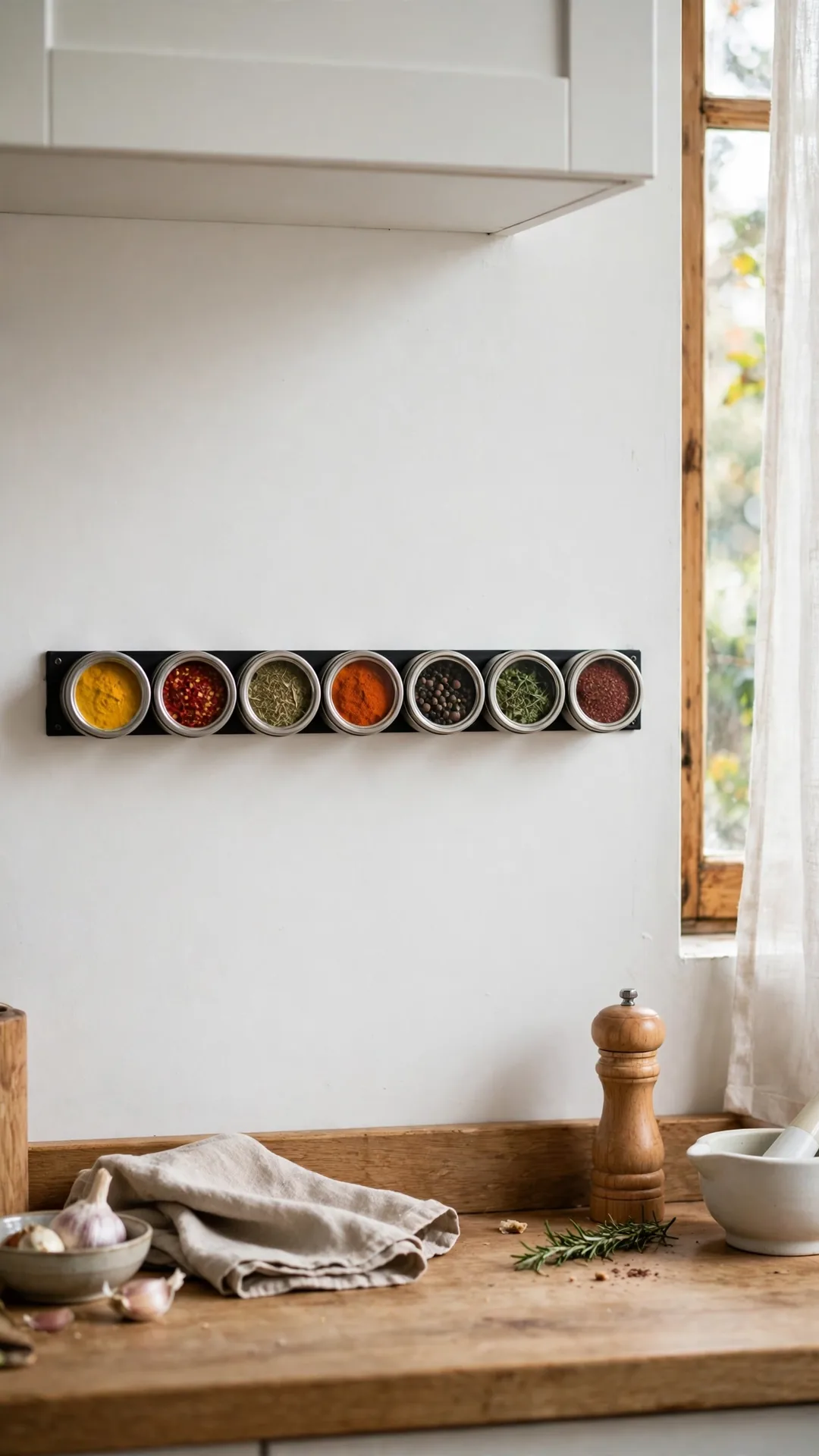
A magnetic strip turns a bare wall into spice storage. Metal tins snap on and lift off with one hand. The wall display frees a whole shelf for other jars.
How to do it:
- Mount a 16 inch magnetic strip at eye level.
- Use tins with flat metal lids for a firm hold.
- Space tins about 1 inch apart for easy grabs.
- Keep the strip away from steam and splashes.
- Test one tin first to check the magnet strength.
Best for: Renters with adhesive strips and bare wall space.
Budget: $15 to $35
Quick tip: Clear lids let you see the spice without lifting the tin.
26. Stick Magnetic Jars on the Fridge Side
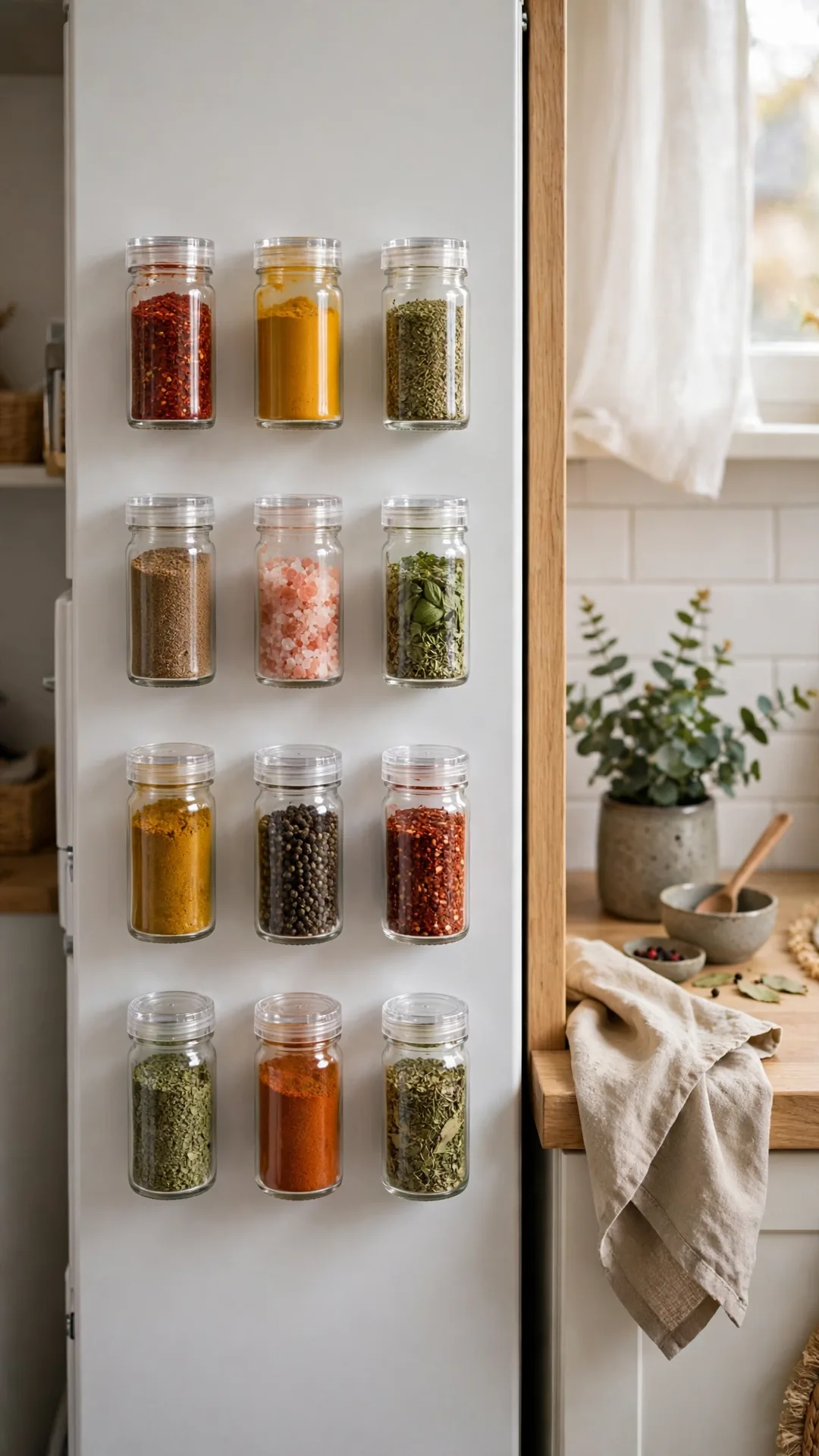
The side of the fridge is a big blank magnet board. Magnetic jars stick there and free your shelves. The spot sits close to the prep zone in most kitchens.
How to do it:
- Pick jars with strong magnets built into the lid or base.
- Stick them on the fridge side away from the oven heat.
- Line them in two rows at eye and hand level.
- Keep the front row for daily spices.
- Wipe the fridge side clean before you stick jars on.
Best for: Tiny kitchens with no free wall or shelf.
Budget: $20 to $45 for a set of 12
Quick tip: Check that the fridge side is steel, since some panels are not magnetic.
27. Mount Slim Shelves on a Blank Wall
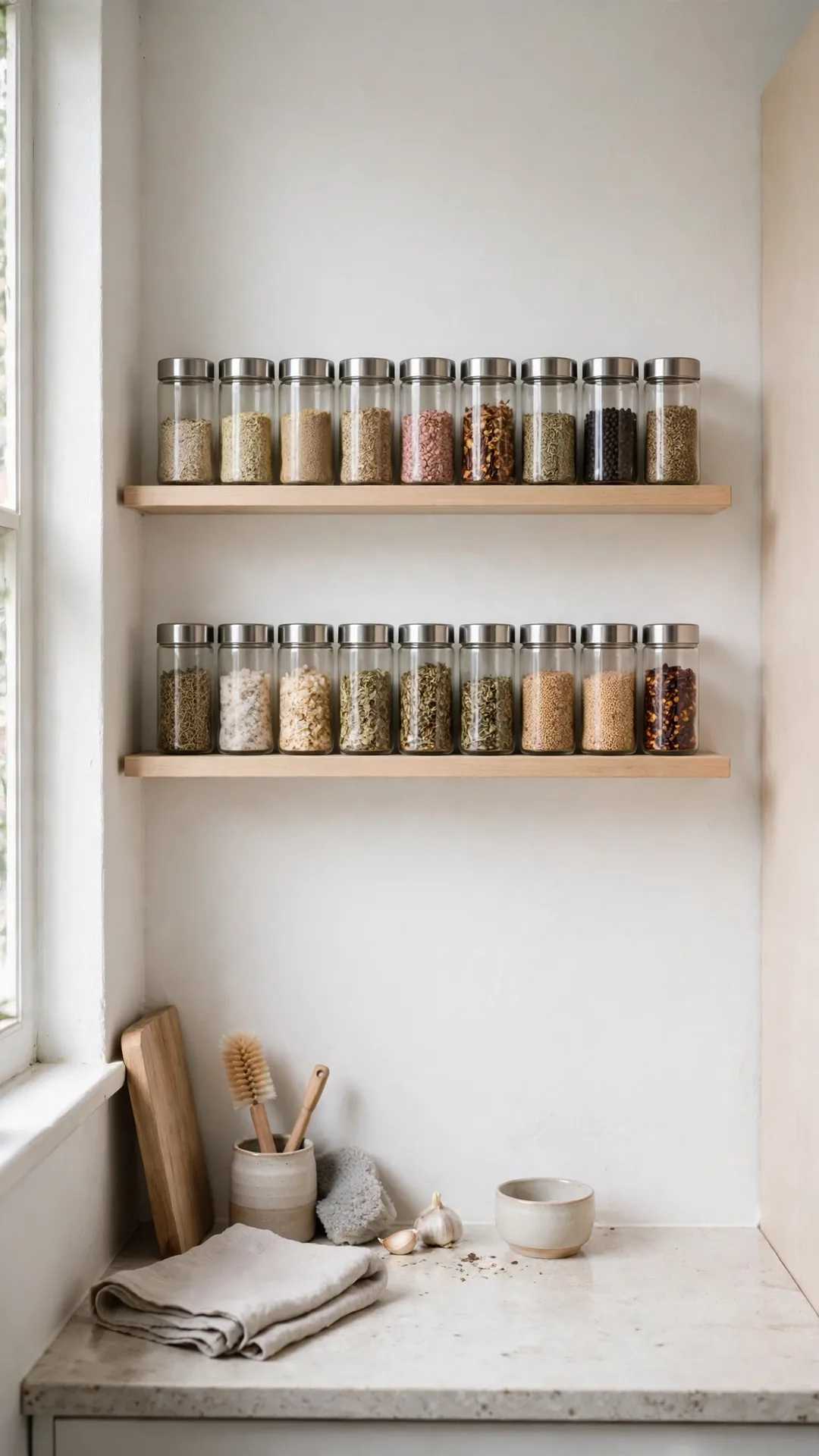
A blank wall near the stove is prime spice real estate. Two slim shelves hold 20 jars in less than 2 feet of wall. These spice organization ideas for small kitchens turn dead wall space into the most used shelf in the room.
How to do it:
- Pick shelves about 3 inches deep so jars sit snug.
- Mount them 10 inches apart for easy jar grabs.
- Add a thin lip rail so jars cannot slide off.
- Sort jars by group from left to right.
- Keep the top shelf for spices you use less.
Best for: Walls beside the stove or prep counter.
Budget: $20 to $50
Quick tip: Renters can swap screws for strong adhesive shelf strips.
28. Use a Picture Ledge as a Spice Shelf
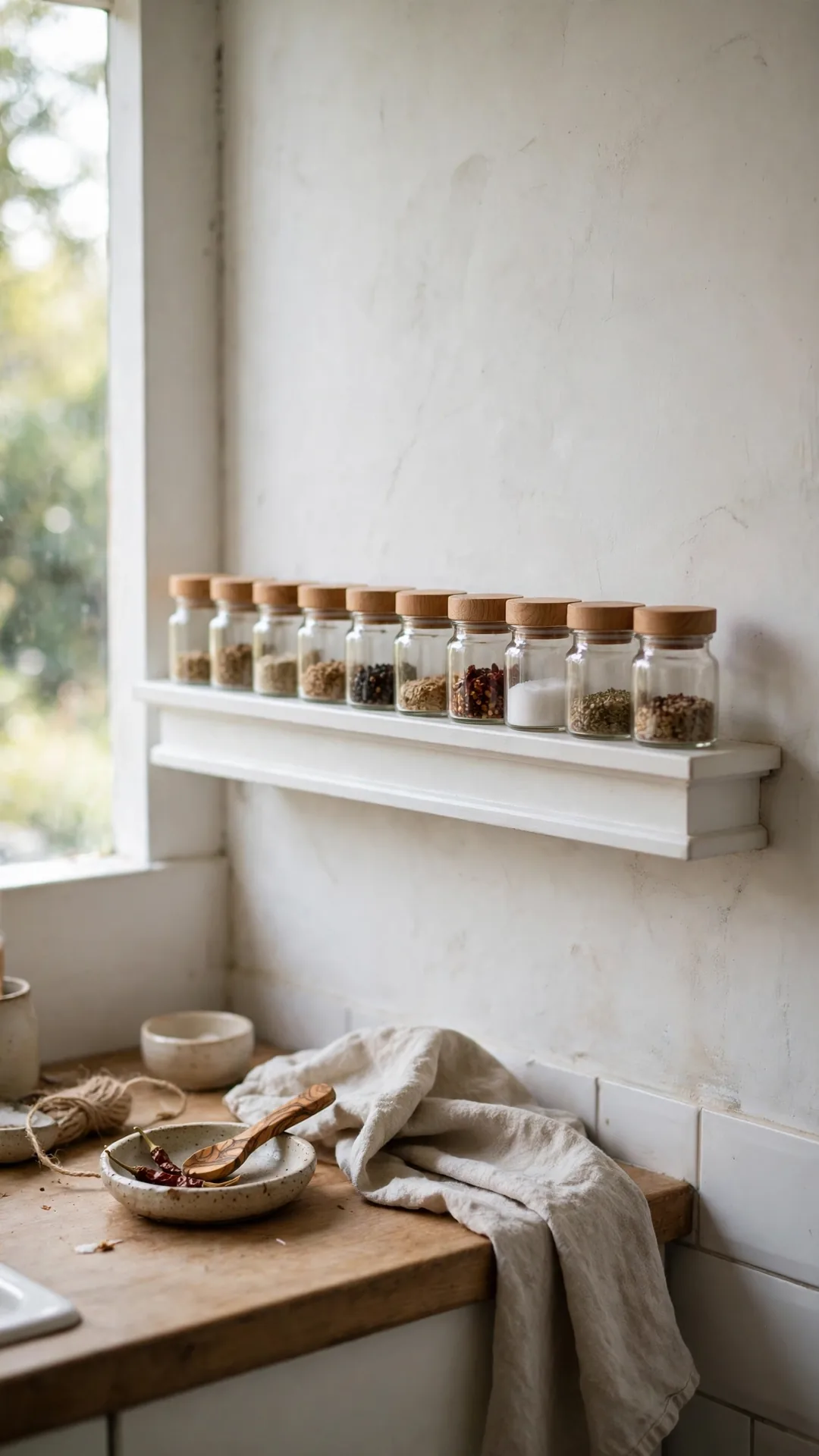
A picture ledge is just a slim shelf with a lip. That lip keeps spice jars safe on a narrow wall strip. The ledge costs little and mounts in minutes.
How to do it:
- Pick a ledge about 24 inches long and 3 inches deep.
- Mount it at eye level near your prep spot.
- Line jars in one row with labels facing out.
- Leave a small gap at one end for new jars.
- Dust the ledge when you dust the counters.
Best for: Narrow wall strips beside a window or door.
Budget: $10 to $25
Quick tip: Two ledges stacked 10 inches apart double the storage.
29. Hang a Pegboard for Jars and Scoops
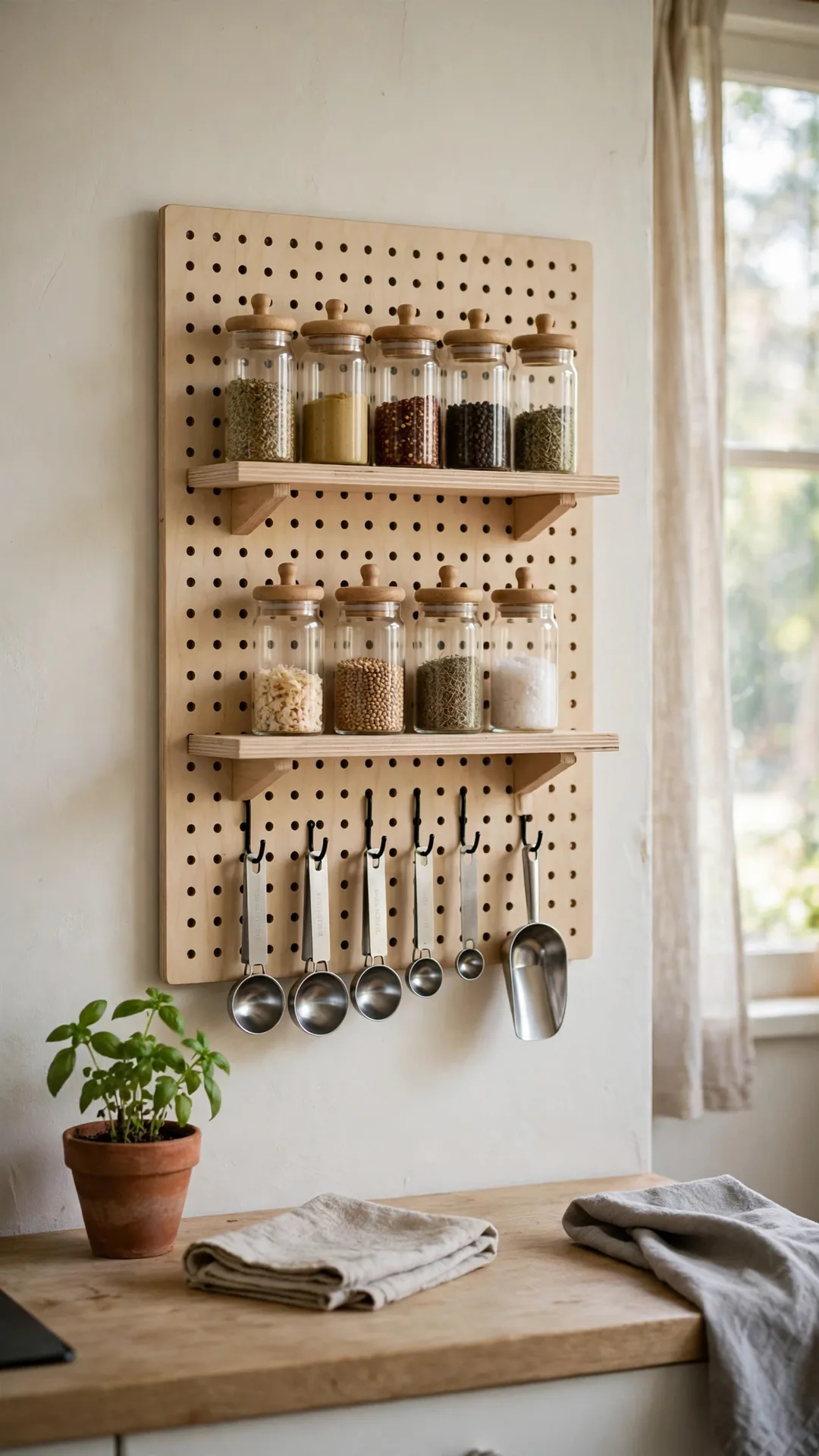
A pegboard holds jars, scoops and small baskets in one grid. Move the hooks when your collection changes shape. The display looks neat, like these art organization ideas for a small space.
How to do it:
- Mount a pegboard about 24 by 36 inches on the wall.
- Add small shelf hooks to hold jars upright.
- Hang measuring spoons from peg hooks below.
- Group jars by cooking style across the board.
- Rearrange the hooks once a season as needs change.
Best for: Crafty cooks who like a wall they can rearrange.
Budget: $20 to $45
Quick tip: Paint the pegboard the wall color so jars take the focus.
30. Fix a Rail With Hooks for Hanging Jars
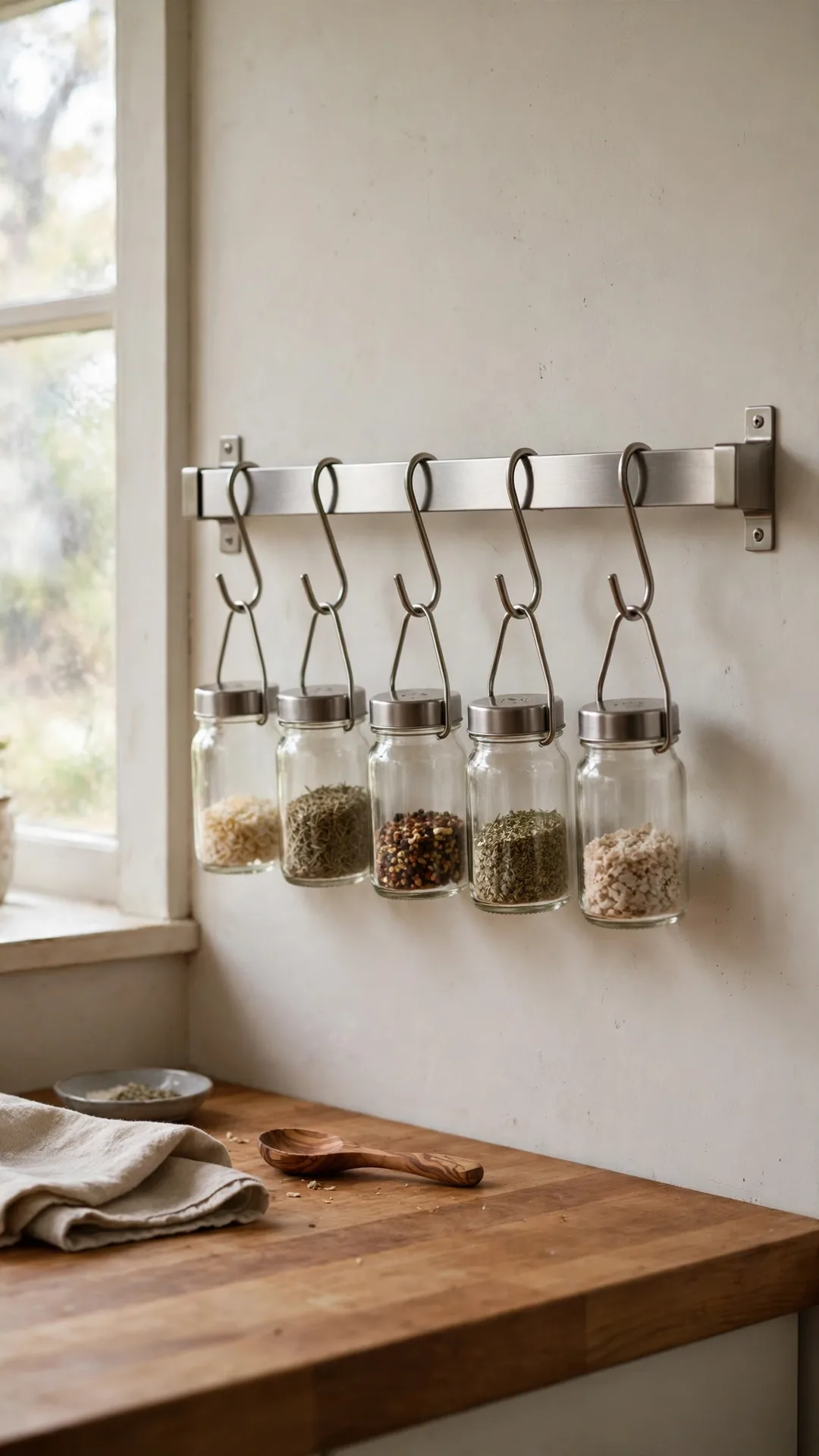
A metal rail with hooks hangs jars off the counter. Small jars with loop lids clip on and off fast. These spice organization ideas for small kitchens borrow the rail trick from busy restaurant kitchens.
How to do it:
- Mount a rail about 18 inches long near the stove.
- Pick S hooks that fit the rail and the jar loops.
- Hang light jars only, since heavy jars strain the hooks.
- Keep the rail clear of steam from pots.
- Space jars 2 inches apart so they do not clink.
Best for: Cooks who want spices at arm height.
Budget: $15 to $30
Quick tip: Hang a small scoop from the end hook for fast pinches.
31. Mount a Rack on the Pantry Door
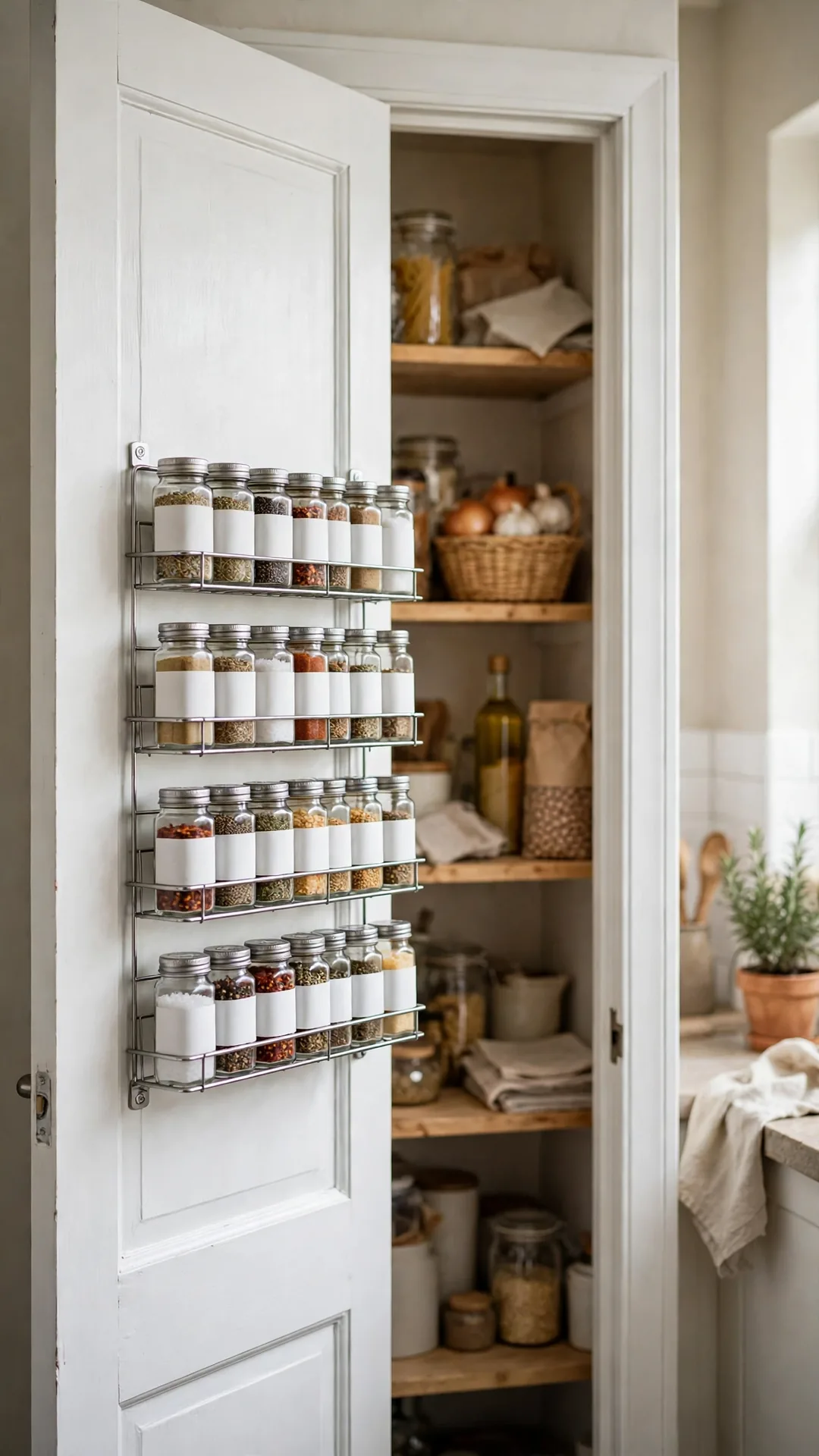
A pantry door hides a full wall of storage inside. A rack there holds 20 jars and keeps shelves free. Door racks use the same trick as these closet organization ideas for a small space.
How to do it:
- Measure the door inside width and depth first.
- Pick a rack no deeper than 4 inches.
- Mount it with screws or over door hooks.
- Load jars from the bottom row up.
- Check that the door still shuts with a full rack.
Best for: Pantries with deep shelves and a plain door.
Budget: $20 to $45
Quick tip: Keep the heaviest jars on the lowest rows.
32. Screw Jar Lids Under an Open Shelf

Jars can hang from their own lids under a shelf. Screw the lids to the shelf underside and twist jars in and out. The trick frees shelf tops and looks neat.
How to do it:
- Pick short jars with wide lids, such as 4 ounce jars.
- Screw each lid under the shelf with two small screws.
- Space lids about 3 inches apart.
- Twist each jar into its lid after filling.
- Keep the shelf above clear so jars hang free.
Best for: Open shelves with dead air below them.
Budget: $8 to $20
Quick tip: Renters can use strong adhesive strips instead of screws.
33. Set a Tiered Stand on the Counter
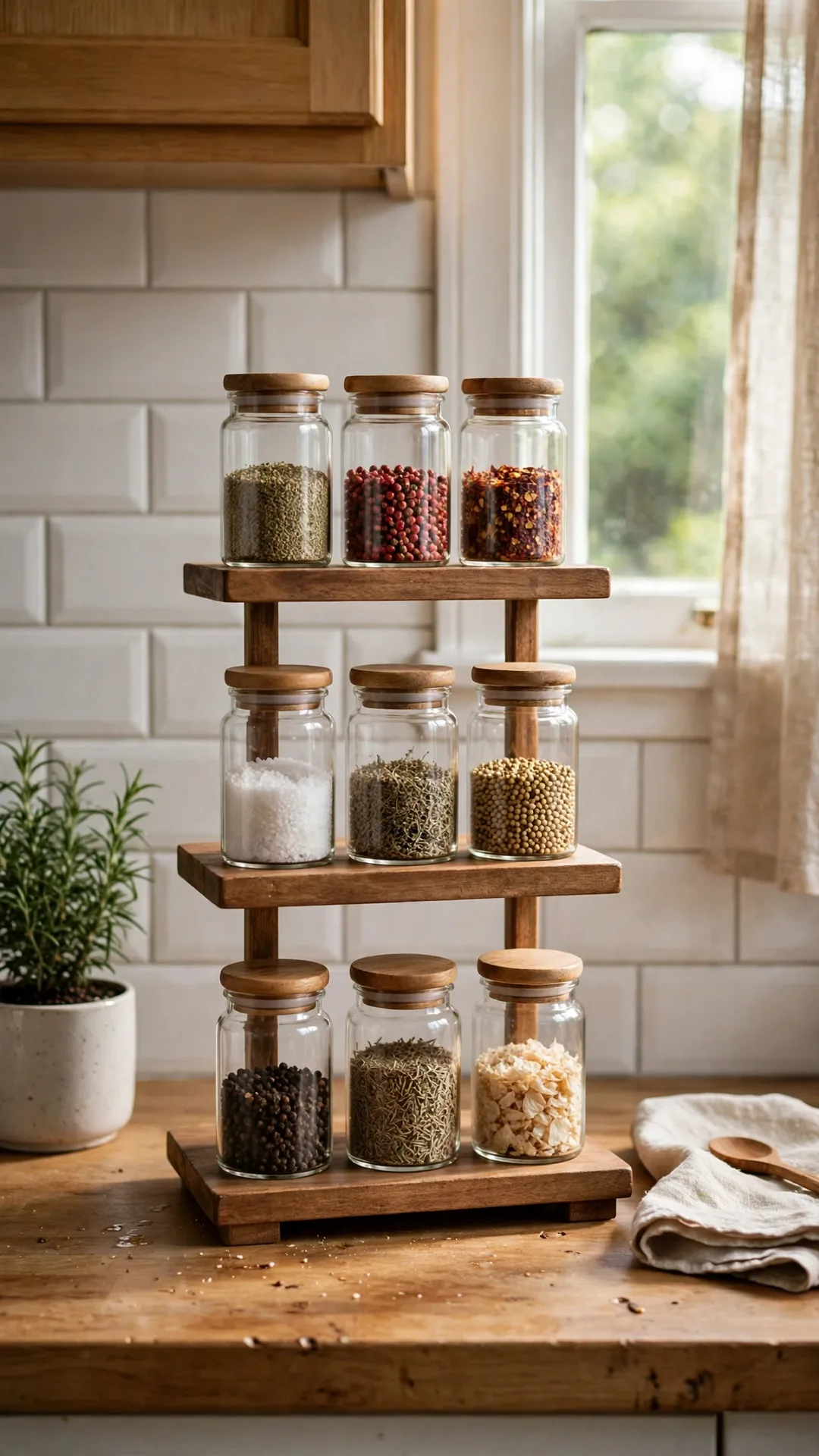
A tiered stand lifts jars into three clear rows on the counter. You see every jar without moving a single one. These spice organization ideas for small kitchens put the daily jars front and center.
How to do it:
- Pick a stand about 12 inches wide with three tiers.
- Set it in a counter corner near the stove.
- Put daily spices on the top tier for fast grabs.
- Keep tall jars on the bottom tier.
- Wipe the tiers when you wipe the counter.
Best for: Counters with one free corner by the stove.
Budget: $15 to $35
Quick tip: A cake stand works as a tiered spice stand too.
34. Spin a Small Carousel by the Stove
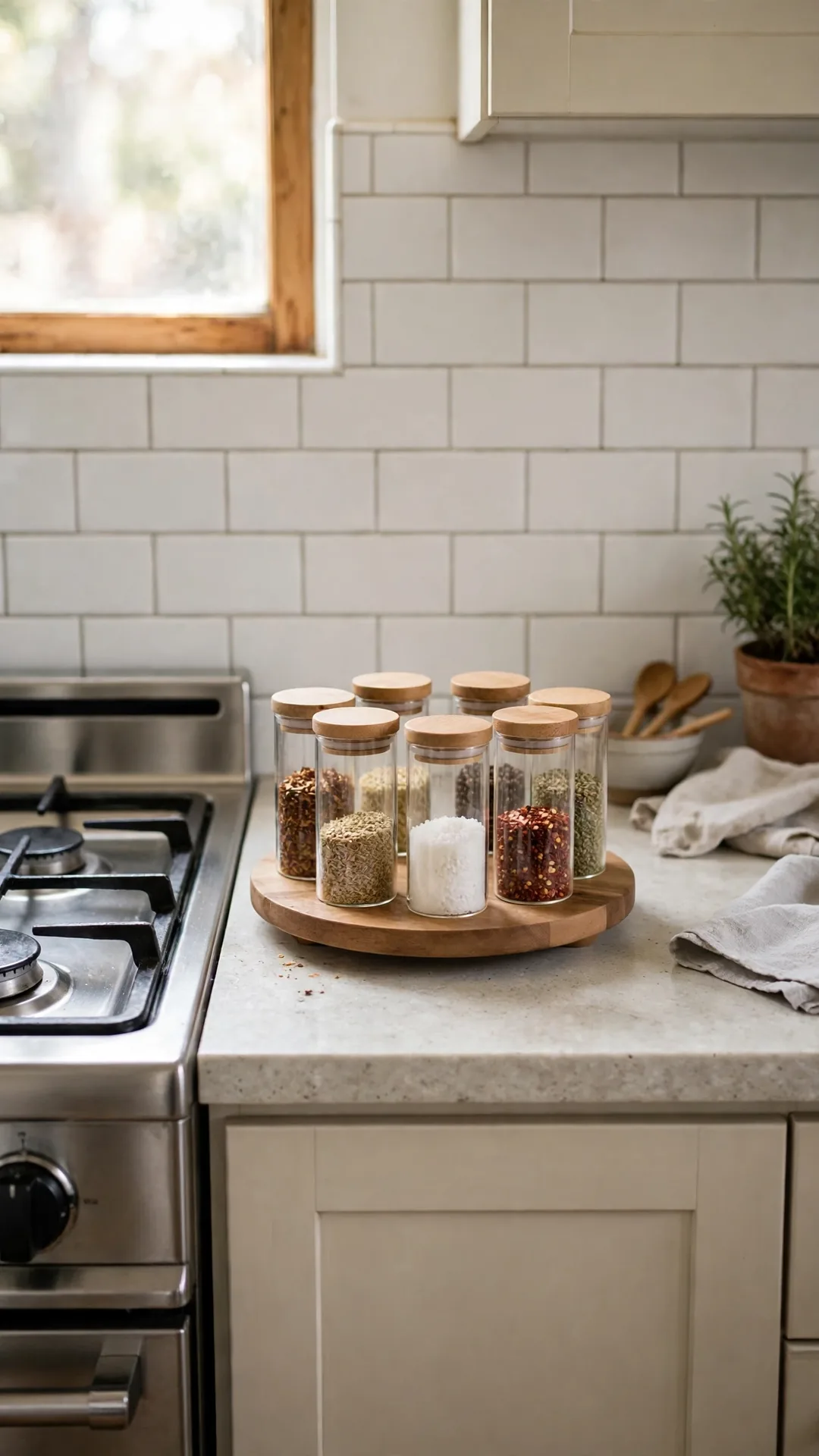
A carousel spins the jar you need to your hand. One spin beats digging through a cabinet mid recipe. Keep it close to the stove but clear of direct heat.
How to do it:
- Pick a carousel about 10 inches wide with two tiers.
- Load daily spices on the top tier.
- Keep the carousel at least 12 inches from burners.
- Wipe spills fast, since heat bakes them on.
- Spin it once a week to check low jars.
Best for: Cooks who season while food cooks.
Budget: $15 to $30
Quick tip: A lazy Susan with a rim stops jars from sliding off.
35. Corral Daily Spices on One Small Tray
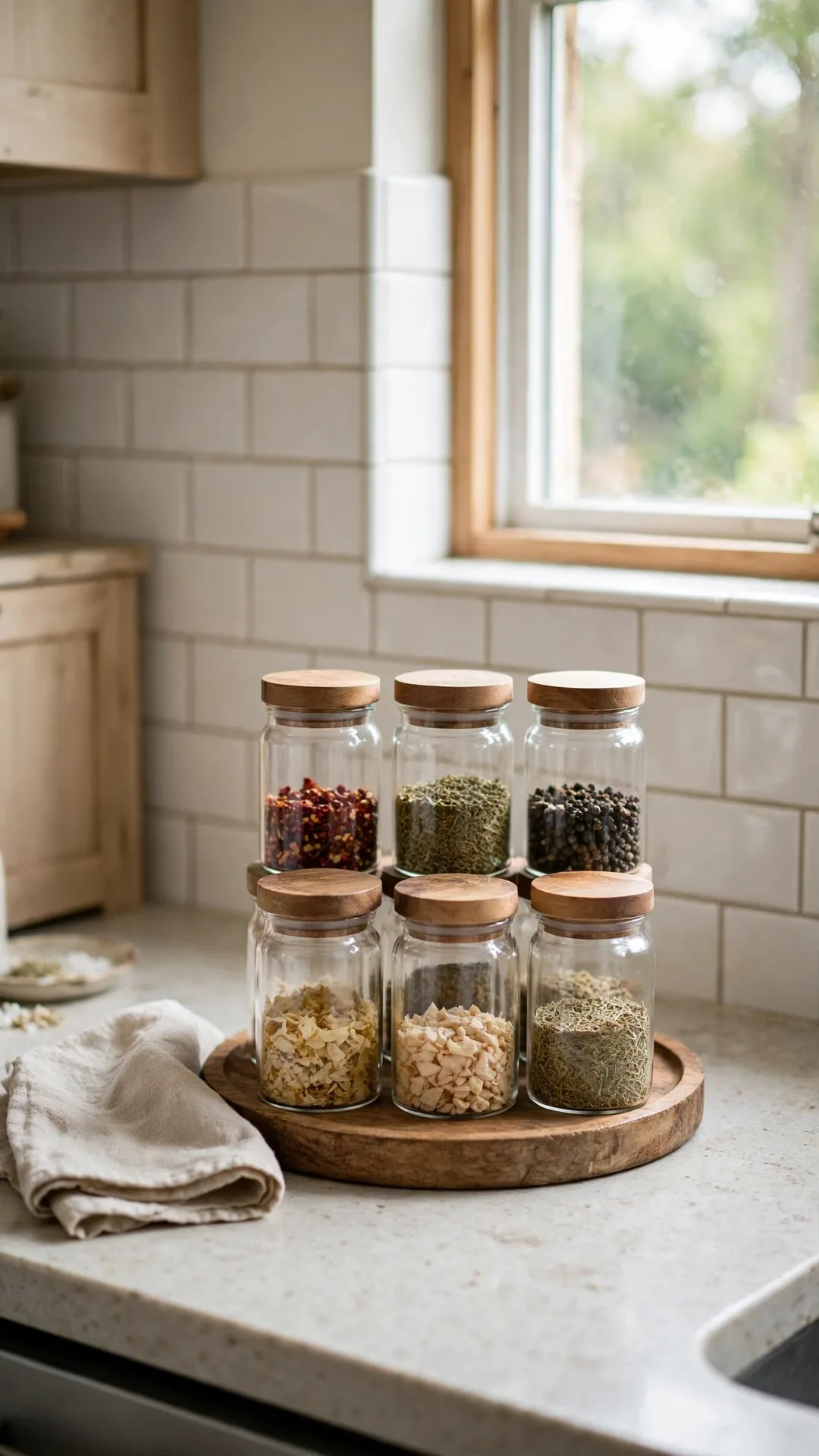
Six jars loose on a counter look like clutter. One small tray turns them into a tidy station. Lift the tray to wipe the counter in one move.
How to do it:
- Pick a tray about 12 by 8 inches with a low lip.
- Set your six daily jars on the tray in one row.
- Keep the tray near the prep spot, not the sink.
- Wipe the tray once a week to stop dust buildup.
- Swap jars when your cooking changes with the season.
Best for: Small counters that need a tidy zone.
Budget: $8 to $20
Quick tip: A baking sheet with a lip works as a free tray.
36. Tuck a Spice Crate on the Counter End
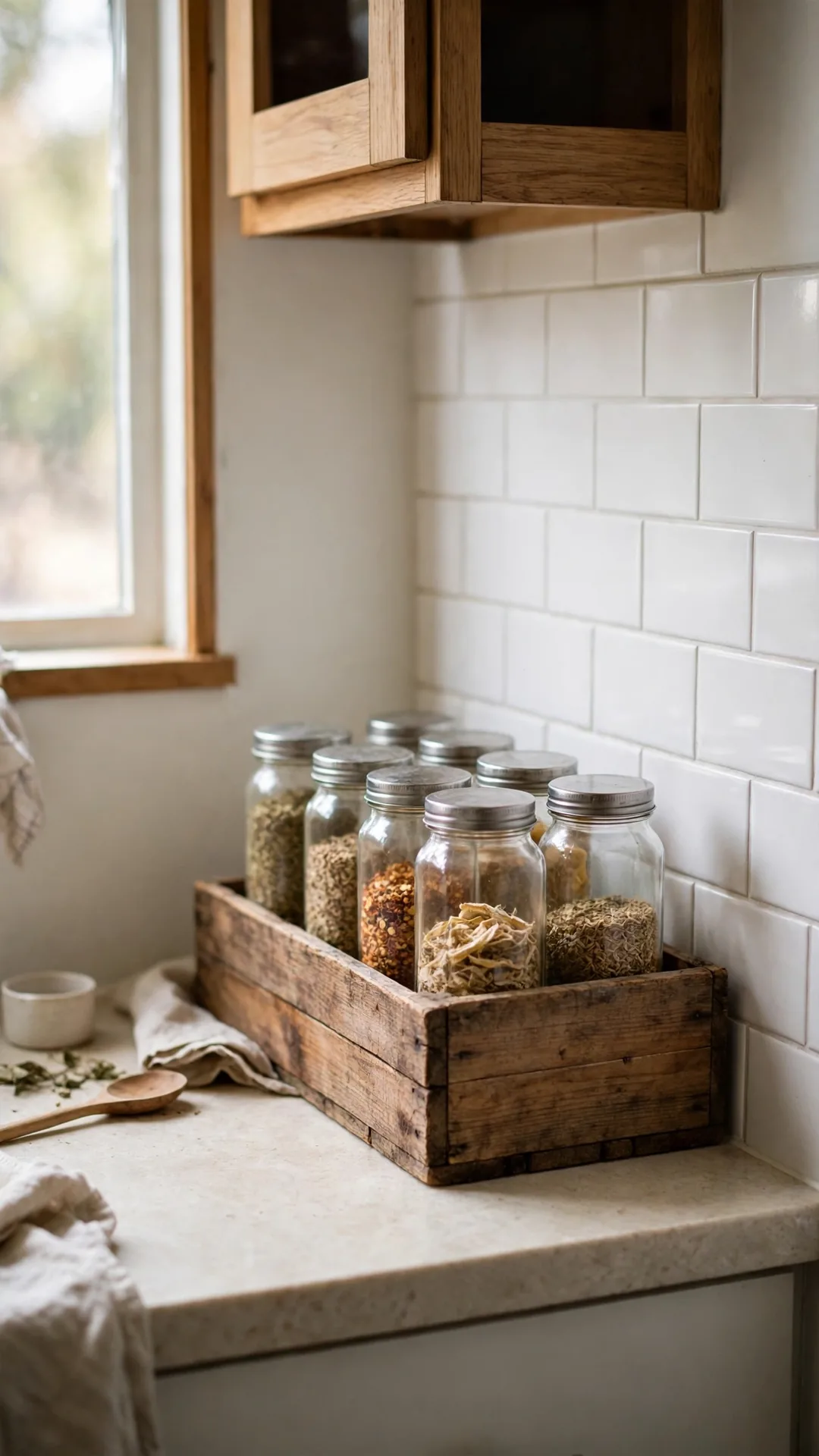
The end of a counter is often wasted space. A small wood crate there holds a dozen jars in reach. These spice organization ideas for small kitchens use crate storage that looks good enough to leave out.
How to do it:
- Pick a crate about 12 inches long and 8 inches wide.
- Line the crate bottom with a small cloth.
- Stand jars in two rows with labels facing out.
- Set the crate at the counter end away from the sink.
- Keep tall jars at the back of the crate.
Best for: Counter ends and kitchen islands.
Budget: $10 to $25
Quick tip: Tip the crate on its side to make a tiny shelf.
37. Roll a Slim Cart Into a Gap
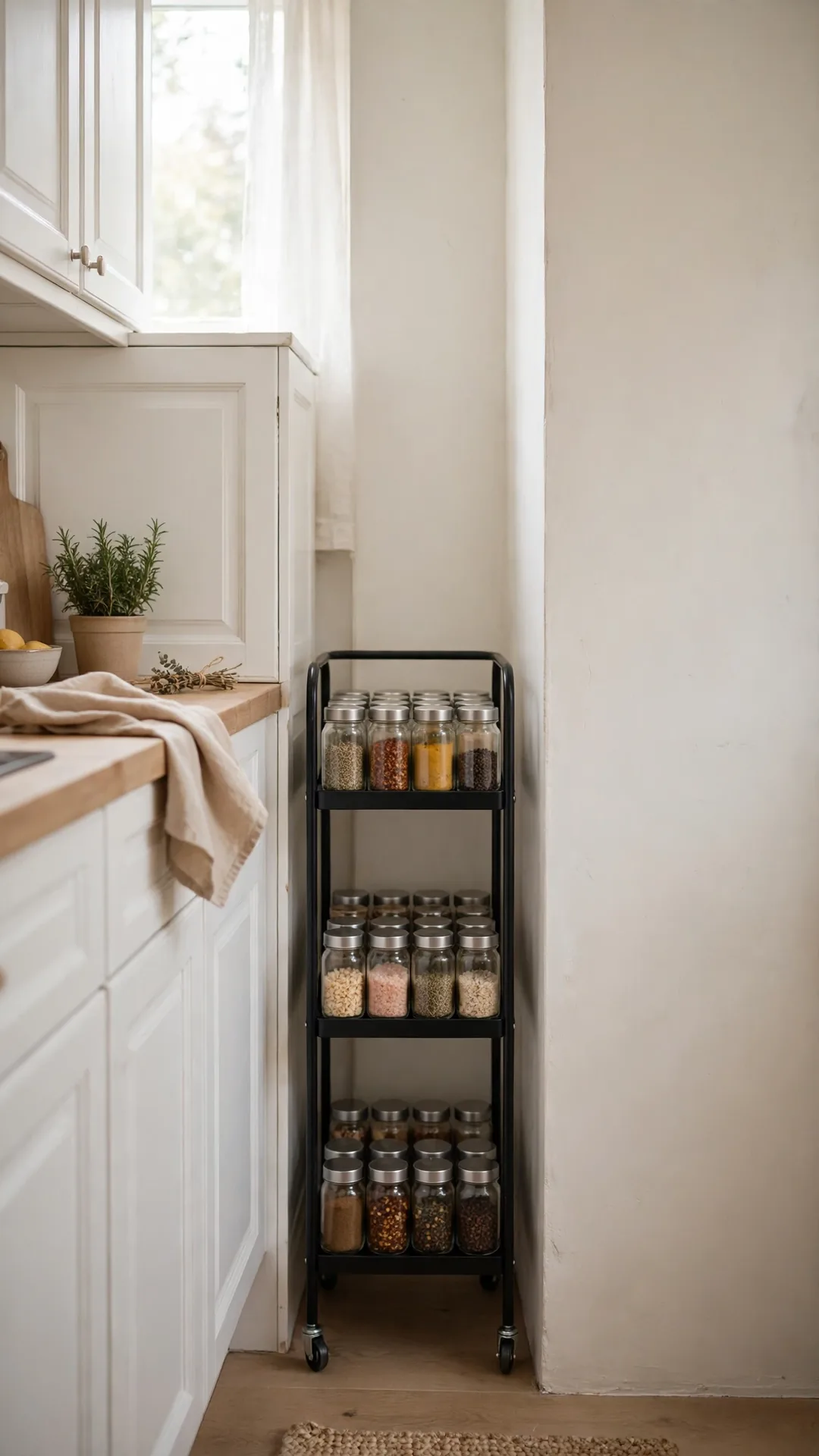
Most kitchens have a gap between cabinets or beside the fridge. A slim rolling cart fills that gap with spice storage. Roll it out to cook and slide it back when done.
How to do it:
- Measure the gap width before you shop for a cart.
- Pick a cart 6 to 8 inches wide with three tiers.
- Load jars on the top two tiers for easy reach.
- Keep heavy refill bags on the bottom tier.
- Lock the wheels when the cart is parked.
Best for: Gaps beside the fridge or stove.
Budget: $25 to $60
Quick tip: A cart with a handle pulls out with one hand.
38. Park a Spice Station on a Bar Cart
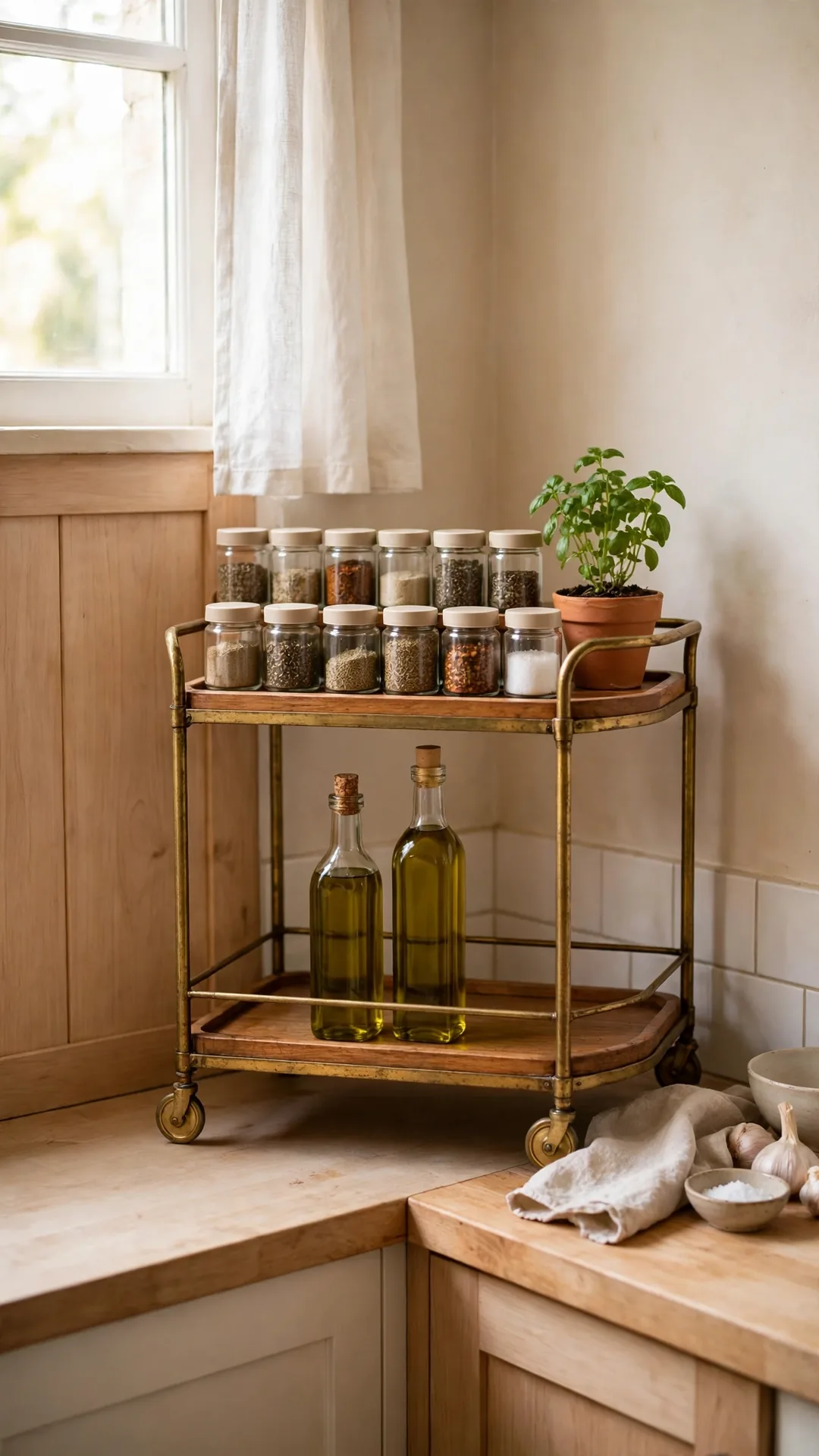
A bar cart is not just for drinks. Stock it with spices and it becomes a rolling flavor station. Park it in a corner and roll it to the stove when you cook.
How to do it:
- Pick a cart with two tiers and a top shelf.
- Set daily spices on the top tier.
- Keep oils and vinegars on the middle shelf.
- Store refills and spare jars below.
- Add a small tray to catch drips and spills.
Best for: Kitchens with a free corner and no shelf space.
Budget: $30 to $70
Quick tip: Lock the wheels before you cook so the cart stays put.
39. Use a Turntable on a Counter Corner
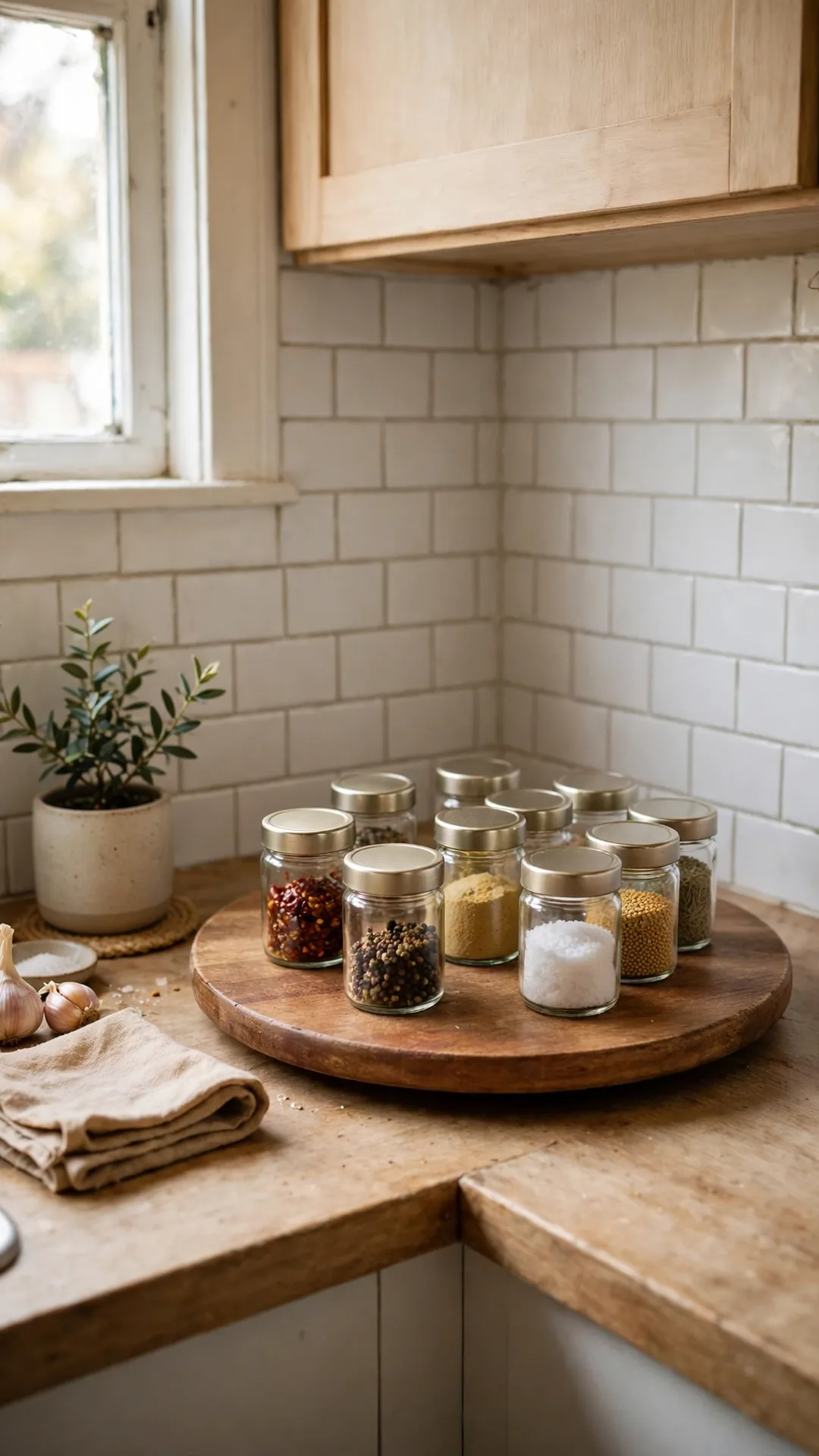
Counter corners collect clutter and waste space. A turntable there turns a dead corner into spice storage. These spice organization ideas for small kitchens rescue the corner most cooks ignore.
How to do it:
- Measure the corner and pick a turntable that fits with room to spin.
- Choose a two tier turntable for more jar rows.
- Load daily spices on the top tier.
- Keep the turntable clear of the sink splash zone.
- Spin it to find jars without moving the whole rack.
Best for: L shaped counters with a blind corner.
Budget: $15 to $35
Quick tip: A turntable with a rim keeps jars from sliding off.
40. Build a Baking Spice Box
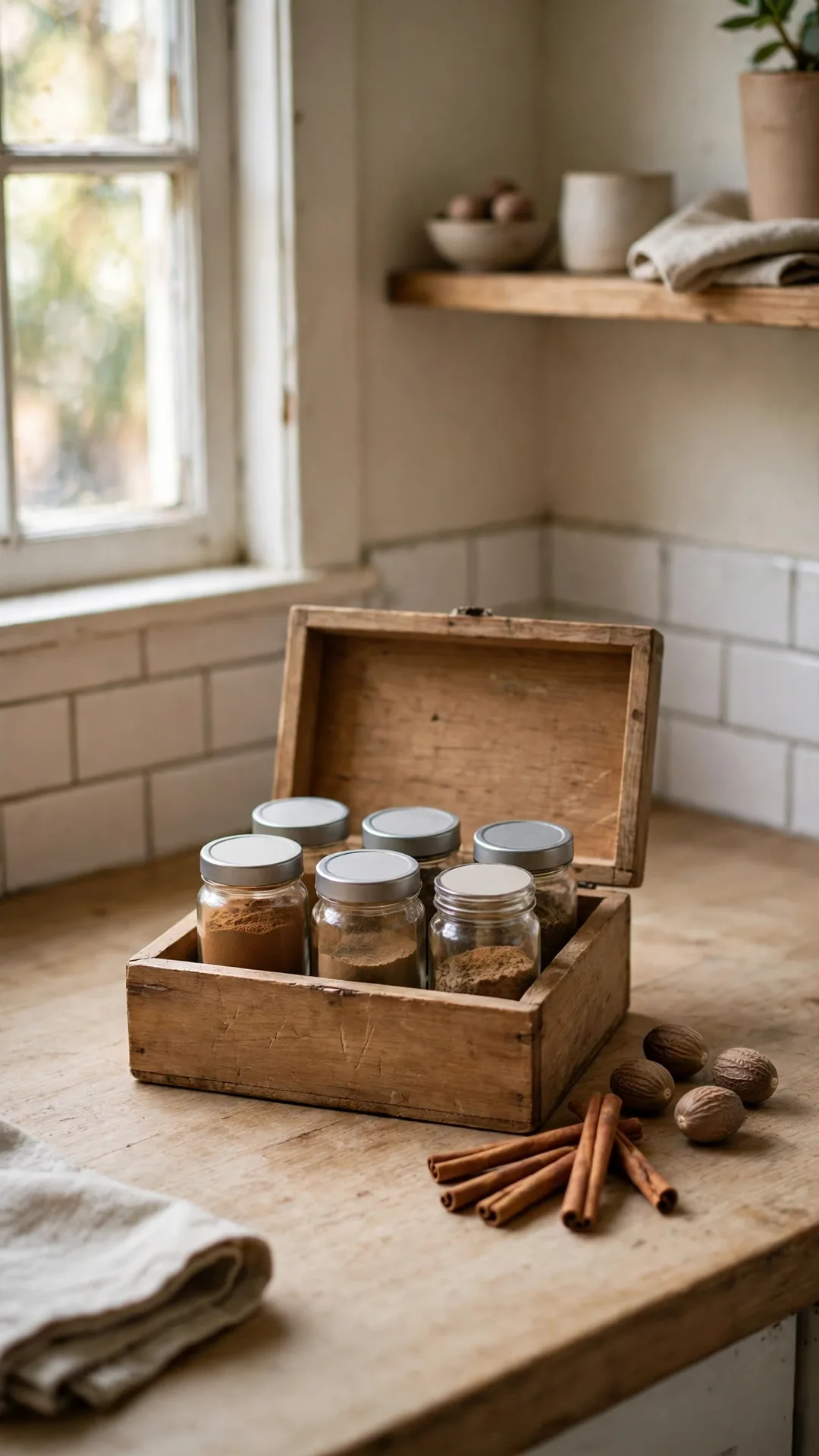
Baking spices get lost among savory jars. One box for cinnamon, nutmeg and vanilla keeps them together. Grab the box when you bake and put it back when done.
How to do it:
- Pick a box about 10 inches long with a lid.
- Add cinnamon, nutmeg, ginger, cloves and vanilla.
- Label each jar inside the box.
- Keep the box near the mixing bowls.
- Refill jars from bulk stock once a month.
Best for: Weekend bakers with a small spice shelf.
Budget: $10 to $25
Quick tip: Add a small scoop to the box for fast measuring.
41. Build a Grill Spice Box
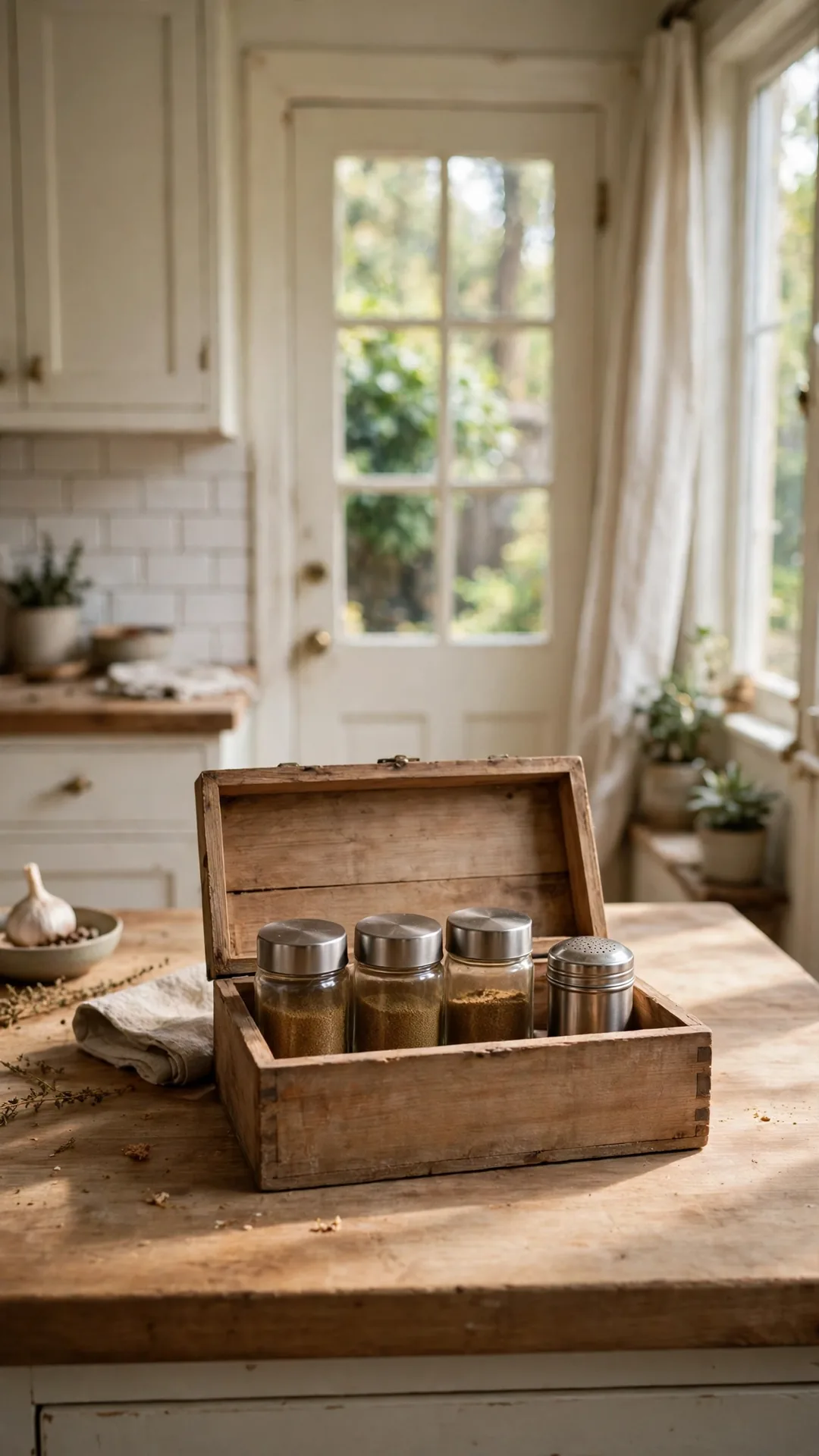
Grill night needs rubs and blends in one grab. A grill spice box holds them ready by the back door. Pair the box with these small backyard lighting ideas for easy evening cooks outside.
How to do it:
- Pick a lidded box about 12 inches long.
- Add paprika, chili powder, garlic powder and a dry rub.
- Label each jar so guests can help season.
- Keep the box by the door to the yard.
- Bring it inside after each cook to keep spices dry.
Best for: Grill fans who cook outside often.
Budget: $12 to $28
Quick tip: Add small shaker lids for even rub coverage.
42. Keep a Spice Inventory on the Door
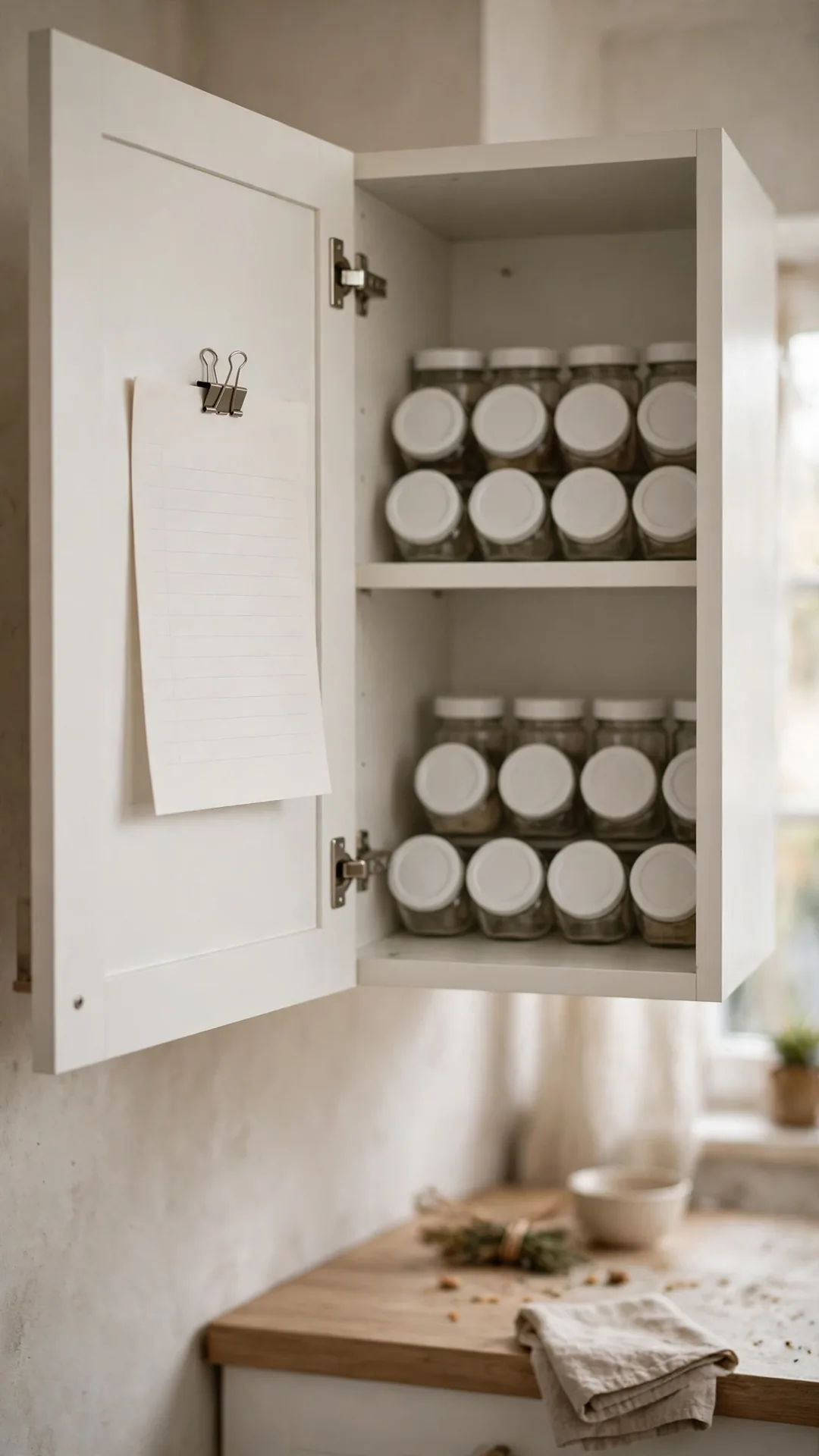
You buy paprika twice because you forgot you had it. A small list on the cabinet door stops double buys. These spice organization ideas for small kitchens save money by showing what you already own.
How to do it:
- Clip a small notepad inside the cabinet door.
- List every spice you own in one column.
- Cross off jars as they run low.
- Check the list before each grocery run.
- Update the list when you add a new spice.
Best for: Bulk buyers and shared kitchens.
Budget: $2 to $5
Quick tip: A photo of the shelf works as a quick list too.
43. Use Chalkboard Labels for Homemade Blends
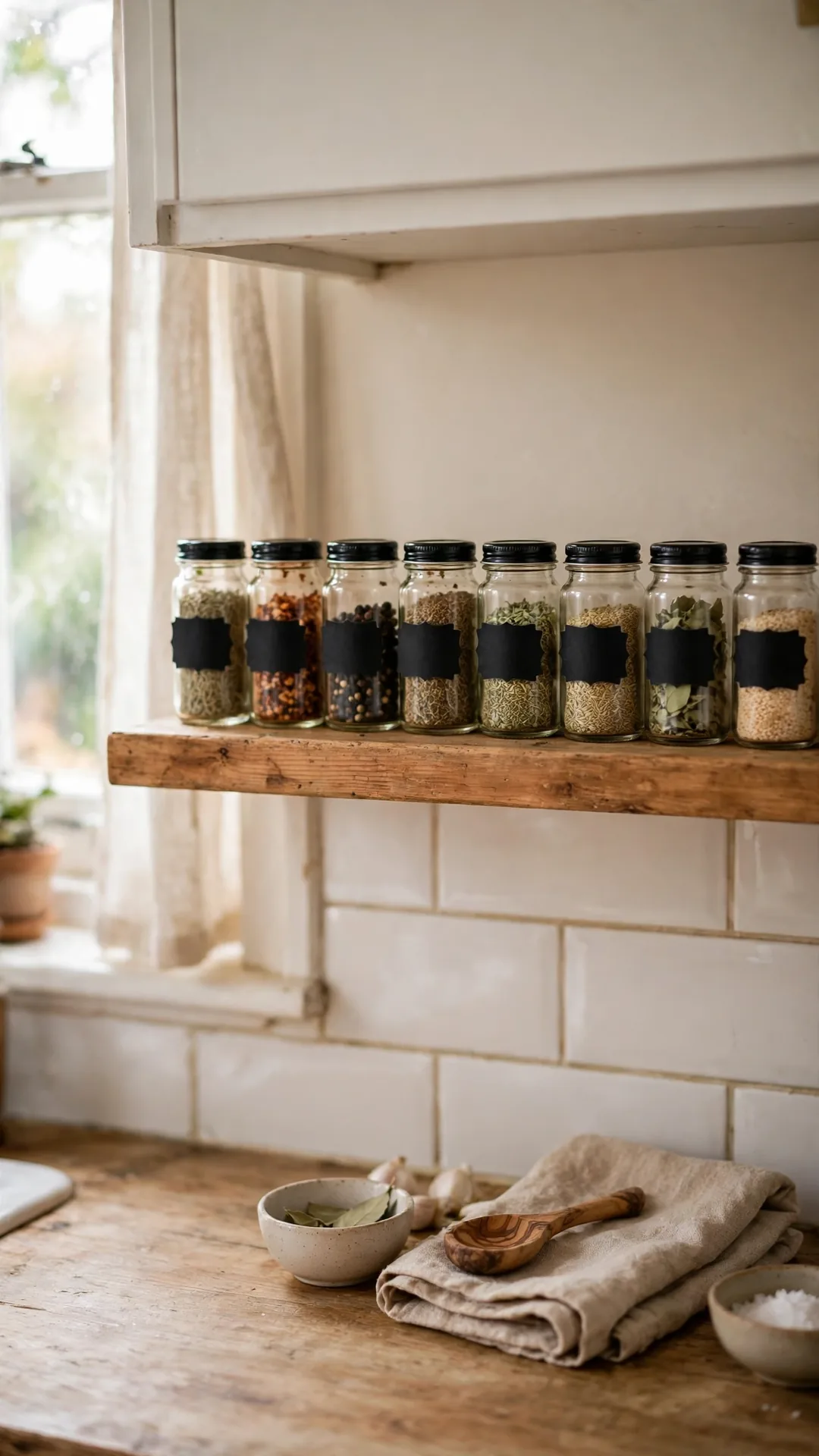
Homemade blends change with each batch you mix. Chalkboard labels let you rewrite the name in seconds. The jars look neat and the labels cost almost nothing.
How to do it:
- Stick small chalkboard labels on each blend jar.
- Write the blend name with a chalk pen.
- Wipe the label clean with a damp cloth to rewrite.
- Add the mix date under the name.
- Keep a chalk pen in the drawer with the jars.
Best for: Cooks who mix their own blends.
Budget: $5 to $12
Quick tip: Let the chalk dry for a minute so it does not smudge.
44. Add a Pull-Out Rack Beside the Stove
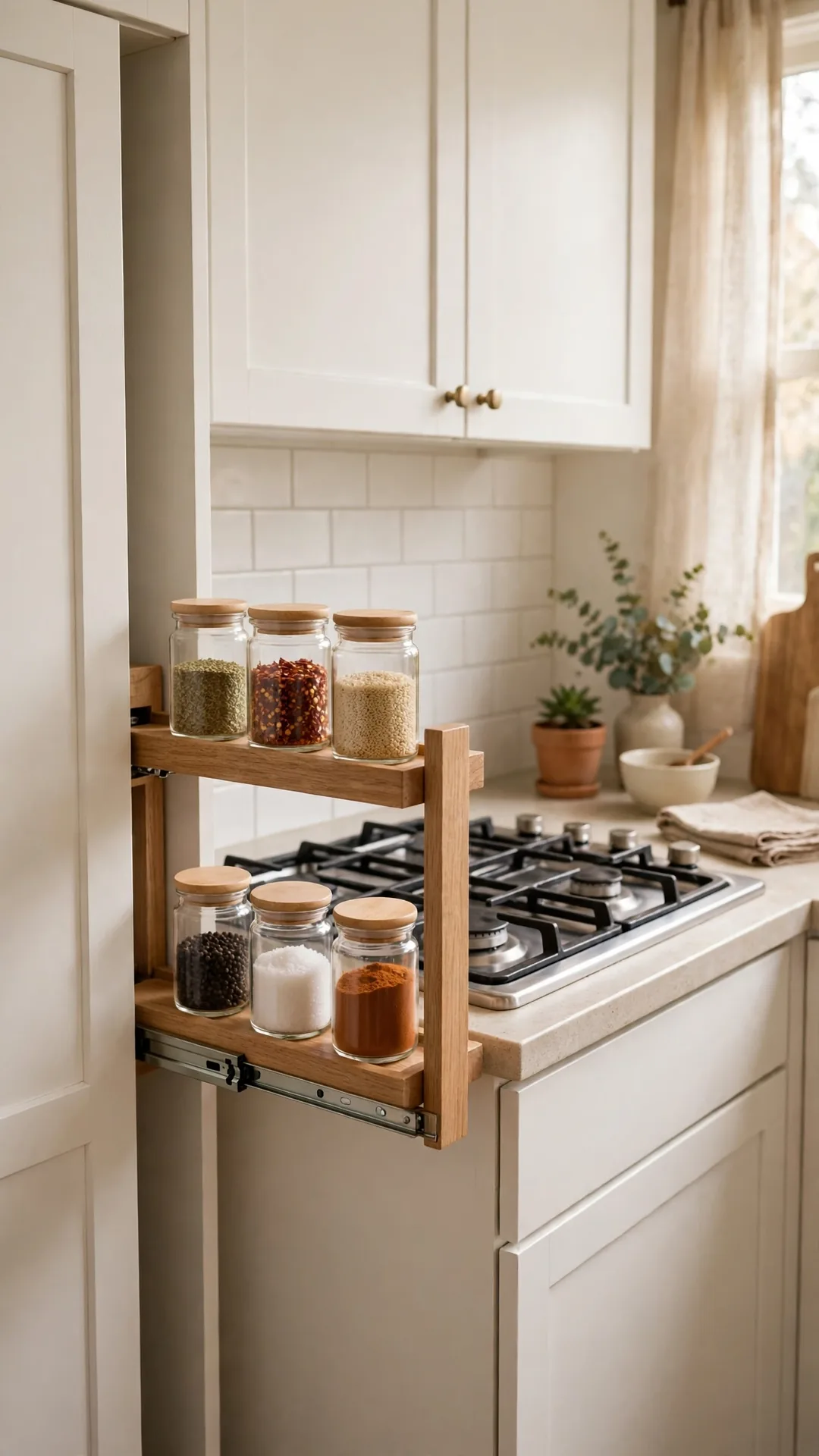
A pull-out rack beside the stove puts spices at arm height. Slide it out to cook and push it back when done. The rack uses a narrow gap that a cabinet cannot fill.
How to do it:
- Measure the gap beside the stove before you buy.
- Pick a rack 6 to 9 inches wide with full extension slides.
- Mount it to the cabinet side or floor.
- Load jars in two rows with labels facing out.
- Keep a heat gap between the rack and the stove.
Best for: Narrow gaps beside the stove or range.
Budget: $40 to $90
Quick tip: Test the slide with a full load before you screw it in.
45. Slide a Narrow Pull-Out Into a Filler Gap
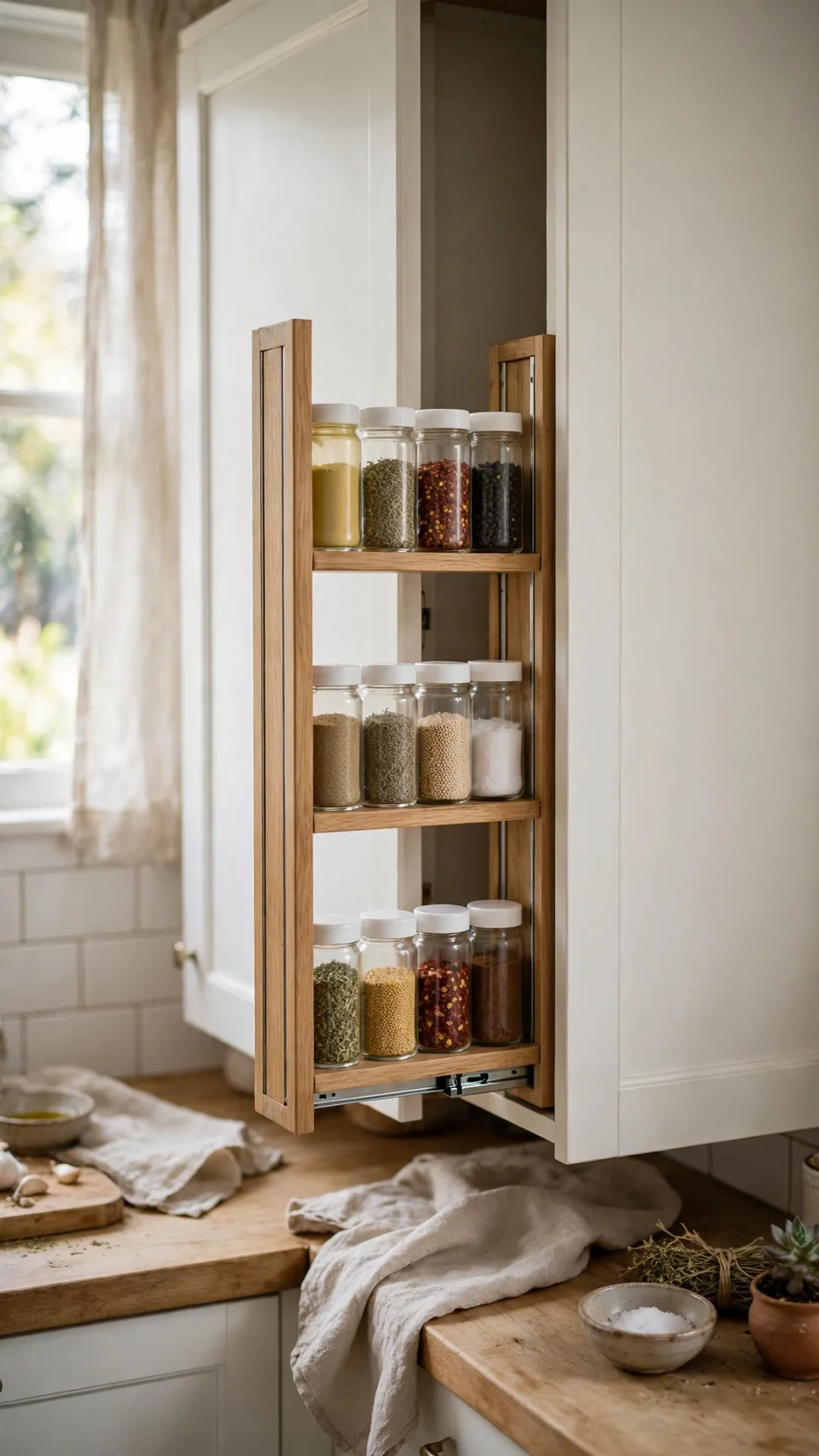
Filler gaps between cabinets waste 3 to 6 inches of space. A slim pull-out turns that gap into a spice tower. These spice organization ideas for small kitchens find storage in gaps most kitchens ignore.
How to do it:
- Measure the filler gap width and depth first.
- Pick a pull-out that fits with a small clearance.
- Mount the slides level so the rack glides well.
- Load small jars in rows from top to bottom.
- Keep the front panel flush with the cabinet doors.
Best for: Gaps between cabinets and beside tall units.
Budget: $50 to $120
Quick tip: A pull-out with side rails stops jars from tipping.
46. Carve a Spice Niche Into the Backsplash
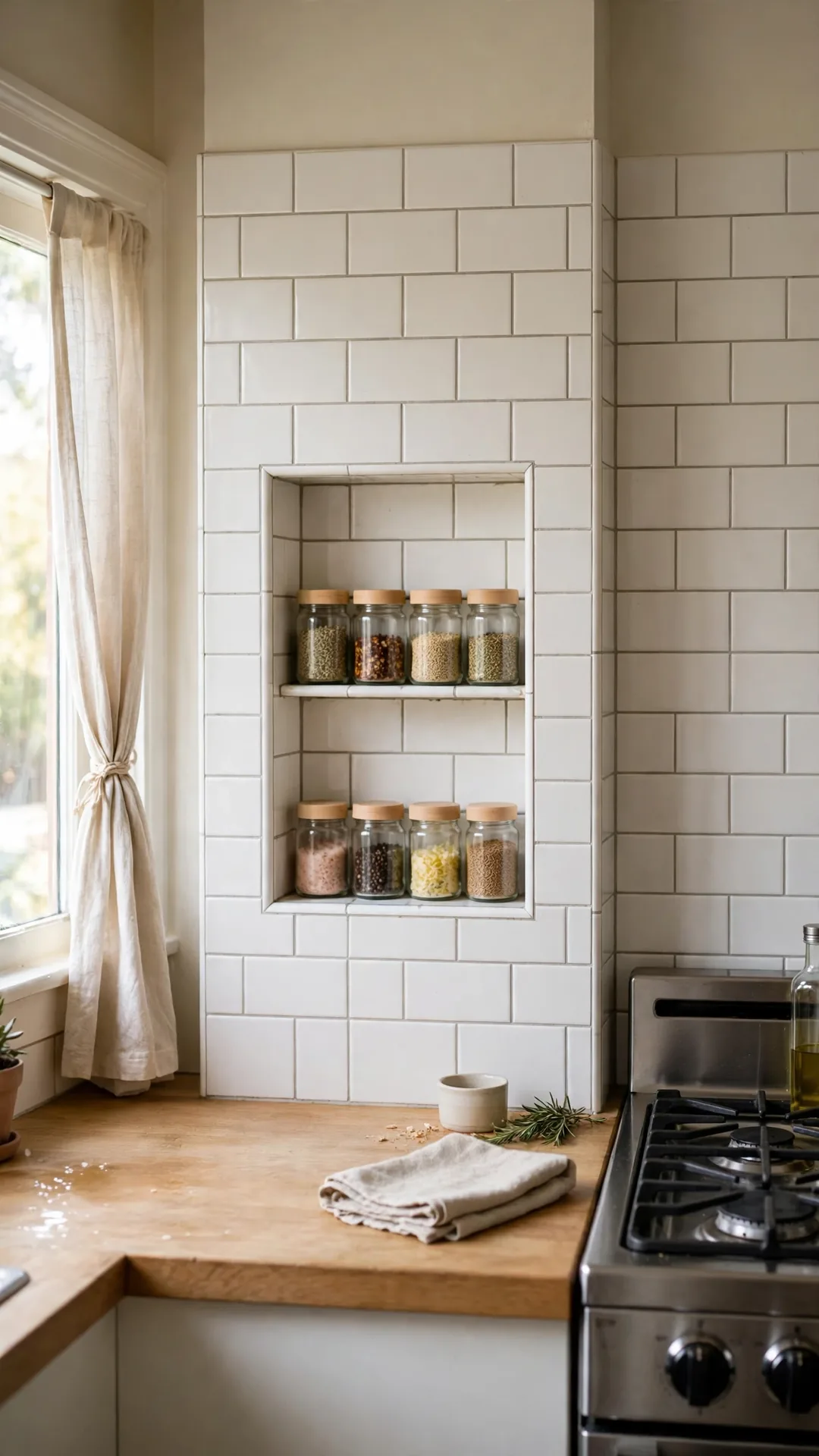
A niche in the backsplash holds daily spices at hand height. Tile the inside to match the wall for a clean look. The niche frees shelf space and keeps jars near the stove.
How to do it:
- Plan a niche about 12 inches wide and 18 inches tall.
- Cut the opening between wall studs, not through them.
- Tile the inside to match the backsplash.
- Add one small shelf inside for two jar rows.
- Keep the niche clear of direct steam from pots.
Best for: Planned remodels and new backsplash jobs.
Budget: $80 to $200
Quick tip: Renters can fake the look with a shallow wall shelf.
47. Use Test Tube Racks for Small Amounts
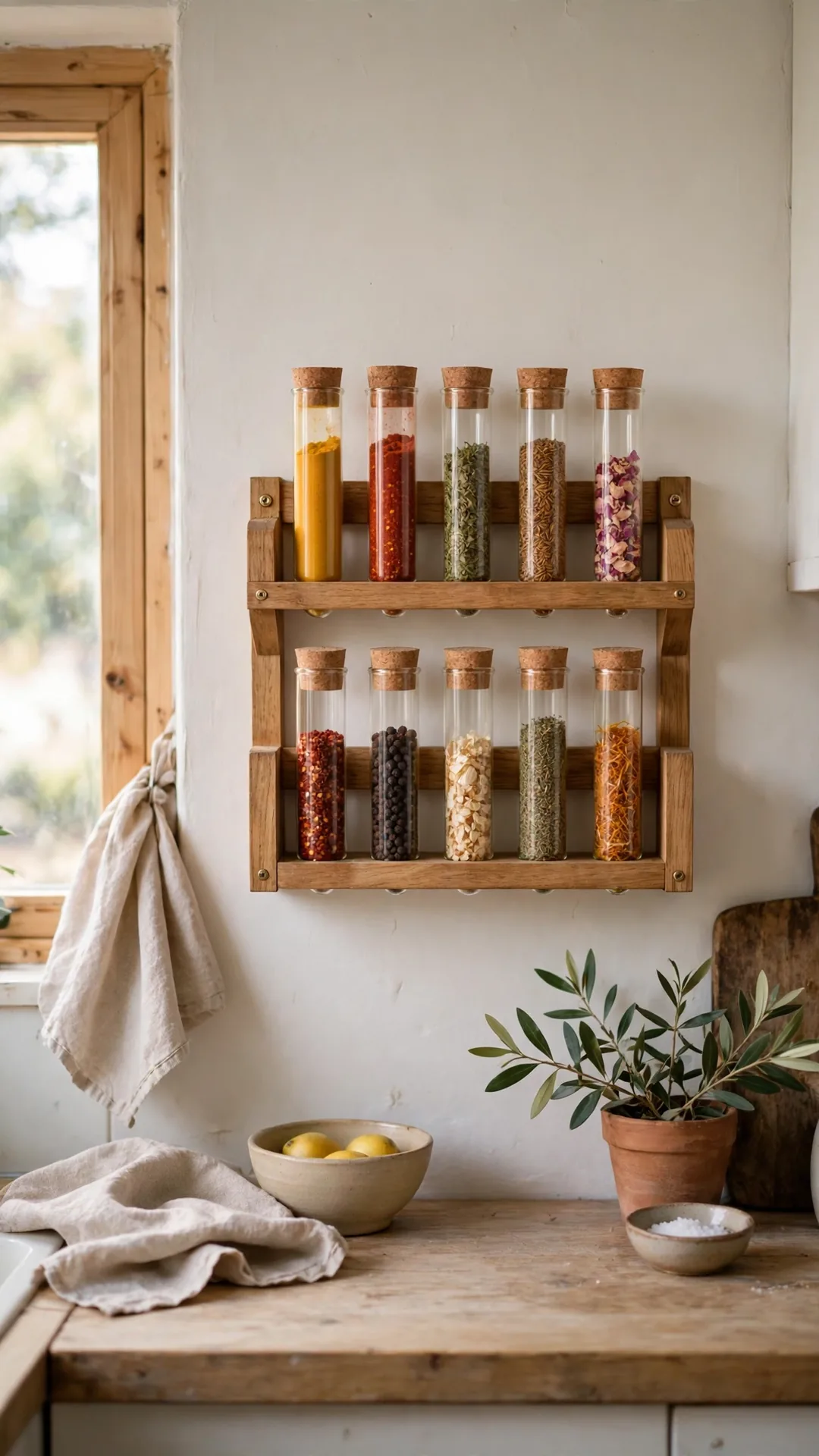
Rare spices come in tiny amounts that rattle in big jars. Test tubes hold small amounts and look neat on a wall rack. The rack takes little space and shows every color.
How to do it:
- Pick a wood rack with 12 to 20 glass tubes.
- Fill each tube with a rare or pricey spice.
- Cork each tube tight to keep air out.
- Label the rack below each tube.
- Mount the rack away from heat and sun.
Best for: Rare spices and small batch blends.
Budget: $20 to $45
Quick tip: Buy extra tubes so you can swap blends fast.
48. Keep Rare Spices High and Daily Ones Low
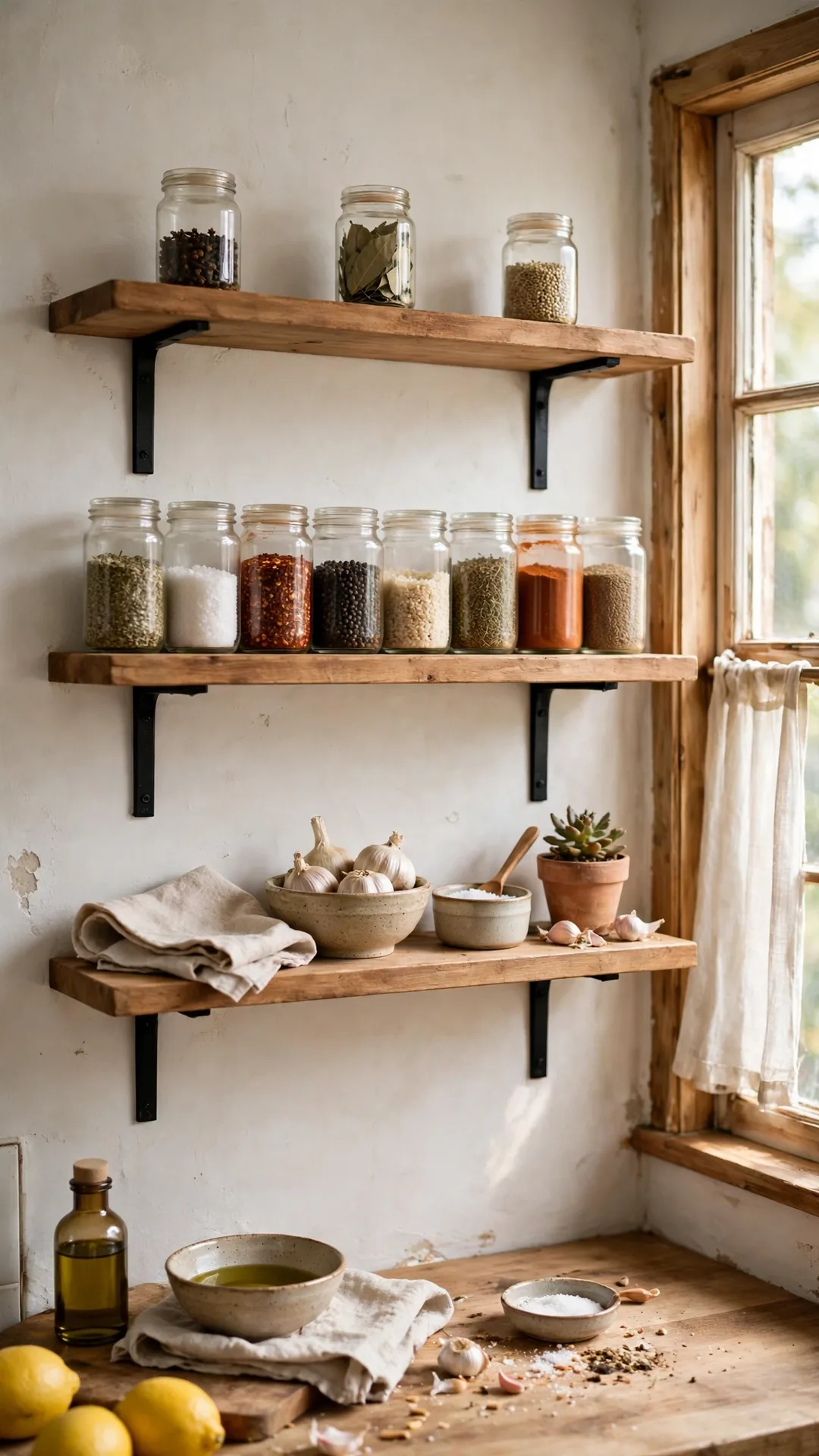
Eye level space is too good for spices you use twice a year. Daily jars belong at hand height and rare ones up high. Sort by how often you reach, not by name, and the shelf stays easy to use.
How to do it:
- Sort jars into daily, weekly and rare groups.
- Put daily jars at eye level near the stove.
- Move weekly jars one shelf up or down.
- Store rare jars on the top shelf.
- Re-sort once a season as habits change.
Best for: Cooks with a big collection and little reach.
Budget: Free
Quick tip: A small step stool makes the top shelf easy to reach.
49. Move Spices Away From Heat and Light
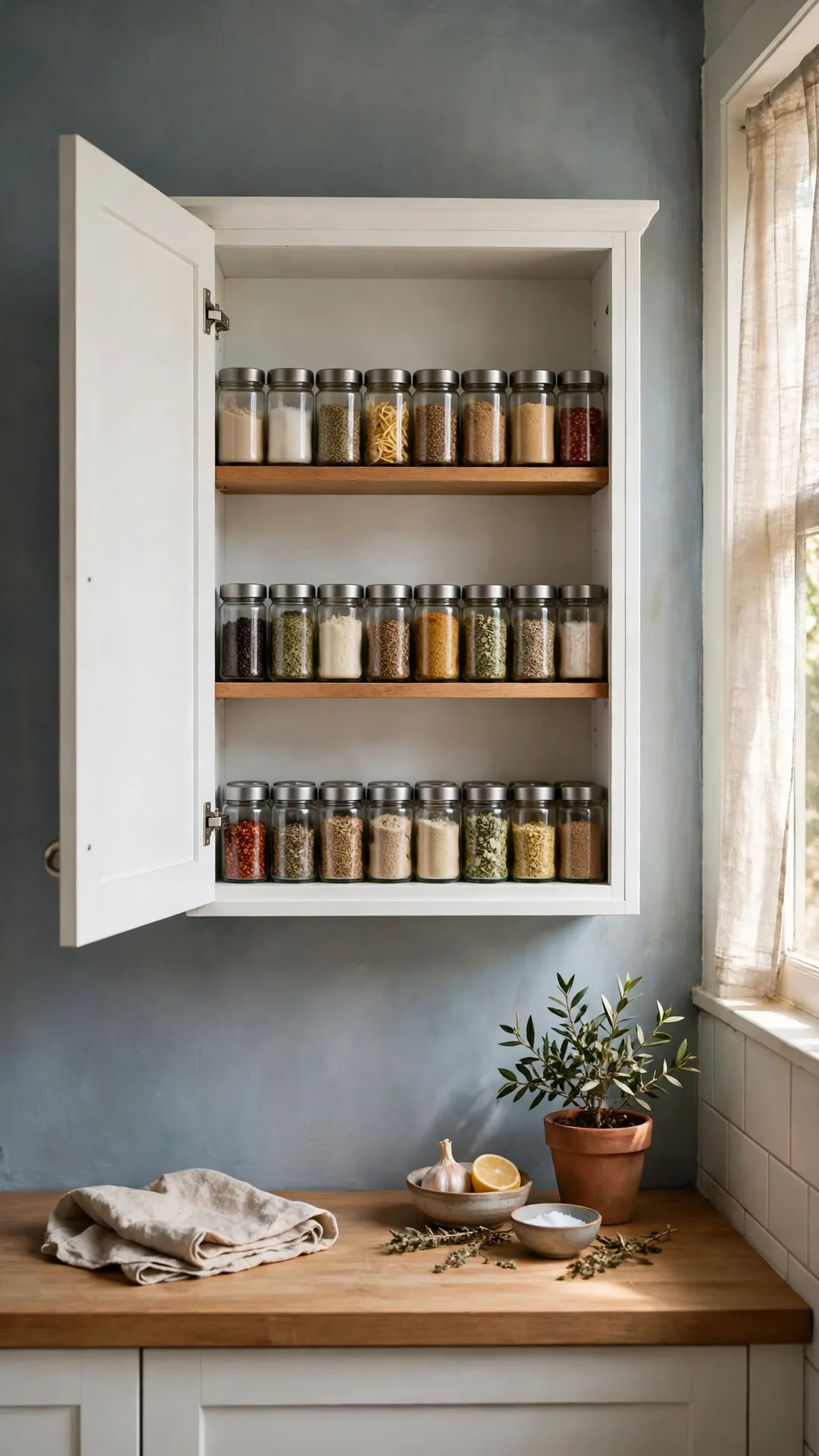
Heat and light fade spice flavor fast. Jars above the stove lose punch in a few months. Move them to a cool dark spot and they last far longer.
How to do it:
- Pick a cabinet at least 3 feet from the stove.
- Keep jars out of direct window light.
- Use solid jars or a closed door for light protection.
- Check that the spot stays cool in summer.
- Move the daily caddy back after each cook.
Best for: Kitchens with a spice shelf above the stove.
Budget: Free
Quick tip: If jars feel warm to the touch, the spot is too hot.
50. Buy Small and Refill Often
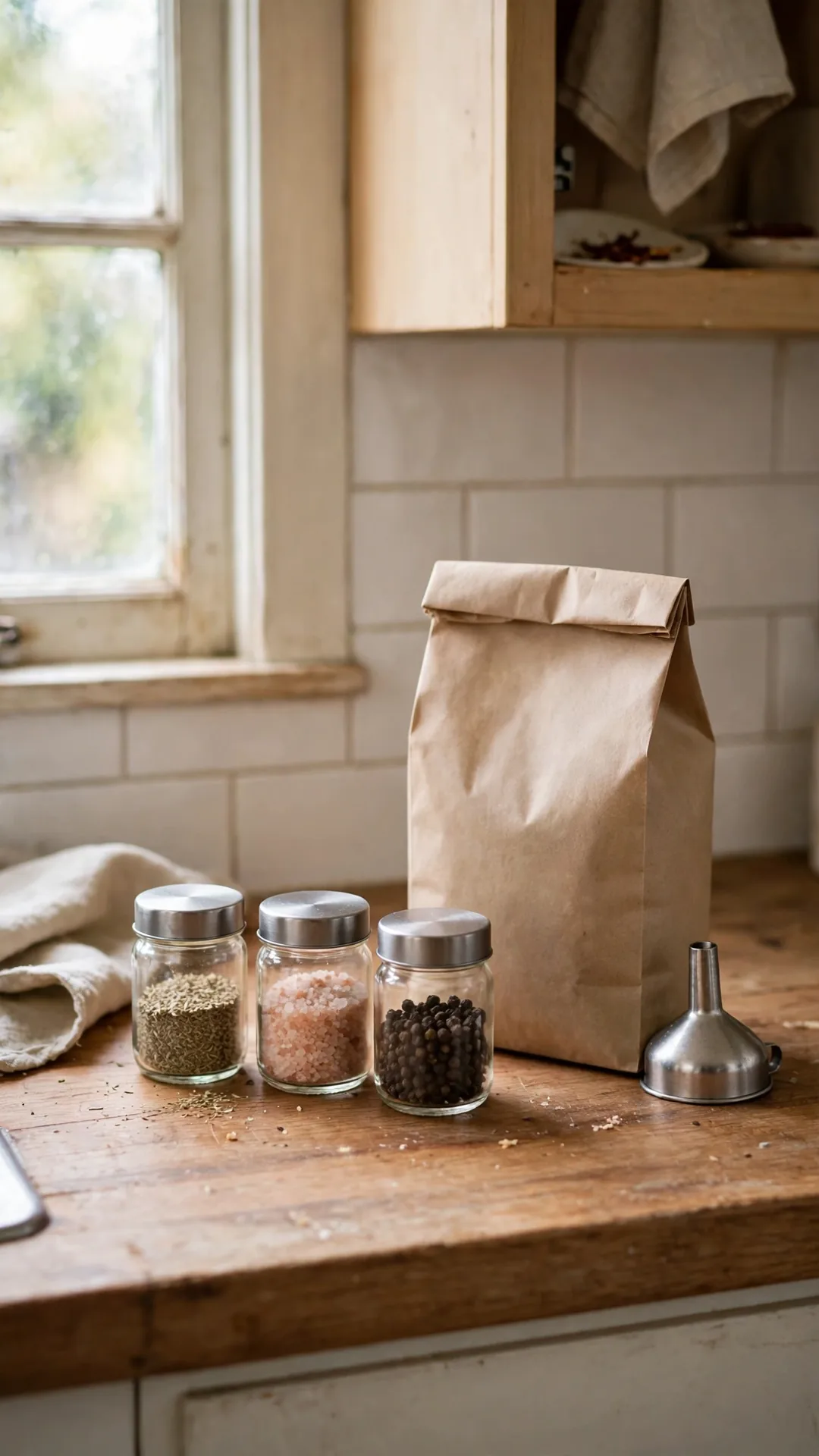
Big jars take shelf space and go stale before you finish them. Small jars stay fresh and fit more shelves. Refill from bulk bags only when a jar runs low.
How to do it:
- Buy the smallest jar size your store sells.
- Refill from a bulk bag kept in a cool drawer.
- Date each jar so you know when to toss it.
- Skip bulk buys for spices you use twice a year.
- Share a bulk bag with a friend to cut waste.
Best for: Small shelves and cooks who try new spices.
Budget: Under $10 per refill
Quick tip: Bulk bins let you buy one tablespoon at a time.
51. Follow a One In One Out Rule
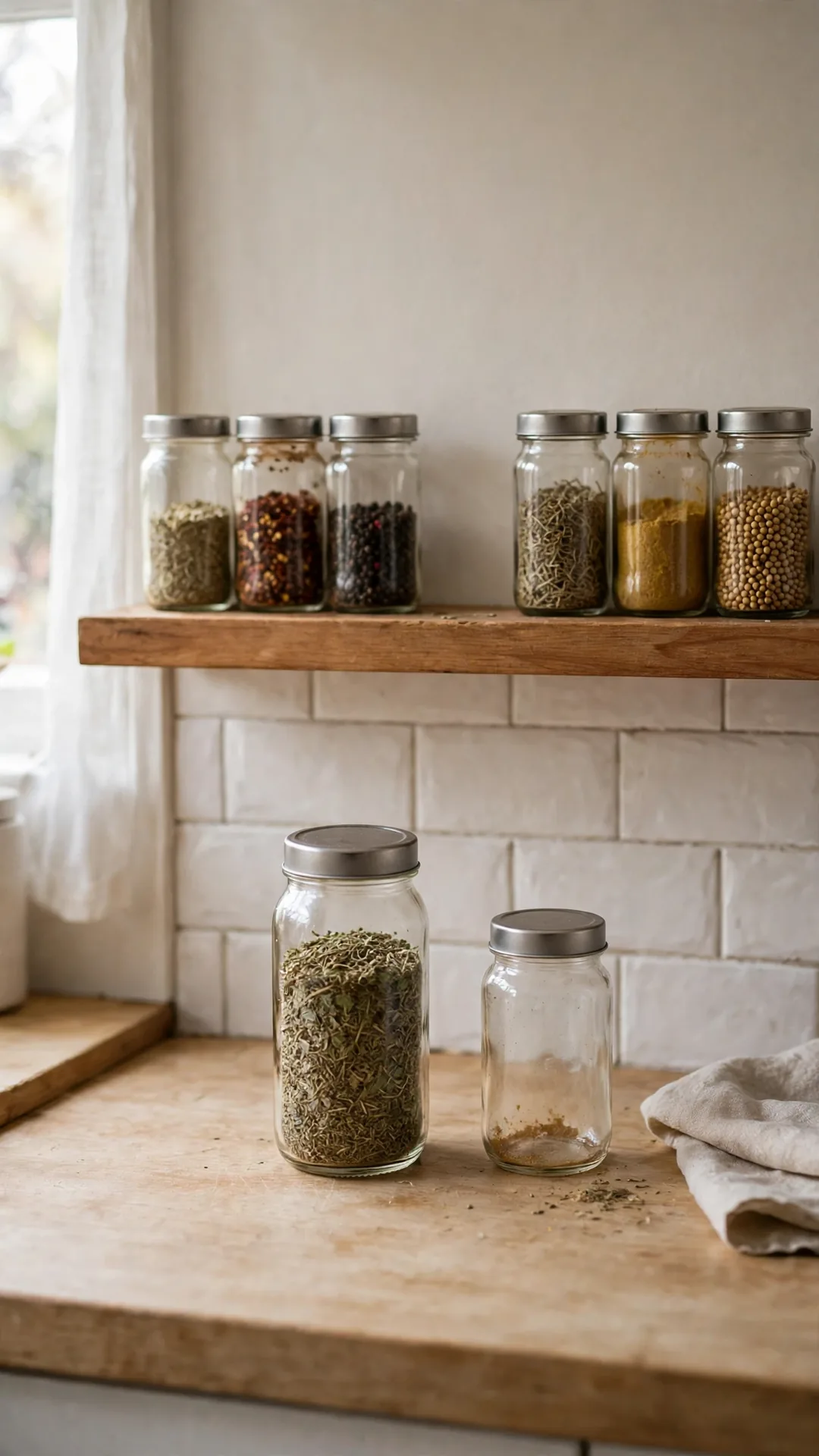
Spice shelves grow one jar at a time until they burst. A one in one out rule stops the creep. Each new jar means one old jar leaves.
How to do it:
- Pick the jar to remove before you buy a new one.
- Toss the stale jar or pass it to a friend.
- Keep the rule posted on the cabinet door.
- Count jars once a month to check the total.
- Set a cap, such as 30 jars, and stick to it.
Best for: Small shelves that fill up fast.
Budget: Free
Quick tip: The rule works best when the whole household follows it.
52. Give Salt and Pepper Their Own Spot
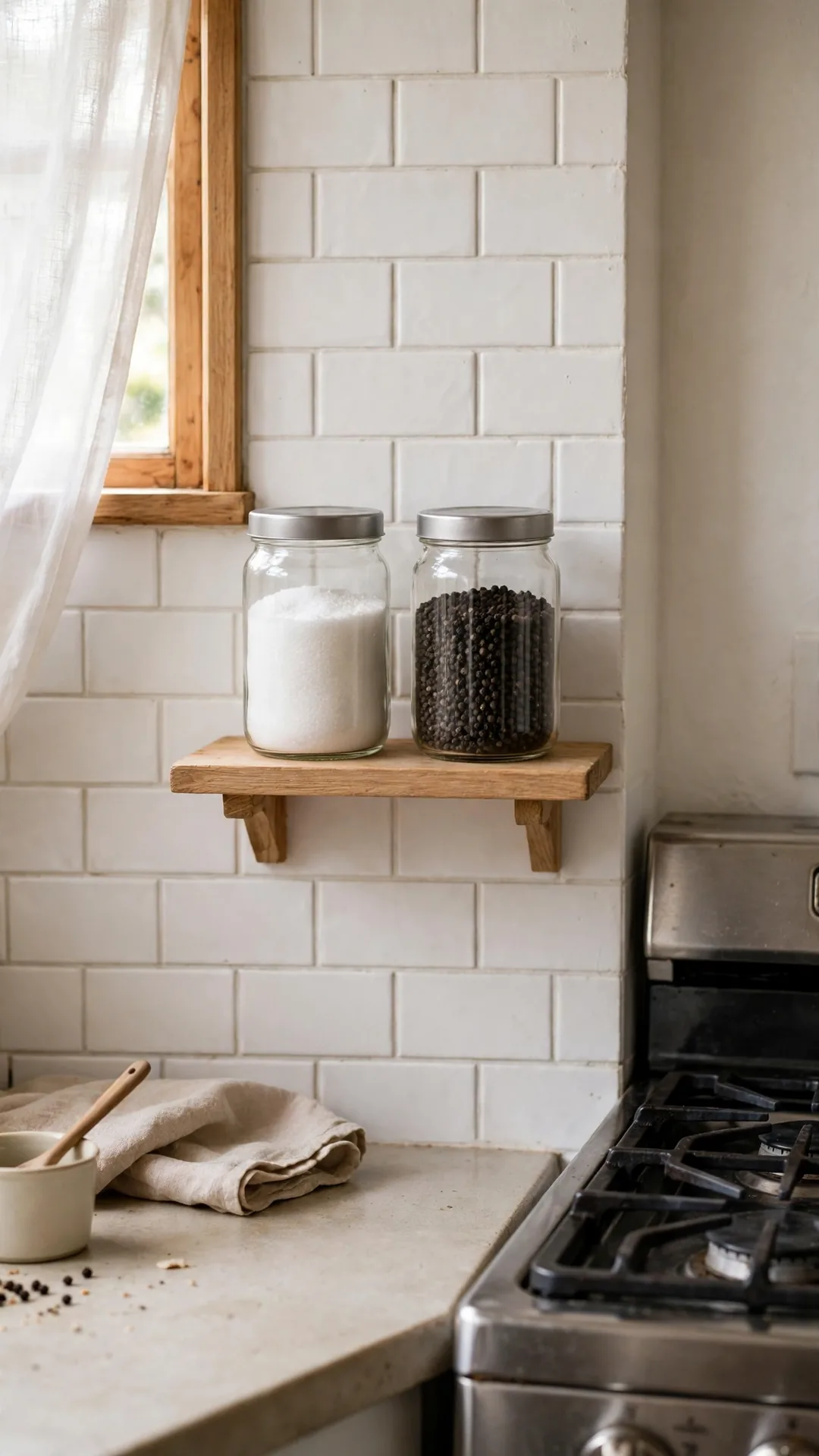
Salt and pepper get used at every meal. Mixing them with 30 spice jars slows every cook. Their own small spot by the stove ends the hunt.
How to do it:
- Pick a small shelf or tray by the stove.
- Set salt, pepper and one finishing salt there.
- Keep the spot clear of other jars.
- Refill from bulk stock once a month.
- Wipe the spot when you wipe the stove.
Best for: Every kitchen, since salt and pepper lead the list.
Budget: $5 to $15
Quick tip: A small pinch bowl beats a shaker for cooking.
53. Use Uniform Jar Sizes to Stack Neatly
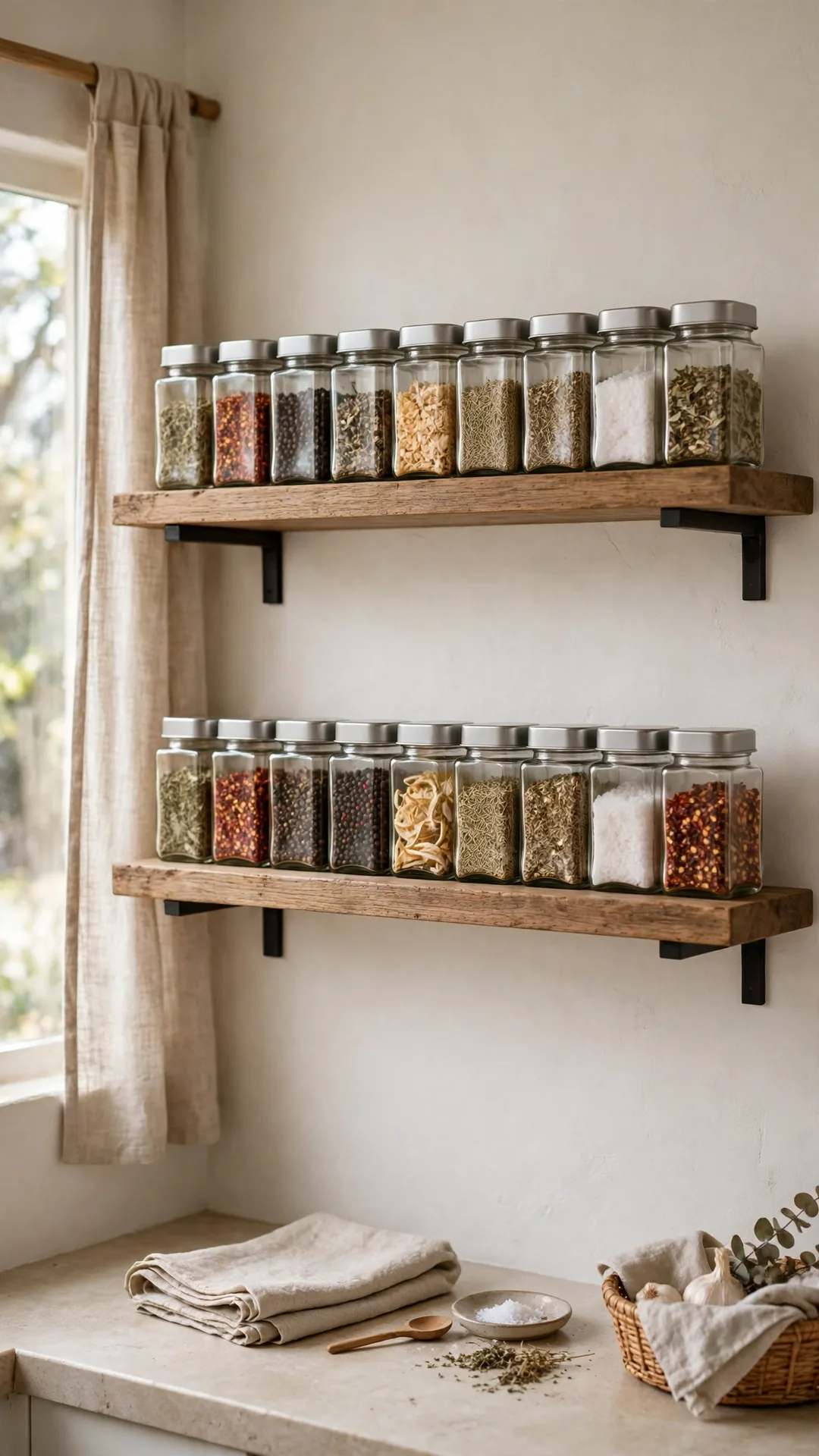
Mixed jar sizes leave gaps on every shelf. One size stacks in clean rows with no wasted air. Uniform jars also look calm on open shelves.
How to do it:
- Pick one jar size for most spices, such as 4 ounce.
- Buy a second small size only for rare spices.
- Stack jars in rows with lids lined up.
- Label every lid the same way.
- Replace odd jars as they run out.
Best for: Open shelves where looks matter too.
Budget: $20 to $45 for a set of 12
Quick tip: Square jars stack tighter than round jars.
54. Label Jars With the Dish They Season
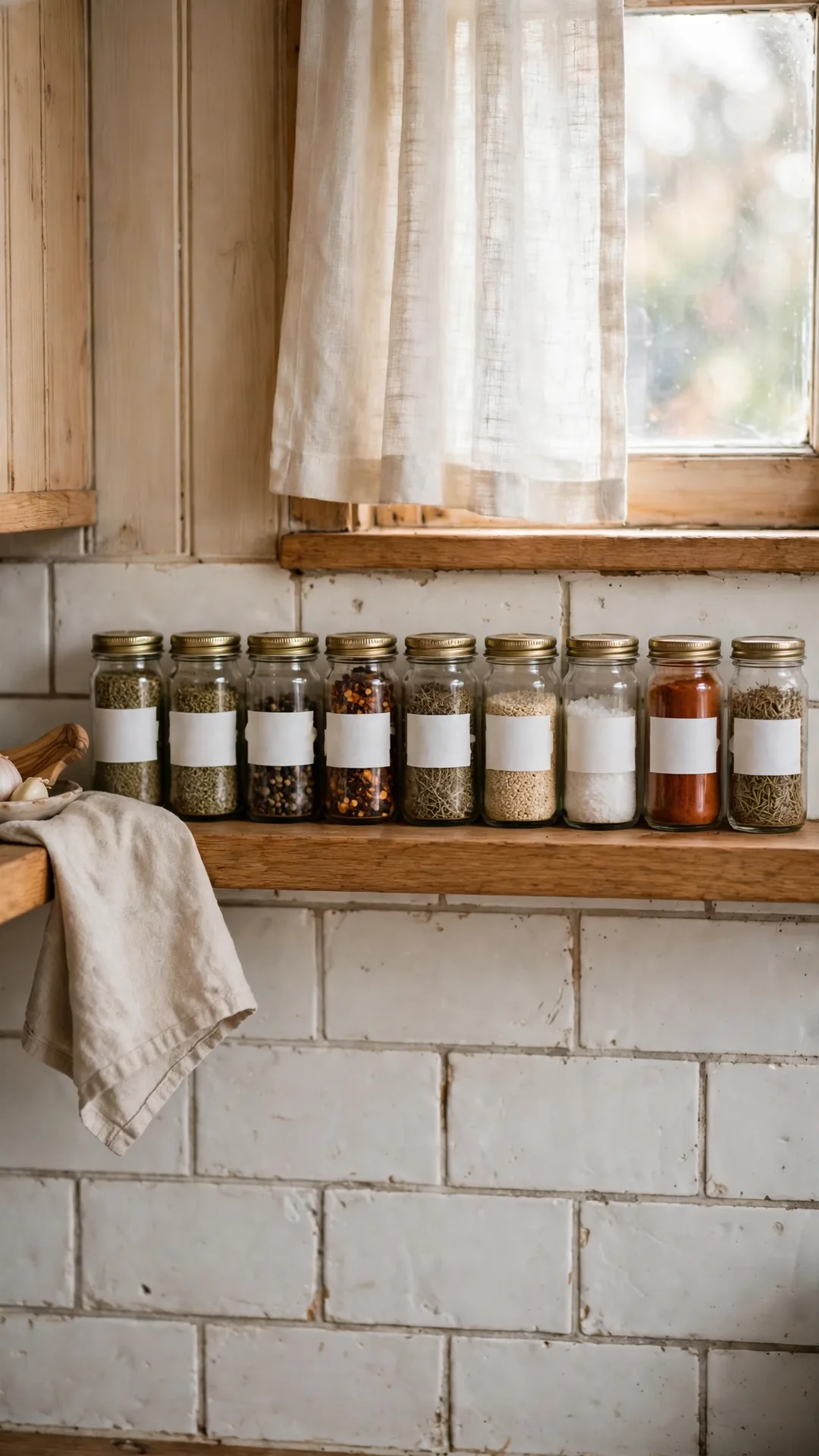
You think in meals, not in spice names. Labels like tacos or soup point to the right jar fast. The trick helps guests cook in your kitchen too.
How to do it:
- Write the main dish on each jar label.
- Add the spice name below it in smaller text.
- Group jars by dish on the shelf.
- Update labels when your go to meals change.
- Keep one label per jar to avoid clutter.
Best for: Cooks who make the same meals each week.
Budget: $3 to $8
Quick tip: A jar can carry two dish names if it seasons both.
Pick One Jar and Start Tonight
You do not need a full weekend to fix your spice shelf. Start with labels or one drawer and the rest gets easier. These spice organization ideas for small kitchens work best one small change at a time. Save this list or pin your favorite idea for your next grocery run.

- 54 Stunning Spice Organization Ideas for Small Kitchens - November 28, 2026
- 58 Hidden Storage Ideas for Small Apartments to Copy Now - November 28, 2026
- 57 Blanket Storage Ideas for Small Spaces That Anyone Can Do - November 27, 2026