
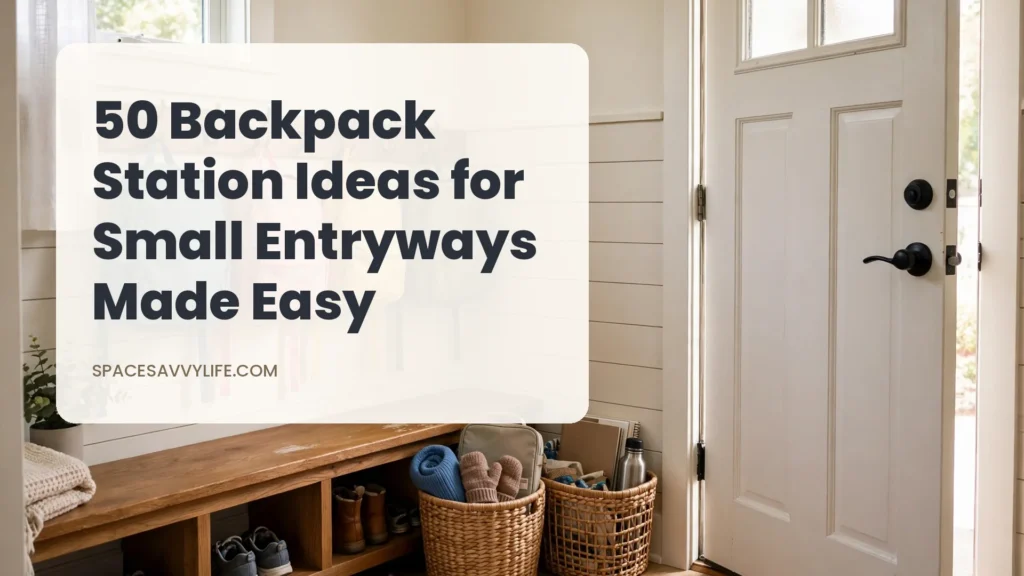
Backpacks hit the floor the second your kids walk in. Shoes, lunch bags and library books pile up right behind them. These backpack station ideas for small entryways give every bag a home on one small wall or bench.
Here are 50 setups you can copy this weekend. Most cost under $40 and many need no tools at all. Start with the hooks, then add only what your family really uses.
1. Hang a Double Hook Row at Kid Height
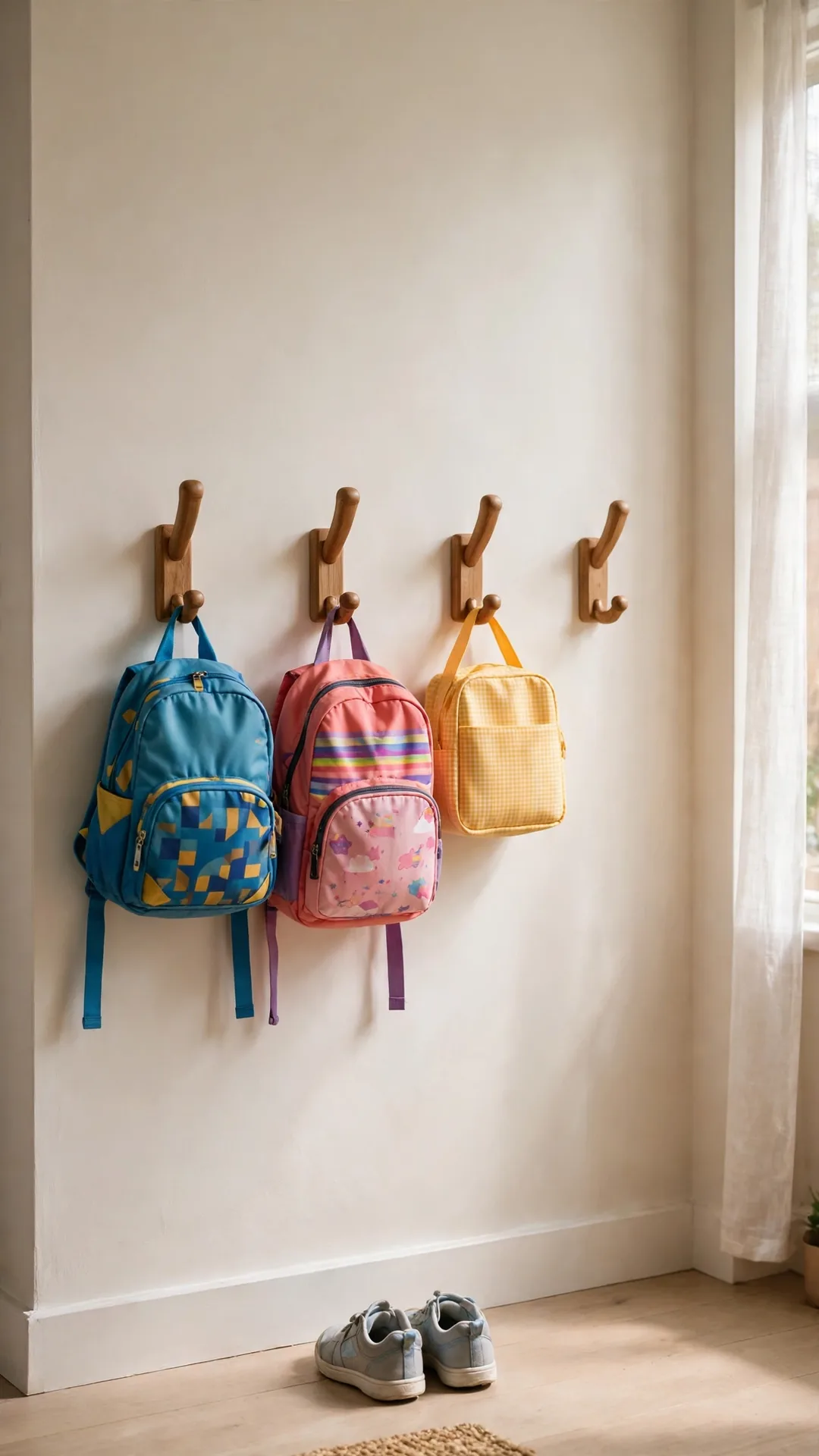
Strong backpack station ideas for small entryways start with a simple row of double hooks. Each hook holds a backpack on top and a coat or lunch bag below. Kids reach the row on their own, so bags stop landing on the floor.
How to do it:
- Mount the row about 40 inches high for younger kids.
- Space hooks 8 to 10 inches apart along the wall.
- Use double hooks rated for at least 10 pounds each.
- Screw the hooks into studs or use heavy duty wall anchors.
- Leave 12 inches of clear floor space below the row.
Best for: Families with kids aged 4 to 10.
Budget: $15 to $35
Quick tip: Put the youngest child's hook at the end nearest the door.
2. Mount a Peg Rail With One Hook Per Child
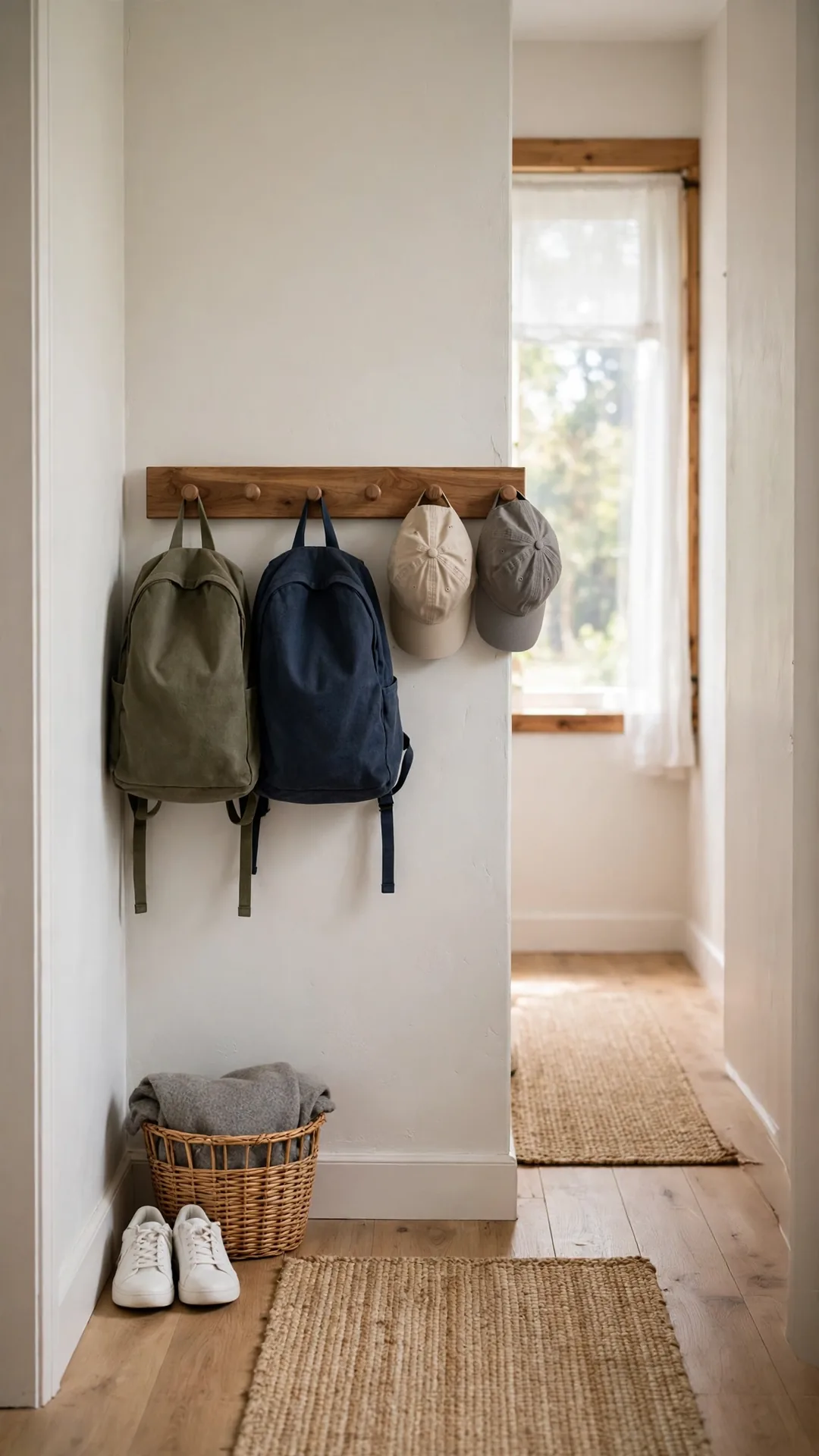
A peg rail gives every child a set spot without any arguing. The rail reads as one clean line on the wall. For more mudroom setups, browse The Spruce’s entryway organization ideas before you drill.
How to do it:
- Choose a rail 36 to 48 inches long with 4 to 6 pegs.
- Mount it 42 inches from the floor for school age kids.
- Give one peg to each child and one to guests.
- Hang bags by the top loop so zips stay closed.
- Add a small peg for keys or a dog leash at the end.
Best for: Hallways with one long, bare wall.
Budget: $20 to $45
Quick tip: Paint the rail the wall color so the bags stand out, not the board.
3. Use a Wall Grid With Clips and Hooks
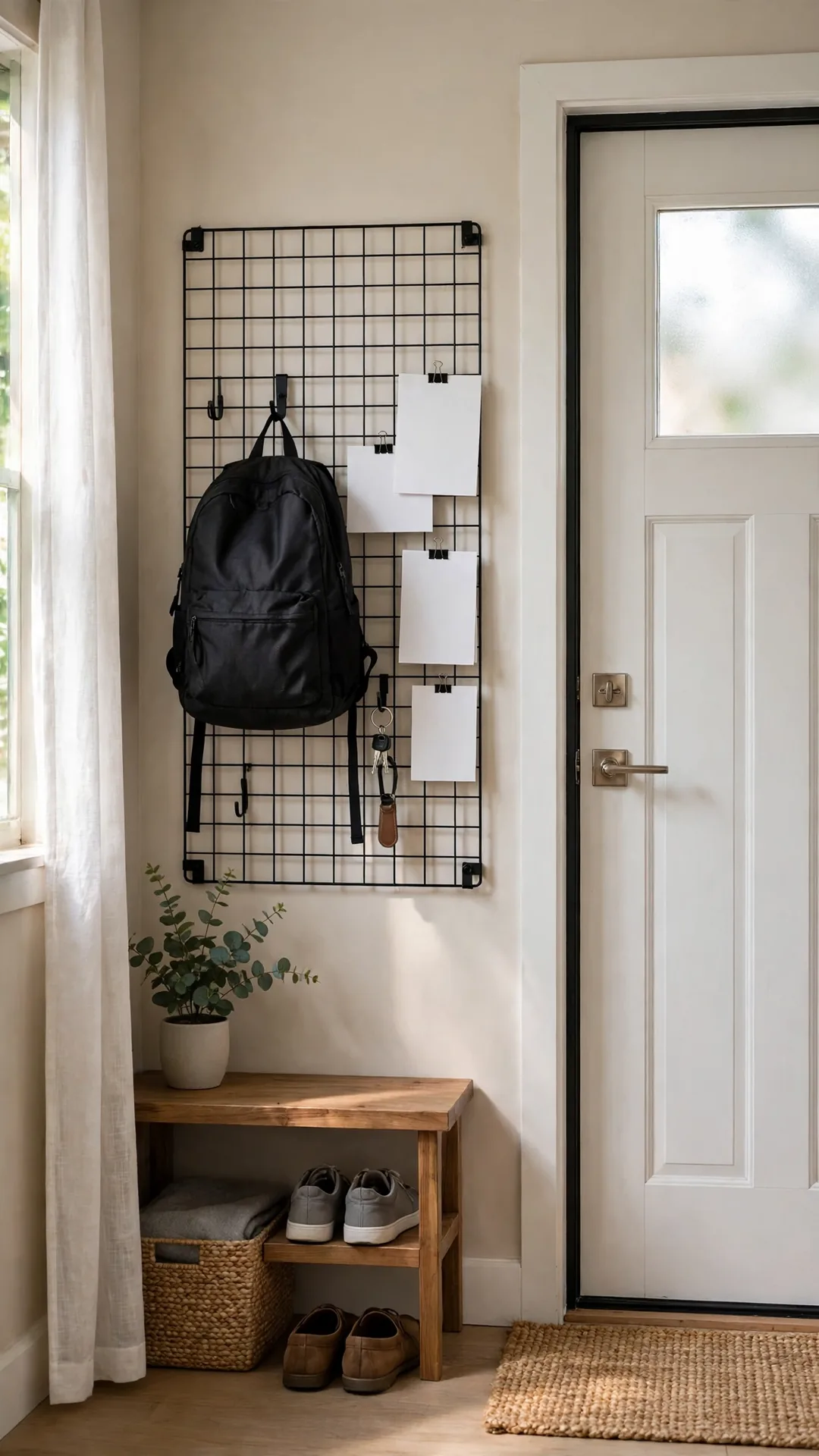
Backpack station ideas for small entryways turn a wire grid into storage. Clips hold notes and gloves while hooks carry the heavy bags. You can move every piece in seconds as needs change.
How to do it:
- Pick a grid about 24 by 36 inches in coated metal.
- Fix it to the wall with four screws and anchors.
- Clip school notes and permission slips at eye level.
- Hang backpacks on the two strongest hooks at the bottom.
- Add a small wire basket for gloves and hats.
Best for: Renters who want storage they can rearrange.
Budget: $18 to $40
Quick tip: Keep heavy bags on the lowest hooks so the grid stays balanced.
4. Hang Hooks Behind the Entry Door

The back of the entry door is free storage most homes ignore. Two or three hooks there hold a full school load. The bags hide the moment the door closes.
How to do it:
- Use an over-door hook rack with padded hooks.
- Check the rack clears the frame by at least half an inch.
- Hang the heaviest backpack on the middle hook.
- Keep total weight under 20 pounds for hollow doors.
- Add felt pads where metal touches the door paint.
Best for: Apartments with no spare wall at all.
Budget: $10 to $25
Quick tip: Choose hooks with a flat profile so the door still latches cleanly.
5. Add a Slim Shelf With Hooks Under It

A slim shelf with hooks under it does two jobs in 6 inches of depth. Bags hang below while gloves and sunglasses sit on top. The whole setup fits above a baseboard on most entry walls.
How to do it:
- Pick a shelf 24 to 36 inches wide and 5 to 6 inches deep.
- Mount the shelf about 54 inches from the floor.
- Screw four hooks into the underside, spaced 7 inches apart.
- Hang backpacks below and keep the top for small daily items.
- Round the front corners if kids pass close by.
Best for: Narrow halls where floor space is tight.
Budget: $25 to $50
Quick tip: Put a small tray on top so keys and coins stay in one spot.
6. Put a Magnetic Strip Above the Bag Hooks

Backpack station ideas for small entryways keep keys on a magnetic strip. A magnetic strip above the bag hooks gives them one fixed home. Everyone drops keys on the strip without thinking about it.
How to do it:
- Mount a magnetic knife strip 60 inches from the floor.
- Choose a strip at least 12 inches long for family keys.
- Keep it well above the hooks so bags never knock keys off.
- Add one labeled ring per driver in the house.
- Test the hold with your heaviest key set first.
Best for: Families who lose keys in coat pockets.
Budget: $10 to $20
Quick tip: Put a spare house key on the strip for older kids.
7. Use a Picture Ledge for Small Gear

A picture ledge above the hooks catches the small stuff bags swallow. Sunglasses, sunscreen and library cards sit in plain sight. Nothing tiny gets buried at the bottom of a backpack again.
How to do it:
- Choose a ledge 24 to 36 inches long with a raised lip.
- Mount it 12 inches above the top of the bag hooks.
- Keep water bottles, sunglasses and small books on the ledge.
- Leave the middle third empty for fast grabs.
- Wipe the ledge weekly since open shelves collect dust.
Best for: Families with lots of small daily gear.
Budget: $15 to $30
Quick tip: Give each child one ledge section and one color of tape as a marker.
8. Hang Wall Pockets for Gloves and Hats
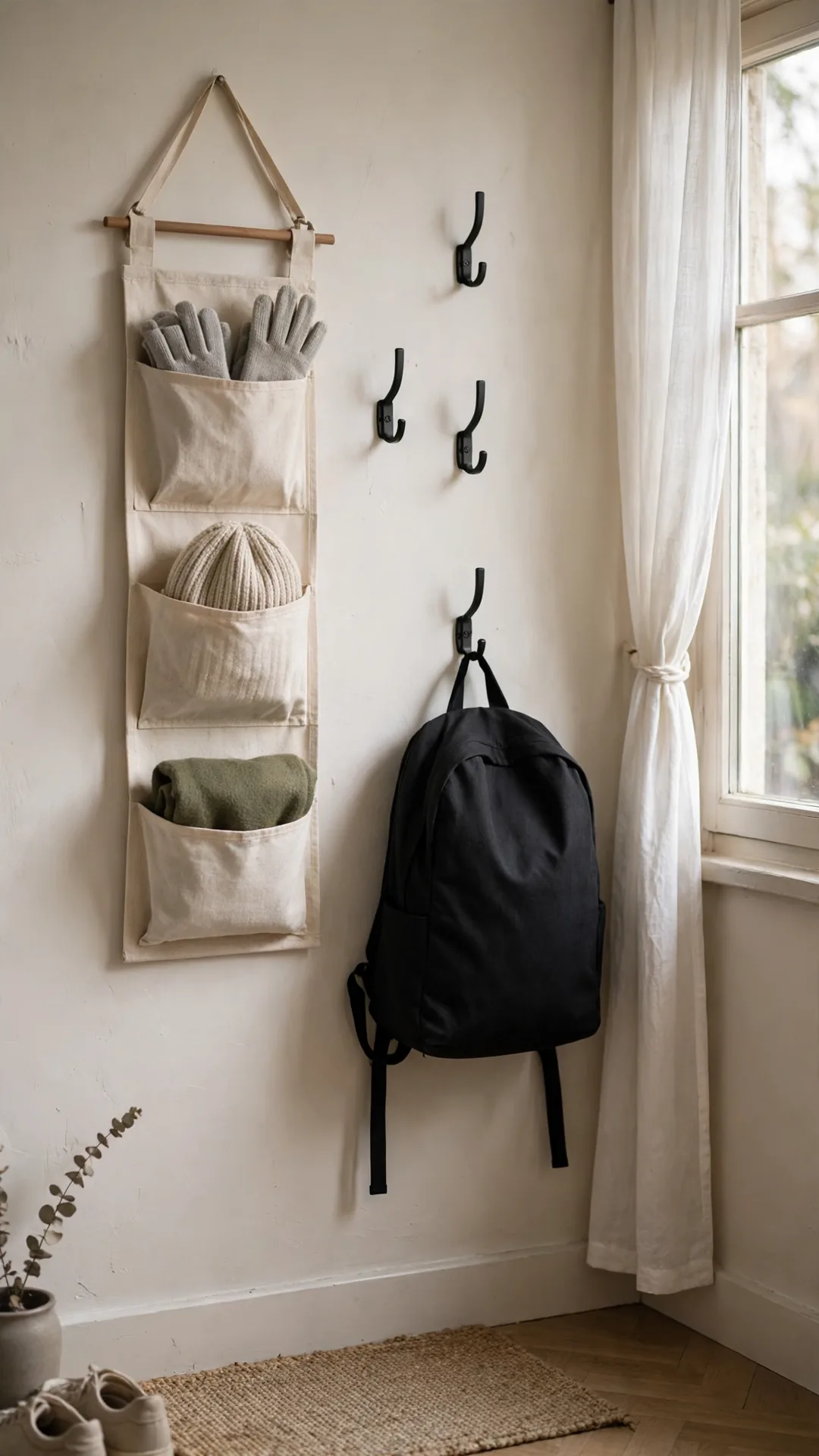
Hats and gloves need a home that is not the floor. Canvas wall pockets beside the hooks hold one set per pocket. The pockets add almost no depth to the wall.
How to do it:
- Hang a pocket panel about 16 inches wide beside the hooks.
- Give each child the two pockets at their own height.
- Roll gloves and hats so they slide in fast.
- Keep one pocket free for wet items after rainy days.
- Choose washable canvas so the panel stays fresh.
Best for: Cold climates with daily hats and gloves.
Budget: $12 to $28
Quick tip: Air out wet gloves on the hook first, then pocket them dry.
9. Fit a Hook Strip Inside the Closet Door

Backpack station ideas for small entryways hide hooks inside closet doors. A hook strip inside holds bags where guests never see them. The entry stays clear and the bags stay close.
How to do it:
- Measure the inside door panel before you buy the strip.
- Pick a strip with four hooks, under 30 inches wide.
- Screw it at 40 inches high for kids, higher for adults.
- Hang daily backpacks inside and close the door on the clutter.
- Leave coat hangers room to swing beside the bags.
Best for: Homes with a coat closet by the door.
Budget: $12 to $30
Quick tip: Keep one hook free inside for tomorrow's gym bag.
10. Build One Command Center Board With Hooks
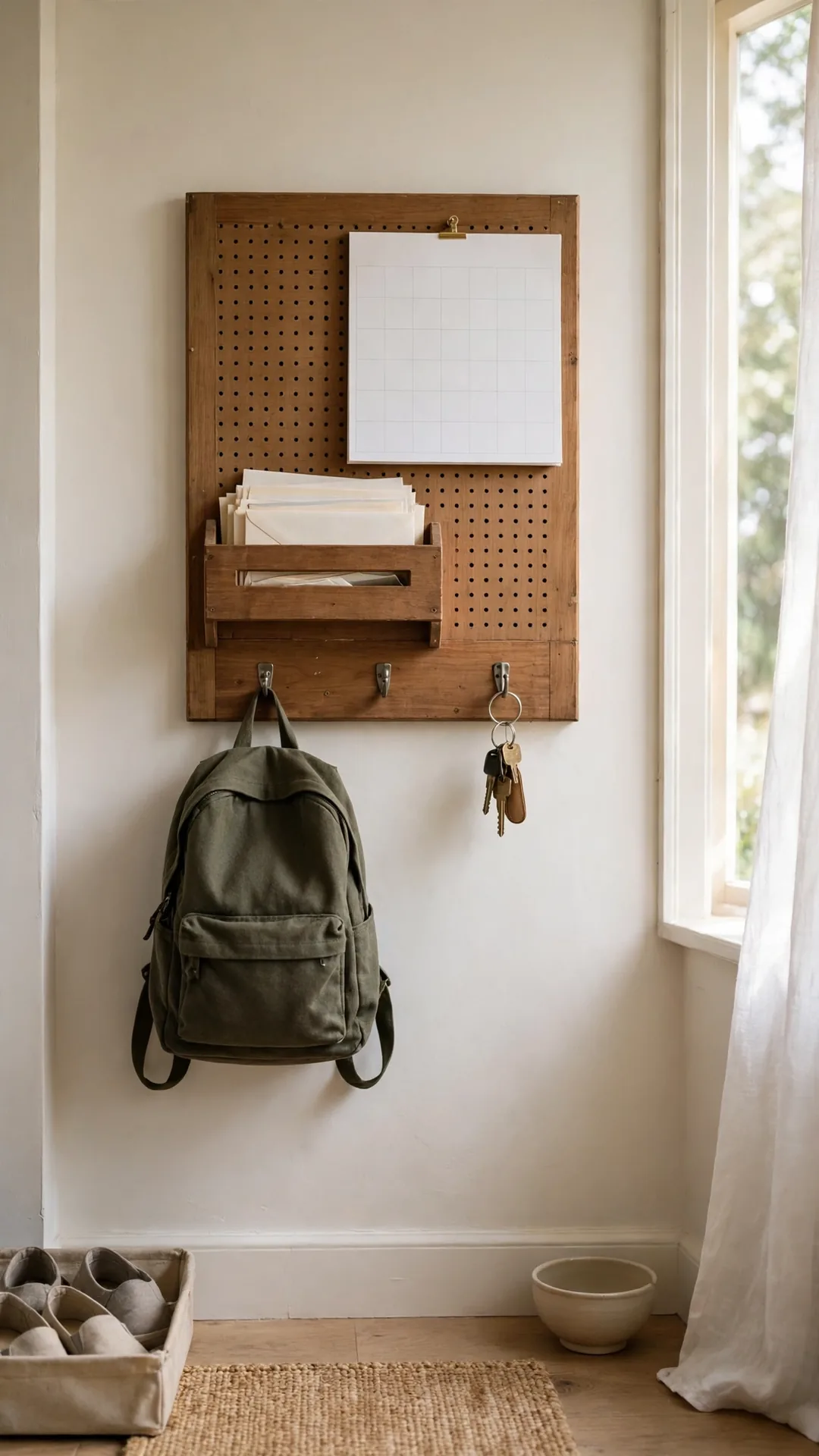
One board can run the whole morning routine from a single wall. Hooks hold the bags while a mail slot catches school papers. This station angle works like the best small coffee station ideas, where every daily item gets one set spot.
How to do it:
- Pick a board about 24 by 36 inches in wood or metal.
- Mount hooks along the bottom edge for backpacks.
- Add a mail slot or pocket near the top for papers.
- Pin a weekly calendar where adults can reach it.
- Keep pens and a notepad on a small clip.
Best for: Families who miss papers and morning notes.
Budget: $30 to $60
Quick tip: Empty the mail slot every Friday so papers never pile up.
11. Choose a Bench With Cubbies Under the Seat
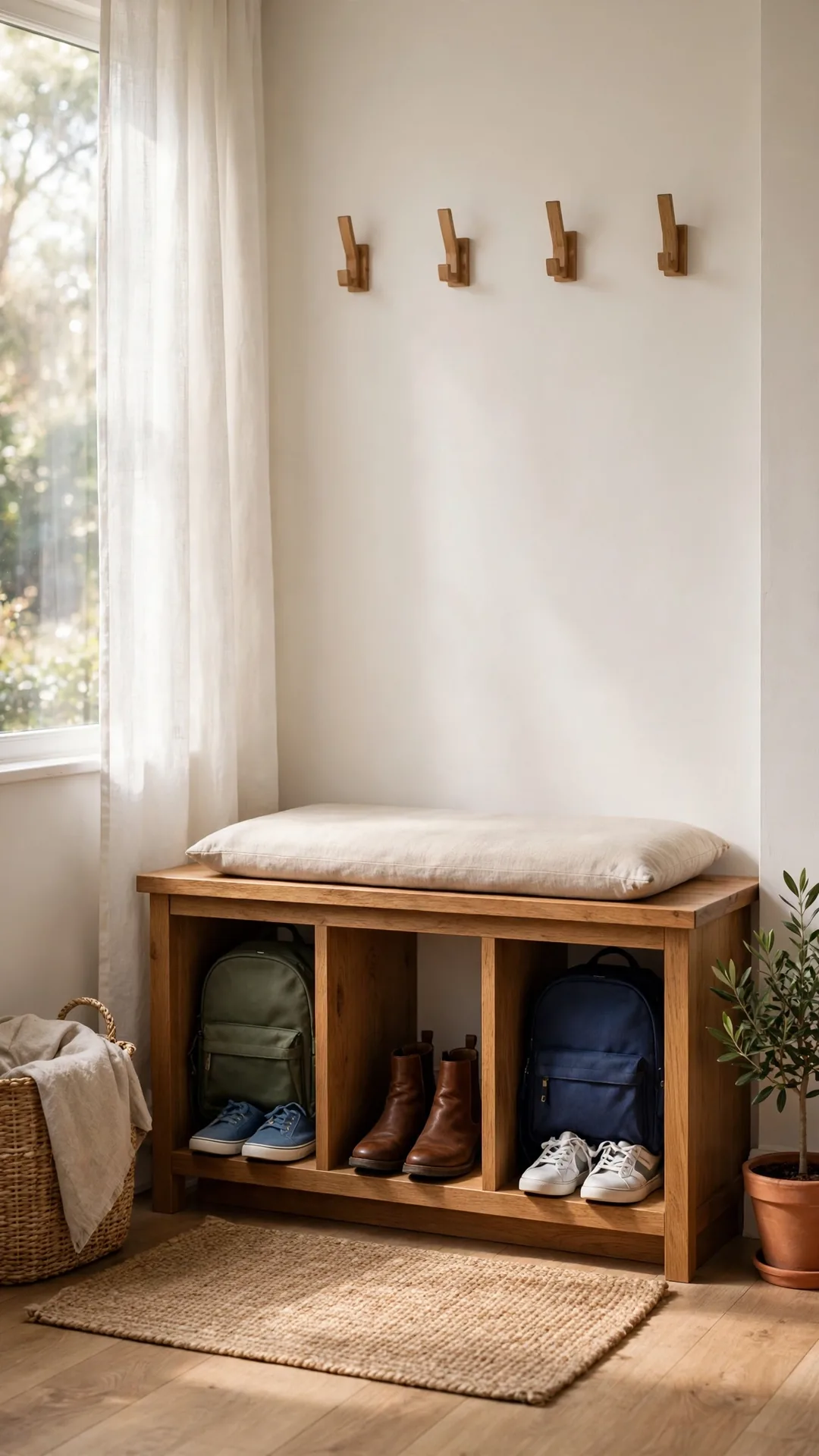
Simple backpack station ideas for small entryways often pair hooks with a low bench. Cubbies under the seat hold shoes and lunch boxes. Kids sit to pull shoes on, then grab a bag and go.
How to do it:
- Choose a bench about 36 inches wide and 18 inches tall.
- Pick cubbies at least 12 inches wide for school shoes.
- Set one cubby per child for bags and lunch boxes.
- Add a thin cushion so the seat stays comfortable.
- Anchor the bench to the wall if toddlers climb on it.
Best for: Entries with room for one piece of furniture.
Budget: $60 to $140
Quick tip: Put tomorrow's shoes in the cubby the night before.
12. Pair a Storage Bench With Top Hooks

A storage bench hides clutter while hooks above it hold daily bags. The lid takes the overflow that never fits on hooks. Together they form one tidy block by the door.
How to do it:
- Choose a bench 30 to 40 inches wide with a hinged lid.
- Mount two or three hooks 48 inches above the floor.
- Hang daily backpacks on the hooks, not inside the bench.
- Store spare bags and seasonal gear inside the lid.
- Add soft close hinges if small fingers use it daily.
Best for: Families with more gear than hook space.
Budget: $70 to $160
Quick tip: Keep the bench lid clear so it opens without a cleanup first.
13. Hide Spare Bags in a Flip-Top Bench

A flip-top bench swallows spare bags that have no daily job. Guest bags, tote bags and lunch boxes wait inside, out of sight. The seat still works for tying shoes each morning.
How to do it:
- Pick a bench with a deep box, at least 14 inches inside.
- Line the base with a washable mat for damp bags.
- Stand spare backpacks upright so you can see them all.
- Keep one daily hook on the wall for the bag in use.
- Choose a lid with a finger gap to stop pinched hands.
Best for: Homes with spare bags and no closet space.
Budget: $55 to $130
Quick tip: Review the spare bags each school term and pass on outgrown ones.
14. Use a Narrow Shoe Bench With a Bag Ledge

Backpack station ideas for small entryways pair shoe benches with bag ledges. Shoes slide under the bench in neat rows. The ledge holds one backpack per child, ready to grab.
How to do it:
- Choose a bench under 12 inches deep for tight halls.
- Look for a back ledge 4 to 6 inches above the seat.
- Rest backpacks on the ledge, straps tucked in.
- Fit two pairs of shoes per child under the bench.
- Add a washable mat under the bench for wet days.
Best for: Very narrow entryways and hall landings.
Budget: $45 to $110
Quick tip: Keep only school shoes under the bench and store the rest elsewhere.
15. Give Each Child a Stool and a Hook
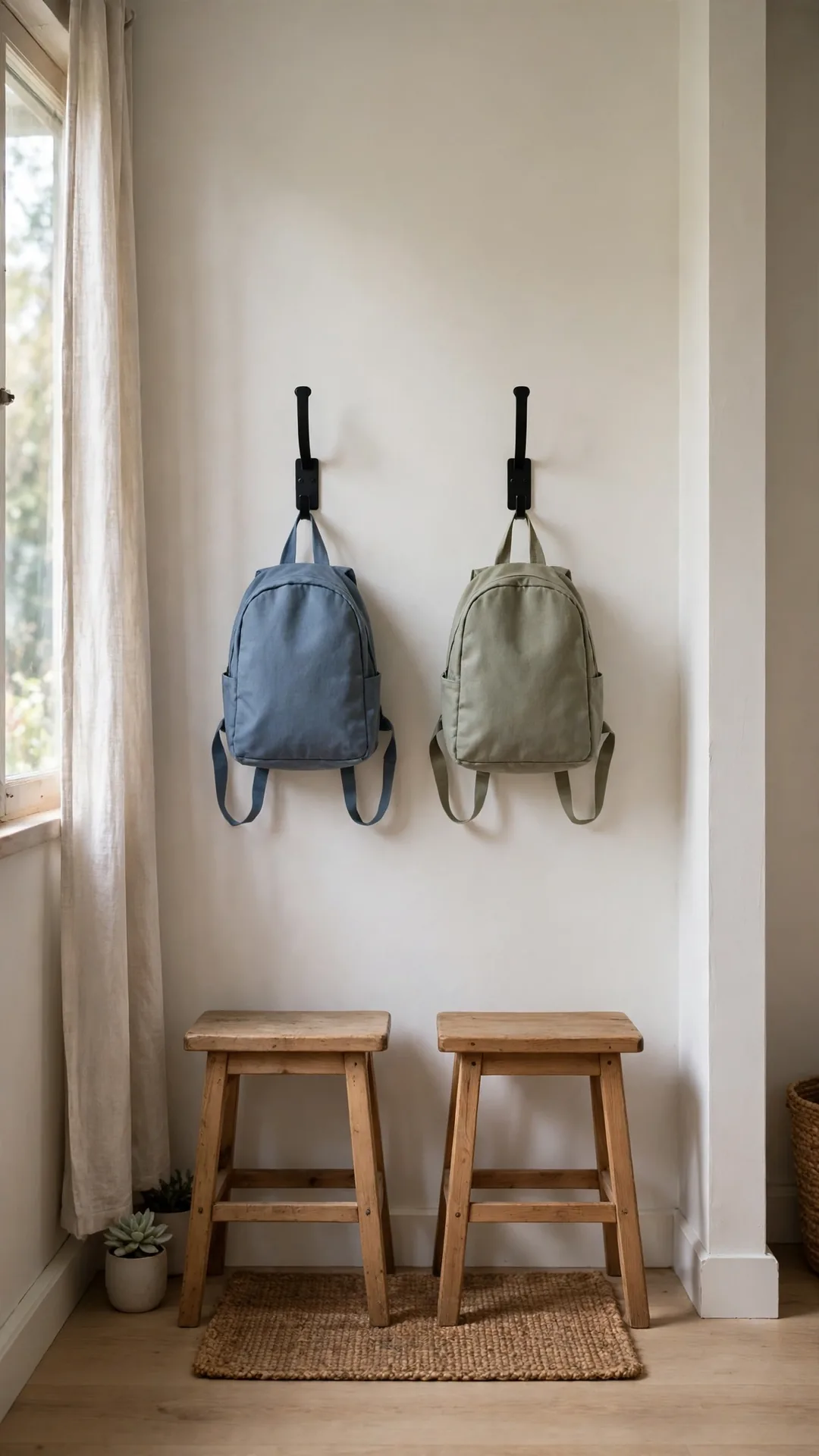
One stool per child ends the fight over seat space. Each stool sits under that child's own hook. The setup grows one stool at a time as the family grows.
How to do it:
- Pick sturdy stools about 12 inches tall for young kids.
- Place one stool under each wall hook.
- Paint or tape one color per child on stool and hook.
- Tuck stools fully under the hooks when not in use.
- Choose stackable stools if floor space is very tight.
Best for: Families with two or more young children.
Budget: $30 to $70
Quick tip: Let each child pick their stool color so the spot feels like theirs.
16. Add Baskets Beside a Simple Bench
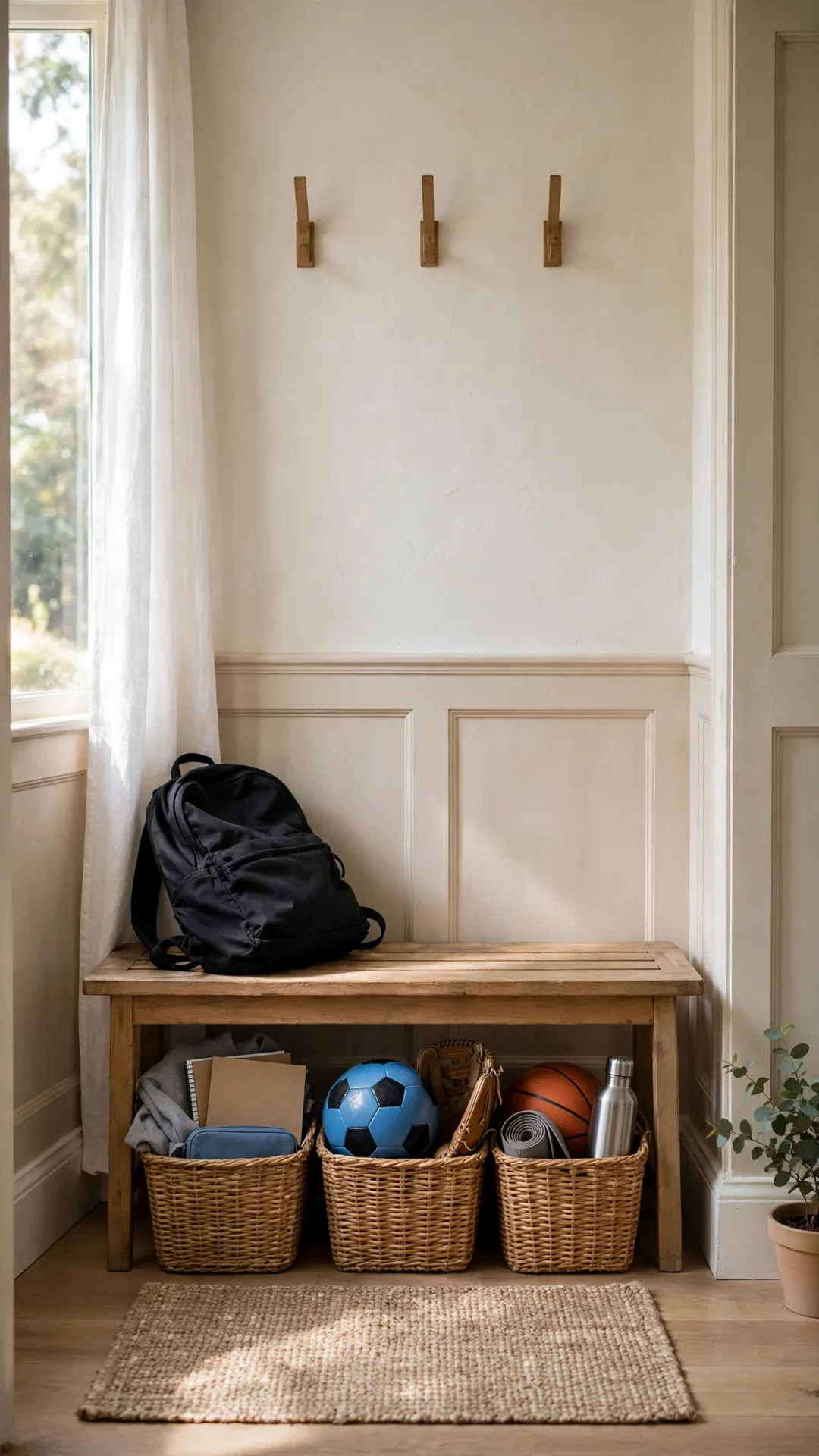
A plain bench plus woven baskets handles gear that hooks cannot. Baskets hold sports kit, library books and winter layers. Each basket pulls out like a drawer for small hands.
How to do it:
- Choose a low open bench about 36 inches wide.
- Fit two or three baskets under the seat.
- Give one basket per child for loose school gear.
- Hang backpacks on hooks above the bench.
- Pick baskets with handles so kids can carry them.
Best for: Families with lots of loose sports gear.
Budget: $50 to $120
Quick tip: Shake out the baskets weekly over a bin to clear crumbs and grit.
17. Turn a Low Bookcase Into a Bench
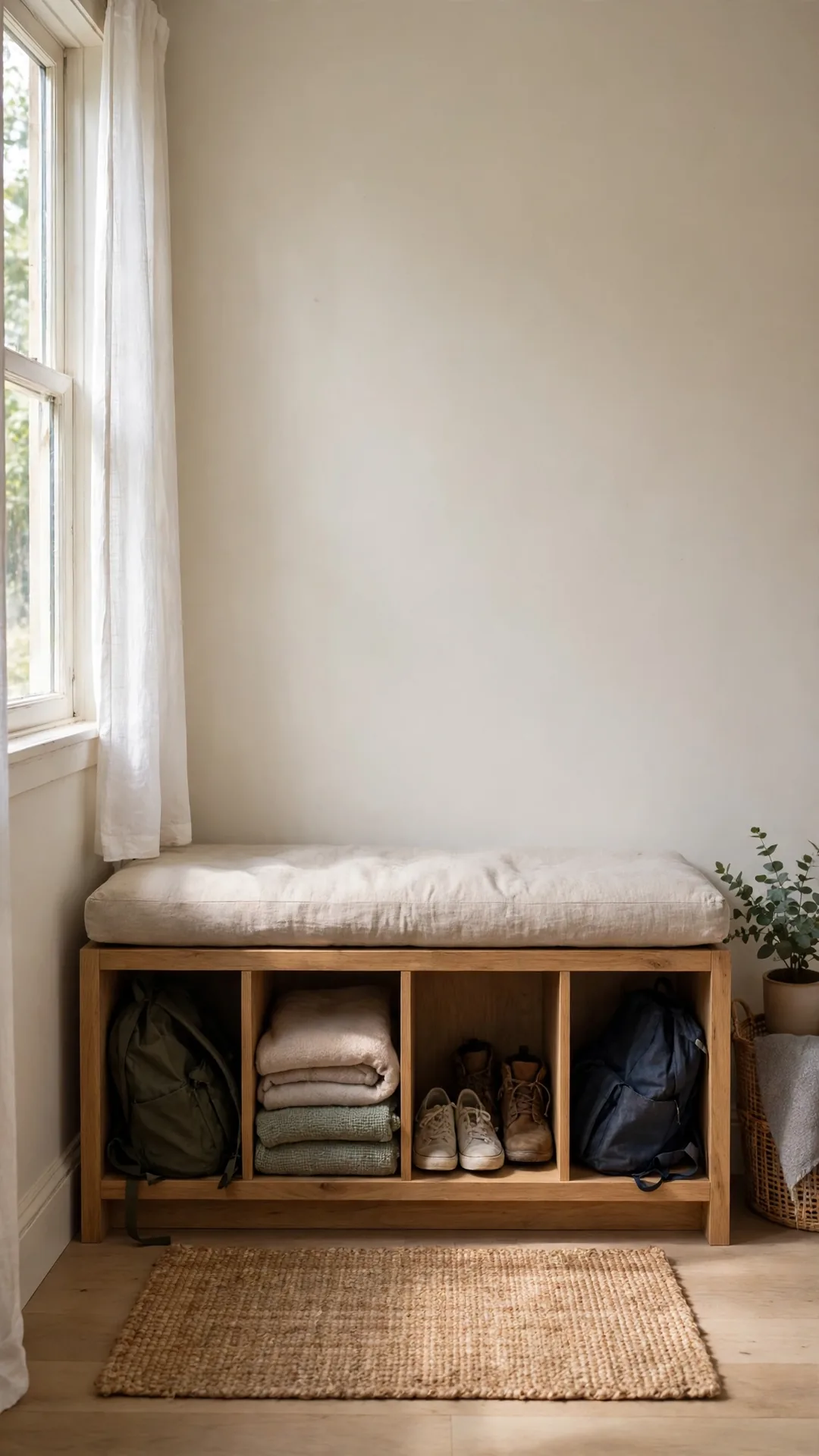
Backpack station ideas for small entryways turn low bookcases into benches. The cubbies sort bags, shoes and books by child. A cushion on top makes the seat soft and warm.
How to do it:
- Choose a solid wood bookcase about 36 inches wide.
- Turn it on its long side to form a low bench.
- Test the frame for wobbles and fix any loose joints.
- Fill each cubby with one child's bag and shoes.
- Add a washable cushion cut to fit the top.
Best for: Budget setups using furniture you already own.
Budget: $20 to $60 if bought used
Quick tip: Add felt pads under the frame to protect wood floors.
18. Fit a Corner Bench Into a Tiny Entry
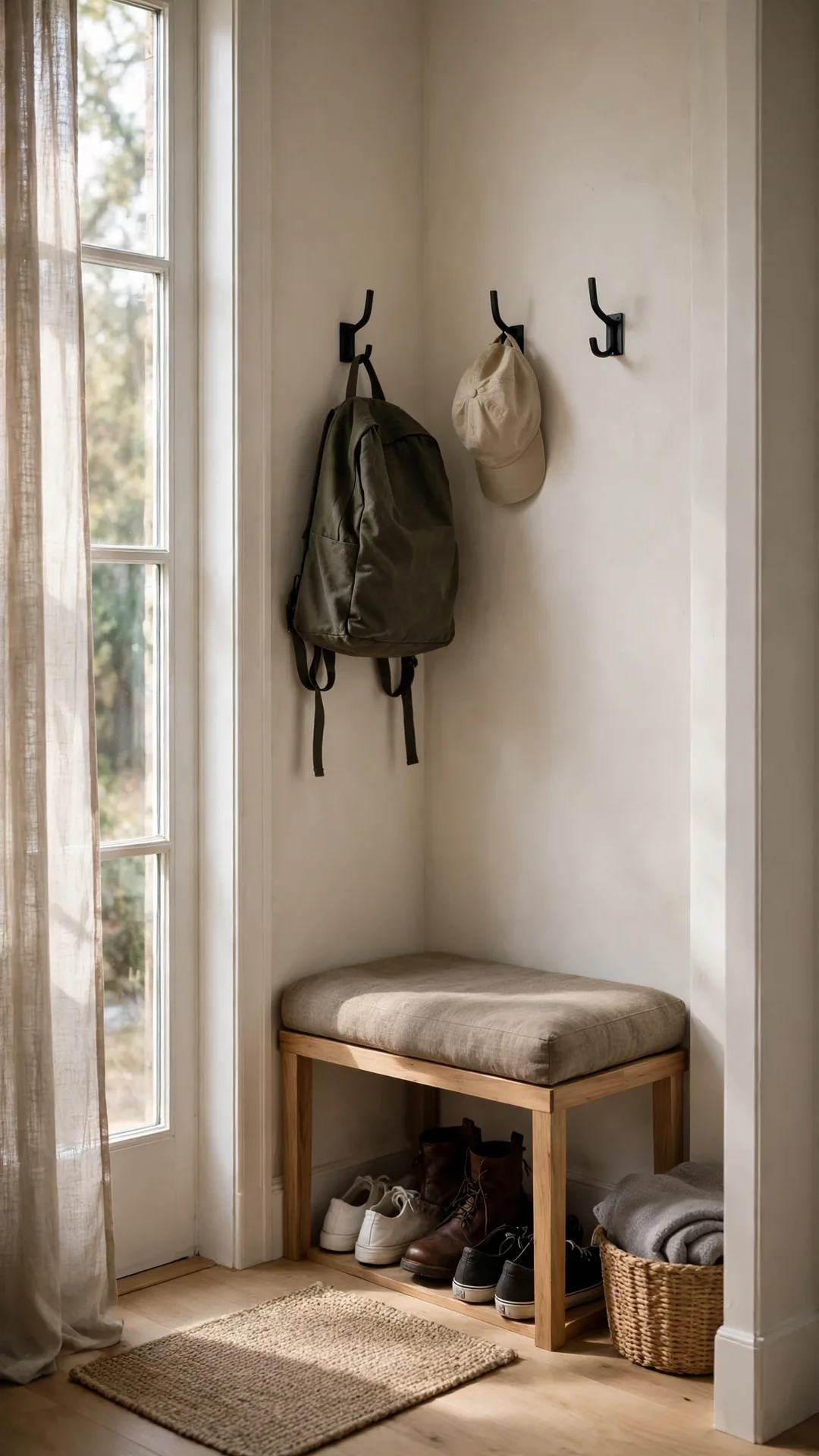
A corner bench uses the one spot most entries waste. The angled seat fits where a straight bench cannot. Hooks on both walls above it double the hanging space.
How to do it:
- Measure both corner walls before you shop.
- Pick a corner bench with a seat about 16 inches deep.
- Mount hooks on both walls, 42 inches from the floor.
- Store shoes in the corner gap under the seat.
- Keep the walkway beside the bench fully clear.
Best for: Tiny apartment entries with one free corner.
Budget: $60 to $150
Quick tip: A washable cushion hides scuffs and makes the corner feel finished.
19. Stand Slim Bookcase Cubbies by the Door

Tall backpack station ideas for small entryways work well in a slim bookcase. Each cubby becomes one person's landing zone by the door. Bags, shoes and hats stack up instead of spreading out.
How to do it:
- Choose a bookcase 12 to 16 inches wide and 48 inches tall.
- Anchor it to the wall studs before anyone loads it.
- Give each person one cubby for a bag and shoes.
- Add small baskets in two cubbies for gloves and keys.
- Keep the top cubby for adult bags and mail.
Best for: Entries with one narrow gap beside the door.
Budget: $40 to $100
Quick tip: Put the heaviest bags in the lowest cubby for balance.
20. Stack Cubes With One Cube Per Person
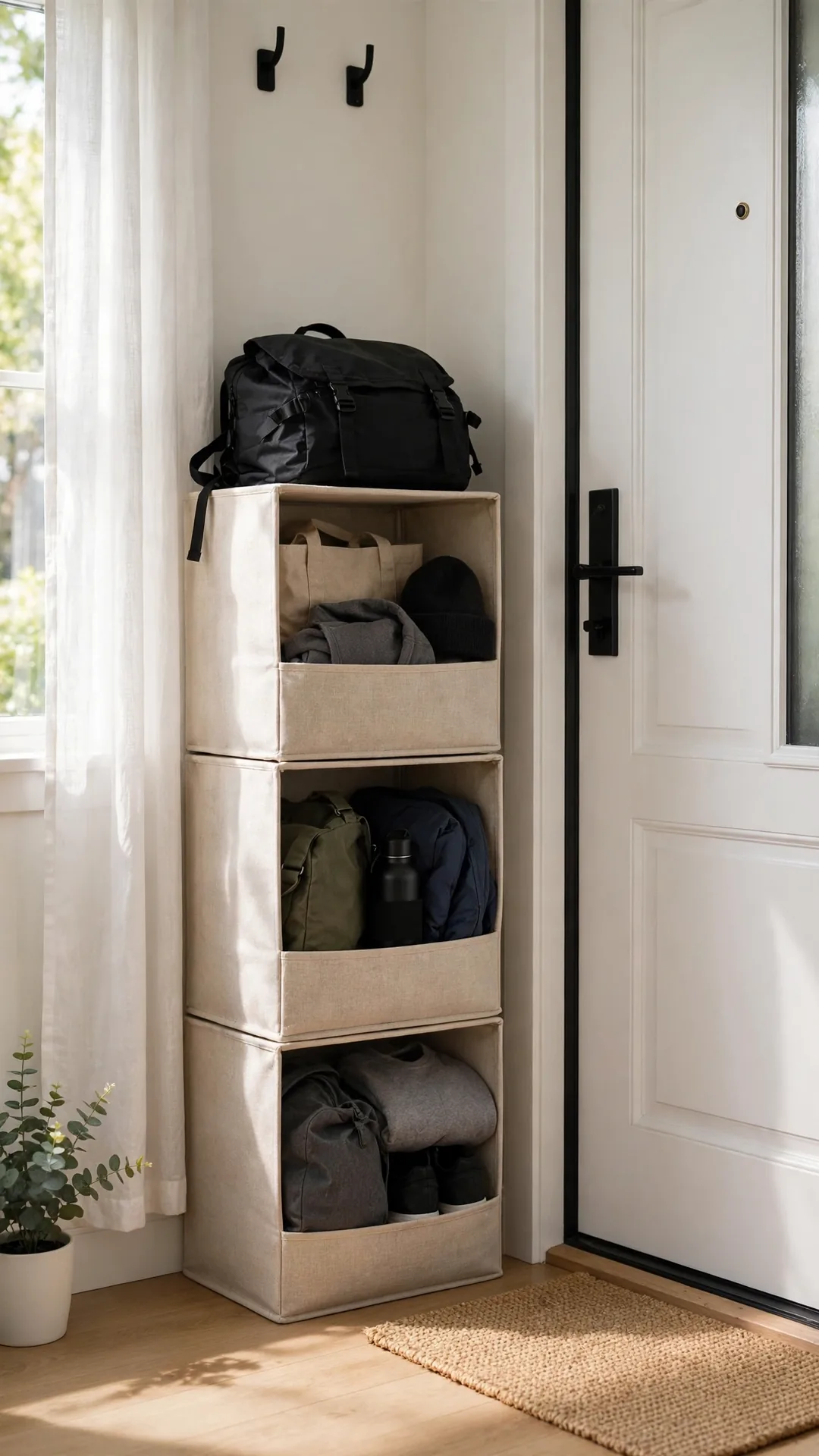
Stackable cubes build a backpack station that fits your exact wall. One cube per person keeps bags and gear sorted by owner. You add a cube when a new school year adds more stuff.
How to do it:
- Start with two or three cubes, each about 13 inches square.
- Stack them no higher than 48 inches for kid reach.
- Clip or strap stacked cubes together so they cannot shift.
- Give each person one cube for a bag and daily gear.
- Leave one cube open for guests and shared items.
Best for: Renters who need storage that moves with them.
Budget: $25 to $60
Quick tip: Turn one cube sideways as an open shelf for daily shoes.
21. Choose a Narrow Locker-Style Cabinet

A narrow locker style cabinet gives school gear a closed home. Doors hide the mess and vents keep gym clothes fresh. The tall shape uses height instead of floor space.
How to do it:
- Choose a cabinet 12 to 18 inches wide and 60 inches tall.
- Anchor the cabinet to the wall before loading it.
- Set one shelf per child for a bag and lunch box.
- Keep shoes on the bottom shelf on a washable tray.
- Leave the top shelf for hats and seasonal gear.
Best for: Families who want clutter fully hidden.
Budget: $90 to $200
Quick tip: Add a small stick-on light inside for dark winter mornings.
22. Hang an Over-Door Cubby Organizer

Backpack station ideas for small entryways add pockets over the door. Clear pockets hold gloves, snacks and small school items. A small backpack fits in the longest bottom pocket.
How to do it:
- Hang the organizer on the entry or closet door.
- Check the door closes with at least half an inch to spare.
- Use top pockets for gloves, hats and snacks.
- Keep the long bottom pocket for one small backpack.
- Load heavy items low so the door swings smoothly.
Best for: Renters and dorm style entries with no wall space.
Budget: $15 to $30
Quick tip: Put tomorrow's snack in a top pocket the night before.
23. Roll a Cart Station Beside the Door
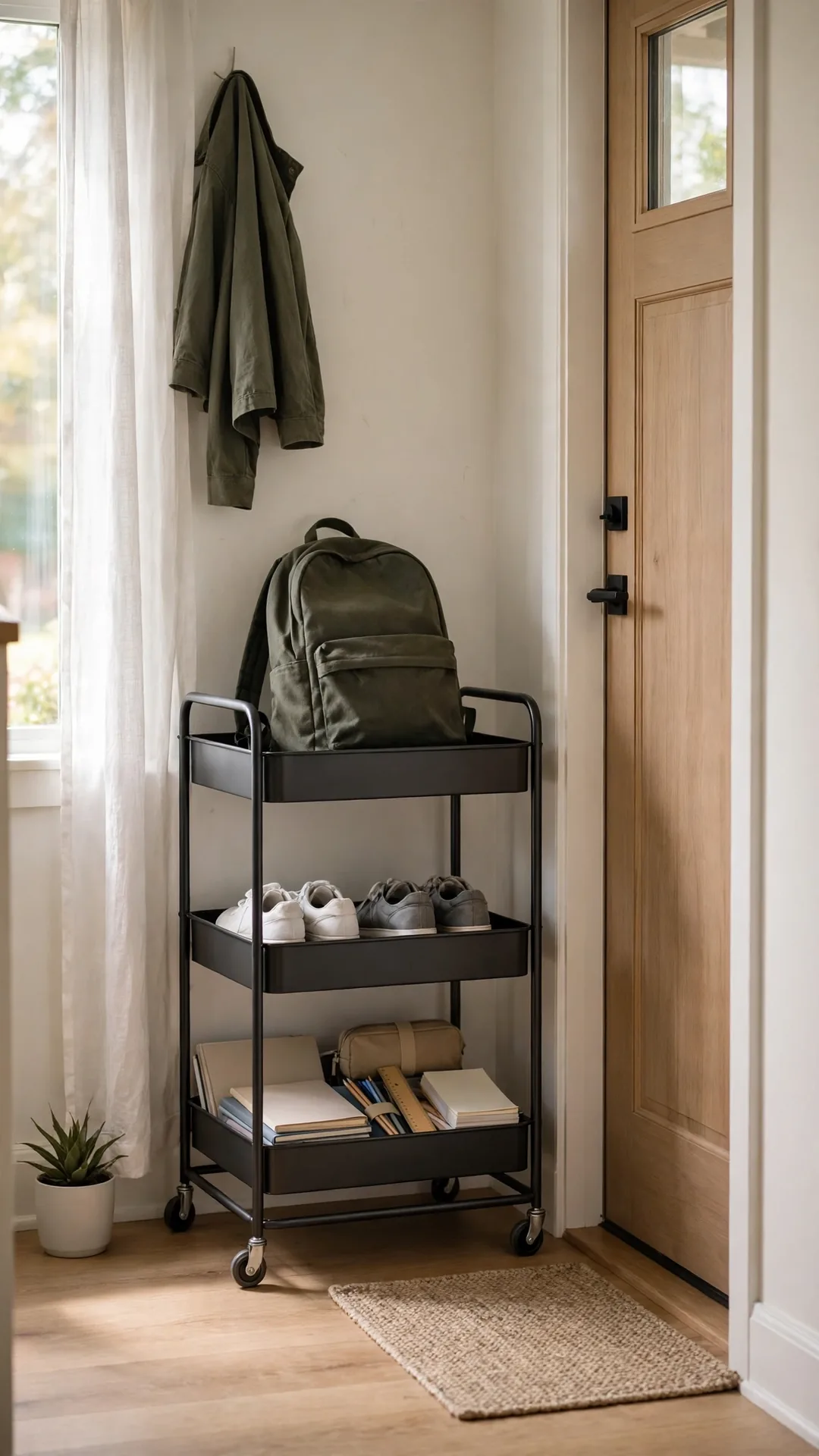
A slim rolling cart makes a station you can move for cleaning. Tiers sort shoes, supplies and one folded backpack. The cart parks beside the door and rolls out in seconds.
How to do it:
- Choose a three tier cart under 12 inches wide.
- Park it within 2 feet of the entry door.
- Keep daily shoes on the bottom tier.
- Put school supplies and snacks on the middle tier.
- Fold one spare backpack flat on the top tier.
Best for: Apartments where the entry changes by season.
Budget: $25 to $55
Quick tip: Lock the front wheels so the cart stays put on busy mornings.
24. Use a Tiered Stand With Baskets

A tiered stand stacks storage up a narrow wall gap. Baskets on each tier hold bags, hats and shoes by type. Small feet keep the stand light and easy to move.
How to do it:
- Pick a stand about 14 inches wide with three tiers.
- Place the heaviest basket on the lowest tier.
- Use the middle tier for backpacks and lunch bags.
- Keep hats and gloves in the top basket.
- Stand it against a wall away from the door swing.
Best for: Hallways with a narrow unused gap.
Budget: $30 to $70
Quick tip: Match basket sizes so the stand looks calm and tidy.
25. Stack Crates Into a Bag Station
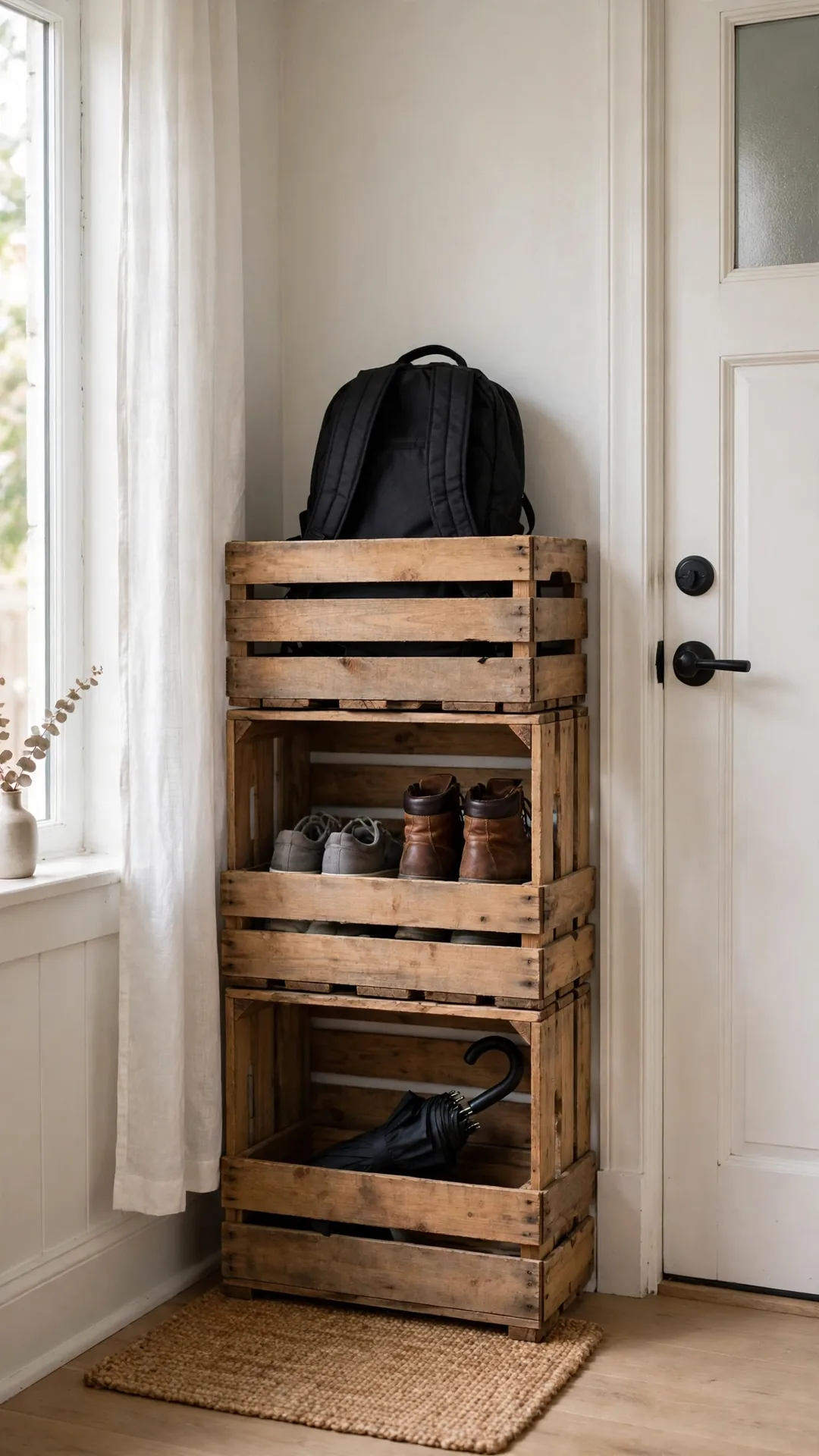
Backpack station ideas for small entryways stack wooden crates by doors. One crate per child holds a backpack and shoes. The stack comes apart in minutes when you move home.
How to do it:
- Use crates about 13 inches square in solid wood.
- Stack two high for young kids, three for older kids.
- Screw or strap the stack to the wall for safety.
- Line one crate per child with a washable cloth.
Best for: Budget families who like a simple wood look.
Budget: $20 to $50
Quick tip: Sand rough crate edges so backpack straps never snag.
26. Hang a Closet Organizer for Bags
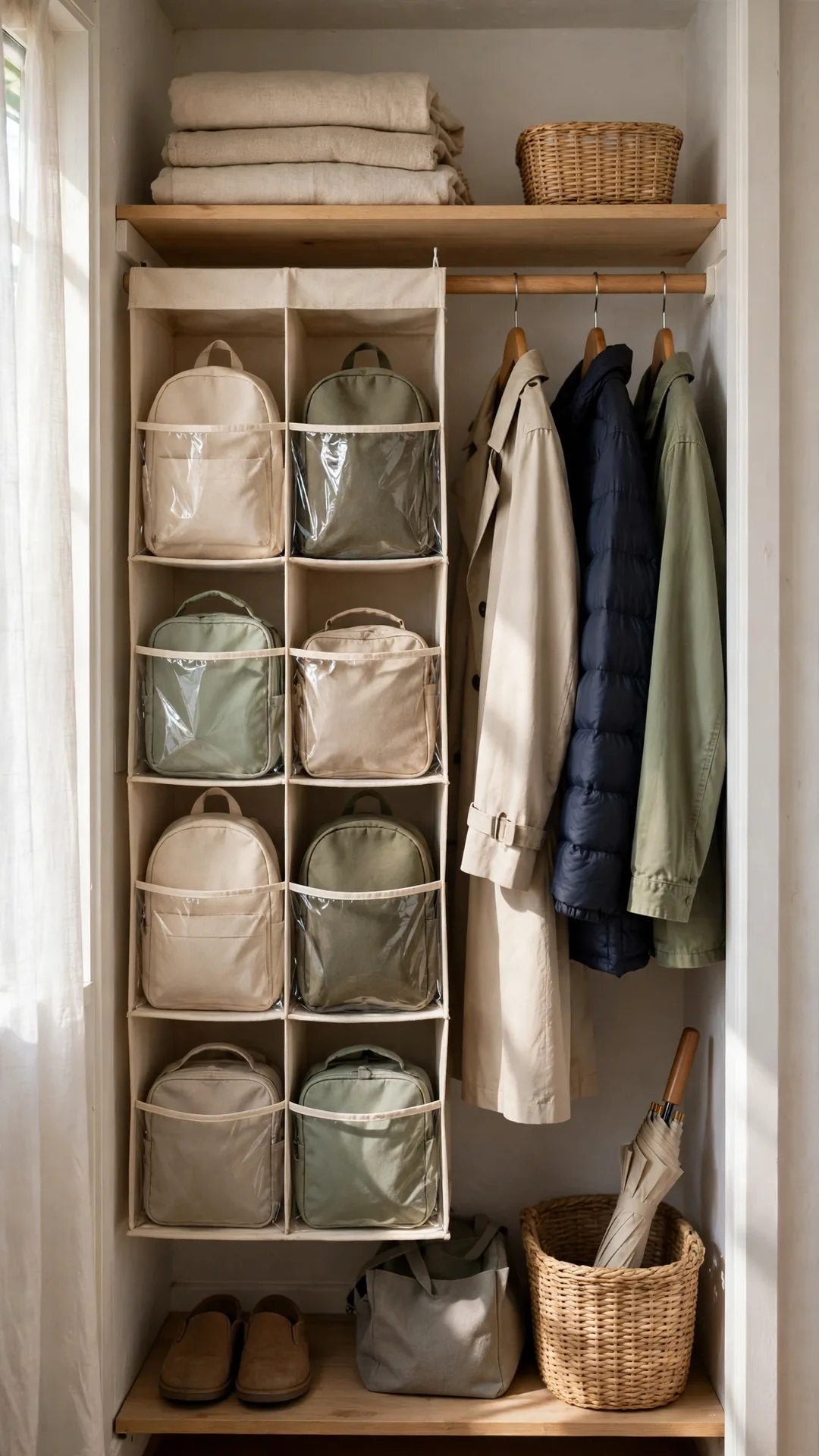
A hanging closet organizer turns one rod section into bag storage. Its pockets hold backpacks upright and off the floor. Shoes and lunch bags fit the lower pockets.
How to do it:
- Pick an organizer about 12 inches wide with 6 pockets.
- Hang it from the rod at the closet end.
- Choose pockets at least 30 inches long for tall packs.
- Put one backpack in each large pocket.
- Use small pockets for gloves, hats and lunch bags.
Best for: Renters with a coat closet and no wall space.
Budget: $12 to $25
Quick tip: Roll the straps inside the pocket so nothing dangles.
27. Build a Cubby Station Under the Stairs

The slope under a staircase often sits empty and dusty. A short cubby unit slides into that low triangle with room to spare. Deeper cubes hold board games too, and board game storage ideas for small spaces show how to stack them neatly.
How to do it:
- Measure the tallest point and stay under 36 inches.
- Choose a cubby unit about 12 inches deep.
- Give each child the lowest cube for daily bags.
- Store spare bags and games in the back cubes.
- Add felt pads so the unit slides for cleaning.
Best for: Homes with an open or closed under-stair nook.
Budget: $40 to $90
Quick tip: Paint the unit the wall color so it fades in.
28. Give Each Child a Laundry Basket

One basket per child ends the fight over floor space. Each basket holds a backpack, a lunch bag and a gym kit. The whole row lifts out in seconds on cleaning day.
How to do it:
- Pick baskets about 18 inches tall with open tops.
- Line them along the wall beside the door.
- Keep one basket per child, no sharing.
- Set a small trash cup beside the row for wrappers.
- Wash or wipe baskets once a month.
Best for: Toddlers and young kids who cannot reach hooks.
Budget: $8 to $20 per basket
Quick tip: Choose baskets with handles so kids carry their own.
29. Line Closet Floor Bins for Bags

Simple backpack station ideas for small entryways often start inside the coat closet. The floor under short coats is usually wasted space. Three low bins turn it into a bag garage for the family.
How to do it:
- Measure the floor and keep bins under 12 inches tall.
- Choose open bins about 14 inches wide per person.
- Stand each backpack upright in its own bin.
- Slide gym bags into the widest bin at the end.
- Leave 2 inches of air gap so damp gear dries.
Best for: Coat closets with short coats and bare floor.
Budget: $10 to $30
Quick tip: Put the daily bin nearest the door for fast grabs.
30. Add a Low Closet Rod for Bags

Backpack station ideas for small entryways add a low rod for bags. Backpacks hang by their top loops and stay off the floor. Coats keep the top rod, so grown-up gear stays separate.
How to do it:
- Mount a rod about 36 inches from the floor.
- Use a tension rod if you rent the home.
- Hang bags from sturdy hooks or carabiner clips.
- Space hooks 8 inches apart so bags hang flat.
- Keep heavy bags at the rod ends near the brackets.
Best for: Kids aged four to ten who dress themselves.
Budget: $10 to $25
Quick tip: Mark each child's hook with a colored clip.
31. Store Spare Bags Above the Closet Rod
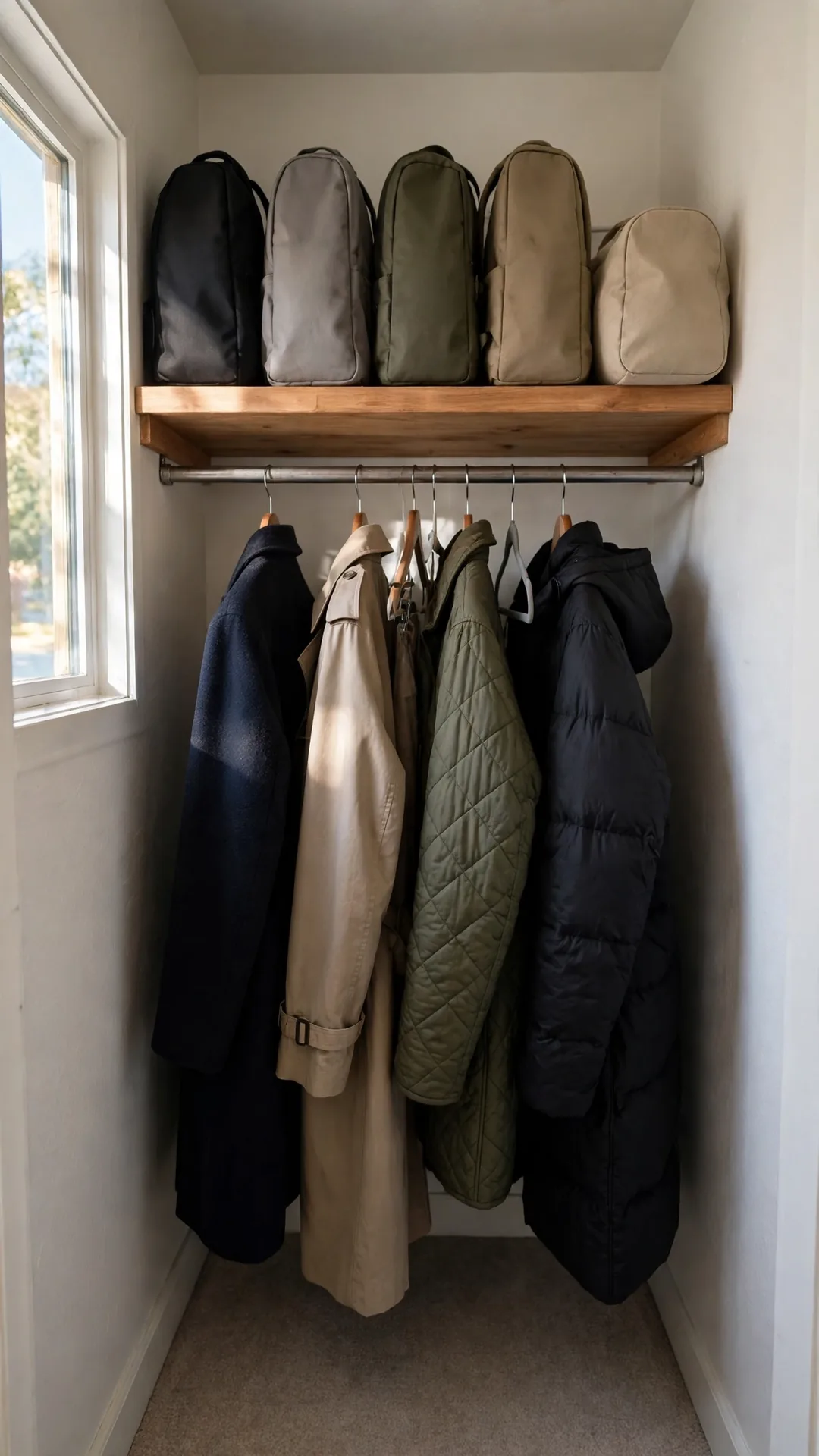
The shelf above the rod is too high for daily use. That makes it right for spare bags, duffels and outgrown packs. Daily bags stay low where small hands can reach them.
How to do it:
- Clear the shelf and wipe it down first.
- Fold spare bags flat to save depth.
- Stack them in one clear bin with the lid off.
- Keep duffels and sleepover bags at the back.
- Review the shelf at the start of each school term.
Best for: Families who keep backup bags and travel gear.
Budget: Free to $15 for one bin
Quick tip: Slip a dryer sheet in the bin to keep bags fresh.
32. Hang Hooks from a Closet Tension Rod

A tension rod plus S hooks makes storage with zero tools. The hooks slide, so spacing changes as bags grow. Renters can take the whole setup down in minutes.
How to do it:
- Fit a tension rod across the closet at 48 inches.
- Add one large S hook per backpack.
- Hang bags by the top loop, straps tucked in.
- Slide hooks apart on busy school mornings.
- Test the rod with the heaviest bag first.
Best for: Renters and dorm style closets with no drilling.
Budget: $8 to $18
Quick tip: Choose rubber coated hooks so bags stay quiet.
33. Screw Bag Hooks to the Closet Side Wall

The side wall inside a closet is blank and close to the door. A short column of hooks there holds bags in single file. The main closet space stays free for coats and bins.
How to do it:
- Find the stud or use strong wall anchors.
- Screw in three hooks, 14 inches apart.
- Set the lowest hook about 30 inches high.
- Hang one bag per hook, heaviest at the bottom.
- Keep the door swing clear by 2 inches.
Best for: Narrow closets with one blank side wall.
Budget: $6 to $15
Quick tip: Use double hooks so a lunch bag hangs too.
34. Slide a Rolling Bin into the Closet

A low bin on wheels rolls out for loading and back for hiding. Kids pull it out, drop the bag in and push it home. The closet door closes on a clean entry.
How to do it:
- Pick a bin under 10 inches tall with casters.
- Check it clears the closet door track.
- Load one backpack per section or divider.
- Park wet boots on a mat beside the bin.
- Pull the bin out fully once a week to sweep.
Best for: Closets with hard floors and a low shelf gap.
Budget: $15 to $30
Quick tip: Choose locking front wheels so the bin stays put.
35. Set Up a Garment Rack Corner Station

Backpack station ideas for small entryways build stations on garment racks. It stands in a corner and holds bags, coats and hats. The whole station moves when you rearrange the room.
How to do it:
- Choose a rack about 24 inches wide on wheels.
- Set hooks along the bar, one per person.
- Hang bags at the ends and coats in the middle.
- Place a boot tray under the rack for shoes.
- Anchor the rack to the wall if kids climb.
Best for: Studio apartments and homes with no entry closet.
Budget: $25 to $50
Quick tip: Pick a rack with a bottom shelf for shoe boxes.
36. Hide a Drop Zone Behind the Couch
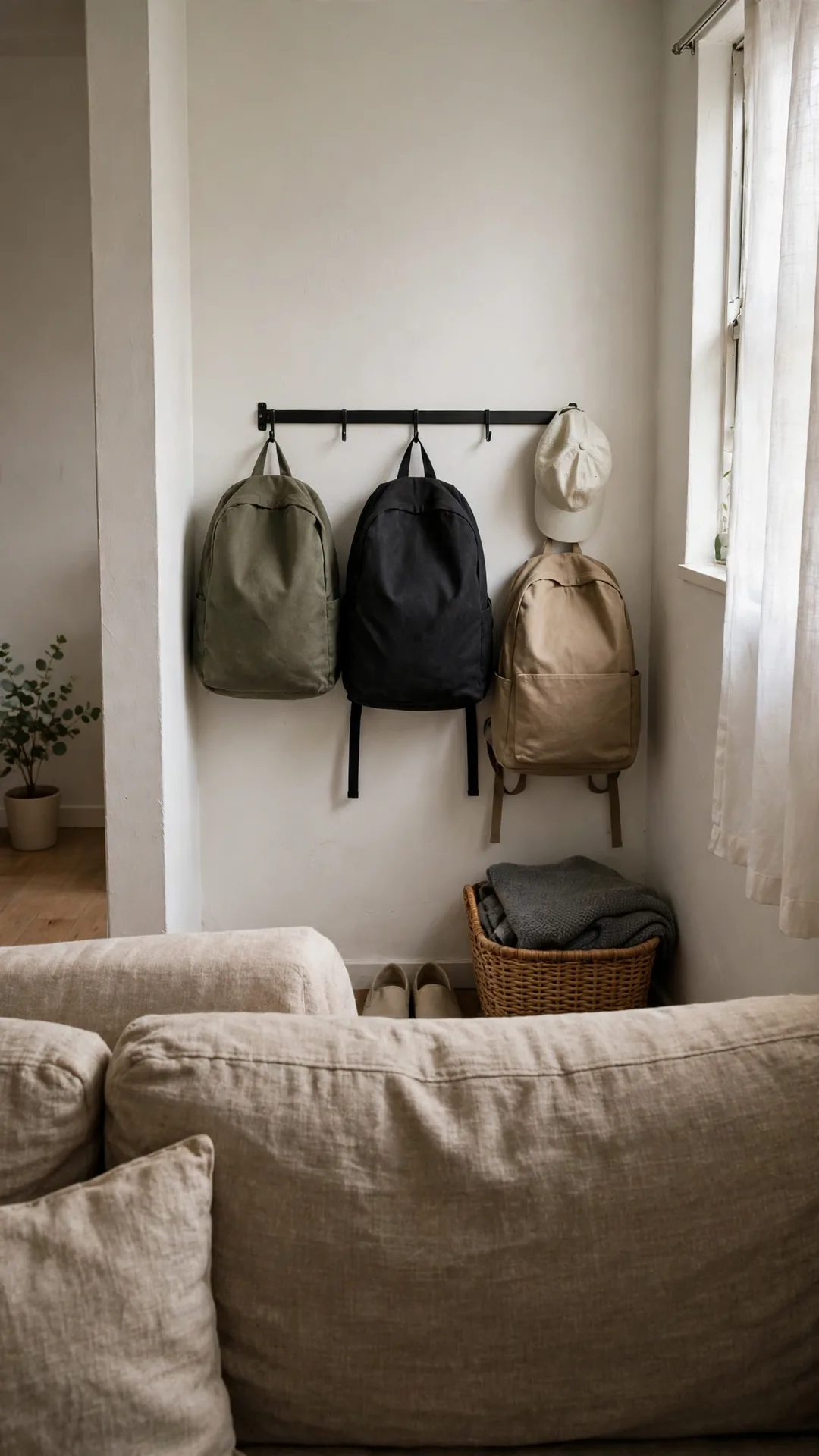
The gap behind a couch near the door is dead space. A low hook row and a slim shelf turn it into a hidden drop zone. It borrows the hidden storage logic behind good small apartment storage ideas and puts it to work for school gear.
How to do it:
- Measure the gap and keep gear under 8 inches deep.
- Mount hooks on the wall at 42 inches high.
- Add a slim shelf above for keys and mail.
- Stand bags upright so the couch hides them.
- Leave air space so fabric does not trap damp.
Best for: Open plan apartments where the couch faces the door.
Budget: $15 to $35
Quick tip: Choose hook colors that match the wall paint.
37. Run a One-In, One-Out Hook Rule
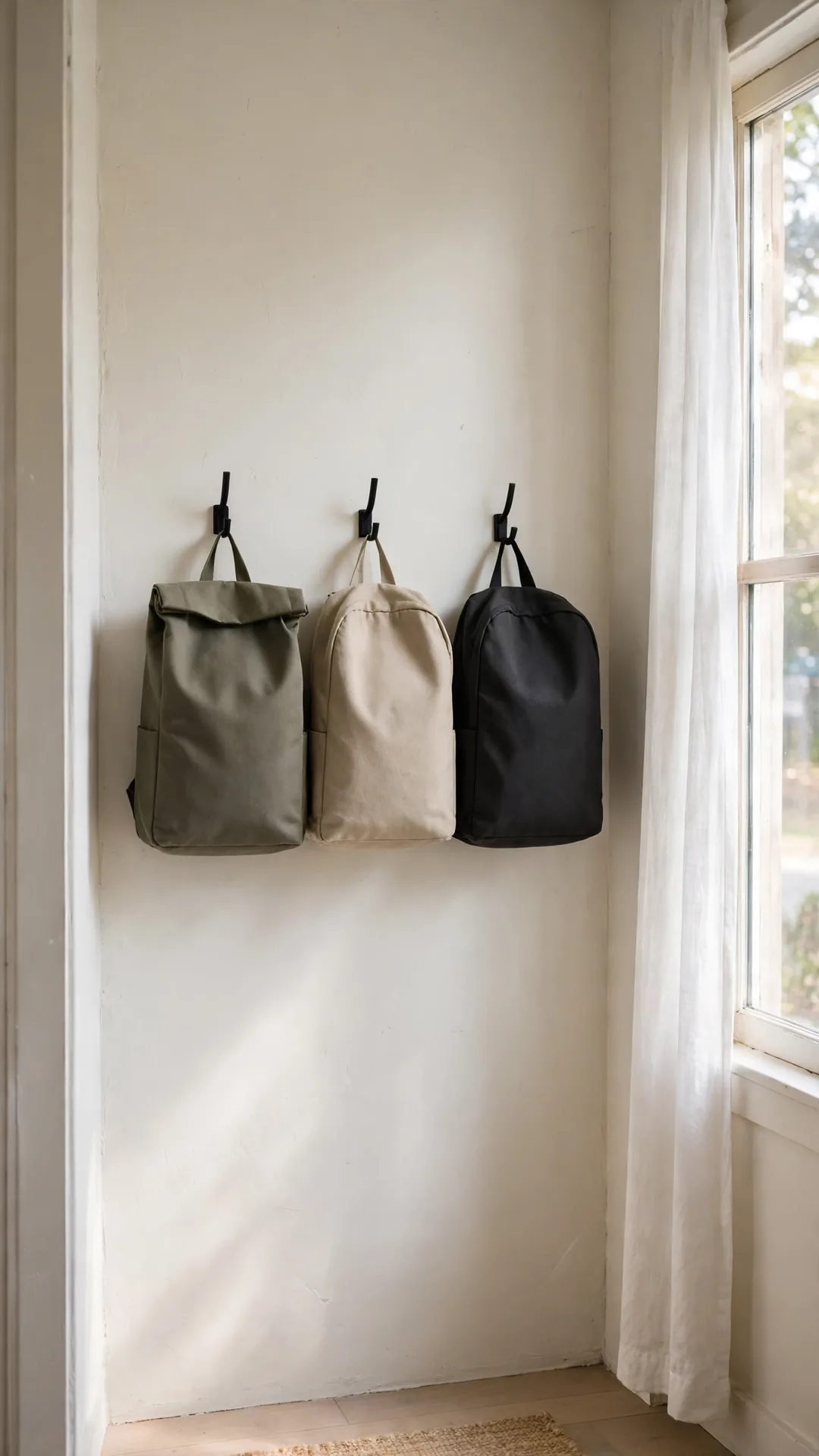
The best backpack station ideas for small entryways include one firm family rule. When a new bag comes home, an old bag leaves the hook. The station stays the same size all year.
How to do it:
- Give each person exactly one hook and one bin.
- Hang a small donate bag on the last hook.
- Move spare bags to the donate bag each month.
- Pass outgrown bags to cousins or school drives.
- Reset the hooks every Sunday night.
Best for: Families whose gear keeps growing each term.
Budget: Free
Quick tip: Let kids choose which old bag goes first.
38. Label One Hook for Each Person
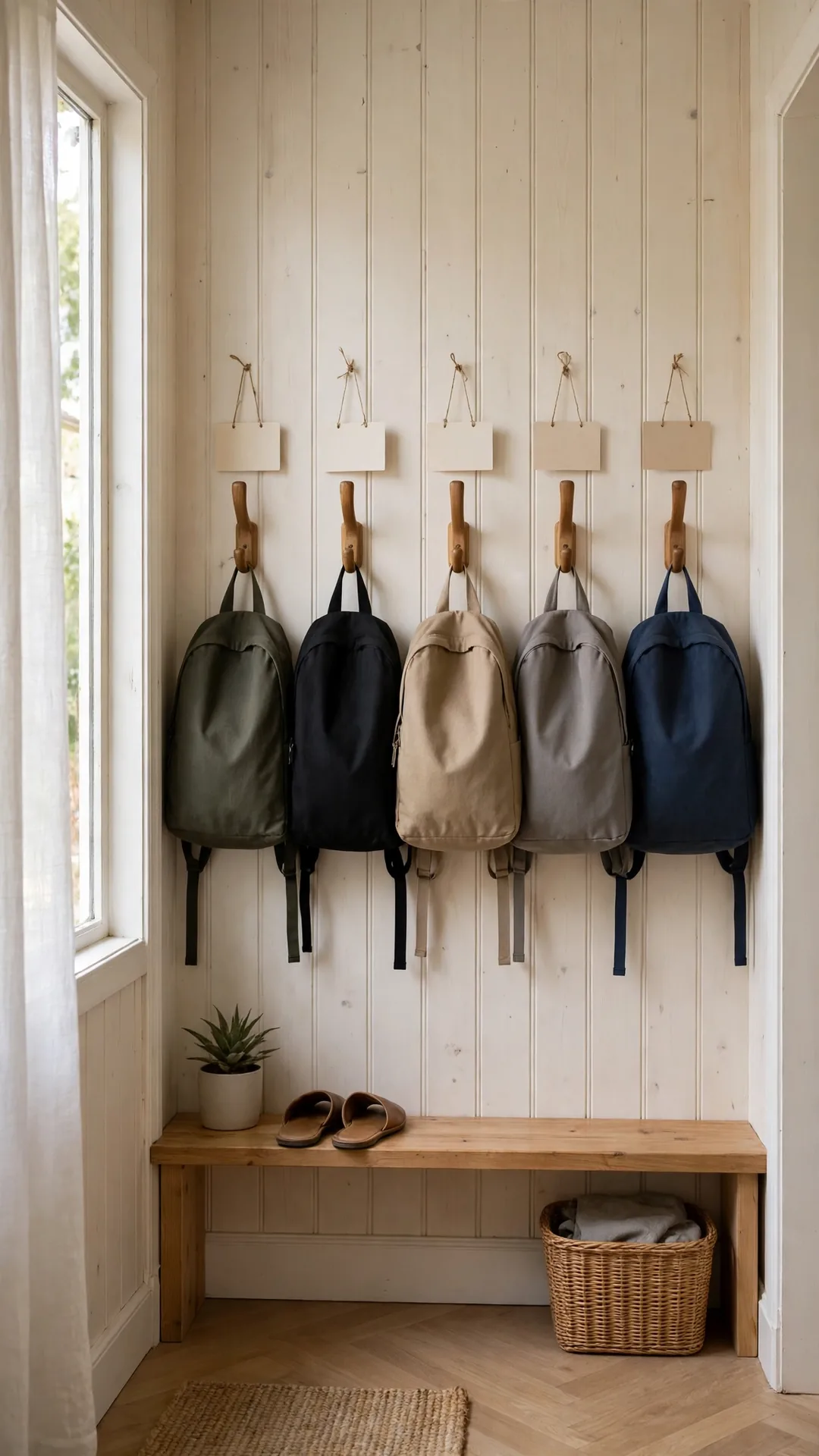
One labeled hook per person ends the morning guessing game. Each child checks one spot for bag, coat and hat. Guests get the spare hook at the end.
How to do it:
- Mount one hook per person, 10 inches apart.
- Add a name tag or photo above each hook.
- Keep one spare hook free at the row end.
- Set hook height by the shortest user plus 6 inches.
- Review names each school year and swap tags.
Best for: Families with three or more kids sharing one wall.
Budget: $8 to $20
Quick tip: Use picture tags for kids who cannot read yet.
39. Slide a Homework Tray Under Each Hook

Loose papers cause half the entry mess each morning. A slim tray under each hook catches forms, books and folders. Papers go from tray to backpack in one move.
How to do it:
- Choose trays about 12 by 10 inches, stackable.
- Place one tray on the shelf or bench per child.
- Sort papers into the tray each afternoon.
- Sign forms at night and park them on top.
- Empty stray papers every Friday.
Best for: School kids with daily forms and reading books.
Budget: $5 to $12 per tray
Quick tip: Pick a bright tray color for must-sign papers.
40. Put a Shoe Tray Under the Bag Row

Backpack station ideas for small entryways park wet shoes on trays. One long tray catches the water and keeps pairs together. Bags hang above and stay clean and dry.
How to do it:
- Measure the wall and buy a tray to match.
- Choose a lipped tray about 36 inches long.
- Set one pair per child on the tray.
- Tip water out at the back door each week.
- Add a thin mat under the tray for wood floors.
Best for: Rainy climates and homes with muddy school runs.
Budget: $10 to $20
Quick tip: Keep a small towel nearby for muddy soles.
41. Use an Umbrella Stand for Sports Gear

Bats, sticks and umbrellas lean in corners and fall daily. A tall stand beside the bag hooks corrals them upright. Gear stays in one grab zone by the door.
How to do it:
- Pick a stand at least 20 inches tall.
- Place it within 12 inches of the bag row.
- Stand bats and sticks handle down.
- Keep balls in a mesh bag on a side hook.
- Wipe the base dry after rainy games.
Best for: Sports families with long gear and small halls.
Budget: $15 to $35
Quick tip: Line the base with a cut towel for drips.
42. Mount Wall Files for School Papers

Wall files above the hooks keep papers off every surface. Each file holds one child's forms, lists and artwork. Nothing important hides under a backpack again.
How to do it:
- Mount two or three files above the hook row.
- Keep the lowest file at about 55 inches high.
- Give each child one file, oldest at the top.
- Sort papers into files right after school.
- Clear each file into folders monthly.
Best for: Paper heavy schools and busy parents.
Budget: $10 to $25
Quick tip: Put the urgent file at eye level, not the top.
43. Build a Mini Station on a Bedroom Door
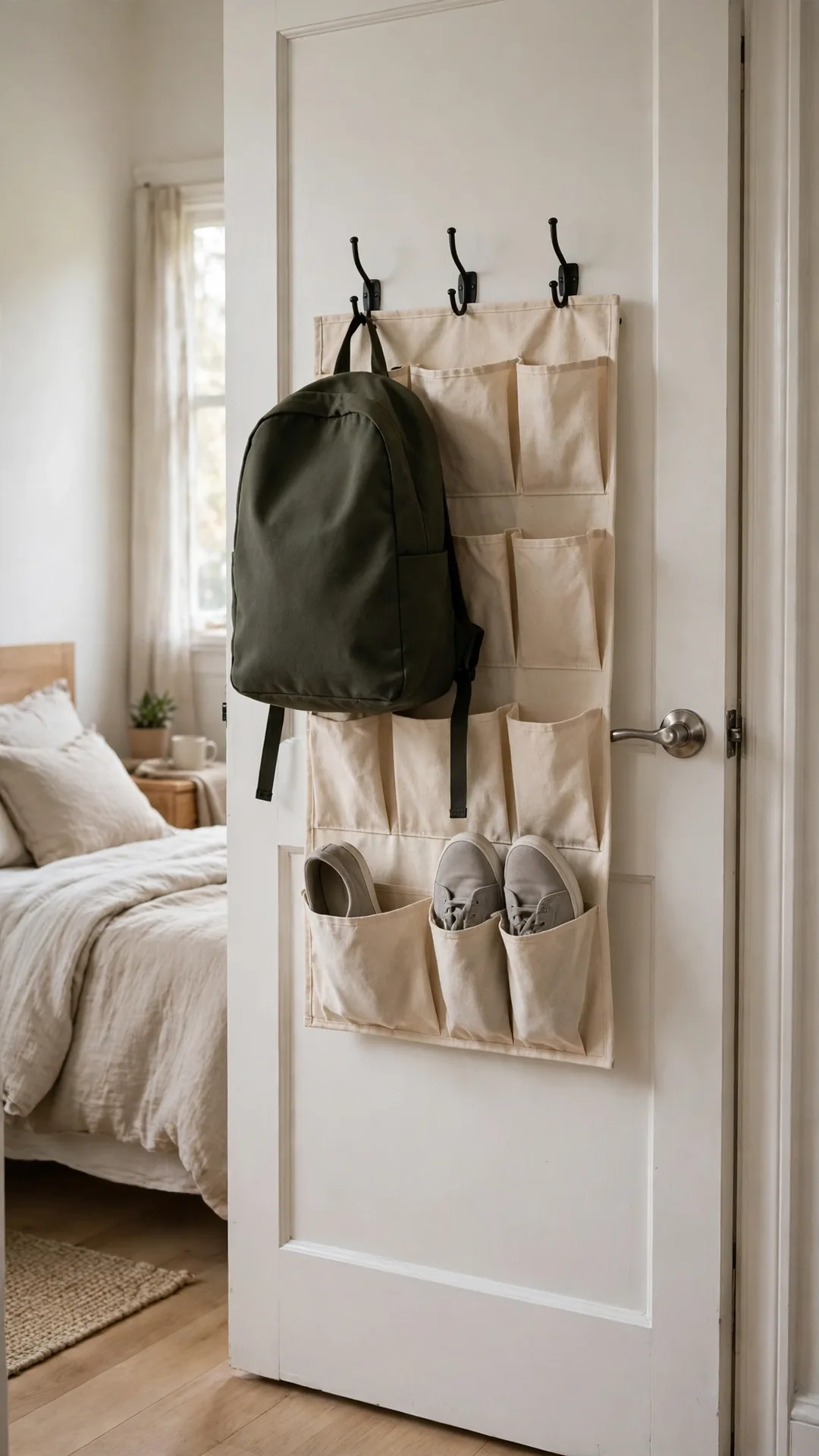
Some homes have no real entry at all. The back of a bedroom door can hold one full station per child. The setup mirrors the door zones in small room ideas for a twins bedroom, where every inch has a job.
How to do it:
- Hang an over-door hook strip with four hooks.
- Add a clear pocket row for hats and gloves.
- Keep the backpack on the strongest middle hook.
- Check the door closes without rubbing the frame.
- Use felt pads where hooks touch the door.
Best for: Kids in shared rooms with no entry wall.
Budget: $12 to $25
Quick tip: Keep one hook free for tomorrow's outfit.
44. Turn the Hallway End Wall into a Station

Smart backpack station ideas for small entryways claim the dead wall at the hall end. Hooks, a tray and one small shelf fit that blank patch well. The same wall-first thinking drives most small space hallway ideas and it works here too.
How to do it:
- Measure the wall and mark a zone 30 inches wide.
- Mount three hooks at heights for each user.
- Add a shelf 10 inches deep above the hooks.
- Set a boot tray under the lowest hook.
- Keep the walkway clear by at least 30 inches.
Best for: Long hallways that end in a blank wall.
Budget: $20 to $45
Quick tip: Paint the zone one shade deeper for a built-in look.
45. Add a Mini Station by the Garage Door

Backpack station ideas for small entryways work beside the garage door. A mini station at that inner door catches bags where they land. The front entry stays clean for guests and mail.
How to do it:
- Mount two hooks beside the inner garage door.
- Add a washable mat about 36 by 24 inches.
- Keep one bin for sports gear and car items.
- Hang a spare key hook out of sight lines.
- Sweep grit from the mat twice a week.
Best for: Families who park in the garage daily.
Budget: $12 to $30
Quick tip: Choose dark mats and bins that hide garage grit.
46. Make a Landing Strip with Mirror and Hooks
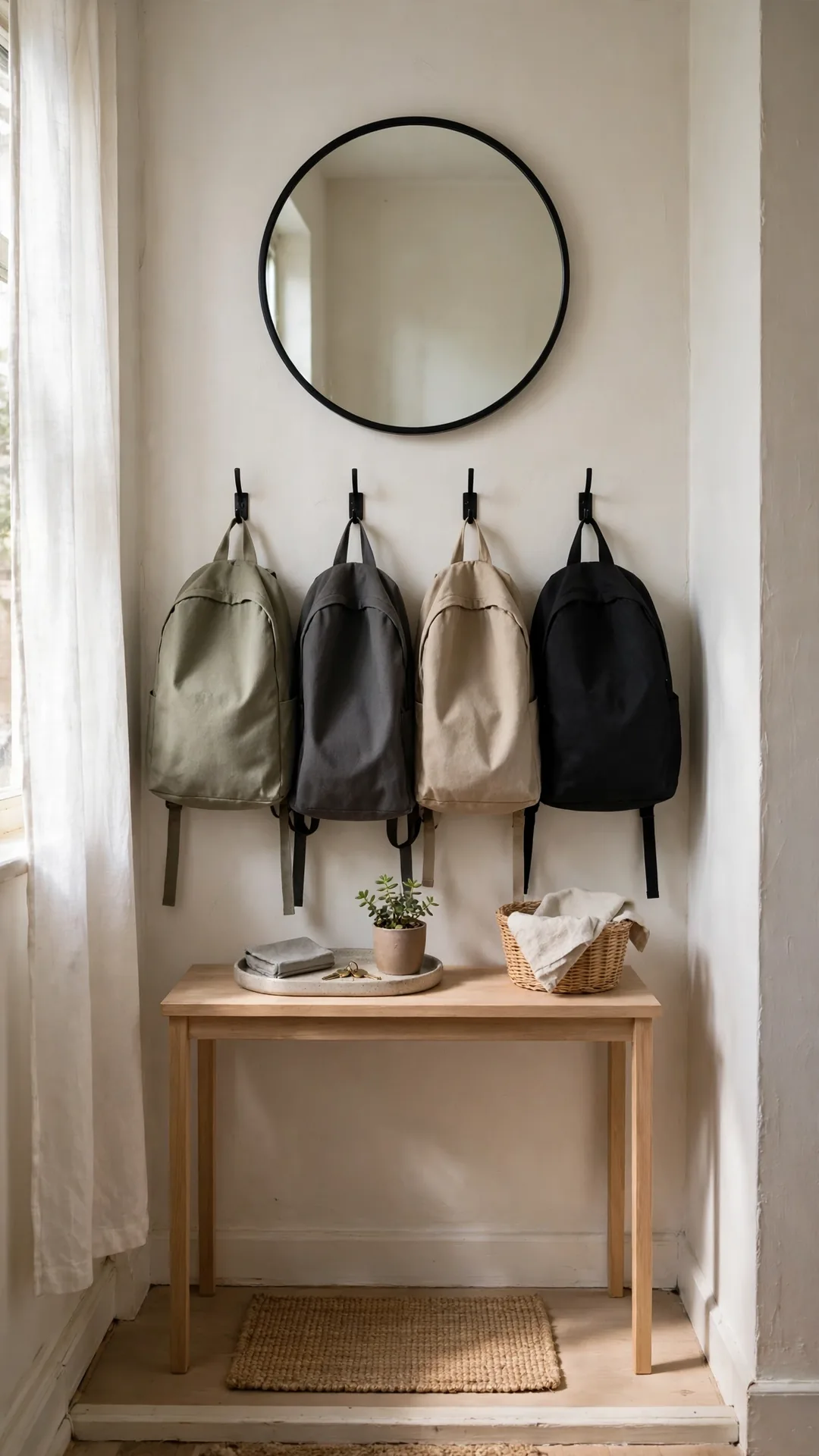
A landing strip gives every item one parking spot by the door. A mirror, a hook row and a slim shelf work as one unit. The pros at Consumer Reports’ entryway organization tips back the same one stop spot idea.
How to do it:
- Hang a mirror about 24 inches wide at eye level.
- Mount hooks under it, one per person.
- Add a shelf 6 inches deep for keys and mail.
- Keep bags on hooks, never on the shelf.
- Choose a shatterproof acrylic mirror for kid zones.
Best for: Apartments that open straight into the living room.
Budget: $30 to $70
Quick tip: Round mirror corners feel softer in tight halls.
47. Keep a Seasonal Swap Bin Above the Station

Winter gloves and summer caps cannot share one small station. A lidded bin above the hooks holds the off season set. Swap the bin contents when the weather turns.
How to do it:
- Pick a bin that fits the shelf above the station.
- Pack off season hats, gloves and scarves inside.
- Keep daily gear on the hooks below only.
- Tie a plain paper tag on the handle.
- Swap and wash contents twice a year.
Best for: Cold climates with bulky winter gear.
Budget: $8 to $18
Quick tip: Add dryer sheets so stored gear smells fresh.
48. Add a Charging Shelf Above the Bags

Backpack station ideas for small entryways add one small charging shelf. A small shelf above the bags gives devices one charged home. Cords stay short, tidy and off the walkway.
How to do it:
- Mount a shelf about 18 inches wide above hooks.
- Pick a shelf with a back cord slot.
- Plug in a compact multi port charger.
- Keep cords under 3 feet to avoid tangles.
- Set a house rule: devices charge here overnight.
Best for: Older kids and teens with school tablets.
Budget: $15 to $35
Quick tip: Use short braided cords that survive daily pulls.
49. Give Sports Bags a Tall Bin Corner
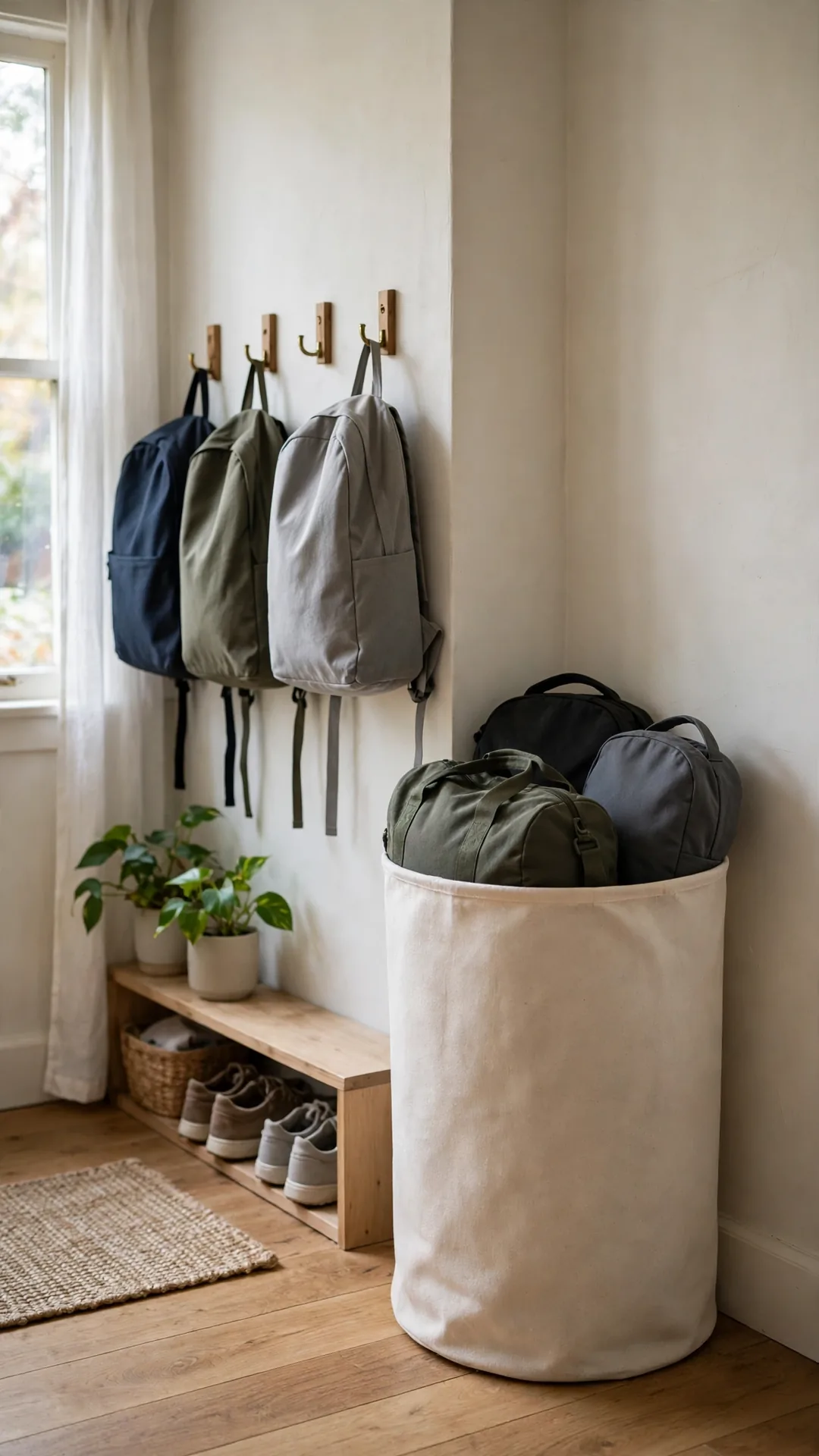
Sports bags are too bulky for hooks and benches. A tall open bin in the corner swallows two or three whole bags. The open top means kids just drop bags and go.
How to do it:
- Choose a bin about 24 inches tall and sturdy.
- Place it in the corner beside the door.
- Stand tall bags upright, cleats in a side pocket.
- Air the bin out on dry weekends.
- Keep one odor sachet at the bottom.
Best for: Teens with gym and team bags.
Budget: $12 to $25
Quick tip: Pick a bin with cut-out handles for easy moves.
50. Set Up a Five-Hook Reset Station
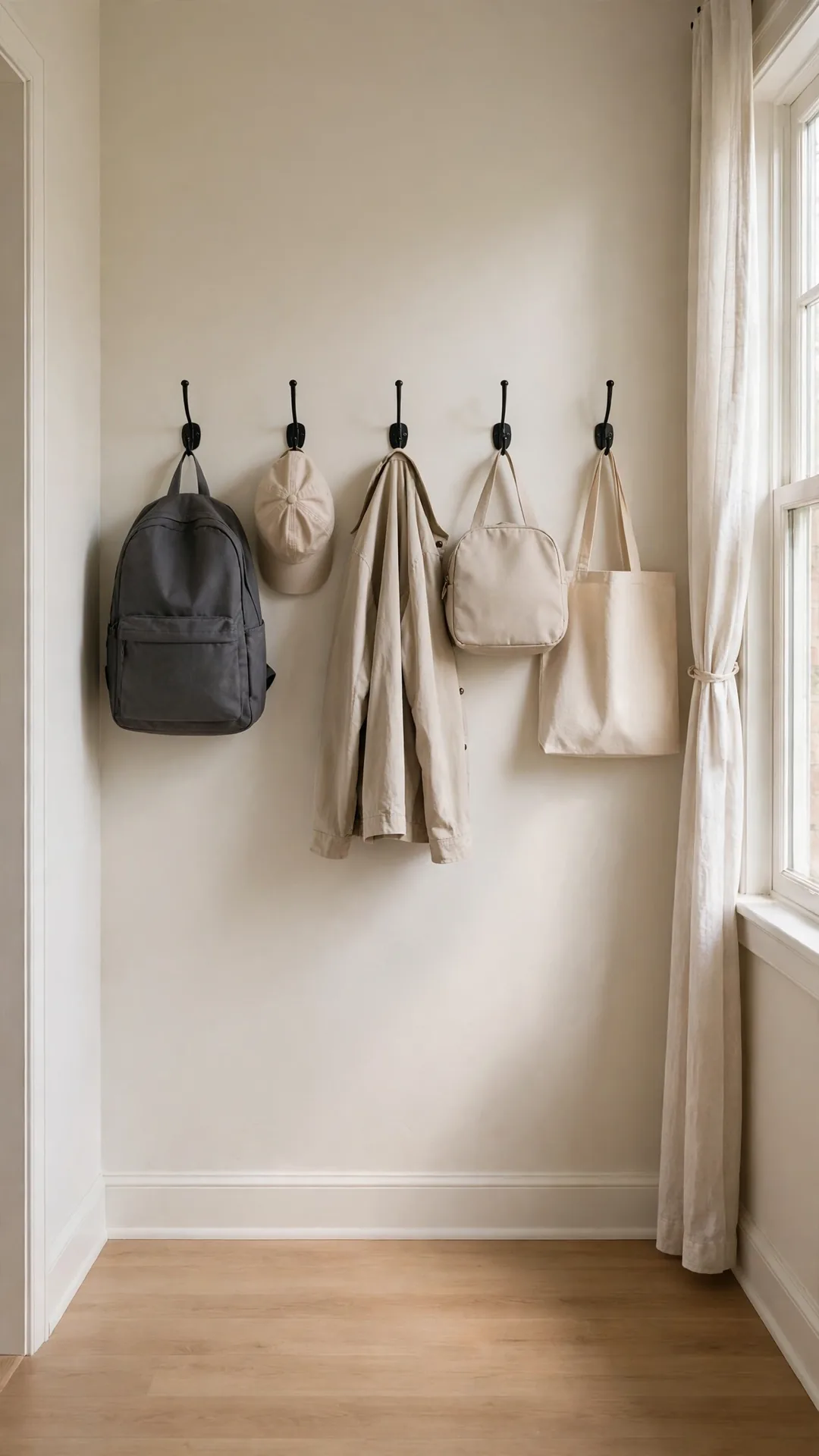
Backpack station ideas for small entryways reset on five simple hooks. One hook takes bags, one coats, one hats, one dog gear, one guest items. Anyone can tidy it without asking where things go.
How to do it:
- Mount five strong hooks in one straight row.
- Space them 9 inches apart at mixed heights.
- Assign one job per hook and keep it fixed.
- Stand a boot tray under the middle hooks.
- Do a one minute reset after dinner nightly.
Best for: Whole families who share one small entry wall.
Budget: $15 to $30
Quick tip: Take a photo of the tidy station as the goal.
Pick One Wall and Start This Weekend
You do not need a mudroom to fix the morning pileup. One wall, one bench or one closet door is enough room to start. Pick the setup that fits your space, hang the hooks today, and let the kids test it tomorrow morning.
Save your favorite backpack station ideas for small entryways, then add one piece at a time.
- 59 Clever Small Kitchen Corner Storage Ideas to Try Now - November 15, 2026
- 55 Brilliant Small Dining Room Storage Ideas to Try Now - November 14, 2026
- 59 Holiday Decoration Storage Ideas for Small Spaces - November 14, 2026