
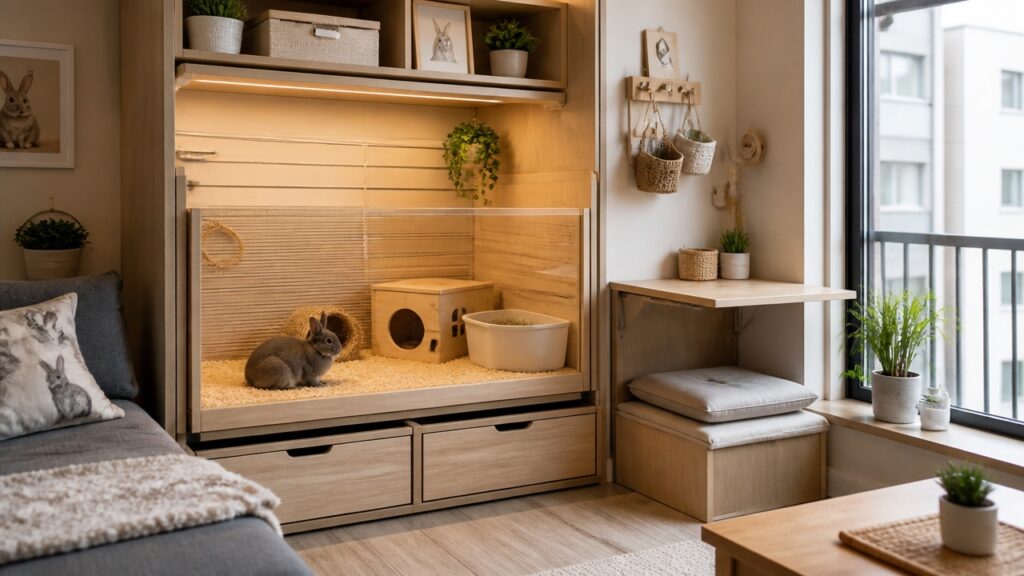
In a small space, it’s easy to assume your rabbit’s entire world hinges on sacrificing style for function, yet clever joinery, think sleek, wall-mounted shelves from “Reclaimed Woodworks” or the tactile luxe of “Faux Fur” rugs, can redefine the limits of enclosure design. While compact, these bijoux solutions, like multi-layered enclosures that subtly integrate hidden hideouts or space-saving dividers from recycled plastic, offer both cocooning comfort and elevated aesthetics. On the cusp of transforming your setup, you’ll find that each small tweak not only optimizes square footage but transforms your bunny’s environment into a curated sanctuary of natural behaviors and understated elegance, provided you know where to look.
Why Small-Space Indoor Bunny Homes Matter
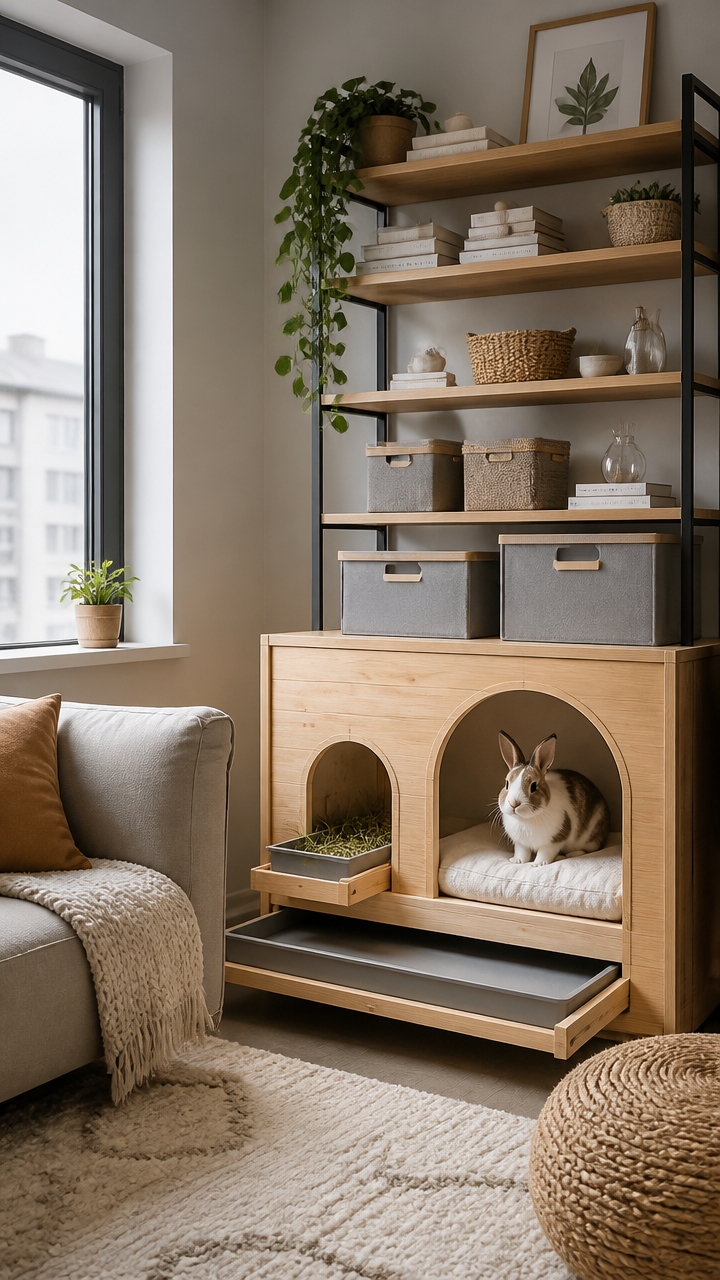
Small-space indoor bunny homes matter because they demonstrate that compact, thoughtfully designed habitats can effectively meet a rabbit’s needs while fitting into limited living areas. A well-planned small enclosure maximizes available space without sacrificing comfort or activity opportunities. By focusing on efficient layouts and multifunctional furniture, you can create a cozy environment where your rabbit has designated zones for sleeping, eating, and play. This approach not only promotes your pet’s health and happiness but also simplifies daily maintenance, making it easier to keep the habitat clean and clutter-free. Proper use of vertical space and targeted areas ensures your rabbit stays active and stress-free, even in a confined space. Additionally, space-saving strategies are crucial for optimizing small habitats and ensuring your bunny’s well-being.
Maximize Vertical Space in Your Small Bunny Room
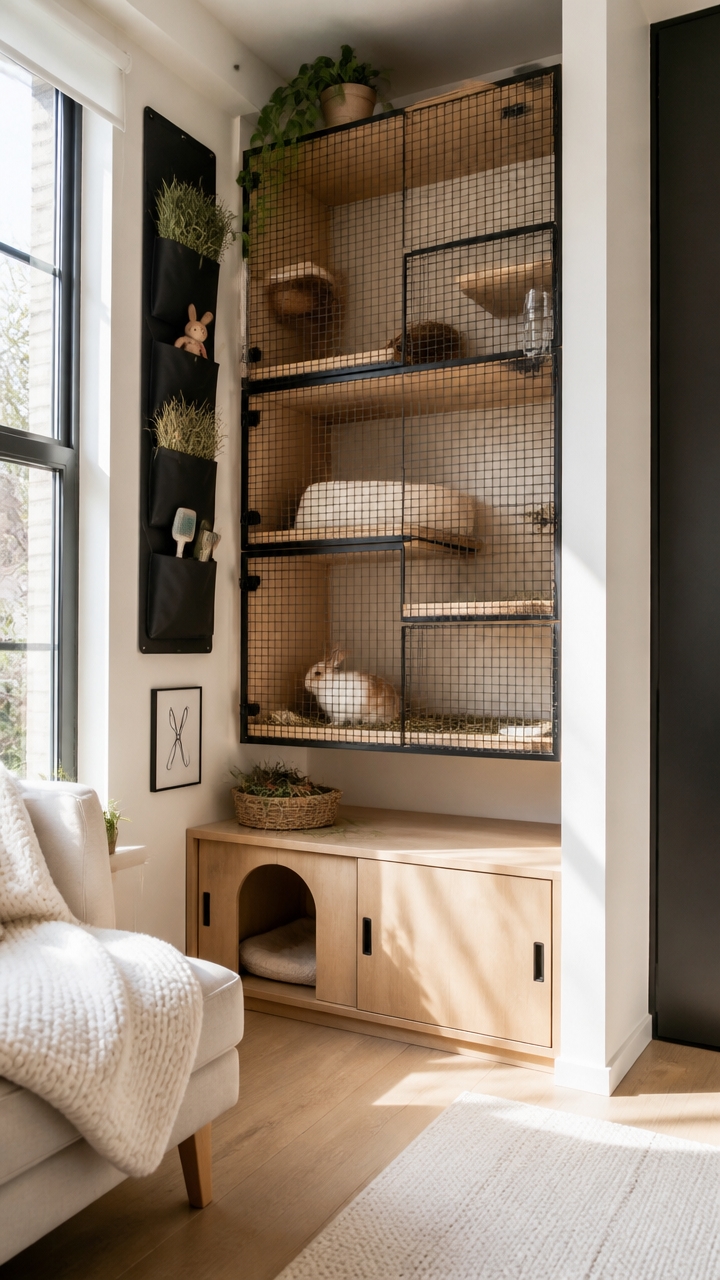
Installing wall-mounted shelves and ramps creates additional perching and climbing spots, effectively increasing usable space for your bunny without occupying floor area. By strategically placing these shelves at different heights, you provide your rabbit with plenty of vertical territory for resting, observing, and playing. Ramps connected to these shelves facilitate easy movement between levels, encouraging natural climbing behavior and exercise. When choosing materials, opt for smooth, chew-resistant surfaces like wood or acrylic and guarantee edges are rounded for safety. Position shelves away from direct sunlight or drafts, and secure them firmly to support your rabbit’s weight. This setup not only maximizes the available space but also enriches your bunny’s environment, making your small indoor room feel larger and more engaging. Incorporating safe and durable materials further ensures your rabbit’s safety and longevity while exploring vertical spaces.
Choosing the Best Multi-Level Bunny Enclosure
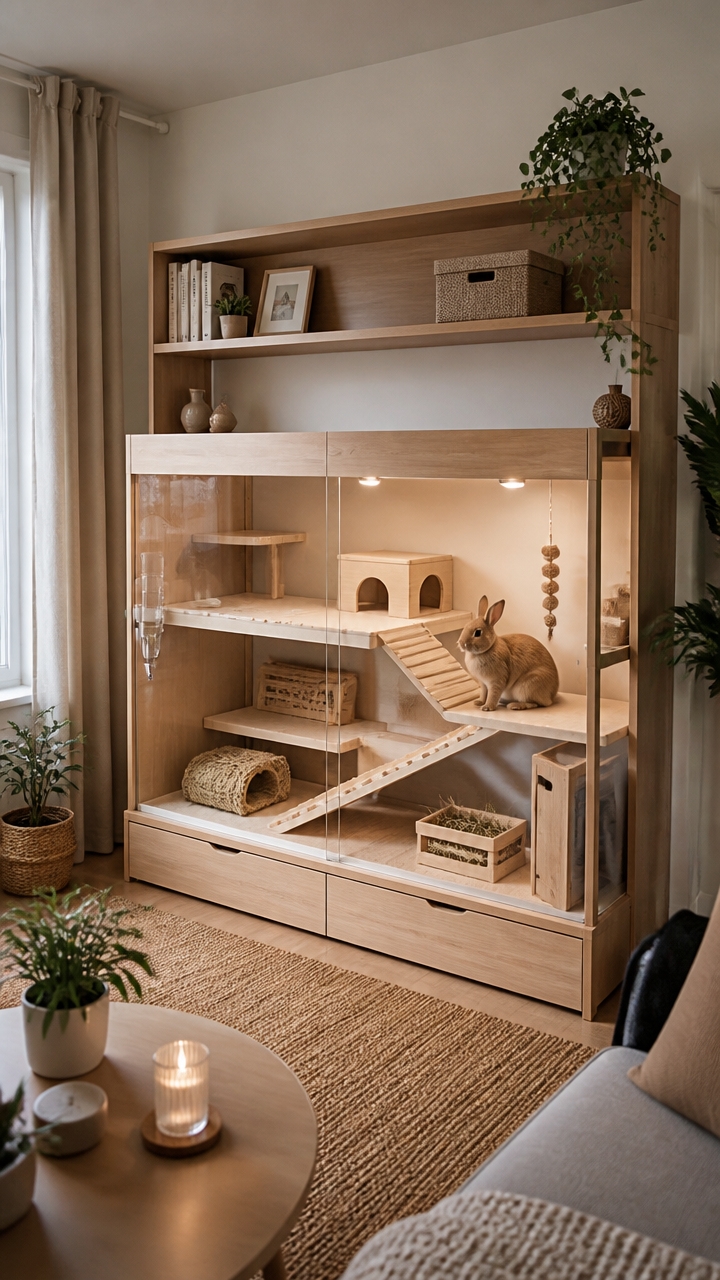
A well-designed multi-level enclosure transforms a limited indoor space into an engaging, stimulating habitat for your rabbit. These setups maximize the available area by incorporating vertical levels, allowing your bunny to jump, lounge, and explore freely. When selecting or creating a multi-level enclosure, prioritize a sturdy structure with solid flooring on each tier to prevent sore hocks and guarantee comfort. Incorporate ramps, shelves, and platforms that are appropriately scaled to your rabbit’s size, with gentle slopes and textured surfaces to encourage natural movement and prevent slipping. Position the enclosure against a stable wall or corner to provide additional support and to optimize space. Use transparent or open-front designs to keep monitoring easy while fostering a sense of openness for your bunny. Safety features such as secure barriers, rounded edges, and secure fastenings are essential to prevent escapes or injuries. By thoughtfully combining these elements, you create a dynamic environment that promotes activity, mental stimulation, and well-being for your indoor rabbit in even the tightest spaces. Additionally, considering space-saving strategies ensures the enclosure remains functional without overwhelming the room.
Creating Safe Hideouts and Tunnels in Limited Space
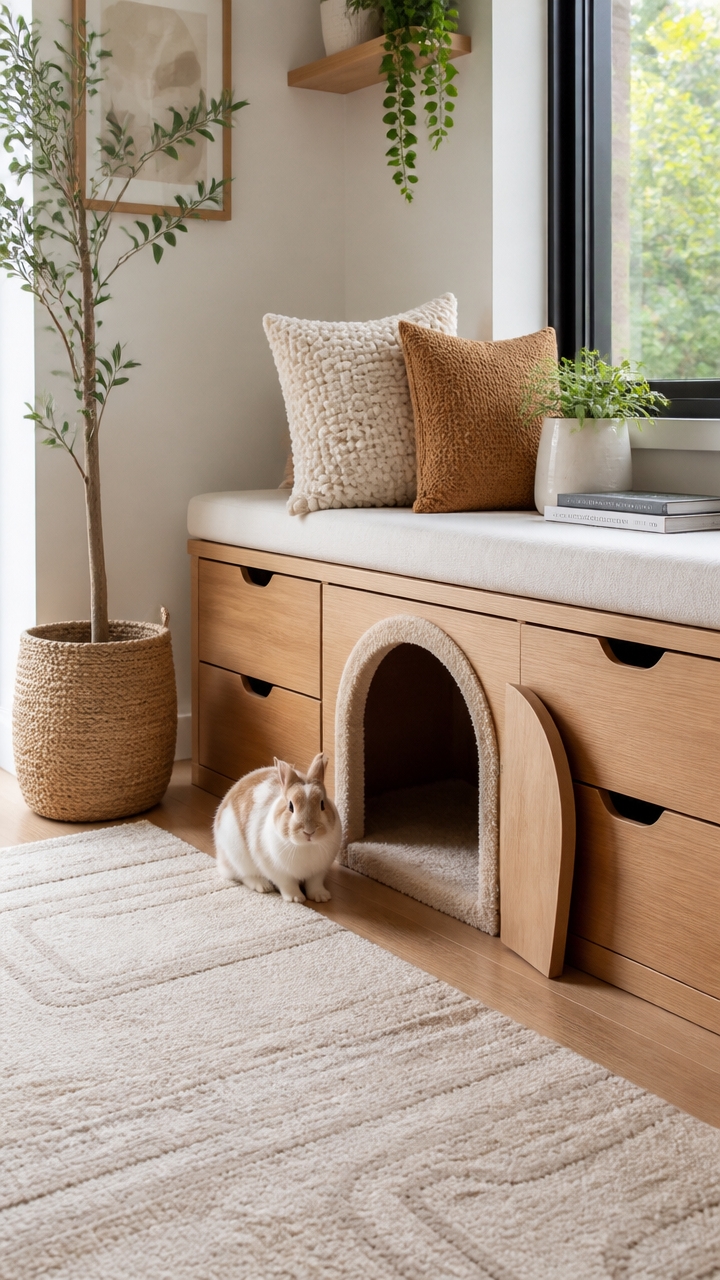
In small indoor enclosures, maximizing hiding spots is essential for your rabbit’s comfort and security. Incorporating small, covered tunnels made from soft fabrics or plastic provides cozy hideouts without taking up much room. These tunnels can be placed in corners or tucked along walls, giving your rabbit a sense of security and a fun area to explore. The soft materials are gentle on their fur and easy to clean, guaranteeing a safe environment. When choosing fabric tunnels, opt for breathable, washable fabrics, and guarantee plastic tunnels have smooth edges to prevent injuries. Position these tunnels strategically within your space so your rabbit can easily access them and they don’t obstruct movement or flow within the enclosure. Providing a variety of such hideouts encourages your rabbit to feel safe, reduces stress, and enriches their space without cluttering or compromising your small living area. Additionally, considering space-saving strategies can help maximize the available area and make your tiny indoor playroom more functional.
Use NIC Cubes to Divide Small Bunny Rooms Safely
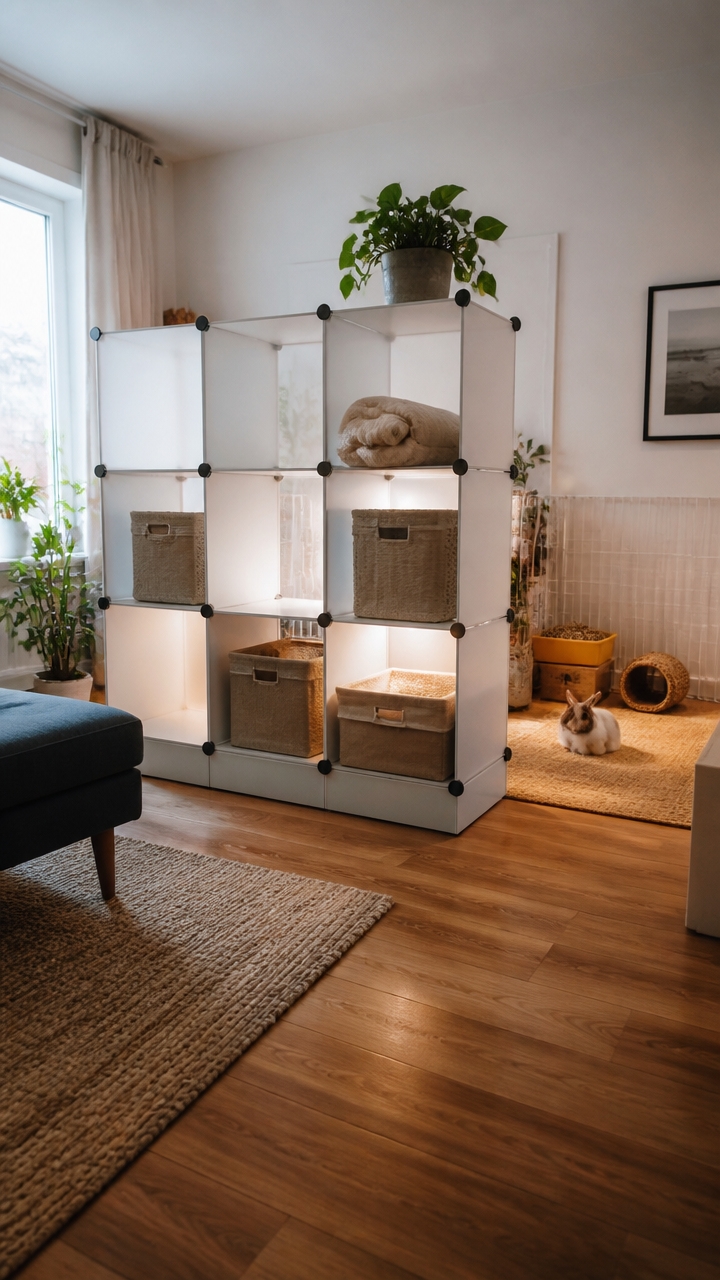
NIC cubes are an excellent solution for creating safe, customizable divisions within small bunny rooms. Their lightweight and versatile design make them ideal for setting up multi-zone layouts, allowing you to delineate play areas, hideouts, and litter boxes clearly without occupying excessive space. You can easily stack or connect NIC cubes with connectors to form barriers that prevent bunnies from escaping, all while maintaining visibility and airflow. This guarantees your rabbits stay secure and comfortable without feeling confined. Properly secured NIC cube walls provide a sturdy, rabbit-proof barrier that can be rearranged as needed, offering flexibility for changing needs or new setups. Incorporating NIC cubes in your small rabbit room helps optimize the available space, creating designated safe zones that promote a stress-free and enriching environment for your rabbits. Additionally, their space-saving design ensures you make the most of every inch, making them a practical choice for small spaces.
Make a Space-Saving, Easy-Access Litter Area
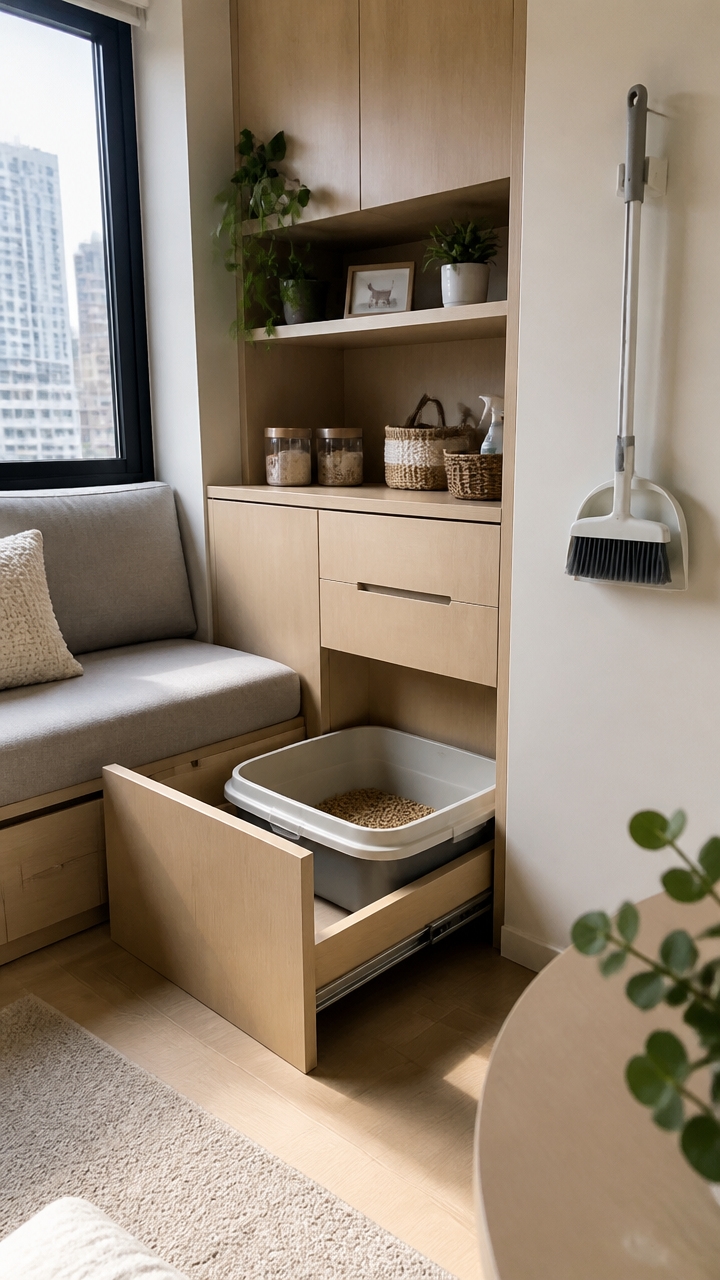
Using a large, shallow litter box such as a wide cat litter pan helps maximize available space and reduces spillage in small enclosures. Positioning the litter box in a corner or beneath a low shelf not only conserves space but also encourages your rabbit to use it consistently, since animals often prefer a designated, somewhat secluded spot. Adding a roof or cover over the litter area can contain messes and make cleaning easier, while also giving your rabbit a sense of privacy. Incorporate removable, easy-to-clean liners or trays to streamline daily maintenance and keep the habitat tidy. Attaching hay holders or forage stations nearby promotes natural foraging behaviors without scattering hay outside the litter box, maintaining cleanliness and enriching your rabbit’s environment.
Compact Hay and Food Storage Solutions
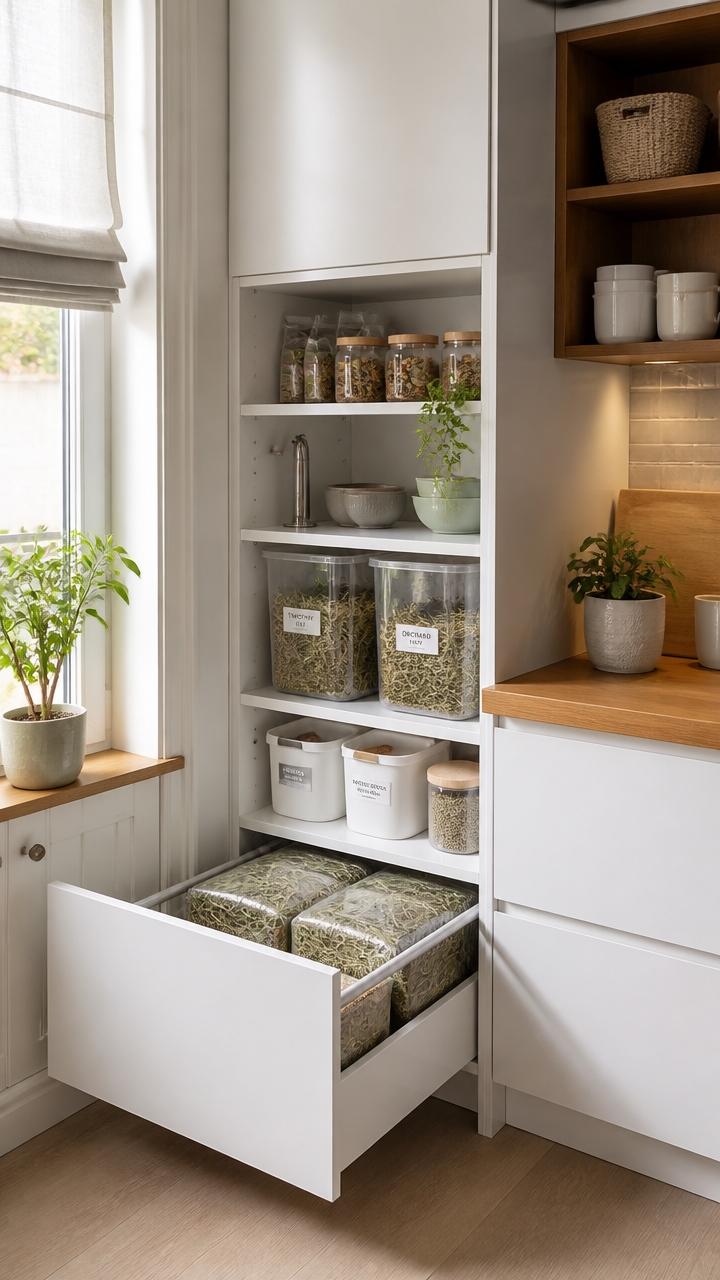
Using wall-mounted hay racks or baskets is an effective way to keep your rabbit’s hay accessible and tidy while conserving floor space. Installing these directly on the wall at a comfortable height minimizes clutter in your small enclosure and guarantees your rabbit always has fresh hay within easy reach. Choose sturdy, smooth-surfaced racks or baskets that are easy to clean and avoid sharp edges, promoting safety. Position them near feeding or lounging areas to streamline your rabbit’s daily routine and maintain a clean, organized environment. This approach not only maximizes available space but also creates a visually neat setup that’s easy to maintain.
Select Flooring to Prevent Sore Hocks
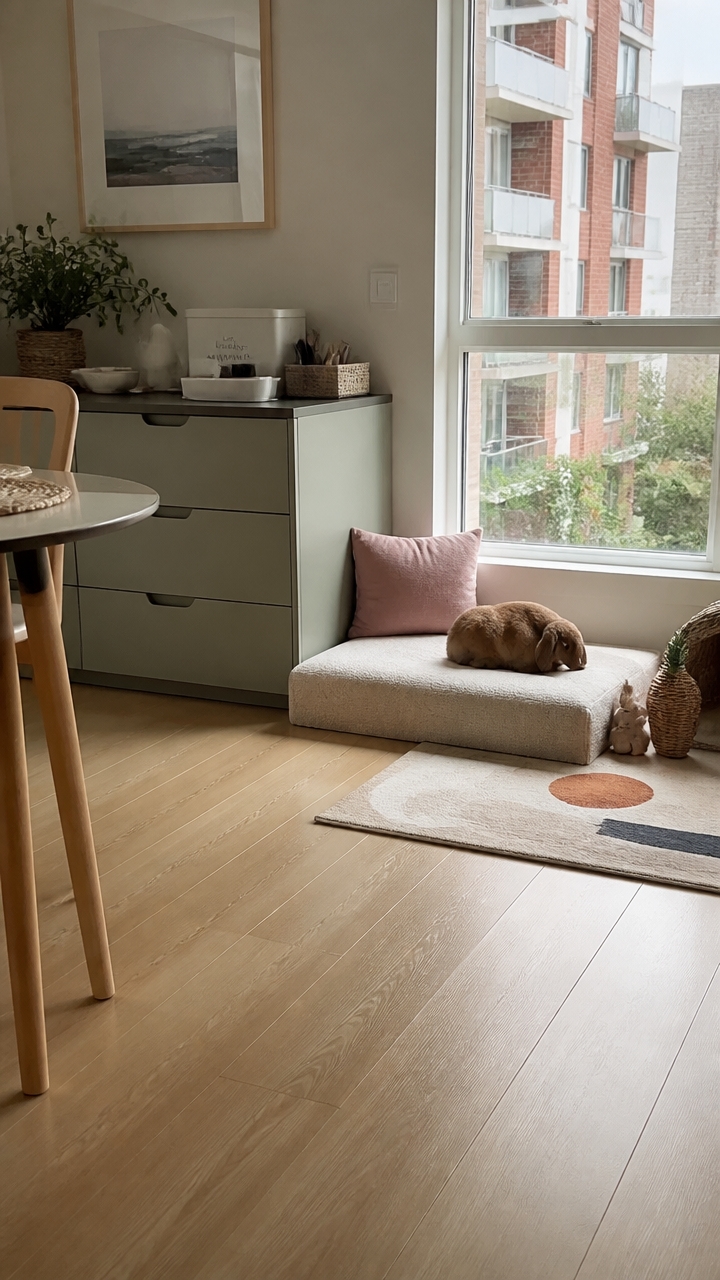
Choosing the right flooring is essential for maintaining your rabbit’s foot health and comfort. Opt for smooth, solid surfaces like linoleum or vinyl, which provide a cushioned feel that reduces pressure on their feet and minimizes the risk of sore hocks. Avoid wire or mesh flooring, especially in outdoor enclosures, as these can cause painful injuries and pressure sores over time. To further enhance comfort, layer hard floors with cushioned mats, fleece liners, or thick rugs that offer extra padding and support for your rabbit’s paws. Regularly inspecting and grooming your rabbit’s feet helps catch early signs of irritation or redness, preventing more serious foot problems. Ensuring a clean, well-maintained flooring area not only promotes foot health but also creates a more comfortable environment for your furry friend.
Enrichment Toys That Fit Small Spaces
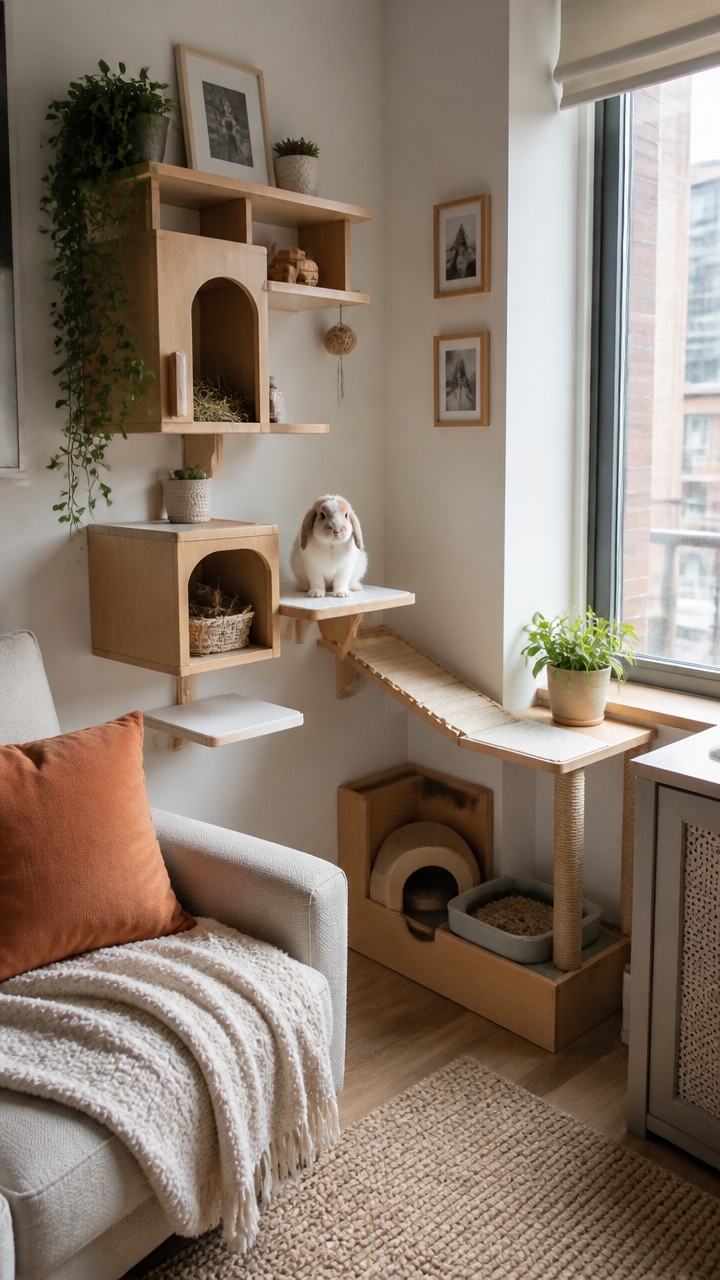
Small-space enrichment toys like willow balls and hay blocks are excellent options to keep your rabbit entertained within a confined area. These toys promote natural foraging and active play, helping prevent boredom and stimulate your bunny’s curiosity without taking up much space. Willow balls are lightweight and can be easily placed in different parts of the enclosure, encouraging your rabbit to push, toss, or nibble as they work to extract treats or simply enjoy chewing. Hay blocks serve as both enrichment and a healthy chewing option, supporting dental health while providing mental engagement. Their compact size means they fit seamlessly into small enclosures, and they can be rotated regularly to keep your rabbit interested. Incorporating these simple, affordable toys guarantees your rabbit’s environment remains lively and enriching, even when space is limited.
Wall Shelves for Extra Bunny Activity
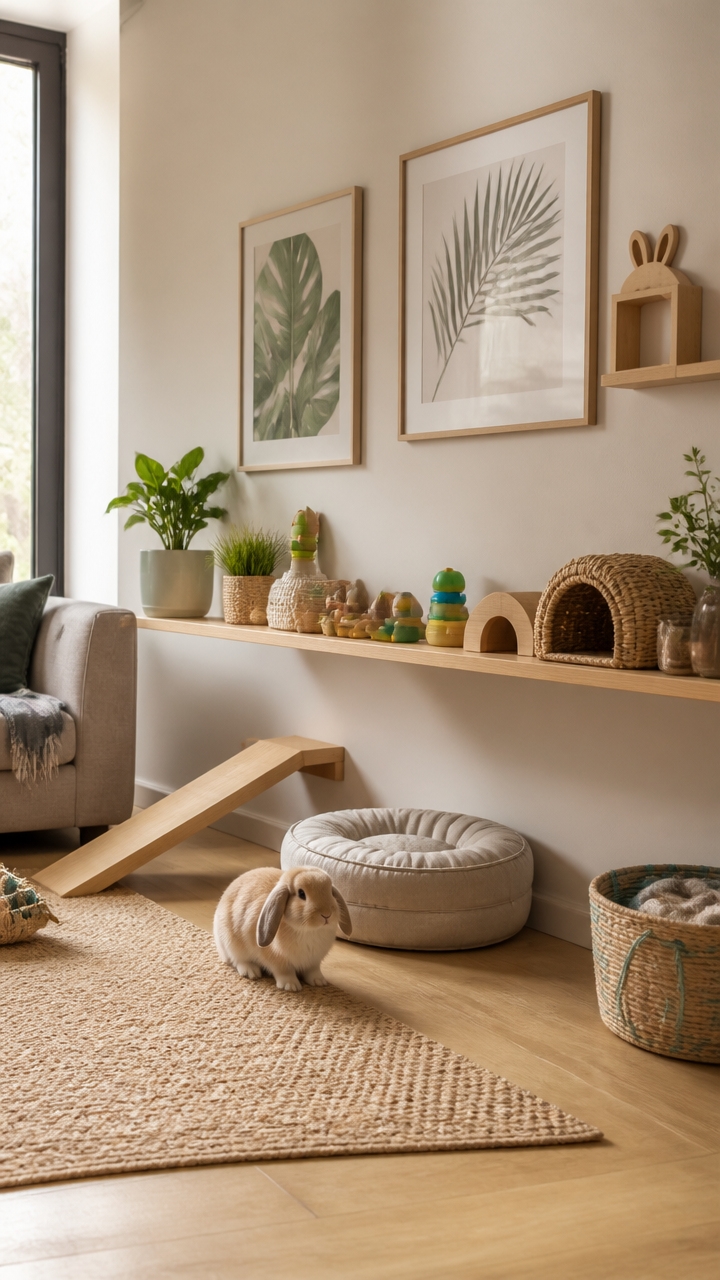
Wall shelves provide an excellent way to enrich your rabbit’s indoor environment by offering elevated spaces to jump, perch, and explore. Properly installed wall shelves can maximize limited space, creating a stimulating multi-level habitat that encourages natural climbing behaviors. For safety and comfort, guarantee the shelves are sturdy, bunny-safe, and equipped with non-slip surfaces, along with secure brackets to prevent accidents. Connecting shelves with ramps or ladders further enhances the activity options, giving your rabbit a dynamic environment to stay active and engaged while preventing boredom. Incorporating these wall shelves into your bunny-proofed room transforms a small space into a rabbit-friendly haven that promotes their natural instincts and overall well-being.
DIY Recycled Enclosures for Small Rooms
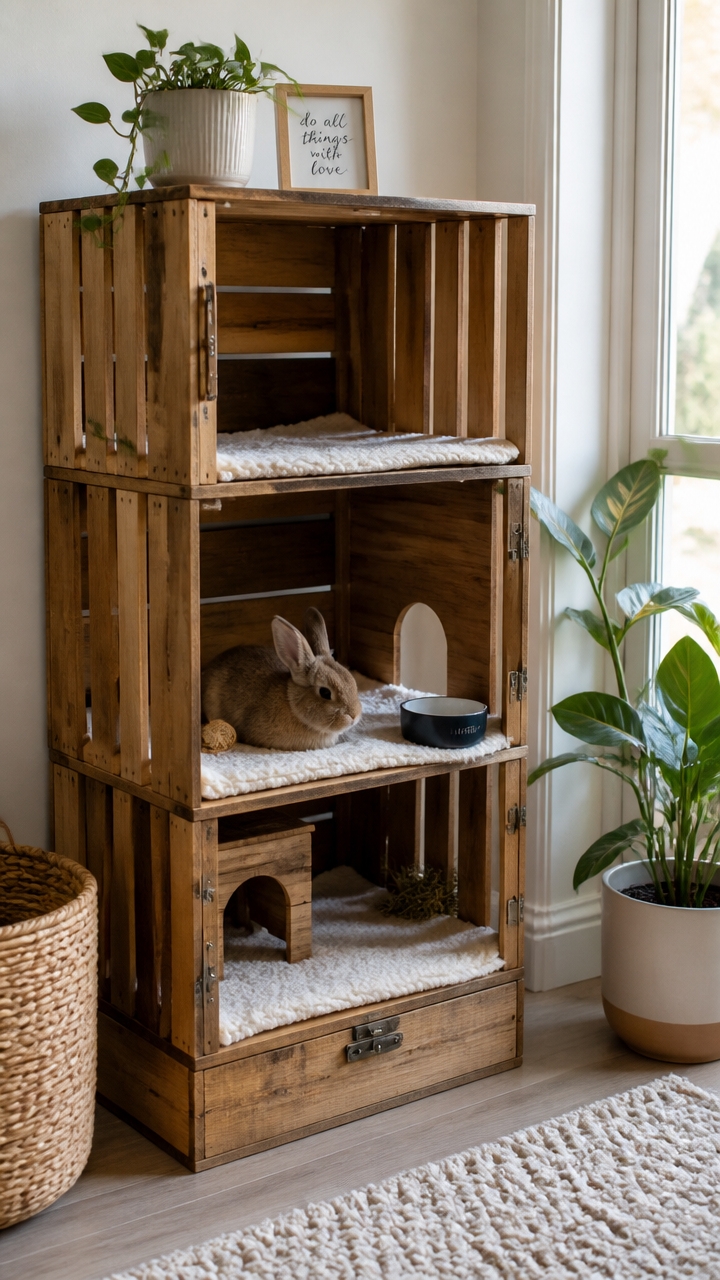
DIY recycled enclosures for small rooms are an excellent way to create functional, budget-friendly habitats for your rabbit while maximizing limited space. Using materials like corrugated plastic, cardboard, or repurposed furniture allows you to customize their size and shape to suit your room’s layout. Corrugated plastic is lightweight, durable, and easy to clean, making it ideal for constructing sturdy barriers or sections within a room. Cardboard, when reinforced with double layers, can serve as temporary or seasonal enclosures, offering a flexible and budget-conscious option.
Repurposed furniture, such as an unused bookshelf, can be modified to create a cozy hideout or resting spot. Removing or adjusting shelves can provide a private nook, and painting or decorating the exterior can make it blend seamlessly into your room’s decor. These DIY enclosures are easy to assemble and disassemble, allowing for versatile placement and reconfiguration as needed. When building or repurposing such enclosures, guarantee proper ventilation with small holes or mesh at appropriate points to keep your rabbit comfortable and safe. Plus, choosing eco-friendly, non-toxic materials promotes a healthier environment for your pet and reduces waste. This approach not only offers a practical solution for small living spaces but also adds a creative, personalized touch to your rabbit’s indoor home.
Bunny-Proof Small Rooms and Corners
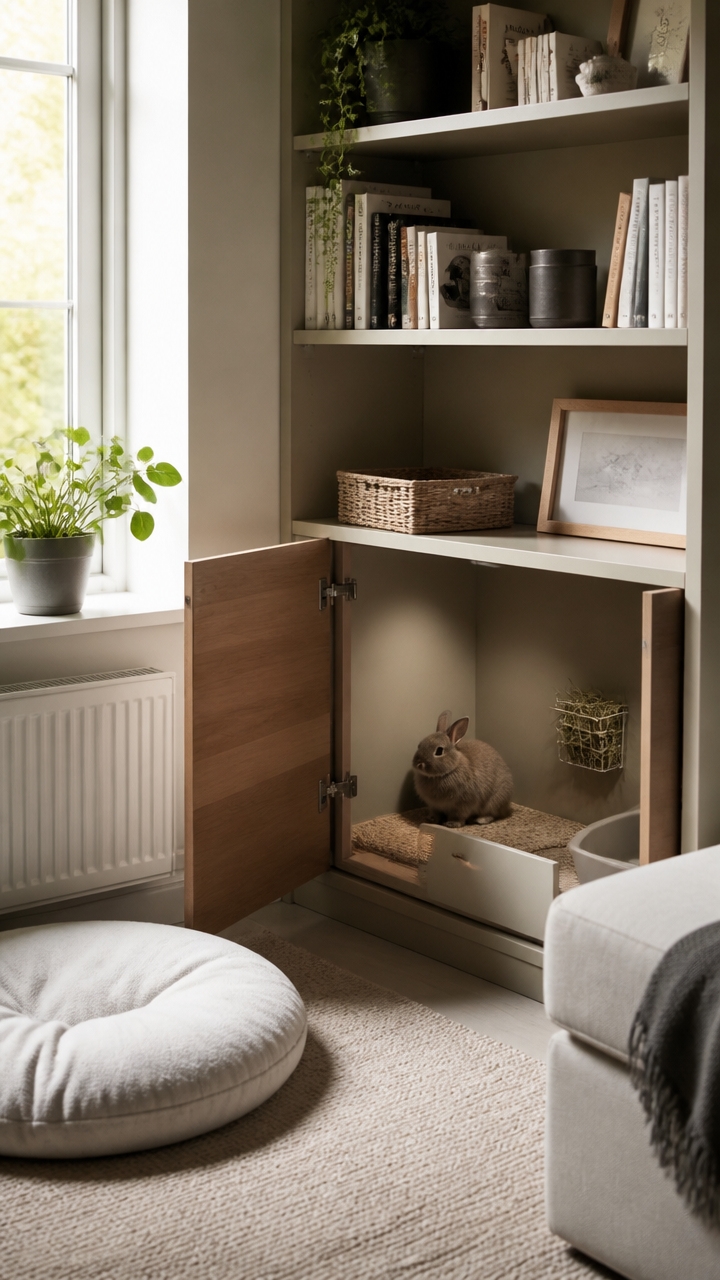
Bunny-proofing small rooms and corners is essential to create a safe environment where your rabbit can explore and relax without risk. Start by securing electrical cords with cord clips or sleeves to prevent chewing that could result in electrical shock or fire. Remove or relocate toxic plants, such as ivy or lilies, to places inaccessible to your bunny, as ingestion can be dangerous. To prevent rabbits from squeezing into tight or hard-to-clean areas, block off corners and objects using furniture, small barriers, or add-on barriers like NIC cubes, which can be customized to fit specific spaces. Cover flooring with laminate effect foam mats to provide both traction and cushioning, reducing the chance of injuries from slips or falls. Always keep doors closed when your rabbit is unsupervised to avoid escape and access to unsafe areas like kitchens or laundry rooms. By implementing these strategies, you can safely maximize your small space while ensuring your bunny’s well-being and preventing potential hazards.
Organize Supplies for a Clutter-Free Space
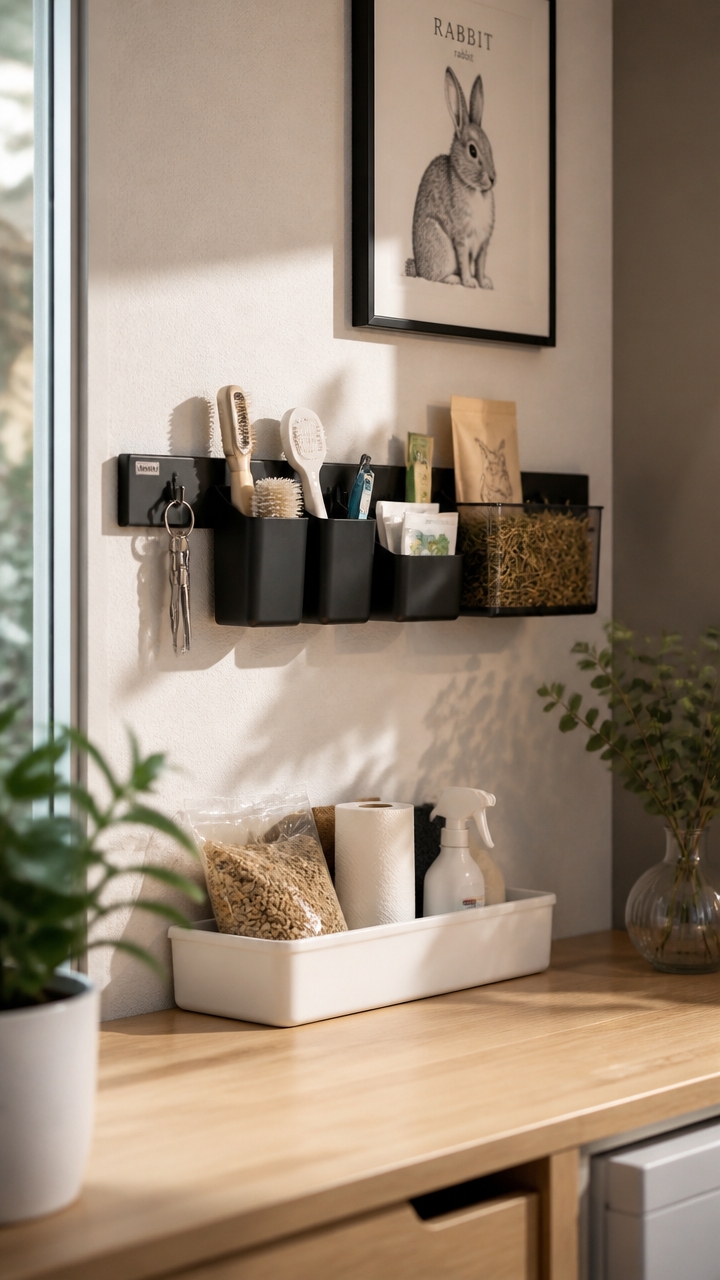
Use stackable storage bins and labeled containers to keep rabbit supplies organized and easily accessible in a small space. Stackable bins maximize vertical storage, allowing you to utilize limited floor area efficiently. Assign each bin a specific category such as hay, pellets, treats, grooming tools, or cleaning supplies, and clearly label them for quick identification. Transparent containers are especially helpful for quickly seeing contents without opening each one. Placing these bins on shelves or within storage cabinets keeps your supplies tidy and prevents clutter from spreading across surfaces. This organized system makes it easier to find what you need, maintains a neat environment, and guarantees everything is stored safely and conveniently for your rabbit’s care.
Create a Cozy Resting Zone in Small Spaces
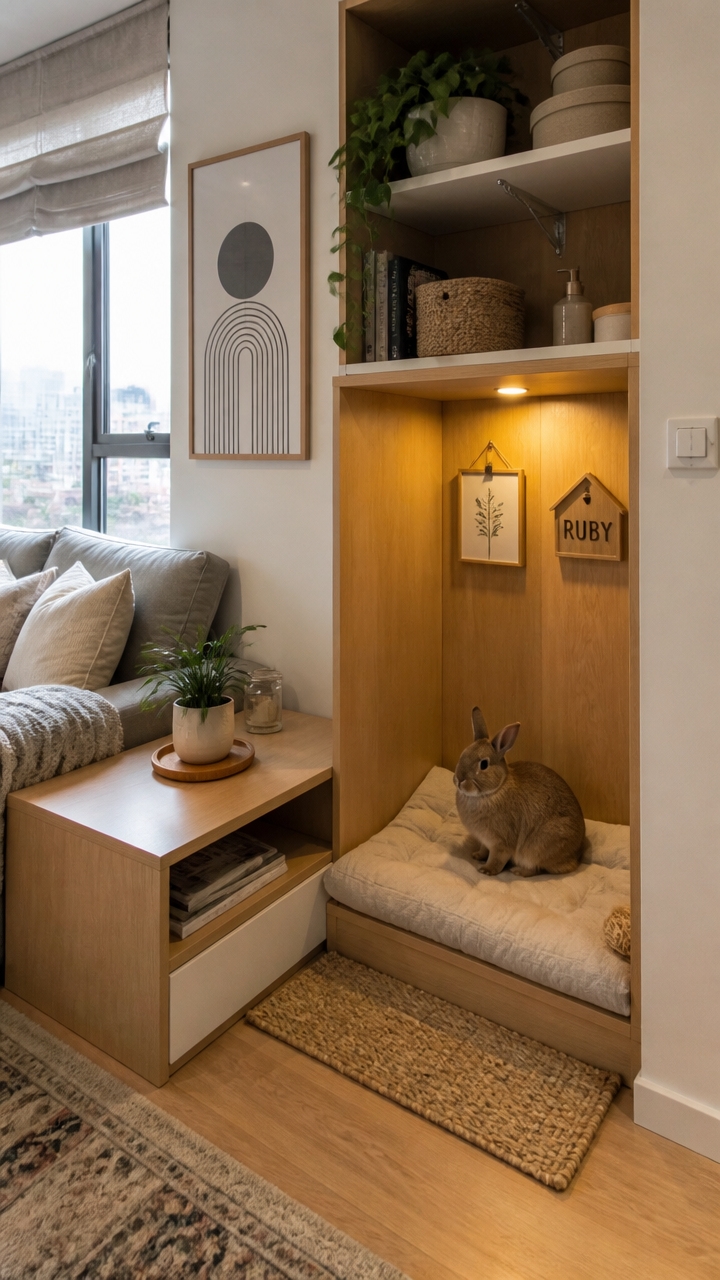
Designating a dedicated resting area for your rabbit is essential for their comfort and well-being, especially in limited space. Start by building a soft, enclosed hideout using cardboard boxes or fleece-lined fabric to give your rabbit a secure retreat where they can feel safe and relaxed. Position this hideaway in a quiet corner of the enclosure, away from bustling activity or noisy appliances, ensuring a peaceful environment.
Add a low, comfortable bed or cushion nearby to serve as a dedicated resting spot. Choose a soft material and position it in the corner to create a cozy nook that invites your rabbit to unwind. Use calming, neutral-colored rugs or mats to visually define this peaceful space, helping your rabbit associate it with tranquility.
To encourage your rabbit to use their resting zone, place plenty of hay or treats within the area. This not only provides comfort but also fosters positive associations, making the space inviting for your pet. Regularly clean and refresh the bedding and treat supplies to maintain a hygienic, stress-free environment. With these simple touches, you’ll create a cozy, secure resting zone that fits beautifully into your small living space.
Transition Tips From Enclosure to Free Roaming
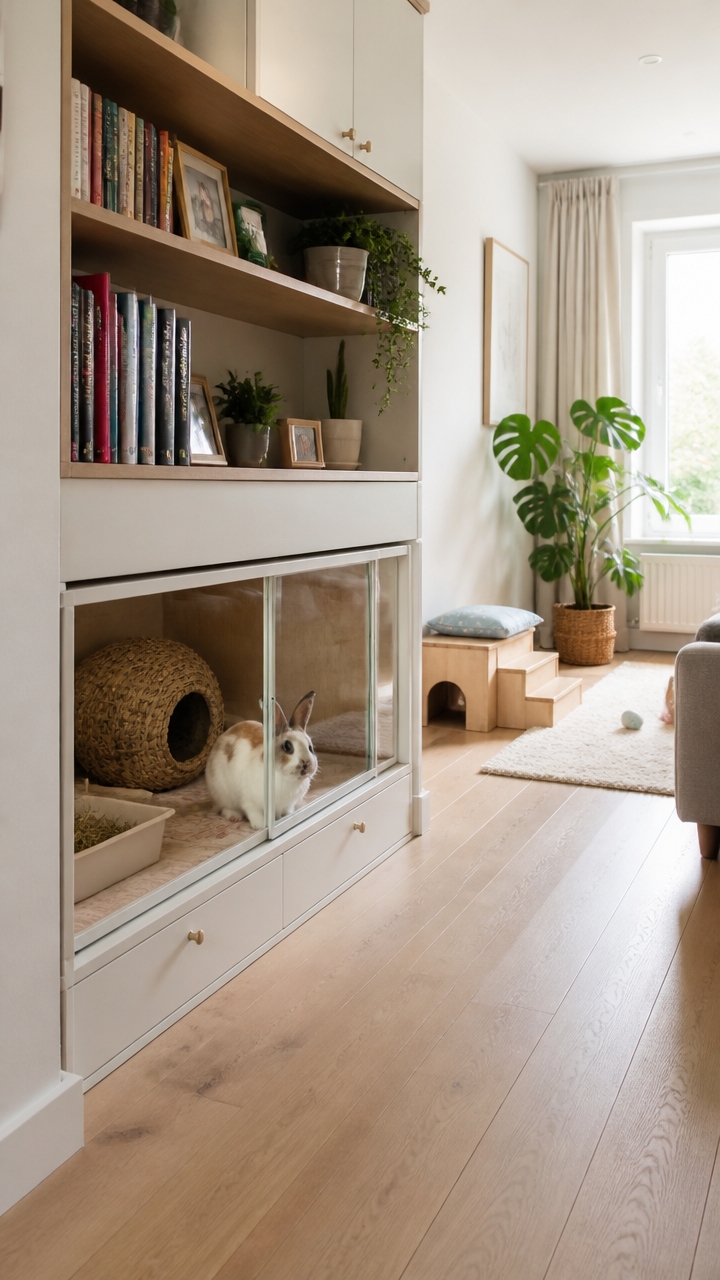
Gradually shifting your rabbit from an enclosed pen to free roaming requires patience and careful planning. Start by allowing supervised playtime in a bunny-proofed area, providing your rabbit with a safe environment. Use positive reinforcement and treats to encourage their exploration at a comfortable pace, making the experience rewarding. Always supervise during free roam sessions until you observe that your rabbit can navigate the space safely without causing damage or getting into hazardous situations. Begin with a small, secure section of your home, such as a corner of a room or a designated enclosure, and slowly expand to larger indoor areas as your rabbit becomes more confident. Block off any dangerous spots or unsafe objects like electrical cords or fragile decorations. Regularly observe your rabbit for signs of stress or discomfort, adjusting your approach as needed to make sure they remain calm and secure throughout the process. This gradual process helps your rabbit build confidence, reduces accidents, and makes free roam time enjoyable for both of you.
Use Multi-Purpose Furniture to Save Space
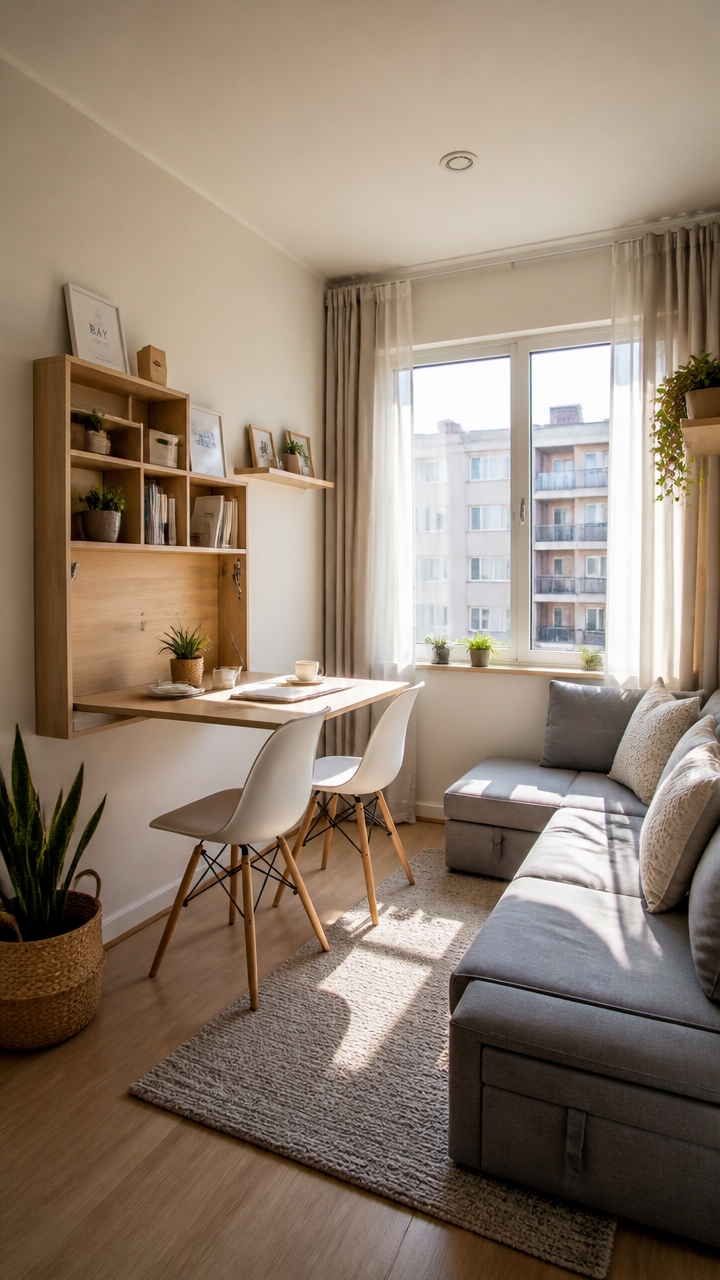
In small indoor environments, multi-purpose furniture is a game-changer for creating a flexible, organized, and inviting space for your rabbit. Items like storage ottomans and nesting tables serve dual functions, offering seating or surface area while also providing hidden storage for supplies, hay, or toys. This approach keeps clutter out of sight and frees up valuable floor space for your rabbit to move and explore comfortably. When choosing these pieces, consider their size in relation to your room and rabbit needs, ensuring they are sturdy and easy to access. Styling with lightweight, neutral-colored furniture can maintain an open feel, and incorporating materials like wood or acrylic can blend seamlessly into your decor. Strategically placing multi-functional furniture in central areas or corners maximizes efficiency while giving your rabbit ample room to play and relax.
Natural Light Tips for Small Bunny Areas
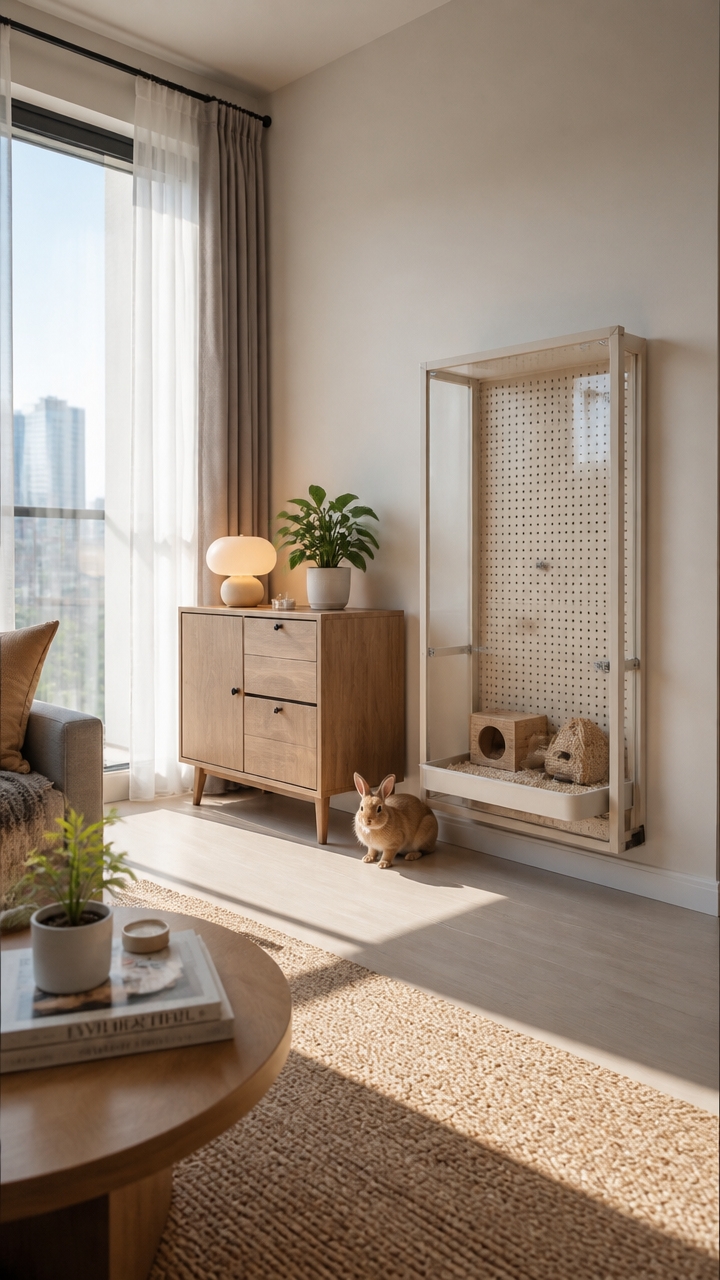
Positioning your rabbit’s enclosure near a window can notably boost their well-being by providing natural light and a stimulating environment. Aim to place the enclosure in an area where your bunny can receive at least 4-6 hours of indirect sunlight each day. This helps support their natural circadian rhythms, promotes activity, and enhances overall health. Using sheer curtains or diffusers over the window allows gentle sunlight to filter through, preventing direct exposure that could stress your rabbit or cause UV damage to their sensitive skin and eyes. Make certain the space is well-ventilated to keep the environment fresh and inviting. Be mindful of sudden light changes or drafts, which can disrupt your bunny’s comfort and stability. By thoughtfully integrating natural light into their space, you create a vibrant, healthy environment that encourages natural behaviors and happiness.
Keep Your Small Bunny Habitat Clean and Hygienic
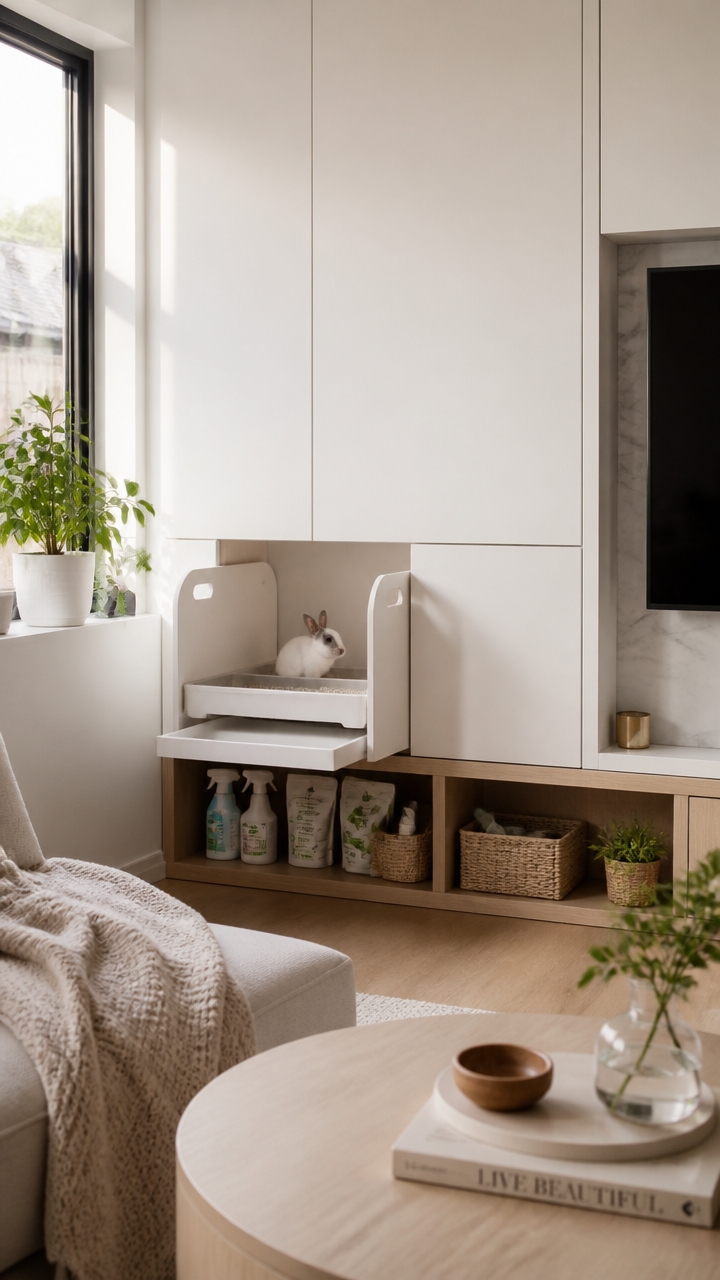
Maintain a clean and hygienic environment for your small bunny habitat by establishing a regular cleaning routine. Scoop out soiled litter boxes at least once daily to prevent the buildup of ammonia and odors, and fully change bedding weekly to keep the space fresh. Use non-toxic, washable surfaces like fleece liners and ceramic containers for bedding and food or water dishes, as these are easy to clean and promote good hygiene. Guarantee proper ventilation within the enclosure to reduce moisture and humidity, which can foster mold and bacteria growth. Disinfect the enclosure and accessories with rabbit-safe, eco-friendly cleaners to maintain a germ-free environment, supporting your bunny’s health and comfort.
Inspiring Small Space Bunny Setup Ideas
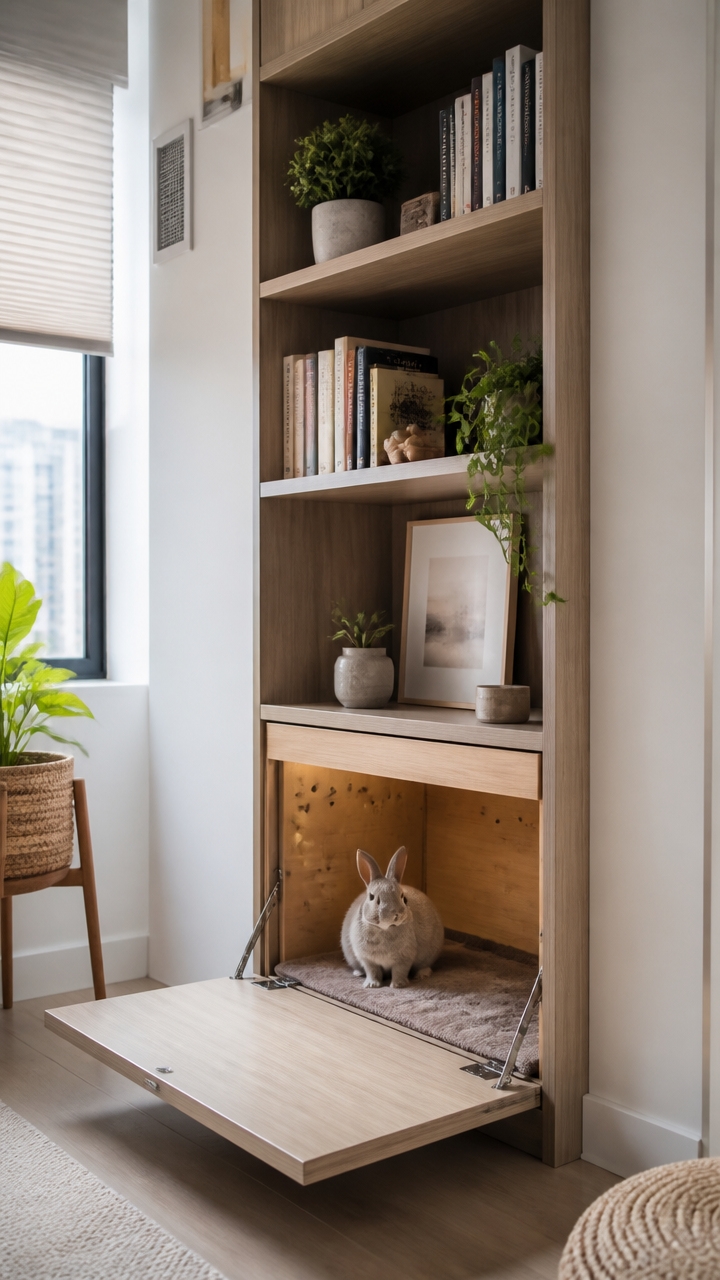
Utilizing multi-level enclosures with ramps and shelves can dramatically expand your indoor rabbit habitat without demanding extra floor space. These vertical setups create an engaging environment, encouraging your rabbit to hop, climb, and explore while making efficient use of limited room. Position ramps at gentle angles for safe, comfortable access between levels, and include a variety of shelves at different heights to stimulate natural movement and curiosity. Corralling essential items like food bowls, litter boxes, and cozy hideouts across multiple tiers helps to organize space efficiently. Choosing materials like smooth plywood or sturdy plastic for ramps and shelves ensures safety and durability. Incorporate soft matting or flatweave rugs on each level to improve traction and comfort, reducing the risk of slips. This approach not only maximizes your small space but also enhances your rabbit’s quality of life by providing a stimulating, spacious environment within a compact footprint.
Adjust and Improve Your Habitat as Your Bunny Grows
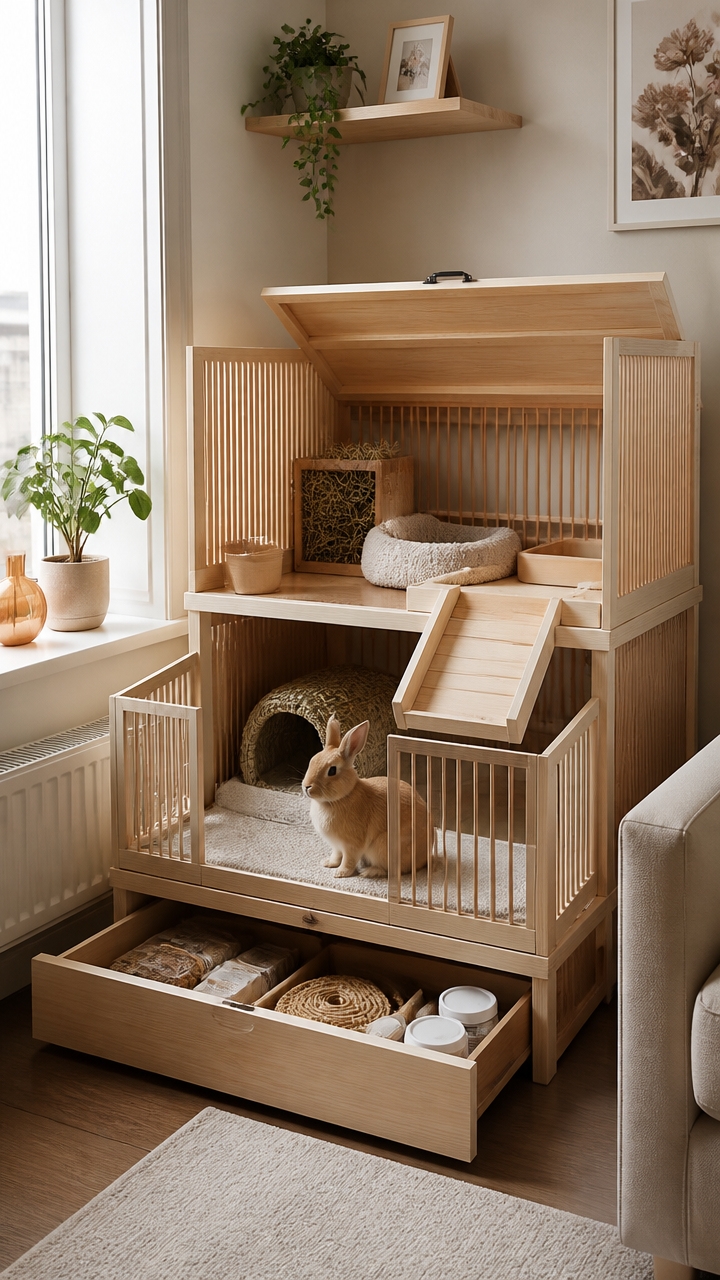
As your bunny grows, it’s important to adapt their habitat to guarantee their environment remains safe, comfortable, and engaging. Start by gradually increasing the enclosure size from the minimum of 4×4 feet to larger dimensions such as 10×6 feet or more, which provides ample space for movement, play, and rest. Incorporate multi-story setups with ramps and platforms to maximize vertical space, encouraging exercise and exploration within a compact area. As your rabbit matures, replace or expand hideouts and toys to match their size, assuring they have cozy, accessible spots for relaxation and enrichment. Switching from a confined enclosure to a freer roaming environment within your room, with supervised playtime, supports their natural behavior and development. Regularly reevaluate and modify their habitat layout to maintain an environment that is stimulating, safe, and appropriately scaled to your rabbit’s changing needs.
Final Takeaways
In the intimate microcosm of your bunny’s home, every thoughtful detail, like a bijou hideout or a cleverly reimagined divider, becomes a symbol of cocooning comfort amid constraining space; a tactile emblem of playful ingenuity echoing the meticulous joinery of prominent designers like Charlie and Ryan or the understated palette of “Manet” gray with a whisper of “Tibet” ochre by Farrow & Ball. Your mindful habitat becomes a sanctuary, a small universe where natural behaviors flourish, quietly affirming that even in tight quarters, thoughtful design fosters a landscape of wellbeing, an osmotic pulse nourishing your bunny’s happiness within its carefully curated cocoon.

- 20 Small Home Space Saving Ideas That Transform Any Space - September 28, 2026
- 23 Small Guest Room Ideas Maximize Space Designers Swear By - September 28, 2026
- 22 Small Space Apartment Ideas That Make a Big Difference - September 27, 2026