
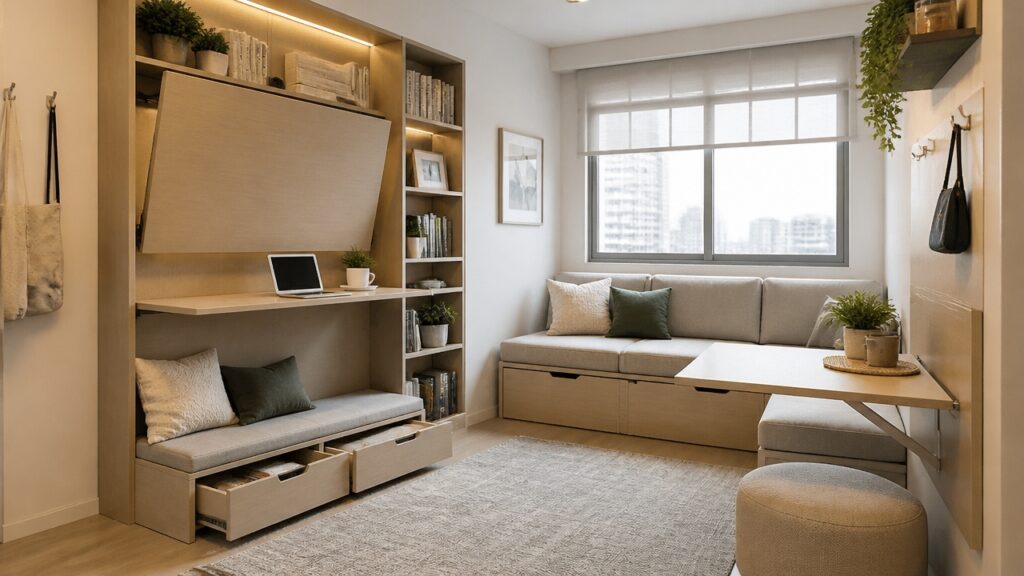
In a space reminiscent of Mies van der Rohe’s unwavering minimalism, where every inch whispers potential, you might find yourself contemplating solutions that blend joinery finesse, think bespoke cabinetry from “Boffi” or “Zanotta”, with the subtle art of cocooning zones that turn a bijou apartment into a sanctuary of efficiency. As you consider the strategic placement of shelves, hooks, and collapsible furniture, remember that achieving such harmony often hinges on respecting a sophisticated colourway, perhaps Benjamin Moore’s “Revere Pewter”, while embracing innovations that streamline daily routines without sacrificing style.
Assess Your Space: Understand How You Use It
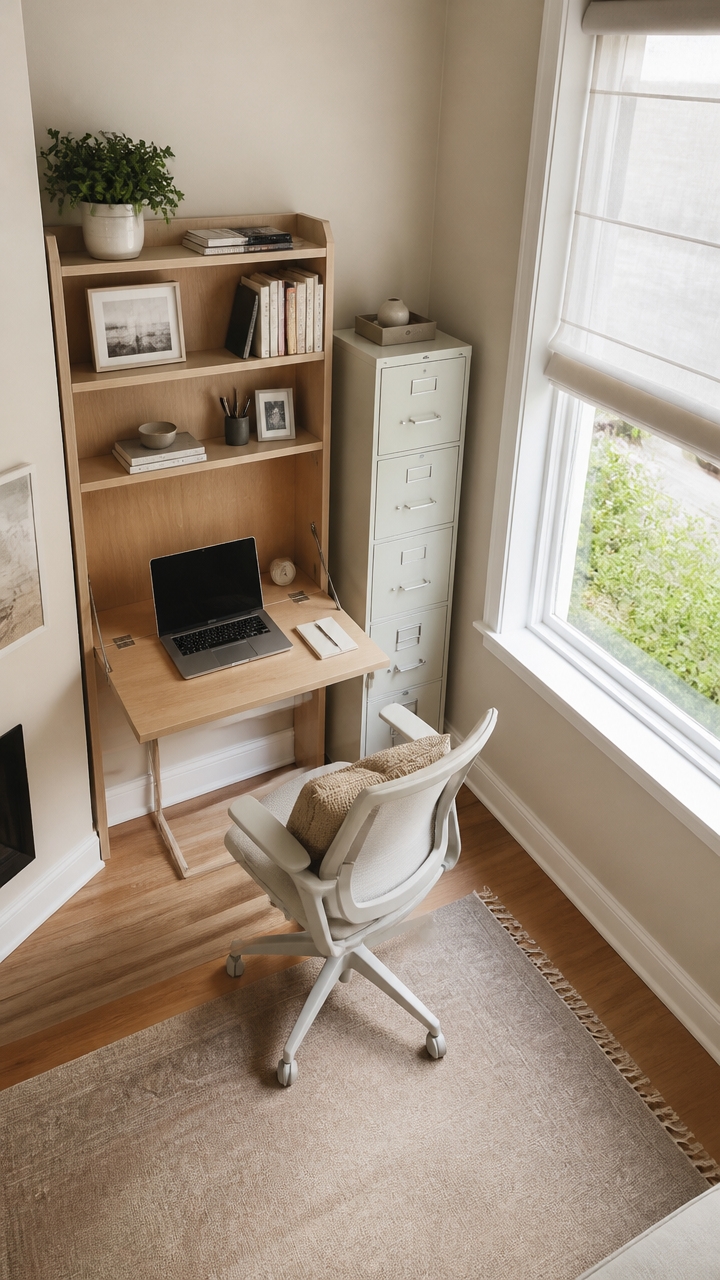
The first step in optimizing a small home is to take a close look at your daily routines and movement patterns within the space. Keep track of which activities you perform most often and which areas you frequent. This helps identify the zones that need easy access and should be prioritized for functional furniture or storage solutions. For example, if you cook daily in the kitchen, guarantee cooking utensils are within arm’s reach, and consider wall-mounted racks or pull-out storage to maximize counter space.
Map out your entire home and identify any underutilized areas like corners, high ceilings, or support beams. These spots can be transformed into clever storage solutions or functional zones. Installing corner shelves or hanging organizers can turn awkward spaces into valuable storage areas, freeing up main living spaces for everyday use.
Observe how you move through your home. Notice bottlenecks, clutter hotspots, or areas where furniture impedes flow. Reorganizing furniture placement, removing obstructions, and creating clear pathways improve movement and make your space feel larger. Additionally, track rarely used belongings and design storage options that keep these items out of sight yet accessible when needed, such as under-bed bins or high shelving. Recognizing spatial limitations and working around them can significantly enhance usability and comfort in small spaces.
Understanding the specific functions each area must serve, for sleeping, working, cooking, or relaxing, enables you to create an intentional layout. Assign designated zones with appropriate furniture and storage to keep items organized according to their use. This targeted approach reduces clutter, streamlines daily routines, and makes your small home more comfortable and efficient.
Design Multi-Functional Rooms With Space-Friendly Furniture
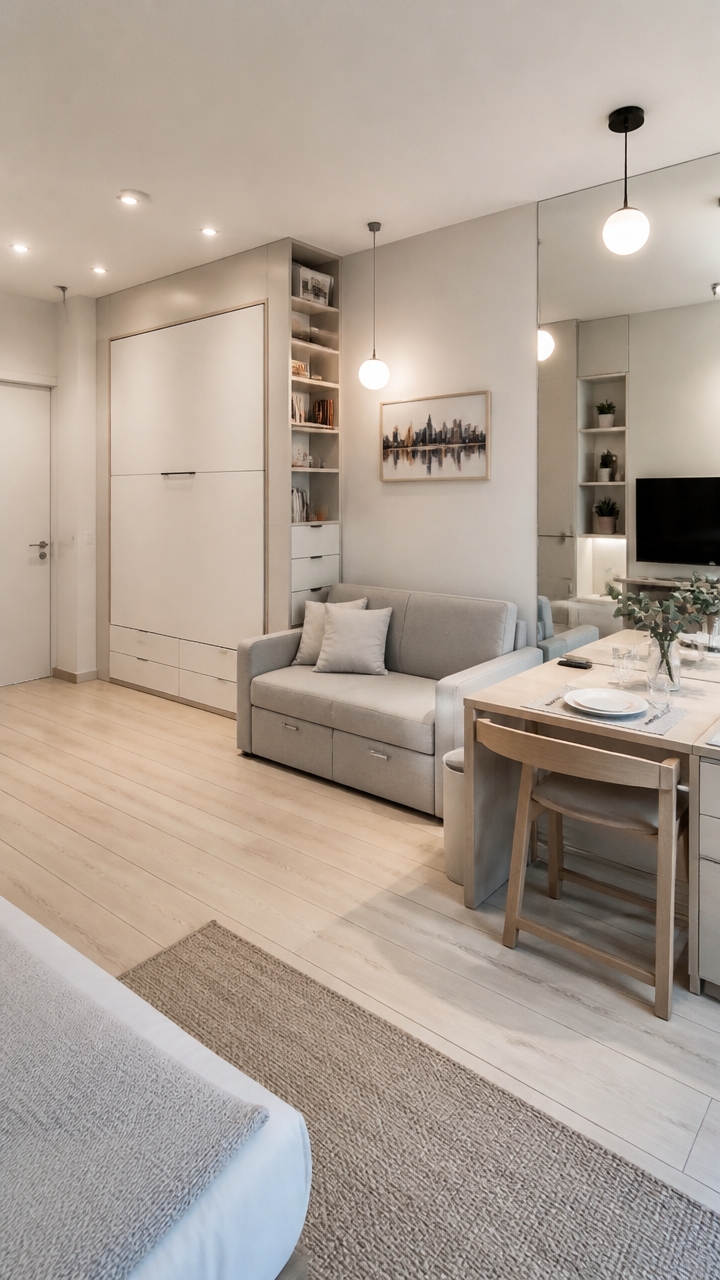
In small homes, the key to making every square foot count is selecting furniture that serves multiple purposes. Multi-functional pieces like Murphy beds that fold into wall art transform a bedroom into a guest space without taking up extra room. When not in use, these beds tuck neatly away, freeing up valuable floor space for daily activities. Incorporating space-saving strategies such as fold-down desks and collapsible chairs can further optimize small laundry rooms and other compact areas. Fold-down desks are another versatile solution. They can be mounted on the wall and easily pulled down for work or study, then pushed back up when not in use to create a clear, open area. Collapsible chairs are equally convenient, allowing you to store them compactly when not needed and set them up quickly for dinner guests or hobbies. Built-in storage benches combine seating with hidden storage, keeping clutter out of sight while adding extra surface area. Extendable tables adapt to your needs, expand them for family dinners or keep them compact for everyday use. Pairing these tables with modular seating options like stacking chairs or nesting tables offers flexible arrangements that can be reconfigured for any activity. Using multi-purpose furniture that merges storage and functionality not only helps maximize limited space but also maintains a clean, uncluttered aesthetic. Selecting appropriately scaled pieces, considering ease of access, and choosing cohesive materials and finishes can create a seamless, adaptable living environment perfect for small spaces.
Maximize Vertical Storage With Shelves and Wall Hooks
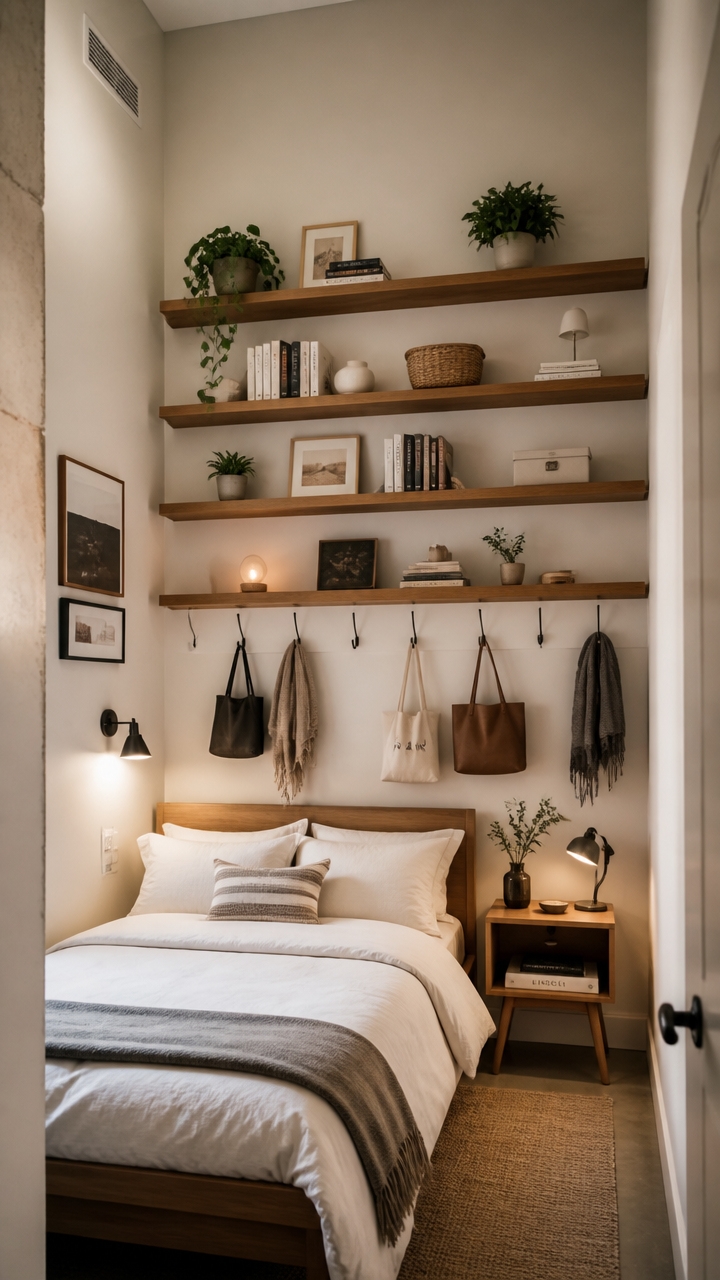
Utilizing wall-mounted shelves and hooks is one of the most effective ways to expand storage in small homes. Installing shelves allows you to vertically stack books, decorative items, kitchen supplies, or other essentials, freeing up valuable counter or floor space. Choose slim, floating shelves for a clean look that fits seamlessly into your décor, and consider varying the heights to create visual interest while maintaining practicality.
Wall hooks provide an easy and versatile solution for hanging jackets, bags, utensils, or tools. Mount them near entryways, kitchens, or closets to keep frequently used items accessible and organized. Using different hook sizes and styles can help accommodate a variety of items, from lightweight accessories to heavier household tools. Placing hooks under shelves or on unused wall spaces makes the most of every inch without cluttering your living area.
Adding tiered racks or pegboards further enhances vertical storage and organization. These accessories maximize space by allowing you to stack or hang multiple items vertically. When planning placement, consider the items’ weight and frequency of use to ensure accessibility and safety. Incorporating wall-mounted storage solutions can optimize your space even further by creating designated zones for different items. The right combination of shelves, hooks, and racks transforms vertical walls into functional storage zones, making small spaces more efficient and visually appealing.
Use Hidden Storage to Keep Clutter Out of Sight
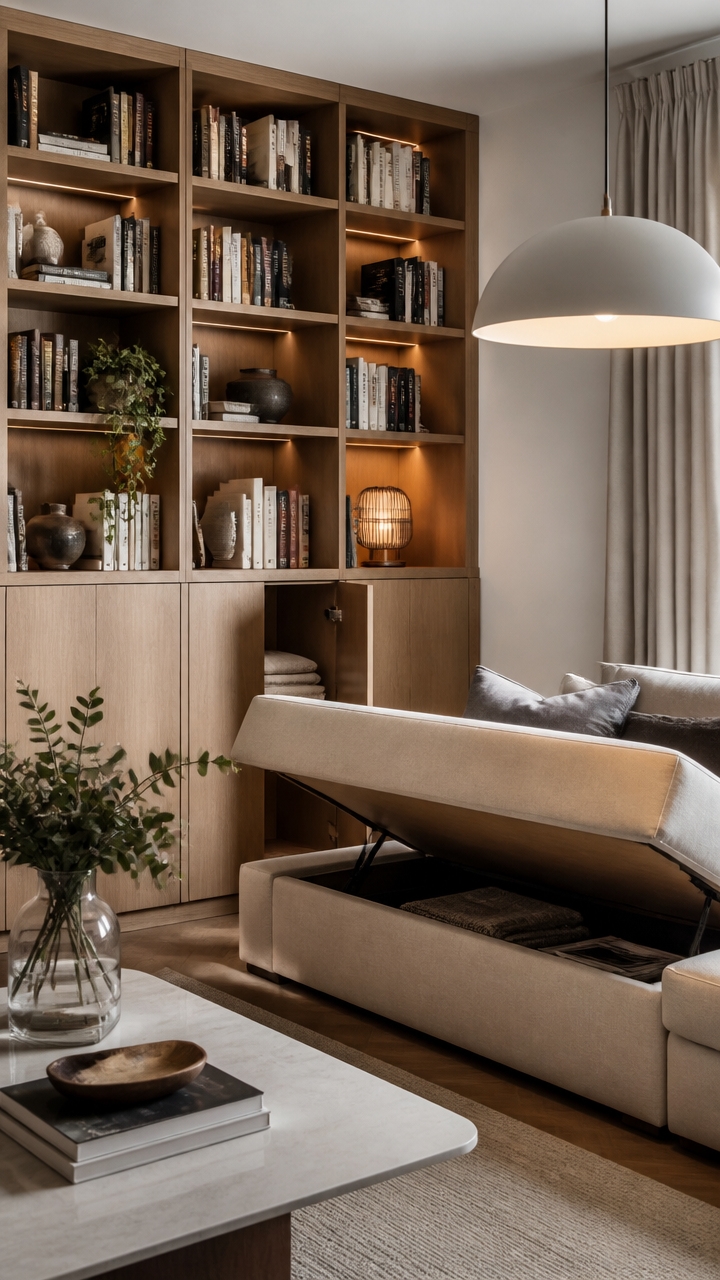
In small homes, making every inch count is essential, and hidden storage offers a smart solution to maintain a clean, organized space. Incorporating concealed compartments within everyday furniture allows you to store seasonal clothing, blankets, or rarely used items without sacrificing style or functionality. Ottomans with built-in storage, for example, provide a cozy seating option while hiding away clutter underneath. Beds with hidden compartments can serve as convenient spots for storing linens or off-season wardrobe pieces, freeing up closet space. Using furniture that features discreet drawers or secret compartments, such as inside staircases or behind panels, creates unobtrusive storage opportunities that keep your belongings out of sight. Repurposing hollow decor, like vintage suitcases or hollowed-out books, adds both character and utility, blending storage seamlessly into your decor. These innovative solutions help keep your small living area tidy, ensuring essentials are close at hand yet hidden from plain view when not in use.
Make the Most of Under-Stair and Beam Spaces
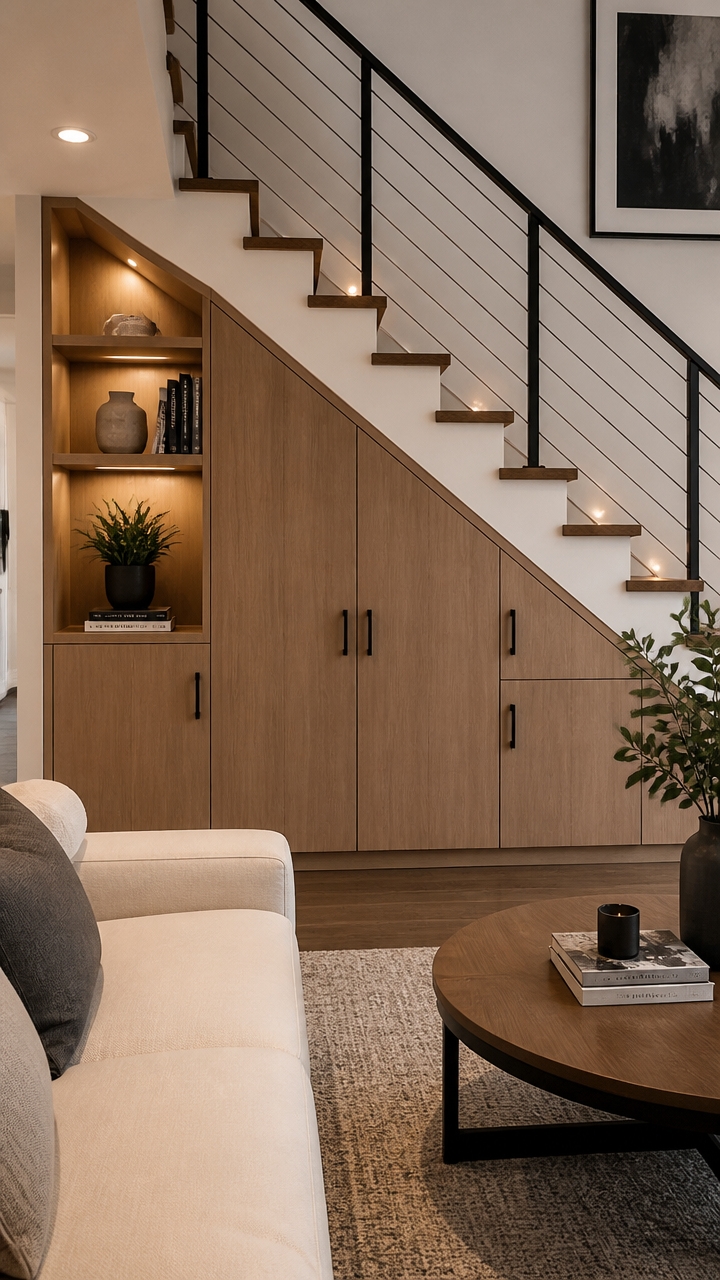
Maximize the often-overlooked space beneath stairs and support beams by transforming these areas into functional storage solutions. Installing custom drawers or cabinets under the staircase allows you to discreetly store linens, shoes, or kids’ toys, making efficient use of narrow or awkward spaces that would otherwise be wasted. For a cleaner look, incorporate hidden storage behind doors or within the stair risers themselves, keeping clutter out of sight and maintaining a streamlined appearance. You can also design this space as a cozy pet nook or feeding station by adding built-in benches or compartments tailored to your pet’s needs, combining practicality with comfort. Additionally, open shelving or cubbies beneath support beams offer a great way to display decorative items or organize daily essentials while adding visual interest. These solutions help maximize every inch of your home, making small spaces more functional and organized without sacrificing style. Understanding space-saving strategies can further enhance your overall small storage solutions.
Choose Compact, Foldable, and Modular Furniture
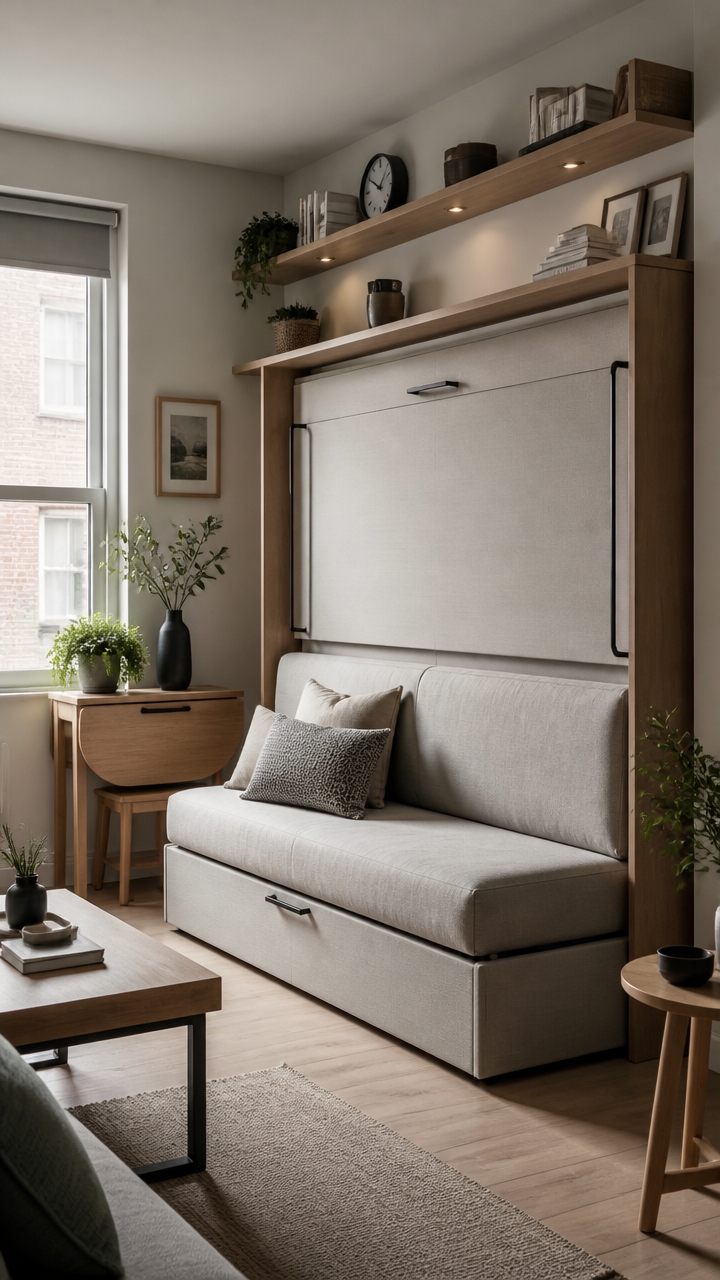
Using compact, foldable, and modular furniture is one of the most effective ways to maximize space in a small home. Fold-down desks, Murphy beds, and wall-mounted tables can be easily tucked away when not in use, substantially freeing up floor space for daily activities or entertaining. Modular furniture pieces like nesting tables or stackable chairs allow for flexible configurations that adapt to your needs, whether you’re hosting a guest or creating a designated workspace. These pieces can often be stacked or stored vertically, keeping clutter out of sight while remaining accessible. When selecting these items, consider proportions and materials to guarantee they fit seamlessly with your decor and are easy to operate. Incorporating foldable and modular furniture makes your home more functional, versatile, and spacious, without sacrificing style or comfort.
Optimize Closet and Wardrobe Space in Small Areas
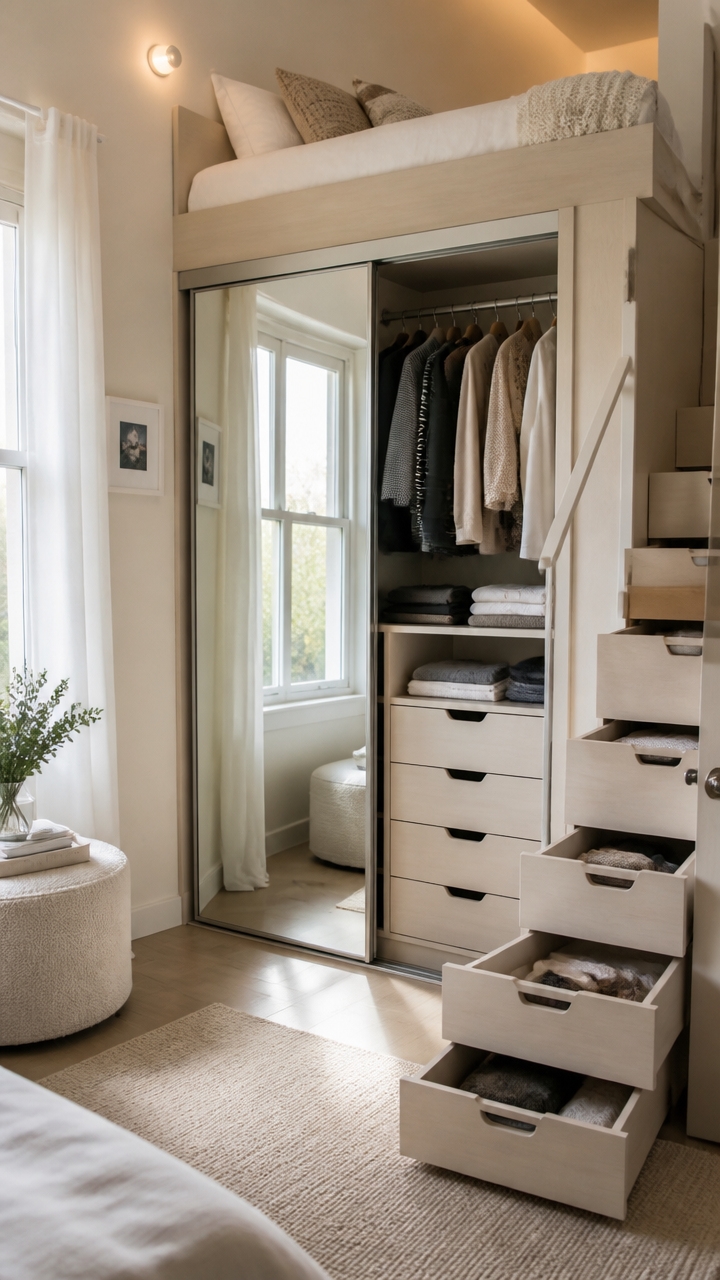
Using modular, customizable closet systems like IKEA allows you to tailor your storage to fit your specific needs and maximize vertical space. These systems can be adapted with adjustable shelves, drawers, and rods, making it easy to organize different clothing types efficiently. Installing such systems upright against a wall helps make the most of limited square footage and keeps everything accessible.
Incorporating multi-tiered, pull-out garment racks is another smart solution. These racks provide additional hanging space without taking up much floor area. They can be placed near your main closet or as part of a wardrobe unit, making it simple to organize multiple layers of clothing while maintaining a clutter-free room. The pull-out feature makes it easy to access all items and helps keep everything neatly visible.
Over-the-door organizers are excellent for utilizing otherwise wasted space. They can hold shoes, accessories, belts, scarves, or small items. These slim, hanging units can be attached to any door, turning that unused surface into a functional storage area. They’re especially helpful in small bedrooms or apartments where every inch counts, freeing up closet space for larger items.
Employing slim, space-saving hangers and rotating seasonal clothing helps optimize your storage. Thin hangers take up less space on the rod, allowing you to fit more clothes in a smaller area. Rotating seasonal items, storing off-season clothing in dedicated containers, frees up closet space for current wardrobe essentials. This approach makes your closet easier to navigate and keeps it from feeling overcrowded.
Store Under-Bed and Loft Items to Save Floor Space
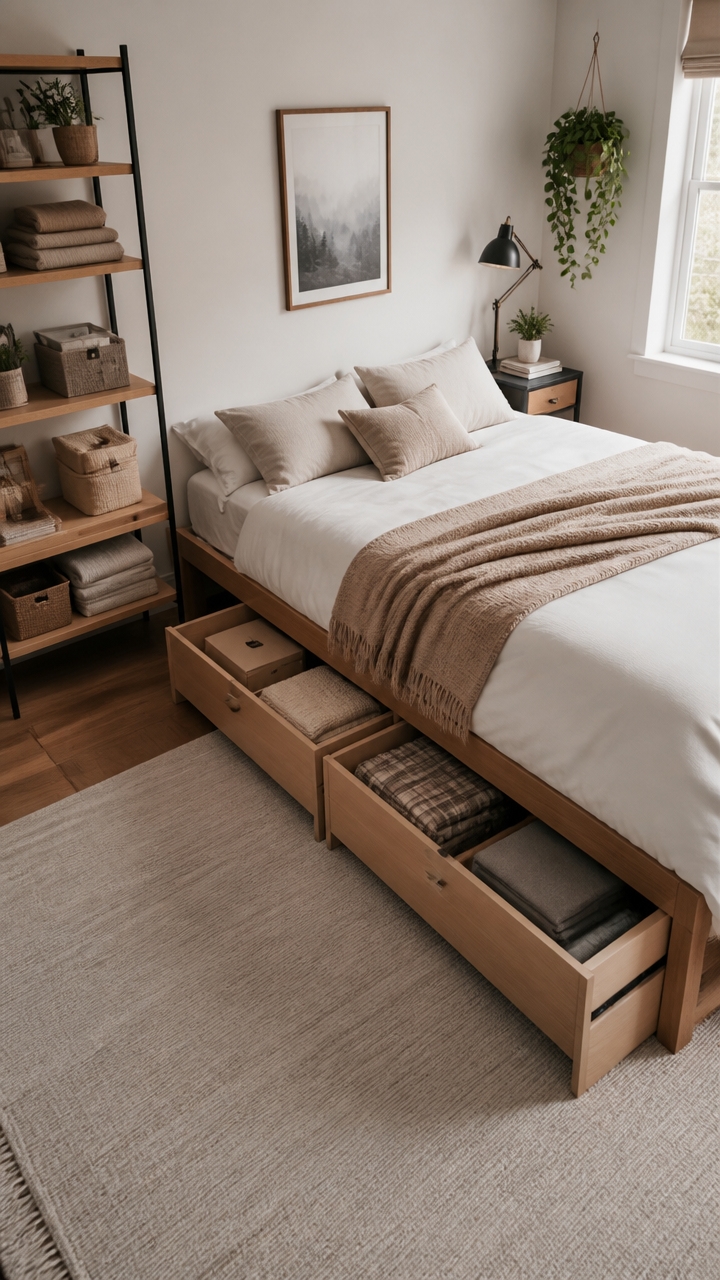
To maximize the available space in a small bedroom, utilizing under-bed storage is one of the most effective solutions. Under-bed drawers and bins can hide seasonal clothing, shoes, linens, or other bulky items, keeping them out of sight but easily accessible. These storage containers come in various sizes and materials, such as plastic bins, fabric drawers, or wooden chests, allowing you to choose options that suit your room’s aesthetic and storage needs.
Installing or using pre-designed storage under a bed frame with built-in drawers or hollow bases can further streamline organization. These integrated solutions eliminate the need for additional furniture, saving valuable floor space. Loft beds with built-in or underneath storage compartments are especially useful in small bedrooms, as they elevate the sleeping area to free up additional room below for storage, workspace, or seating.
Lift-up beds with hidden compartments provide another space-saving option. The mattress lifts to reveal a storage cavity where bulky items like blankets, off-season clothing, or rarely used linens can be stored discreetly and securely. When choosing under-bed storage solutions, consider accessibility, lift-up or rolling bins offer easier access, while drawers may work well for smaller items.
Positioning storage containers under loft or high-bed frames, or beneath elevated sleeping areas, takes advantage of vertical space that would otherwise go wasted. This approach keeps clutter out of sight while maintaining a clean and open floor plan. Proper organization, labeled containers, and thoughtful placement can lead to a more functional, less crowded room, even in the tight quarters of a small home.
Use Wall-Mounted Solutions for Kitchen and Bathroom Storage
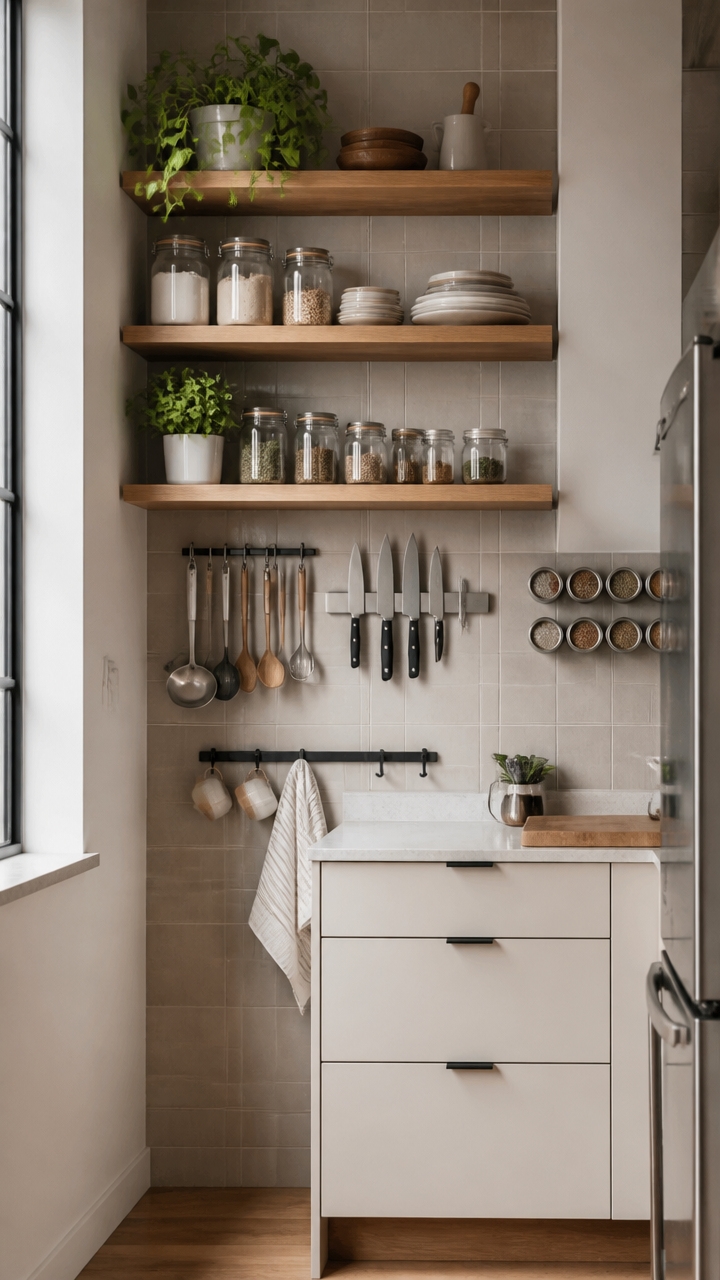
Implementing wall-mounted shelves in kitchens and bathrooms is an effective way to maximize vertical space. In the kitchen, install open or closed shelving above countertops or along empty wall sections to store spices, dishes, or small appliances. Floating cabinets or open racks keep essentials within reach while freeing up counter space for food prep and other activities. In bathrooms, wall-mounted shelving provides designated spots for toiletries, skincare products, and cleaning supplies, reducing clutter on sinks and vanities. Recessed or floating cabinets further enhance a sleek look while hiding less-attractive items and making the space feel more open. When choosing materials, consider moisture-resistant options like sealed wood, metal, or plastic for bathrooms to prevent corrosion. Proper placement is key; position shelves at convenient heights for accessibility and avoid overloading them to maintain safety and longevity. Wall-mounted storage solutions not only optimize space but also add a modern, tidy aesthetic to small kitchens and bathrooms.
Add Narrow Shelves and Tiered Racks in Entryways
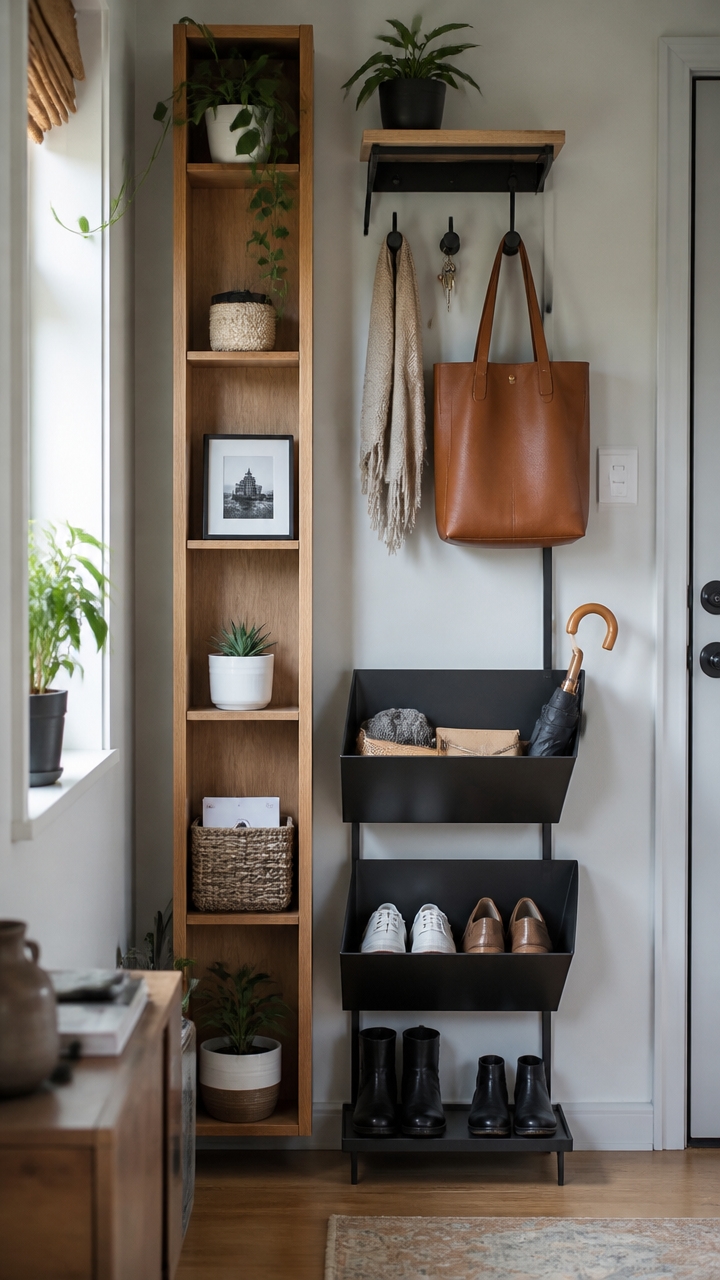
In small entry areas, every inch of space counts. Installing narrow shelves, such as Ikea’s Hemnes or similar slim units, provides a discreet spot to keep shoes, keys, or mail organized without overwhelming the space. These slender storage solutions easily fit along walls or in tight corners, making use of vertical space without sacrificing walkability.
Multi-tiered racks like Yamazaki’s 6-tier design are excellent for maximizing vertical storage. Position these racks against a wall or near the door to store multiple pairs of shoes and accessories efficiently. Their height allows you to keep footwear off the floor and neatly arranged, reducing clutter and making it easier to find what you need quickly.
In small entryways, utilizing vertical storage not only keeps things tidy but also preserves valuable floor space. Choose slim profiles for shelves and racks that complement your decor style, whether modern or traditional, and guarantee they are securely anchored to avoid tipping. These solutions offer a simple yet effective way to organize your entryway in compact living environments.
Transform Corners With Corner Shelves and Lazy Susans
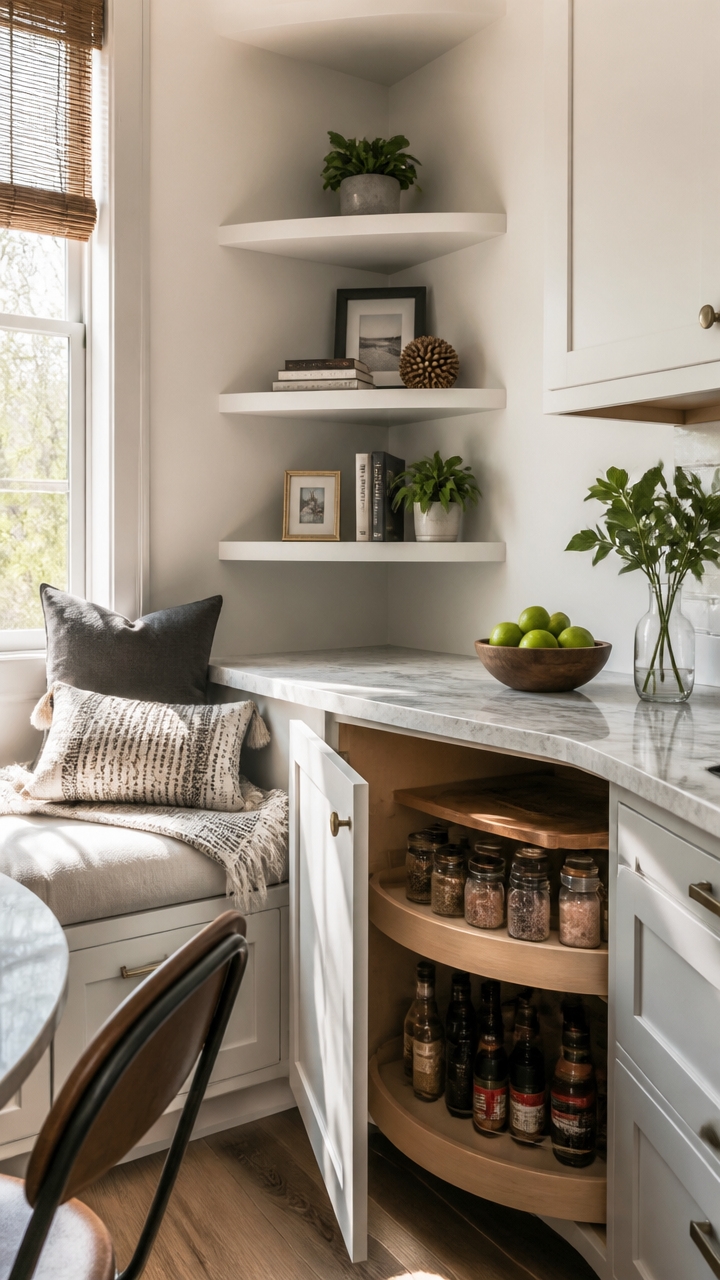
Utilizing corner spaces efficiently can notably enhance storage in small homes. Corner shelves made of wood, metal, or even sturdy plastic can be installed in awkward wall angles, transforming unused corners into practical storage areas. These shelves can hold a variety of items such as books, decorative pieces, or kitchen essentials, keeping surfaces clear and reducing clutter. When choosing corner shelves, consider their size and weight capacity to match your storage needs and guarantee they fit proportionally within the space. Installing multiple shelves at different heights can maximize vertical storage without overwhelming the room’s aesthetic.
Lazy Susans are particularly effective in corner cabinets or pantries, allowing easy access to items stored deep inside. By rotating smoothly, they eliminate the need to dig through cluttered shelves, making it simple to find and retrieve items quickly. Lazy Susans work well for spices, canned goods, or small kitchen tools, and can be customized in size and material to match your decor style. Combining corner shelves with Lazy Susans creates a versatile, space-efficient storage solution ideal for tight spaces, small kitchens, or modest dining areas, helping you make the most of every inch of your home.
Create Clear Zones With Open-Concept Layouts and Dividers
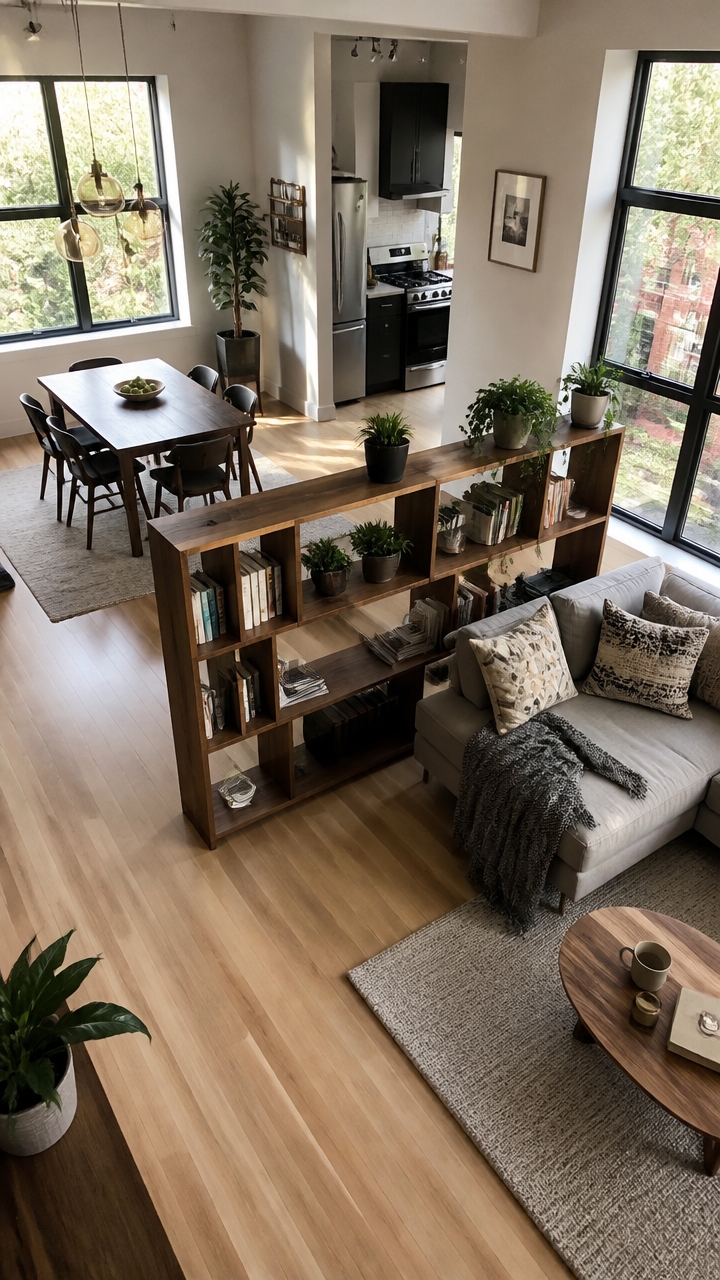
Designing a small home with an open-concept layout can considerably enhance the sense of space and flow. By removing unnecessary walls between rooms, you create a seamless shift from one area to another, making the entire space feel larger and more connected. To define individual zones within this open environment, incorporate strategic room dividers such as open bookshelves, elegant curtains, or sliding panels. These elements offer visual separation without closing off the space completely, maintaining the airy feel. Arrange furniture thoughtfully, placing a sectional sofa to delineate the living area from the dining zone, for example, further clarifies each space naturally. Combining these approaches creates distinct, functional zones while preserving the open, spacious atmosphere essential for small-home living.
Incorporate Multi-Use Furniture Like Murphy Beds and Folding Tables
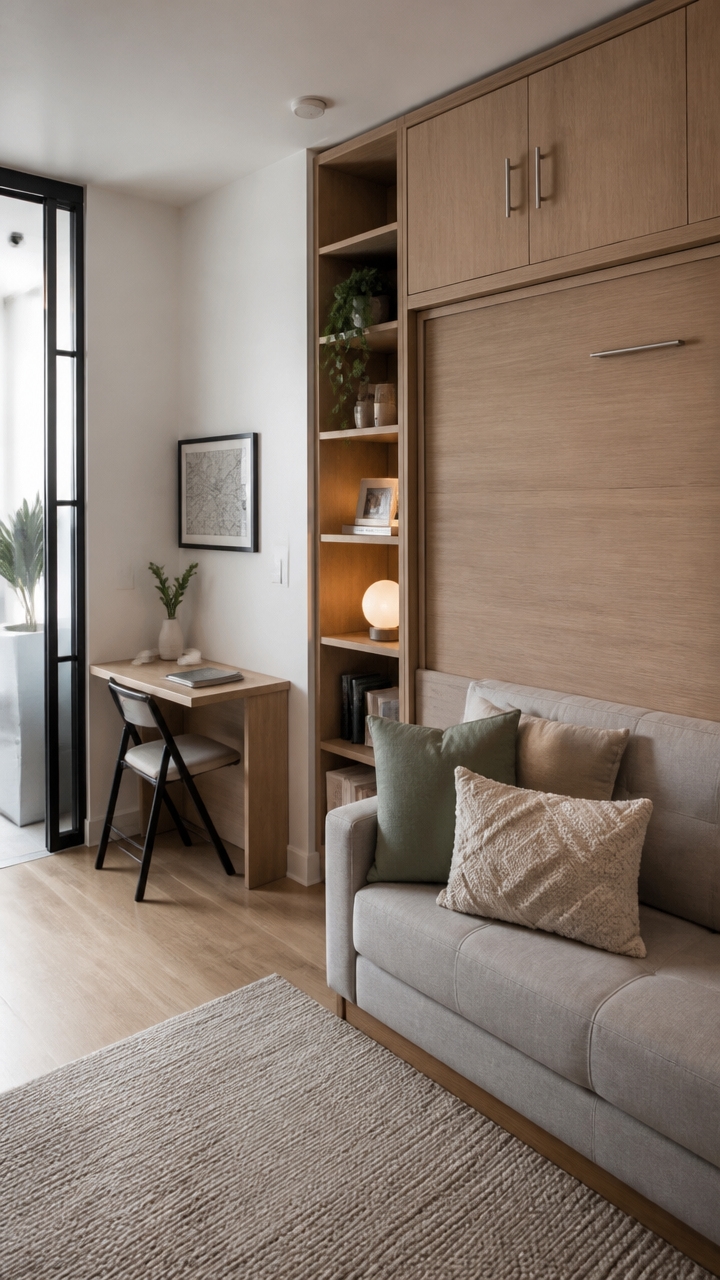
Incorporating multi-use furniture like Murphy beds and folding tables is a highly effective way to maximize small living spaces. Murphy beds, which fold up into the wall or a cabinet, instantly free up floor space during the day, making rooms feel larger and more open. They can be customized with integrated desks or storage units, allowing you to combine sleeping and work areas seamlessly. When not in use, these beds tuck away neatly, leaving the room adaptable for other activities.
Folding tables are similarly practical; they can be expanded for meals or work sessions and collapsed when not needed, freeing up valuable floor space. These tables work well in dining areas or home offices, adapting quickly to your needs. To enhance their functionality, choose designs with built-in storage or wheels for easy movement and concealment.
Multi-functional furniture often includes built-in drawers, shelves, or compartments, helping to keep a small space organized and clutter-free. Proper placement of these pieces, such as positioning a Murphy bed along a wall with sufficient clearance or storing a fold-down desk against a seating area, optimizes functionality without sacrificing style. Selecting furniture with a cohesive look and durable materials ensures that these versatile pieces support both your lifestyle and your decor.
Enhance Small Space Perception With Light Colors and Reflective Surfaces
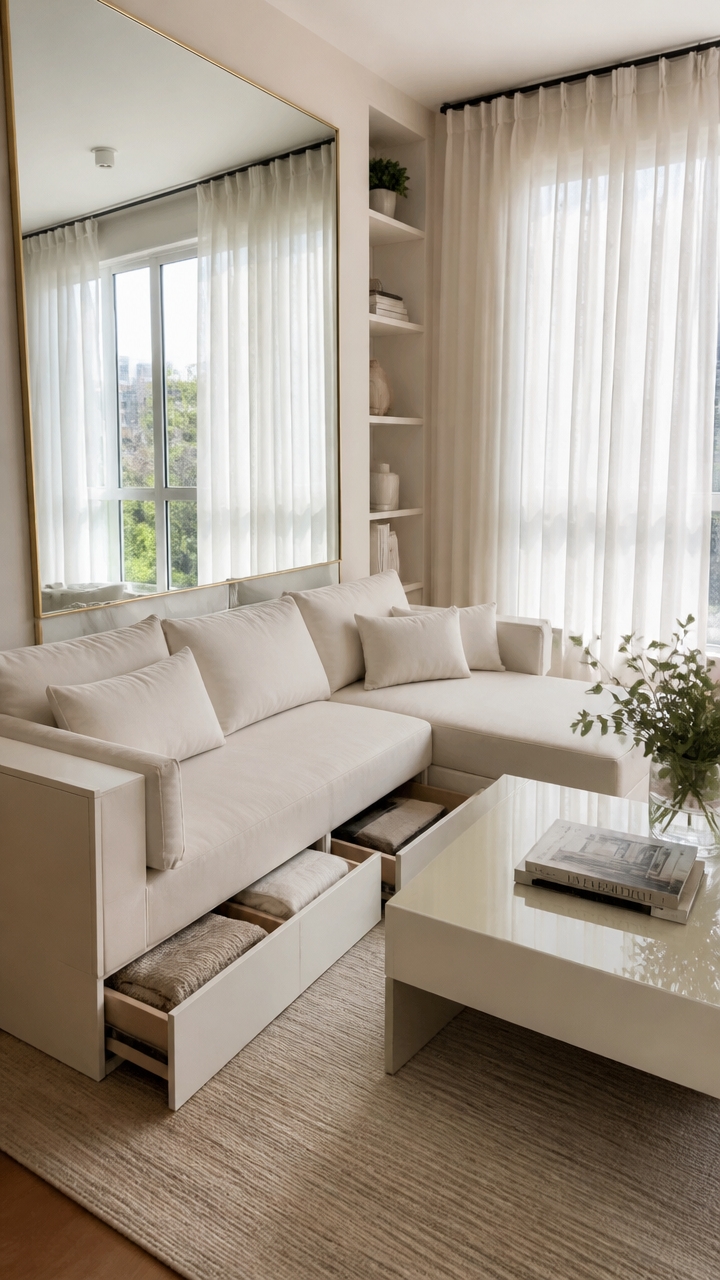
Using light colors such as white, beige, and pastel shades can considerably improve the way a small room feels. These shades reflect both natural and artificial light, creating an open and airy atmosphere that visually expands the space. Incorporating these hues on walls, ceilings, and large furniture pieces helps reduce the sense of confinement and makes the room appear larger and more inviting.
Complementing light colors with reflective surfaces further amplifies this effect. Mirrors placed opposite windows bounce natural light throughout the room, effectively doubling the perceived brightness and creating the illusion of a larger area. Gloss-finish furniture and decor items, like glass tabletop surfaces or lacquered cabinets, reflect light and add a sleek, spacious feel without cluttering the visual space.
In addition, using light-colored curtains, rugs, and accessories ensures consistent brightness and prevents shadowed corners that can make a space feel cramped. When selecting reflective finishes, consider proportions and placement carefully so that the reflections enhance the overall openness without creating visual clutter. Combining these strategies can transform a small room into a bright, spacious sanctuary that feels much larger than its physical dimensions.
Use External Storage for Seasonal and Less-Used Items
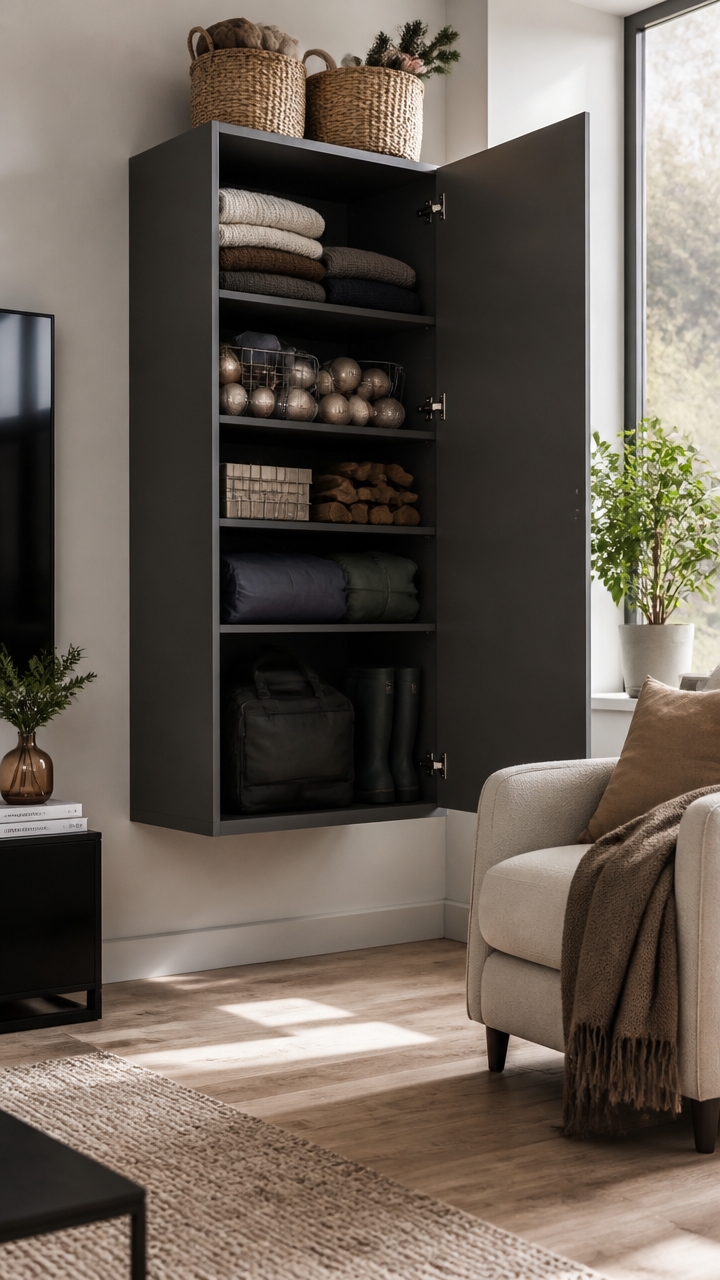
Utilizing external storage units can considerably declutter your small home by providing a dedicated space for seasonal and infrequently used belongings. Store holiday decorations, outdoor equipment, or bulky items like camping gear in nearby self-storage facilities or external containers. This approach frees up valuable space inside your home, making daily living areas more functional and inviting. When choosing external storage, consider organization and labeling systems to easily locate items when needed. Place storage units in accessible yet out-of-the-way locations, such as in a garage, shed, or rented storage facility, to keep your home tidy without sacrificing storage capacity. Properly organizing and maintaining labels ensures that seasonal items are easy to find when the time comes to celebrate or enjoy outdoor activities.
Get Creative With Storage in Windowsills and Ceilings
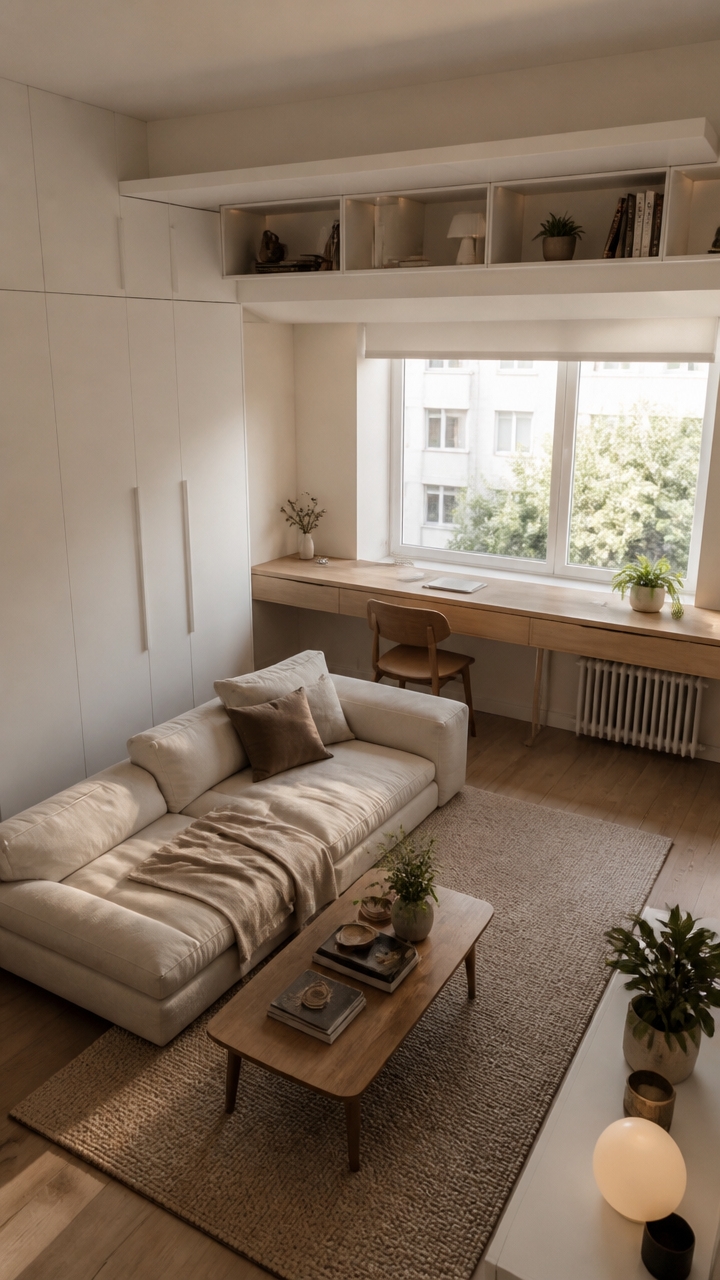
Utilizing windowsills offers a practical way to keep your small space organized and visually appealing. You can place small potted plants, books, or decorative items on the sill to free up surface space elsewhere. This not only adds a touch of greenery or personality to your room but also makes good use of an often-overlooked area. When arranging items, consider the size and weight to maintain stability and safety. Brightly colored or uniform containers can help create a tidy, cohesive look.
Installing hanging baskets or wall-mounted planters beneath windows leverages vertical space and keeps your surfaces clear. These are especially useful for growing herbs or small plants, and they add greenery without cluttering the floor. Make sure to select moisture-resistant materials if placed in kitchens or bathrooms. You can also use hooks or brackets to hold lightweight storage containers or tools, freeing up counters and shelves.
Ceiling-mounted racks or hooks maximize vertical storage and are perfect for lightweight items like pots, utensils, or seasonal decor. Position them overhead to keep often-used items within reach but out of the way. Floating shelves near the ceiling create extra storage for seldom-used belongings such as holiday decorations or extra linens, helping to keep everyday items accessible without crowding your main surfaces. When installing these, guarantee they are securely anchored to handle the weight.
Over-the-door or under-ceiling storage solutions are also excellent options for hidden storage, perfect for cleaning supplies, craft materials, or household tools. Use over-the-door racks or hooks to utilize the full potential of often-neglected areas, making your entire space more functional.
Using windowsills and ceilings in creative ways transforms underutilized areas into functional storage zones that help your small home stay organized without sacrificing style.
Plan Kitchen Counter Space With Extending and Modular Surfaces
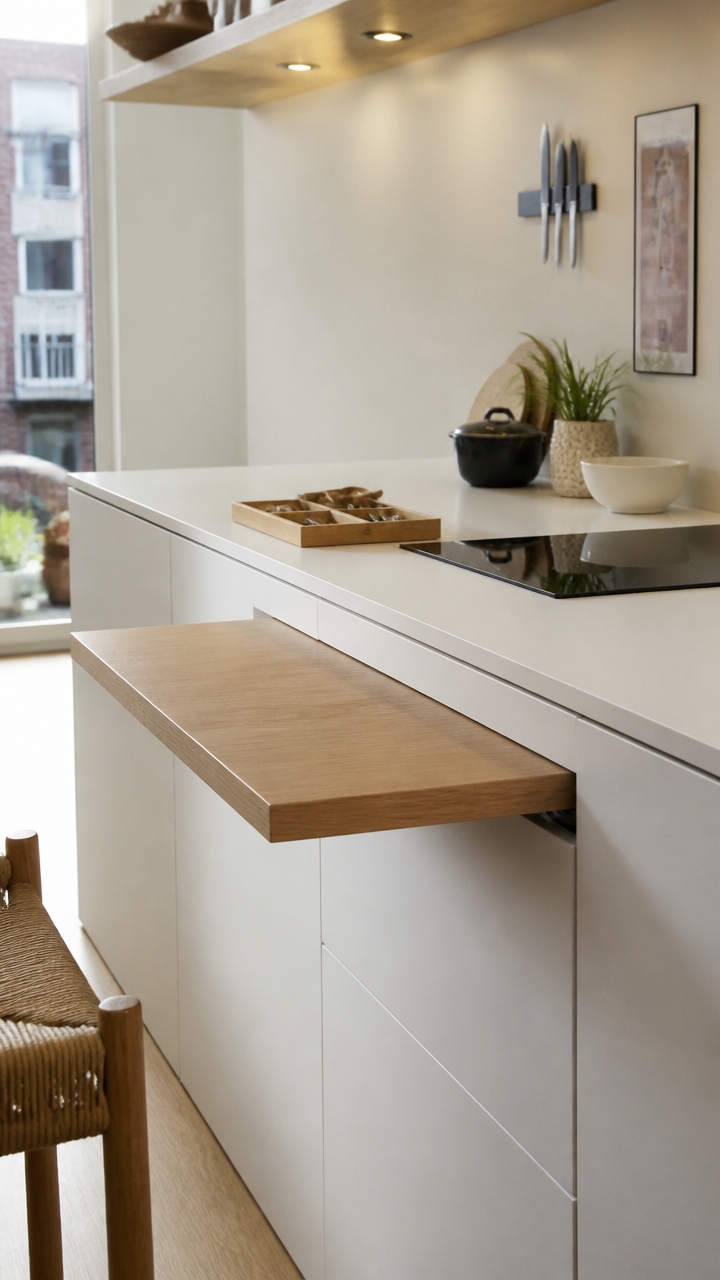
Extending kitchen countertops with built-in fold-out surfaces offers a clever solution for maximizing limited space. These surfaces are designed to fold down or tuck away when not in use, providing extra workspace only when needed. To implement this, integrate fold-out sections into your existing countertops along the edges or as extensions that hinge outward. They can be made from durable materials like wood, laminate, or composite, and should match or complement your current countertops for a seamless look. When folded down, these surfaces create additional prep areas without cluttering your kitchen, making them ideal for small kitchens or shared spaces. Confirm they are securely mounted and easy to access, so they can be quickly deployed during busy cooking times or special occasions. This solution offers flexibility, efficient space utilization, and a clean aesthetic when the extra surface is folded away, keeping your kitchen functional and organized.
Use Portable and Collapsible Furniture for Flexibility
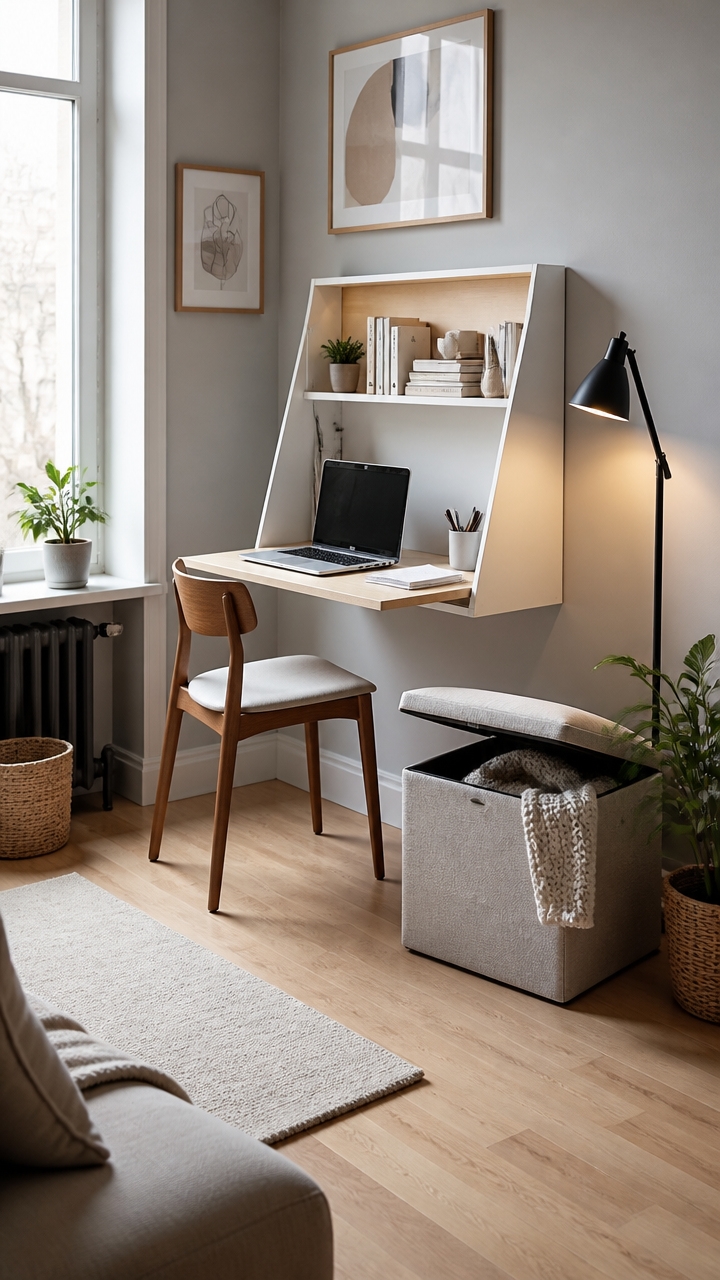
In small living spaces, adaptability is key, and portable or collapsible furniture offers a versatile solution. Items like rolling carts, portable islands, or wheeled kitchen carts can be moved to where they’re needed, providing extra prep or dining space when required and easily tucked away afterward to maintain an open feel. Collapsible chairs and tables can be brought out for gatherings and stored compactly when not in use, freeing up valuable floor space. These pieces often come in sleek, lightweight designs that can blend seamlessly with your decor. When choosing such furniture, consider the size and proportion to guarantee they fit comfortably within your space and are easy to move around. Materials like foldable metal or lightweight wood offer durability without adding bulk, while storage options like under-bed or closet shelving can keep collapsible items readily accessible yet out of sight. Embracing portable and collapsible furniture enables you to maximize functionality without sacrificing style or comfort in a small home.
Maintain a Clutter-Free Home With Daily Organization Habits
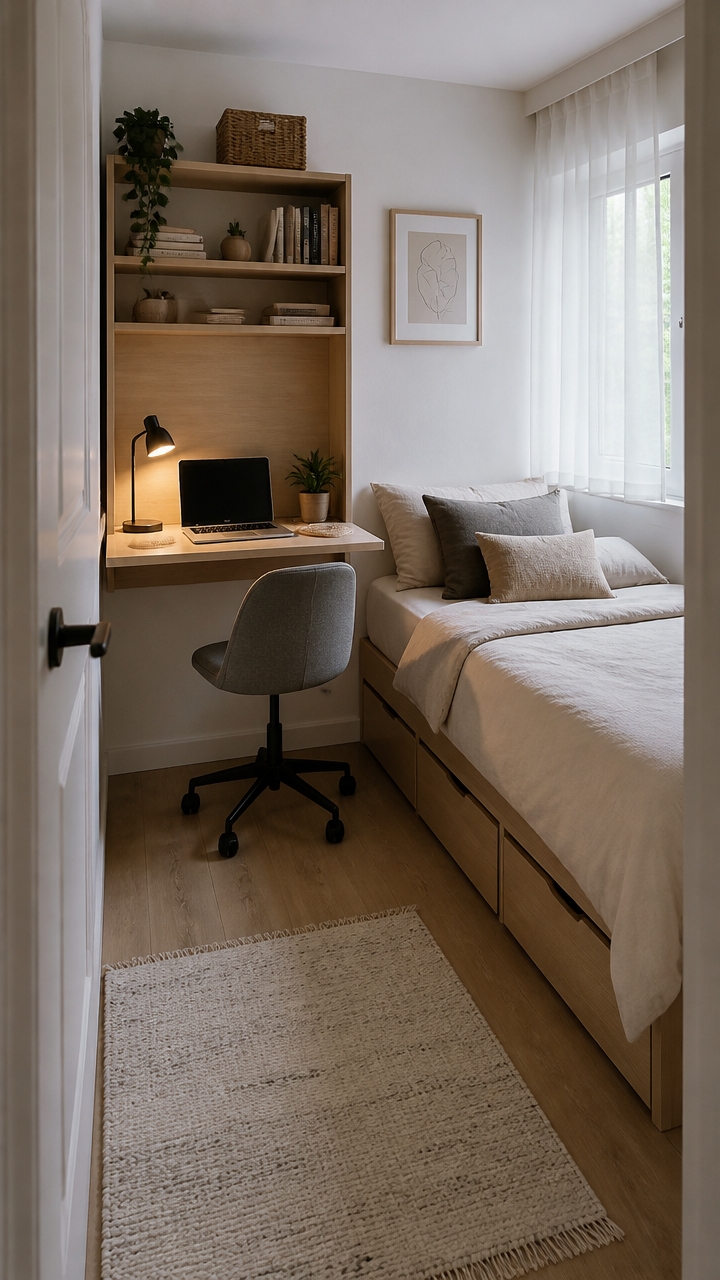
Maintain a clutter-free home with daily organization habits by dedicating just five minutes each day to tidying up. Set a specific time, perhaps after dinner or before bed, and use this time to quickly return items to their designated spots. Keeping a regular cycle prevents clutter from building up, making cleaning feel more manageable and less overwhelming. Consistently putting things away also helps you become more aware of what you have, encouraging mindful consumption and reducing impulse clutter. Over time, these small daily efforts create a tidy, peaceful environment that feels inviting and functional, even in a small space.
Find Inspiration and Keep Improving Your Small Space
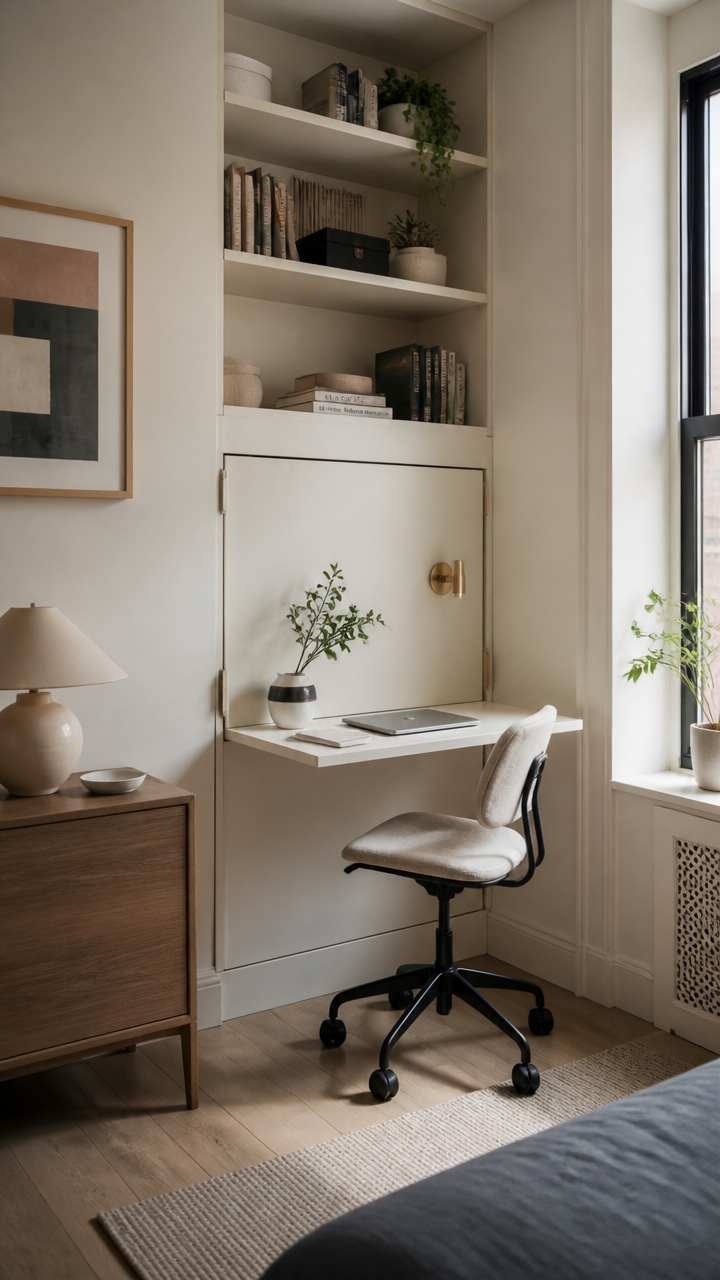
Drawing inspiration from multiple sources is essential for optimizing a small home. Regularly browsing design websites like archdigest.com can spark fresh ideas for transforming tight spaces into functional and stylish environments. Pay attention to before-and-after photos that showcase clever solutions, such as wall-mounted desks, fold-away beds, or vertical storage, to see how similar challenges have been addressed. These real-life examples help identify strategies that you can adapt to your own space, encouraging continuous improvement. Joining online communities or social media groups dedicated to small living provides a platform to exchange ideas, ask for advice, and stay updated on trending solutions. Ultimately, keep experimenting with multi-purpose furniture, like ottomans with hidden storage or extendable tables, and utilize hidden compartments and vertical shelving to maximize utility while keeping clutter out of sight. Staying inspired and open to new ideas ensures your small space remains both functional and welcoming.
Final Takeaways
In your snug sanctuary, embracing these innovative space-saving strategies, from sleek, foldaway furniture to discreet joinery solutions, transforms your home into a bijou, cocooning haven. Remarkably, a study by the National Small Home Institute found that well-optimized spaces boost perceived square footage by up to 20%, an elegant reminder that thoughtful design can make a modest footprint feel expansive. Trust in design principles, consider high-quality materials like “Farrow & Ball’s” “Ammonite” for walls, and remember, a lightly curated colourway can turn clutter into calm.
- 20 Small Home Space Saving Ideas That Transform Any Space - September 28, 2026
- 23 Small Guest Room Ideas Maximize Space Designers Swear By - September 28, 2026
- 22 Small Space Apartment Ideas That Make a Big Difference - September 27, 2026