

A square table wastes the corners of a tiny dining room. Round tables fix that problem with one smooth curve. These round table ideas for small dining rooms start with honest measuring.
Here are 54 picks covering sizes, bases, leaves and layouts. Most tables here cost between $120 and $600. Measure your room first, then pick the idea that fits.
1. Tape the Table Size on the Floor
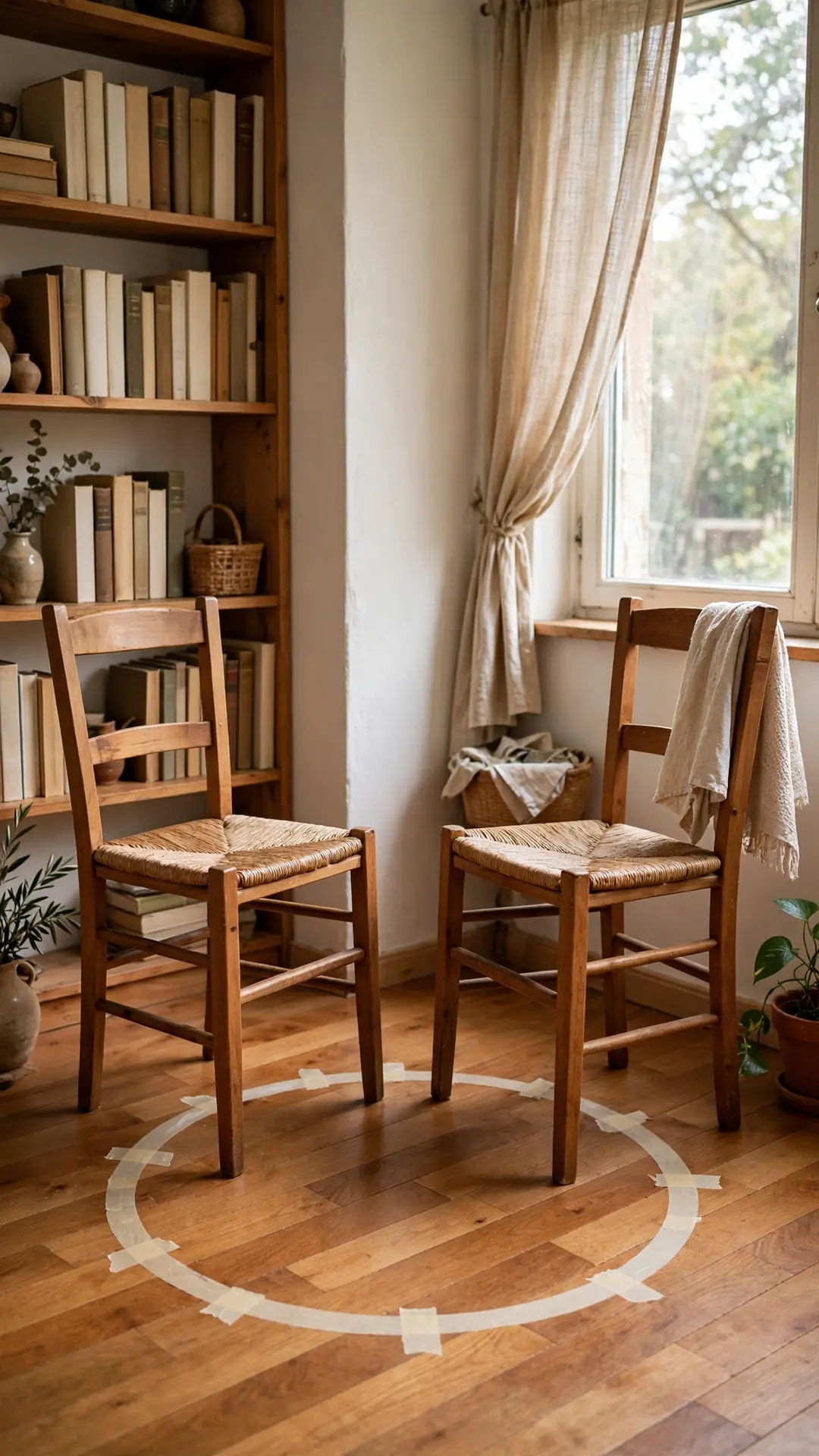
Guessing a table size is how tiny rooms end up crowded. A tape outline on the floor shows the true footprint in minutes. You also see the chair space before you spend anything.
How to do it:
- Mark a 42 inch circle with painter tape on the floor.
- Pull chairs up to the line and sit in each one.
- Leave 24 inches behind chairs for pulling out.
- Walk past the outline with a laundry basket in hand.
- Shrink to 36 inches if the walk path feels tight.
Best for: Anyone shopping online without a showroom nearby.
Budget: Under $10
Quick tip: Leave the tape down for two days of real life.
2. Pick a 36 Inch Table for Two

The simplest round table ideas for small dining rooms start at 36 inches. That size seats two people with full place settings. It also fits nooks where a bigger top would crowd the walls.
How to do it:
- Allow 24 inches of table edge per person.
- Pick a top 29 to 30 inches high for standard chairs.
- Keep the base under 24 inches wide for knee room.
- Set two placemats to check elbow space before buying.
Best for: Couples in studios and small apartments.
Budget: $120 to $300
Quick tip: A 36 inch top still holds a serving bowl in the center.
3. Choose a 42 Inch Table for Four

A 42 inch round seats four people without crowding plates. Each diner gets about 33 inches of edge space. For deeper measuring help, follow how to choose the right dining table from Houzz.
How to do it:
- Plan 36 inches from the table edge to the wall.
- Give each chair 24 inches of width at the table.
- Choose a top about 1 inch thick for daily wear.
- Test four settings with your largest dinner plates.
Best for: Small families and regular small dinner parties.
Budget: $200 to $450
Quick tip: Four chairs fit best when the base is a pedestal.
4. Use a Pedestal Base for Legroom

Many round table ideas for small dining rooms rely on one central pedestal. A single base frees every seat from table legs. Chairs slide in from any angle around the curve.
How to do it:
- Pick a base at least 22 inches across for balance.
- Check the top for wobble with a full water jug.
- Keep chair legs inside the base footprint when tucked.
- Choose metal or solid wood for the longest life.
Best for: Homes that seat guests on all sides.
Budget: $250 to $500
Quick tip: A wider base stops the top tipping at the edge.
5. Swap to Armless Chairs and Save Inches
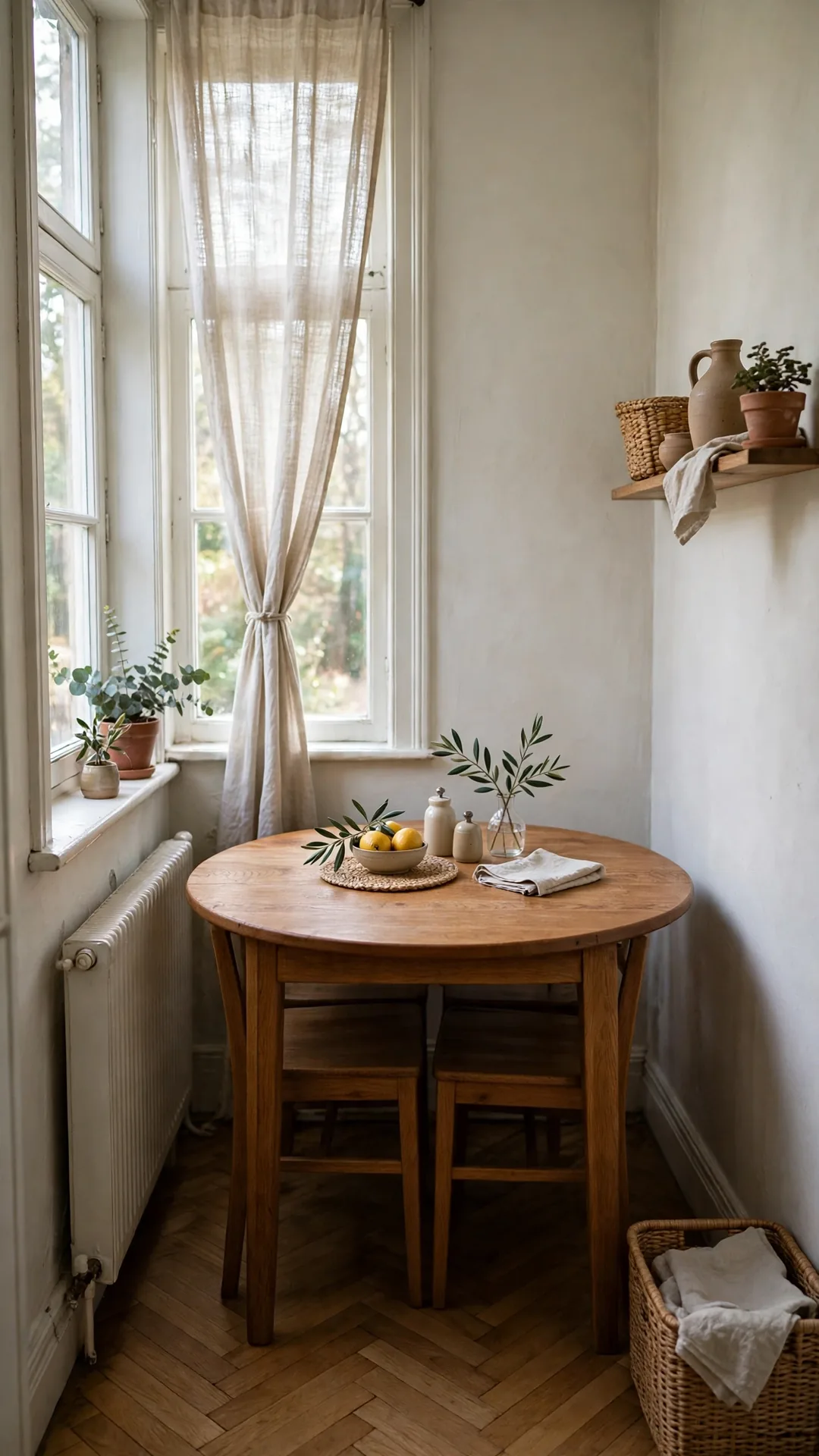
Arms add width and stop chairs tucking under the top. Armless chairs slide fully in and free the walk path. The room reads calmer with that clear floor ring.
How to do it:
- Pick chairs 16 to 18 inches wide at the seat.
- Check the chair back clears the table edge when pushed in.
- Aim for a seat height of 18 inches.
- Choose wipe clean seats for daily family meals.
Best for: Rooms where chairs block a doorway when out.
Budget: $60 to $150 per chair
Quick tip: Four armless chairs can save 8 inches of width.
6. Push a Round Table Into a Corner
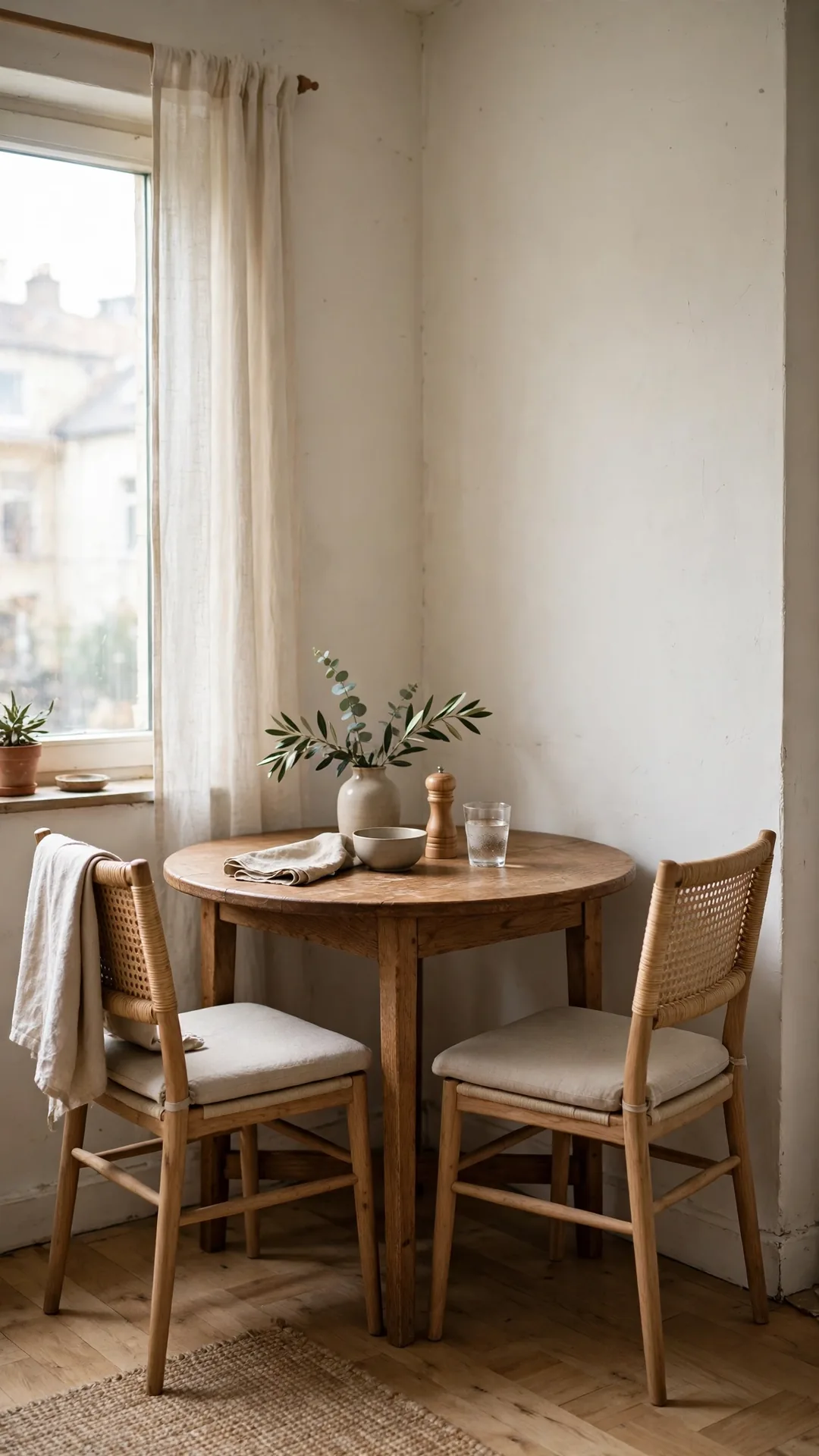
Corner placement anchors many round table ideas for small dining rooms. The curve leaves the corner gap small and easy to ignore. Two chairs cover the open sides for daily meals.
How to do it:
- Leave 6 inches between the table edge and each wall.
- Angle the nearest chair toward the room for entry.
- Add two spare chairs only when guests arrive.
- Keep the corner behind free of tall plants.
Best for: Eat in kitchens and studio corners.
Budget: $150 to $350
Quick tip: A corner spot suits a 36 or 42 inch top best.
7. Center the Table on a Round Rug
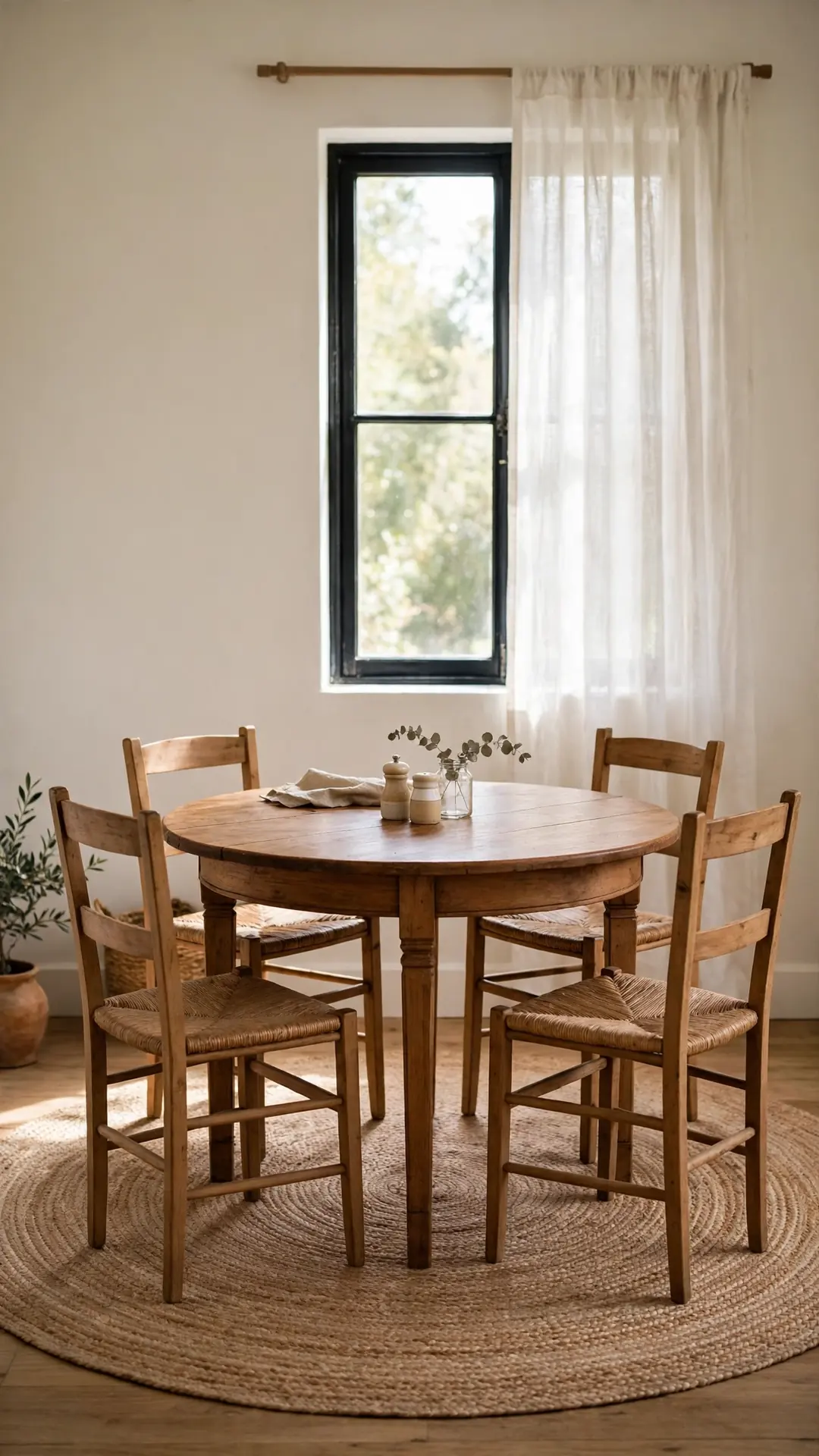
A round rug under a round table doubles the soft curve. The rug edge gives the zone a clear border. Chairs stay on the rug even when pulled out.
How to do it:
- Pick a rug 24 inches wider than the table top.
- A 42 inch table pairs well with a 66 inch rug.
- Choose a low pile so chair legs slide with ease.
- Center the table on the rug before setting chairs.
Best for: Open plan rooms that need a defined dining zone.
Budget: $60 to $180
Quick tip: Flat weave rugs handle crumbs and spills best.
8. Pick a Glass Top for Open Sight Lines
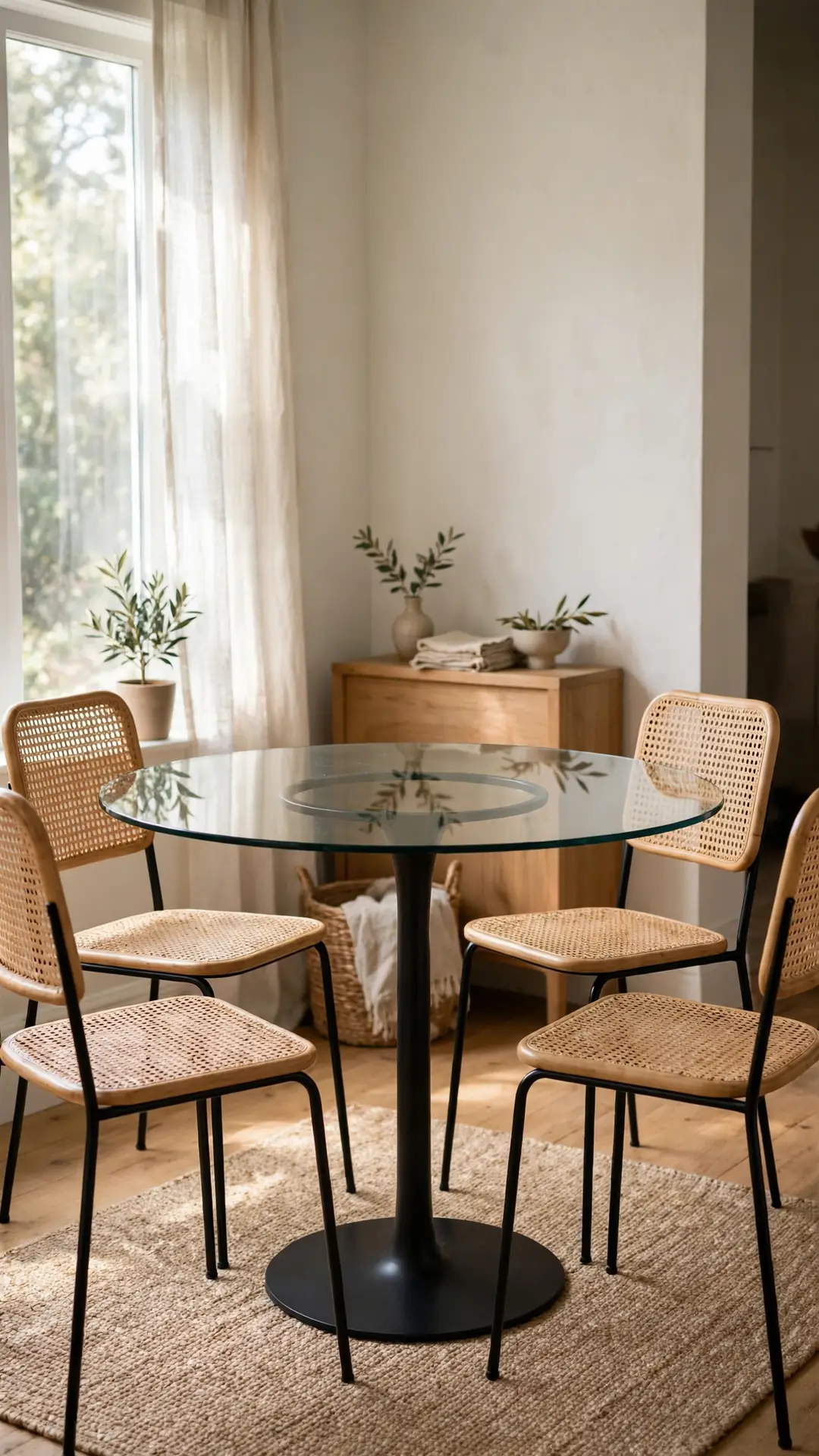
Glass keeps the floor visible through the tabletop. Your eye reads the whole room, so it feels bigger. A glass top also wipes clean in seconds.
How to do it:
- Choose tempered glass at least 3/8 inch thick.
- Pick a beveled or polished edge for safety.
- Set the glass on a pedestal or four leg base.
- Use felt pads between glass and base to stop slips.
Best for: Dark rooms with limited window light.
Budget: $200 to $500
Quick tip: Keep a microfiber cloth nearby for fingerprints. Wipe it down after meals each day.
9. Choose a Tulip Pedestal for Clean Lines
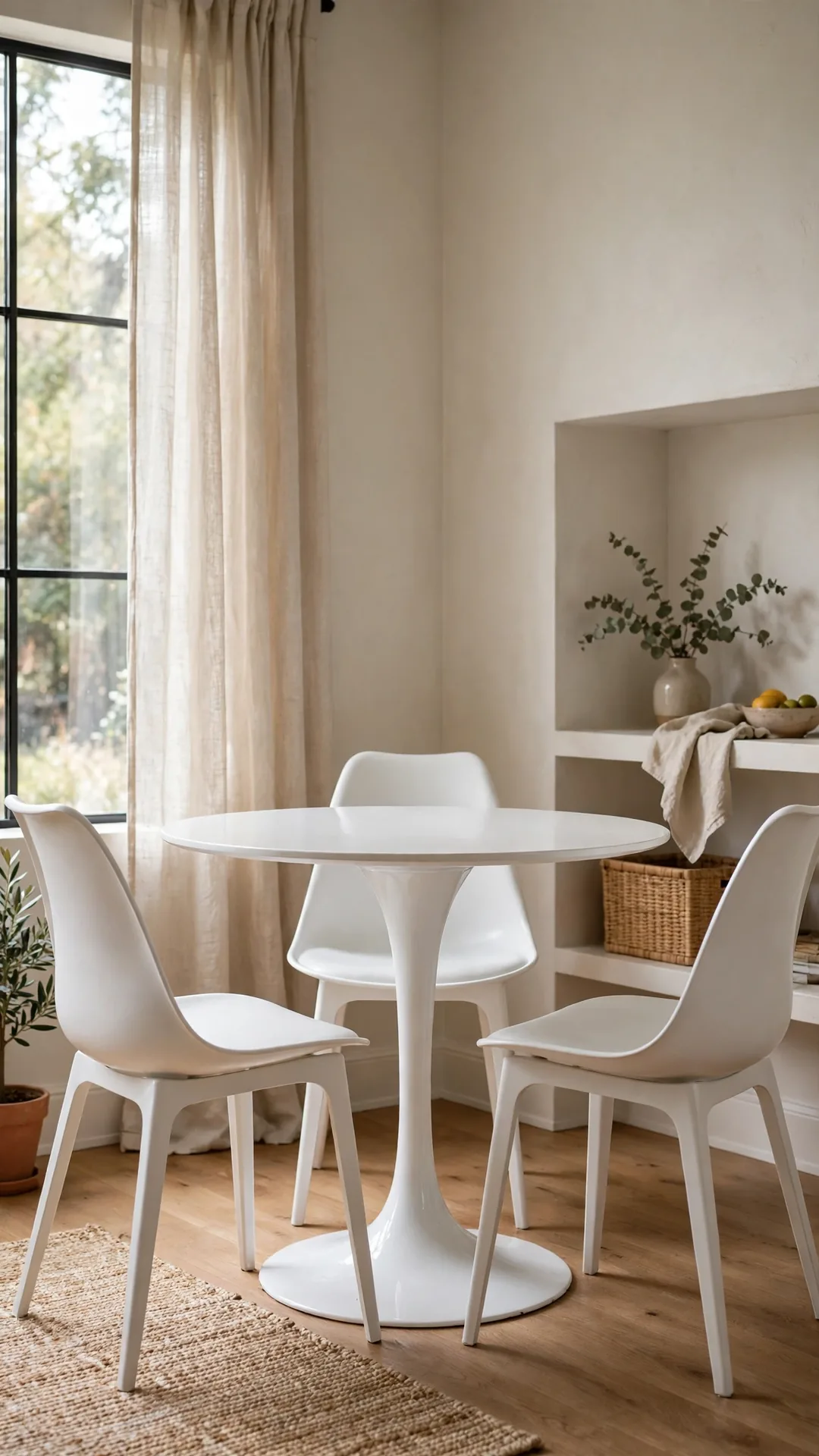
Tulip bases appear in many round table ideas for small dining rooms. The flared single stem leaves the floor ring fully open. The shape suits modern and mid century rooms alike.
How to do it:
- Pick a weighted base so the top stays steady.
- Choose a 42 inch top for four diners.
- Pair with molded or upholstered chairs for comfort.
- Wipe the stem weekly since dust shows on gloss.
Best for: Modern apartments with clean lines.
Budget: $300 to $650
Quick tip: A matte stem finish hides scuffs from shoes.
10. Pick a Chunky Pedestal for Steady Daily Use

A thick turned pedestal suits farmhouse and classic rooms. Its wide foot keeps big tops steady at the edge. The solid build handles daily family use well.
How to do it:
- Look for a base foot at least 24 inches wide.
- Choose solid wood or a wood and metal mix.
- Test edge pressure with both hands before buying.
- Keep the finish sealed against drink rings.
Best for: Family homes that host often.
Budget: $350 to $700
Quick tip: Felt pads under the foot protect wood floors. Check the pads each season for wear.
11. Set Four Legs Near the Table Edge

Some round table ideas for small dining rooms keep four classic legs. Legs set near the edge leave the center fully open. Chairs tuck between the legs without knocks.
How to do it:
- Check each leg gap fits one chair with room.
- Pick legs that splay slightly for a steady stance.
- Avoid thick aprons that cut into thigh space.
- Keep the apron at least 25 inches off the floor.
Best for: Traditional rooms and wood lovers.
Budget: $200 to $450
Quick tip: Angled legs give knees more room than straight ones.
12. Try a Tripod Base in Tight Corners
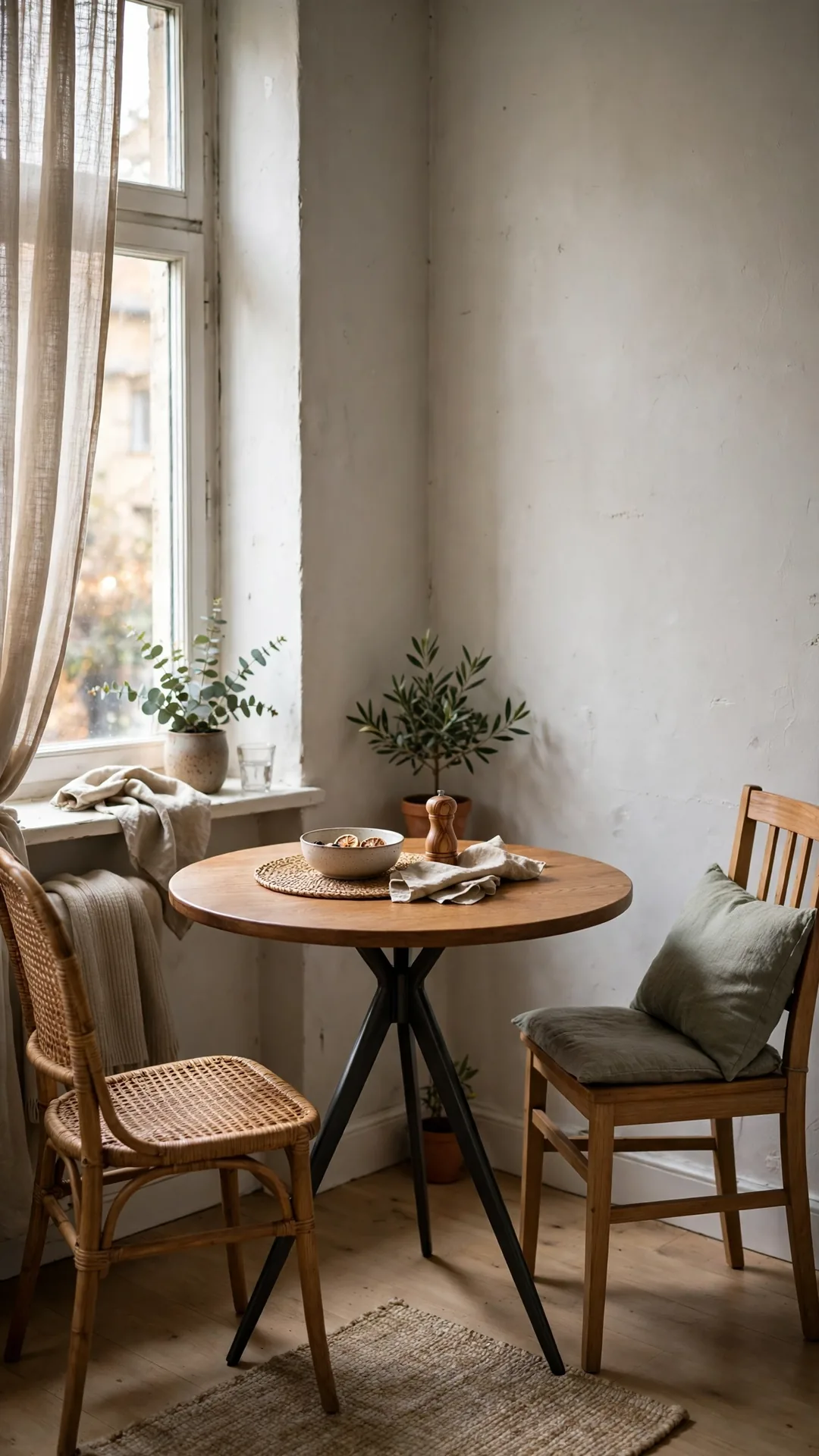
Tripod bases turn up in round table ideas for small dining rooms often. Three feet steady the top on uneven floors. The open base suits tight corners and nooks.
How to do it:
- Choose a 36 to 42 inch top for a tripod base.
- Check each foot sits flat with no rocking.
- Keep chair legs clear of the three feet.
- Pick metal feet for the slimmest footprint.
Best for: Older homes with slightly uneven floors.
Budget: $220 to $480
Quick tip: Three feet never wobble on tile the way four can.
13. Wipe Clean Fast With a Stone Top

A stone or stone look top shrugs off heat and spills. Hot pans and red wine leave no marks behind. Easy clean surfaces matter with pets too, as shown in these DIY bedroom ideas for small rooms with cats.
How to do it:
- Seal natural stone once a year against stains.
- Pick a 42 inch top to keep the weight sensible.
- Use trivets anyway for very hot cast iron pans.
- Wipe spills fast since acids can dull the finish.
Best for: Homes with kids, cats and daily cooking.
Budget: $350 to $800
Quick tip: Quartz look tops skip the sealing and the worry.
14. Choose Solid Wood for Daily Wear
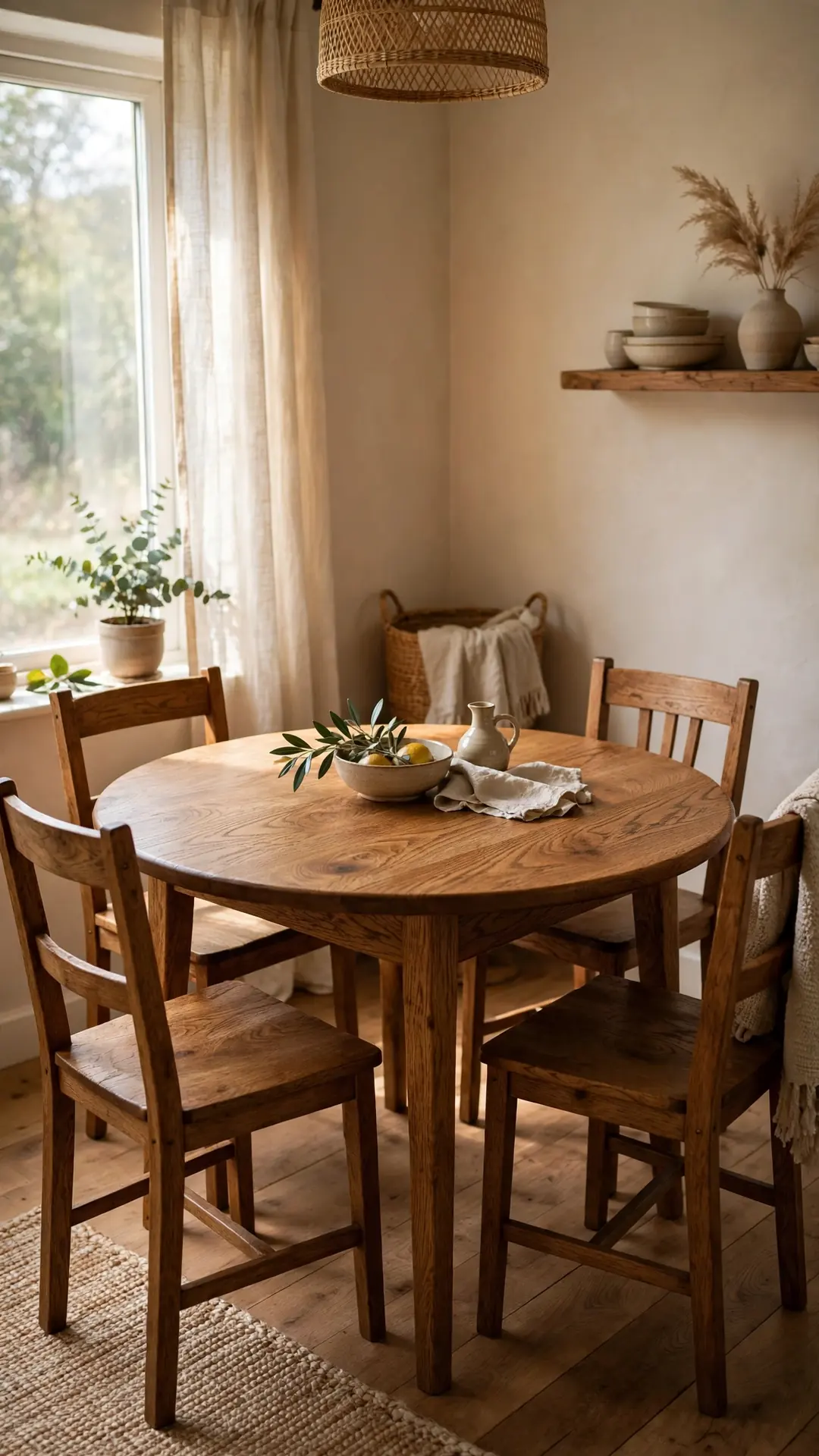
Solid wood tops handle dents and can be sanded back. Oak, acacia and rubberwood suit most budgets. The grain adds warmth to plain small rooms.
How to do it:
- Pick a top 1 inch thick or more for strength.
- Choose a hard wearing oil or matte lacquer finish.
- Keep the table out of direct sun to avoid fading.
- Sand and re oil scratches once a year.
Best for: Buyers who want one table for many years.
Budget: $300 to $700
Quick tip: Round placemats protect the center from hot dishes.
15. Brighten a Dark Room With White
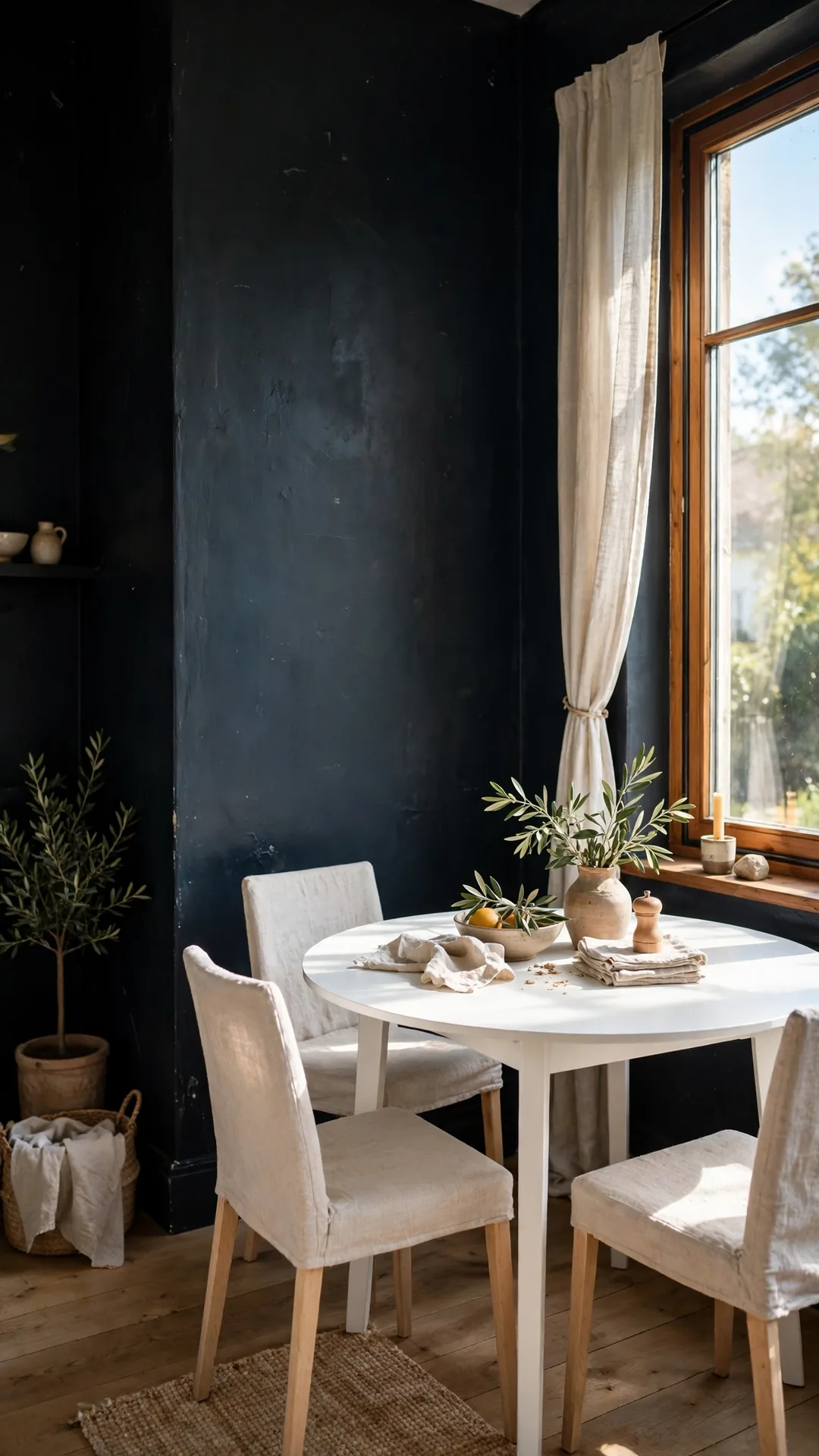
White tops lead plenty of round table ideas for small dining rooms. The pale surface bounces window light around the room. White also pairs with any chair color you own.
How to do it:
- Choose a satin finish that wipes clean with ease.
- Pair with light wood legs for a soft look.
- Use placemats daily since white shows every crumb.
- Avoid bleach cleaners that yellow the finish.
Best for: North facing rooms and low light corners.
Budget: $180 to $420
Quick tip: A white top makes a 42 inch table look smaller.
16. Add Contrast With a Black Tabletop

A black round top adds contrast in a pale room. The dark circle grounds the dining zone at once. Keep the rest of the setting light for balance.
How to do it:
- Pick a matte black finish to hide fingerprints.
- Pair with light chairs and a pale rug.
- Choose a 36 to 42 inch top so the room stays airy.
- Dust weekly since dark tops show pale crumbs.
Best for: Modern rooms with white walls and light floors.
Budget: $200 to $460
Quick tip: One black piece is enough contrast for a small room.
17. Warm White Walls With Light Oak
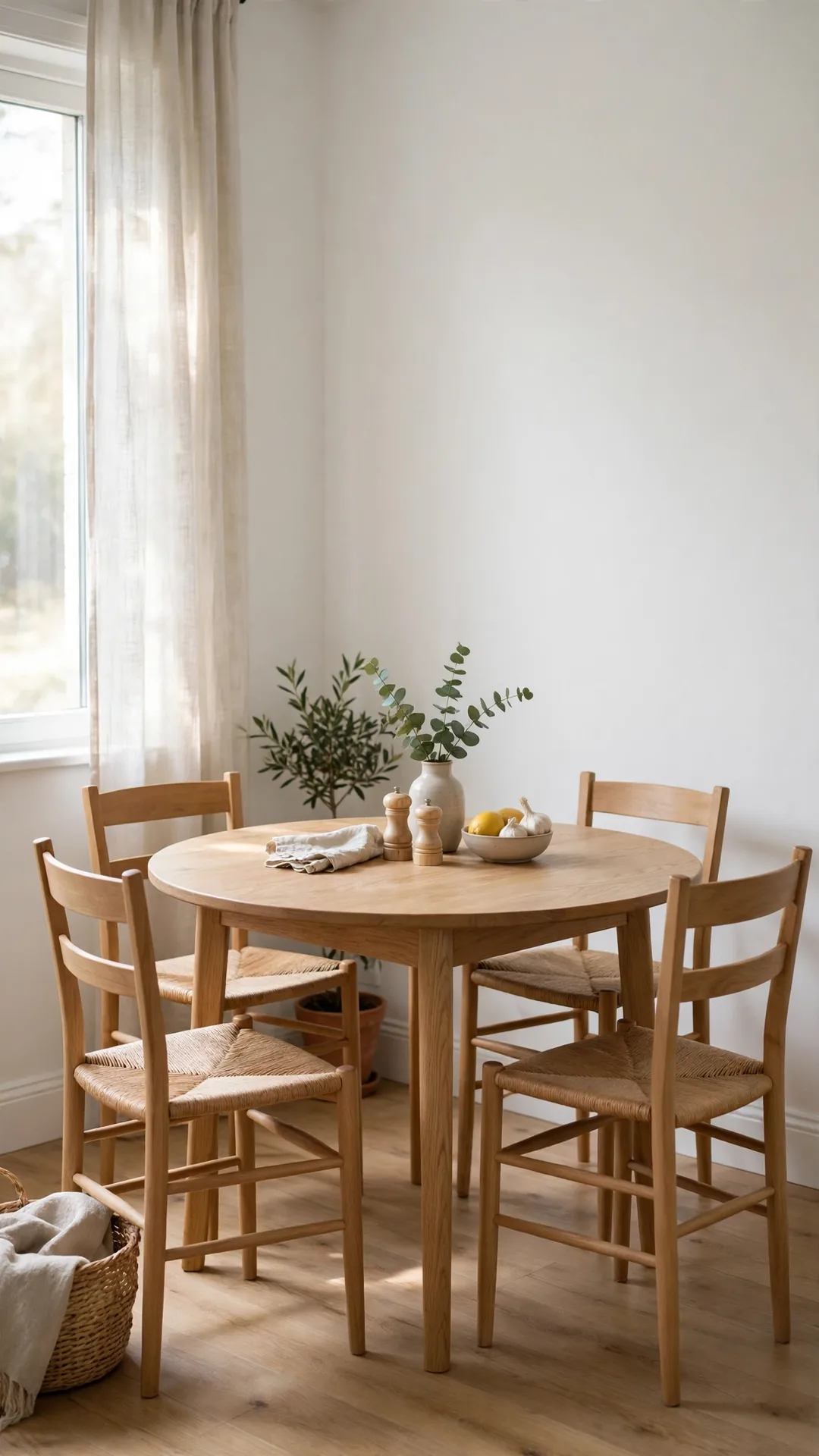
Light oak features in warm round table ideas for small dining rooms. The honey tone warms white walls without darkening them. Oak also hides small scratches better than dark wood.
How to do it:
- Match the oak tone to one other wood in the room.
- Choose a matte finish for a calm, modern feel.
- Keep chair wood a shade darker or lighter for contrast.
- Wipe with a damp cloth and dry right away.
Best for: Scandinavian style rooms and renters.
Budget: $250 to $550
Quick tip: Oak pairs well with white, sage and soft gray.
18. Soften Bumps With a Beveled Edge
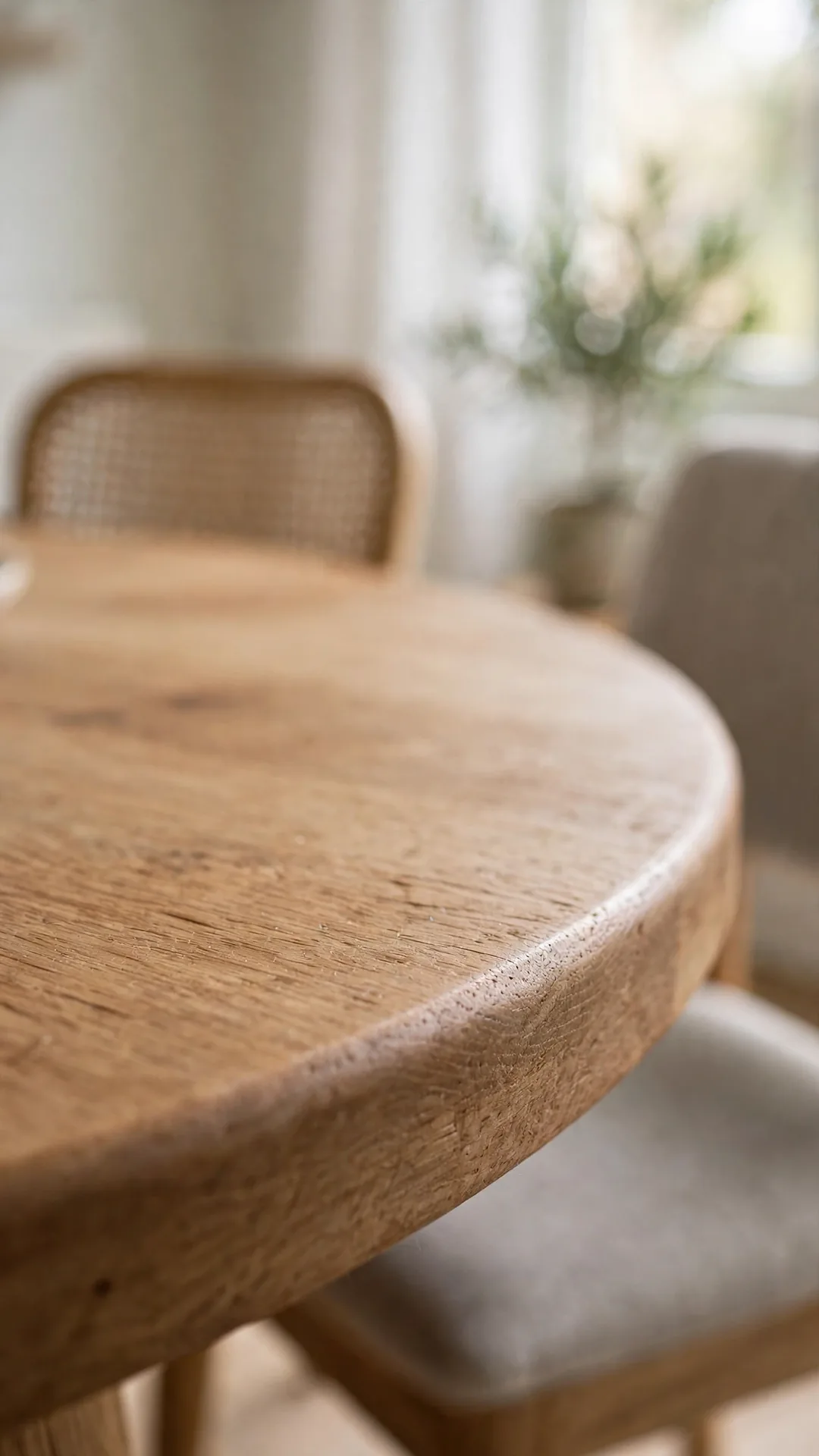
A beveled edge softens the rim of a round top. Hips and kids brush past without the sharp knock. The profile also makes thick tops look lighter.
How to do it:
- Run your hand along the edge before you buy.
- Pick a full bullnose edge for the softest feel.
- Keep the bevel smooth and free of splinters.
- This edge suits tops 1 inch thick or more.
Best for: Homes with toddlers and tight walk paths.
Budget: $220 to $500
Quick tip: Soft edges matter most on tables near doorways. Run your hand along it before buying.
19. Lighten the Look With a Thin Edge
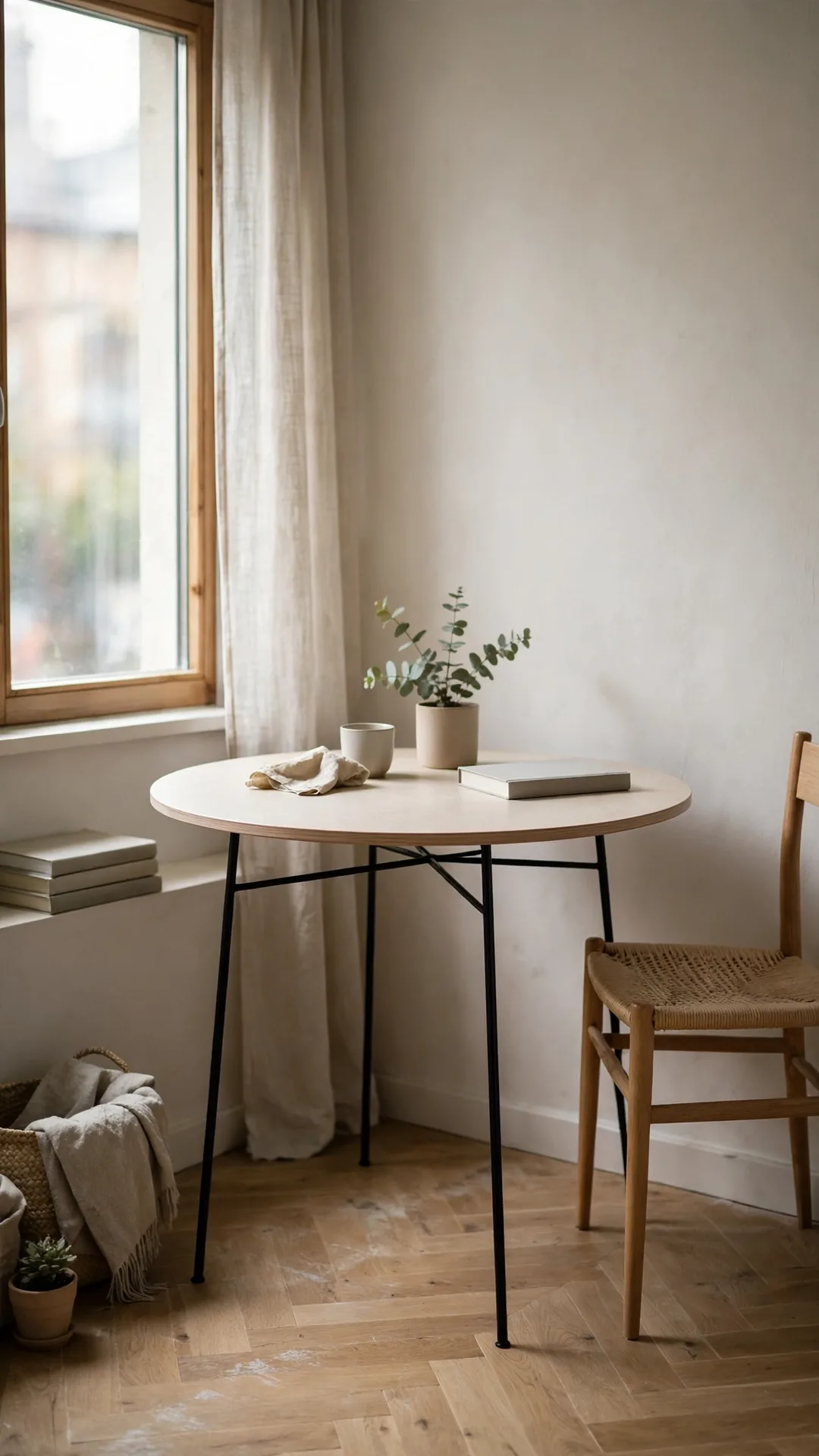
Thin edge tops appear in sleek round table ideas for small dining rooms. The slim rim makes the whole table look lighter. Air flows under the top, so the zone feels open.
How to do it:
- Choose a reinforced core so the thin top stays flat.
- Keep heavy serving dishes near the center.
- Pick this style at 42 inches or smaller.
- Pair with slim metal legs for a light frame.
Best for: Minimal rooms and modern apartments.
Budget: $240 to $520
Quick tip: A thin top pairs best with a sturdy base.
20. Mix a Two Tone Top and Base
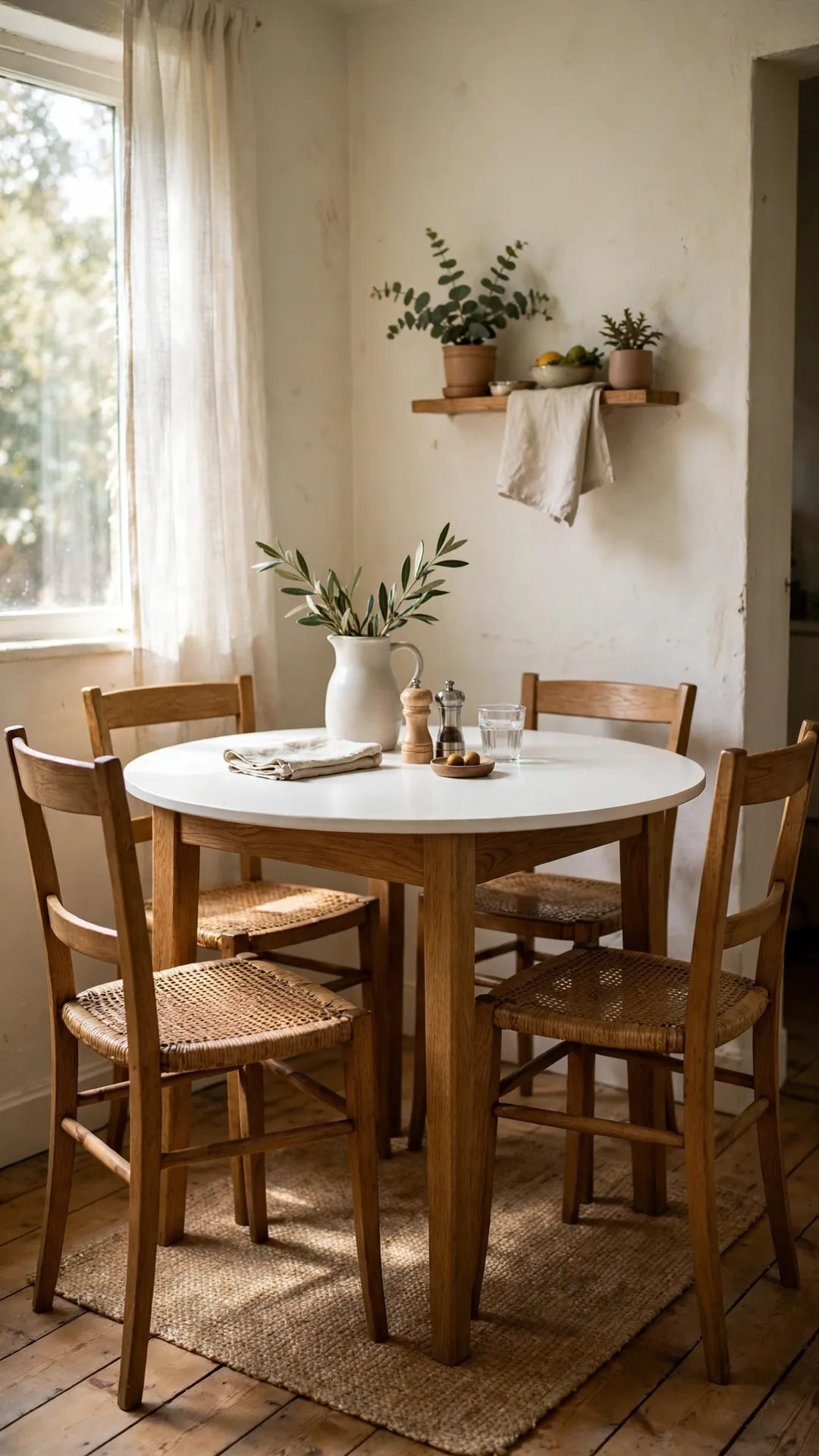
A two tone table mixes a pale top with darker legs. The contrast breaks up an all wood room. It also lets you blend two furniture tones at once.
How to do it:
- Repeat one of the tones in your chairs.
- Keep the mix to two tones for a calm look.
- Choose a white top with oak legs for most rooms.
- Test the pairing in daylight before you commit.
Best for: Rooms with mixed wood furniture already.
Budget: $220 to $480
Quick tip: Two tone tables forgive mismatched chair sets.
21. Fold One Leaf Down for Weekdays
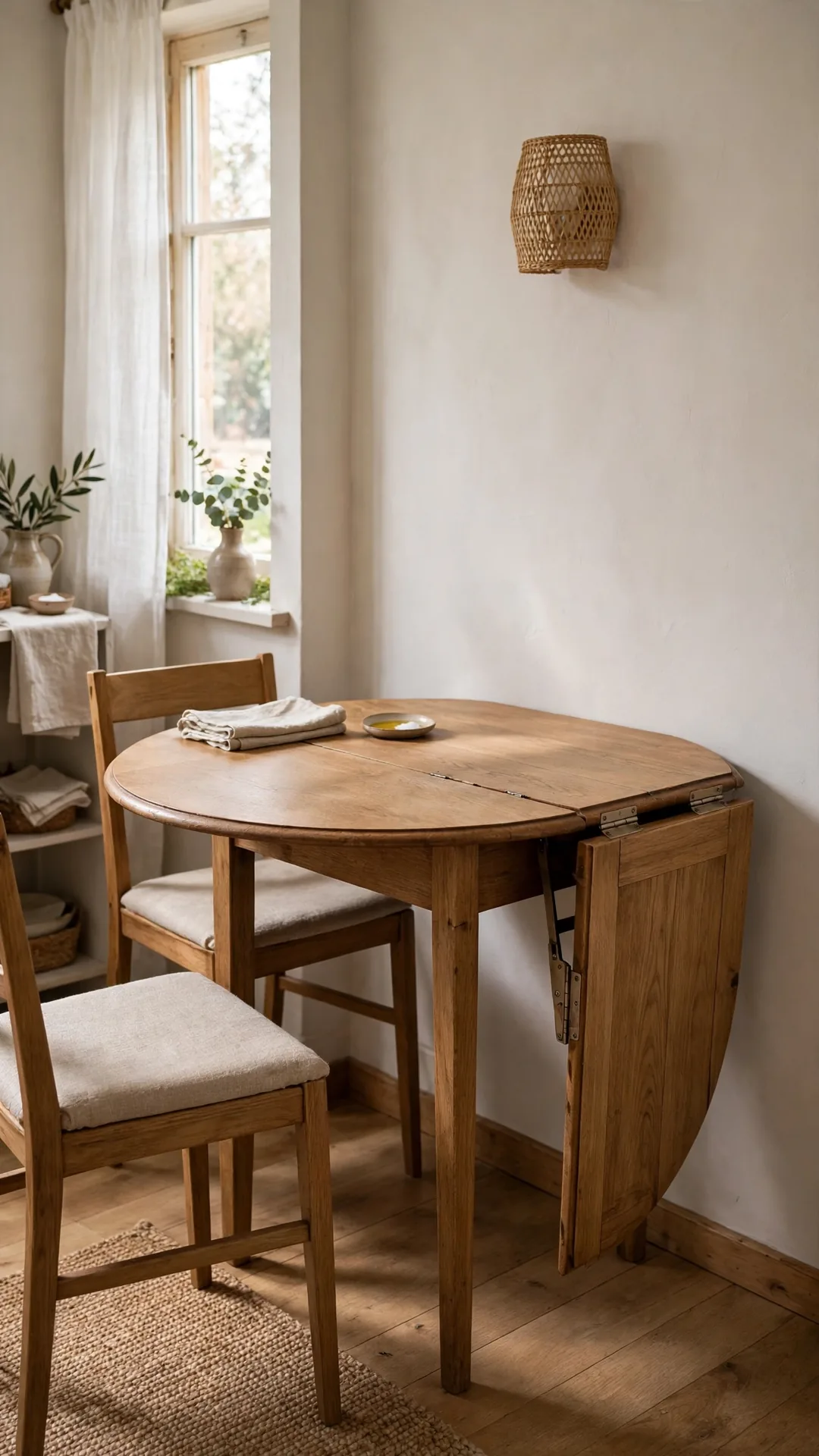
A round drop leaf table shrinks for daily life. One leaf down cuts the depth by about 10 inches. The flat side hugs a wall or a sofa back.
How to do it:
- Measure the table both open and with leaves down.
- Check the leaf hinges feel firm with no sag.
- Keep the dropped side against the wall on weekdays.
- Open the leaf when a third chair joins.
Best for: Couples who host one or two guests.
Budget: $180 to $400
Quick tip: Drop leaf tables seat two daily and four at parties.
22. Open Both Leaves for Weekend Guests
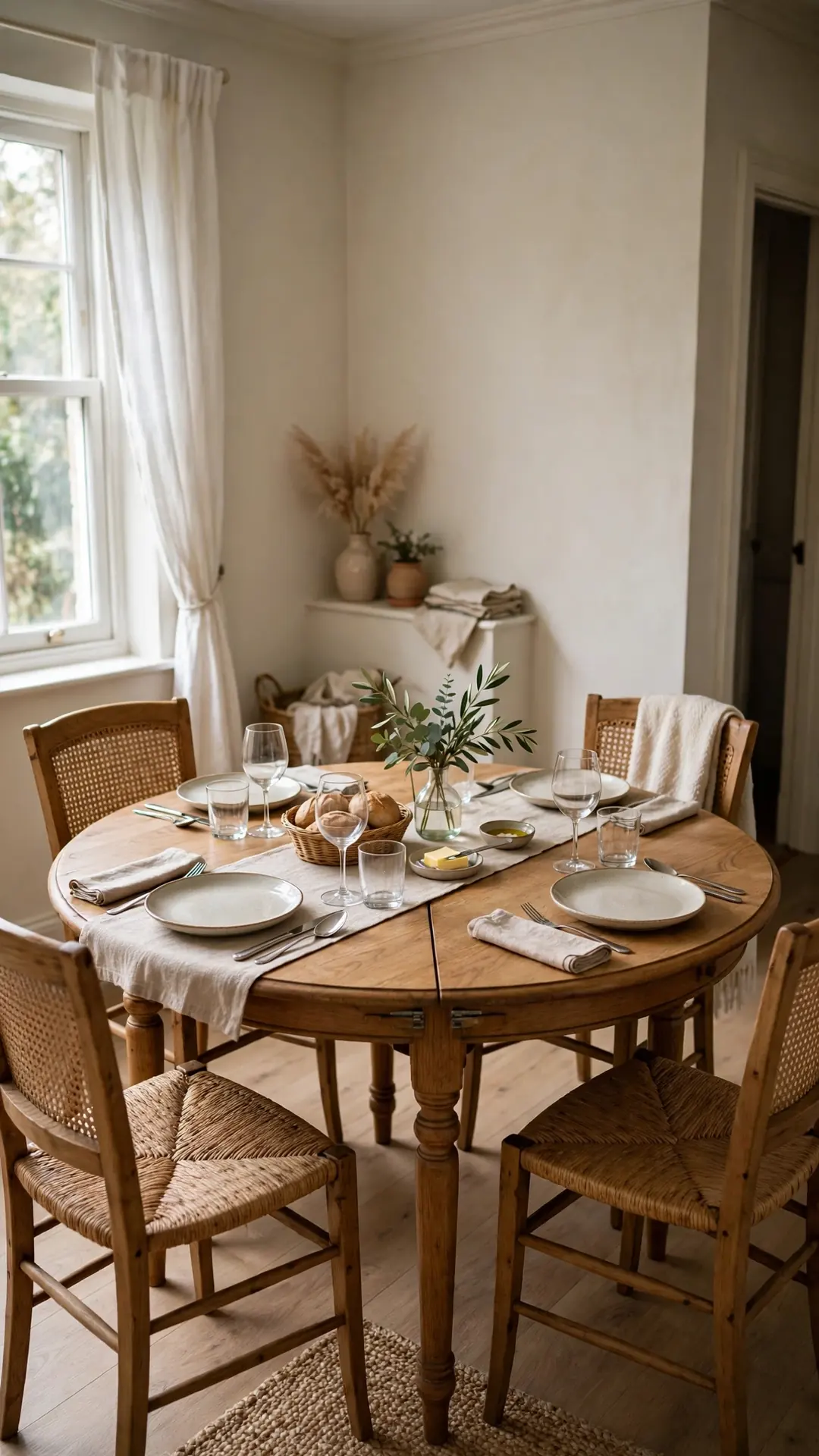
Flexible round table ideas for small dining rooms shine on guest nights. Both leaves up turn a two person table into four seats. The change takes under a minute with practice.
How to do it:
- Practice the leaf lift before guests arrive.
- Store two folding chairs in a nearby closet.
- Keep a tablecloth sized for the open table.
- Check the open top stays level at the joins.
Best for: Small homes that host monthly dinners.
Budget: $200 to $450
Quick tip: Mark leaf positions with tape for fast setup. Open both leaves the night before guests arrive.
23. Hide the Leaf Inside a Butterfly Table
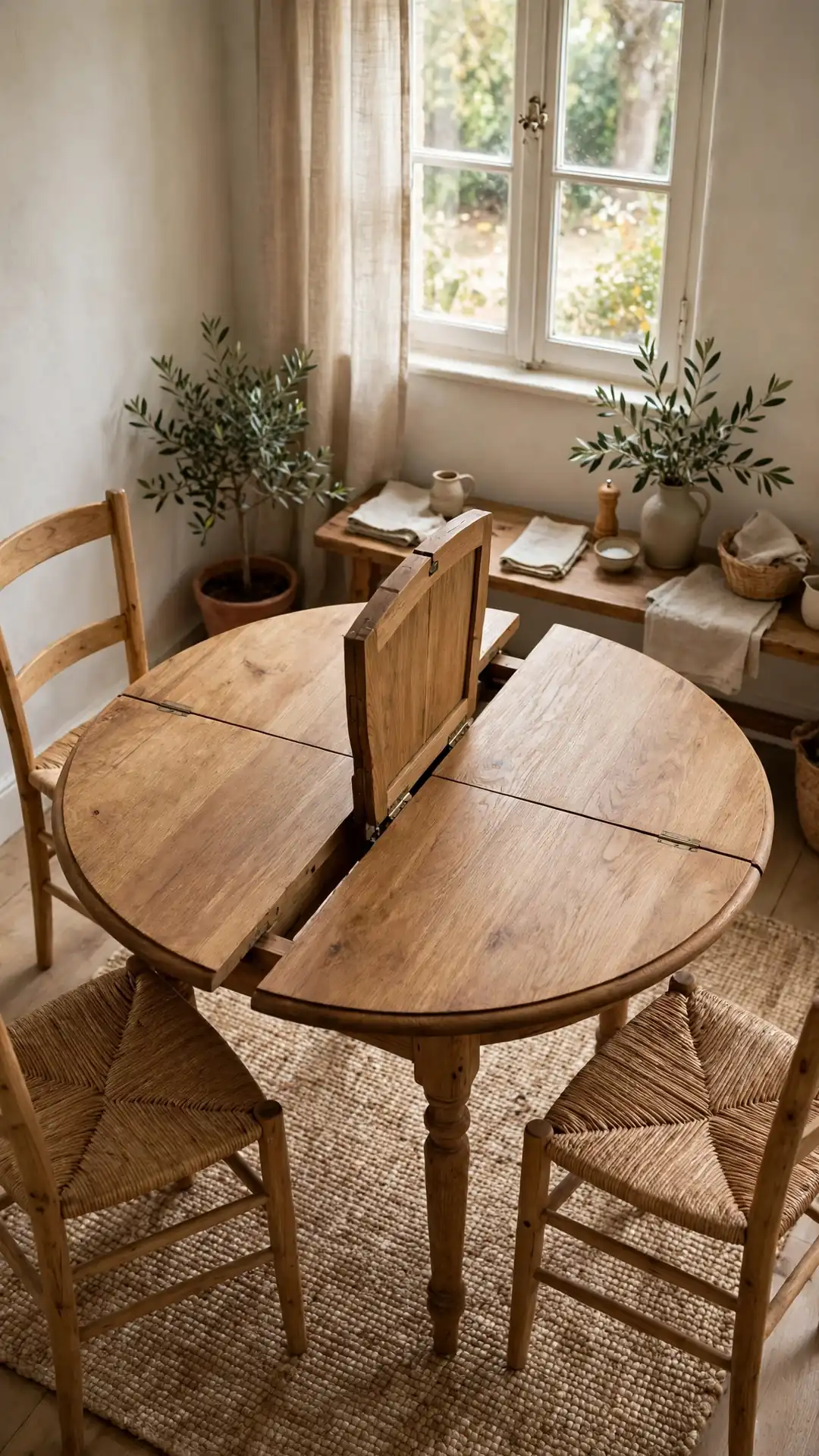
A butterfly leaf folds out from inside the table. The leaf stores itself, so no closet space is lost. The top splits and opens in one smooth move.
How to do it:
- Open and close the leaf three times in the shop.
- Check the grain lines match when the leaf is out.
- Pick a 42 inch closed top that opens to an oval.
- Keep the center join clean so crumbs stay out.
Best for: Apartments with no spare storage for leaves.
Budget: $350 to $700
Quick tip: Self storing leaves suit renters who move often.
24. Extend a Round Table Into an Oval
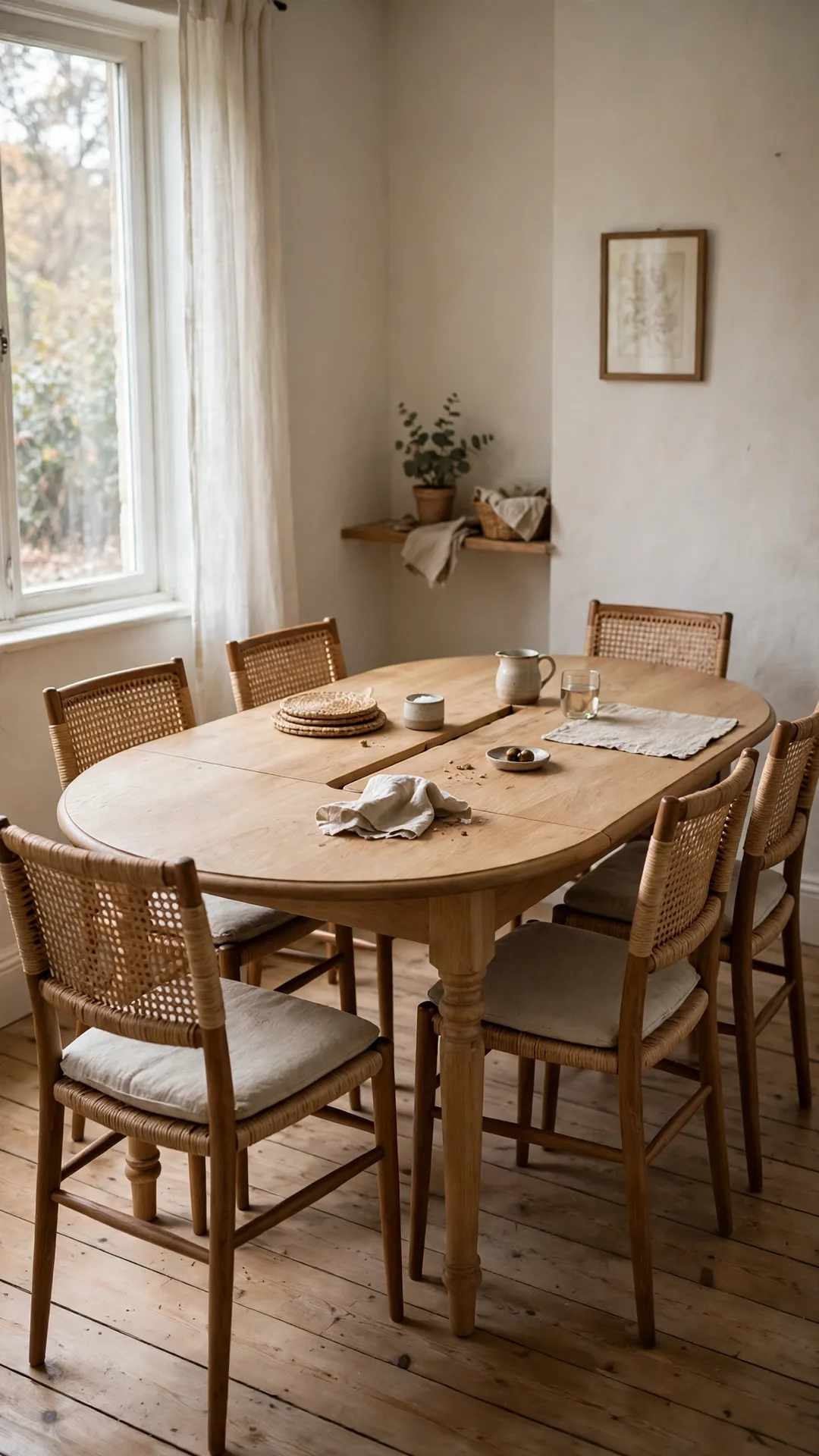
Some round tables extend into a long oval. Closed, the table seats four around a neat circle. Open, the oval seats six for holiday meals.
How to do it:
- Measure your room for the open oval length too.
- A 48 inch round often opens to 66 inches long.
- Keep two chairs in storage for the extra seats.
- Choose a center leaf that folds or stores inside.
Best for: Families who host big meals a few times yearly.
Budget: $400 to $800
Quick tip: An oval keeps soft corners even at full size.
25. Fold a Table Flat in Studio Corners
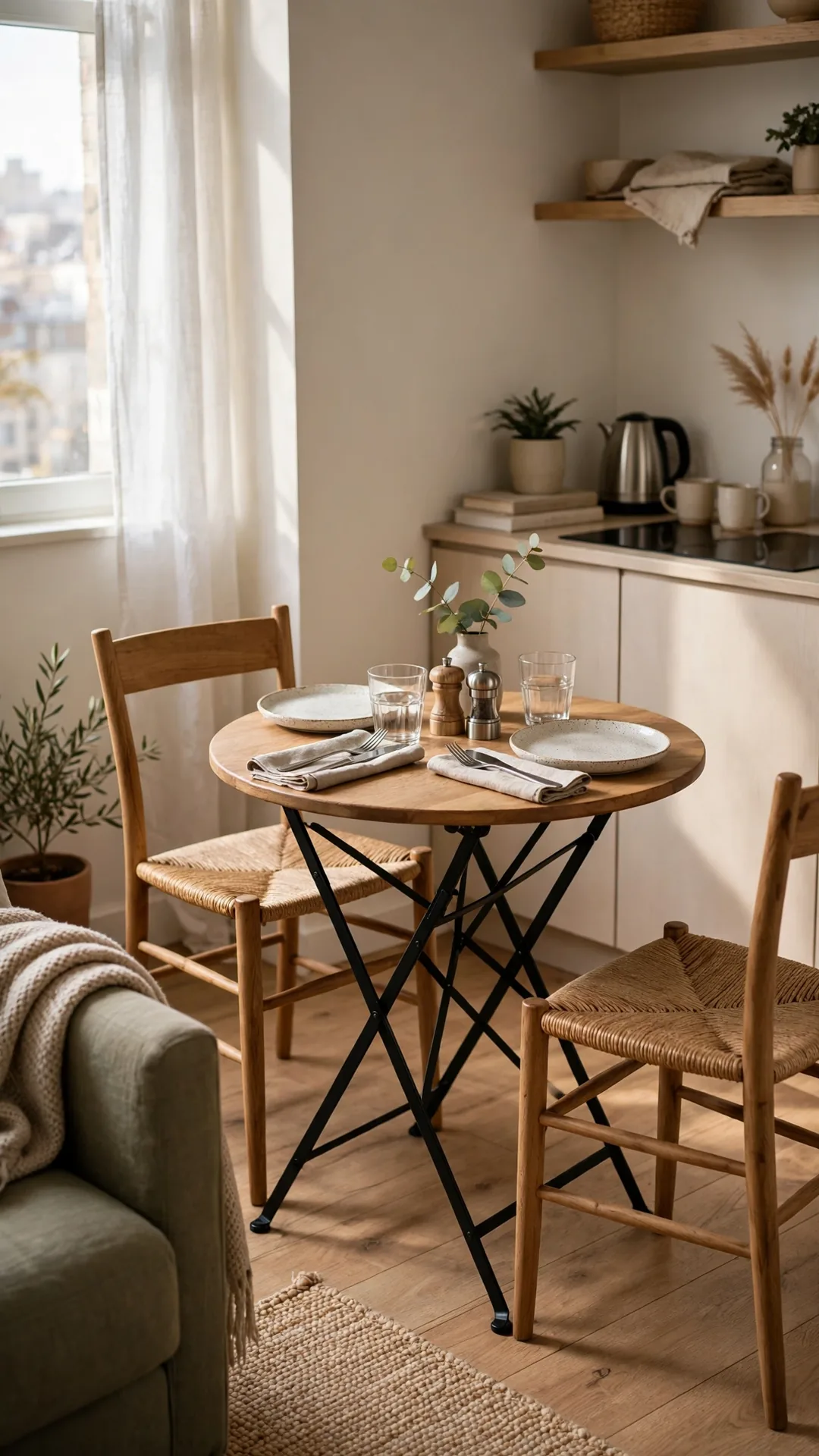
A folding round table packs flat behind a door. Studios gain a dining spot that vanishes after meals. The same zone thinking drives these bed ideas for small rooms, where every piece earns its place.
How to do it:
- Pick a folded depth under 4 inches for storage.
- Check the lock holds firm when the top is open.
- Choose a 32 to 36 inch top for two diners.
- Store the folded table behind a door or wardrobe.
Best for: Studio renters with no fixed dining zone.
Budget: $90 to $220
Quick tip: A wall hook keeps the folded table upright and safe.
26. Narrow a Gateleg Table to a Console
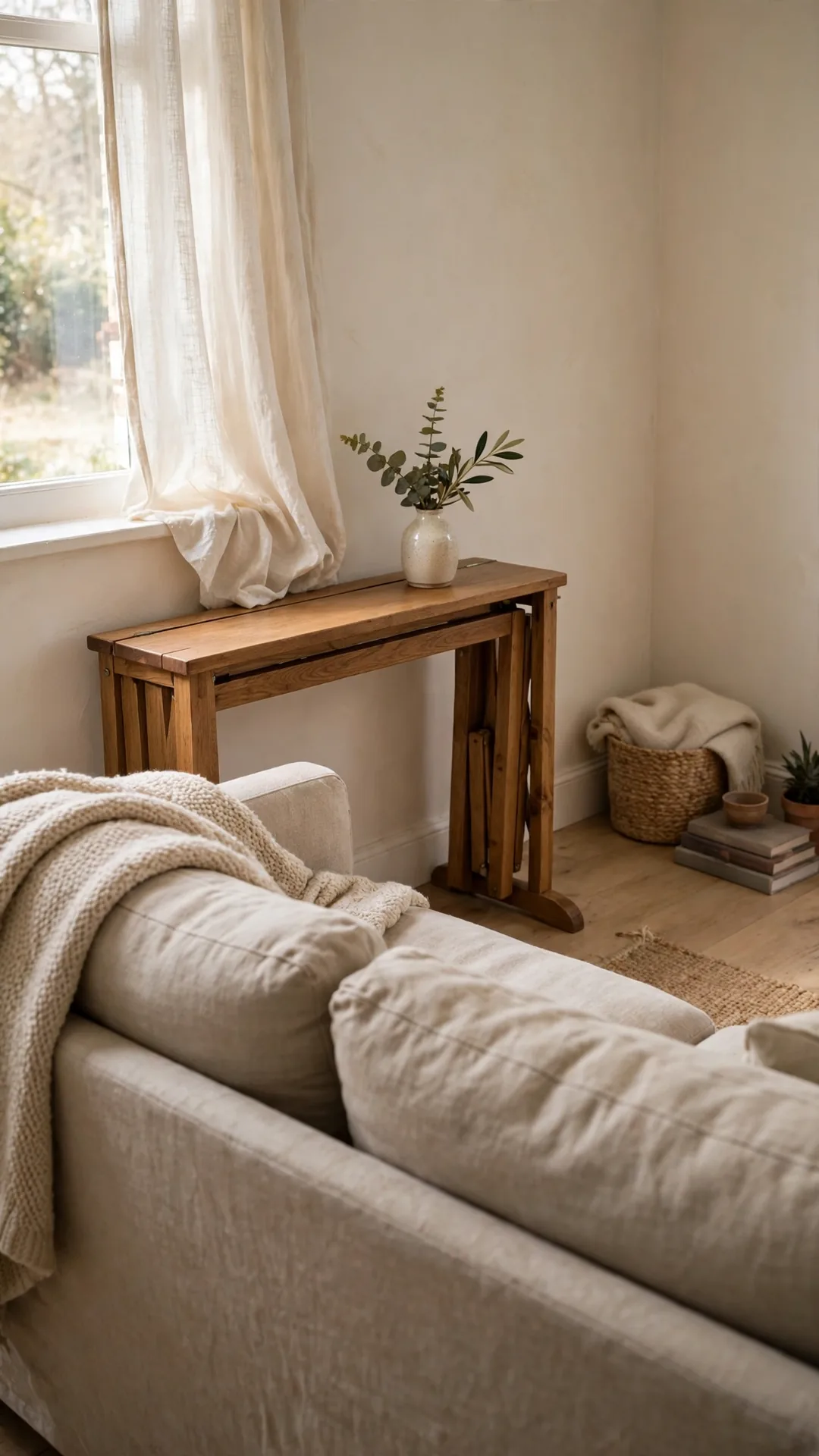
A gateleg table narrows to a slim console shape. Both leaves down, it sits behind a sofa or along a wall. Open, it becomes a full round dining table.
How to do it:
- Measure the closed width, often 12 to 15 inches.
- Swing both gate legs out and check they lock.
- Use the closed form as a hall or entry console.
- Pick solid hinges since they carry the leaf weight.
Best for: One room apartments with many uses.
Budget: $250 to $550
Quick tip: A gateleg earns its keep even on non dining days.
27. Double Your Space With a Flip Top
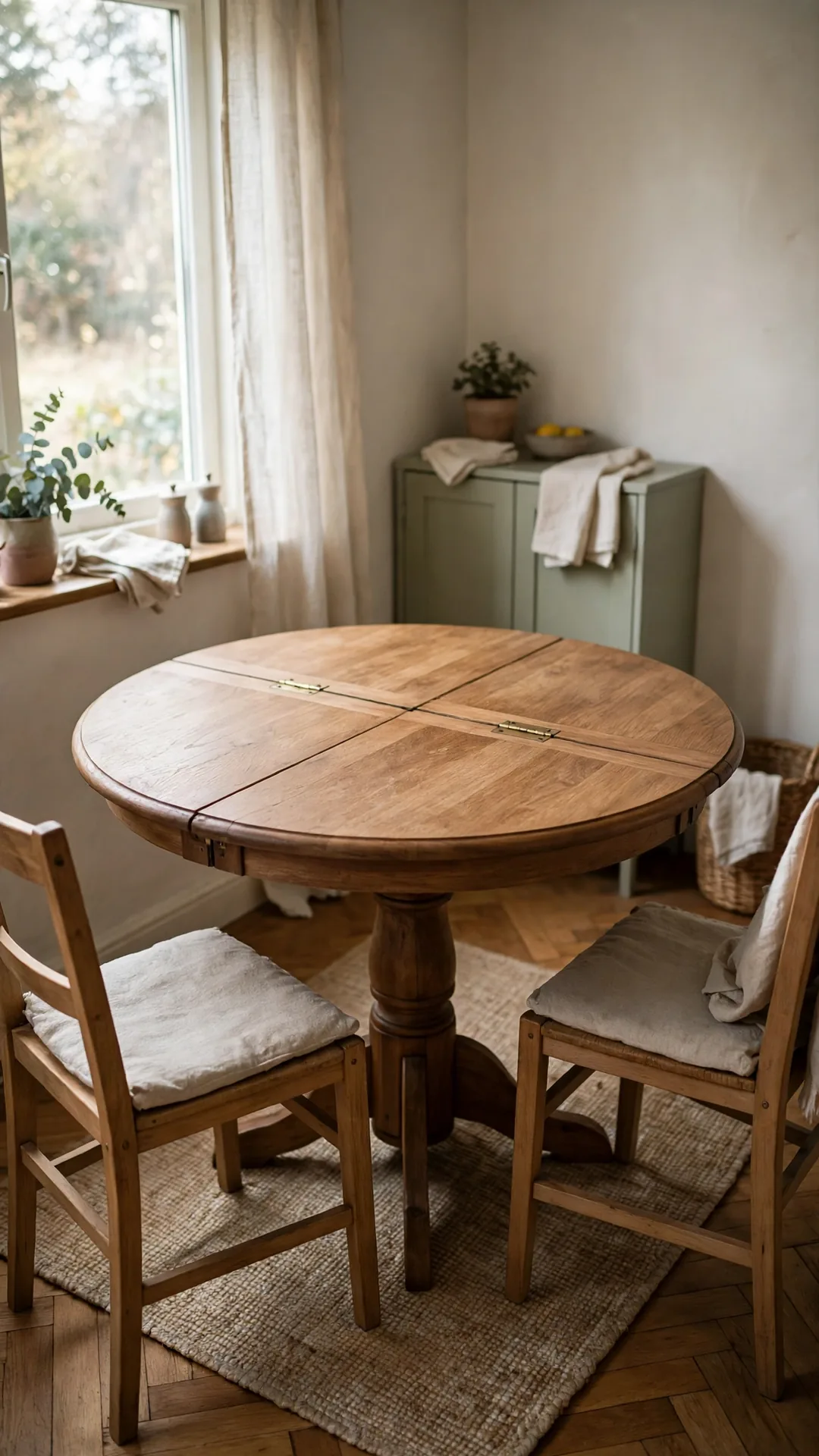
A flip top table doubles its surface in seconds. The top folds over to turn a half round into a full circle. Against the wall it works as a console first.
How to do it:
- Check the hinge line sits flush when open.
- Pick a 36 inch full size for two to four seats.
- Keep the wall side clear of thick baseboards.
- Lock the top before setting heavy dishes down.
Best for: Entry dining combos and tiny kitchens.
Budget: $200 to $420
Quick tip: Half round mode suits breakfast for one or two.
28. Store the Spare Leaf Under a Bed
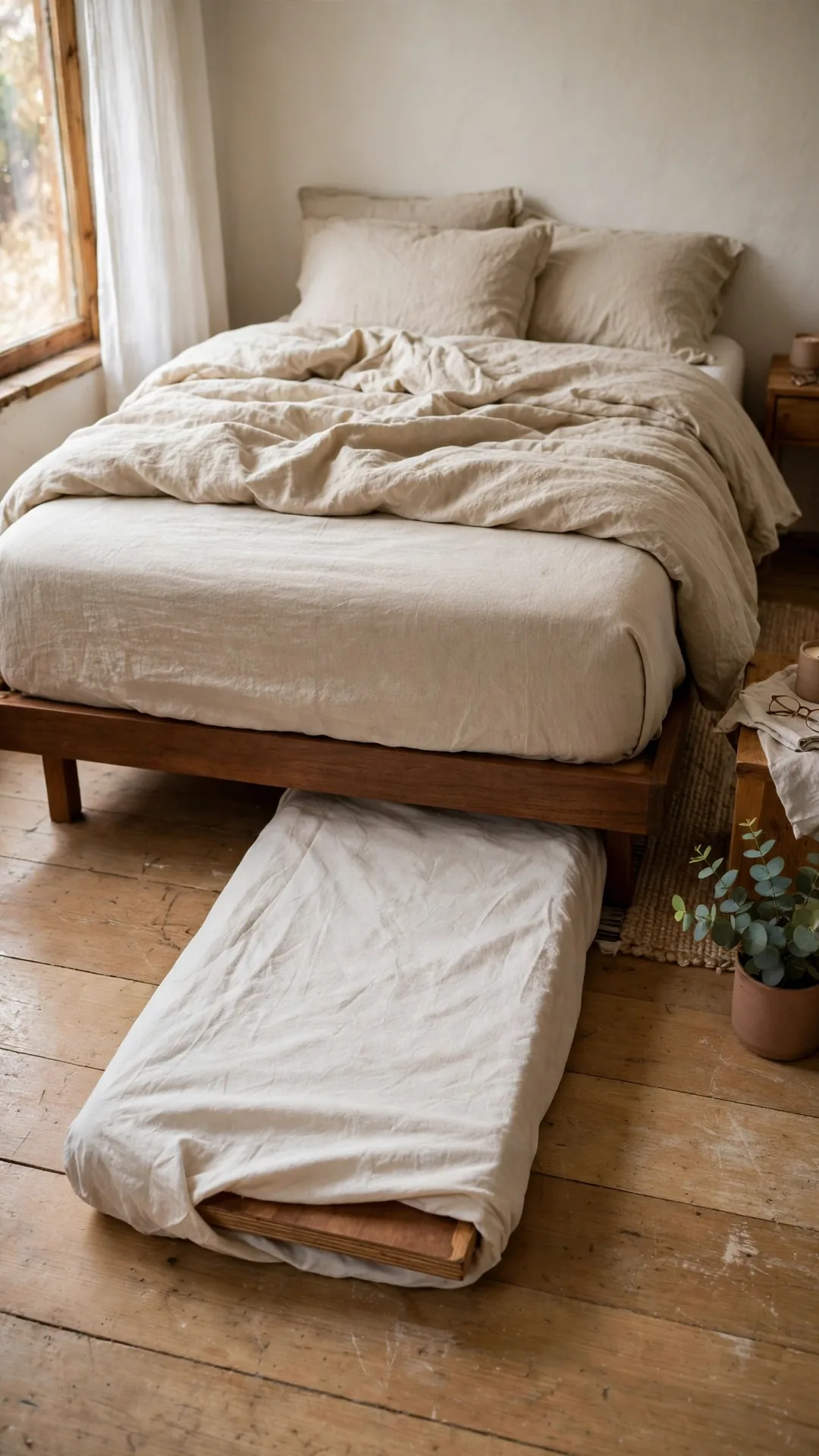
Spare leaves need a home in round table ideas for small dining rooms. A flat leaf slides under most beds with ease. Wrapped well, it stays dust free between big meals.
How to do it:
- Wrap the leaf in an old cotton sheet or blanket.
- Slide it in from the side you can reach best.
- Keep the leaf flat to stop warping over time.
- Label the wrapped edge with tape for fast finding.
Best for: Extending tables with separate loose leaves.
Budget: Under $20
Quick tip: Never store a leaf upright in a damp closet.
29. Spin Serving Dishes on a Lazy Susan
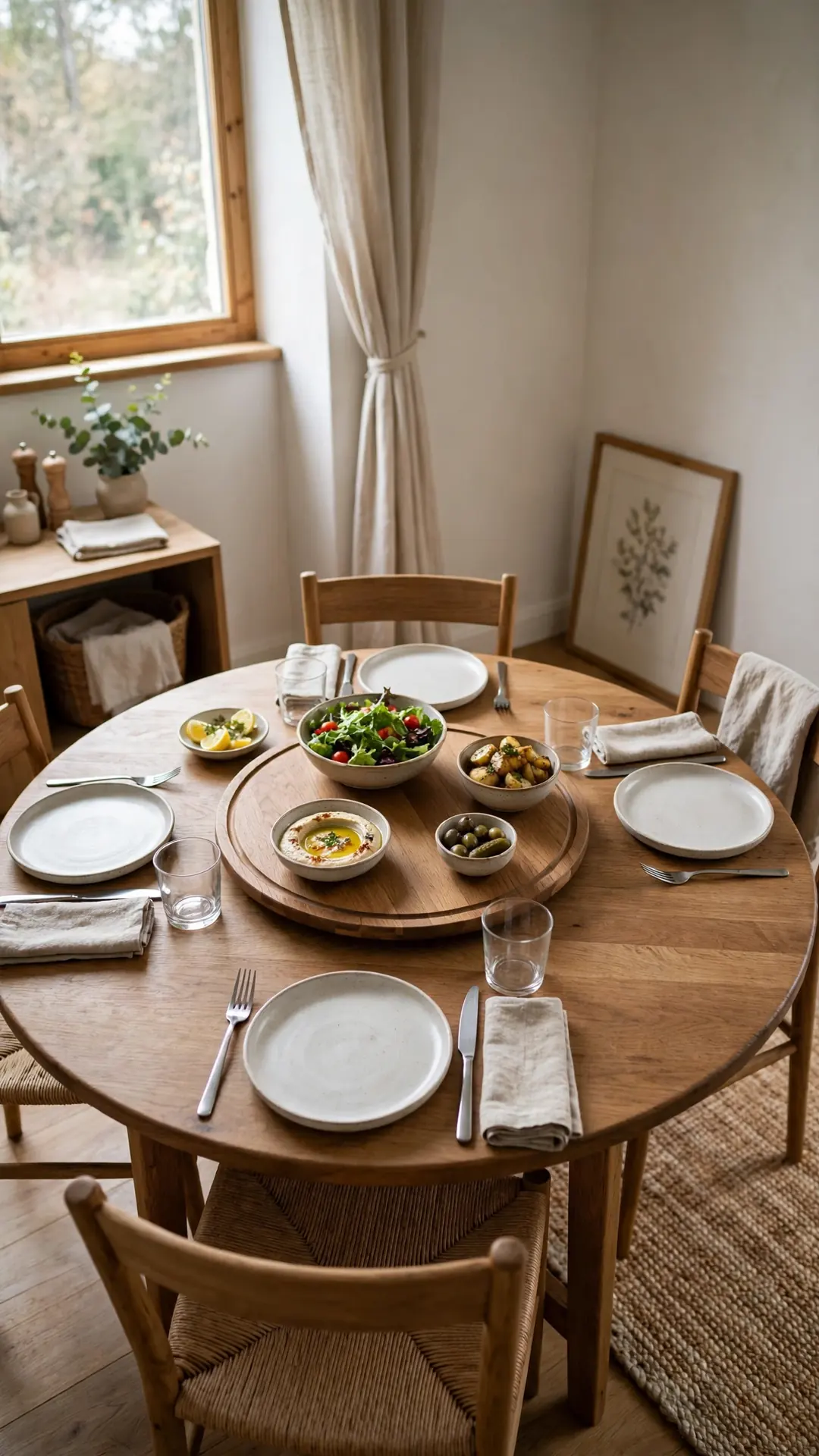
A lazy Susan helps everyone reach shared dishes. It suits round tops of 48 inches and up. Small tables skip it since hands reach fine.
How to do it:
- Pick a turntable 18 to 24 inches wide.
- Leave 12 inches of rim space for place settings.
- Choose a low profile base so dishes stay steady.
- Wipe the bearing ring monthly to keep the spin smooth.
Best for: Family style meals with many shared dishes.
Budget: $25 to $60
Quick tip: A Susan turns a big round into an easy server.
30. Add Locking Casters for Easy Moves
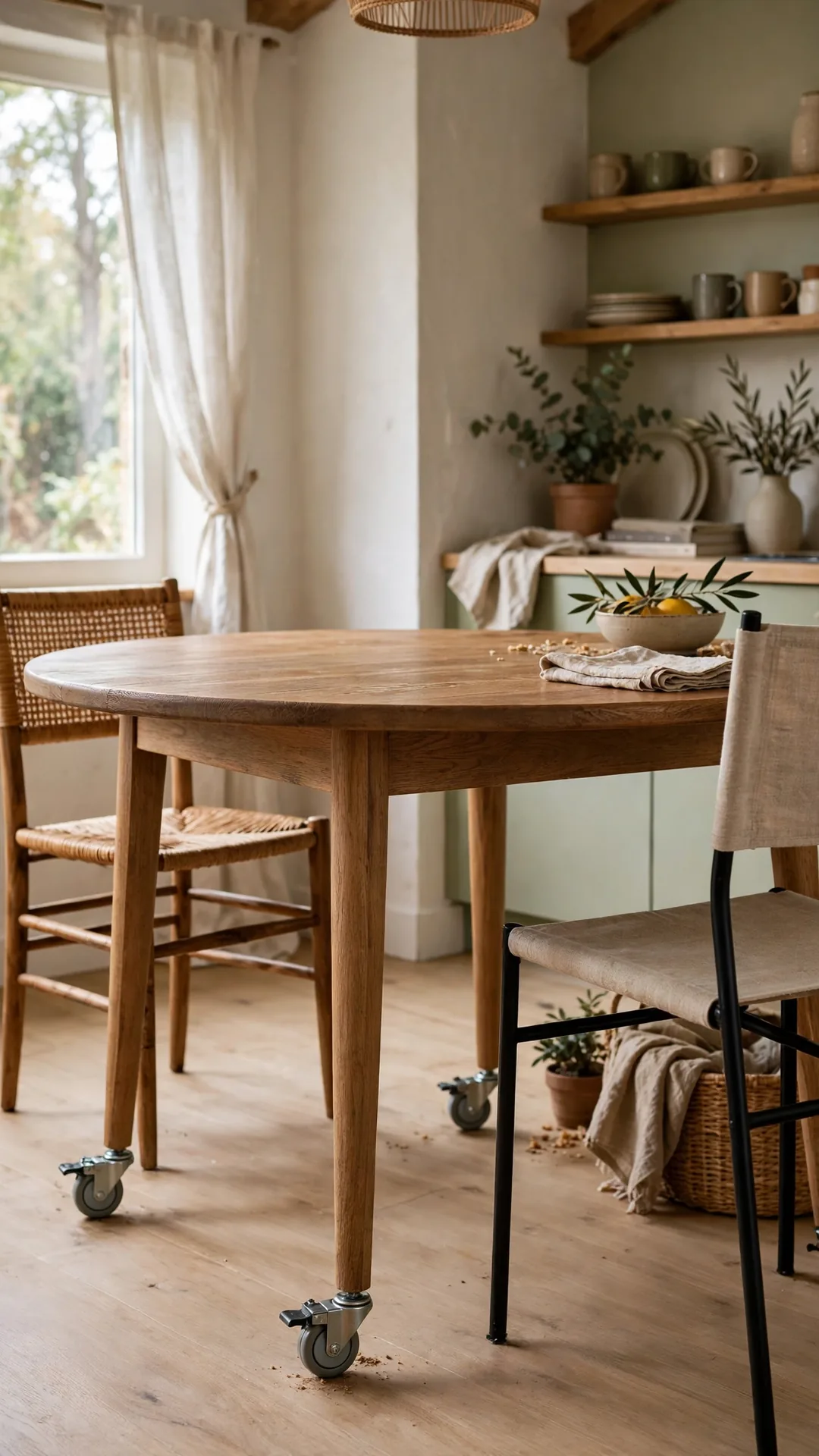
Locking casters turn a fixed table into a flexible one. You roll the table aside for cleaning or parties. That flexible thinking matches these small living room office combo ideas, where rooms change jobs fast.
How to do it:
- Fit casters to two legs and keep two legs fixed.
- Choose locks that hold on wood and tile floors.
- Check the added height, often 2 to 3 inches.
- Pick a table under 40 pounds for easy rolling.
Best for: Open plan rooms that change layout often.
Budget: $200 to $450
Quick tip: Lock the wheels before anyone leans on the edge.
31. Float the Table in a Bay Window
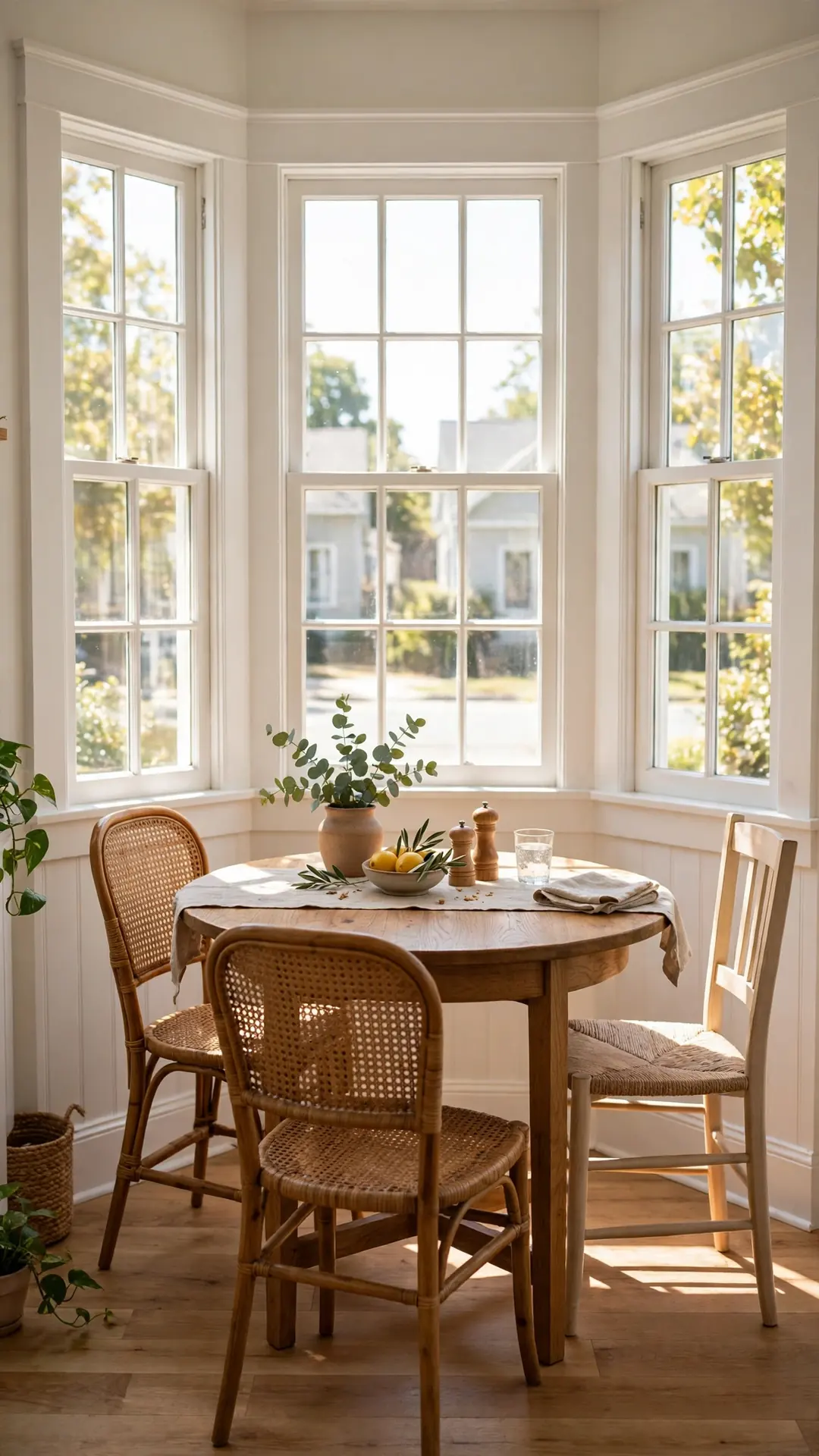
Bay windows host bright round table ideas for small dining rooms. The curved window echoes the table shape below it. Three chairs fit the bay with room to spare.
How to do it:
- Center the table on the middle window panel.
- Leave 18 inches behind chairs for the window wall.
- Pick a 42 inch top so the bay stays airy.
- Use sheer curtains to keep light soft at lunch.
Best for: Breakfast spots and sunny morning coffee.
Budget: $200 to $450
Quick tip: A bay nook seats three better than any corner.
32. Tuck the Table Flat Against a Wall
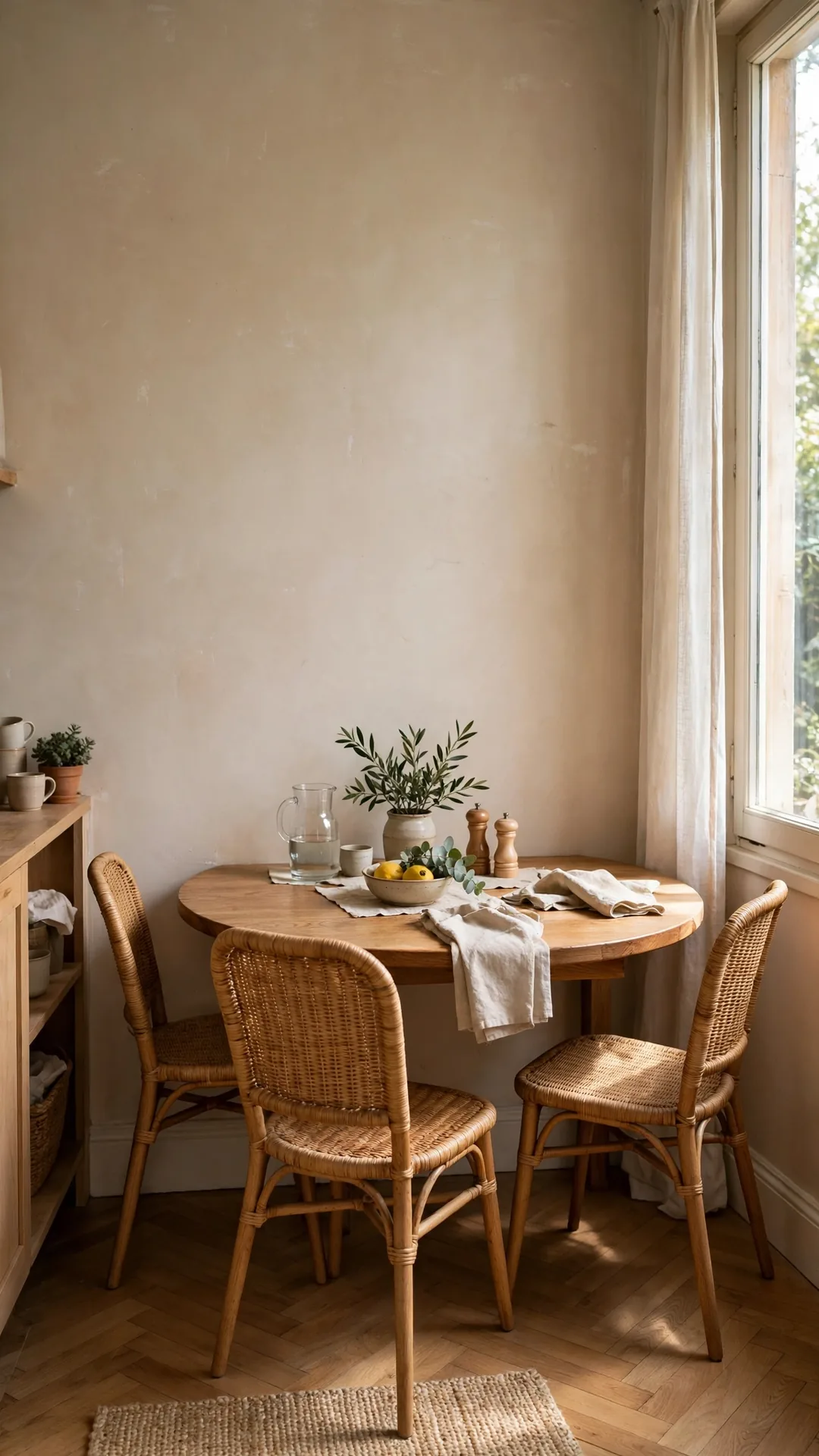
A round table can sit flat against one wall. The curve leaves walk space on the open side. Two or three chairs cover the exposed arc.
How to do it:
- Leave a hand width gap behind the table edge.
- Place chairs on the room side only.
- Hang a mirror or art above to finish the zone.
- Slide the table out 12 inches for guest nights.
Best for: Narrow dining rooms and long kitchens.
Budget: $150 to $400
Quick tip: Wall side seating can use a slim bench instead. Pull it out only when guests arrive.
33. Hang a Pendant Low Over the Center
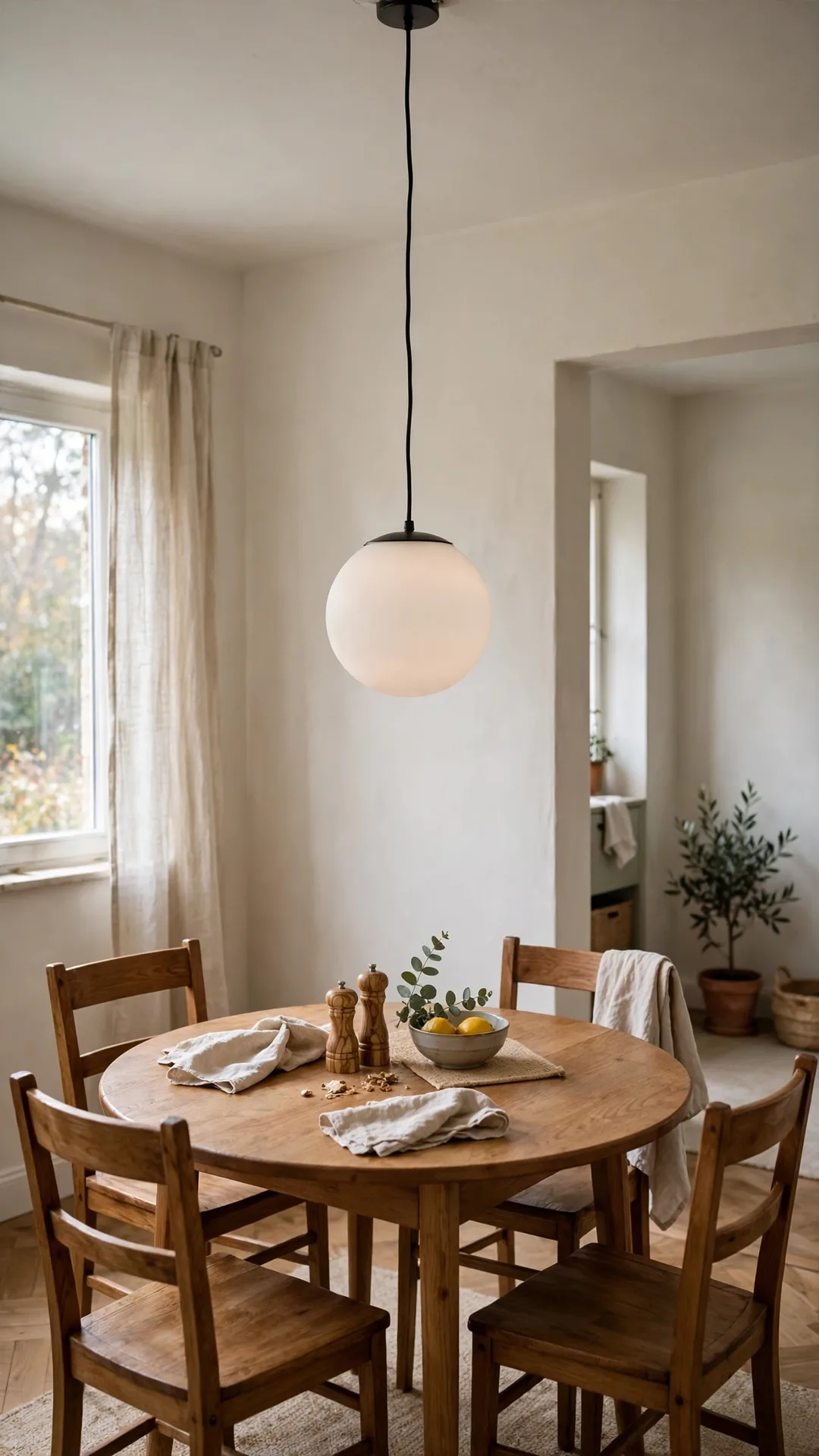
A pendant light centered over the table defines the zone. The round shade echoes the tabletop below. Meals feel gathered even in an open room.
How to do it:
- Hang the shade 28 to 34 inches above the top.
- Pick a shade about half the table width.
- Center the fitting before you place the table.
- Renters can use a plug in swag pendant instead.
Best for: Open plan homes with one big ceiling light.
Budget: $60 to $200 for the light
Quick tip: Warm bulbs make wood tops glow at dinner.
34. Anchor the Zone With a Washable Rug

Rugs ground round table ideas for small dining rooms in open spaces. A washable rug shrugs off the spills dining brings. Choose a round or square rug wider than the table.
How to do it:
- Pick a rug at least 24 inches wider than the top.
- Choose machine washable low pile for easy care.
- Keep chair legs on the rug when pulled out.
- A rug pad stops the whole setup creeping.
Best for: Homes with kids and daily dining mess.
Budget: $70 to $200
Quick tip: Dark patterns hide stains between washes.
35. Pair a Corner Banquette With Your Table

A corner banquette pairs well with a pedestal round table. The bench seats two or three along the walls. The pedestal base leaves knee room at the corner.
How to do it:
- Build or buy a bench 17 to 18 inches high.
- Set the bench seat depth at 16 to 18 inches.
- Pick a pedestal table so legs skip the bench base.
- Add washable cushions for long breakfast comfort.
Best for: Kitchen corners and bay window nooks.
Budget: $300 to $700 with the bench
Quick tip: Measure the corner twice since banquettes fit snug.
36. Mix One Bench With Two Chairs
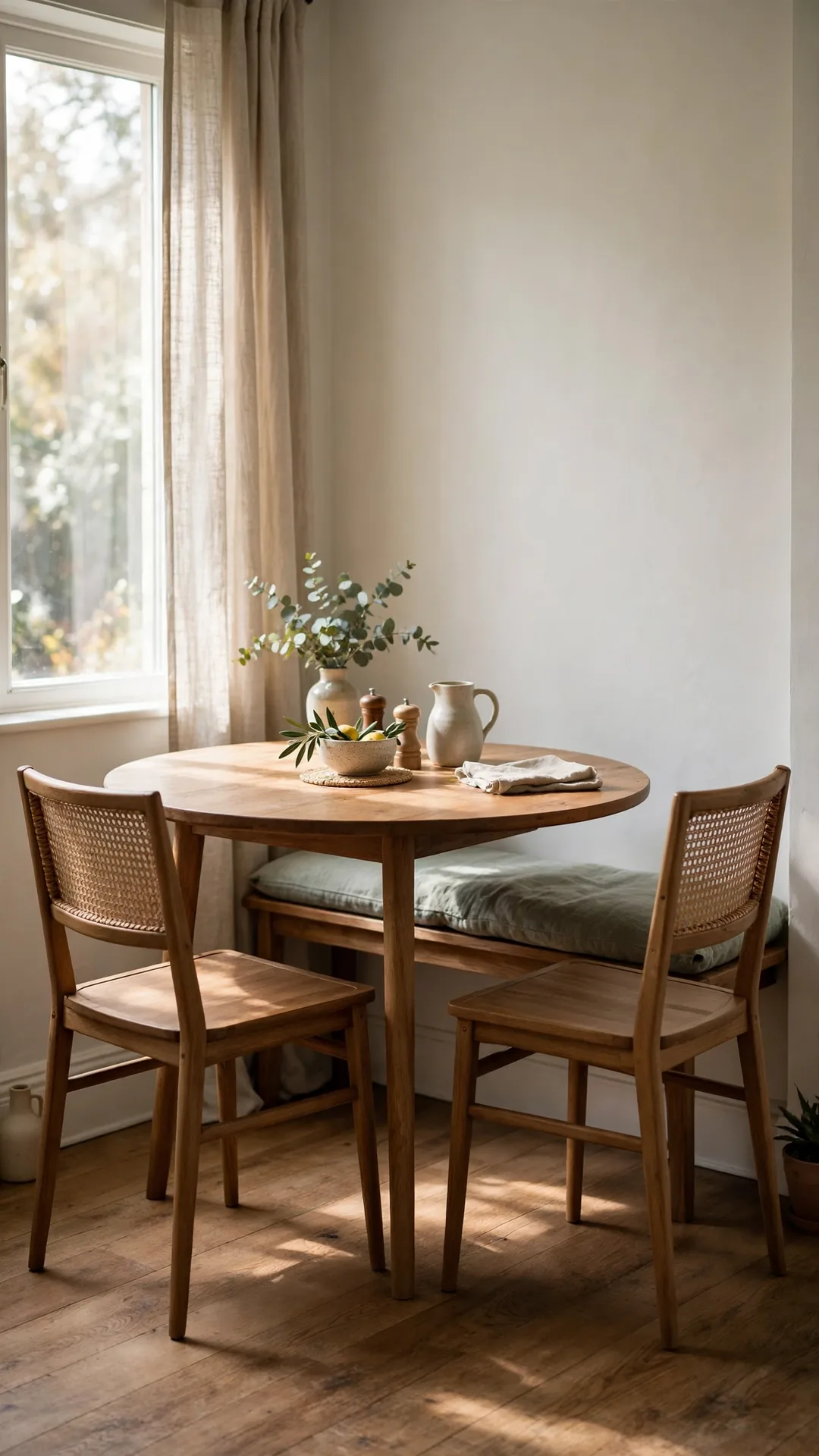
One bench plus two chairs mixes seating around the curve. The bench slides under the table after meals. Guests get chairs with backs for longer dinners.
How to do it:
- Pick a bench no longer than the table diameter.
- Keep the bench height at 18 inches to match chairs.
- Place the bench on the wall side of the table.
- Choose a padded top for comfort at long meals.
Best for: Families with kids who climb in fast.
Budget: $80 to $180 for the bench
Quick tip: A bench seats two kids in the space of one chair.
37. Zone an Open Plan With One Table
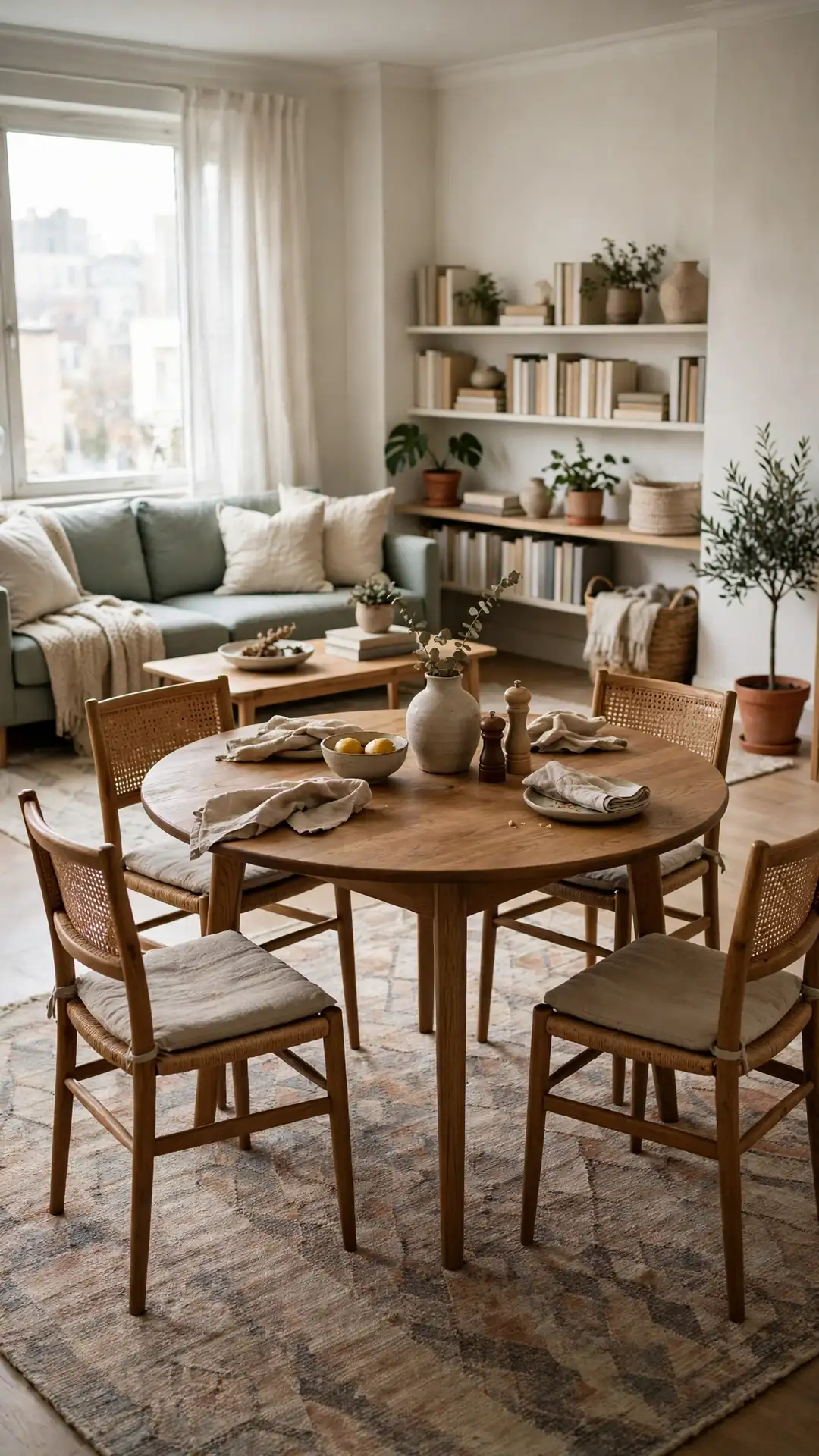
One round table can zone an open plan room. The curve keeps traffic flowing around the zone. For more zoning tricks, browse these small space dining ideas for compact homes.
How to do it:
- Lay a rug that extends past the chairs.
- Hang or place one light source over the table.
- Keep a 36 inch walk lane around the zone.
- Face the table toward the best window light.
Best for: Studio and open plan apartment living.
Budget: $200 to $500
Quick tip: Keep the zone border clear so the room reads tidy.
38. Center a Round Table in Square Rooms
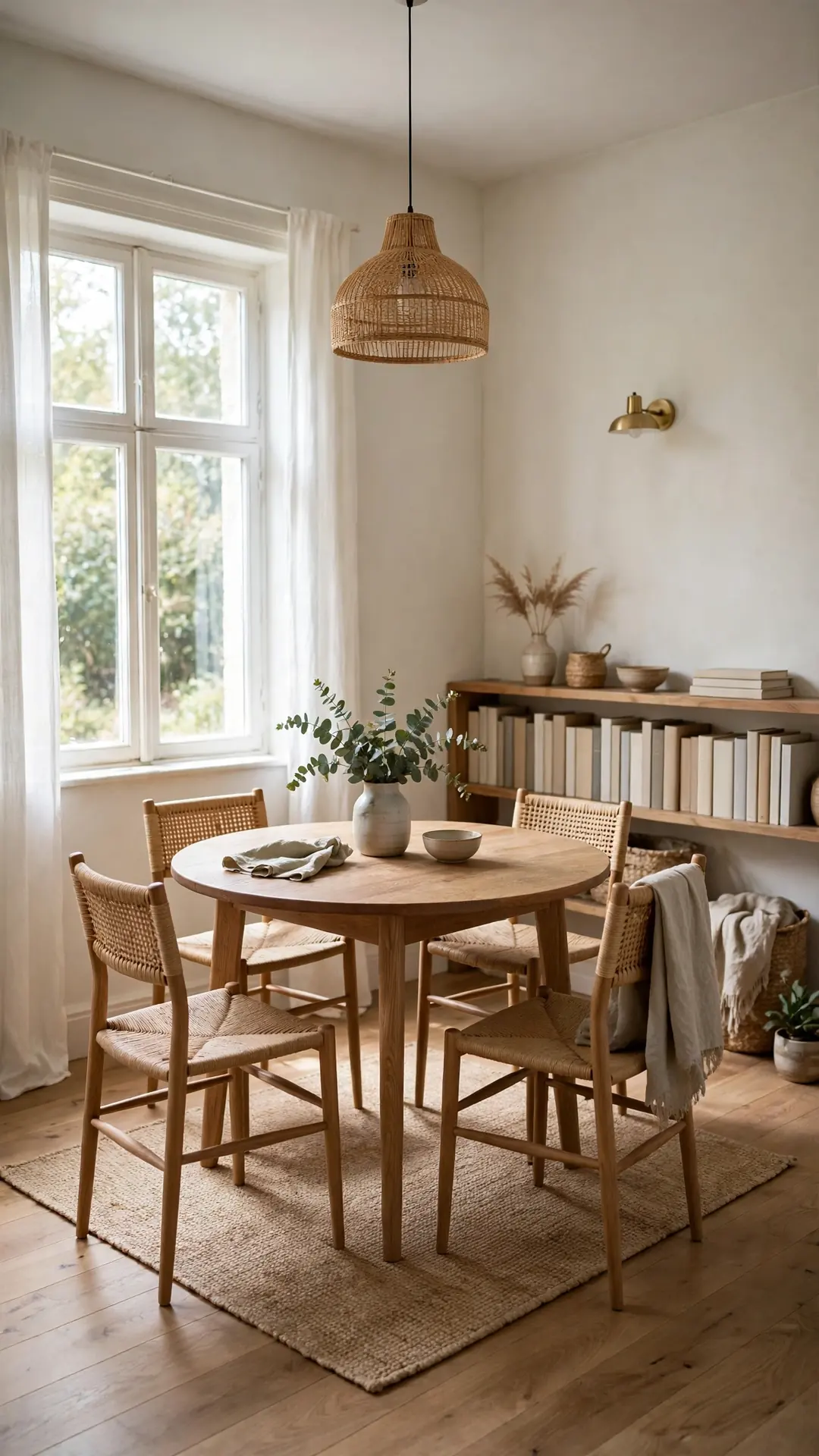
Square rooms suit round tables better than long ones. The circle centers the room and softens four straight walls. Designers weigh in on the best dining table shape for square and small rooms.
How to do it:
- Center the table on the room, not on one wall.
- Pick a diameter that leaves 36 inches per side.
- A round rug underlines the centered layout.
- Keep tall furniture in the corners, not mid wall.
Best for: Square dining rooms in older homes.
Budget: $200 to $500
Quick tip: Centering works best with a ceiling light above.
39. Keep a Clear Path Behind Every Chair
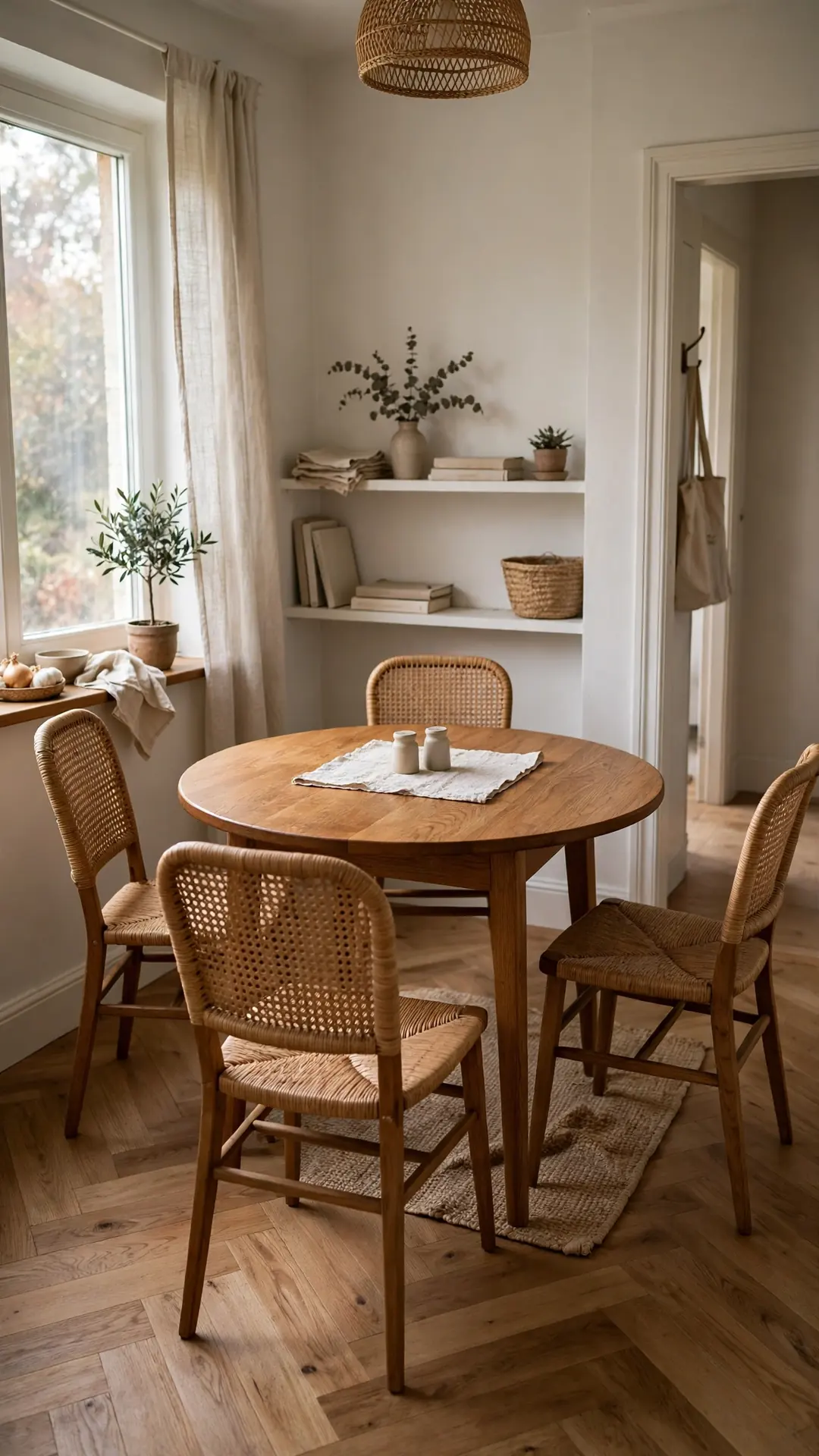
Chairs need room to pull out without blocking doors. Measure the path with chairs fully out before you buy. Keep coats and bags out of that path with these small hallway storage ideas by the door.
How to do it:
- Leave 24 inches behind chairs for pull out space.
- Add 12 more inches where people walk past seated diners.
- Keep door swings clear of the nearest chair.
- Test the path while someone sits at the table.
Best for: Rooms where the dining spot sits on a walk route.
Budget: No cost, just measuring
Quick tip: Tape the chair zone on the floor for one week.
40. Choose Chairs That Tuck Fully Under

Chairs that tuck fully under save the most floor. The chair seat should slide past the table apron. A clean ring of floor makes the room feel bigger.
How to do it:
- Measure the apron height under the top first.
- Choose chairs with no arms to slide in fully.
- Aim for 6 inches of knee depth under the edge.
- Test one chair in the shop with your table height.
Best for: Very tight rooms where every inch counts.
Budget: $60 to $150 per chair
Quick tip: Pedestal tables tuck chairs from every side.
41. Seat Four Around a 42 Inch Top

Seating math anchors round table ideas for small dining rooms. A 42 inch top seats four adults in comfort. Each person gets about 33 inches of rim.
How to do it:
- Give each diner 24 inches of width at minimum.
- Use armless chairs to keep the fit easy.
- Keep center dishes within a 16 inch circle.
- A pedestal base adds knee room at every seat.
Best for: Daily family meals for four.
Budget: $200 to $450
Quick tip: Four settings fit best with 10 inch plates. Skip chargers to keep elbows comfortable.
42. Seat Five Around a 48 Inch Pedestal
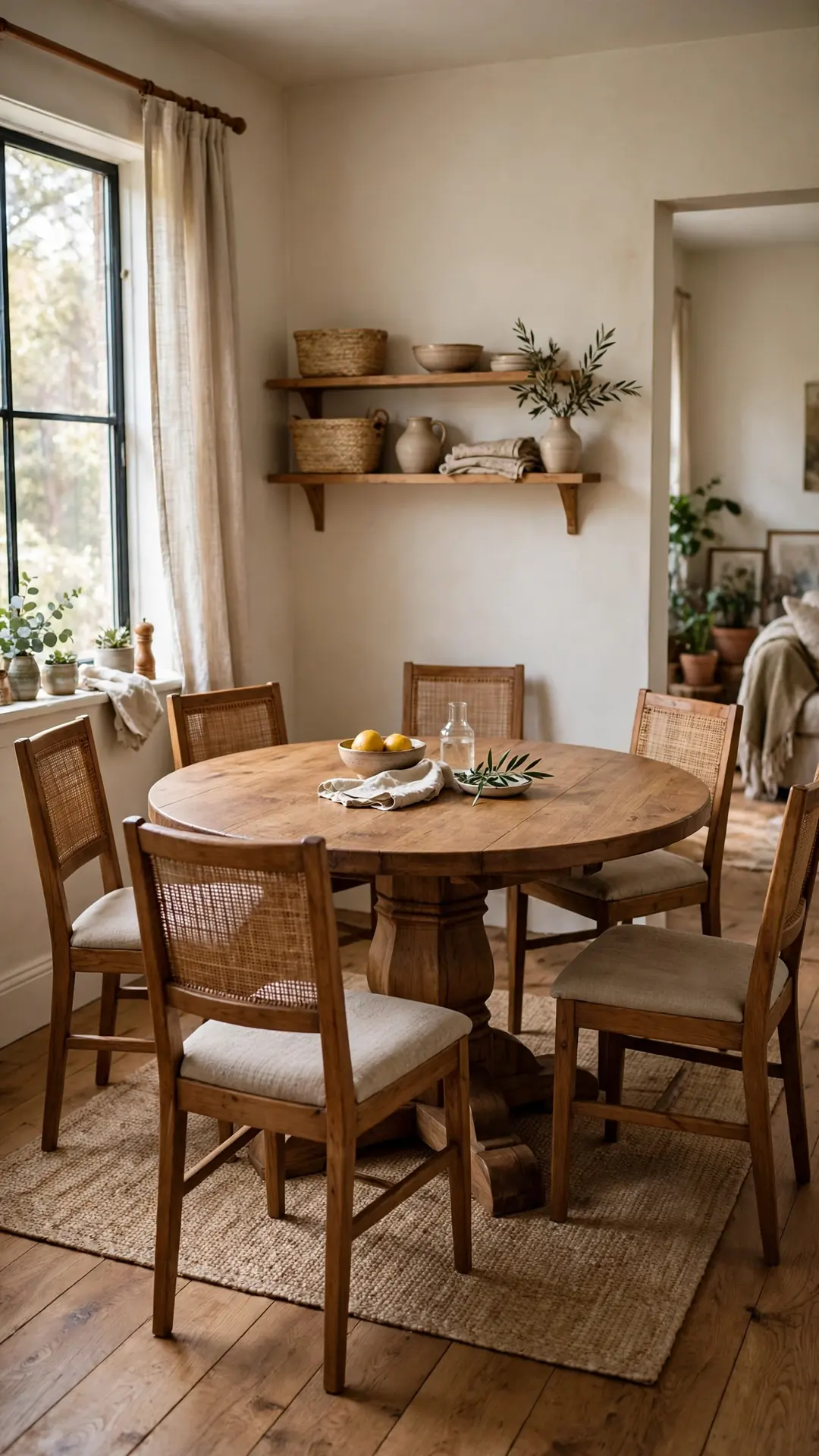
A 48 inch pedestal seats five without a squeeze. The single base frees the rim for odd numbers. Five chairs fit since no legs block the gaps.
How to do it:
- Allow about 30 inches of rim per diner.
- Pick chairs 17 inches wide or slimmer.
- Keep the base foot clear of chair feet.
- Serve family style from a small lazy Susan.
Best for: Families of five and small dinner parties.
Budget: $300 to $600
Quick tip: Five chairs space evenly with no head of table. Leave one gap near the serving side.
43. Seat Six Around a 54 Inch Top
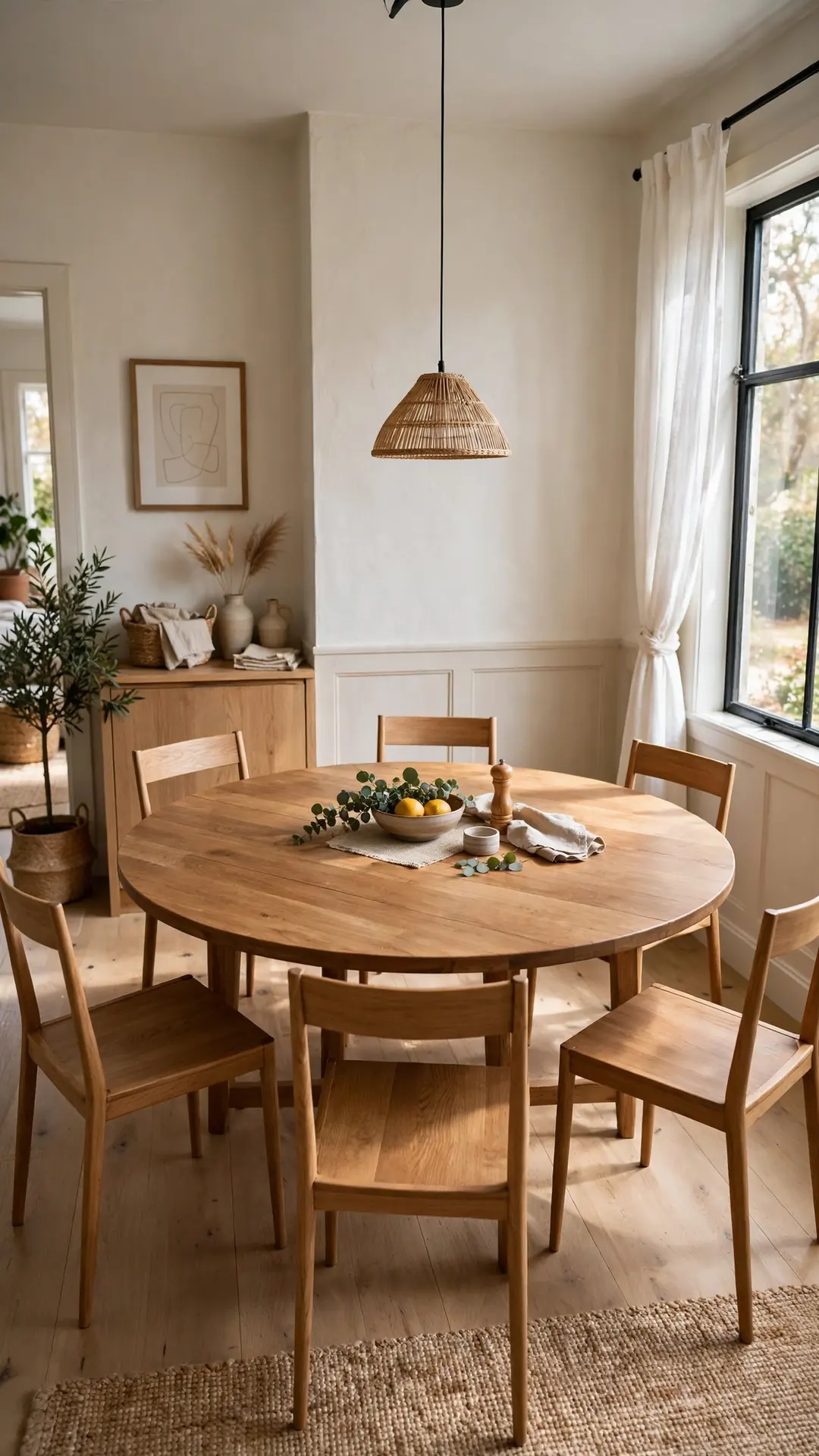
A 54 inch round seats six for holiday meals. Daily, the same table feels roomy for four. Check your room fits the wider circle first.
How to do it:
- Plan 36 inches of clearance on all sides.
- Each diner gets about 28 inches of rim.
- Use slim chairs to keep six seats comfortable.
- Keep serving dishes on a side cart or counter.
Best for: Homes that host six a few times a year.
Budget: $400 to $750
Quick tip: A 54 inch top needs a room about 10 by 10 feet or more.
44. Mix Two Chair Styles at One Table

Mixed chairs star in relaxed round table ideas for small dining rooms. Two styles around one table look collected, not messy. Keep seat heights matched so diners sit level.
How to do it:
- Match seat heights at 18 inches for all chairs.
- Repeat one color across the mixed set.
- Place matching pairs opposite each other.
- Keep the tallest backs at the far side.
Best for: Thrifted sets and growing families.
Budget: $40 to $120 per chair
Quick tip: Paint mixed chairs one color for instant order. Match the seat heights within one inch.
45. Pick Padded Chairs for Long Dinners

Padded seats keep guests at the table longer. Thin cushions add comfort without bulky frames. Washable covers handle sauce and coffee spills.
How to do it:
- Pick seat pads 1 to 2 inches thick.
- Choose covers that unzip for washing.
- Keep chair width slim even with padding.
- Test the pad firmness with your hand before buying.
- Test a two hour sit before buying four.
Best for: Long dinners and board game nights.
Budget: $90 to $200 per chair
Quick tip: Tie on pads upgrade plain chairs for less. Pick washable covers for busy family homes.
46. Stack Extra Chairs in a Closet Corner
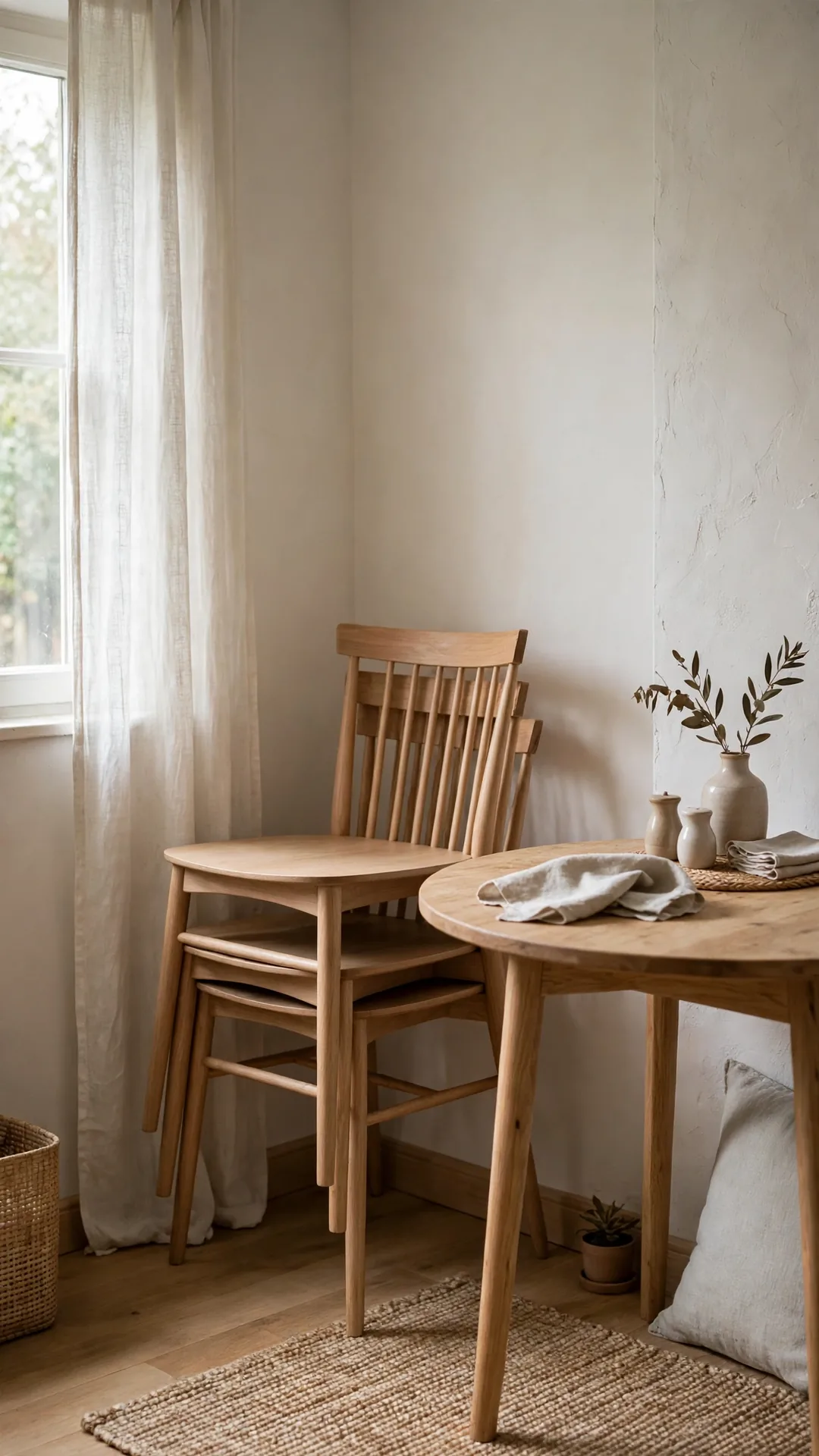
Stacking chairs solve the extra guest problem neatly. Two spares stack in a closet or corner. Daily seats stay at four without clutter.
How to do it:
- Pick chairs that stack at least four high.
- Keep each chair under 12 pounds for easy lifting.
- Store the stack on a small floor protector mat.
- Choose a style that matches your daily chairs.
Best for: Small homes that host bigger groups monthly.
Budget: $50 to $110 per chair
Quick tip: A stacked pair fits in 2 square feet of floor. Store cushions in a bin on top.
47. Tuck a Slim Bench Under the Edge
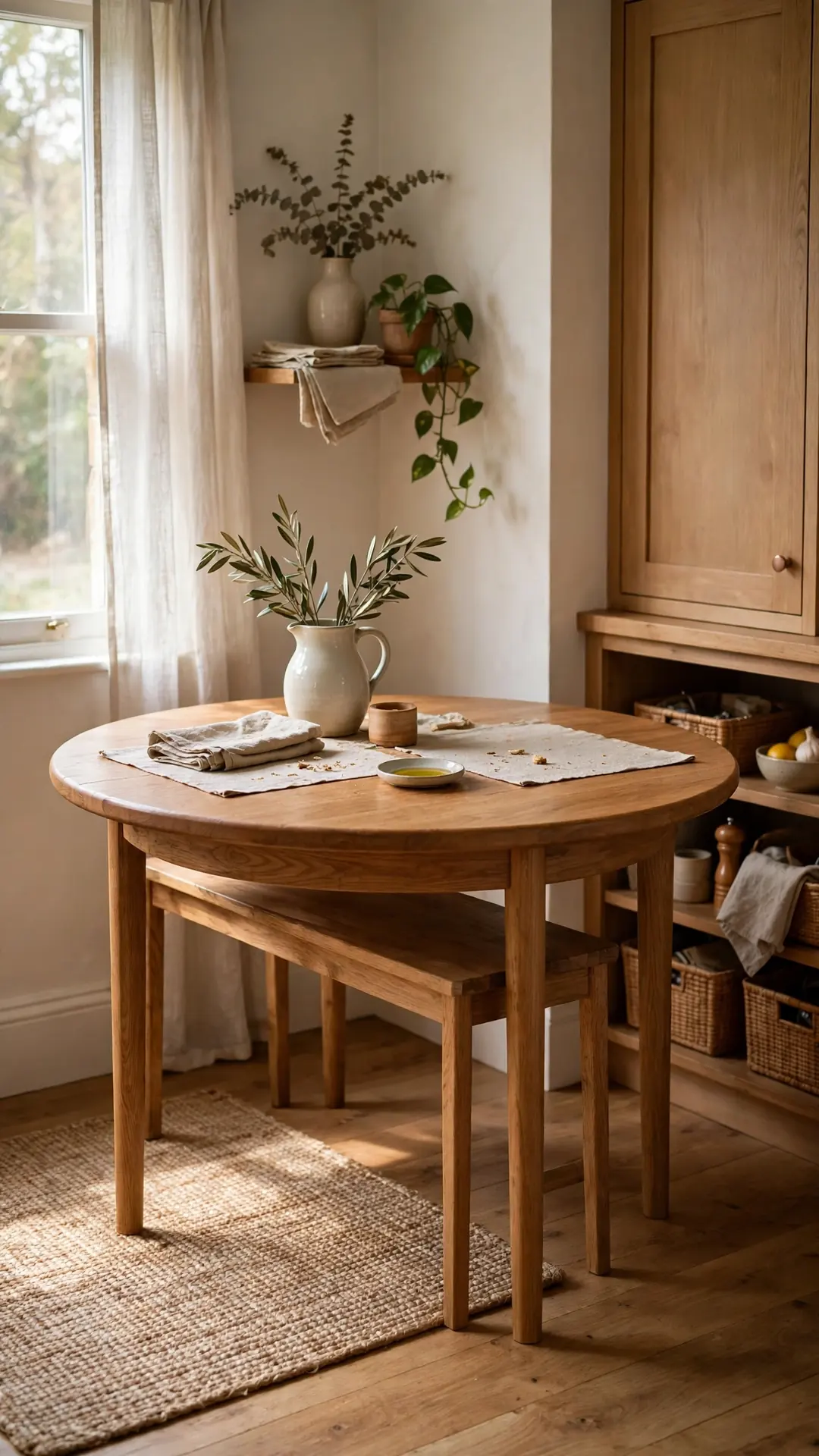
Benches support many round table ideas for small dining rooms. A slim bench tucks under the edge after meals. Two kids or one adult sit along the curve.
How to do it:
- Pick a bench 12 to 14 inches deep.
- Keep the length near the table diameter.
- Choose a flat top so it slides in cleanly.
- Add a thin cushion for longer sits.
Best for: Wall side seating and kids at meals.
Budget: $70 to $160
Quick tip: A bench frees the walk path when tucked away. It seats two kids with ease.
48. Keep One Folding Chair Ready for Guests
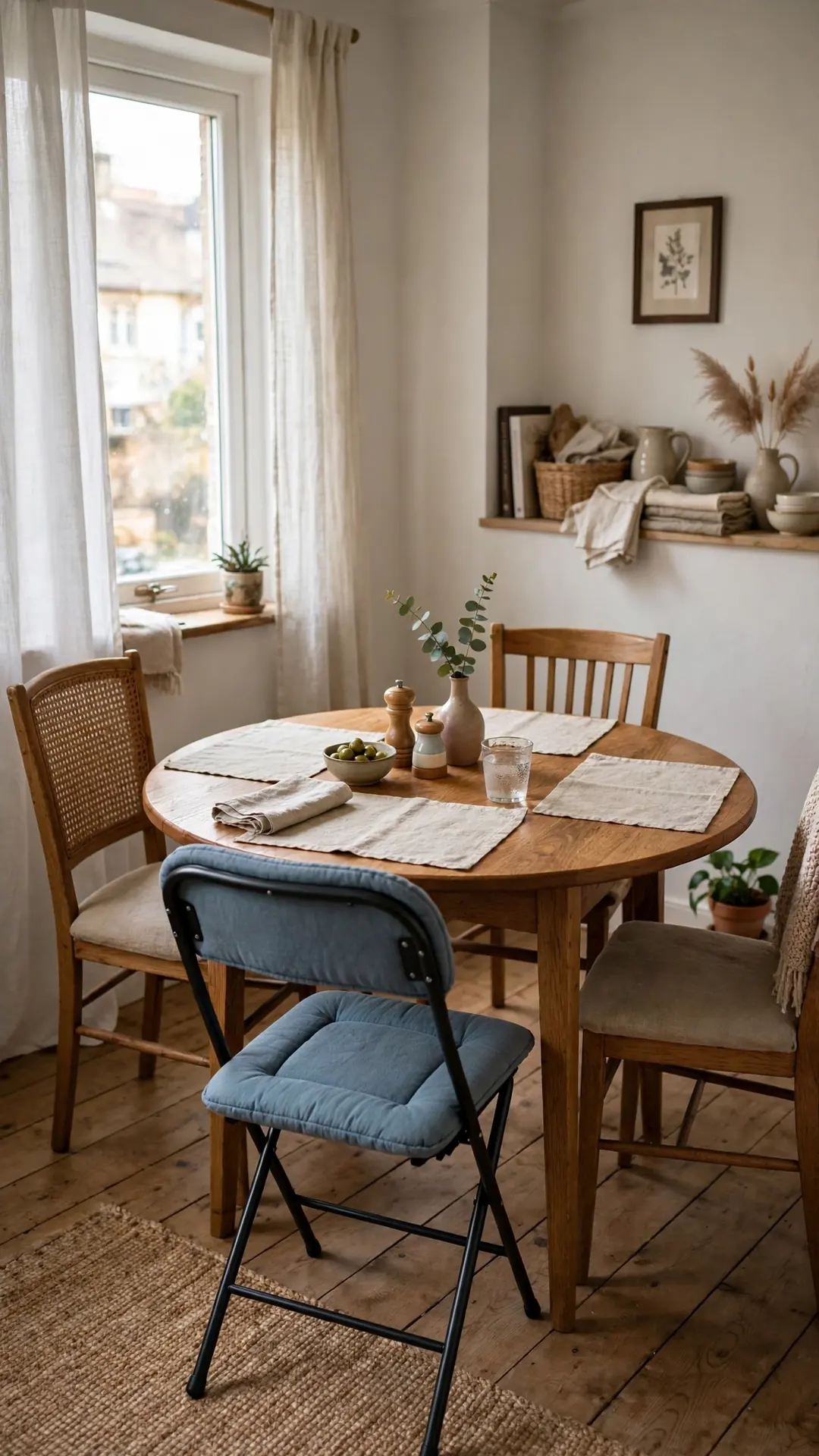
One folding chair in a closet covers surprise guests. The round table rim always has a spare gap. Daily life stays clear of extra chair legs.
How to do it:
- Pick a padded folding chair for guest comfort.
- Hang it flat on a closet door hook.
- Match the chair color to your daily set.
- Wipe the frame before storage to skip rust spots.
Best for: Homes that host friends with little notice.
Budget: $30 to $70
Quick tip: One spare chair beats a permanent fifth seat. Keep it folded behind a door daily.
49. Match the Table Tone to Your Floor

A table tone close to the floor blends the base in. The room reads calmer and slightly larger. Contrast lovers can flip the rule with one dark table.
How to do it:
- Hold a wood sample against your floor in daylight.
- Stay within two shades of the floor tone.
- Use the rug to bridge any tone gap.
- Keep chair tones between table and floor shades.
Best for: Open plan rooms with wood floors.
Budget: $200 to $500
Quick tip: Blended tones make small zones feel wider. Test samples at home in daylight first.
50. Echo the Curve With Round Placemats
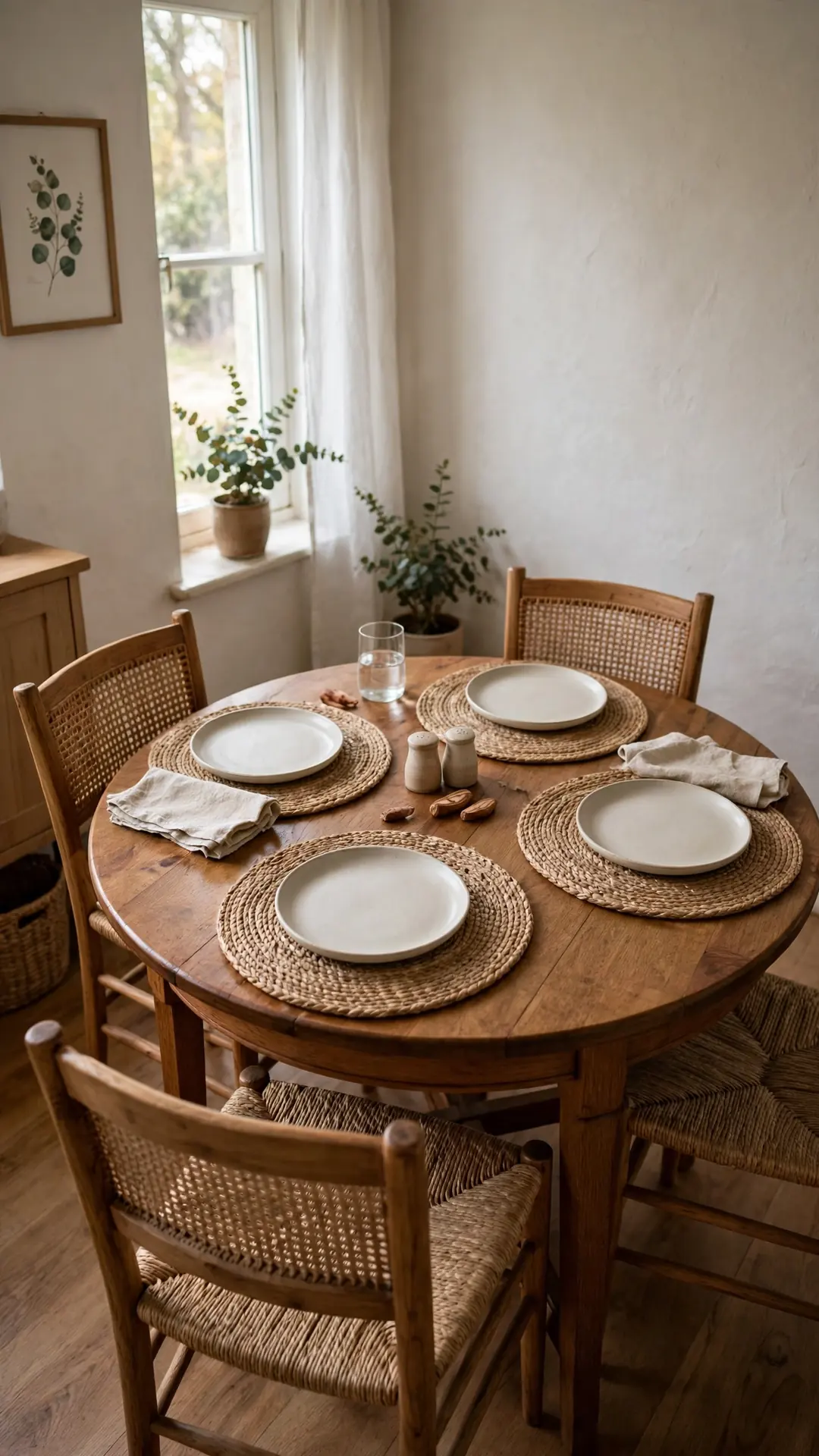
Round placemats echo round table ideas for small dining rooms neatly. The small circles repeat the table shape at each seat. They also mark clear places for kids.
How to do it:
- Pick mats 13 to 15 inches across.
- Leave 2 inches between mats on a 42 inch top.
- Choose cork or woven styles that wipe clean.
- Store mats flat in a drawer or on a hook.
Best for: Daily family meals and quick place setting.
Budget: $15 to $40 per set
Quick tip: Round mats stop plates sliding toward the rim.
51. Cross Two Runners Over the Tabletop
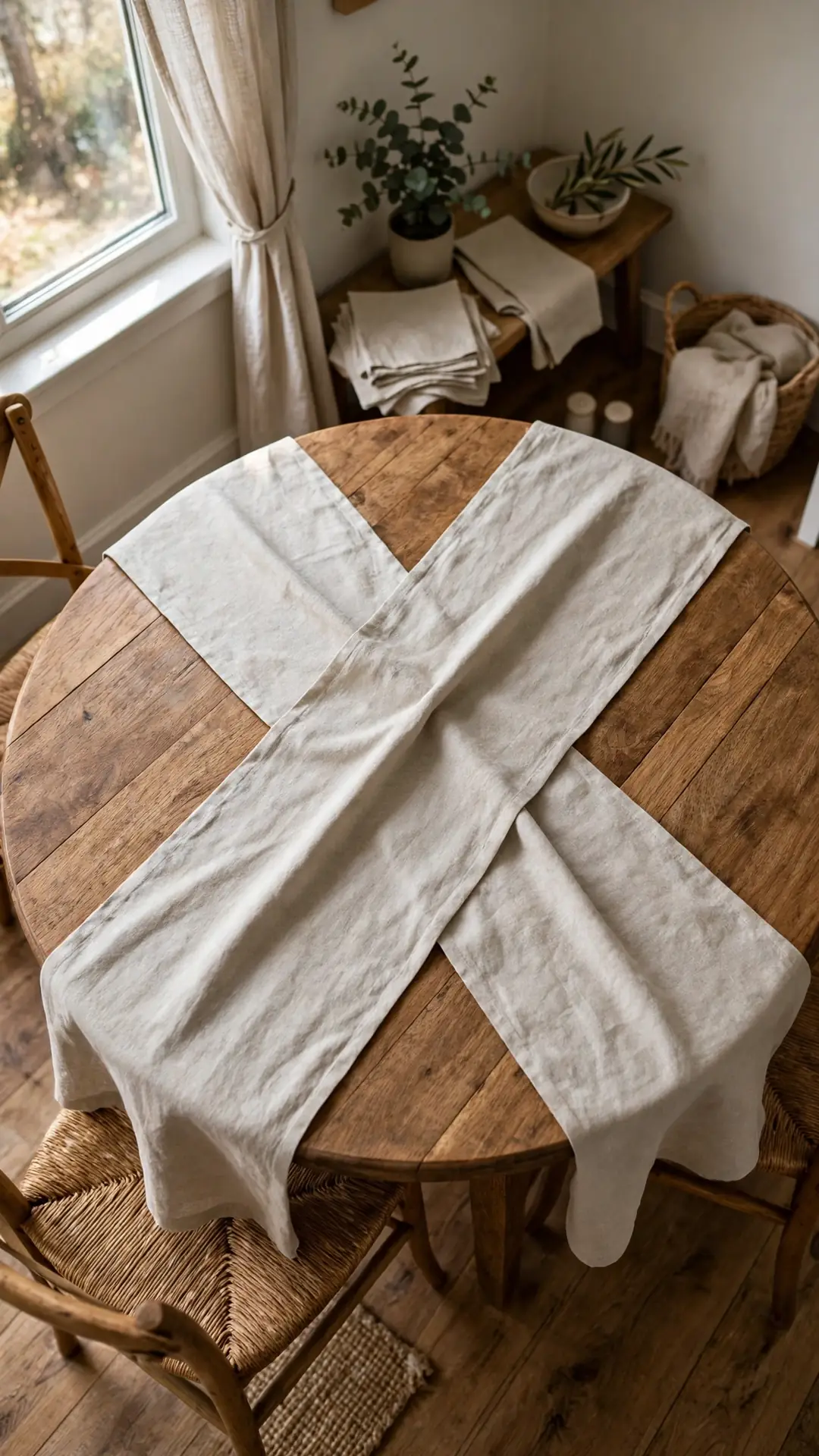
Two runners crossed over a round top look finished fast. The cross marks four settings around the circle. Bare wood still shows at the edges.
How to do it:
- Pick runners 12 to 14 inches wide.
- Choose a length near the diameter plus 12 inches.
- Lay the second runner at a right angle.
- Keep the center crossing flat under dishes.
- Choose washable fabric since runners catch crumbs daily.
Best for: Plain tops that need a quick lift.
Budget: $20 to $50
Quick tip: Linen runners soften a glass or stone top.
52. Keep the Centerpiece Low and Small

A low centerpiece keeps faces visible across the table. Bowls and short vases beat tall flowers here. Pull it off in seconds when dishes land.
How to do it:
- Keep centerpieces under 6 inches tall.
- Use a bowl 10 to 12 inches wide at most.
- Group three small items instead of one tall one.
- Leave the piece light enough to move with one hand.
Best for: Daily tables that host every meal.
Budget: $10 to $35
Quick tip: A fruit bowl earns its spot at breakfast too. Move it aside when homework takes over.
53. Choose a Matte Finish for Daily Wear
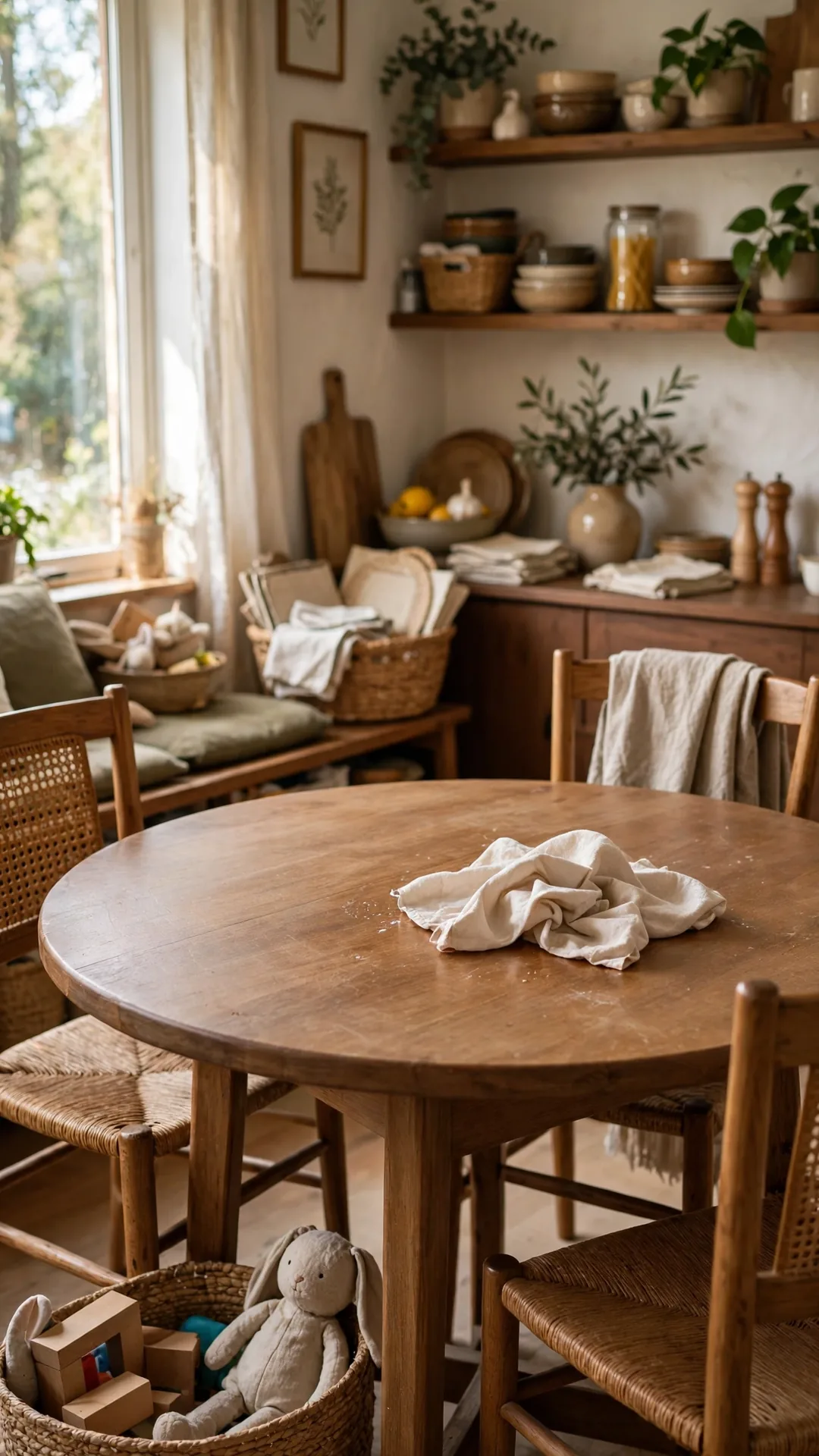
Matte finishes suit busy round table ideas for small dining rooms. The low sheen hides crumbs, rings and fingerprints. Daily wiping keeps the top looking even.
How to do it:
- Choose matte lacquer or hard oil finishes.
- Set hot pans on trivets to protect the finish.
- Clean with a damp cloth and mild soap.
- Skip glossy polishes that fight the matte look.
Best for: Family tables in daily heavy use.
Budget: $220 to $520
Quick tip: Test cleaners on the underside edge first. A soft cloth prevents tiny scratches over time.
54. Test the Final Size in Cardboard First
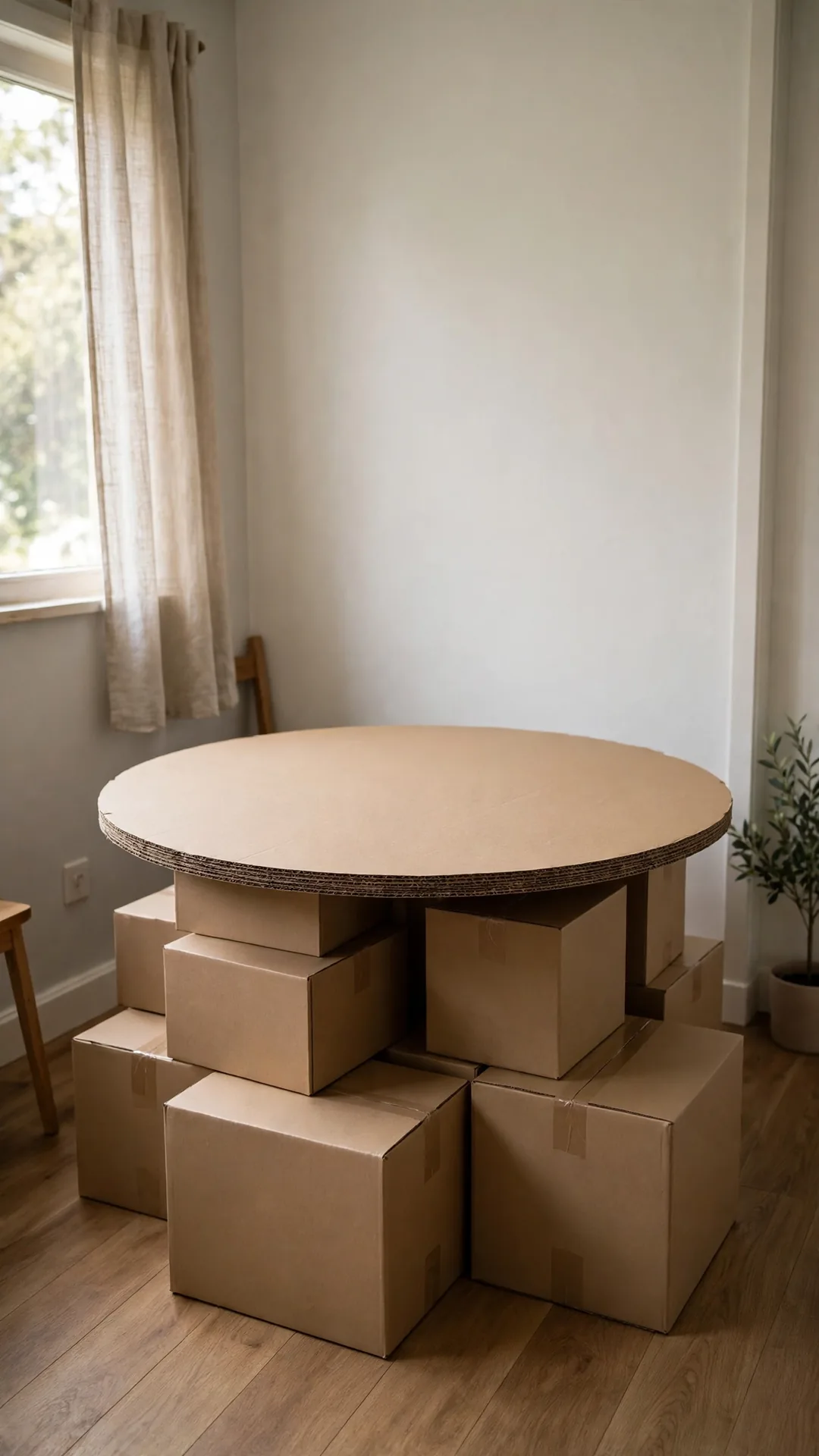
A cardboard circle tests the final size at home. Cut the diameter you plan to buy and live with it. The flat disc shows chair and walk space honestly.
How to do it:
- Cut a 42 or 48 inch circle from packing boxes.
- Rest it on your old table or stacked boxes.
- Set full place settings and sit down to eat.
- Live with the size for two full days.
Best for: Anyone torn between two table sizes.
Budget: Under $10
Quick tip: Mark chair spots on the cardboard with tape.
Start With the Tape Measure
Your room decides the right diameter, not the showroom floor. Pick one of these round table ideas for small dining rooms and test the size in tape or cardboard first. Save the ideas that fit, and share the post with a friend who eats at a wobbly card table.

- 54 Round Table Ideas for Small Dining Rooms You’ll Love - November 16, 2026
- 52 Clever Headboard Ideas for Small Bedrooms Done Right - November 16, 2026
- 55 Curtain Ideas to Make Small Rooms Look Bigger to Copy Now - November 15, 2026