
A rug that ends mid-shin makes a small room feel chopped up. This rug size guide for small living rooms fixes that with tape, a tape measure and plain math. Every idea below is about size, fit and clearance, not color or pattern.
Here are 51 ways to size, place and test a rug before money leaves your pocket. Most checks cost nothing but tape and ten minutes. Start with the measuring ideas, then move to the leg rules.
1. Measure the Room Before You Shop
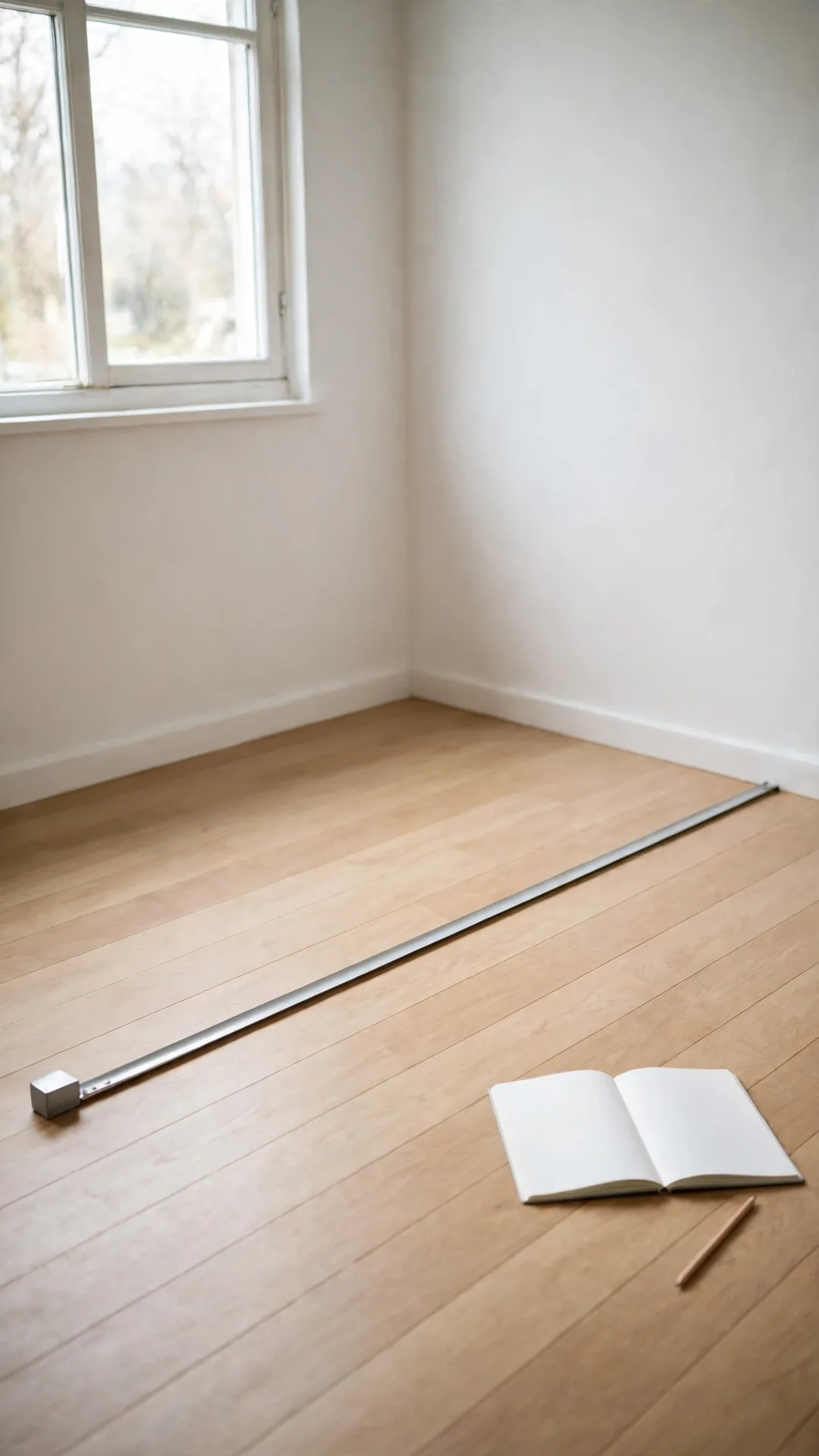
Any rug size guide for small living rooms starts with the room, not the rug rack. Write down the full length and width in inches before you browse a single size. Note doors, vents and the fireplace too, since each one steals floor from the rug.
How to do it:
- Measure wall to wall at the widest point, then again at the narrow end.
- Sketch the room on paper and mark every door swing in inches.
- Write the seating zone size apart from the full room size.
- Keep the numbers on your phone for store trips.
Best for: Anyone starting from a bare floor.
Budget: Free
Quick tip: Measure twice on two different days. Rooms with sloped walls can read 2 inches apart between tries.
2. Tape Out the Size on the Floor
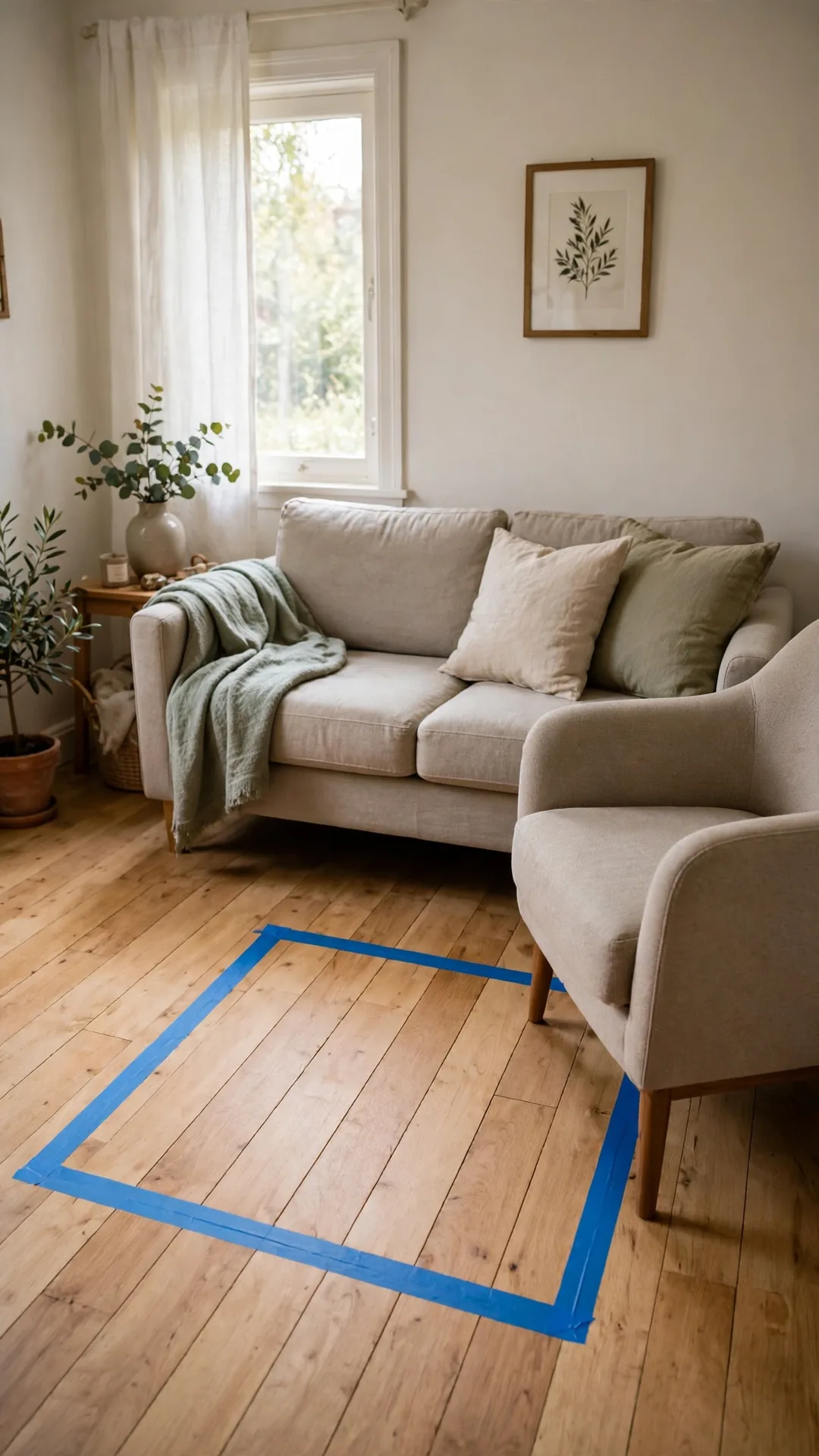
Painter's tape turns a guess into a shape you can walk around. Lay the exact rug size on the floor before you spend anything. Even the rug size guide from The Spruce starts with this same tape test.
How to do it:
- Mark the corners first, then run tape along each side.
- Set the coffee table inside the outline where it will live.
- Walk the normal paths through the room for a full day.
- Check that chair legs land where you expect them to land.
Best for: Renters and anyone torn between two sizes.
Budget: $4 to $8 for a roll of painter's tape
Quick tip: Photograph the outline from the doorway before you peel it up. The photo settles most size debates at the store.
3. Size the Rug to the Seating Group
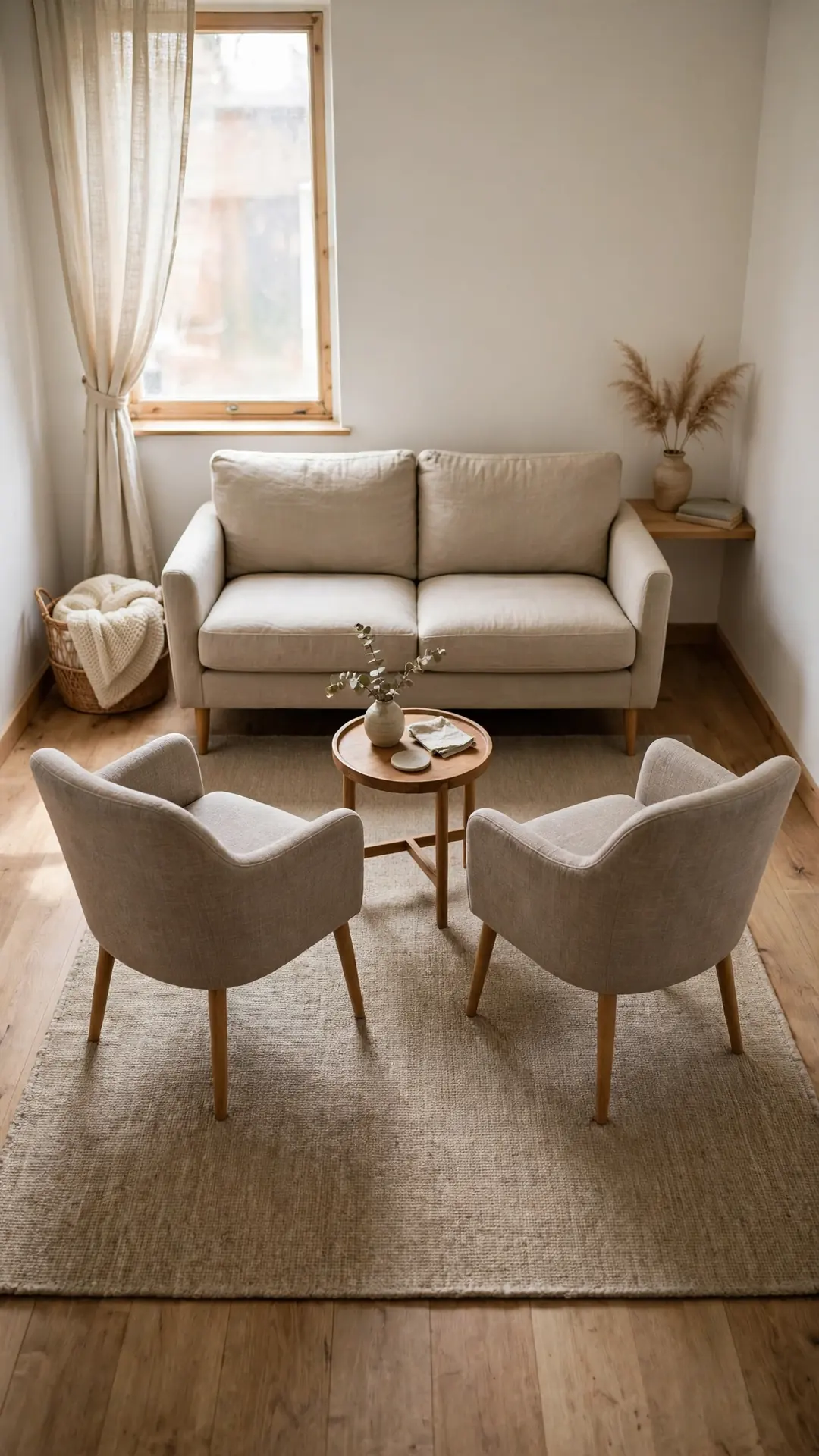
A rug belongs to the sofa and chairs, not to the walls. Measure the group as one block, from the sofa back to the chair fronts. These home decor ideas for a living room in a small space keep the surrounding look calm.
How to do it:
- Push the seating into its final spot before you measure.
- Measure the group length and width in inches.
- Add 6 to 12 inches of rug beyond the group on open sides.
- Ignore floor that holds bookcases, desks or the TV stand.
Best for: Rooms where seating fills only half the floor.
Budget: Free
Quick tip: If the group measures 7 by 9 feet, start at 6 by 9 and 8 by 10.
4. Start With 5 by 7 in Tiny Rooms
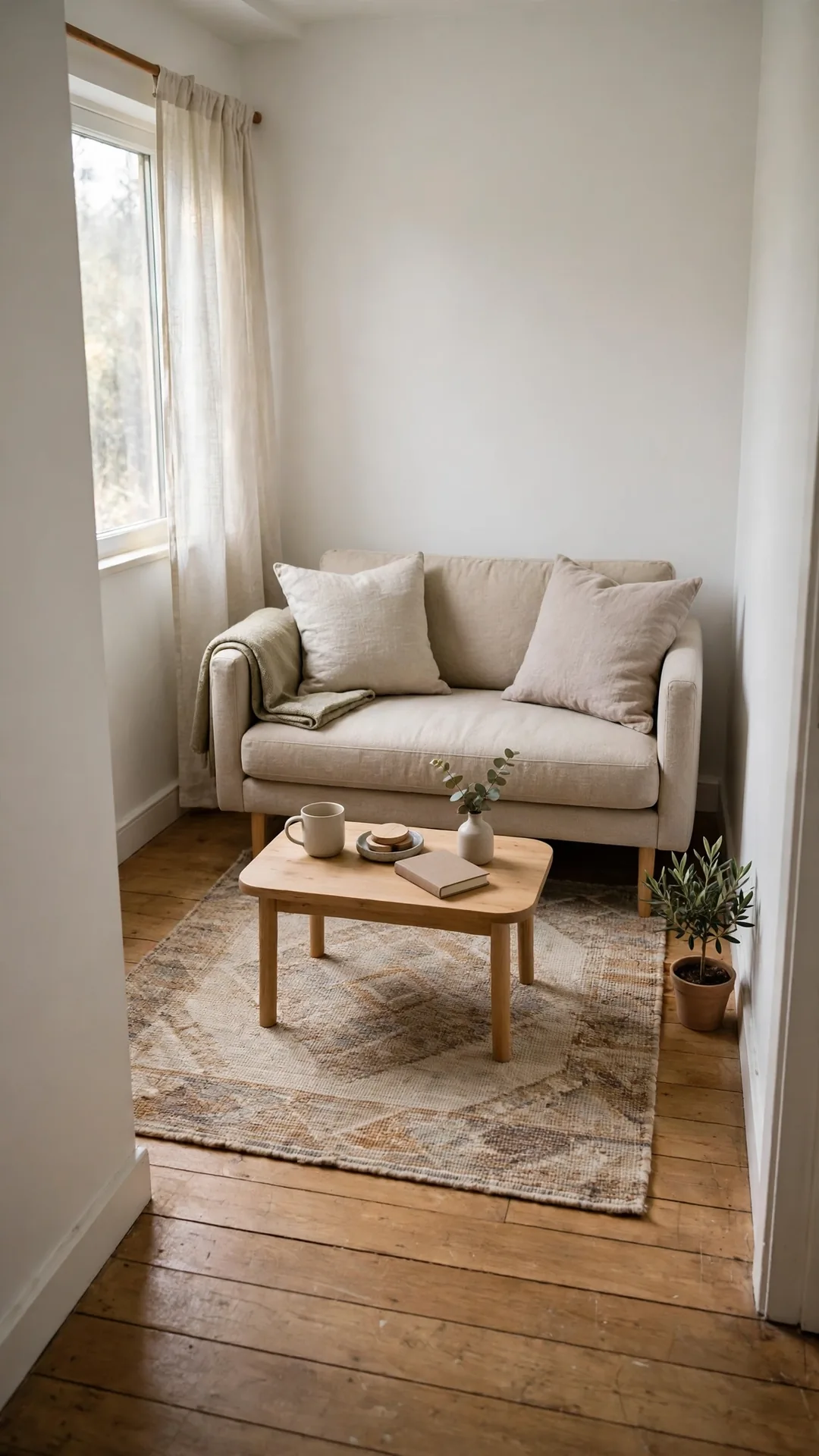
One rug size guide for small living rooms rule never changes: tiny rooms start small. In a room under 100 square feet, a 5 by 7 rug usually fits the seating zone. It holds a loveseat front and a coffee table with room to spare.
How to do it:
- Confirm the room is under about 10 by 10 feet.
- Center the rug on the seating, not on the room.
- Keep at least 6 inches of bare floor at the walls.
- Choose the 5 by 7 over a 4 by 6, which reads as a mat.
Best for: Studios and living rooms under 100 square feet.
Budget: $50 to $150
Quick tip: A 5 by 7 that touches the sofa beats a 6 by 9 that blocks a door.
5. Try 6 by 9 for Most Small Rooms
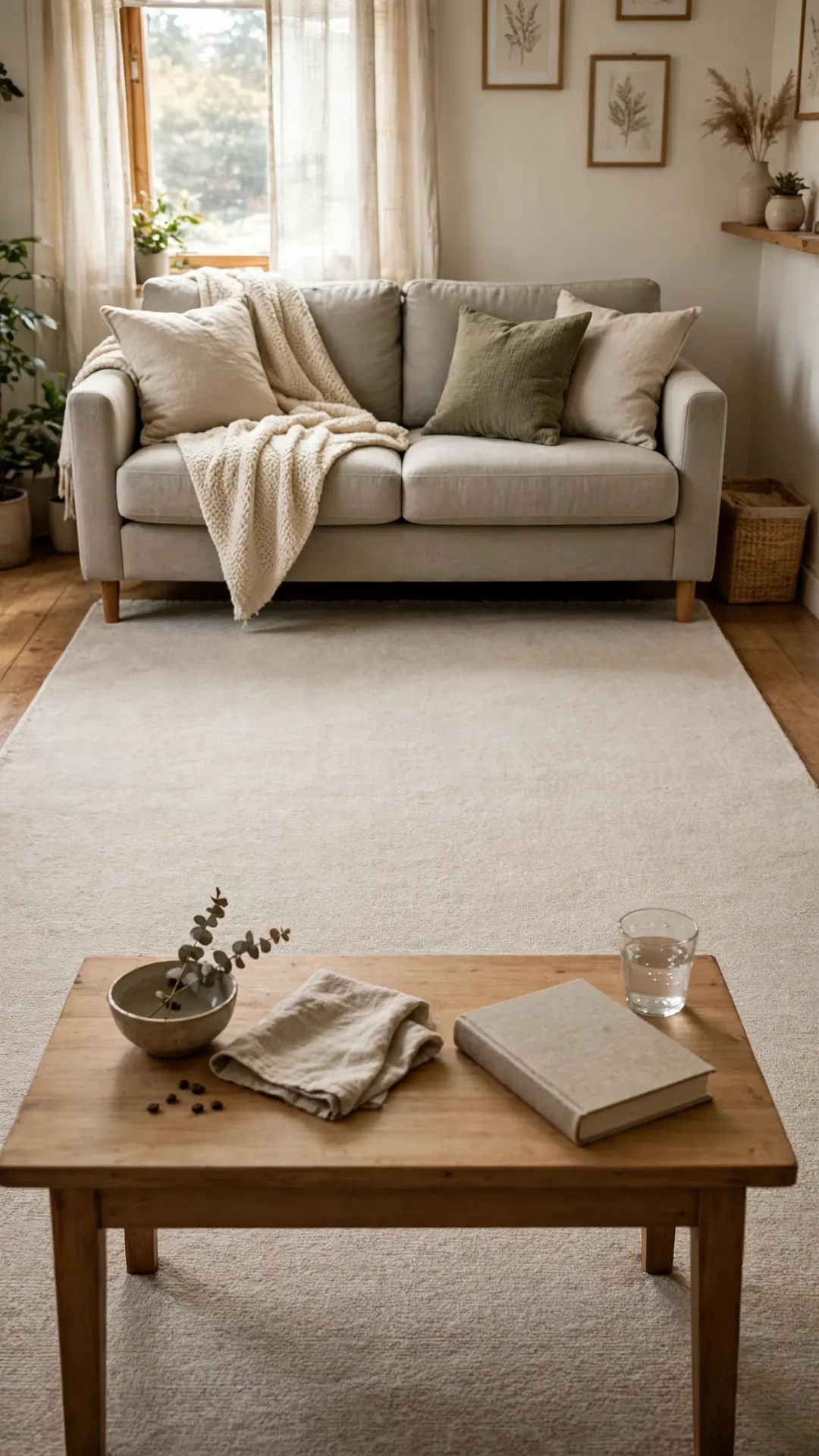
The 6 by 9 is the workhorse size for small living rooms. It takes a full sofa front, two chair fronts and a coffee table. Most rooms from 100 to 130 square feet land here.
How to do it:
- Tape out 72 by 108 inches in the seating zone.
- Check for 8 inches or more of floor at the side walls.
- Slide the long side under the sofa front by 6 inches.
- Leave the short ends even past the coffee table.
Best for: The common 10 by 12 and 11 by 13 foot room.
Budget: $80 to $250
Quick tip: If the tape outline crowds a doorway, drop to a 5 by 8 before you order.
6. Step Up to 8 by 10 With Care
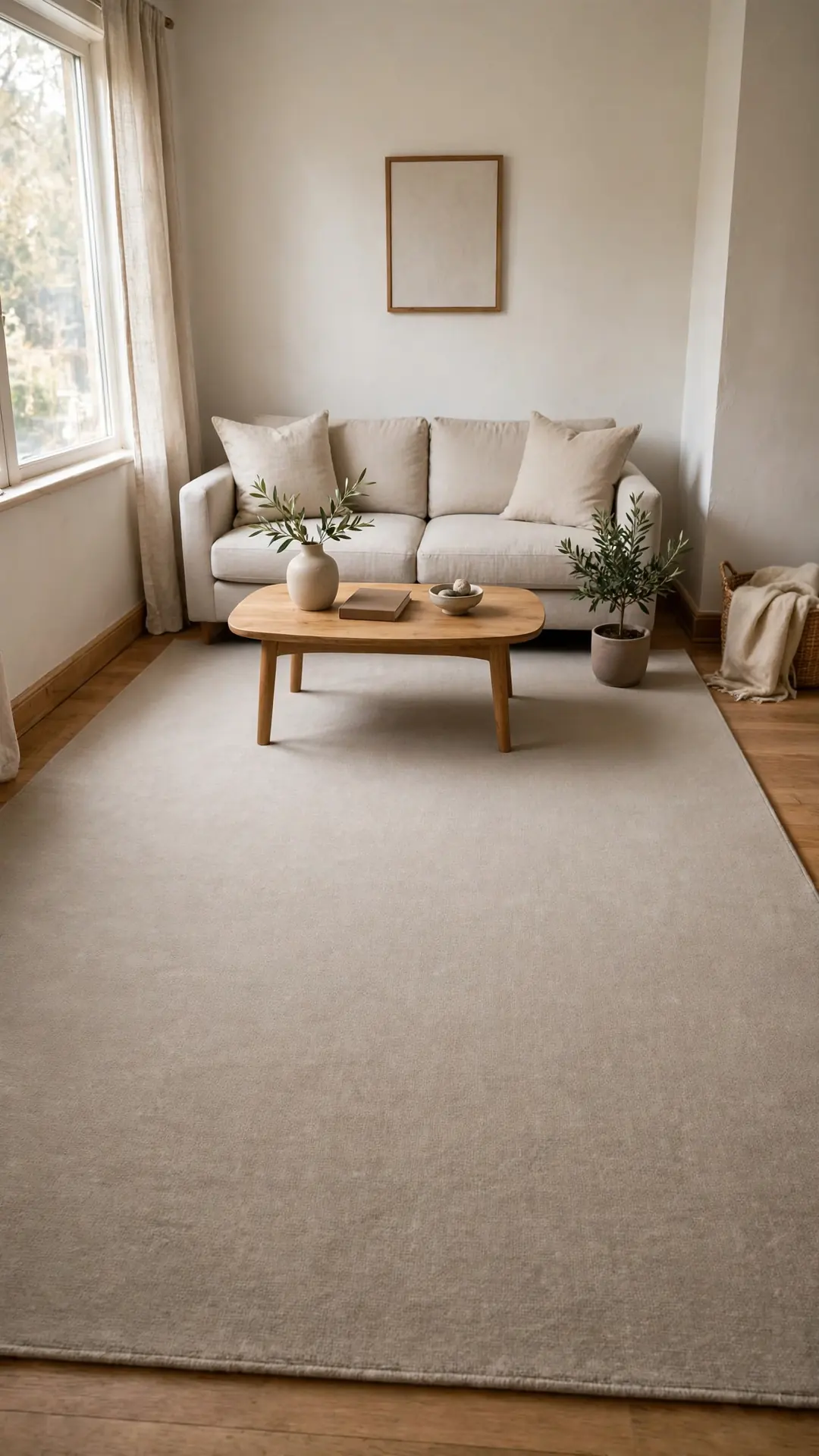
The next rug size guide for small living rooms step is the 8 by 10 step up. It works only when the border stays even on all four sides. In a 12 by 14 foot room it can hold every leg of the group.
How to do it:
- Tape out 96 by 120 inches and check each wall gap.
- Keep at least 6 inches of bare floor at every wall.
- Confirm no door swings across the taped corners.
- Count the pad and pile height against door clearance.
Best for: Small rooms with one floating seating group.
Budget: $150 to $400
Quick tip: An 8 by 10 that touches baseboards looks like carpet, not a rug. Pull it back to an even border.
7. Learn the Standard Sizes First
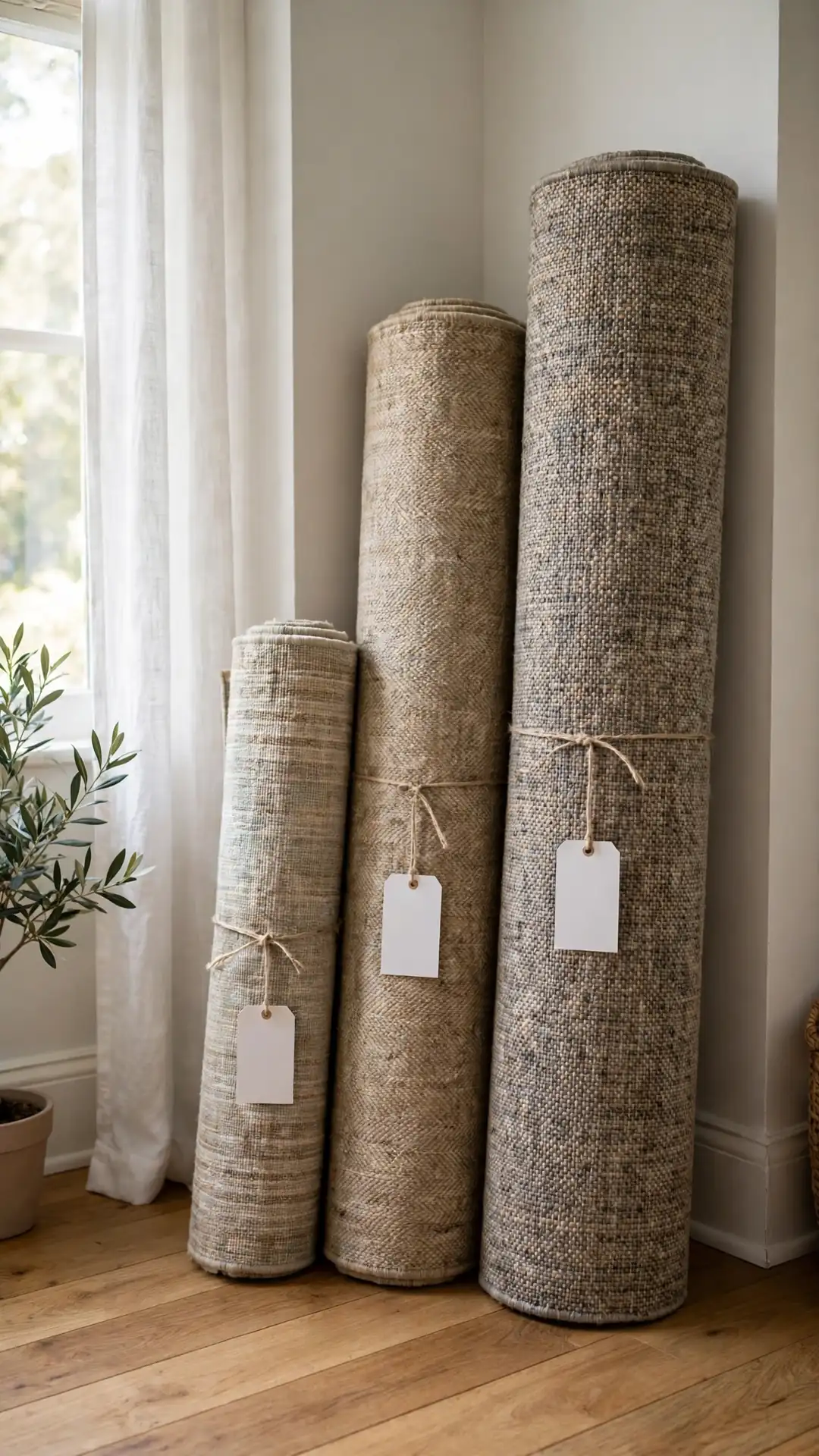
Rugs come in a short ladder of set sizes, from 2 by 3 up, not any size you dream up. Sizes run 3 by 5, 4 by 6, 5 by 8, 6 by 9 and 8 by 10. Learn the ladder and your room numbers do the rest.
How to do it:
- Write the ladder beside your room measurements.
- Cross off sizes wider than the room minus 16 inches.
- Note that some brands call 5 by 7 a 5 by 8.
- Check the true size on the tag, not the shelf sign.
Best for: First-time rug buyers.
Budget: Free
Quick tip: Sizes vary by up to 3 percent between brands. A listed 8 by 10 can arrive at 7 feet 9 inches.
8. Leave 8 to 12 Inches of Border
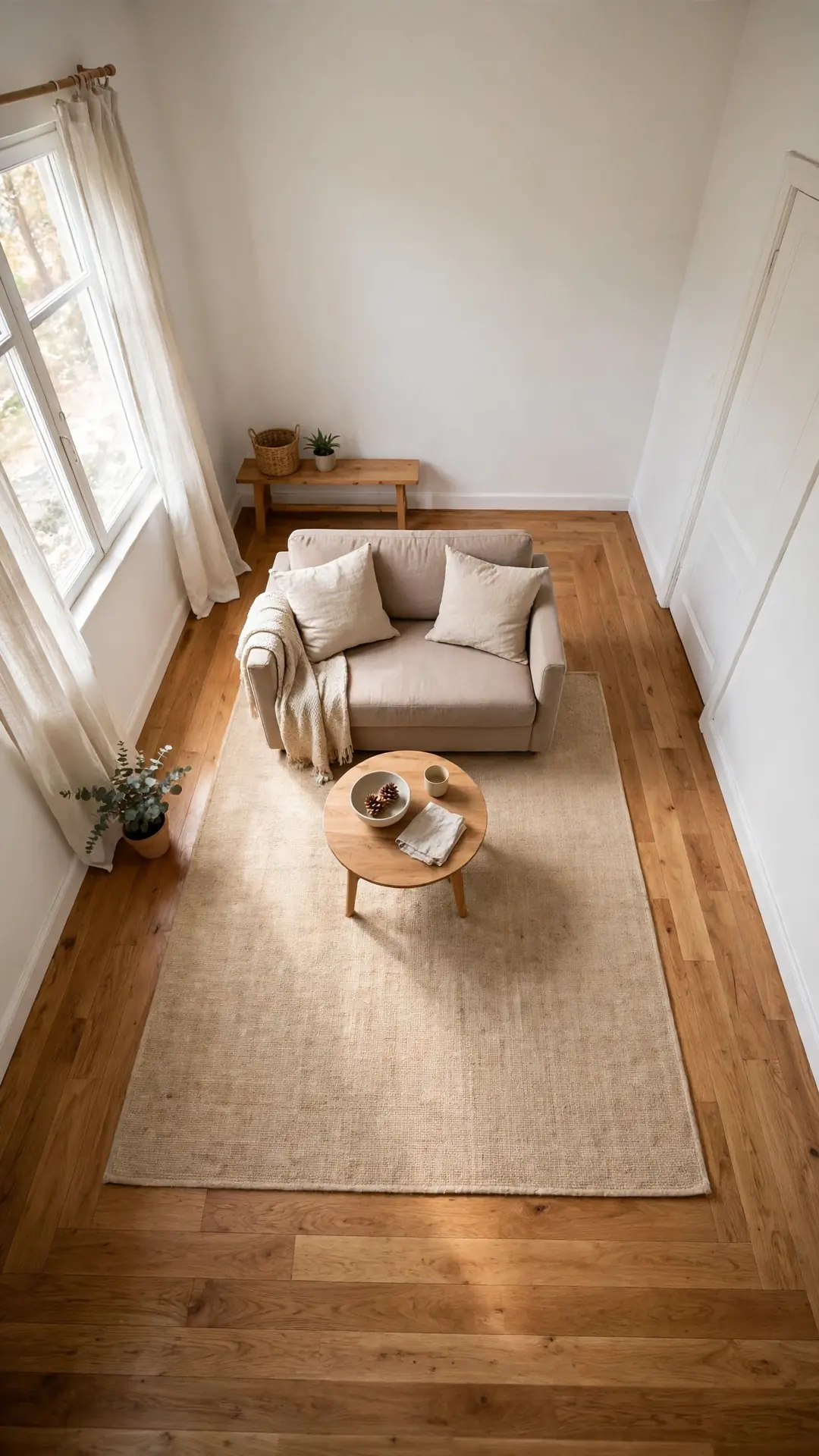
Big-room guides ask for 18 inches of bare floor around a rug. Small rooms cannot spare that much, so scale the border down. A band of 8 to 12 inches frames the rug without wasting floor.
How to do it:
- Measure the gap at all four walls after taping the outline.
- Adjust the outline until the two side gaps match.
- Let the gap behind the sofa shrink to 4 inches if needed.
- Keep the doorway side gap wide for traffic.
Best for: Rooms under 12 feet wide.
Budget: Free
Quick tip: Even gaps matter more than wide gaps. A matched 8 inches reads calmer than 14 on one side and 3 on the other.
9. Rest the Front Legs on the Rug
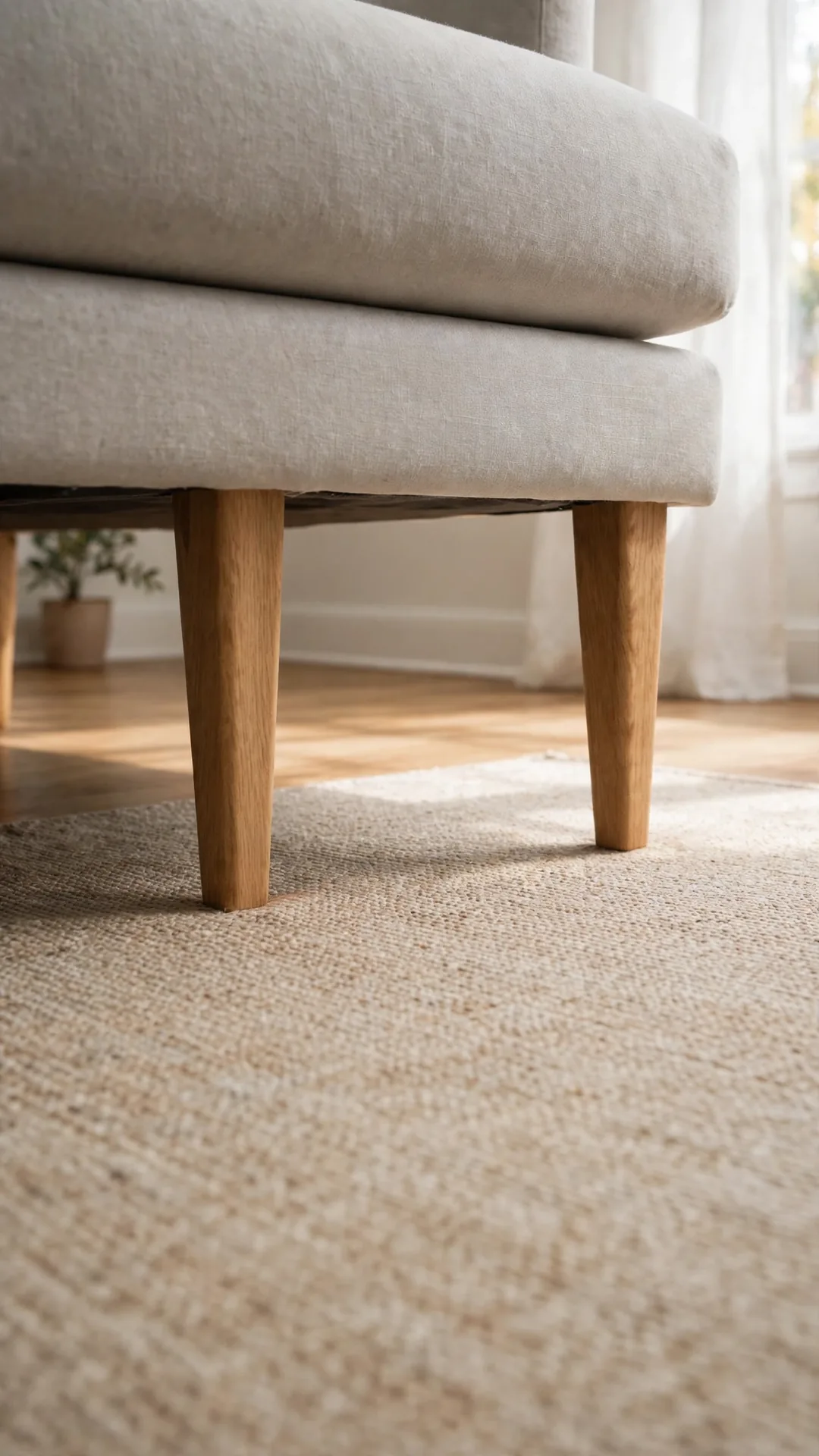
The front-legs rule anchors this rug size guide for small living rooms. Set the sofa so its front legs stand on the rug and its back legs stay on the floor. Houzz collects area rug rules that all start with this front-legs fix.
How to do it:
- Slide the rug under the sofa front by 6 to 8 inches.
- Check that both front legs sit flat, with no edge under one leg.
- Repeat the same overlap for each armchair.
- Keep the rug straight, so both legs take the same overlap.
Best for: Sofas pushed near or against a wall.
Budget: Free once the rug size is right
Quick tip: If a front leg lands half on the edge, shift the rug 2 inches rather than the sofa.
10. Slide 6 Inches Under the Sofa
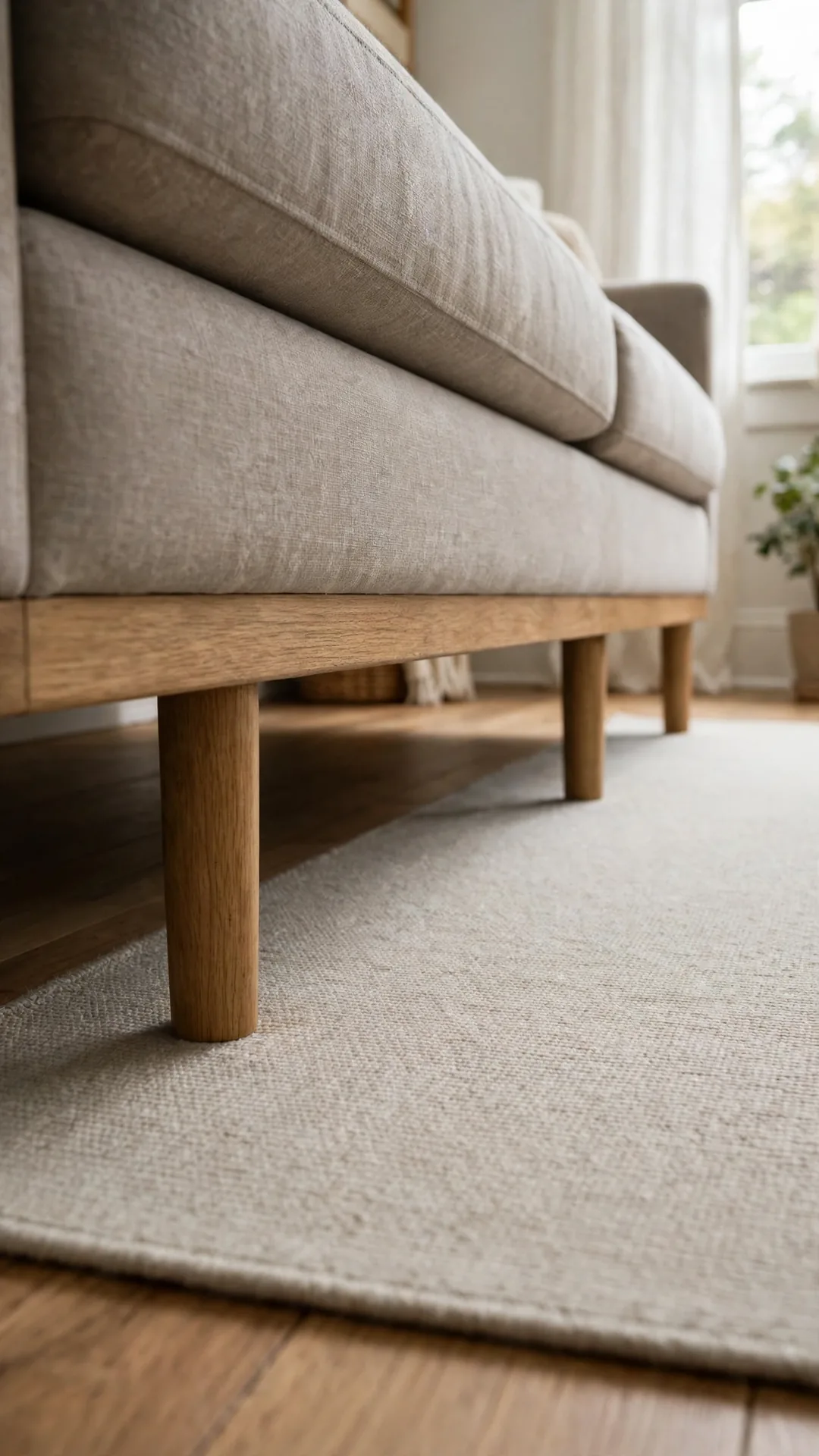
Six inches of rug under the sofa front is the sweet spot for most sofas. Less than 4 inches looks like a mistake and lets the edge curl free. More than 10 inches wastes rug that the room could show.
How to do it:
- Mark 6 inches on the rug edge with a strip of tape.
- Slide the rug in until the tape line hides under the sofa.
- Check both front legs for the same depth of overlap.
- Vacuum lines will show if the rug sits crooked.
Best for: Standard sofas 30 to 36 inches deep.
Budget: Free
Quick tip: Deep sofas near 40 inches can take 8 inches of overlap. Shallow apartment sofas need only 5.
11. Run Past Each Sofa End by 6 Inches
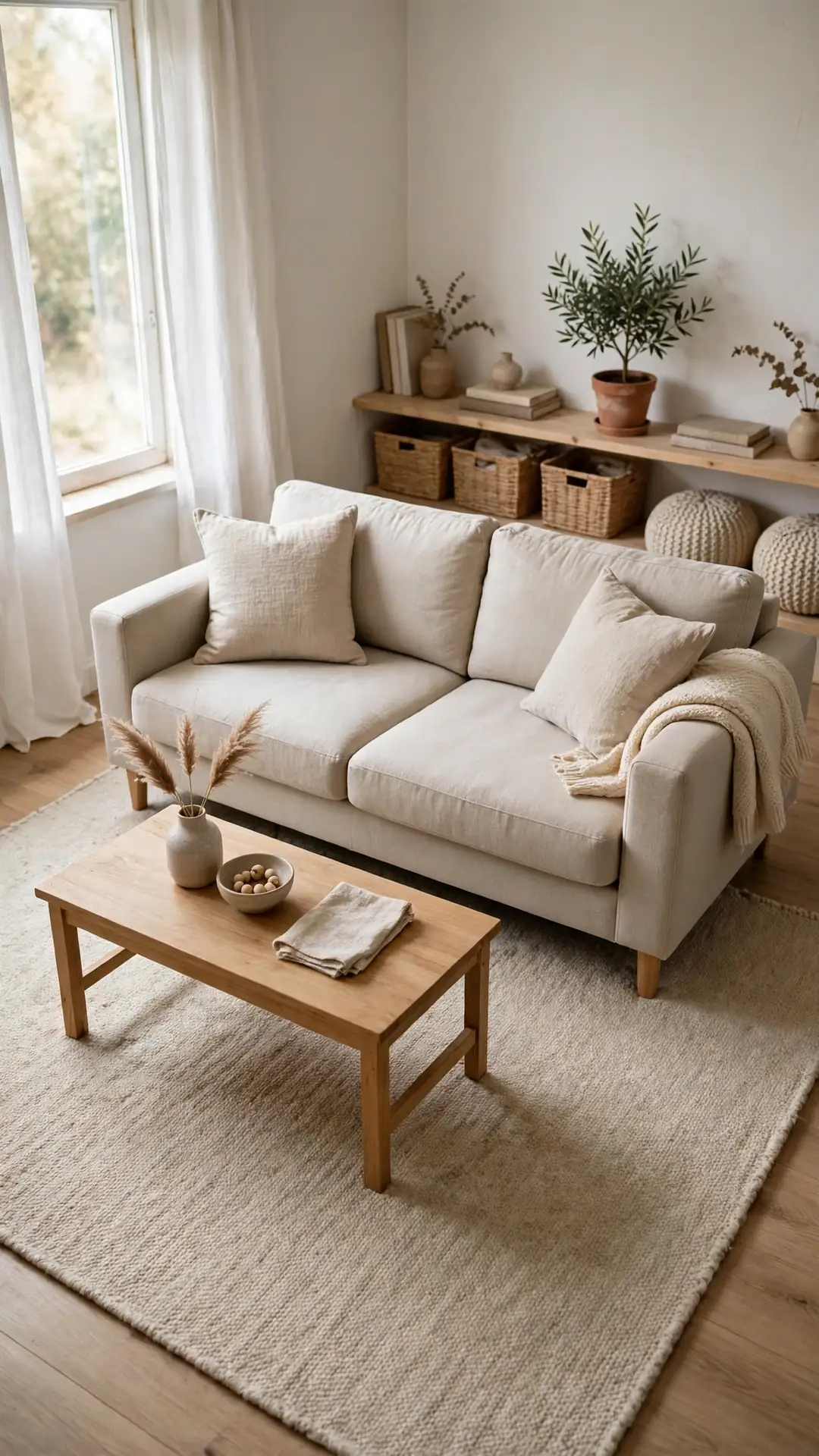
A sound rug size guide for small living rooms keeps rug showing past the sofa. Aim for at least 6 inches of rug beyond each end of the sofa frame. The group then reads as one block instead of a sofa on a raft.
How to do it:
- Measure the full sofa length, arm to arm, in inches.
- Add 12 inches to find your minimum rug length.
- For an 84 inch sofa, that means a rug 96 inches long or more.
- Center the sofa on the rug so both ends match.
Best for: Three-seat sofas in rooms 11 feet wide or more.
Budget: Free at the measuring stage
Quick tip: One end showing 10 inches and the other 2 looks like an error. Shift the rug, not the sofa.
12. Fit All Four Legs When You Can
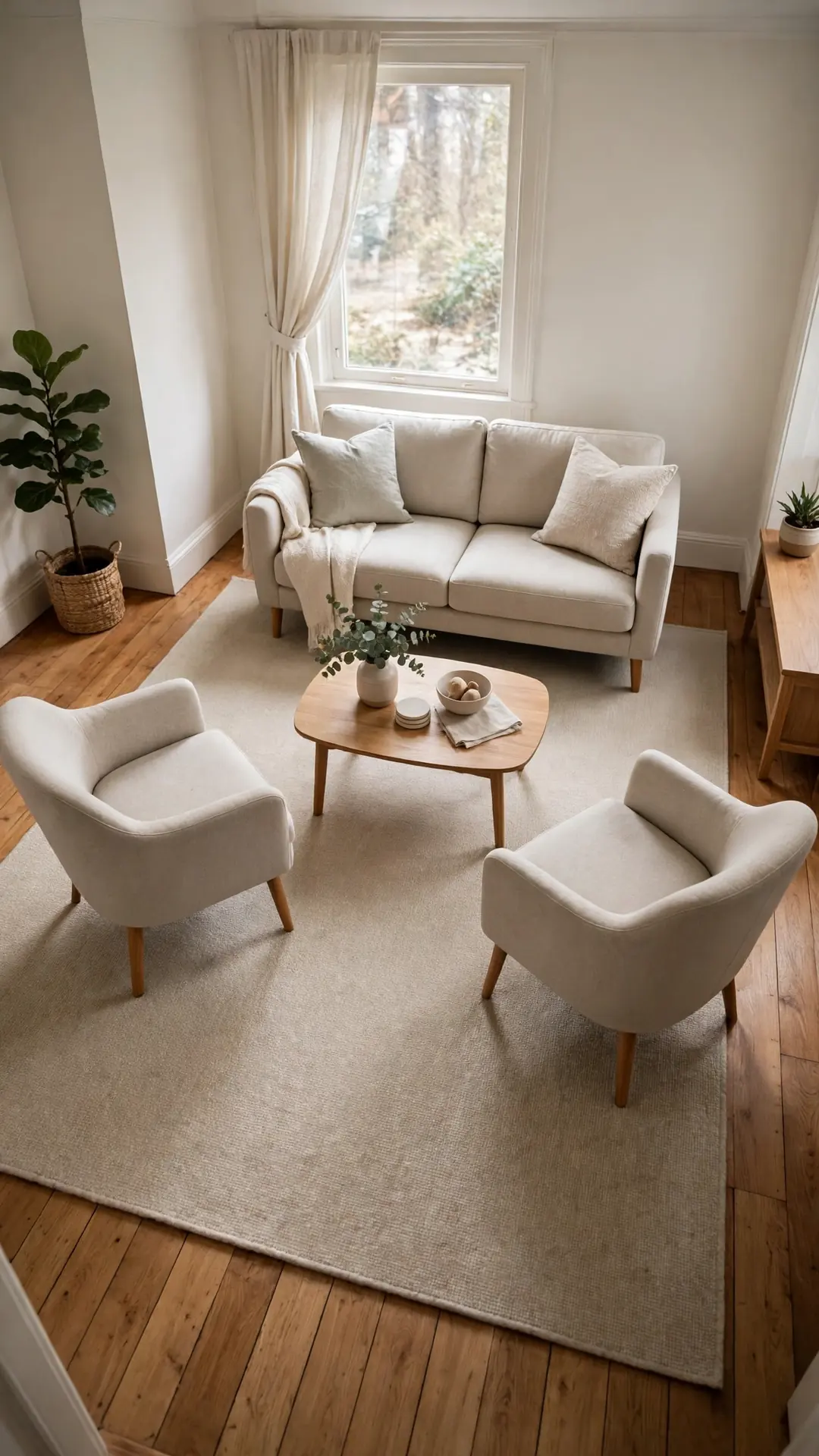
When the border math allows it, put every leg of every seat on the rug. The group feels settled, and chairs stop drifting off the edge. This usually calls for an 8 by 10 in a small room.
How to do it:
- Measure the group with chairs pulled out to sitting depth.
- Add 8 inches of rug beyond the back legs of the sofa.
- Check that side chairs clear the rug edge when turned.
- Confirm the wall border stays at 6 inches or more.
Best for: Floating groups in open plan rooms.
Budget: $150 to $400 for the larger size
Quick tip: All legs on works best when the group sits away from walls. Against a wall, front legs alone look right.
13. Float a Small Rug Under the Table Only
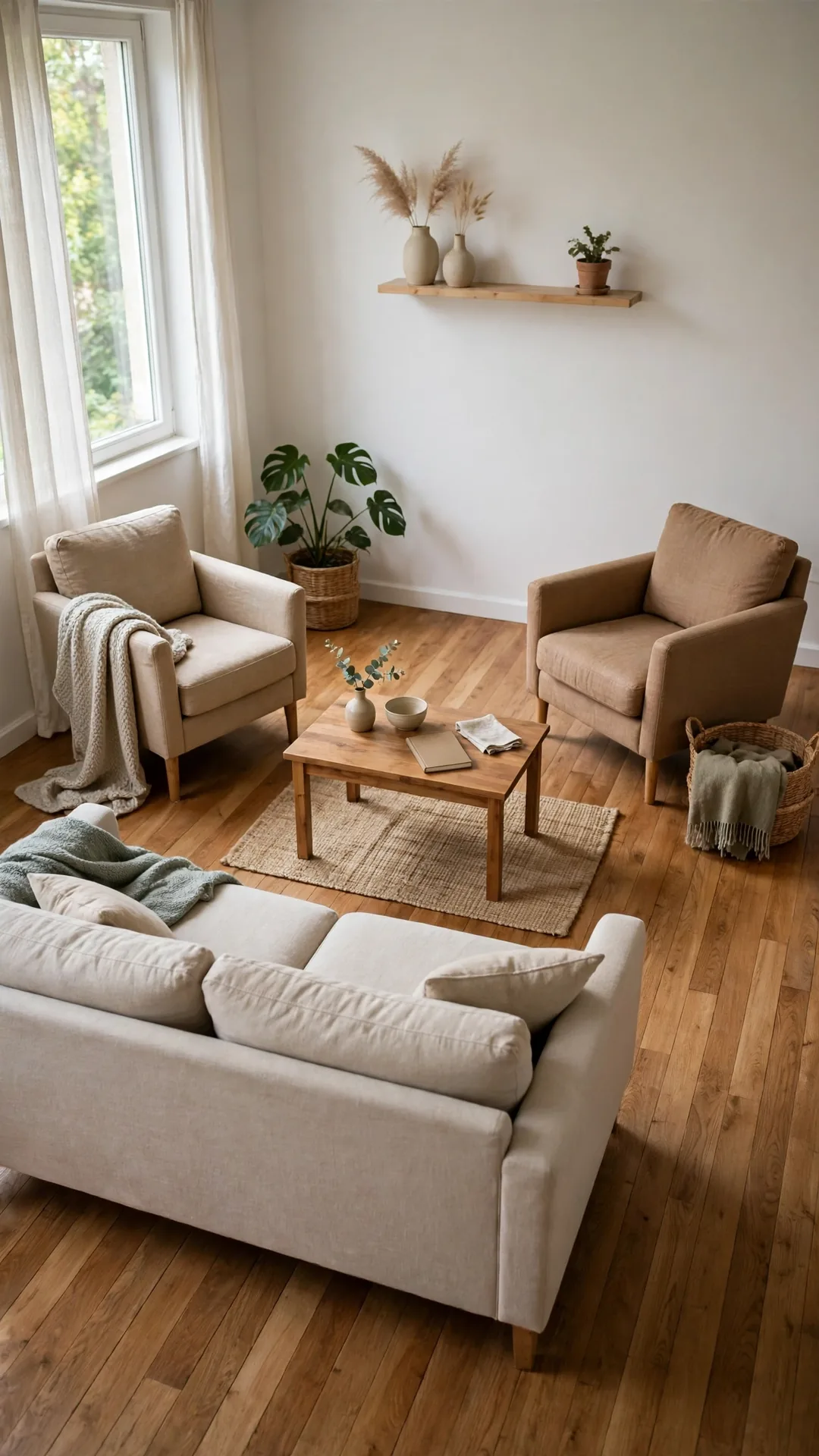
One rug size guide for small living rooms option skips legs on purpose. A 4 by 6 or 5 by 7 rug under only the coffee table can suit a very tight room. It reads as a deliberate island, not a sizing error.
How to do it:
- Keep the rug at least 12 inches wider than the table.
- Center it on the table, not on the seating group.
- Leave equal bare floor between rug and sofa on both sides.
- Pick a flat, firm rug so the table never rocks.
Best for: Rooms too tight for the front-legs rule.
Budget: $40 to $120
Quick tip: This float trick fails with a 3 by 5. Under-table rugs need real presence or they look lost.
14. Give Every Seat the Same Leg Rule
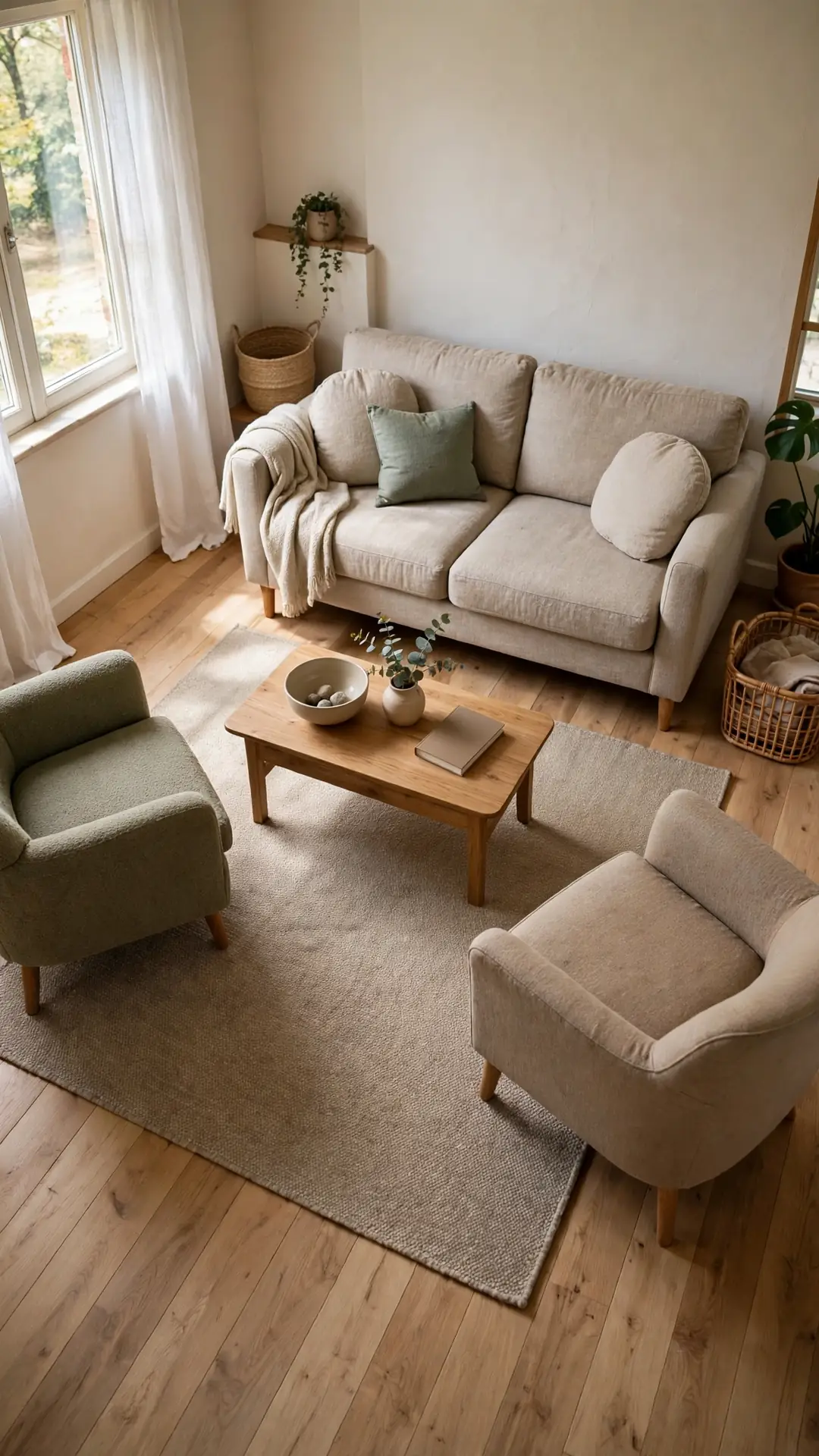
Mixed leg rules make a group look unsettled. If the sofa front legs sit on the rug, the chairs should match. One chair fully off the rug reads as an afterthought.
How to do it:
- Set the sofa overlap first, at 6 to 8 inches.
- Pull each chair in until its front legs match that line.
- Turn chairs at an angle only if both front legs stay on.
- Step back and check the rug edge line across all seats.
Best for: Sofa plus two armchair layouts.
Budget: Free
Quick tip: Swivel chairs need extra rug depth, since the base sweeps wider than fixed legs.
15. Fix the Wobble When Legs Straddle
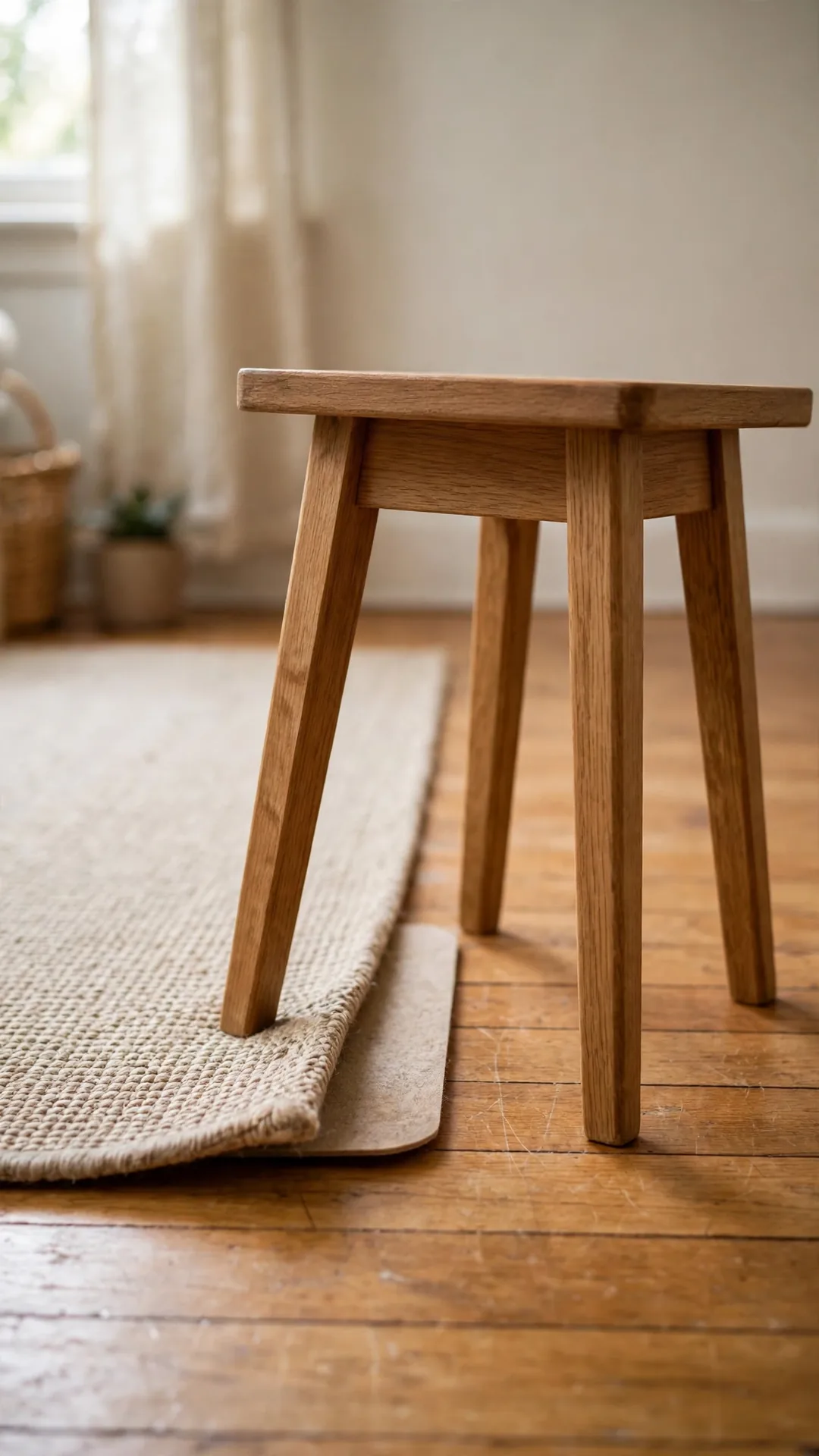
A leg that straddles the rug edge rocks every time someone leans. Move the rug so the leg sits fully on or fully off. A thin pad under the corner can also level a small gap.
How to do it:
- Find every leg that lands within 2 inches of the edge.
- Shift the rug in 3 inch steps until legs clear the edge.
- Slip a flat felt pad under the rug corner if shifting fails.
- Test each seat with real weight before you call it done.
Best for: Side tables and light accent chairs.
Budget: $5 to $15 for felt pads
Quick tip: Never shim a sofa leg with folded cardboard. It crushes flat in a week and the wobble returns.
16. Size a Rug for a Loveseat
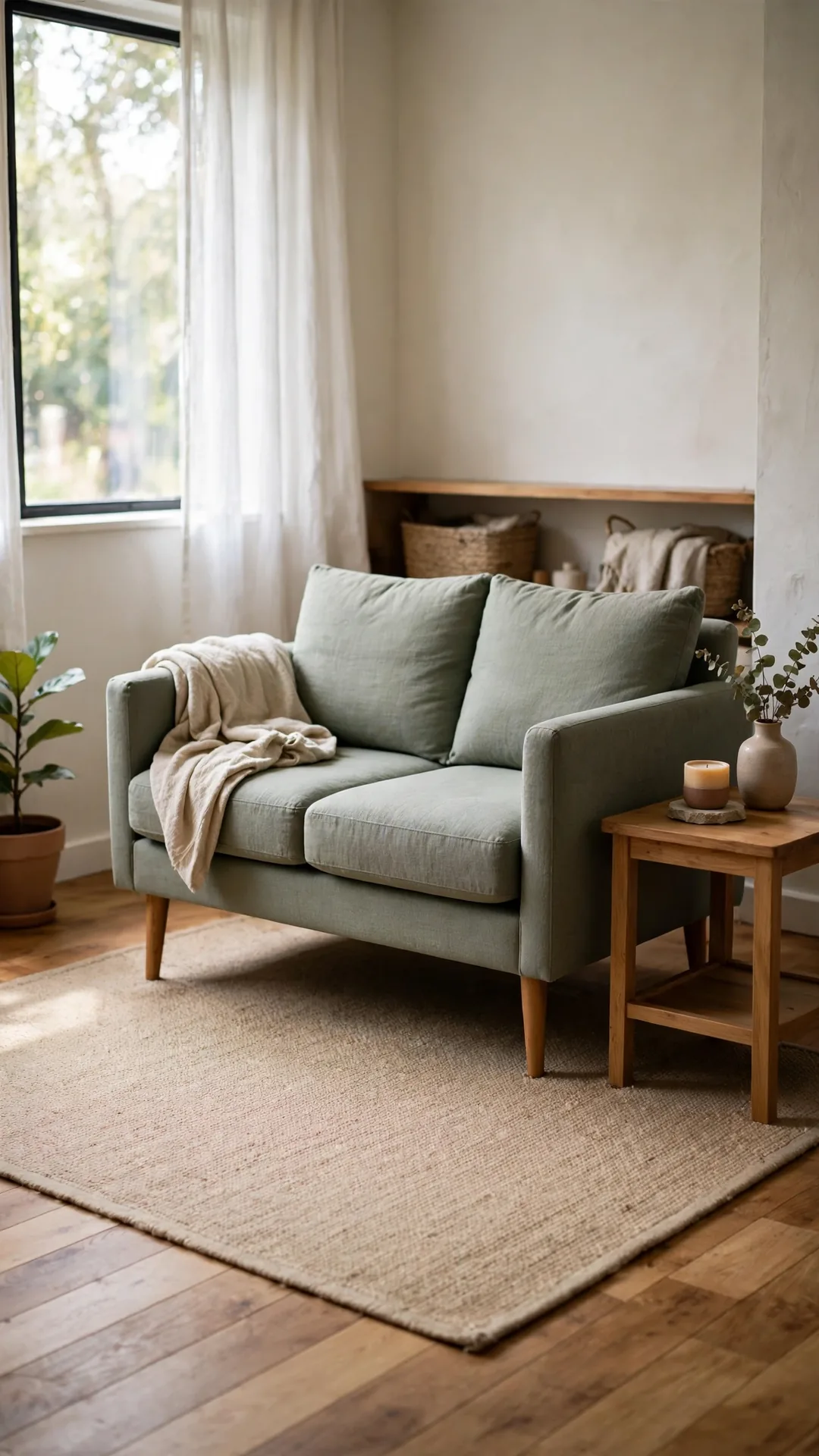
A loveseat version of this rug size guide for small living rooms starts at 72 inches. Most loveseats run 58 to 72 inches long, so a 5 by 8 rug covers the front-legs rule. A 5 by 7 works when the room border runs tight.
How to do it:
- Measure the loveseat from outer arm to outer arm.
- Add 12 inches to set the minimum rug length.
- Slide the rug 6 inches under the front rail.
- Keep a side table fully on or fully off the rug.
Best for: Loveseat-only seating in studios and dens.
Budget: $60 to $180
Quick tip: A round 5 foot rug can suit a loveseat and one chair. Tape the circle first to check the fit.
17. Leave Knee Room at the Coffee Table
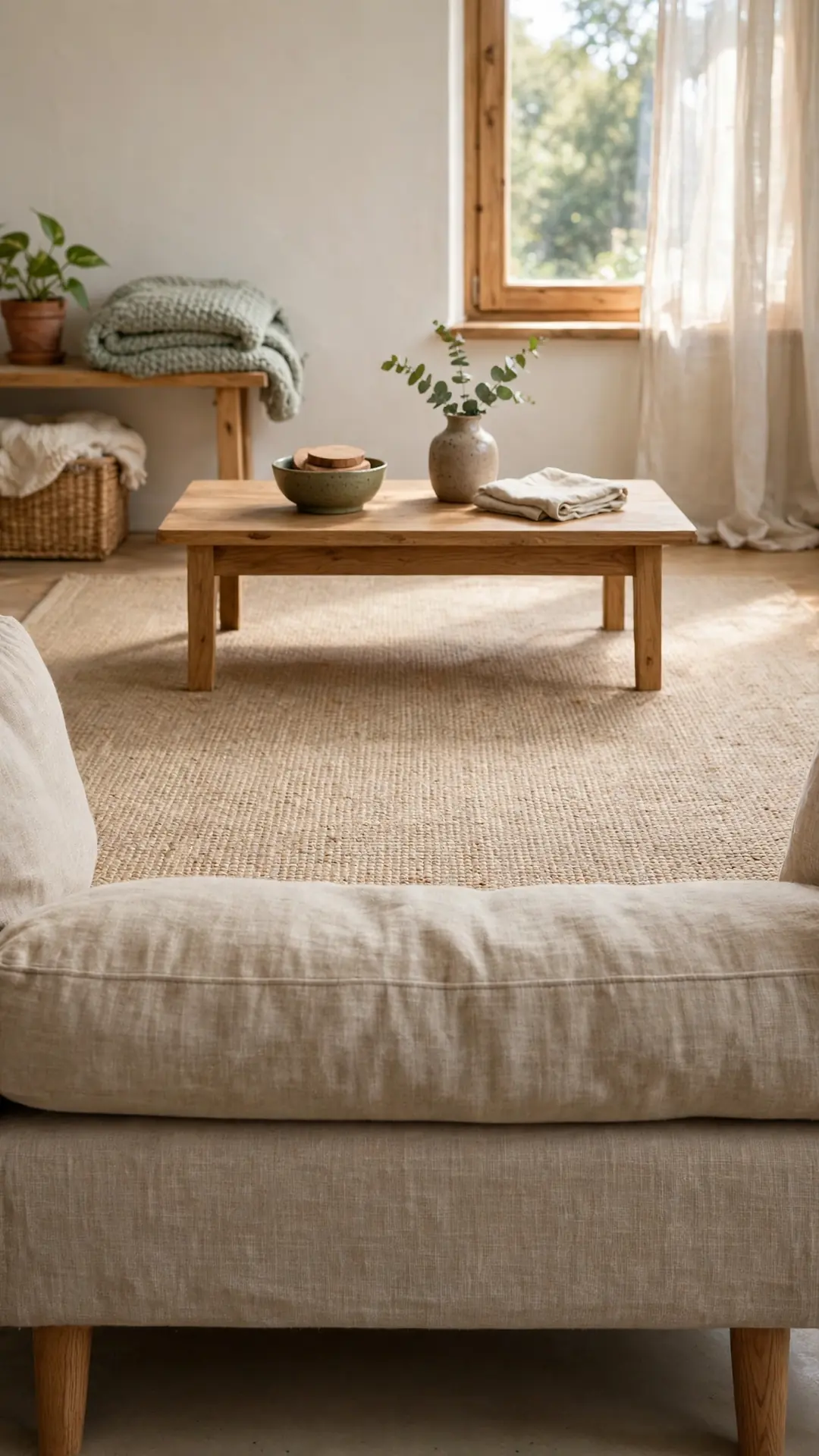
The gap between sofa and coffee table decides if the rug size works in daily life. Keep 12 to 18 inches of clearance so knees and feet pass with ease. The rug must span that whole gap without an edge mid-span.
How to do it:
- Set the table 14 inches from the sofa front as a start.
- Check that the rug runs from under the sofa to past the table.
- Sit down and stand up three times to test the gap.
- Widen the gap to 18 inches for recliners and deep seats.
Best for: Any sofa and coffee table pairing.
Budget: Free
Quick tip: If the rug edge falls inside the knee gap, feet catch it all day. Move the rug or the table.
18. Extend Past the Coffee Table Ends
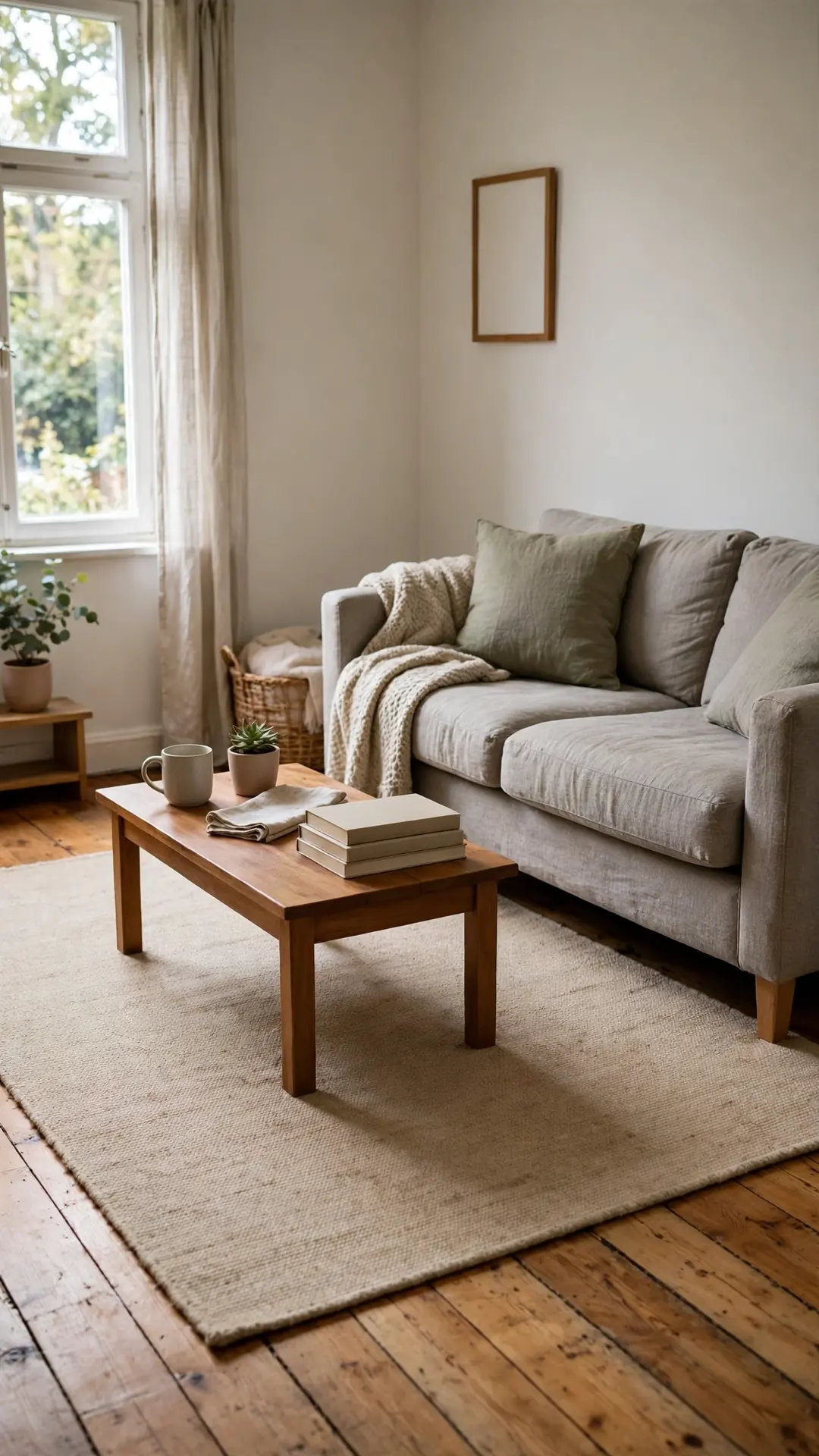
This rug size guide for small living rooms keeps rug past the table ends. Leave at least 12 inches of rug beyond each short end of the coffee table. The table then sits in a frame instead of on a tight slab.
How to do it:
- Measure the coffee table length in inches.
- Add 24 inches to find the minimum rug length that end.
- Center the table so both ends show equal rug.
- Check the long sides too, with 8 inches or more showing.
Best for: Rectangular tables 36 to 48 inches long.
Budget: Free at the planning stage
Quick tip: A rug that ends flush with the table looks cut off. The extra foot on each end fixes the view.
19. Match a Round Rug to a Round Table
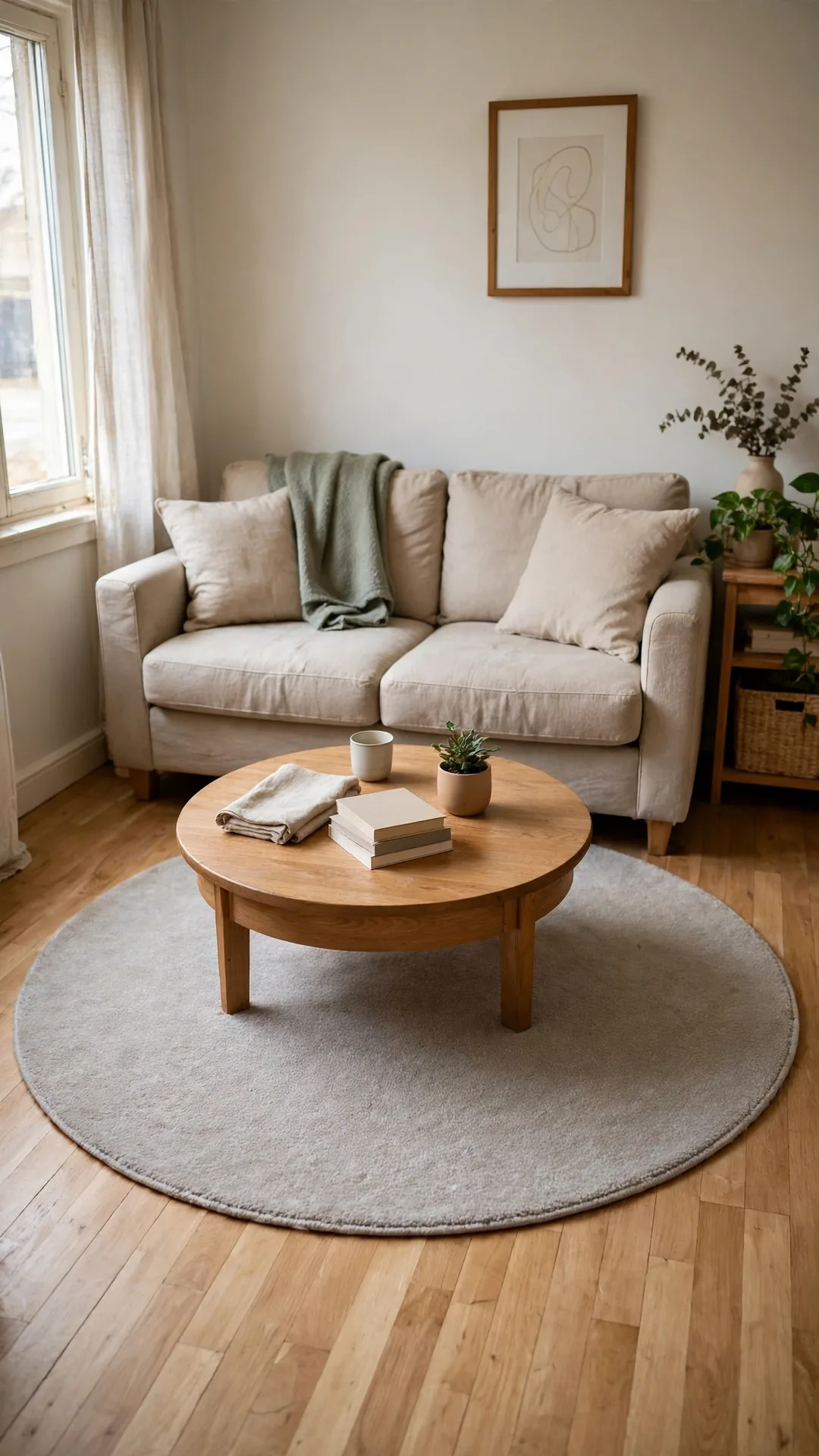
A round rug under a round coffee table keeps the shapes in step. Size the circle so its edge lands near the sofa front legs. A 5 foot round suits most small groups, and a 6 foot round suits wide sofas.
How to do it:
- Measure the table diameter in inches first.
- Add 24 inches to set the smallest useful rug diameter.
- Tape a circle outline with short tape strips on the floor.
- Check that chair fronts reach the circle edge evenly.
Best for: Round tables and curved sofas.
Budget: $70 to $200
Quick tip: Round rugs hide crooked placement well. Still tape the circle, since eyeballing a round outline runs small.
20. Match a Rectangle Rug to the Table
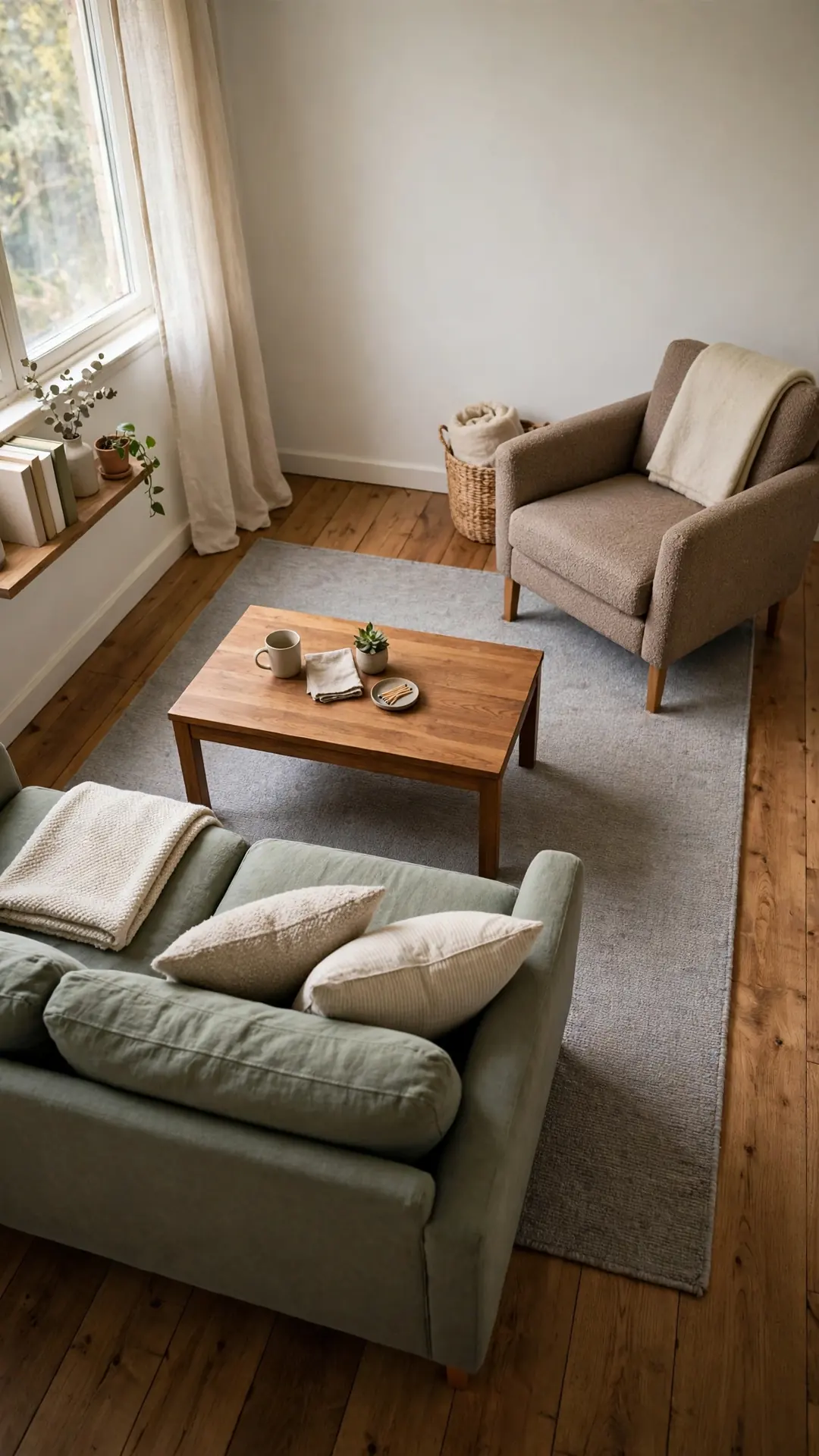
This rug size guide for small living rooms pairs rectangles with rectangles. A rectangular rug under a rectangular table keeps every gap even. Turn the rug so its long side follows the sofa, not the room door.
How to do it:
- Match the rug long side to the sofa length first.
- Keep 12 inches of rug past each short table end.
- Square the rug corners to the sofa front legs.
- Leave the same floor gap at both long sides.
Best for: Standard sofa and table layouts.
Budget: $80 to $250
Quick tip: If the table is square, a square 5 by 5 rug can work. Tape it first, since square rugs are hard to return.
21. Keep Side Chair Legs on One Surface
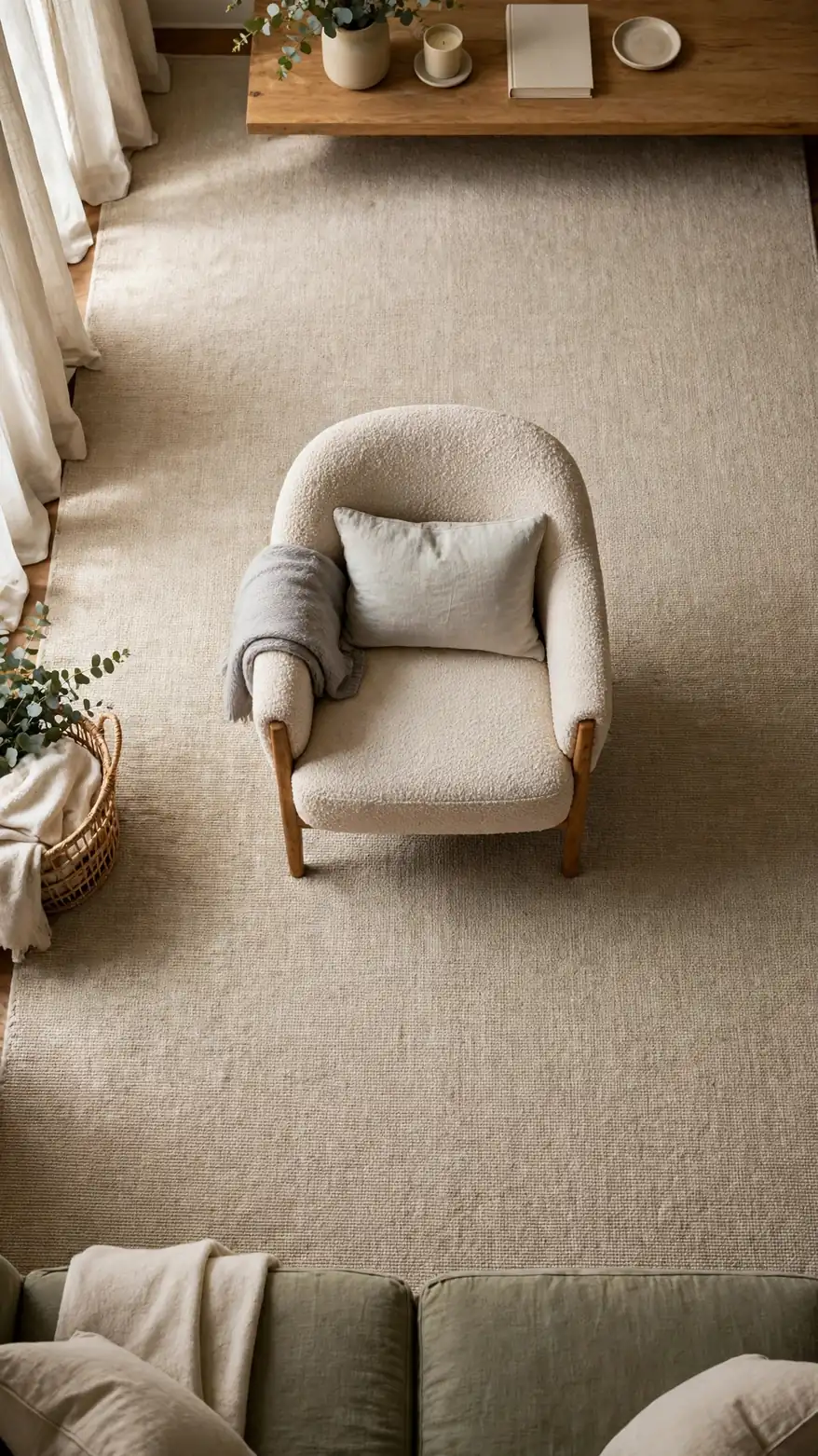
Side chairs drift and turn more than sofas, so their legs need one surface. A chair with two legs on and two off twists as guests shift. Pull the chair fully onto the rug or fully off it.
How to do it:
- Sit in the chair and rock gently to find the drift.
- Slide the chair in until all four legs stand on the rug.
- Leave 6 inches of rug behind the back legs for shifts.
- Recheck after guests leave, since chairs wander nightly.
Best for: Accent chairs and reading chairs.
Budget: Free
Quick tip: Chairs on casters need the whole chair on the rug. A caster on an edge will chew the binding.
22. Size Down for an Oversized Table
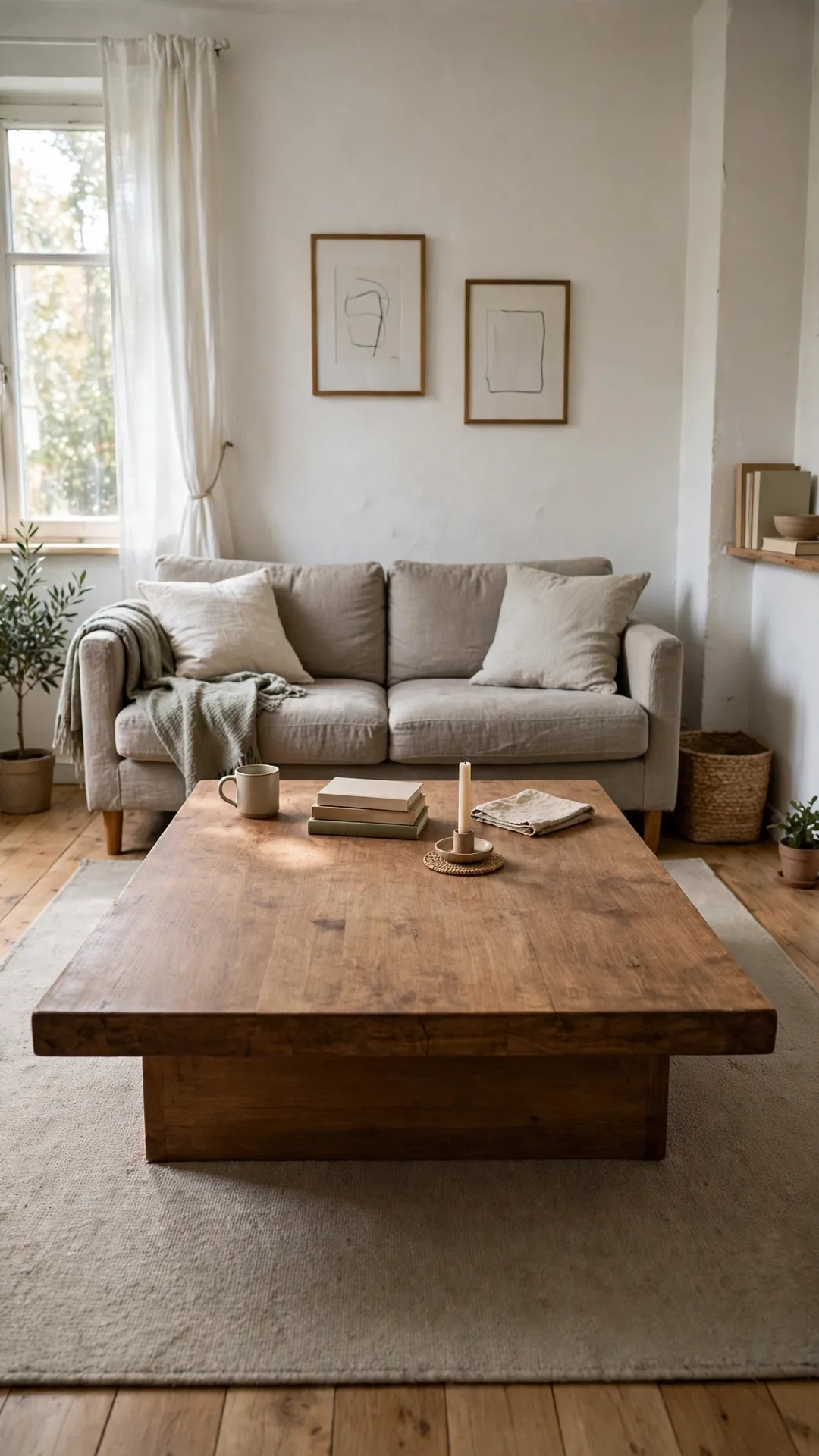
A huge coffee table eats the rug budget in a small room. When the table tops 48 inches, the rug only needs a modest frame around it. Keep 8 to 10 inches of rug showing on the long sides.
How to do it:
- Measure the table top and add 16 to 20 inches per side pair.
- Let the sofa front legs sit off the rug if needed.
- Keep the visible rug frame even on all four sides.
- Choose a low, flat rug so the big table stays steady.
Best for: Rooms built around one large table.
Budget: $60 to $180
Quick tip: Do not chase the front-legs rule here. A giant table plus a giant rug leaves no floor to walk on.
23. Measure Both Arms of a Sectional
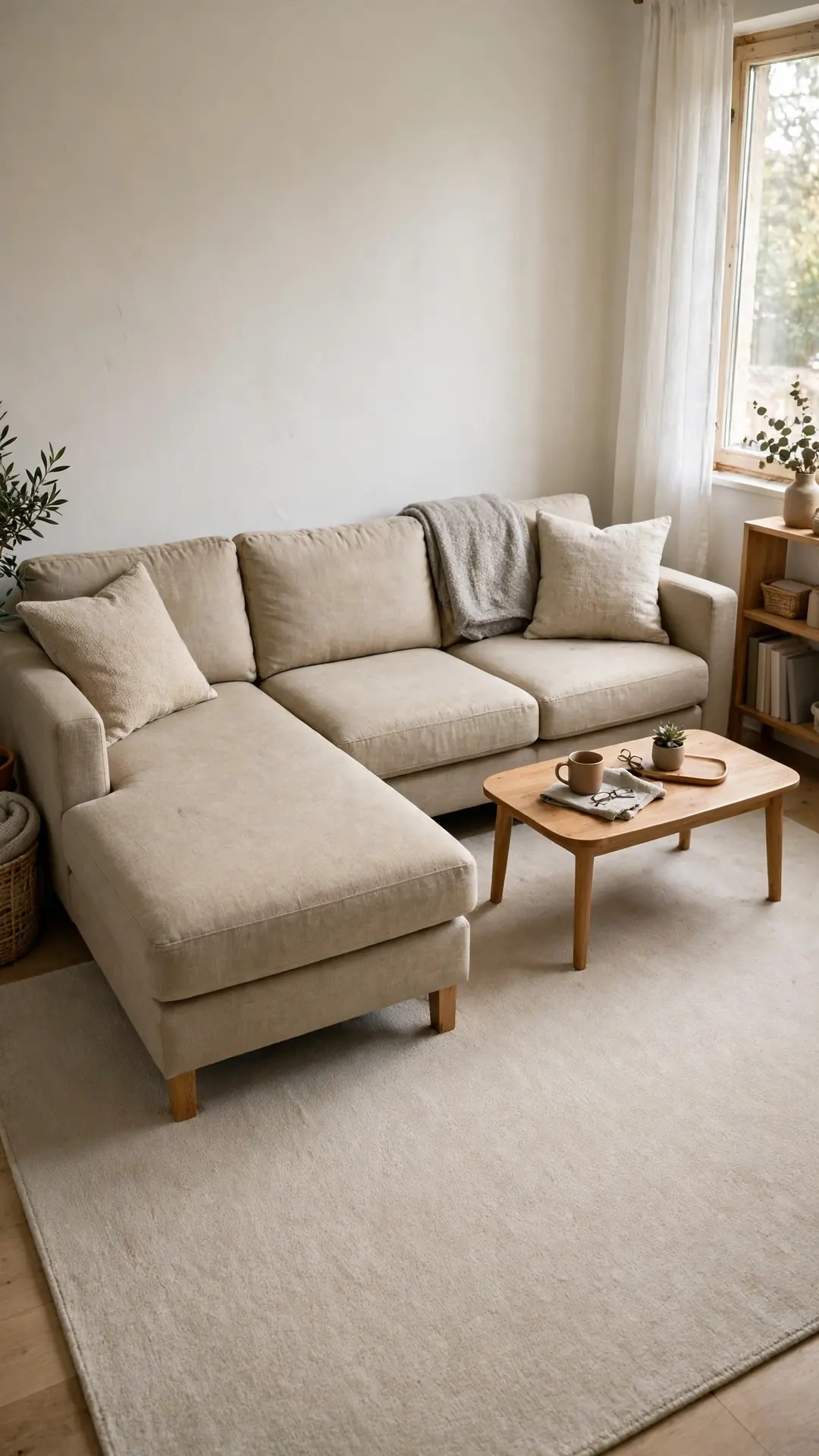
A sectional rug size guide for small living rooms starts with the chaise. Measure the full L shape, along the back and down the chaise side. Most small sectionals need an 8 by 10 to hold every front leg.
How to do it:
- Measure the back length and the chaise depth in inches.
- Tape the L outline, then tape the rug size over it.
- Keep 6 inches of rug past the open end of the chaise.
- Check that the rug clears the walkway on the open side.
Best for: L-shaped sectionals in rooms 11 by 13 feet or more.
Budget: $150 to $400
Quick tip: A 6 by 9 under a sectional almost always strands the chaise. Tape proves it before the return window closes.
24. Float the Group in an Open Plan
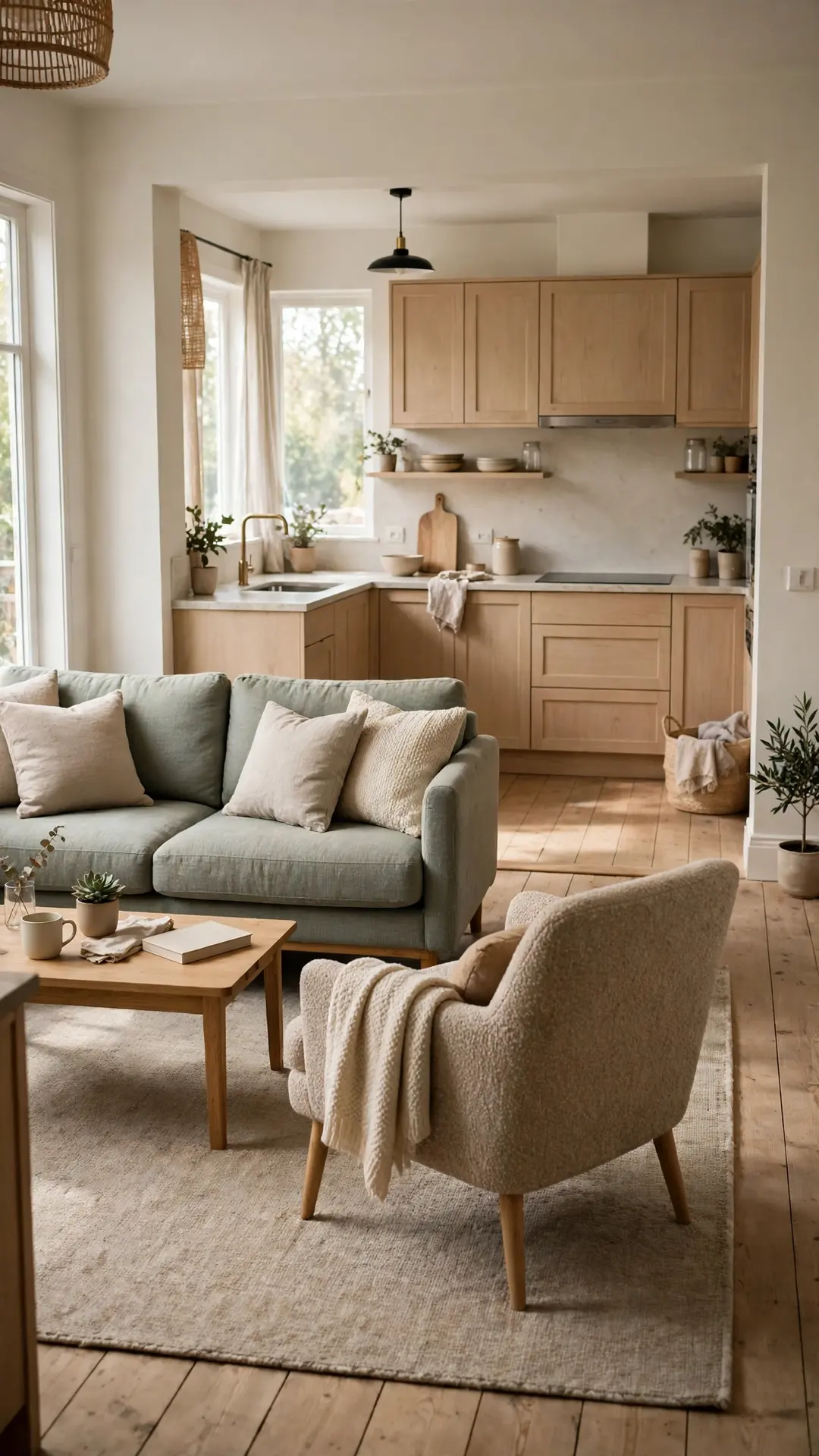
In an open plan room, the rug marks where living ends and dining starts. Float the whole group on the rug, with all legs on. Leave a clear floor lane of 30 to 36 inches behind the sofa.
How to do it:
- Measure the group, then add 8 inches on every side.
- Keep the rug border even, so the island reads as one zone.
- Line one rug edge up with a kitchen counter or wall line.
- Test the walk lane behind the sofa with a laundry basket.
Best for: Open plan apartments and loft-style rooms.
Budget: $150 to $450
Quick tip: One big rug beats two small ones here. Two islands split the room into clutter.
25. Split a Studio With One Rug
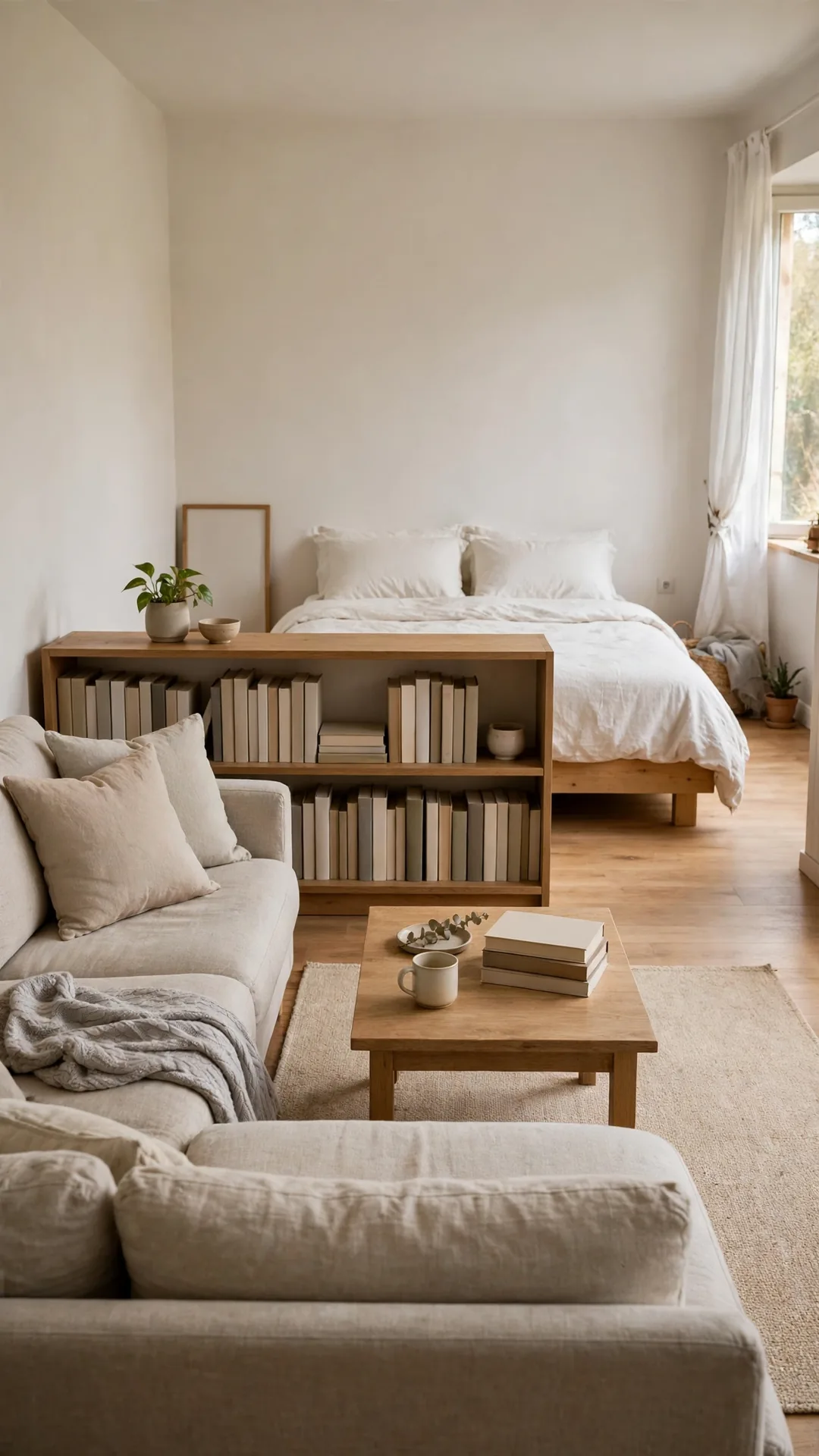
One rug size guide for small living rooms trick splits a studio cleanly. Put the rug under the living zone only, and leave the bed zone on bare floor. For the sleep end, these bed ideas for small rooms keep pieces sized to a tight footprint.
How to do it:
- Measure the living zone as its own small room.
- Stop the rug at least 12 inches short of the bed frame.
- Give the sleep end a clear edge, with no rug creep under the frame.
- Keep a bare floor path from the door to the bed.
Best for: Studio apartments under 400 square feet.
Budget: $60 to $200
Quick tip: A rug that creeps under the bed blurs both zones. Hold the 12 inch gap and the split stays clear.
26. Turn the Rug in a Square Room
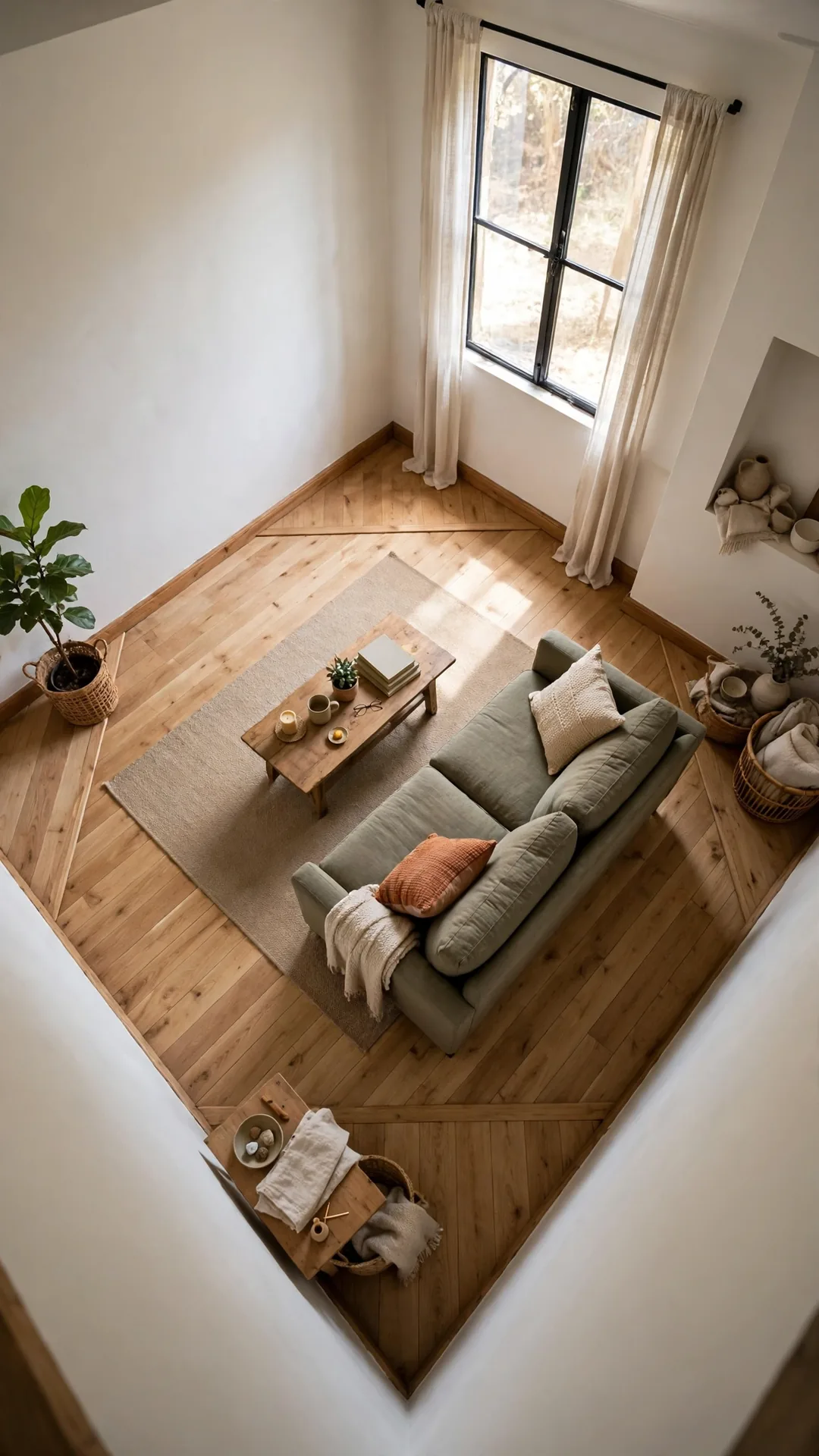
Square rooms fight straight rug placement, since every wall gap comes out equal and dull. Turning the rug on a diagonal can fit a longer rug into the same floor. Measure the diagonal before you trust this trick.
How to do it:
- Measure the room corner to corner in inches.
- Tape the rug outline at a 45 degree angle.
- Angle the sofa to match the rug, not the walls.
- Check that no rug corner lands in a doorway path.
Best for: Near-square rooms around 11 by 11 feet.
Budget: Free to test with tape
Quick tip: Diagonal rugs gain length but lose corner floor. Keep one clear corner for a plant or a floor lamp.
27. Keep Clear of the Fireplace Hearth
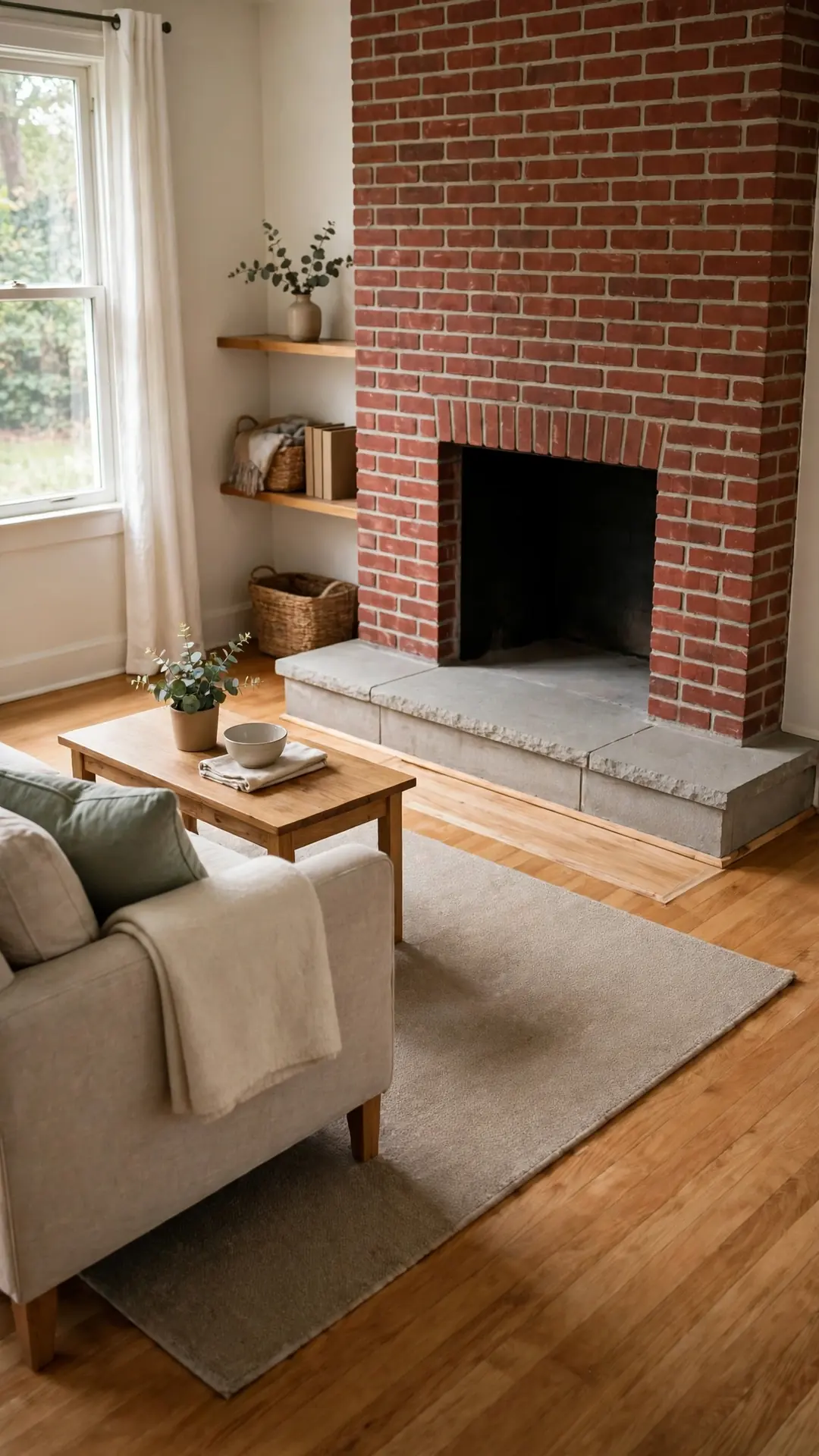
A raised hearth eats one side of the rug zone. Stop the rug edge 6 to 12 inches short of the hearth stone. A rug that climbs the hearth edge curls, wears fast and looks wrong.
How to do it:
- Measure from the hearth front edge, not the firebox.
- Tape the rug line parallel to the hearth for a clean read.
- Shift the whole group back if the gap looks pinched.
- Keep the gap even with the side wall gap where you can.
Best for: Rooms with a raised stone or brick hearth.
Budget: Free
Quick tip: A rug butted tight to a hearth reads as a near miss. The clear gap makes the stop look planned.
28. Fit a Rug Behind a Wall Sofa
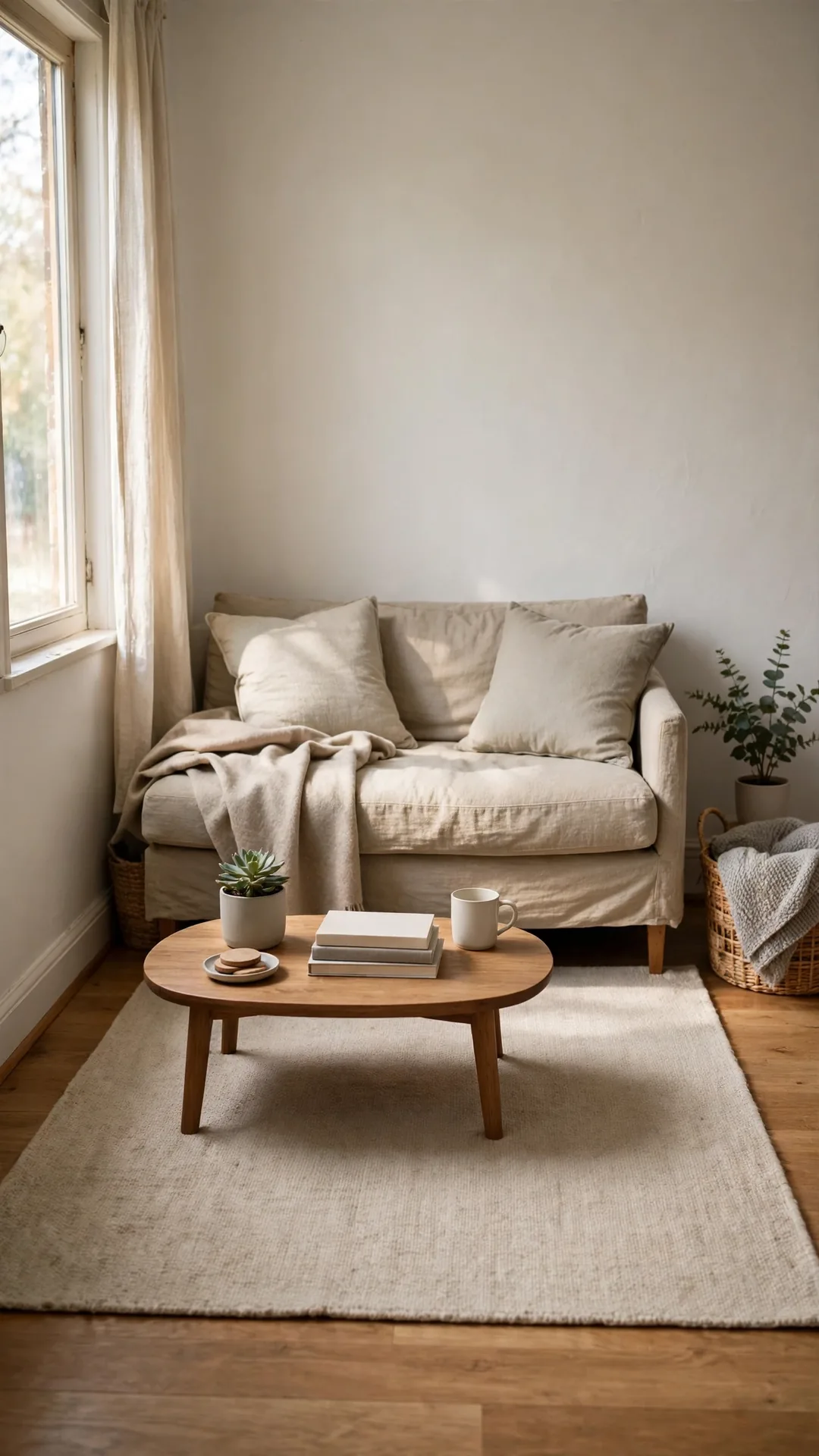
A wall-sofa rug size guide for small living rooms needs less depth. With the sofa flat against the wall, the rug only runs from the front legs to past the table. A 5 by 7 often covers that strip in full.
How to do it:
- Measure from the wall to 12 inches past the coffee table.
- Slide 6 inches of rug under the sofa front rail.
- Let the rug end where the walkway begins.
- Keep both side gaps equal past the sofa ends.
Best for: Sofas fixed against a long wall.
Budget: $50 to $150
Quick tip: Depth saved here can go to length. A longer, shallower rug suits wall layouts better than a square one.
29. Size for Two Chairs and a Table
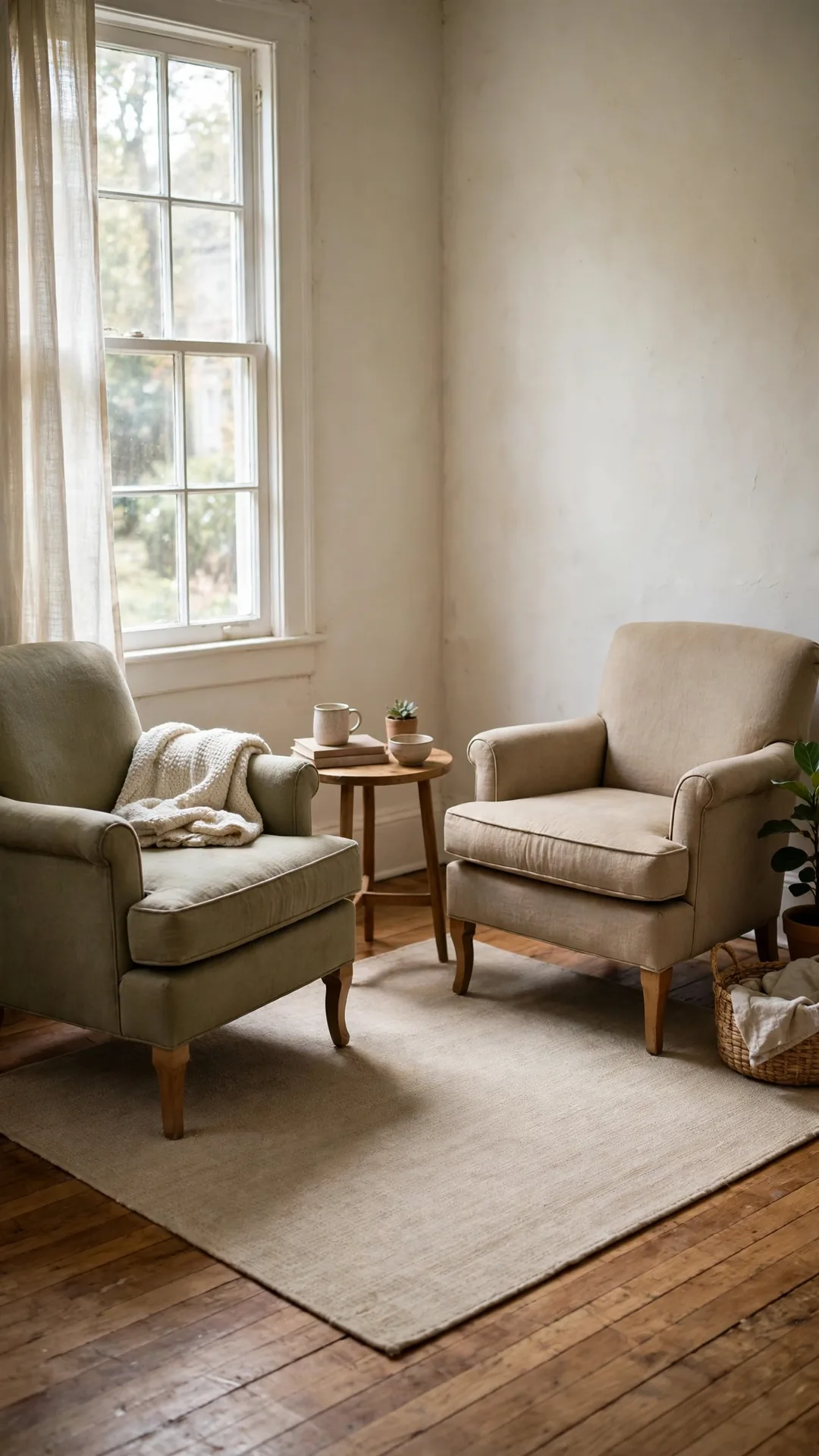
Two chairs and a small table form a complete seating group on their own. A 5 by 7 rug usually holds both chair fronts and the table. The same setup hosts game night, and board game storage ideas for small spaces keep boxes off the rug.
How to do it:
- Set the chairs at their talking distance, about 5 feet apart.
- Tape a 5 by 7 outline under the group.
- Keep all chair front legs on the rug line.
- Leave 8 inches of rug behind each chair for lean-back shifts.
Best for: Reading corners and two-person flats.
Budget: $50 to $150
Quick tip: Angle the chairs inward and the rug can shrink a size. Straight rows need the full 5 by 7.
30. Stop the Rug Before the TV Stand
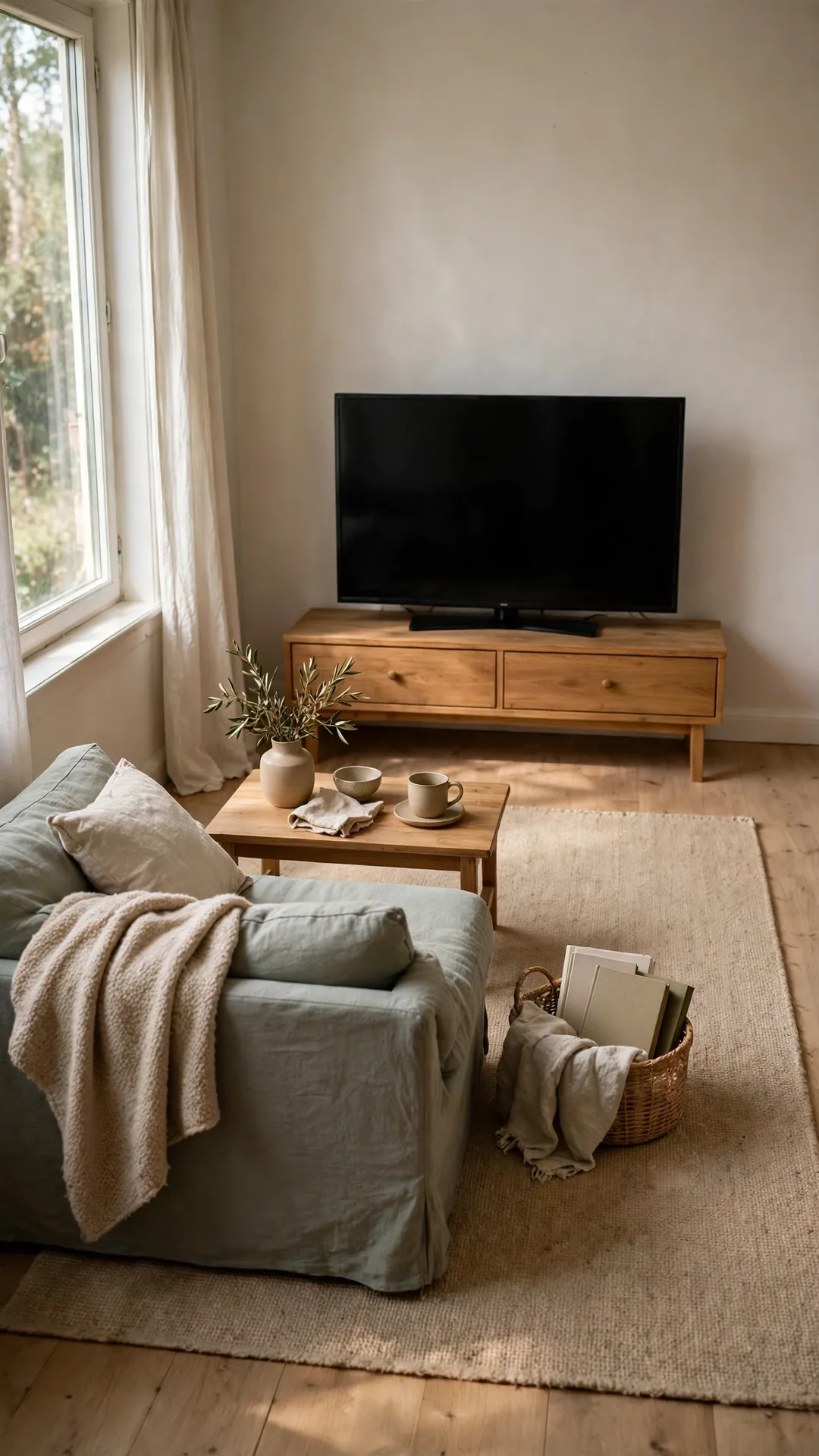
The TV stand zone does not need rug under it. Stop the rug 4 to 8 inches short of the stand front. The gap keeps the rug out of cable runs and stand feet.
How to do it:
- Measure from the sofa front to the stand front in inches.
- Take 6 inches off that span to set the rug depth.
- Keep the rug centered on the sofa, not on the stand.
- Check that no stand foot lands on the rug edge.
Best for: Wall-mounted or stand-based TV walls.
Budget: Free
Quick tip: A rug that slides under a stand buckles at the feet. The short stop keeps the edge flat and clean.
31. Keep 36 Inches Clear for Walkways
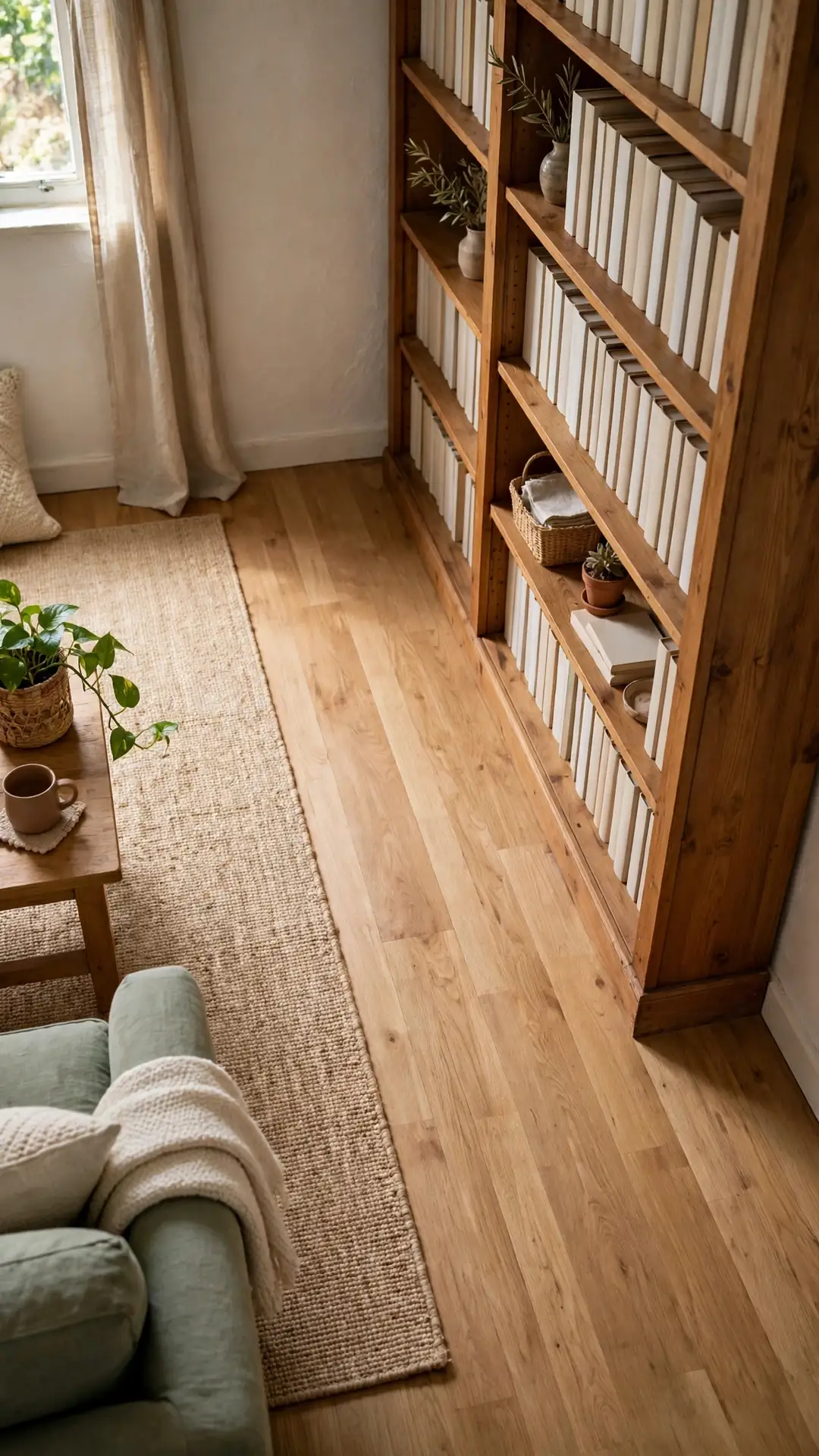
Every rug size guide for small living rooms protects the walking lanes. Keep at least 36 inches of clear floor on the main path through the room. Narrow side paths can drop to 30 inches, but no less.
How to do it:
- Walk the room's main routes and mark them with tape.
- Shrink or shift the rug outline until lanes hit 36 inches.
- Check the path with arms full, like carrying a laundry basket.
- Keep rug corners out of the lane lines entirely.
Best for: Rooms that double as hallways to other doors.
Budget: Free
Quick tip: A rug that steals the lane gets its corners kicked up daily. Give the lane back and the corners stay flat.
32. Stop Short of the Front Door Swing
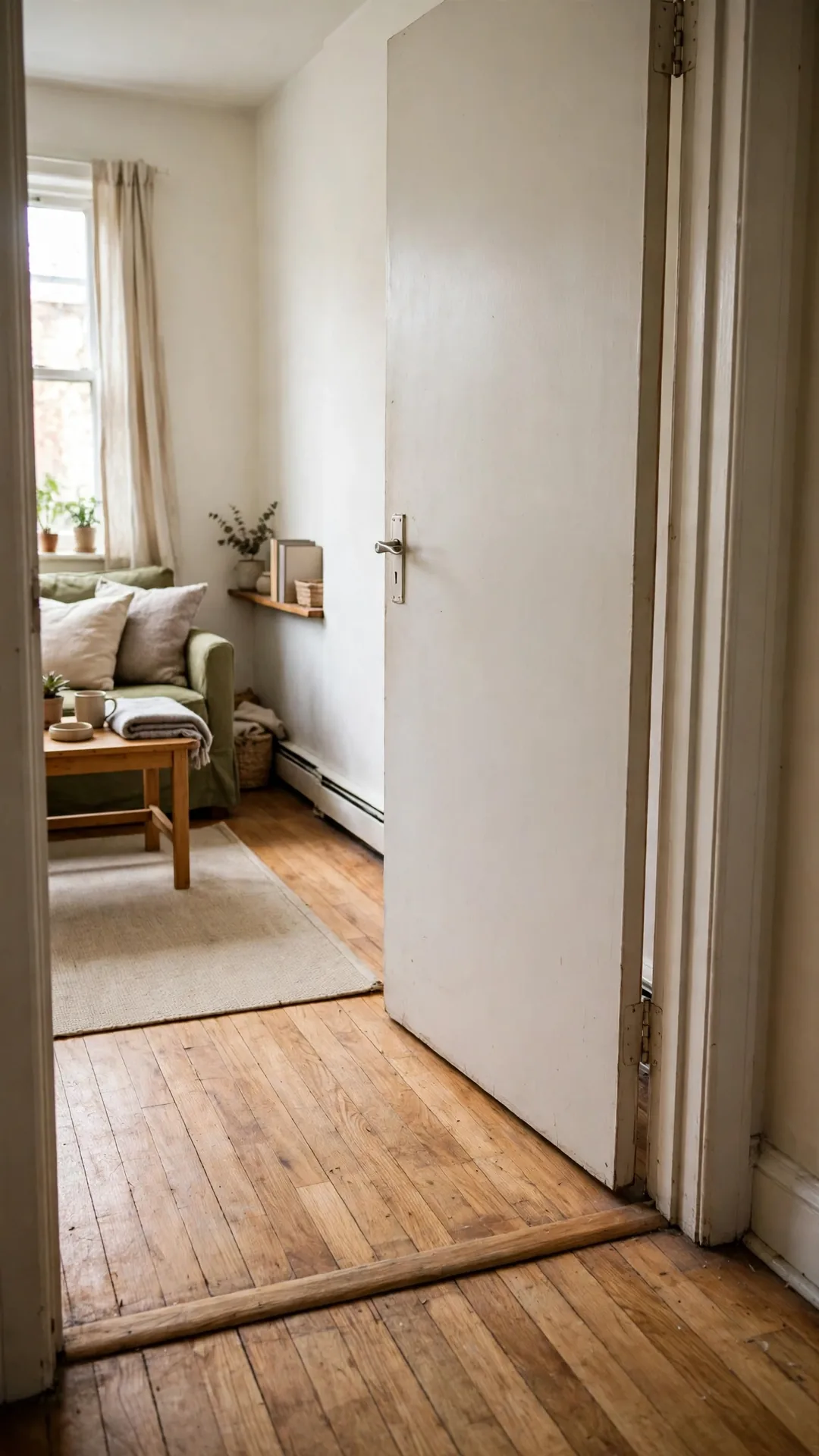
An entry door needs its full swing, plus room for feet and bags. Stop the rug at least 6 inches beyond the door's swing arc. A rug inside the arc gets clipped by the door bottom daily.
How to do it:
- Open the door fully and mark the arc end on the floor.
- Tape the rug line 6 inches past that mark.
- Test the swing with the rug pad included in the height.
- Leave a bare landing zone of about 3 by 4 feet.
Best for: Apartments where the front door opens into the living room.
Budget: Free
Quick tip: Guests step in and turn at once. A clear landing keeps wet shoes off the rug on rainy days.
33. Test the Door Drag Before You Buy
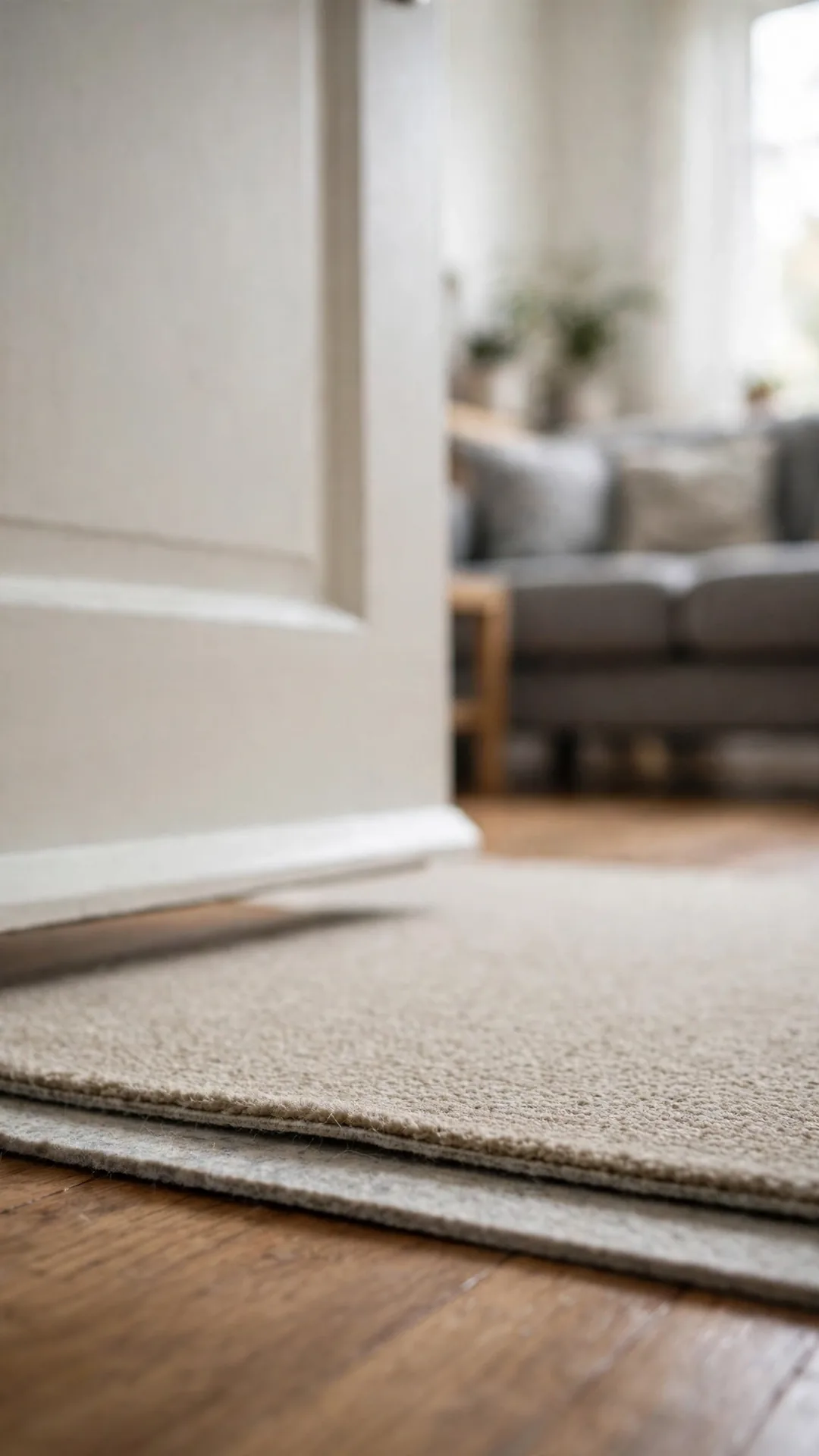
Some doors clear a bare floor by less than half an inch. Add a rug and pad, and the door starts to drag and bunch the edge. Test the full stack height before the rug goes down for good.
How to do it:
- Stack a rug sample or folded towel plus pad at the door line.
- Swing the door slowly across the stack.
- Keep at least a quarter inch of clear space above the pile.
- Choose a thinner pad if the door kisses the stack.
Best for: Interior doors that open over the rug zone.
Budget: Free to test
Quick tip: A dragging door shaves rug fibers into lint within weeks. The stack test takes two minutes and saves the rug.
34. Run a Runner Beside the Sofa
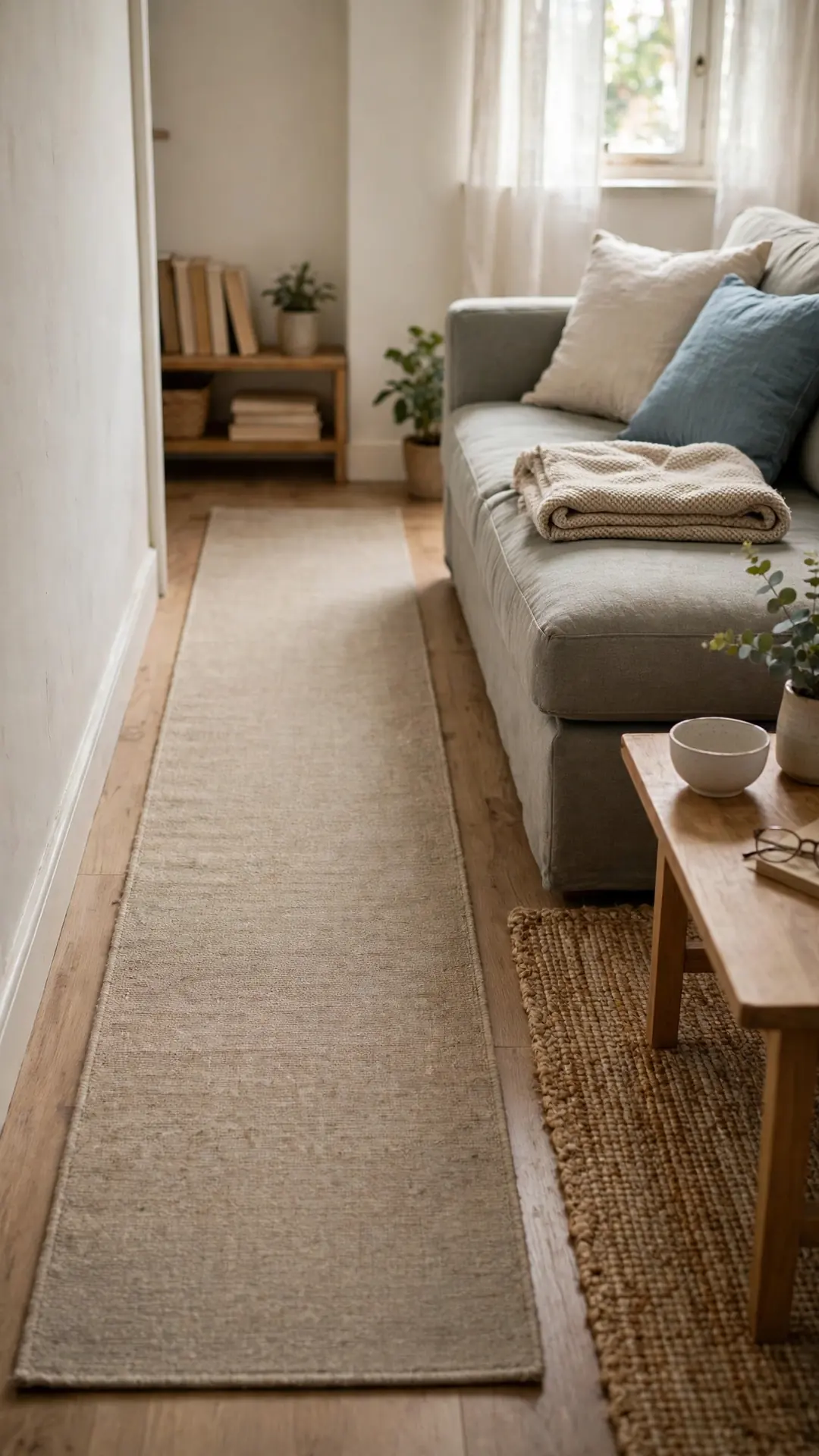
One runner fix from this rug size guide for small living rooms suits long, tight rooms. A runner 2.5 feet wide and 8 to 10 feet long can mark the path beside a sofa. The same habit helps down the hall, where diy bedroom ideas for small rooms with cats favor low pieces.
How to do it:
- Measure the sofa length and match the runner to it.
- Keep 4 to 6 inches of bare floor between runner and sofa legs.
- Stop the runner 6 inches short of door swings at both ends.
- Keep both ends clear of chair legs and side tables.
Best for: Long rooms and sofa-along-the-wall layouts.
Budget: $30 to $90
Quick tip: A runner that ends mid-sofa looks cut off. Match the sofa length or go a full foot longer.
35. Keep Corners Out of the Traffic Lane
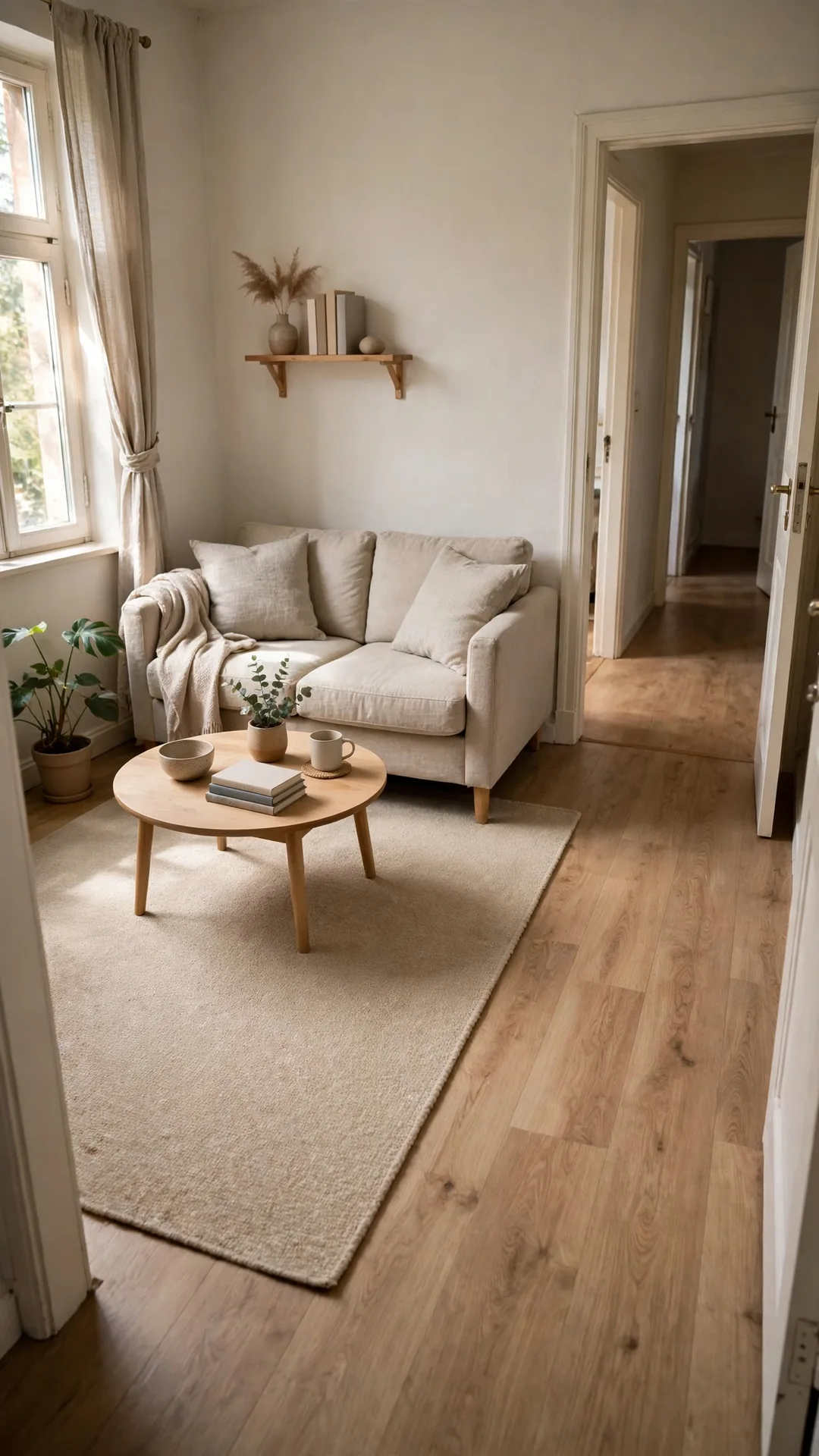
Rug corners in the walking line curl up within weeks. Shift the rug so every corner sits outside the main paths. A corner you never step on stays flat for years.
How to do it:
- Watch where feet actually travel for one evening.
- Nudge the rug in 2 inch steps until corners clear the line.
- Press curled corners flat under a heavy book overnight.
- Add a thin pad with grip if a corner still lifts.
Best for: Open plan rooms with cross traffic.
Budget: $10 to $30 for a grip pad
Quick tip: Tape the corners during the test week. If the tape peels from foot traffic, the corner sits in the lane.
36. Leave a Clear Path to the Kitchen
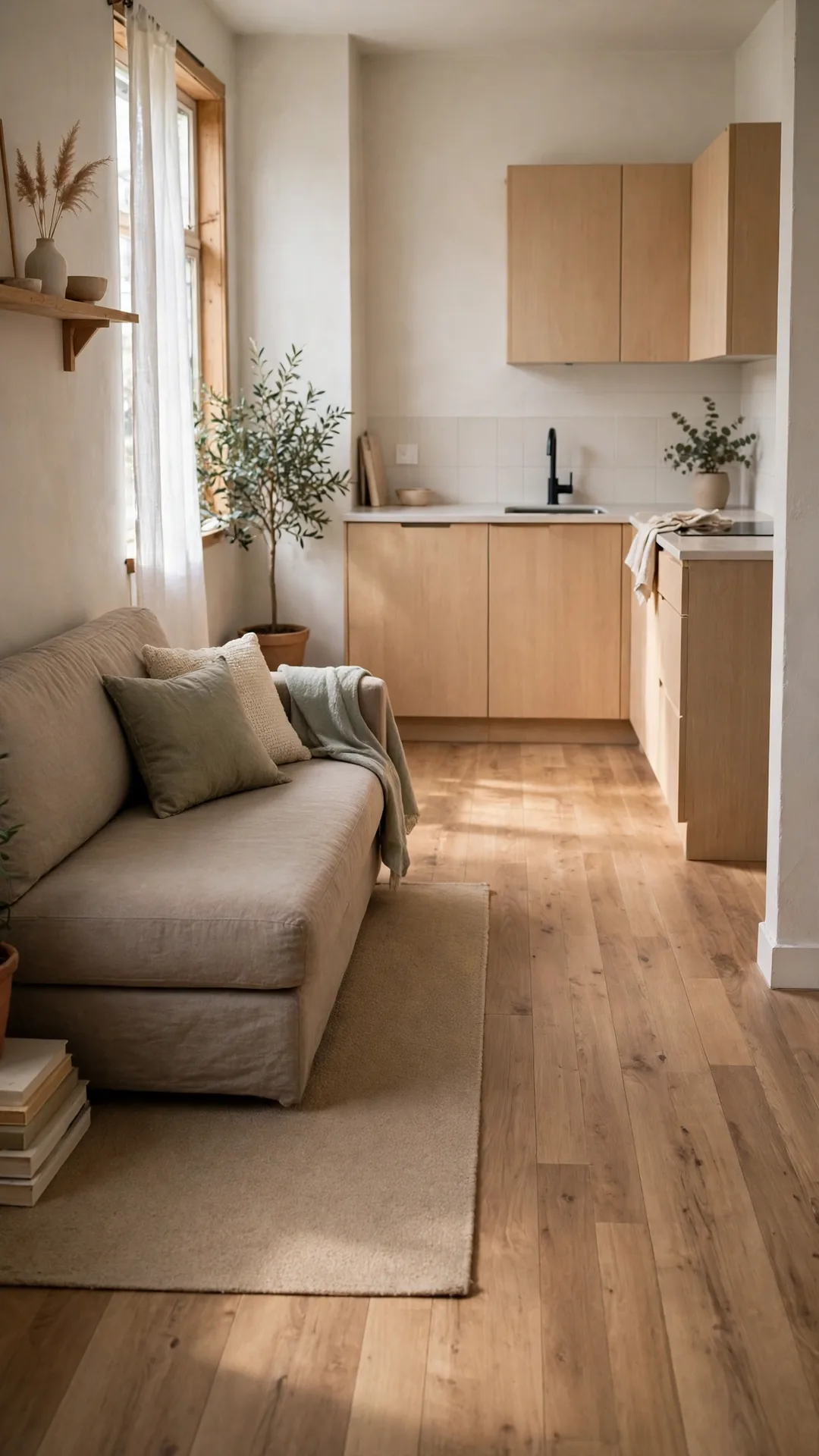
Open plan rooms need a working lane between sofa and kitchen. Keep 30 to 36 inches of bare floor on that route. Hot pans and full glasses cross this lane daily, so rugs stay out.
How to do it:
- Mark the straight line from sofa to counter with tape.
- End the rug at least 30 inches before the counter base.
- Check the lane at the fridge door swing too.
- Keep the lane clear of rug corners and pad edges.
Best for: Studio and open plan kitchen living rooms.
Budget: Free
Quick tip: Spills land in this lane first. Bare floor wipes clean in seconds, while a rug edge soaks up the mess.
37. Keep Floor Vents Fully Uncovered
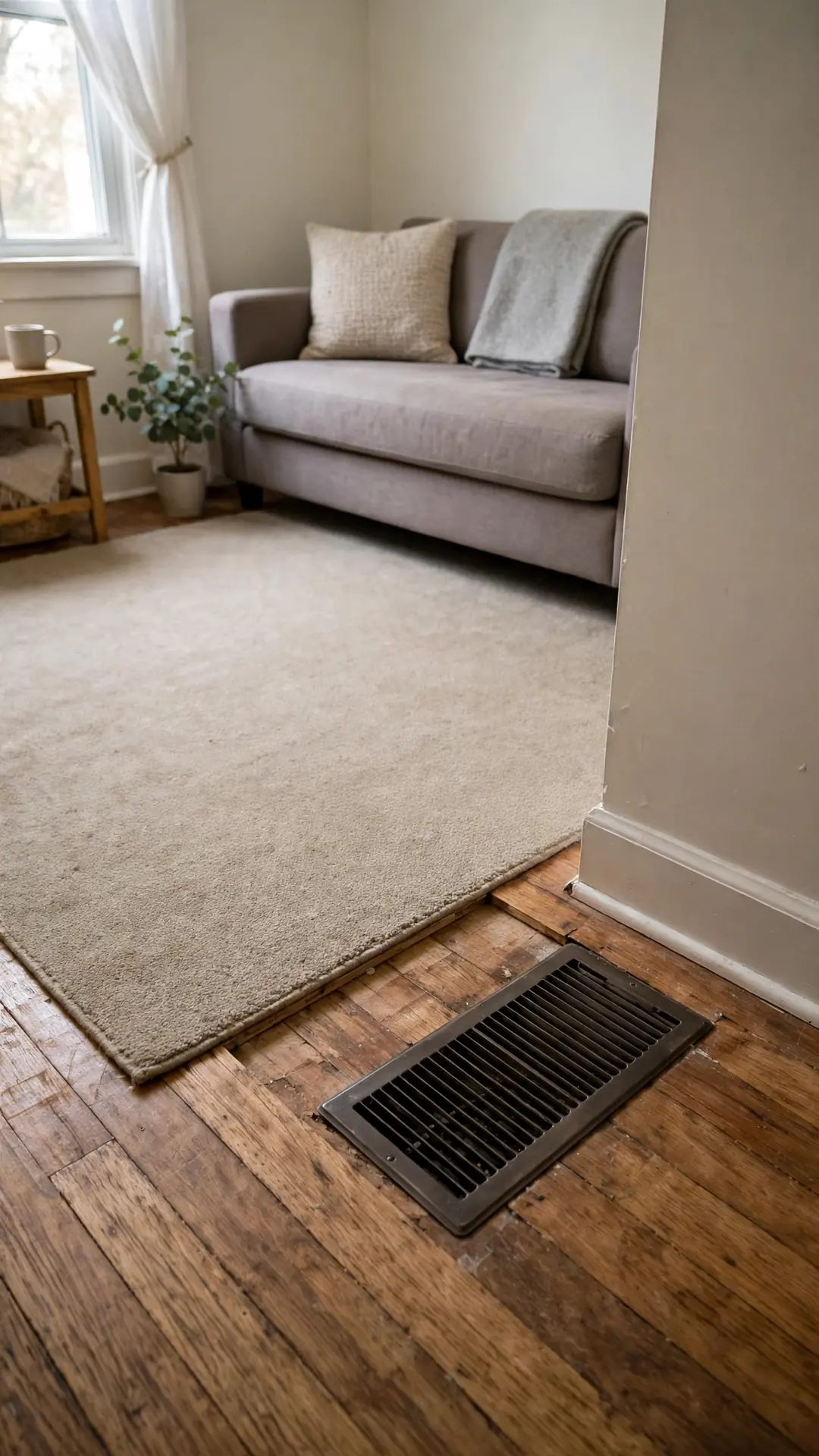
This rug size guide for small living rooms rule is about air, not looks. A rug over a floor vent blocks heat or cooling for the whole room. Stop the rug at least 4 inches short of the register on all sides.
How to do it:
- Mark every floor vent before you tape the rug outline.
- Shrink or shift the outline until vents sit fully clear.
- Check wall vents low on the wall the same way.
- Never fold a rug corner back over a vent to make it fit.
Best for: Rooms with floor registers near the seating zone.
Budget: Free
Quick tip: A blocked vent makes one room cold while the system runs longer. The 4 inch gap costs nothing and pays monthly.
38. Leave Space at Baseboard Heaters
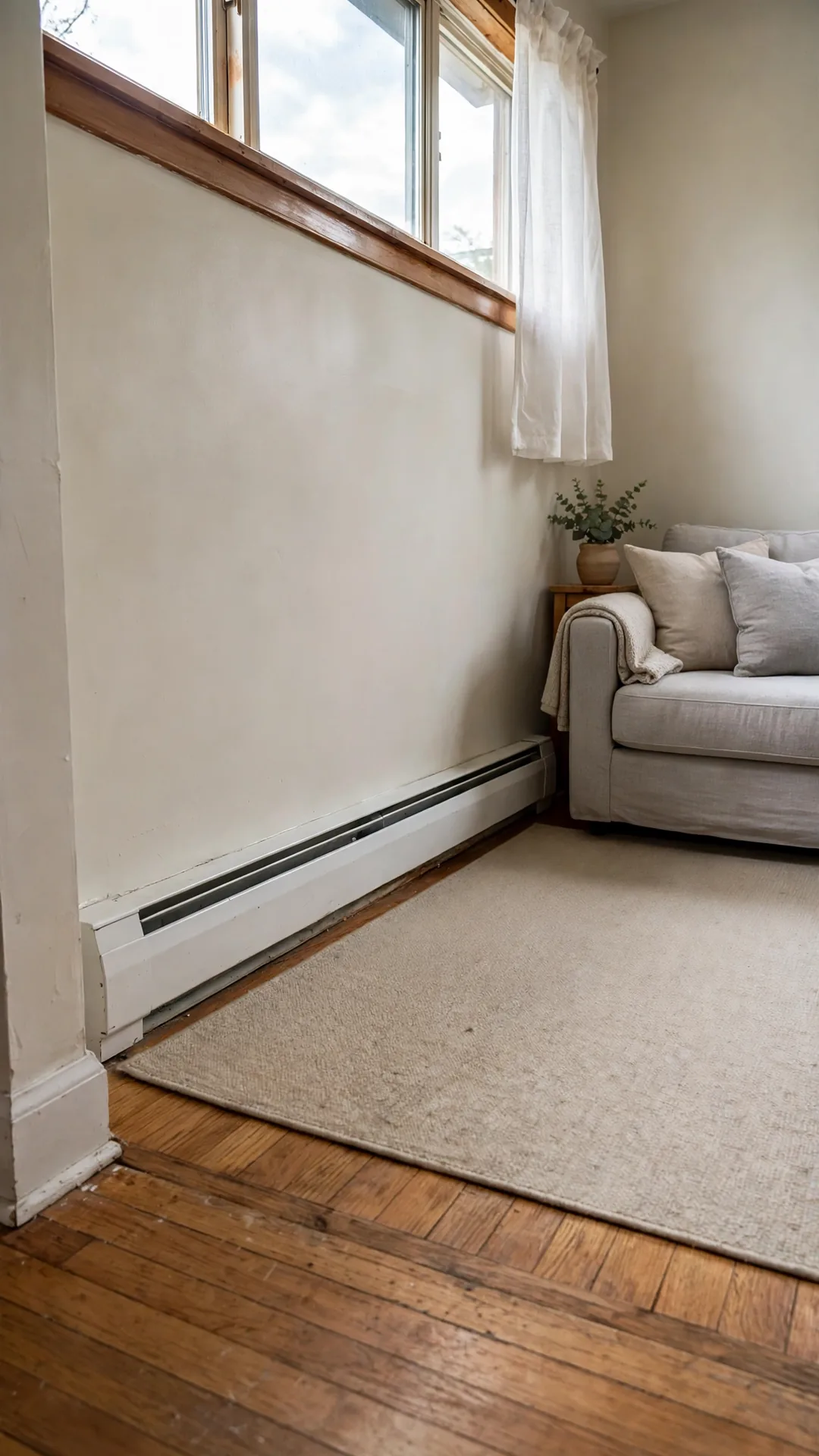
Baseboard heaters need air space on every side to work safely. End the rug 6 to 8 inches before the heater front. A rug tucked tight to a heater traps dust and heat at the edge.
How to do it:
- Measure from the heater front plate, not the wall.
- Tape the rug line 6 inches out from that plate.
- Keep pad edges inside the same line.
- Vacuum the gap strip monthly, since dust gathers there.
Best for: Rooms with baseboard heat under windows.
Budget: Free
Quick tip: If the right rug size crowds the heater, size down one step. A slightly smaller rug beats a scorched edge.
39. Run the Length in a Narrow Room
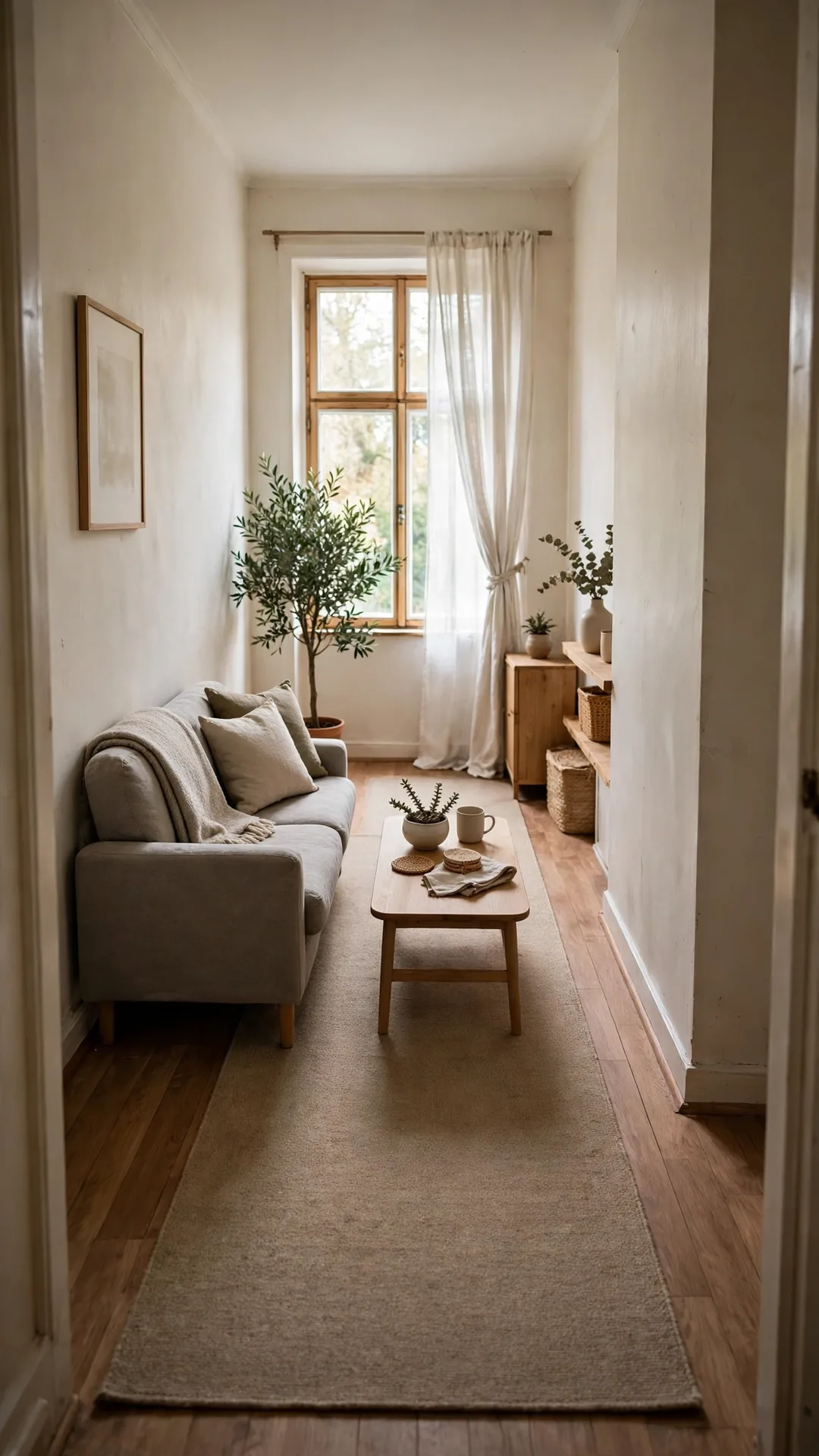
Narrow rooms punish rugs placed across the short width. Run the rug lengthwise, so its long side follows the room. A 6 by 9 turned lengthwise leaves a walking strip along the open side.
How to do it:
- Measure the room length and keep 8 inches at each end.
- Slide the rug under the sofa front along the long wall.
- Leave a 30 inch walking strip on the open side.
- Center the coffee table on the rug's long axis.
Best for: Rooms under 9 feet wide.
Budget: $80 to $250
Quick tip: A crosswise rug in a narrow room gets folded by traffic at both ends. Lengthwise placement ends the fight.
40. Measure a Bay Window Alcove on Its Own
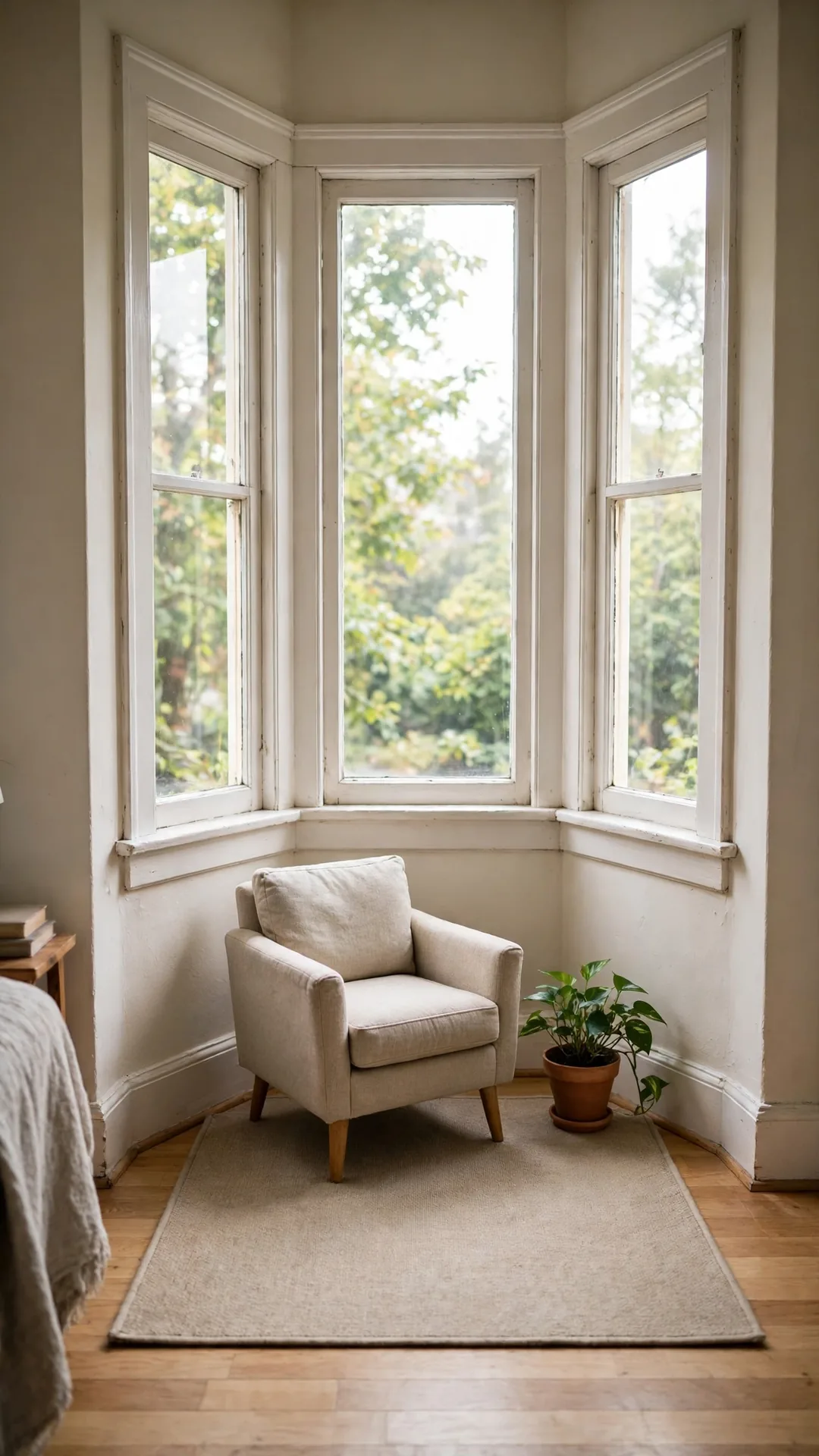
One rug size guide for small living rooms habit treats a bay as a mini room. Measure the alcove on its own, from the bay corners to the main room line. A 4 by 6 or a 5 foot round often fits the bay alone.
How to do it:
- Measure the bay depth and the width between its side walls.
- Tape the main room line where the bay opens out.
- Fit the rug inside the bay with 4 inches spare per side.
- Keep chair legs inside the alcove rug or fully outside it.
Best for: Bay windows with a reading chair.
Budget: $40 to $120
Quick tip: A rug that spills halfway out of a bay looks like a sizing miss. Fit it in or leave the bay bare.
41. Layer a Small Rug Over a Big Base
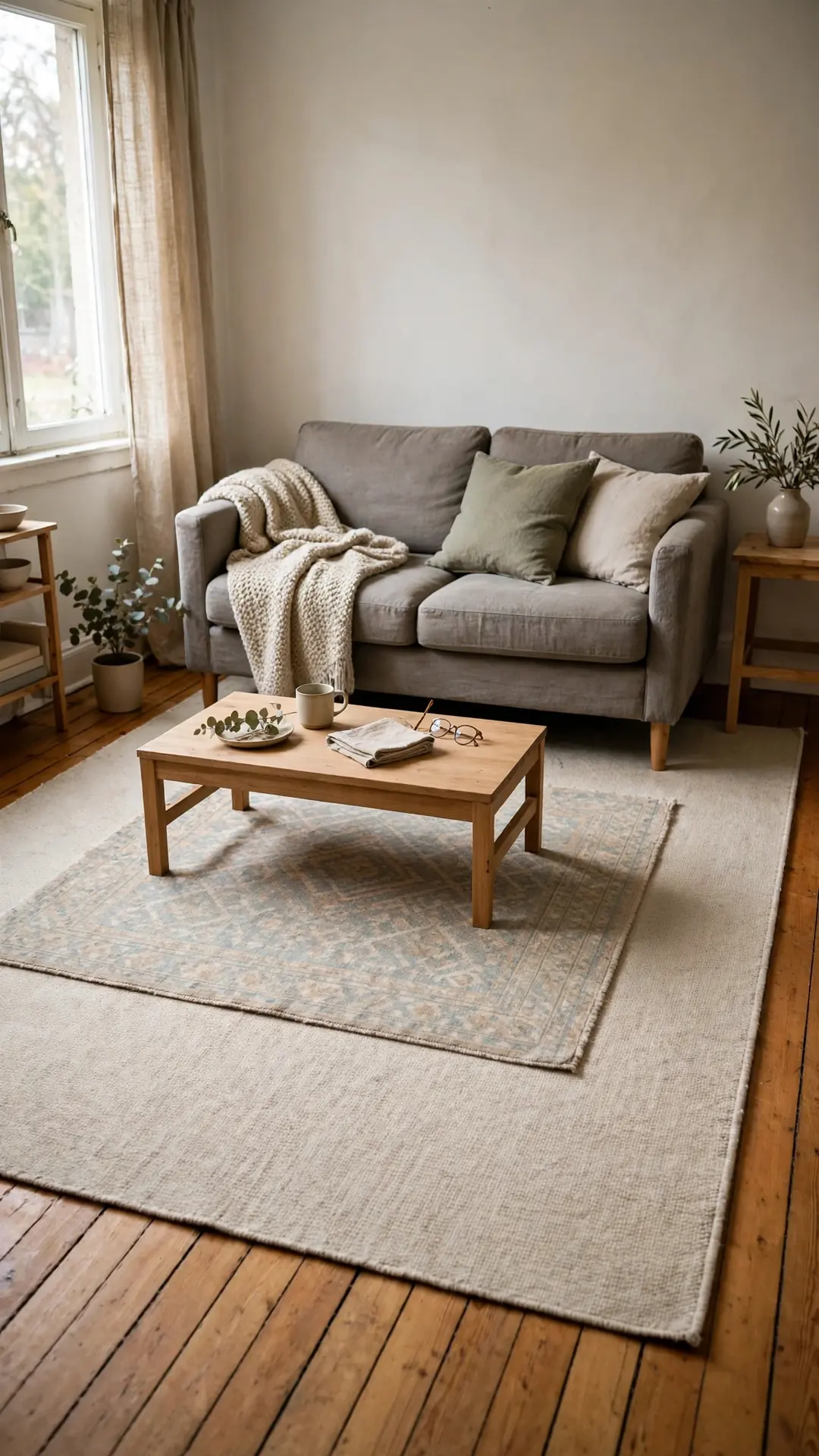
Layering fixes a base rug that came out one size too big. Lay a smaller rug, centered, over a large flat base rug. The fit trick works when the base covers the leg zone and the top rug covers the table zone.
How to do it:
- Keep the base rug flat and low, like jute or a flat weave.
- Center the top rug under the coffee table with even margins.
- Leave at least 12 inches of base showing on each long side.
- Tape the top rug corners down with rug tape for the first week.
Best for: Renters working with a hand-me-down base rug.
Budget: $40 to $120 for the top rug
Quick tip: Two thick rugs stack into a trip step. Layer thin over thin, and check the door swing again.
42. Round Up When You Sit Between Sizes
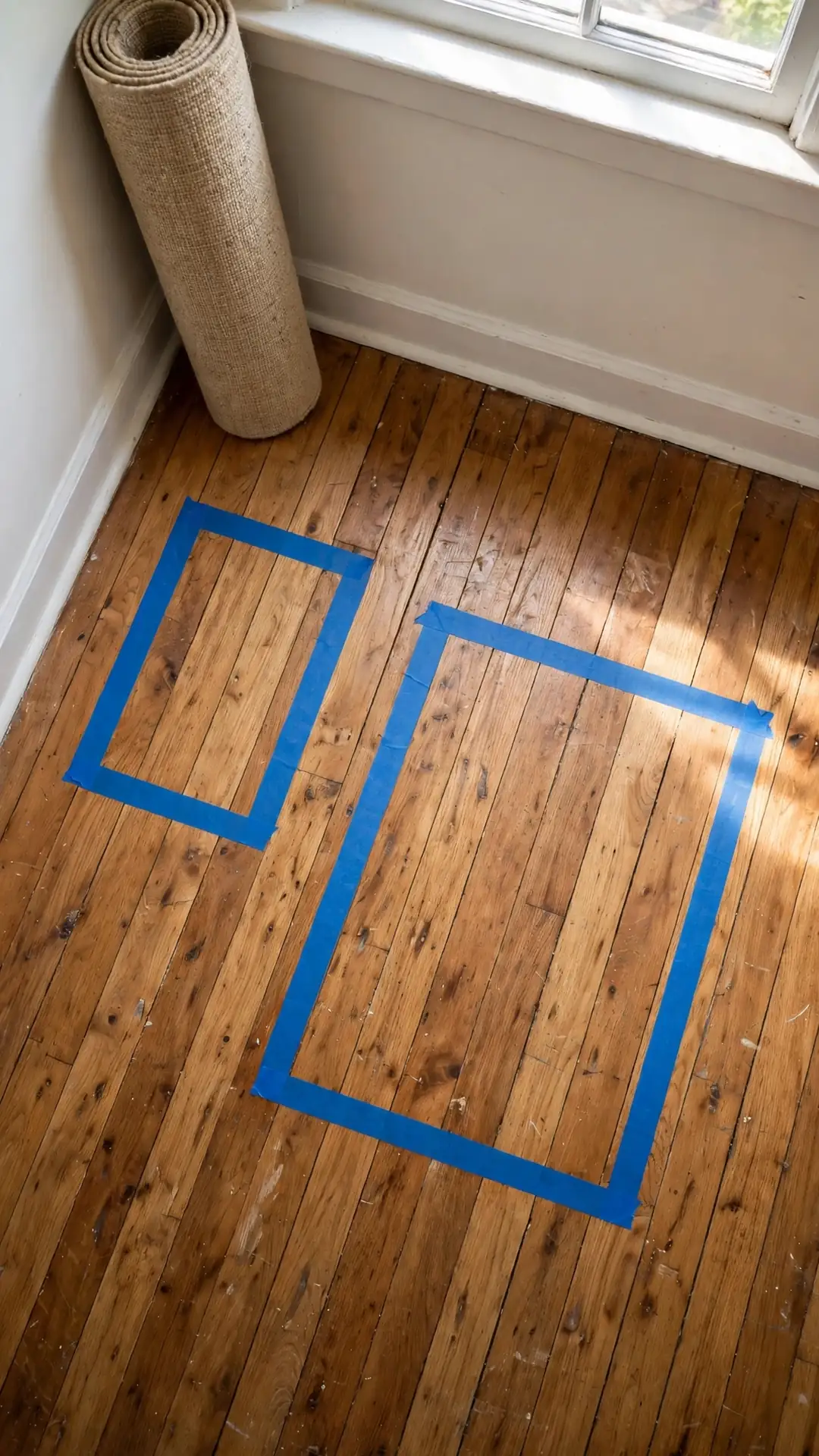
When your numbers fall between two standard sizes, the bigger size usually wins. A rug 6 inches too wide can hide under the sofa. A rug 6 inches too narrow strands the front legs at the edge.
How to do it:
- Tape both sizes before you decide.
- Check the wall border for the bigger size at every wall.
- Choose the bigger size if the border stays at 6 inches or more.
- Choose the smaller size only if a door or vent blocks the bigger one.
Best for: Rooms that measure between the 6 by 9 and 8 by 10.
Budget: Free to test
Quick tip: Stores cut some rugs to order for a small fee. Ask before you settle for a near miss.
43. Pair Two Small Rugs in Odd Rooms
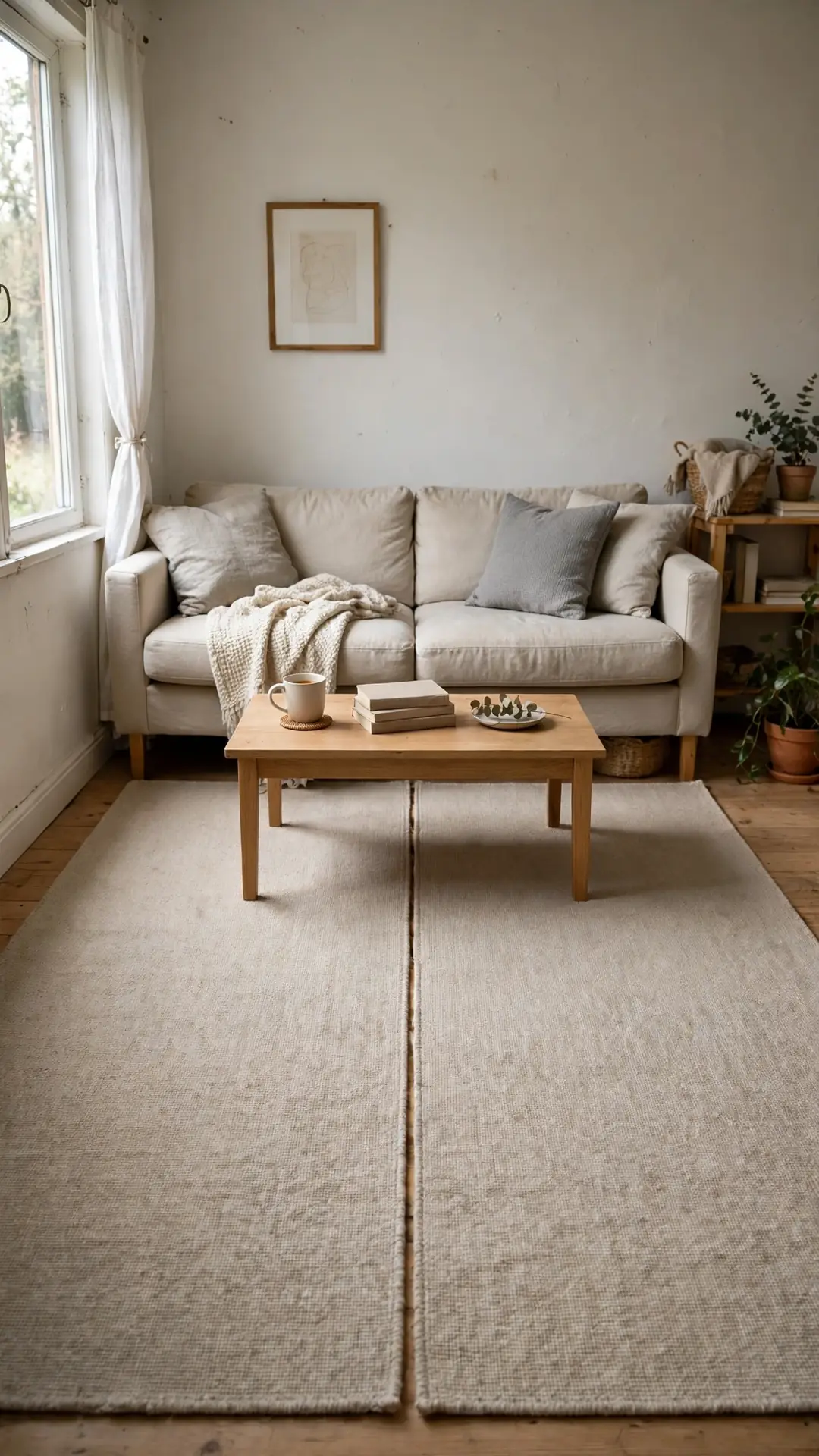
Two matching small rugs can cover a floor that one rug cannot fit. Place them end to end under one long group, with the seam under the coffee table. Match the size exactly, since a mismatched pair reads as a mistake.
How to do it:
- Buy two rugs of the same size, dye lot and thickness.
- Butt the short ends together with no gap and no overlap.
- Hide the seam line under the coffee table center.
- Tape both rugs at the seam for the first month.
Best for: Very long rooms and L-shaped groups.
Budget: $80 to $220 for the pair
Quick tip: Order both rugs in one cart. A second rug bought later can arrive a shade off in color.
44. Measure Both Arms of an L-Shaped Room
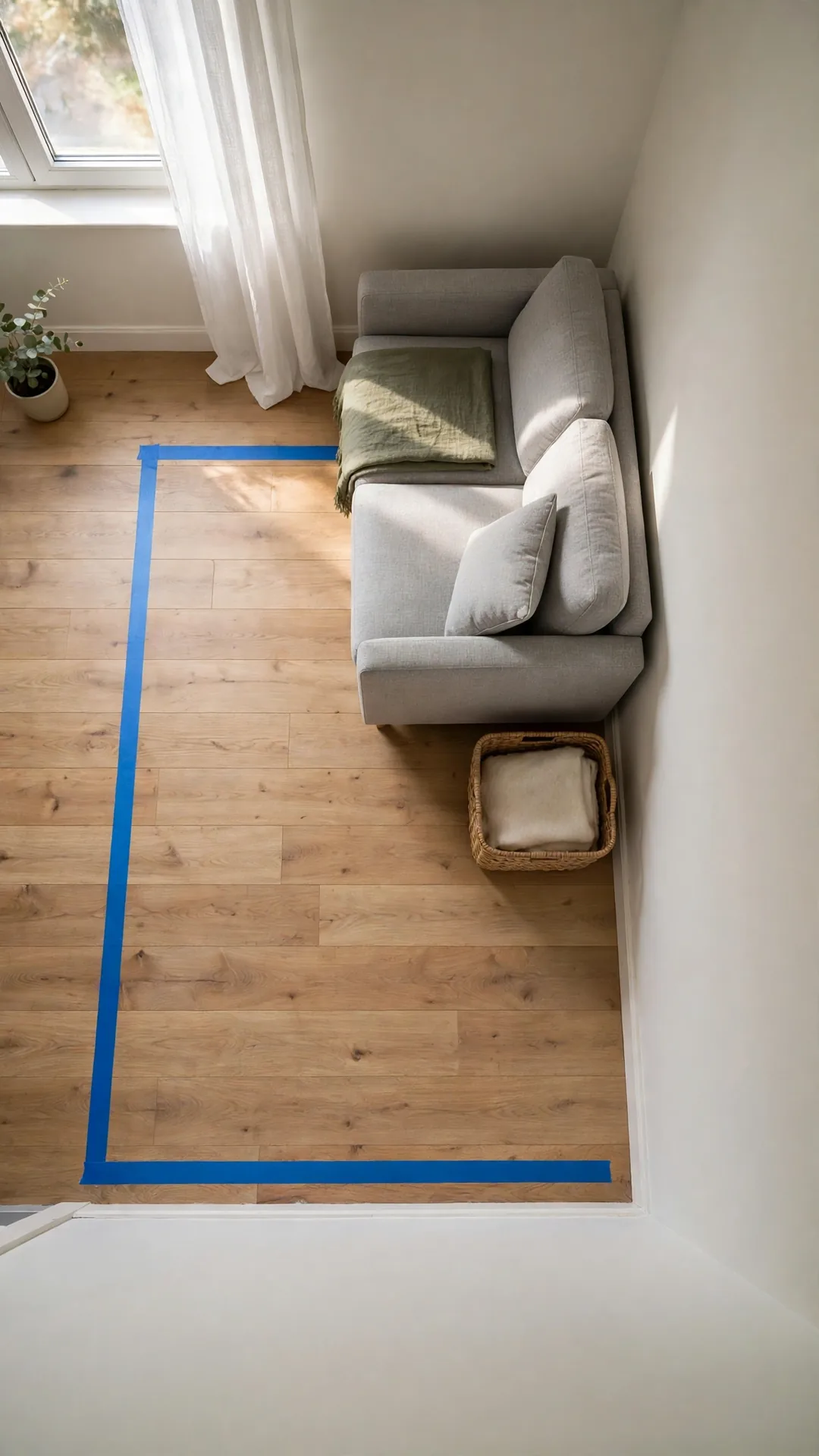
An L-shaped rug size guide for small living rooms problem needs two measurements. Measure each arm of the L as its own small room. Then size the rug for the arm that holds the seating group.
How to do it:
- Draw the L on paper and mark both arm sizes in inches.
- Tape the seating arm outline first.
- Let the second arm stay bare or take a matched runner.
- Keep the main walkway through the L at 36 inches clear.
Best for: L-shaped studio and basement rooms.
Budget: Free
Quick tip: One rug stretched across both arms always fails one of them. Size for the seating arm and treat the rest apart.
45. Clear the Sliding Door Track
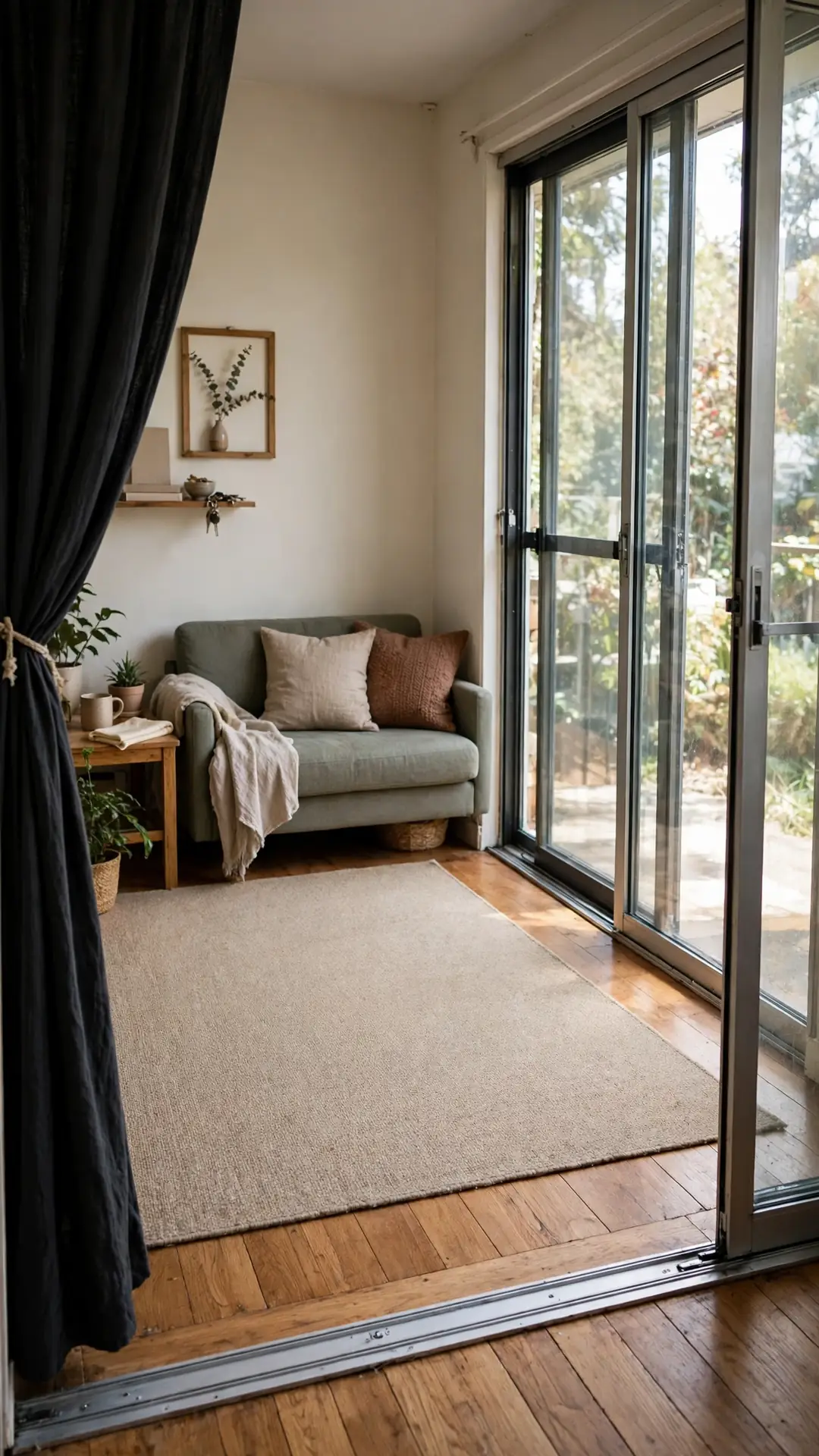
Sliding doors drag across the floor at track level. End the rug at least 4 inches before the track line. Curtains that pool on the floor need the same clear strip.
How to do it:
- Slide the door fully open and mark where the panel travels.
- Tape the rug line 4 inches short of that travel line.
- Keep the pad inside the same line, since pads creep.
- Check curtains hang clear of the rug edge too.
Best for: Rooms with sliders to a balcony or patio.
Budget: Free
Quick tip: Sand gathers at the track and grinds into rug edges. The clear strip keeps the edge clean and flat.
46. Check the Rug's Real Size on Arrival
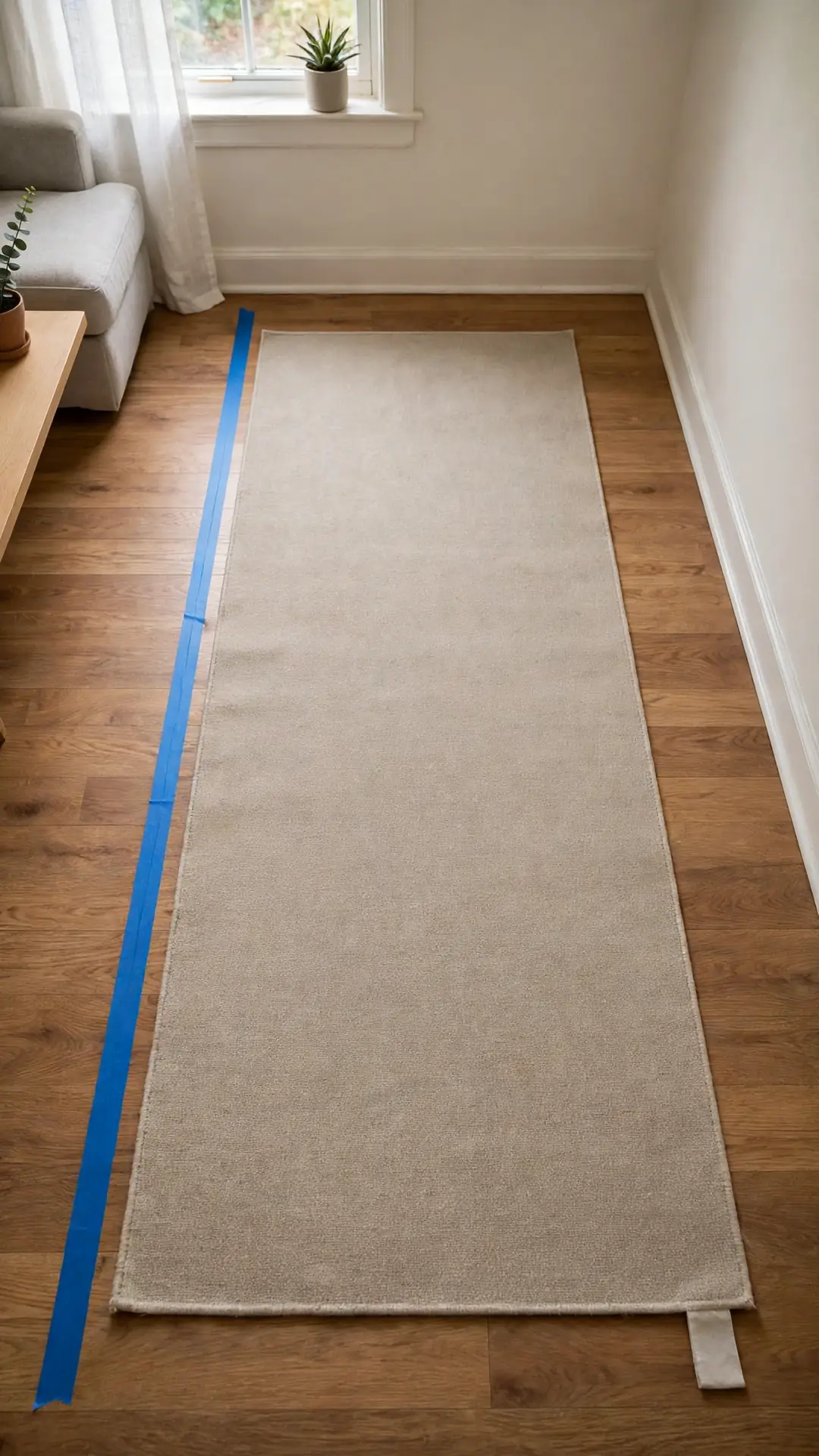
Listed sizes and real sizes differ more often than buyers expect. Unroll the new rug and measure both sides before you move any furniture. A listed 8 by 10 can land anywhere from 7 feet 9 to 8 feet 2.
How to do it:
- Measure corner to corner along both long edges.
- Measure the width at both ends and the middle.
- Compare the numbers with the size on the order.
- Decide the placement from the real size, not the listing.
Best for: Every online rug order.
Budget: Free
Quick tip: Photograph the tape on the rug edge if the size runs short. The photo speeds up any exchange claim.
47. Count the Pad in Your Door Clearance
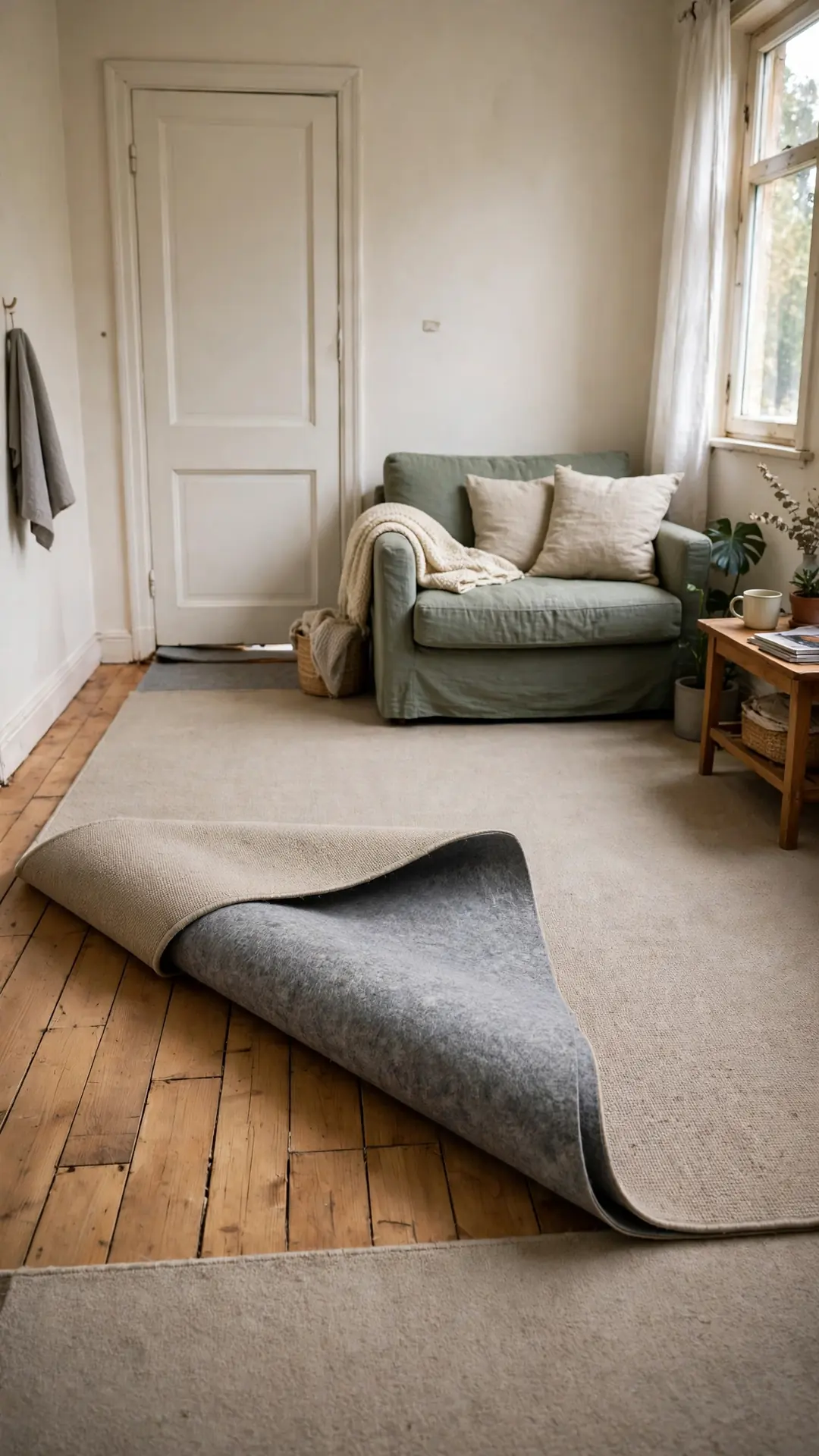
A rug pad adds a quarter to half an inch under the rug. That hidden height decides if doors swing free or drag. Add pad and pile together before you judge any door gap.
How to do it:
- Pick the pad thickness first: 1/4 inch for tight doors, 1/2 inch for comfort zones.
- Stack the pad and a rug corner sample at the door line.
- Swing every nearby door across the stack.
- Trim the pad 1 inch inside the rug edge on all sides.
Best for: Rooms with doors opening over the rug.
Budget: $20 to $60 for a felt pad
Quick tip: A thick pad under a small rug can make chairs wobble. Match pad weight to rug size, not just price.
48. Pick a Pile That Fits the Furniture
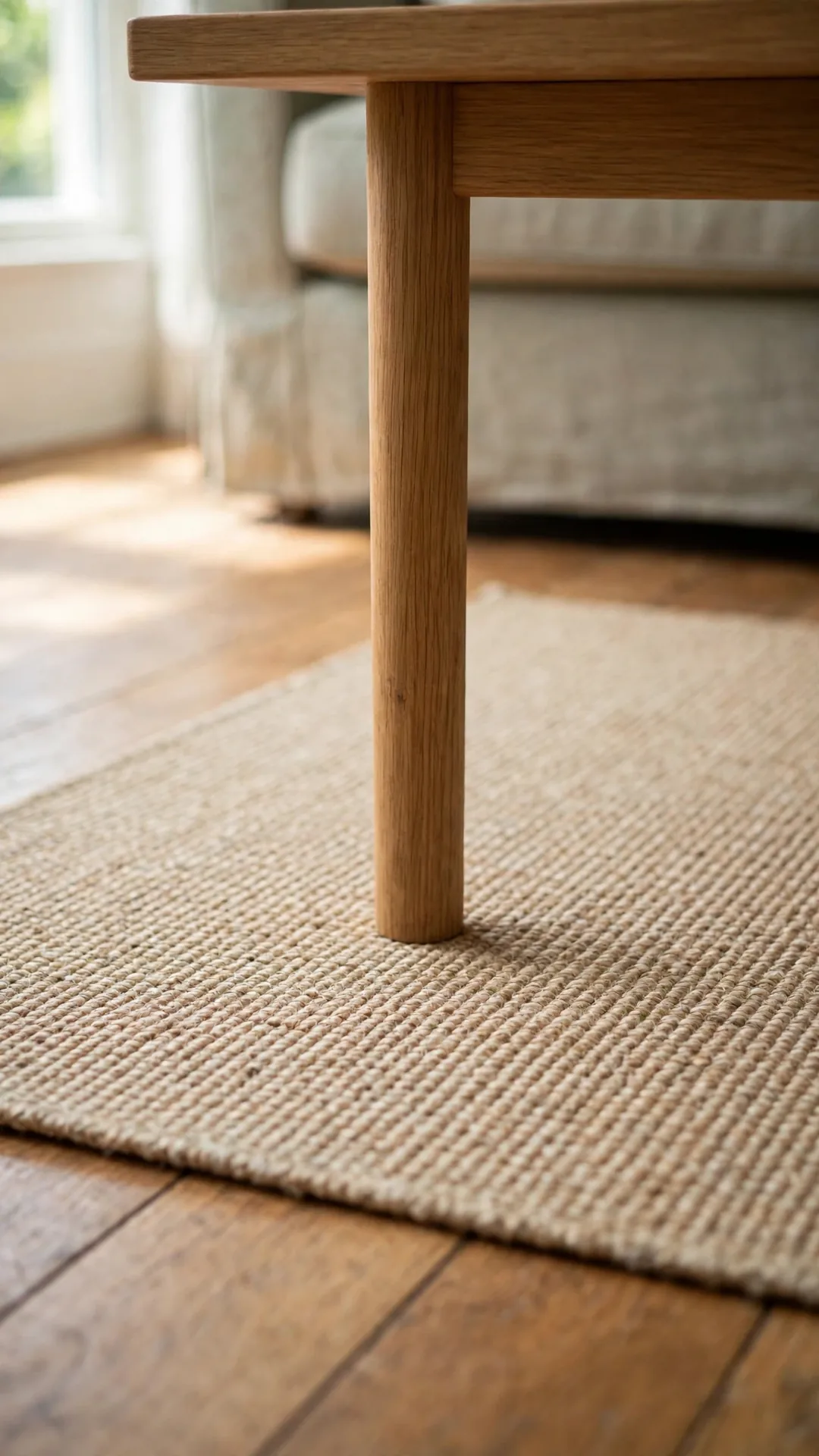
This rug size guide for small living rooms ends with height, not width. Deep pile under a coffee table lets the table rock and the legs sink unevenly. Low, flat rugs hold furniture steady and keep the measured size honest.
How to do it:
- Keep pile under half an inch in the seating zone.
- Press a table leg into the rug sample and watch the sink.
- Save plush rugs for spots with no table legs on them.
- Add the pile height to your door clearance math.
Best for: Coffee tables and side tables on rugs.
Budget: Free at the choosing stage
Quick tip: A rug that measures right but piles high can still fail the room. Test height with the same care as width.
49. Tape a Second Size Before Returning
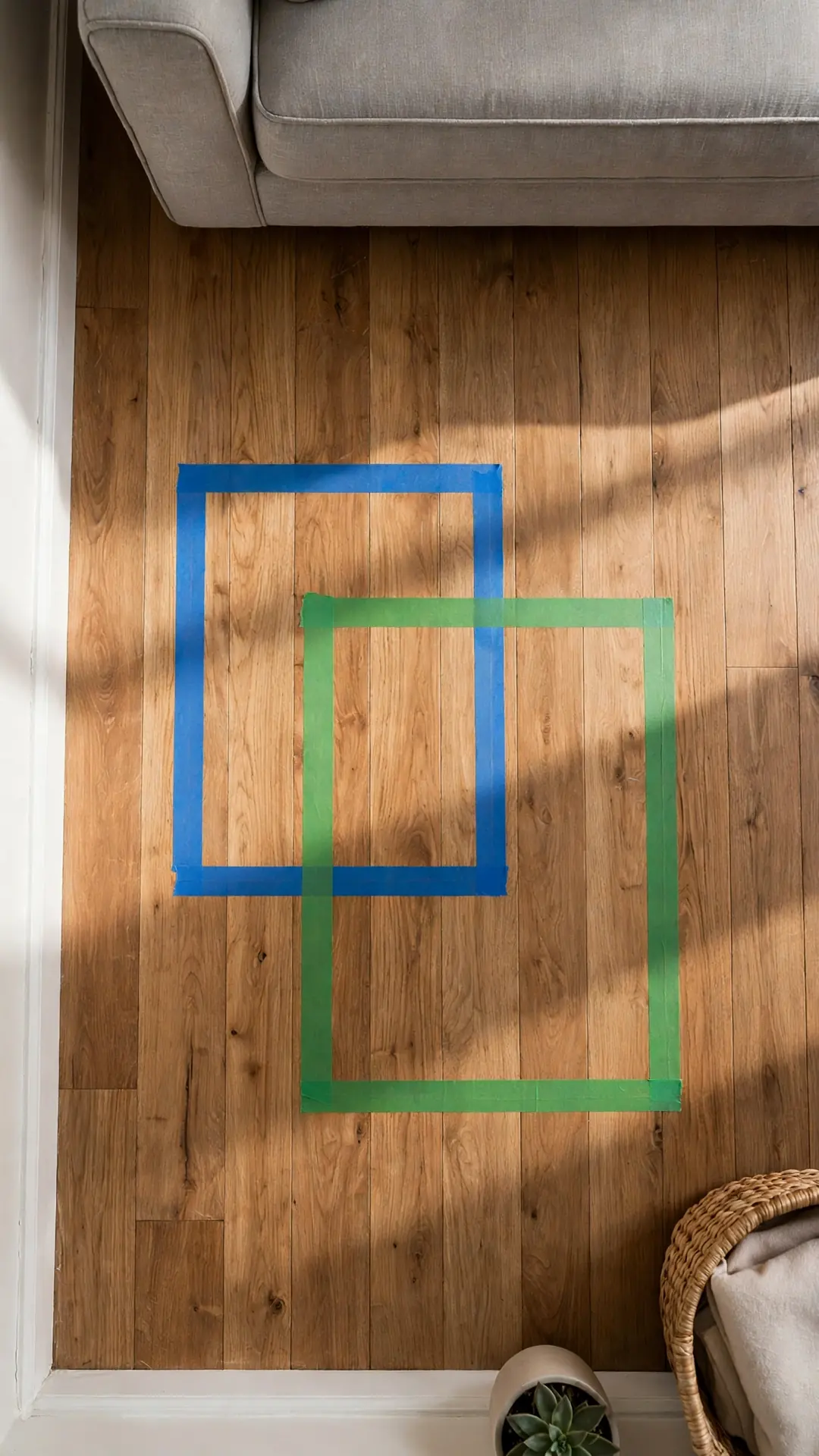
A rug that looks wrong may just be one size off. Before you roll it back up, tape the next size beside it. The side-by-side outlines show if the real fix is bigger or smaller.
How to do it:
- Leave the current rug down and tape the rival size around it.
- Use a second tape color so the two outlines read apart.
- Walk both outlines at night and in daylight.
- Roll the rug only after the tape settles the question.
Best for: Anyone inside a return window.
Budget: $4 to $8 for extra tape
Quick tip: Stores take returns more kindly when the rug stayed clean. Keep shoes off it until the tape test ends.
50. Check the Outline From the Doorway
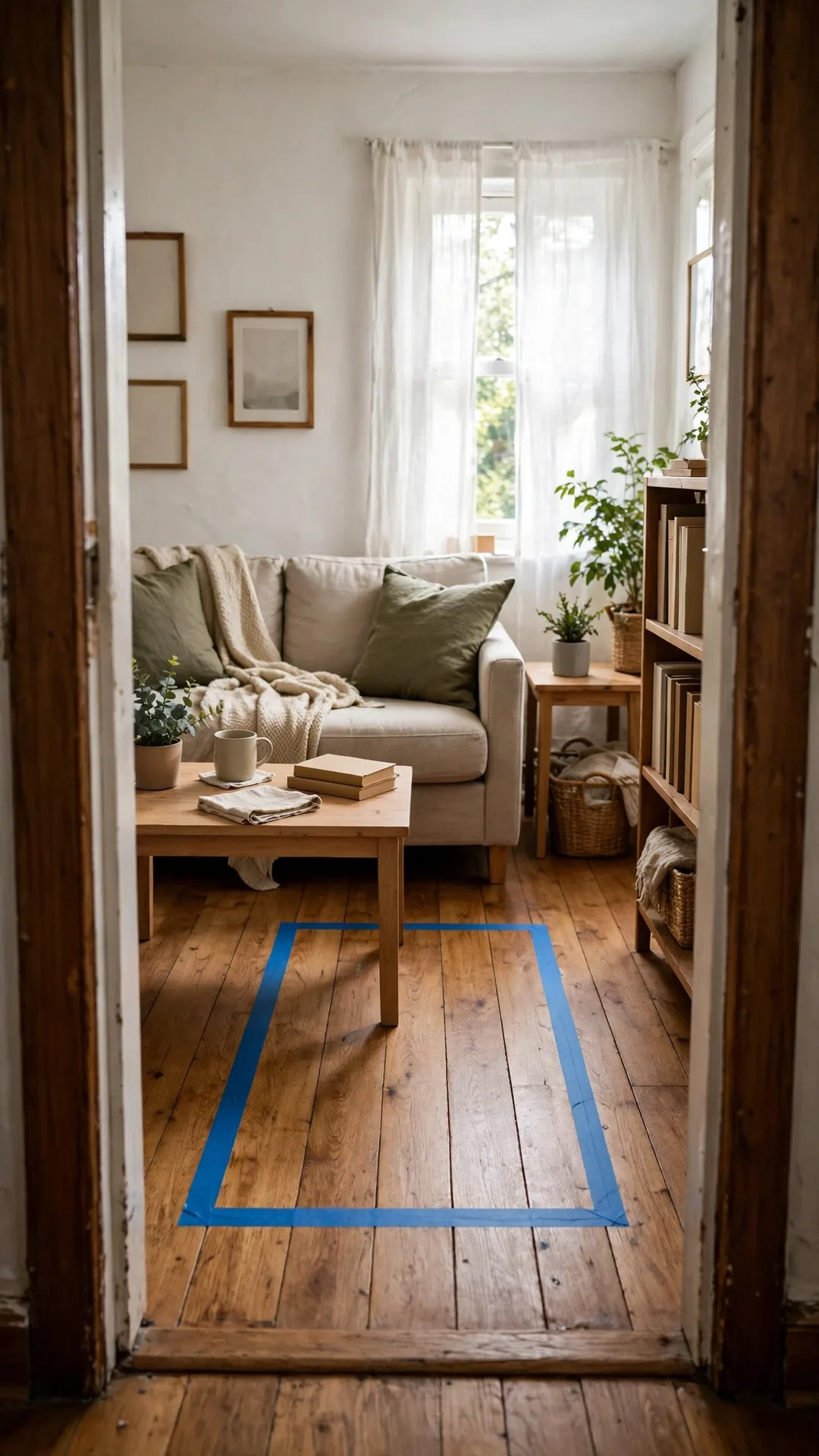
The doorway view is the one you and your guests see most. Stand in the door and judge the tape outline from there. It is the same first view that sells the bold walls in color drenching ideas for small rooms.
How to do it:
- Tape the outline, then leave the room and close the door.
- Open the door and take in the whole room at once.
- Check that the outline looks centered from this angle.
- Take a photo to compare two sizes side by side later.
Best for: Final checks before ordering.
Budget: Free
Quick tip: A rug can measure right and still look off from the door. Trust the doorway view for the final call.
51. Re-Measure When the Furniture Moves
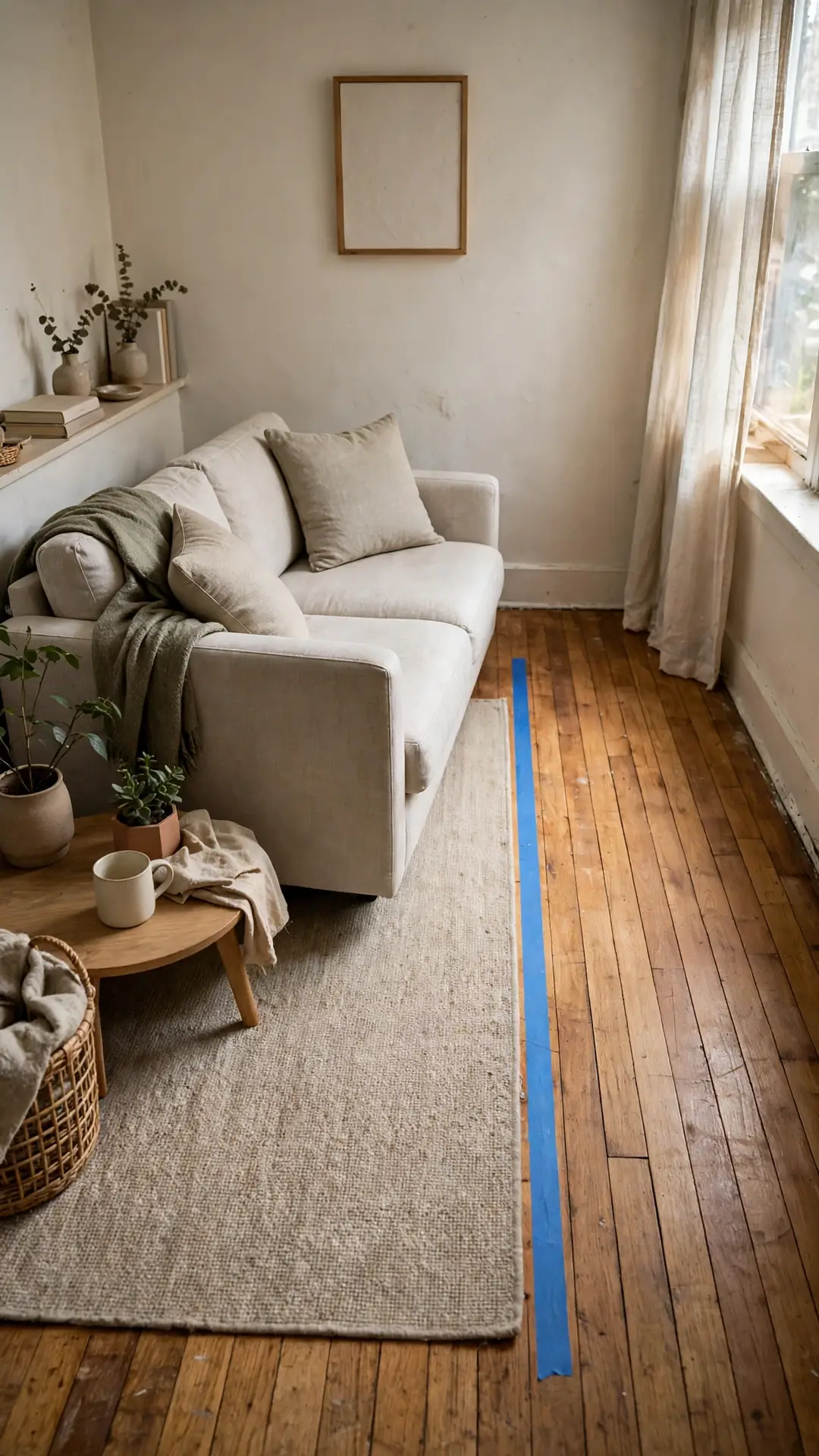
Furniture shuffles break a rug fit that once worked. A sofa swap or a new chair changes the group size at once. Run the tape again before you blame the rug.
How to do it:
- Measure the new group length and width in inches.
- Compare both numbers with the rug's real measured size.
- Shift the rug to center it on the new group first.
- Replace the rug only if the front-legs rule fails on both axes.
Best for: Rooms that change layout with the seasons.
Budget: Free
Quick tip: Keep your room sketch and rug size in one phone note. The next shuffle then takes five minutes, not fifty.
Start With Tape and One Honest Measurement
Pick the size you keep circling and tape it on the floor tonight. Live with the outline for a day before you order.
This rug size guide for small living rooms works one tape line at a time. Save the size chart that fits your room and start there.
- 51 Rug Size Guide for Small Living Rooms That Pros Swear By - November 23, 2026
- 57 Clever Rental Friendly Small Space Ideas You’ll Love - November 23, 2026
- 56 Kids Desk Ideas for Small Rooms Too Good to Gatekeep - November 23, 2026