
A homework pile on the kitchen table gets old fast. Your child needs one small spot that is truly theirs. These kids desk ideas for small rooms give them that spot without eating the whole bedroom.
Here are 56 desks and desk setups sized for real kids rooms. Most cost under $150, and many need no drilling at all. Start with the quick wins and work toward the bigger builds.
1. Start With a Slim 32-Inch Desk
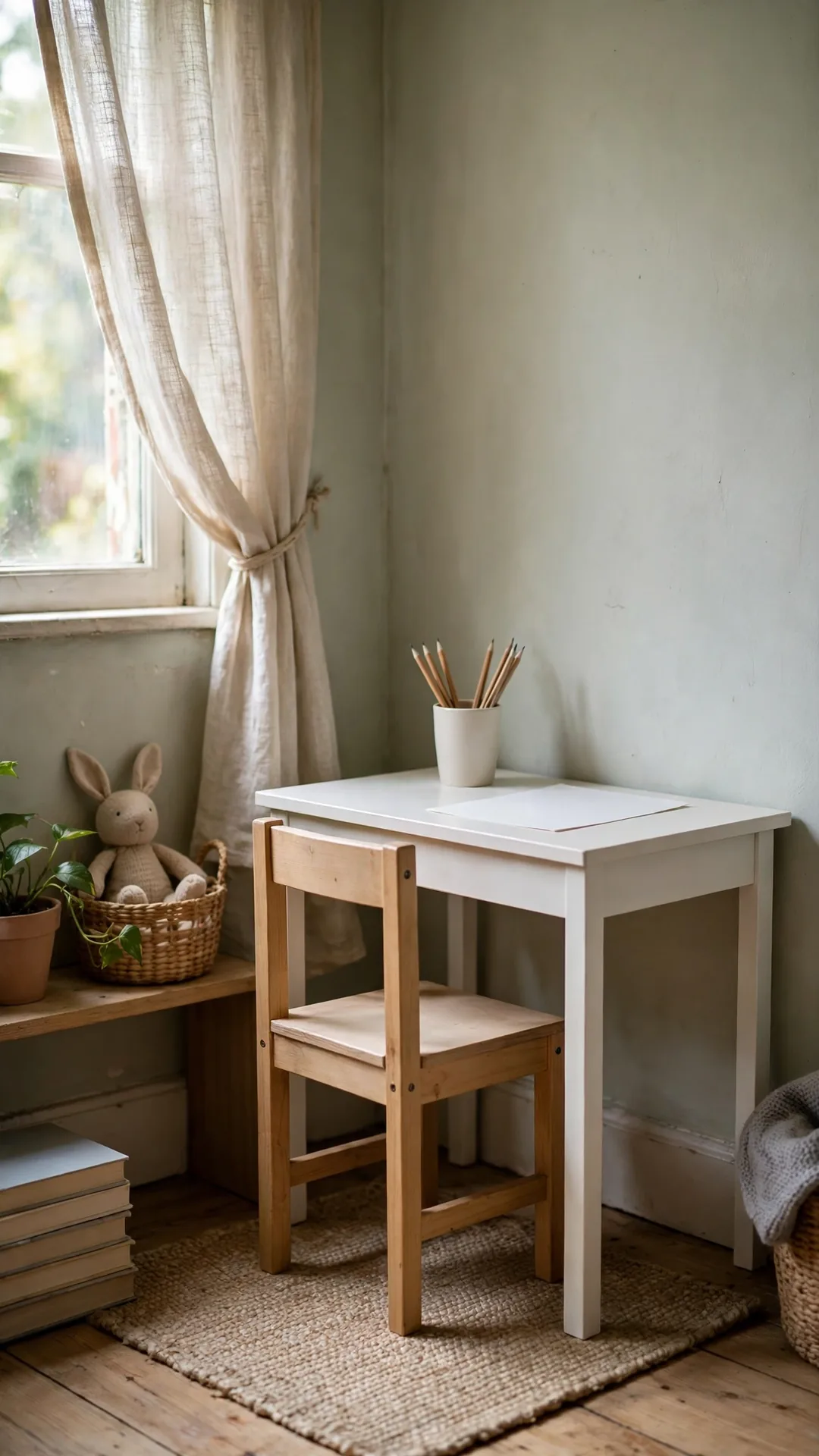
A full size desk swallows a small bedroom whole. A slim desk only 32 inches wide leaves room to walk and play. Measure your wall run before you order anything.
How to do it:
- Pick a top about 32 inches wide and 16 to 20 inches deep.
- Aim for a top height of 22 to 24 inches for ages six to eight.
- Leave 24 inches of knee space under the top.
- Set the chair so feet rest flat on the floor.
Best for: First desks in bedrooms under 100 square feet.
Budget: $40 to $90
Quick tip: Tape the desk outline on the floor before you buy.
2. Park a Rolling Cart Beside the Desk
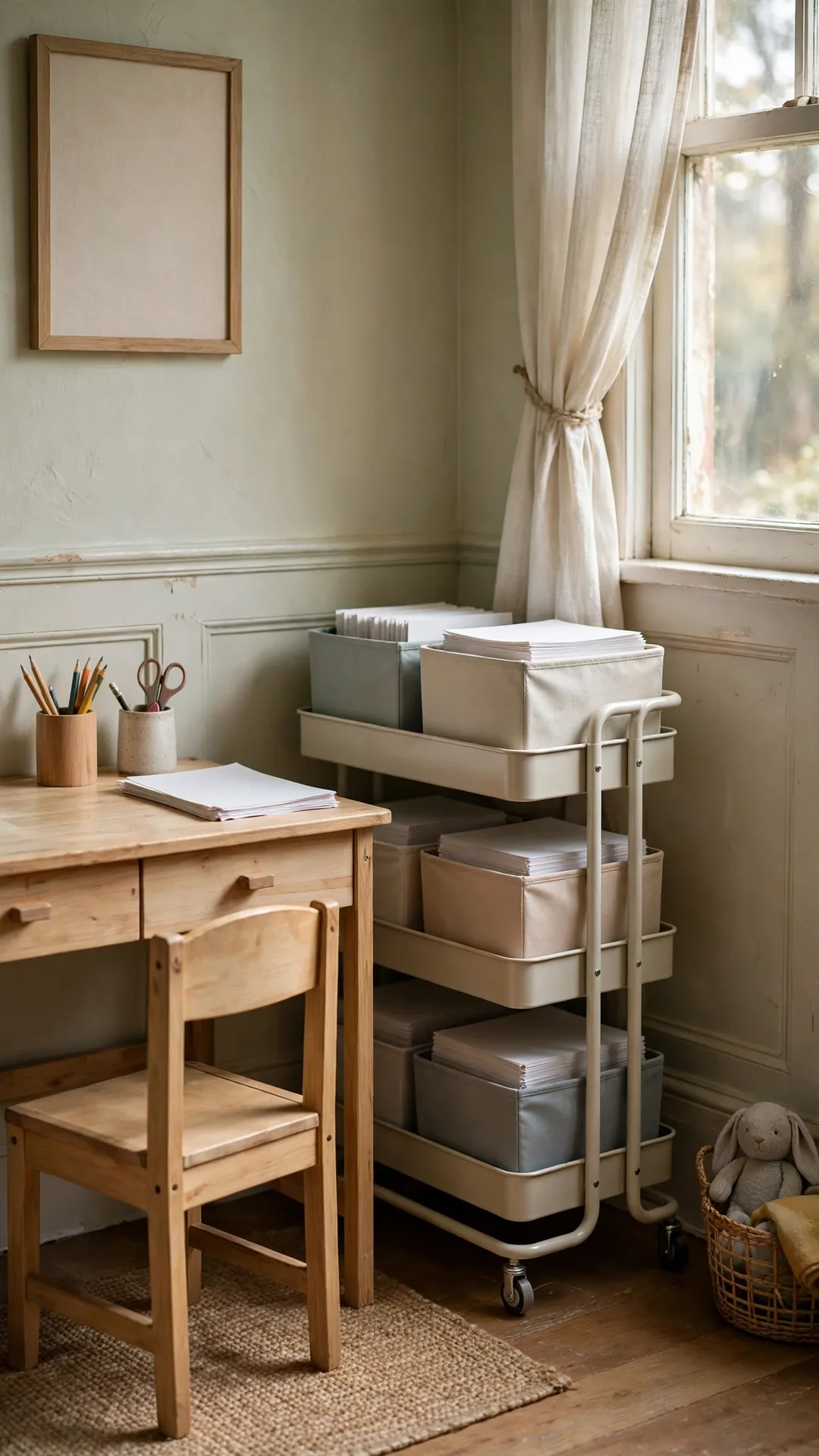
Drawers eat floor space that a small room cannot spare. A slim rolling cart gives three shelves of storage in a 12 inch gap. It parks beside the desk by day and rolls out for cleaning.
How to do it:
- Choose a cart about 12 inches wide and 14 inches deep.
- Keep daily supplies on the top tier within arm reach.
- Store paper and books upright on the middle tier.
- Park heavy paint sets on the bottom tier.
- Pick locking wheels so the cart stays put during homework.
Best for: Renters and rooms with no built in storage.
Budget: $20 to $40
Quick tip: Use plain colored bins so the cart looks tidy fast.
3. Hang a Pegboard Above the Desk

Smart kids desk ideas for small rooms move supplies off the work surface. A pegboard panel holds cups, scissors and tape at eye level. The desktop then stays clear for books and homework.
How to do it:
- Mount a panel about 24 by 18 inches above the desk.
- Fix it to studs or use rated wall anchors.
- Hang two cups for pencils and one hook for scissors.
- Add a small shelf for a tape roll and eraser.
- Keep sharp tools on the highest row for young kids.
Best for: Art heavy kids who spread supplies everywhere.
Budget: $15 to $35
Quick tip: Leave the bottom row empty so the desk feels open.
4. Add a Wall Rail With Hanging Cups
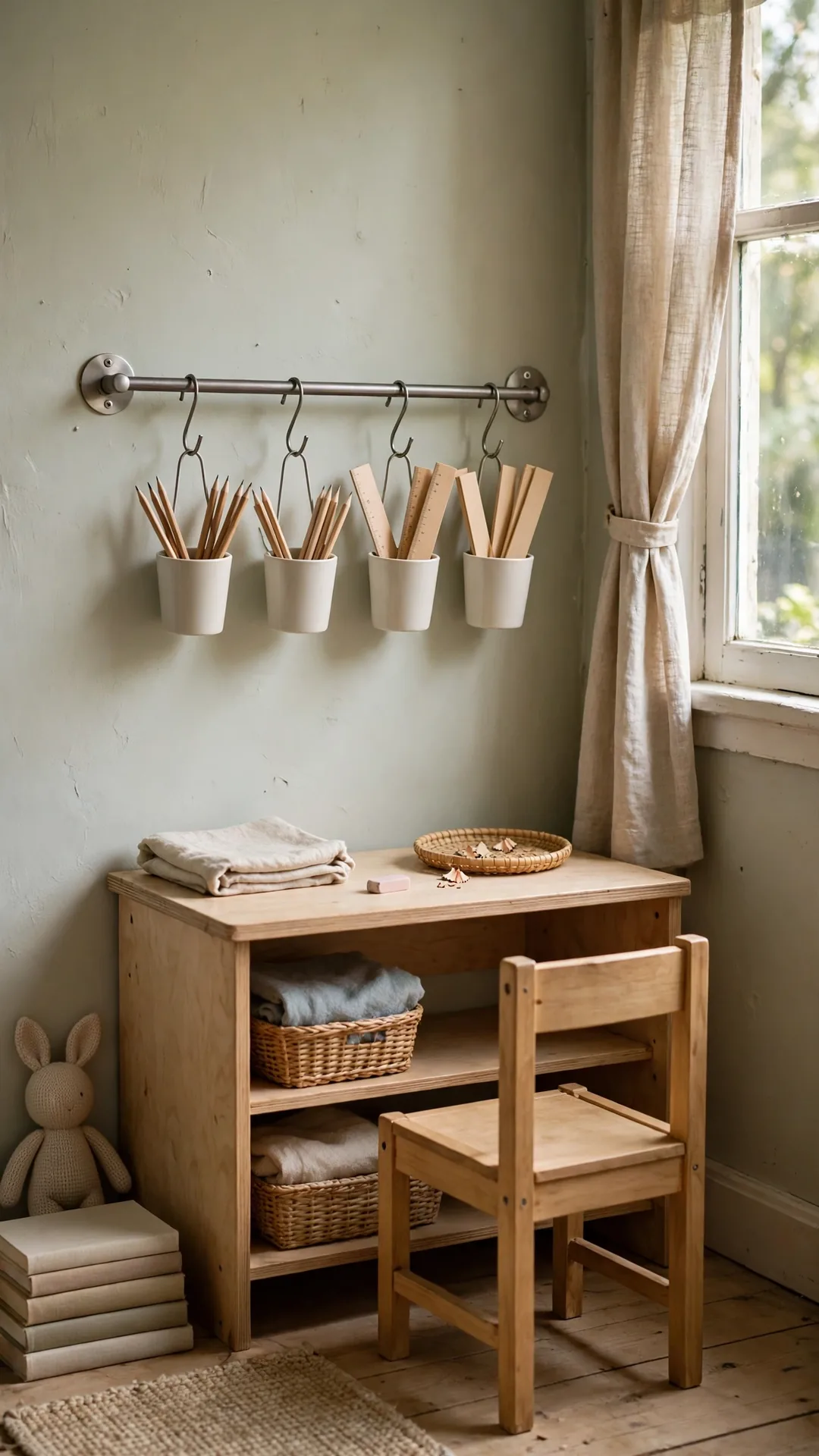
A kitchen style rail works hard above a small desk. Cups hang from hooks and lift pencils off the surface. Your child sees every tool at a glance.
How to do it:
- Screw a 24 inch rail into studs above the desk.
- Hang three to five cups or small baskets.
- Sort one cup for pencils and one for markers.
- Keep the rail 12 inches above the desktop.
- Choose rounded hooks with no sharp points.
Best for: Tiny desks with zero drawer space.
Budget: $10 to $25
Quick tip: Metal cups survive drops better than plastic ones.
5. Pick a Desk With Two Shallow Drawers

One deep drawer turns into a toy pit fast. Two shallow drawers sort better and close without a fight. Each drawer stays light enough for small hands.
How to do it:
- Look for drawers about 3 inches deep inside.
- Give one drawer to pencils, rulers and erasers.
- Use the second drawer for current homework only.
- Add simple dividers made from small boxes.
- Check that drawers stop before sliding fully out.
Best for: Kids who lose supplies inside deep drawers.
Budget: $60 to $120
Quick tip: Empty both drawers together at the end of each term.
6. Slide a Book Bin Under the Desk
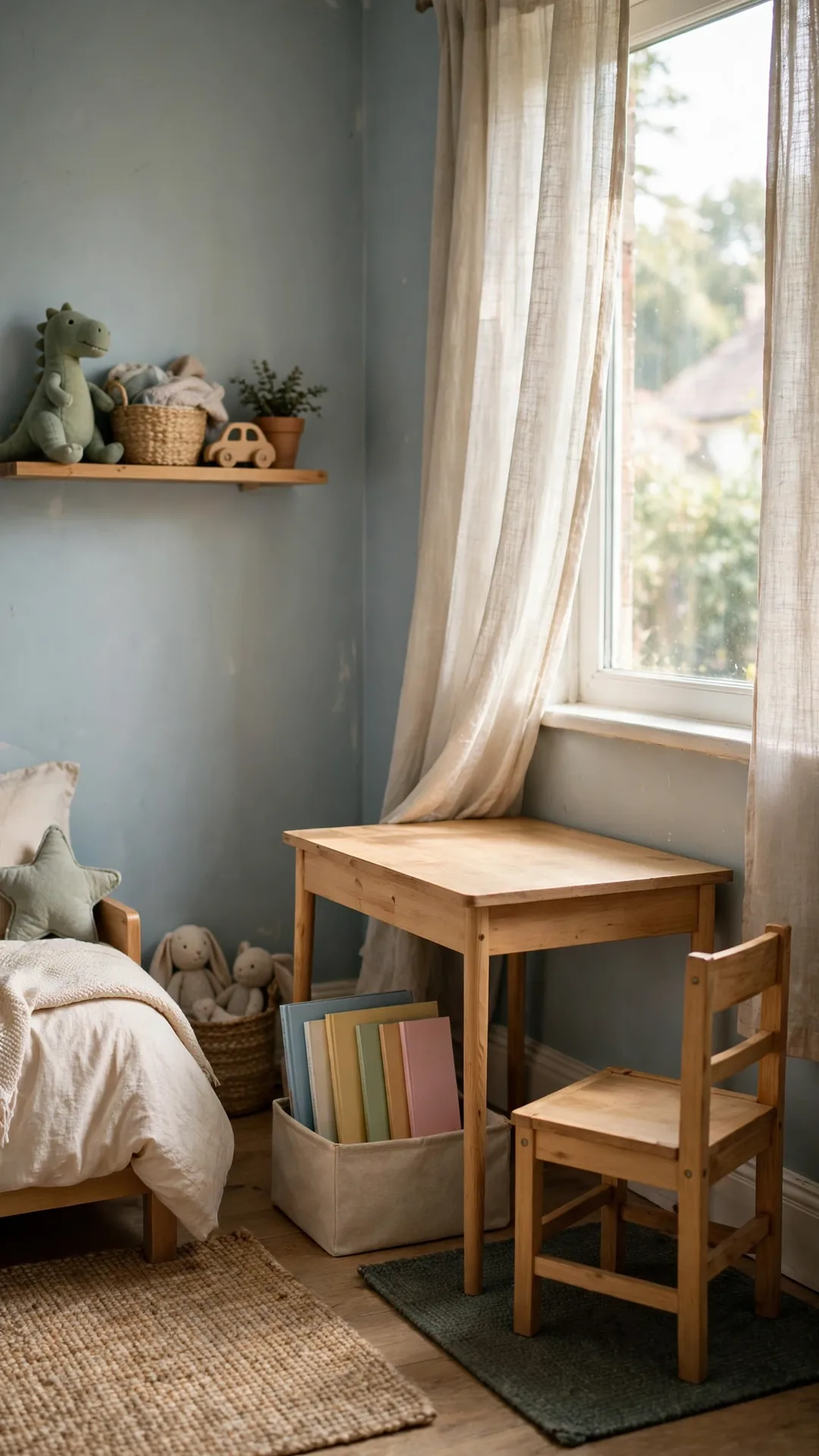
The best kids desk ideas for small rooms give school books a parking spot. A low book bin under the desk swallows the whole library pile. Books stand upright, so the right cover is easy to spot.
How to do it:
- Pick a bin about 12 inches wide and 10 inches tall.
- Slide it under the desk on the non chair side.
- Stand books upright with the tallest at the back.
- Keep library books in the front half only.
- Empty the bin on library day each week.
Best for: Heavy readers with weekly library runs.
Budget: $8 to $18
Quick tip: A bin with handles lifts out for quick sorting.
7. Clip a Lamp to the Desk Edge
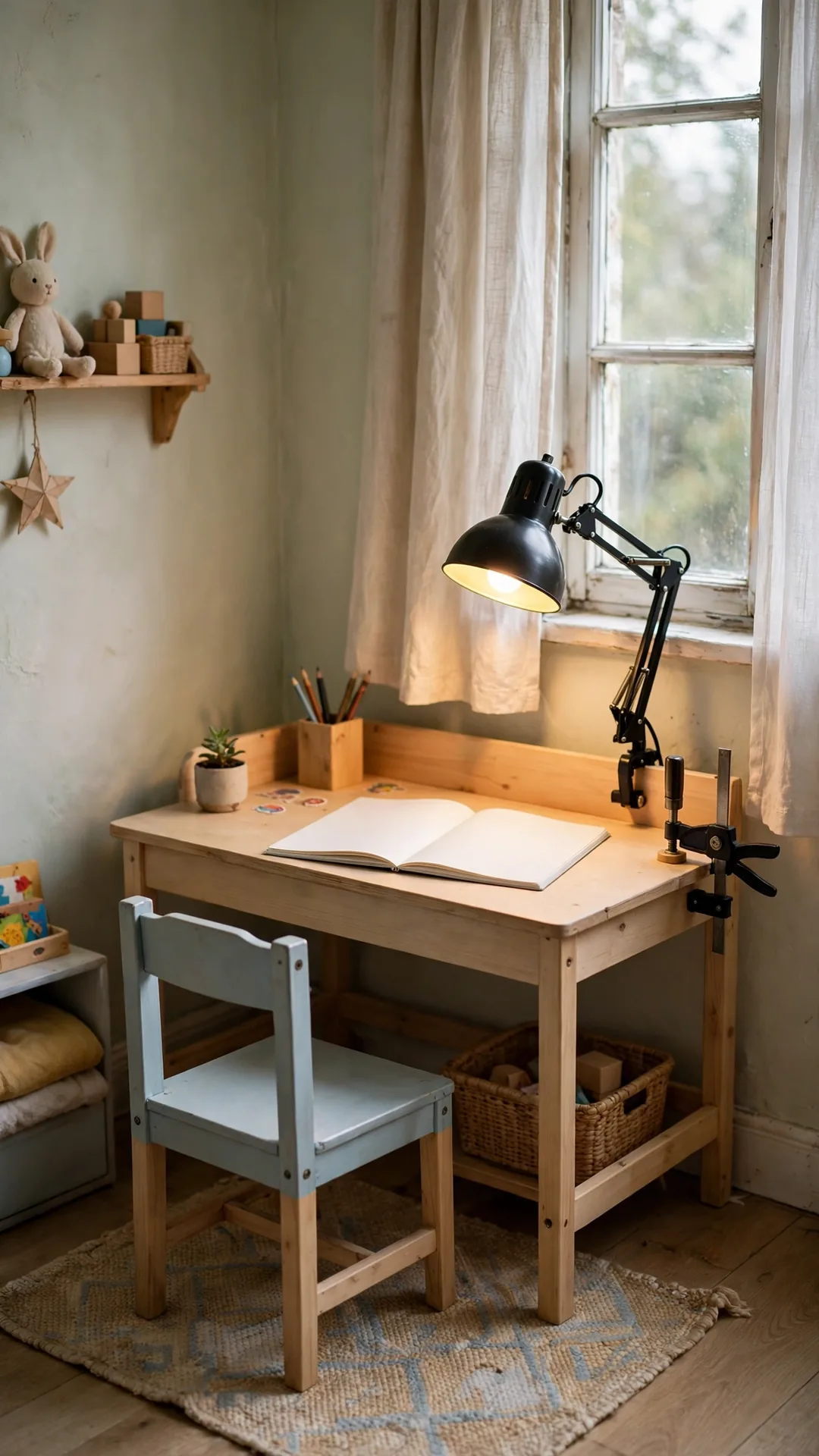
A table lamp base steals six inches of work space. A clamp lamp grips the desk edge and floats above it. The light lands right where homework happens.
How to do it:
- Clamp the lamp at the back corner of the desk.
- Aim the head 12 to 15 inches above the page.
- Pick a warm white bulb for softer evening light.
- Route the cord down the desk leg, away from feet.
- Tape the cord flat where it meets the floor.
Best for: Desks too small for a lamp base.
Budget: $12 to $30
Quick tip: Clamp lamps also free space for an open book.
8. Keep Supplies in One Desktop Caddy
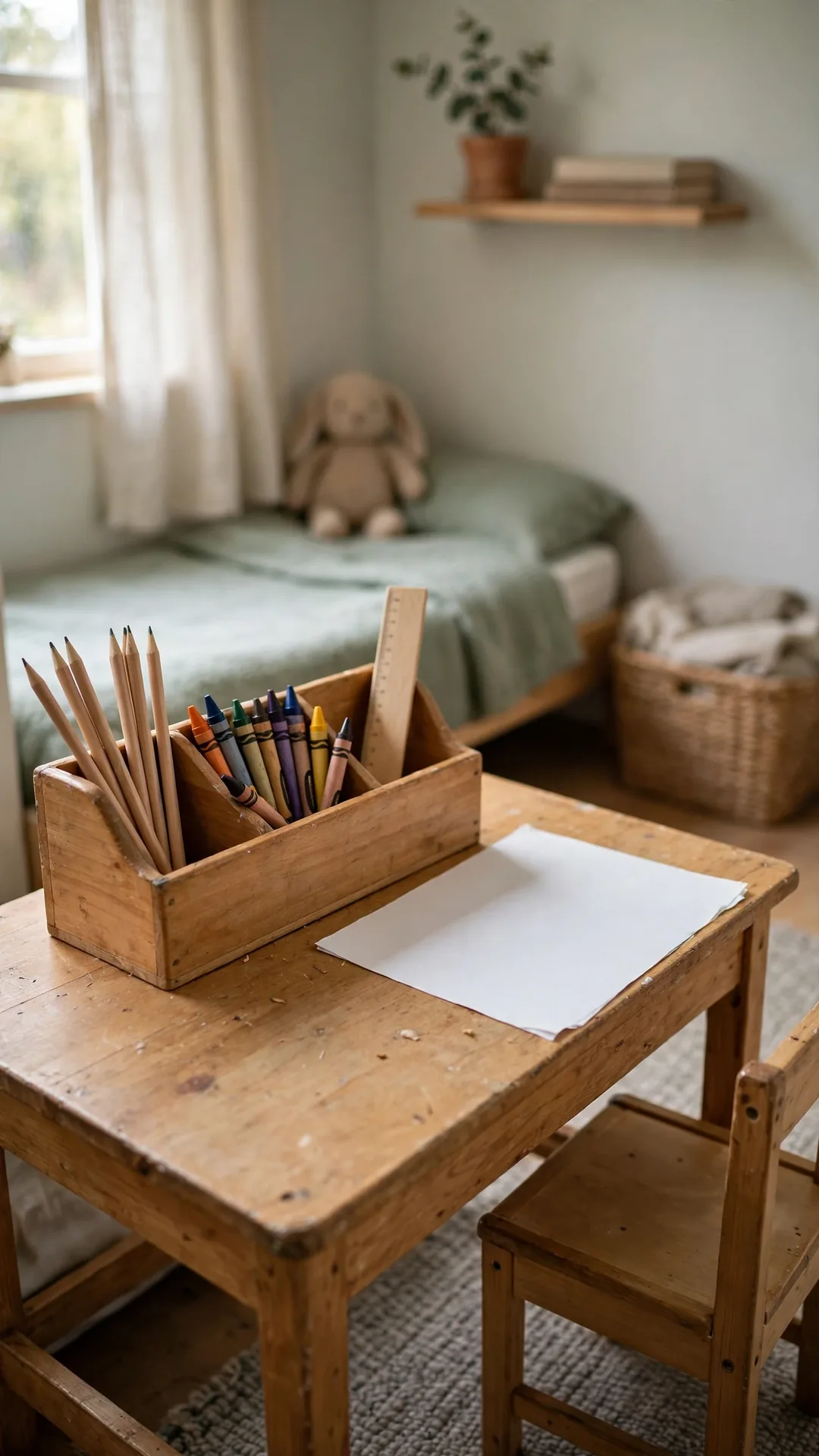
Loose pencils roll off a small desk all day long. One divided caddy corrals pencils, scissors, glue and rulers in six inches. It lifts away when the desk becomes a craft table.
How to do it:
- Choose a caddy about 8 by 5 inches with a handle.
- Keep only daily tools inside, nothing more.
- Stand tall tools at the back, short ones in front.
- Sort crayons into one cup for art days.
- Wipe the caddy out every few weeks.
Best for: Young kids who share one family desk.
Budget: $6 to $15
Quick tip: One caddy per child ends most supply arguments.
9. Roll the Desk Away After Homework
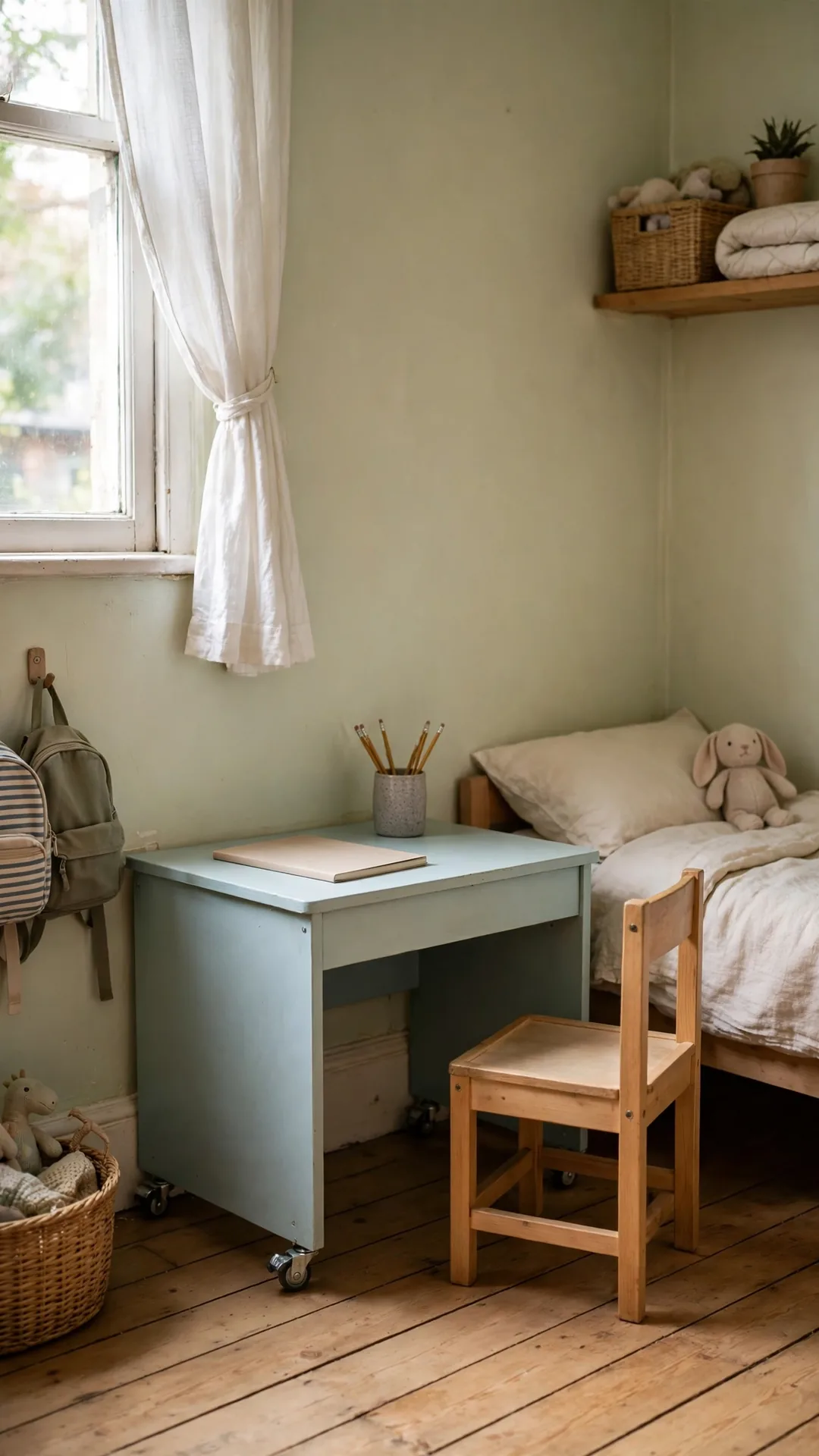
Flexible kids desk ideas for small rooms earn their keep twice a day. A small desk on locking casters rolls out for homework, then tucks flat against the wall for play. That is why they lead most lists of rental friendly small space ideas.
How to do it:
- Pick casters at least 2 inches wide for carpet.
- Lock two wheels before your child sits down.
- Choose a desk under 24 pounds so it moves easily.
- Keep the roll path clear of rugs and cords.
- Park it in the same spot every night.
Best for: Renters and rooms that double as play space.
Budget: $50 to $110
Quick tip: Mark the parking spot with two small floor stickers.
10. Fold a Desk Down From the Wall
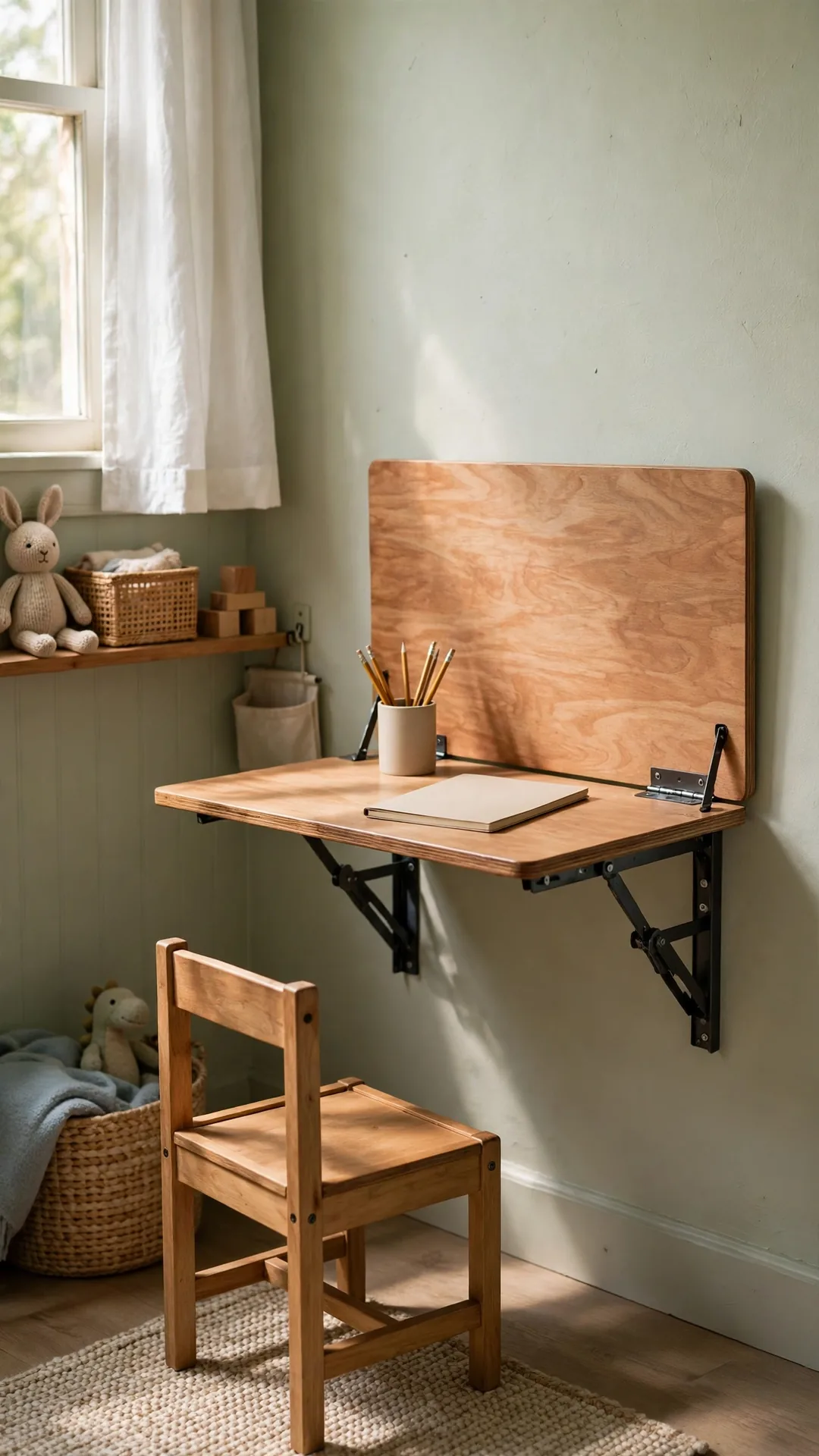
A fold down desk gives a full work surface with zero floor claim. The top hangs flat against the wall when homework ends. Two folding brackets carry the load safely.
How to do it:
- Mount the panel about 36 inches wide and 20 inches deep.
- Fix brackets into wall studs, never drywall alone.
- Set the top at 24 to 26 inches for ages nine to twelve.
- Round the front corners with sandpaper for safety.
- Add a small latch so the panel stays shut.
Best for: Bedrooms where floor space is fully used.
Budget: $45 to $100
Quick tip: Paint the panel the wall color so it disappears.
11. Float a Shelf Desk Under the Window
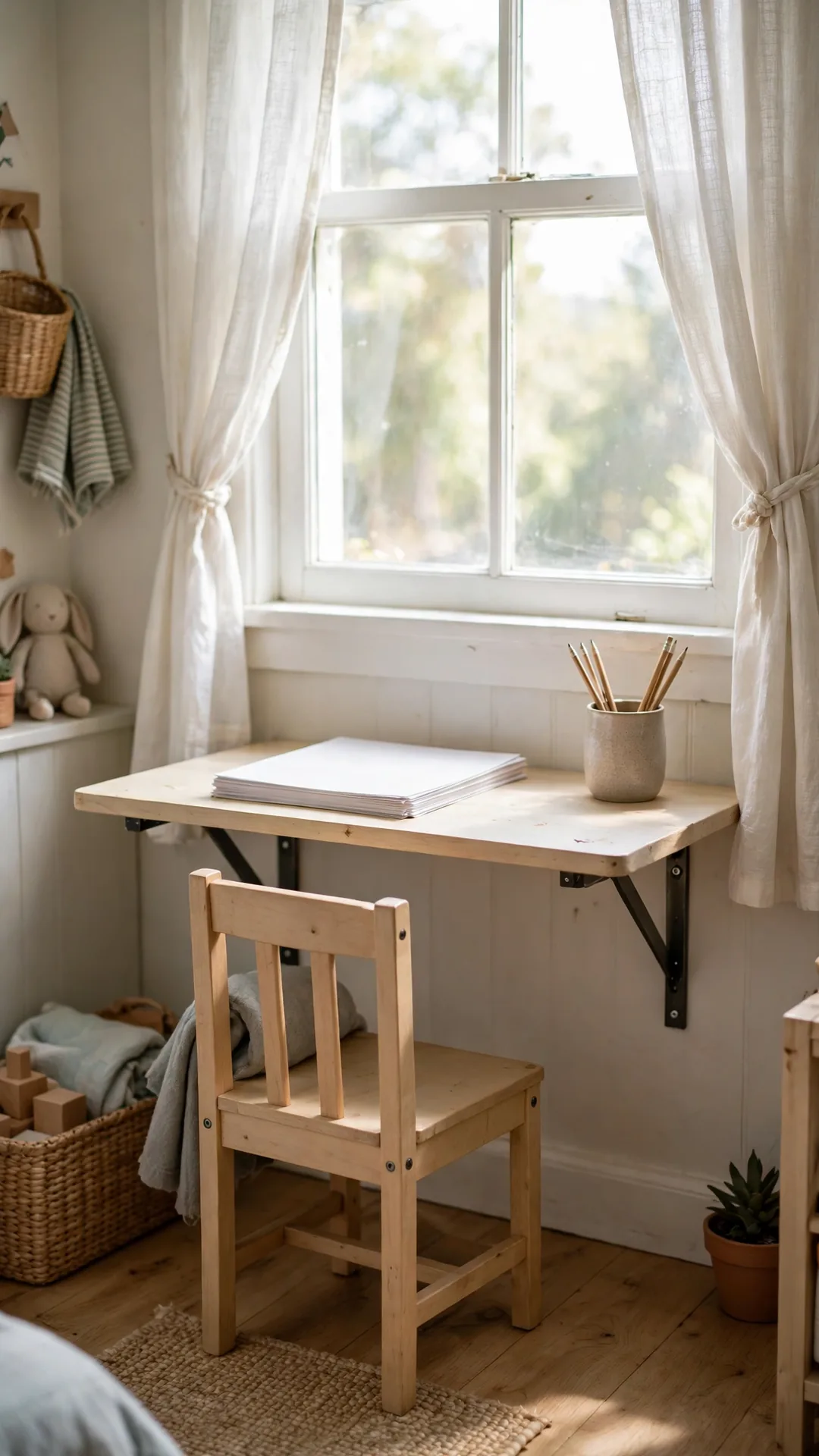
Window light makes homework feel less like a chore. A deep shelf fixed under the window becomes a bright desk. It is one of the simplest setups in these study room ideas and needs only brackets and a board.
How to do it:
- Use a board 16 to 18 inches deep under the sill.
- Fix three brackets into studs along the run.
- Keep the top just below the window sill height.
- Leave vents and radiator space fully clear below.
- Sand and seal the board so splinters stay away.
Best for: Rooms with one bright unused window wall.
Budget: $30 to $70
Quick tip: A stool tucks fully under the shelf at night.
12. Run a Wall Ledge Desk Along the Room
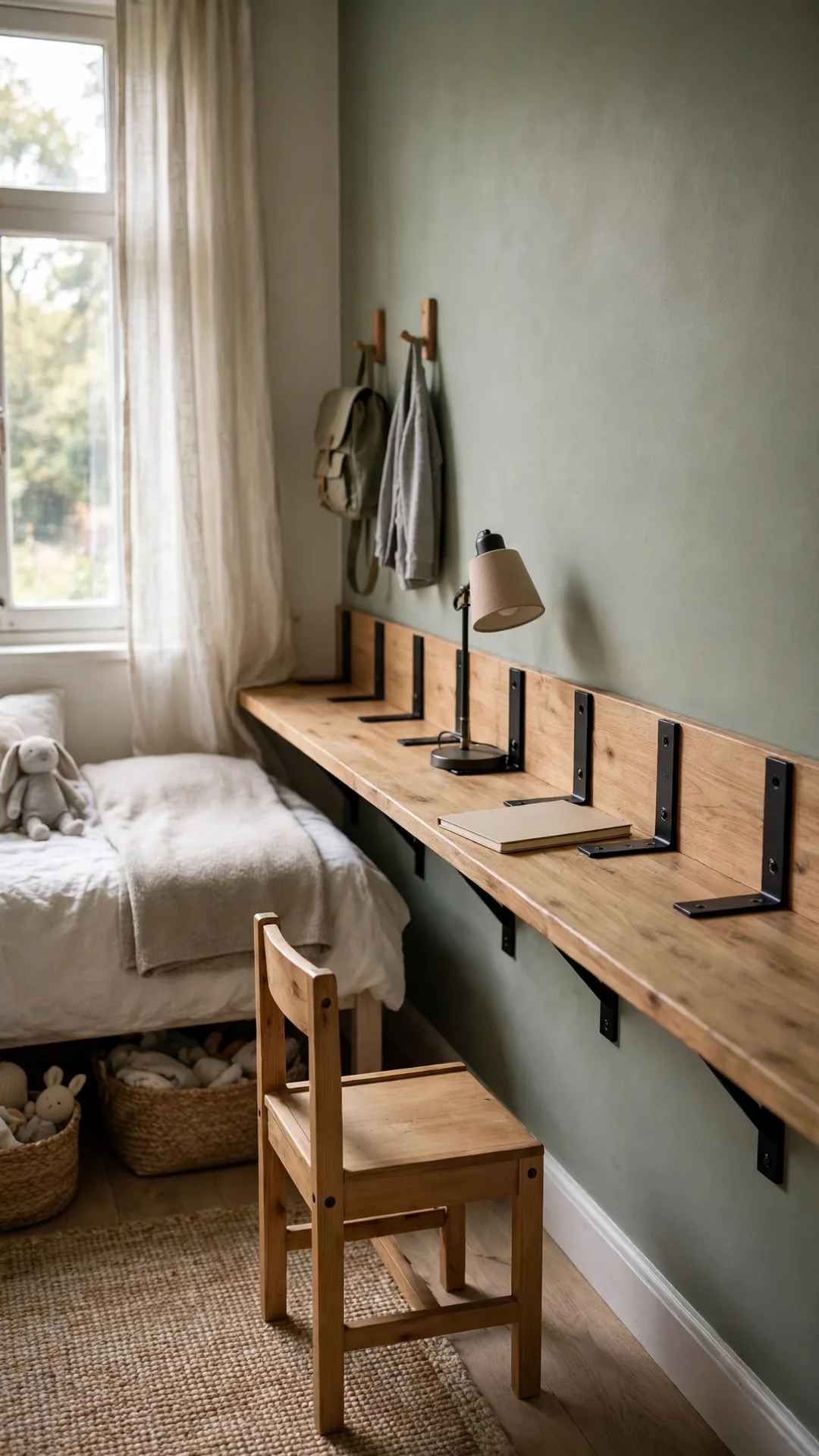
Long kids desk ideas for small rooms use the wall nobody notices. A narrow ledge desk runs along one wall like a shelf. It seats homework, art and a laptop in a row.
How to do it:
- Build the ledge 12 to 14 inches deep only.
- Support it with brackets every 24 inches.
- Run it 4 to 6 feet for two work zones.
- Keep the edge banded or sanded fully smooth.
- Leave the floor below clear for feet and bins.
Best for: Long narrow bedrooms with one free wall.
Budget: $35 to $80
Quick tip: A ledge this slim never blocks a door swing.
13. Hide the Desk Inside a Shallow Cabinet

Some small rooms cannot show a desk all day. A shallow wall cabinet hides a fold down desk inside. The doors close on the mess in seconds.
How to do it:
- Pick a cabinet about 36 inches wide and 8 inches deep.
- Anchor the cabinet to studs at four points.
- Fit the desk panel to fold down from inside.
- Add small shelves inside for books and supplies.
- Keep the closed depth clear of the walkway.
Best for: Shared bedrooms and studio style kids rooms.
Budget: $90 to $180
Quick tip: Magnetic catches hold the doors shut without latches.
14. Open a Drop Leaf for Big Art Days
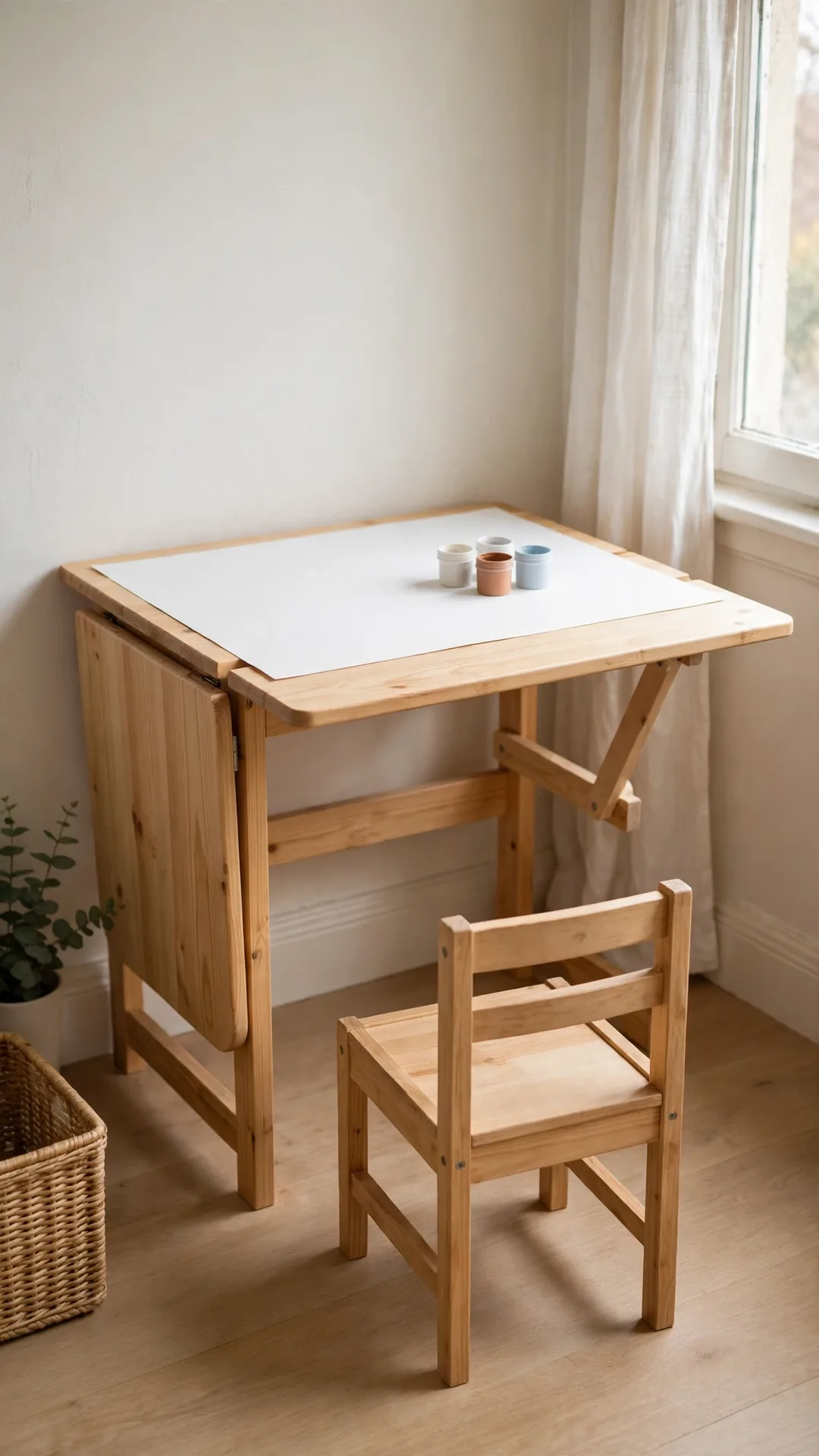
Most days a small desk top is plenty. Big art projects need more room once a week. A drop leaf side lifts up and doubles the surface.
How to do it:
- Add a leaf about 12 inches wide on strong hinges.
- Support the open leaf with a folding bracket.
- Keep the closed desk at 30 inches wide.
- Store poster boards flat behind the door meanwhile.
- Round the leaf corners to match the desk.
Best for: Young artists with weekly big projects.
Budget: $55 to $120
Quick tip: A leaf also works as a side table for sleepovers.
15. Keep a Lap Desk for Floor Work

Some kids desk ideas for small rooms skip the chair completely. A padded lap desk turns the rug into a work spot. It stores flat under the bed afterward.
How to do it:
- Pick a lap desk about 18 inches wide with a cushion base.
- Choose a smooth top that wipes clean fast.
- Add a small ledge so pencils stop rolling off.
- Keep the whole thing under 3 pounds.
- Slide it under the bed or behind the door after use.
Best for: Wiggly kids who prefer the floor.
Budget: $15 to $35
Quick tip: A lap desk doubles as a sick day tray in bed.
16. Tuck a Desk Inside a Spare Closet
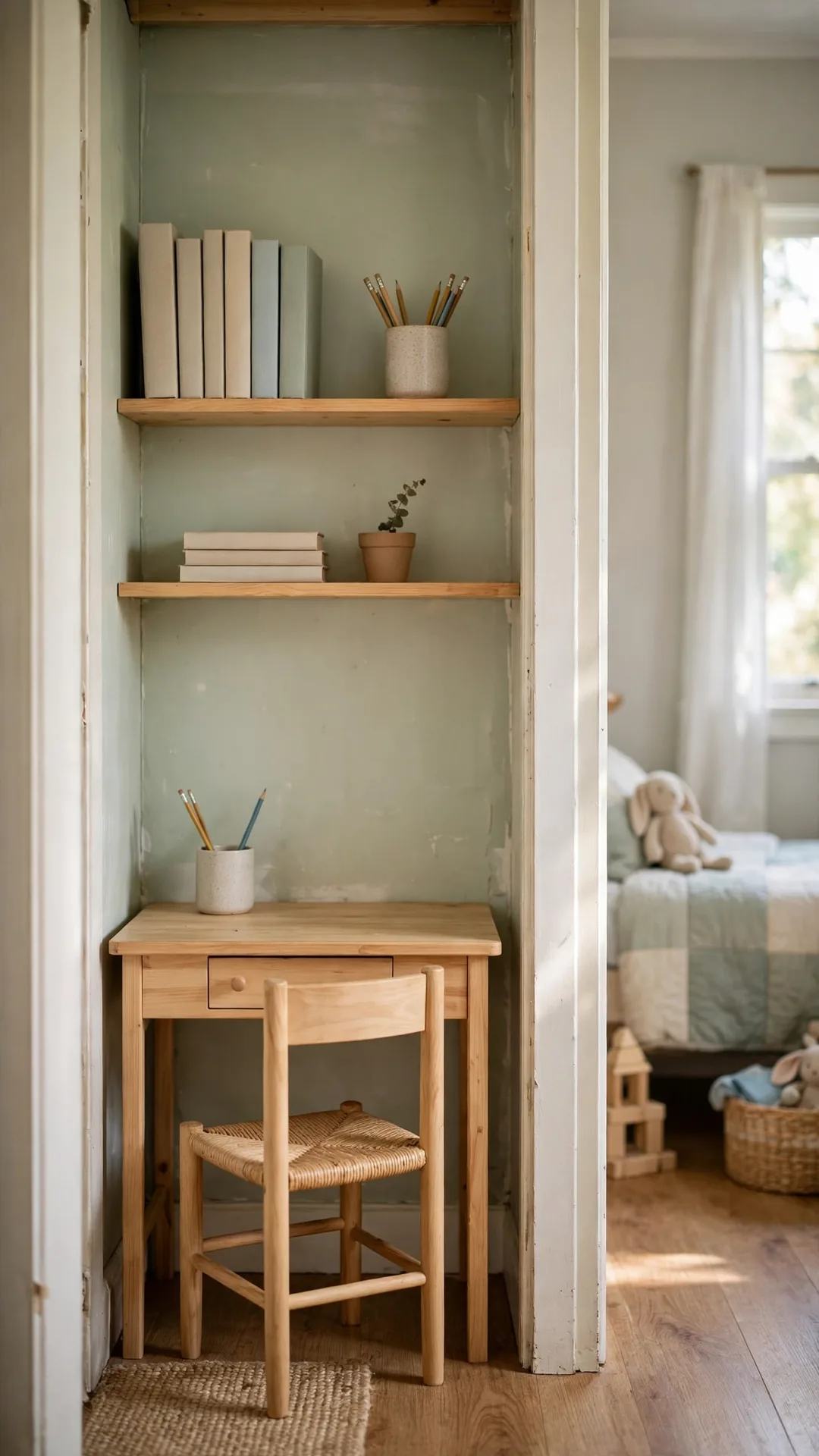
A spare closet can hold a whole homework station. Take the doors off and slide a desk inside the frame. Shelves above hold books where the rod used to hang.
How to do it:
- Measure the closet width and depth first.
- Pick a desk no deeper than 20 inches.
- Keep the closet rod shelf or add two boards above.
- Run a power strip to one side for a lamp.
- Leave the doorway fully clear for the chair.
Best for: Bedrooms with an underused second closet.
Budget: $50 to $130
Quick tip: Curtains on a tension rod close the nook softly.
17. Turn a Shallow Alcove Into a Desk Nook
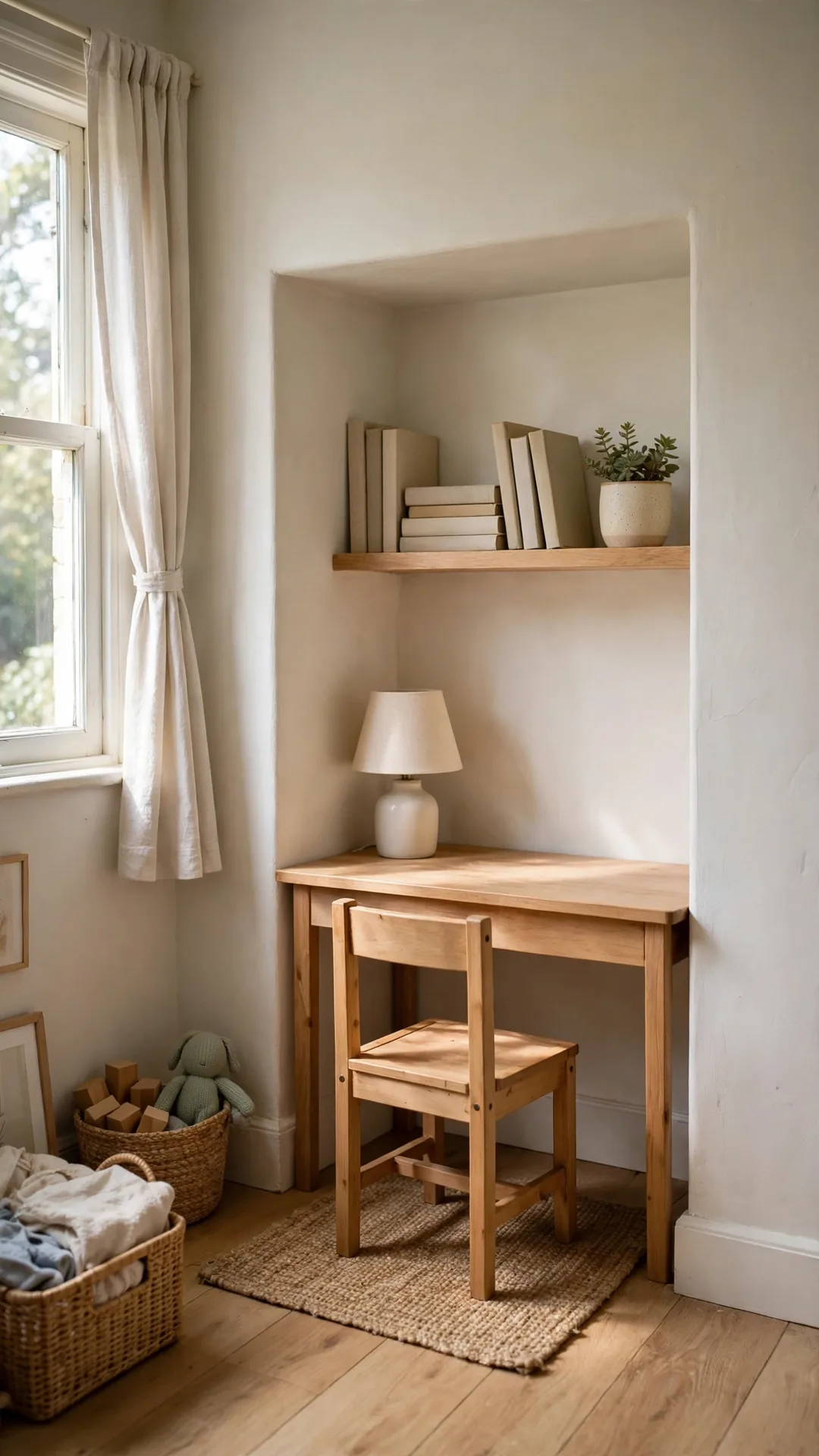
Alcoves collect clutter in most small bedrooms. A desk sized to the alcove turns dead space into homework space. The walls on both sides hold shelves and a lamp.
How to do it:
- Measure the alcove at floor and desk height.
- Cut or pick a top that fills the width fully.
- Fix the top to battens screwed into both walls.
- Add one shelf above for books and boxes.
- Paint the alcove a shade lighter than the room.
Best for: Old houses with chimney breast alcoves.
Budget: $40 to $95
Quick tip: A snug top with no gaps looks built in fast.
18. Fit a Small Desk Under the Stairs
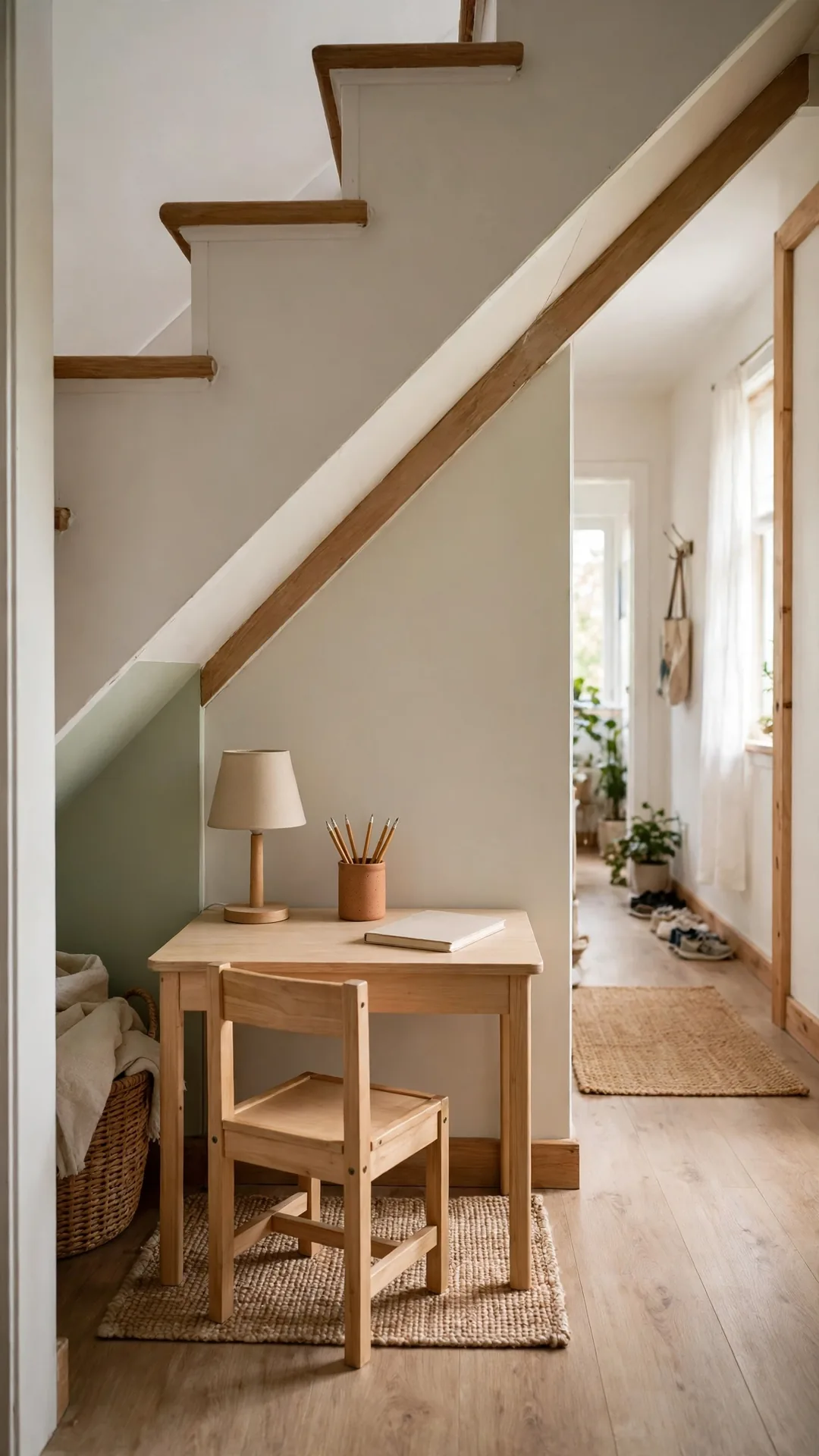
Under stairs space fits kids desk ideas for small rooms surprisingly well. The sloped ceiling suits a seated child better than a standing adult. A compact desk and lamp fill the nook neatly.
How to do it:
- Measure head height where the chair will sit.
- Pick a desk 30 to 36 inches wide.
- Add a battery lamp if no outlet sits nearby.
- Keep the walking path beside the desk clear.
- Use the low end for book and backpack storage.
Best for: Hallway nooks in small family homes.
Budget: $45 to $100
Quick tip: A stool beats a chair where head room is tight.
19. Claim the Corner With an L-Shaped Desk
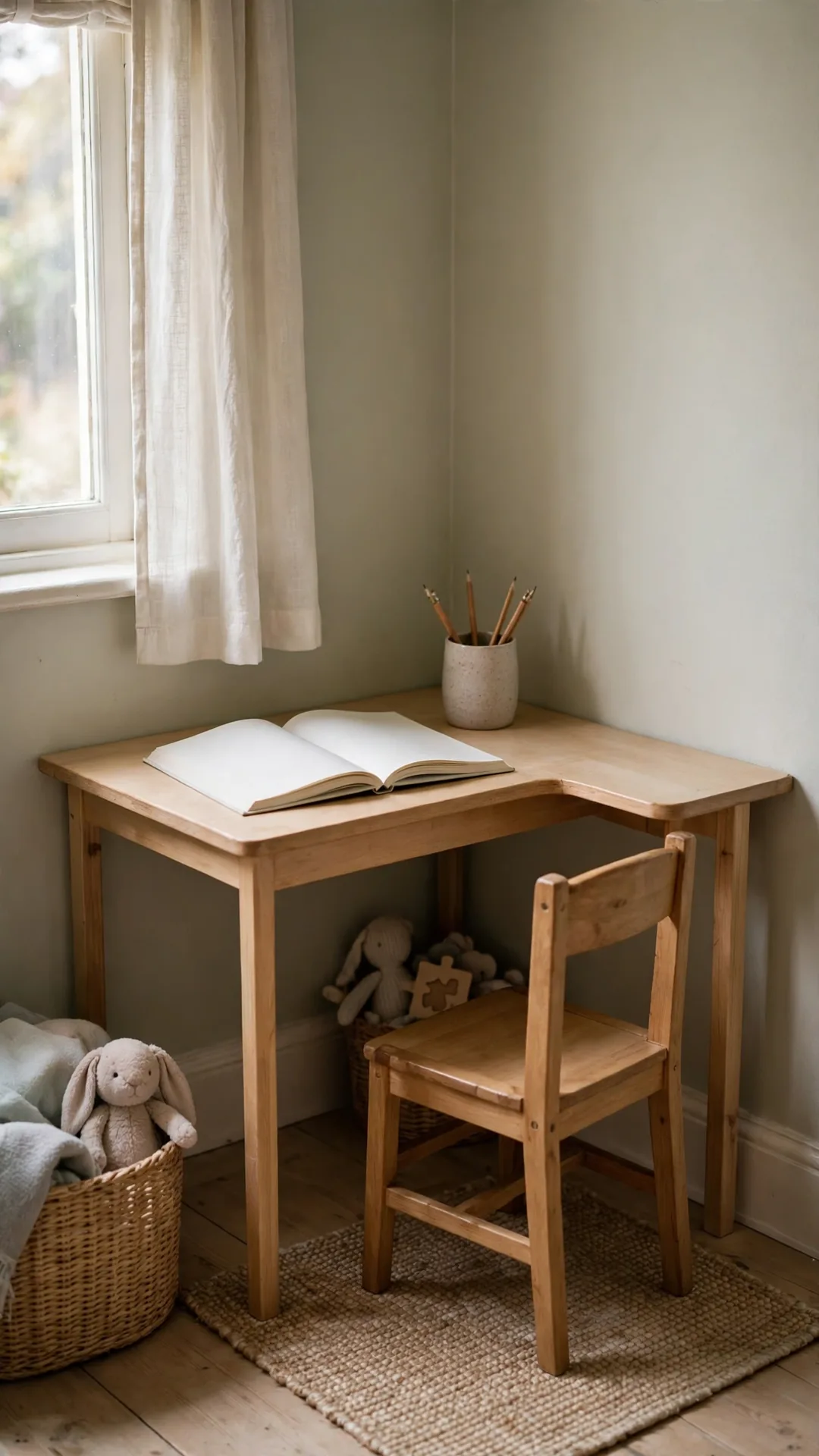
Corners waste more space than any other spot. An L shaped desk wraps the corner and seats your child facing out. One side holds homework, the other holds art.
How to do it:
- Aim for arms about 40 inches and 32 inches long.
- Keep each side 18 to 20 inches deep.
- Set the corner joint fully flush and level.
- Put the lamp in the corner where both sides share it.
- Leave leg room at both ends for growing kids.
Best for: Square bedrooms with one dead corner.
Budget: $80 to $160
Quick tip: The short arm makes a calm reading spot too.
20. Angle a Wedge Desk Into an Odd Corner
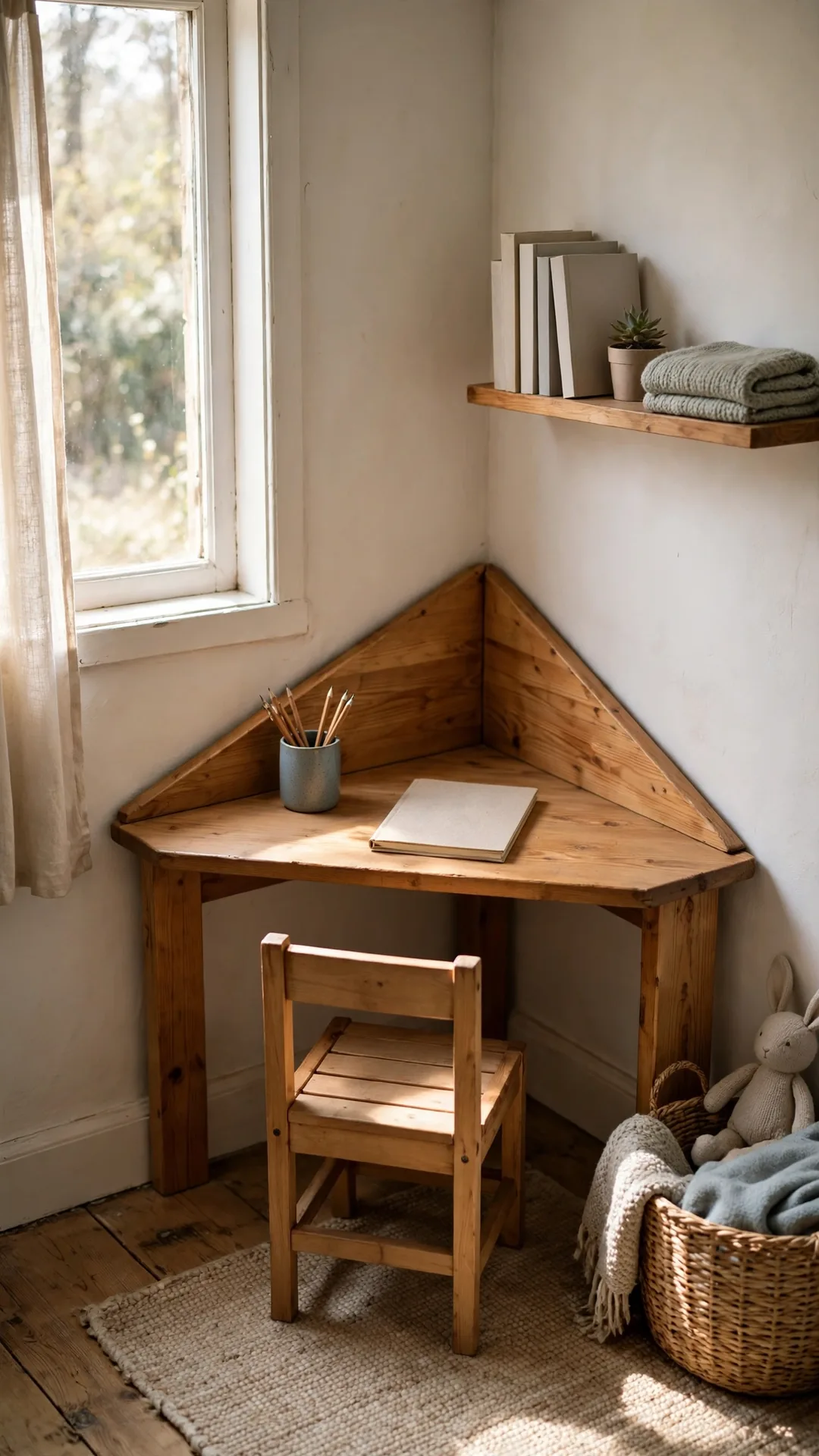
Some corners are too tight for a square desk. A wedge or triangle top fits where rectangles fail. Your child still gets a real seat and surface.
How to do it:
- Pick a wedge top about 30 inches across the front.
- Check the depth reaches at least 18 inches at center.
- Fix the back edge to the wall for stability.
- Add a wall shelf above for books.
- Keep the chair small with no arms.
Best for: Angled walls and attic style bedrooms.
Budget: $40 to $85
Quick tip: A wedge leaves more floor open than it uses.
21. Set the Desk at the Foot of the Bed
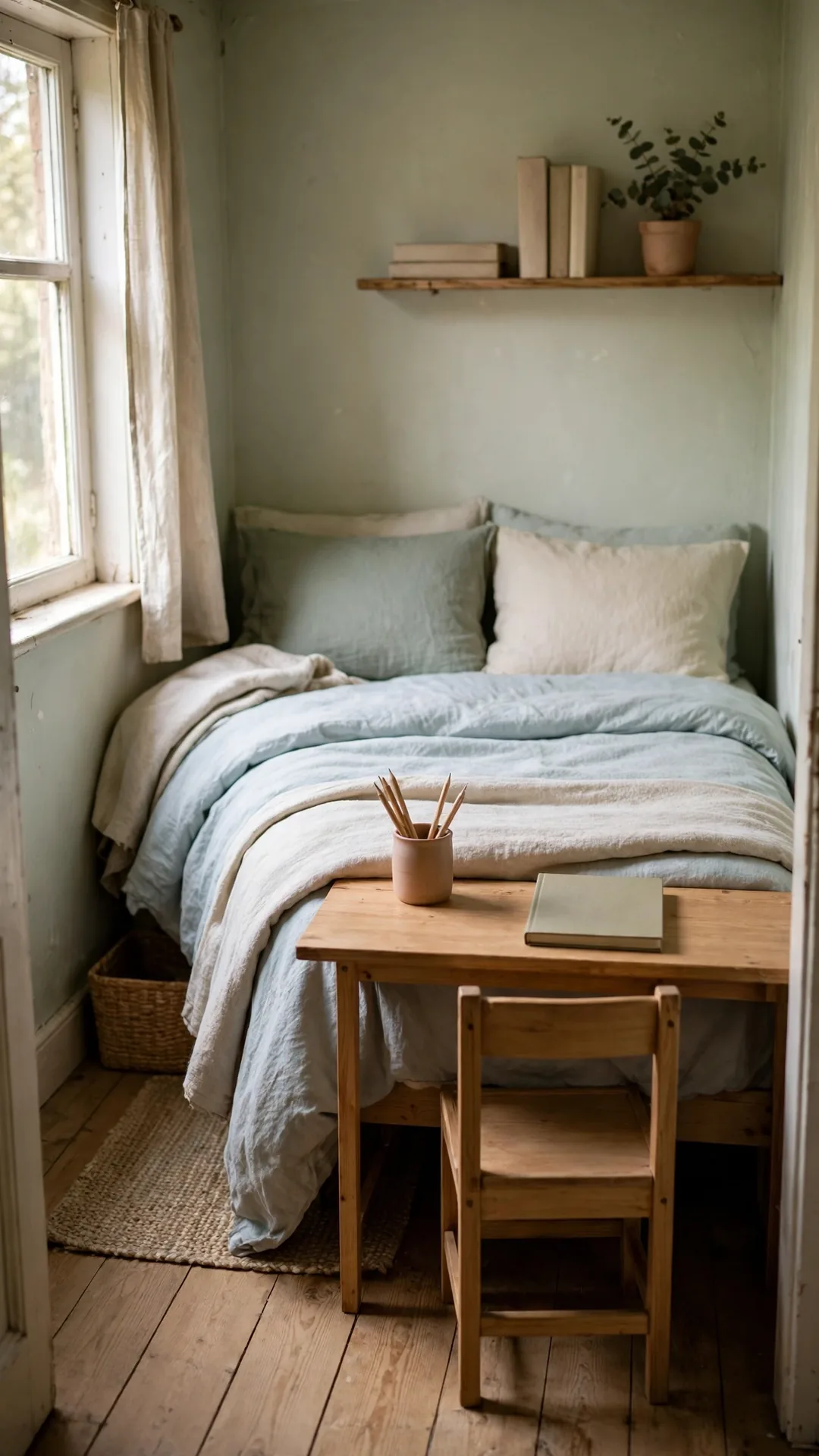
The strip at the foot of the bed often sits empty. Among kids desk ideas for small rooms, this one steals no wall at all. Pair it with these bed ideas for small rooms and the whole sleep zone works harder.
How to do it:
- Leave 24 inches between the bed foot and the wall.
- Pick a desk no deeper than 16 inches here.
- Face the chair toward the bed for knee room.
- Keep the walkway beside the bed fully clear.
- Use a stool that slides under the desk.
Best for: Long thin bedrooms with space at the bed end.
Budget: $45 to $100
Quick tip: The desk doubles as a bench for morning dressing.
22. Let the Desk Double as a Nightstand

Two pieces of furniture can do one job here. A desk beside the bed holds a lamp and clock at night. By day it clears in seconds for homework.
How to do it:
- Pick a desk 28 to 32 inches wide.
- Set it flush against the bed side wall.
- Keep a small tray for the clock and water cup.
- Clear the tray to the top shelf at homework time.
- Choose a height close to the mattress top.
Best for: Rooms too small for desk plus nightstand.
Budget: $45 to $95
Quick tip: One lamp with a warm bulb serves both jobs.
23. Build the Desk Under a Loft Bed

A loft bed lifts sleep up and frees the floor below. The shaded space under it fits a desk and chair neatly. This classic pairing suits kids aged six and up.
How to do it:
- Keep loft desks for children aged six and older.
- Check the guardrail sits at least 5 inches above the mattress.
- Pick a desk that fits the bed frame width.
- Add a lamp since the loft shades the desk.
- Anchor the bed frame to the wall if the maker allows.
Best for: Kids six plus in very small bedrooms.
Budget: $60 to $140
Quick tip: A clip lamp on the bed frame lights the desk well.
24. Add a Desk to the Bunk Bed End
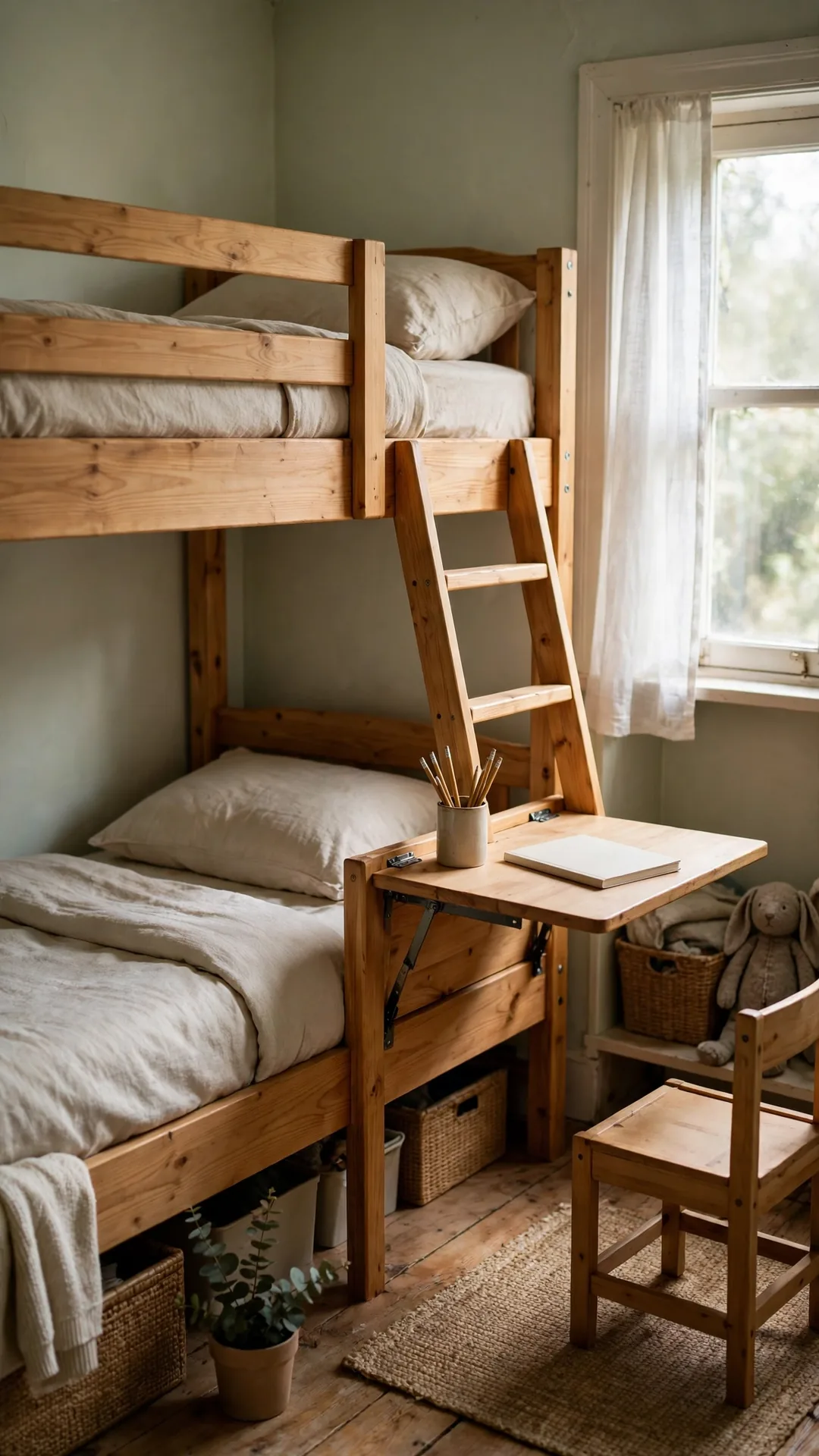
Bunk ends waste a full panel in kids desk ideas for small rooms. A fold down or fixed desk on the end frame uses it. The sleeper above never feels the desk at all.
How to do it:
- Measure the bunk end width before you shop.
- Fix fold down panels only to the solid frame.
- Keep the desk clear of the ladder path.
- Add a battery light under the top bunk.
- Check every screw monthly for loosening.
Best for: Bunk rooms with no spare wall.
Budget: $35 to $80
Quick tip: End desks work well for a quick art station.
25. Use the Nook Under a Mid Sleeper
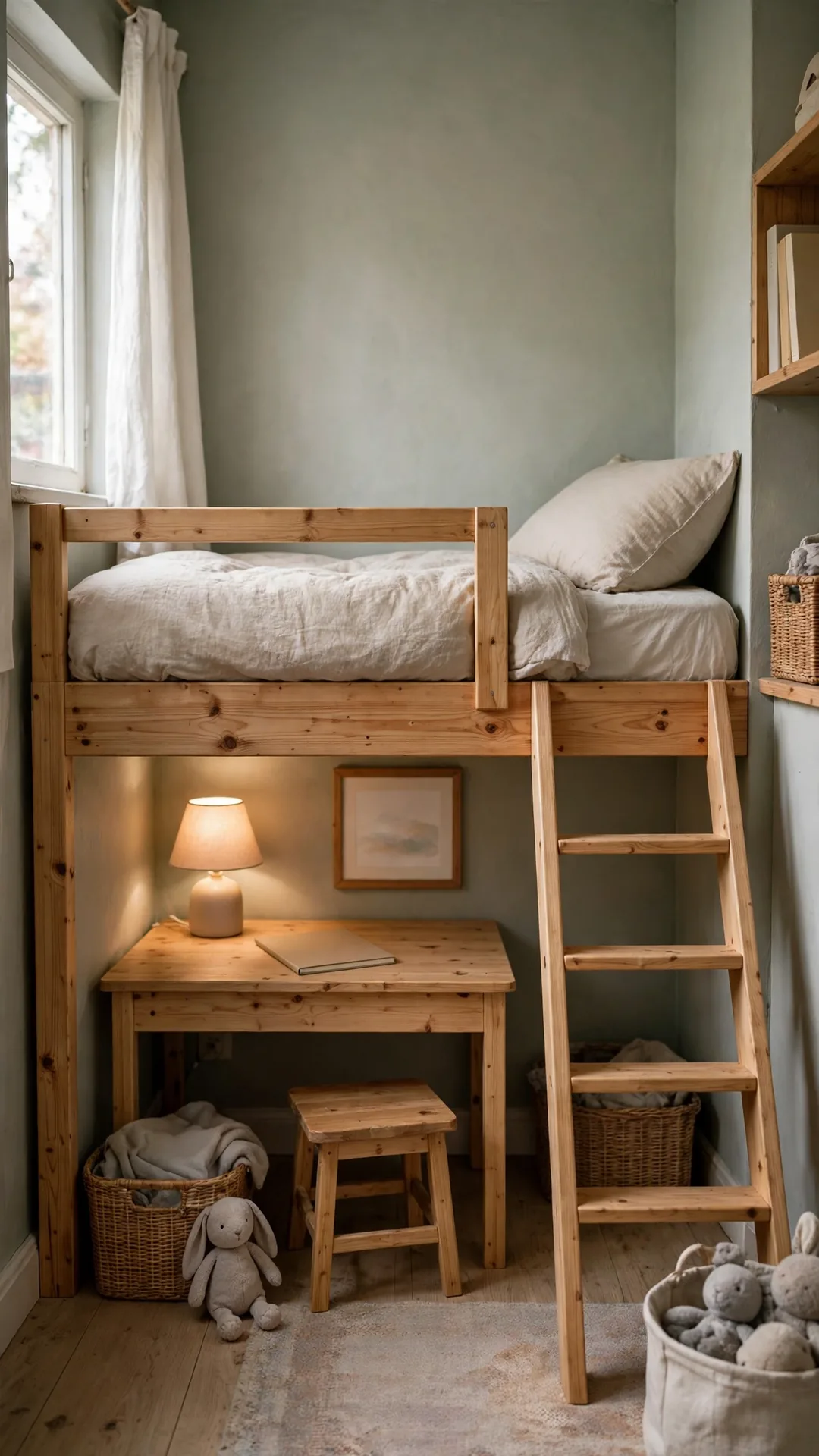
A mid sleeper bed leaves a cozy cave below, perfect for a small desk and stool. Younger kids love the hidden den feel, and parents like the saved floor. For the years before a mid sleeper, these space-saving small nursery ideas keep the same floor working hard.
How to do it:
- Measure the clear height under the bed first.
- Pick a desk under 30 inches wide.
- Use a backless stool that slides fully under.
- Add a battery lamp on the bed frame.
- Keep the entry side open with no storage blocks.
Best for: Kids aged four to eight in tiny rooms.
Budget: $40 to $90
Quick tip: A curtain across the front makes the den feel private.
26. Pull a Desk Out From Under the Bed

A low rolling desk hides under the bed all day. It pulls out for homework and slides back in seconds. The room gains a desk with no permanent footprint.
How to do it:
- Measure the clear height under the bed frame.
- Pick a rolling top no taller than that gap.
- Add locking casters so it stays still in use.
- Keep the top about 30 by 18 inches.
- Store the chair folded flat beside the bed.
Best for: Rooms that must stay fully open by day.
Budget: $55 to $110
Quick tip: Felt pads under the frame stop floor scratches.
27. Share One Long Desk Between Two Kids
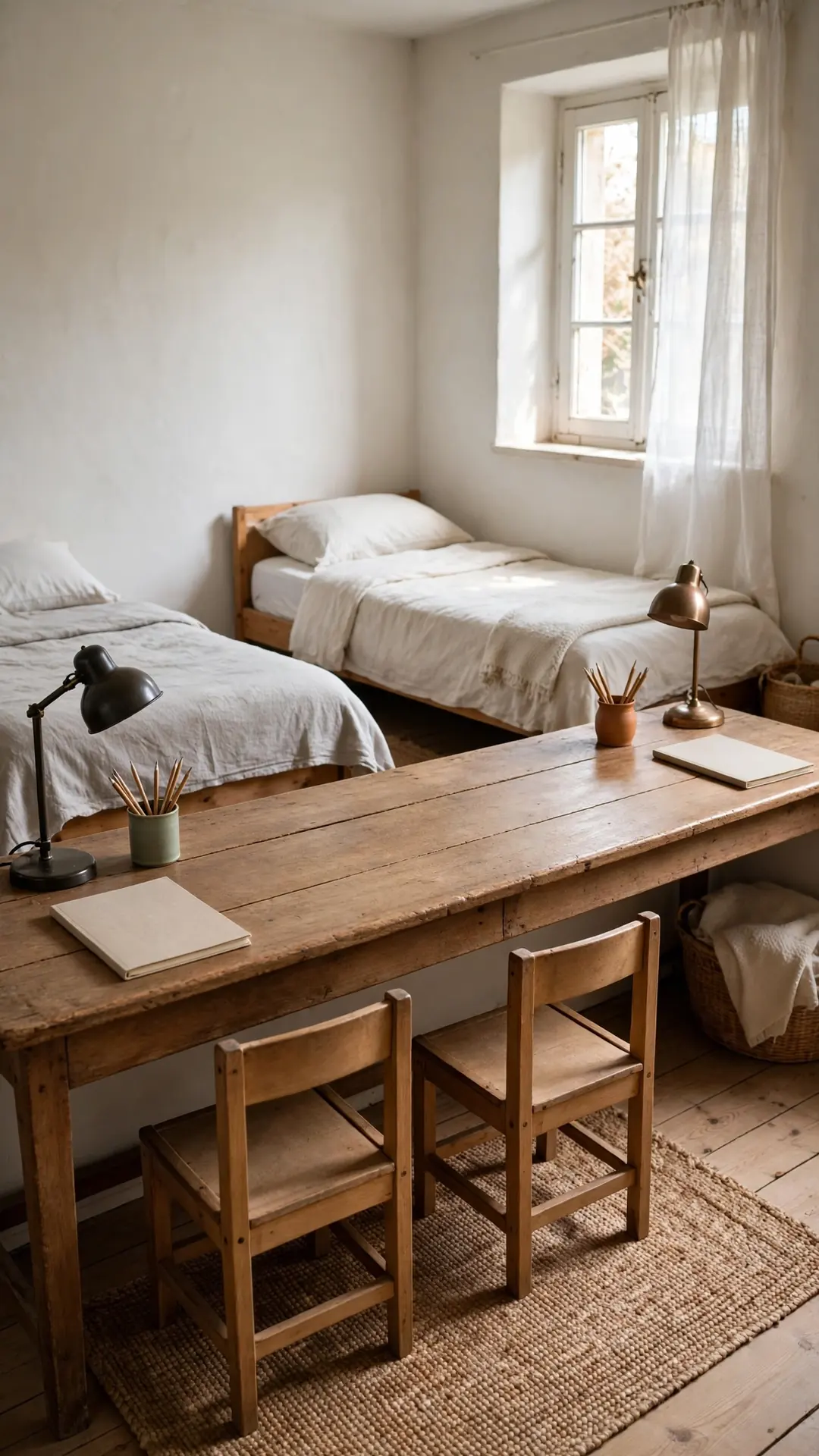
One long desk beats two small ones in kids desk ideas for small rooms with siblings. Each child claims half and keeps a chair. Shared runs like these fill galleries of homework areas and study stations for good reason.
How to do it:
- Aim for a top at least 6 feet long for two.
- Give each child 3 feet of clear surface.
- Set one lamp at each end of the desk.
- Keep a shared supply caddy in the middle.
- Match chair heights so knees fit the same top.
Best for: Siblings close in age sharing one room.
Budget: $90 to $180
Quick tip: A taped line down the middle ends land disputes.
28. Face Two Desks Back to Back
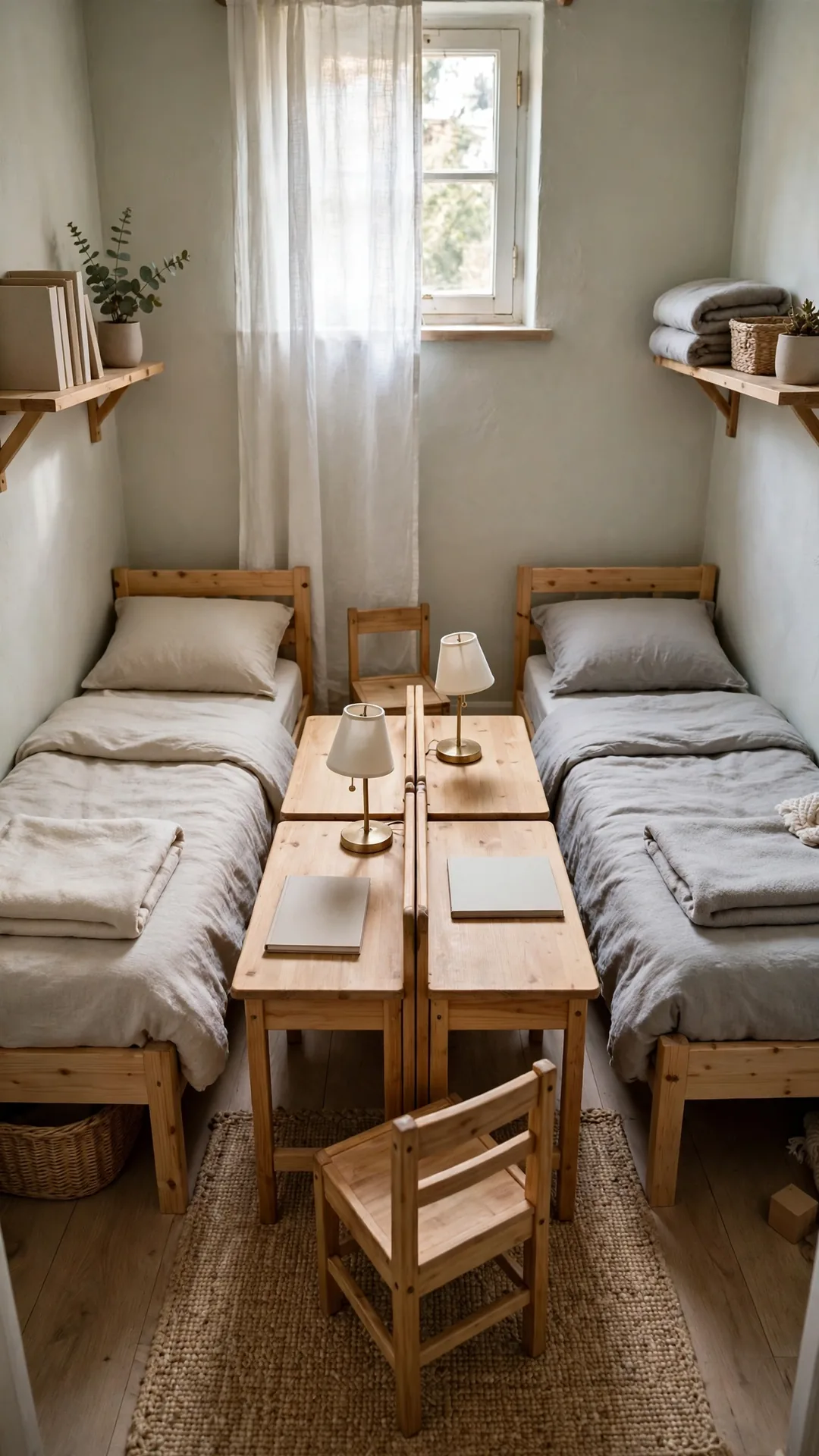
Two small desks back to back form one study island. Each child faces away, which cuts chatter and copying. The pair takes less floor than two wall runs.
How to do it:
- Pick matching desks about 36 inches wide.
- Push the backs together in the room center.
- Run both cords down the shared middle gap.
- Add a low shelf across the join for books.
- Leave 30 inches of walking space all around.
Best for: Shared rooms with a clear central floor.
Budget: $80 to $160
Quick tip: The island also works as a game table later.
29. Split One Desk With a Low Divider Shelf

Siblings sharing one desk need a clear border. A low divider shelf down the middle draws the line. It also holds books upright for both sides.
How to do it:
- Choose a divider shelf about 8 inches tall.
- Run it down the center of a 5 to 6 foot top.
- Face book spines outward on both sides.
- Keep the divider light so the desk still moves.
- Let each child decorate only their own side.
Best for: One desk shared by two different ages.
Budget: $15 to $30
Quick tip: The divider stops pencils rolling across the border.
30. Give Each Child a Color-Coded Zone
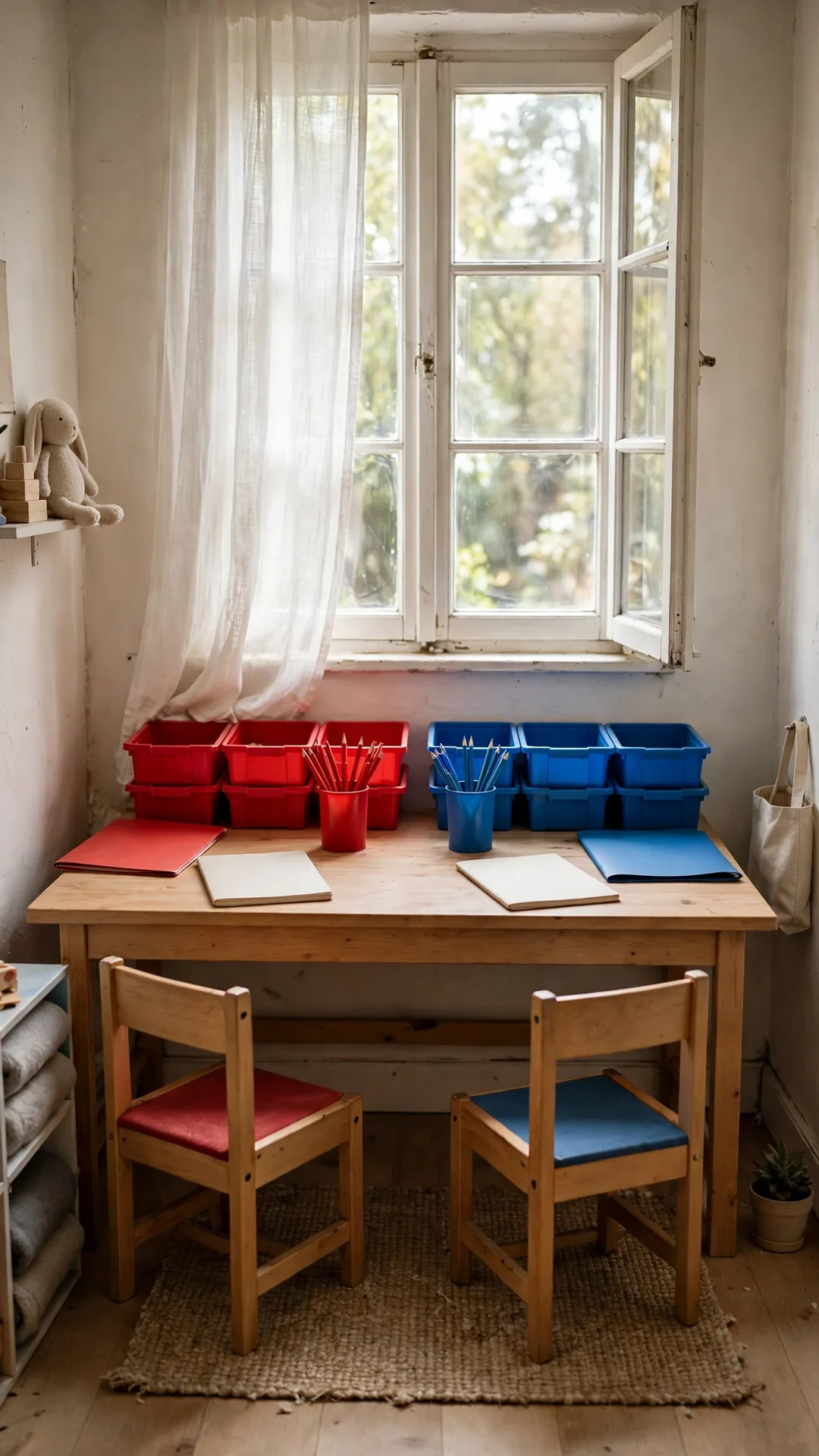
Color coding makes kids desk ideas for small rooms work for siblings. One child owns the blue bins, the other owns the red. Supplies stop migrating within a week.
How to do it:
- Pick one color per child and stick to it.
- Match bins, caddies and chair cushions to the color.
- Keep a shared color for shared tools only.
- Set one colored tray per child for homework.
- Store spare supplies in a neutral closet box.
Best for: Twins and siblings who swap supplies.
Budget: $10 to $25
Quick tip: Photograph each tidy zone so kids can reset it.
31. Run One Wall Desk for Two Seats

A long wall desk seats two kids in single file. It hugs the wall, so the room center stays open. Each seat gets a lamp and a drawer or bin.
How to do it:
- Run the top 7 to 8 feet along one wall.
- Support it with brackets every 24 to 30 inches.
- Fix the top into studs along the whole run.
- Give each seat a clip lamp and caddy.
- Leave 18 inches of leg room depth per seat.
Best for: Long shared bedrooms and sibling rooms.
Budget: $70 to $150
Quick tip: Wall runs extend later by adding one more section.
32. Pair Two Small Desks Side by Side

Two matching small desks read as one calm unit. Each child keeps a private drawer and surface. The pair can split into separate rooms later.
How to do it:
- Pick two desks 32 to 36 inches wide each.
- Push them together along one wall.
- Level the tops so the join sits flush.
- Give each desk its own lamp and caddy.
- Keep one shared book bin between the chairs.
Best for: Siblings who may move apart in a year.
Budget: $80 to $170
Quick tip: Matching desks look tidier than two random finds.
33. Stand a Bookshelf Between Two Seats

A low bookshelf spine serves kids desk ideas for small rooms with two readers. It stands between the seats as a shared library. Books face both ways, so each side stays stocked.
How to do it:
- Pick a shelf about 30 inches tall and 10 inches deep.
- Set it across the middle or end of the desk run.
- Fill one side with school books, one with stories.
- Anchor tall shelves to the wall for safety.
- Leave the top clear for a shared lamp.
Best for: Two readers sharing one long desk.
Budget: $30 to $70
Quick tip: Rotate the story books weekly to keep them fresh.
34. Keep a Teen Desk Away From the Toys
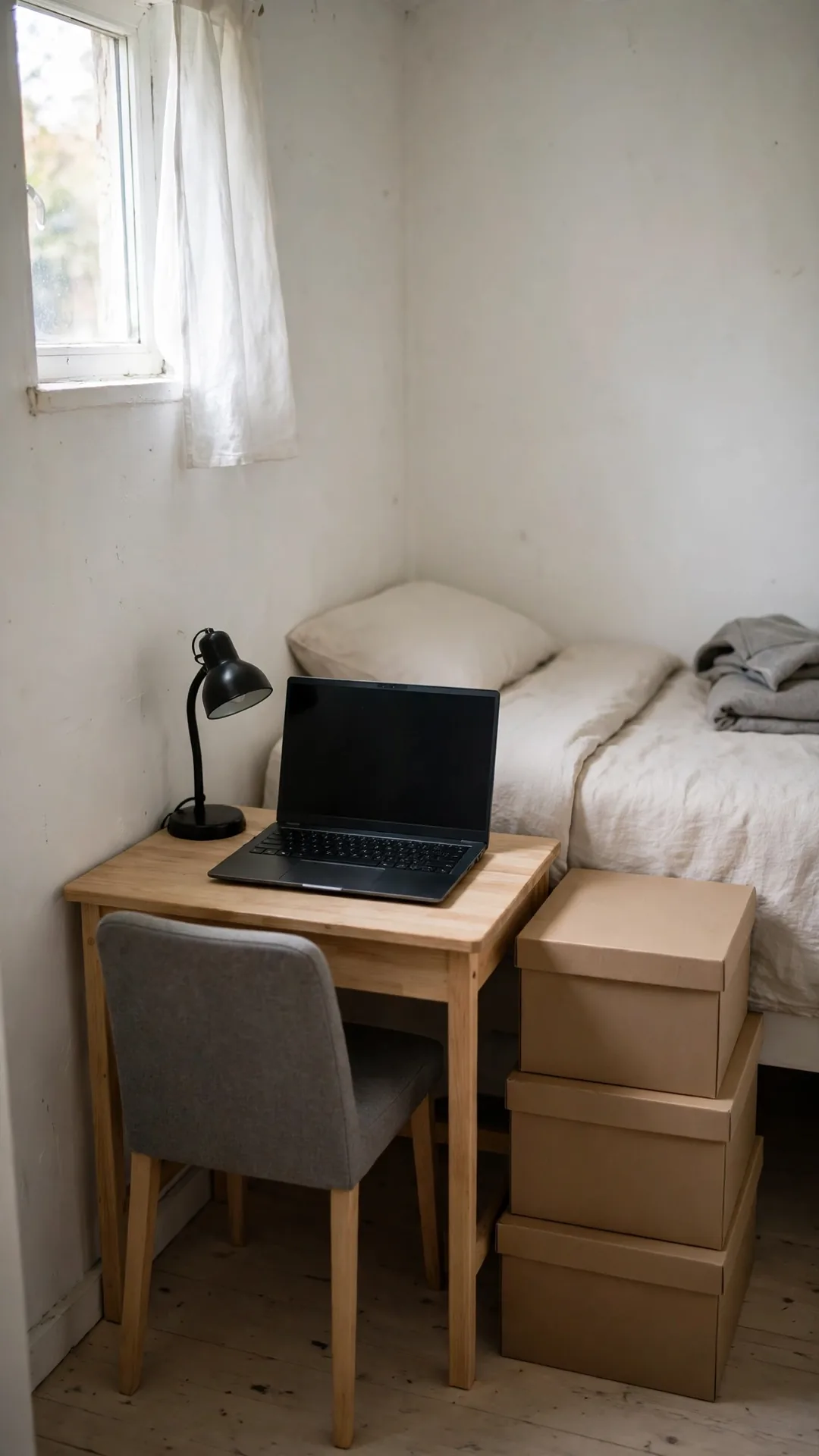
Teens need a desk that feels grown up and separate. A quiet corner desk away from the play zone helps focus. Plain colors and a real lamp finish the shift.
How to do it:
- Face the desk toward a wall, not the room.
- Pick a top at least 40 inches wide for teens.
- Set the height near 28 to 30 inches.
- Add one drawer unit for chargers and gear.
- Keep younger kids toys stored in another zone.
Best for: Teens sharing with much younger siblings.
Budget: $70 to $150
Quick tip: A simple desk mat makes any top feel grown up.
35. Choose a Desk With a Hutch Top
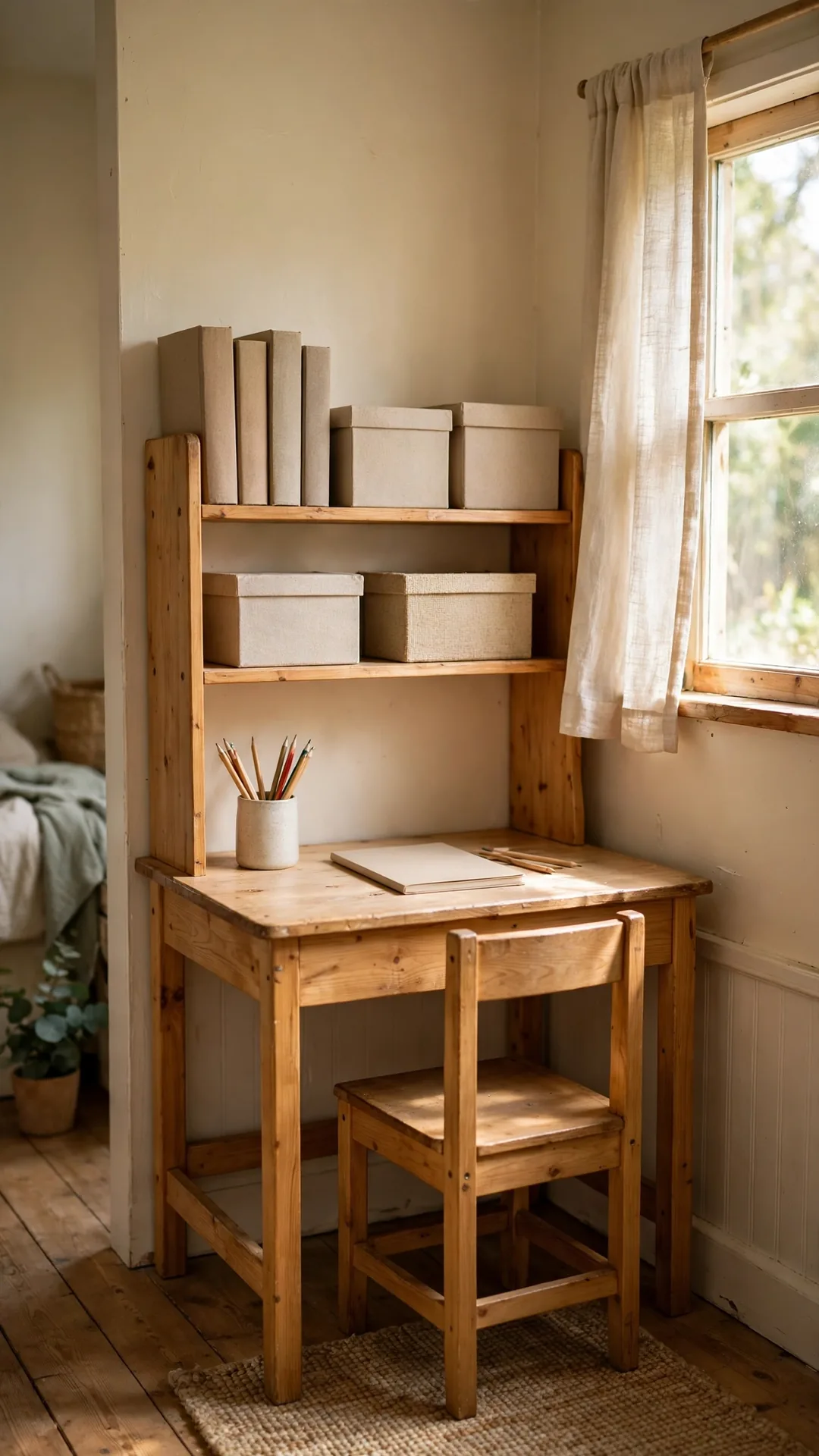
A hutch top stacks storage above the desk surface. Books and boxes live on shelves within arm reach. The floor footprint stays the same as a plain desk.
How to do it:
- Pick a hutch no deeper than 10 inches.
- Anchor the hutch to the wall or desk frame.
- Keep daily books on the lowest hutch shelf.
- Store light boxes only on the top shelf.
- Check total height fits under sloped ceilings.
Best for: Book heavy kids with no shelf wall.
Budget: $90 to $180
Quick tip: Leave one hutch cubby empty for new projects.
36. Stand a Slim Book Tower Beside the Desk

Floor towers make kids desk ideas for small rooms hold more books. A slim tower beside the desk swallows textbooks upright. It uses 12 inches of floor and nothing more.
How to do it:
- Pick a tower about 12 inches square at the base.
- Anchor it to the wall with the strap provided.
- Keep the heaviest books on the lowest shelf.
- Face spines out so titles stay easy to scan.
- Leave the top shelf for light paperbacks only.
Best for: Textbook loads in upper elementary years.
Budget: $35 to $75
Quick tip: A tower fits the dead gap beside most desks.
37. Hang Open Cubbies Above the Desk
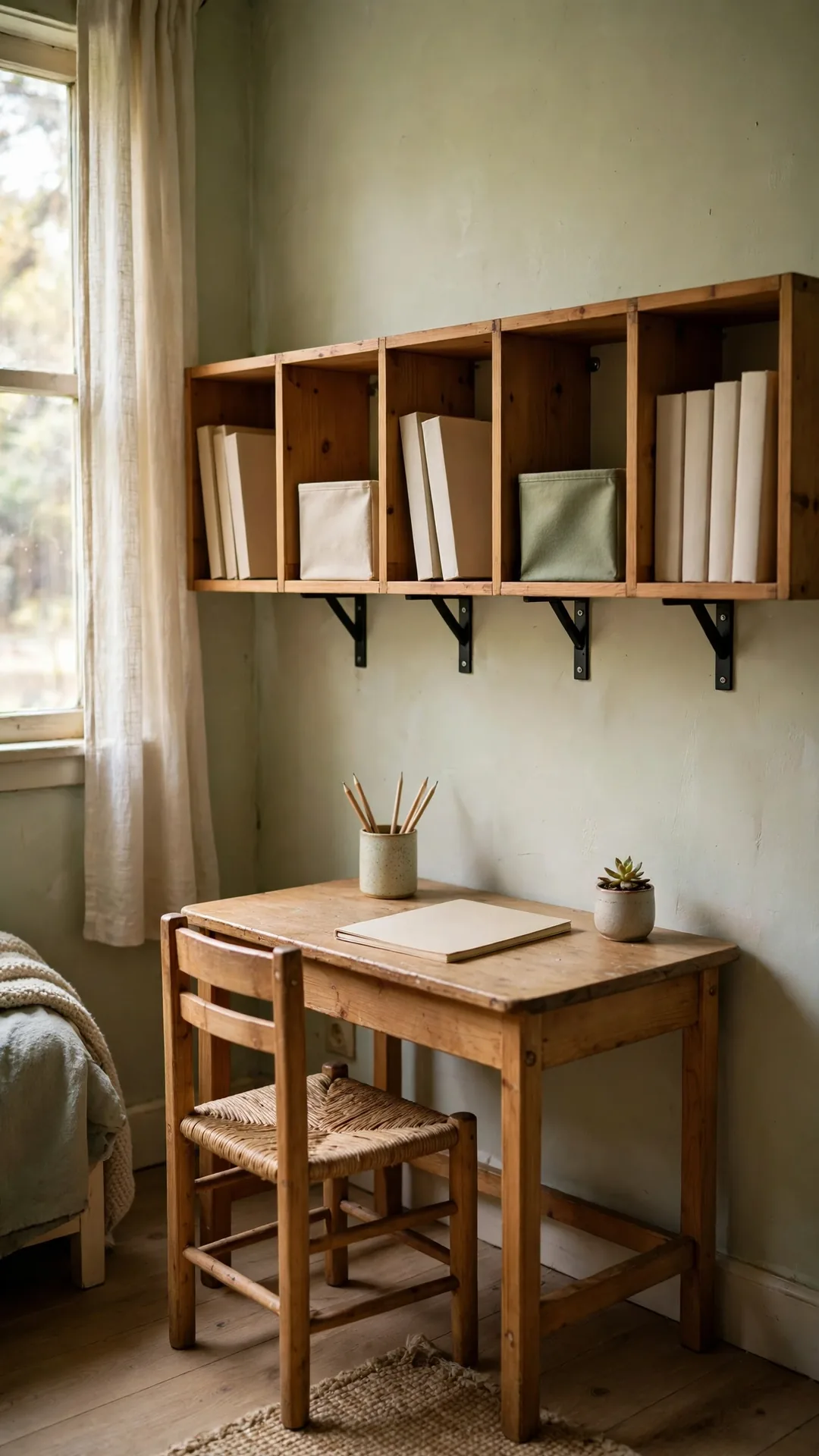
Open cubbies keep supplies visible and off the desk. Three or four boxes above the work zone sort by task. Kids reset the desk faster when homes are obvious.
How to do it:
- Mount cubbies about 12 inches above the desktop.
- Fix each cubby into studs or rated anchors.
- Give one cubby to art, one to homework.
- Keep heavy items out of high cubbies.
- Use open fronts so nothing gets forgotten.
Best for: Visual kids who forget closed drawer contents.
Budget: $25 to $60
Quick tip: Paint cubby backs in soft colors for a calm grid.
38. Tuck Storage Bins Under the Desk Top
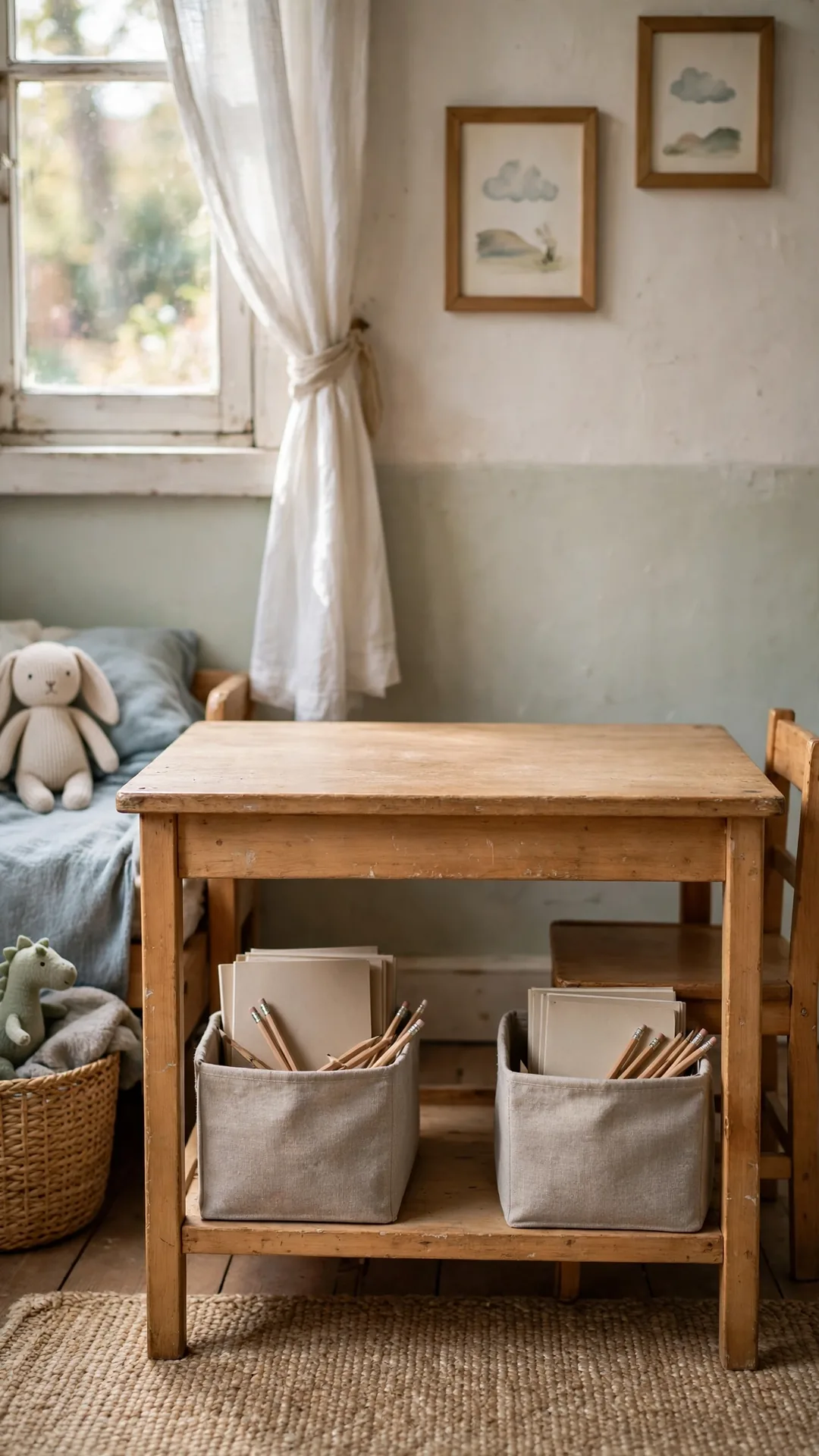
The space under the desk top often sits empty. Slim bins on a low shelf turn it into storage. Knees keep the center, bins take the sides.
How to do it:
- Fit a low shelf board between the desk legs.
- Choose bins about 6 inches tall for the gap.
- Keep bins at the sides, knees in the middle.
- Store paper, coloring books and spare notebooks here.
- Pull bins out fully for weekend sorting.
Best for: Desk setups with no drawers at all.
Budget: $12 to $28
Quick tip: Clear bins stop the out of sight problem.
39. Sort Papers in Wall File Pockets

Wall pockets rescue kids desk ideas for small rooms from paper piles. Clear pockets on the wall hold forms, lists and artwork. The desk surface stays free for actual work.
How to do it:
- Mount three pockets in a column beside the desk.
- Give one pocket to school forms and notes.
- Use the middle pocket for current homework sheets.
- Keep finished art in the bottom pocket.
- Empty each pocket every Friday after school.
Best for: Families drowning in school paper each week.
Budget: $10 to $22
Quick tip: One pocket per child works better than one per subject.
40. Use a Drawer Unit as One Desk Leg
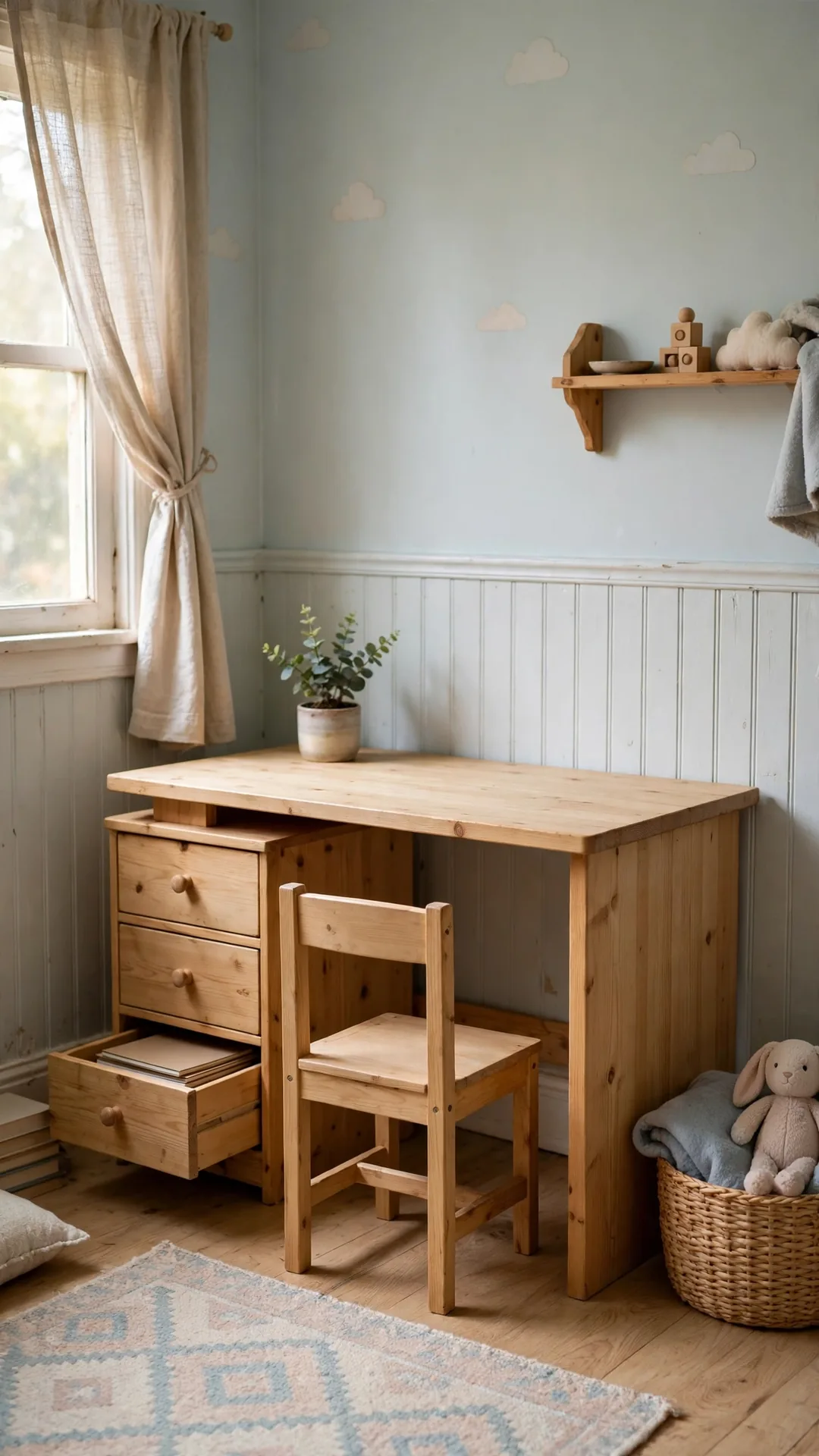
A drawer pedestal can hold up one end of a top. The other end rests on a simple leg or wall batten. You gain three drawers and a desk in one build.
How to do it:
- Pick a pedestal about 24 to 28 inches tall.
- Match the desk top height to the pedestal.
- Fix the far end to a wall batten or leg.
- Keep cables out of the top drawer.
- Level the top before loading it with books.
Best for: DIY fans building a desk to fit.
Budget: $60 to $130
Quick tip: Pedestals on casters let the layout change later.
41. Hang Backpack Hooks Beside the Desk
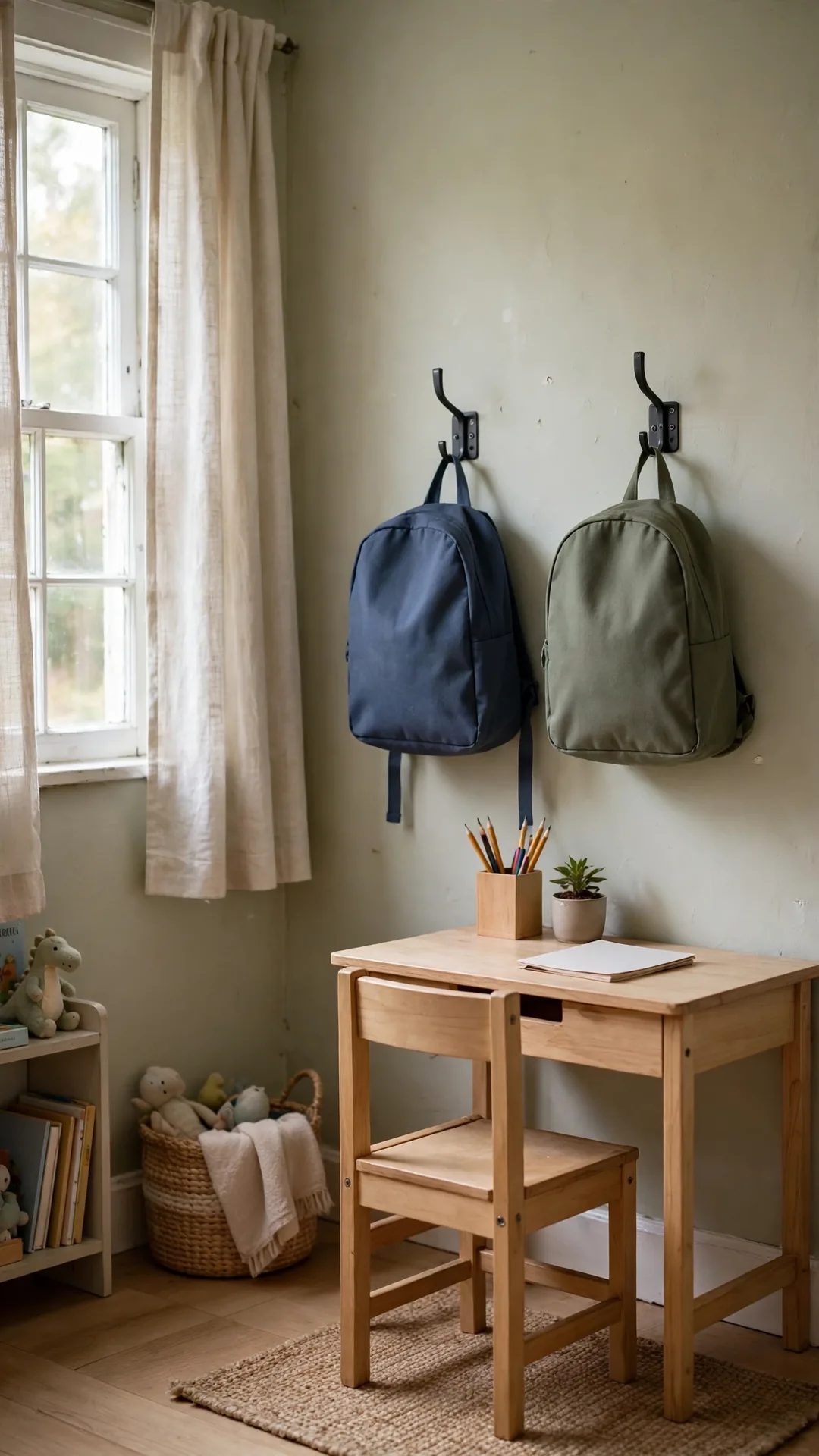
A backpack on the floor blocks every small room path. Two strong hooks beside the desk give it a home. Homework flows from bag to desk in one step.
How to do it:
- Fix hooks into studs at shoulder height for your child.
- Space the hooks about 14 inches apart.
- Hang the bag by both straps to spread weight.
- Add a third hook for a gym kit or hat.
- Keep hooks clear of the chair swing path.
Best for: Kids who drop bags at the door.
Budget: $8 to $20
Quick tip: One hook per bag stops the floor pile forming.
42. Sort Art Supplies in Clear Lidded Jars
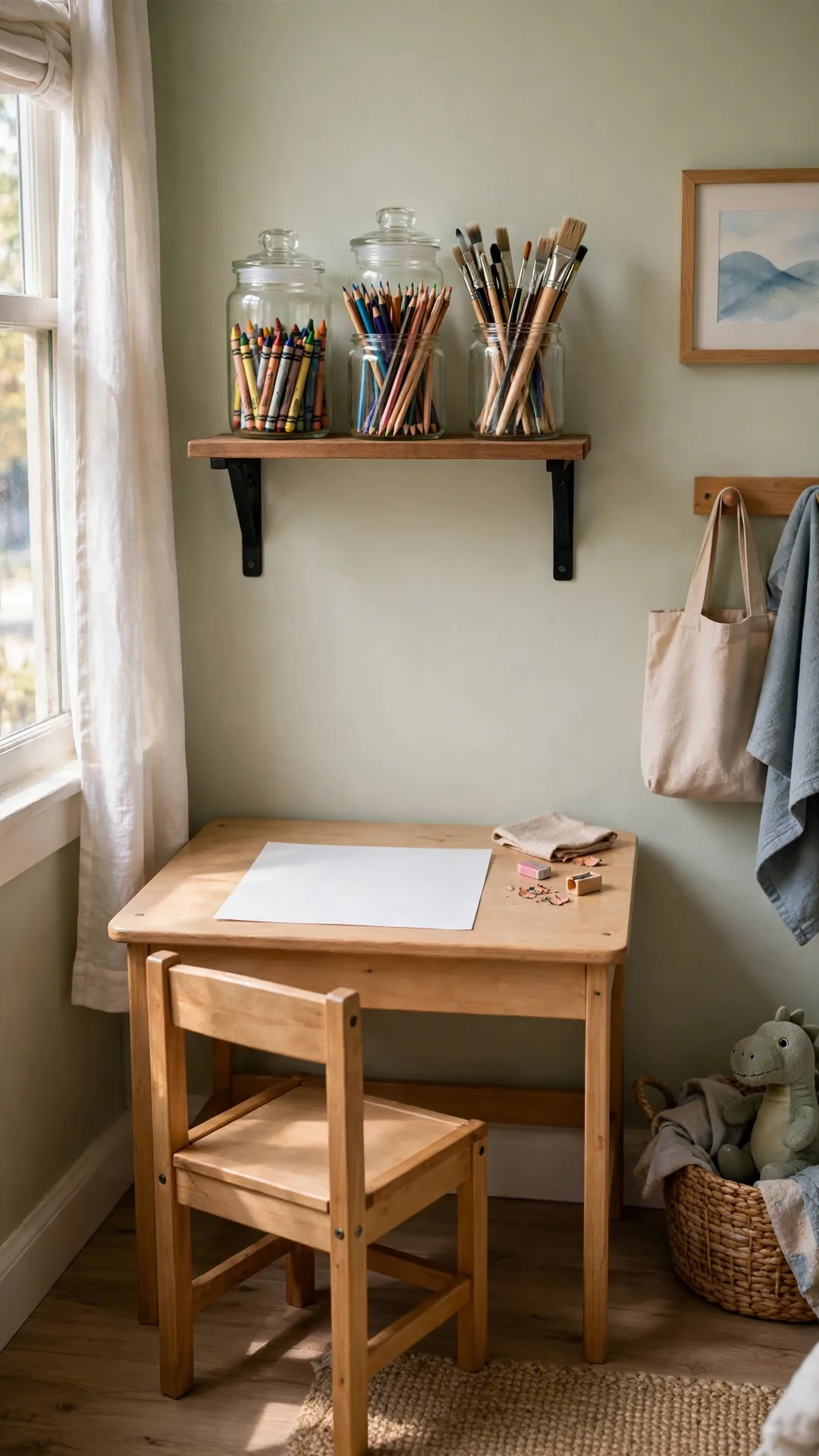
Art zones inside kids desk ideas for small rooms need tight sorting. Clear jars with lids group crayons, brushes and beads. Kids see colors fast and lids stop spills.
How to do it:
- Use plastic jars for young kids, not glass.
- Keep jars on a shelf, not the desk surface.
- Sort by tool type, not by color alone.
- Store glue and paint on the lowest shelf.
- Wipe jar rims weekly so lids seal well.
Best for: Craft loving kids with growing supply piles.
Budget: $8 to $18
Quick tip: A tray under the jars catches drips and glitter.
43. Pick a Height Adjustable Desk That Grows
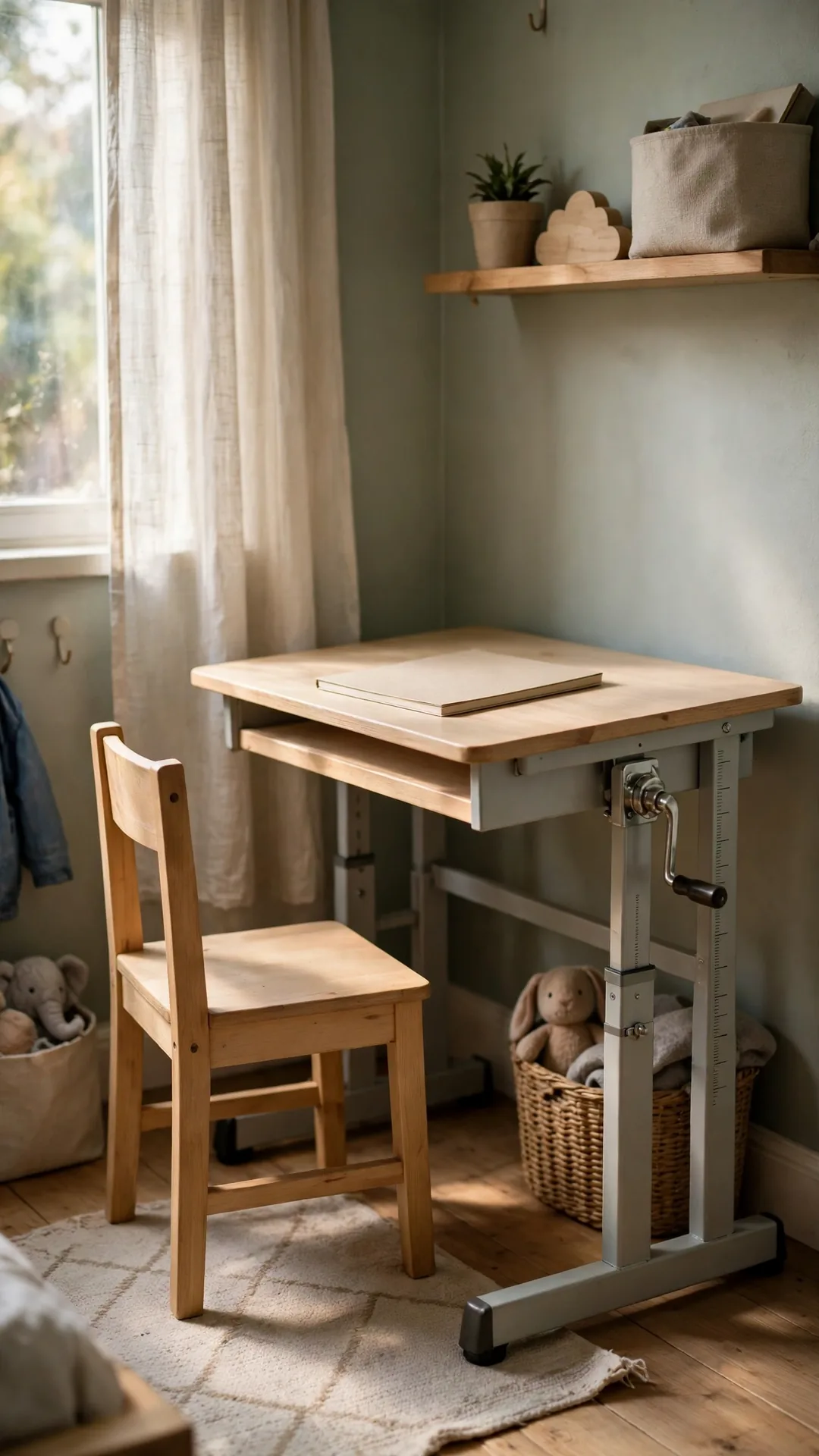
Kids outgrow desks the way they outgrow shoes. An adjustable desk rises in steps over the school years. One good buy can serve from age five to fifteen.
How to do it:
- Look for tops that adjust from 22 to 30 inches.
- Set the top so elbows rest near a right angle.
- Keep feet flat on the floor or a footrest.
- Raise the desk in small steps as legs grow.
- Check the crank or pins lock firmly each time.
Best for: One desk that must last many years.
Budget: $110 to $220
Quick tip: Mark each height setting with the child age on tape.
44. Add a Footrest Bar for Dangling Feet
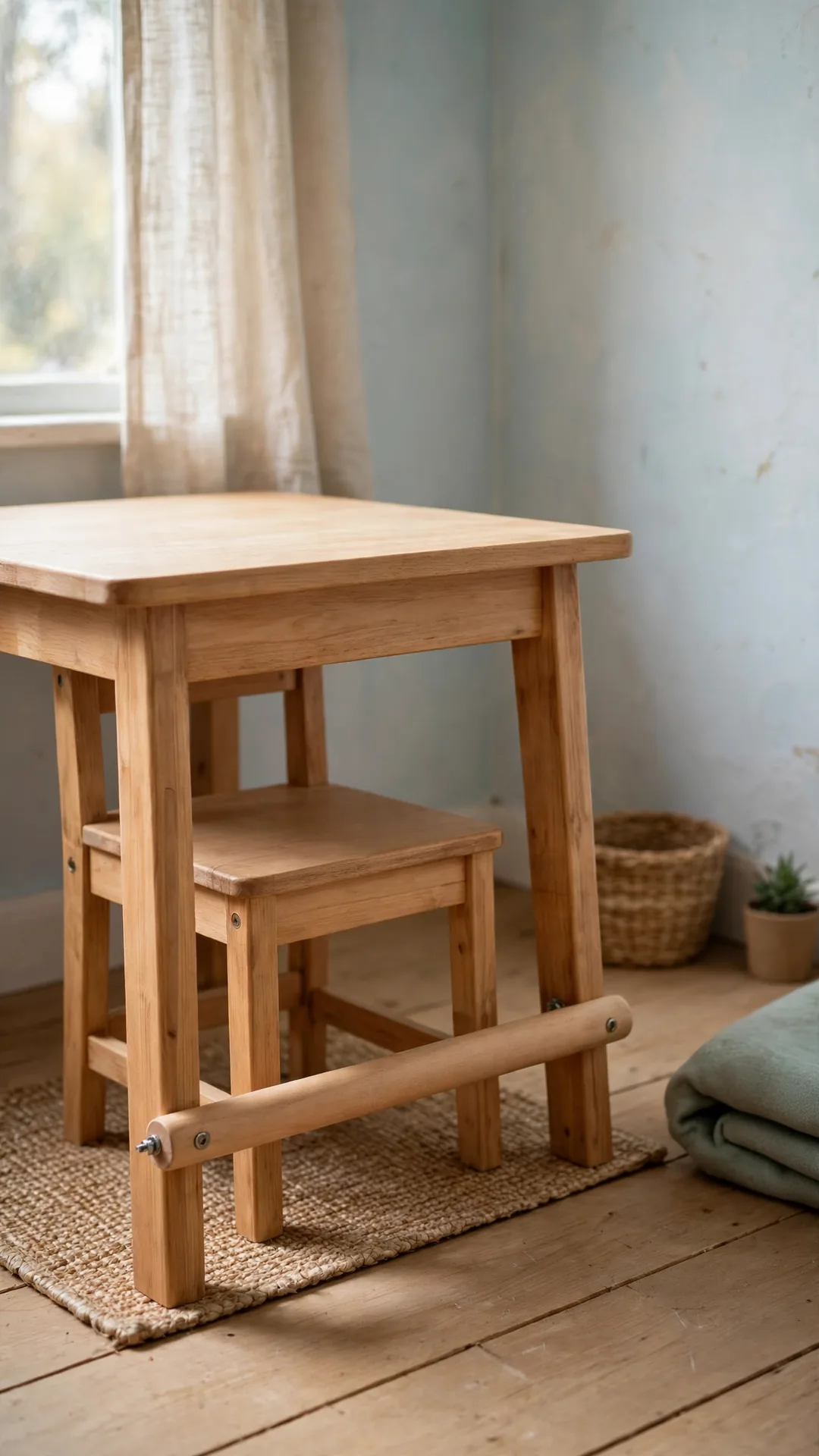
Dangling feet make kids fidget and slouch fast. A simple footrest bar gives small legs a solid rest. Focus lasts longer when the whole body feels settled.
How to do it:
- Fit a bar or board between the desk legs.
- Set it so knees bend near a right angle.
- Use a board about 10 inches deep for both feet.
- Sand all edges smooth for bare feet.
- Raise the bar as your child grows taller.
Best for: Young kids at desks built for older ages.
Budget: $10 to $25
Quick tip: A sturdy shoe box works as a test footrest.
45. Choose Rounded Corners for Young Kids
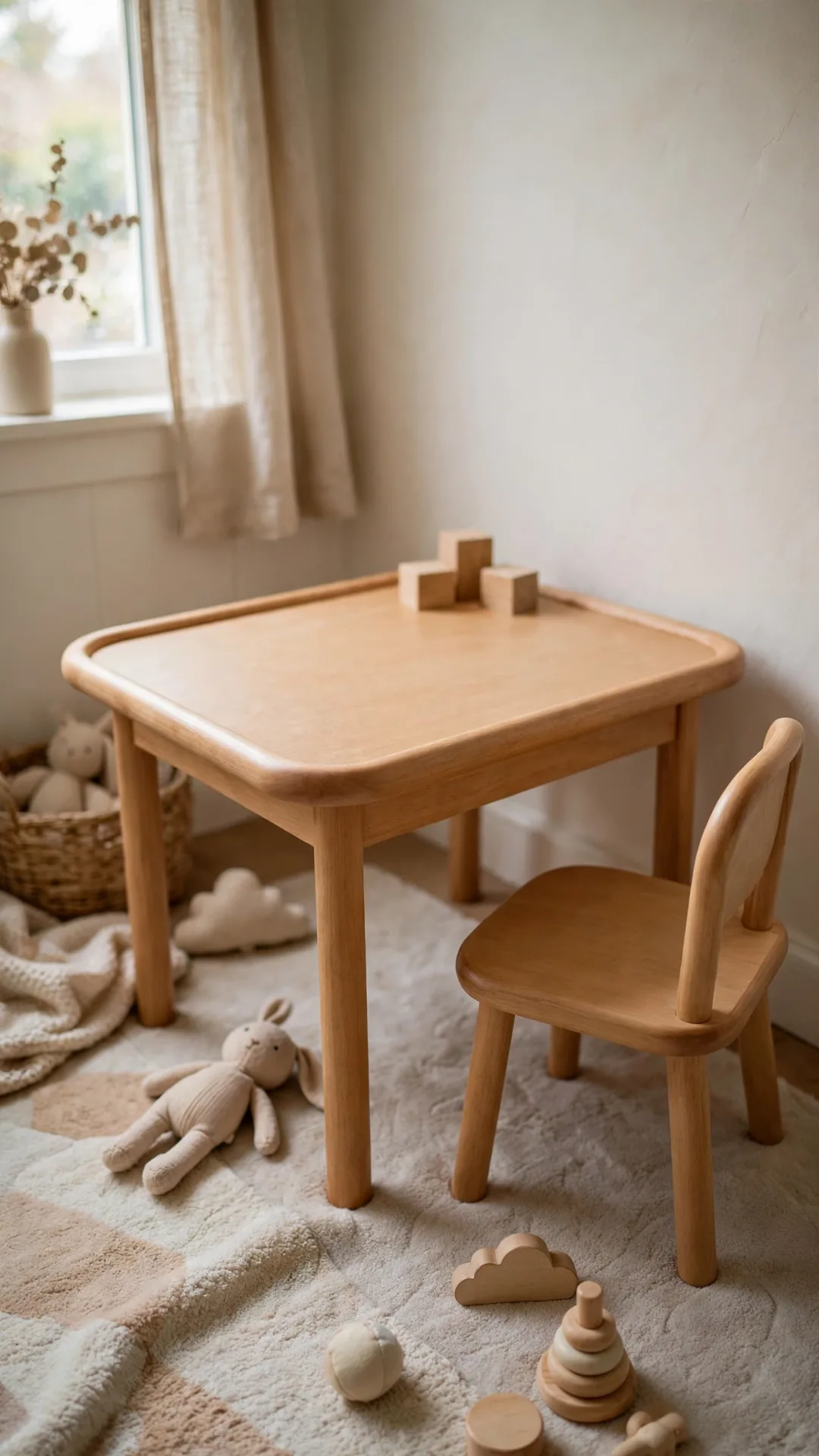
Sharp desk corners sit right at head height for small children. Rounded corners on kids desk ideas for small rooms cut that risk away. Corner guards retrofit older desks in minutes.
How to do it:
- Pick desks with fully rounded front corners.
- Add soft guards to any sharp secondhand desk.
- Check guards monthly since kids pick at them.
- Keep the walk path past the desk corner clear.
- Round shelf ends above the desk too.
Best for: Kids under seven sharing tight rooms.
Budget: $5 to $12 for corner guards
Quick tip: Guards in a matching color get picked at less.
46. Pick a Wipe Clean Top for Art Messes
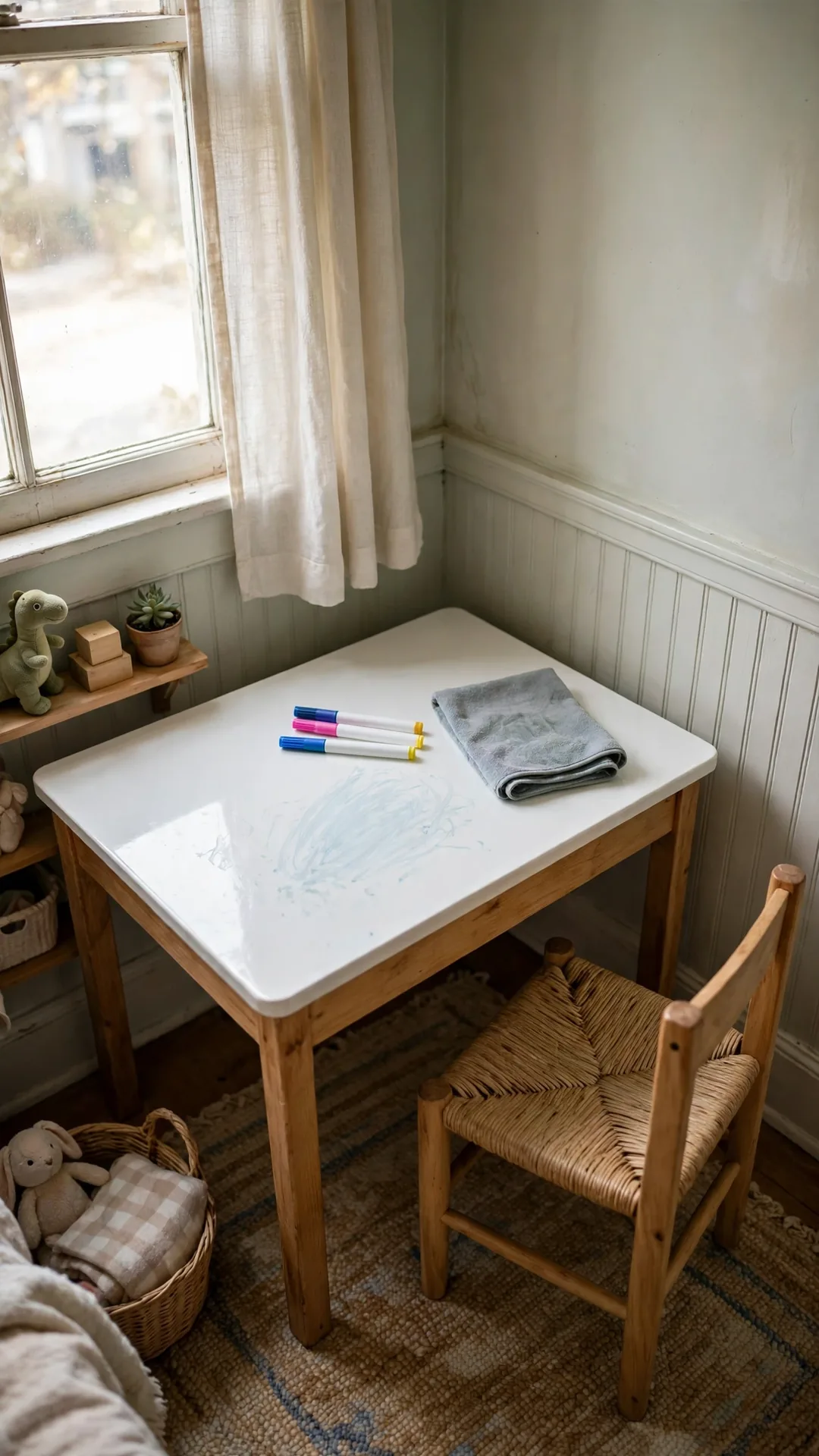
Glue and marker soak into raw wood in minutes. A wipe clean laminate top forgives daily art messes. Cleanup becomes a ten second job, not a battle.
How to do it:
- Choose laminate, sealed wood or a desk mat layer.
- Keep a damp cloth stored at the desk.
- Set paints on a tray, never straight on the top.
- Wipe glue drips before they fully dry.
- Use washable markers for kids under eight.
Best for: Daily art and craft at the desk.
Budget: $40 to $100
Quick tip: A clear desk mat protects any top you already own.
47. Fix Chair Fit With a Firm Cushion
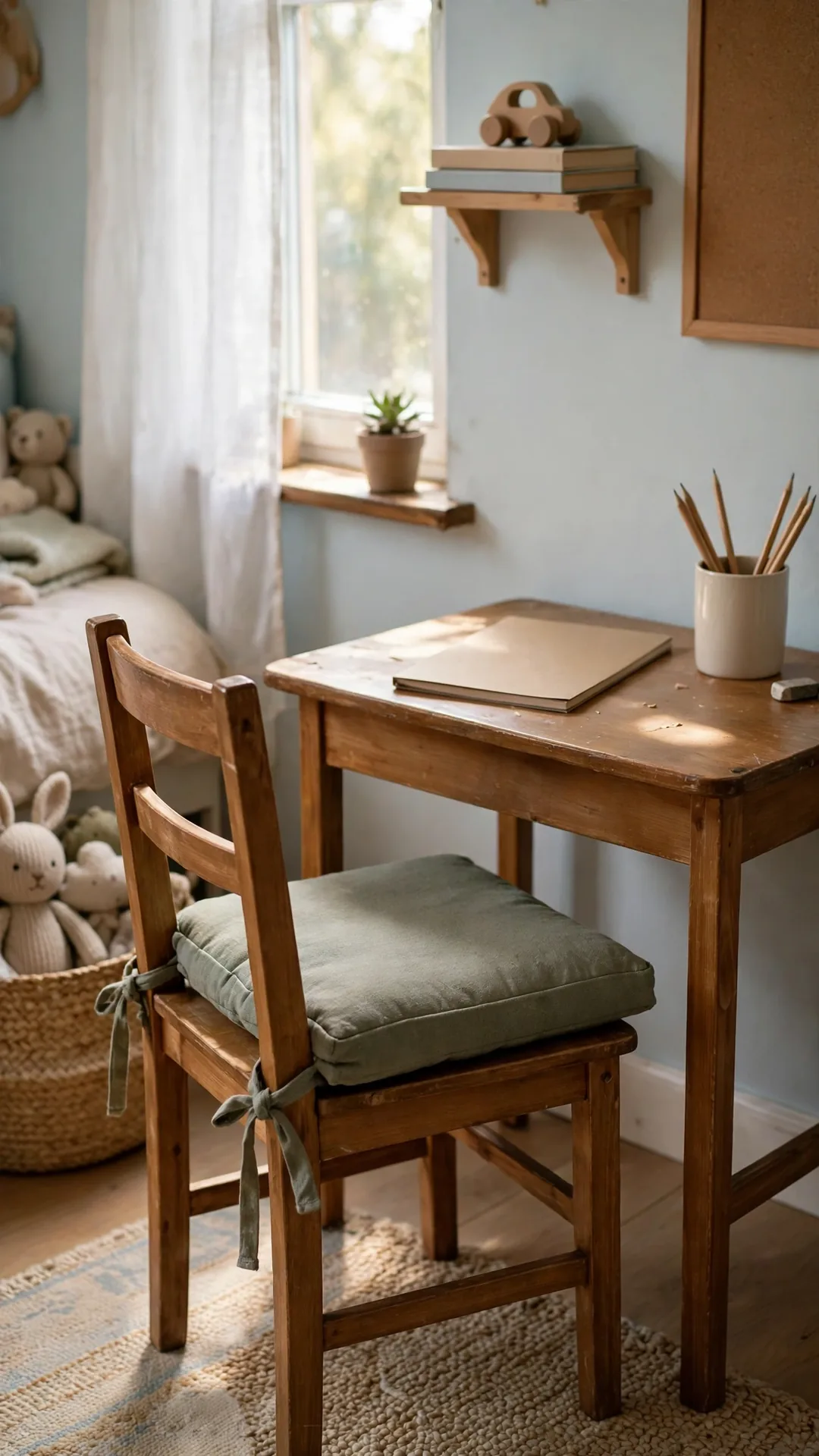
A chair that sits too low ruins desk posture. A firm cushion raises your child to the right height. Feet should rest flat with elbows level to the top.
How to do it:
- Measure the gap between chair seat and desk top.
- Add a firm cushion 2 to 3 inches thick.
- Avoid soft pillows that sink under weight.
- Keep the cushion tied or gripped to the seat.
- Recheck the fit every school term.
Best for: Hand me down chairs that sit too low.
Budget: $10 to $22
Quick tip: A folded firm blanket works until a cushion arrives.
48. Swap Up to a Bigger Teen Desk
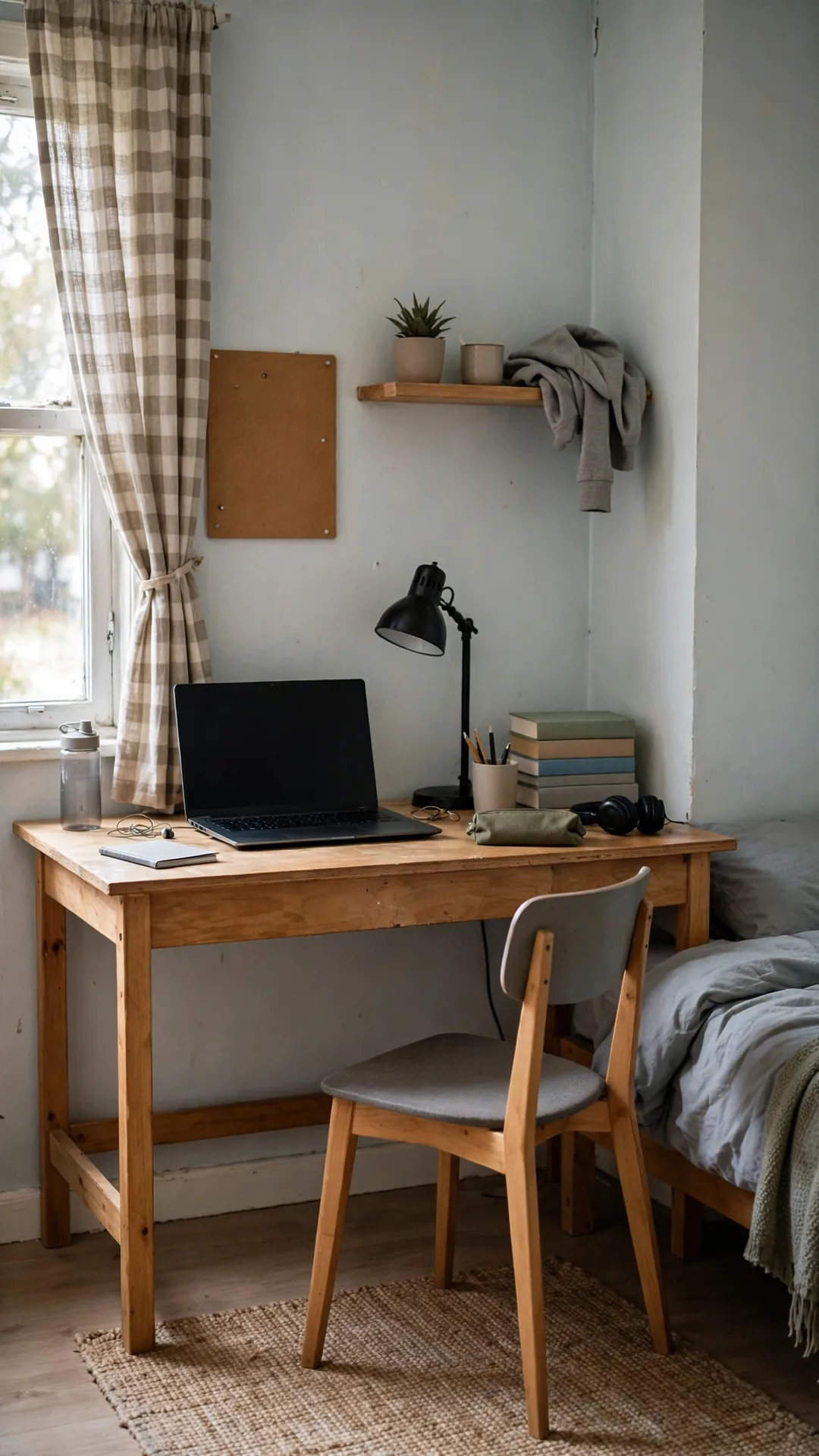
Teen years outgrow kids desk ideas for small rooms built for age eight. A wider top fits a laptop, books and notes at once. The old desk passes down to a sibling.
How to do it:
- Move up to a top at least 42 inches wide.
- Set the height near 28 to 30 inches.
- Add a monitor or laptop riser if screens arrive.
- Keep one drawer for chargers and cables.
- Pass the small desk to a younger sibling.
Best for: Kids starting secondary school work.
Budget: $70 to $160
Quick tip: Measure the laptop and books together before shopping.
49. Light the Desk From the Writing Side
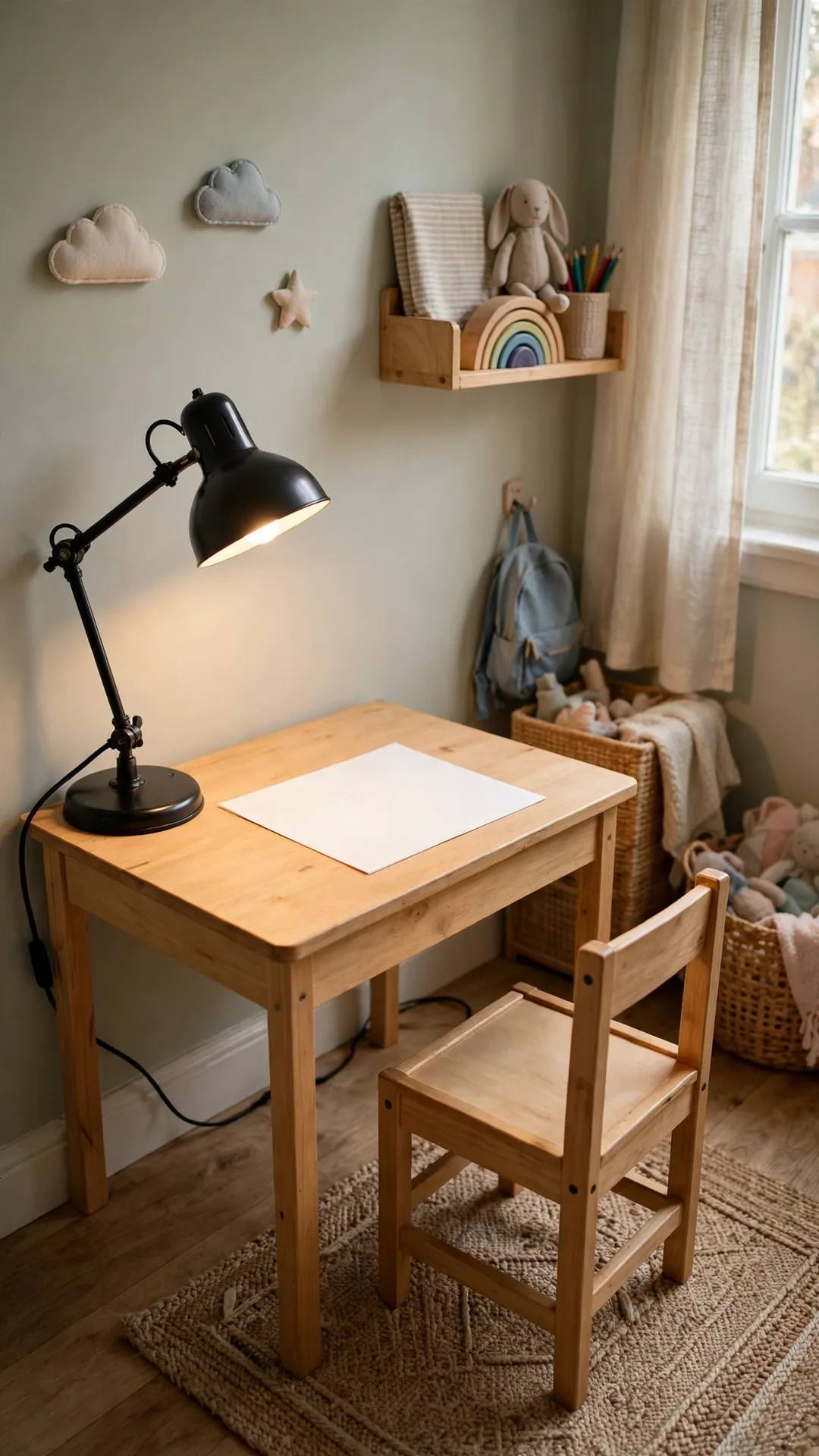
A lamp behind the writing hand throws shadows on the page. Light from the opposite side keeps the page clear. Right handed kids need the lamp on the left.
How to do it:
- Place the lamp opposite the writing hand.
- Aim light at the page, not at the eyes.
- Keep the bulb shaded so glare stays low.
- Use daylight bulbs for truer colors in art.
- Test the setup with real homework at night.
Best for: Kids who complain homework looks dim.
Budget: $12 to $30
Quick tip: Clamp lamps move sides in seconds as kids swap.
50. Hide Loose Cords in a Cable Tray
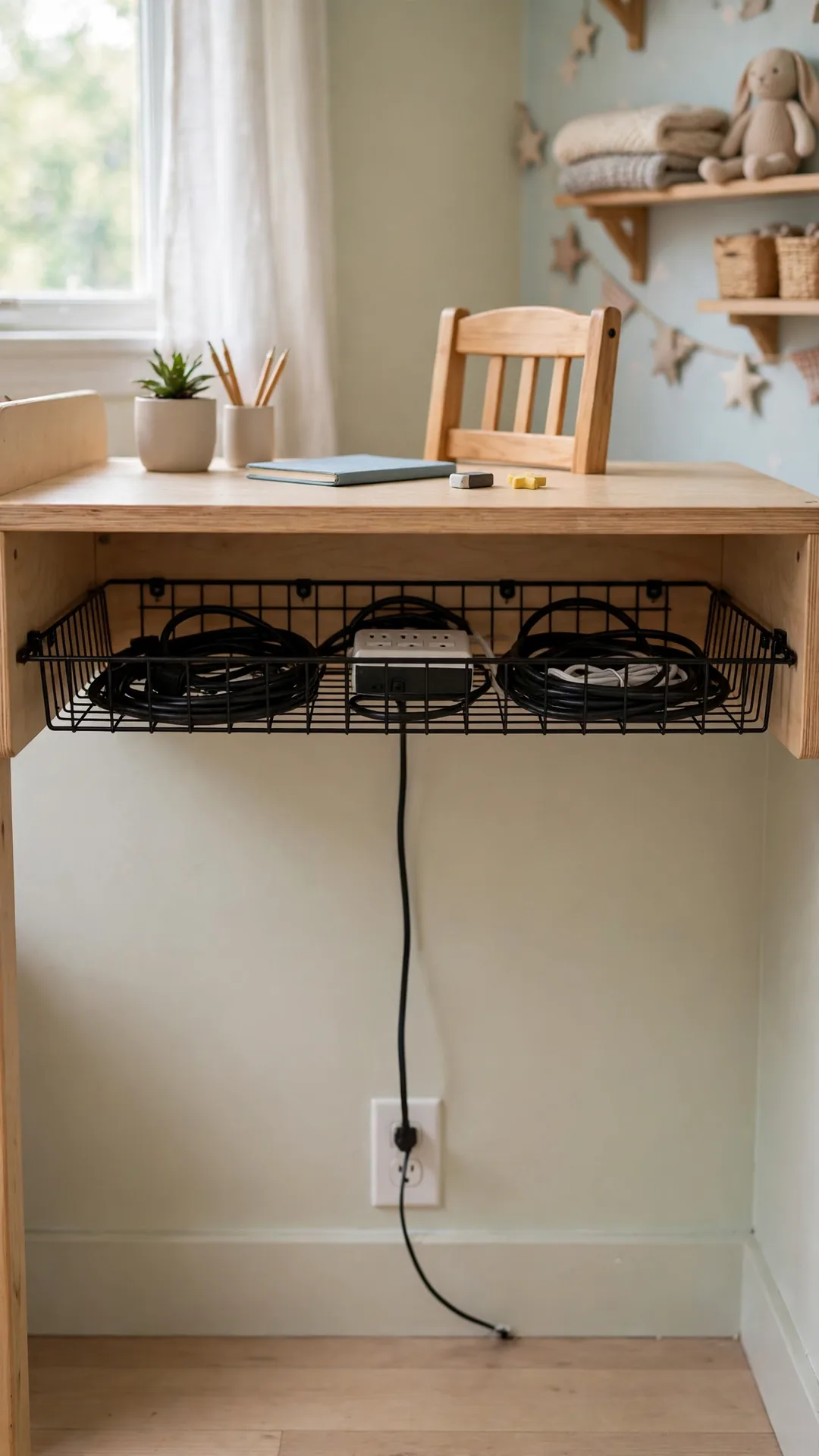
Loose cords under a kids desk invite tangles and trips. A cable tray under the top gathers them into one line. The floor stays clear for feet and the chair.
How to do it:
- Fix a tray under the back edge of the top.
- Route lamp and charger cords into the tray.
- Keep power strips off the floor entirely.
- Leave slack so the tray opens for cleaning.
- Never let cords cross the chair wheel path.
Best for: Desks with lamps, tablets or laptops.
Budget: $10 to $25
Quick tip: Velcro ties beat tape for cords kids unplug often.
51. Keep One Charging Drawer for Devices

Tablets and phones charge all over the house without a plan. One drawer in kids desk ideas for small rooms can hold them all. Devices rest out of sight while homework stays paper first.
How to do it:
- Pick one drawer near an outlet for charging.
- Use a short multi port charger to cut clutter.
- Keep the drawer slightly open while devices charge.
- Never charge devices under pillows or paper piles.
- Set a nightly park time for every device.
Best for: Families setting screen limits around homework.
Budget: $15 to $35
Quick tip: A drawer timer outlet adds an automatic stop.
52. Pin Art on a Cork Display Strip
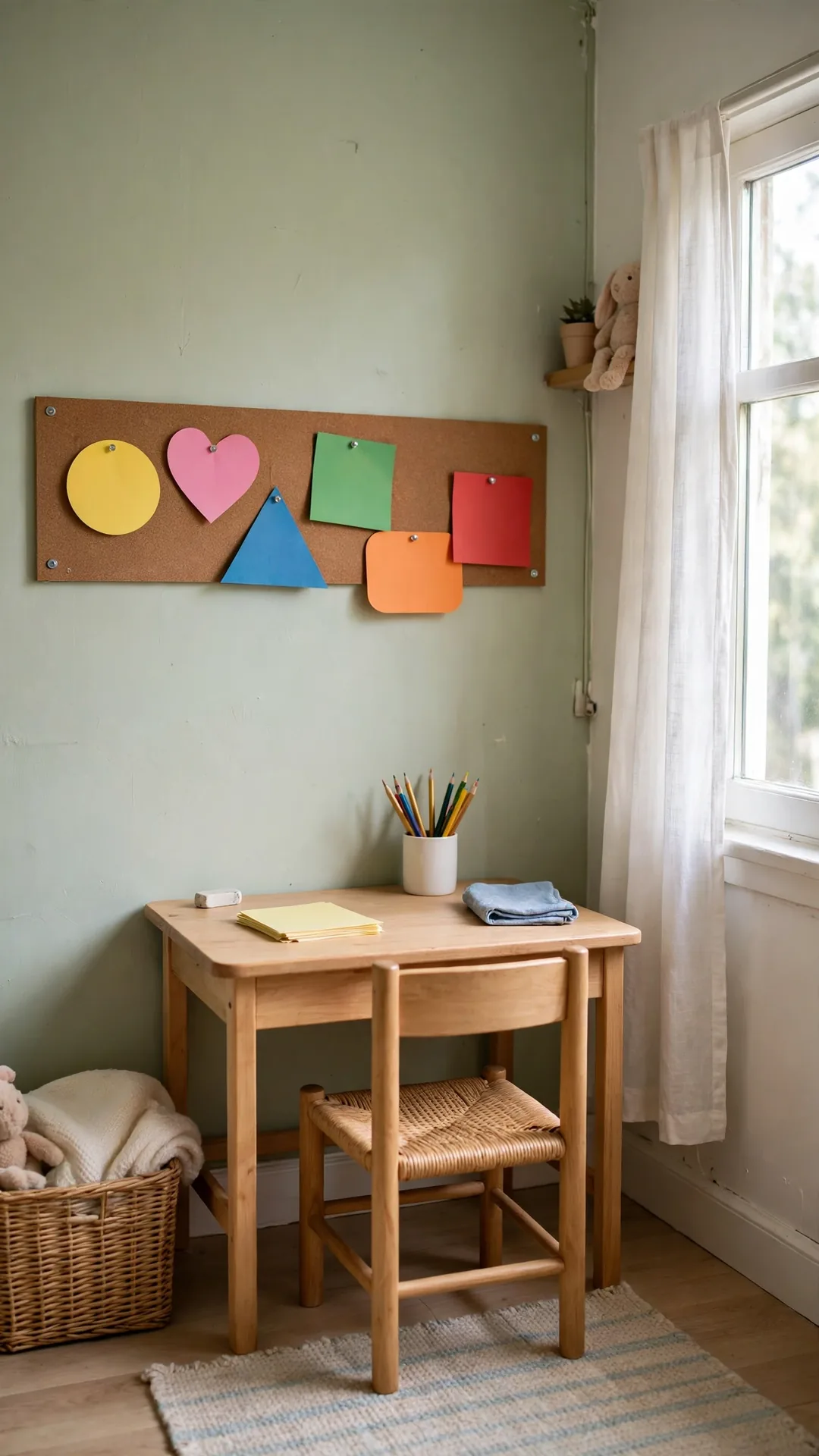
Kids produce more art than any fridge door holds. A cork strip above the desk shows the newest pieces. Old pieces cycle out as new favorites arrive.
How to do it:
- Fix a cork strip about 36 inches long above the desk.
- Keep pins in a small pot, not loose on the desk.
- Let your child choose what hangs each week.
- Store retired art flat in a folder under the bed.
- Keep the strip clear of the lamp heat zone.
Best for: Proud young artists with weekly output.
Budget: $8 to $18
Quick tip: One strip per child keeps displays fair.
53. Set a Small Rug Under the Desk Zone

A small rug marks the desk zone, softens chair noise and protects the floor. Use the same sizing logic as this rug size guide for small living rooms. The front legs of the chair should stay on the rug.
How to do it:
- Pick a flat weave rug about 3 by 4 feet.
- Set the desk front legs on the rug edge.
- Keep all four chair legs on the rug in use.
- Add a non slip pad under thin rugs.
- Choose a washable rug for art heavy zones.
Best for: Hard floors and shared bedroom walls.
Budget: $20 to $45
Quick tip: Low pile rugs let chair casters roll freely.
54. Anchor Tall Desk Storage to Wall Studs
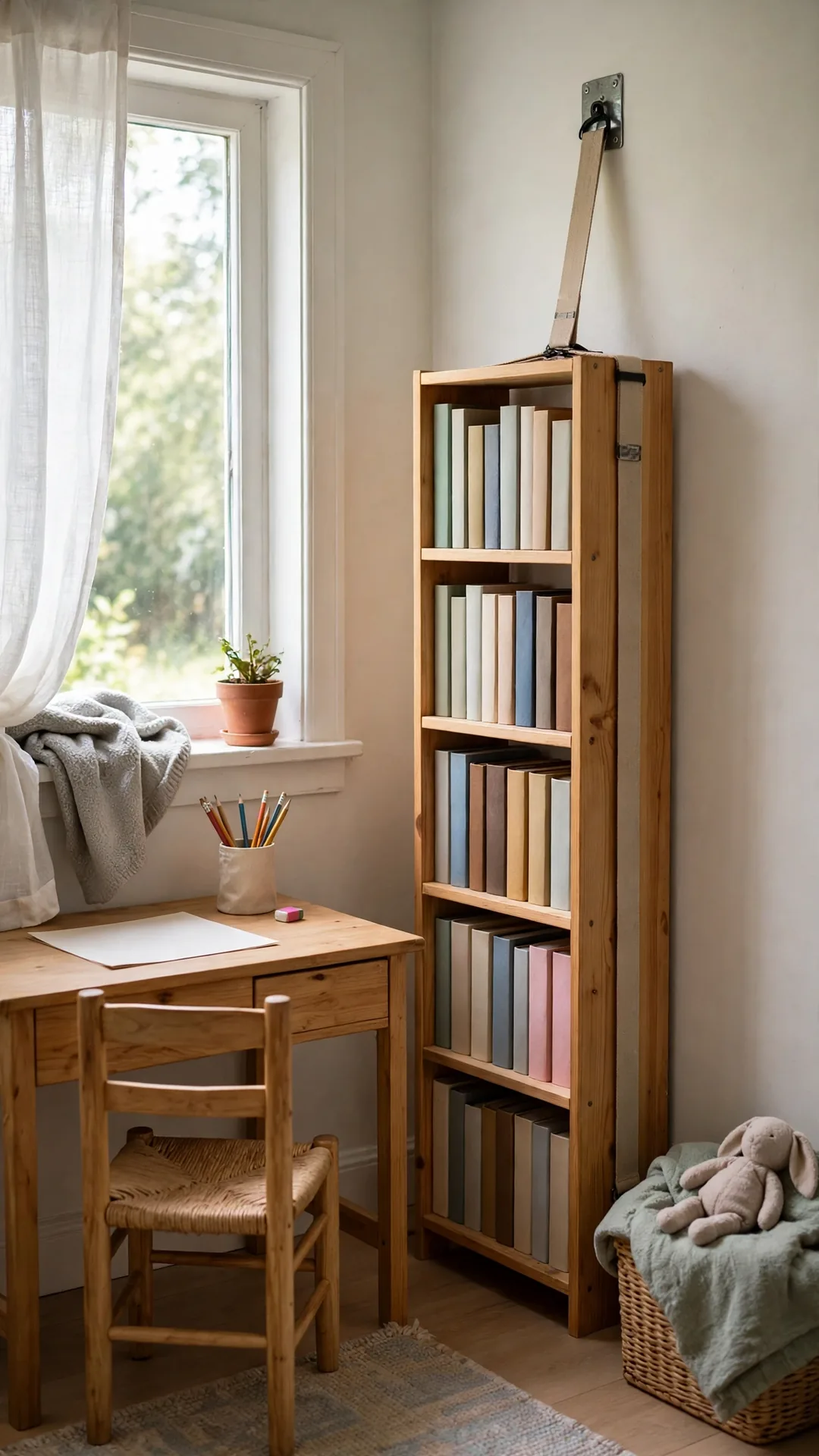
Tall shelves beside kids desk ideas for small rooms can tip if climbed. An anti tip strap fixes the unit to wall studs. The two minute job removes the biggest desk zone risk.
How to do it:
- Find the studs behind the shelf with a finder.
- Fit the strap at the top back of the unit.
- Use screws rated for the shelf weight.
- Keep heavy books on the lowest shelves.
- Recheck straps after any room rearrange.
Best for: Any shelf or hutch taller than the desk.
Budget: $5 to $12
Quick tip: Most tall units include a strap in the box.
55. Add an In and Out Tray for Papers
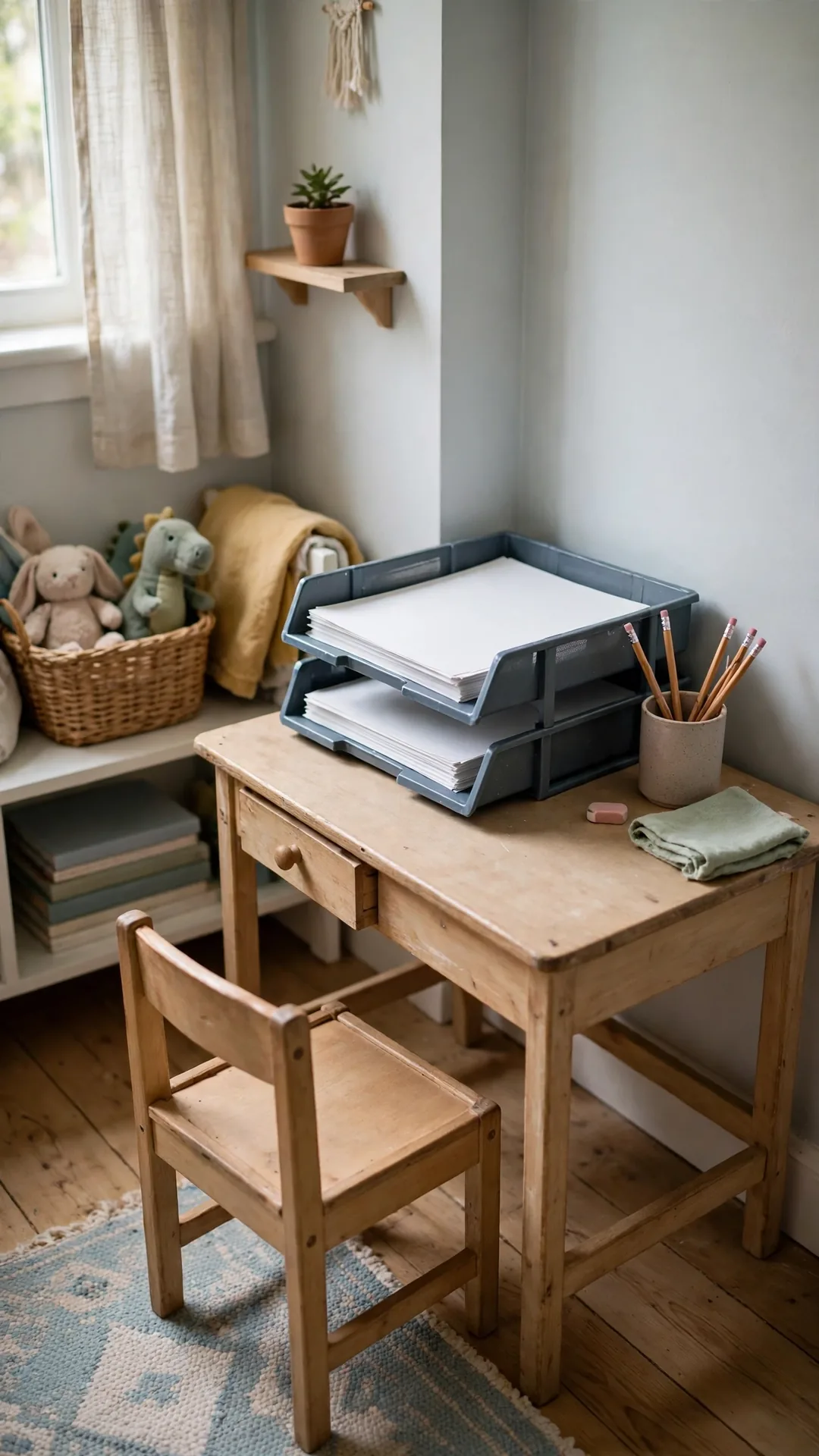
Homework papers vanish between bag and desk daily. A two level tray gives them a clear path. New work lands on top, finished work waits below.
How to do it:
- Set a two tray stack at the desk back corner.
- Put new assignments in the top tray only.
- Move finished work to the bottom tray nightly.
- Empty the bottom tray into the school bag.
- Wipe trays out at the end of each week.
Best for: Kids who lose forms and homework sheets.
Budget: $8 to $16
Quick tip: The tray habit takes one week to stick.
56. Build a Simple Plywood Desk Together
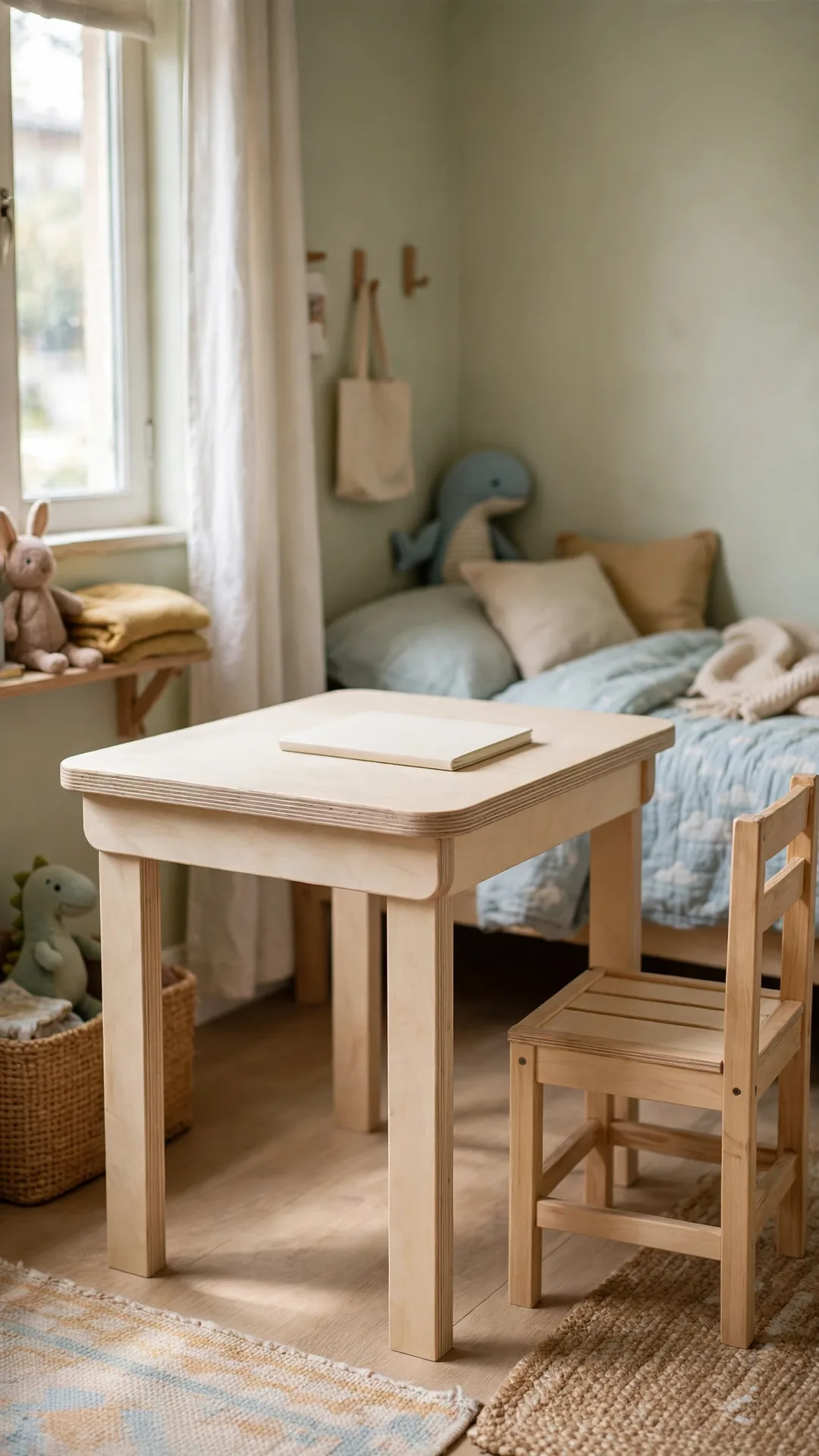
A parent and child can build a sturdy desk in one afternoon. One plywood sheet forms the top and the side panels. The build pairs well with these DIY bedroom ideas for small rooms when you add matching shelves.
How to do it:
- Cut the top about 36 by 20 inches.
- Use side panels 24 inches tall for ages six to eight.
- Sand every edge until it feels fully smooth.
- Glue and screw the joints, then clamp overnight.
- Seal the top with a washable clear coat.
Best for: Handy families wanting an exact fit desk.
Budget: $35 to $70
Quick tip: Let your child pick the paint color for the legs.
Pick One Desk and Set It Up This Weekend
You do not need the biggest room to give your child a real work spot. Pick one of these kids desk ideas for small rooms and set it up this weekend. Save this post or pin your favorite idea so the measurements are handy at the store.
- 56 Kids Desk Ideas for Small Rooms Too Good to Gatekeep - November 23, 2026
- 57 Breakfast Bar Ideas for Small Spaces Worth Copying Now - November 23, 2026
- 53 Genius Small Living Room Rug Ideas That Renters Love - November 22, 2026