
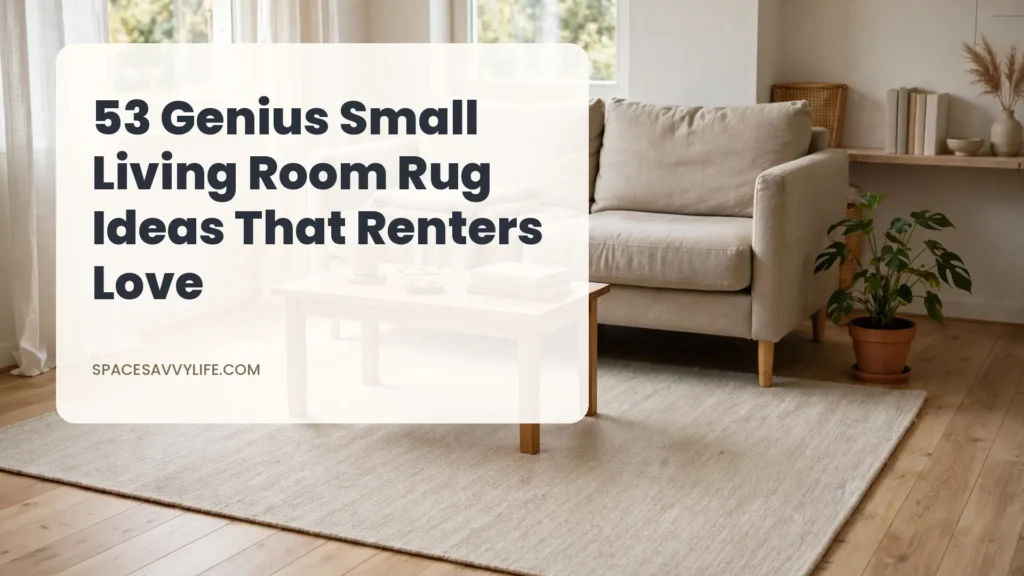
A bare floor can make a small living room feel cold and unfinished. The right rug pulls the sofa, table and chairs into one calm group. These small living room rug ideas focus on looks you can copy in a weekend.
You will find colors, patterns, textures and shapes that suit tiny rooms. Most picks suit renters, need no tools and cost under $150. Pick one look, then build the room around it.
1. Lay One Big Pale Rug to Open the Room
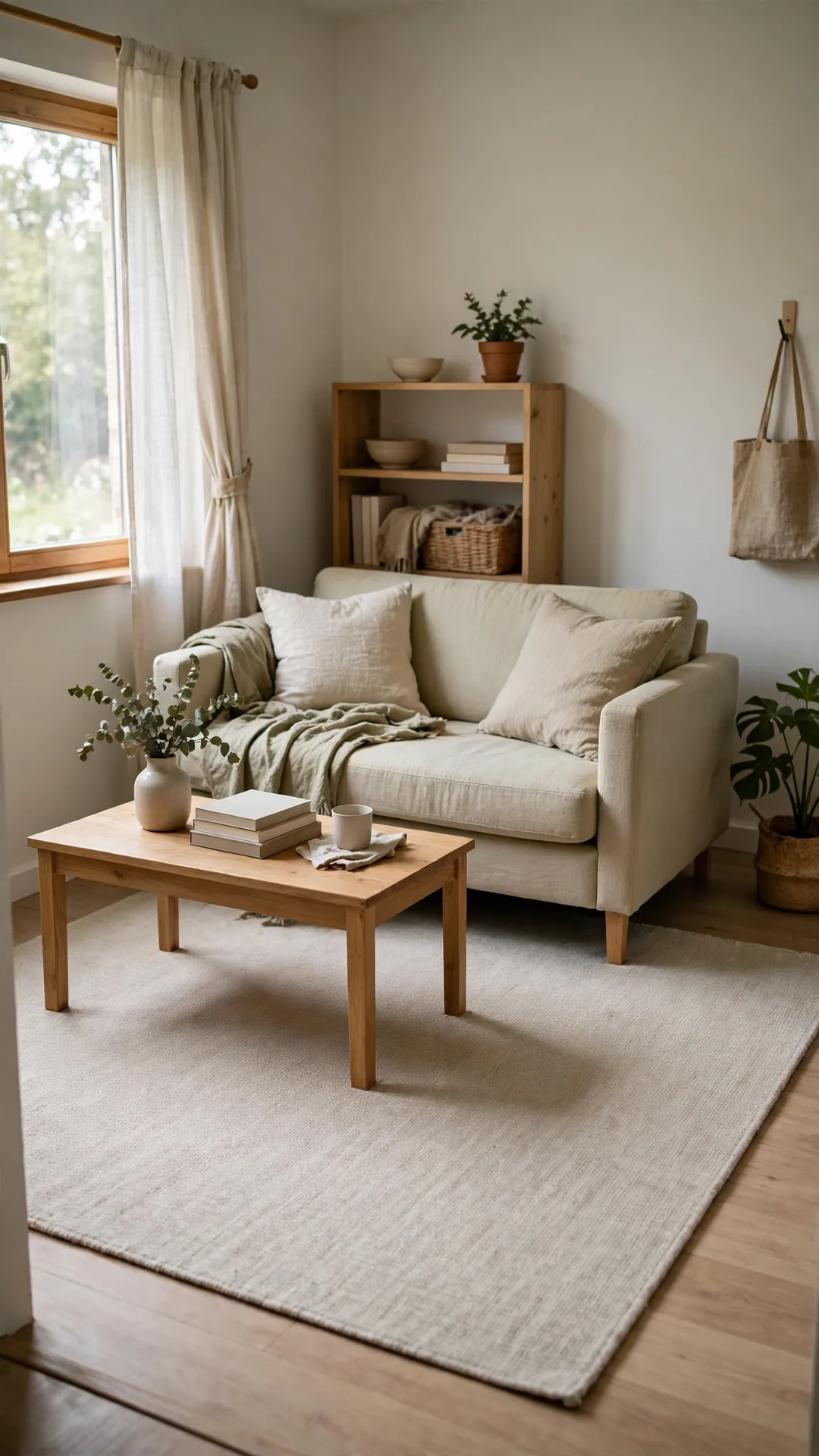
One big pale rug makes a tiny room read as a single calm space. It covers most of the floor, so the eye stops chopping the room into pieces. Keep the furniture tones close to the rug for a soft, open feel.
How to do it:
- Choose a pale cream, ivory or light greige shade
- Let the rug reach under the sofa front legs
- Leave a slim border of floor showing on each side
- Pair with light cushions so nothing fights the base
Best for: Studios and open-plan corners that feel chopped up.
Budget: $90 to $250
Quick tip: Take a photo in daylight before buying, since pale shades shift with your floor tone.
2. Try a Cream Rug with Tonal Texture
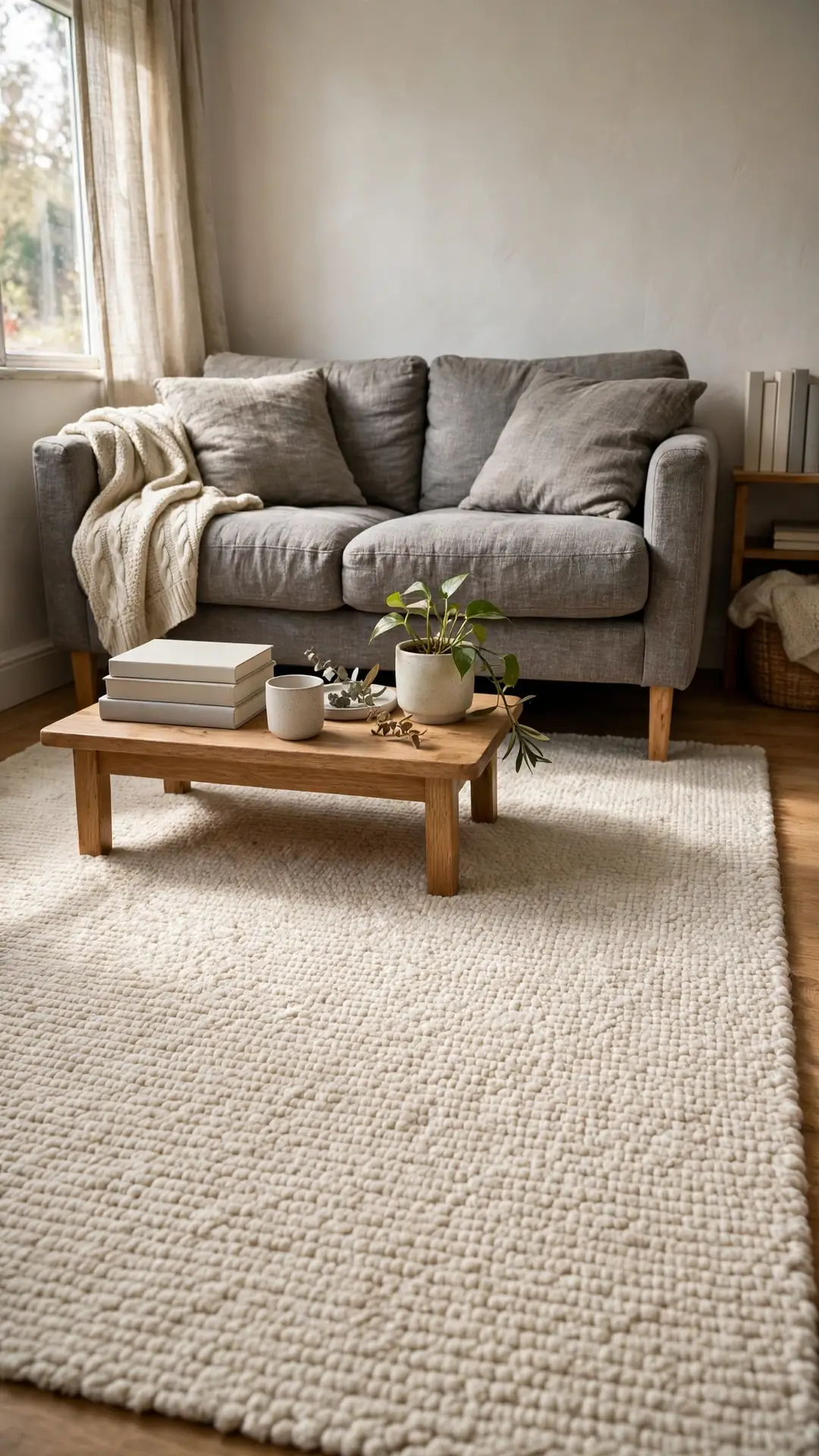
Some small living room rug ideas lean on texture when the color stays quiet. A cream rug with loops and cut pile in the same shade adds depth without noise. It suits rooms where the sofa already carries the color.
How to do it:
- Look for high and low pile in one cream tone
- Run your hand across the sample to feel the pattern
- Keep cushions smooth so the rug texture stands out
- Choose a dense weave that hides footprints well
Best for: Calm rooms that need interest without more color.
Budget: $70 to $200
Quick tip: Texture shows best in side light, so place the patterned side near the window.
3. Pick a Soft Gray Rug to Cool Warm Floors
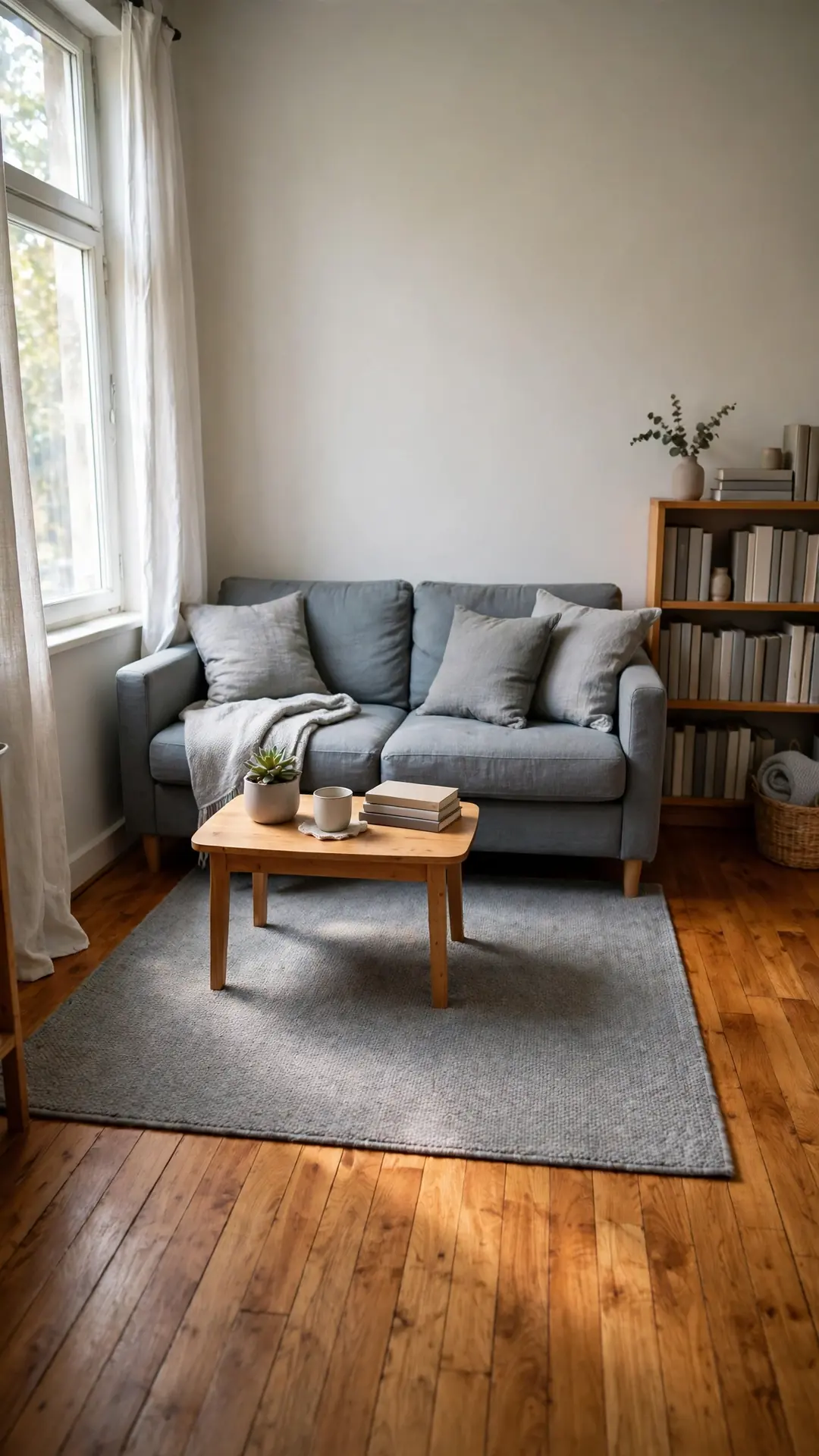
Warm wood floors can fight a cool gray sofa and leave the room split. A soft gray rug bridges the two and calms the contrast. Mid gray also hides dust better than near-white shades.
How to do it:
- Match the rug gray to your sofa or curtain tone
- Pick a blue-gray for north-facing rooms with cool light
- Avoid gray on gray floors, which can look flat
- Add warm wood or brass accents to balance the cool base
Best for: Rooms where warm floors clash with cool furniture.
Budget: $60 to $180
Quick tip: Hold a gray swatch against the floor at noon and again at dusk before deciding.
4. Use a White and Beige Pattern for Quiet Interest
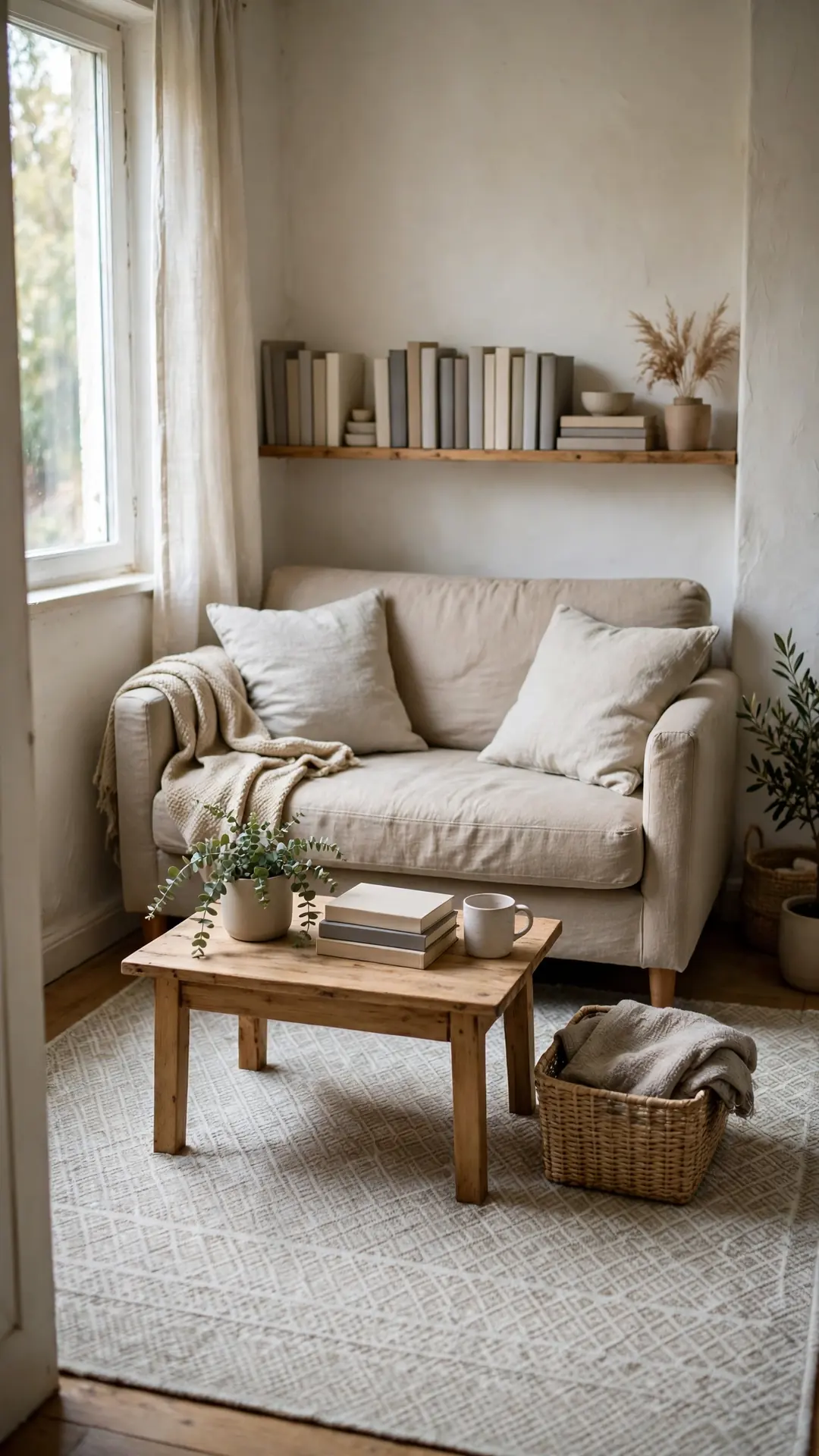
A white and beige pattern gives you print without the shout. The two neutrals weave checks, lines or soft blocks that read from across the room. Up close, the pattern helps hide crumbs between vacuums.
How to do it:
- Pick small repeats rather than one huge motif
- Keep the beige warm so the white never looks stark
- Repeat one shade in a throw or cushion nearby
- Choose a flat or low pile for easy shaking out
Best for: Renters who want pattern that clashes with nothing.
Budget: $50 to $160
Quick tip: Photograph the pattern from the doorway, since that is the view you live with.
5. Choose a Blush Rug for Gentle Warmth
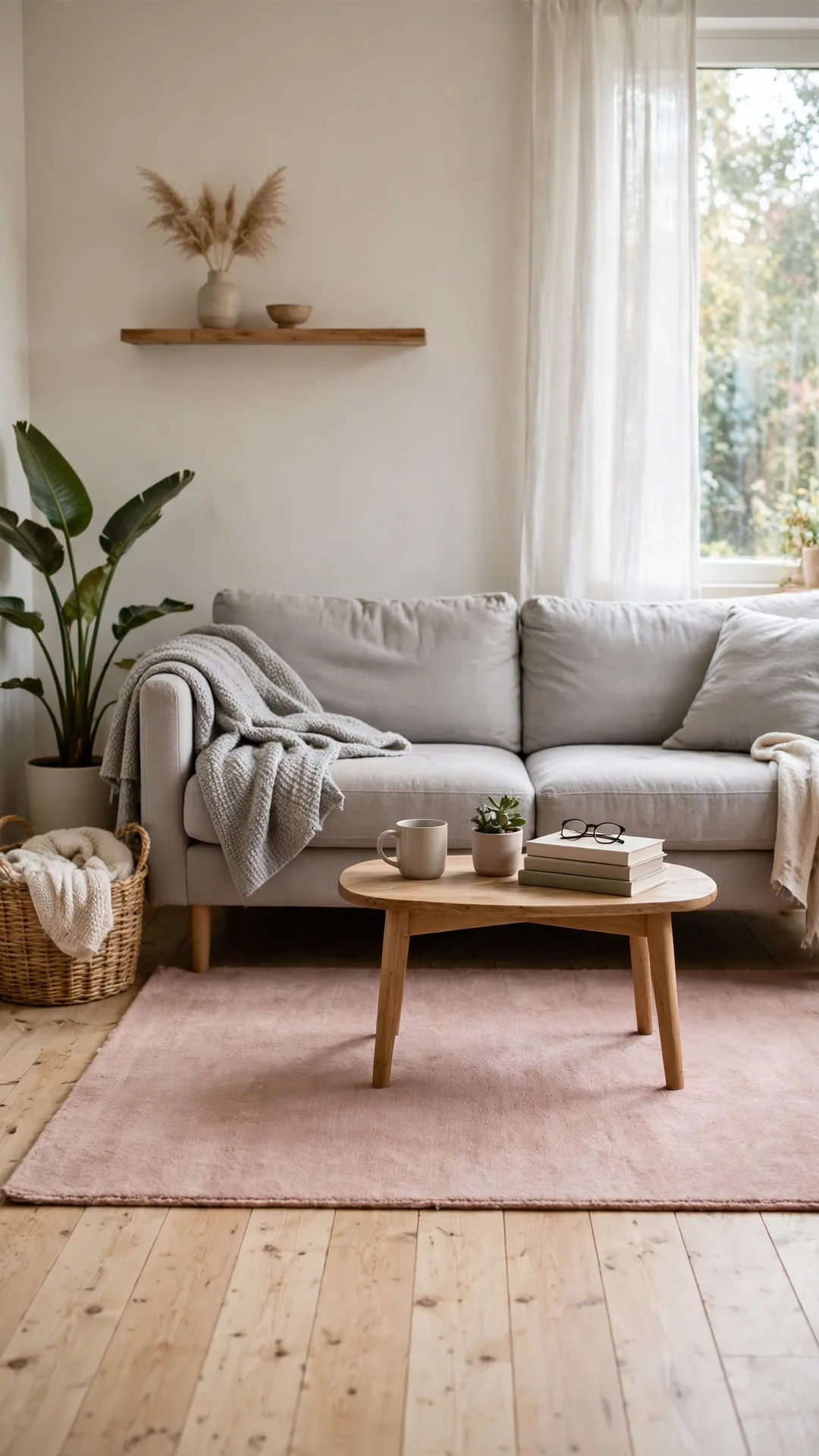
Gentle small living room rug ideas use blush to warm a gray sofa. Blush reads warm and soft, yet it stays grown-up beside gray or white seating. It flatters wood floors and takes the chill off north-facing rooms.
How to do it:
- Choose a dusty blush rather than a sweet pink
- Pair with gray, white or pale oak furniture
- Keep other pink tones out so the rug stays the accent
- Pick a stain-hiding weave if kids use the room daily
Best for: Gray sofas that feel cold and flat.
Budget: $55 to $170
Quick tip: Blush fades in strong sun, so rotate the rug every few months.
6. Ground the Sofa with a Deep Navy Rug
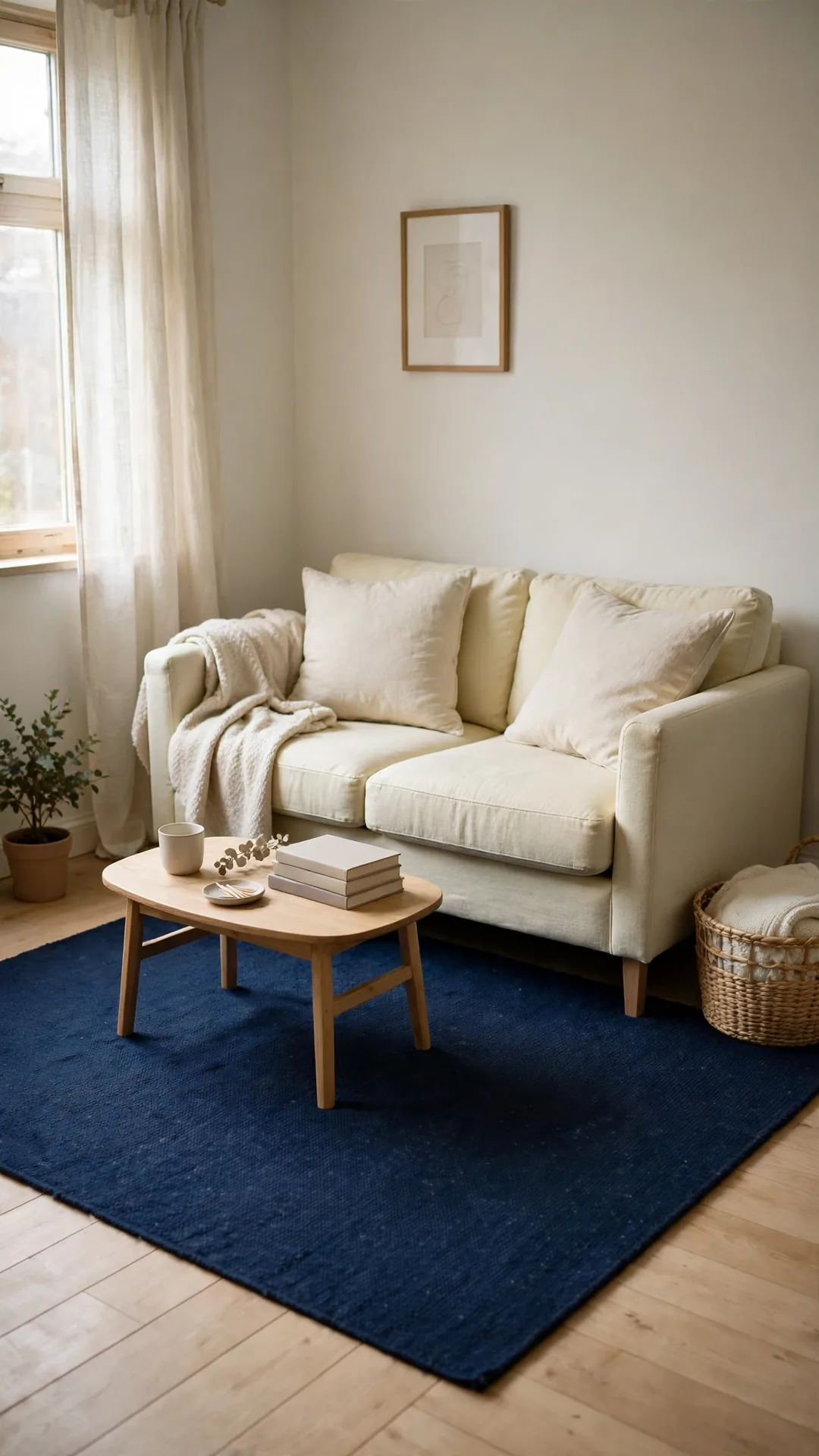
A deep navy rug anchors pale furniture and gives a small room real depth. Dark color underfoot makes light sofas look brighter by contrast. It also forgives spills far better than pale shades.
How to do it:
- Let navy be the darkest tone in the room
- Add light cushions so the seating stays airy
- Choose a low pile so the dark color never looks heavy
- Keep the pattern plain or faintly tonal
Best for: Pale sofas floating on light floors.
Budget: $70 to $220
Quick tip: Navy shows pale pet hair fast, so pick a heathered weave if you have a light-colored pet.
7. Add a Muted Terracotta Rug for Earthy Color
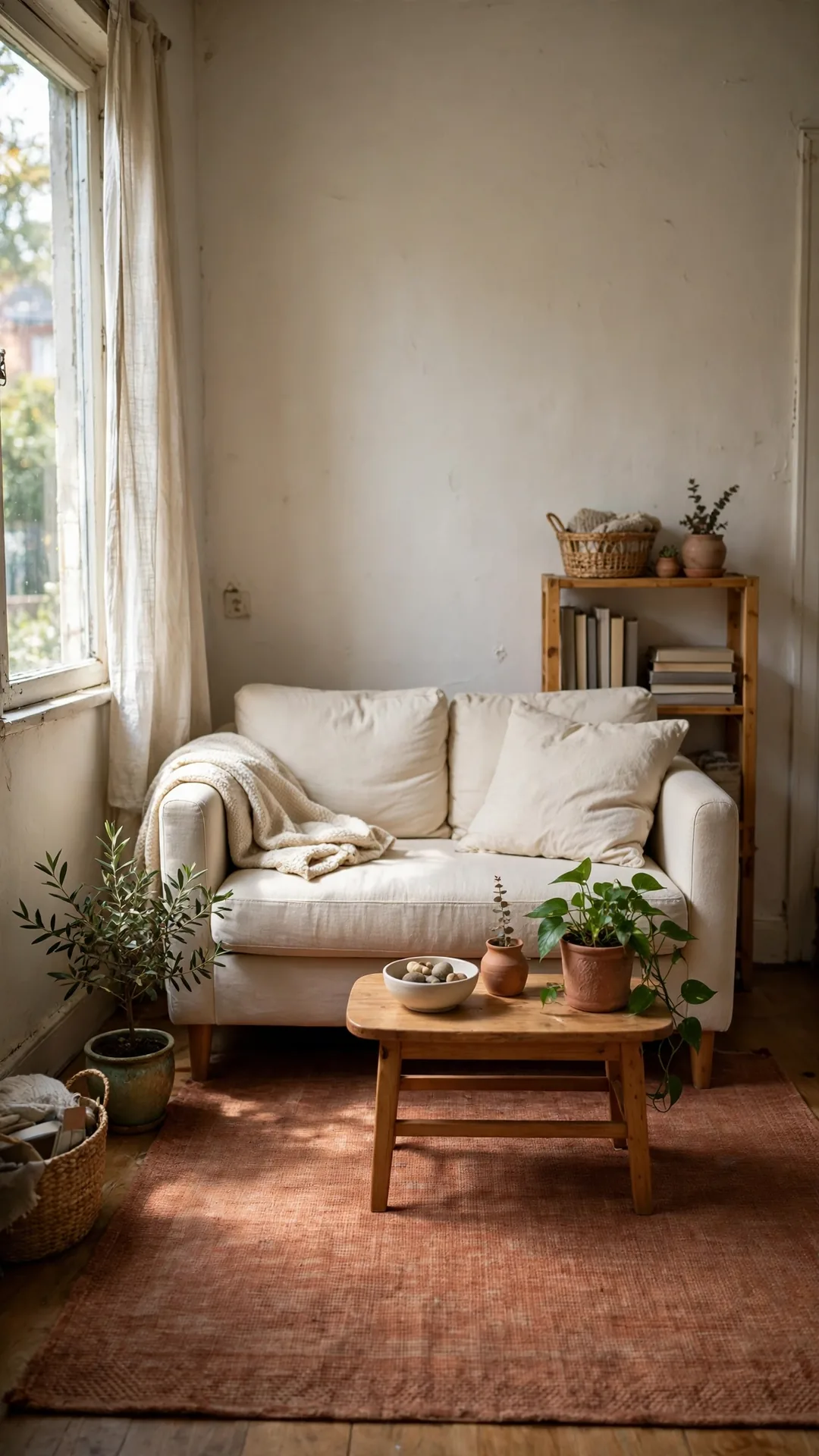
Muted terracotta brings sunset warmth without the heat of bright orange. It loves cream sofas, tan leather and plenty of plants. The clay tone also hides dust in busy family rooms.
How to do it:
- Pick a faded, clay-like terracotta over a bright one
- Repeat the tone once in a cushion or a pot
- Pair with cream and warm wood for balance
- Choose a patterned weave to soften the strong color
Best for: Cream rooms that need one warm accent.
Budget: $60 to $190
Quick tip: Terracotta shifts redder under warm bulbs, so check it with your evening lights on.
8. Lay a Sage Green Rug with Neutral Furniture
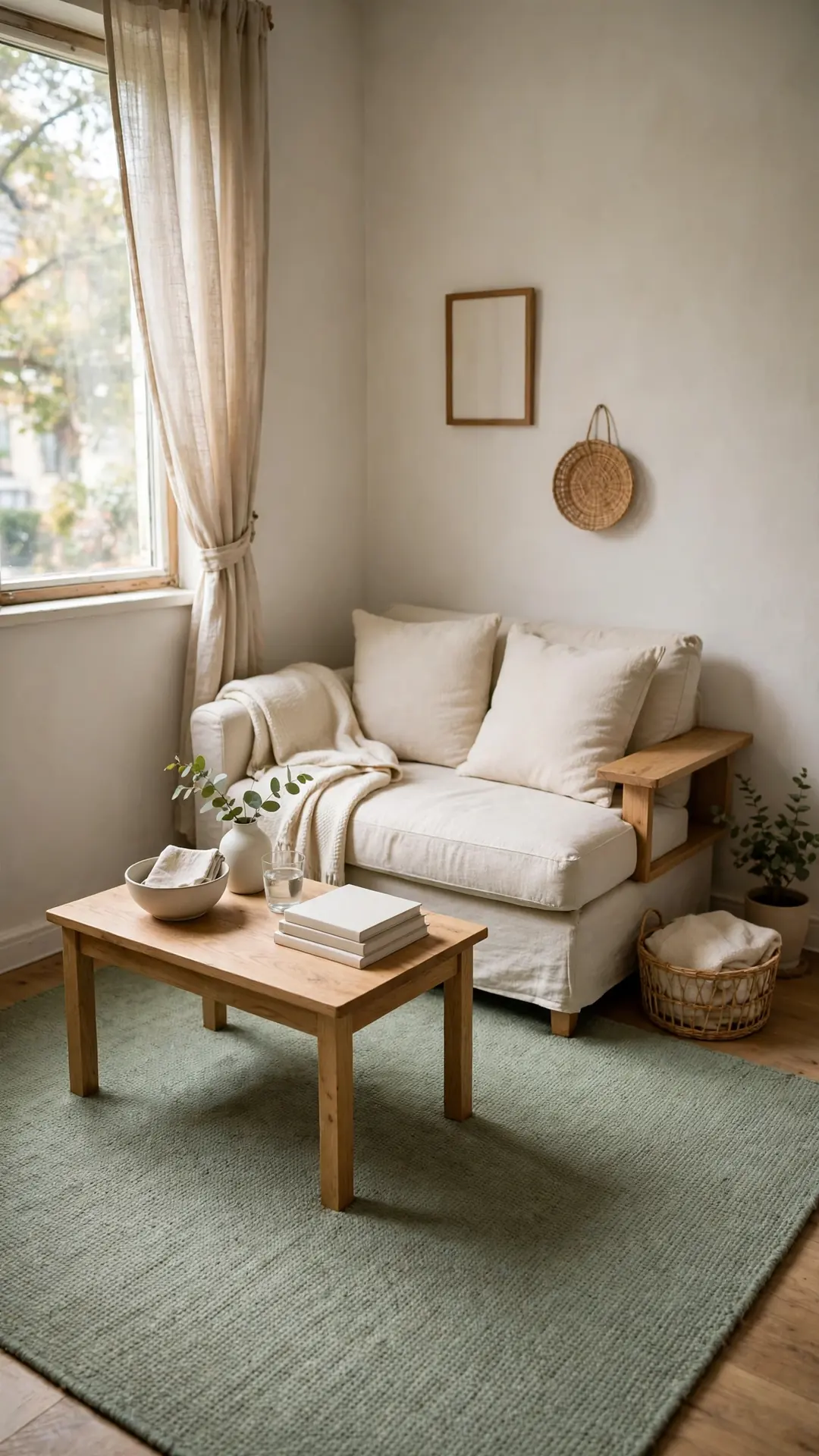
Earthy small living room rug ideas pair sage green with pale wood. Sage stays calm where brighter greens would shout. It gives neutral rooms a hint of nature without a full color scheme change.
How to do it:
- Choose a gray-leaning sage for a softer look
- Match it with cream, beige and light oak tones
- Add one plant nearby to echo the color
- Keep metal accents black or brass for warmth
Best for: Neutral rooms that feel plain and cold.
Budget: $55 to $175
Quick tip: Sage hides grass stains well, which suits homes with a garden door.
9. Fake a Border with a Two-Tone Rug
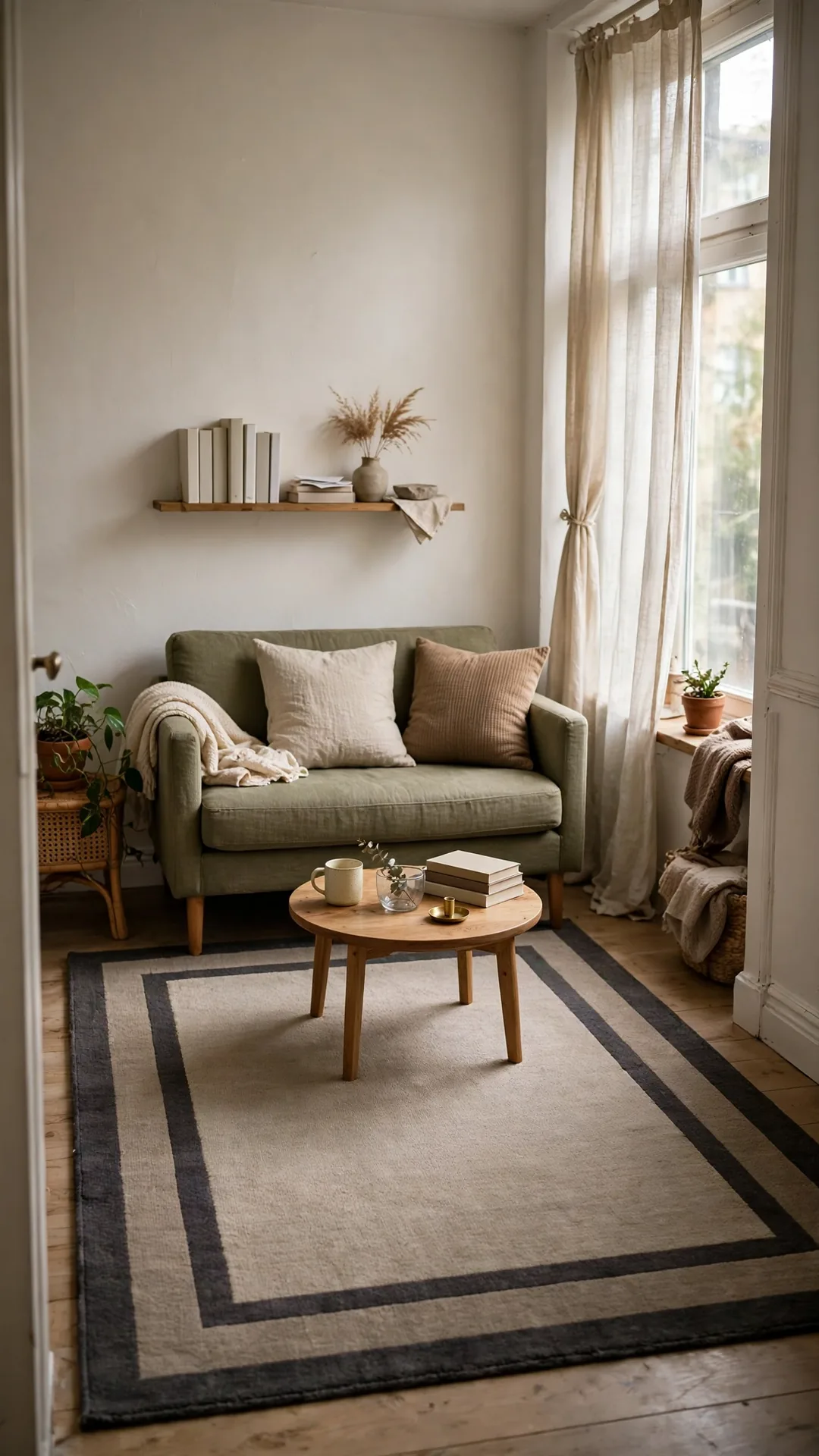
A two-tone rug with a darker edge fakes the framed look of a custom border. The eye reads the edge as a deliberate frame around the seating. It makes a plain arrangement look planned and finished.
How to do it:
- Choose a light center with a border one shade deeper
- Line the border up with the sofa front edge
- Keep the border width even on all visible sides
- Skip extra pattern inside the frame
Best for: Plain seating groups that look unfinished.
Budget: $65 to $200
Quick tip: A border only works when it stays straight, so use a grippy pad beneath.
10. Run Stripes Lengthwise to Stretch the Room
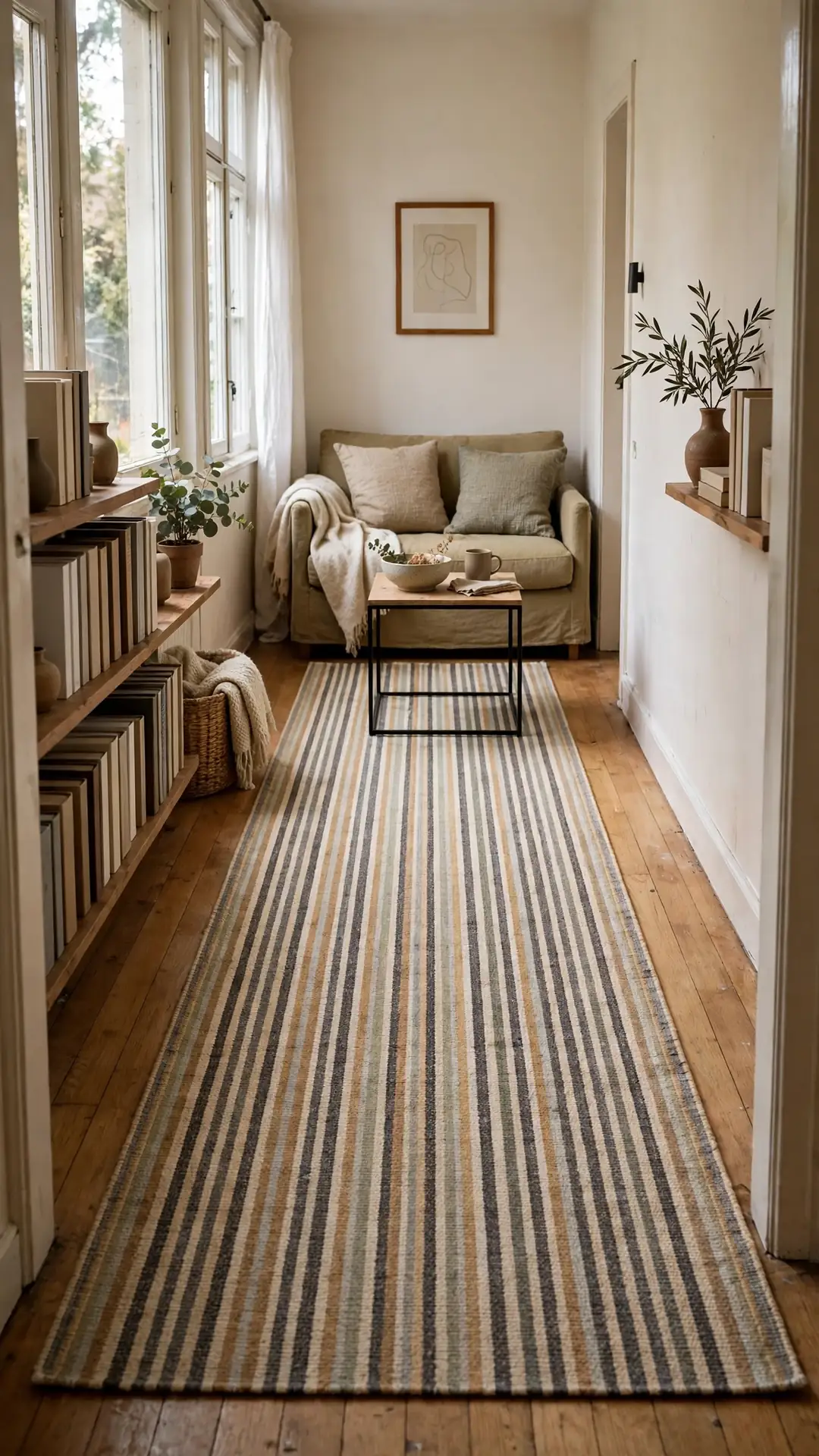
Stripes that run along the room pull the eye toward the far wall. The room reads longer, even though nothing moved. Keep the stripe contrast soft so the trick stays subtle.
How to do it:
- Run stripes along the longest wall, never across it
- Pick two close tones like cream and sand
- Keep stripe widths uneven for a natural feel
- Align the first stripe with the sofa edge
Best for: Short rooms that feel boxy.
Budget: $50 to $160
Quick tip: In a narrow room, run stripes across the width instead to widen it.
11. Choose a Small-Scale Geometric Print
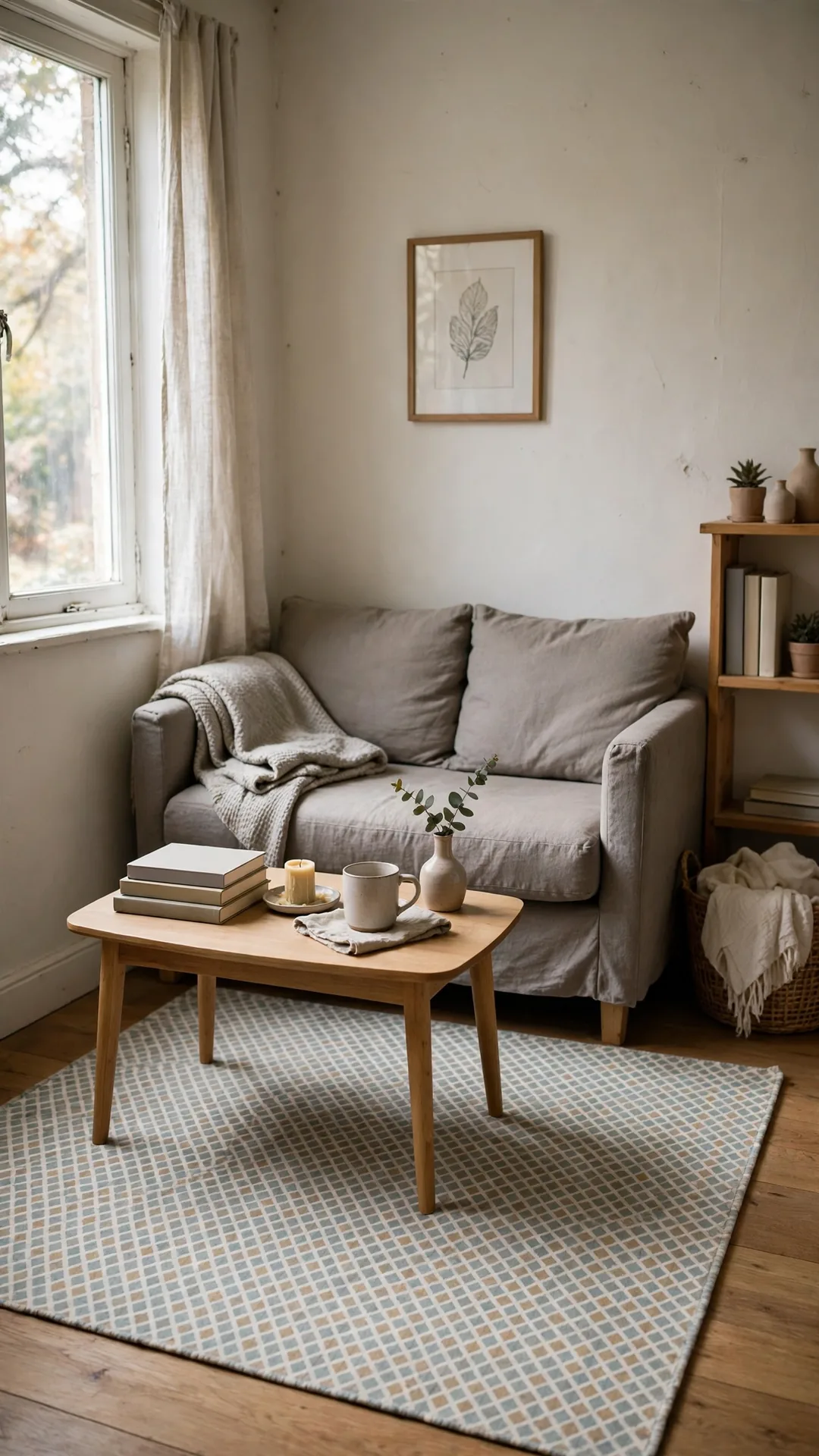
Patterned small living room rug ideas work best at a small scale. Tiny diamonds, dots or grids add energy without crowding a compact floor. The repeat reads as texture from the sofa and pattern up close.
How to do it:
- Keep motifs under 2 inches across
- Limit the print to two or three colors
- Match one print color to your sofa fabric
- Choose a flatweave so the pattern stays crisp
Best for: Plain rooms that need life at floor level.
Budget: $45 to $150
Quick tip: Small prints hide crumbs and pet hair better than any solid shade.
12. Pick a Faded Vintage-Style Pattern
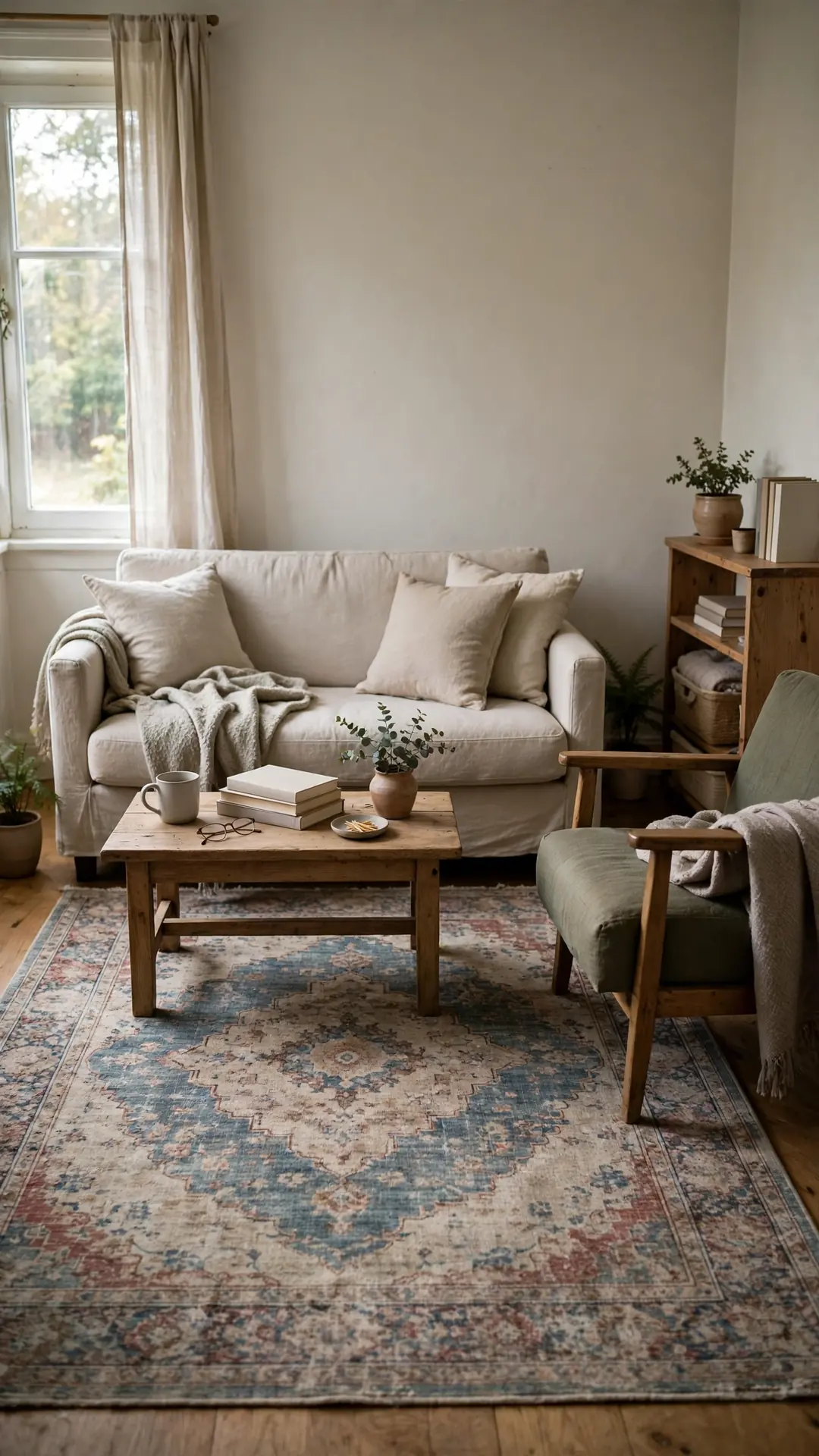
A faded vintage-style pattern brings history to a plain rental room. Soft worn motifs forgive stains and suit both old and new furniture. The muted palette ties odds and ends together.
How to do it:
- Choose washed-out reds, blues or golds on cream
- Let one motif color match your main furniture
- Pick a low pile that mimics a true worn rug
- Avoid shiny fibers, which give the fake away
Best for: Mixed furniture that needs one unifying layer.
Budget: $60 to $220
Quick tip: Faded patterns hide new stains inside the design, so spills stop showing.
13. Hide Wear with a Busy Traditional Motif
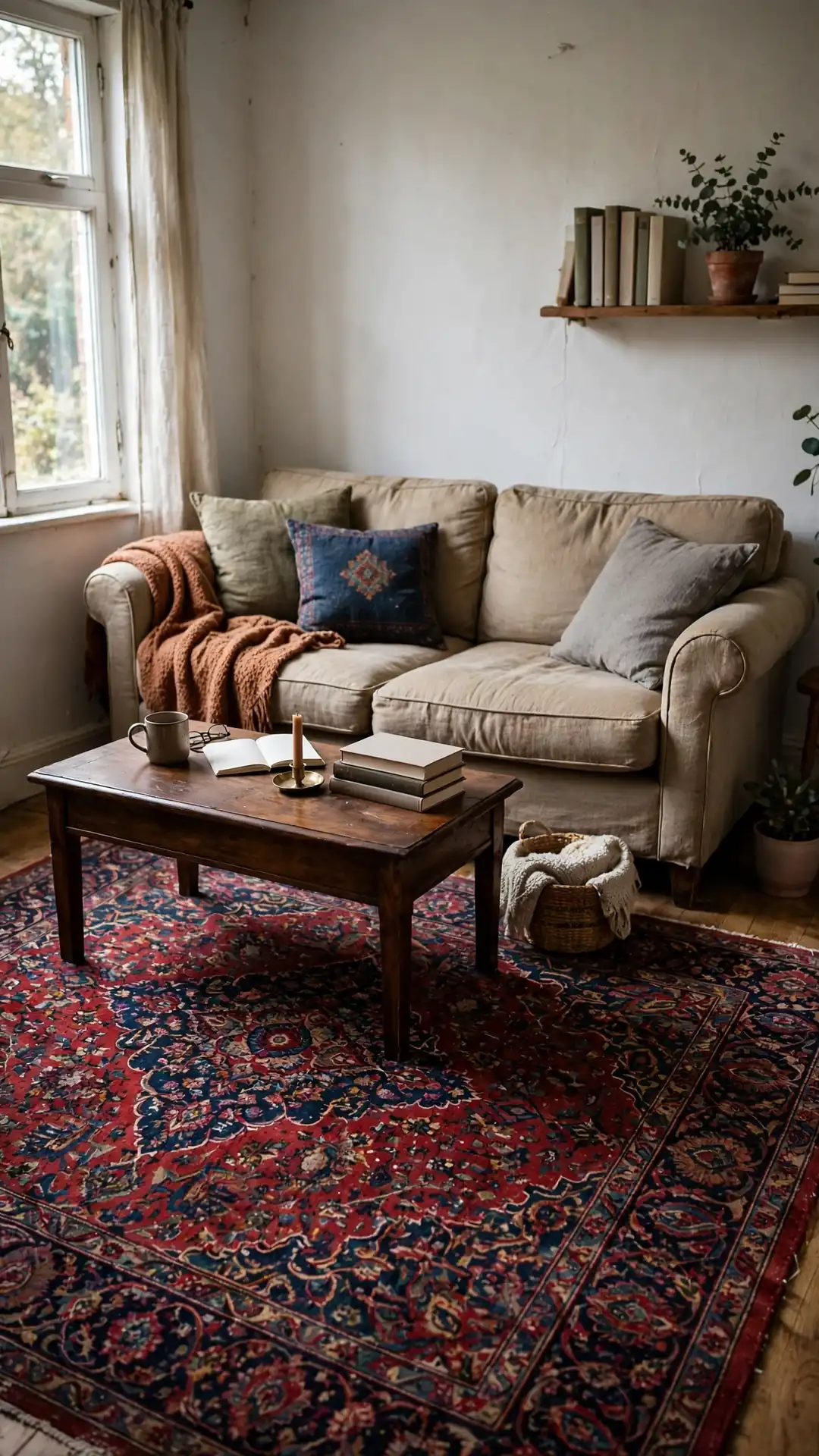
A busy traditional motif earns its keep in a hard-working room. Dense florals and medallions scatter the eye, so wear never gathers in one spot. It suits classic sofas and wood furniture best.
How to do it:
- Pick a deep base color with several motif shades
- Choose wool or a wool-look weave for long wear
- Keep the rest of the room fairly plain
- Center the main medallion under the coffee table
Best for: Family rooms with kids, pets and daily traffic.
Budget: $80 to $260
Quick tip: Photograph your room at night, since busy prints look stronger under lamps.
14. Add a Subtle Checkerboard in Two Neutrals
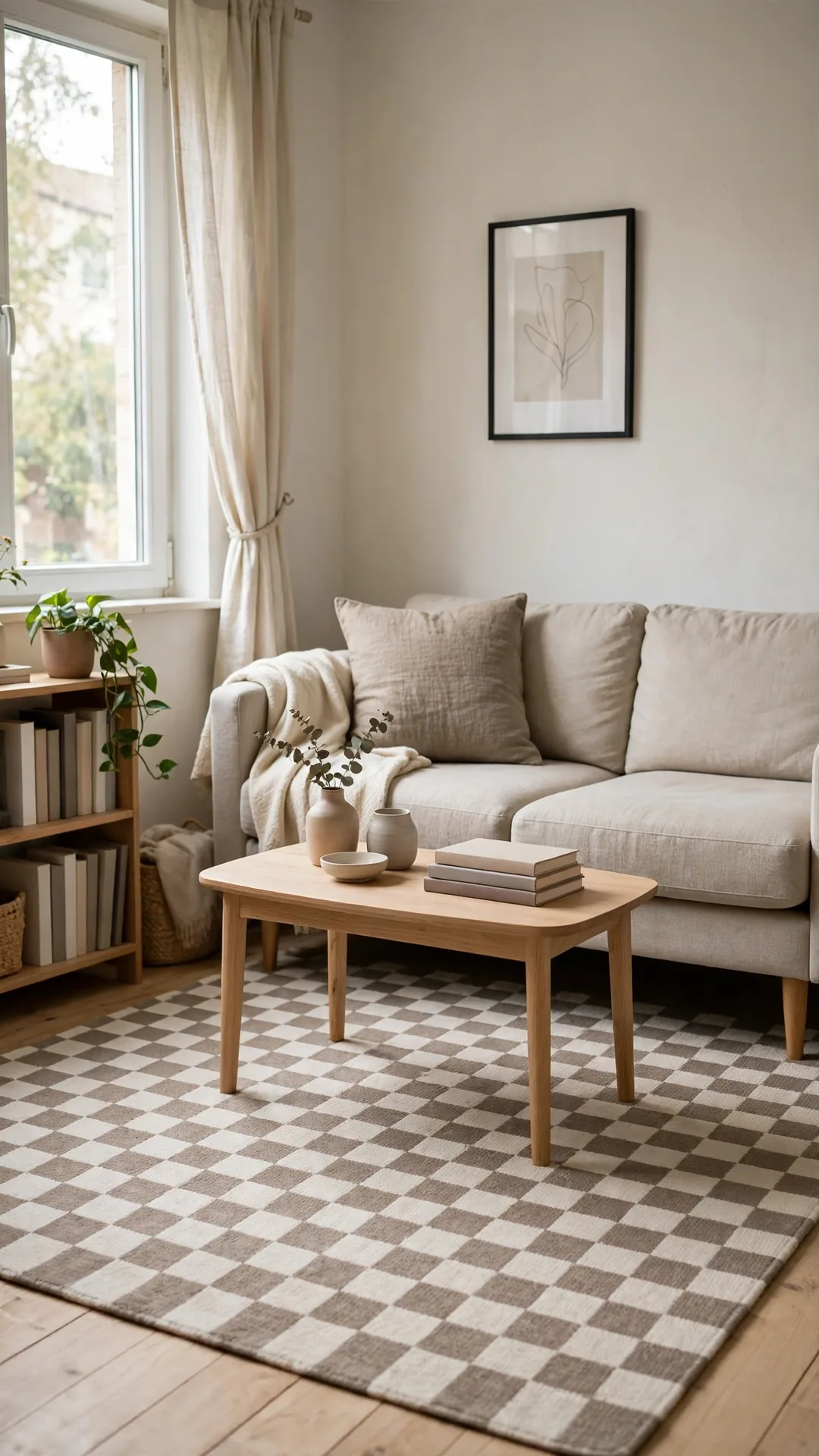
Graphic small living room rug ideas can still feel calm in two neutrals. Cream and taupe checks add rhythm without a single bright color. The tidy grid suits modern sofas and simple wood pieces.
How to do it:
- Keep squares between 4 and 8 inches wide
- Choose two tones close in depth for softness
- Square the grid to the sofa for a tidy look
- Pair with plain cushions in one of the two tones
Best for: Modern rooms that feel too plain.
Budget: $55 to $170
Quick tip: Checks show crooked placement fast, so set the pad down first and align to it.
15. Try a Tone-on-Tone Moroccan Trellis
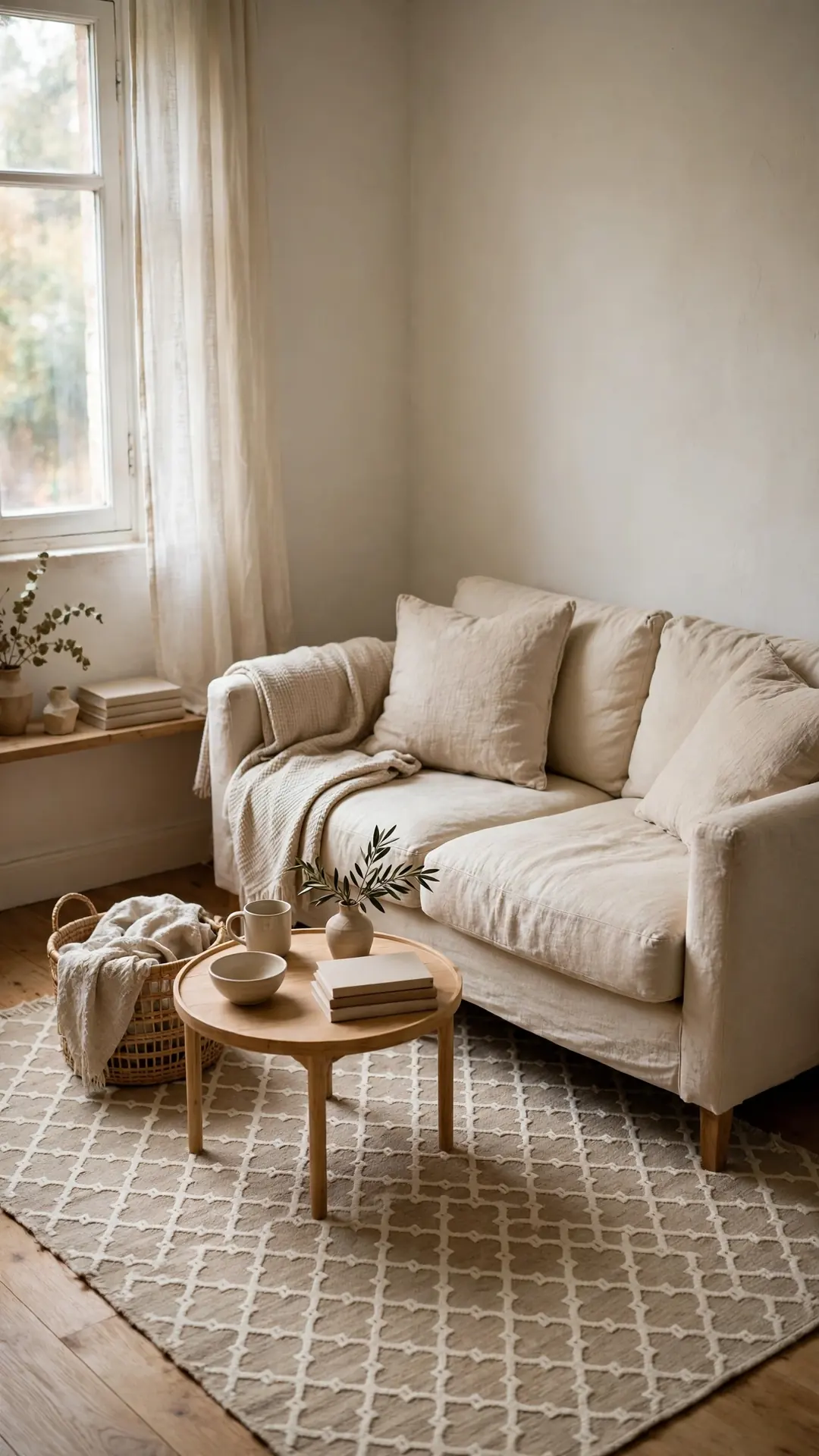
A trellis pattern in one color family reads as texture first, pattern second. The cream lines on a beige ground suit almost any sofa shade. It gives plain rooms a crafted, traveled feel.
How to do it:
- Pick line work only slightly darker than the ground
- Choose a hand-knotted look with soft irregular lines
- Keep the pile medium so the pattern stays visible
- Repeat the cream tone in a throw blanket
Best for: Beige rooms that need pattern without color.
Budget: $70 to $230
Quick tip: Slightly uneven lines look handmade and hide small placement errors.
16. Pick a Speckled Rug to Camouflage Crumbs
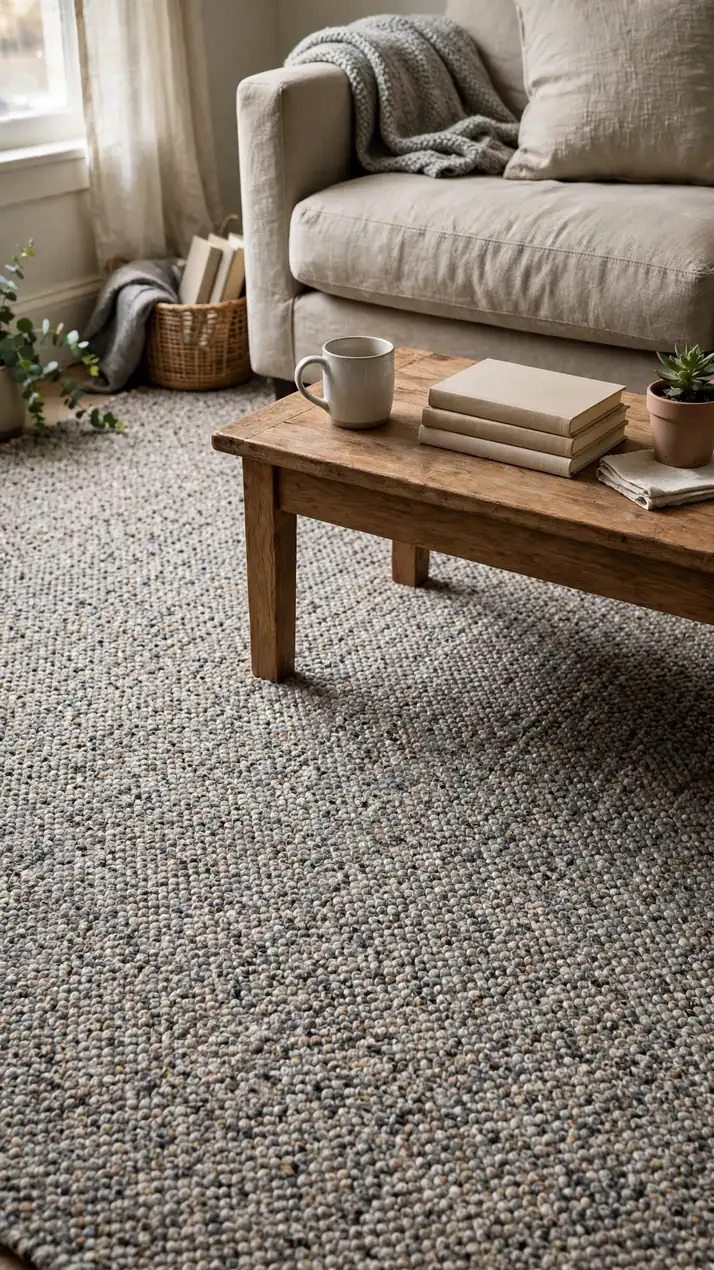
A speckled weave mixes three or four fiber tones in every inch. Crumbs, lint and pet hair vanish into the mix between cleanings. It is the hardest-working look a busy floor can wear.
How to do it:
- Choose speckles that match your floor and pet hair tones
- Pick a tight low pile so crumbs sit on top for vacuuming
- Avoid very dark speckles on pale floors, or the reverse
- Test a sample under your main light source
Best for: Homes with pets or toddlers and light floors.
Budget: $45 to $140
Quick tip: Bring home a sample and drop real crumbs on it before you commit.
17. Frame the Seating with a Bordered Rug
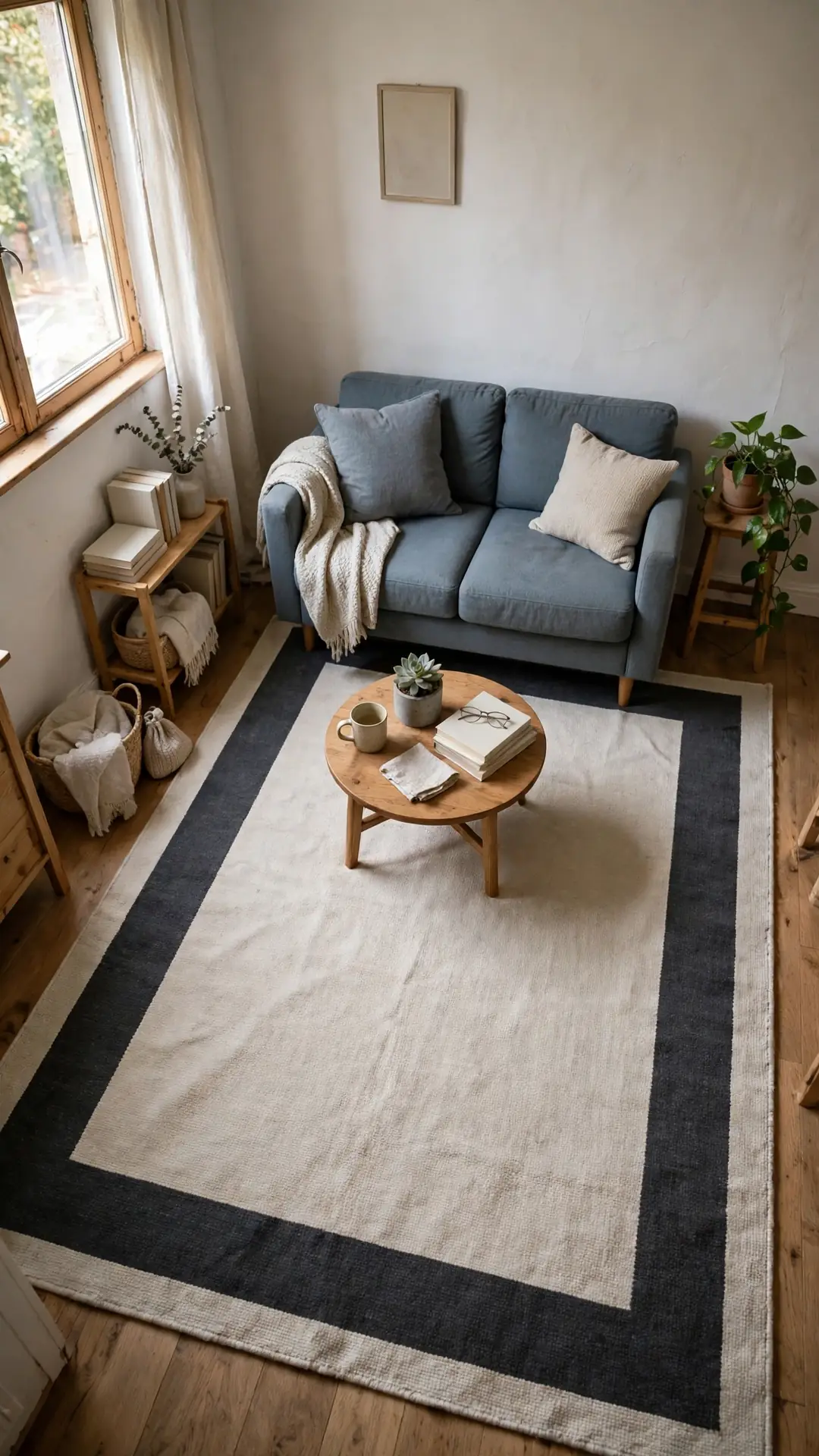
Classic small living room rug ideas use a border to frame the seating. A strong border turns the rug into a picture frame for the furniture. The Houzz guide to area rug rules and how to break them shows why that frame pulls a group together.
How to do it:
- Choose a border in the darkest tone of the room
- Keep the center plain so furniture stays the focus
- Leave the border fully visible around the coffee table
- Match border width to the scale of the room
Best for: Open-plan corners that need a defined zone.
Budget: $75 to $240
Quick tip: Tape the border outline on the floor first to check the frame looks even.
18. Lay a Herringbone Weave for Quiet Movement
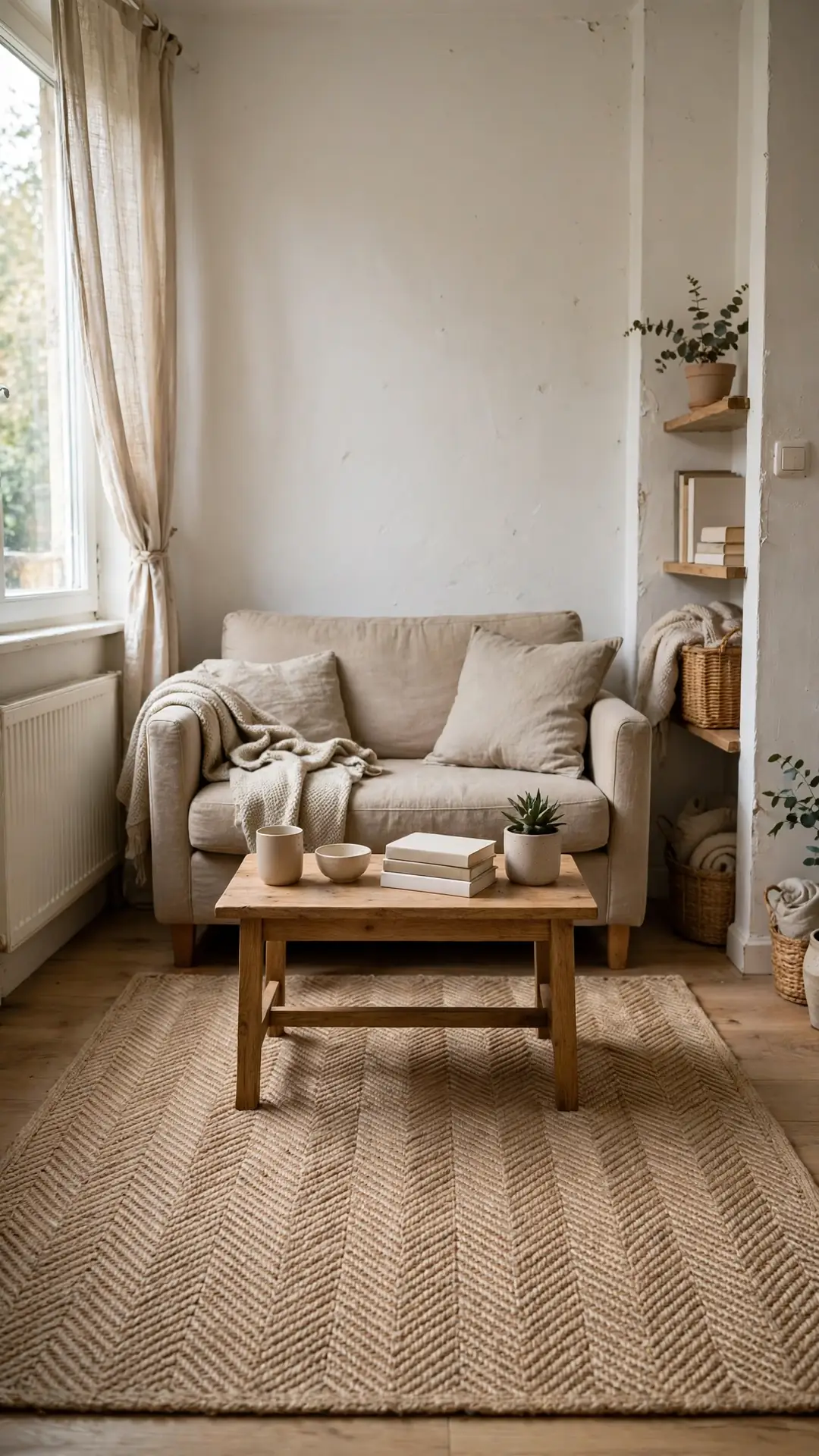
A herringbone weave points the eye gently across the floor. The zigzag stays subtle in natural jute, wool or cotton tones. It adds movement where bold pattern would overwhelm.
How to do it:
- Choose natural tones like flax, oat or soft gray
- Run the points toward the main window
- Pair with smooth fabrics so the weave stands out
- Pick a flat or low weave for chairs that slide
Best for: Calm rooms that feel static and flat.
Budget: $60 to $200
Quick tip: Herringbone hides the joins when two rugs sit side by side.
19. Start with a Flatweave Jute Base Rug
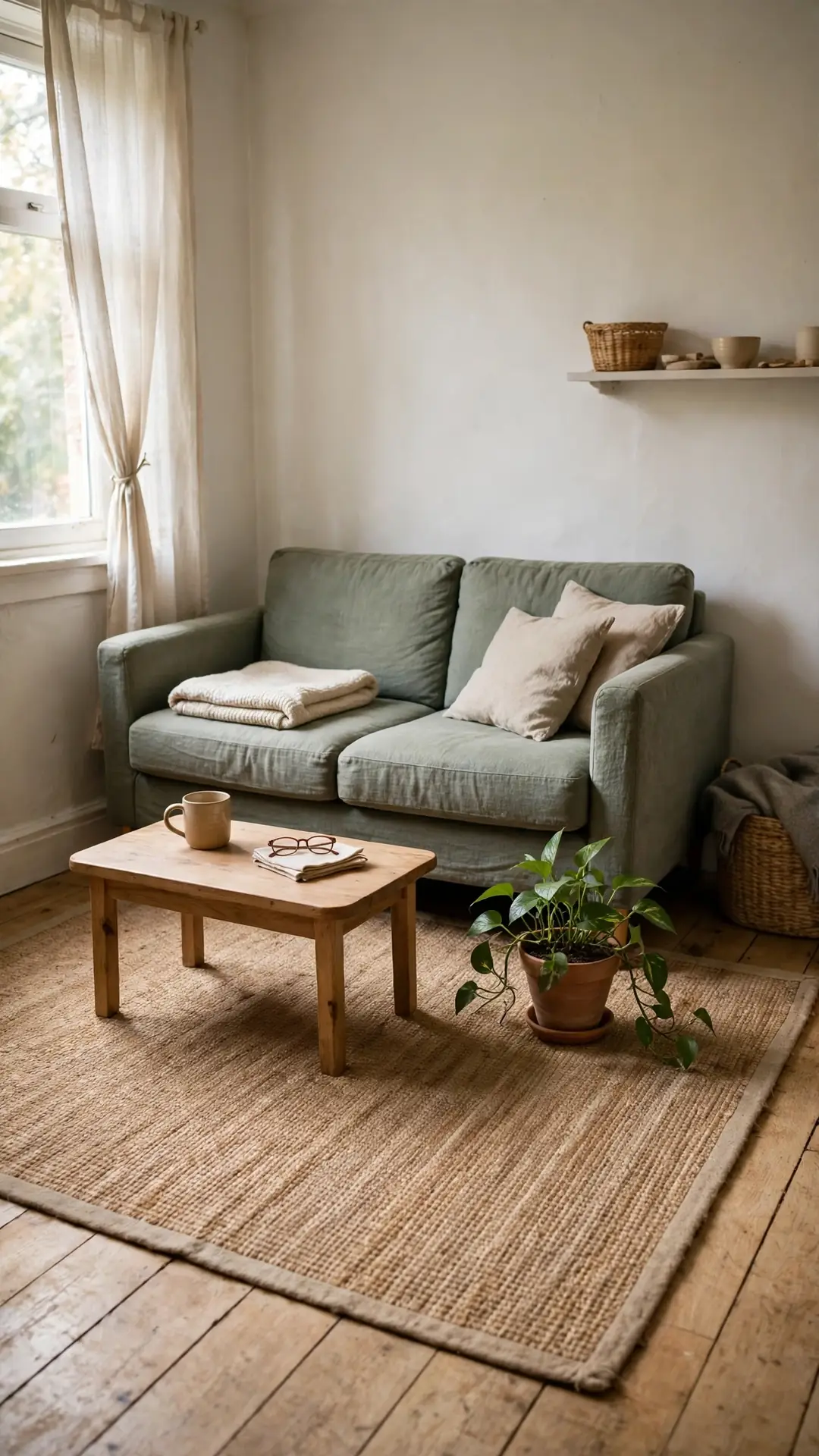
A flatweave jute rug gives a small room a warm, natural ground. Its nubby texture suits wood floors and hides dust between sweeps. On its own it reads calm, coastal and clean.
How to do it:
- Pick a tight weave so chair legs glide over it
- Choose a natural tan close to your floor tone, or one shade deeper
- Add a pad beneath, since jute can slip on wood
- Keep it away from damp spots, which stain natural fiber
Best for: A first rug that must match everything.
Budget: $50 to $170
Quick tip: Jute softens with use, so give a new rug two weeks before judging the feel.
20. Layer a Soft Rug Over a Jute Base
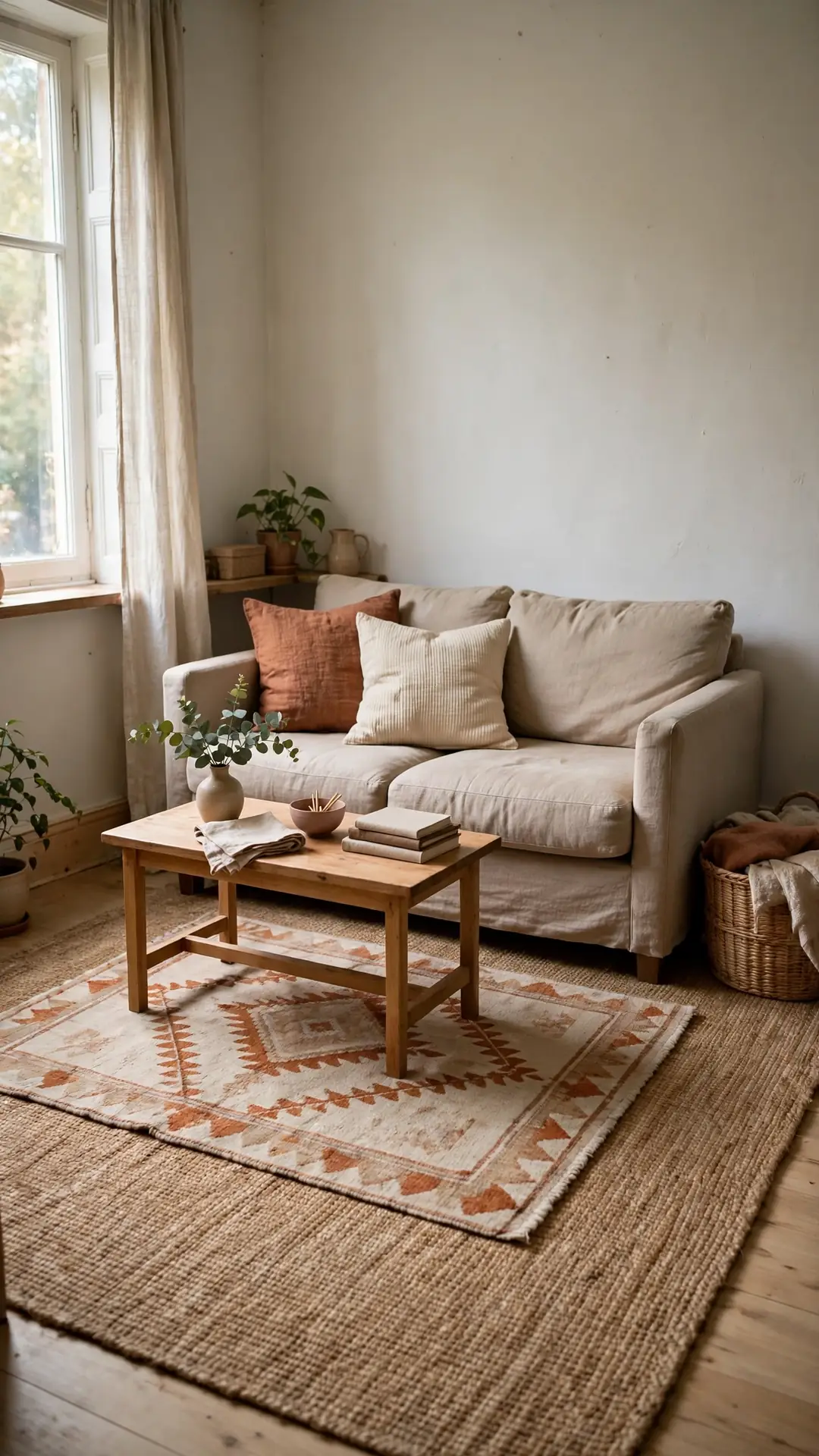
Layered small living room rug ideas start with a flat jute base. A smaller soft rug on top brings color and comfort where you sit. The jute edge frames it and makes the pair look planned.
How to do it:
- Let the jute base extend past the top rug on all sides
- Center the top rug under the coffee table
- Keep the top rug low-pile so edges stay flat
- Choose top colors that echo the sofa or art
Best for: Renters who own a rug that feels too small alone.
Budget: $40 to $130 for the top rug
Quick tip: A thin top rug lies flatter, so skip thick shag for the upper layer.
21. Choose a Wool Rug for Warmth that Lasts
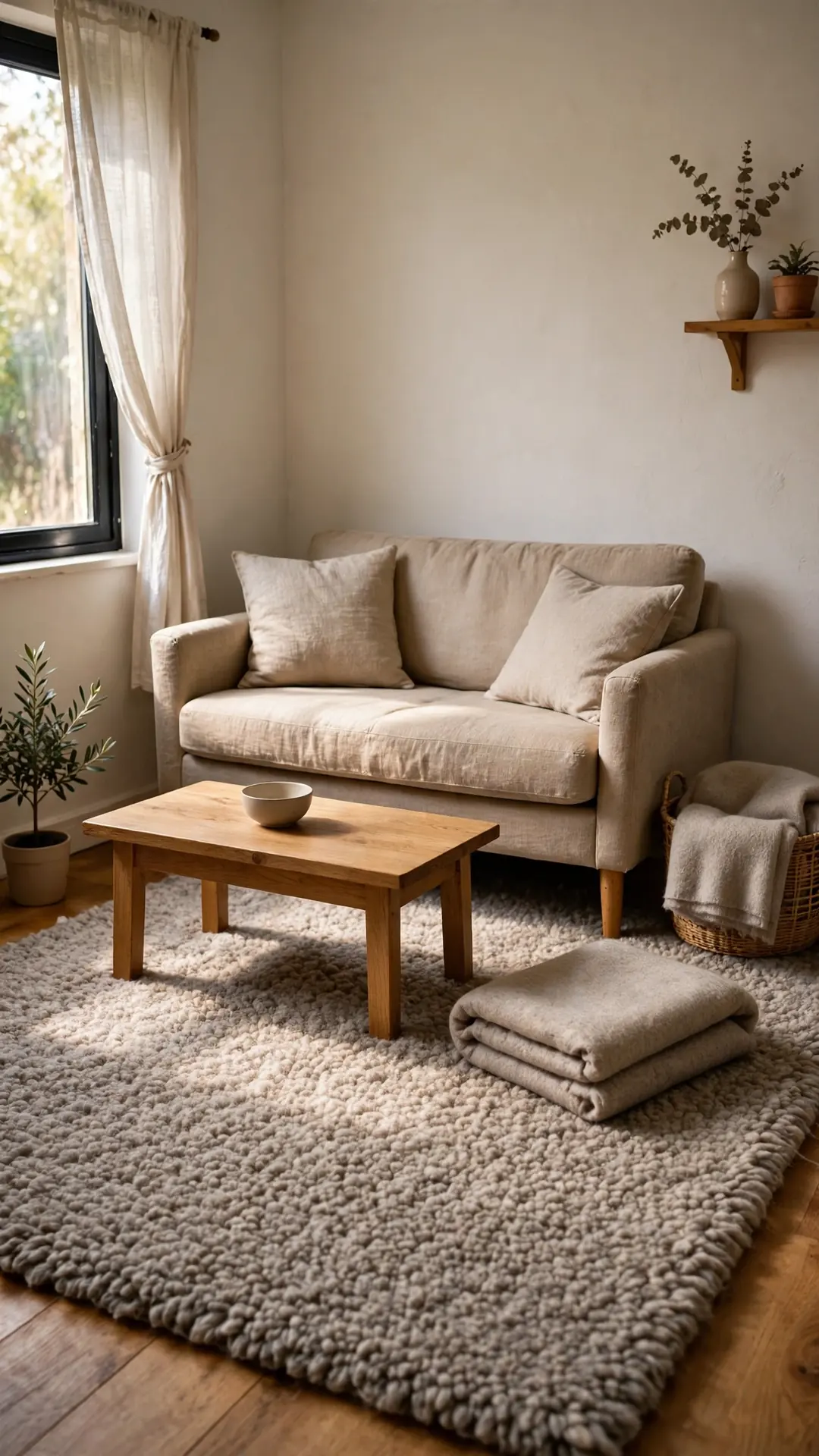
Wool feels warm in winter and cool in summer, a rare double act. It sheds a little at first, then settles into years of wear. The natural fiber also resists stains better than most synthetics.
How to do it:
- Pick a dense, short pile for living room traffic
- Choose a heathered tone to hide the early shedding
- Budget more per square foot than for synthetic rugs
- Keep it out of constant direct sun to protect the color
Best for: Owners settling in for several years.
Budget: $150 to $450
Quick tip: Vacuum a new wool rug gently twice a week for the first month.
22. Add a Shaggy Accent Rug by the Sofa
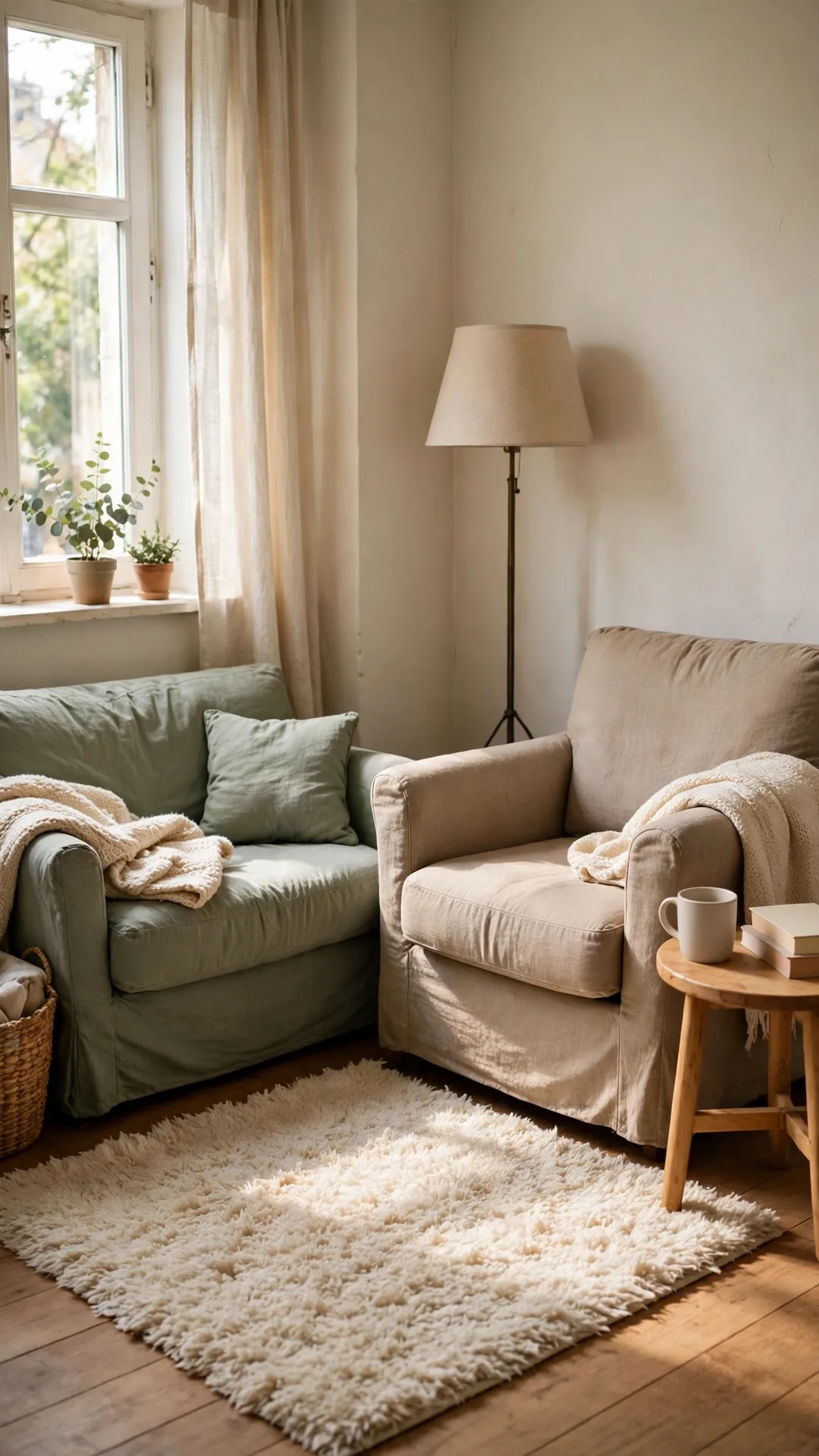
A small shaggy rug beside the sofa gives bare feet one soft landing spot. The deep pile adds luxury without covering the whole floor. It also marks the lounging zone in an open-plan room.
How to do it:
- Place it where feet land when you sit down
- Keep it clear of door swings and chair casters
- Choose cream or pale gray for a light, airy feel
- Shake it outside weekly, since deep pile traps dust
Best for: Movie corners and reading spots.
Budget: $35 to $110
Quick tip: Shag mats down with use, so fluff it with a brush monthly.
23. Pick a Cotton Flatweave You Can Wash
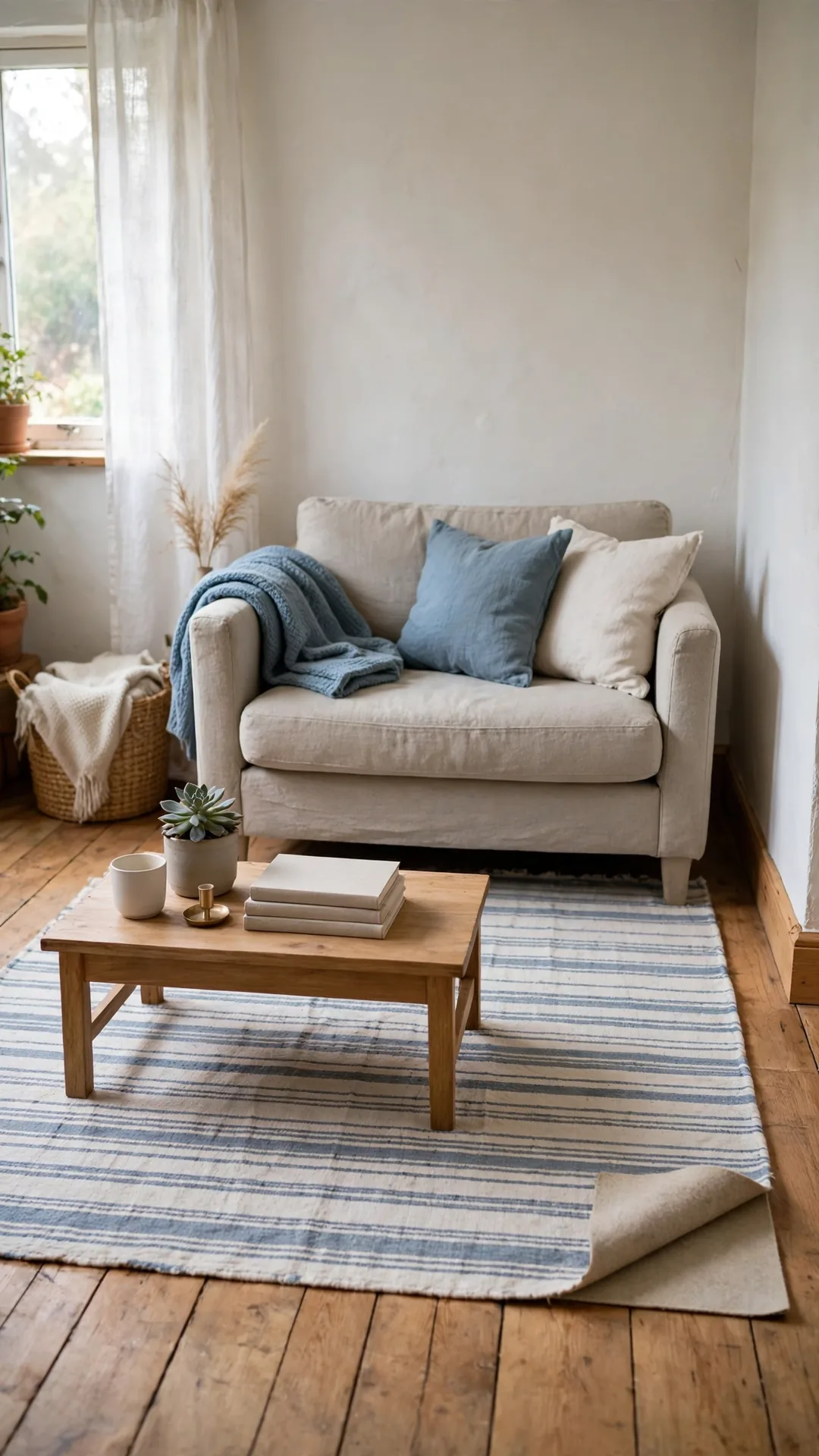
Practical small living room rug ideas favor cotton you can wash at home. A cotton flatweave folds into a home washing machine or shakes clean outside. It suits rentals where professional cleaning makes little sense.
How to do it:
- Check the care label for machine washing before buying
- Choose stripes or checks, which hide creases after washing
- Use a grippy pad, since cotton slides on smooth floors
- Buy two and rotate them while one dries
Best for: Renters and busy households on a budget.
Budget: $30 to $90
Quick tip: Wash on cold and dry flat so the weave keeps its shape.
24. Try a Braided Rug for a Handmade Feel
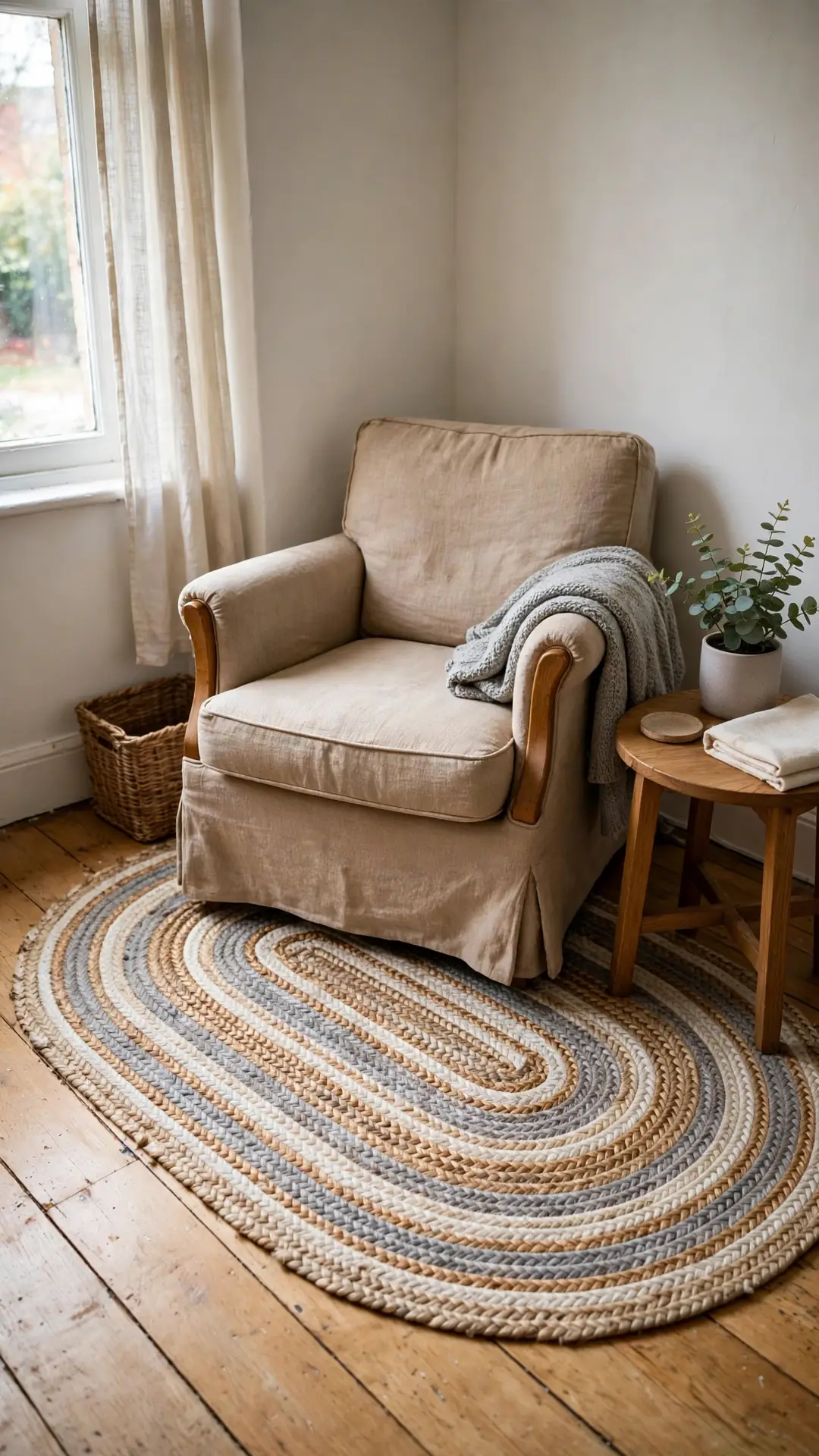
Braided rugs bring a handmade, homey feel to a plain floor. Wool, cotton or jute braids coil into ovals, rounds or soft rectangles. Each coil adds texture that flat machine weaves cannot copy.
How to do it:
- Pick an oval braid to soften a boxy room
- Choose mixed neutrals for the most flexible base
- Inspect the stitching at the joins before buying
- Add a pad, since braids can creep on wood floors
Best for: Cottage and farmhouse style rooms.
Budget: $55 to $180
Quick tip: Flip a braided rug every few months so both sides wear evenly.
25. Use a Seagrass Rug Near the Entry Side
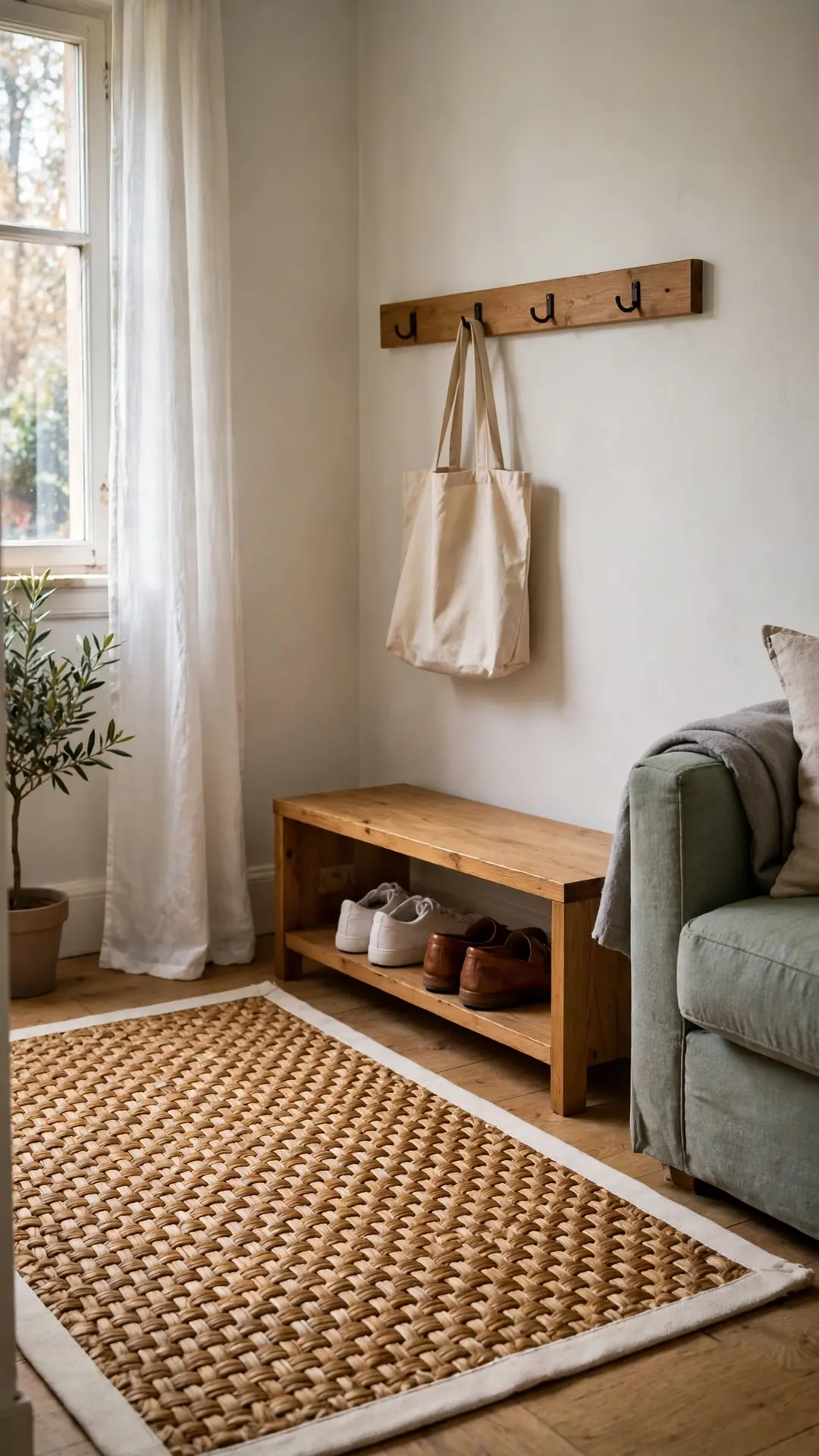
Seagrass shrugs off dirt, which suits the entry side of a living room. Its tight weave and natural sheen read tidy even on busy days. The pale straw tone warms white walls without color.
How to do it:
- Place it where shoes land first inside the room
- Choose a latex-backed style so it stays put
- Keep it away from standing water, which marks the fiber
- Pair with a softer rug in the seating zone
Best for: Living rooms that open straight off the entry.
Budget: $60 to $190
Quick tip: Seagrass feels firm underfoot, so keep it out of the bare-feet lounging zone.
26. Keep the Pile Low Under the Coffee Table
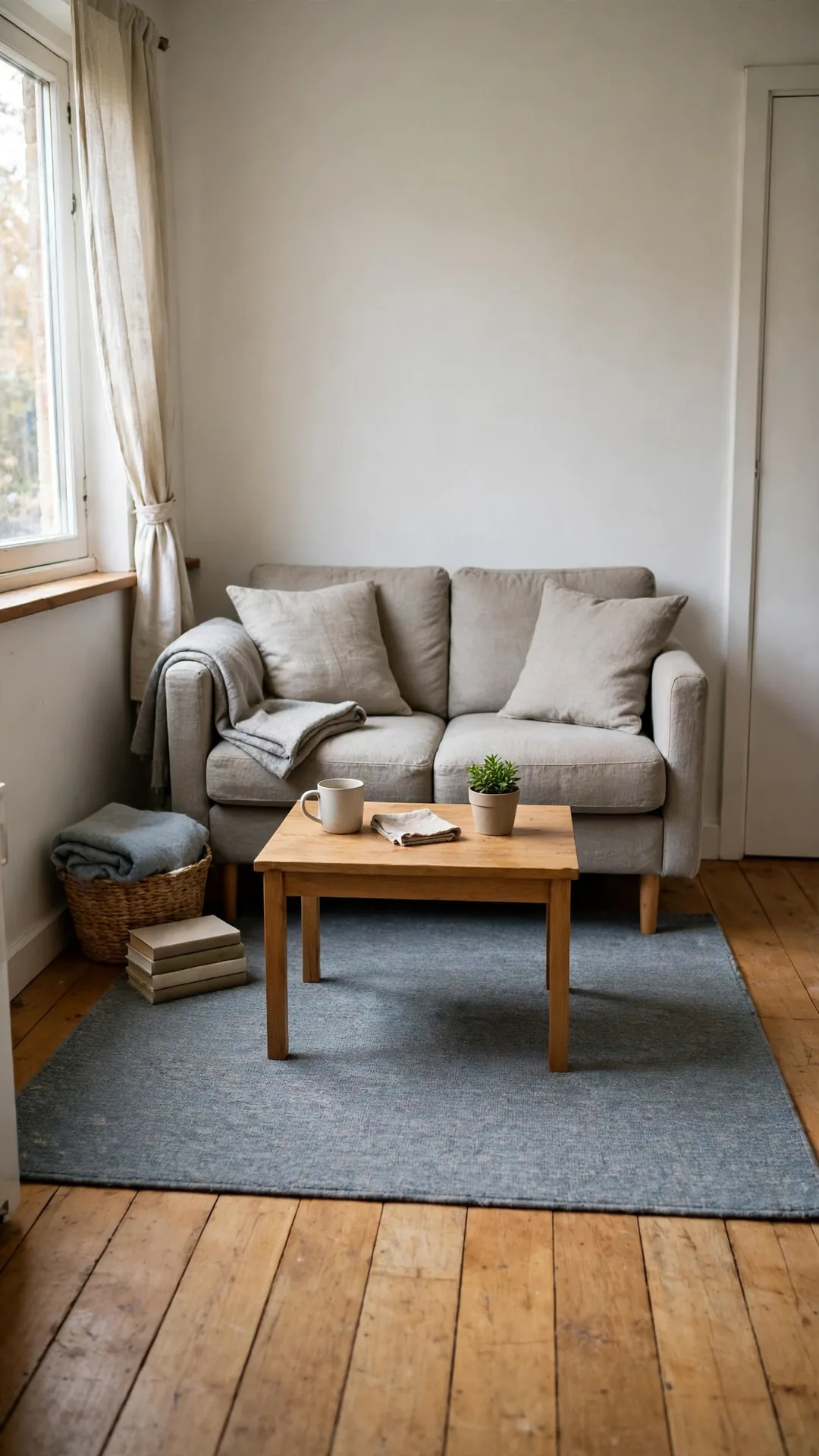
Sensible small living room rug ideas keep pile low under the coffee table. Low pile lets table legs sit level and makes crumbs easy to lift. It also keeps the room looking neat, since nothing fluffs or mats.
How to do it:
- Choose pile under half an inch for this spot
- Pick a dense weave that resists dents from table legs
- Add felt pads under heavy table legs
- Vacuum in two directions to lift the pile evenly
Best for: Rooms where the coffee table hosts meals and games.
Budget: $50 to $160
Quick tip: Low pile shows off patterned weaves better than deep pile does.
27. Mix Two Textures in One Color Family
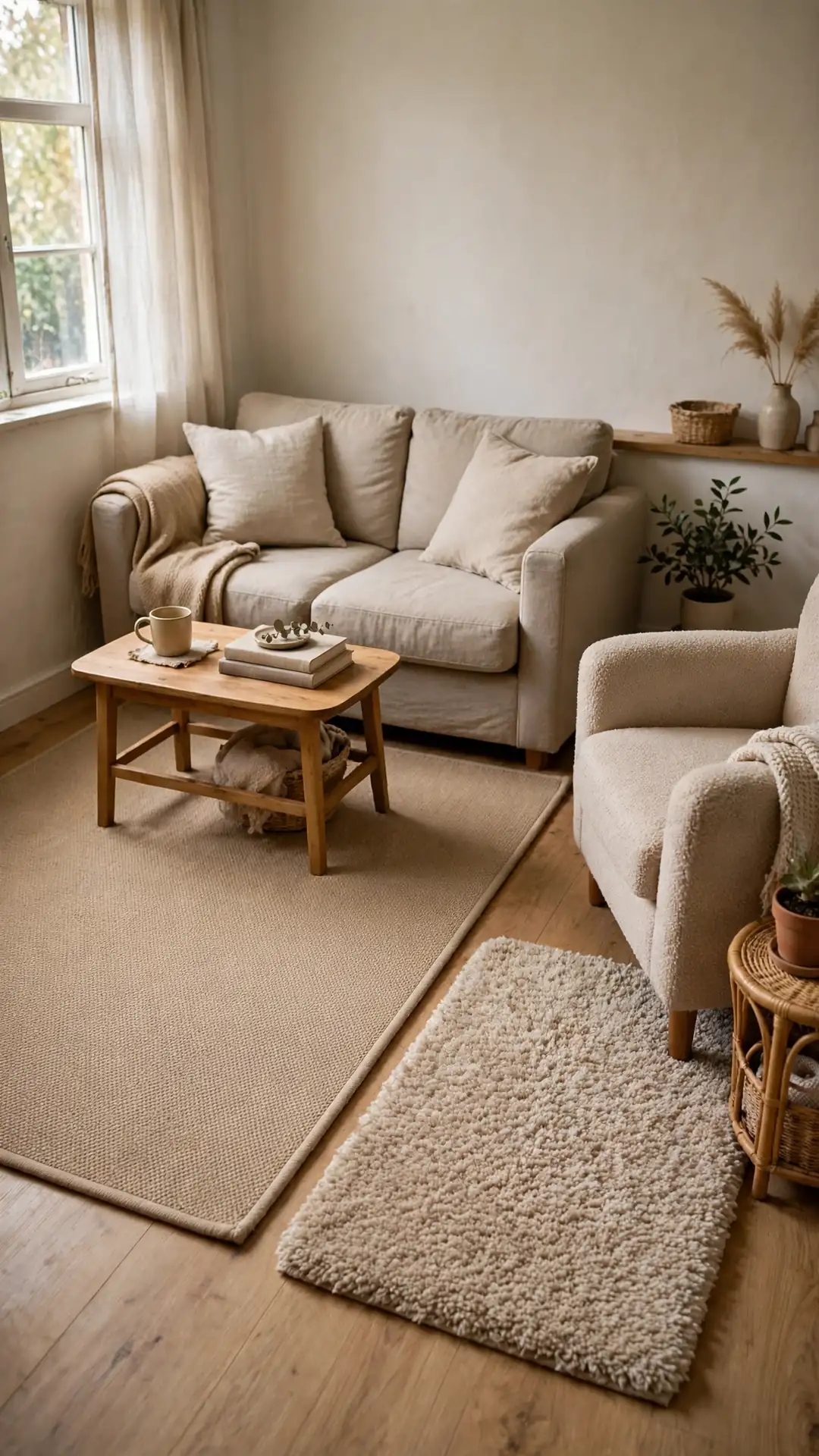
Two textures in one color family give a room depth without a color fight. A flatweave near the sofa and a plush patch by the chair share one tone. The eye reads them as one calm scheme.
How to do it:
- Keep both rugs within one shade family, like warm beige
- Put the plush texture where bare feet land
- Repeat each texture once in a cushion or throw
- Match undertones, since warm and cool beiges clash
Best for: Neutral rooms that feel flat and one-note.
Budget: $80 to $220 for the pair
Quick tip: Photograph both rugs together in daylight before mixing them at home.
28. Soften Square Rooms with a Round Rug
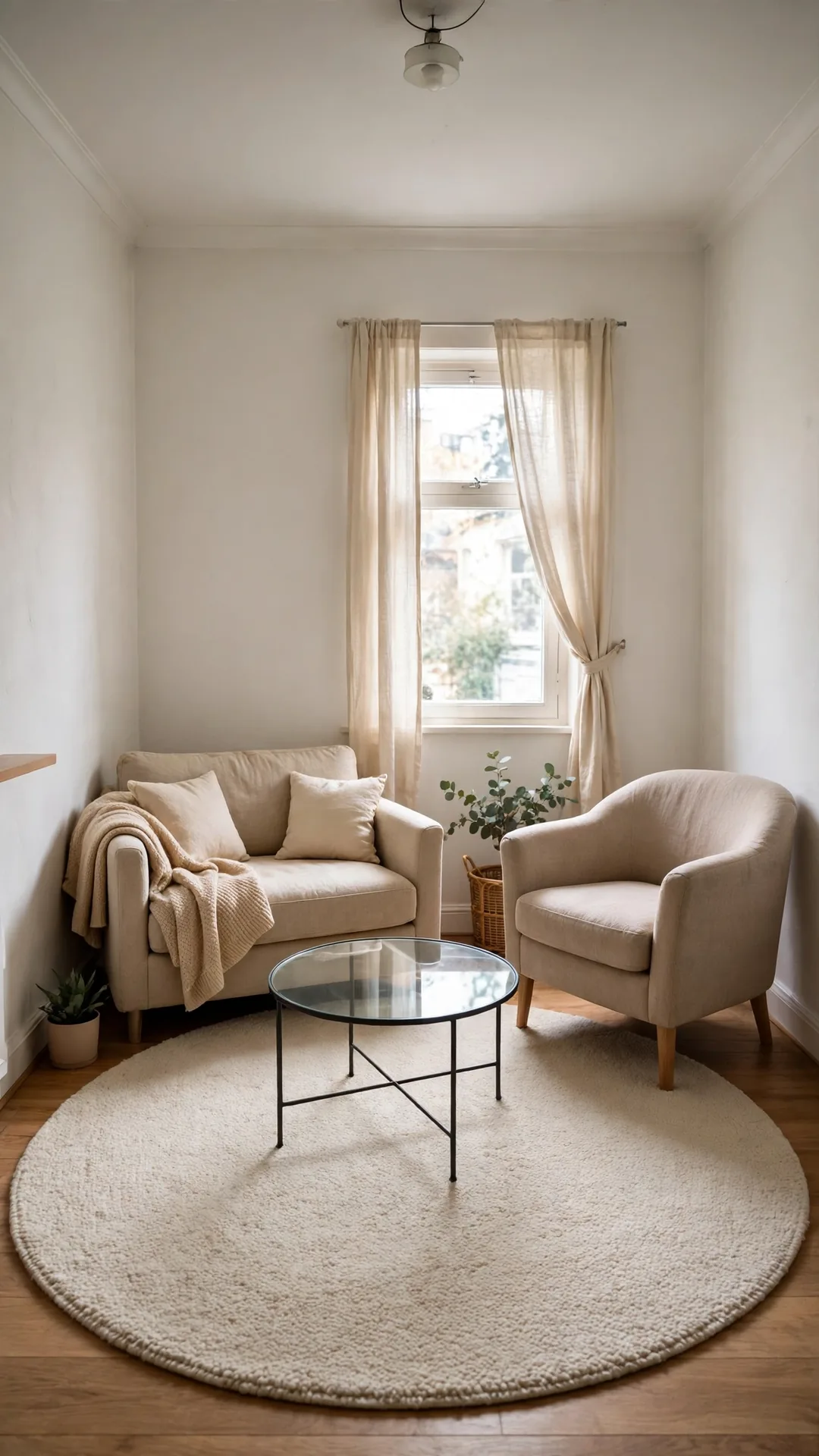
A round rug takes the hard corners out of a boxy room. Its curve gives the eye a rest from straight walls and square furniture. It works best under a round or glass coffee table.
How to do it:
- Center the circle under the coffee table
- Let at least two chair fronts touch the edge
- Choose a plain or radial pattern that suits the shape
- Keep walkways clear of the curved edge
Best for: Boxy rooms with lots of straight lines.
Budget: $55 to $180
Quick tip: A round rug over square floor tiles softens the whole grid at once.
29. Angle a Rectangular Rug Under a Corner Sofa
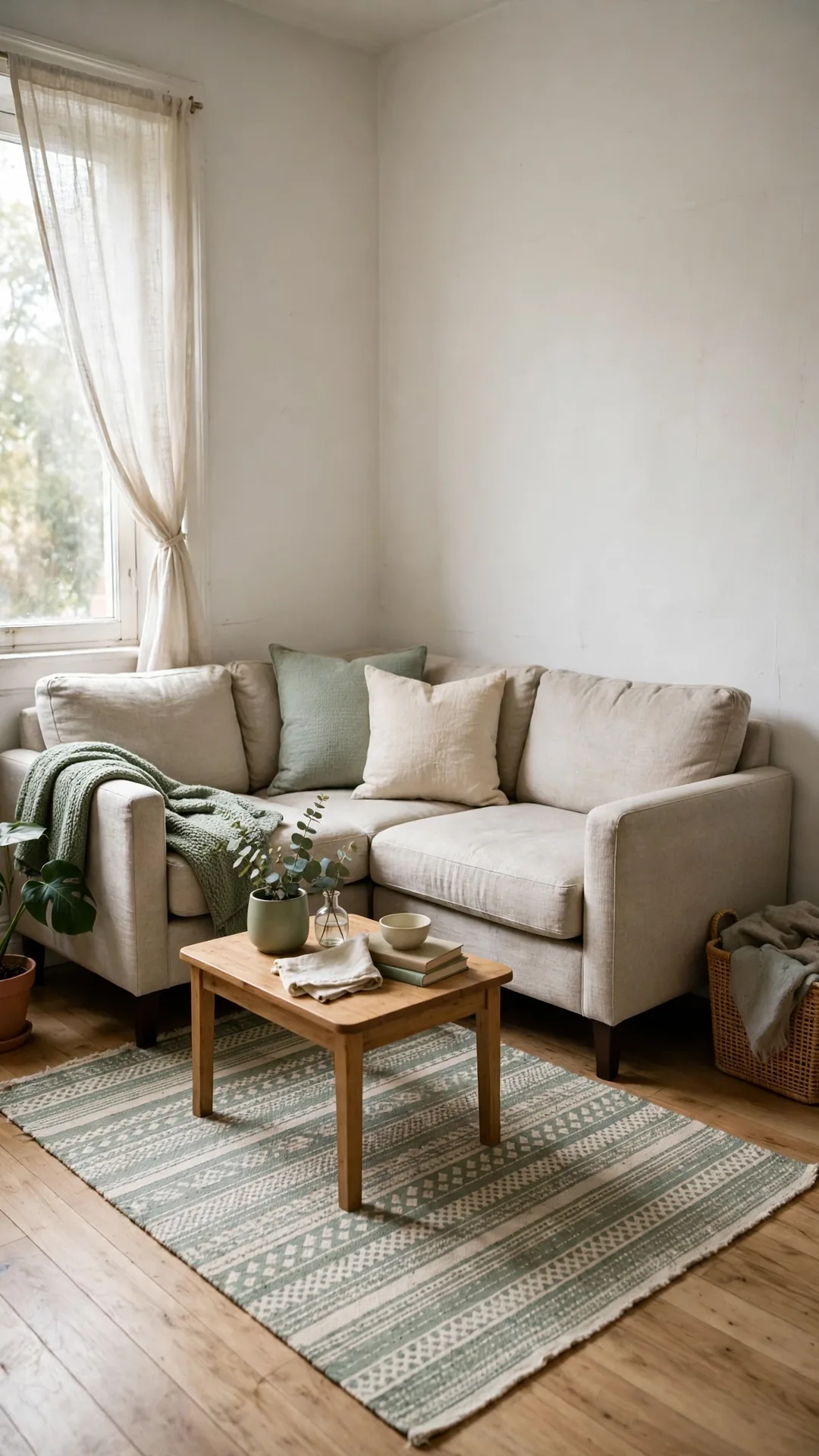
Angled small living room rug ideas soften a strict corner layout. Turning the rug a few degrees breaks the grid and adds energy. It suits corner sofas that lock the room into right angles.
How to do it:
- Rotate the rug about 10 to 15 degrees off the walls
- Keep the coffee table aligned with the rug, not the room
- Let the sofa stay square to the walls for contrast
- Use a pad with strong grip, since angles invite slipping
Best for: Corner-sofa rooms that feel rigid.
Budget: $60 to $190
Quick tip: Photograph the angle from the doorway before you settle the furniture back.
30. Layer a Rug Over Wall-to-Wall Carpet
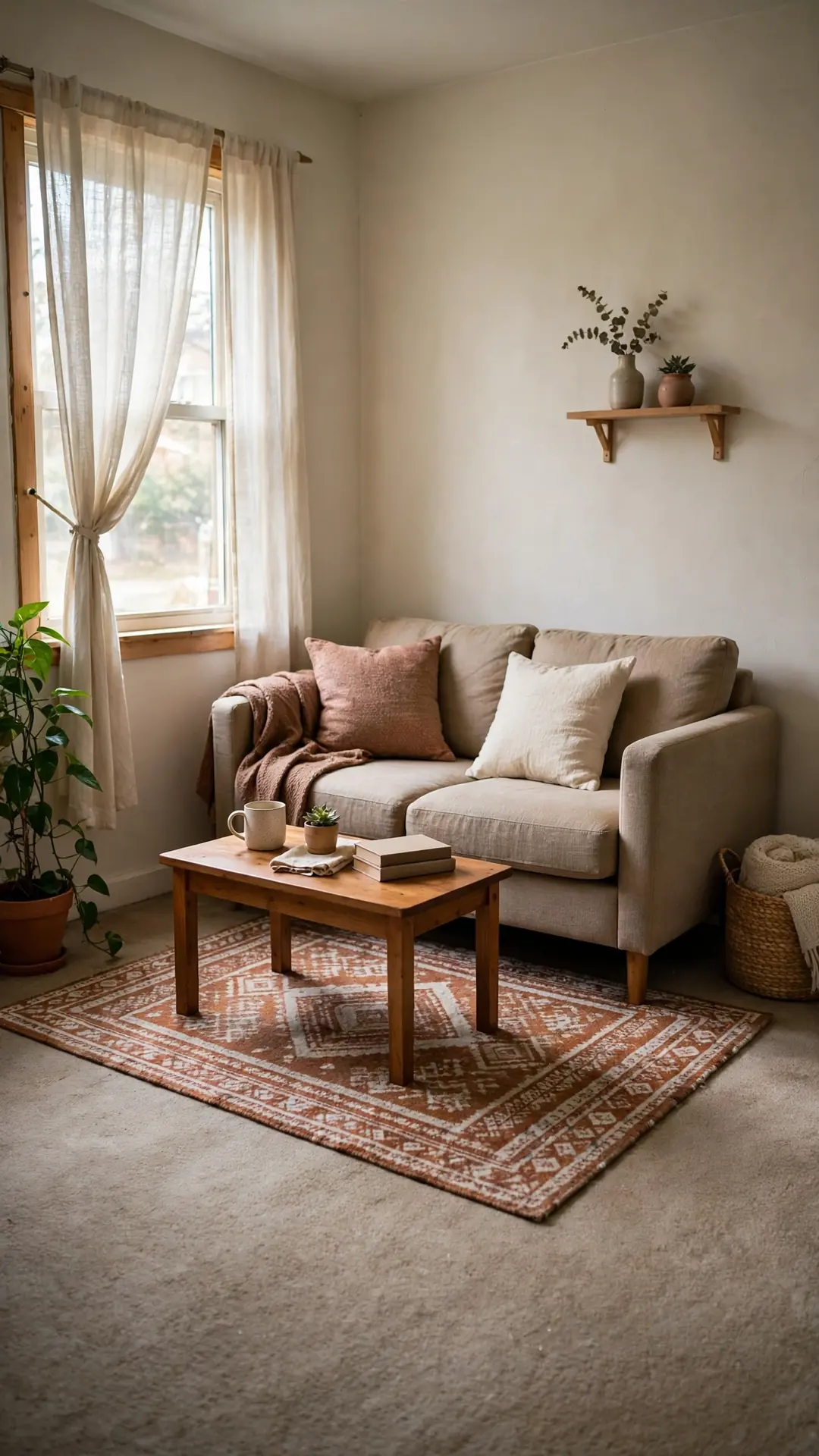
A rug over rental carpet hides stains and sets the seating zone. The top layer adds color and pattern the landlord carpet never had. Choose a stiff rug so the surface stays smooth.
How to do it:
- Pick a low, firm weave that will not ripple over carpet pile
- Use a pad made for rug-on-carpet grip
- Keep the top rug smaller than the seating group outline
- Avoid deep shag, which feels unstable on carpet
Best for: Rentals with tired beige carpet.
Budget: $55 to $170
Quick tip: If edges curl, heavy furniture on two corners settles them flat.
31. Run a Runner Along the Sofa Front
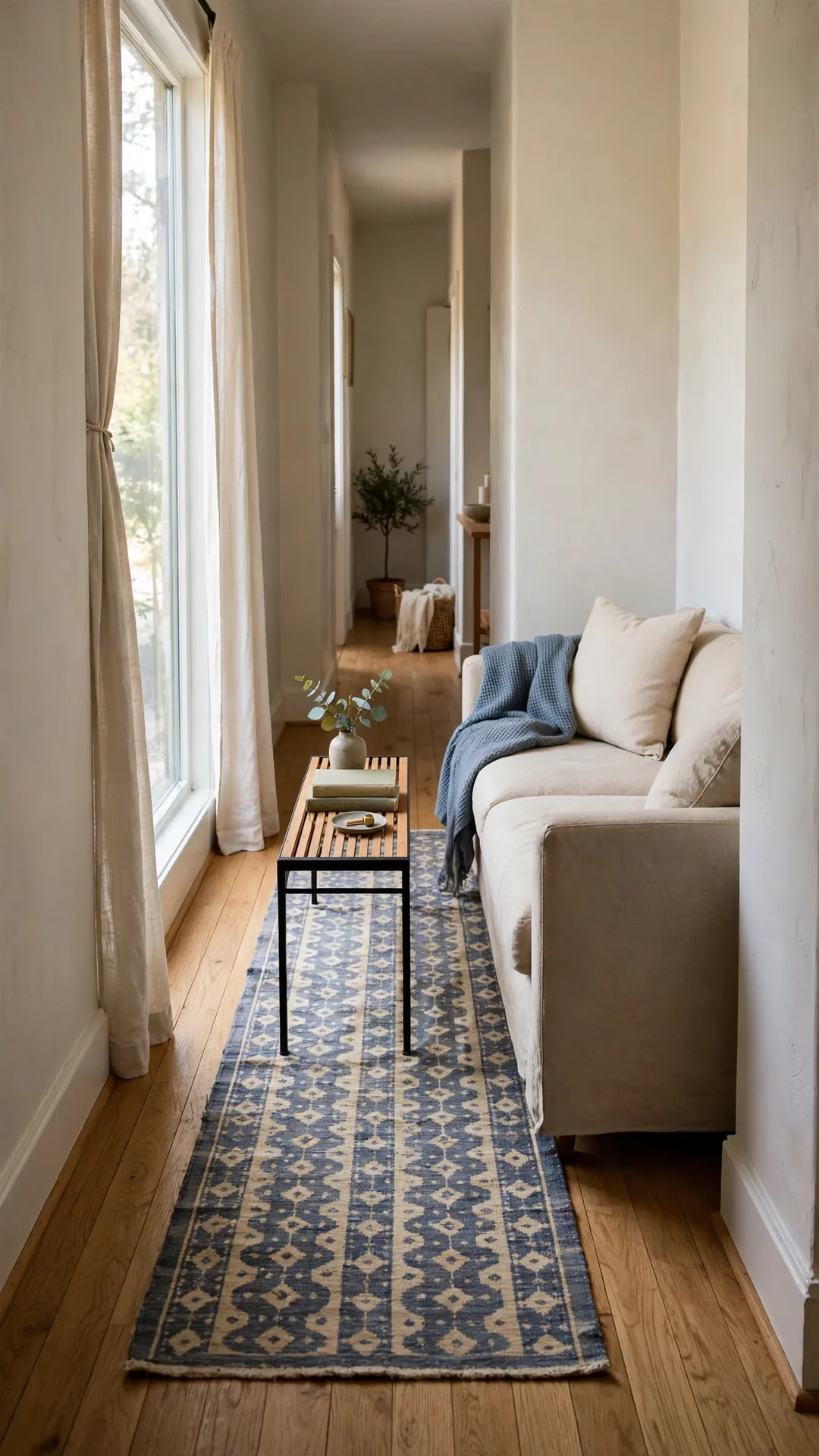
A long runner fills the narrow strip between sofa and coffee table. It warms the walkway and frames the seating from the side. The room gains a finished floor without the cost of a full-size rug.
How to do it:
- Leave a hand-width of floor between runner and sofa legs
- Choose a runner slightly longer than the sofa
- Pick a pattern that hides the heavy foot traffic
- Use end grips or a pad, since runners wander fast
Best for: Long narrow rooms and sofa-against-wall layouts.
Budget: $30 to $95
Quick tip: A runner with a border reads like a hallway, so pick borderless styles here.
32. Overlap Two Small Rugs to Cover More Floor
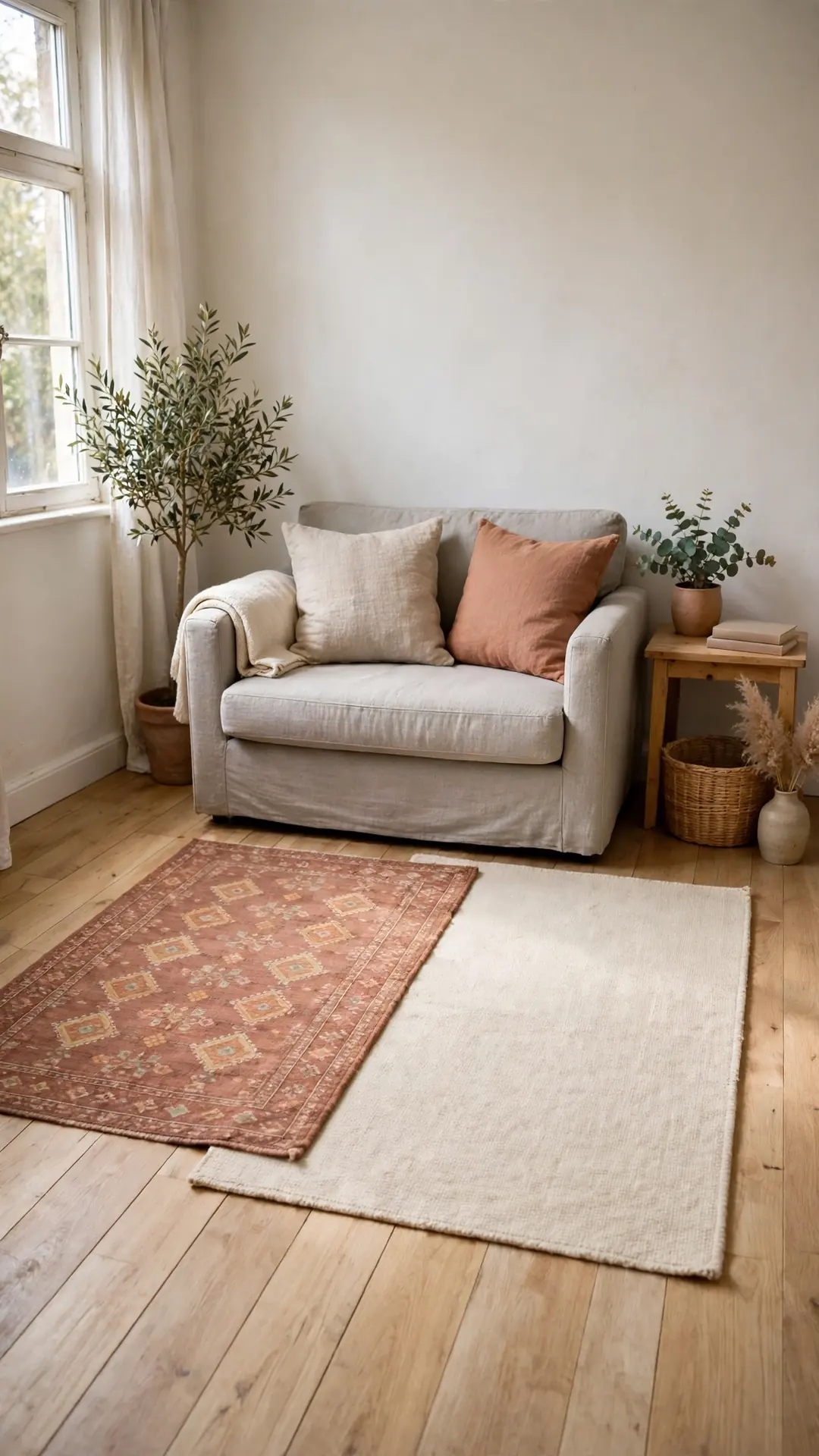
Flexible small living room rug ideas overlap two smaller rugs into one zone. Two budget rugs overlapped at one corner cover more floor than either alone. The overlap hides the size gap and adds a layered, collected look.
How to do it:
- Keep both rugs in one color family for calm
- Overlap by about a foot at the shared corner
- Put the thinner rug on top so the step stays small
- Anchor the overlap under a coffee table leg
Best for: Covering a wide floor on a tight budget.
Budget: $40 to $120 for the pair
Quick tip: Mismatched patterns clash, so pair one patterned rug with one plain.
33. Try a Cowhide-Style Rug in an Awkward Corner
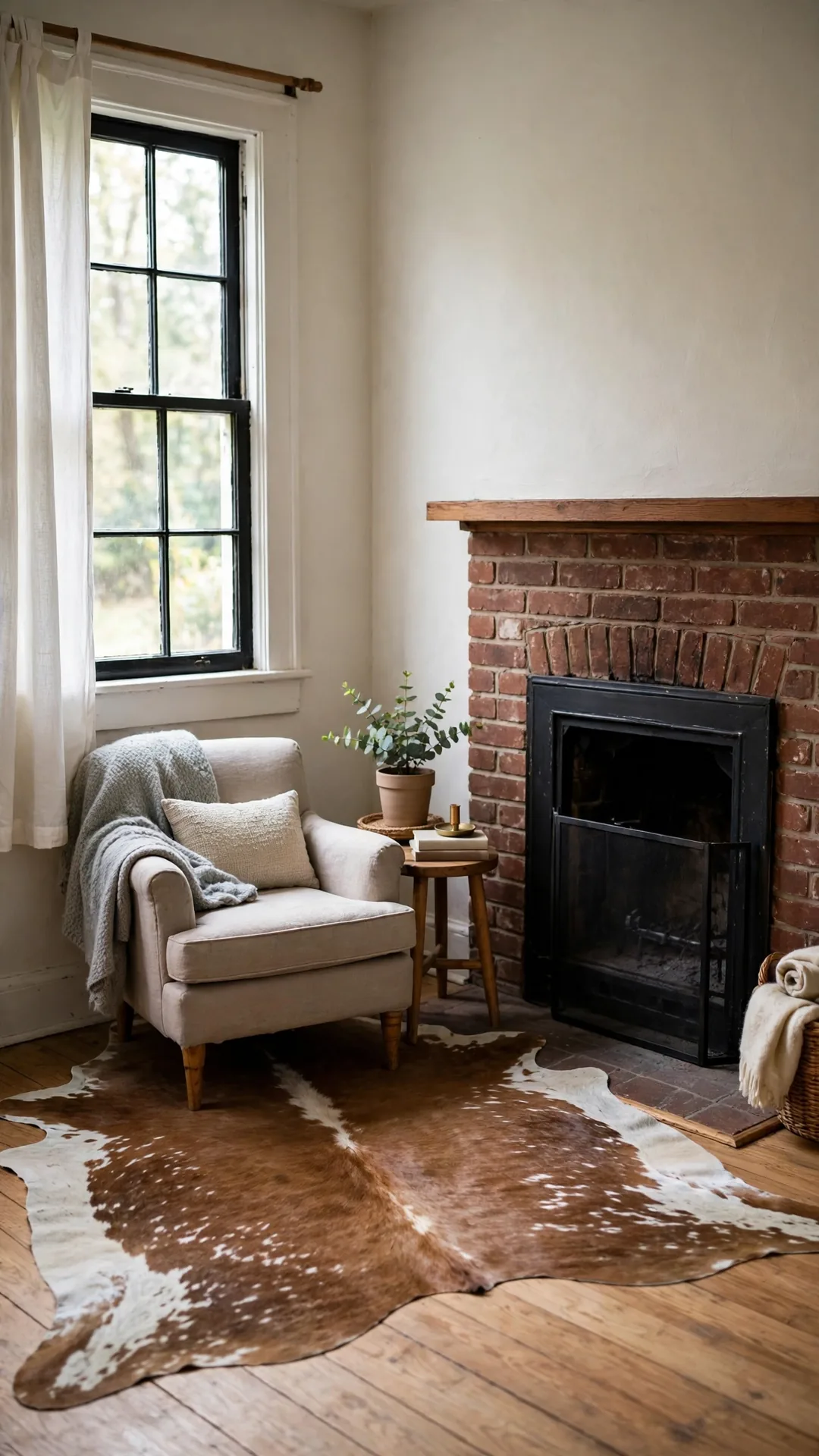
An irregular hide shape fills corners that rectangles leave bare. The soft outline suits the odd angles beside a fireplace or bay. Corner tricks like this pair well with small space corner ideas for the living room.
How to do it:
- Choose a faux hide if you prefer no animal products
- Tuck the pointed end under the chair or plant stand
- Keep the wide end toward the room center
- Pick mottled tones that hide dust and hair
Best for: Awkward corners beside fireplaces and bays.
Budget: $45 to $140
Quick tip: Hide shapes slide on wood, so a full pad underneath is a must.
34. Place an Oval Rug Under a Round Table
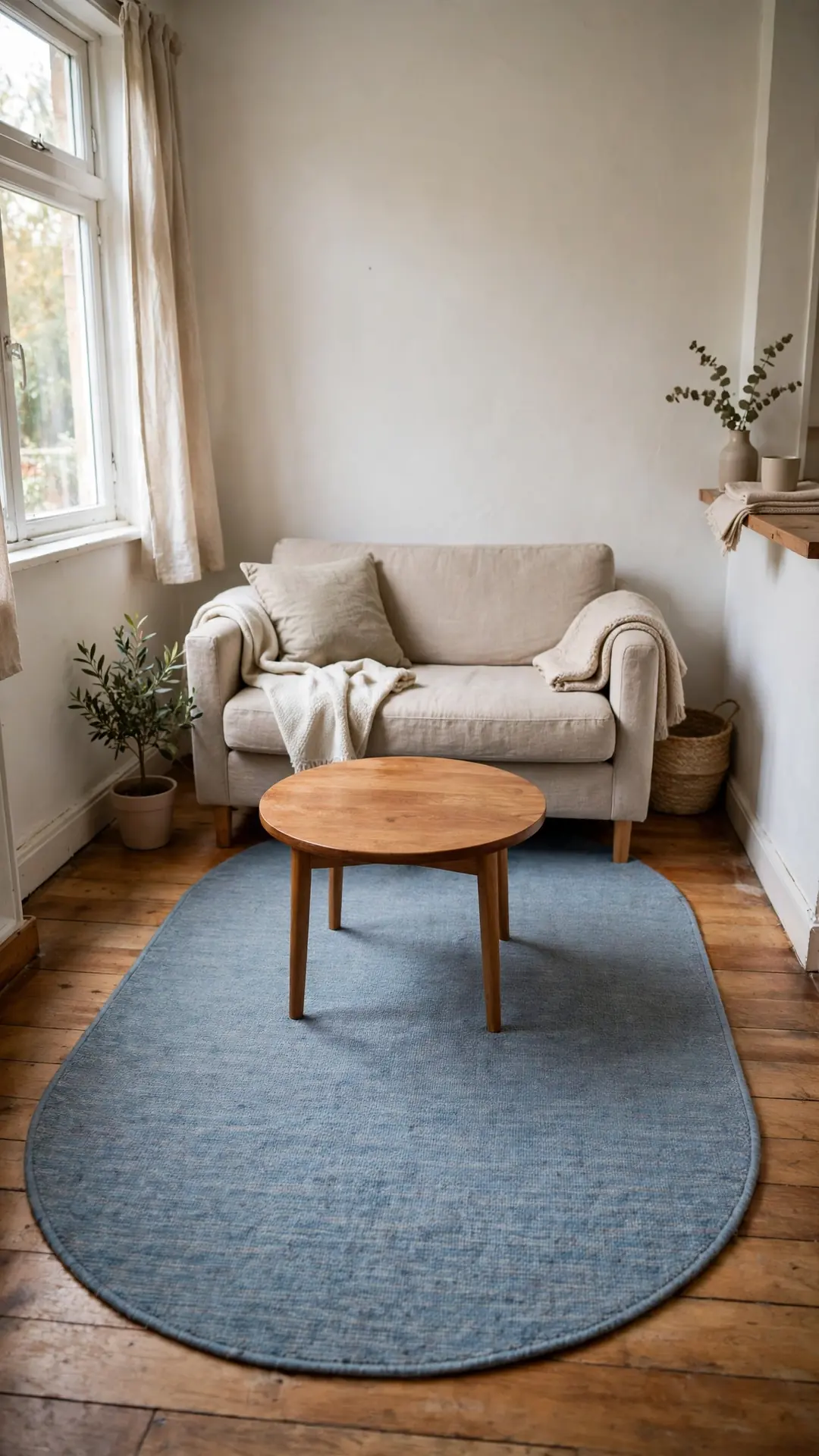
An oval rug echoes a round coffee table and softens its outline. The matched curves make a small seating group feel gentle and planned. It also keeps chair legs off bare floor in every direction.
How to do it:
- Let the oval extend past the table edge on all sides
- Align the long axis with the sofa
- Choose a plain weave so the shape stays the feature
- Keep nearby rectangular rugs out of this zone
Best for: Round-table seating groups.
Budget: $50 to $160
Quick tip: Trace the table outline in tape to check the oval size before ordering.
35. Bridge Two Zones with a Long Runner
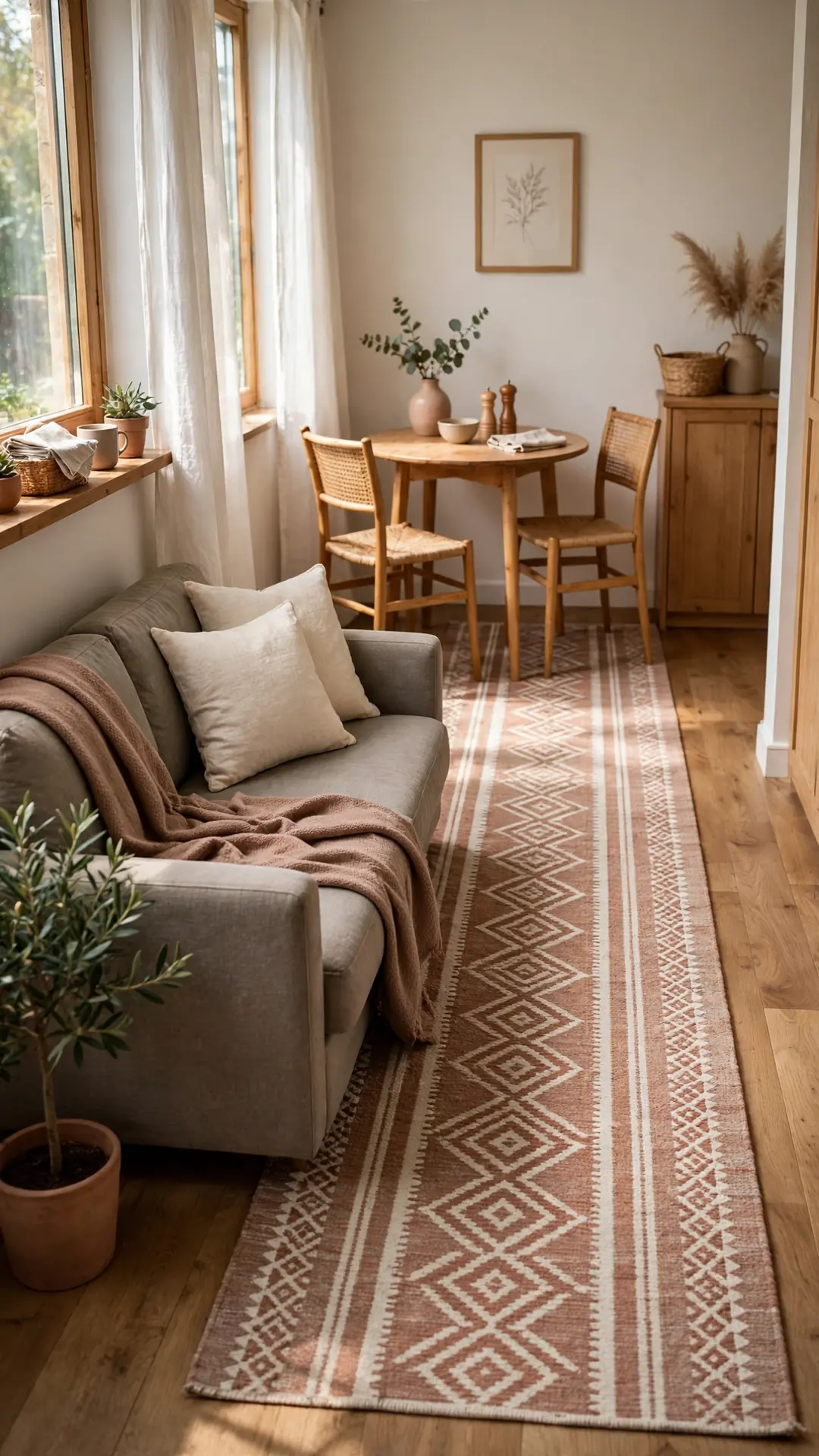
Open-plan small living room rug ideas use runners to link two zones. A long runner ties seating to the eating corner, like breakfast bar ideas for small spaces do. The eye then reads both zones as one room, not two.
How to do it:
- Run it from the sofa side toward the second zone
- Echo one runner color in both zones
- Keep the runner clear of chair legs that pull out
- Stop the runner short of the second zone furniture
Best for: Studio flats with living and eating zones.
Budget: $35 to $100
Quick tip: A runner also mutes footstep noise between zones on hard floors.
36. Frame a Reading Chair with Its Own Small Rug
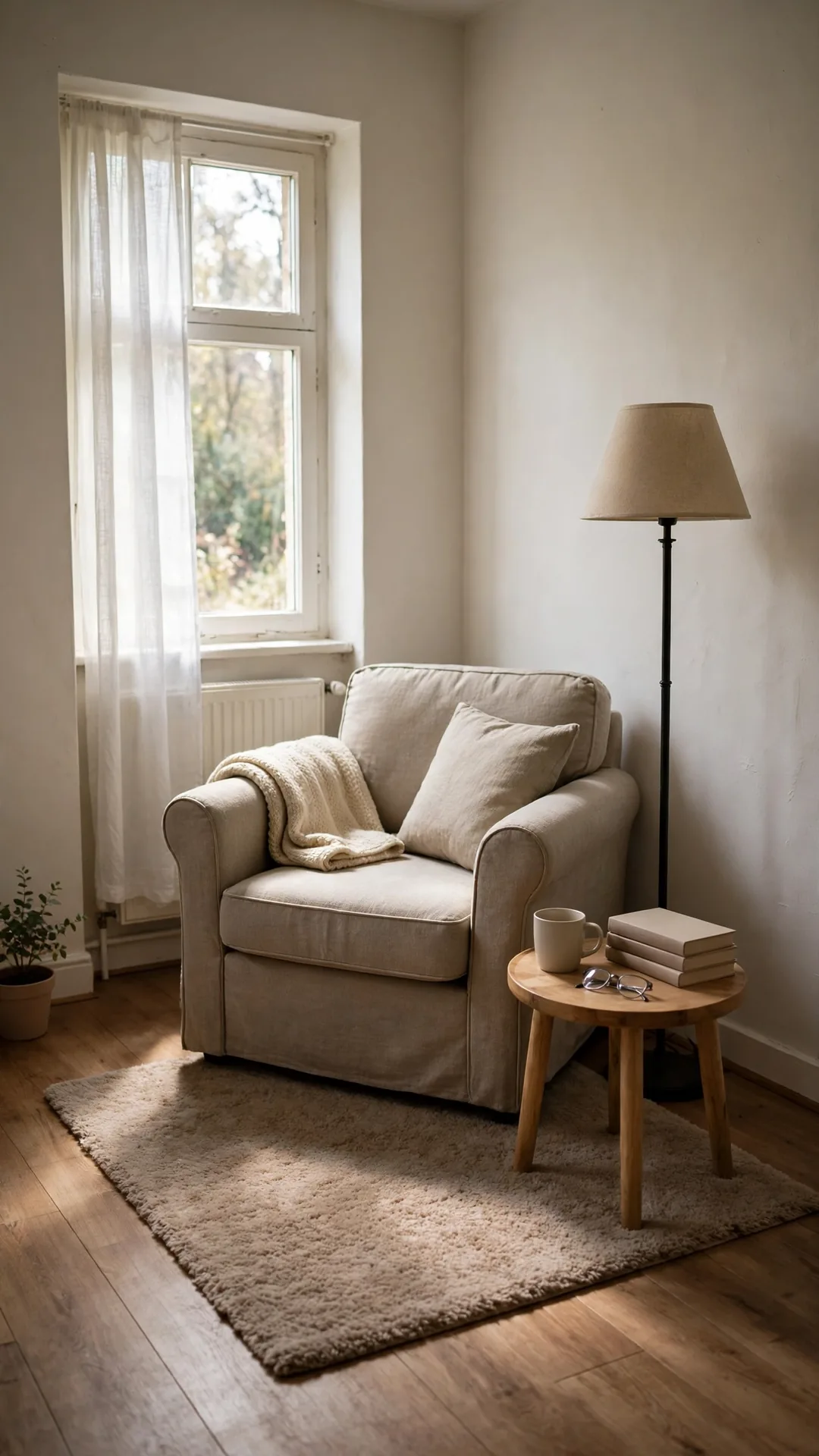
One small rug under a reading chair claims the corner as its own room. The chair, lamp and rug read as a set, not spare parts. It gives a studio a second zone for free.
How to do it:
- Let the rug hold the chair and a small side table
- Pick a plush texture that suits slow evenings
- Angle the chair toward the room for a welcoming look
- Add a floor lamp behind the chair shoulder
Best for: Studios that need a quiet second zone.
Budget: $30 to $90
Quick tip: A round rug under a swivel chair lets it turn without catching edges.
37. Anchor the Sofa with Front Legs on the Rug
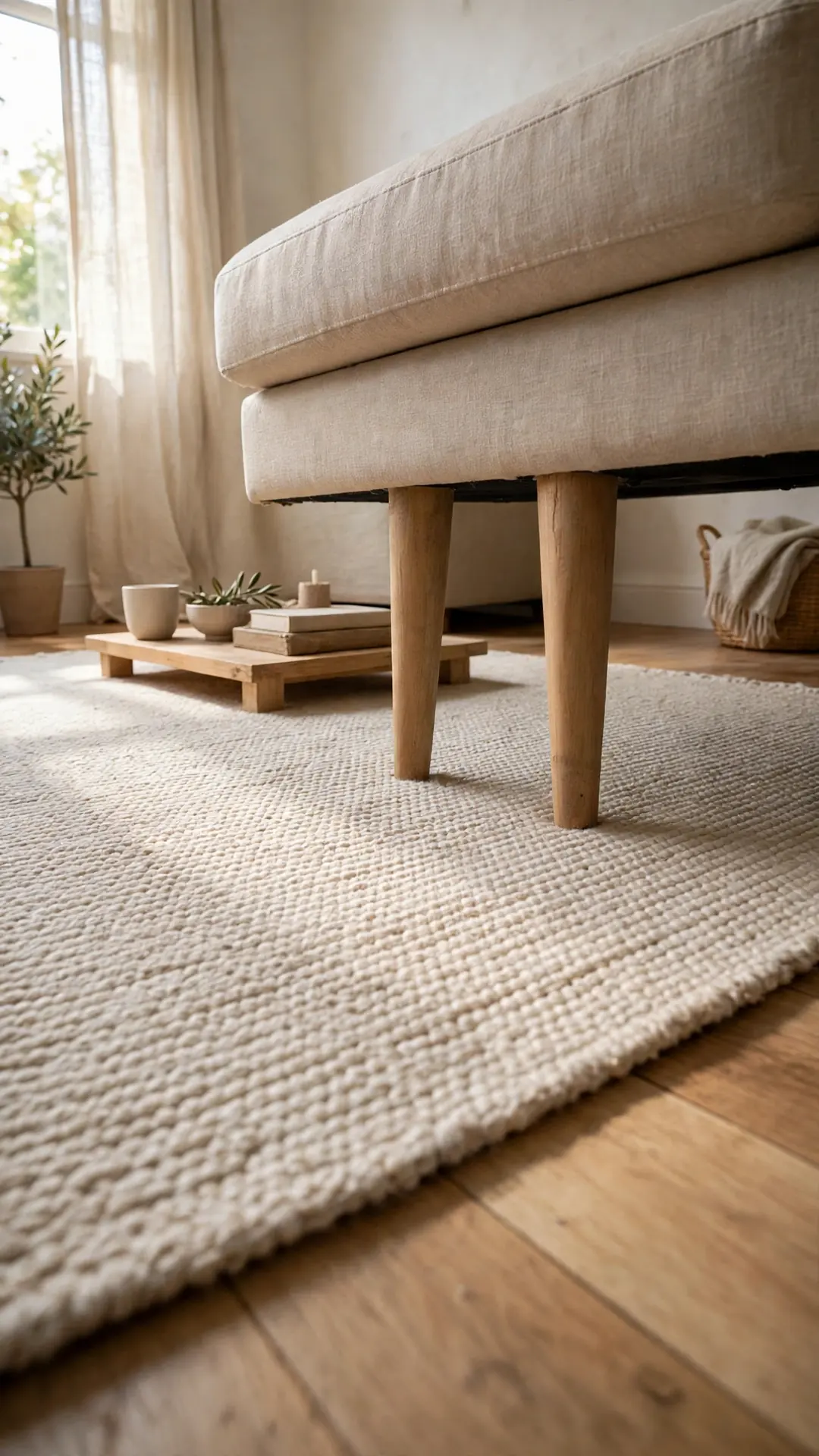
Front legs on the rug tie the sofa to the seating group. The back legs stay on the floor, so a modest rug still works. This one choice powers most of the small space living room ideas for tiny apartments on this site.
How to do it:
- Slide the rug under the sofa until both front legs sit on it
- Leave a few inches of rug showing in front of the legs
- Set chairs the same way so the group matches
- Check the rug stays centered on the sofa, not the wall
Best for: Any room where the rug looks like it floats.
Budget: $60 to $200
Quick tip: Two people make this easy, one lifting each sofa end in turn.
38. Float the Rug Under the Coffee Table Only
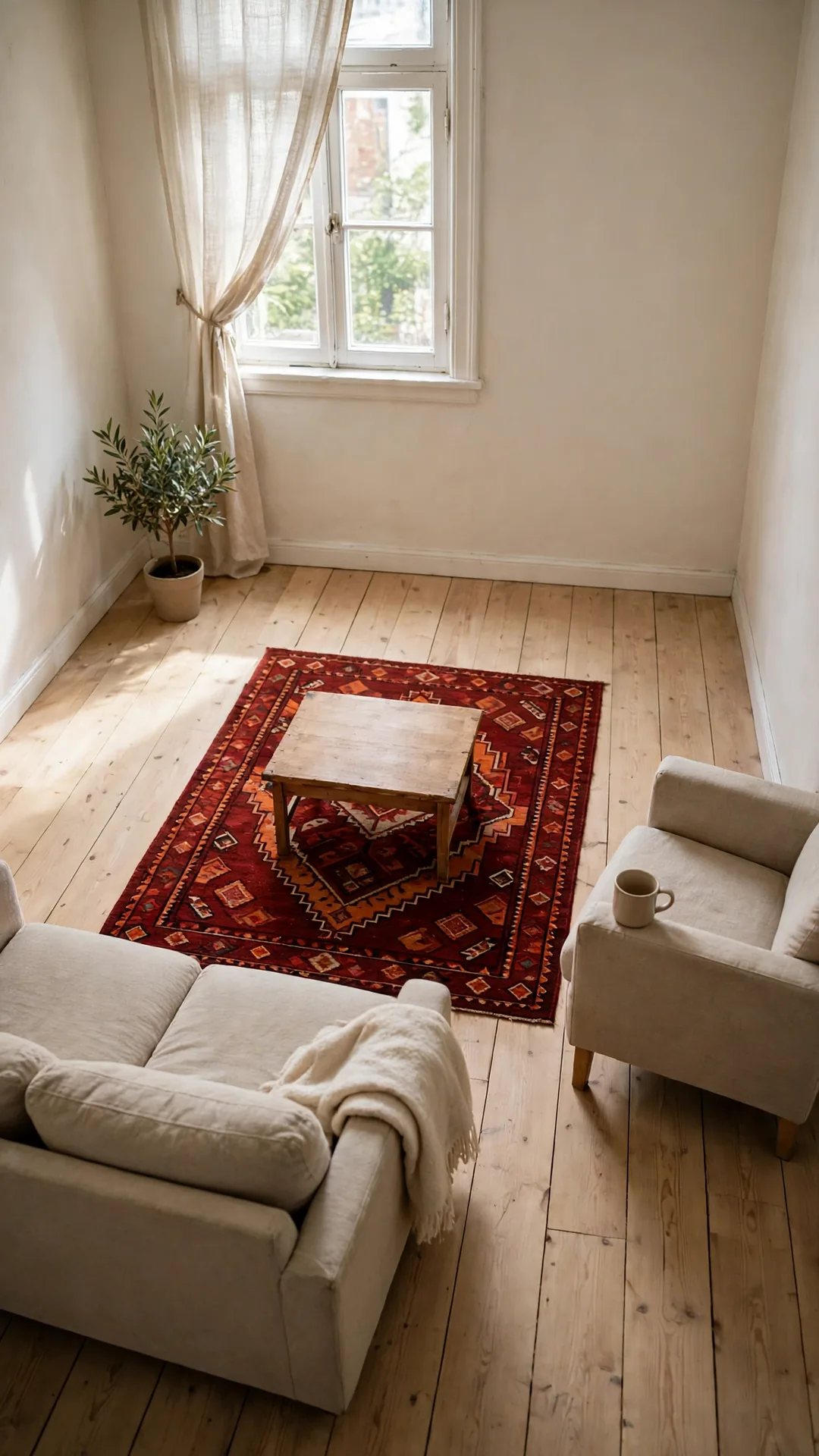
Minimal small living room rug ideas float the rug under the table only. No furniture legs touch it, so a small rug still looks deliberate. The Spruce guide to area rug placement dos and don’ts backs this as a real layout, not a mistake.
How to do it:
- Center the rug exactly under the coffee table
- Keep equal floor visible on all four sides
- Choose a bold pattern, since the rug acts as art here
- Use a heavy pad so the small rug never drifts
Best for: Tiny rooms where a big rug would crowd the floor.
Budget: $35 to $110
Quick tip: This layout shows every crooked edge, so measure the centering twice.
39. Define a Work Corner with a Second Rug
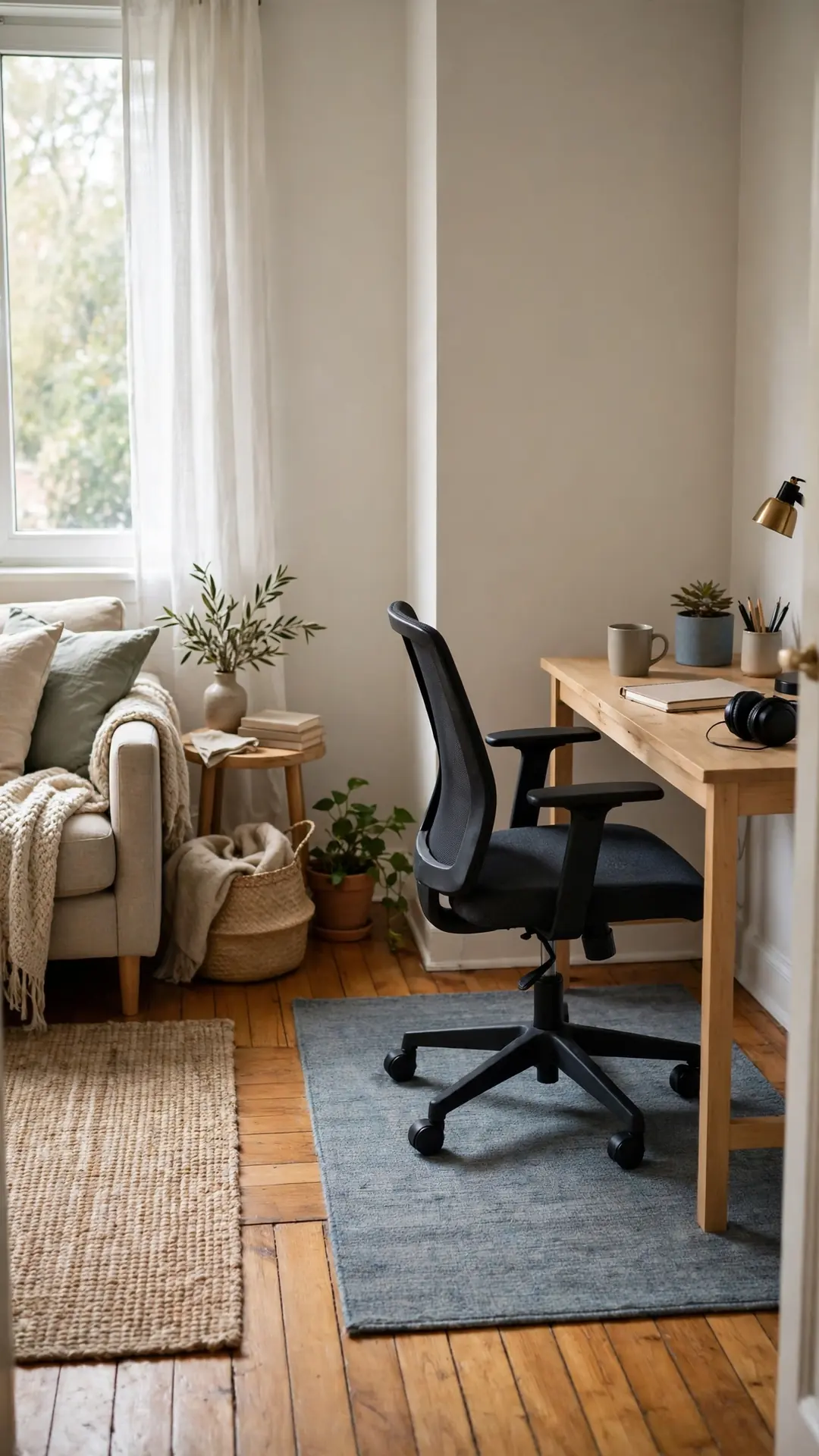
A second small rug under a desk claims the work corner in an open room. The change of floor tells everyone this spot has a job. Parents often pair it with kids desk ideas for small rooms for homework zones.
How to do it:
- Keep the work rug a different texture from the seating rug
- Let the desk chair roll fully on the rug
- Choose a low pile that suits chair casters
- Echo one color from the main rug for calm
Best for: Studio flats and shared family rooms.
Budget: $30 to $95
Quick tip: A washable work rug survives ink, glue and snack spills.
40. Let the Rug Set the Room Color Palette
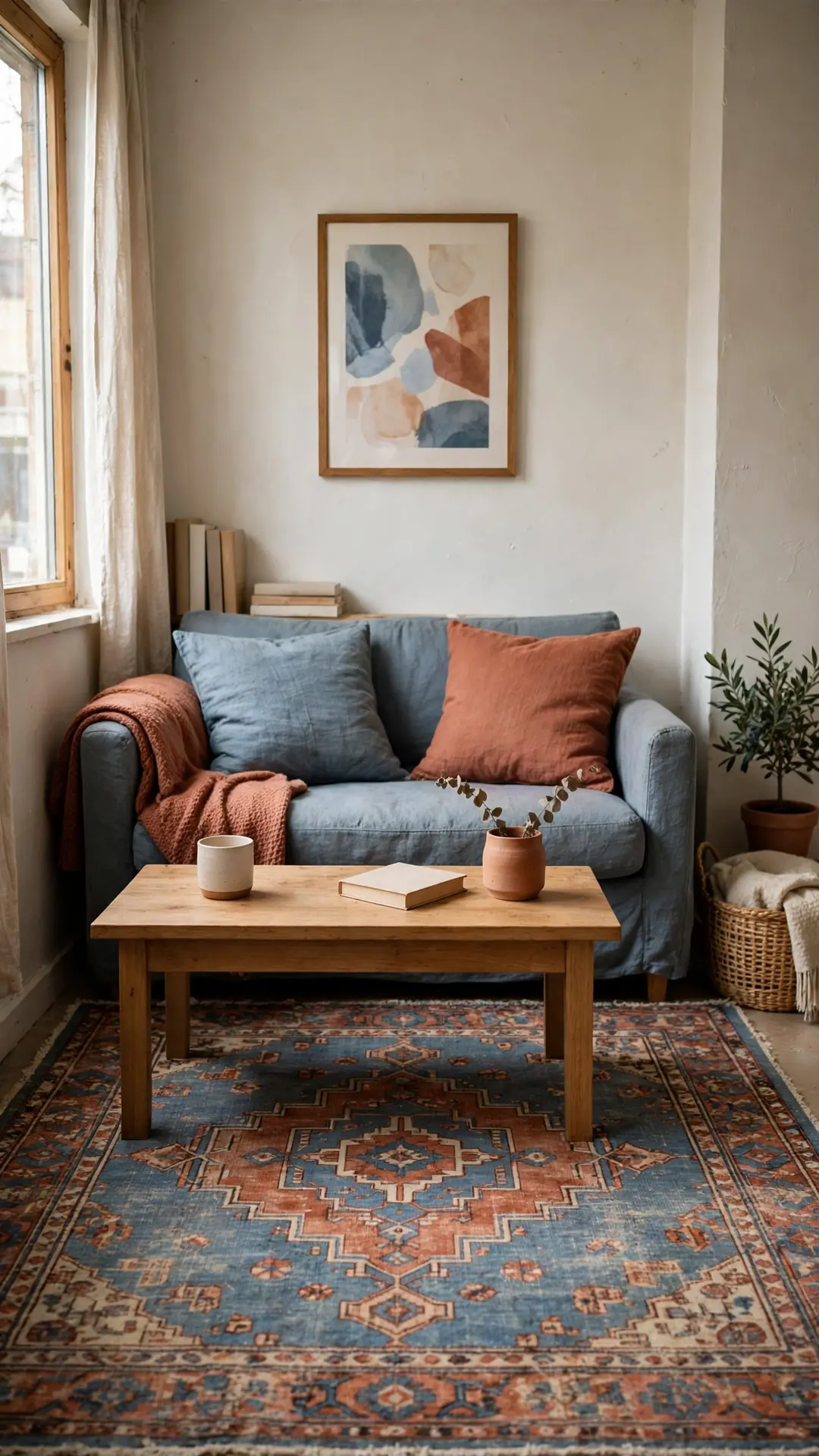
Buy the rug first and let its colors plan the room. Cushions, art and throws then borrow two or three rug tones. The same trick anchors the home decor ideas for a living room in a small space across this site.
How to do it:
- Pull one bold and two quiet tones from the rug
- Use the bold tone only in small accents
- Keep walls and sofa plainer than the rug
- Shop for cushions with the rug photo on your phone
Best for: Blank rooms with no color plan yet.
Budget: $70 to $230
Quick tip: A patterned rug is the easiest palette to copy, since the scheme is printed for you.
41. Match Rug Tones to the Curtains for Height
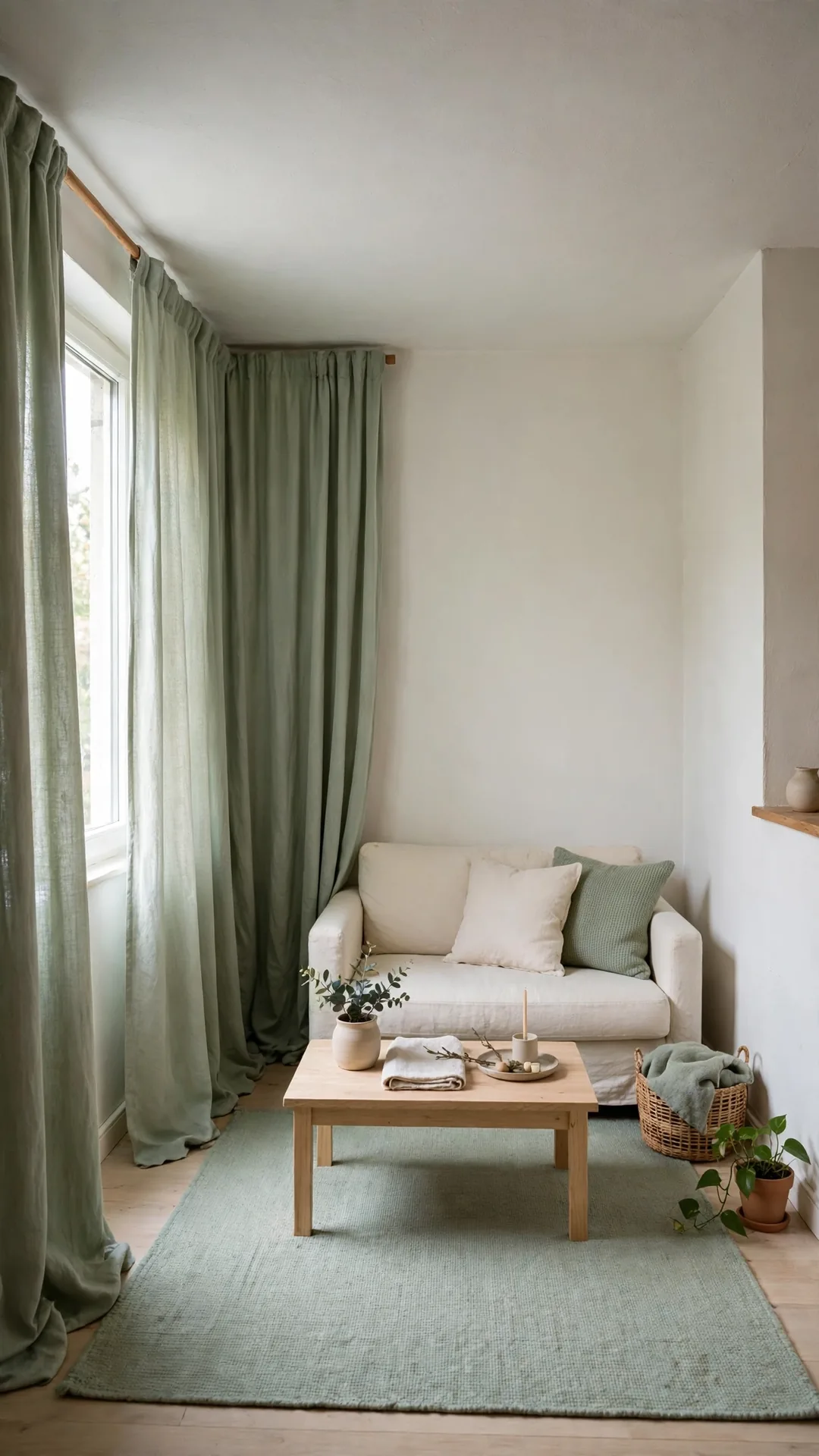
Pulled-together small living room rug ideas echo the curtain color. When the rug and curtains share a tone, the eye travels floor to ceiling. The room feels taller and more finished with no new furniture.
How to do it:
- Match the rug tone to the curtain tone, not the exact fabric
- Keep the shared tone soft so it never shouts
- Let the sofa stay a third, quieter color
- Repeat the tone once more in a cushion at mid height
Best for: Low-ceiling rooms that feel squat.
Budget: $55 to $175
Quick tip: Daylight shifts both fabrics, so compare swatches at the window.
42. Tuck a Rug Under a Daybed for Guest Nights
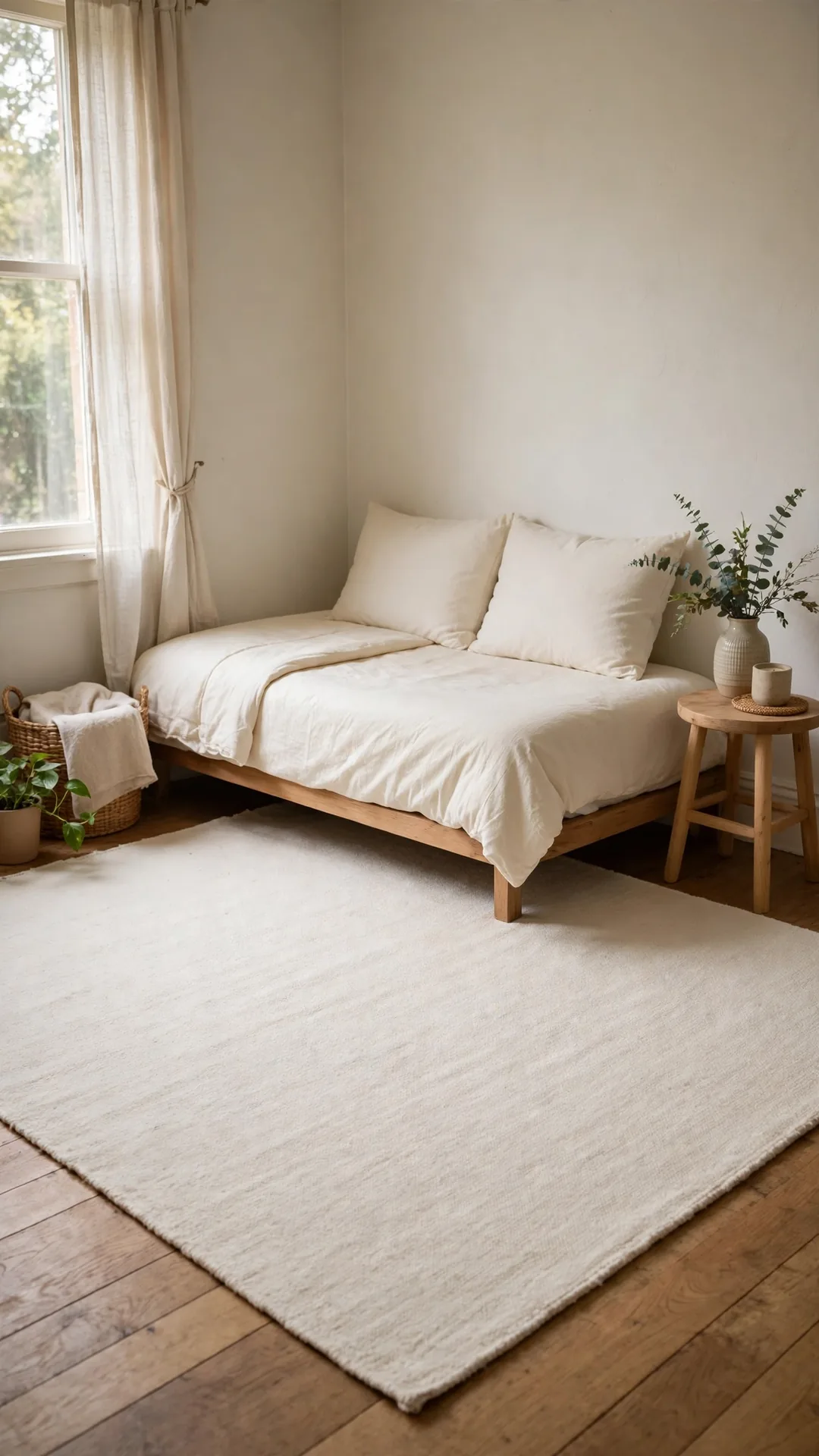
A rug under a daybed makes the guest corner feel like a real room. Guests step onto something soft, and the bed zone reads separate by day. Choose a washable style for easy turnarounds.
How to do it:
- Let the rug extend past the daybed front edge
- Pick a low pile so a pull-out guest bed rolls over it
- Choose a pattern that hides guest-room dust between visits
- Keep the tone close to the main room rug if they share space
Best for: Living rooms that host overnight guests.
Budget: $50 to $160
Quick tip: A rug also quiets the daybed frame, which helps light sleepers.
43. Center the Rug on the Fireplace or TV Wall
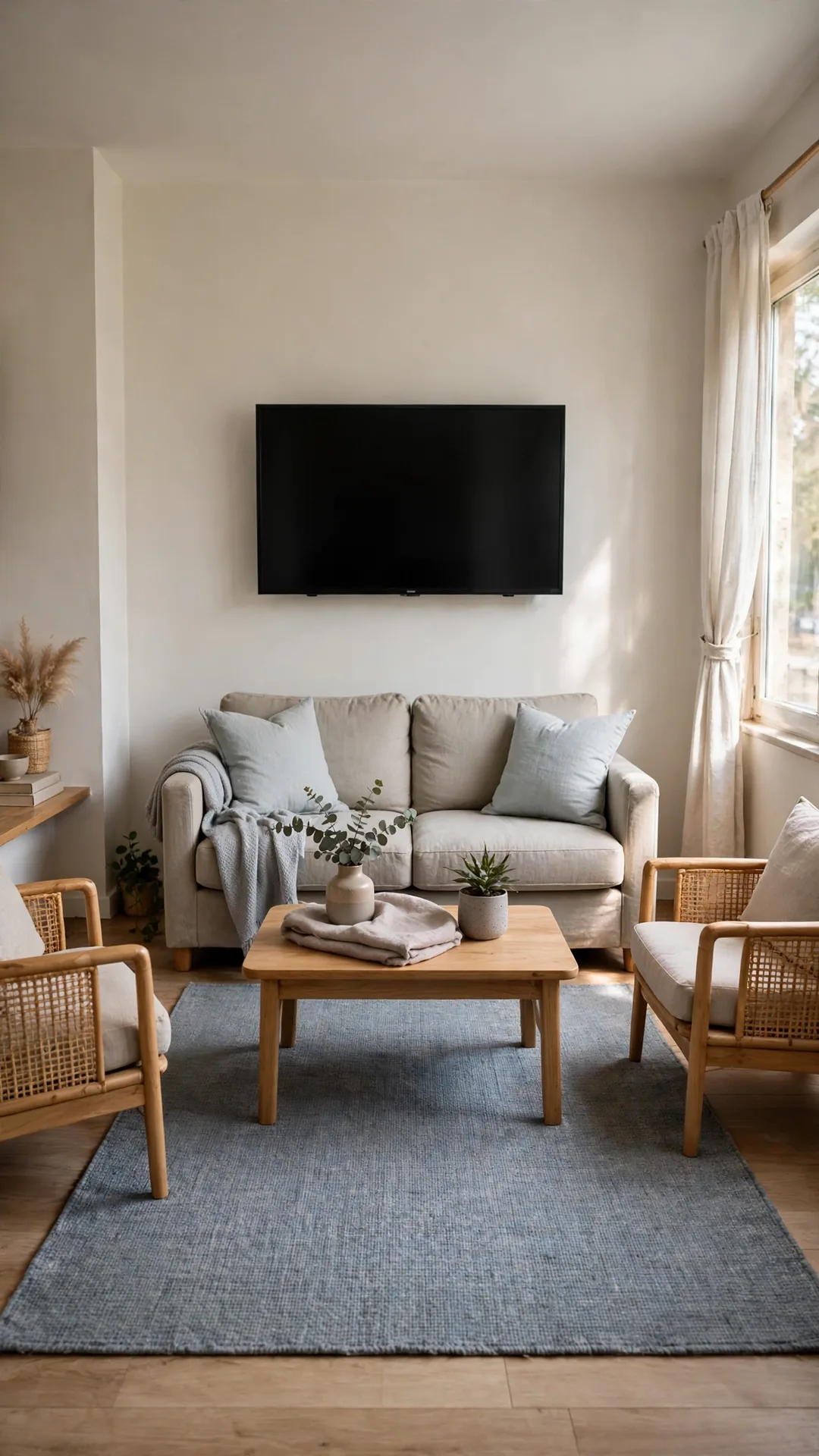
A rug centered on the main wall gives the whole layout a clear axis. Seating lines up around it and the room feels ordered at a glance. Off-center rugs make even tidy rooms feel slightly wrong.
How to do it:
- Find the center of the fireplace or TV wall first
- Center the rug on that line, not on the room
- Align the coffee table with the same axis
- Shift chairs until both sides balance by eye
Best for: Rooms where furniture never looks settled.
Budget: $60 to $200
Quick tip: A laser level or a long tape line makes centering a one-person job.
44. Leave a Bare Border to Show Off Wood Floors
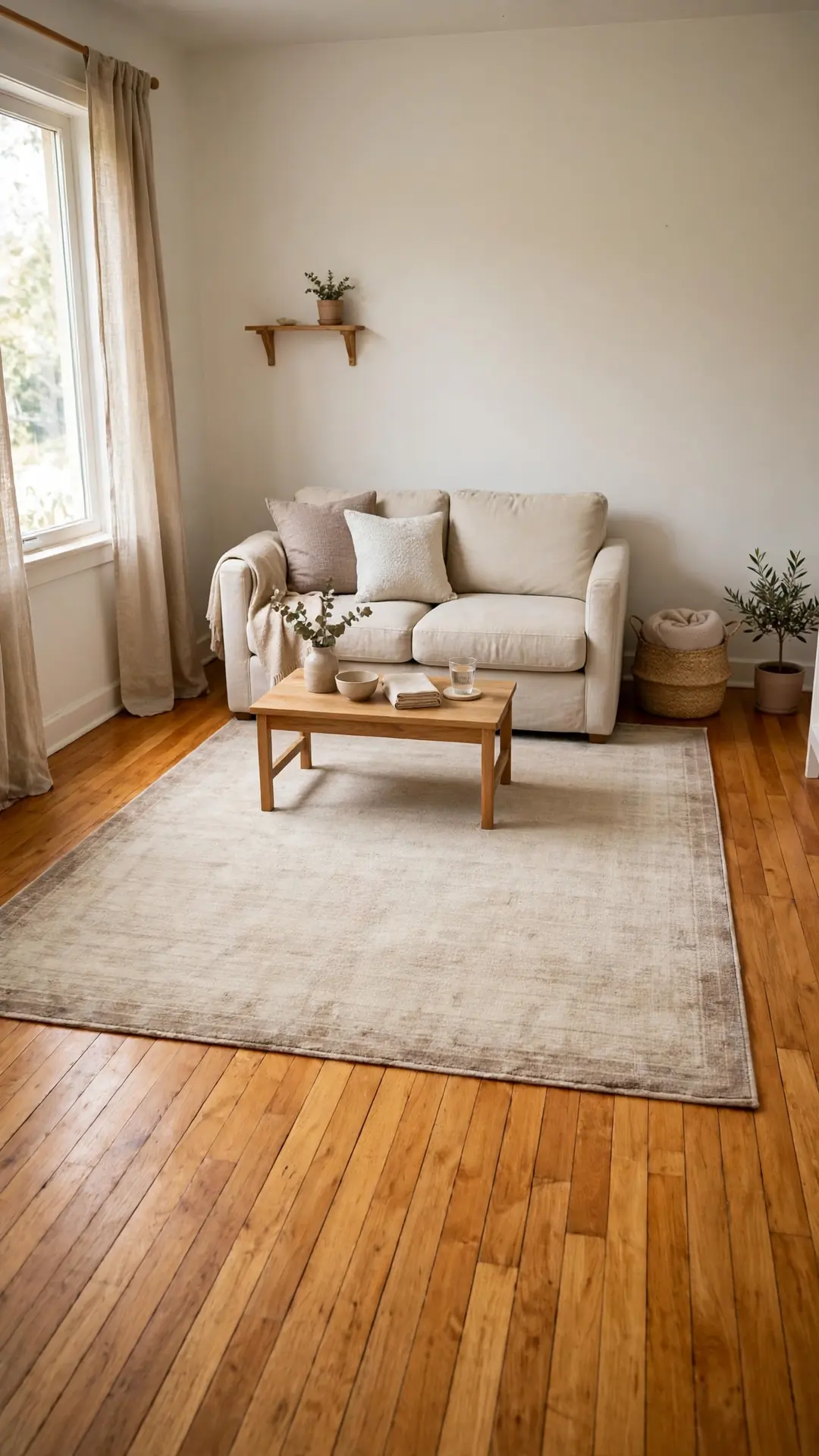
Floor-first small living room rug ideas leave a bare border on show. A ring of bare wood around the rug frames it like a mat in a picture. Pretty floors deserve their moment, and the border makes the rug look chosen.
How to do it:
- Keep the border even on the sides you see most
- Let the rug cover the worn center, not the best boards
- Polish the border zone so it earns the attention
- Choose a rug tone that flatters the wood color
Best for: Rooms with handsome wood or tile floors.
Budget: $55 to $180
Quick tip: Borders collect dust lines, so run a mop along the edge weekly.
45. Choose a Lightweight Rug You Can Shake Outside
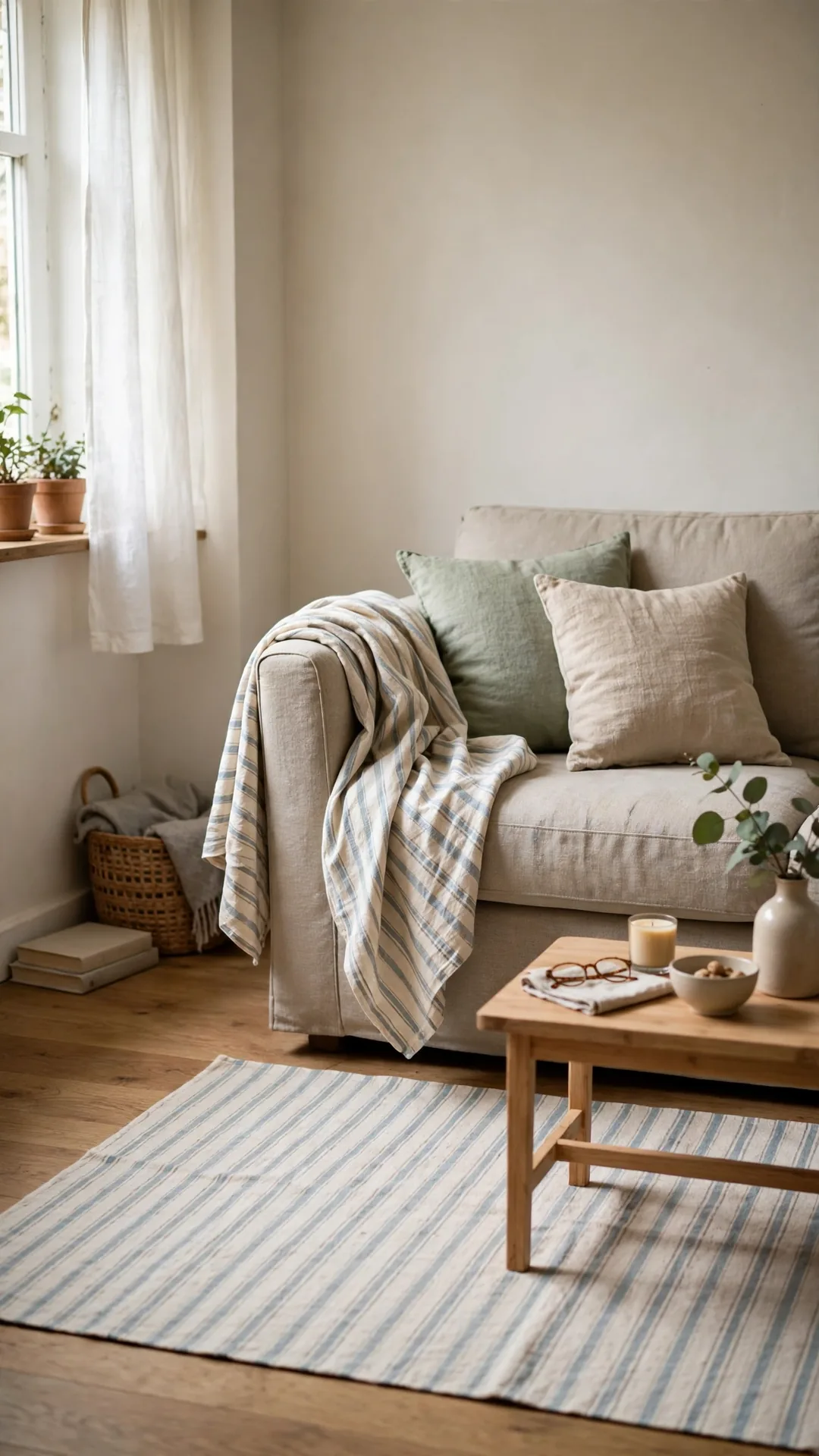
A lightweight rug goes over your arm and out the door for a proper shake. No vacuum gymnastics, no dragging furniture twice. It suits small rentals where storage for gear is tight.
How to do it:
- Pick a rug you can lift with one hand when folded
- Choose cotton or thin synthetic weaves
- Shake it weekly over a balcony rail or fence
- Beat it gently with a broom handle for deep dust
Best for: Renters without room for a big vacuum.
Budget: $25 to $80
Quick tip: Shake on a dry, breezy day so dust blows away from the door.
46. Rearrange the Room with Rug Tiles
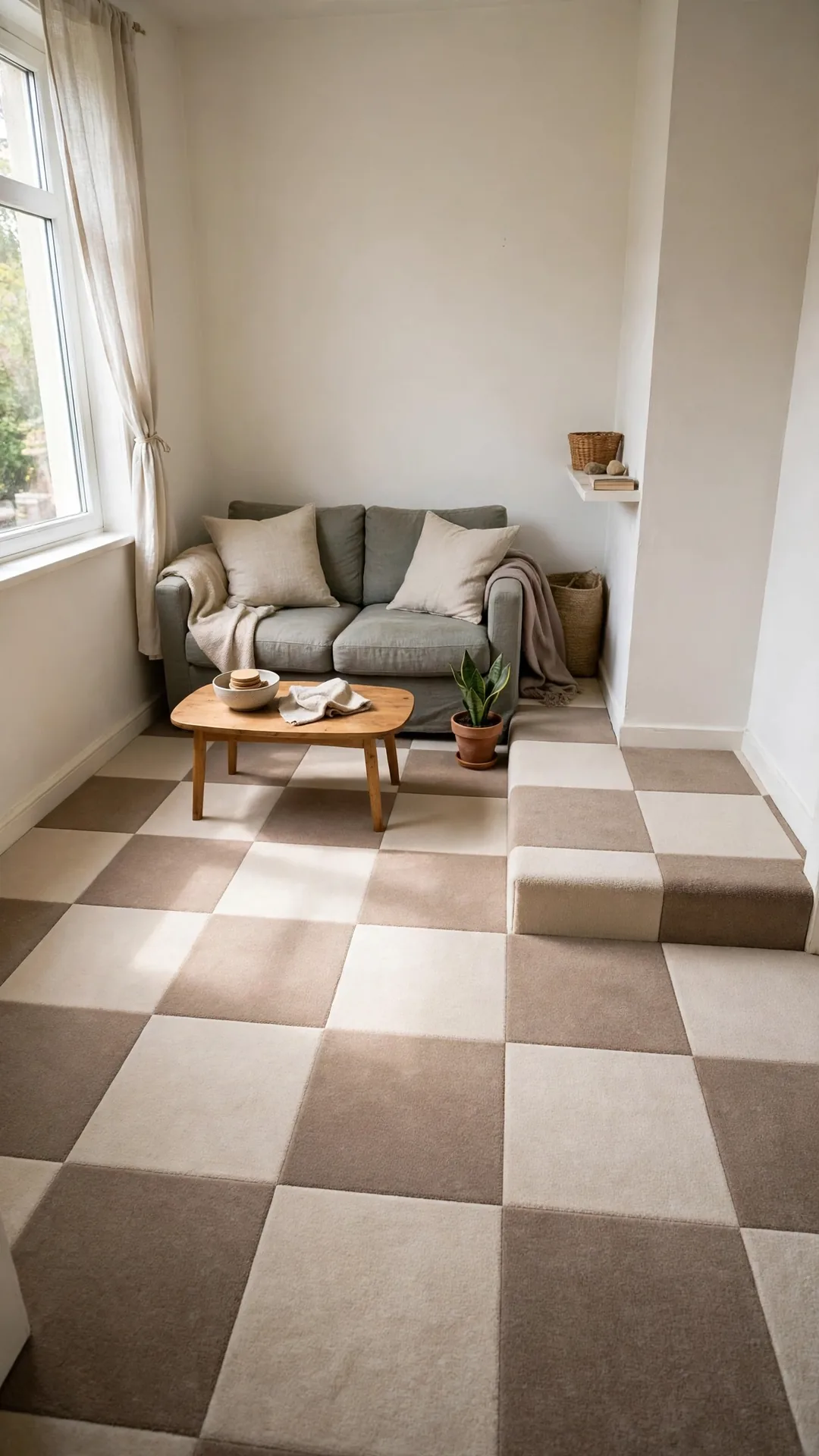
Rug tiles click together into any shape your odd room demands. One stained tile swaps out instead of the whole rug. You can also peel up the set when the lease ends.
How to do it:
- Order two spare tiles for swaps and mistakes
- Mix two tones in a checker layout for pattern
- Press edges down firmly so seams vanish
- Mark the underside grid before you start cutting
Best for: Odd-shaped rooms and spill-prone homes.
Budget: $40 to $130
Quick tip: Number the tiles on the back before a move so the pattern rebuilds fast.
47. Stop Slipping with a Felt Rug Pad
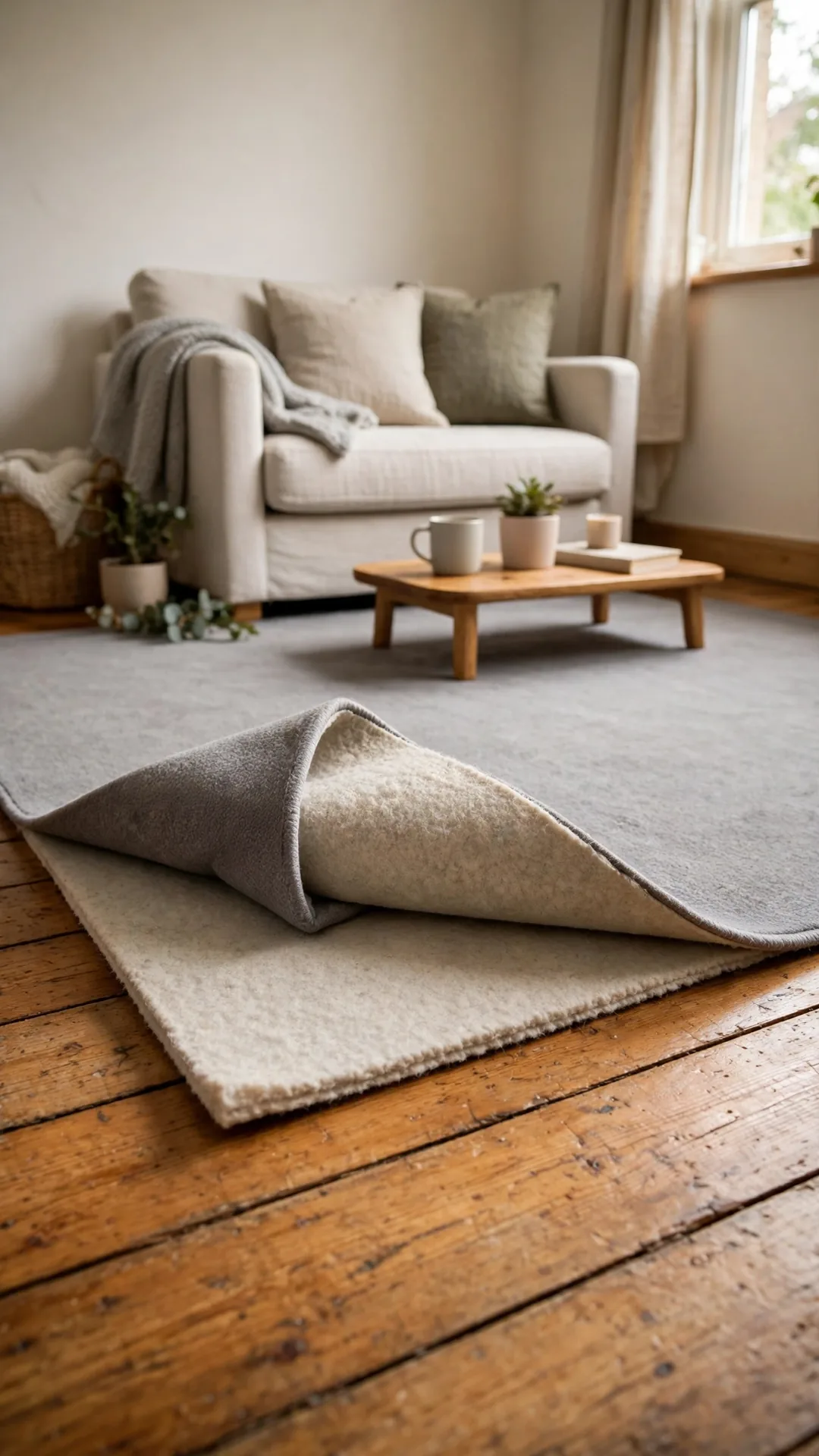
Steady small living room rug ideas start with a grippy felt pad. A felt and rubber pad grips the floor and cushions every step. It also adds body, so a thin rug feels twice as plush.
How to do it:
- Cut the pad 1 inch smaller than the rug on all sides
- Choose felt with a rubber back for hard floors
- Roll the rug out over the pad slowly to avoid wrinkles
- Trim any pad corner that peeks out
Best for: Thin rugs on wood or tile floors.
Budget: $20 to $60
Quick tip: A pad also stops the dye transfer that can mark pale floors.
48. Roll Out a Low-Cost Rug for a First Apartment
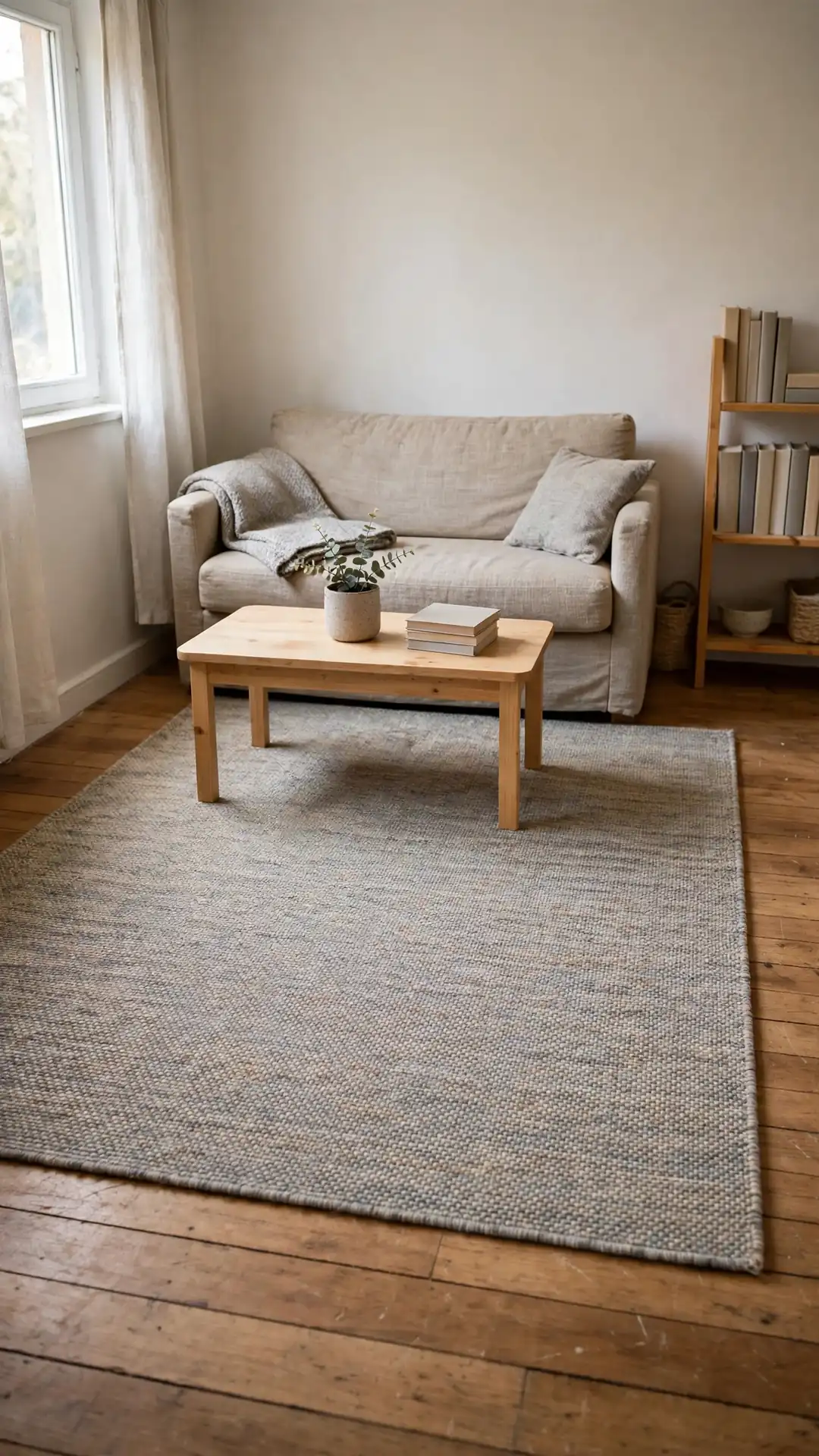
A budget rug lets a first apartment feel finished while savings recover. Flatweave synthetics now copy wool looks well at a fraction of the cost. Choose the biggest size the budget allows, since scale sells the look.
How to do it:
- Shop flatweave sales at the end of each season
- Pick a heathered pattern that hides wear and crumbs
- Spend the savings on the pad, which lifts the feel
- Keep the color mid-tone so it moves to the next home easily
Best for: First apartments and short leases.
Budget: $35 to $100
Quick tip: A cheap rug on a good pad fools feet better than the reverse.
49. Rotate the Rug Each Season for Even Wear
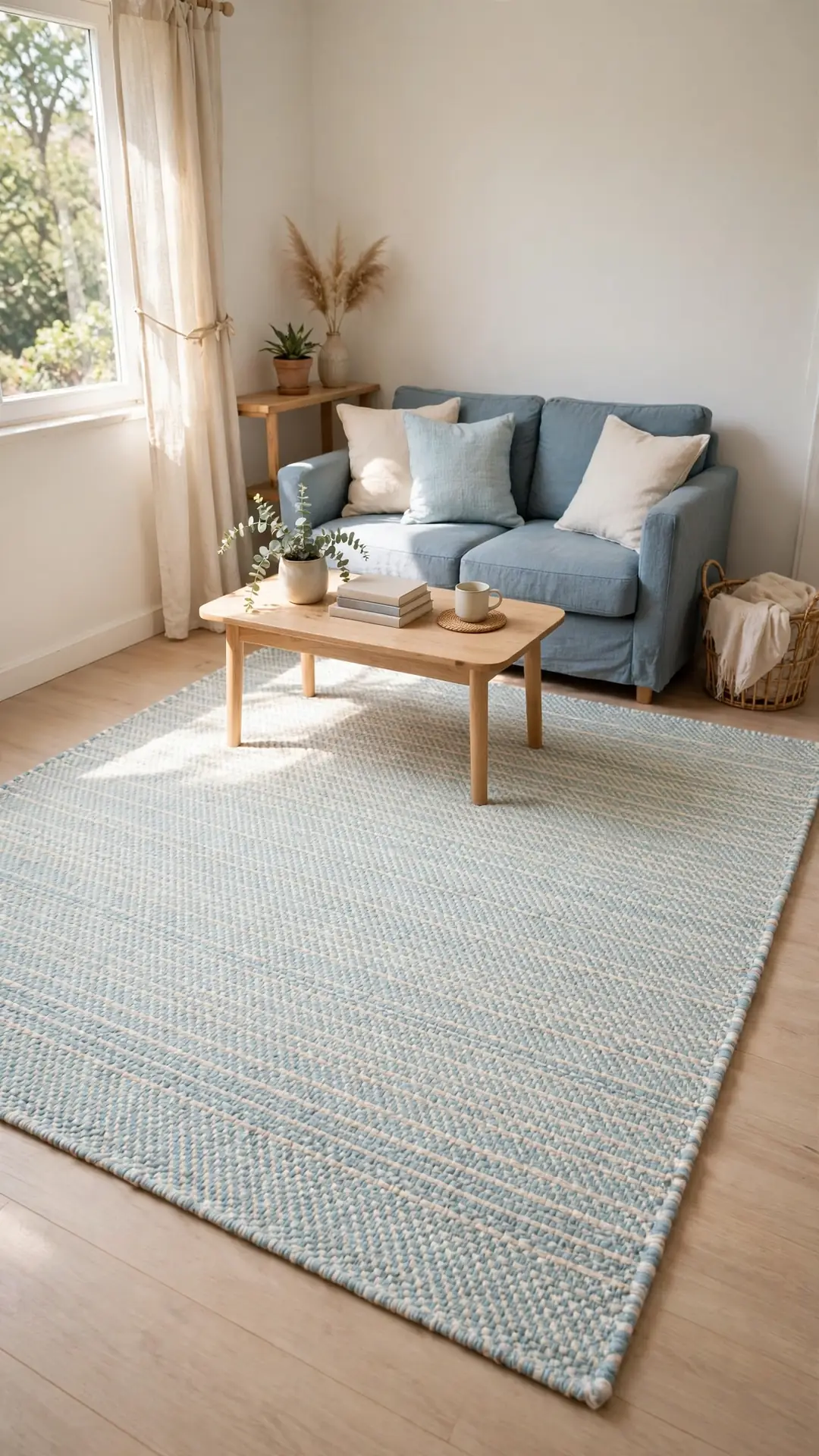
Turning the rug twice a year spreads sunlight and foot traffic evenly. The busy path moves, and faded patches stop forming in one spot. It takes ten minutes with a helper.
How to do it:
- Rotate 180 degrees at the start of spring and fall
- Move the pad with the rug so the grip stays right
- Vacuum the bare floor and the rug back during the swap
- Note which end faced the window in your phone
Best for: Sunny rooms and busy walkways.
Budget: Free
Quick tip: Rotation day is the best moment to check for moths under the sofa.
50. Cover Worn Rental Carpet with a Room-Size Rug
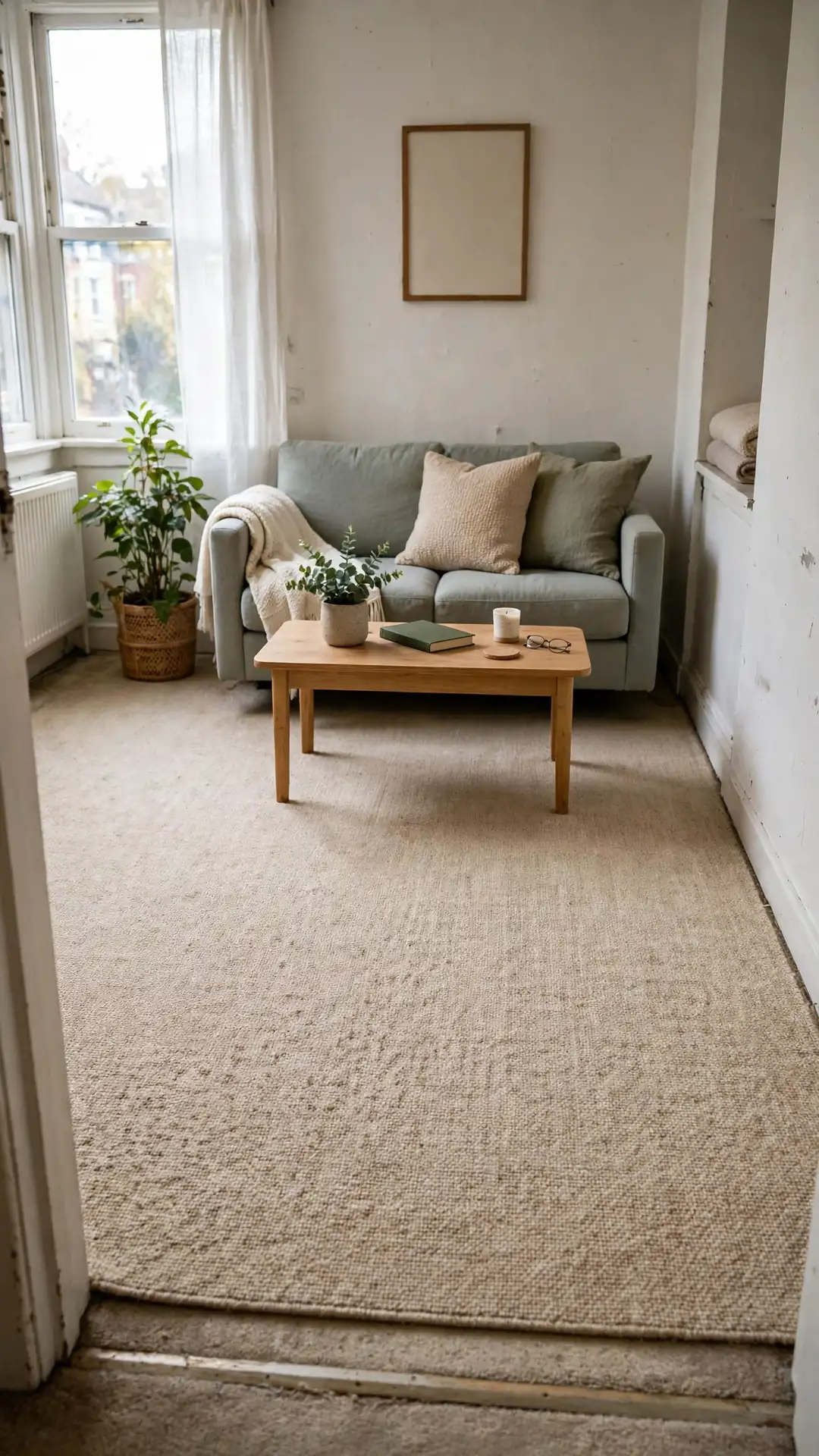
Cover-up small living room rug ideas hide worn rental carpet fast. A room-size rug rolls over stains and worn paths the deposit cannot fix. You get a fresh floor look without touching the landlord's carpet.
How to do it:
- Measure the seating zone and cover all of it
- Pick a firm, low weave that lies flat over carpet pile
- Use rug-on-carpet grip pads at the corners
- Keep the receipt, since the rug leaves with you
Best for: Rentals with stained or dated carpet.
Budget: $80 to $240
Quick tip: Photograph the old carpet first, so move-out talks stay simple.
51. Store a Spare Rug Rolled Behind the Sofa
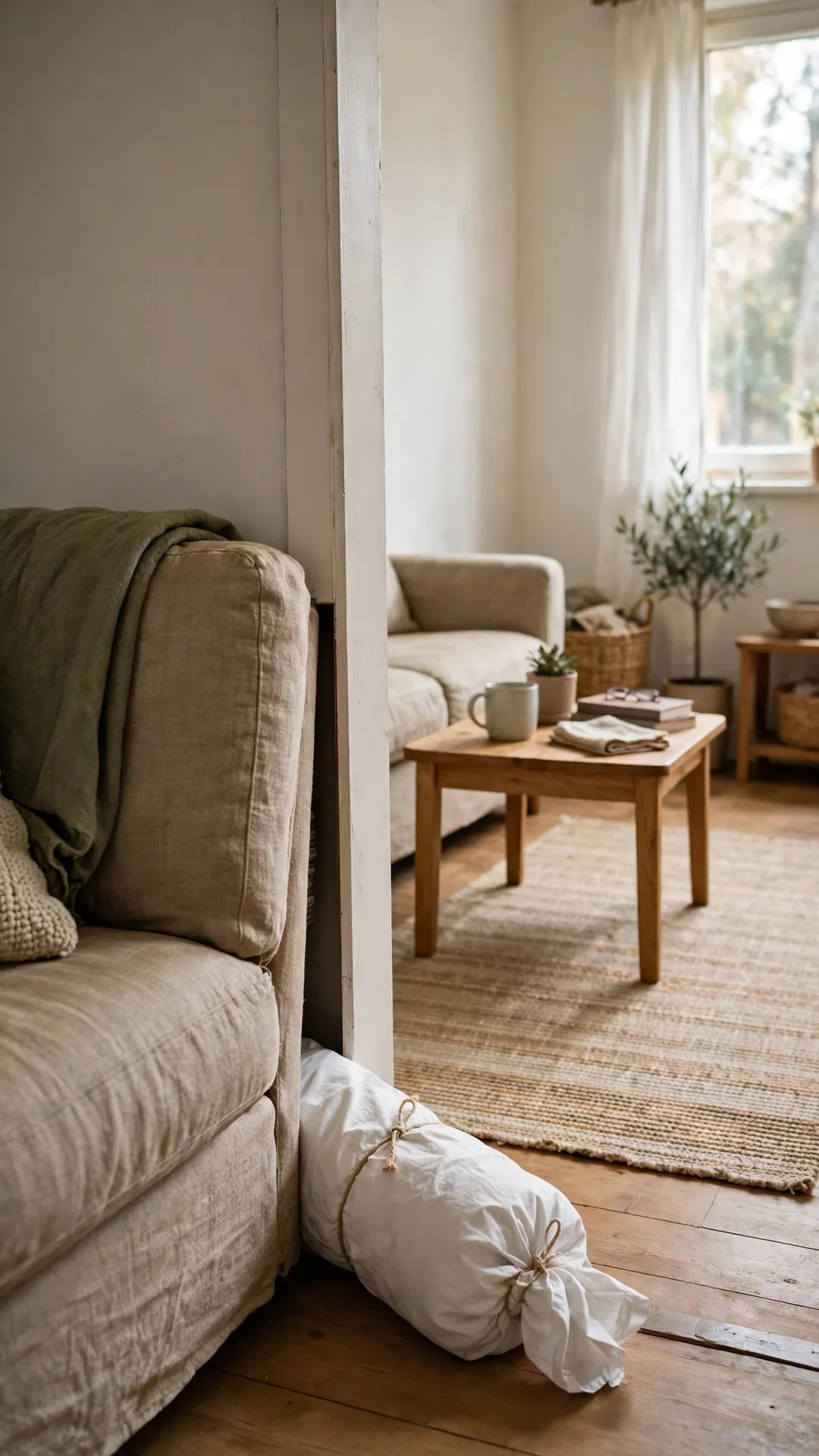
A spare rug rolled behind the sofa swaps the room look in five minutes. One roll hides fully in the dead space against the wall. Seasonal swaps keep a small room feeling fresh all year.
How to do it:
- Roll the spare pile-side out to protect the surface
- Wrap it in an old sheet to keep dust off
- Stand the roll on end if floor space is tighter
- Label the sheet with the rug name and season
Best for: Style lovers in one-room homes.
Budget: $30 to $90 for the spare
Quick tip: Air a stored rug outdoors for an hour before laying it down.
52. Freshen a Tired Rug with a New Layer on Top
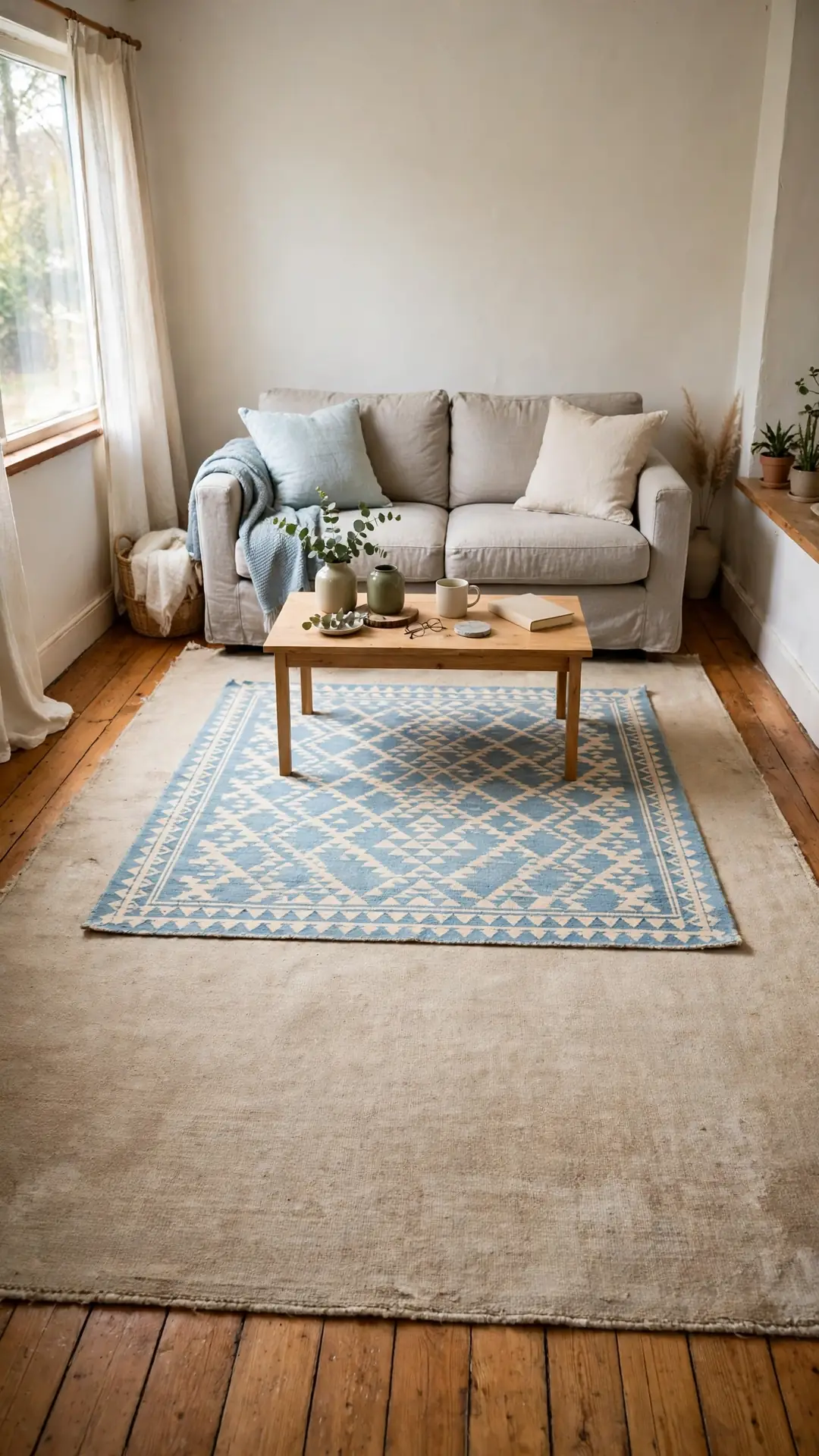
A fresh flatweave over a tired rug hides stains and buys it more years. The old rug becomes the pad, adding softness for free. Edges of the new layer should land where feet rarely step.
How to do it:
- Choose a top layer slightly smaller than the rug beneath
- Keep the top weave thin so the step up stays low
- Anchor the corners under furniture legs
- Pick a pattern busy enough to hide the old outline
Best for: Beloved rugs with one bad stain.
Budget: $35 to $110
Quick tip: If the stack feels spongy, the base rug pile is too deep for layering.
53. Keep One Neutral Base and Swap Accent Layers
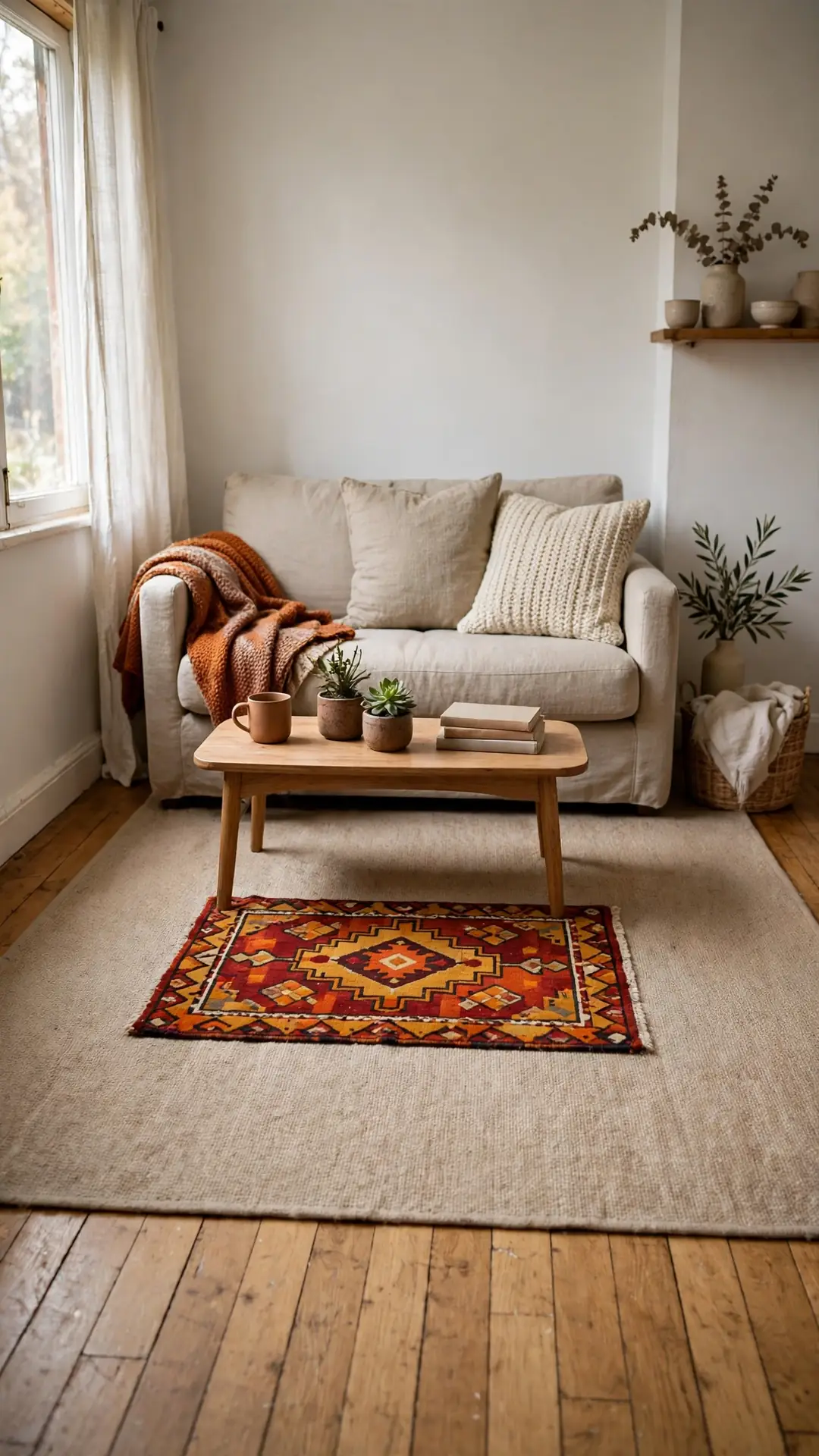
Seasonal small living room rug ideas keep one base and swap the top layer. A calm neutral base stays down all year. Small accent rugs rotate with the seasons, one for summer lightness and one for winter warmth.
How to do it:
- Choose the base in a mid neutral that suits every season
- Keep accent rugs small enough to store flat or rolled
- Let each accent carry the season's main color
- Shake and air each accent before storing it away
Best for: Small homes that crave change without clutter.
Budget: $40 to $120 per accent rug
Quick tip: Photograph each layout so your favorite combo is easy to rebuild.
Pick One Look and Roll It Out
You do not need new furniture to change the room. Start with one of these small living room rug ideas and let the floor set the tone. Save this post or pin your favorite look so the plan is ready when you shop.

- 56 Kids Desk Ideas for Small Rooms Too Good to Gatekeep - November 23, 2026
- 57 Breakfast Bar Ideas for Small Spaces Worth Copying Now - November 23, 2026
- 53 Genius Small Living Room Rug Ideas That Renters Love - November 22, 2026