
Books pile up faster than shelf space in a small home. One stack lands on the table, then the floor, then every chair. These book storage ideas for small spaces give each book a fixed spot.
Here are 58 spots for novels, cookbooks and kids books. Most cost under $40 and many need no drill at all. Measure your walls first, then pick one idea to copy.
1. Stack Books Flat in Short Piles
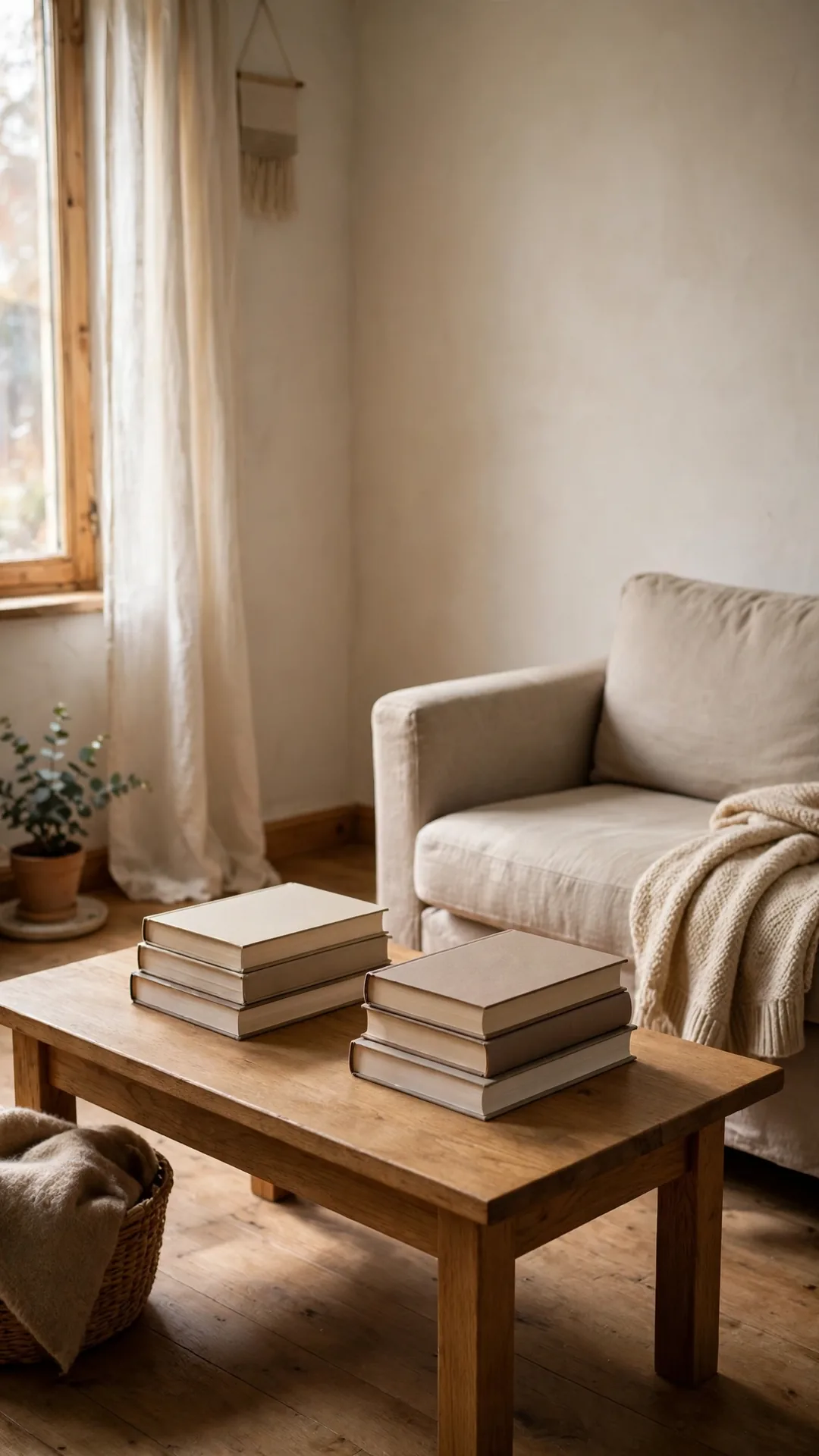
Flat stacks beat tall towers on a coffee table. A pile of three to five books stays stable and doubles as a stand. Keep spines turned out so titles stay easy to scan.
How to do it:
- Set the largest book at the bottom of each pile.
- Stop at five books so the pile stays steady.
- Leave 6 inches of table clear for cups.
- Group one topic per pile for quick finds.
Best for: Living rooms with one low table.
Budget: Free
Quick tip: Rest a small plant on top to finish the stack. Keep one spare slot open for new finds.
2. Line a Windowsill with Paperbacks
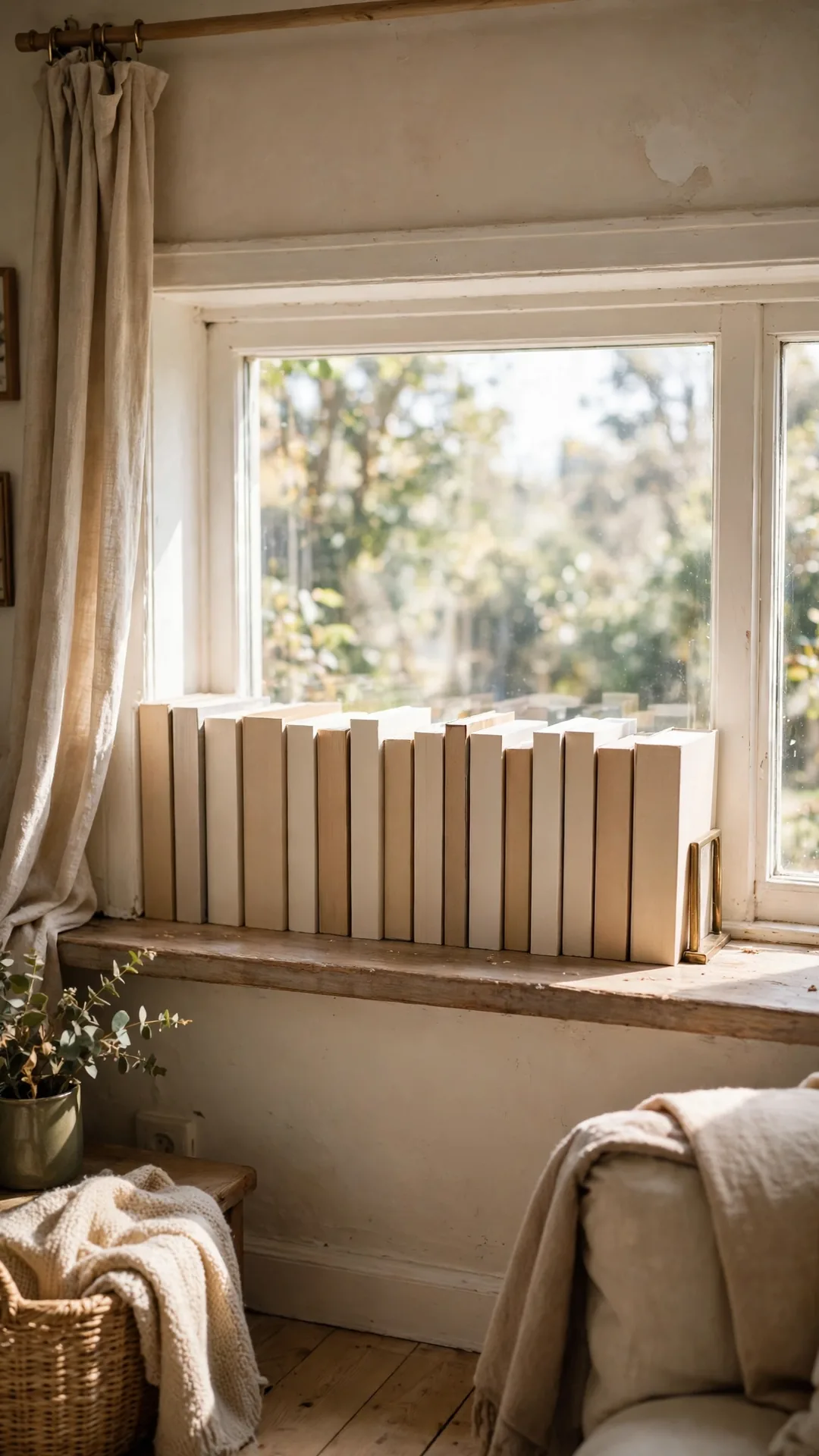
Some book storage ideas for small spaces hide in plain sight along a windowsill. A sill 4 inches deep holds most paperbacks upright. Sun fades spines over time, so keep favorites deeper in the room.
How to do it:
- Measure the sill depth before you line books up.
- Stand paperbacks between two small heavy pots.
- Keep the row under 24 inches long per section.
- Move rare covers out of direct sun.
Best for: Renters with wide, deep sills.
Budget: Free to $10
Quick tip: Rotate the row monthly so fading stays even. Check for heat vents before you commit to the spot.
3. Fill a Woven Basket with Current Reads
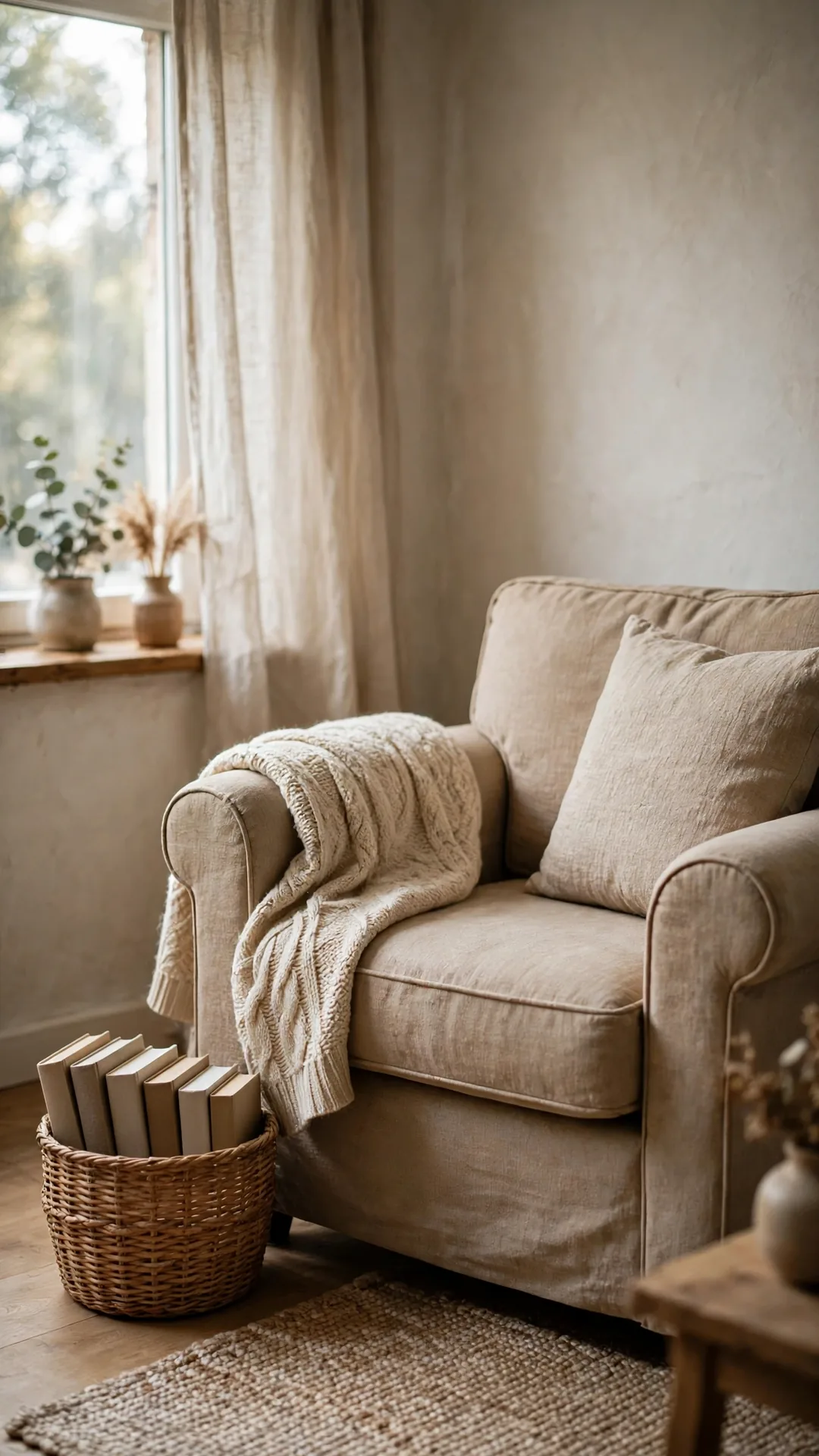
A basket beside your chair keeps current reads close. Books stand upright, so covers stay clean and easy to flip. The basket moves with you from room to room.
How to do it:
- Pick a basket about 14 inches wide and 12 inches tall.
- Stand books spine down with covers facing out.
- Limit the basket to eight books at a time.
- Set it on a mat to protect wood floors.
Best for: One-chair reading corners.
Budget: $10 to $25
Quick tip: When the basket fills up, one book must leave. Sort reads by size so tall books never lean on short ones.
4. Stand Books Upright in a Magazine File
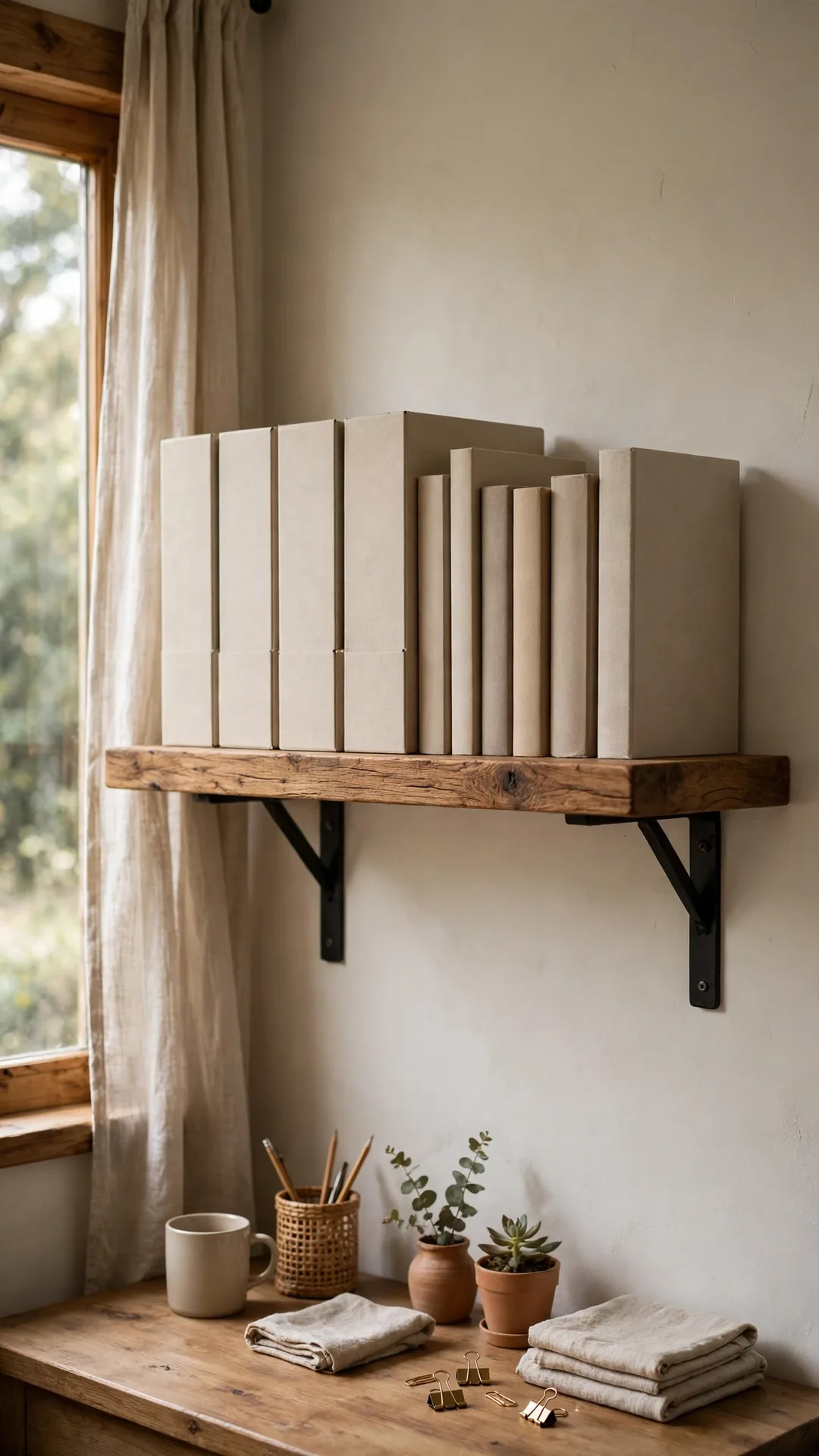
Magazine files corral slim books that flop on open shelves. Each file holds six to eight paperbacks or kids books. Houzz shares tips for turning a small space into a book lover’s paradise that suit tiny rooms.
How to do it:
- Choose files 4 inches wide in metal or stiff board.
- Set files on a shelf at least 11 inches tall.
- Sort one genre per file for fast picks.
- Face the open side out for easy grabs.
Best for: Kids books and slim paperbacks.
Budget: $8 to $20
Quick tip: Tie a small tag to the handle with the genre name.
5. Use a Wooden Crate as a Book Box
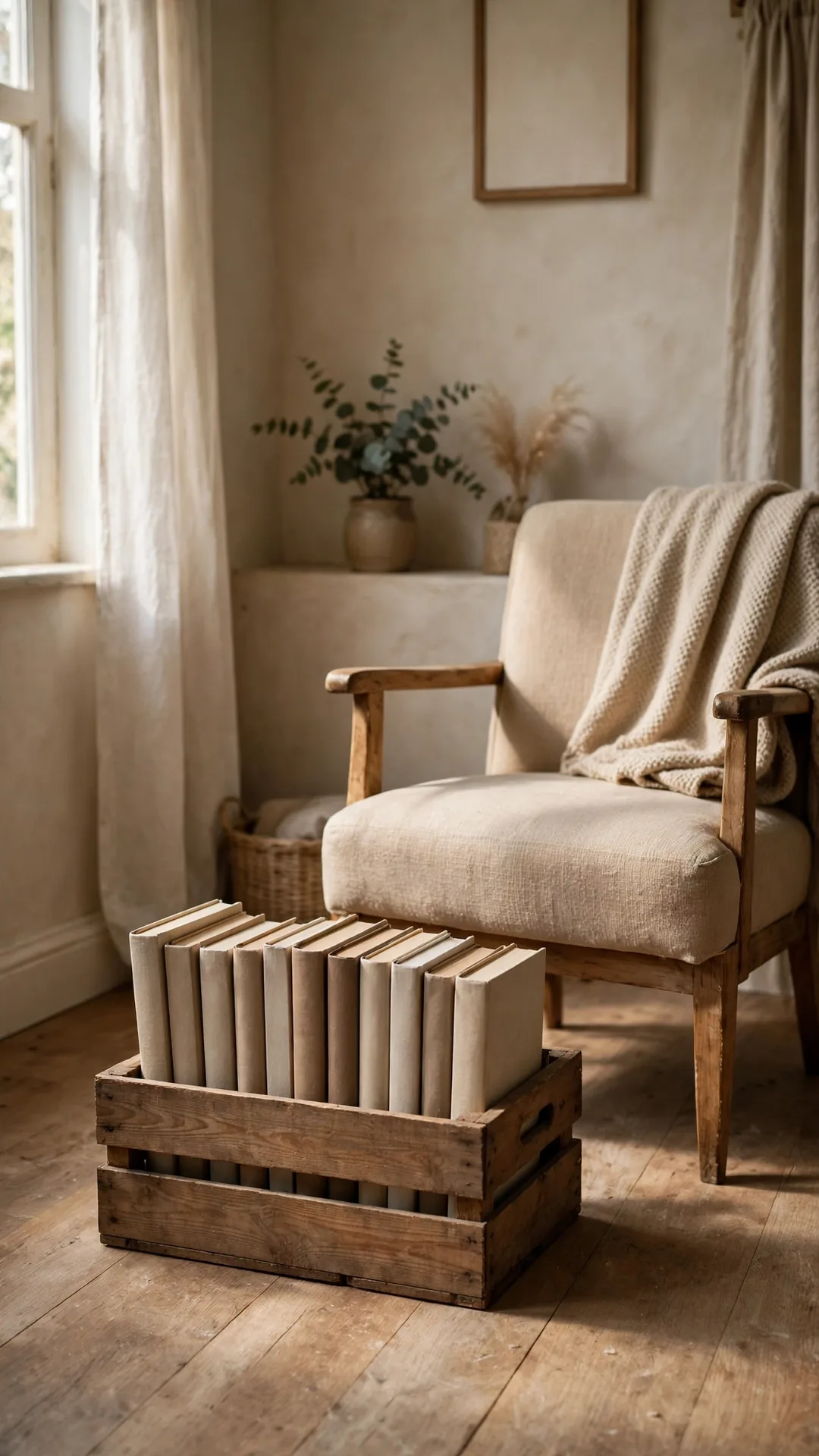
A wooden crate holds a whole shelf worth of books. Crates stack two high and slide under tables with ease. Sand rough edges so book covers stay smooth.
How to do it:
- Pick a crate about 18 by 13 inches inside.
- Sand the rim and check for loose nails.
- Stand tall books along one side in a row.
- Stack a second crate only if the base feels solid.
Best for: Rustic rooms and tight budgets.
Budget: $10 to $30
Quick tip: Add felt pads under the crate to save the floor. Set the crate where guests can browse the row.
6. Tuck a Slim Rack Beside the Sofa
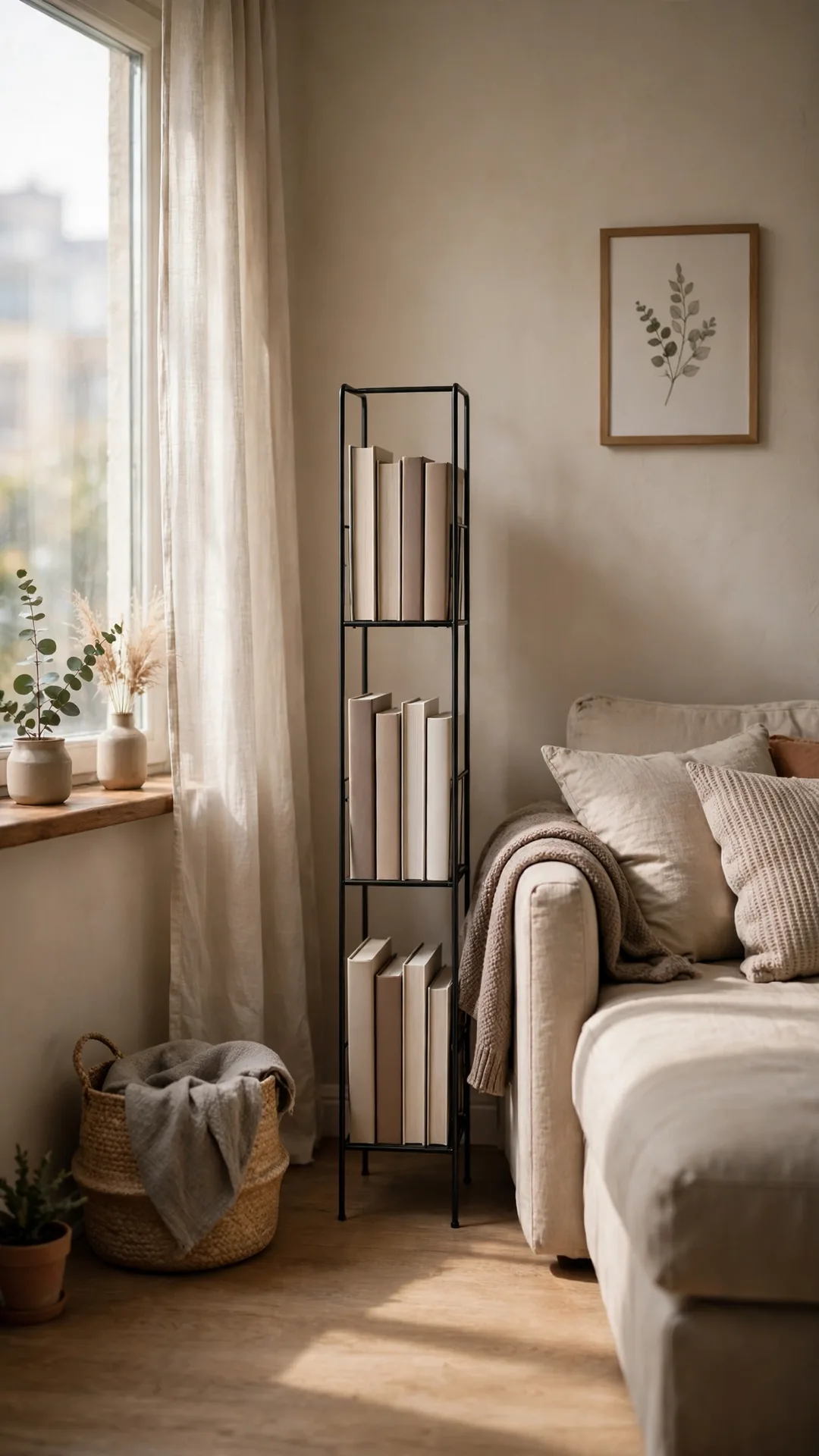
The gap beside a sofa suits book storage ideas for small spaces well. Many sofas leave 6 to 8 inches of dead space. A slim rack turns that slot into a mini library.
How to do it:
- Measure the gap width and depth first.
- Pick a rack 5 to 7 inches wide and 24 inches tall.
- Slide paperbacks in spine first, tallest at the back.
- Leave the top slot free for your nightly read.
Best for: Studios with fixed sofa spots.
Budget: $20 to $45
Quick tip: Choose a rack with a handle so it lifts out for cleaning.
7. Pile Cookbooks on the Kitchen Counter
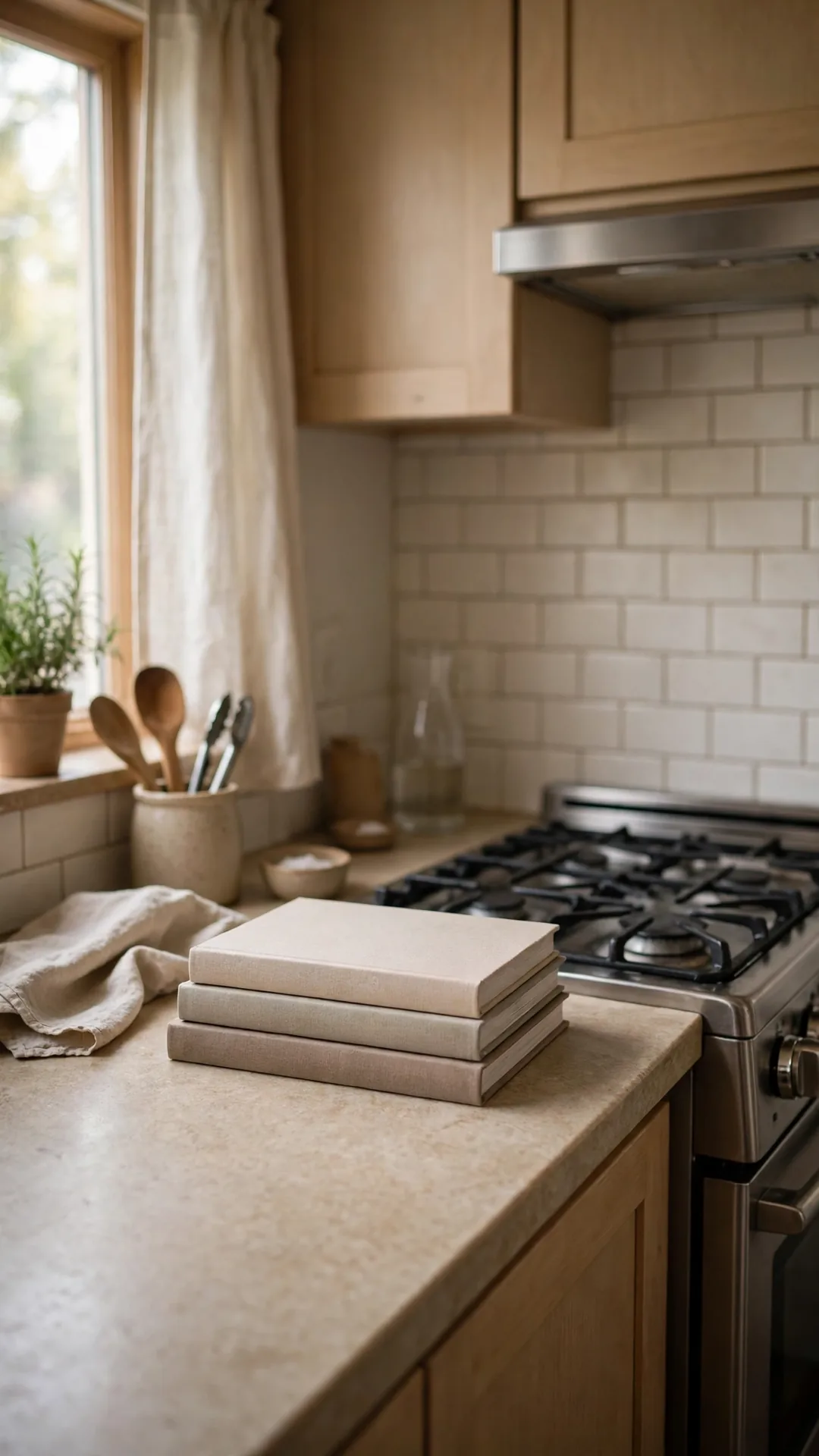
Cookbooks earn counter space when you cook from them weekly. A short stack near the stove keeps recipes close. Grease splashes travel, so keep the stack one foot away.
How to do it:
- Stack three to five cookbooks flat by size.
- Set the stack at least 12 inches from burners.
- Keep the book you use most on top.
- Wipe covers weekly with a dry cloth.
Best for: Small kitchens with daily cooks.
Budget: Free
Quick tip: Slip a cutting board under the stack as a base. Prop the book of the week open on a small stand for cooks.
8. Keep a Bedside Stack on the Floor
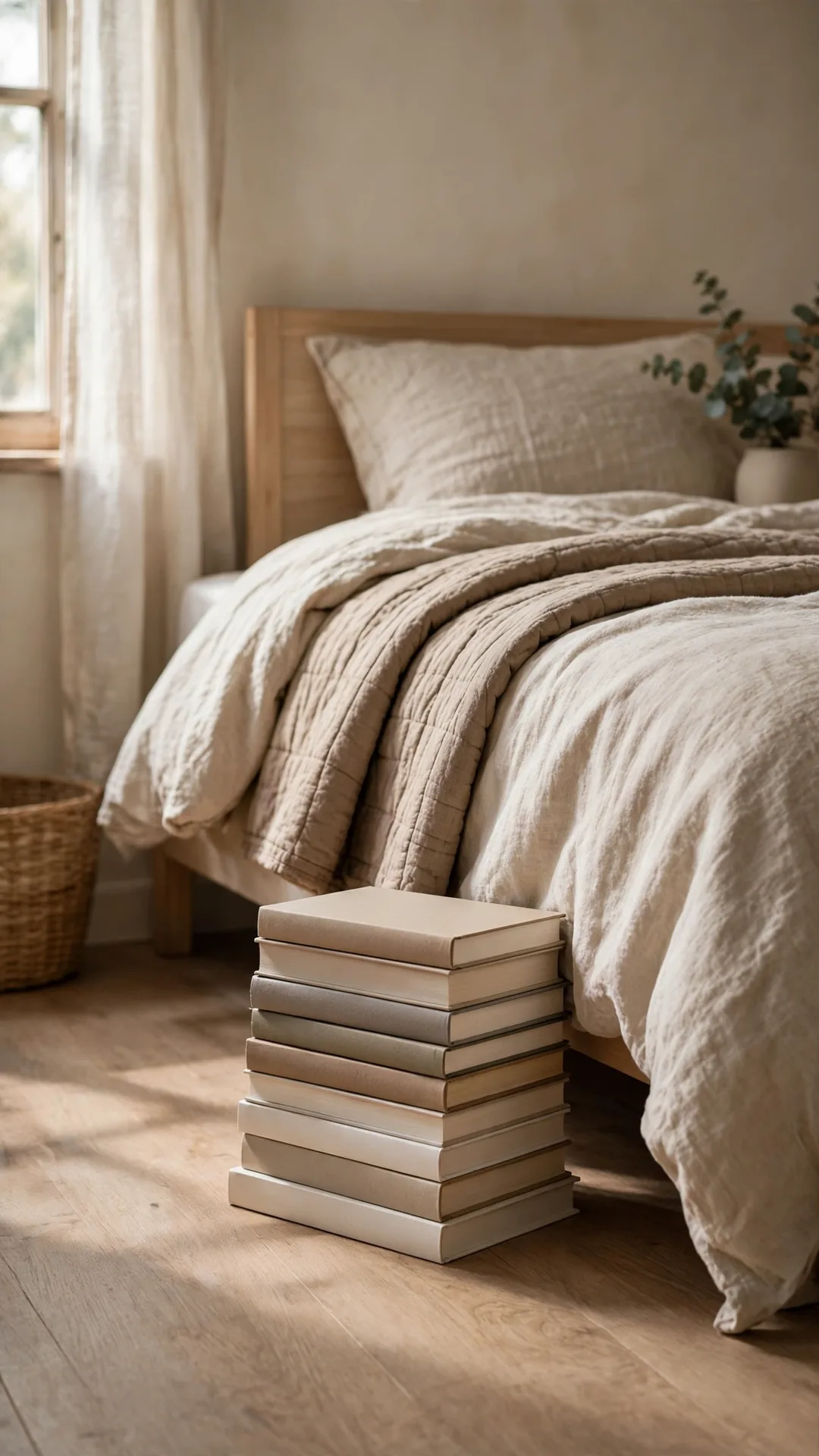
A floor stack works when no nightstand fits. Books stay within reach of the pillow. Keep the pile low so it never topples at night.
How to do it:
- Clear a spot about 12 inches square by the bed.
- Stack five books flat, largest at the base.
- Turn spines toward the bed for easy reading.
- Keep a small lamp or phone light nearby.
Best for: Bedrooms too tight for a nightstand.
Budget: Free
Quick tip: Swap the top book each week to keep reads fresh. Read the top book first so the pile shrinks fast. Add one each month at most.
9. Hang One Floating Shelf Above the Desk
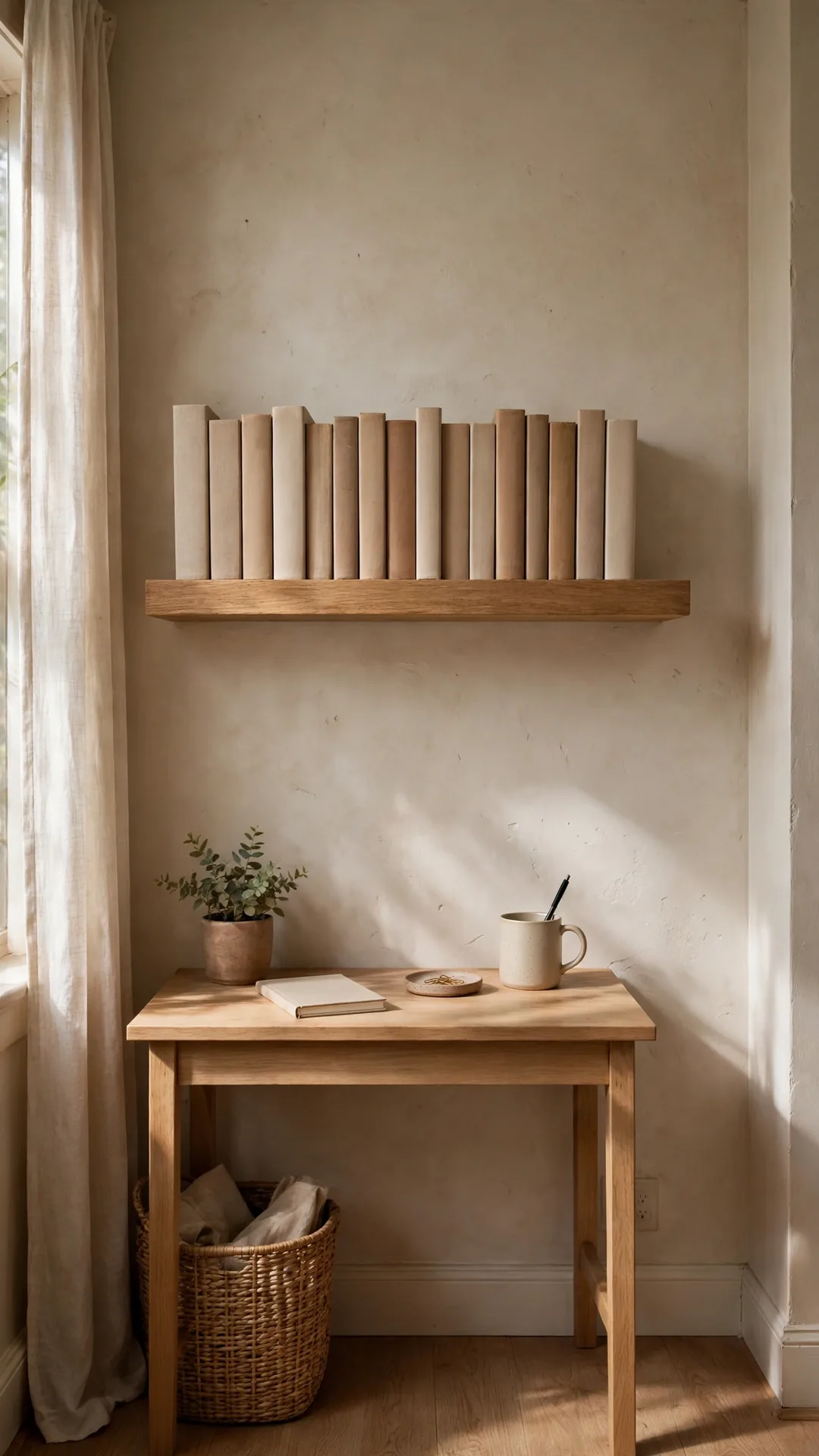
One shelf above the desk frees the work surface fast. Books for study or work sit within arm reach. It pairs well with bag storage ideas for a small space for the rest of the room.
How to do it:
- Mount the shelf 18 inches above the desk top.
- Hit studs or use anchors rated for 35 pounds.
- Keep the shelf 10 to 12 inches deep.
- Stand daily books in the middle section.
Best for: Desk walls in studios and bedrooms.
Budget: $25 to $60
Quick tip: Test the shelf with five heavy books before loading it.
10. Run Shelves Right Up to the Ceiling
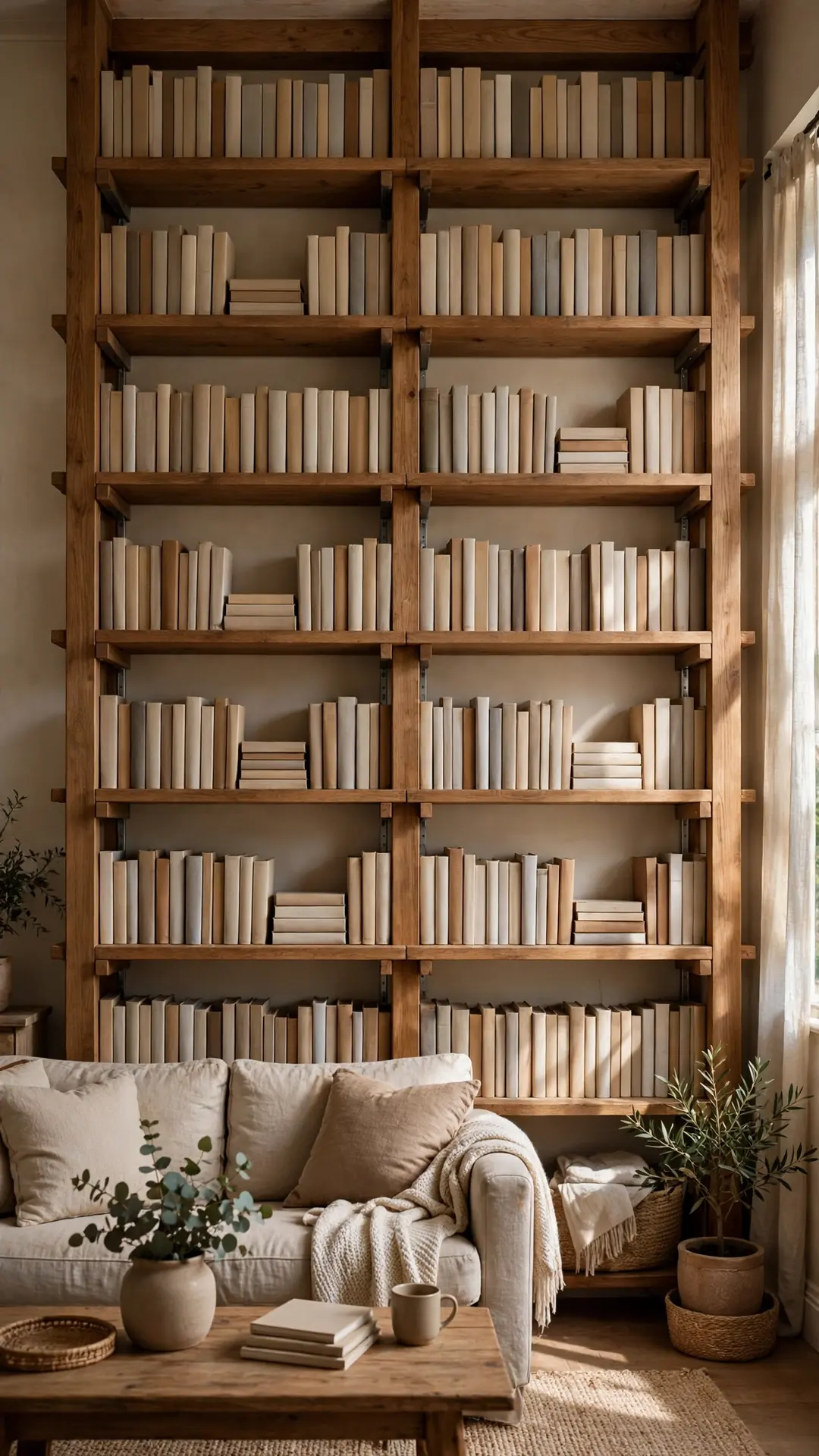
The top two feet of wall space often sit empty. Shelves to the ceiling hold backlist books you read once a year. A step stool makes the high rows safe to reach.
How to do it:
- Plan shelves from 24 inches above the floor to the ceiling.
- Space high shelves 12 inches apart for tall books.
- Anchor every upright into studs along the wall.
- Store light, rare reads on the highest shelf.
Best for: Owners with tall walls and big collections.
Budget: $120 to $300
Quick tip: Keep a folding step stool hooked beside the shelves.
11. Fit Invisible Shelves for Floating Stacks
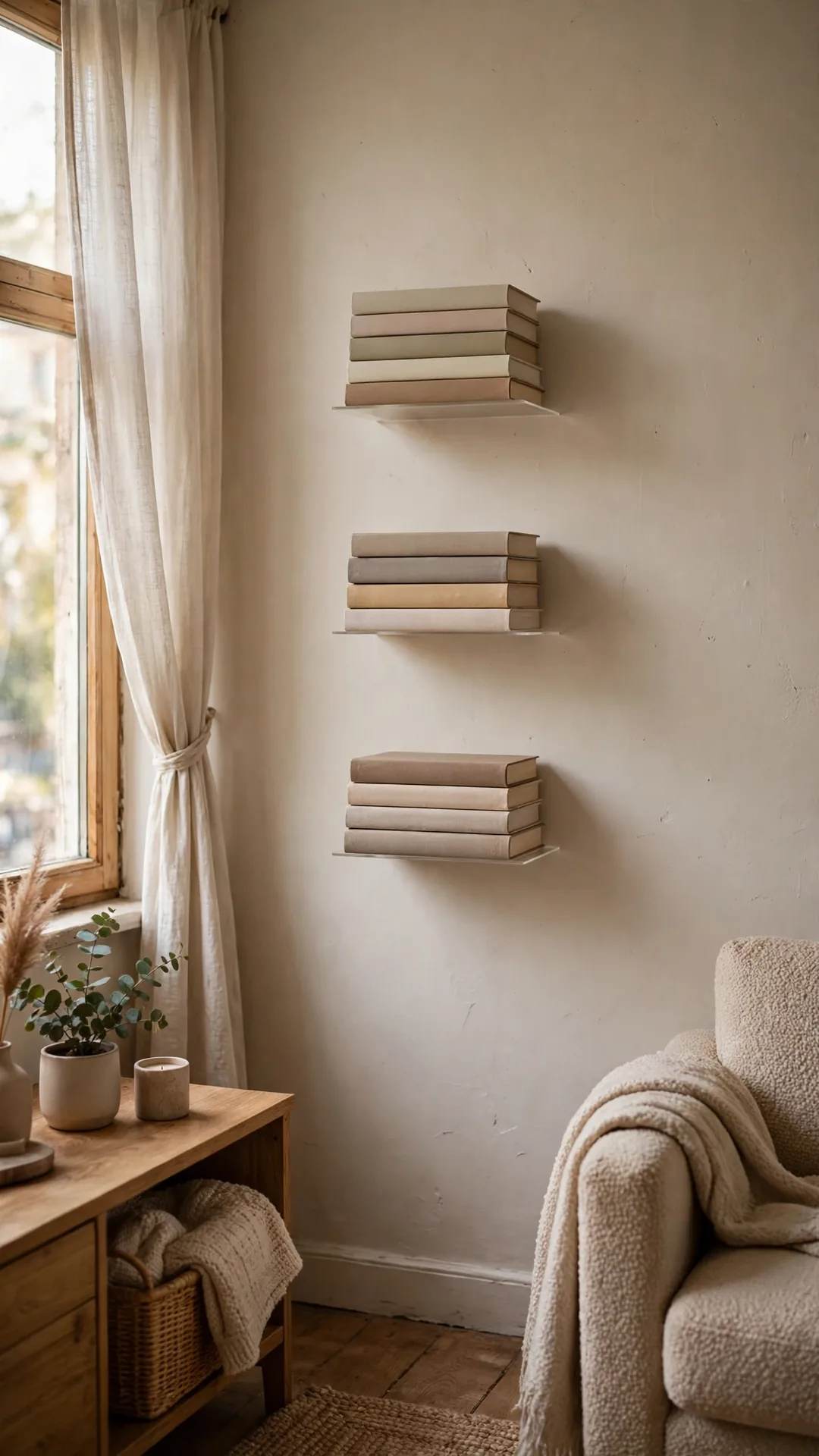
Invisible shelves rank high among book storage ideas for small spaces. A hidden bracket hides inside the bottom book of each stack. The pile looks like it floats on the wall.
How to do it:
- Fix the bracket into a stud with long screws.
- Pick a hardcover at least 9 inches deep as the base.
- Stack four to six books per bracket.
- Keep each stack under 10 pounds total.
Best for: Modern rooms and photo-worthy corners.
Budget: $15 to $30 per shelf
Quick tip: Use a worn hardcover as the base so good books stay free.
12. Mount a Ledge Shelf for Covers Out
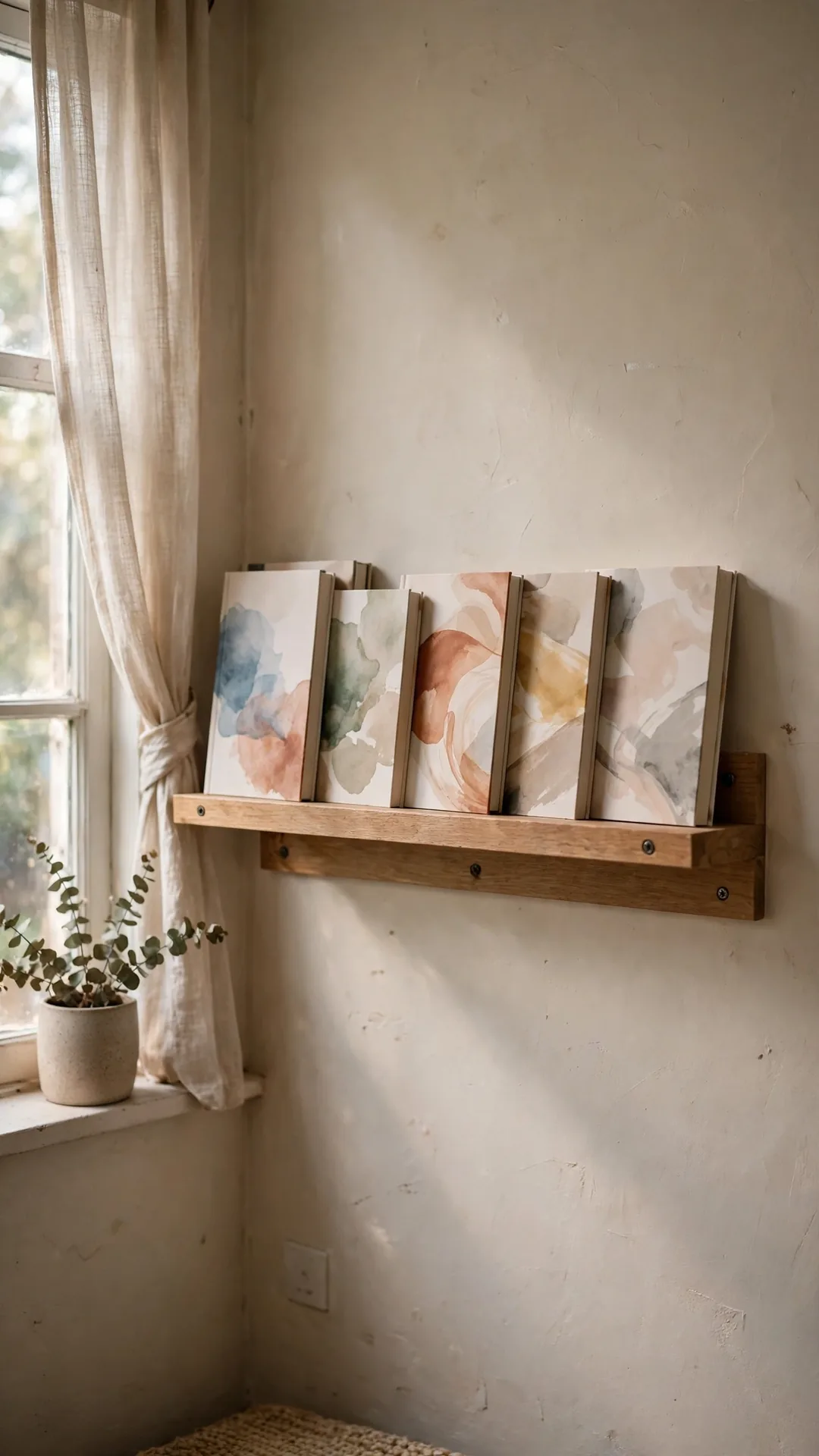
A picture ledge shows book covers like art. Covers out makes picks fast for kids and guests. The shelf takes just 4 inches of depth.
How to do it:
- Mount a ledge 36 to 48 inches long at eye level.
- Fix it into studs or with rated anchors.
- Lean six to ten books with covers facing out.
- Swap the display each month for a fresh look.
Best for: Kids rooms and entry walls.
Budget: $20 to $50
Quick tip: Leave one gap in the row so covers stand out. Keep heavy art books off this shallow ledge. Dust it weekly.
13. Add Shelves Above the Doorway
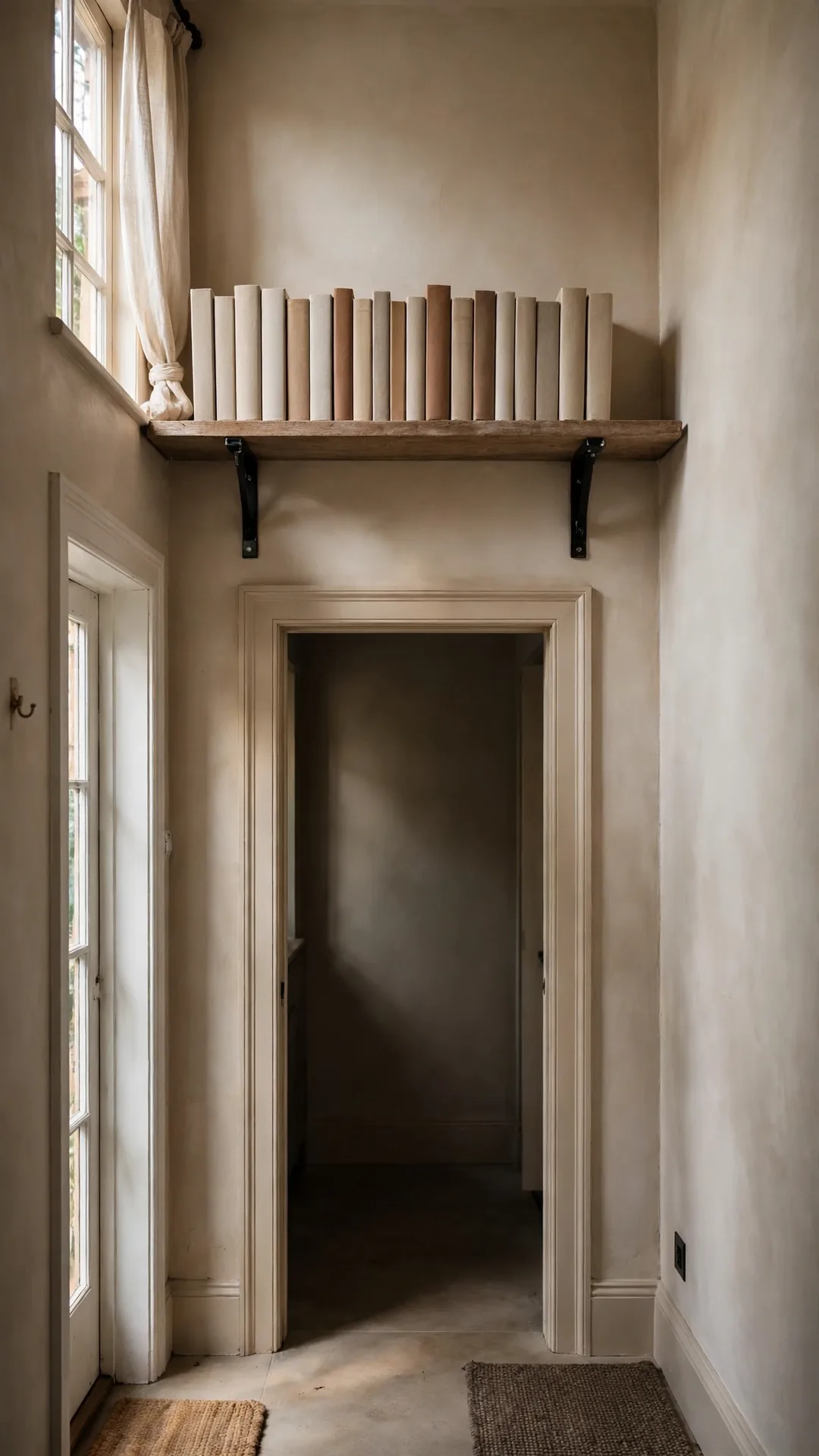
The wall above a door holds one neat row of books. That strip of wall does no other job in the room. A small stool makes the row easy to reach.
How to do it:
- Measure the width between the trim and the ceiling.
- Fit a shelf 8 to 10 inches deep above the frame.
- Anchor the shelf into the header studs.
- Store finished series or reference books up there.
Best for: Hallways and bedrooms with high ceilings.
Budget: $20 to $45
Quick tip: Keep everyday reads lower and save this for archives. Sort the row by height for a calm line.
14. Build a Shelf Around a Window
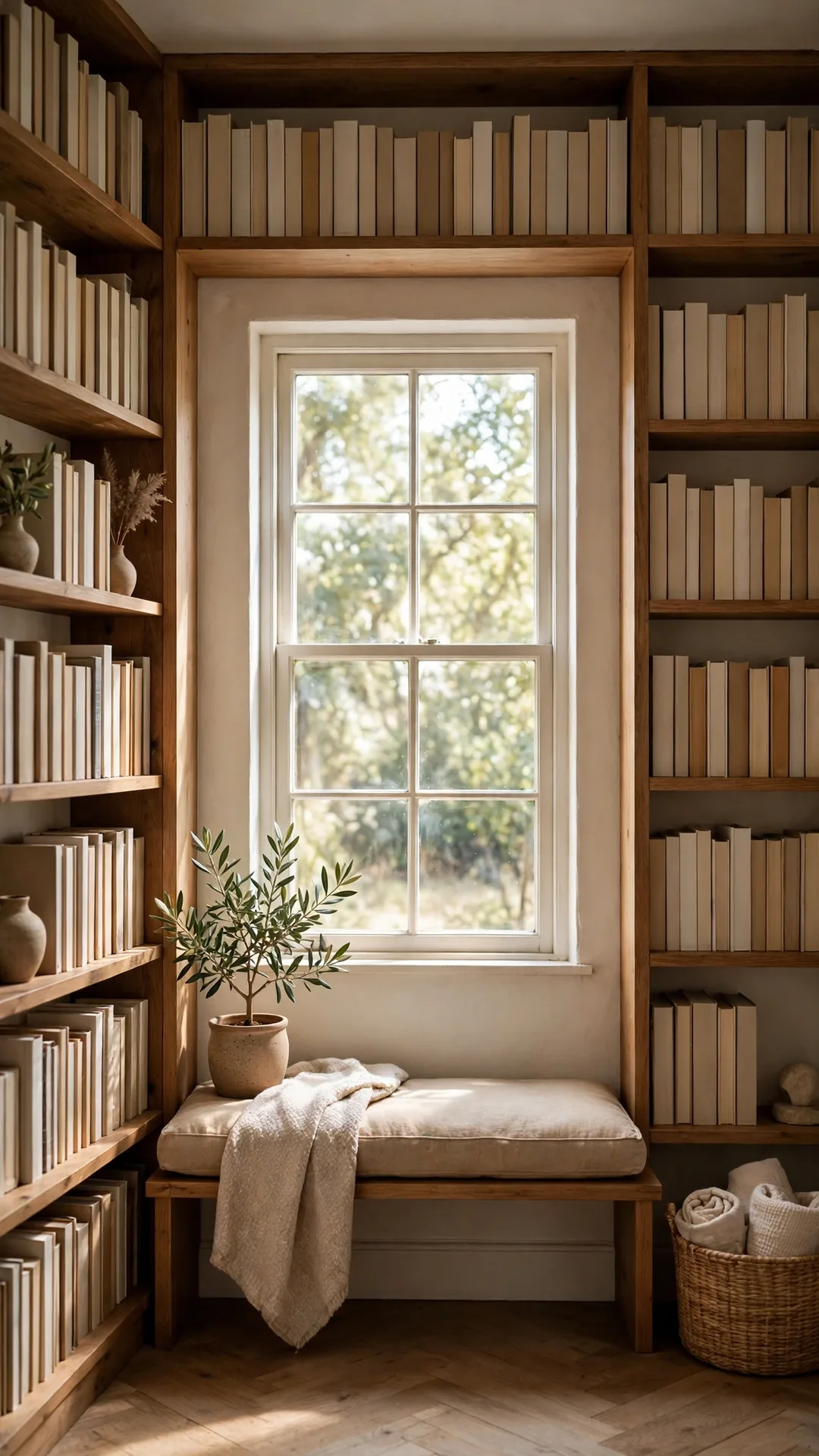
Shelves around a window turn dead wall into a library. The sides and top of the frame hold rows of books. Light stays free while storage climbs the wall.
How to do it:
- Measure both sides and the span above the window.
- Use shelves 9 to 11 inches deep on each side.
- Bridge the top with one shelf at ceiling height.
- Anchor side units to studs and to each other.
Best for: Owners planning one fixed wall.
Budget: $150 to $400
Quick tip: Keep the lowest side shelf free for a plant. Test one side first before you build the top span.
15. Hang a Peg Rail with Book Slings

Fabric slings make gentle book storage ideas for small spaces. Books rest in soft pockets hung from a peg rail. The rail holds slings at any height you set.
How to do it:
- Fix a rail 36 inches long into two studs.
- Hang three canvas slings from the pegs.
- Slide two or three books into each sling.
- Keep sling weight under 5 pounds each.
Best for: Kids rooms and soft, cozy corners.
Budget: $25 to $55
Quick tip: Wash slings monthly since fabric traps dust fast. Hang a spare sling for library books on loan. Swap slings by season.
16. Stack Wall Cubes in a Grid
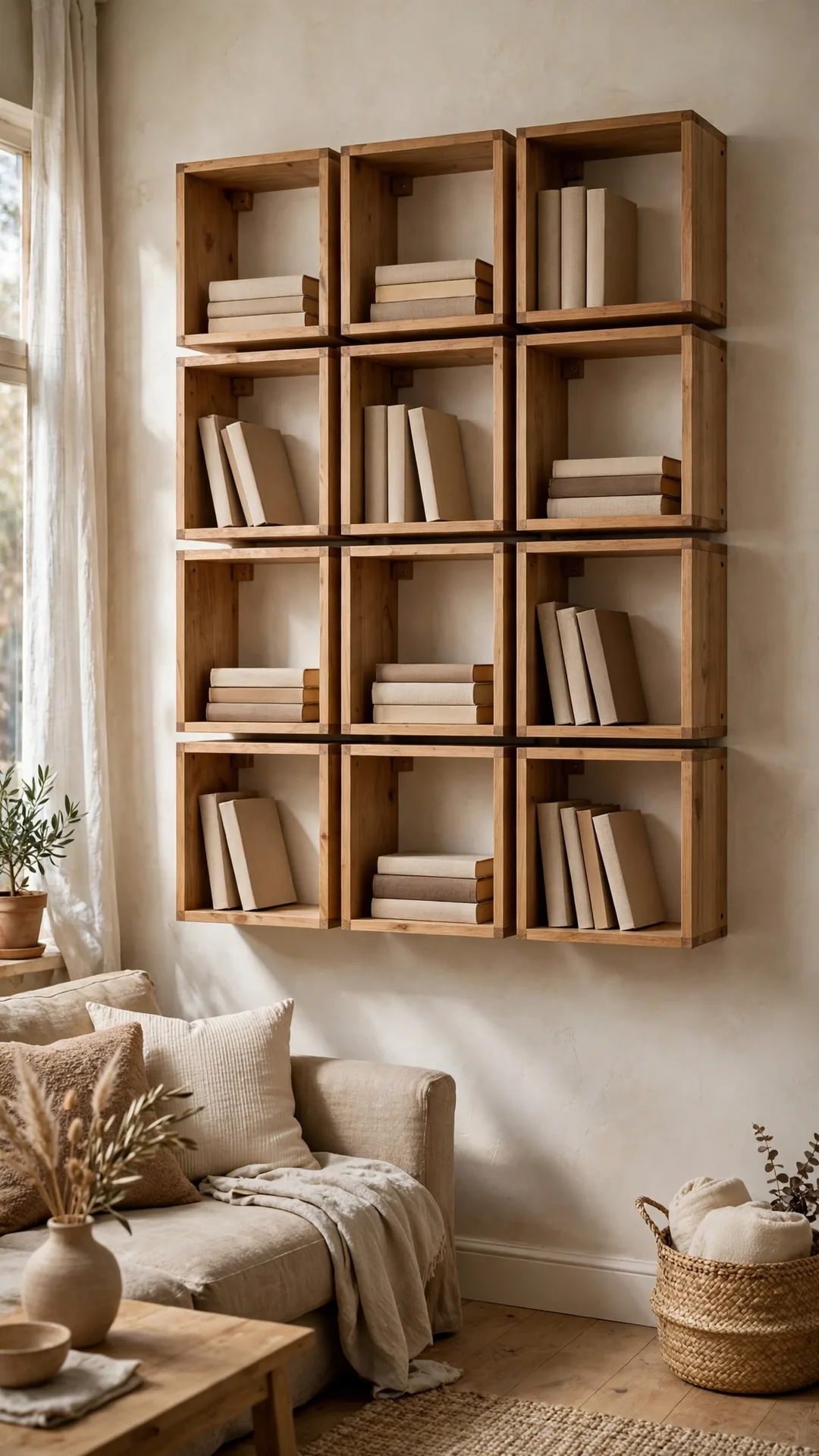
Wall cubes break a big collection into small groups. Each cube holds one topic or one reader's books. The grid grows one cube at a time.
How to do it:
- Pick cubes 12 to 14 inches square and 10 inches deep.
- Start with four cubes in a two by two grid.
- Fix each cube into a stud or a rated anchor.
- Leave one cube empty for new arrivals.
Best for: Renters who add storage in stages.
Budget: $15 to $35 per cube
Quick tip: Hang cubes with a level so the grid stays straight. Sort each cube by one reader or one topic.
17. Slide a Skinny Tower into a Gap
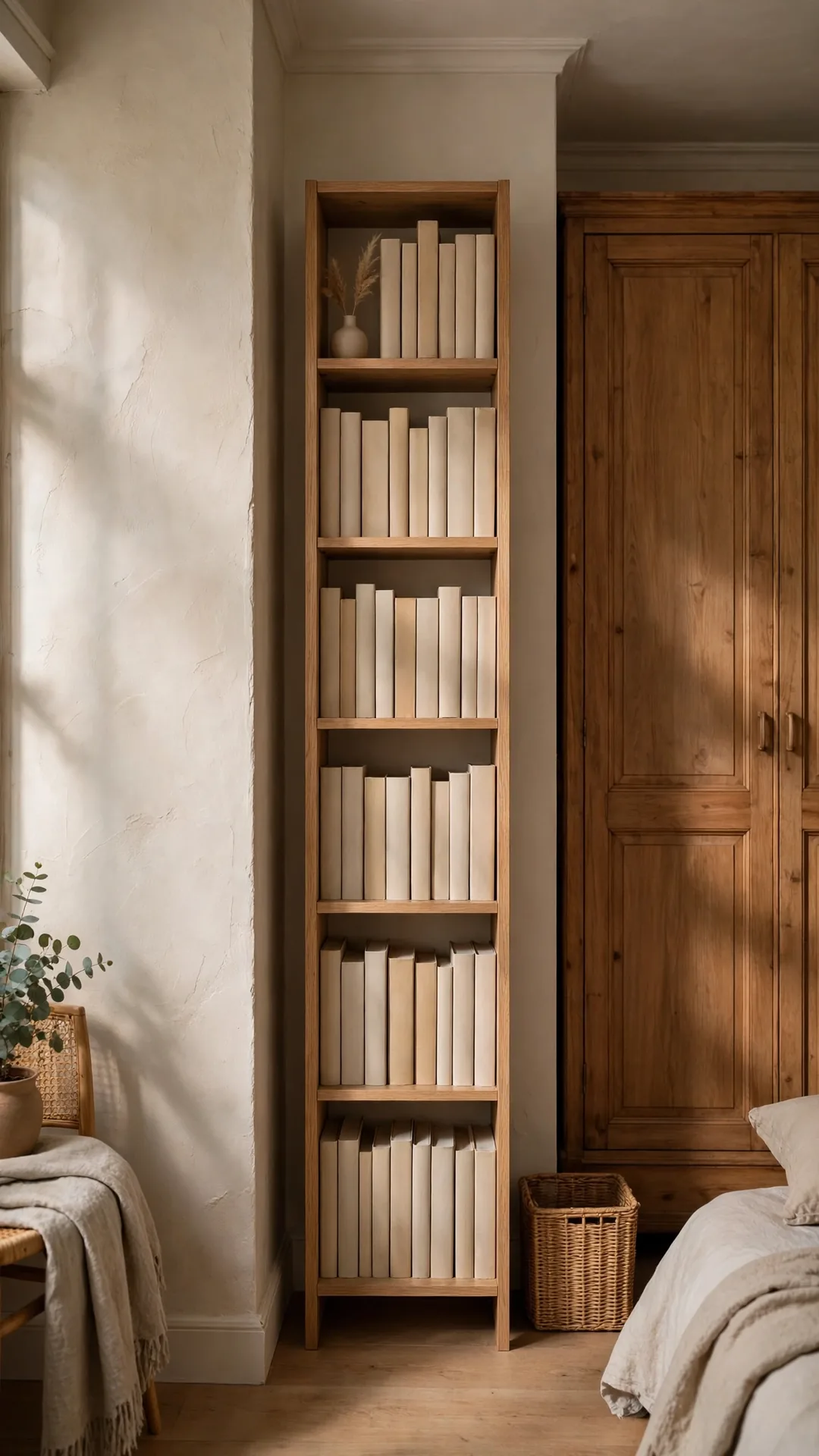
A skinny tower fits gaps no other furniture claims. Many towers stand just 10 inches wide. Five to seven shelves hold a tall stack of reads.
How to do it:
- Measure the gap width, depth and height first.
- Choose a tower 2 inches narrower than the gap.
- Strap the top to the wall so it cannot tip.
- Load heavy books on the lowest shelves.
Best for: Gaps beside wardrobes and fridges.
Budget: $60 to $140
Quick tip: Face spines flush with the shelf edge for a clean line. Set the tower on a flat board over soft carpet.
18. Choose a Ladder Shelf for Tight Corners
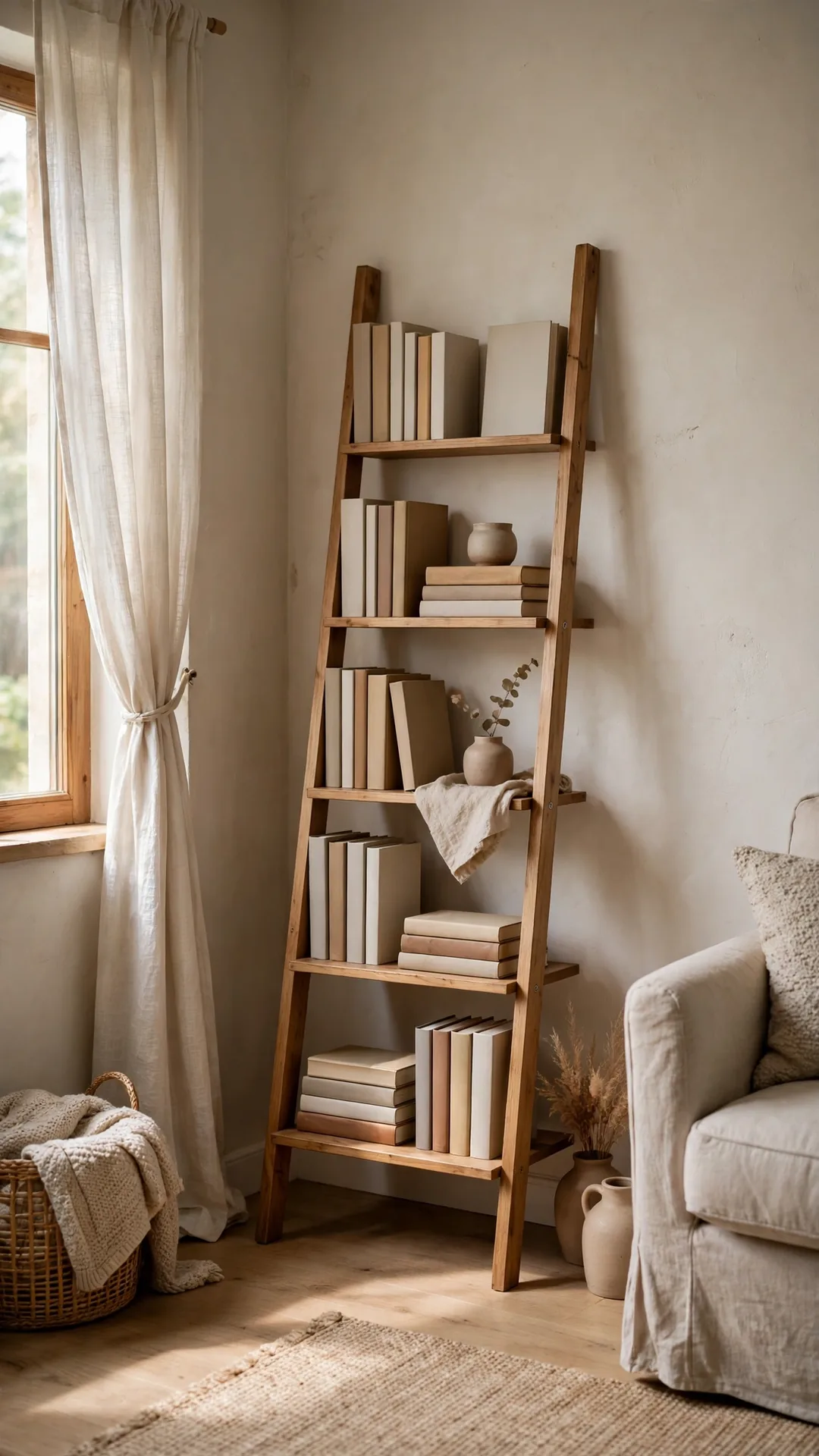
A ladder shelf leans into a corner and needs no fitting. Shelves narrow toward the top, which suits paperbacks well. Books sit low while the top holds a plant.
How to do it:
- Pick a shelf about 18 inches wide and 60 inches tall.
- Set the feet 14 inches out from the wall.
- Anchor the top rail to the wall for safety.
- Put the heaviest books on the widest shelf.
Best for: Renters and corner dead spots.
Budget: $50 to $120
Quick tip: Test the lean on carpet before you load it. Keep the top shelf light so the lean stays true.
19. Stand a Corner Bookcase in Dead Space
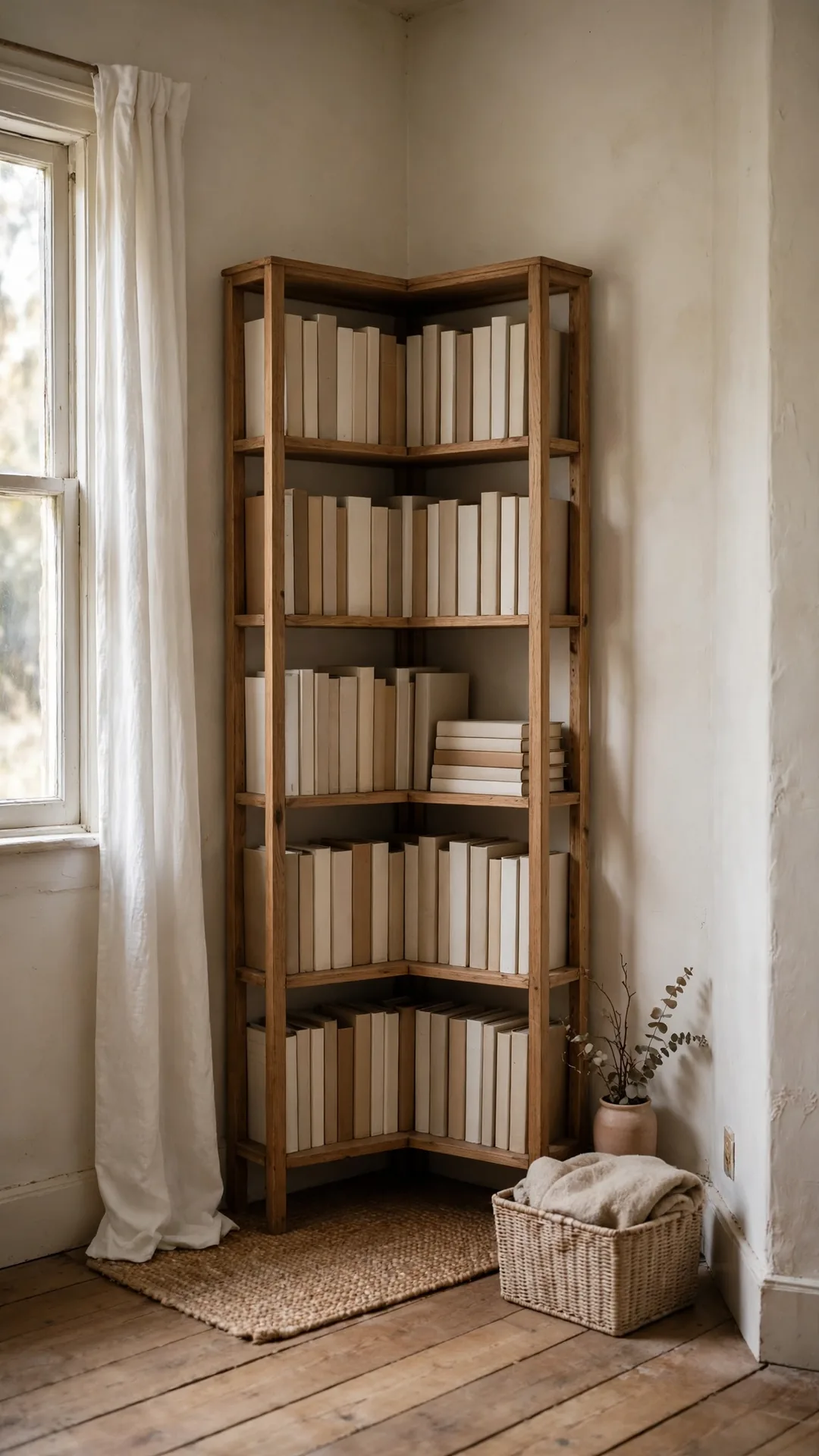
Corners often waste space that book storage ideas for small spaces can claim. A corner bookcase wraps two walls at once. Its shelves taper, so deep books sit low.
How to do it:
- Measure both walls out from the corner.
- Pick a case with shelves 10 to 12 inches deep.
- Fix the top to one wall with a strap.
- Stand tall art books on the bottom shelf.
Best for: Living room corners behind doors.
Budget: $80 to $180
Quick tip: Leave the top shelf for light paperbacks only. Mark shelf heights with tape before you drill. Check twice.
20. Pick a Rotating Bookcase for Small Footprints
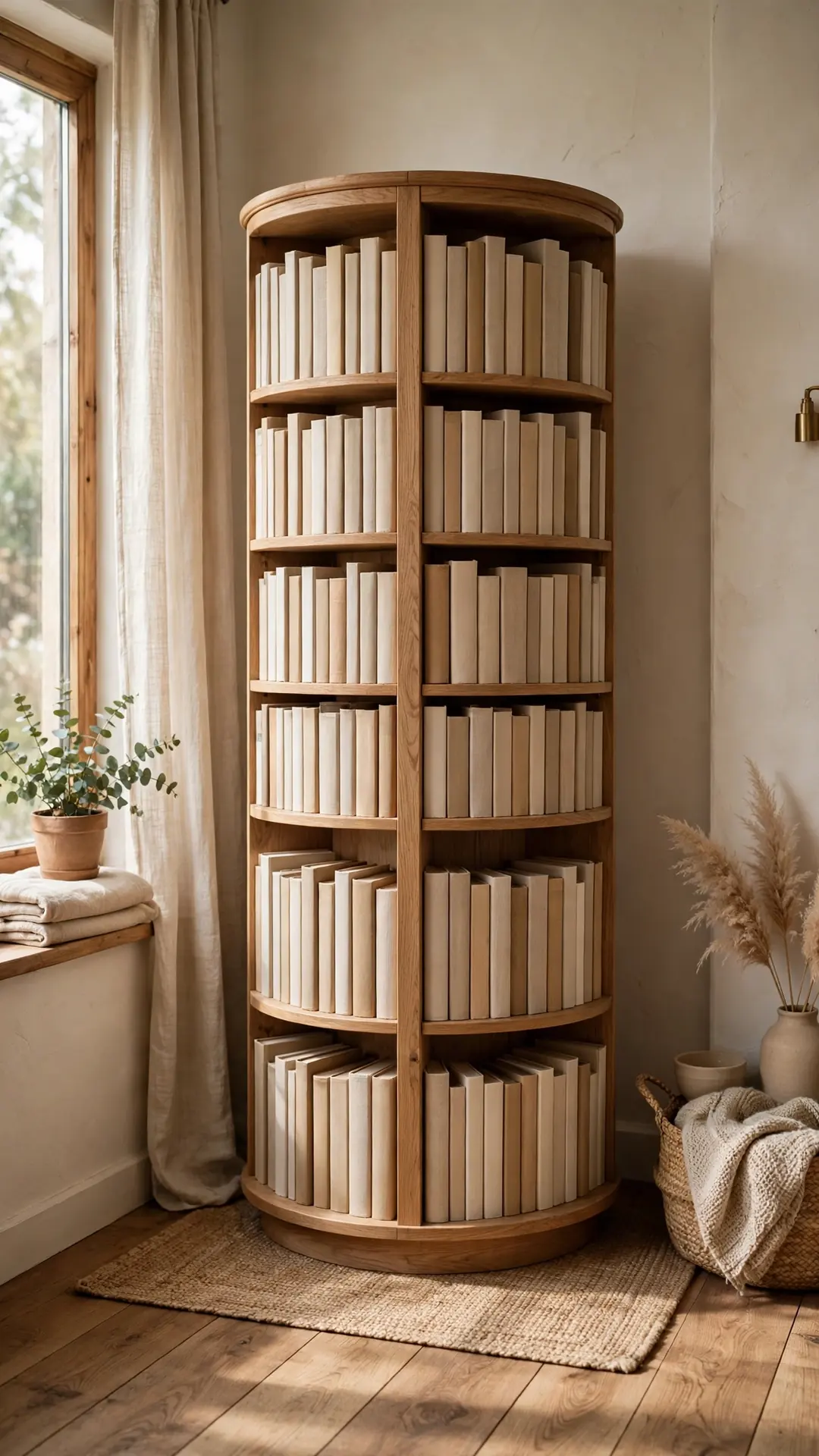
A rotating case holds books on every side in one square. One spin shows the whole shelf. It pairs well with refrigerator organization ideas for small kitchens for a full small home reset.
How to do it:
- Clear a floor square about 20 by 20 inches.
- Check the spin clears walls and chair legs.
- Load books evenly so the case stays balanced.
- Keep the total load under the rated limit.
Best for: Studio centers and shared rooms.
Budget: $90 to $200
Quick tip: Spin the case weekly so no side gathers dust. Oil the turntable base once a year.
21. Use a Low Bookcase as a Room Divider
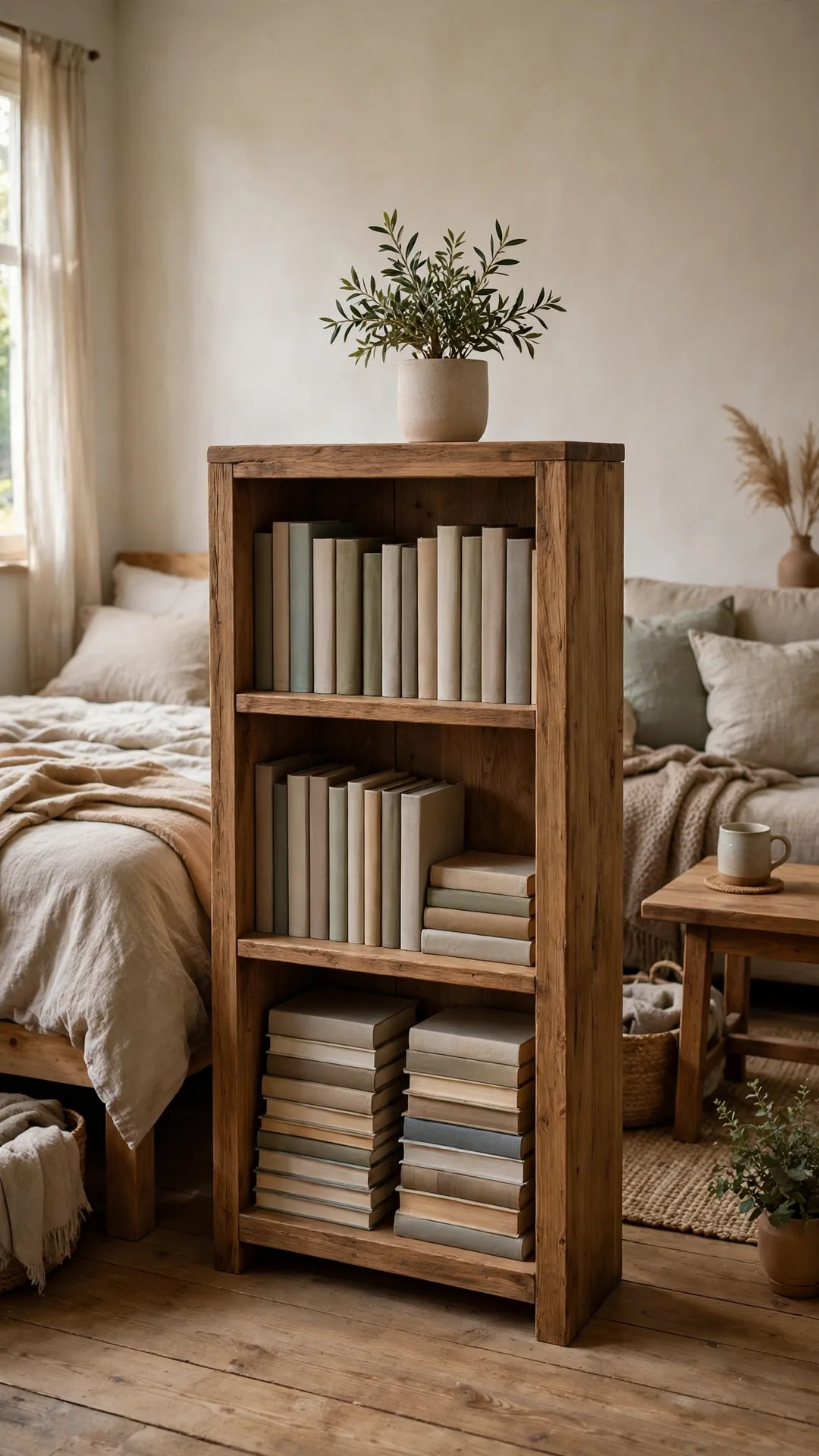
A low bookcase splits a studio without a wall. Books face both sides, so each zone gets shelves. The top works as a display ledge.
How to do it:
- Pick a case 30 to 36 inches tall and 12 inches deep.
- Set it at a right angle to the wall.
- Anchor the end to the wall or a heavy base.
- Fill lower shelves first to keep it stable.
Best for: Studios that need two zones.
Budget: $70 to $160
Quick tip: Leave walkways at least 30 inches wide on both sides. Put felt pads under the feet to guard the floor.
22. Set a Bookcase Behind the Sofa
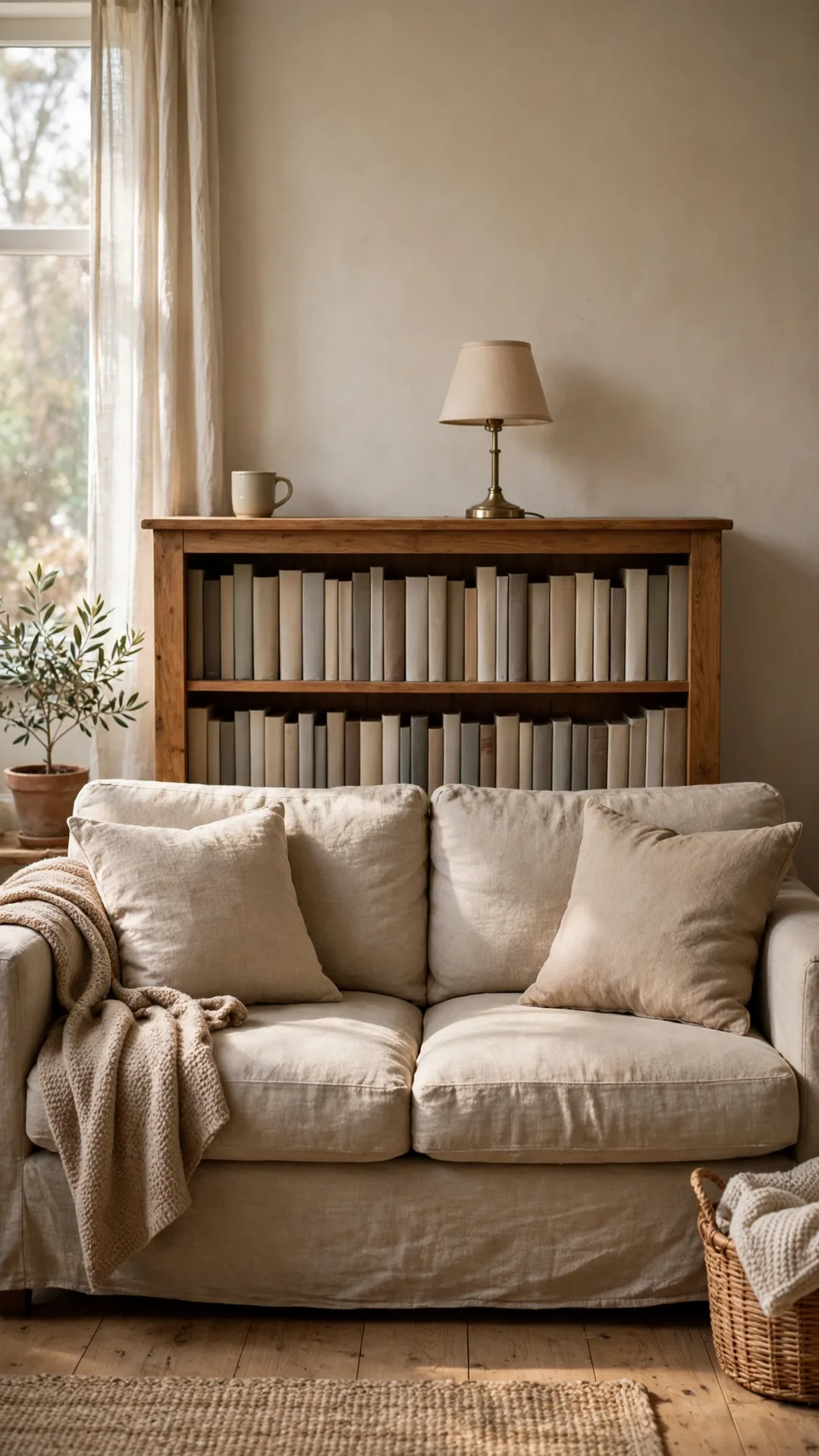
The space behind a sofa hides a low bookcase well. Books sit at arm height when you turn around. The top ledge holds a lamp or a cup.
How to do it:
- Pull the sofa 12 to 14 inches from the wall.
- Pick a case no taller than the sofa back.
- Stand daily reads on the top shelf.
- Run the lamp cord along the case edge.
Best for: Living rooms with the sofa off the wall.
Budget: $60 to $150
Quick tip: Keep one shelf free for remotes and chargers. Keep the ledge clear of tall stacks. One lamp is plenty.
23. Anchor a Tall Case and Load It Right
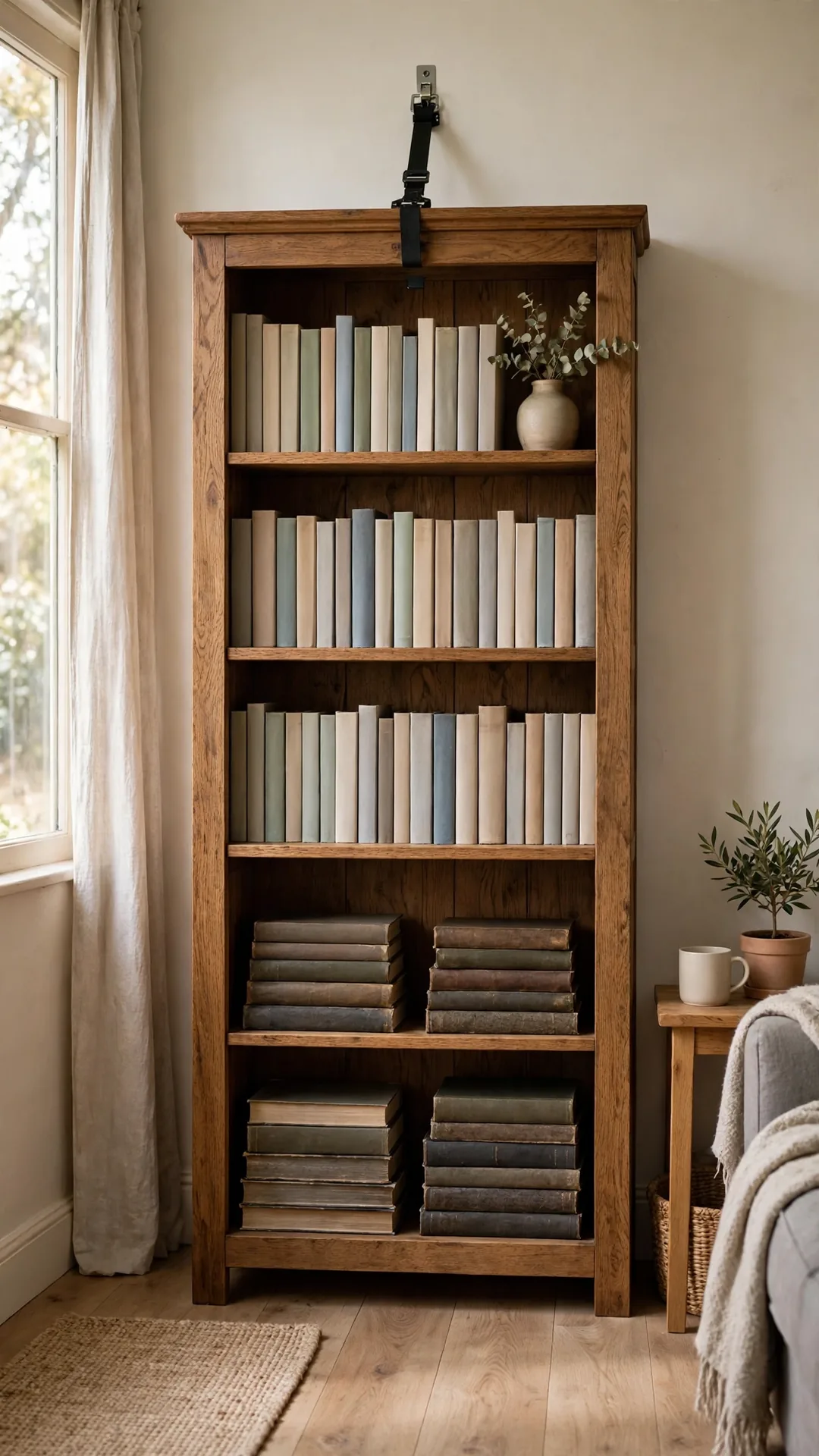
Safety comes first with tall book storage ideas for small spaces. A full bookcase can weigh 200 pounds or more. An anti-tip strap keeps it locked to the wall.
How to do it:
- Fix the strap into a stud behind the case.
- Load the heaviest books on the bottom shelves.
- Keep top shelves for light paperbacks.
- Check the strap once a year for slack.
Best for: Homes with kids or pets.
Budget: $70 to $180
Quick tip: Slide the case into place before you load any shelf. Take a photo of the strap path before you hide it.
24. Fit a Bookcase Under the Stairs
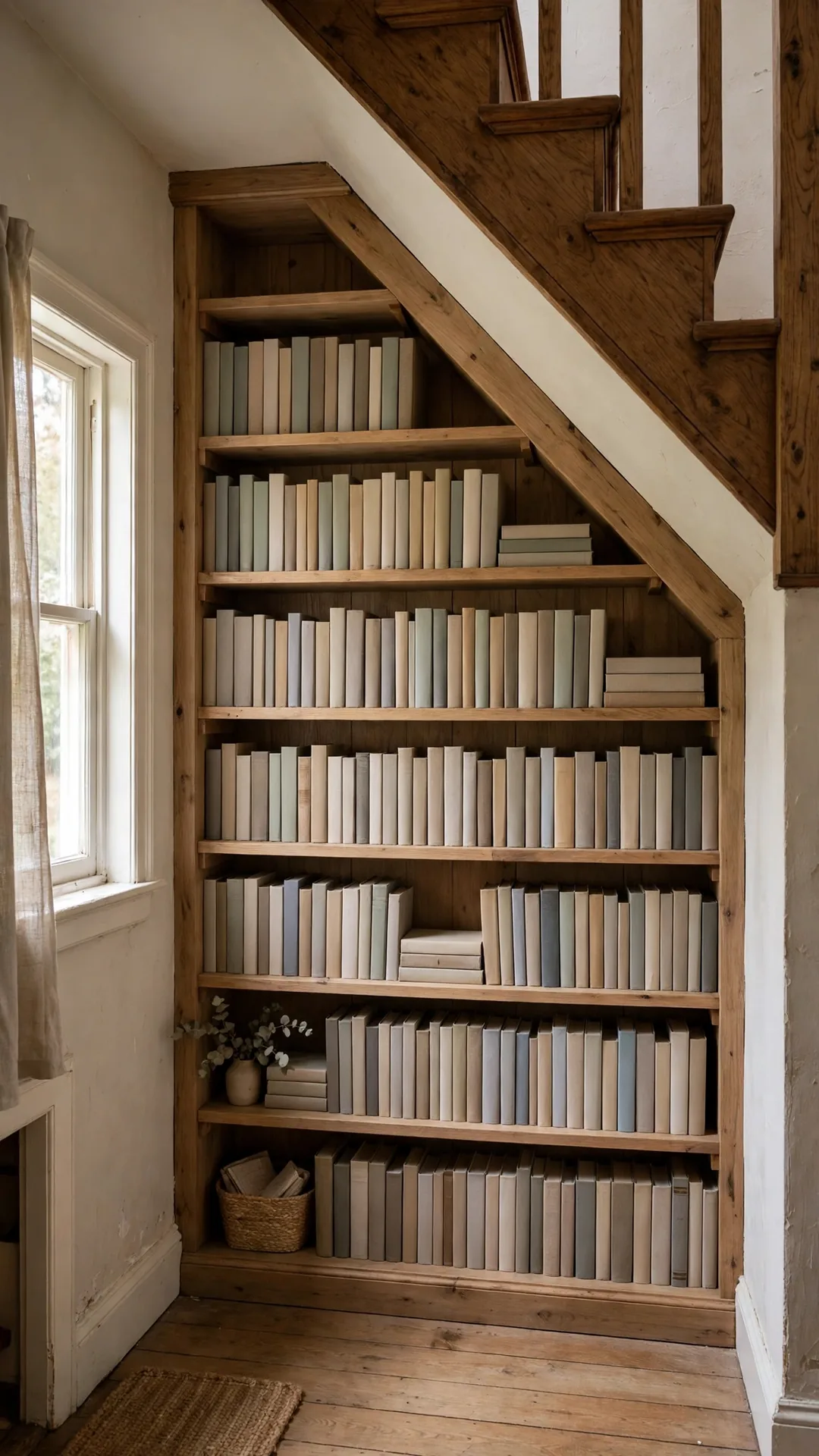
The slope under stairs fits low shelves with ease. Books fill the tall end while baskets take the low end. Measure headroom before you plan the top shelf.
How to do it:
- Measure the slope height at three points.
- Fit shelves 10 inches deep along the tall side.
- Anchor the frame to the wall studs.
- Keep a small light at the tall end.
Best for: Homes with an open stair nook.
Budget: $100 to $250
Quick tip: Paint the nook white so books stay easy to scan. Keep a small flashlight in the nook for night finds.
25. Store Books Inside a Storage Ottoman
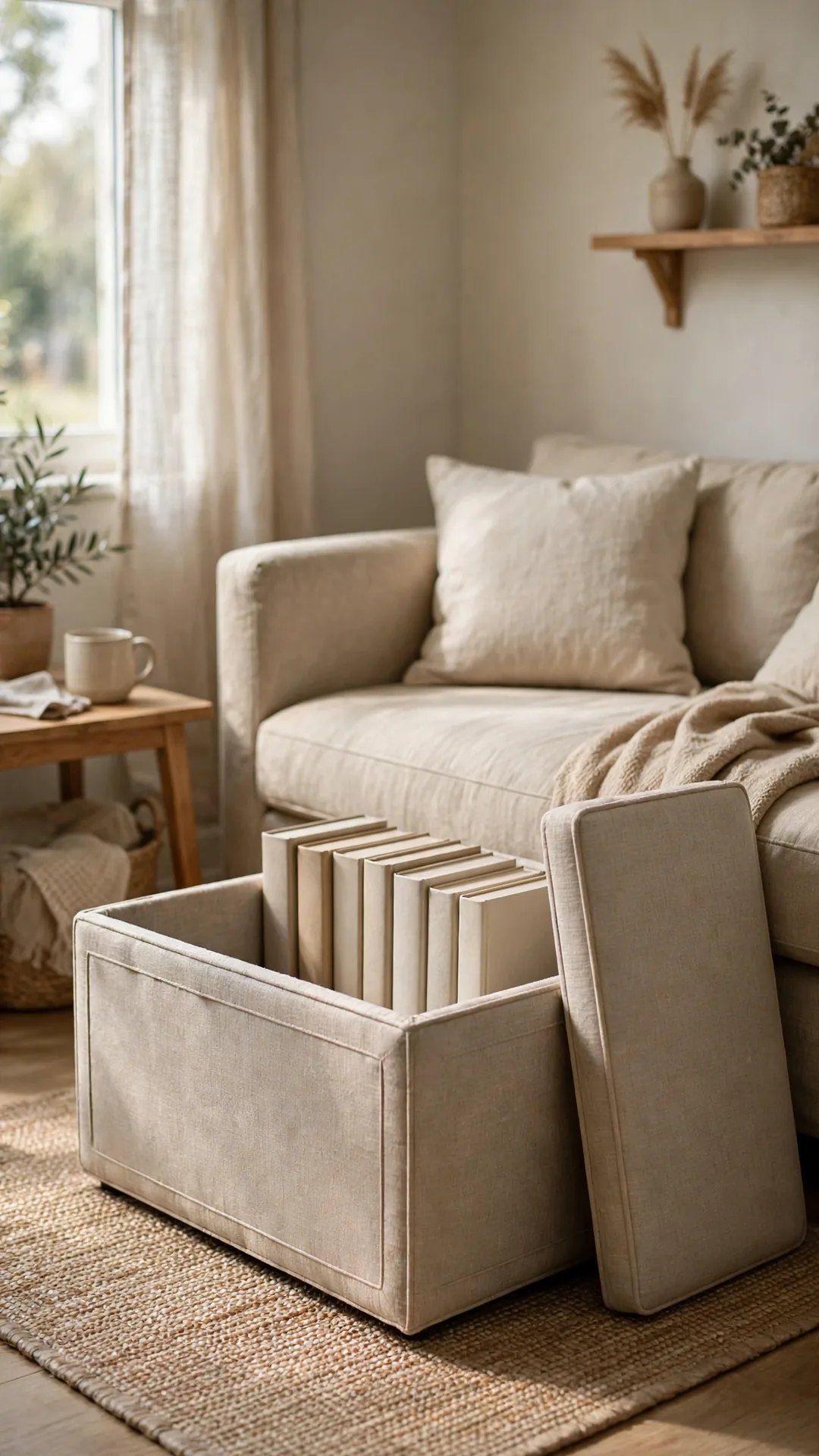
A storage ottoman hides books in plain sight. The lid lifts off and the inside holds a dozen books. Feet rest on top while reads stay hidden.
How to do it:
- Pick an ottoman about 18 inches tall with a firm lid.
- Line the inside with a soft fabric bag.
- Stand books upright along one side.
- Keep the total load light for easy lifting.
Best for: Living rooms that need hidden storage.
Budget: $40 to $90
Quick tip: Keep current reads inside and archives elsewhere. Air the inside monthly so books stay fresh. Skip scented liners near old books.
26. Fill the Space Under the Bed
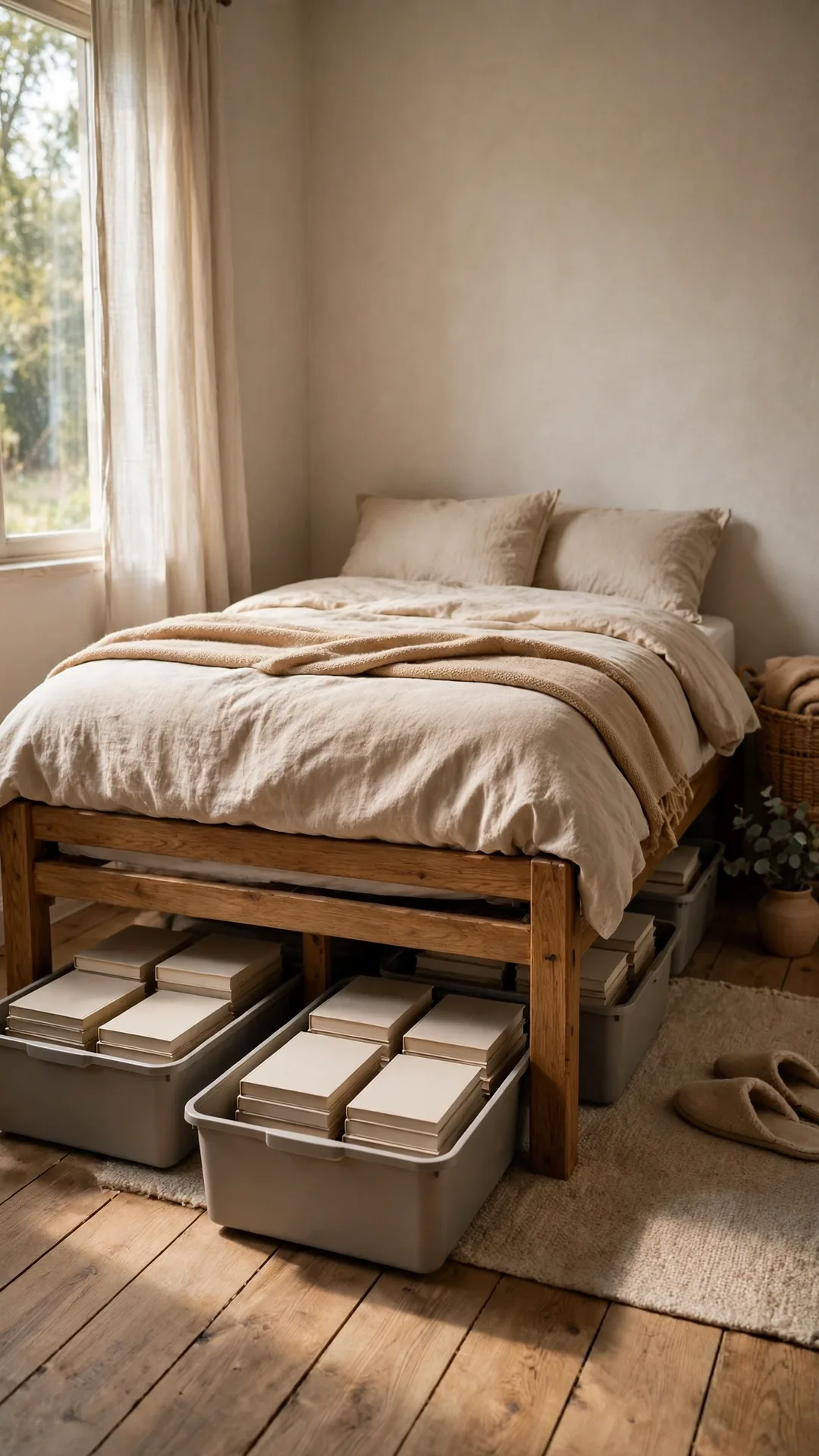
The space under a bed hides book storage ideas for small spaces. Low bins slide out of sight yet stay in reach. Finished books and archives rest there dust free.
How to do it:
- Measure the gap under the frame, often 6 to 8 inches.
- Pick lidded bins 5 inches tall with wheels or glides.
- Sort books by topic, one topic per bin.
- Slide bins in spine up so titles scan fast.
Best for: Bedrooms with no shelf wall left.
Budget: $15 to $35
Quick tip: Add a pull loop so the bin slides out with one hand.
27. Use a Hollow Side Table for Books
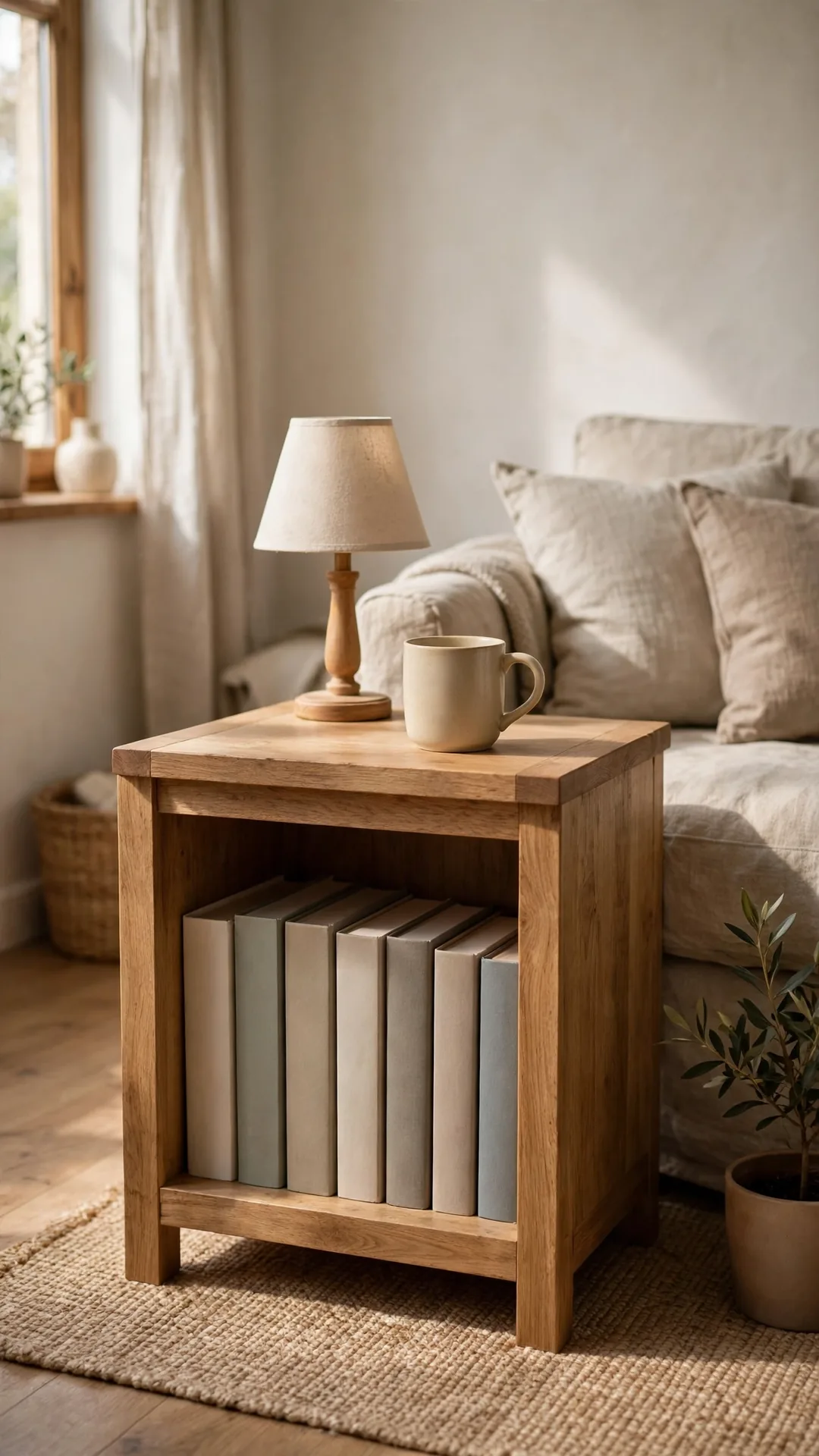
A side table with an open shelf does two jobs. The top holds a lamp while books fill the shelf below. It fits the same small apartment storage ideas that stretch every square foot.
How to do it:
- Pick a table 20 to 24 inches tall with one shelf.
- Stand six to ten books on the lower shelf.
- Keep the top clear for a lamp and a drink.
- Set the table within arm reach of the seat.
Best for: Sofa sides and reading chairs.
Budget: $35 to $80
Quick tip: Choose a table with a lip so books stay put.
28. Keep Books in a Rolling Cart
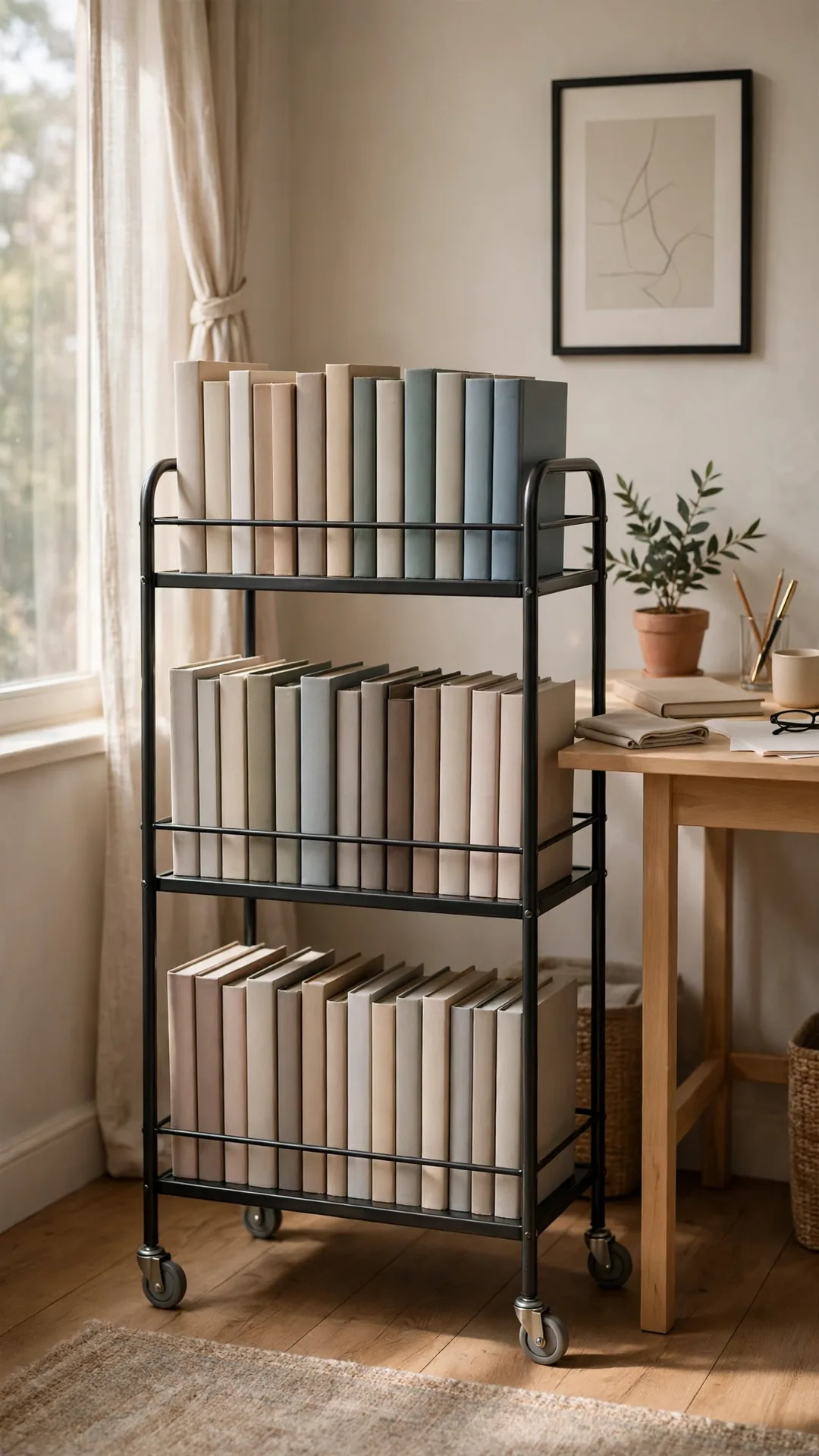
A rolling cart moves books where you need them. Each tier holds a row of slim books. The cart parks beside a desk or a bed.
How to do it:
- Pick a cart about 17 inches wide with three tiers.
- Load the heaviest books on the bottom tier.
- Lock the wheels once the cart is parked.
- Leave the top tier half free for new finds.
Best for: Shared rooms and homework spots.
Budget: $25 to $50
Quick tip: Roll the cart to a sunny spot for weekend reads. Mark each tier by topic with plain tape tags. Roll it out weekly.
29. Slide a Book Caddy Beside the Bed
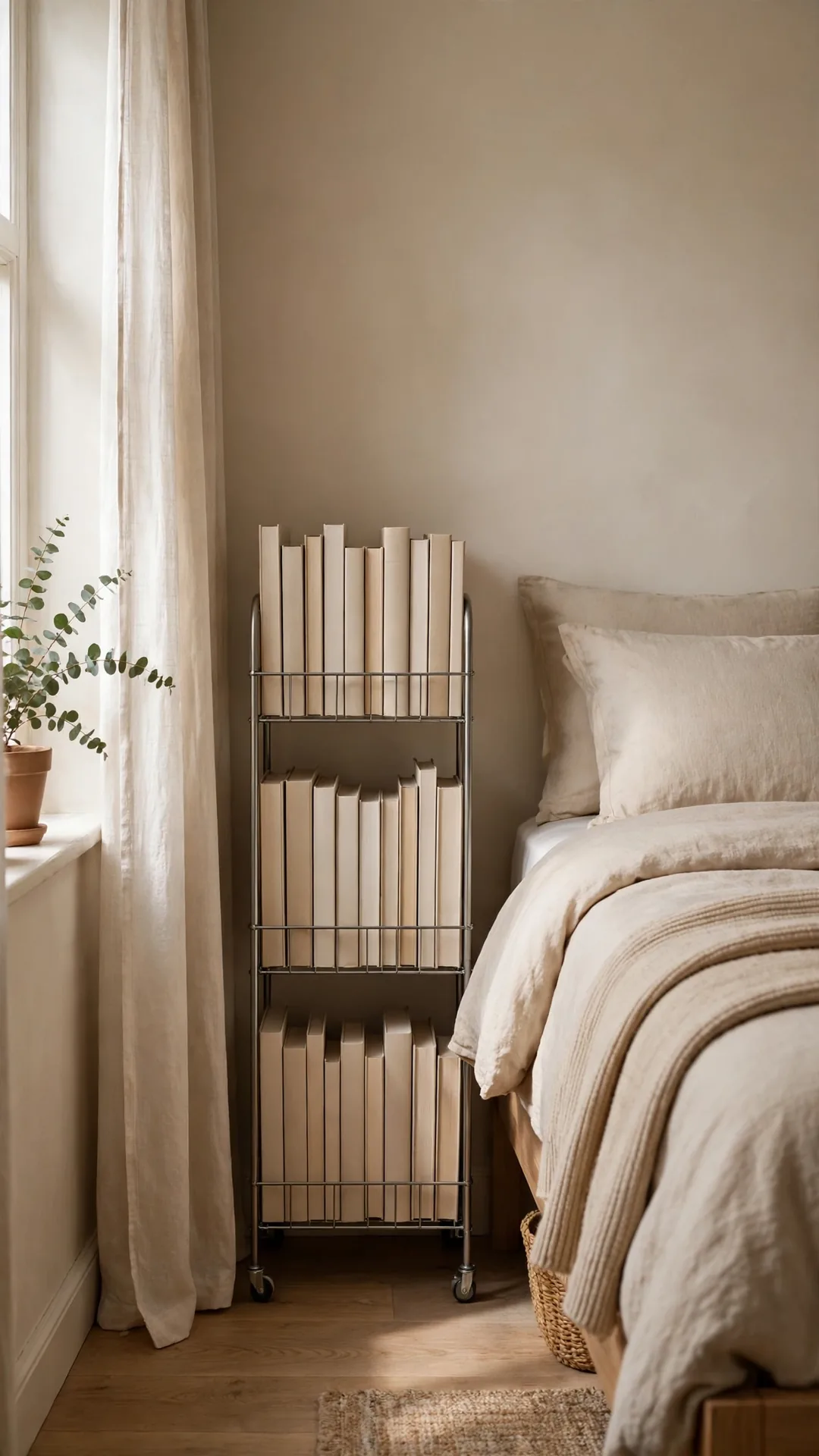
A narrow caddy claims the slot beside the bed. Books stand upright within reach of the pillow. The caddy rolls out for cleaning days.
How to do it:
- Measure the slot, often 6 to 10 inches wide.
- Pick a caddy 5 inches wide with two or three tiers.
- Stand nightly reads on the top tier.
- Keep a bookmark and a light in the caddy too.
Best for: Beds pushed close to the wall.
Budget: $20 to $45
Quick tip: Face all spines one way so titles line up. Keep the caddy clear of heat vents. Wheels roll best on hard floors.
30. Hide Books in a Bench with Storage
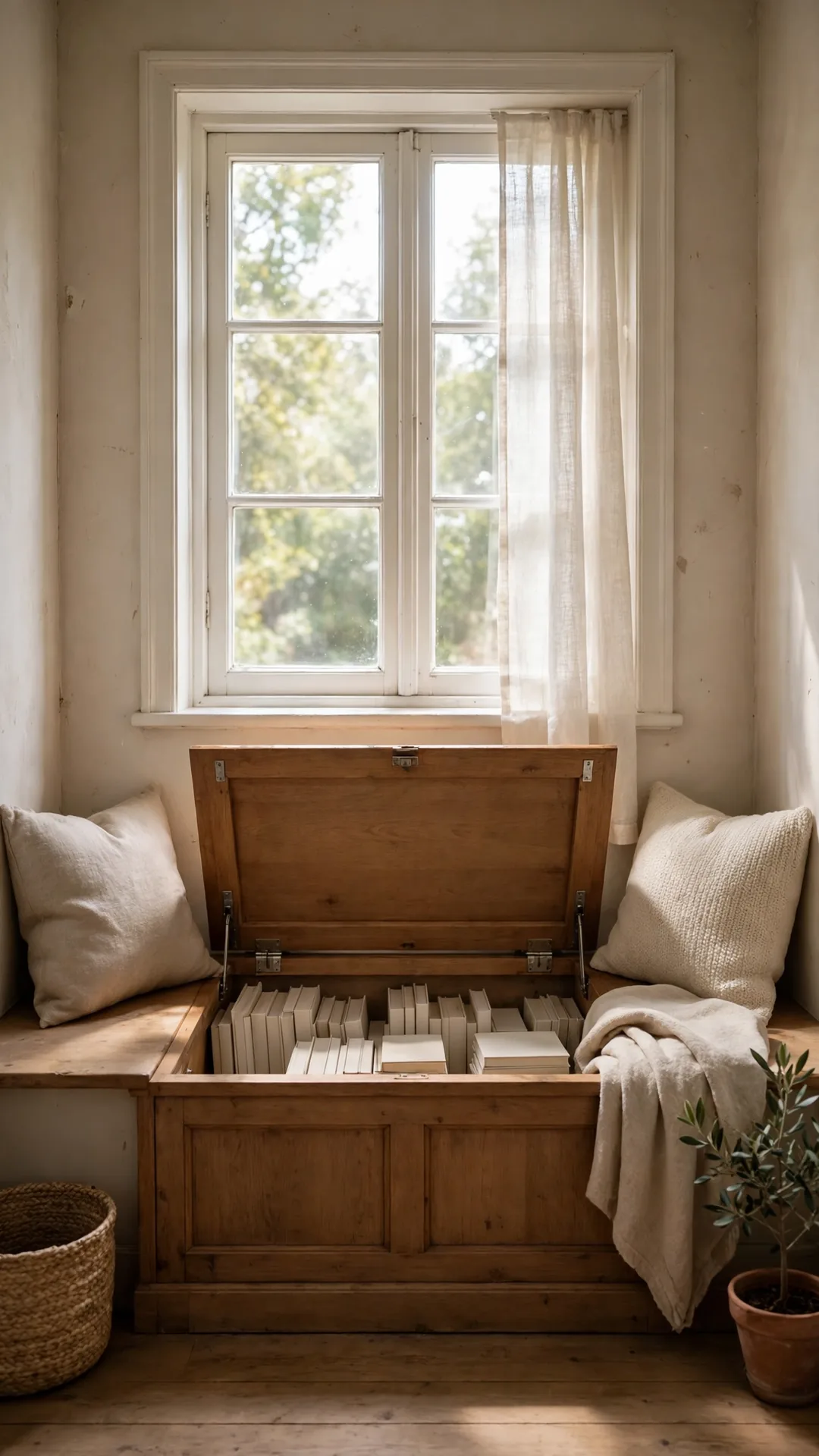
Hidden seats join book storage ideas for small spaces with ease. The bench seats two while a shelf worth of books rests inside. A soft close hinge keeps fingers safe.
How to do it:
- Pick a bench about 48 inches long and 18 inches deep.
- Check the inside depth fits tall books upright.
- Add a hinge that holds the lid open on its own.
- Line the base with felt to guard book edges.
Best for: Window spots and entry halls.
Budget: $80 to $180
Quick tip: Keep the heaviest books at the ends for balance. Add casters if the bench must move for guests.
31. Put Books in Dresser Drawers
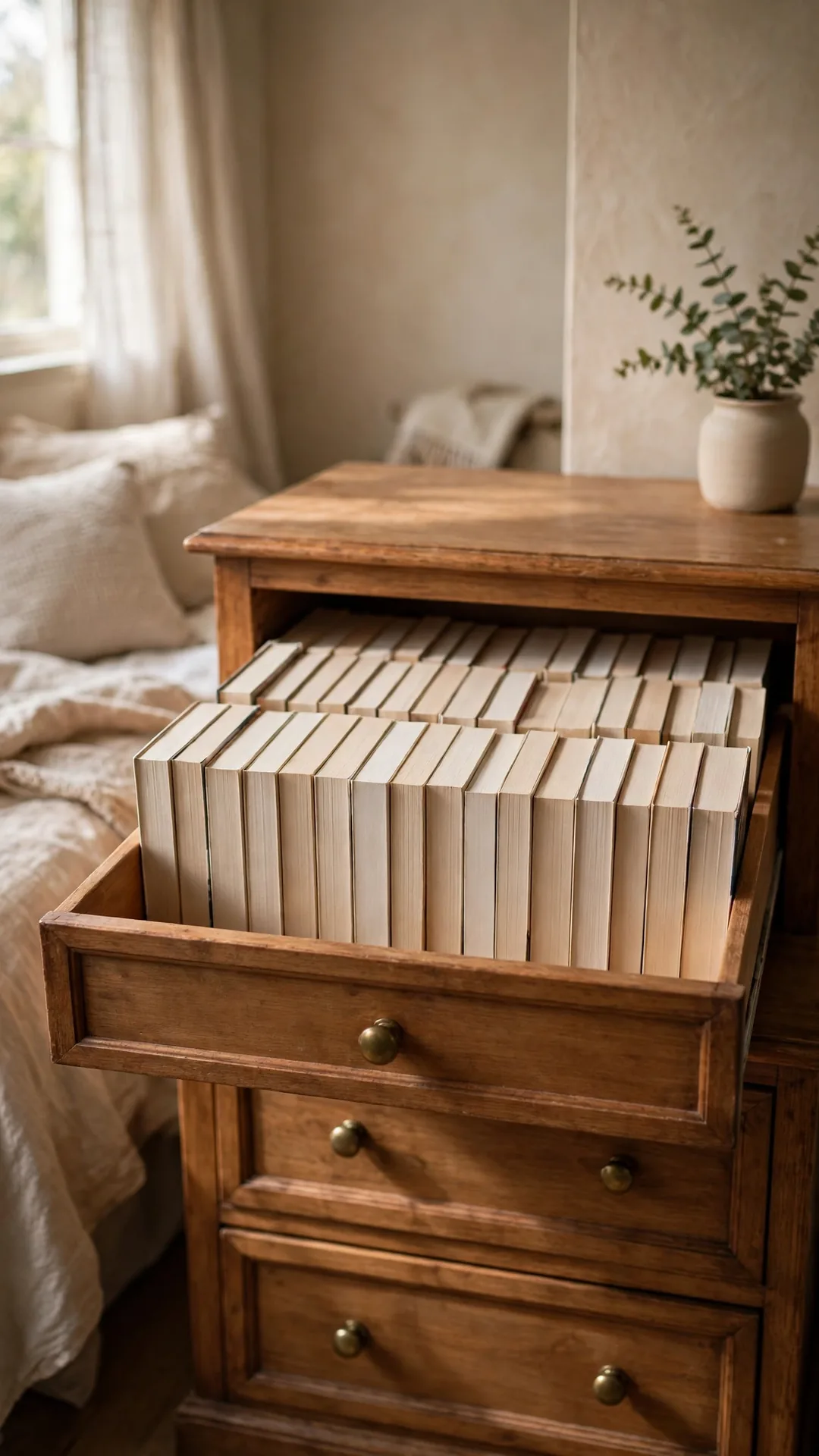
A deep drawer holds paperbacks in neat rows. Books stand spine up, so titles scan at a glance. The drawer hides the whole row when shut.
How to do it:
- Pick a drawer at least 6 inches deep.
- Stand paperbacks in rows from front to back.
- Add a divider so rows stay apart.
- Keep one drawer for books and no more.
Best for: Bedrooms with a spare deep drawer.
Budget: Free to $15
Quick tip: Lay a sheet of plain paper under books to catch dust. Keep a spare cloth in the drawer to dust rows. Sort by month read.
32. Stack Books Inside an Old Suitcase
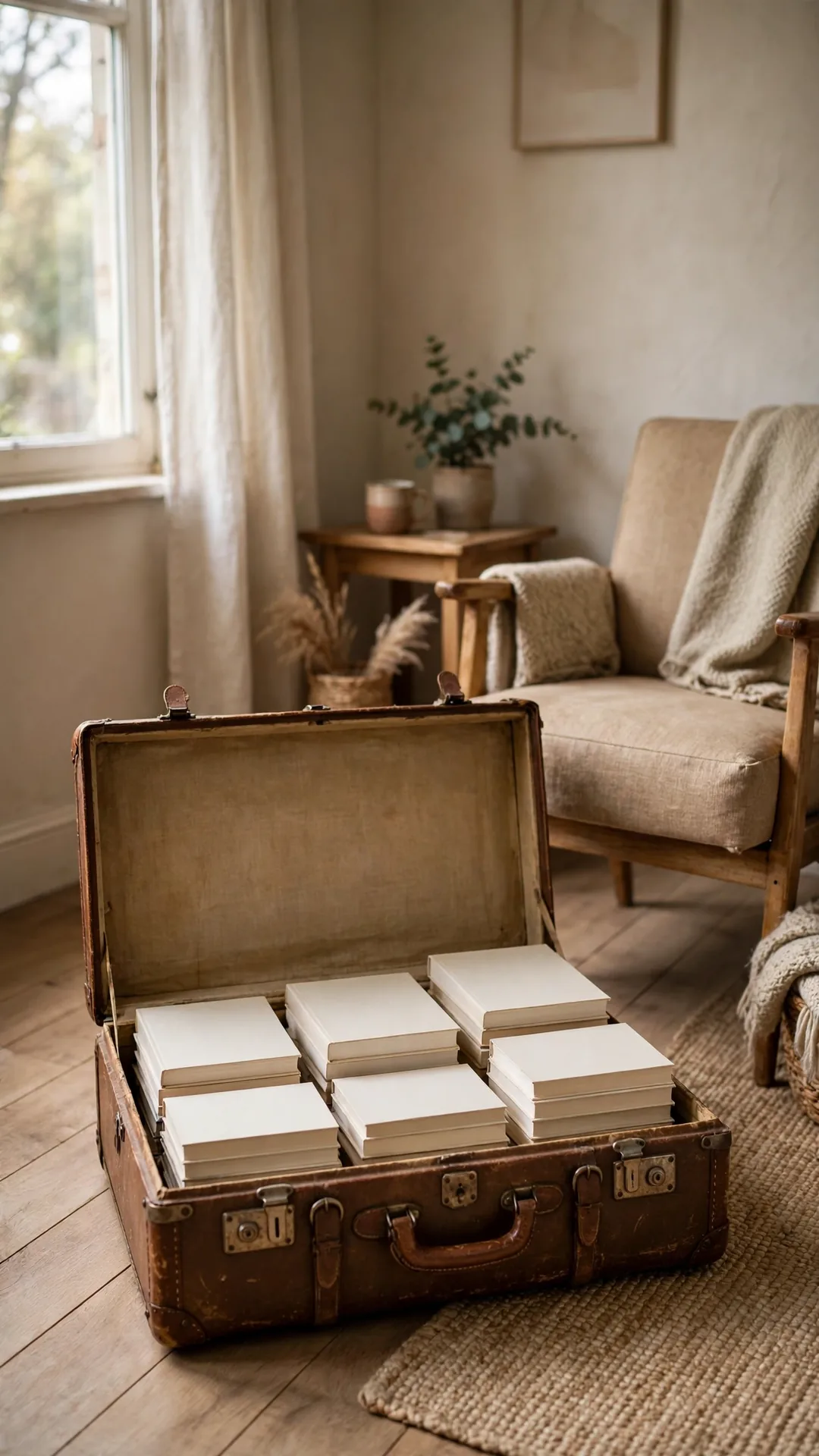
An old suitcase turns into a book box with charm. It holds a flat stack of ten to fifteen books. The case slides under a bed or a table.
How to do it:
- Wipe the inside and air it out for a day.
- Line the base with a clean cloth.
- Stack books flat, largest at the bottom.
- Close the lid when guests come over.
Best for: Vintage rooms and hidden storage fans.
Budget: $10 to $40
Quick tip: Set the suitcase on a mat so the base stays dry. Keep the case off damp floors with small feet.
33. Make a Reading Corner with One Shelf
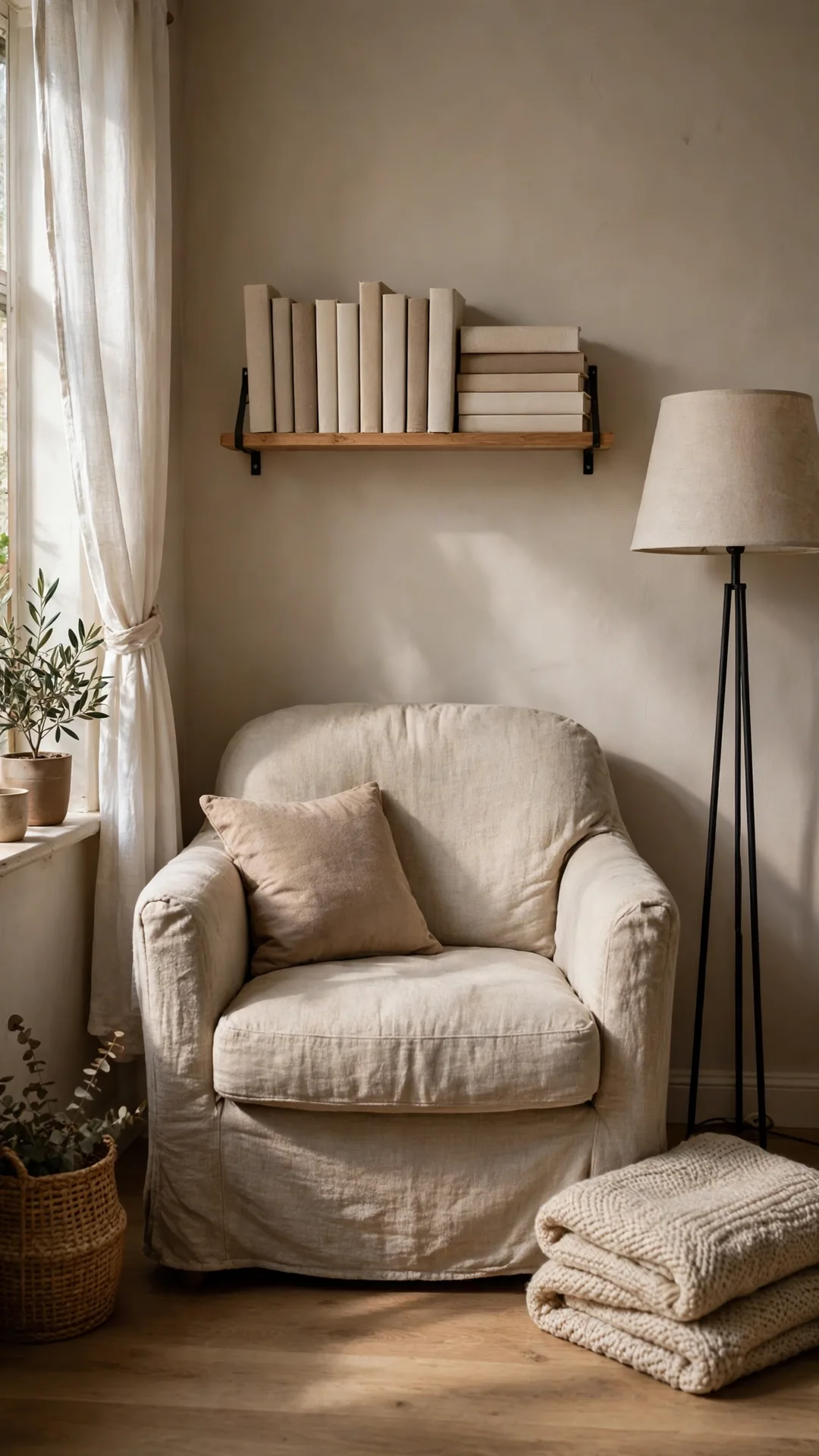
One shelf and one chair make a full reading corner. Books sit at shoulder height beside the seat. bookshelf ideas from Country Living shows how one shelf can anchor the whole spot.
How to do it:
- Pick a corner near a window for daylight.
- Mount a shelf 24 to 30 inches long at shoulder height.
- Anchor the shelf into a stud for heavy loads.
- Add a chair and a small lamp beside it.
Best for: Corners in living rooms and bedrooms.
Budget: $60 to $130
Quick tip: Keep only five books on the shelf so it stays calm.
34. Build a Window Seat with Book Cubbies
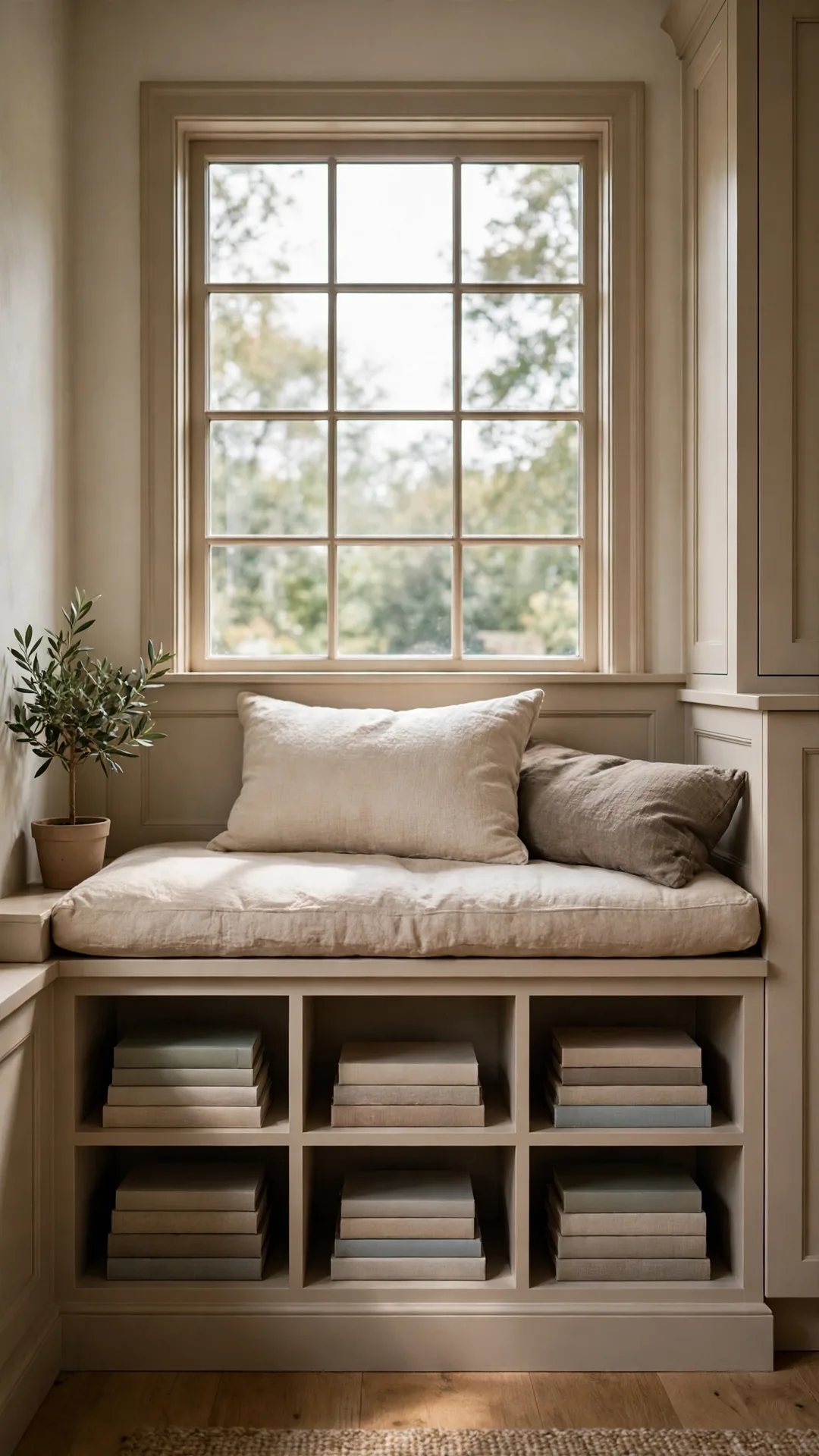
Cubbies under a window seat put books in dead space. Each cubby holds one row of books upright. The seat adds a sunny reading spot, and book storage ideas for small spaces often start here.
How to do it:
- Measure the window bay width and depth.
- Build cubbies 12 inches tall and 10 inches deep.
- Anchor the frame to the wall studs.
- Add a cushion at least 3 inches thick.
Best for: Owners with a wide window bay.
Budget: $200 to $450
Quick tip: Leave one cubby open for a blanket and a mug. Keep one cubby free for new books.
35. Display Favorites on a Book Cart with Wheels
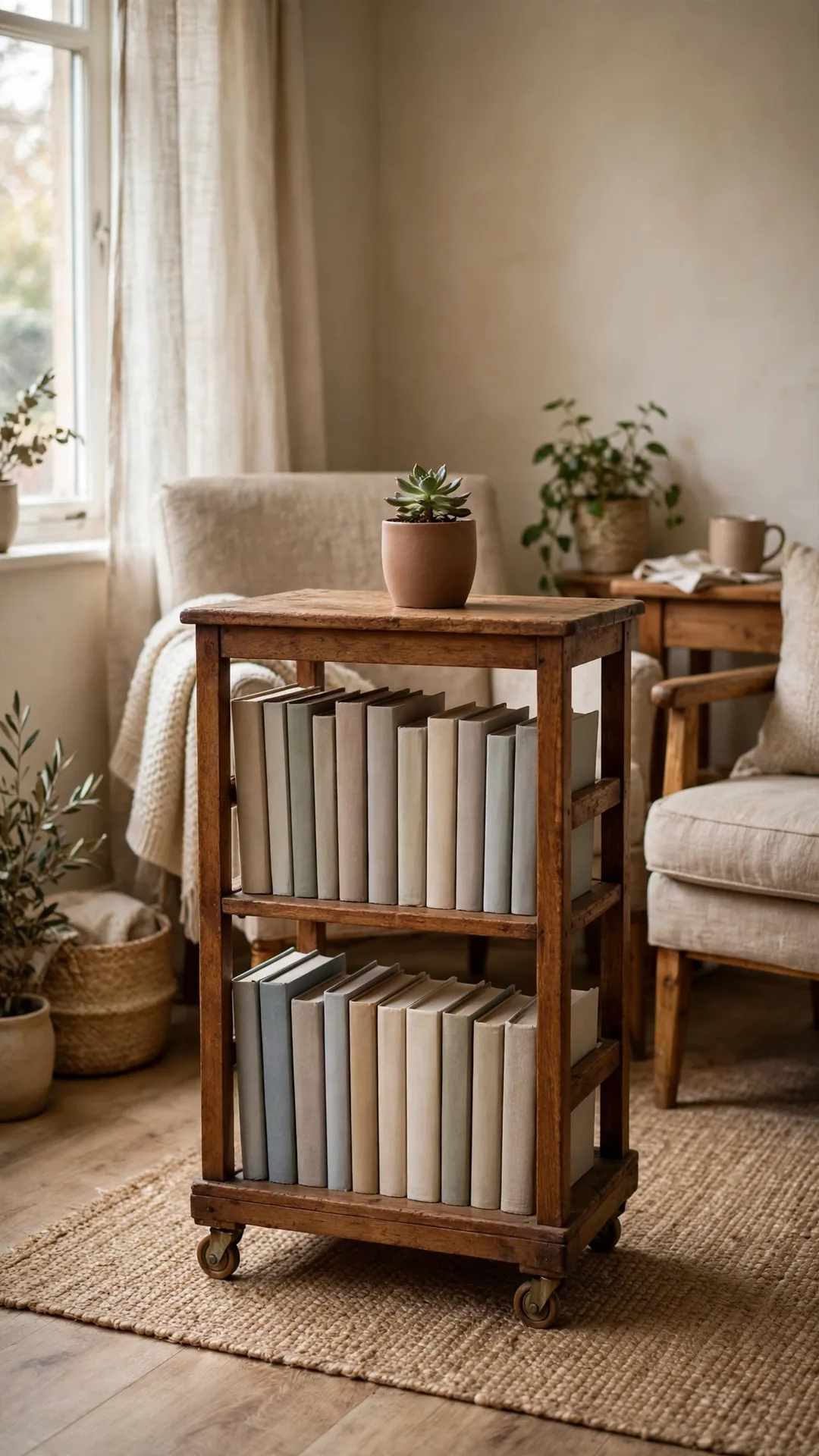
A wheeled display cart shows off favorite books. Two open shelves face out like a shop stand. The cart rolls to the light or the chair.
How to do it:
- Pick a cart about 24 inches wide with brakes.
- Face covers out on the top shelf.
- Stand plain spines on the lower shelf.
- Keep the load under 30 pounds for smooth rolls.
Best for: Renters who restyle rooms often.
Budget: $45 to $95
Quick tip: Swap the top row each season for a fresh face. Face one hero book outward on each shelf. Park the cart by the chair you use most.
36. Turn a Step Stool into a Book Stand
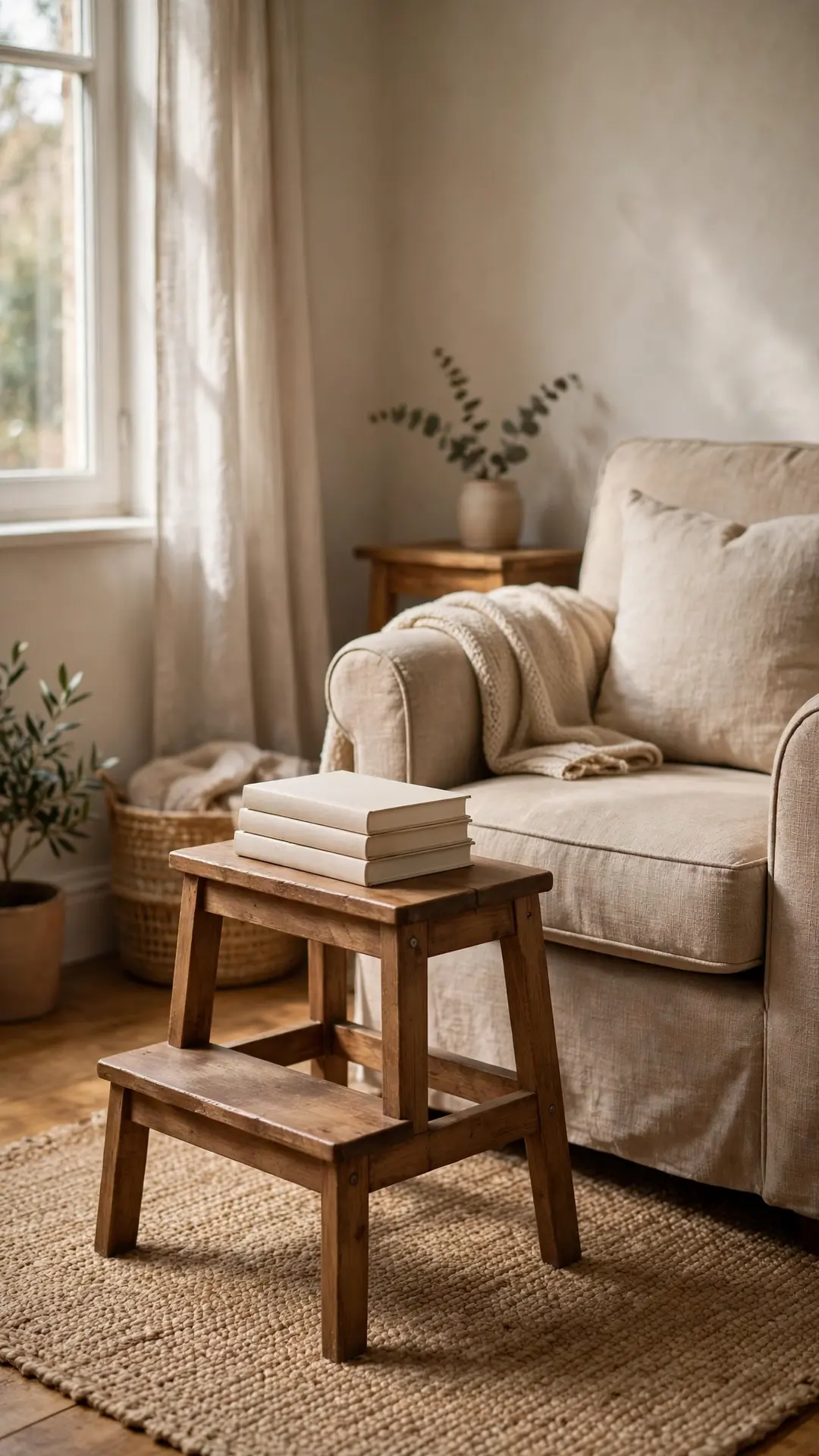
A step stool doubles as a tiny book stand. Each step holds a short stack or a single row. The stool still works for high shelves too.
How to do it:
- Pick a two step stool in solid wood.
- Set the stool beside your chair or bed.
- Stack three books on the lower step.
- Rest tonight's read open on the top step.
Best for: Tiny corners with no table space.
Budget: $20 to $45
Quick tip: Add grip pads so the stool stays put on wood floors. Keep the stool clear of walk paths at night.
37. Hang Canvas Slings for Kids Books
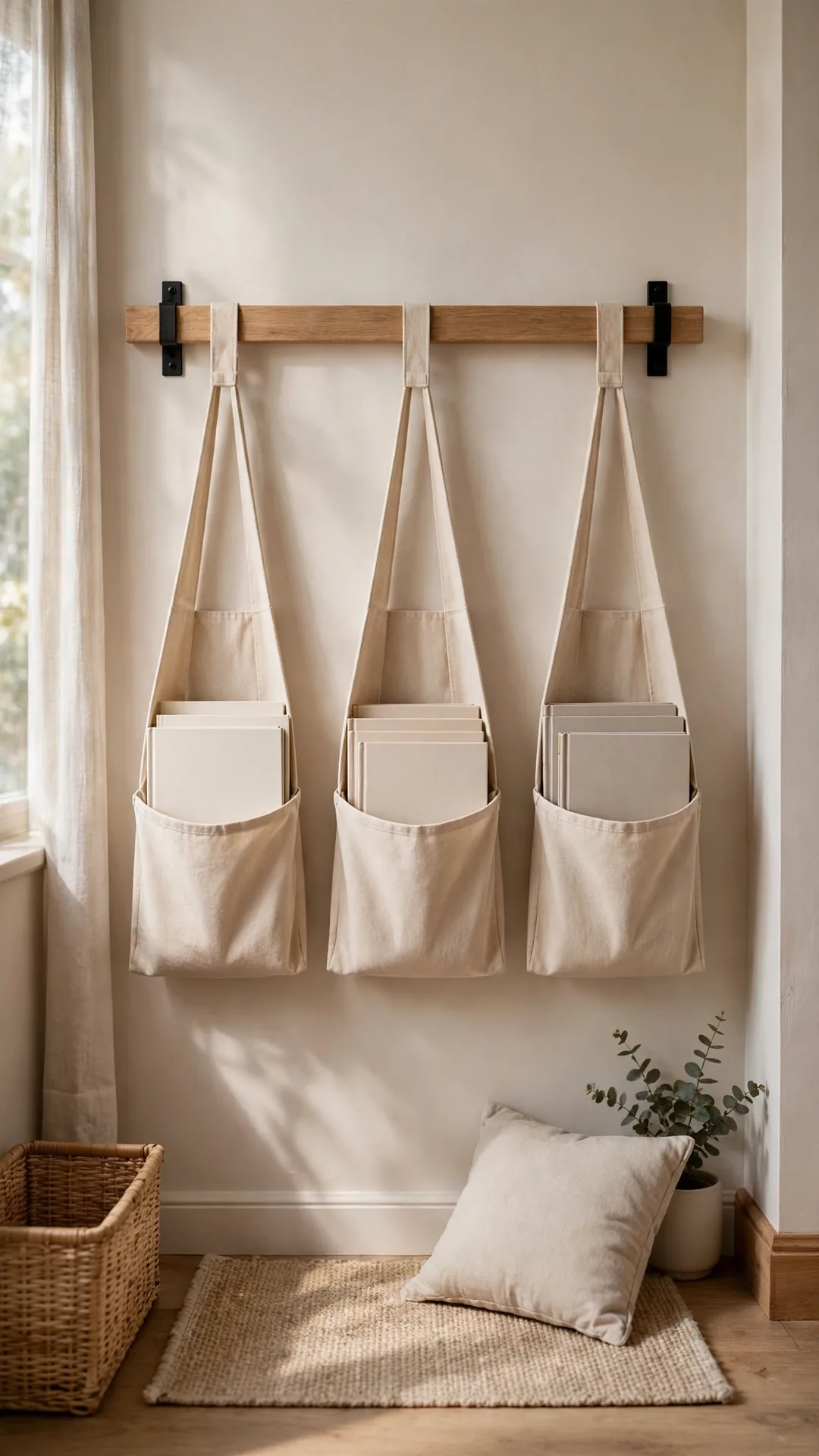
Canvas slings show kids book covers at child height. Little hands grab books without help from adults. The slings take almost no depth from the room.
How to do it:
- Hang the rail 24 to 30 inches above the floor.
- Fix the rail into studs or rated anchors.
- Slide four to six books into each sling.
- Keep heavy books out of the top slings.
Best for: Nurseries and kids bedrooms.
Budget: $25 to $50
Quick tip: Wash the slings when you wash the curtains. Count books weekly so slings never sag. Swap in seasonal picks for young readers.
38. Set Books on a Plate Rack Shelf
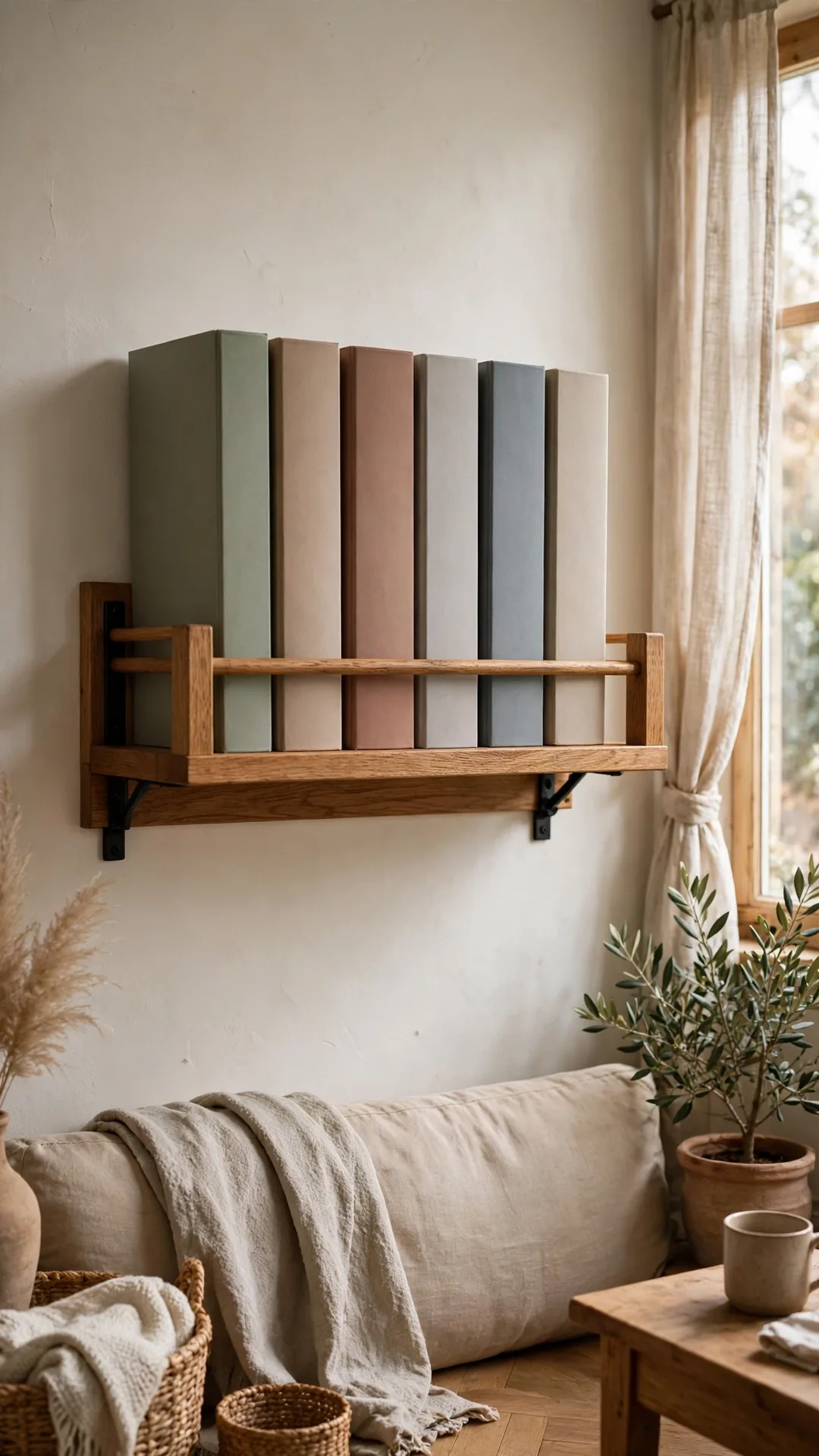
A plate rack holds big art books face out. The rail keeps heavy books from sliding off. Covers act as art on the wall, and book storage ideas for small spaces can double as wall decor.
How to do it:
- Pick a rack 30 to 36 inches wide with a front rail.
- Mount it into studs at eye level.
- Stand three to five large books per shelf.
- Swap the front book each month.
Best for: Art book and cookbook fans.
Budget: $30 to $70
Quick tip: Keep the rack away from steam and splashes. Keep glass frames off this rack for safety.
39. Group Books by Color on Open Shelves
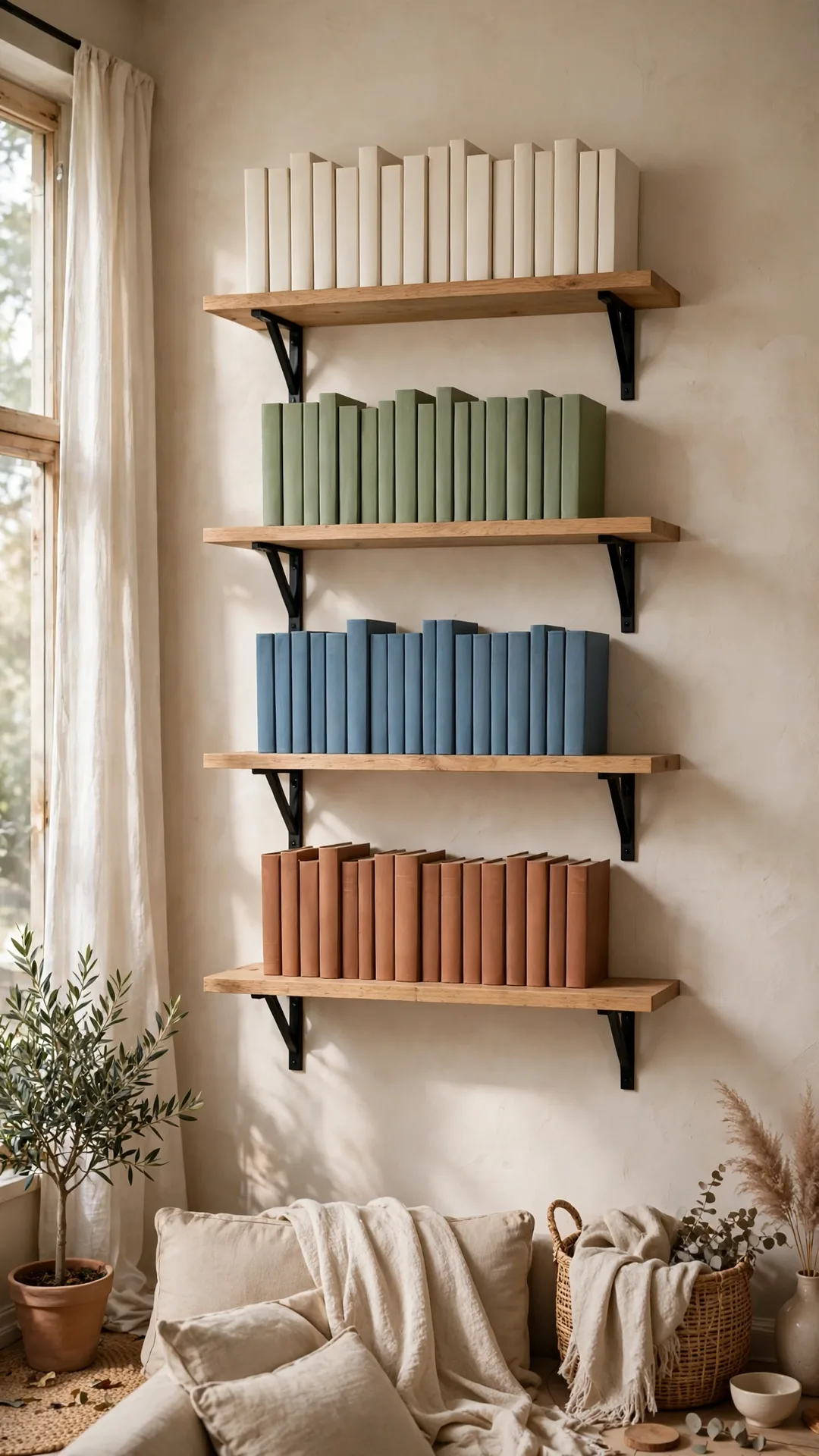
Grouping books by color calms a busy shelf fast. Color blocks read as decor in a small room. You still find books by their spine shade.
How to do it:
- Sort all books into color piles on the floor.
- Shelve one color block per shelf section.
- Keep black and white books at the ends.
- Leave gaps so blocks stay clear.
Best for: Open shelves in living rooms.
Budget: Free
Quick tip: Take a photo of the order before guests visit. Start with the shelf you see most each day. Keep one neutral block near the door. Bands help.
40. Leave Breathing Room on Every Shelf
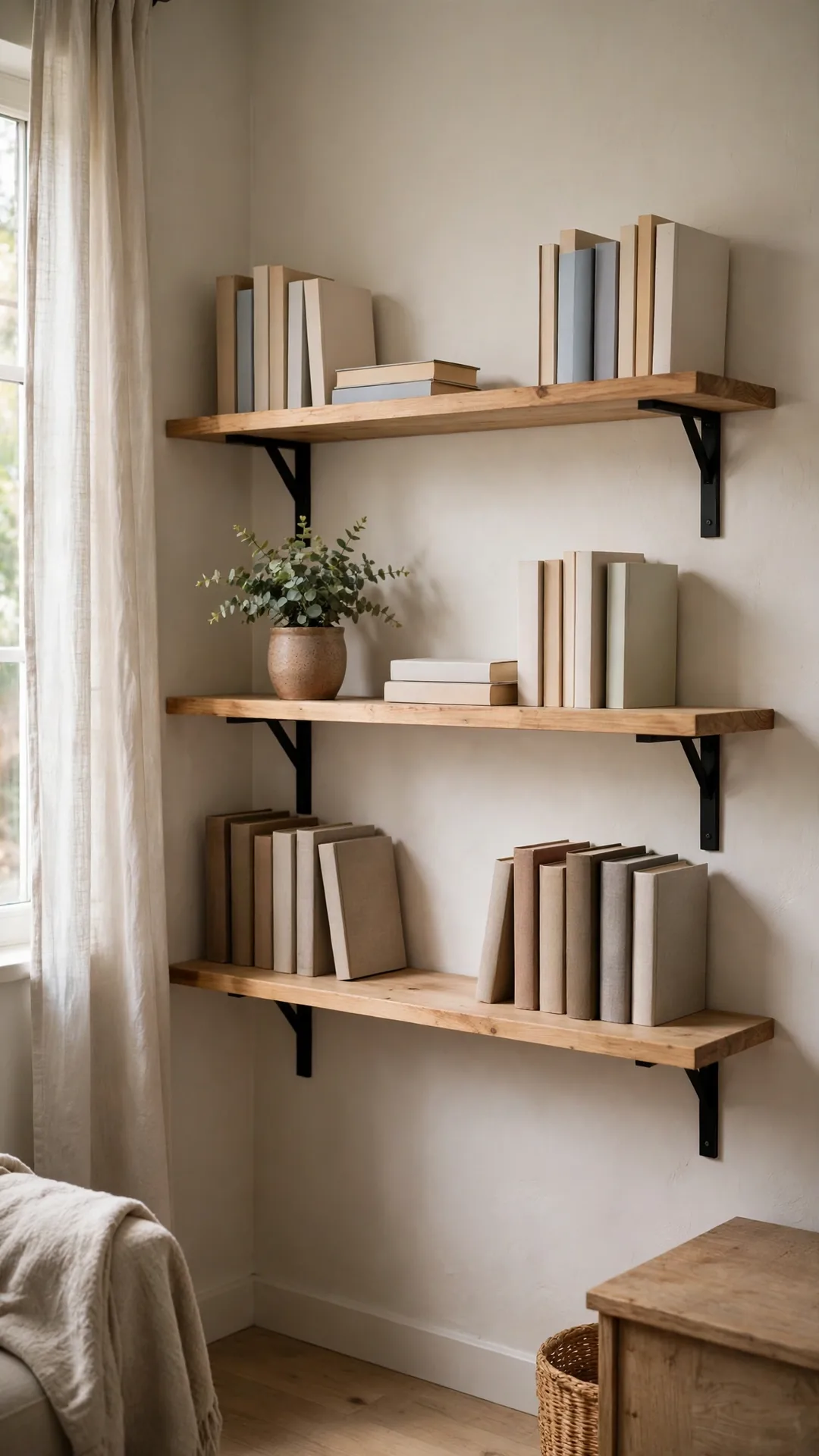
Half full shelves look calm and feel light. Gaps stop books from warping under tight pressure. One plant or one vase breaks up the rows.
How to do it:
- Fill each shelf to about two thirds at most.
- Lay one stack flat inside each gap.
- Stand the rest upright with room to slide.
- Move extra books to a box in a closet.
Best for: Shelf walls that feel crowded.
Budget: Free
Quick tip: Pull one book out per shelf as a quick reset. Step back and check the shelf from the door. Gaps make dusting fast too.
41. Add a Shelf Over the Bed Headboard
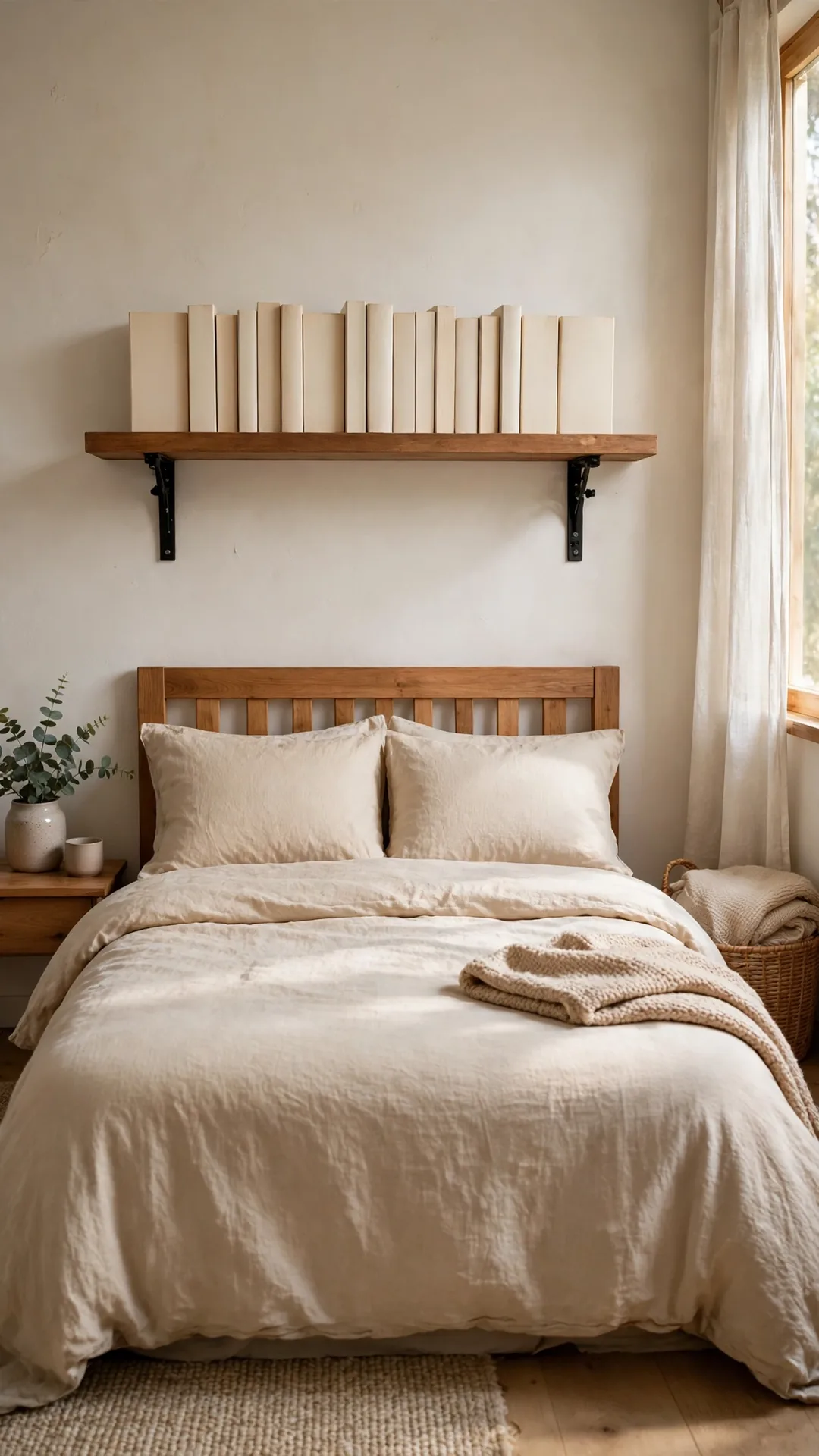
A shelf over the headboard uses blank wall well. Night reads sit right above the pillows. The shelf pairs with small bedroom storage ideas for the rest of the room, plus closed nightstands below.
How to do it:
- Mount the shelf at least 24 inches above the mattress.
- Fix it into studs or with rated anchors.
- Keep only light paperbacks on this shelf.
- Add a small lip or rail at the front edge.
Best for: Bedrooms with no nightstand space.
Budget: $25 to $55
Quick tip: Never store heavy hardcovers above a bed. Check the rail monthly for any slip.
42. Use the Hallway for a Shallow Shelf Wall
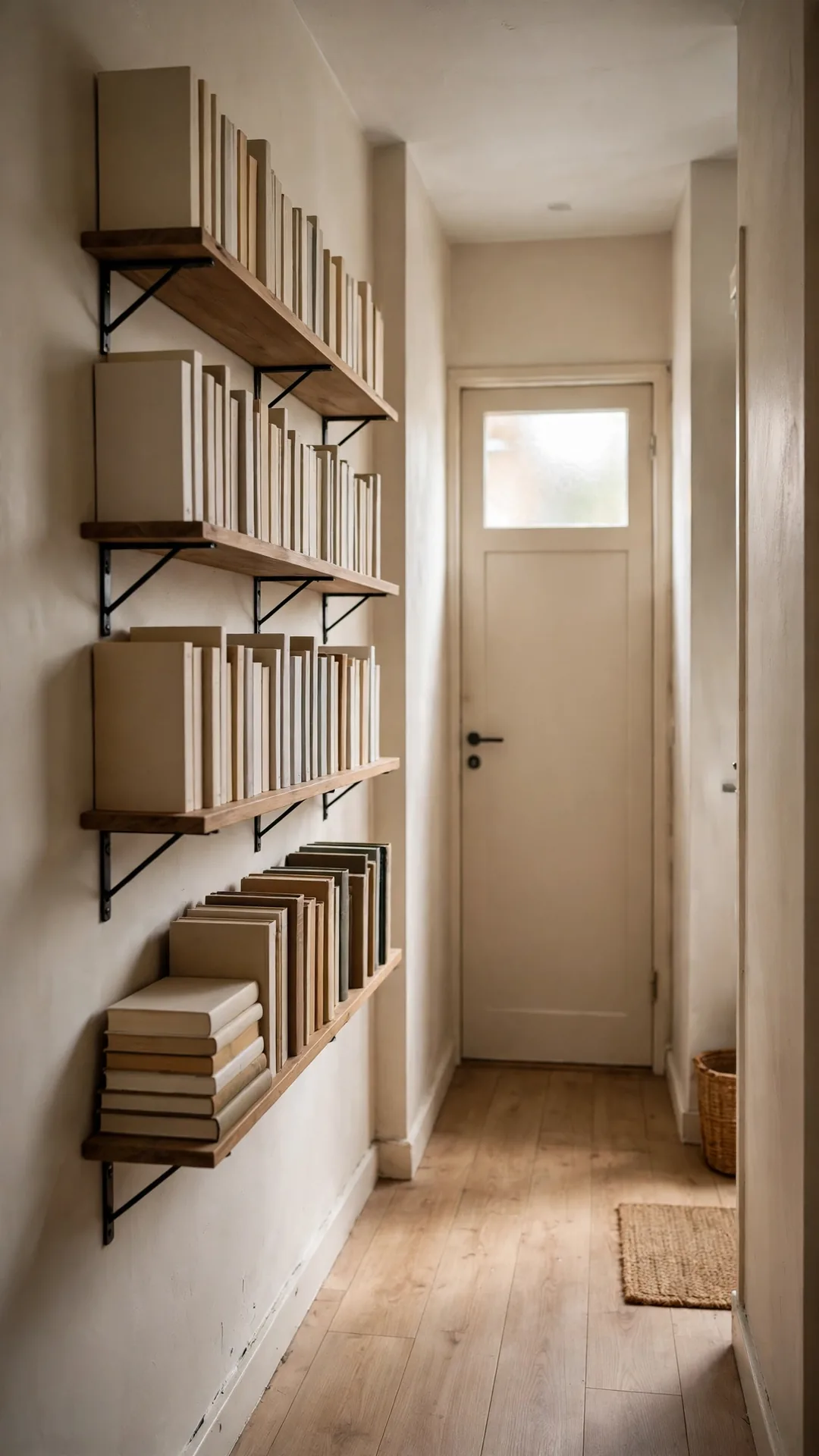
A hallway wall holds a full library in 6 inches. Shallow shelves keep the walkway clear for passing. Books turn a plain hall into a gallery, and book storage ideas for small spaces shine in halls like this.
How to do it:
- Pick shelves 5 to 6 inches deep.
- Keep the walkway at least 30 inches wide.
- Anchor every shelf into studs along the hall.
- Run shelves from waist height to the ceiling.
Best for: Narrow halls with one blank wall.
Budget: $60 to $150
Quick tip: Put daily reads at hand height, archives up high. Add one small lamp at the hall end.
43. Fit Shelves Inside a Closet Alcove
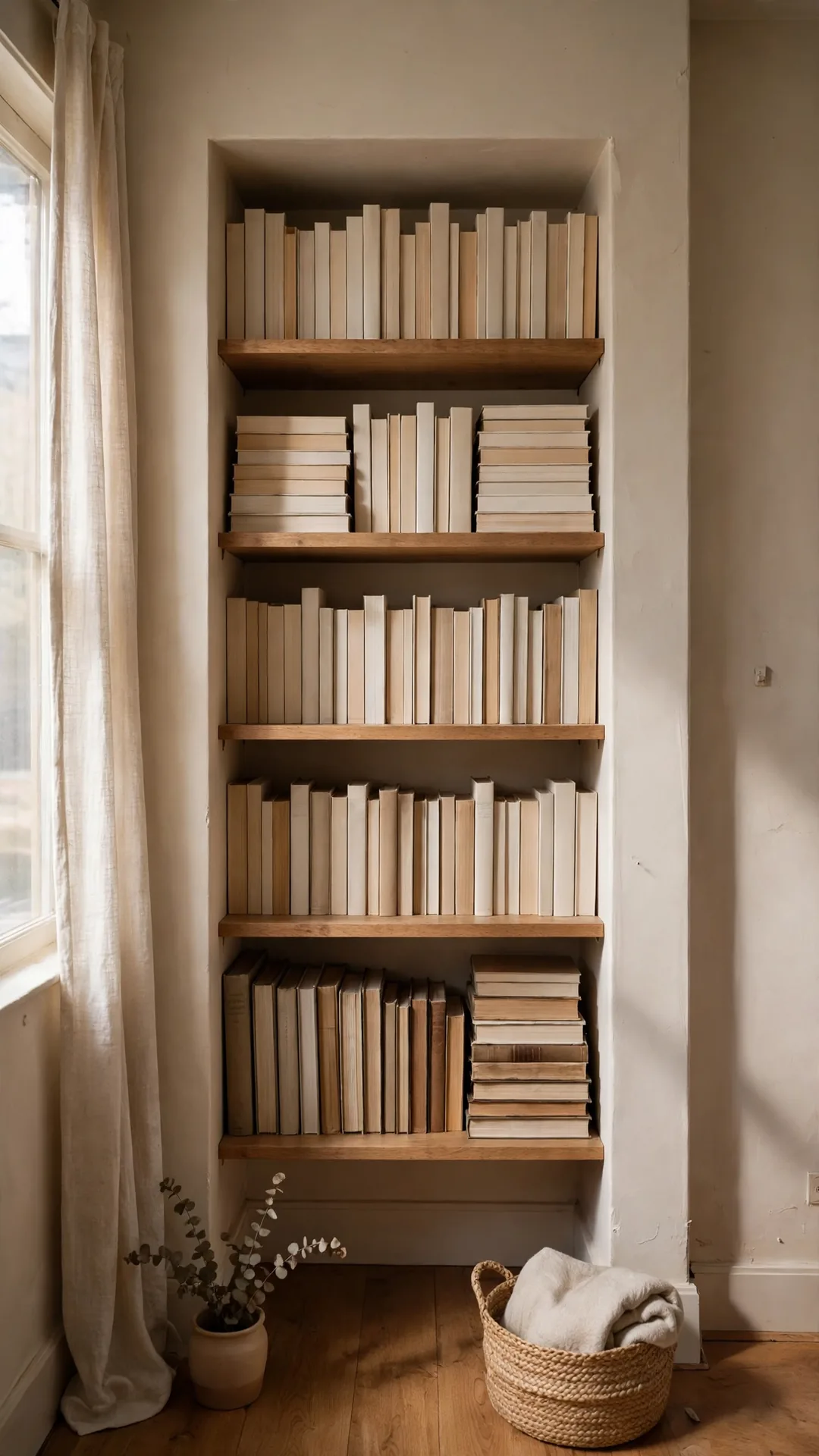
A closet alcove turns into a mini library fast. Shelves stack from floor to ceiling inside the nook. The door can come off for open access.
How to do it:
- Clear the alcove and measure its depth.
- Fit shelves 10 to 12 inches deep inside.
- Anchor side boards to the alcove walls.
- Add a small light at the top inside.
Best for: Spare closets near living areas.
Budget: $80 to $200
Quick tip: Keep one low shelf for kids so they can reach. Keep the top shelf for light boxes and baskets. Doors can return later.
44. Hang a Door-Back Rack for Paperbacks
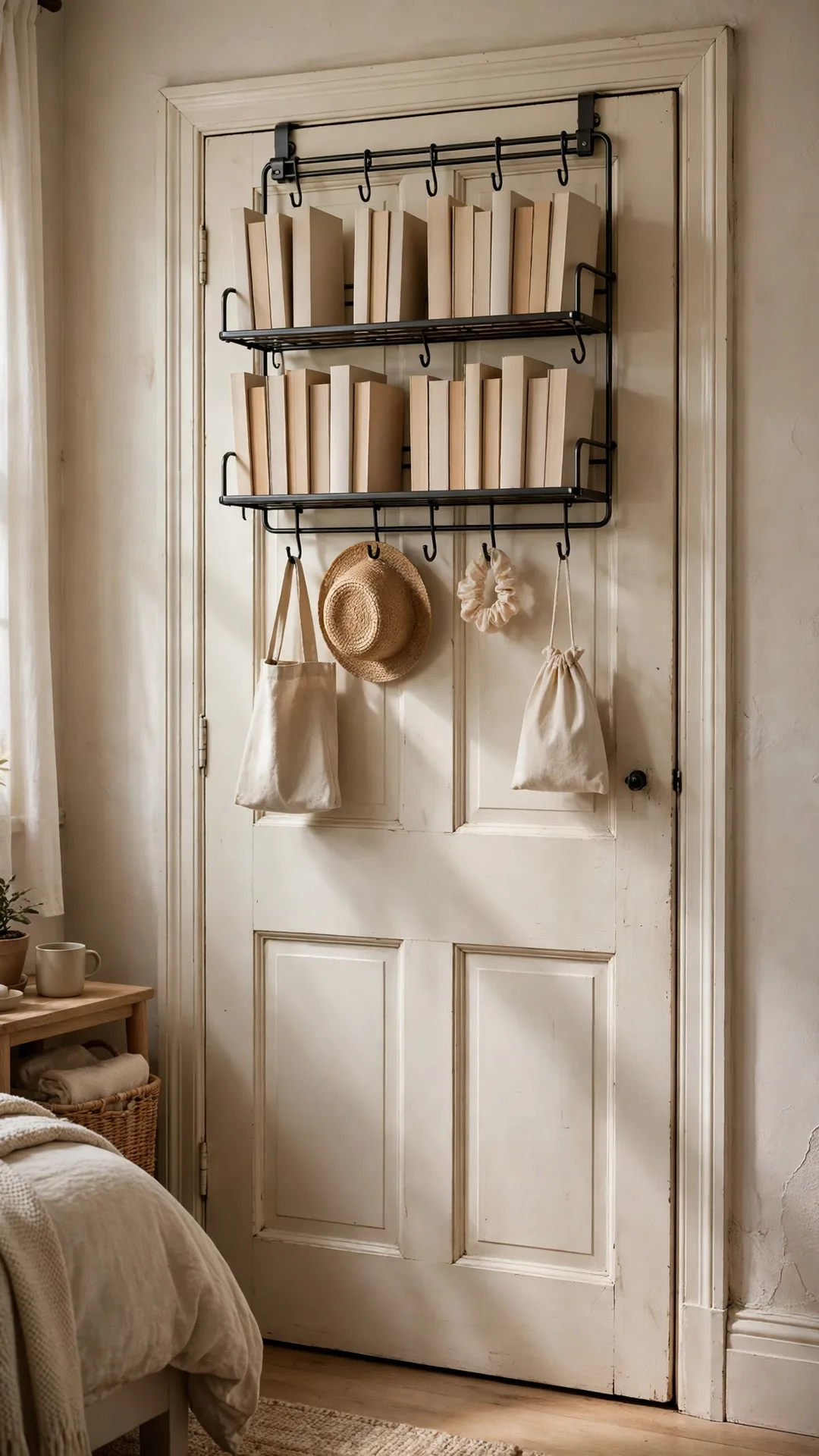
A door-back rack adds a shelf with zero floor space. Clear pockets or wire rows hold slim paperbacks well. The rack hides when the door shuts, and good book storage ideas for small spaces use doors too.
How to do it:
- Hang the rack hooks over the door top.
- Check the door still shuts with ease.
- Fill pockets with one paperback each.
- Keep the lowest pockets for kids books.
Best for: Renters and dorm style rooms.
Budget: $15 to $30
Quick tip: Add felt pads where the rack meets the door. Sort pockets by reader so grabs stay fast.
45. Put a Shelf in the Bathroom for Bath Reads
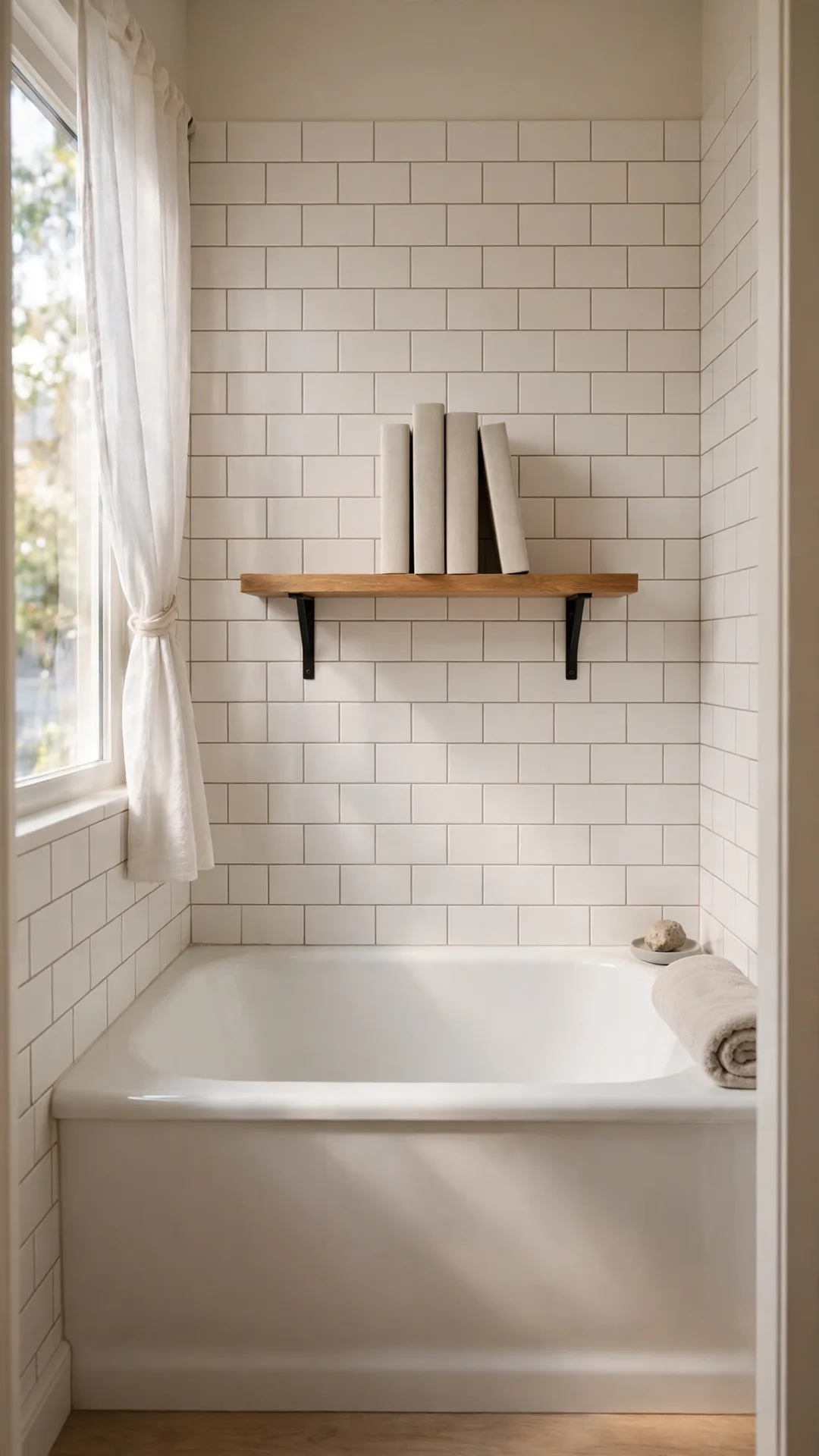
A small shelf keeps bath reads dry and close. Two or three books suit this spot well. Steam harms paper, so rotate books often.
How to do it:
- Mount a shelf 8 inches deep above the tub end.
- Keep it clear of the shower spray zone.
- Pick cheap paperbacks you can replace with ease.
- Wipe the shelf dry after long baths.
Best for: Baths with a deep tub ledge.
Budget: $15 to $35
Quick tip: Store bath books in a dry room between soaks. Pick bath reads with coated covers when you can. Air books after each soak.
46. Store Reference Books on the Desk Hutch
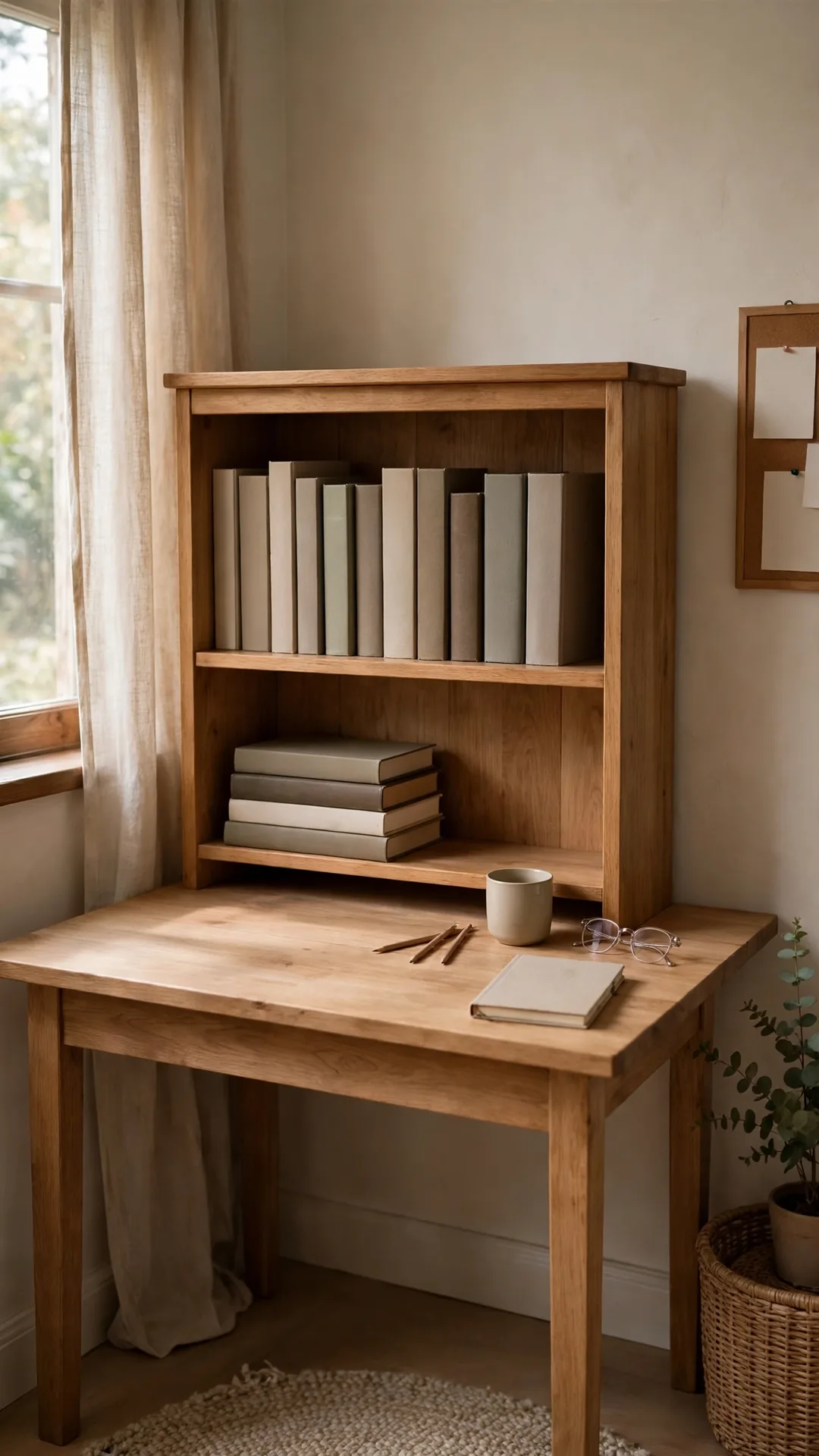
A desk hutch keeps reference books above the work top. Books stand at eye level while you work. The desk top stays clear for writing, and book storage ideas for small spaces keep work zones calm.
How to do it:
- Pick a hutch shelf 10 inches deep.
- Stand heavy reference books at the ends.
- Keep daily guides in the middle section.
- Check the desk can bear the hutch weight.
Best for: Home offices and study desks.
Budget: $40 to $90
Quick tip: Face the books you use most toward your chair. Keep a small book light clipped to the hutch.
47. Keep Cookbooks on a Kitchen Wall Rail
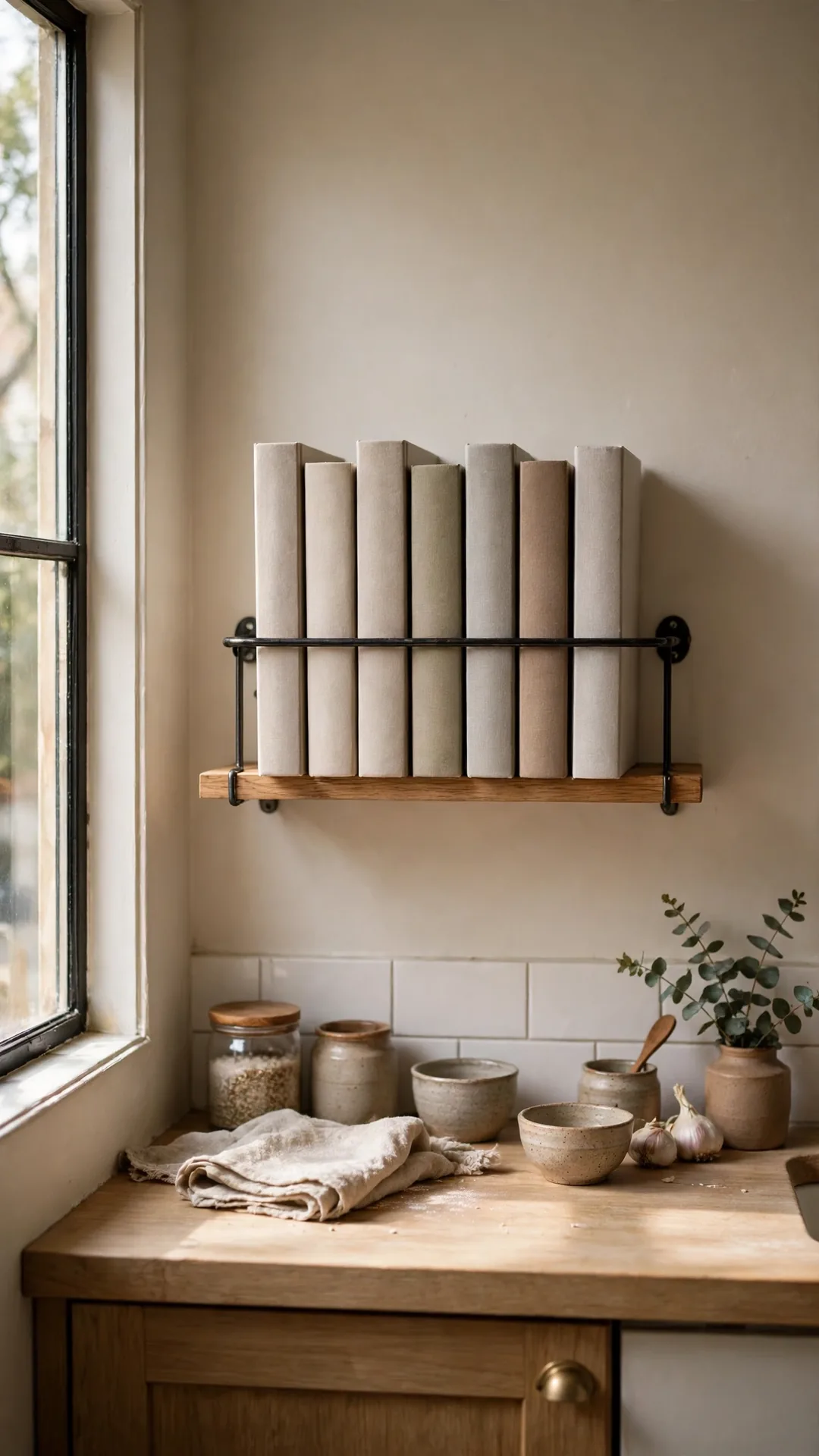
A wall rail keeps cookbooks off the counter for good and frees prep space on busy nights. Books stand upright between two rails near the stove, with covers clean above the splash zone. Pair it with small bathroom shower storage ideas for the bath next door.
How to do it:
- Mount two rails 10 inches apart on the wall.
- Fix rails into studs or rated anchors.
- Stand cookbooks upright between the rails.
- Keep the rail at least 18 inches above the stove.
Best for: Small kitchens with one free wall.
Budget: $20 to $45
Quick tip: Wipe rails weekly since kitchen grease settles fast.
48. Use the Space Above Kitchen Cabinets
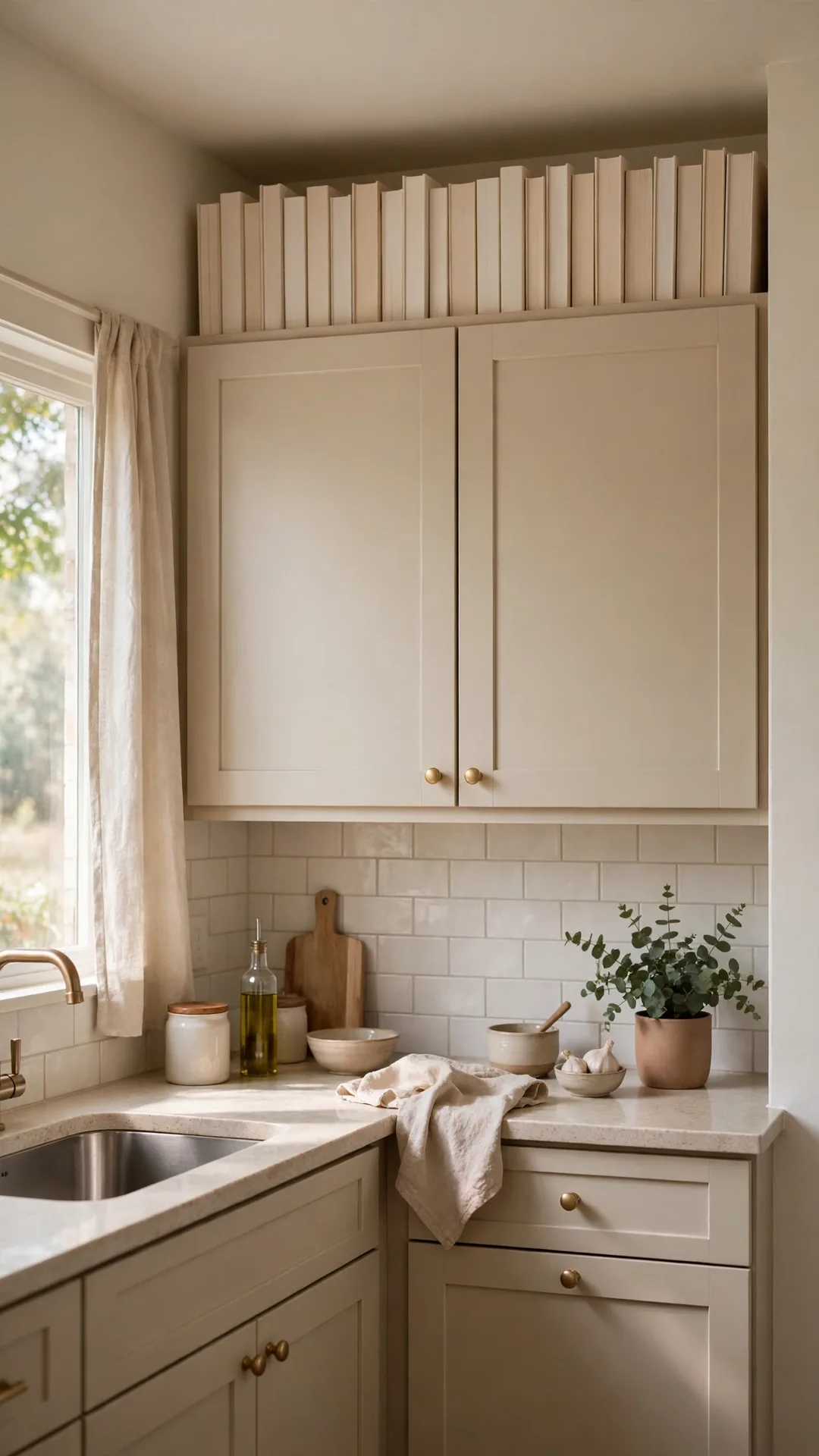
The gap above kitchen cabinets holds a long book row. Cookbooks and food guides live up there dust light. A step stool brings them down in seconds.
How to do it:
- Measure the gap height above the cabinets.
- Lay a washable liner on the cabinet tops.
- Stand books in short groups with bookends.
- Keep daily cookbooks lower and close.
Best for: Kitchens with a tall cabinet gap.
Budget: Free to $20
Quick tip: Dust the row each month since grease drifts up. Line groups with plain bookends so rows stay put. Keep food boxes off this row.
49. Sort Books into Keep and Pass-On Piles
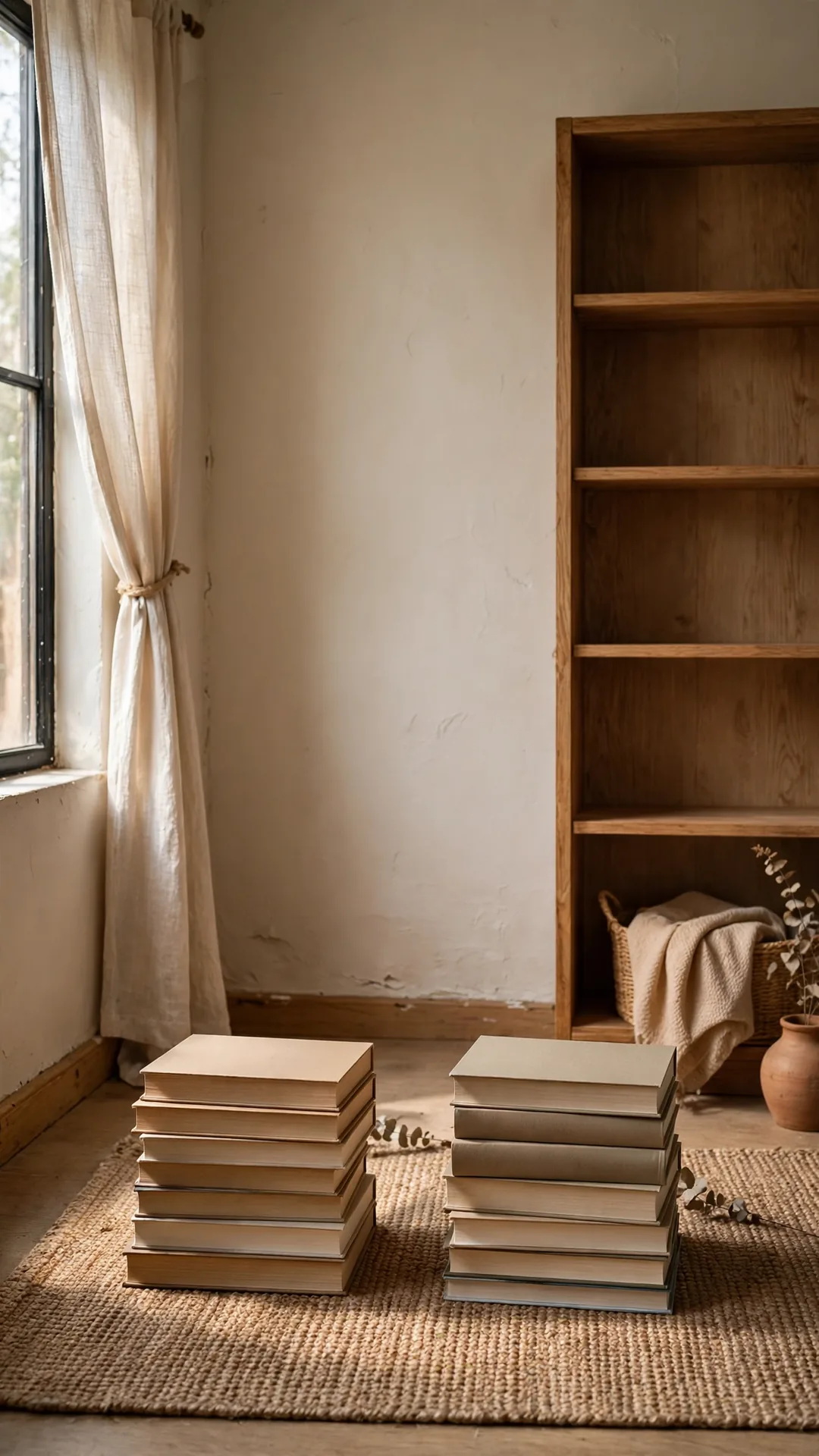
Sorting books frees more space than any shelf can. Two piles on the rug make the call simple. Keep books you love or use each month.
How to do it:
- Pull every book off one shelf at a time.
- Make one keep pile and one pass-on pile.
- Box the pass-on pile the same day.
- Wipe the empty shelf before you refill it.
Best for: Homes before any new shelf buy.
Budget: Free
Quick tip: Set a timer for 20 minutes per shelf. Be firm, since shelf space grows back fast. Take the pass-on pile out the same day.
50. Stand Books Upright with Heavy Bookends
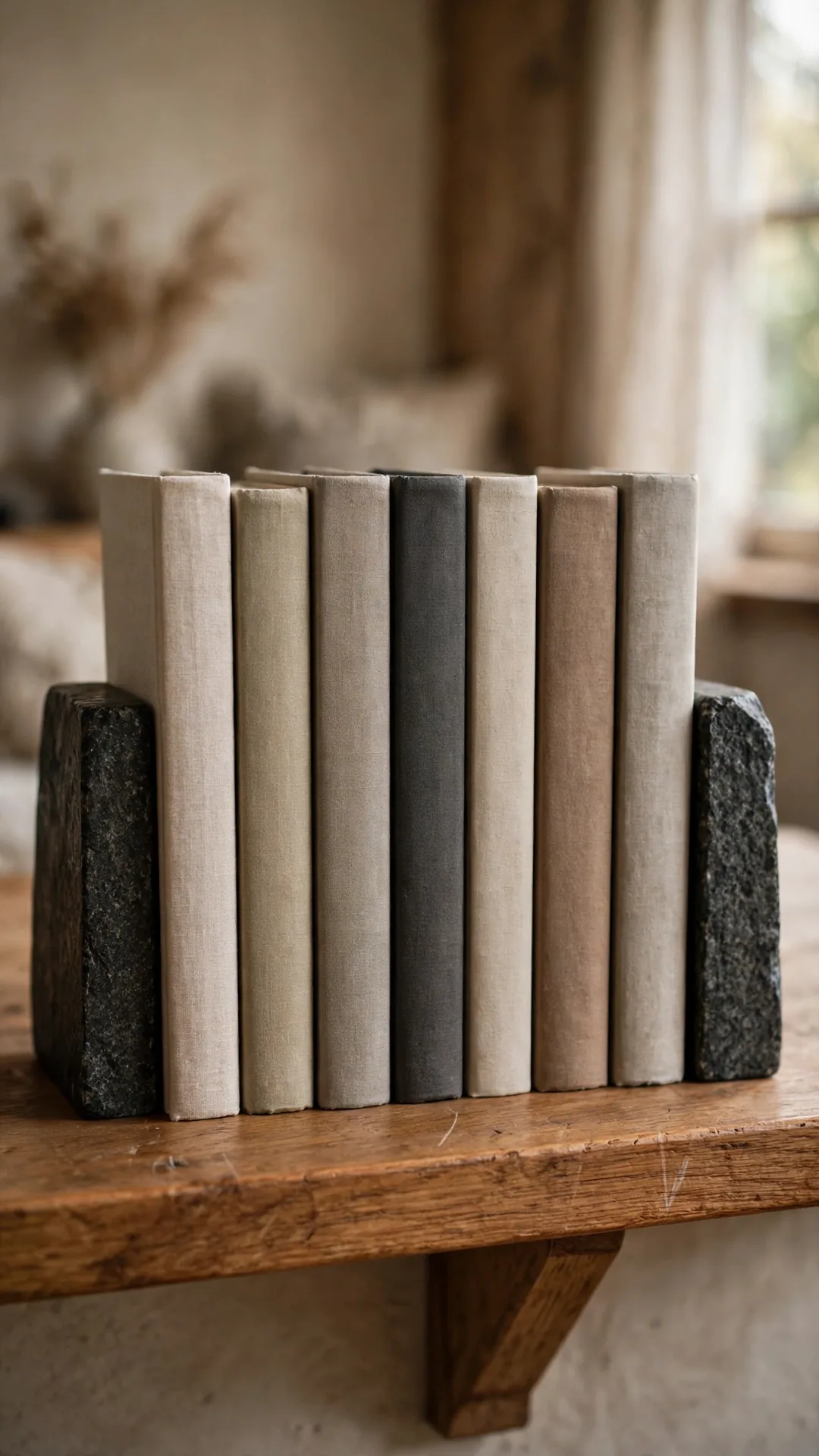
Heavy bookends stop rows from leaning and sliding. Stone or cast iron ends hold real weight. One pair can anchor a shelf row, and book storage ideas for small spaces start with straight rows.
How to do it:
- Pick ends that weigh at least 2 pounds each.
- Set one end at each side of the row.
- Keep rows under 18 inches long per pair.
- Add felt pads under metal ends.
Best for: Open shelves and desk tops.
Budget: $12 to $30
Quick tip: Use one end against a wall for extra hold. Test hold with your heaviest book first.
51. Keep Heavy Books on the Lowest Shelves
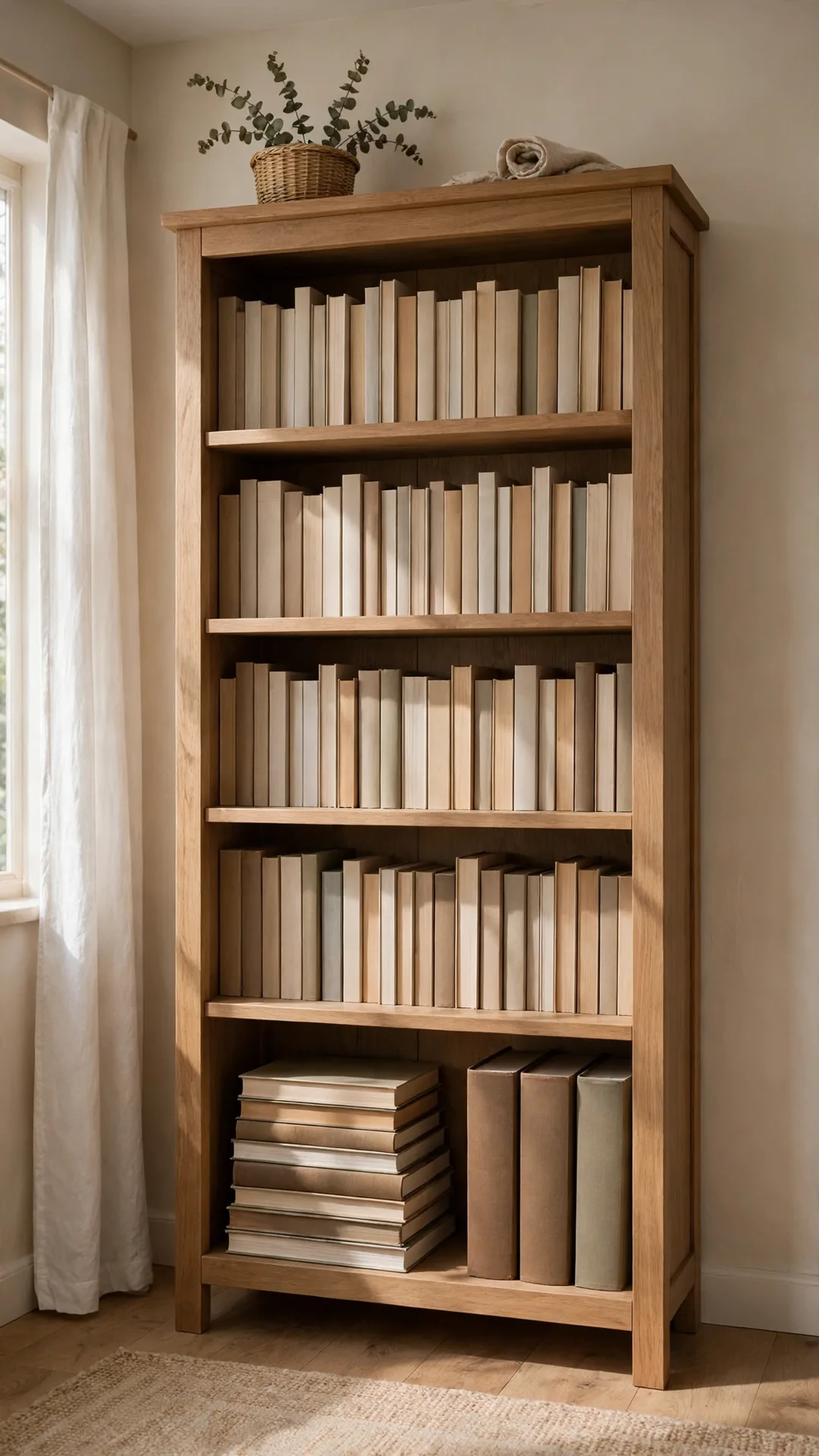
Heavy books belong on the lowest shelves for safety. Low weight keeps tall cases steady and calm. Floors bear book weight better than high shelves.
How to do it:
- Move atlases and art books to the bottom shelf.
- Lay the heaviest books flat in short stacks.
- Keep light paperbacks on the top shelves.
- Check shelf boards for bows each year.
Best for: Tall bookcases and family homes.
Budget: Free
Quick tip: Never stack heavy books above shoulder height. Mark the low shelf for big books with plain tape. Teach kids to take heavy books from the bottom.
52. Leave One Shelf Empty for New Books
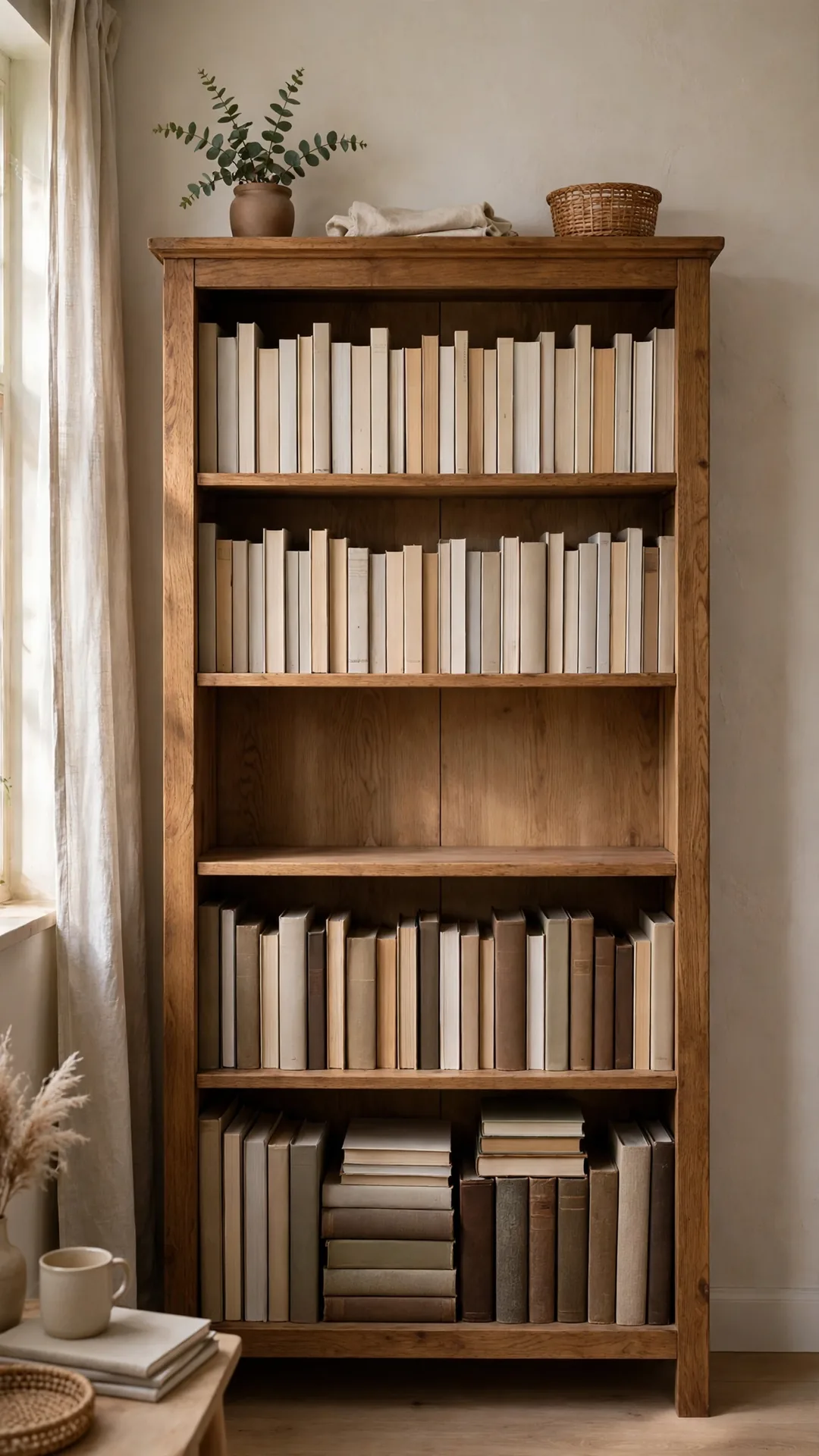
One empty shelf stops new books from piling up. New finds land on the empty shelf first. The shelf shows when the pile needs a sort.
How to do it:
- Clear one full shelf near the middle.
- Put every new book on that shelf only.
- Sort the shelf when it fills up.
- Pass on one book for each new one that stays.
Best for: Fast growing collections.
Budget: Free
Quick tip: Mark the shelf with a small plant at one end. Date new books with a pencil mark inside. Review the shelf at each season change.
53. Rotate Books Between Shelf and Boxes
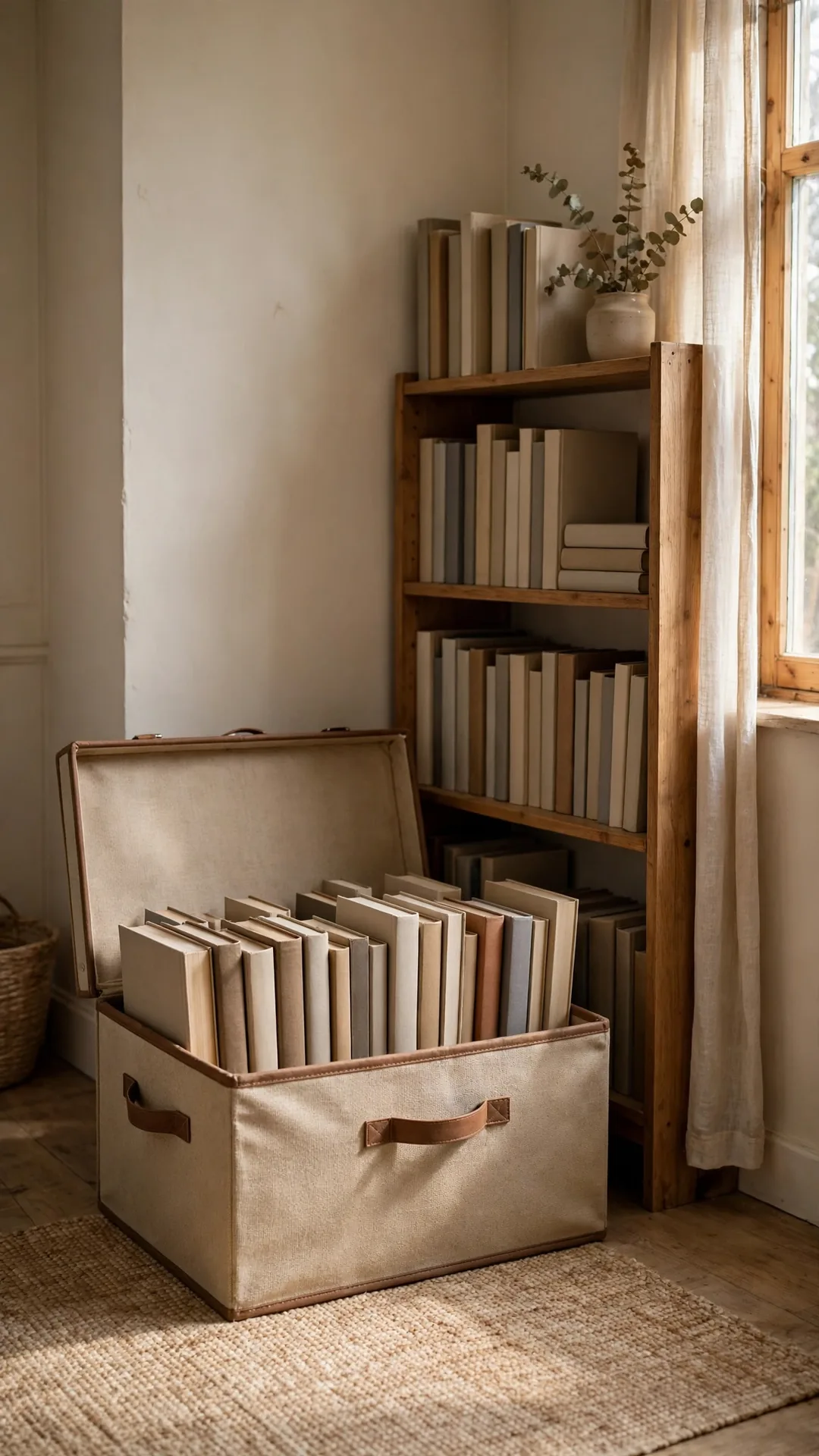
Rotation keeps shelves light and books fresh. Half the collection rests in boxes each season. Shelves hold the books you read right now, and book storage ideas for small spaces work well in turns.
How to do it:
- Pack one sturdy box per shelf section.
- Swap box books with shelf books each season.
- Store boxes in a dry closet or under a bed.
- Keep a simple list on top of each box.
Best for: Big collections in tiny homes.
Budget: $10 to $25
Quick tip: Never store book boxes in a damp garage. Keep boxes off the floor on a low board.
54. Store Rare Books Flat and Out of Sun
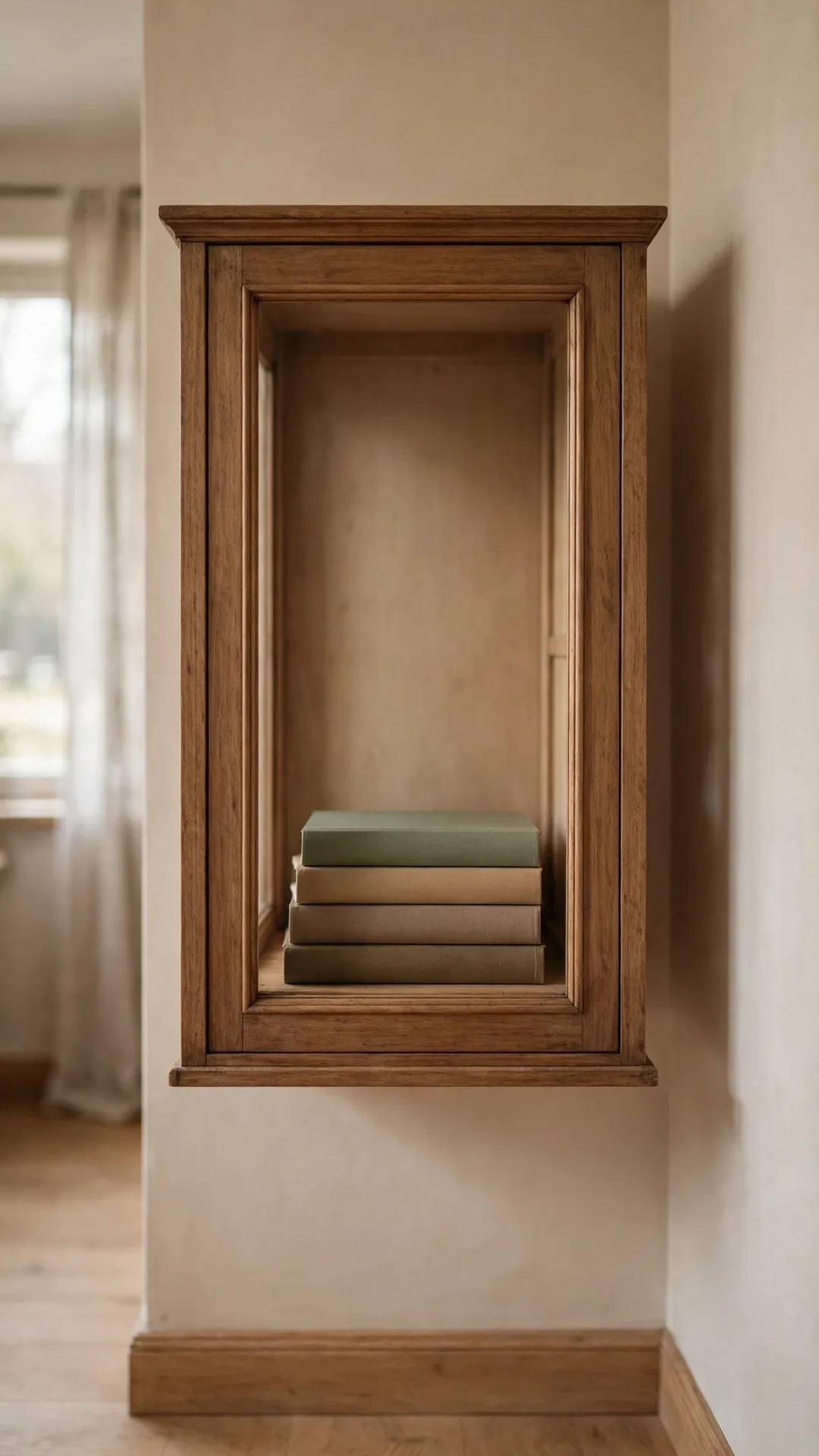
Rare books last longer lying flat in shade. Flat storage guards weak spines and old glue. Sun and heat fade covers in weeks.
How to do it:
- Lay rare books flat in stacks of three.
- Keep them in a shaded cabinet or box.
- Hold room air dry and cool all year.
- Wash hands before you handle old pages.
Best for: Collectors with old or signed books.
Budget: $15 to $40
Quick tip: Slip plain paper between a cover and its neighbor. Keep a soft brush in the cabinet for dust days. Note rare titles on a plain card.
55. Dust Books with a Soft Dry Cloth
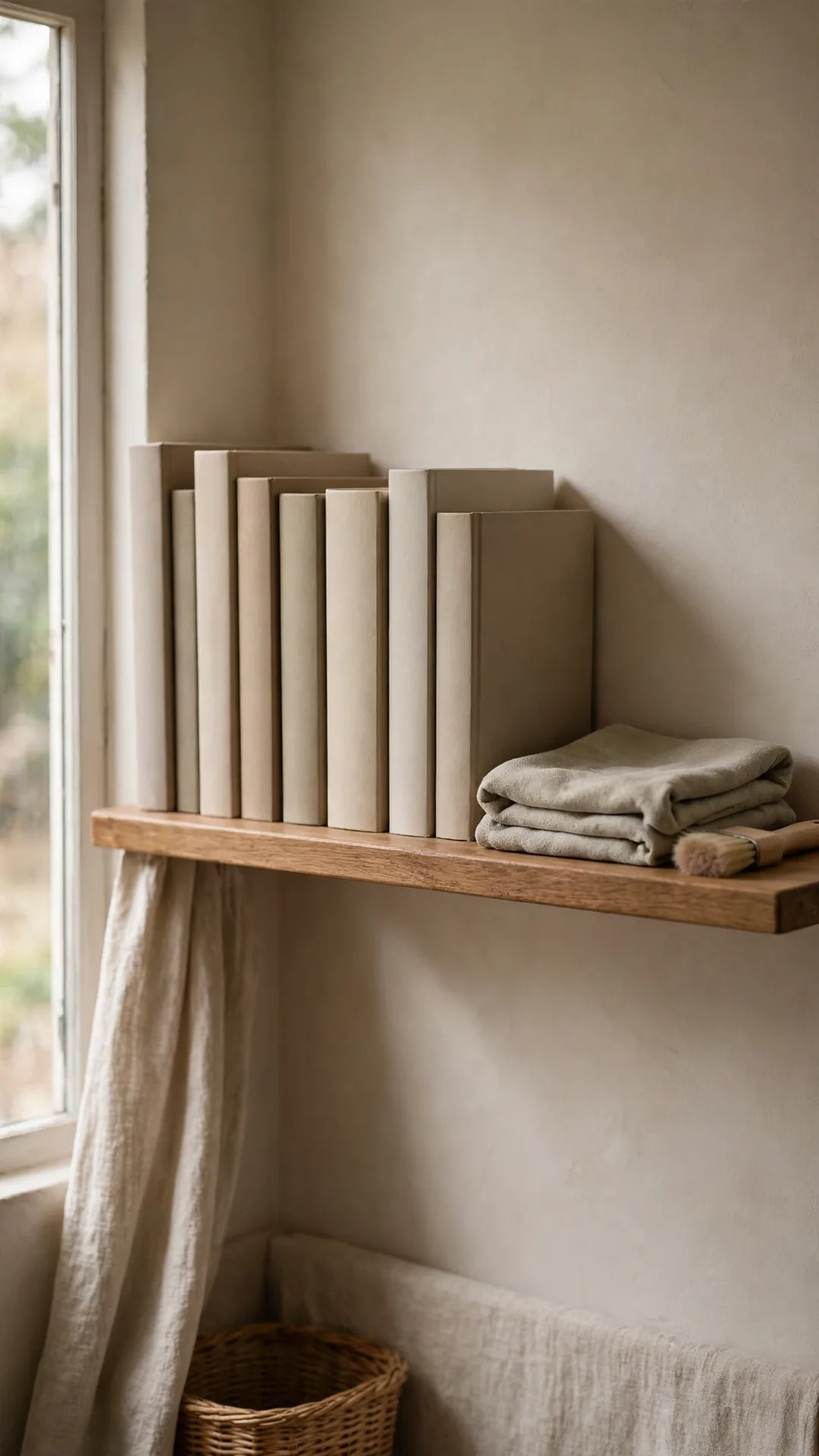
Dust feeds mold and dulls book covers fast. A soft dry cloth lifts dust without harm. Five minutes a month keeps shelves fresh, and clean shelves keep book storage ideas for small spaces working.
How to do it:
- Pull books out one shelf at a time.
- Wipe the top edge of each book first.
- Brush spines with a soft dry brush.
- Wipe the bare shelf before books go back.
Best for: Allergy prone homes and old books.
Budget: Free to $8
Quick tip: Dust from the top shelf down so dirt falls once. Work early in the day when light shows dust best.
56. Keep a Donation Box by the Door
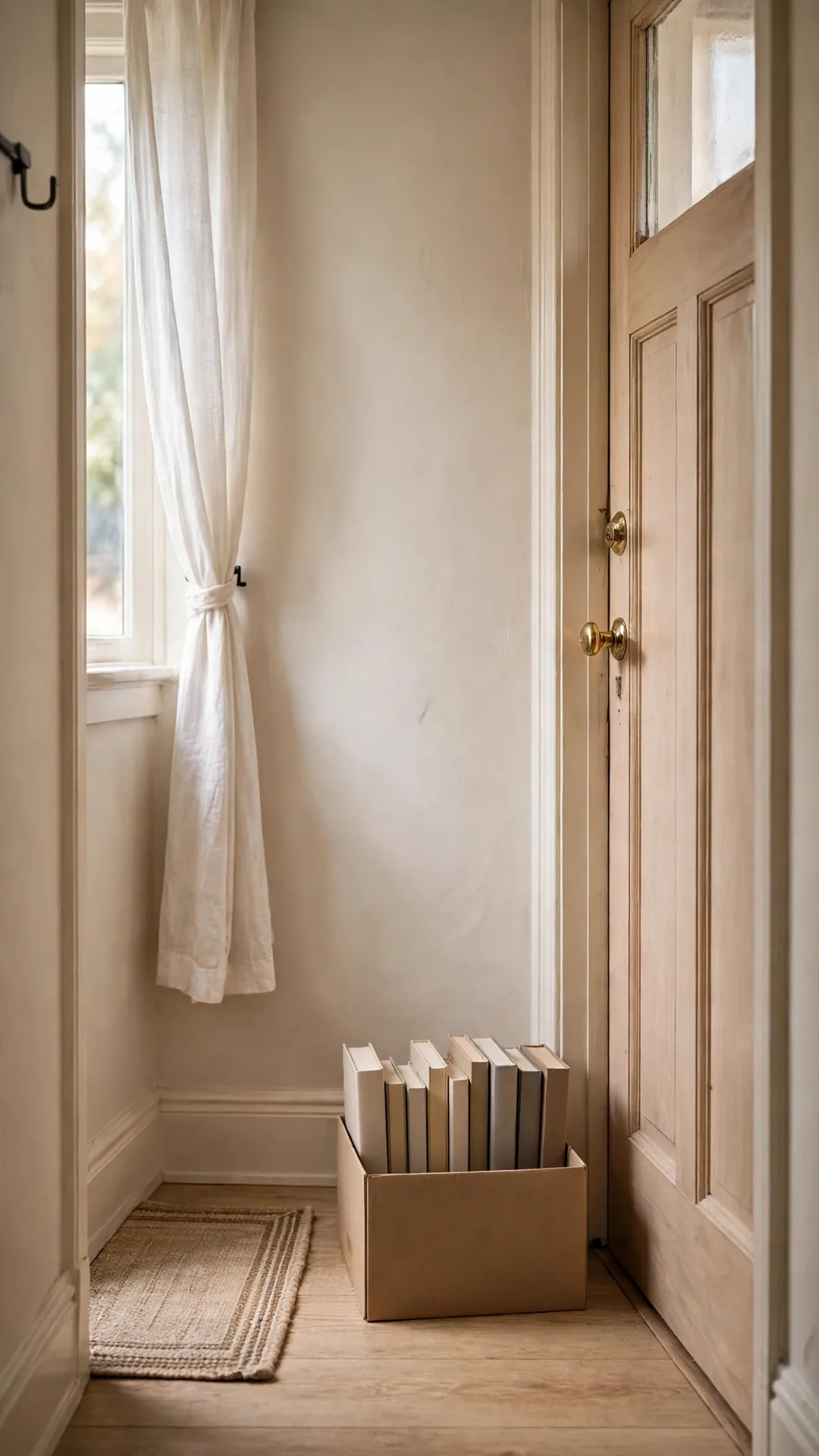
A donation box by the door catches pass-on books. Books leave the home as soon as the box fills. Shelves stay clear without big sort days.
How to do it:
- Set a mid size box beside the front door.
- Drop one book in each time you finish it.
- Take the full box to a charity shop or library.
- Start a fresh box the same day.
Best for: Homes that gain books fast.
Budget: Free
Quick tip: Keep the box small so trips stay frequent. Set the box where you pass it each day. Small boxes fill fast.
57. Lend Books from a Small Entry Shelf
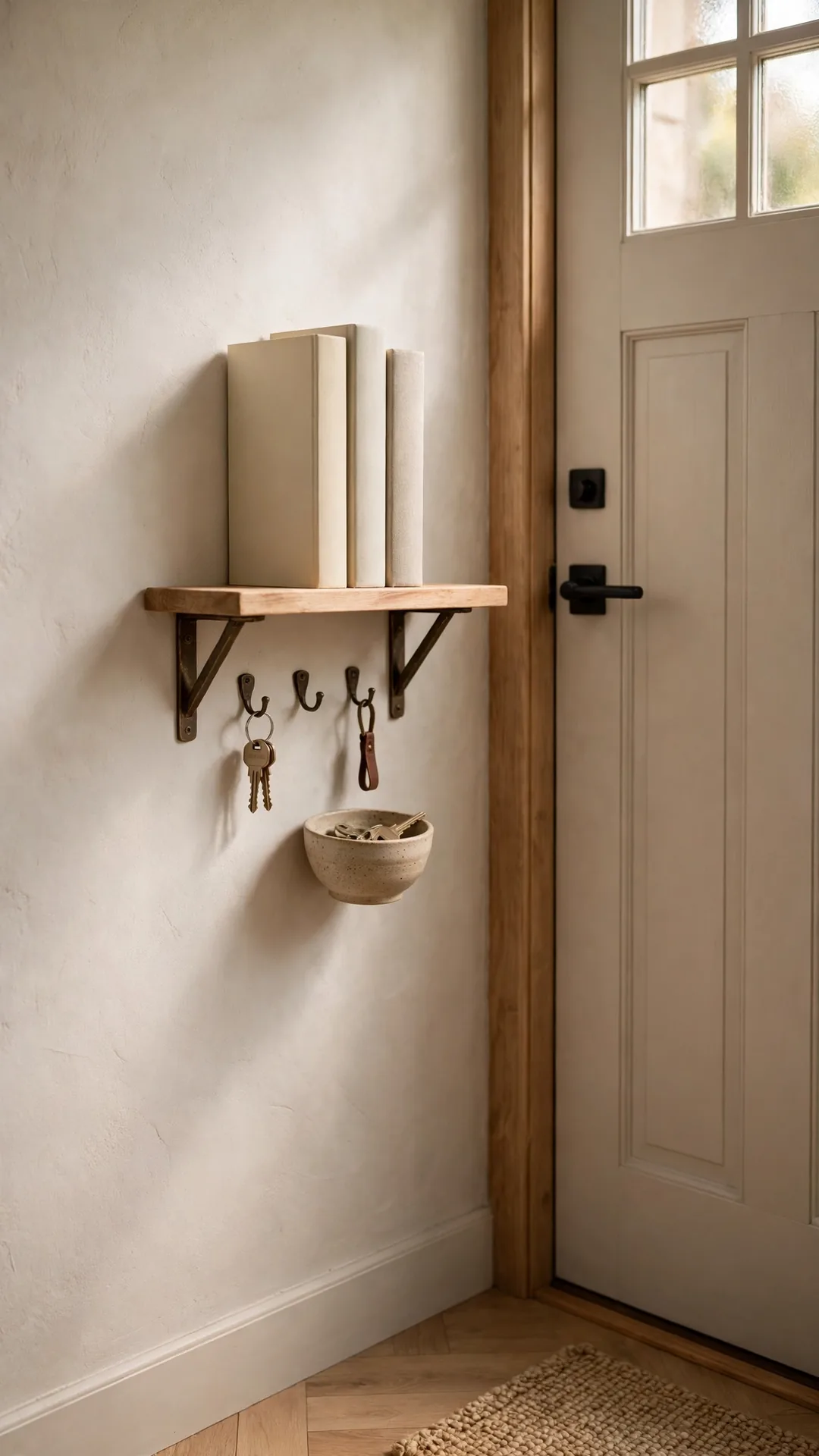
A tiny entry shelf turns books into loans. Friends grab a book on the way out. Loans keep shelves light and books in use, and book storage ideas for small spaces can live by the door.
How to do it:
- Mount a shelf 18 inches long by the door.
- Stock it with books you can part with.
- Keep a pencil list of loans on the shelf.
- Restock the shelf after each sort day.
Best for: Homes with book loving friends.
Budget: $15 to $35
Quick tip: Put a due back note inside each loan. Refresh the shelf after each loan returns.
58. Give Every Book a Home Zone
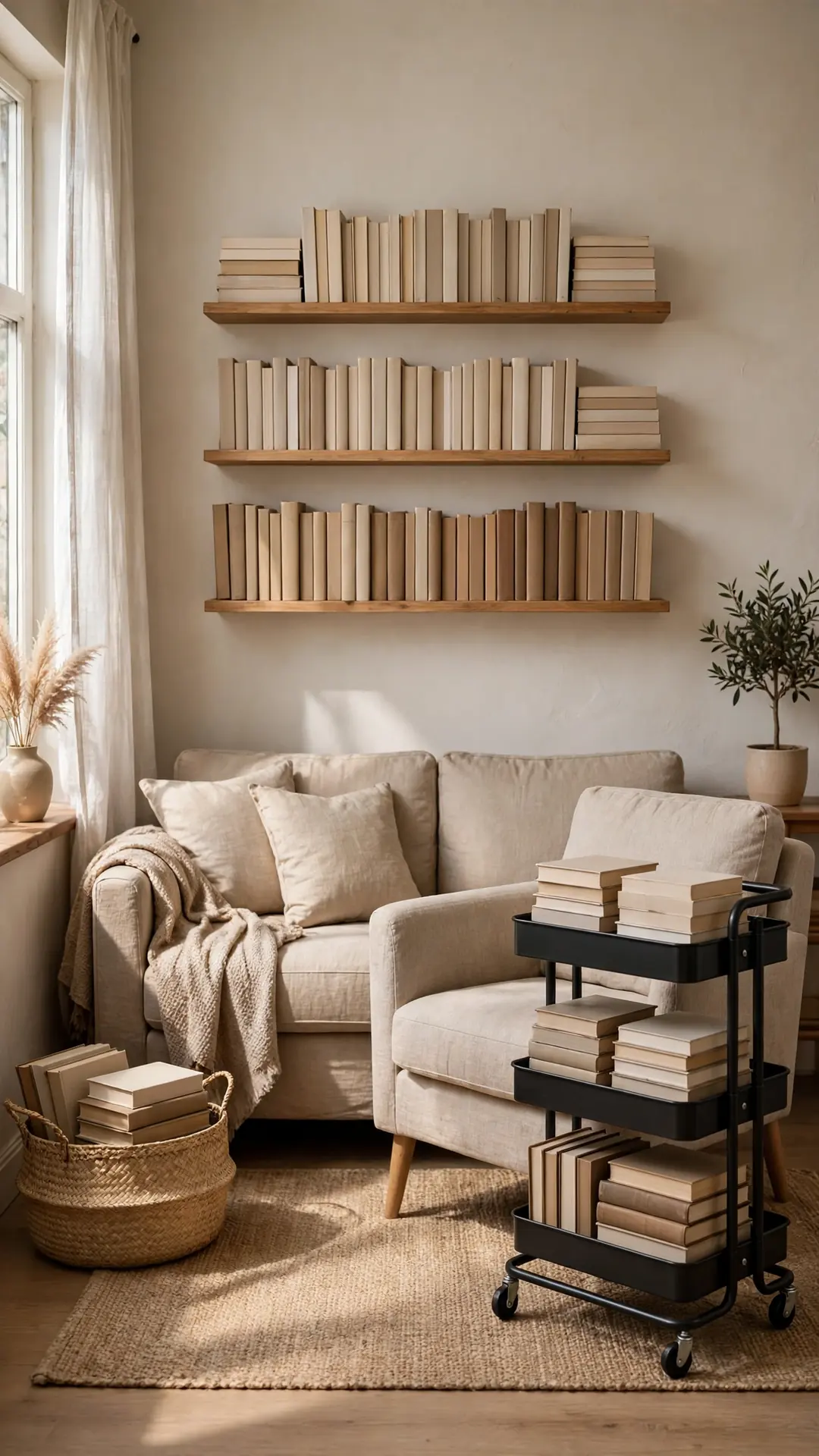
Zones end the hunt for a lost book fast. Each type of book gets one fixed home. Shelves, carts and baskets share the load, and the best book storage ideas for small spaces give books zones.
How to do it:
- Pick one zone for novels and one for guides.
- Set kids books low in their own zone.
- Put returns back in the zone each night.
- Review zones when a shelf starts to overflow.
Best for: Whole homes and shared flats.
Budget: Free to $50
Quick tip: Draw a tiny zone map and pin it inside a door.
Pick One Shelf and Start This Weekend
Start with the spot that annoys you most each day. One shelf, one crate or one basket can hold the change.
These book storage ideas for small spaces work best one corner at a time. Save your favorite idea and set a date to build it.

- 56 Kids Desk Ideas for Small Rooms Too Good to Gatekeep - November 23, 2026
- 57 Breakfast Bar Ideas for Small Spaces Worth Copying Now - November 23, 2026
- 53 Genius Small Living Room Rug Ideas That Renters Love - November 22, 2026