

Streetlight through thin panels can wreck a full night of sleep. These small bedroom curtain ideas fix the light, the privacy and the look in one hang. Most picks cost under $60 and many need no drill at all.
Every idea below lists real sizes, honest costs and a renter path where one exists. Measure your window first, then start with the quick wins at the top.
1. Hang Full Blackout Panels Tonight
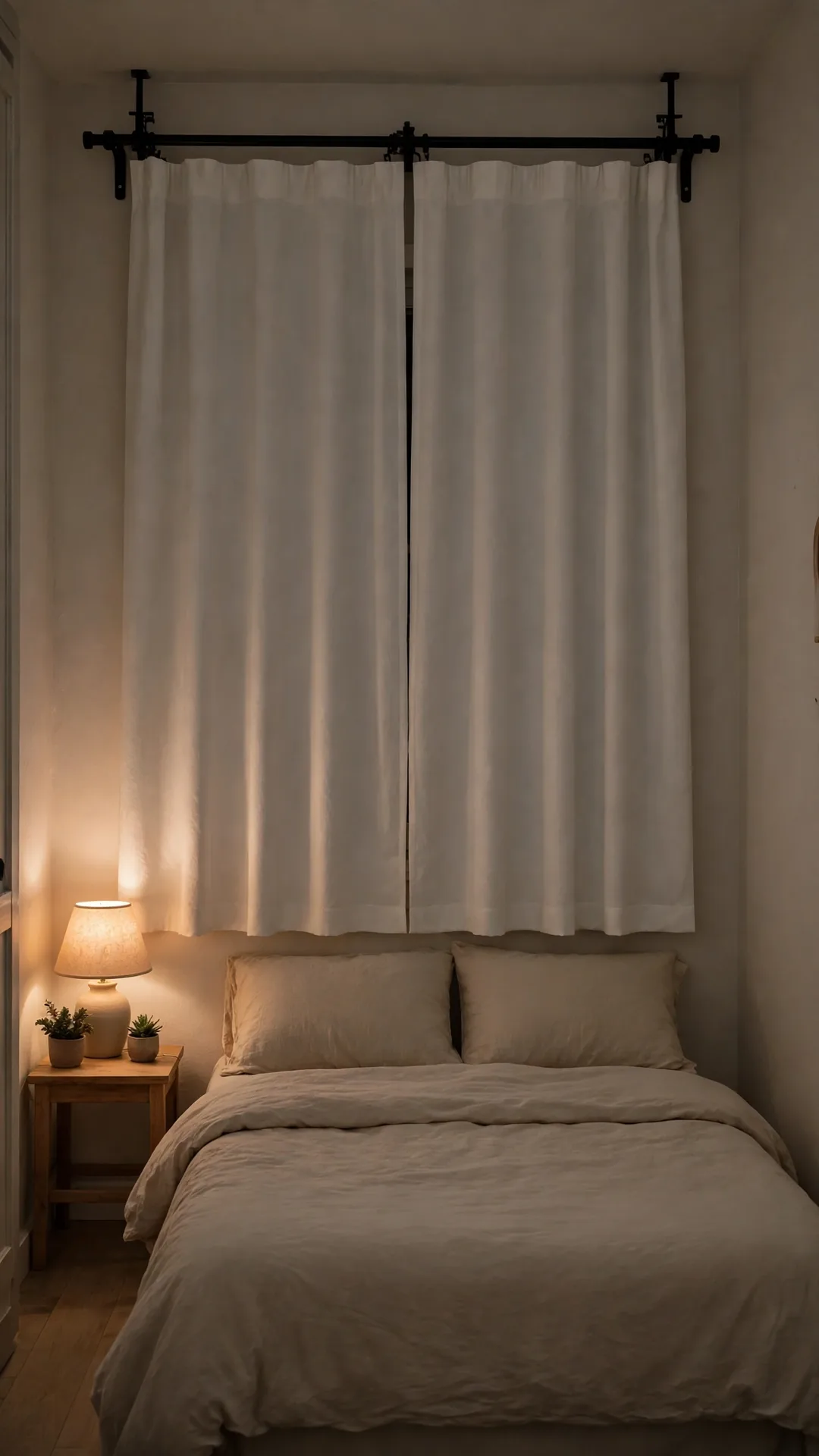
Some small bedroom curtain ideas pay off the first night you hang them. Full blackout panels block streetlight and early sun in one move. Your room feels darker, cooler and calmer right away.
How to do it:
- Pick panels 8 to 12 inches wider than the window
- Choose a length that lands at the floor or just above
- Hang the rod 4 to 6 inches above the frame
- Close panels fully and check edges for light gaps
- Pick a foam-backed or triple-weave fabric
Best for: East-facing rooms and light sleepers.
Budget: $25 to $60 per window
Quick tip: Hold a flashlight behind the fabric in the shop to test the block.
2. Stick Up Curtains With Command Hooks
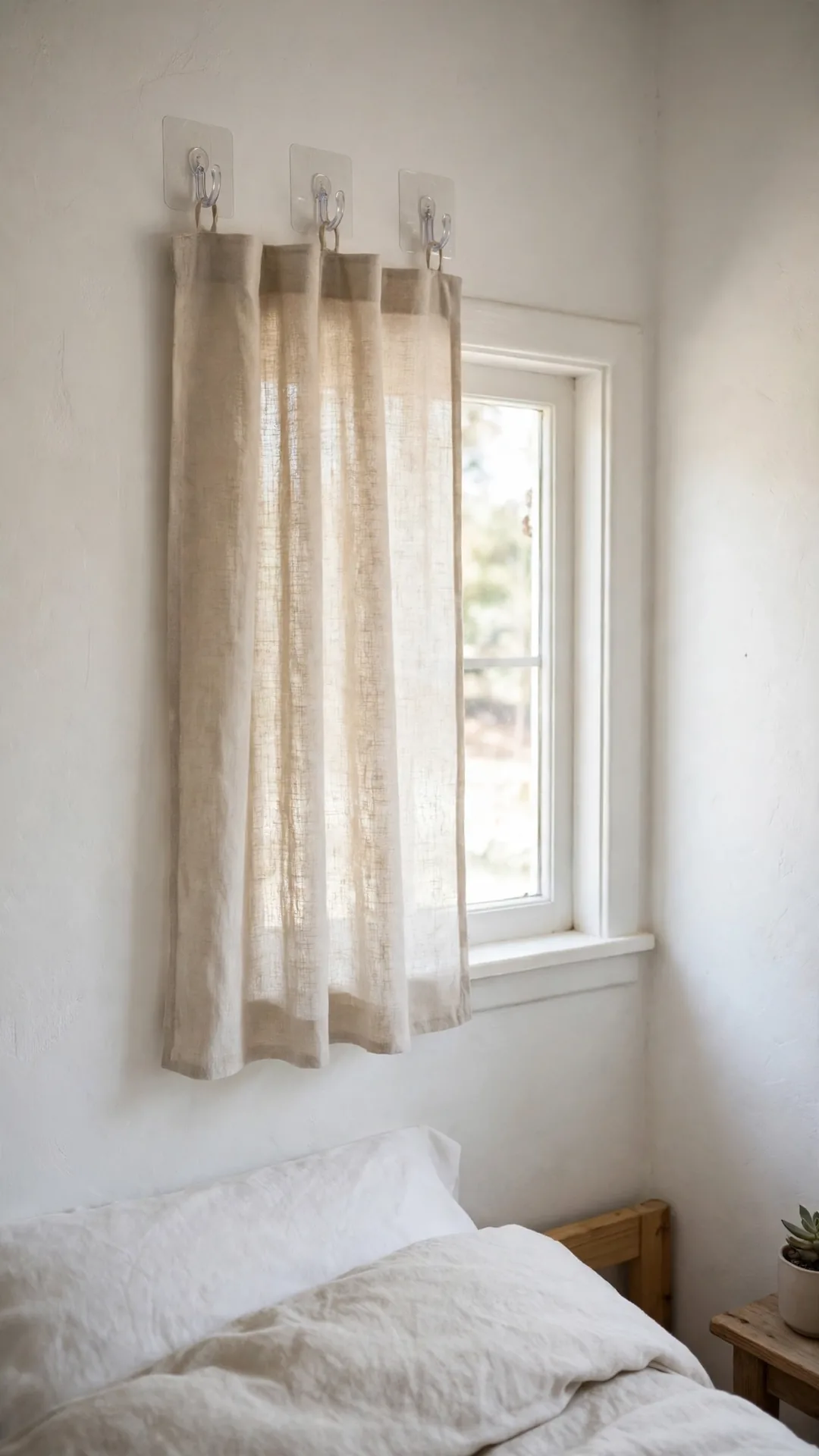
Adhesive hooks hold a light panel with zero holes in the wall. The setup suits panels under 2 pounds per window. It comes down clean when you move out.
How to do it:
- Clean the wall spot with rubbing alcohol first
- Press each large hook for a full 30 seconds
- Wait one hour before hanging any weight
- Thread the panel pocket straight onto the hooks
- Space hooks 12 to 16 inches apart
Best for: Renters in dorms and first apartments.
Budget: $10 to $25
Quick tip: Keep one spare hook pack for a fast fix.
3. Seal the Edges for Real Darkness
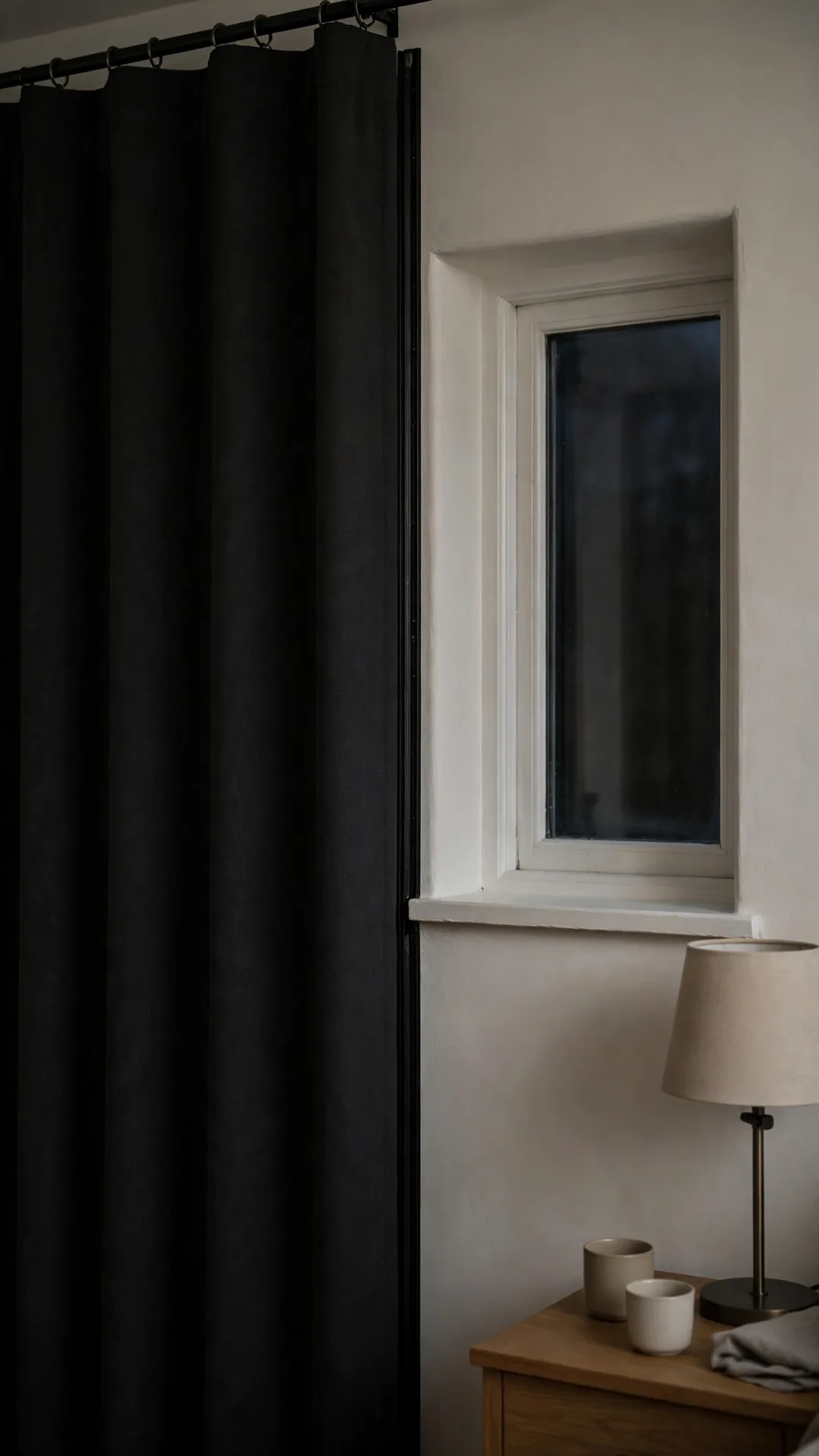
Most light leaks sneak in at the sides, not through the fabric. Flat edges turn a good panel into a near total block. The Sleep Foundation explains how to make your bedroom dark and why total darkness helps sleep.
How to do it:
- Stick magnetic strips on the wall beside the frame
- Sew or clip matching strips to the panel edges
- Add a pelmet or a rolled towel on top gaps
- Use a wrap-around rod to curve panels to the wall
- Check the room at noon with lights off
Best for: Shift workers and streetlight-facing rooms.
Budget: $8 to $20
Quick tip: Seal the center overlap with two small clips.
4. Try a Spring Tension Rod Inside the Frame
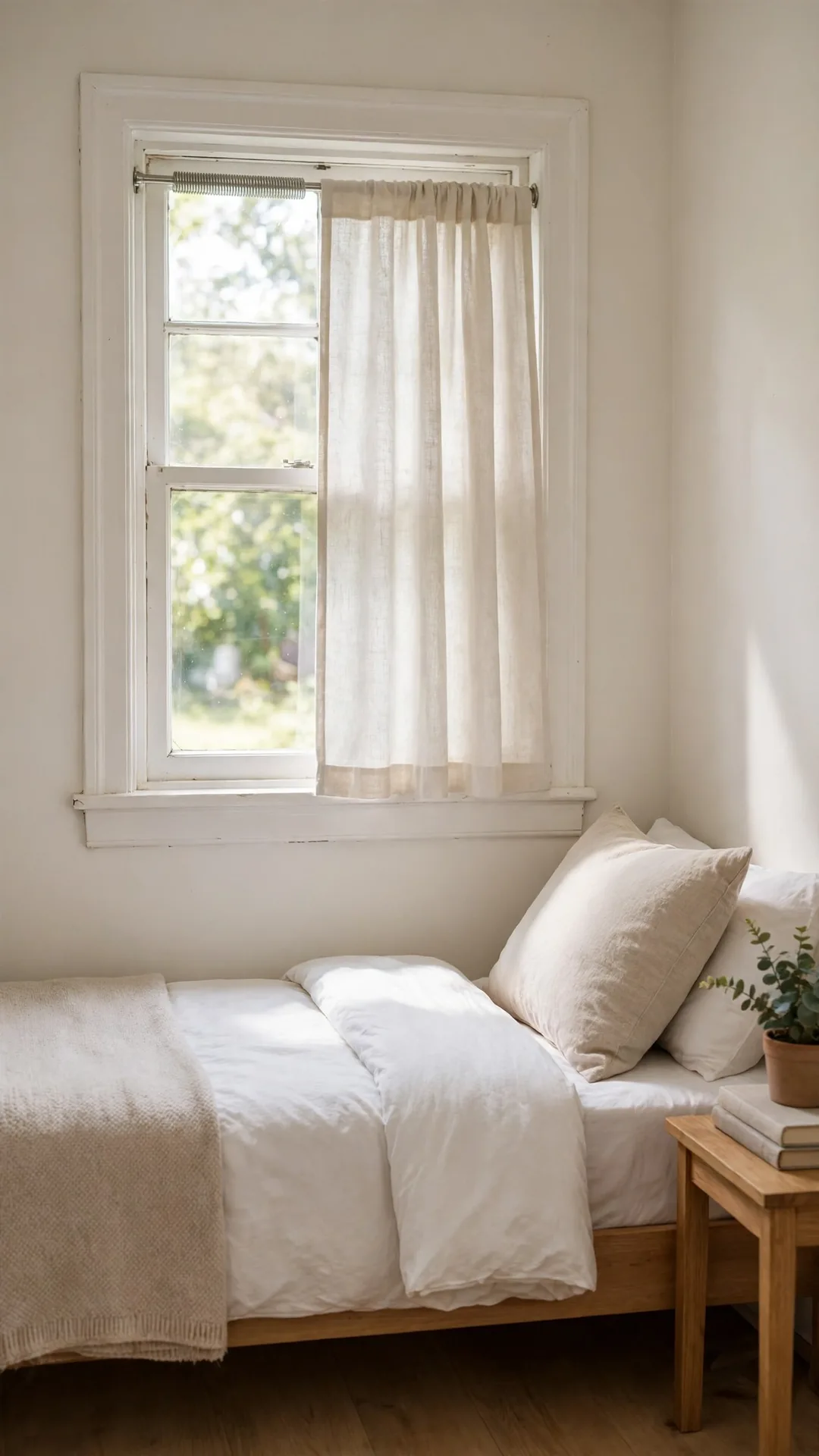
A tension rod wedges inside the frame and needs no screws. It holds light sheers and short panels with ease. The whole swap takes about ten minutes.
How to do it:
- Measure the inside frame width at three points
- Pick a rod rated for your panel weight
- Twist the rod 1 inch longer than the gap
- Press it level at your chosen height
- Re-seat the rod after the first week
Best for: Renters and anyone avoiding wall marks.
Budget: $8 to $18
Quick tip: Rubber end caps grip painted frames best.
5. Add a Blackout Liner Behind Pretty Fabric

Liners rank high among small bedroom curtain ideas for renters. A plain liner clips behind the panels you already love. You gain darkness without giving up your color or print.
How to do it:
- Buy a liner the same width as your panel pair
- Clip rings through both the liner and panel tops
- Keep the liner 1 inch shorter than the face fabric
- Trim extra width with fabric scissors, not a knife
- Face the coated side toward the glass
Best for: Keeping a favorite print and gaining darkness.
Budget: $15 to $35
Quick tip: White liners keep the street view looking neat.
6. Use a Wrap-Around Rod to Cut Side Light

A wrap-around rod curves the panel ends back to the wall. That curve closes the side gaps where light pours in. It also makes the window look wider from the bed.
How to do it:
- Choose a rod with returns of 3 to 5 inches
- Mount the return brackets level with the main rod
- Leave 1 inch of panel past each return
- Pair it with blackout fabric for the full effect
Best for: Windows near a side wall or corner.
Budget: $20 to $45
Quick tip: Returns work best with flexible grommet panels.
7. Clip Rings Make Any Fabric a Curtain

Clip rings turn flat fabric, quilts or sheets into panels. You skip sewing and hemming in one move. The rings also slide with a soft, easy glide.
How to do it:
- Count one clip for every 4 inches of width
- Fold the top edge down 2 inches for body
- Clip through both layers so nothing slips
- Keep clips level for an even hem line
- Pick fabric at least 1.5 times the window width
Best for: DIY fans and odd fabric finds.
Budget: $12 to $30
Quick tip: Vintage sheets make soft, washable panels.
8. Pick a Room-Darkening Panel for Naps
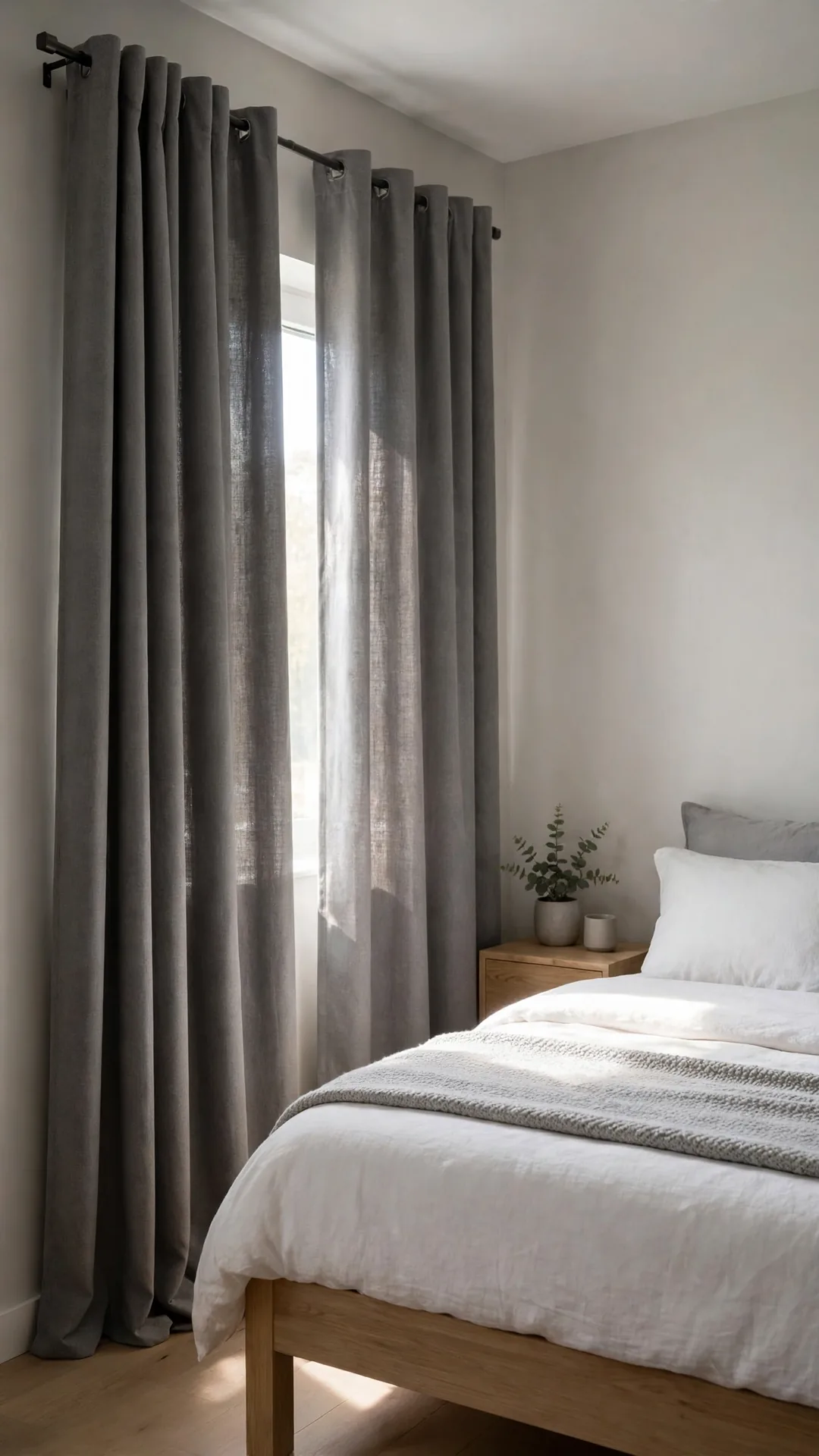
Room-darkening panels dim light without the cave effect. They suit naps, movie nights and lazy Sundays. Colors stay truer than with full blackout fabric.
How to do it:
- Look for a dense weave with a light lining
- Hold fabric to a window and check the glow
- Size panels 1.5 to 2 times the frame width
- Hang them close to the wall for fewer leaks
Best for: North-facing rooms and daytime nappers.
Budget: $20 to $50
Quick tip: Gray and taupe dim light without darkening decor. Keep one panel open a crack if total darkness feels heavy at first.
9. Layer Sheers Under Blackout Panels

Layering sheers under panels tops many small bedroom curtain ideas. The sheer gives soft daylight and privacy all day. The blackout layer takes over at night.
How to do it:
- Fit a slim inner rod or a double rod bracket
- Hang sheers 1 to 2 inches behind the panels
- Keep sheers at sill length for radiators below
- Choose blackout panels in a calm solid color
- Tie panels back by day to frame the sheer
Best for: Rooms facing close neighbors.
Budget: $35 to $80
Quick tip: White sheers make small rooms feel airy at noon.
10. Hang a Double Rod for Two Layers
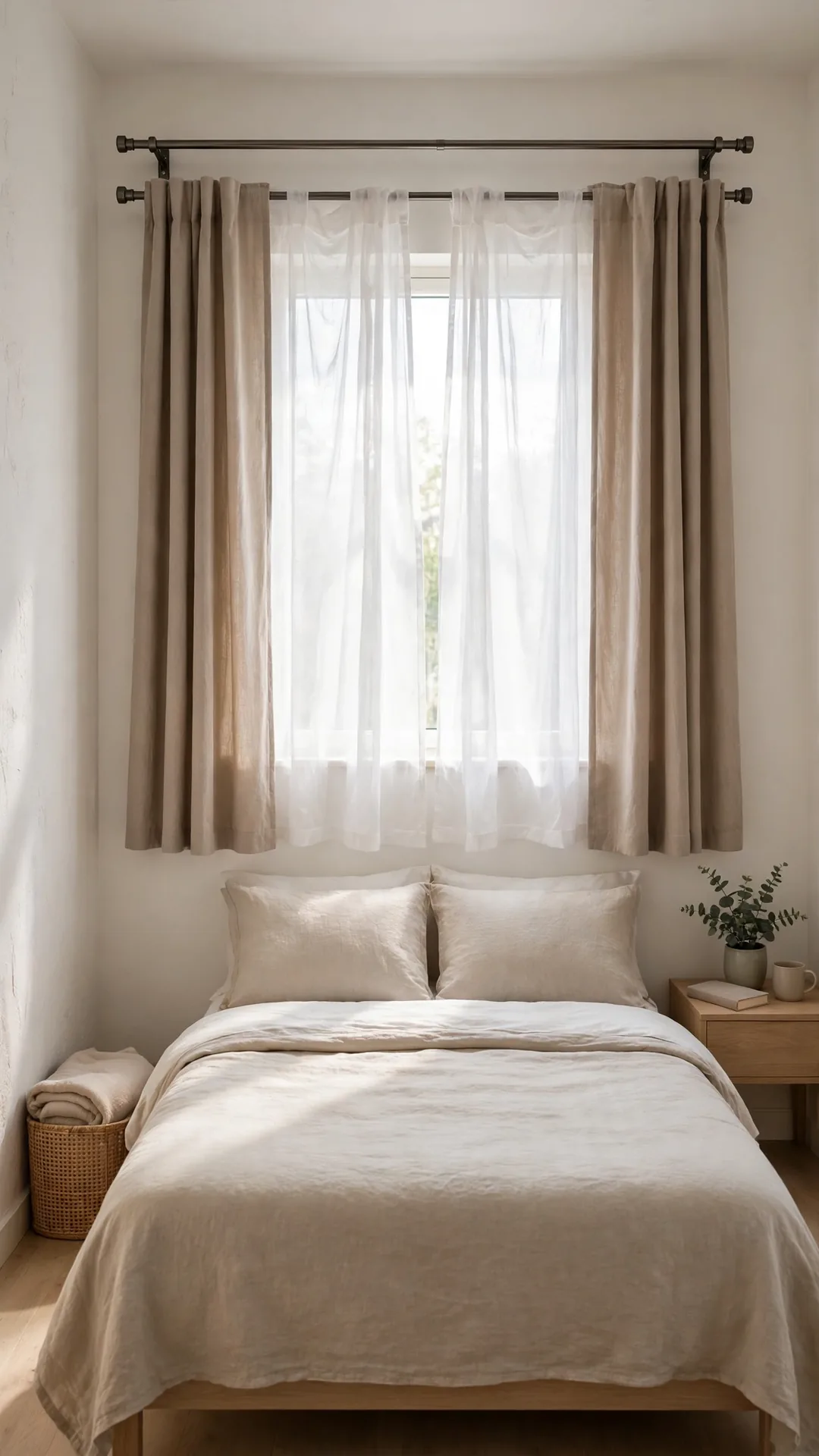
A double rod holds sheers and panels on one mount. Each layer slides on its own track all day. The wall takes two brackets instead of four.
How to do it:
- Mount brackets into studs or strong anchors
- Keep 2 inches of space between the two rods
- Put the sheer layer on the back rod
- Choose finials small enough to clear the ceiling
Best for: One-window rooms that need day and night modes.
Budget: $25 to $55
Quick tip: Black rods read clean against most wall colors. Label the layers once and guests stop guessing.
11. Use Sheers Alone for Soft Morning Light
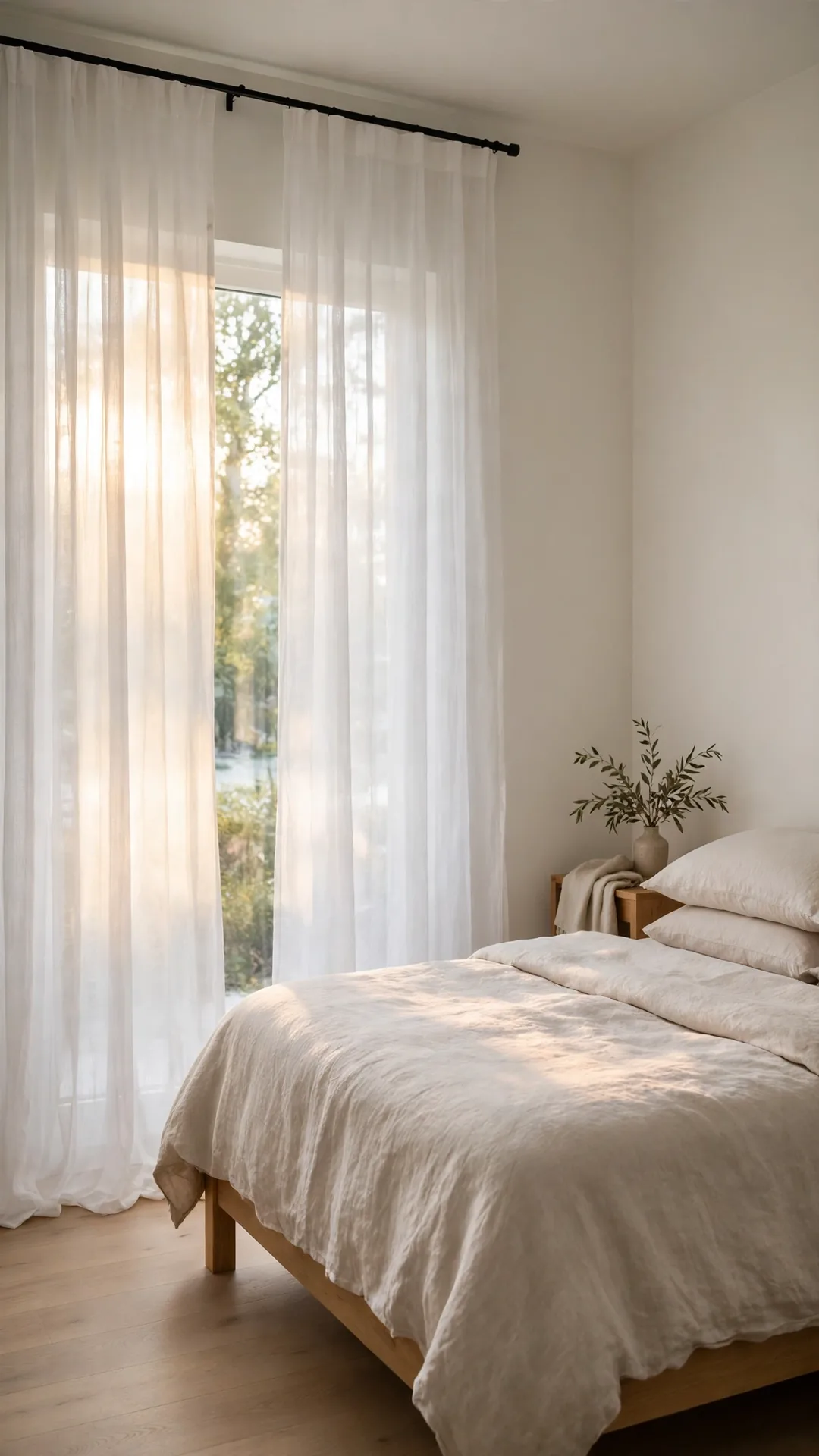
Some small bedroom curtain ideas skip panels and use sheers alone. They suit bedrooms that never face direct sun and soften hard light. The room stays bright without glare on the clock or mirror.
How to do it:
- Pick a tight-weave sheer for real privacy
- Hang panels from ceiling height for a taller feel
- Use two panels per window for full folds
- Wash sheers on gentle cycle every few months
Best for: High-floor rooms with no facing windows.
Budget: $15 to $40
Quick tip: Linen-look sheers hide wrinkles between washes.
12. Pair Panels With a Blackout Roller Shade
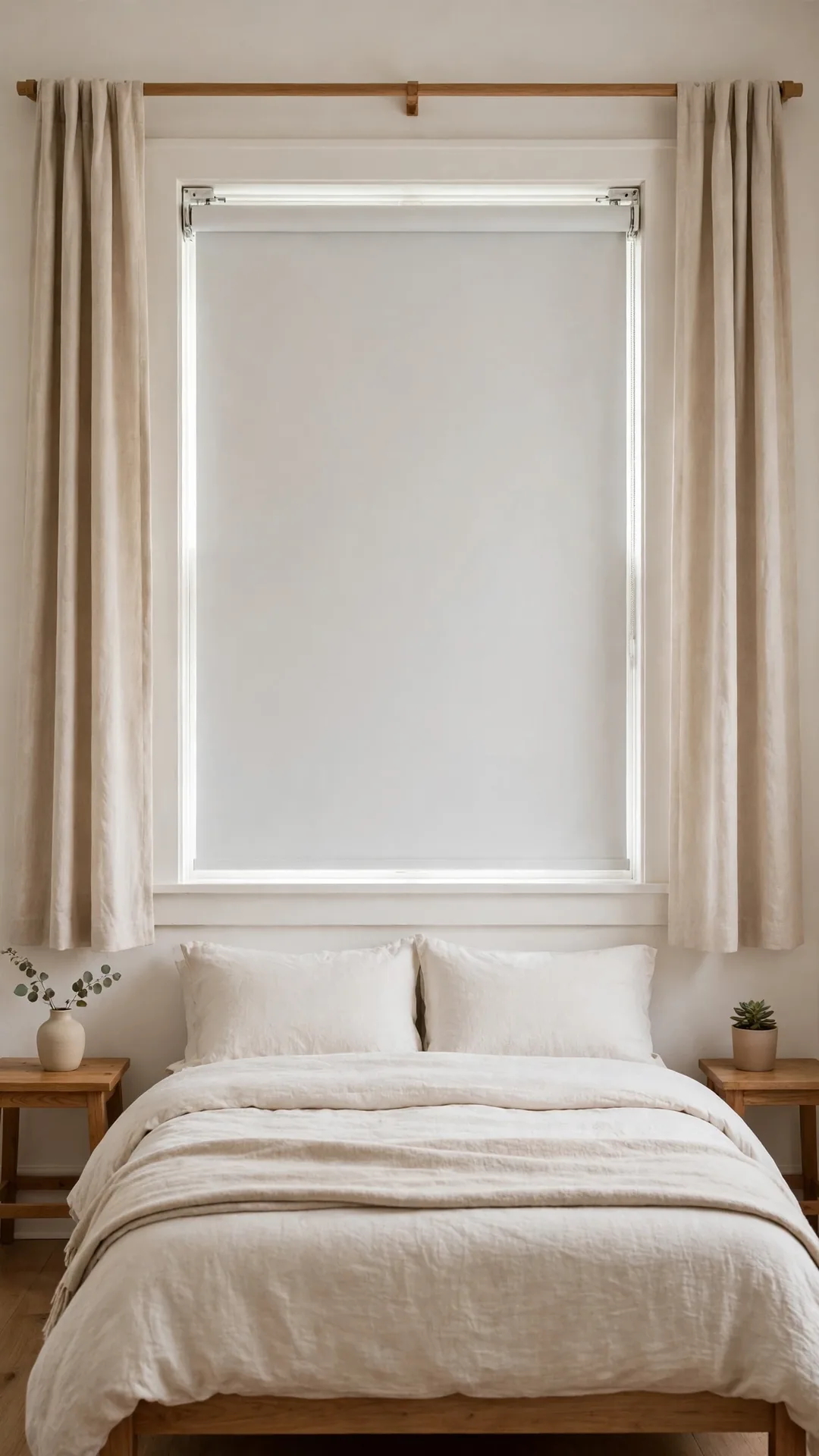
A roller shade does the dark work behind pretty panels. The panels stay decorative and never need lining. This split also keeps daily handling light.
How to do it:
- Mount the shade inside the frame for a clean edge
- Pick a cordless shade for a safer pull
- Hang panels wide so they clear the shade roll
- Match panel color to the wall for calm
Best for: Renters who want a tidy, layered look.
Budget: $40 to $90
Quick tip: A white shade vanishes against white trim by day. The shade alone handles naps when panels stay open.
13. Add Tiebacks for Daytime Light Control
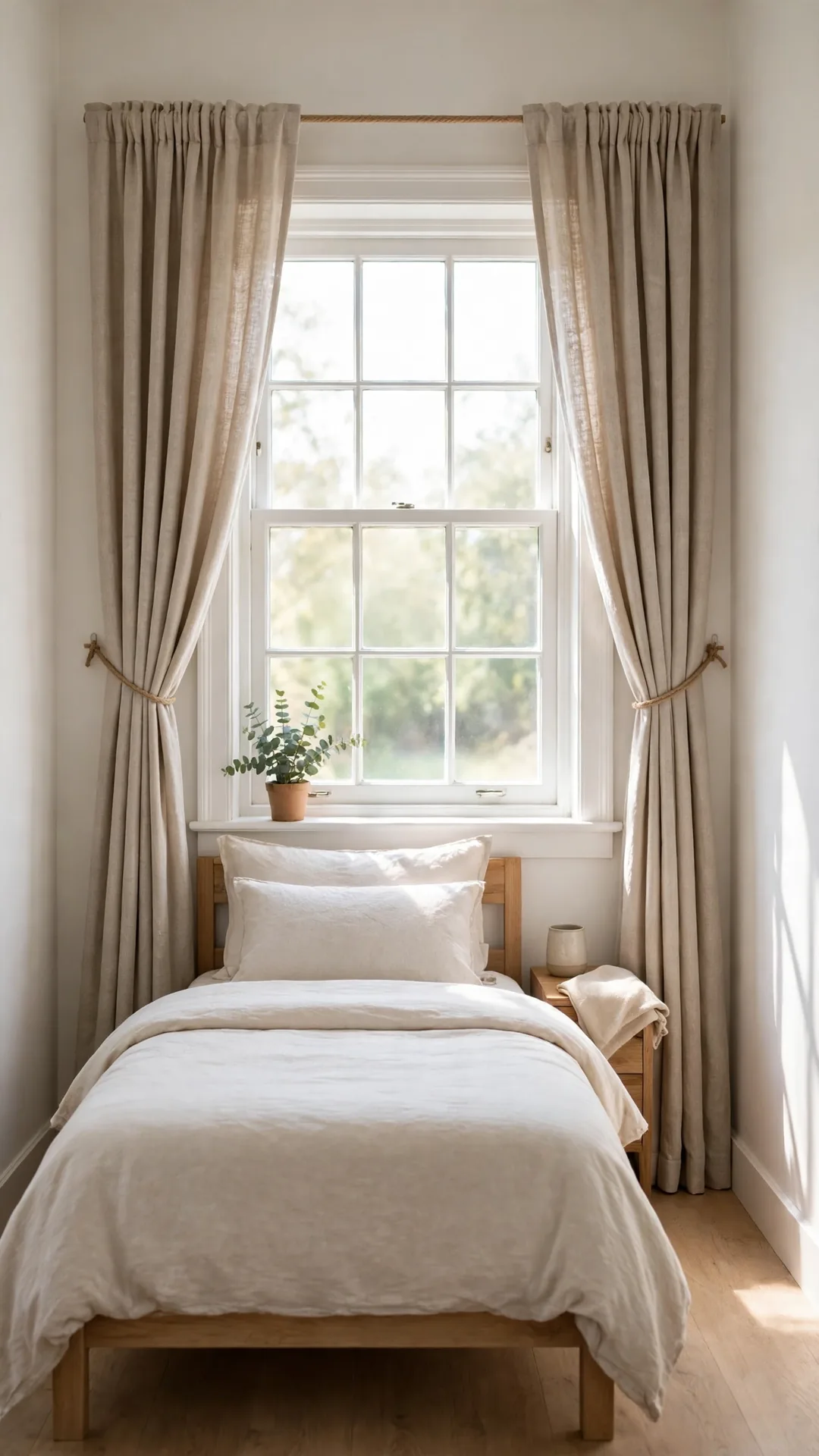
Tiebacks earn a place on any list of small bedroom curtain ideas. They pull panels clear of the glass in seconds. More daylight reaches the bed and desk areas.
How to do it:
- Fit hooks or knobs at about two thirds height
- Use rope, fabric loops or magnetic ties
- Keep both sides at the same height mark
- Choose ties that match your rod finish
Best for: Deep-set windows and dark corners.
Budget: $6 to $18
Quick tip: Magnetic ties need no hooks or drilling at all. Loose ties stored in a drawer keep the look tidy.
14. Choose Cafe Panels for Privacy Below
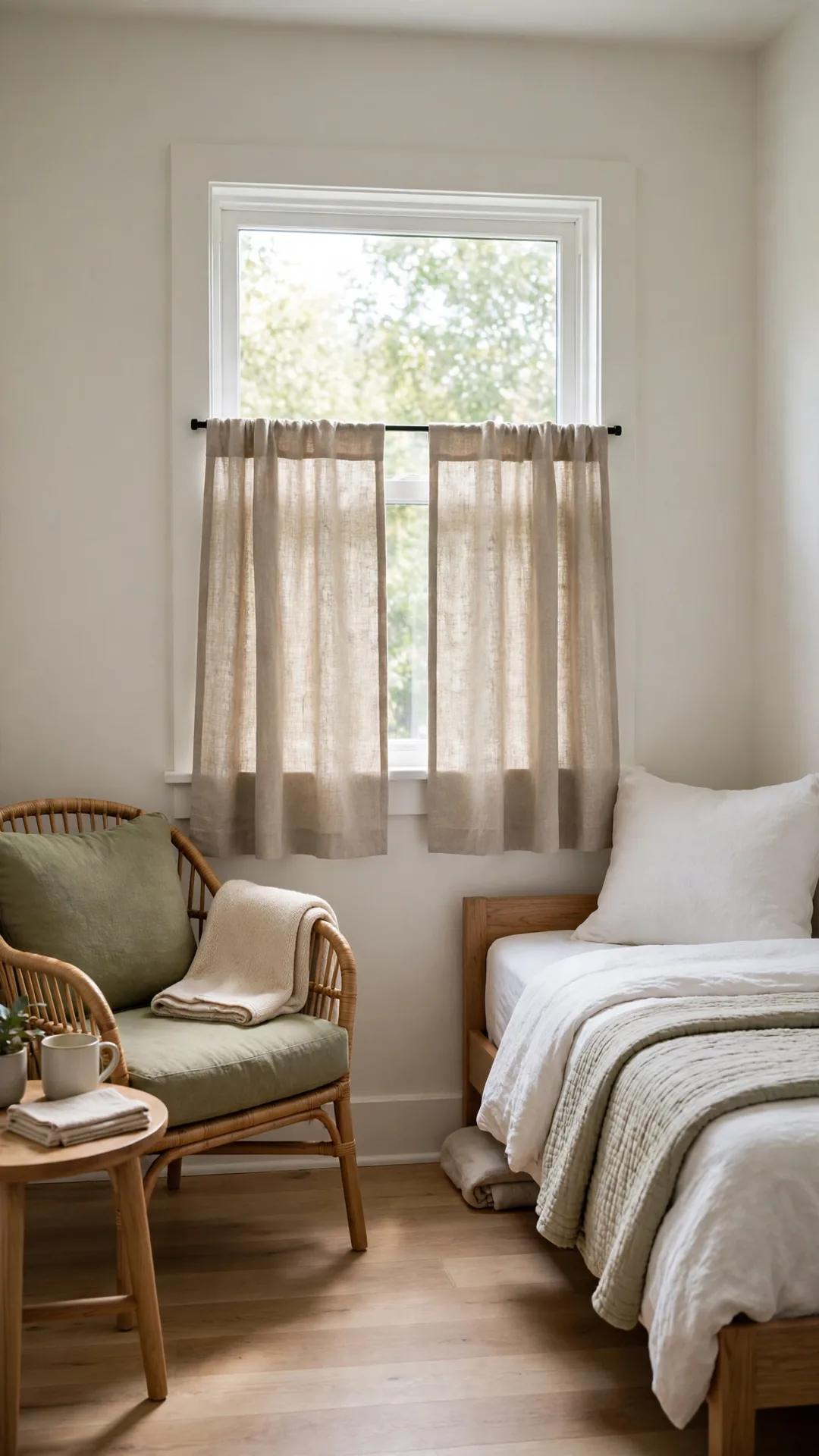
Cafe panels cover the lower half of the glass only. You keep privacy at bed level and light up top. The style suits street-level and garden rooms.
How to do it:
- Measure from mid-frame down to the sill
- Mount a slim rod across the frame center
- Pick a washable cotton or linen blend
- Add a plain valance only if the top feels bare
Best for: Ground-floor bedrooms and close sidewalks.
Budget: $15 to $35
Quick tip: White cafe panels bounce light back into the room. Cotton cafe panels wash and rehang in one morning.
15. Layer a Valance Over Working Panels
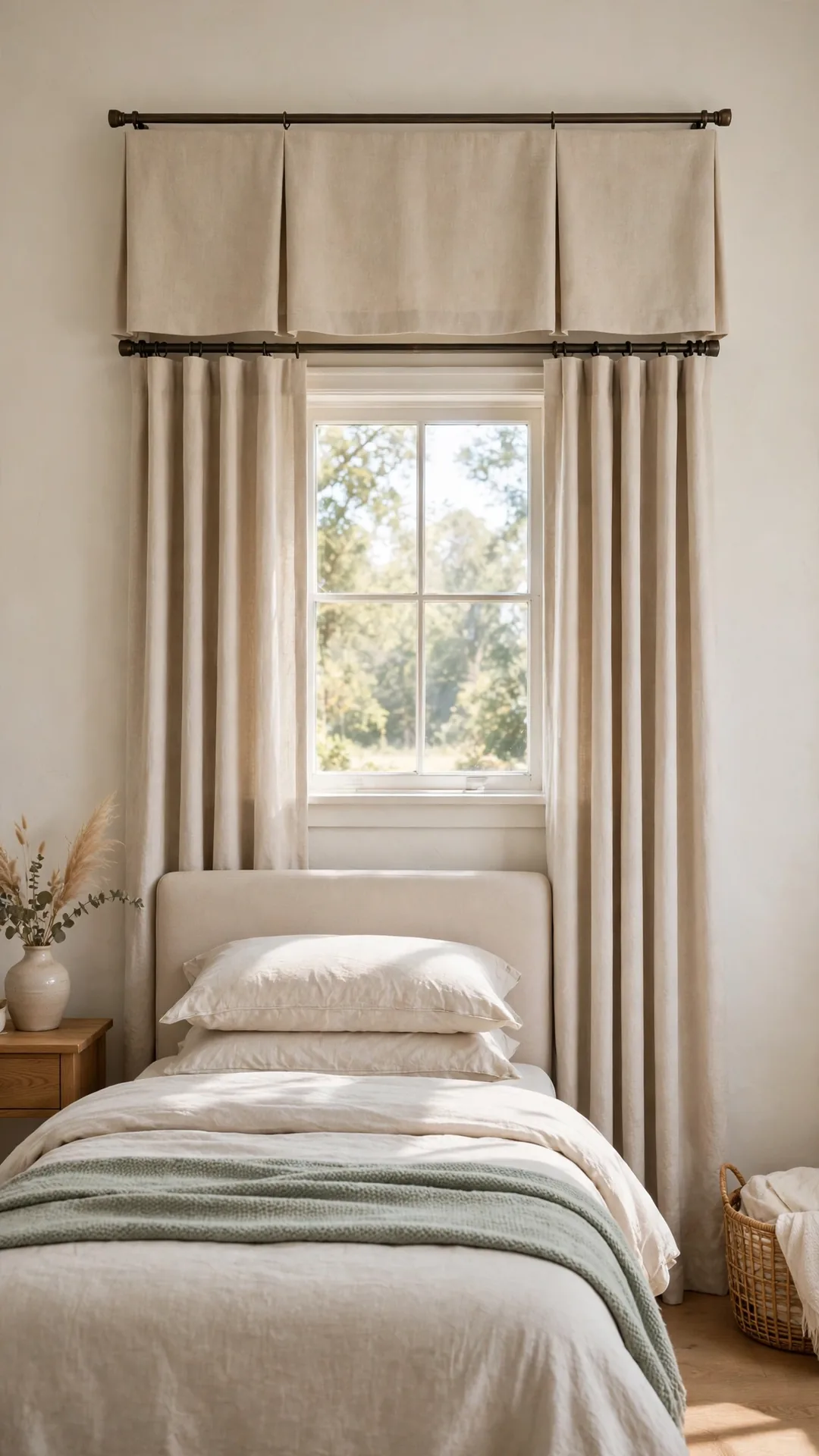
A short valance hides the rod and the top gap. It also blocks the thin light line above panels. The layered top reads tailored on plain walls.
How to do it:
- Keep the valance at 12 to 16 inches deep
- Mount it on its own slim rod or board
- Match the valance fabric to the panels
- Check the top for light leaks at midday
Best for: Rooms with visible rods and top glare.
Budget: $18 to $45
Quick tip: A plain valance calms busy printed panels. A valance also hides a slightly crooked rod line.
16. Try Magnetic Panels on Steel Frames
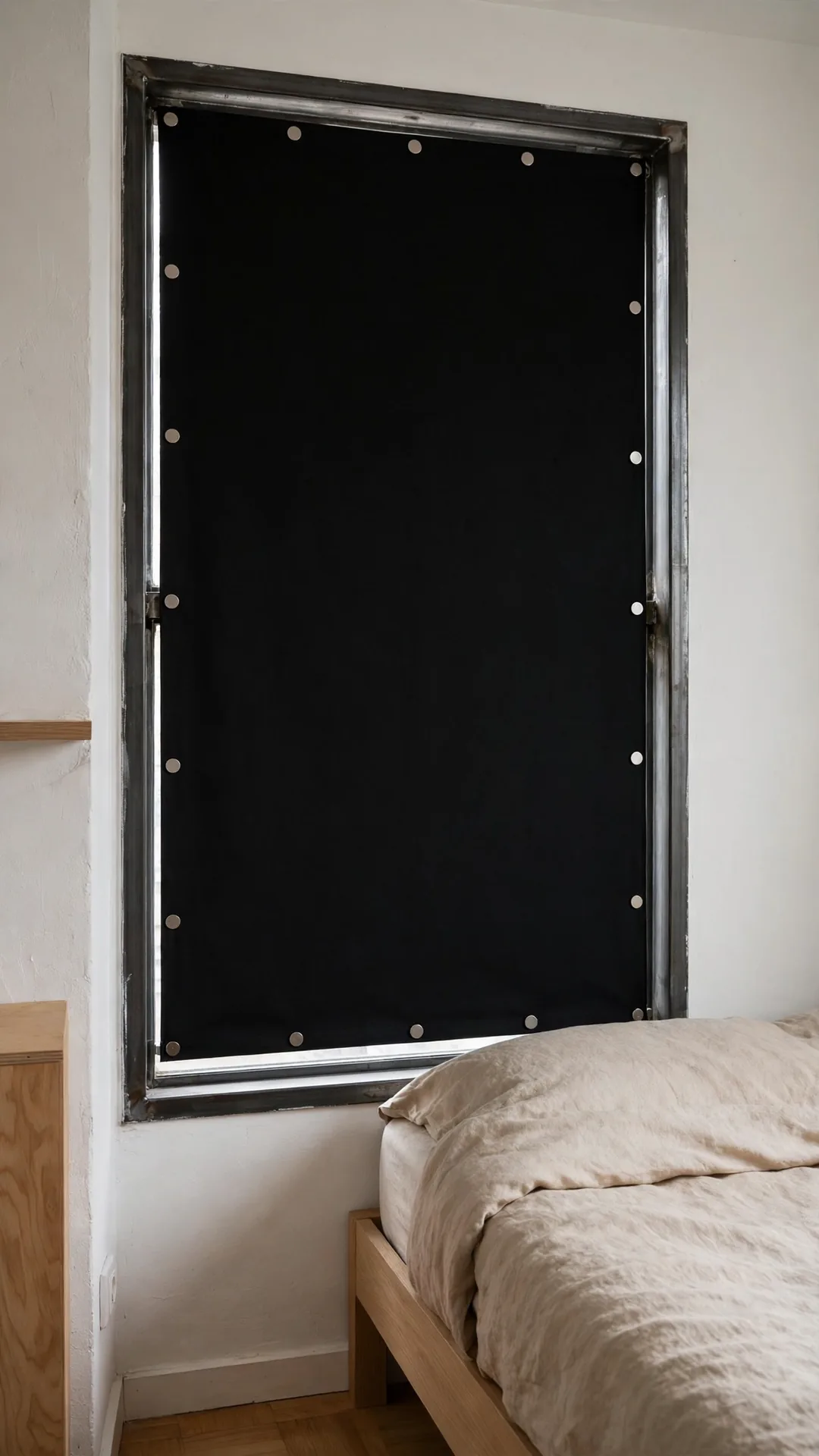
Magnets grip steel window and door frames with no tools. A panel sits flat and blocks light edge to edge. Removal takes seconds on cleaning day.
How to do it:
- Test your frame with a fridge magnet first
- Sew or glue magnets into the panel hem
- Space magnets every 8 to 10 inches
- Use blackout cloth for the strongest block
Best for: Steel-frame windows and metal doors.
Budget: $15 to $35
Quick tip: Stronger magnets suit thick blackout fabric. Test one corner first before you commit to sewing the full panel set.
17. Mount the Rod Above the Frame
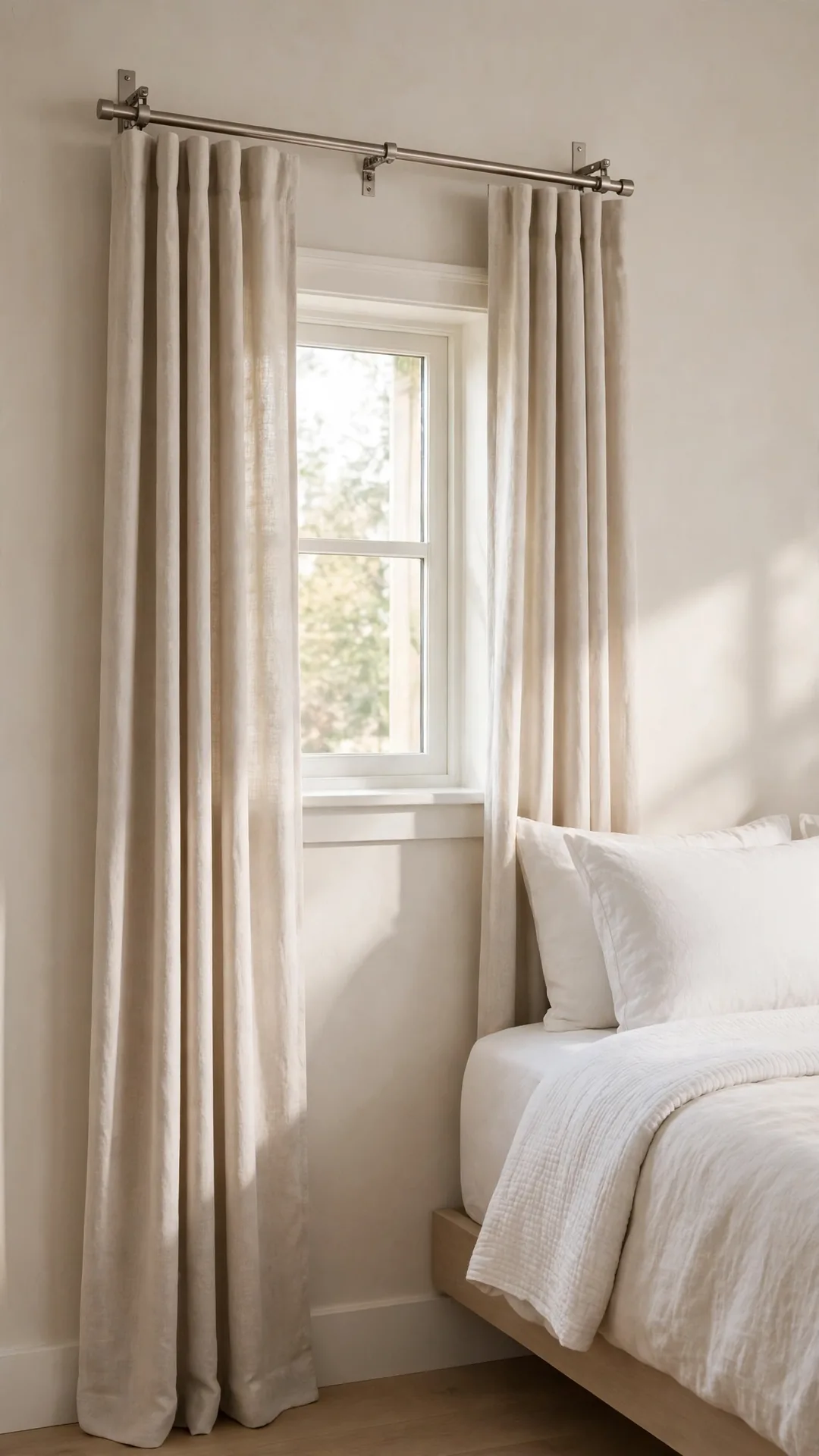
Mounting height changes how small bedroom curtain ideas perform. A rod above the frame seals the top light line. Panels also clear the frame trim as they slide.
How to do it:
- Set the rod 4 to 6 inches above the frame
- Keep at least 2 inches below the ceiling
- Mark both bracket spots with a level line
- Drill pilot holes before driving screws
- Use anchors rated above your panel weight
Best for: Owners and long-term renters with permission.
Budget: $15 to $40 rod only
Quick tip: Painter tape holds your level line while you mark.
18. Go Wide So Panels Stack on the Wall
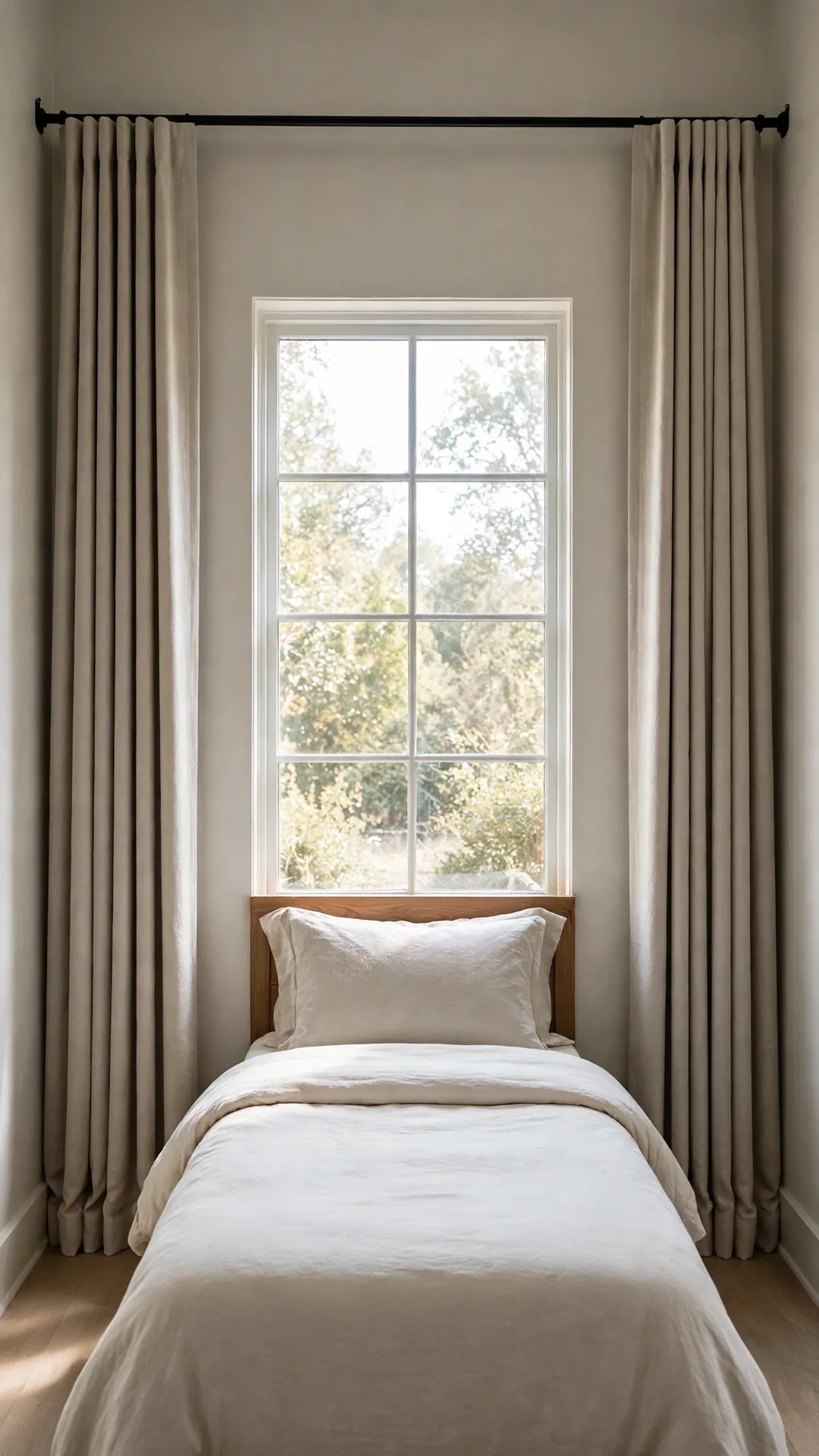
A wide rod lets open panels rest on wall, not glass. Full glass means full daylight for the room. The bed gets morning light without glare spots.
How to do it:
- Extend the rod 6 to 10 inches past each side
- Add a center bracket on spans over 60 inches
- Check the wall run is clear of art and doors
- Buy panels wide enough to still fold when open
Best for: Narrow windows that feel stingy with light.
Budget: $20 to $50
Quick tip: Wall-stacked panels make windows read wider.
19. Pick Ceiling Track for a Clean Line
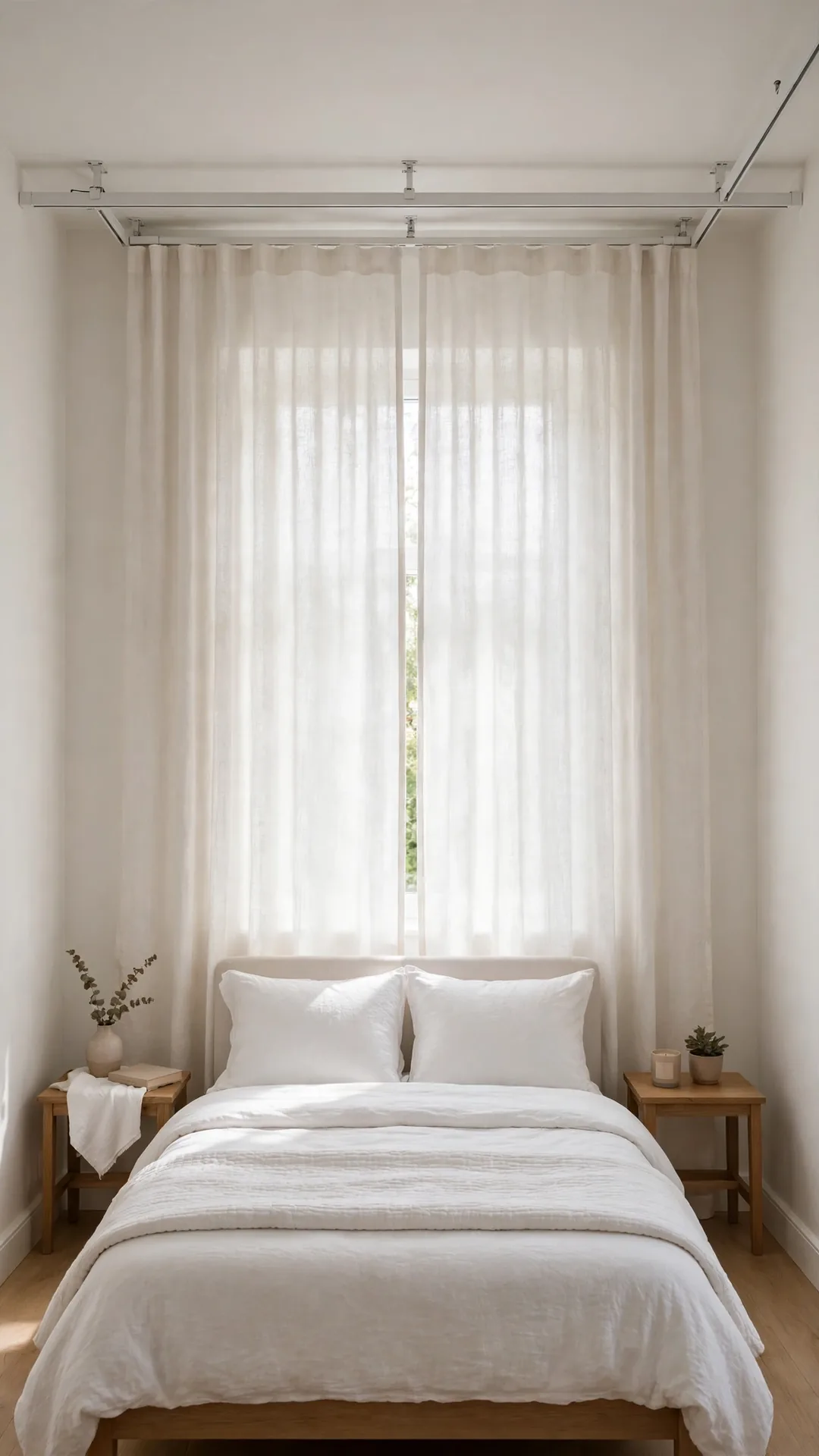
A ceiling track runs wall to wall with no brackets. Panels glide on small rollers with a quiet pull. The full-height drop suits low, plain ceilings.
How to do it:
- Screw the track into ceiling joists where possible
- Keep the track line 3 to 4 inches from the wall
- Use wave or flat hooks for even folds
- Plan panel length to just kiss the floor
Best for: Modern rooms and wide window walls.
Budget: $45 to $110
Quick tip: Tracks hide well behind a plain ceiling color. Track systems suit windows you dress edge to edge.
20. Choose Black Metal for a Crisp Edge
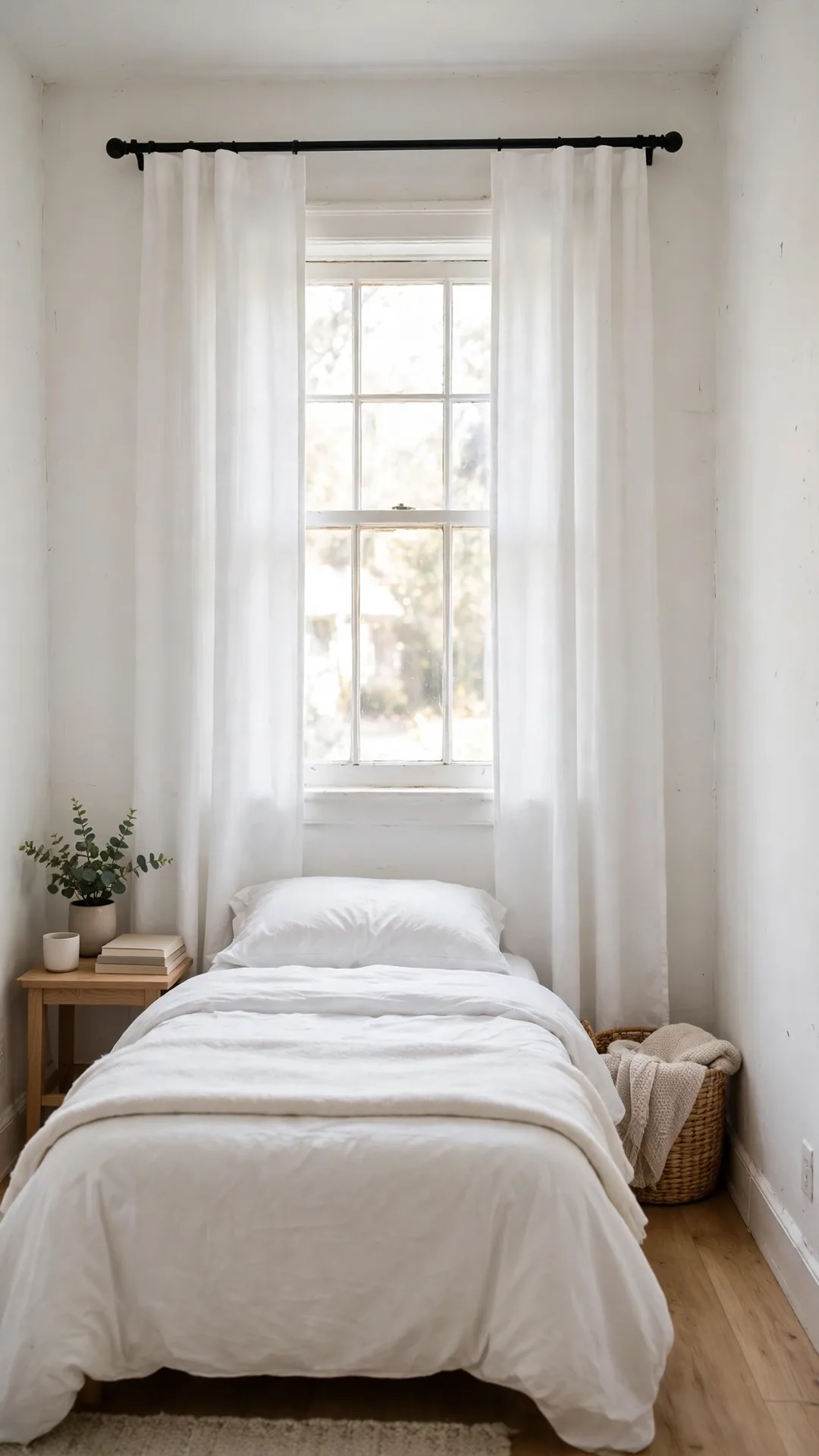
A matte black rod draws a clean line up high. It frames white or pale panels with contrast. The look pairs well with black lamp bases.
How to do it:
- Pick a rod diameter of 3/4 to 1 inch
- Match finials to other black accents sparingly
- Wipe the rod monthly so dust stays invisible
- Use black rings for one unbroken line
Best for: White rooms that need one strong accent.
Budget: $18 to $45
Quick tip: One black accent repeated twice looks planned. Black also hides small scuffs from daily sliding.
21. Try No-Drill Brackets on the Frame
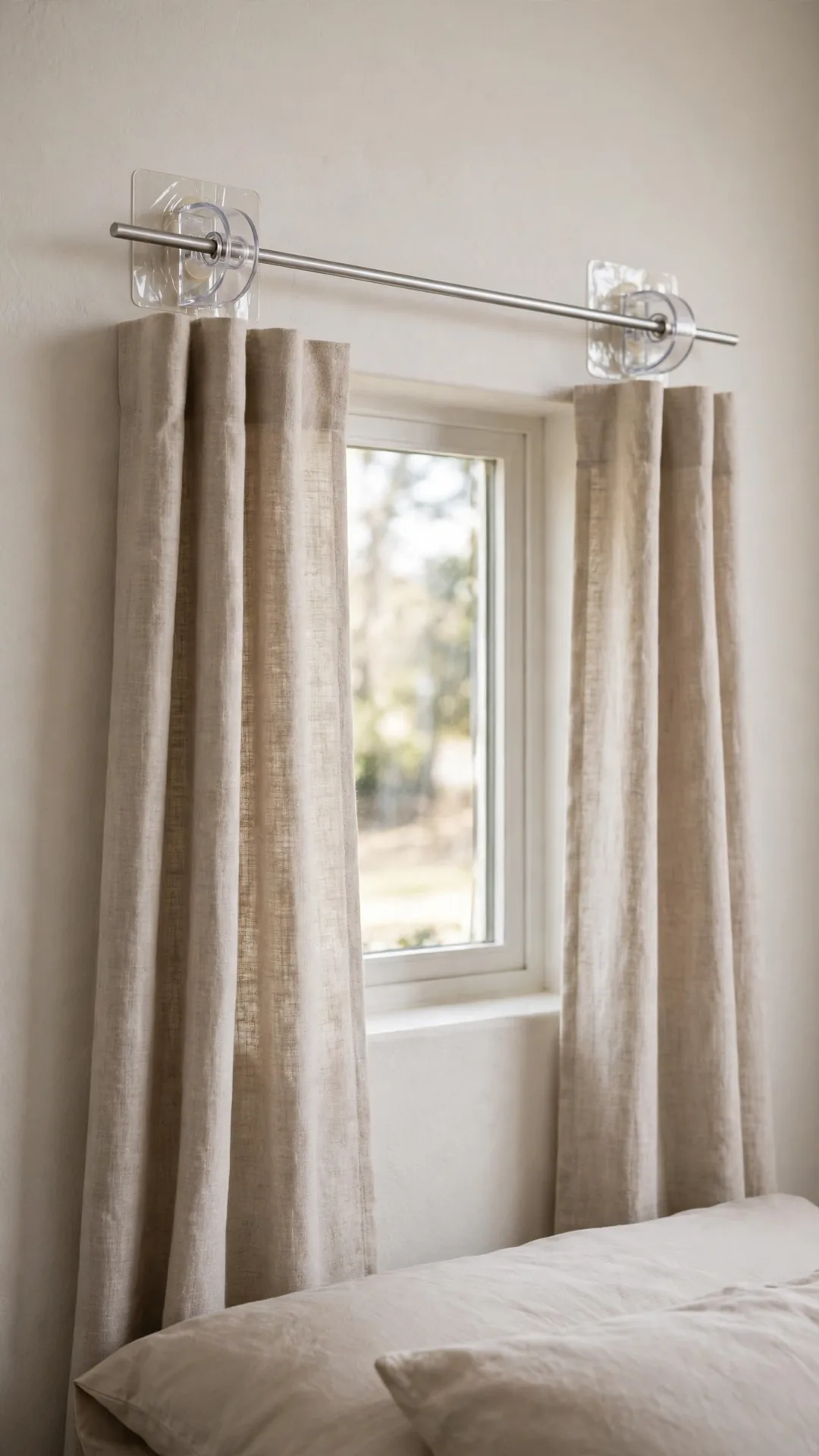
No-drill brackets keep small bedroom curtain ideas renter safe. They stick or clamp onto the frame itself. Your deposit stays safe and the rod sits firm.
How to do it:
- Clean the frame with alcohol and let it dry
- Press adhesive pads for 30 seconds each
- Wait a full day before hanging panels
- Keep panel weight under the rated limit
- Store spare pads for your next move
Best for: Renters, dorms and leased rooms.
Budget: $12 to $28
Quick tip: Warm adhesive pads with your hands before pressing. Carry the bracket rating card when you shop for panels.
22. Use Corner Rods for Bay Windows

Hinged rod sections follow a bay or corner window. Panels close across the full angle at night. Each section still opens on its own by day.
How to do it:
- Measure each bay section and the corner angles
- Pick a kit with flexible hinged connectors
- Mount one bracket per section at least
- Use one panel per section for smooth turns
Best for: Bay windows and corner glass.
Budget: $35 to $85
Quick tip: Light fabric turns corners without bunching. Order one spare connector and keep two spare screws aside for future repairs.
23. Hang a Rod Inside a Shallow Alcove
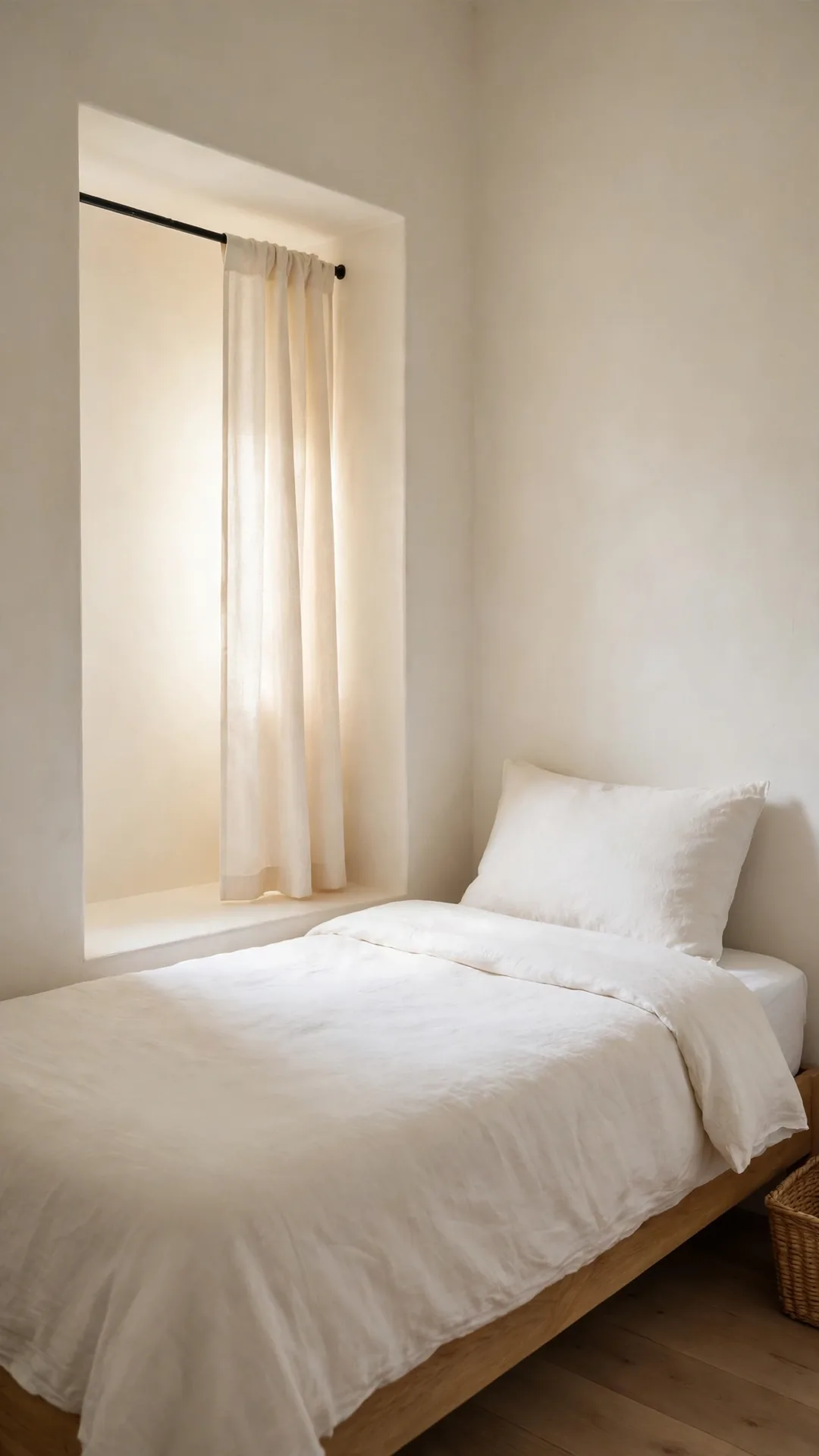
An alcove rod turns a nook into a curtained zone. It can hide a rail of clothes or a desk. The panel softens the nook edge at night.
How to do it:
- Measure the alcove width at the front edge
- Use a tension rod for a no-drill fit
- Pick a panel 6 inches longer than the drop
- Keep the panel clear of bedding and heaters
Best for: Studio bedrooms and box-room nooks.
Budget: $15 to $40
Quick tip: A plain panel makes the nook read as wall. Alcove curtains also mute echo in bare nooks.
24. Add Finials That Stay Small and Simple
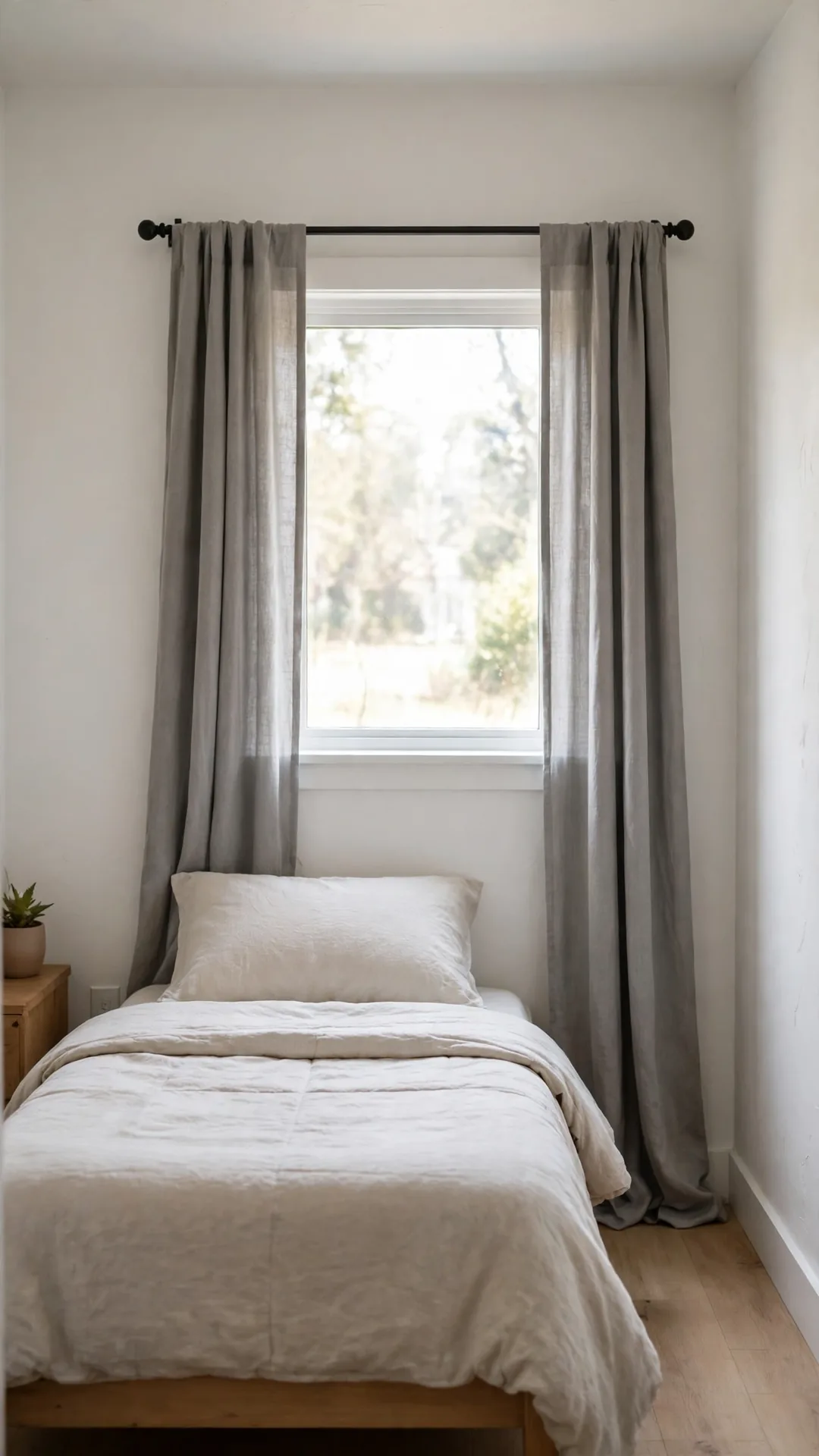
Small finials finish a rod without crowding the wall. Oversize ends fight for space in tight corners. Simple balls or caps suit most small rooms.
How to do it:
- Keep finials under 3 inches long per side
- Check corner clearance before you order
- Match the finial finish to the rod
- Tighten finials by hand so threads stay clean
Best for: Windows close to side walls.
Budget: $8 to $22
Quick tip: End caps give the cleanest line in corners. Caps cost less than ball finials and look just as neat on the wall.
25. Measure Twice for a Perfect Drop
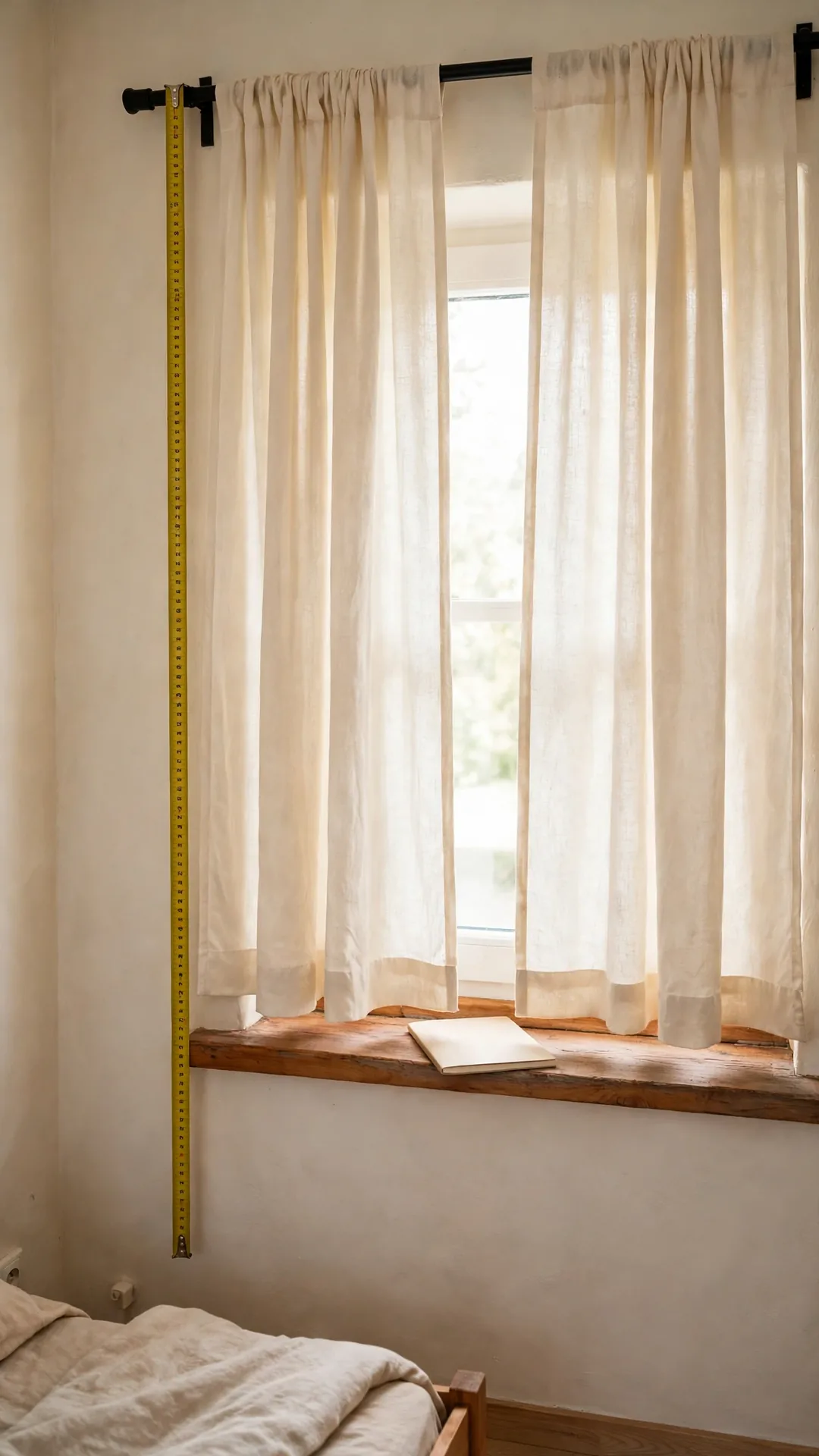
Careful measuring sits behind the best small bedroom curtain ideas. A wrong drop pools on the floor or floats short. Ten minutes with a tape prevents both errors.
How to do it:
- Measure width at the top, middle and sill
- Decide the rod spot before you measure length
- Note the drop from rod to your target point
- Write every number down before you shop
- Add 1 inch for ring or clip height
Best for: Anyone ordering panels online.
Budget: $0 to $10 for a tape
Quick tip: Steel tapes stay stiff across wide windows.
26. Let Panels Just Kiss the Floor
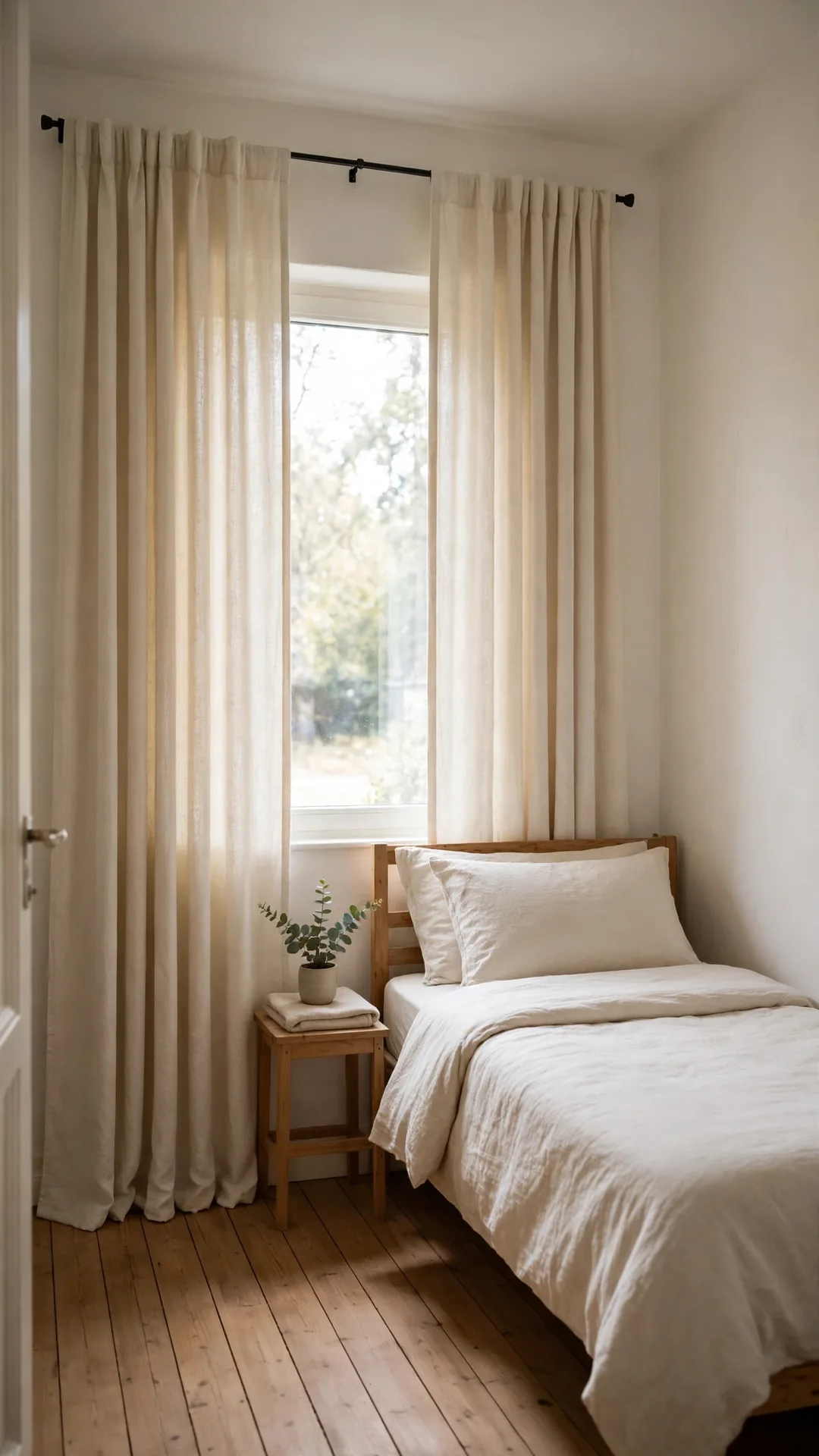
Floor-kiss length ends the panel right at the boards. It reads neat and gathers far less dust. The hem stays clear of radiators and vents.
How to do it:
- Aim to end panels 1/4 inch above the floor
- Measure from the rod top, not the frame
- Allow 1 inch for fabric stretch over time
- Test with one panel before hemming both
Best for: Tidy looks and homes with pets.
Budget: Panel cost plus $0 to $15 hemming
Quick tip: Iron-on hem tape fixes a long panel fast. Recheck the drop after the first wash cycle.
27. Stop at the Sill for Radiator Walls
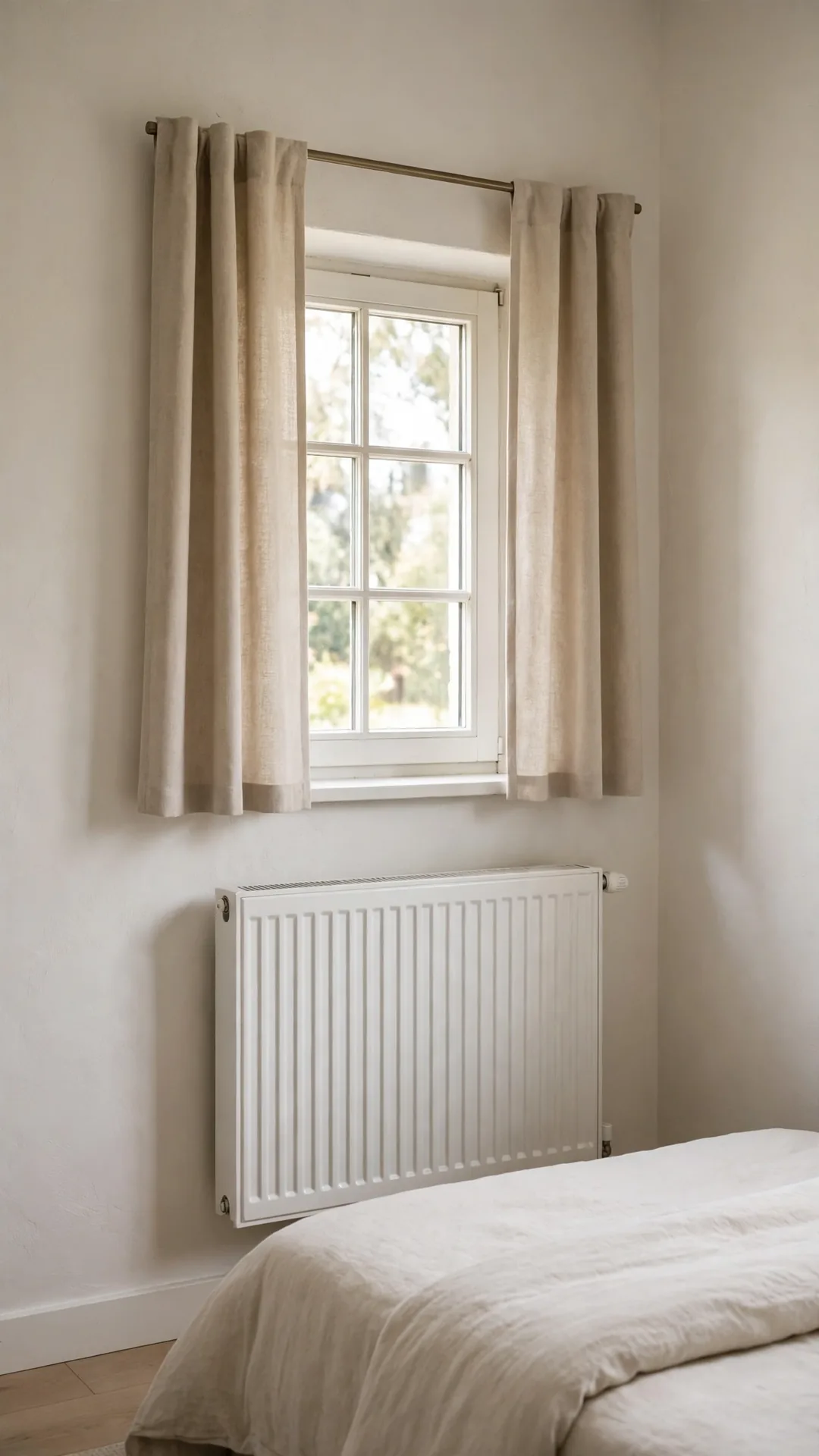
Sill-length panels end where the window ends. They keep fabric clear of radiators below. Heat flows into the room instead of the cloth.
How to do it:
- End panels 1/2 inch above the sill line
- Keep panels off radiator tops at all times
- Pick a fabric that holds a crease well
- Pair with a shade if you need more dark
Best for: Windows above radiators or heaters.
Budget: $18 to $45
Quick tip: Sill length suits windows you open often. Short panels dry fast after a quick wash and rehang the same day.
28. Break the Hem Above a Deep Sill
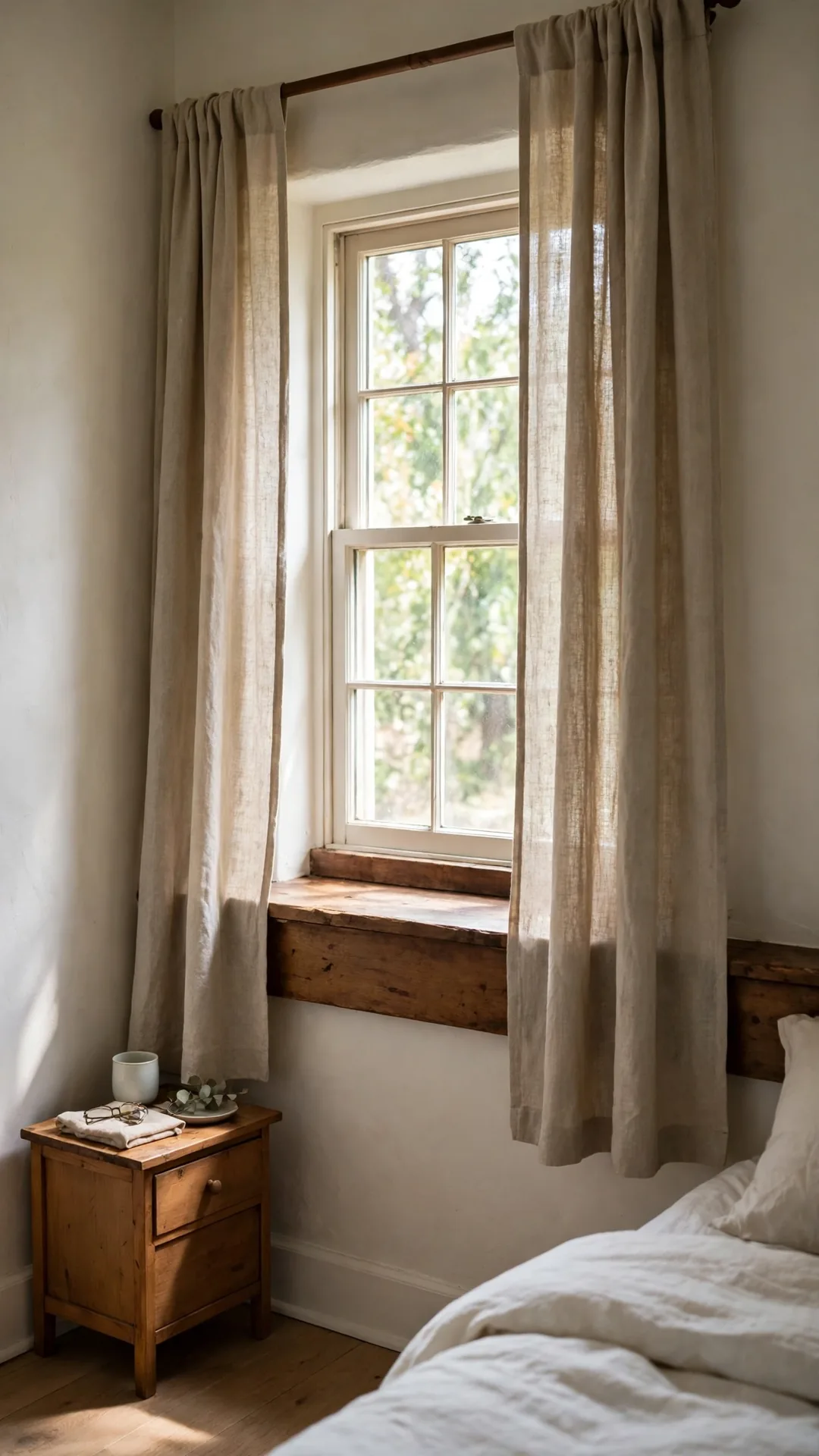
Apron length drops 4 to 6 inches below the sill. It covers the frame edge and the top wall gap. The look feels softer than a hard sill stop.
How to do it:
- Measure from rod to 5 inches below the sill
- Check the panel clears any ledge items
- Keep both panels matched to the same mark
- Press the hem flat for a clean fall
Best for: Deep sills and chunky frames.
Budget: $20 to $50
Quick tip: Apron length hides a worn sill edge well and softens the whole window.
29. Size Panels at Twice the Window Width
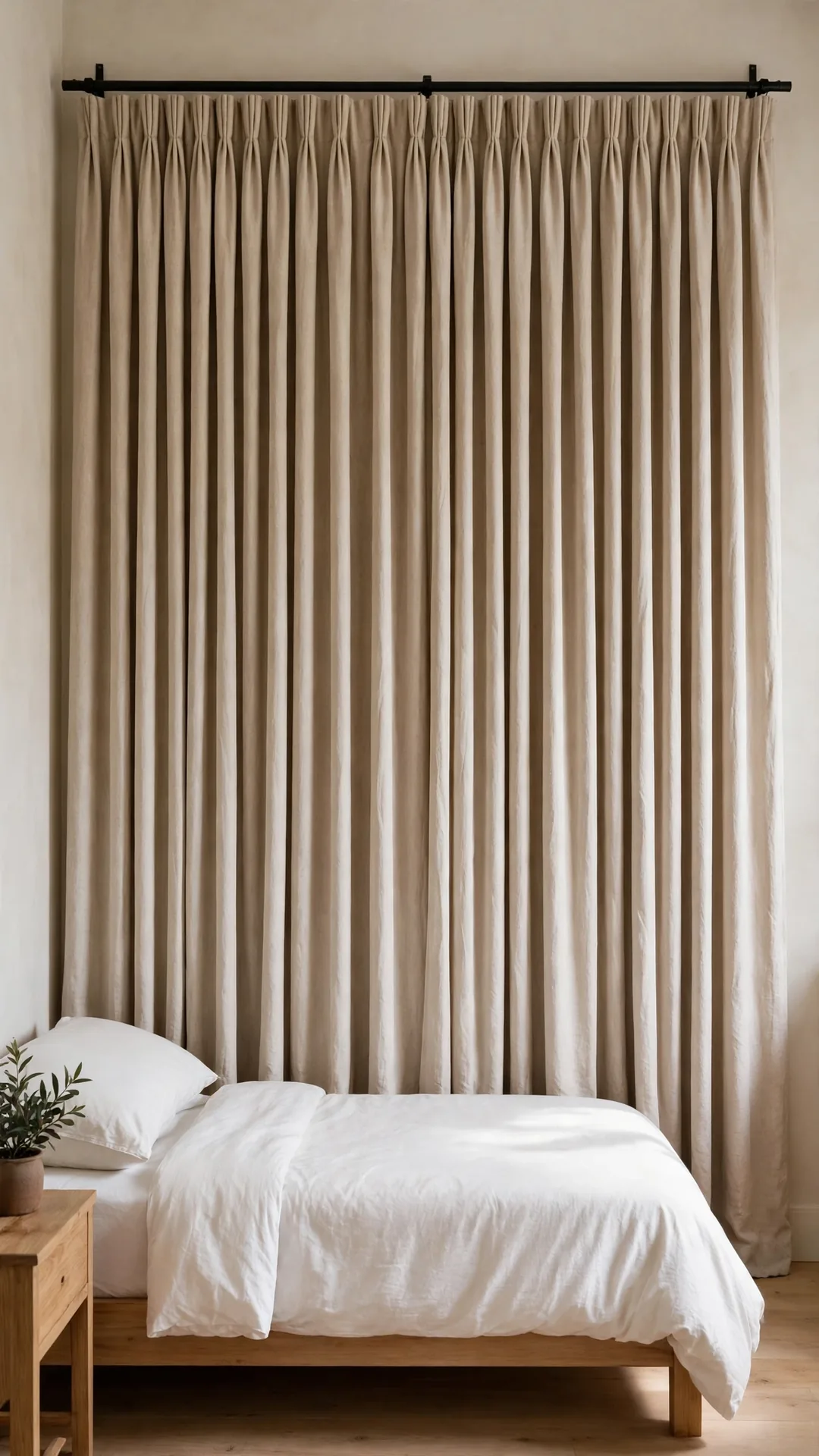
Fullness decides how rich small bedroom curtain ideas look. Flat panels read cheap and block less light. Deep folds also seal side gaps far better.
How to do it:
- Total panel width should reach twice the window
- Split the width across two panels for balance
- Add width for wrap-around rods and returns
- Check grommet spacing suits your fold depth
Best for: Thin fabrics and light-leak fixes.
Budget: $25 to $70
Quick tip: Fuller panels need fewer add-ons to look finished. Buy the extra width once and skip the add-ons later on.
30. Choose Sage Green for a Calm Sleep Mood

Sage green reads calm beside white or wood beds. It brings color without visual noise at night. Browse bedroom curtain photos to compare shades before you buy.
How to do it:
- Test a swatch beside your bedding for a week
- Pick blackout lining if the shade runs pale
- Pair sage with warm white walls and oak
- Keep other greens out to avoid a clash
Best for: Nature-leaning rooms and anxious sleepers.
Budget: $25 to $65
Quick tip: Sage hides dust better than pure white panels. Sage pairs well with rattan and light oak accents.
31. Pick Warm White Panels to Brighten Gloom
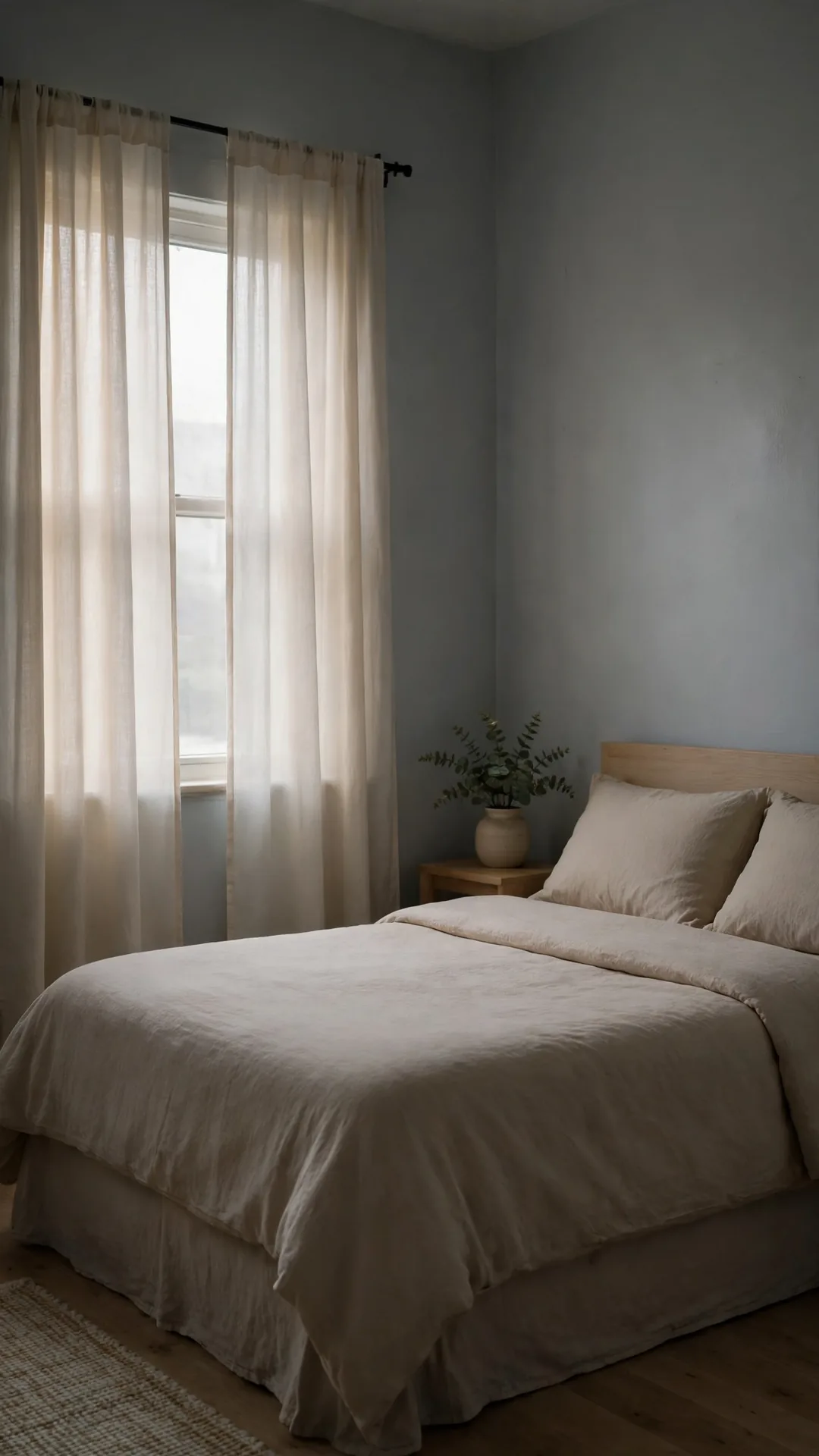
Warm white panels bounce soft light into dark rooms. They keep the window wall feeling open and clean. A blackout liner keeps sleep dark at night.
How to do it:
- Choose ivory or cream over stark blue-white
- Add a liner if streetlights face the room
- Wash panels twice a year to keep the glow
- Pair with pale wood for a soft scheme
Best for: North-facing and basement bedrooms.
Budget: $20 to $55
Quick tip: Cream panels soften the look of black rods. Ivory panels also reflect warm lamp light nicely at night.
32. Try a Subtle Stripe for Quiet Pattern
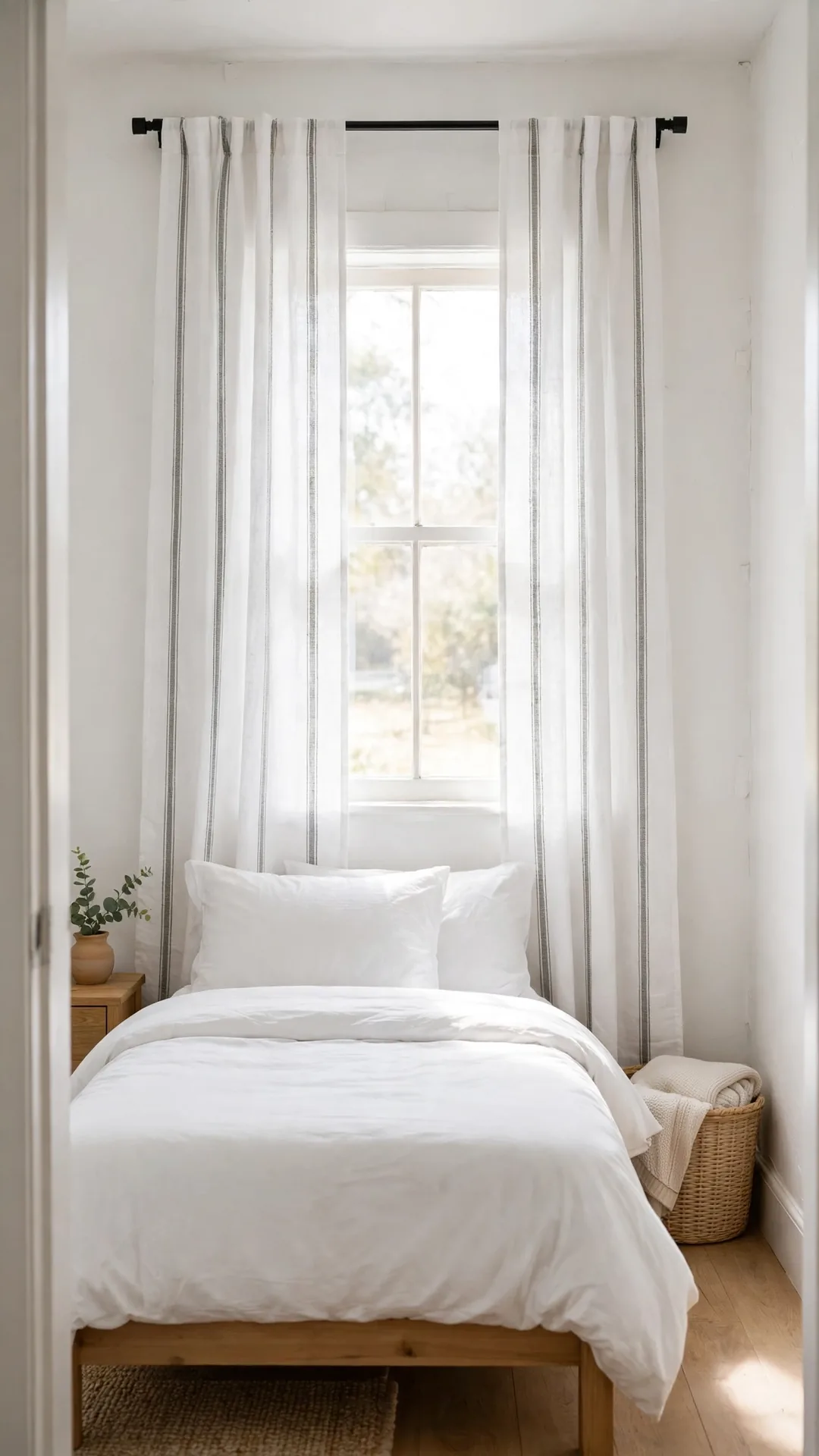
A thin woven stripe adds pattern without noise. Vertical lines guide the eye up the wall. The print stays calm enough for sleep spaces.
How to do it:
- Keep stripes under 1 inch wide for subtlety
- Run stripes vertically, never across the panel
- Match the stripe tone to your bedding accent
- Avoid pairing stripes with busy bed prints
Best for: Plain rooms that feel flat and bare.
Budget: $22 to $60
Quick tip: Woven stripes outlast printed ones in sunlight. A woven stripe still reads plain from across the street outside.
33. Block Streetlight With a Pelmet Box
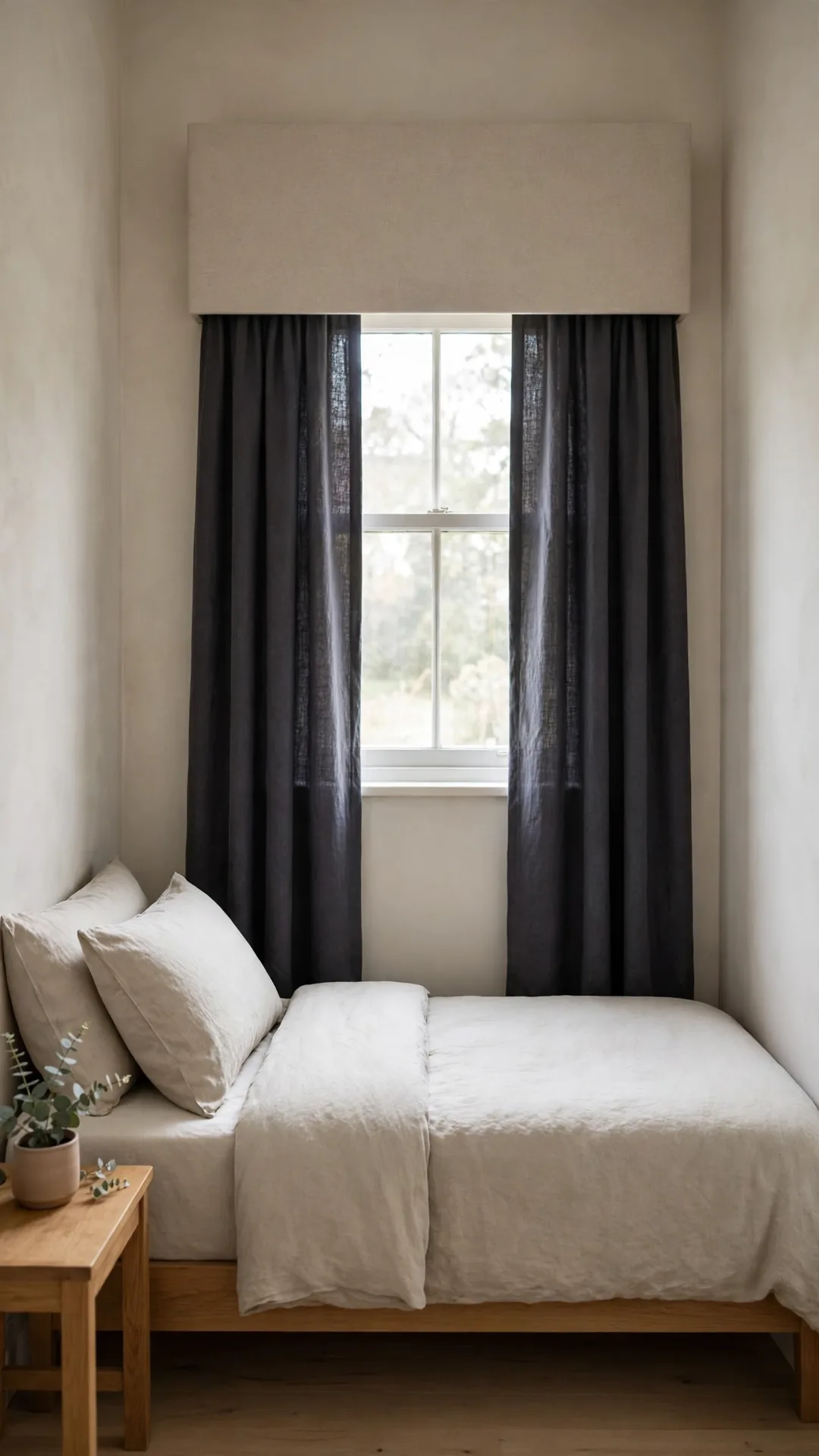
A pelmet box seals the top gap in small bedroom curtain ideas. Streetlight often pours over the rod at night. A covered box stops that line of glare fully.
How to do it:
- Build or buy a box 4 to 6 inches deep
- Cover it in fabric that matches the panels
- Mount it flush above the rod line
- Leave 1 inch of air space behind the box
Best for: Streetlight and security-light glare.
Budget: $25 to $70
Quick tip: Foam board makes a light test pelmet first. Paint the box to match if fabric runs short.
34. Face East With Double Blackout Layers
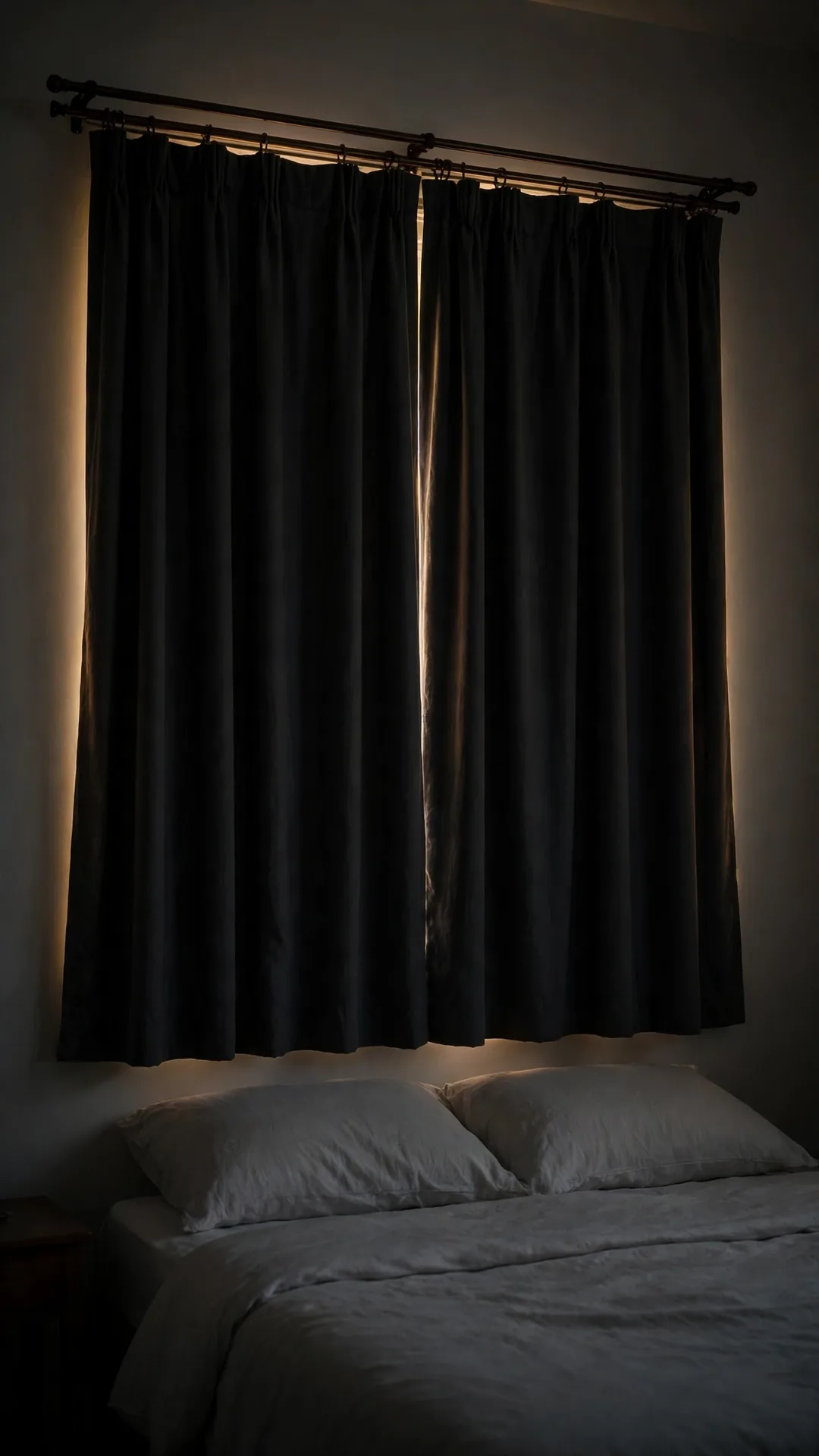
East rooms take the full sunrise before 6 am. Two blackout layers stop dawn waking you early. The extra layer also dulls morning traffic noise.
How to do it:
- Hang one blackout roller shade inside the frame
- Add blackout panels on the rod above
- Overlap the panel centers by 3 to 4 inches
- Seal the sides with clips or magnetic strips
Best for: Early sun and light-sensitive sleepers.
Budget: $55 to $120
Quick tip: Test darkness at noon before trusting the setup. Two layers also help most on bright summer mornings.
35. Dull Traffic Noise With Heavy Velvet
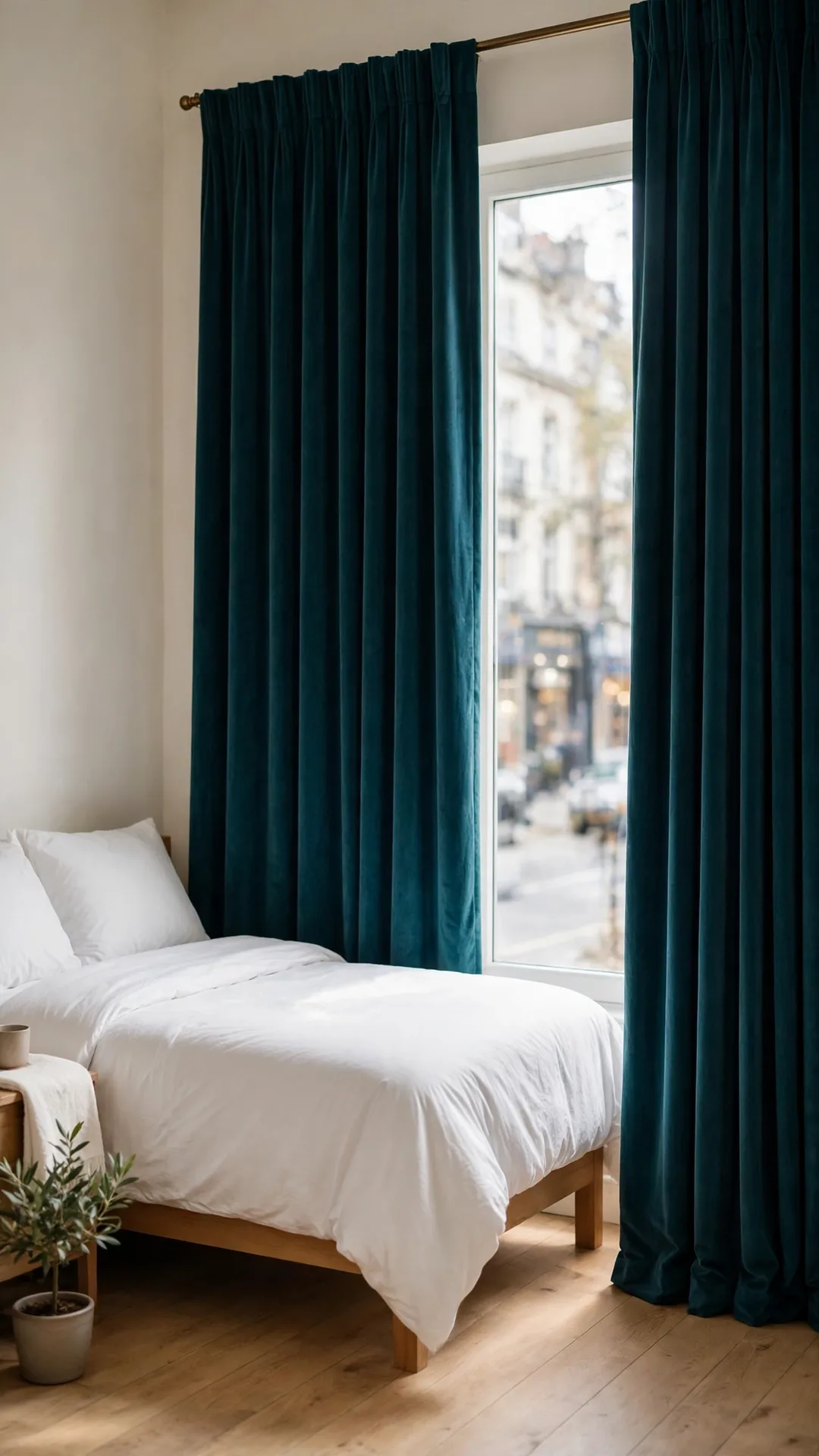
Dense velvet softens street noise at the window. It will not silence a road, but it dulls edges. The thick pile also adds real insulation.
How to do it:
- Pick cotton velvet or a dense velvet-look fabric
- Size panels wide for deep, sound-soaking folds
- Hang them floor length to seal the base
- Pair with a sealed shade for busy roads
Best for: Street-facing rooms and light sleepers.
Budget: $45 to $110
Quick tip: Velvet needs a sturdy rod rated for weight. Shake velvet outdoors once a month to clear dust between washes.
36. Keep Heat Out With Thermal Lining
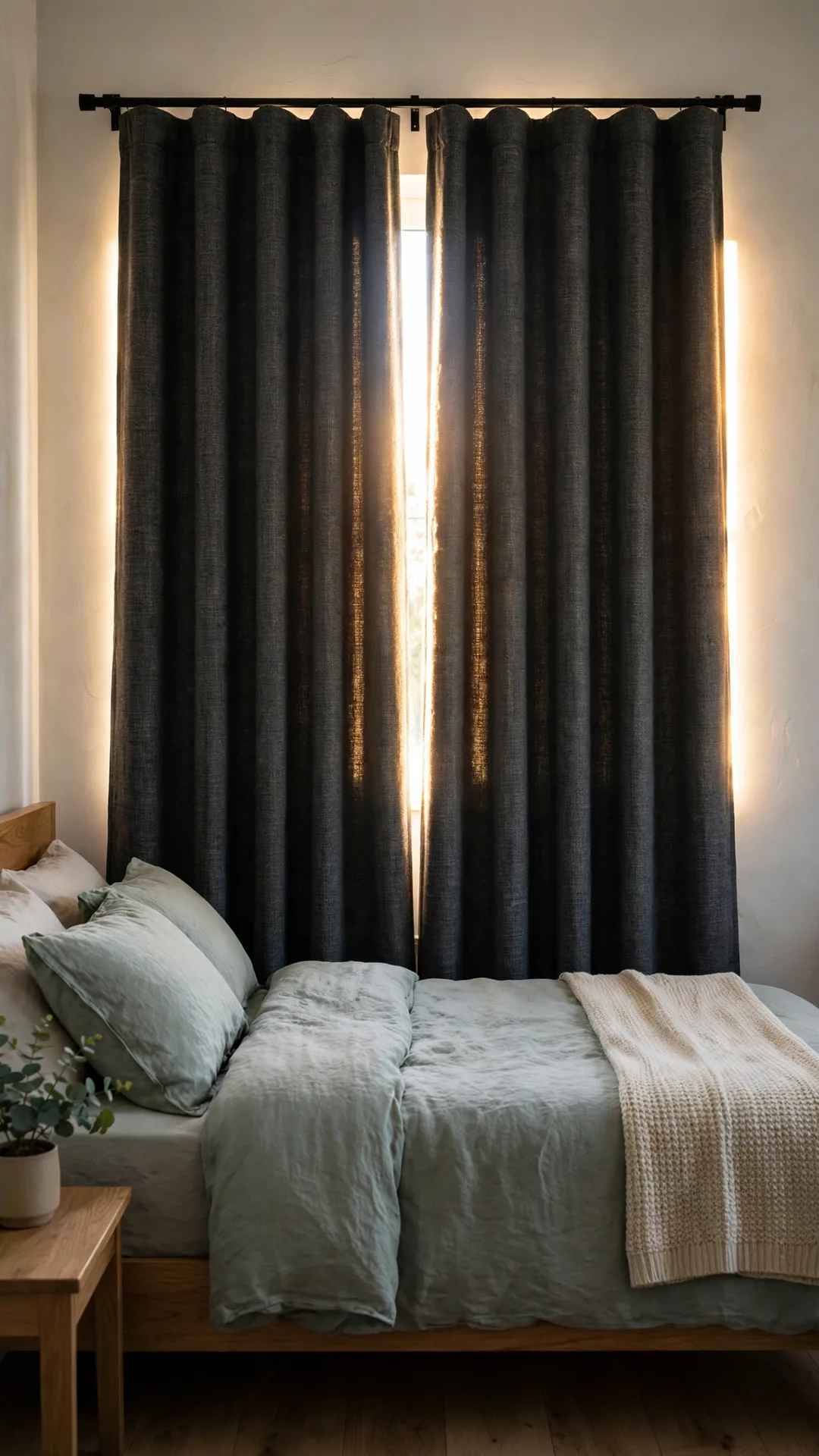
Thermal lining slows heat gain on sunny glass. West rooms cool down faster at bedtime. Winter nights feel less drafty near the window.
How to do it:
- Choose lining with a metallic or foam layer
- Keep panels closed during peak sun hours
- Size the lining to match the face panel
- Check care labels before the first wash
Best for: West-facing rooms and drafty old windows.
Budget: $30 to $75
Quick tip: Thermal panels earn their keep in both seasons. Close the panels before noon on the hottest days to hold the gain back.
37. Stop Dawn Leaks With a Center Overlap

Center gaps undo many small bedroom curtain ideas at dawn. A small overlap closes the bright center line. Your eyes stop catching light at first waking.
How to do it:
- Overlap panels by 3 to 4 inches at center
- Clip the overlap with two ring clips
- Or fit a magnetic strip on both edges
- Check the seal from bed height, not standing
Best for: Split panels and early sunrise rooms.
Budget: $5 to $15
Quick tip: A binder clip hides well behind the fold. Check the overlap again after every wash.
38. Use Portable Panels for Shift Sleep
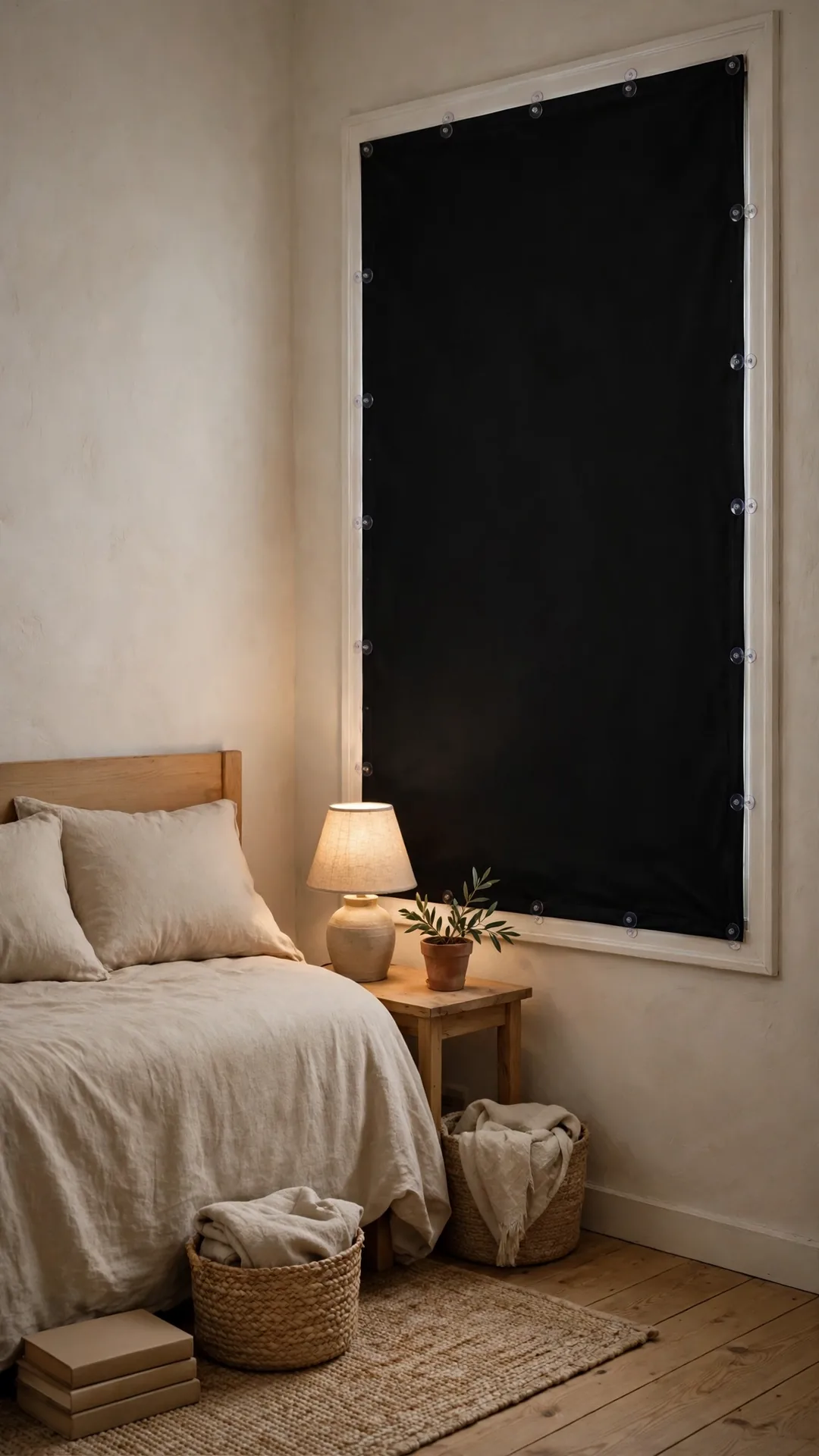
Portable blackout panels stick up with suction cups. They suit travel, rentals and guest stays. The room goes dark in under five minutes.
How to do it:
- Clean the glass before pressing cups in place
- Pick a panel 2 inches wider than the glass
- Press each cup from the center outward
- Store the panel rolled, never folded hard
Best for: Shift workers and frequent travelers.
Budget: $20 to $45
Quick tip: Spare cups keep the seal strong for years. Keep the cups clean and dry so the seal stays strong all season.
39. Darken a Skylight With a Fitted Shade
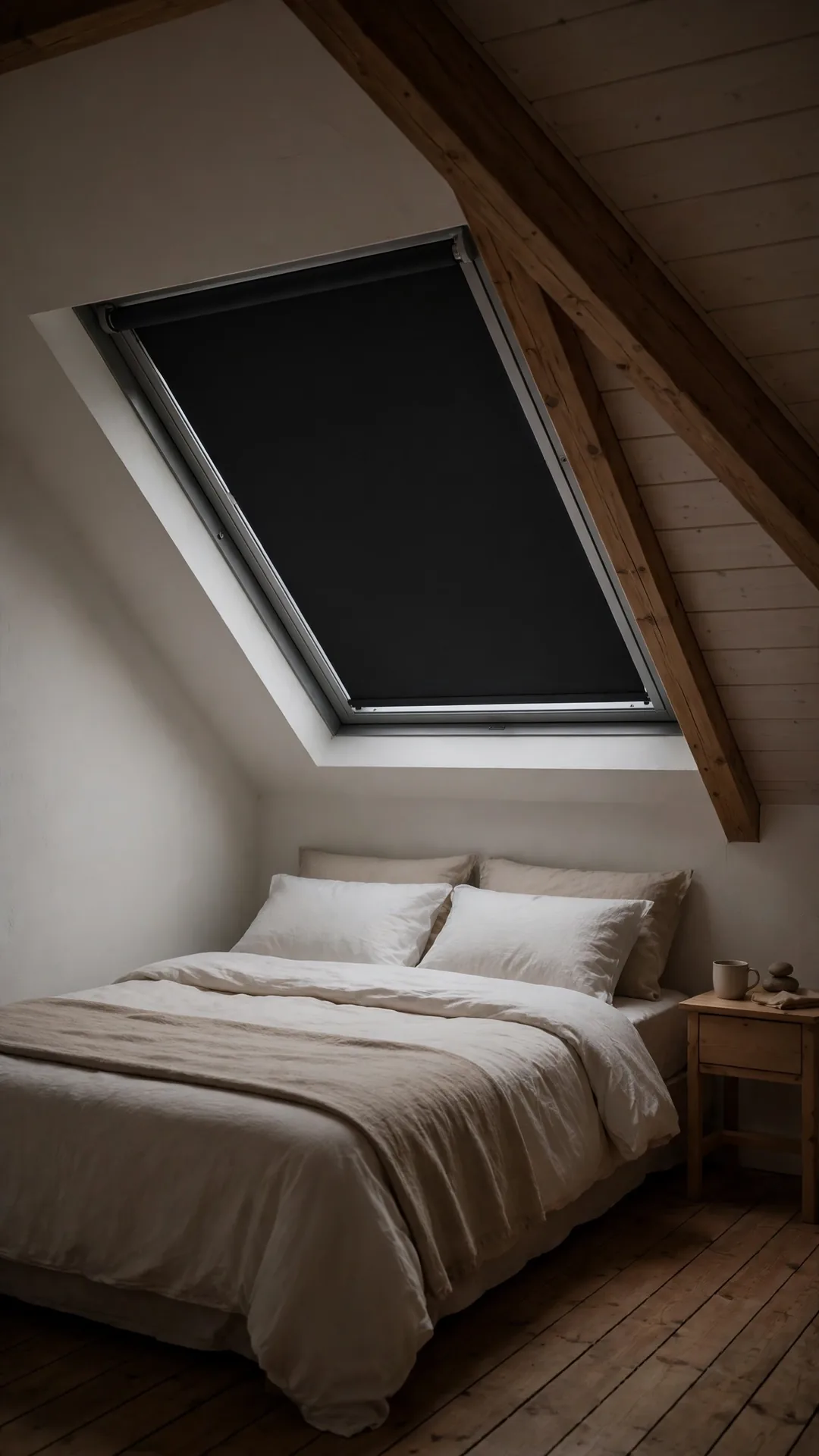
A sloped skylight pours light straight onto the bed. A fitted blackout shade runs in side channels. The room stays dark even at midsummer dawn.
How to do it:
- Measure the skylight frame inside both channels
- Pick a shade made for your window brand size
- Fit side channels so no edge light escapes
- Use a pole hook if the skylight sits high
Best for: Attic bedrooms and loft conversions.
Budget: $60 to $160
Quick tip: White channel trims blend with most ceilings. A fitted shade also cuts skylight heat at midday.
40. Shade a Low Window Beside the Bed
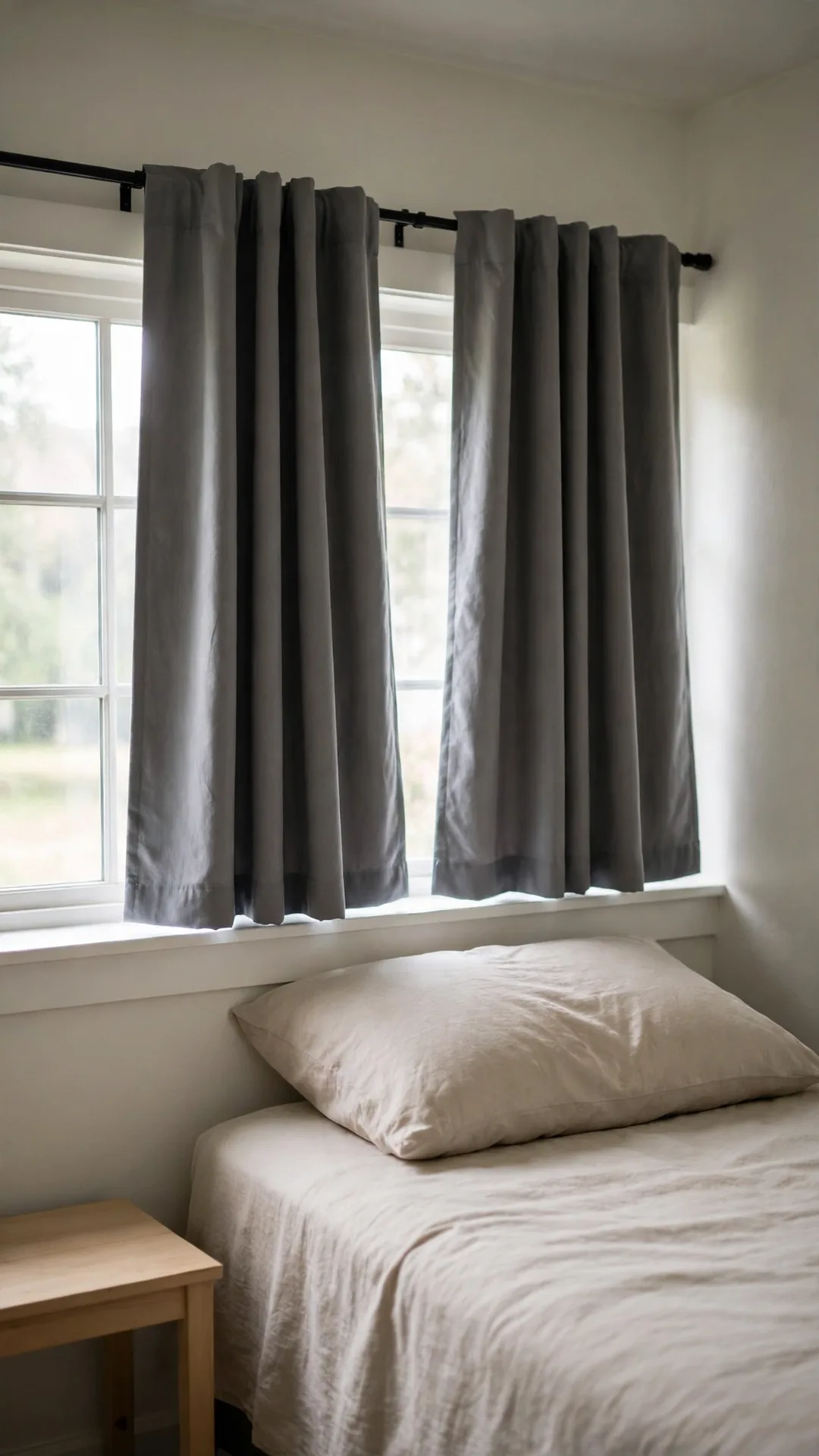
A low window beside the pillow leaks light at eye level. Short blackout panels fix the glare without bulk. They also guard privacy where beds sit close.
How to do it:
- Size panels to end 2 inches below the sill
- Mount the rod tight to the frame sides
- Pick a firm fabric that holds its shape
- Add a sheer behind for daytime privacy
Best for: Beds pushed against the window wall.
Budget: $18 to $45
Quick tip: Eye-level leaks matter most, so seal sides first. Short panels near beds need cordless lifting only.
41. Match Panel Color to the Wall
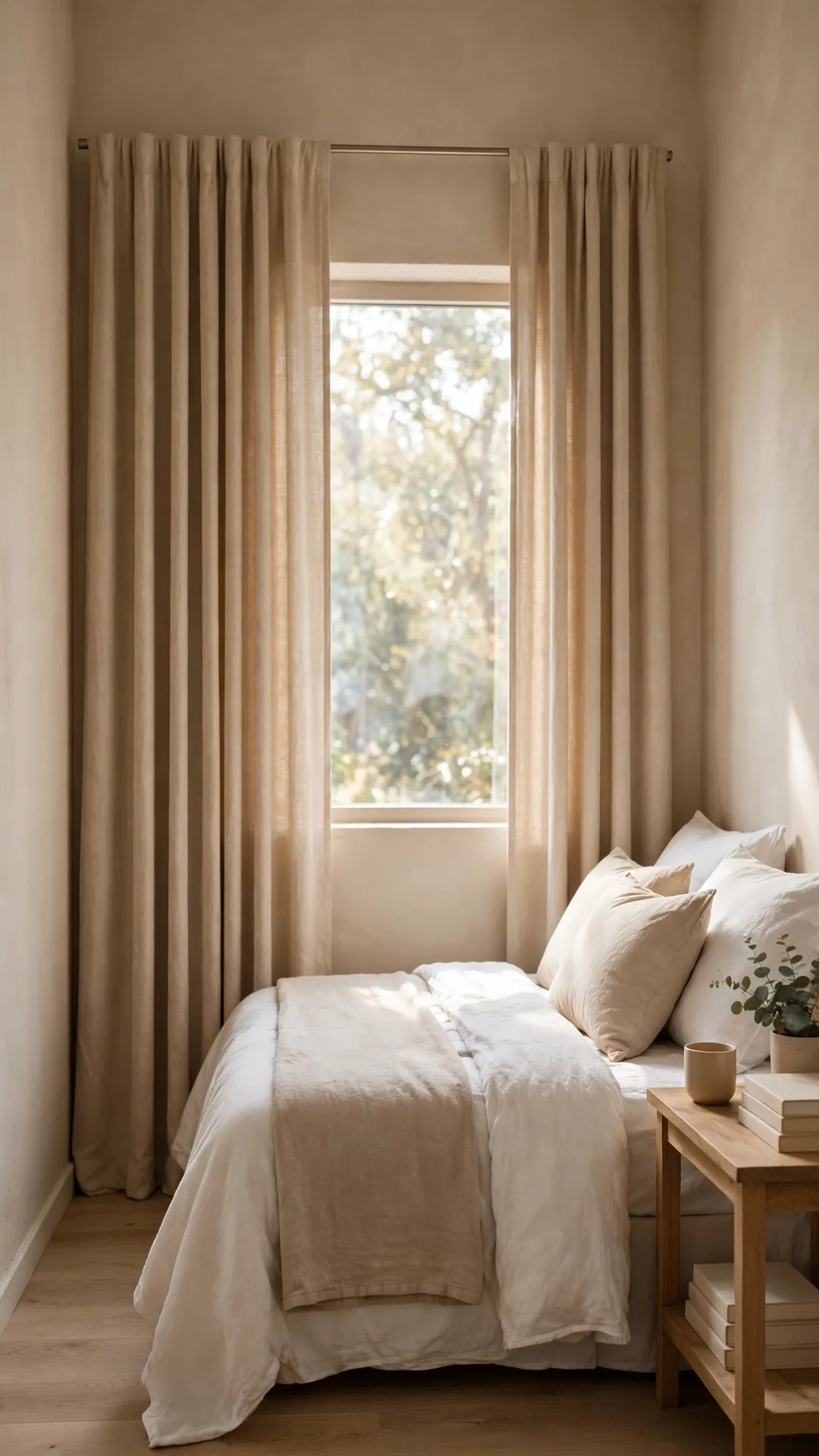
Matching wall color calms many small bedroom curtain ideas. Panels blend in and the wall reads as one plane. The bed stays the star of the small room.
How to do it:
- Take a paint chip when you shop for fabric
- Match the tone, not the exact shade
- Keep texture different so panels still read
- Test the pair under evening lamp light
Best for: Busy rooms that need visual quiet.
Budget: $25 to $65
Quick tip: One shade darker than the wall adds depth. Tonal panels help small rooms feel calm and wider at night.
42. Go Bold With One Deep Color
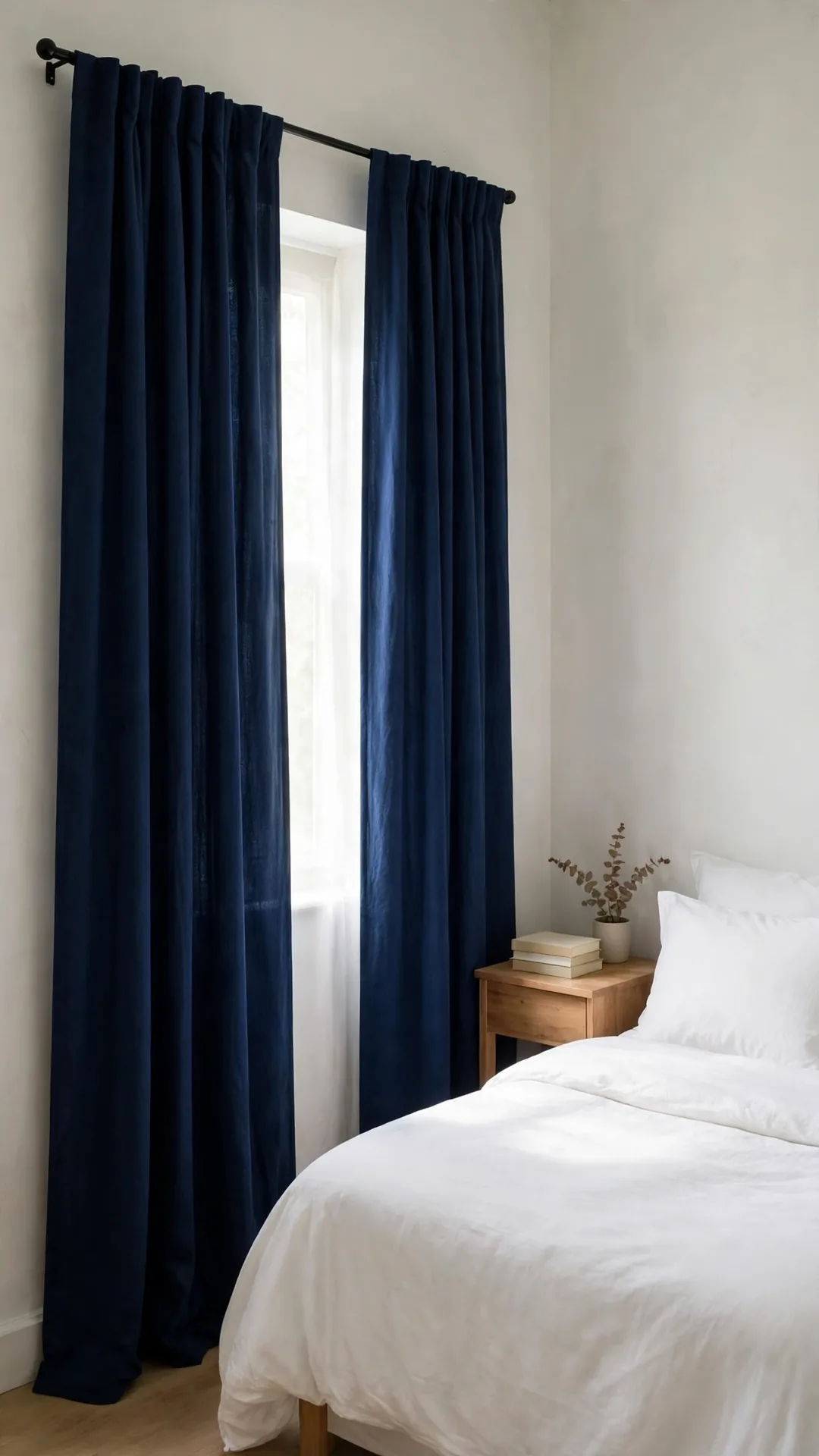
One deep color gives a plain room a focal point. Navy or forest panels frame the bed zone well. Keep the rest of the palette pale and simple.
How to do it:
- Pick one deep shade and repeat it once
- Use blackout fabric so color stays rich
- Balance with white bedding and pale walls
- Avoid a second bold color near the window
Best for: Bland rentals that allow no paint.
Budget: $30 to $75
Quick tip: Deep panels hide marks better between washes. Deep colors also fade slower when backed with blackout lining.
43. Try Color Blocking With Two Tones
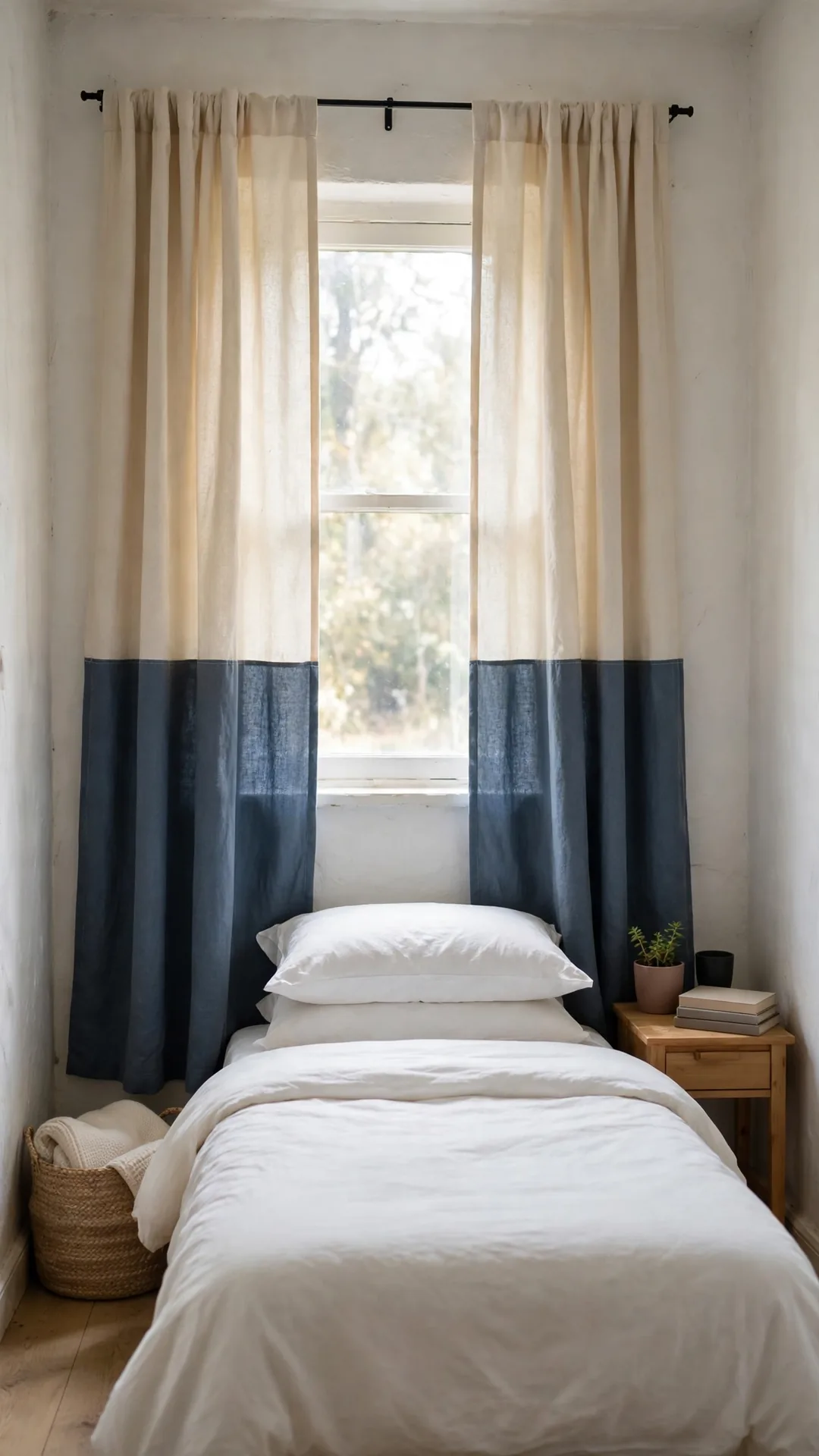
Color-block panels split pale top and deep base. The dark band grounds the window at bed height. The pale top keeps the ceiling line light.
How to do it:
- Set the color join near the lower third
- Match the deep band to your bedding
- Keep the pale band close to the wall tone
- Buy ready-made blocks to skip sewing
Best for: Low windows and plain white walls.
Budget: $28 to $70
Quick tip: Ready-made blocks keep the join perfectly level. The deep band hides scuffs and dust near the floor line well.
44. Add a Border Trim for a Tailored Look
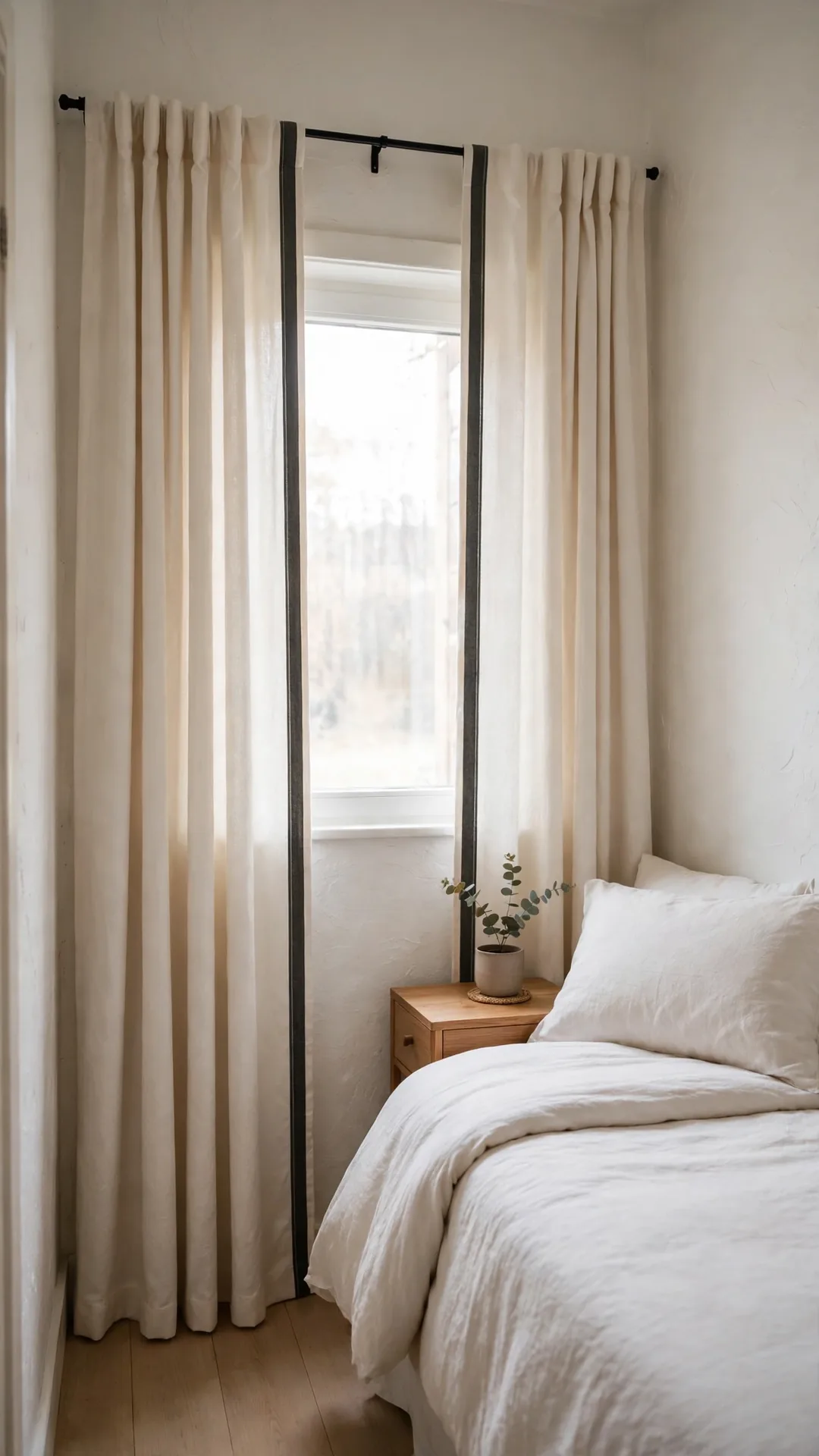
A narrow trim down the inner edge sharpens panels. It frames the glass like a picture mount. Plain fabric gains a custom feel for pennies.
How to do it:
- Pick trim 1 to 2 inches wide in one accent
- Use iron-on tape if you do not sew
- Run the trim down the leading edge only
- Press the tape line with a cool iron
Best for: Plain panels that feel unfinished.
Budget: $10 to $25 add-on
Quick tip: Black trim on white panels reads crisp. Trim offcuts make matching tiebacks for free.
45. Hang a Canopy Curtain Over the Bed
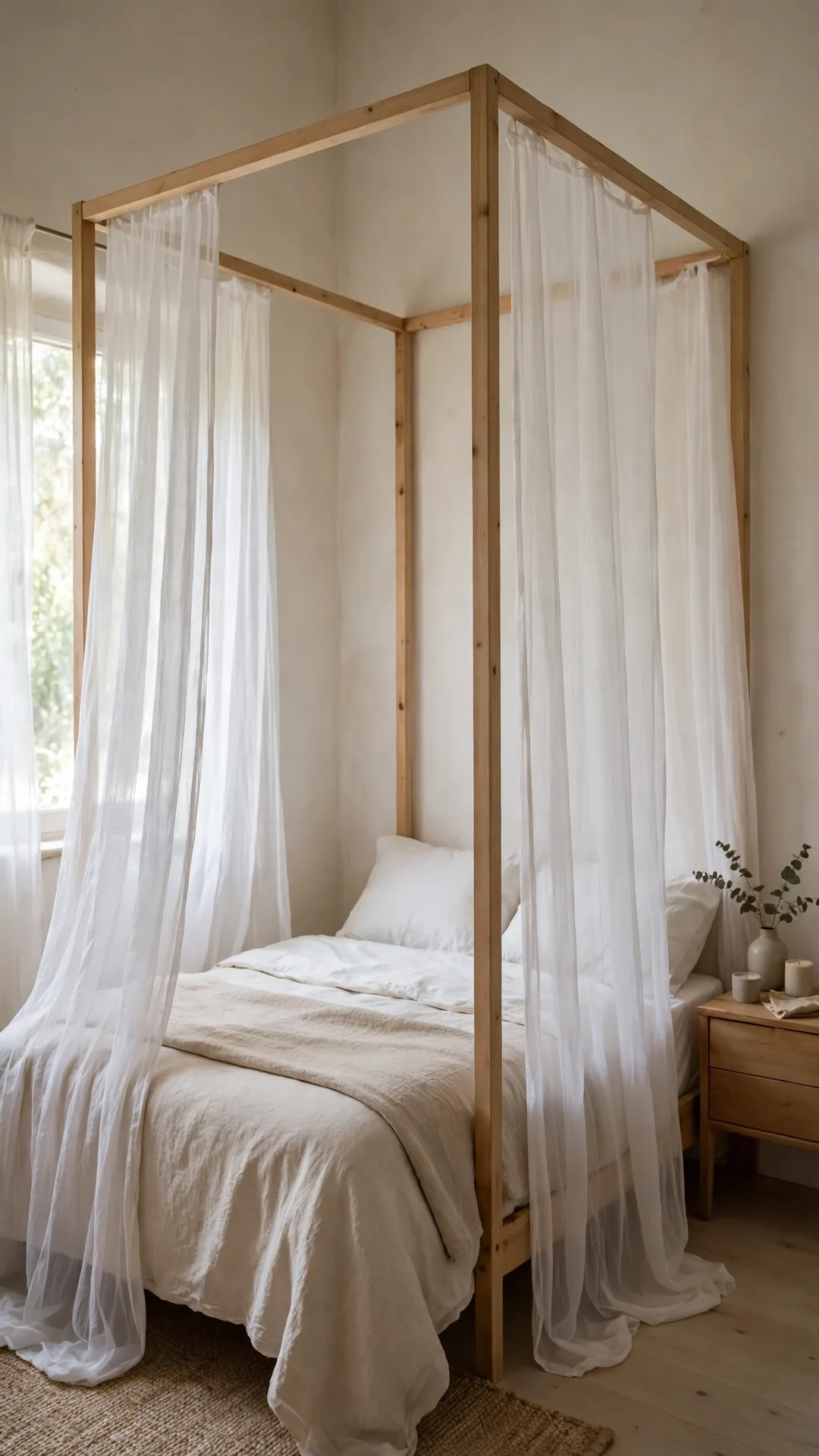
A canopy frame extends small bedroom curtain ideas past windows. Sheer fabric softens the bed zone in a studio. It adds privacy without a wall or screen.
How to do it:
- Mount a light frame or four ceiling hooks
- Drape sheers so they fall outside the bed
- Keep fabric clear of lamps and heaters
- Pick washable sheers you can launder monthly
Best for: Studios and beds in shared spaces.
Budget: $40 to $100
Quick tip: White sheers keep the canopy feeling light. Canopy sheers wash fast and dry fully overnight.
46. Curtain Off a Closet With No Door
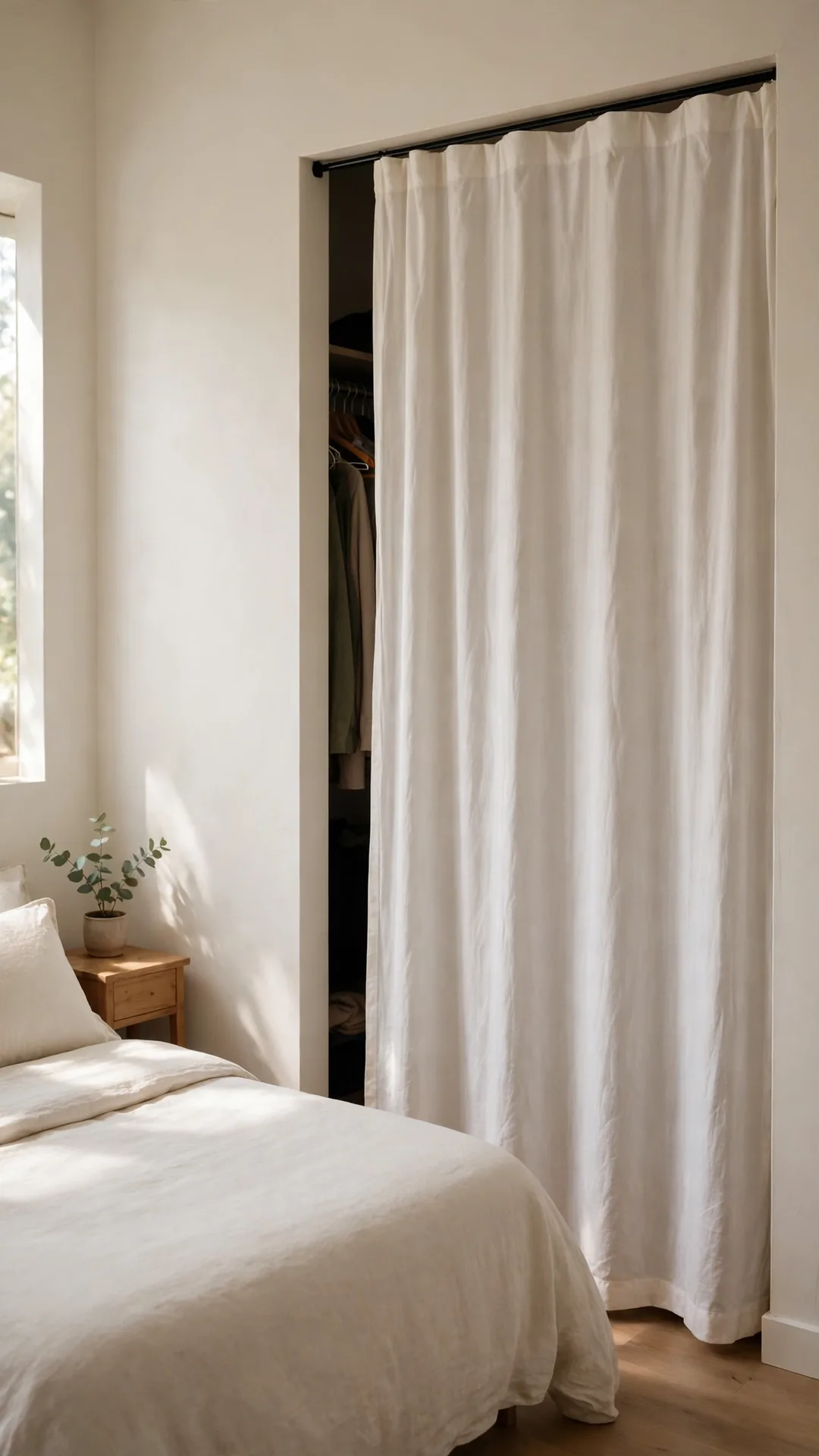
A curtain hides a doorless closet in one hang. It opens faster than any folding door. It also frees the swing space a door would need.
How to do it:
- Mount a rod inside the closet frame top
- Size the panel to end at the floor
- Pick a mid-weight fabric that hangs straight
- Add a tieback for busy mornings
Best for: Doorless closets and open wardrobes.
Budget: $20 to $50
Quick tip: Match the closet curtain to window panels. A closet curtain costs far less than most replacement doors do.
47. Divide a Shared Room With a Ceiling Curtain
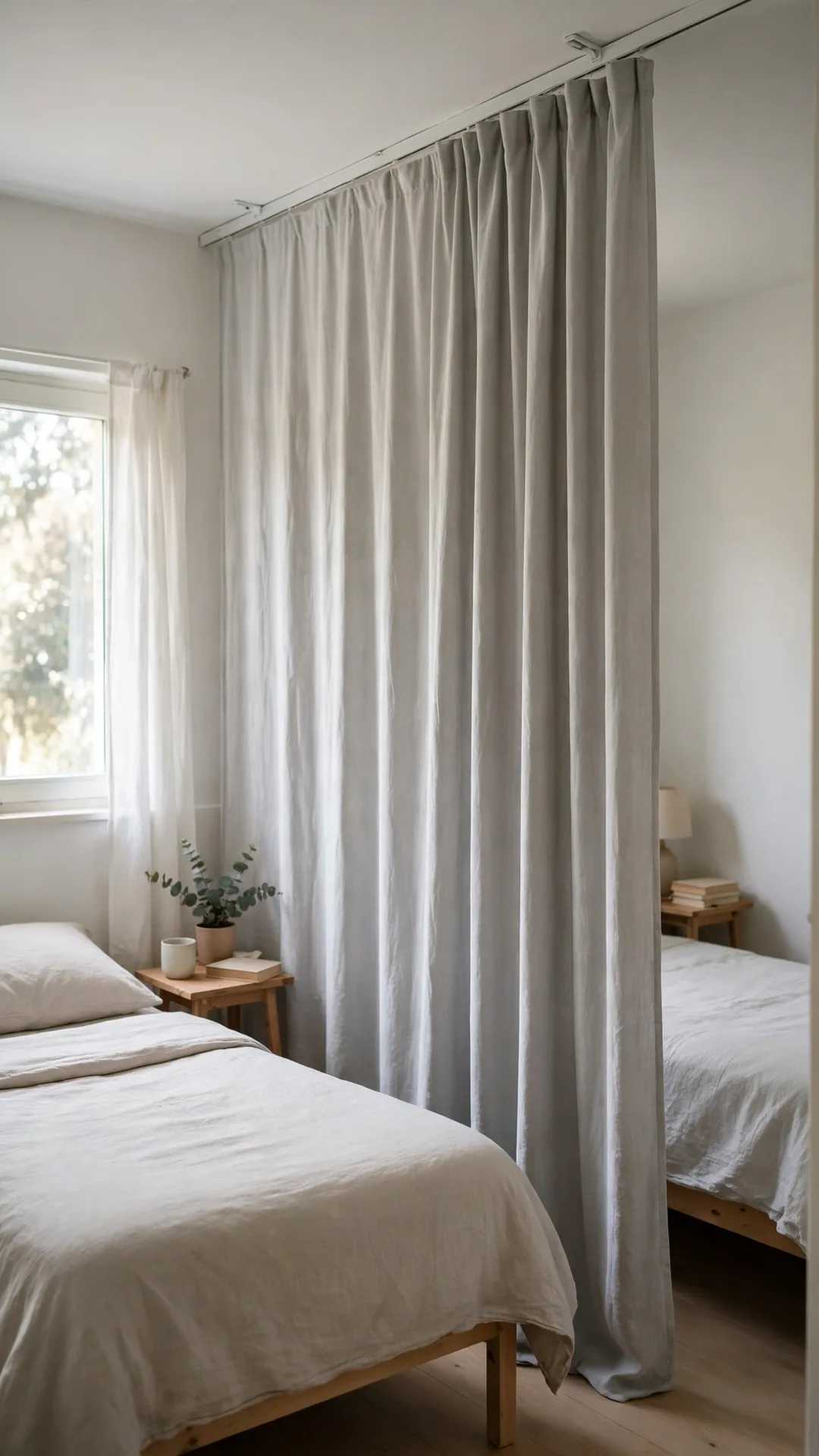
Dividers stretch small bedroom curtain ideas into shared rooms. A ceiling curtain splits two sleep zones at night. Each side gains privacy without building walls.
How to do it:
- Run a ceiling track across the split line
- Choose a mid-weight panel that blocks sight fully
- Leave a 12 inch walk gap at one end
- Add a tieback for open plan days
Best for: Siblings and studio shares.
Budget: $50 to $120
Quick tip: A plain panel keeps both zones calm. One track can also carry a second lighter panel for summer.
48. Dress a Kids Corner With Washable Panels
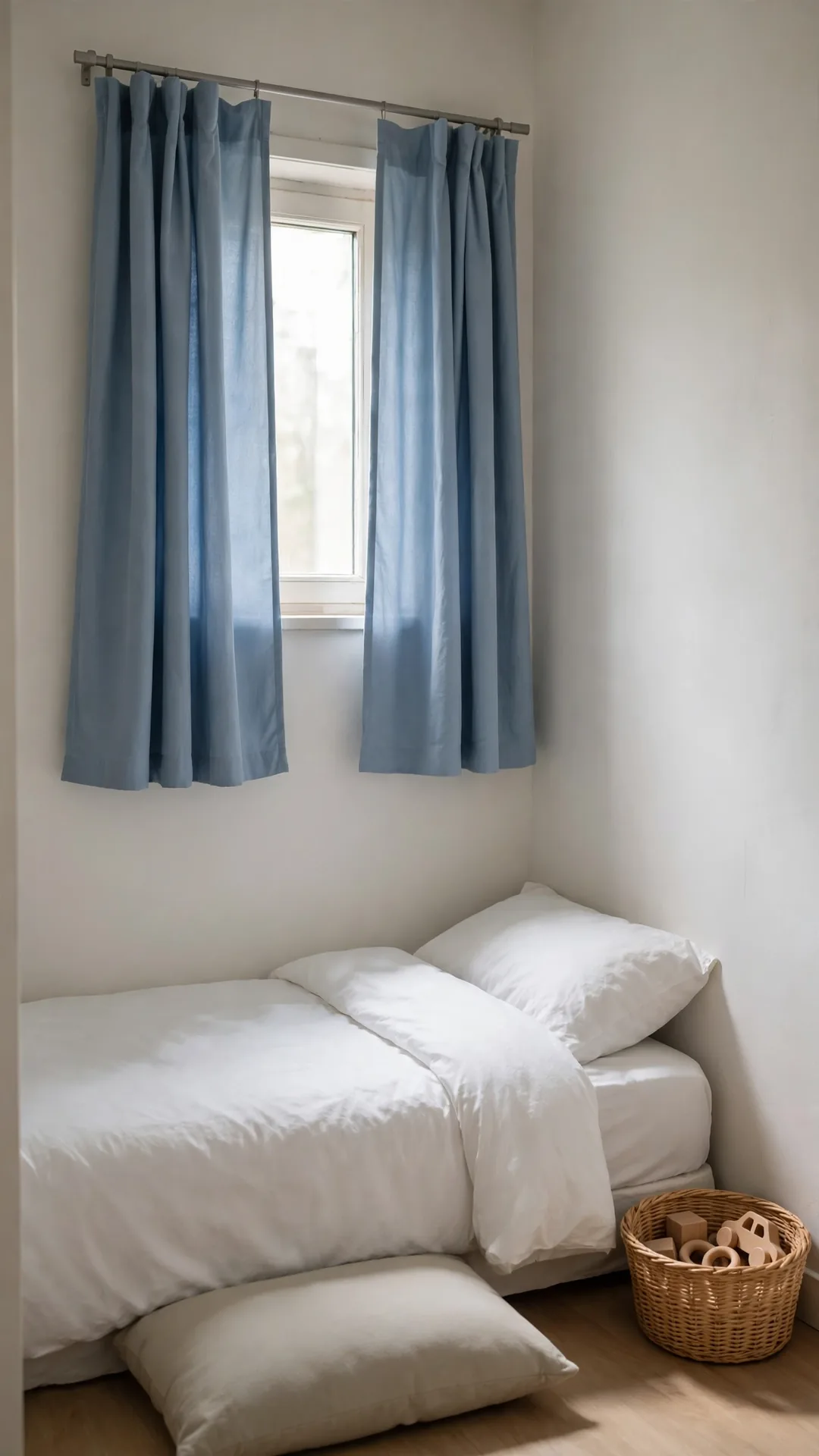
Kids corners need panels that survive sticky hands. Washable cotton blends come clean in one cycle. Family rooms grow well from boys bedroom ideas for a small space that plan zones early.
How to do it:
- Pick machine-washable fabric with no special care
- Keep cords short or cordless near kids beds
- Choose mid tones that hide marks between washes
- Hang panels just above the floor for safety
Best for: Shared family bedrooms and kids corners.
Budget: $20 to $50
Quick tip: Two cheap sets beat one fancy set here.
49. Keep Pet Hair Off With Smooth Weaves
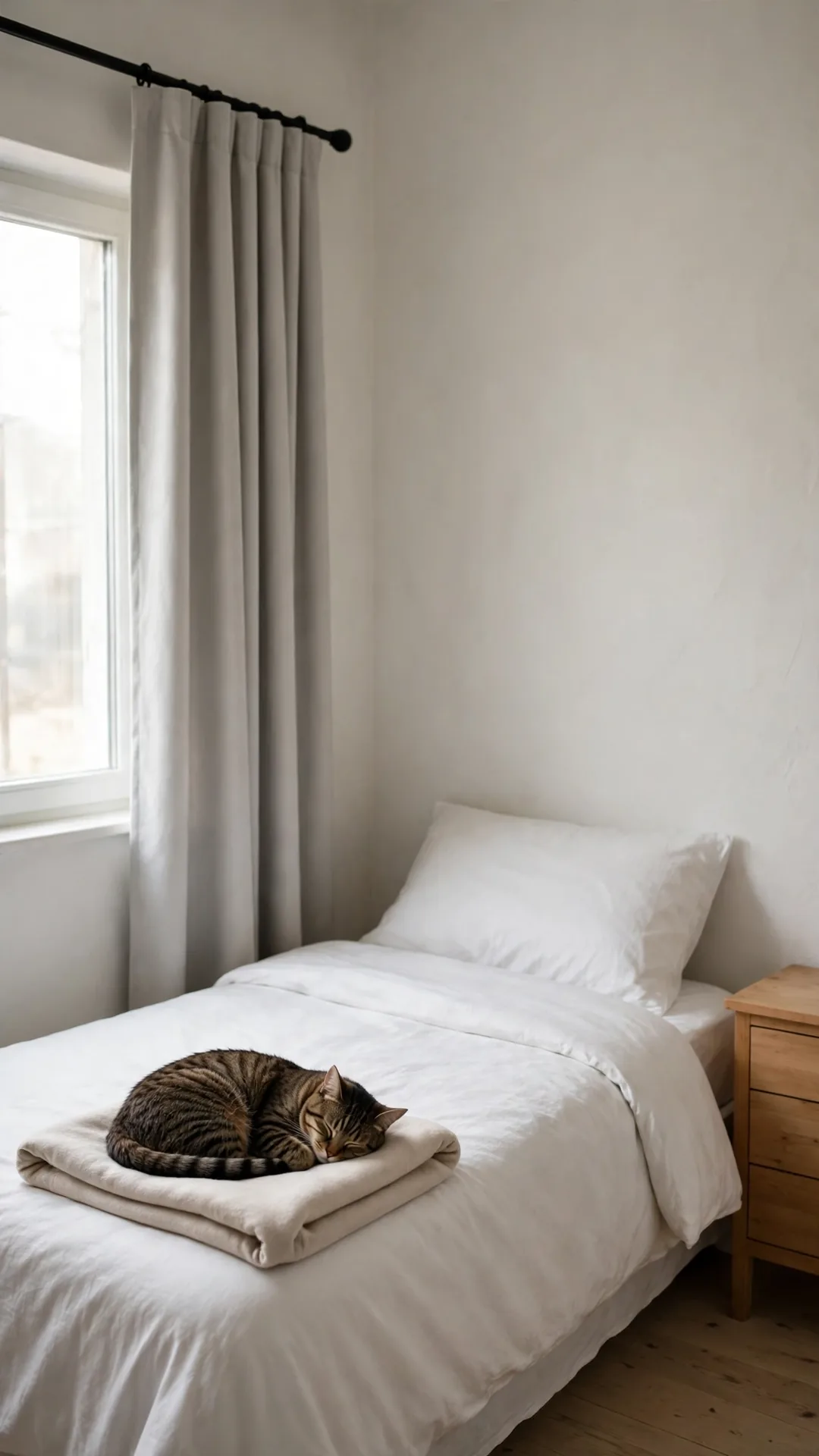
Smooth weaves keep small bedroom curtain ideas pet friendly. Hair brushes off tight cotton in seconds flat. More pet-smart setups sit inside these DIY bedroom ideas for small rooms with cats.
How to do it:
- Pick tight cotton, microfiber or smooth blends
- Avoid linen knits that catch claws and fur
- End panels above the floor to dodge hair
- Shake panels outdoors once a week
Best for: Pet owners and allergy-prone sleepers.
Budget: $22 to $55
Quick tip: A damp rubber glove lifts hair fast. Smooth panels also suit homes with dust allergies.
50. Frame the Bed With Symmetric Panels
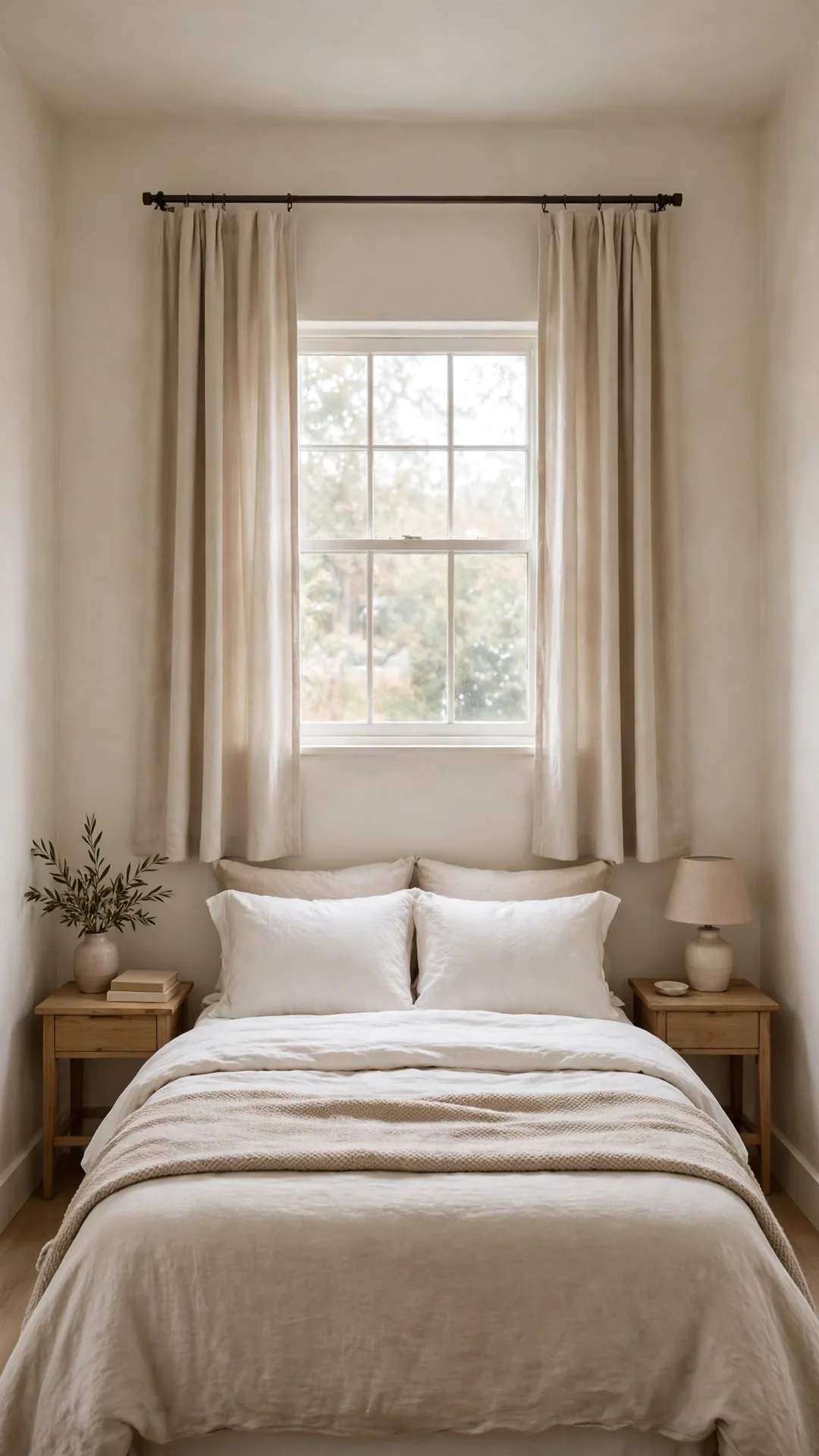
Matched panels on both sides frame the bed wall. Symmetry calms a room full of odd angles. The setup pairs with broader small bedroom space saving ideas for tight rooms.
How to do it:
- Center the window or fake center with rod width
- Keep both panel drops matched to the inch
- Use the same tieback height on both sides
- Center the bed under the window where possible
Best for: Beds centered under windows.
Budget: $30 to $70
Quick tip: Symmetry reads calm even in bold colors. Matched drops matter more than fancy fabric here.
51. Wash Panels on a Simple Rotation

A wash rotation keeps small bedroom curtain ideas fresh. Dust builds on bedroom fabric faster than you think. The same rotation habit suits small apartment bathroom storage ideas nearby.
How to do it:
- Wash one set while a spare set hangs
- Use gentle cycle and mild soap for linings
- Hang panels damp so wrinkles drop out
- Shake outdoor dust off before each wash
Best for: Allergy-prone sleepers and dusty streets.
Budget: $0 to $20
Quick tip: Label spare sets by window to save time. Spare sets also cover you during deep cleans.
52. Store Spare Panels in a Slim Bin

Spare panels need a dry, flat home off season. A slim bin on the closet shelf fits the job. Tight storage habits echo these small kitchen appliance storage ideas for small homes.
How to do it:
- Fold panels along their natural fold lines
- Slip a plain paper sheet between layers
- Keep the bin off the floor away from damp
- Mark the bin with the window width
Best for: Seasonal swaps and spare blackout sets.
Budget: $8 to $20
Quick tip: Store hooks and rings in the same bin. A labeled bin saves digging through every shelf.
53. Steam Panels for a Hotel-Crisp Fall
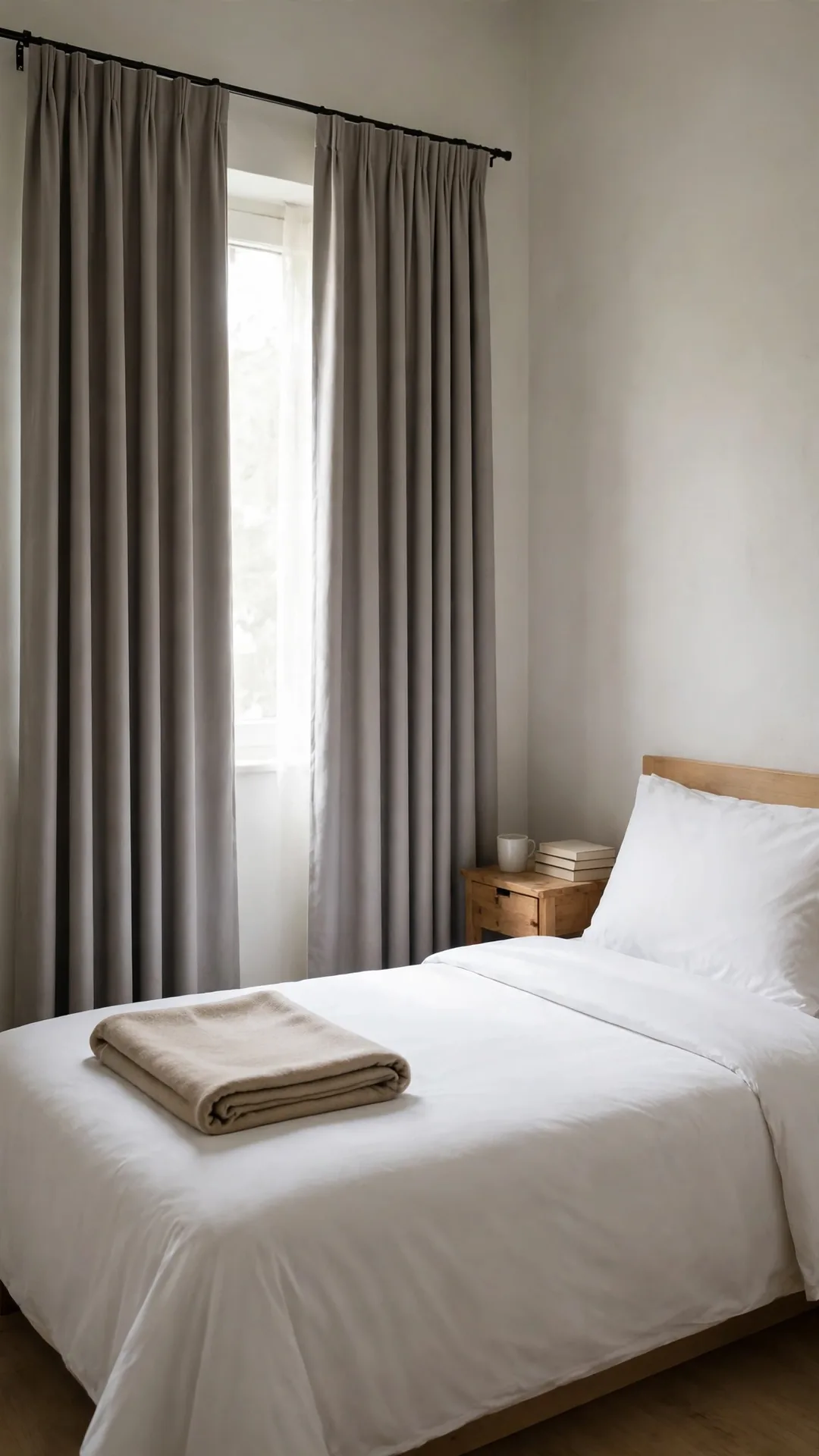
A quick steam lifts small bedroom curtain ideas fast. Wrinkle-free panels hang straighter and seal better. The room reads cared for with no new buys.
How to do it:
- Hang panels first, then steam them in place
- Keep the steamer head 2 inches from fabric
- Work from top to bottom in slow passes
- Let panels cool fully before closing them
Best for: New panels and photo-ready rooms.
Budget: $0 to $35 steamer
Quick tip: Steam after hanging, never before, for best fall. Steaming also freshens the fabric well between full washes.
54. Swap Rings for Quiet Glide Hooks
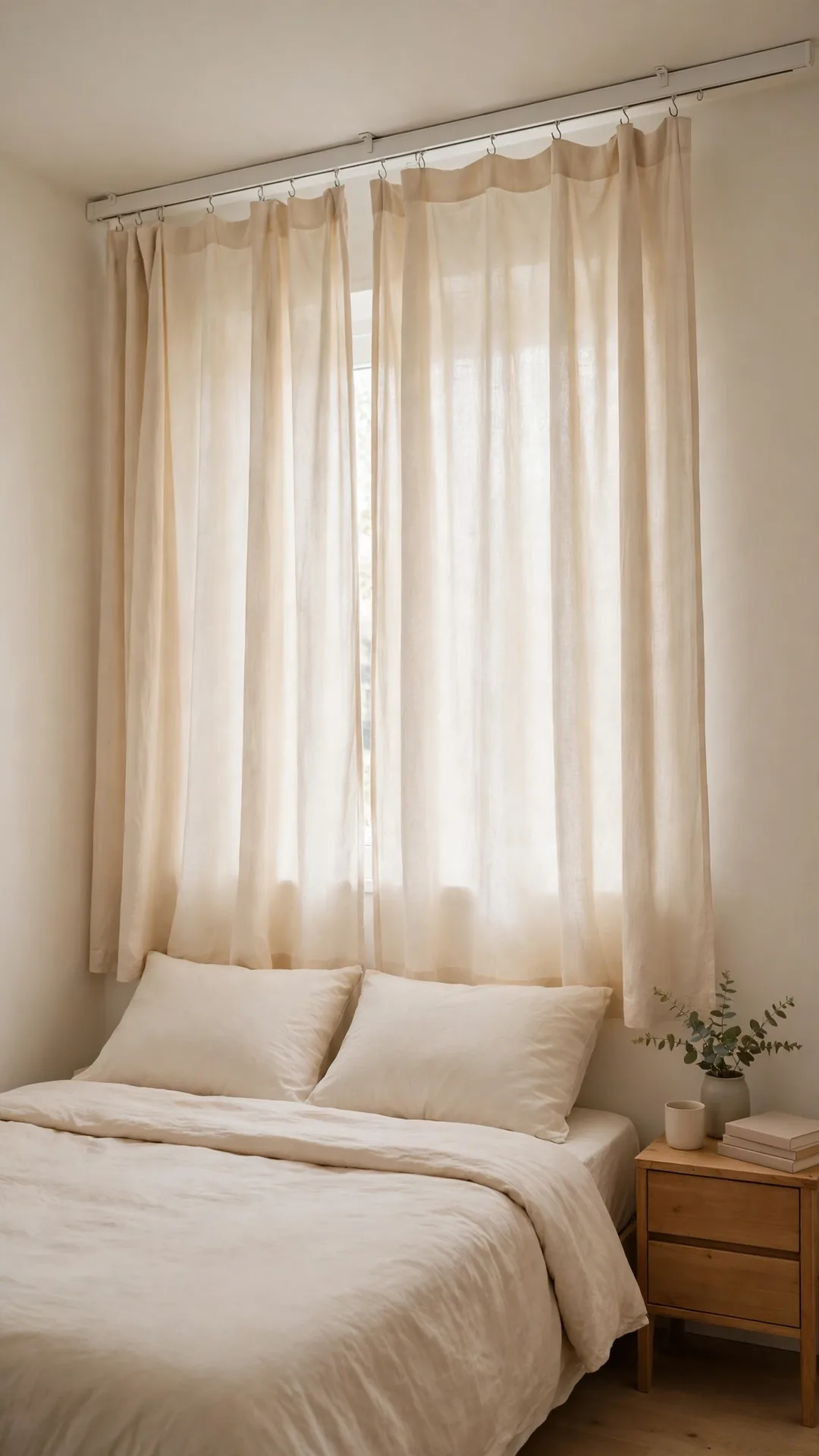
Metal rings can clang against the rod at night. Plastic glide hooks slide with near silence. Late shifts stop waking the whole room.
How to do it:
- Count hooks at one per 4 inches of width
- Pick hooks rated for your panel weight
- Thread hooks evenly for level folds
- Swap one panel first to test the noise drop
Best for: Light sleepers and shared rooms.
Budget: $8 to $18
Quick tip: Felt pads under finials cut extra rattles. Quiet hooks cost less than a new track system and install in minutes flat.
55. End With One Calm Color Story
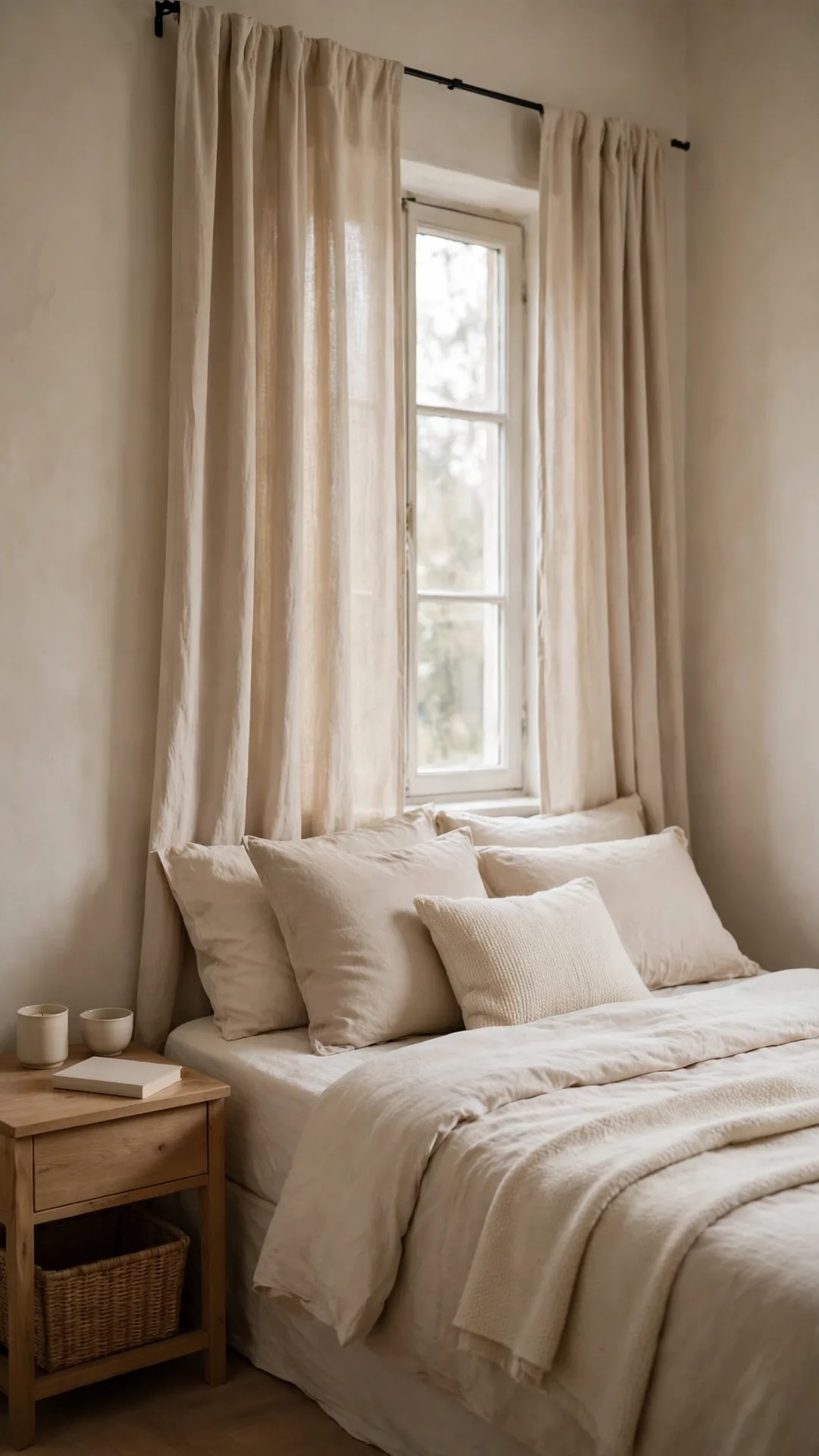
One calm palette ties small bedroom curtain ideas together. Panels, bedding and one cushion share tones. The small room rests instead of shouting.
How to do it:
- Pick three tones from one color family
- Let panels carry the middle tone
- Repeat the deepest tone in one cushion
- Keep walls and rug in the palest tone
Best for: Restless rooms with mixed hand-me-downs.
Budget: $0 to $60
Quick tip: Remove one item if the palette feels busy. Take a photo of the palette before you shop, then buy nothing off list.
Pick One Window and Start Tonight
You do not need new furniture to sleep darker and wake calmer. Pick one window, try one of these small bedroom curtain ideas, and test the room tonight. Save this post or pin a favorite panel so your plan waits for payday.

- 56 Kids Desk Ideas for Small Rooms Too Good to Gatekeep - November 23, 2026
- 57 Breakfast Bar Ideas for Small Spaces Worth Copying Now - November 23, 2026
- 53 Genius Small Living Room Rug Ideas That Renters Love - November 22, 2026