
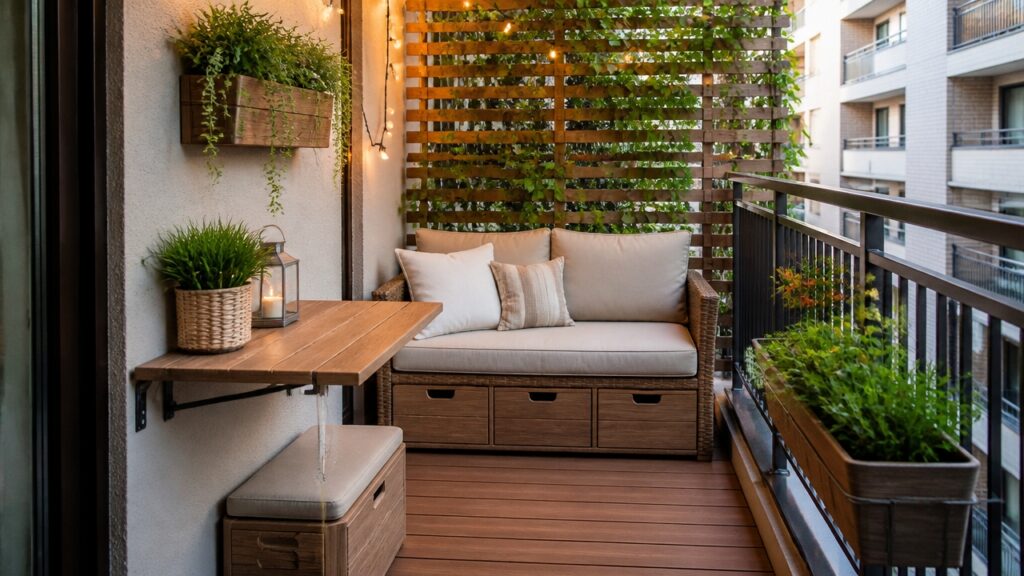
Behind a compact city terrace, transforming your bijoux outdoor space into a cocooning retreat requires precise planning, considering everything from the joinery of integrated seating to the colourway of weatherproof fabrics like Sunbrella’s “Canvas Coffee” cushions, priced at approximately $70 each. With clever vertical gardens, think Haxnicks’ “Easy Green” kit at a modest $30, and layered lighting that accentuates layered zones, you can craft a sanctuary that’s both stylish and practical. It’s a subtle art, yet it’s the next step in your outdoor design, and the options might surprise you.
Start With Your Goals: What Do You Want Your Small Patio to Do?
Start With Your Goals: What Do You Want Your Small Patio to Do?
Before diving into design ideas, clarify what you want your small patio to accomplish. Think about whether your main goal is to create a cozy retreat for relaxing, a lively space for entertaining friends, a functional outdoor dining area, or a lush garden spot. Make certain your primary purpose helps guide your choices for furniture, layout, and decor. For example, if relaxing is your goal, prioritize comfortable seating, soft lighting, and calming plants. If entertaining is key, choose flexible furniture arrangements and ample space for guests. Having a clear vision ensures your small patio becomes a practical and enjoyable extension of your home tailored to your lifestyle. Additionally, understanding space-saving strategies can help maximize limited areas without sacrificing style or comfort.
Measure Your Space: Focus on Capacity, Not Just Size
When designing a small patio, it’s crucial to prioritize how many people it can comfortably accommodate rather than just its total square footage. A practical approach is to allocate approximately 25-30 square feet per person, ensuring everyone has enough room to sit, move, and enjoy the space without feeling cramped. For example, a patio intended for six guests should be around 150-180 square feet. To make the most of these dimensions, consider layouts like a 10-by-15-foot area or a 12-by-15-foot setup, depending on your preferred furniture arrangement. Focusing on capacity helps you select appropriately sized furniture and plan a layout that promotes comfort and usability. Incorporating space-saving strategies is essential for maximizing small patio areas. Remember, effective planning isn’t just about how big the space is but how well it serves your intended activities and meets your guests’ comfort needs.
Plan Your Small Patio Layout for Comfort and Function
Designing a small patio requires careful planning to maximize the limited space while guaranteeing comfort and usability. Begin by measuring your patio’s dimensions to understand the available area. Aim for a layout that provides at least 25-30 square feet per person for seating or lounging to assure a comfortable experience. For example, a patio around 10′ x 15′ or 12′ x 15′ offers a balanced proportion that can comfortably accommodate furniture and allow easy movement.
Position focal points such as a fire pit or dining table strategically within the space to create designated functional zones. Placing the main feature slightly off-center can help balance the layout and prevent congestion. Consider using a layout that leaves clear pathways around furniture, enhancing flow and accessibility. This approach guarantees each zone remains inviting without making the space feel cramped.
Incorporate vertical elements like walls, trellises, or support columns to add visual interest and increase usable space without reducing ground area. These can serve as backdrop for plants, lighting, or decorative features while also offering practical support for climbing plants or privacy screens. Such vertical solutions help make the most of a compact area, allowing surface space for seating or tables to remain open and functional. Utilizing vertical landscaping can significantly enhance the overall ambiance and utility of a small patio.
Define Your Main Use: Relaxation, Entertaining, or Both?
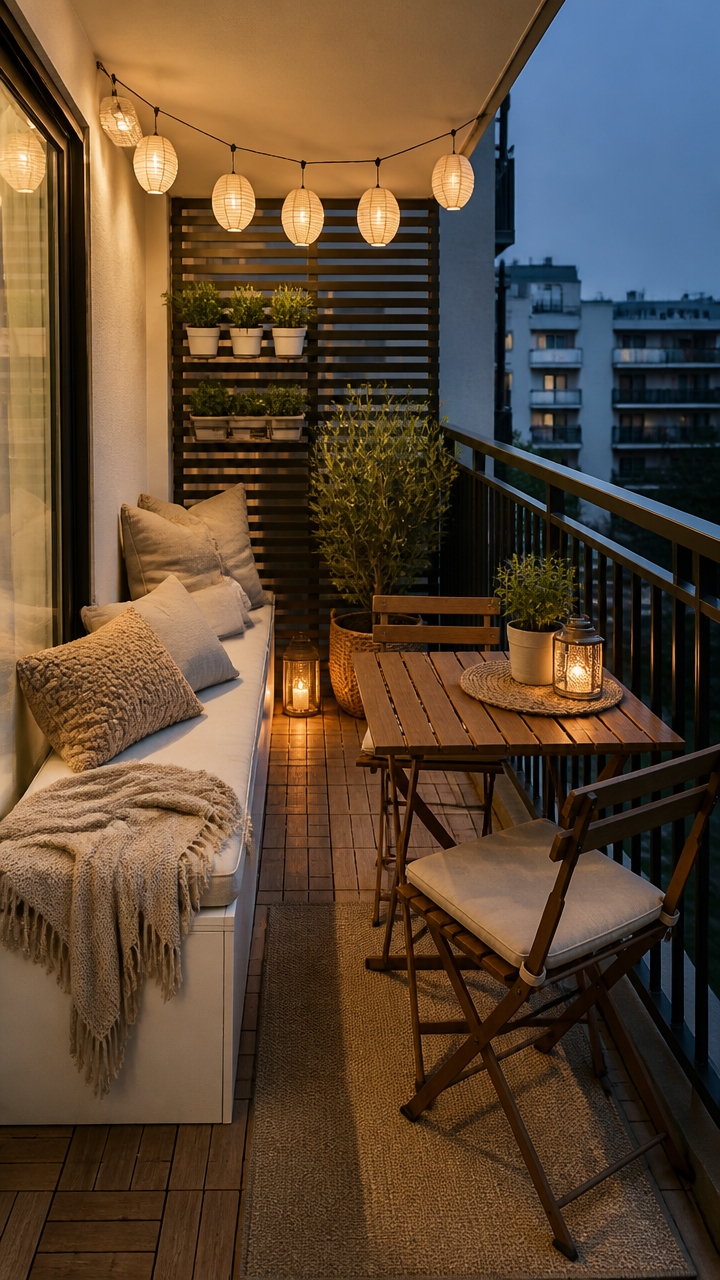
Defining your primary activity for your small patio is essential for creating a functional and inviting outdoor space. Whether your main goal is relaxation, entertaining guests, or a combination of both, clarifying this purpose helps guide your layout, furniture choices, and decor. For a relaxing retreat, focus on cozy seating, calming landscaping, and features like a fire pit to enhance tranquility. If entertaining is your priority, design designated zones for dining, bar areas, and ample seating to guarantee guests feel comfortable and social. For those who want a versatile space that balances both relaxation and entertaining, strategic zoning and multi-functional furniture allow you to adapt the area based on your needs, maximizing usability without overcrowding. Clearly defining your main activity enables you to create an efficient, cohesive small patio that meets your lifestyle. Incorporating space-saving strategies ensures the functionality and comfort of your outdoor area even in limited space.
Maximize Space With Built-In Planters and Vertical Gardens
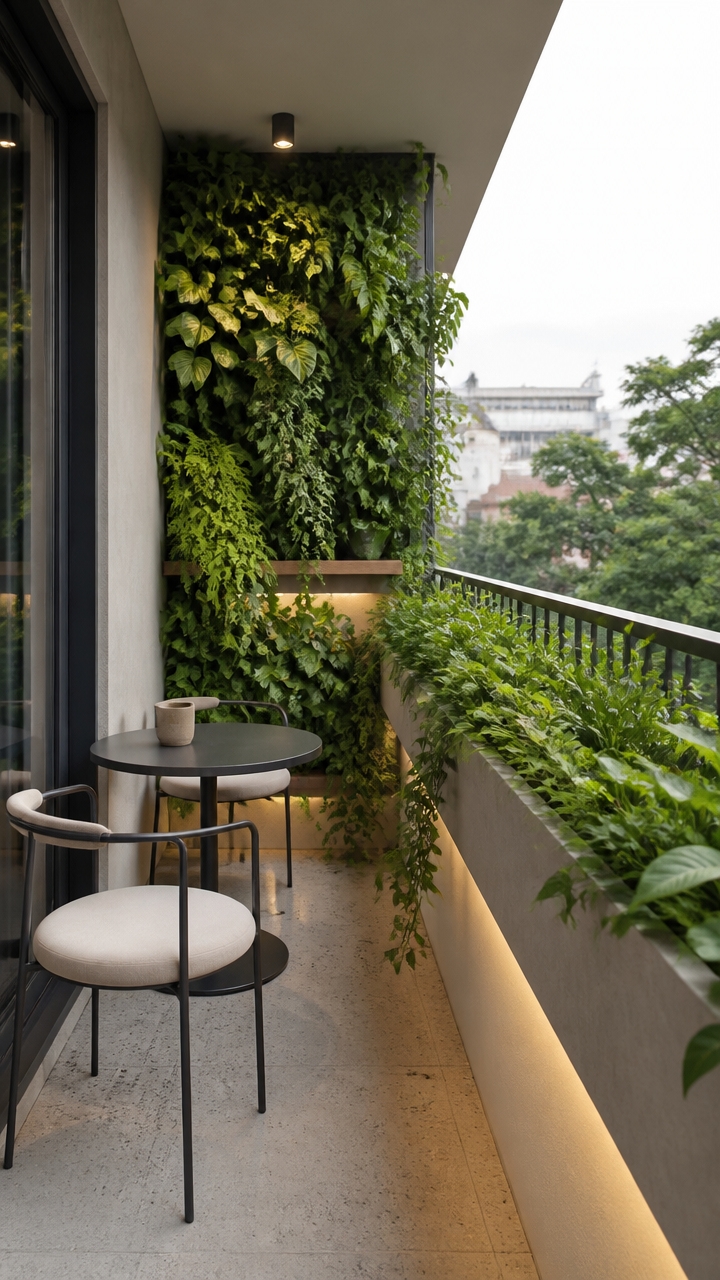
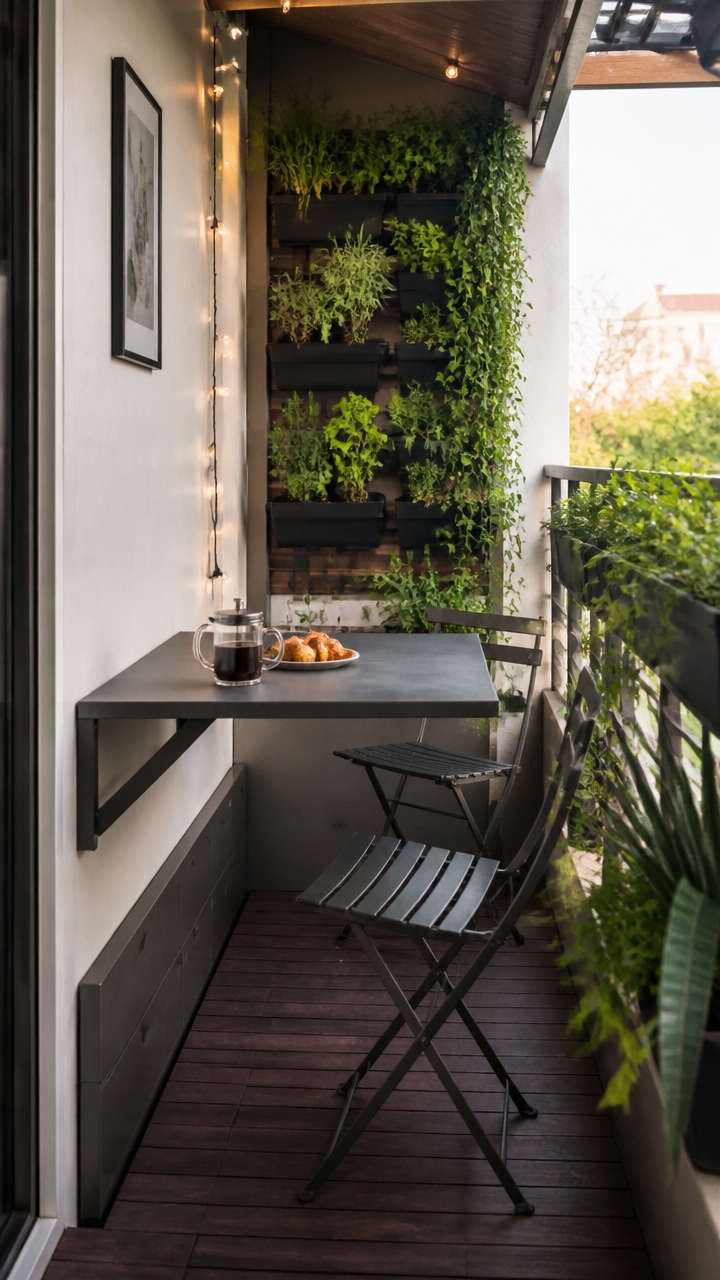
Built-in planters are a smart solution for small patios because they integrate greenery directly into the structure, saving precious surface area and reducing clutter. These planters can be incorporated into bench seats, surrounded by railings, or integrated into steps and walls, creating a seamless look that doesn’t encroach on open space. Using materials like wood, concrete, or metal, built-in planters add visual interest and are durable for outdoor conditions. When placed along the perimeter or around seating areas, they define zones without blocking sightlines, maintaining an open, airy feel. Incorporating space-efficient design techniques in your built-in planters can further maximize available area. Vertical gardens expand your planting options by turning walls into lush, plant-filled surfaces. Wall-mounted planters, trellises, or modular panels can support vines, flowers, or herbs, drawing attention upward and freeing up ground space for seating, dining, or other activities. Pocket planters and modular systems are especially adaptable, allowing for customizable plant arrangements that suit the unique constraints of a small patio. Position vertical gardens on less-used walls or support columns to add greenery without sacrificing valuable ground area, while creating a vibrant, immersive green backdrop that enhances privacy and aesthetic appeal.
Create Privacy and Zones With Support Walls and Screens
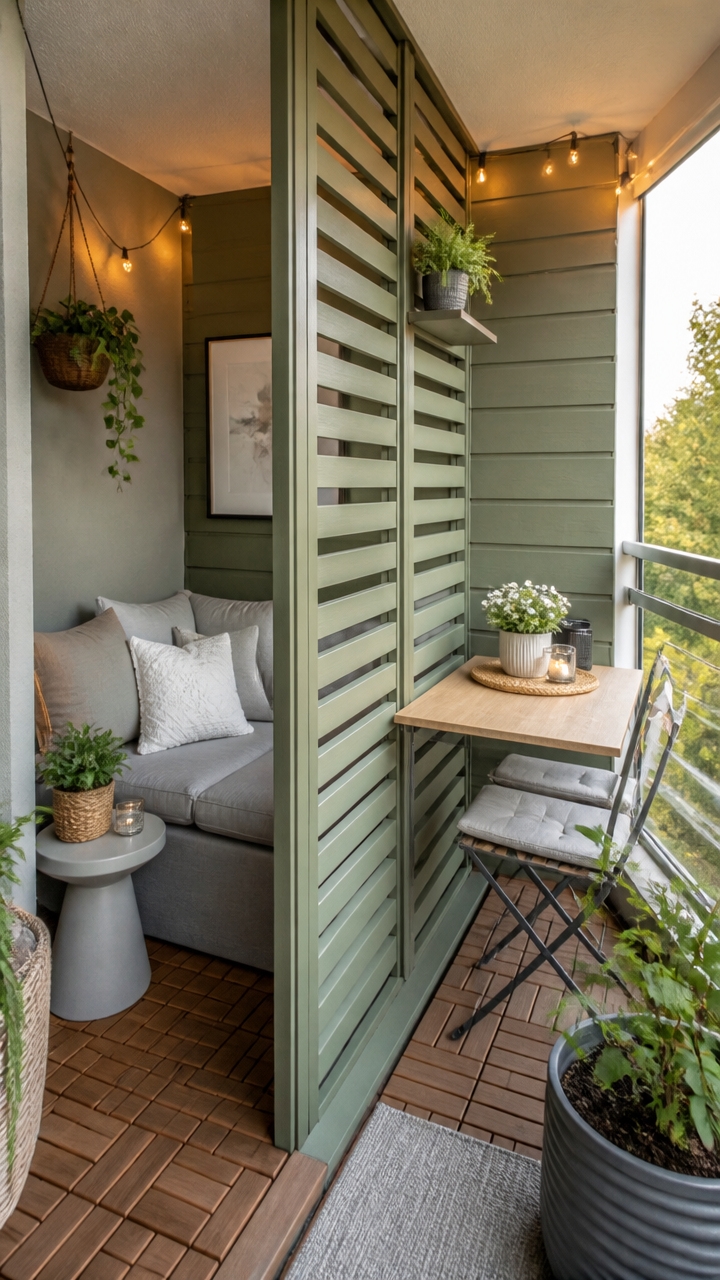
Support walls, privacy fences, and trellises are effective tools for defining small patio spaces and enhancing privacy. These structures can be built up to 6-8 feet tall to block unwanted views from neighbors, creating secluded zones perfect for relaxing or entertaining. When positioned strategically, they partition your outdoor area into distinct sections, making the space feel larger and more organized.
Lattice panels or wooden slats used as vertical screens provide privacy while allowing for climbing plants like ivy or jasmine to flourish. These living screens add lush greenery and soften the boundaries of your patio, seamlessly blending functionality with aesthetics. They’re especially useful in small spaces because they use vertical rather than ground space.
Supporting these screens with sturdy columns and beams can also create shaded areas or pergolas, offering both privacy and architectural interest. Such structures not only serve as visual barriers but also provide shade and comfort during sunny days, turning your small patio into a versatile outdoor room.
Combining privacy screens with vertical planting creates a harmonious enclosure that maximizes visual separation without feeling cramped. This layered approach enhances privacy, adds aesthetic appeal, and makes small outdoor spaces feel more intimate and inviting. When choosing materials, consider durability and ease of maintenance to guarantee your privacy solutions remain attractive over time.
Add Vertical Support Structures Like Trellises and Climbing Plants
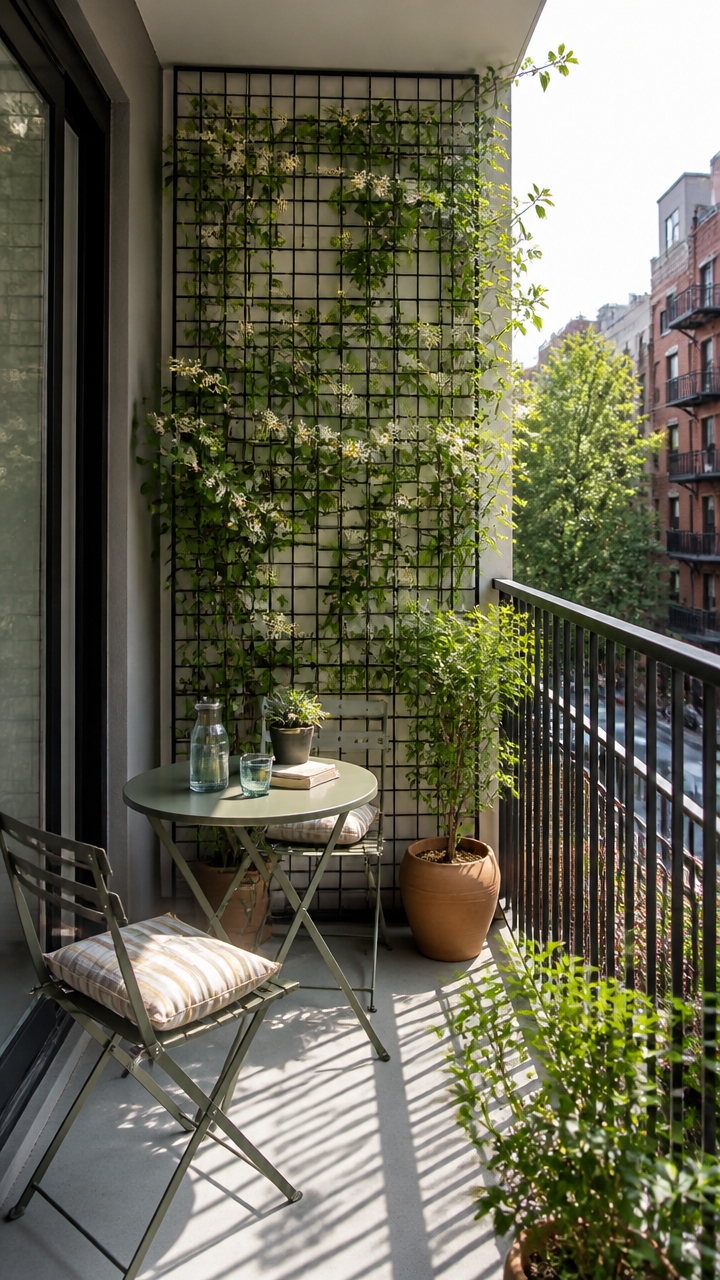
In small patios, vertical support structures like trellises transform limited space into lush, inviting areas. Installing a trellis along one wall or fence creates a private partition while adding height and visual interest. Choose from materials like wood for a natural look, metal for a sleek modern vibe, or vinyl for low maintenance. Position trellises where they can provide privacy without obstructing pathways or access points, and consider their height and design to complement your overall style.
Growing climbing plants such as wisteria, jasmine, or grapevines on these structures enhances your patio’s ambiance. They introduce vibrant greenery and delightful fragrances, making the space feel more expansive and lively. Be mindful of plant placement, ensure they have enough support and sunlight, and regularly prune to maintain shape and prevent overgrowth.
Support columns or beams can also provide space for vertical gardening by holding hanging pots or wall-mounted planters. This approach maximizes greenery without taking up valuable ground area and adds layers of texture and color. Combining these elements can create a multi-dimensional outdoor retreat in even the tiniest of patios.
Choose Compact, Weatherproof Furniture for Easy Seating
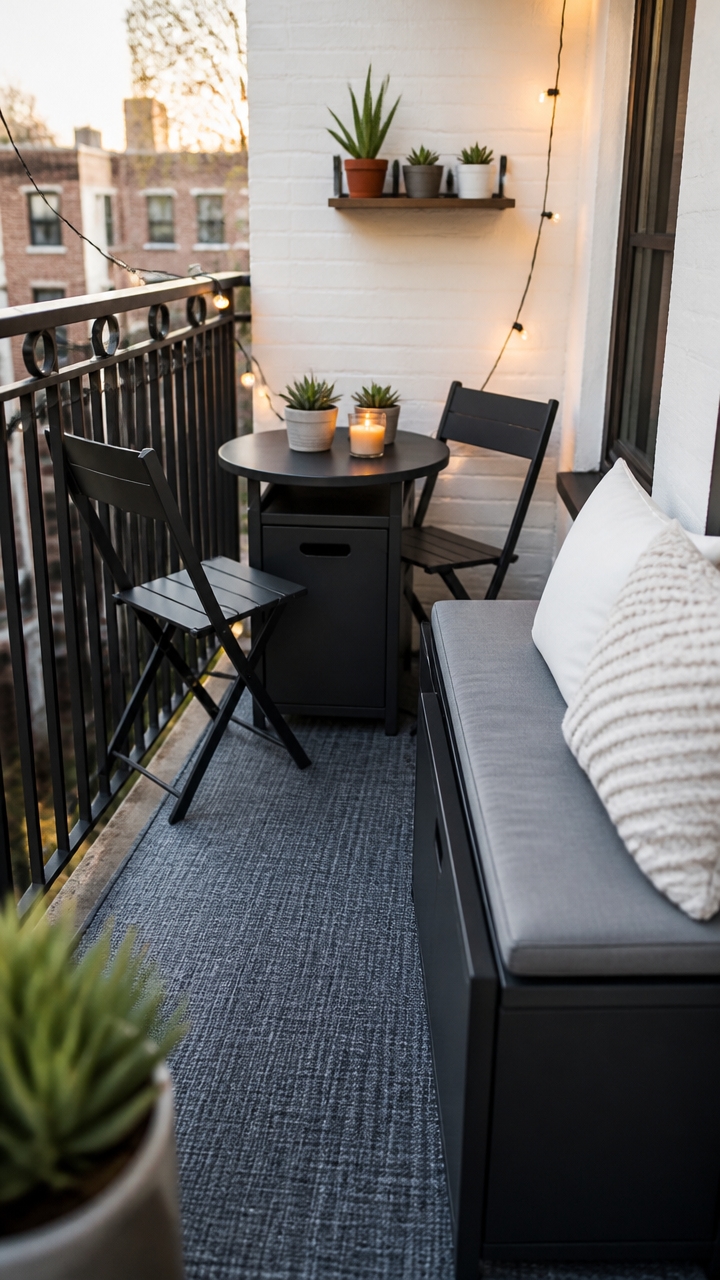
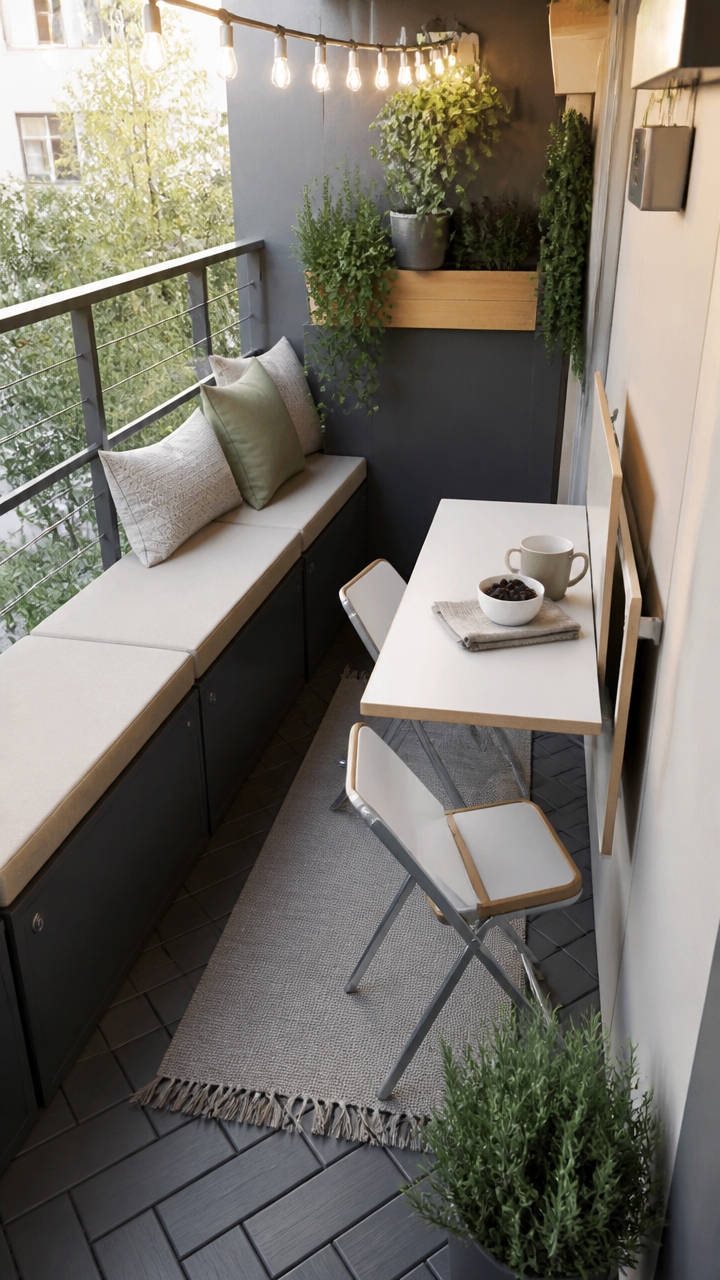
Selecting the right furniture is key to making a small outdoor space functional and inviting. Opt for weatherproof materials such as aluminum, synthetic wicker, or treated wood, which can withstand the elements and require less maintenance. These materials guarantee your patio furniture remains durable over time, even with exposure to rain, sun, or humidity. When choosing pieces, consider slim profiles and scaled-down dimensions, usually under 30 inches wide, to prevent crowding and maintain an open, airy feel. Multi-functional furniture like benches with built-in storage or foldable chairs can add versatility, allowing you to easily adapt the space for dining, lounging, or entertaining. Lightweight, stackable, or foldable options are ideal for simple storage and repositioning, so you can optimize your patio layout according to your needs and weather conditions. Durable cushions and protective covers further extend the lifespan of your furniture by guarding against moisture and UV damage.
Use Creative Lighting to Set the Perfect Mood
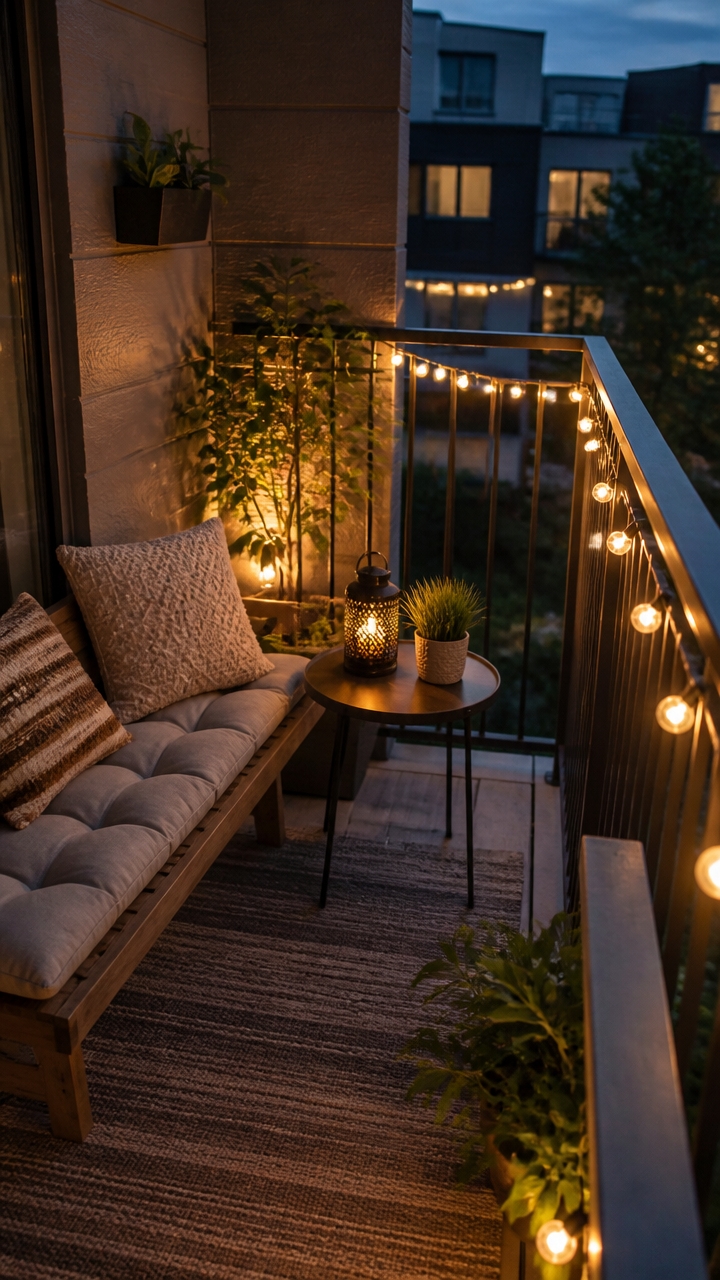
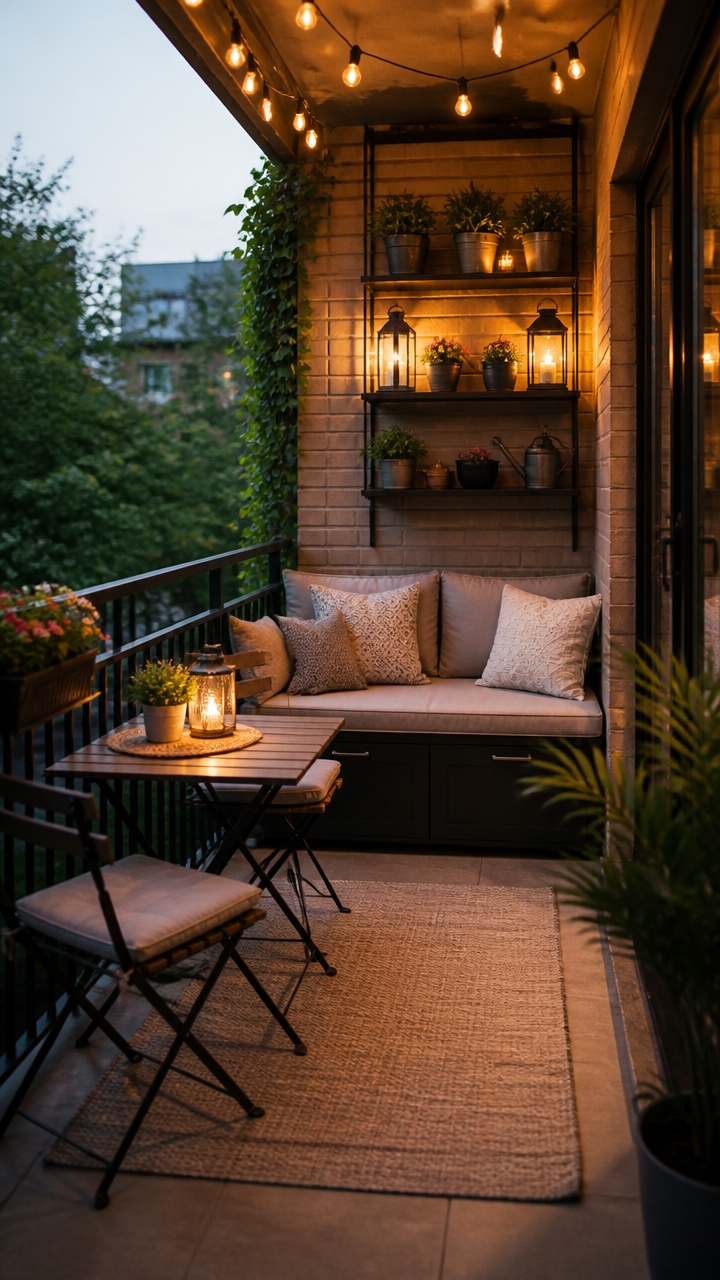
Lighting plays a essential role in transforming a small outdoor patio into a cozy and inviting retreat. String lights, such as vintage Edison bulbs or modern LED strands, can be hung overhead or along railings to instantly add warmth and a welcoming glow. Their versatility allows you to drape them across a ceiling or walls, creating a canopy effect that makes the space feel more intimate.
DIY chandeliers made from materials like driftwood, mason jars, or recycled items serve as eye-catching focal points while providing soft ambient light. These custom pieces are budget-friendly and can be tailored to match your style, whether rustic, boho, or modern. Position them centrally or above seating areas for maximum effect.
Portable lighting options such as tabletop fireplaces or gel fuel fire pits offer cozy illumination without the need for electrical wiring. They are perfect for creating a warm atmosphere during cool evenings and are easy to move around for best placement.
Layered lighting enhances both function and mood, combining recessed fixtures, sconces, and smart bulbs to give you control over brightness and color. This approach makes small spaces feel more expansive and adaptable to different times of day or occasions.
Decorative lanterns, solar stake lights, and under-furniture LED strips add subtle accents that expand the perceived space and create a magical vibe. Position lanterns along pathways or hang them from hooks to introduce depth and visual interest, making your small patio feel larger and more inviting at night.
Add Vertical Storage to Keep Clutter Out of Sight
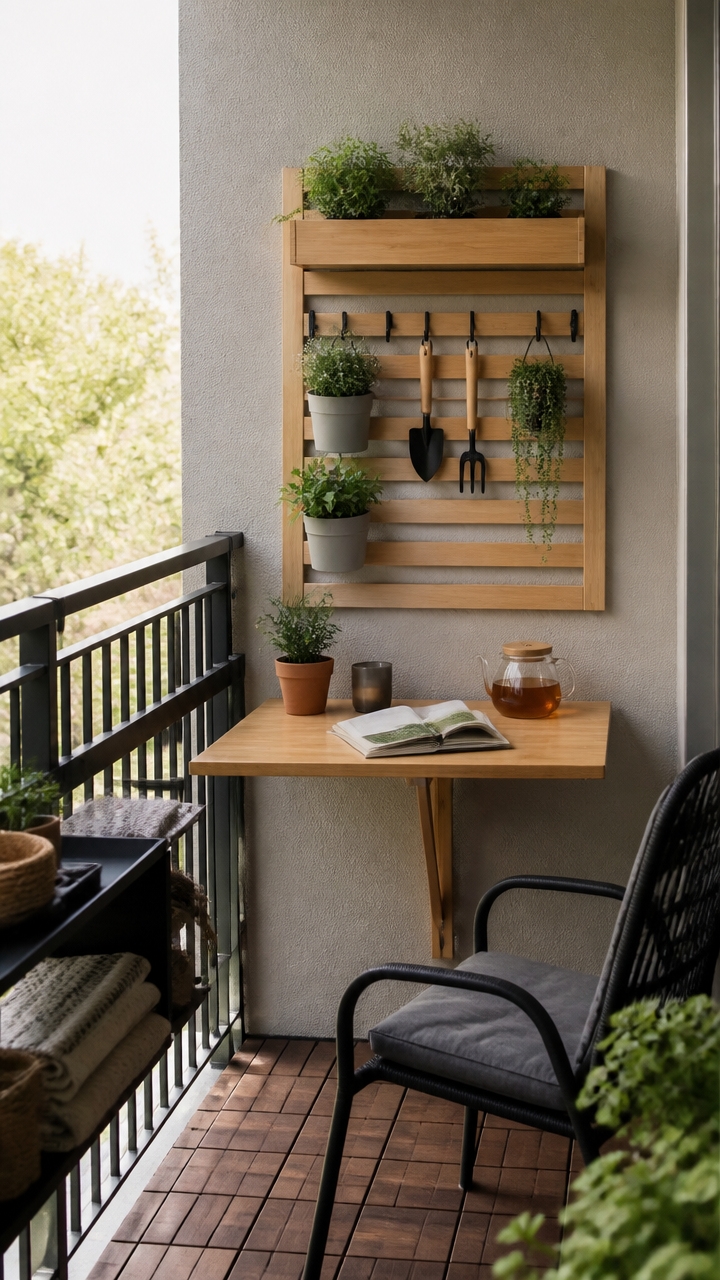
Implementing vertical storage solutions is a highly effective way to keep a small patio organized and visually appealing. Wall-mounted shelves and hanging planters utilize the vertical space, freeing up the ground area for relaxing or entertaining. These shelves can hold potted plants, decorative items, or small gardening tools, providing easy access and preventing clutter from accumulating on surfaces or the floor. Hanging planters not only add greenery but also save space, they can be hung at various heights to create a layered, lush look without taking up valuable ground real estate.
Support columns or walls can be fitted with vertical garden panels or planters, integrating more greenery while maintaining clear floor space. Built-in vertical storage options like recessed niches or narrow cabinets capitalize on unused wall space, offering discreet storage for supplies or gardening tools, and helping maintain a streamlined appearance. Adjustable vertical racks and hanging containers are also practical, allowing you to customize storage for seasonal items or frequently used tools, making your small patio feel organized and welcoming without sacrificing style.
Incorporate Built-in Features Like Fireplaces or Benches
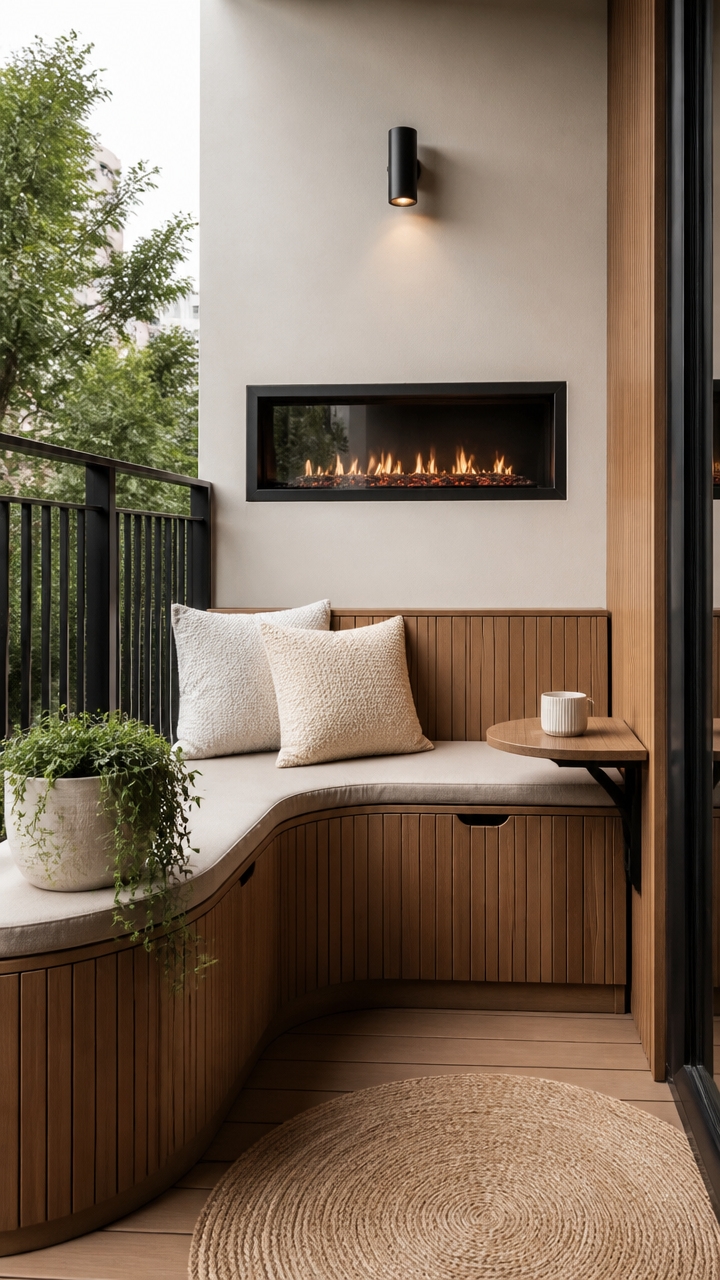
Incorporating built-in features like fireplaces or benches is an effective way to maximize limited outdoor space in small patios. Built-in amenities serve dual purposes: they provide functional seating or focal points while conserving space that would otherwise be occupied by freestanding furniture. For example, a custom-built bench along a wall can offer comfortable seating and also include hidden storage compartments for cushions, gardening tools, or outdoor accessories, keeping the area tidy.
A built-in firepit can act as a central gathering spot, adding warmth, ambiance, and a cozy focal point without consuming the footprint of a standalone unit. When designing a built-in firefeature, consider its placement for easy access and good airflow, using durable, weather-resistant materials like stone, brick, or metal that blend seamlessly with the overall design.
In small patios, integrated features can be tailored precisely to fit tight or irregularly shaped spaces, making the most of every inch. Built-ins also contribute to a cohesive and streamlined aesthetic, reducing visual clutter and helping the space feel more open and organized. When planning these features, consider proportions to ensure they complement the size of your patio and prioritize materials and finishes that harmonize with the surrounding environment.
Make Your Small Patio Feel Bigger With Light Colors and Reflective Surfaces
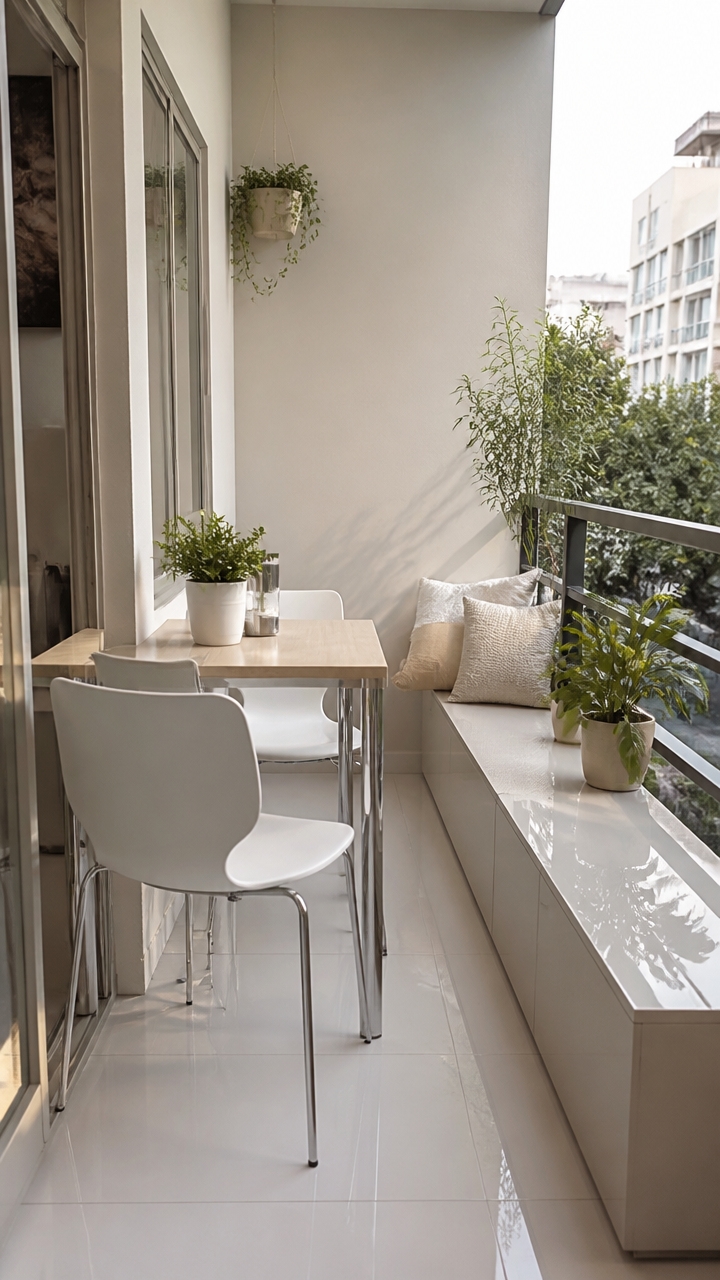
Using light-colored paint or finishes on walls and furniture can dramatically enhance the sense of space in a small patio. Light hues, such as whites, creams, pastels, and soft neutrals, reflect more natural and artificial light, which helps brighten the area and make it feel larger than it actually is. When choosing paint or finishes, opt for matte or eggshell finishes that diffuse light evenly and prevent glare. Additionally, selecting furniture with light-colored or reflective surfaces, like painted wood or light-colored wicker, reinforces this effect. Placing these elements strategically, such as painting walls in a soft tone or choosing cushions and decorative accessories in pastel shades, amplifies the airiness. Be mindful of maintaining a balanced palette to avoid a cluttered or overwhelming look. Overall, embracing light colors on walls, furniture, and accessories creates an inviting, open atmosphere perfect for small outdoor spaces.
Hang Outdoor Curtains or Fabric Panels for Privacy and Shade
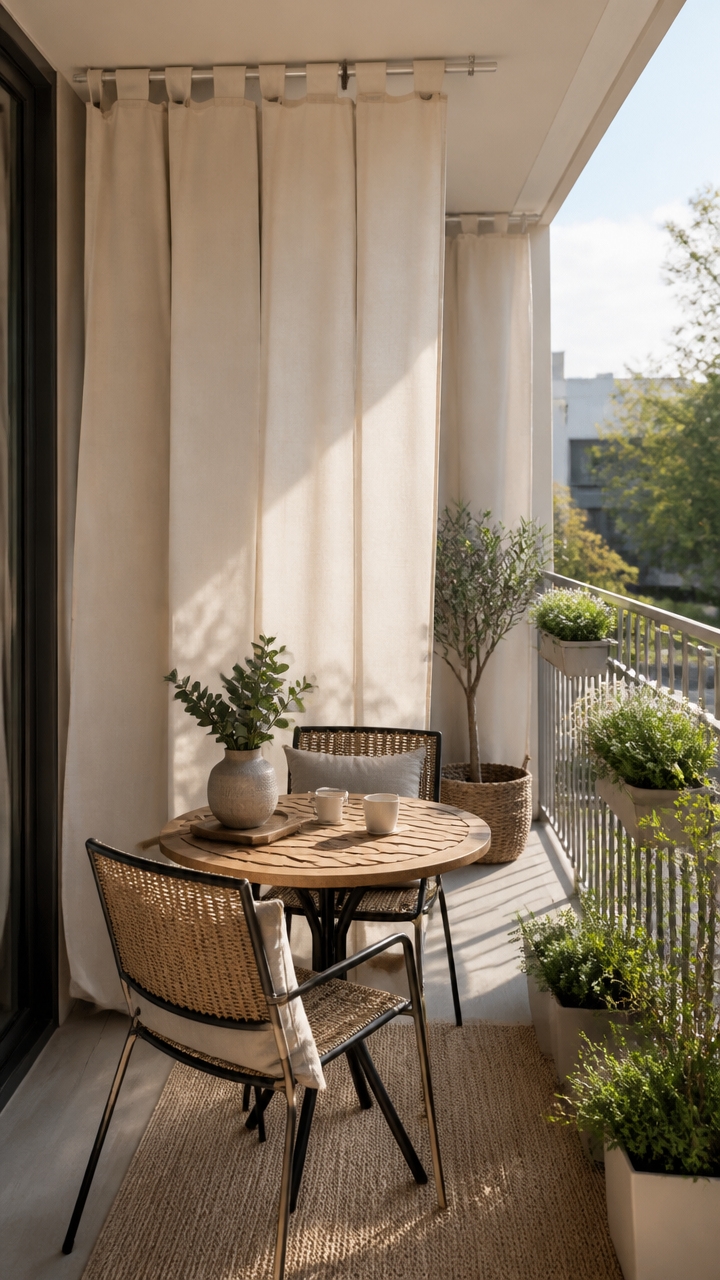
Hanging outdoor curtains or fabric panels is an effective way to create privacy and shade in small patios. When installed with weather-resistant fabric, these curtains can withstand rain, sun, and wind, ensuring durability over time. Mounting them on tension rods or ceiling tracks makes installation simple and allows you to easily open or close them as needed, giving you flexible control over your space. Light-colored or patterned fabrics help reflect more light, visually expanding the area and adding an airy, inviting feel. Plus, outdoor curtains offer shade from direct sunlight, helping to keep the patio cooler and more comfortable during warmer months. Proper placement and choosing the right fabric are key for maximizing both function and style in your small outdoor space.
Design Tiered or Elevated Areas to Create Depth and Separation
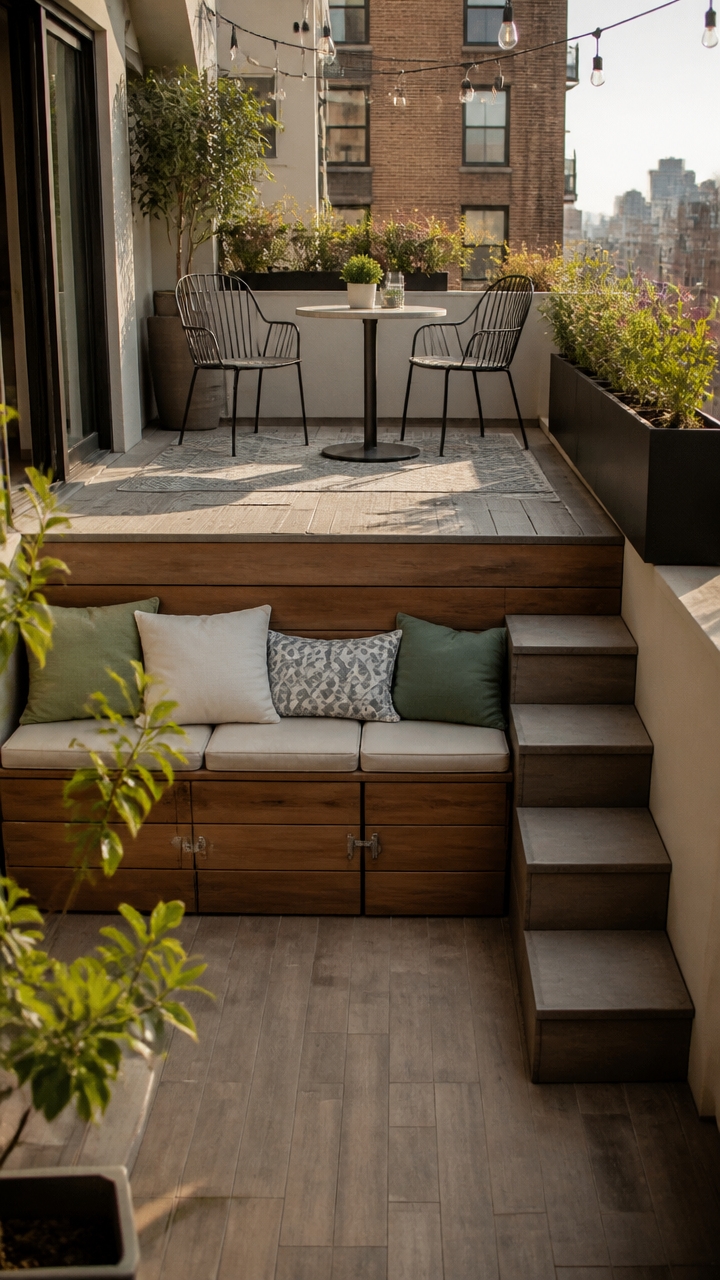
Creating tiered or elevated areas in small patios can greatly enhance both their functionality and visual appeal. By adding different levels or platforms, you can define separate zones for dining, lounging, or gardening without making the space feel crowded. Elevated platforms or low retaining walls add depth, making a compact outdoor area appear larger and more dynamic. Incorporating multi-level decking or step-down sections helps organize your layout smoothly, guiding movement from one area to another while maintaining an open, airy atmosphere. Additionally, elevated garden beds or planters introduce vertical interest and help delineate spaces without using up valuable ground space. Using steps, pavers, or contrasting flooring materials further emphasizes these divisions, creating a sense of order and style that maximizes your patio’s potential. When planning these features, consider proportions and materials to ensure they complement your overall design and fit seamlessly into your small space.
Use Mirrors and Reflective Decor to Expand Your Visual Space
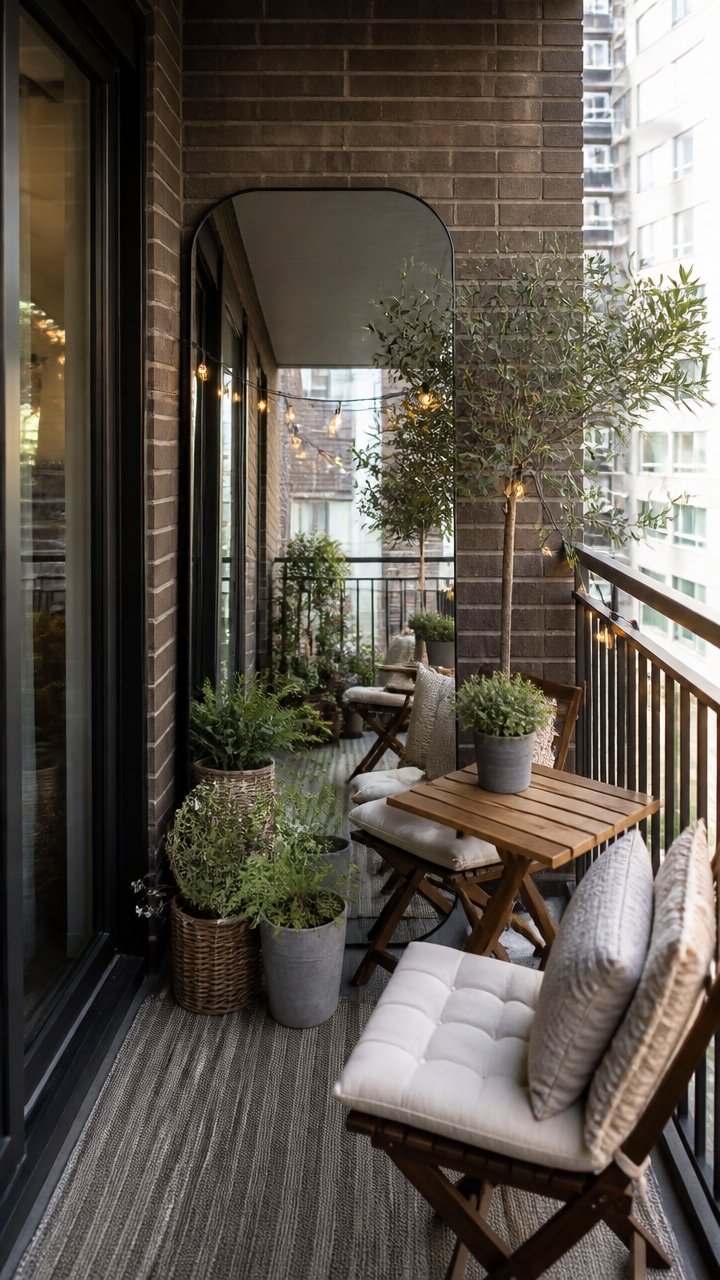
Mirrors are a powerful tool in small patios, as they reflect light and create the illusion of more space. Placing a large wall-mounted mirror near a seating area or focal point instantly doubles the perceived size of your outdoor area. Freestanding mirrors can be positioned to enhance depth and add visual interest without creating clutter. When selecting mirrors, opt for shapes that complement your patio’s style, round, oval, or rectangular, and frames that blend with your overall decor for a cohesive look.
Reflective decor elements, such as shiny planters, metallic accents, or glass decorative pieces, amplify natural light, making the space feel brighter and more open. Incorporate metallic planters or table accents to bounce light around the area while adding a touch of elegance. Just be mindful of placement to ensure these reflective surfaces catch sunlight or ambient light appropriately. By strategically combining mirrors with reflective decor, you can transform a small outdoor space into a bright, inviting retreat that feels much larger than its physical dimensions.
Pick Small-Scale Decor and Accessories for Balance
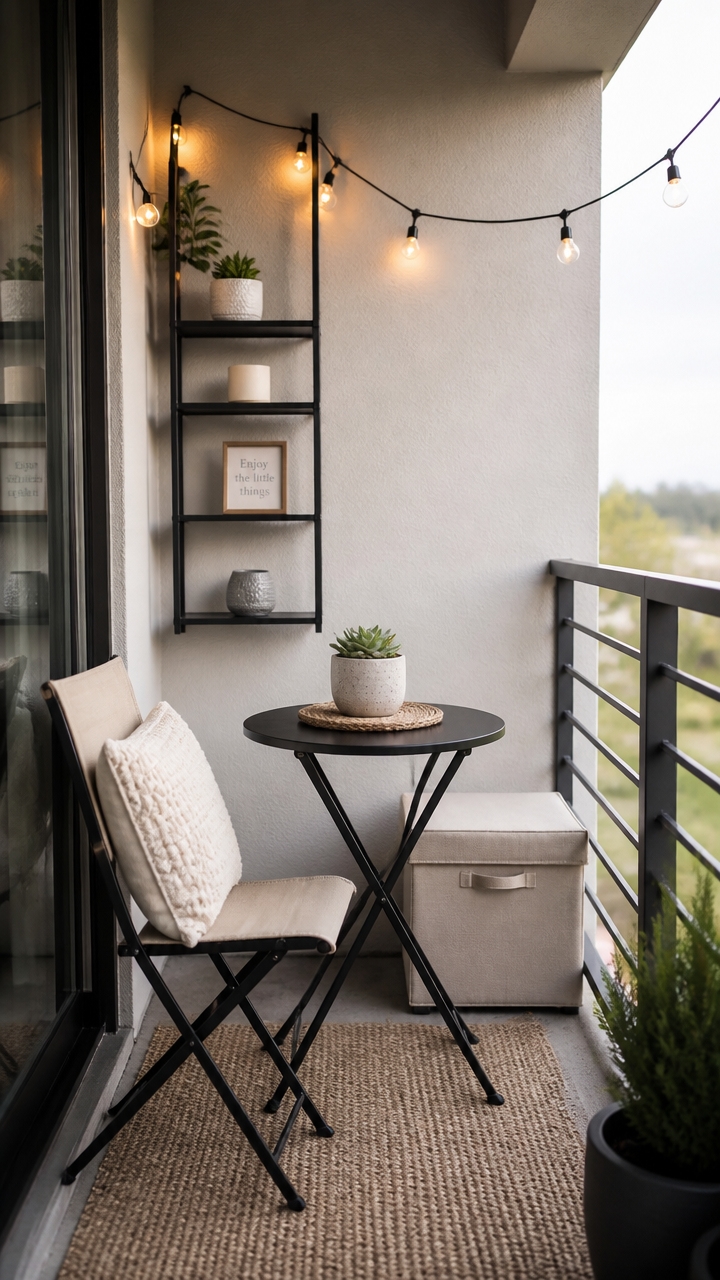
Choosing small-scale decor, such as petite planters and compact furniture, helps balance proportions and prevent overwhelming a limited patio space. Incorporating multi-functional accessories like jute poufs or nested tables maximizes usability without cluttering the area. Using vertical decor elements, like hanging planters or wall art, adds visual interest while saving ground space. Selecting accessories in light or neutral colors can make the small patio appear more open and airy. Opting for size-appropriate decorative items guarantees a cohesive and balanced outdoor environment, enhancing comfort and style.
Incorporate Potted Plants at Different Heights for Visual Interest
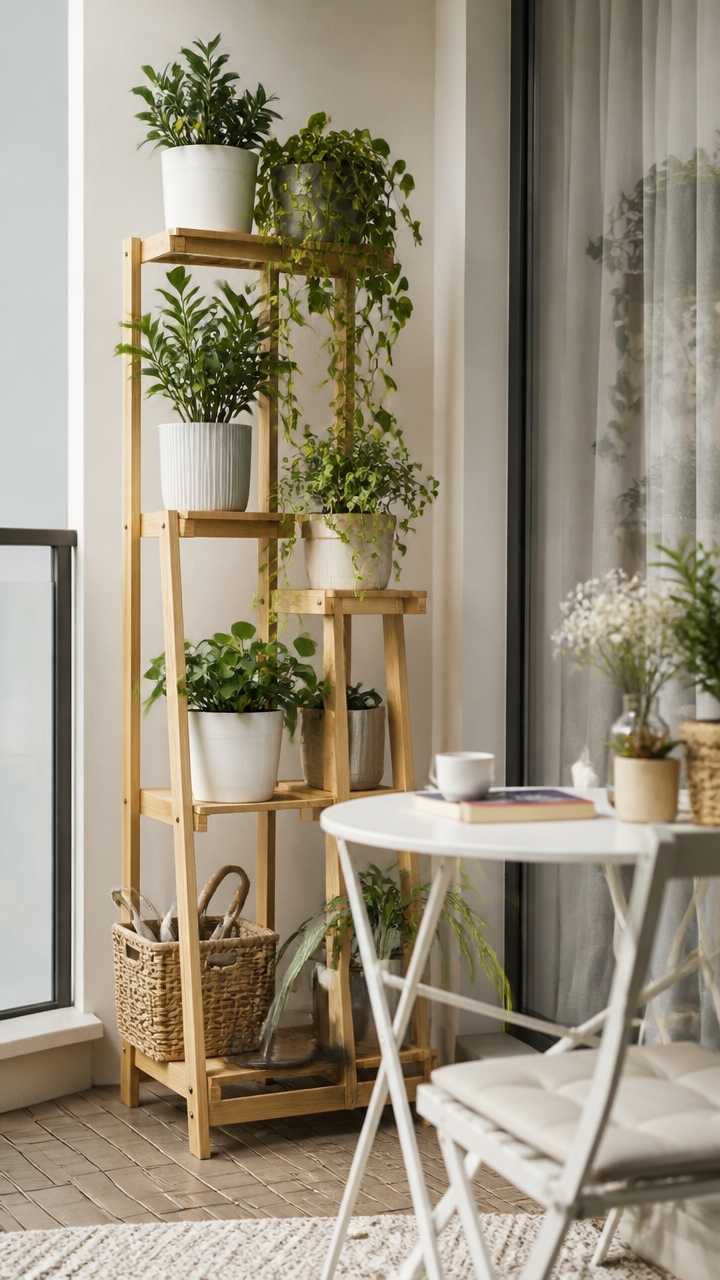
Incorporating potted plants at different heights is a simple yet effective way to bring visual interest and depth to a small patio. By placing plants on stands, shelves, or hanging baskets, you create layers that draw the eye around the space, making it feel more lively and expansive. Tall planters or stacking pots elevate greenery to eye level, which can help open up the area visually and prevent it from feeling cramped. Mixing various container sizes and heights prevents monotony, adding texture and variety that make the patio more inviting. Additionally, arranging plants vertically, using wall-mounted planters or tiered stands, not only saves ground space but also adds lushness and richness to the overall design. When selecting and positioning these elements, consider proportions and materials to achieve a balanced, cohesive look that enhances your outdoor sanctuary.
Install Attached Pergolas or Covered Structures to Expand Usable Space
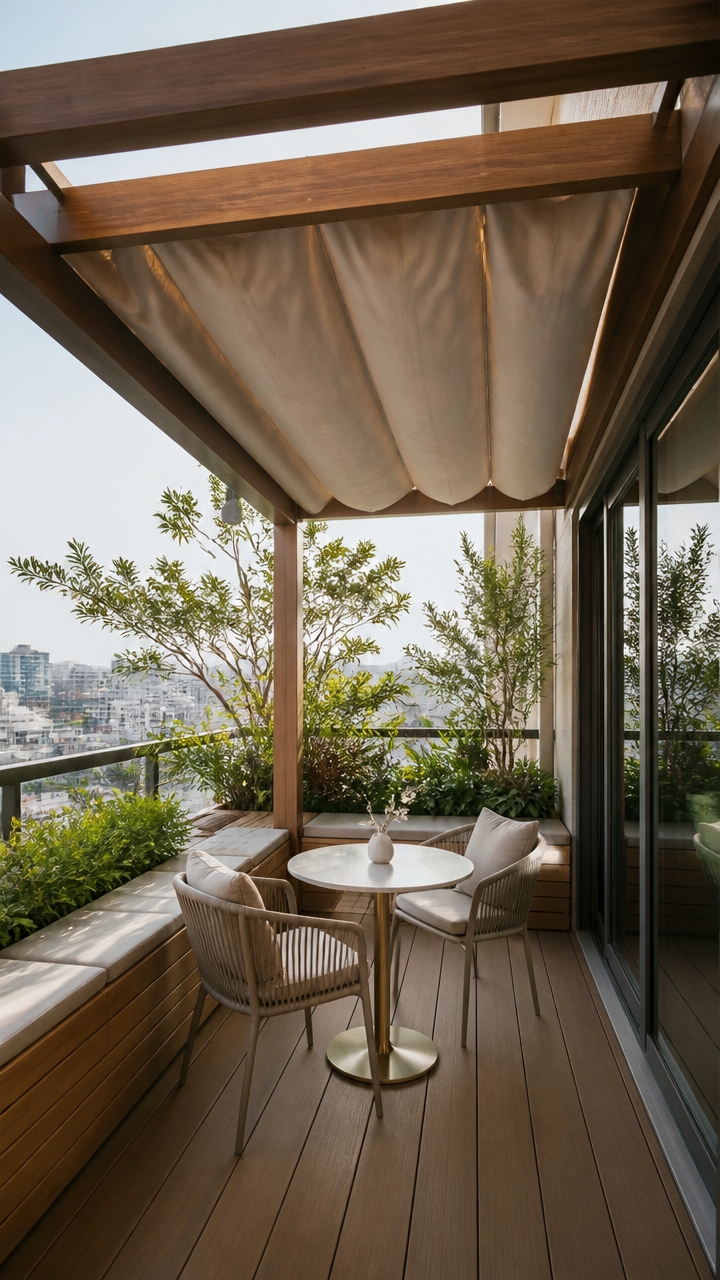
Installing an attached pergola or covered structure over a small patio can greatly enhance its usability by creating a designated outdoor living area that offers shade and weather protection. This addition transforms a modest open space into a cozy, functional zone suitable for dining, lounging, or entertaining throughout the year. A typical pergola measuring around 10’x15’ provides just enough coverage without overwhelming limited square footage. Using durable materials like cedar or aluminum for the pergola frames ensures longevity and complements a variety of design styles, from rustic to contemporary. Incorporating a cover or retractable canopy offers the flexibility to adjust shade levels based on the season or time of day, maximizing comfort. Properly designed attached cover structures can also create visual expansion of the patio, adding height and a sense of enclosure that makes the space feel larger and more inviting. When planning, consider placement to maximize access and sunlight, and match the material and style to your existing outdoor decor for a cohesive look.
Keep Flooring Seamless for a Unified, Open Look
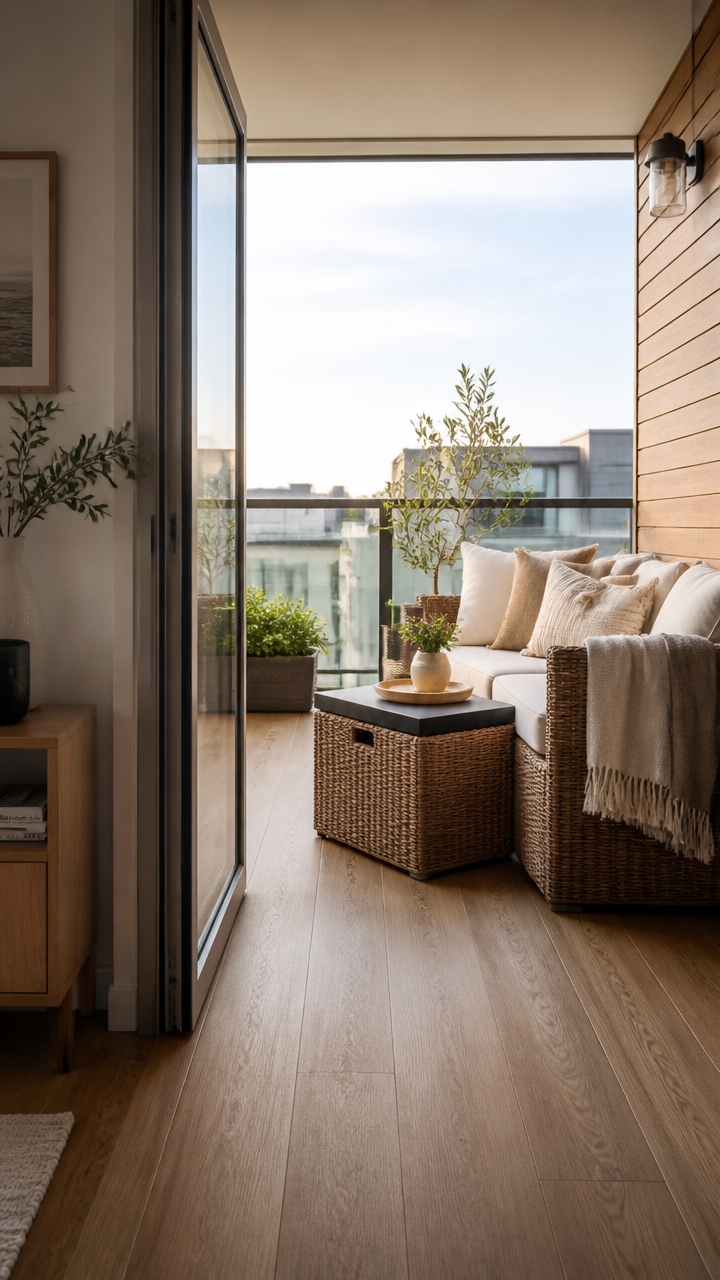
Using the same flooring material or color throughout your small patio creates a continuous visual flow that makes the space appear larger and more open. Extending outdoor rugs or decking without breaks helps unify separate zones, giving the illusion of one cohesive area. Eliminating physical barriers, such as low walls or different surface heights, and aligning flooring levels between different sections further reduces visual clutter. For example, using the same stone or wood planks across your patio and adjoining steps or walls can blend different elements seamlessly. When selecting materials, consider durable options suitable for outdoor use that can withstand weather conditions while maintaining a uniform appearance. This cohesive approach guides the eye smoothly across the space, emphasizing its openness and making your small patio feel more expansive.
Plan for Year-Round Use With Weatherproof Elements and Good Lighting
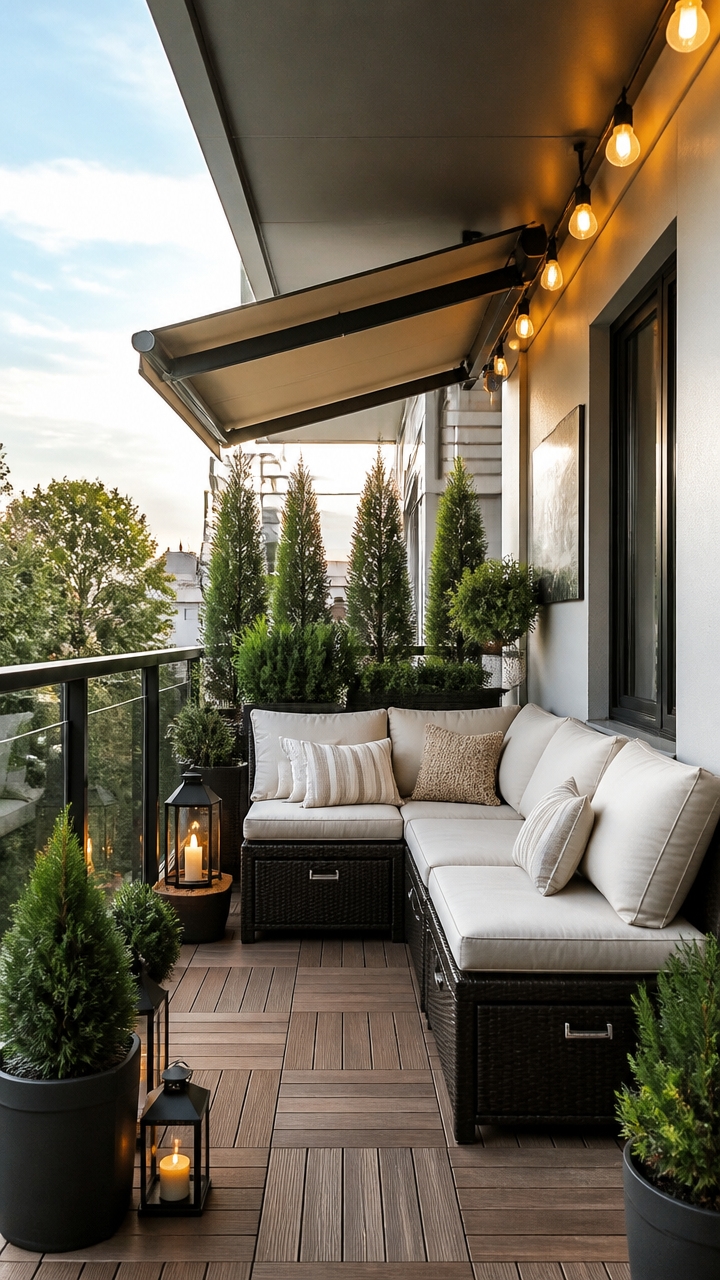
For a small patio, creating a space that can be enjoyed year-round requires thoughtful planning around weatherproof elements and lighting. Incorporating weather-resistant materials like composite decking, treated wood, or natural stone guarantees your patio withstands the elements through all seasons. Elevated bases with proper drainage, including slight slopes of 1-2%, help prevent water pooling and protect furniture from moisture damage. Installing lighting solutions such as string lights, recessed fixtures, or smart LED bulbs not only adds ambiance but also extends usability into evenings and darker months. To maximize comfort and protection, consider adding a covered or partially covered structure like pergolas or gable roofs. These features shield you from rain and harsh sun, allowing you to enjoy your outdoor space regardless of the weather. Additionally, adjustable or retractable shades and sails provide control over sunlight exposure, keeping the patio cooler in summer and bright in winter. Proper combination of durable materials, effective drainage, versatile lighting, and protective coverings ensures your small patio remains functional and inviting year-round.
Final Takeaways
In the landscape of design, your small patio is a finely wrought jewel, each measure, plan, and material chosen with deliberate intent, shaping a bespoke cocoon of serenity amid urban clamor. Approaching your space with the precision of a master joiner, you craft a sanctuary that’s both bijou and functional, intentionally layered and thoughtfully decorated, much like a well-curated collection of textiles and textures, from the lush “Roma” fabric to the weatherproof “Alpine Ash” decking, turning every detail into a deliberate act of personal luxury.

- 22 Small Space Landscape Ideas That Actually Work - September 13, 2026
- 21 Small Space Backyard Ideas For a More Organized Home - September 13, 2026
- 20 Small Space Pool Ideas Backyards That Transform Any Space - September 12, 2026