
Your chair is fine for an hour. By lunch your back aches and your legs feel stiff. These standing desk ideas for small offices fix that without eating your whole room.
Here are 54 ways to stand while you work in a tight space. Most fit a corner, a closet or a spare wall. Pick one idea, try it this week, and see how your body feels.
1. Add a Riser to Your Existing Desk
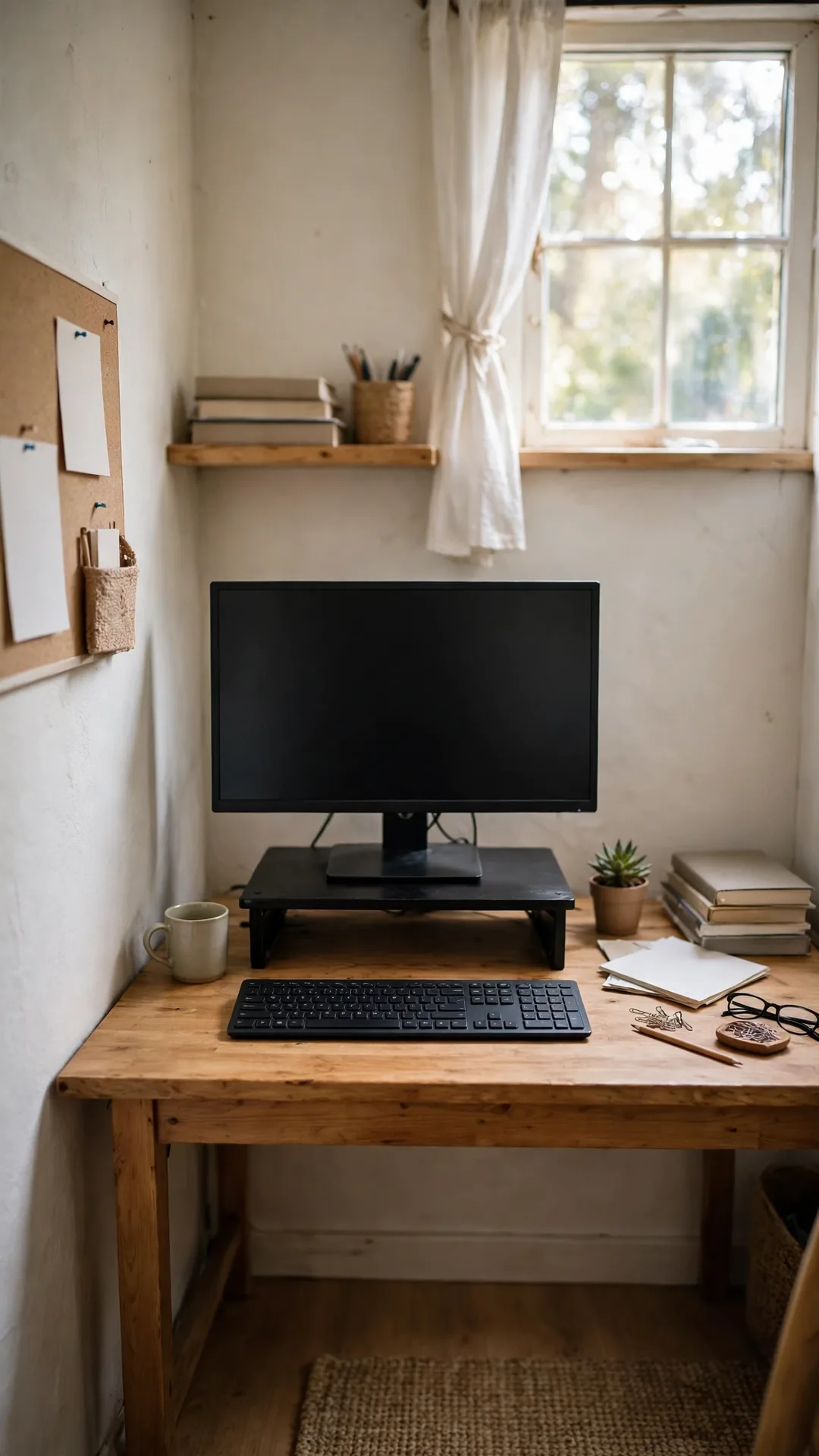
A riser turns the desk you already own into a standing desk. It lifts your laptop or monitor to elbow height in seconds. You keep your desk, your chair and your floor space.
How to do it:
- Pick a riser that lifts 12 to 16 inches.
- Check it holds your monitor weight, usually 20 to 30 pounds.
- Leave 6 inches of desk depth behind it for cables.
- Choose a model that folds flat for storage.
- Set the keyboard shelf at elbow height.
Best for: Renters who already own a desk.
Budget: $30 to $90
Quick tip: Measure your elbow height standing before you buy.
2. Try a Desktop Converter First
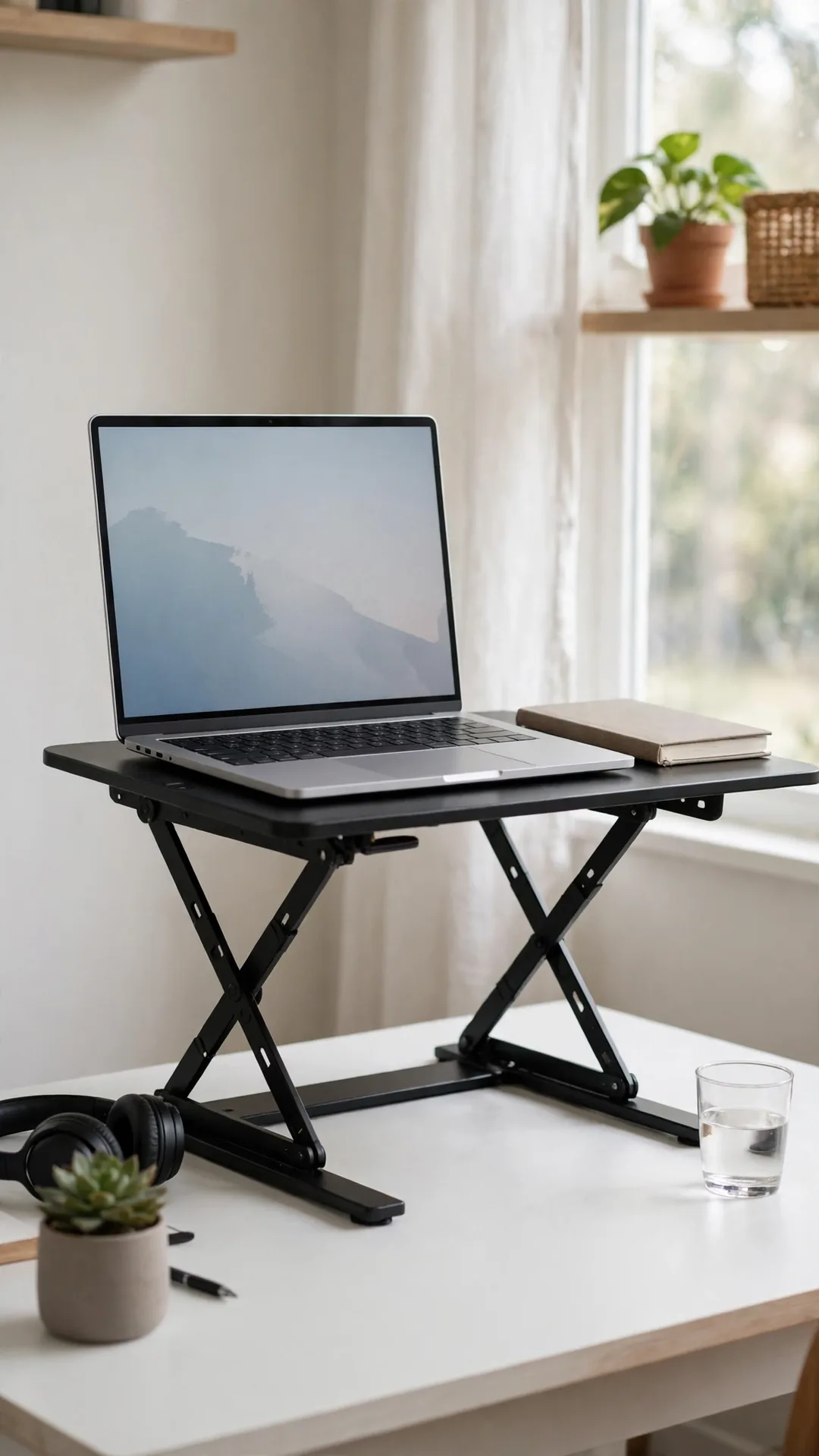
A desktop converter sits on your desk and rises when you do. It holds your screen and keyboard on one moving platform. Many standing desk ideas for small offices start with this one swap.
How to do it:
- Pick a converter 32 inches wide for a laptop and a notebook.
- Check the lift range reaches your standing elbow height.
- Look for a gas spring lift, since it moves smoothly.
- Keep the base weight under 30 pounds for easy moves.
Best for: Shared desks and rented rooms.
Budget: $80 to $200
Quick tip: Clamp your monitor to the converter to save depth.
3. Set a Laptop on a Shelf Ledge
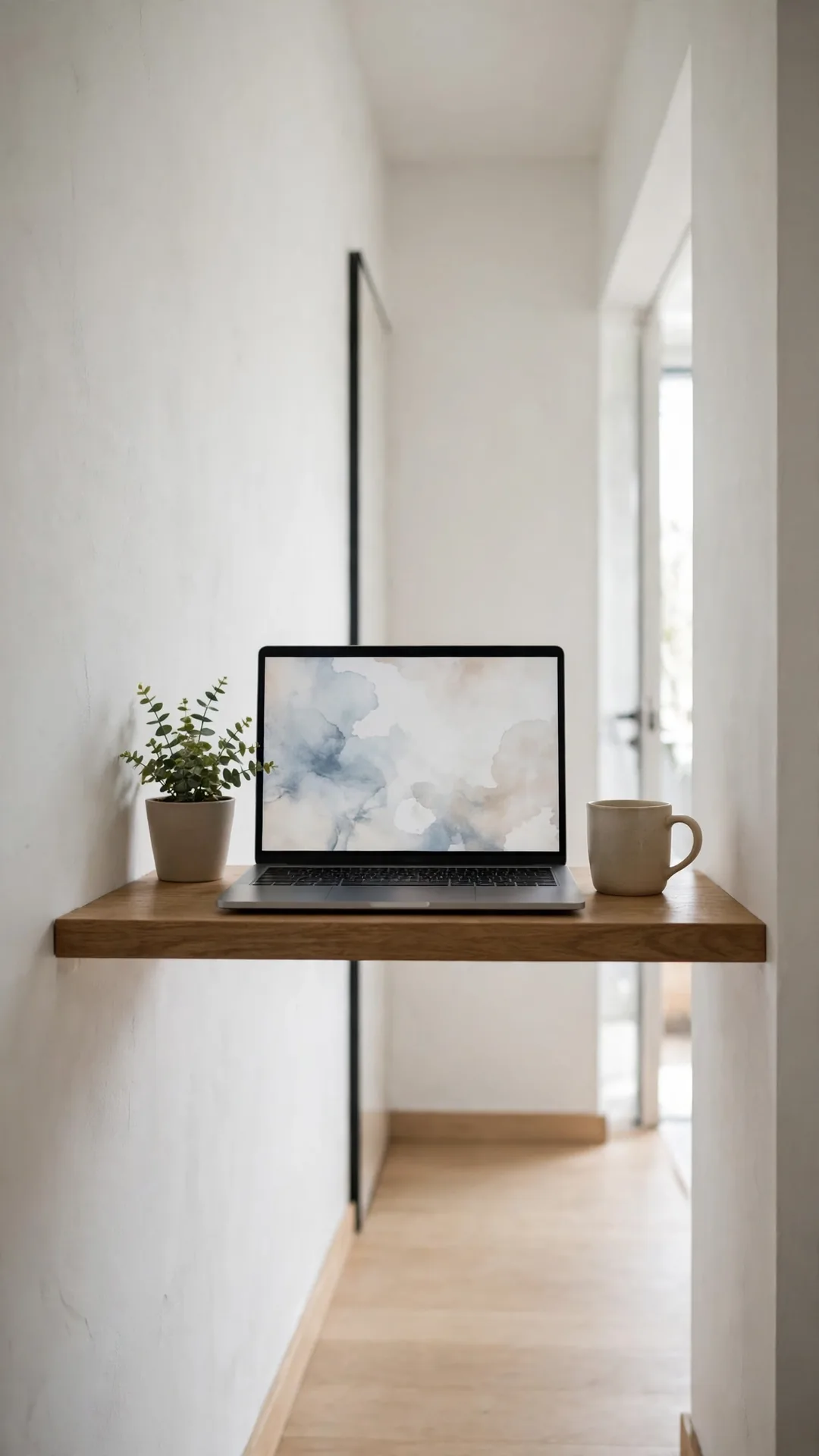
A shelf ledge at standing height makes a tiny desk for a laptop. Mount it on any free wall and you have a work spot. It costs little and takes zero floor space.
How to do it:
- Use a shelf 24 inches wide and 12 inches deep.
- Mount it at your standing elbow height, around 40 to 44 inches.
- Pick brackets rated for at least 25 pounds.
- Add a small lip at the front so the laptop stays put.
Best for: Hallways, landings and narrow walls.
Budget: $20 to $60
Quick tip: Test the height with books on a stack first.
4. Pick a Narrow 32 Inch Desk
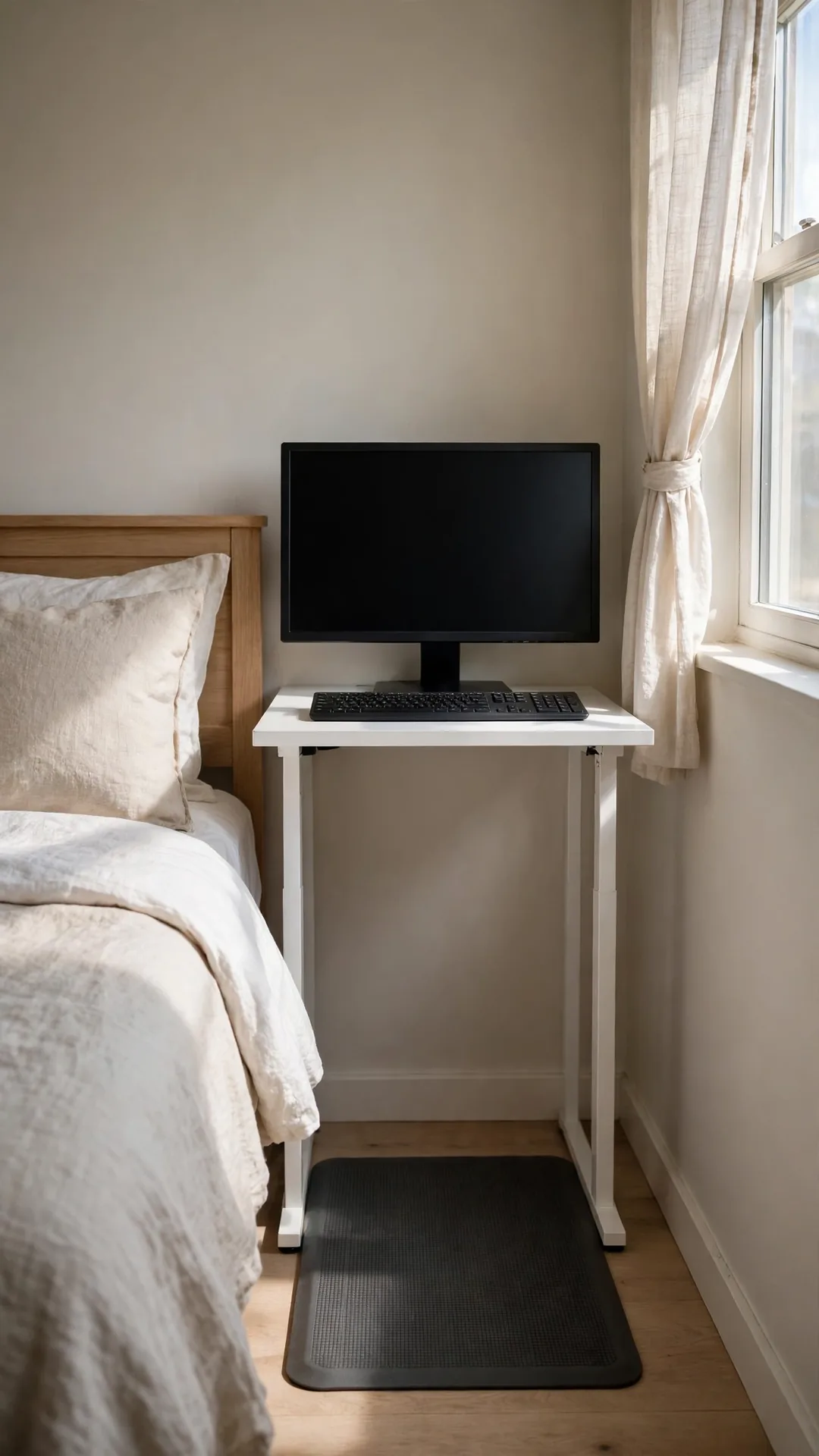
A narrow desk fits where a full desk never could. At 32 inches wide it slides into gaps between furniture. This Old House rounds up the best standing desks for small rooms and tight budgets.
How to do it:
- Measure your gap before you shop, then subtract 2 inches.
- Pick a top 20 inches deep so a laptop and a mug fit.
- Choose legs that tuck flat against the wall.
- Look for a frame with a crossbar for wobble free use.
Best for: Gaps between a bed and a wall.
Budget: $120 to $300
Quick tip: A white top makes a narrow desk look lighter.
5. Roll a Mobile Cart Desk Anywhere
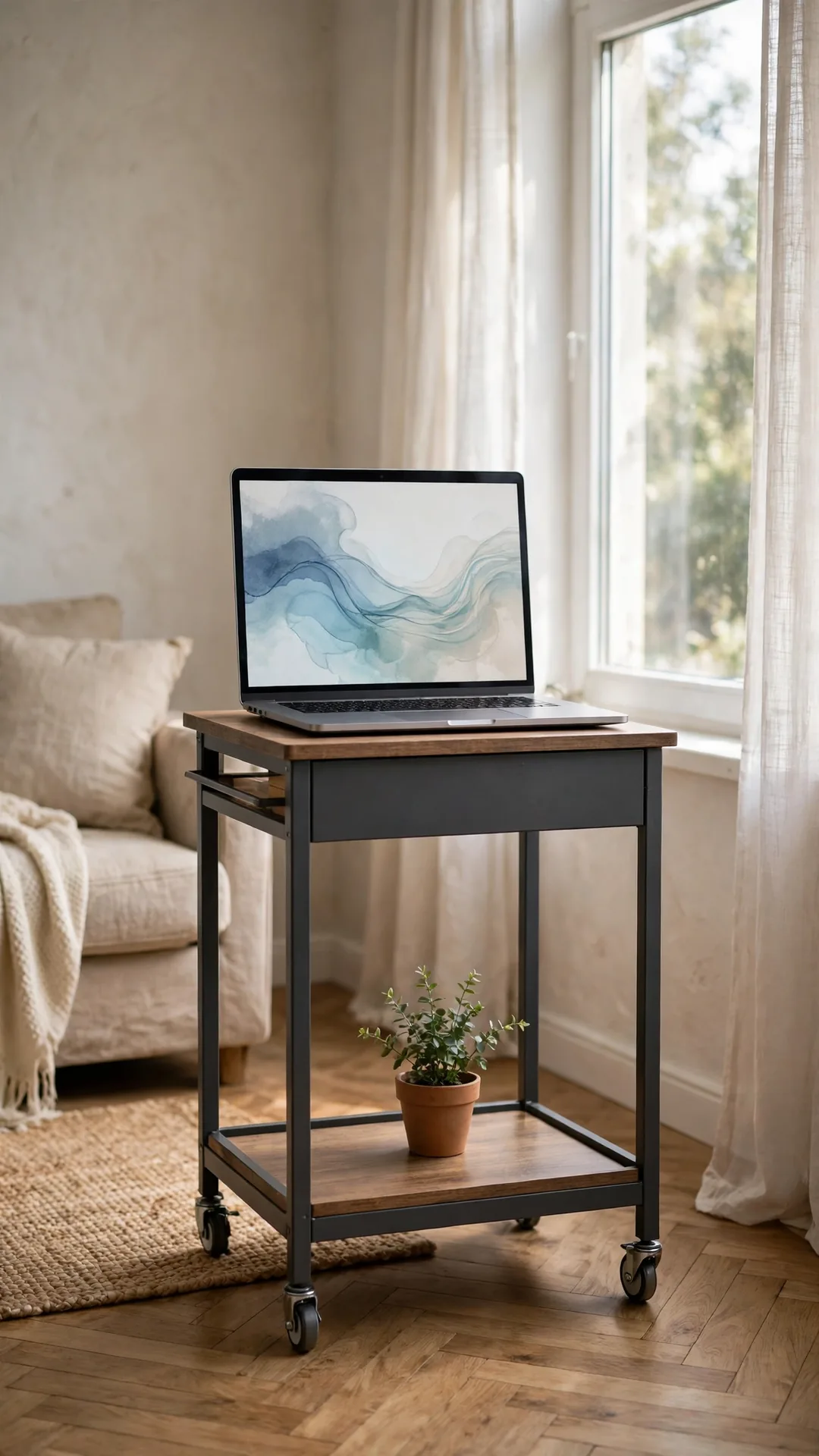
A mobile cart desk rolls to the window in the morning. It rolls back to the closet when work ends. These standing desk ideas for small offices work because the desk moves with you.
How to do it:
- Pick a cart 24 inches wide with locking wheels.
- Choose a top at least 28 inches tall for standing.
- Keep the lower shelf for a printer or books.
- Lock the wheels before you type, so it stays put.
Best for: Rooms that change use during the day.
Budget: $60 to $160
Quick tip: Coil your charger cable on the cart handle.
6. Use a Wall Mounted Drop Leaf Desk
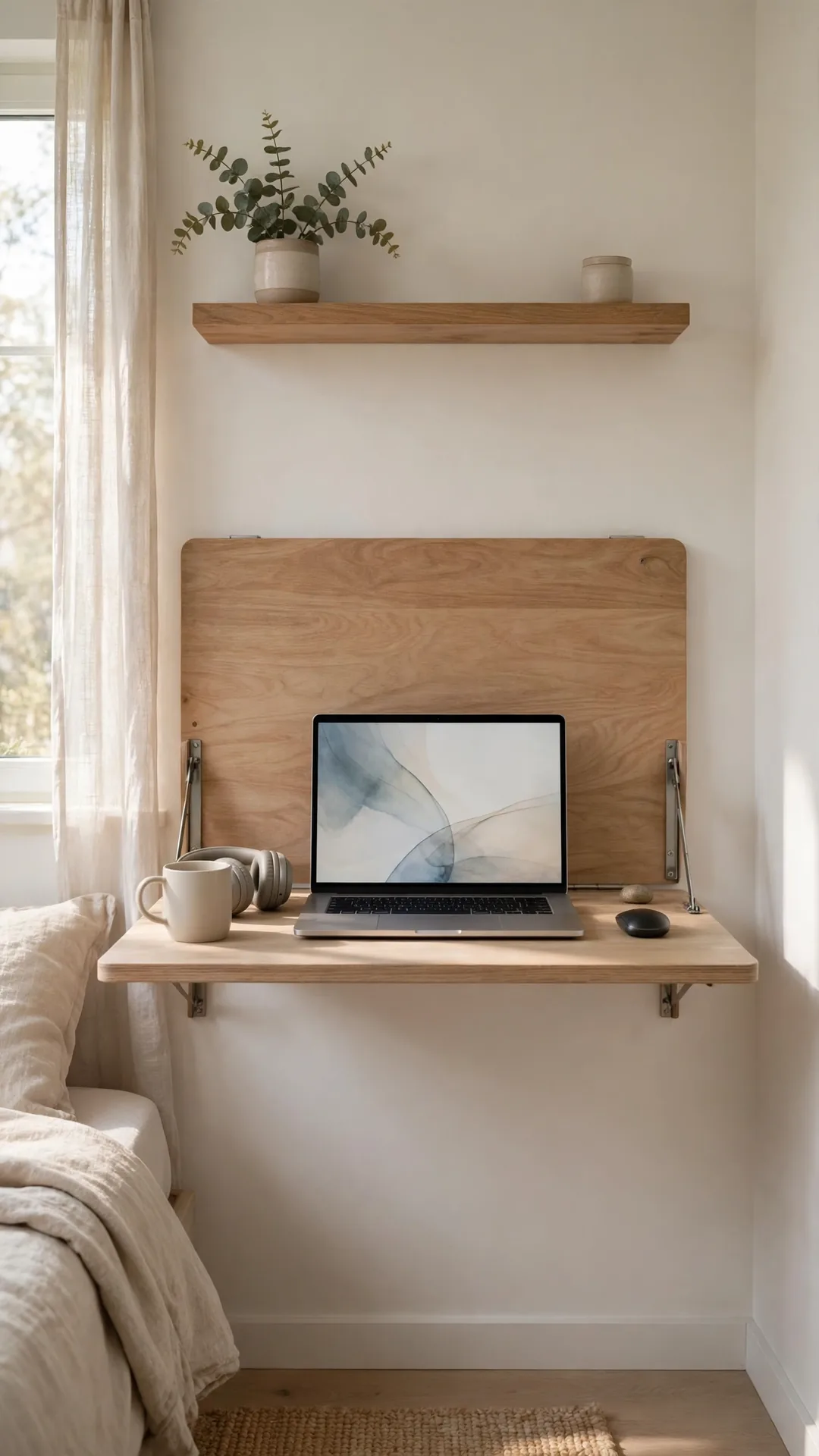
A drop leaf desk folds flat against the wall when you stop work. Open the leaf and you have a standing desk in seconds. It is the classic fix for a room with no spare floor.
How to do it:
- Mount the leaf at 40 to 44 inches high.
- Use a leaf 24 inches wide and 16 inches deep.
- Pick hinges rated for 50 pounds or more.
- Add a small catch so the leaf stays shut.
- Keep a slim stool nearby for seated breaks.
Best for: Studios and bedrooms with one free wall.
Budget: $40 to $120
Quick tip: Paint the leaf the wall color so it disappears.
7. Stand at a Kitchen Counter Edge
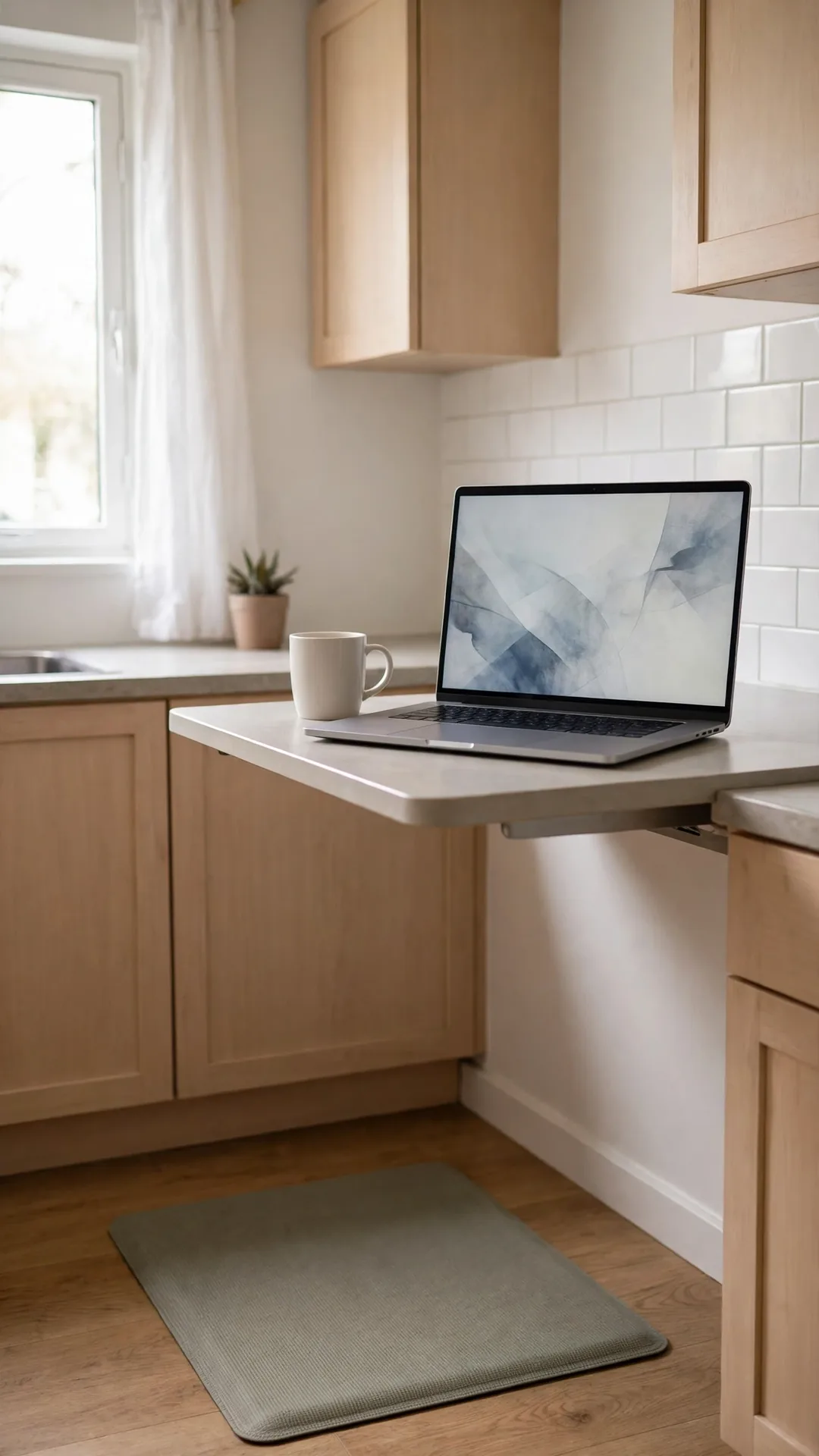
Your kitchen counter is already the right height for standing work. A laptop and a slim mat turn one end into a desk. You get a work spot with zero new furniture.
How to do it:
- Pick the counter end farthest from the stove.
- Use a slim mat under the laptop for grip.
- Keep a small tray for pens and a notebook.
- Charge from the counter outlet, not across the room.
Best for: People who work short bursts at home.
Budget: $0 to $25
Quick tip: A bar stool at the counter gives you a sit break.
8. Put a Desk Riser on a Dresser
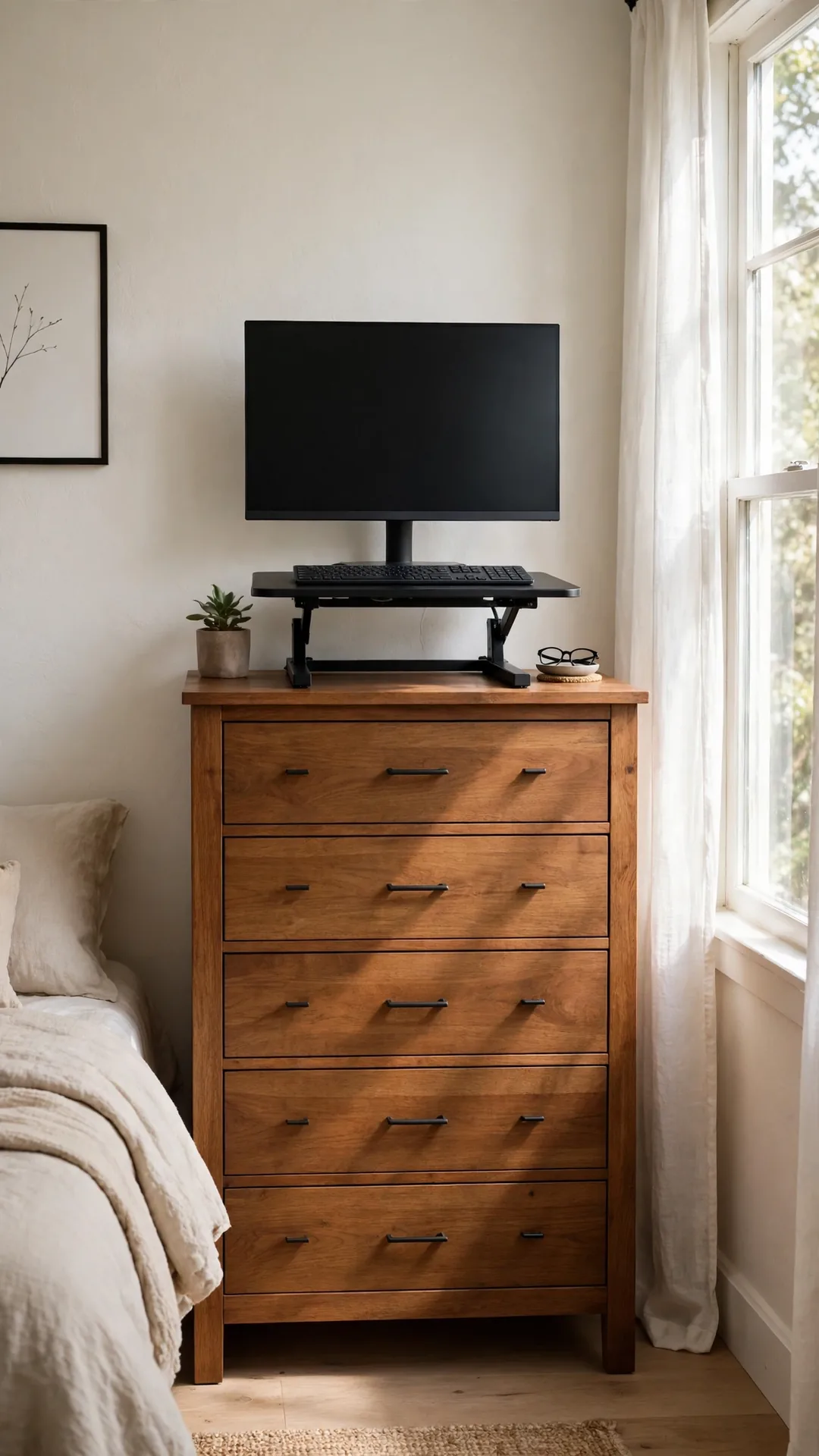
A tall dresser can hold a desk riser and become a standing desk. You already own the base, so the cost stays low. These standing desk ideas for small offices often reuse furniture you have.
How to do it:
- Pick a dresser 36 to 42 inches tall for standing.
- Set a riser on top to lift the screen to eye level.
- Keep the top drawer free for chargers and pens.
- Anchor the dresser to the wall so it cannot tip.
Best for: Bedrooms with a tall dresser near a window.
Budget: $30 to $90
Quick tip: A dresser near an outlet saves a long cable run.
9. Try a Foldable Standing Desk
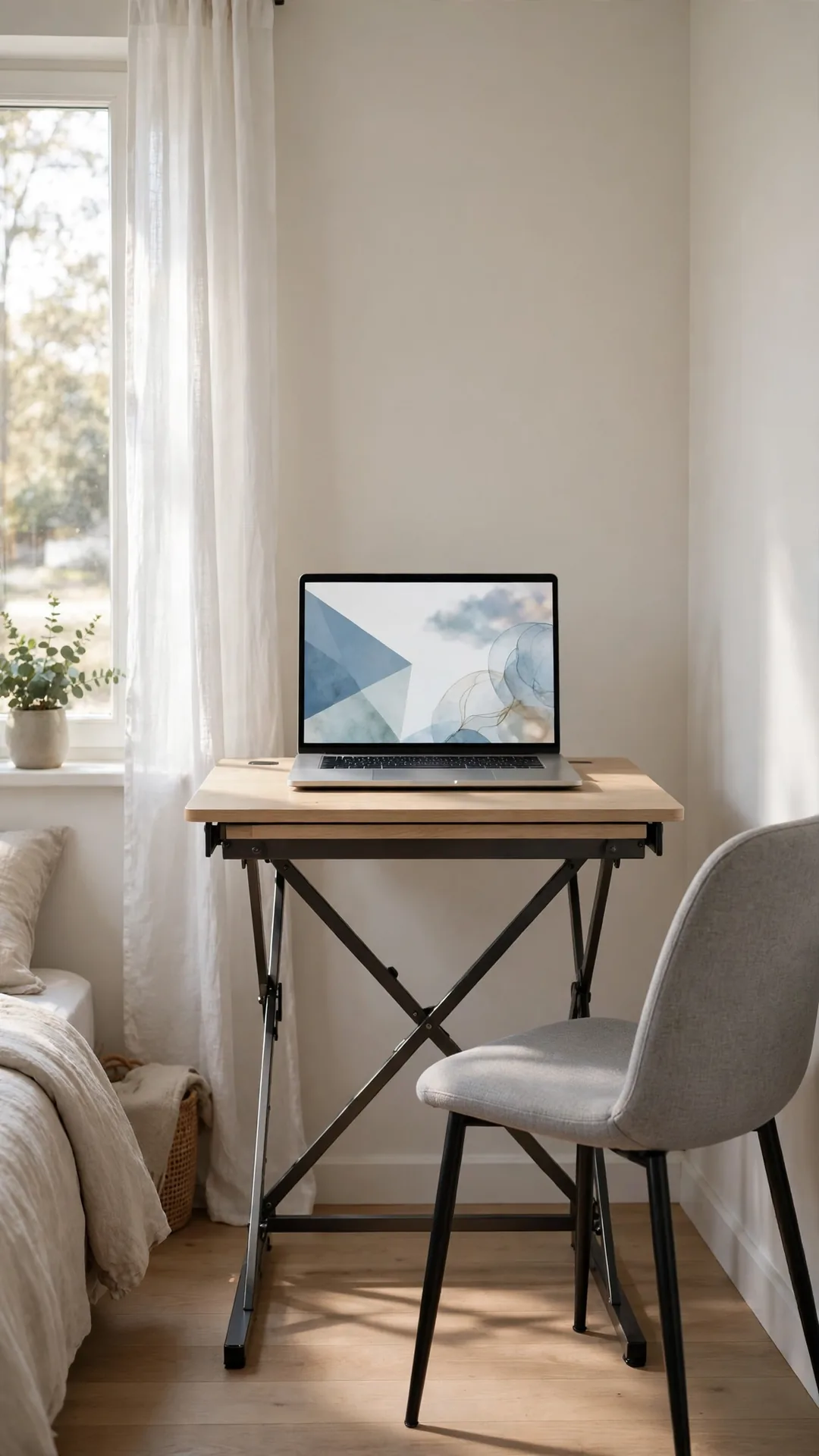
A foldable standing desk sets up in a minute and folds flat after. It leans behind a door or slides under a bed. It suits anyone who works from home two days a week.
How to do it:
- Pick a frame that folds without tools.
- Check the open height reaches 42 to 48 inches.
- Choose a top 30 inches wide for a laptop and a drink.
- Test the lock before you lean on it.
Best for: Part time home workers and guest rooms.
Budget: $70 to $180
Quick tip: Store it behind a door with a hook.
10. Use a Rolling Laptop Stand
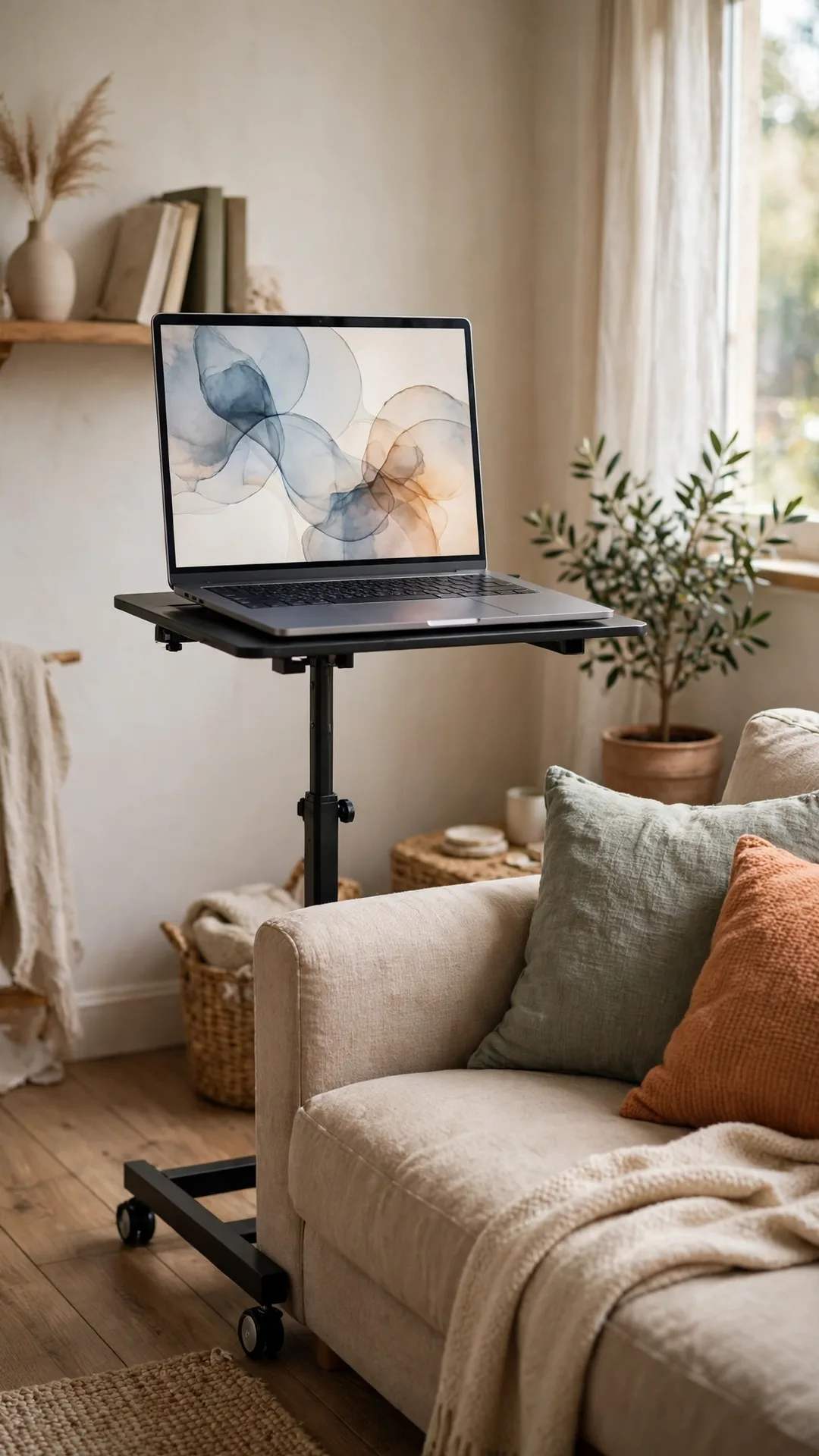
A rolling laptop stand is the smallest standing desk you can buy. It holds a laptop at standing height and tucks beside a chair. It works in a room with almost no free floor.
How to do it:
- Pick a stand that adjusts from 28 to 44 inches.
- Choose a base that slides under a sofa or bed.
- Check the tray fits a 15 inch laptop with room to spare.
- Lock the wheels when you type.
Best for: Living rooms and shared bedrooms.
Budget: $40 to $110
Quick tip: Add a wireless keyboard for better wrist angles.
11. Tuck a Desk Into a Corner
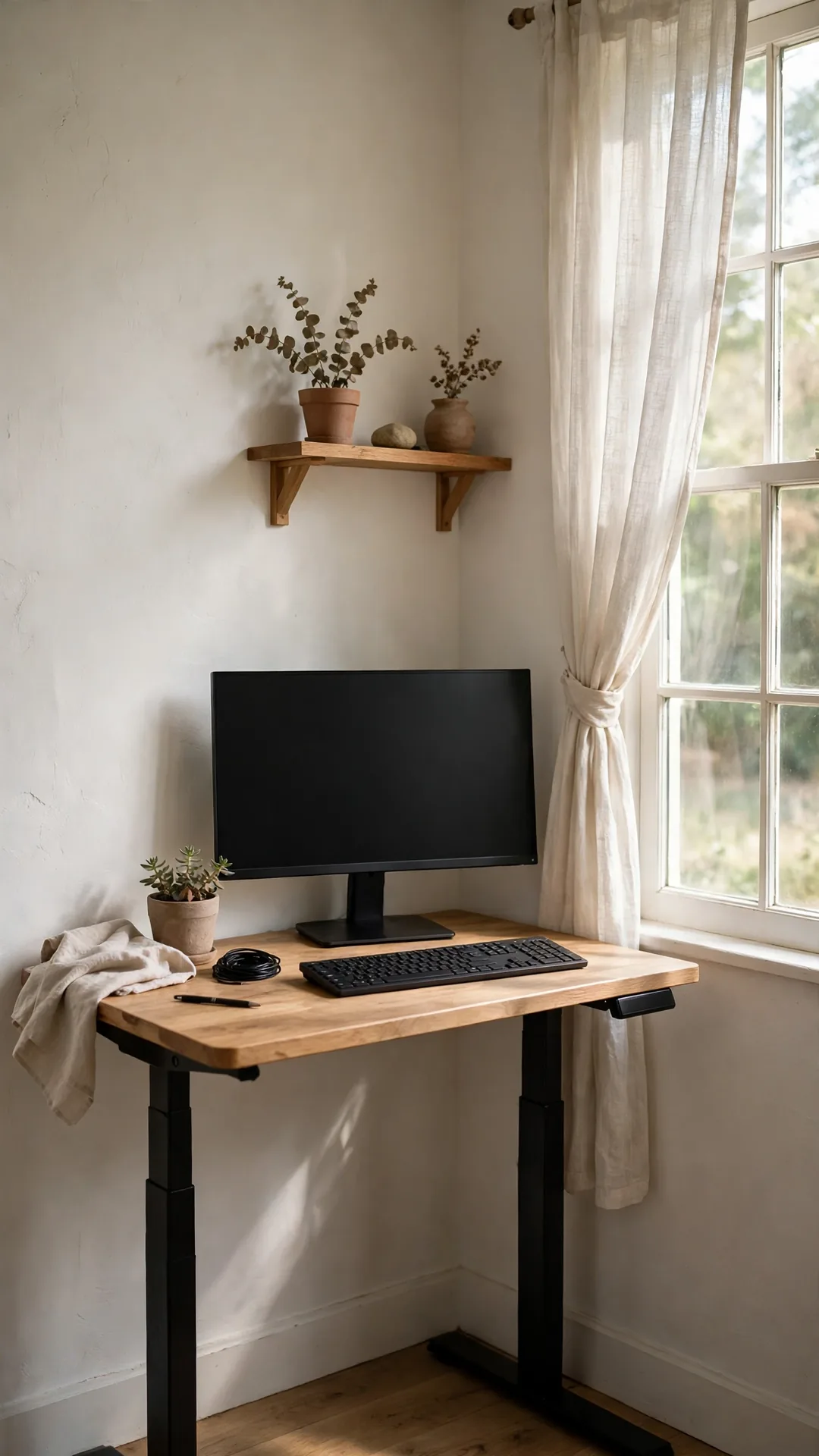
Corners waste space in most small offices. A desk tucked into one turns dead space into a work zone. It is one of the simplest standing desk ideas for small offices to try first.
How to do it:
- Measure both walls, since corners are rarely square.
- Pick a desk 36 to 42 inches wide for the corner.
- Angle the monitor so light falls from the side.
- Add a corner shelf above for books and bins.
Best for: Spare rooms with one empty corner.
Budget: $100 to $280
Quick tip: A corner desk faces the wall, so add a small mirror for light.
12. Turn a Closet Into a Standing Office
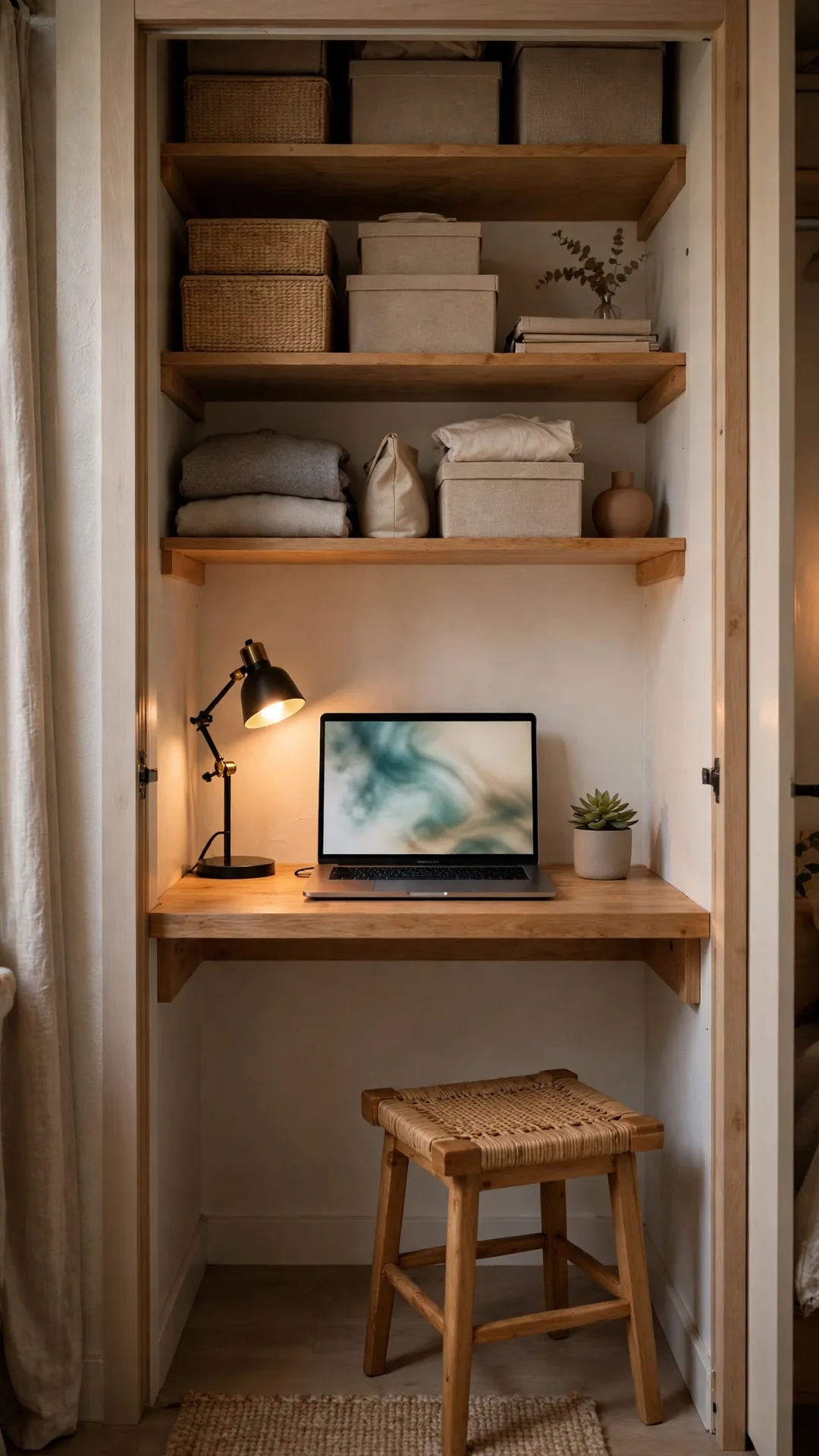
A closet with the doors off becomes a tiny standing office. A shelf at standing height serves as the desk top. Houzz rounds up home office ideas for small spaces, and closet offices top the list.
How to do it:
- Remove the doors and the hanging rod first.
- Fit a shelf 24 inches deep at elbow height.
- Add a small LED strip under the shelf above.
- Paint the closet walls a light color for brightness.
- Keep a stool in the closet for sit breaks.
Best for: Apartments with a spare closet near an outlet.
Budget: $50 to $150
Quick tip: Run a power strip from the hall outlet with a flat plug.
13. Use an Alcove as a Work Nook
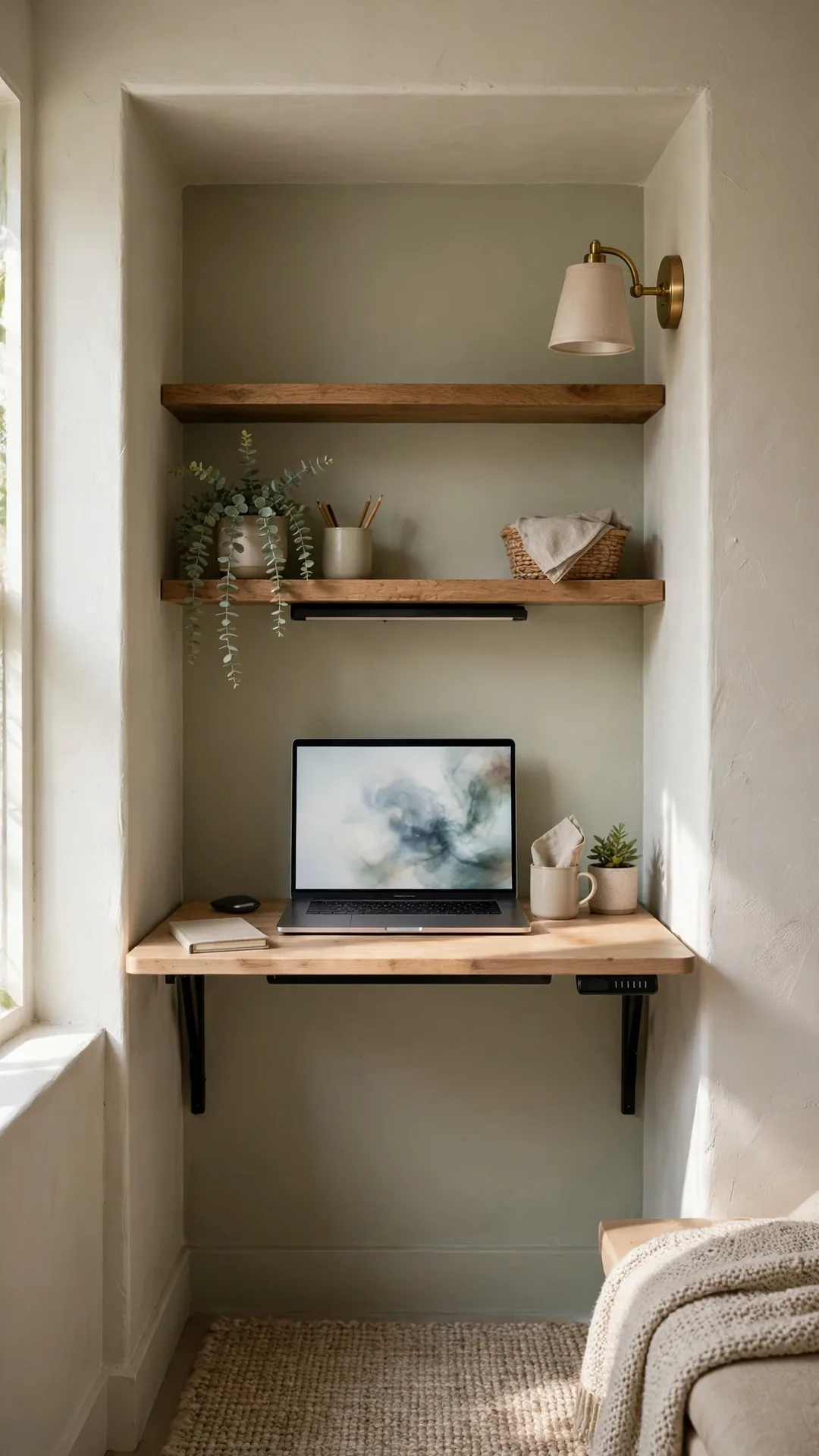
An alcove is a ready made office nook with three walls. A desk across the opening uses every inch of it. The walls block noise and mark the work zone.
How to do it:
- Measure the alcove width and order a desk 2 inches narrower.
- Fit shelves on the side walls for storage.
- Add a plug in wall light above the desk.
- Keep the desk top clear, since the nook is small.
Best for: Older homes with odd recesses and nooks.
Budget: $90 to $240
Quick tip: Paint the alcove one shade deeper to set it apart.
14. Fit a Desk Under a Window
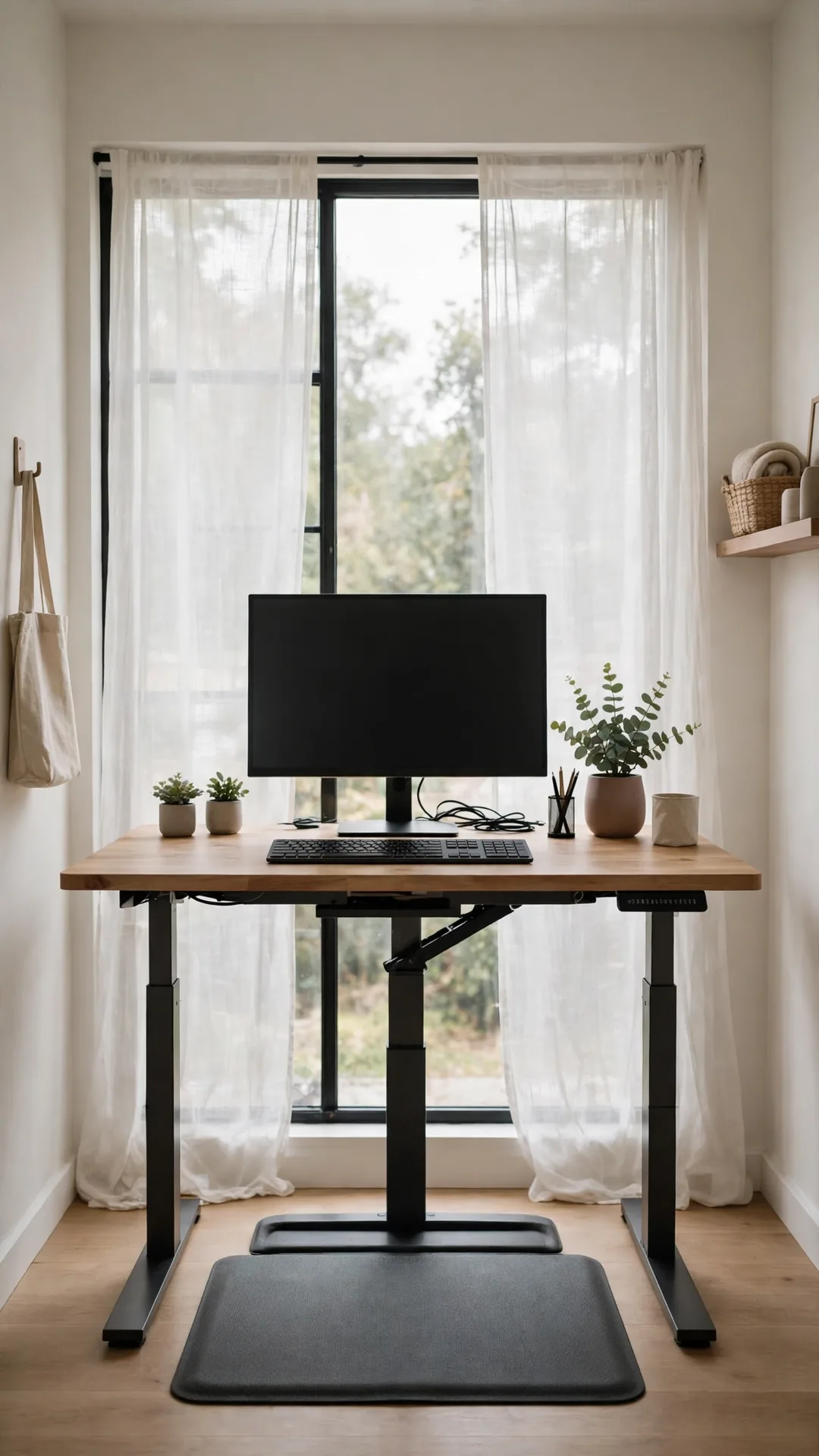
A desk under a window gives you daylight and a view while you stand. The light falls on your work, not on your screen. Few standing desk ideas for small offices feel this bright.
How to do it:
- Pick a desk no taller than the window sill.
- Set the screen at a right angle to the glass.
- Add a sheer curtain to cut glare at noon.
- Keep plants off the sill so light stays clear.
Best for: Rooms with one wide window.
Budget: $100 to $280
Quick tip: A low desk keeps the window view open.
15. Work From a Hallway Niche
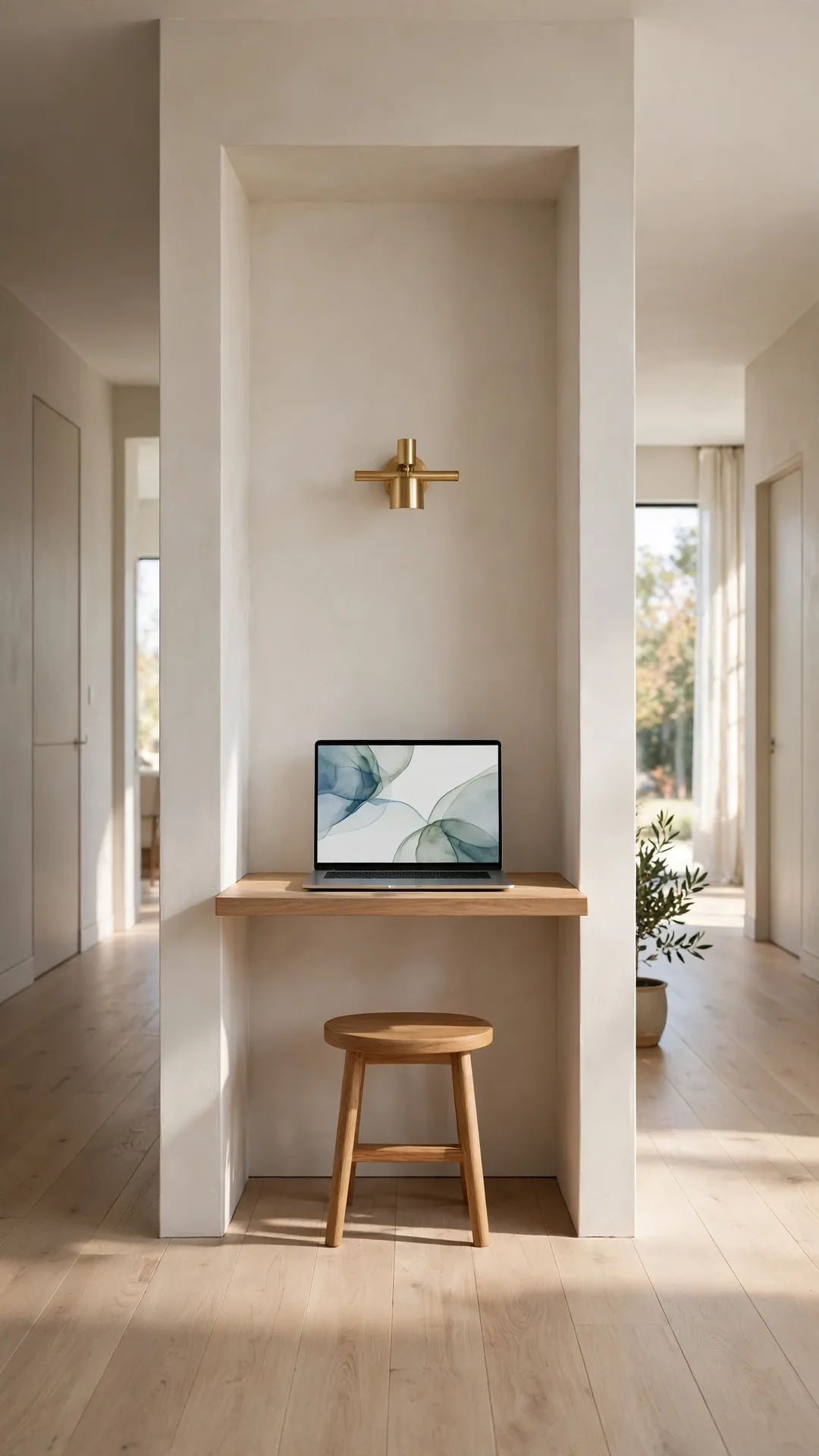
A wide hallway can hold a slim standing desk against one wall. You walk past it all day, so it never feels hidden. It works best in halls at least 42 inches wide.
How to do it:
- Pick a desk 16 inches deep so the hall stays open.
- Mount a shelf desk to keep the floor clear.
- Add a wall light above, since halls run dark.
- Keep the walkway 30 inches wide at least.
Best for: Homes with a wide hall near the living room.
Budget: $60 to $180
Quick tip: Hang a small mirror opposite to bounce light in.
16. Claim the Space Beside the Bed
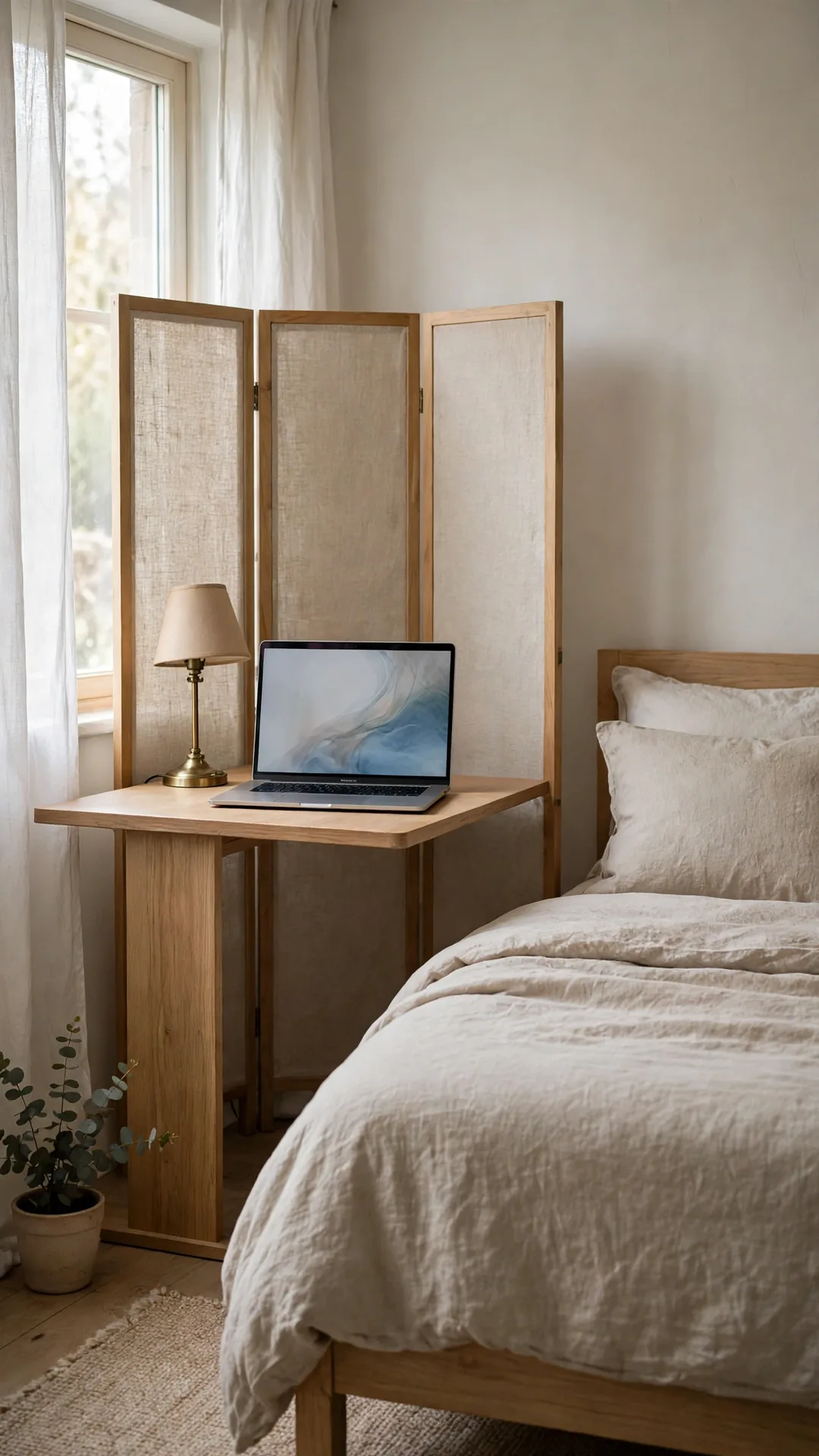
The wall beside your bed can hold a slim standing desk. You work a few steps from where you sleep. A curtain or screen can hide it at night.
How to do it:
- Pick a desk 30 inches wide to fit beside a bed.
- Leave 24 inches of clear floor to stand in.
- Use a quiet electric lift so it never wakes anyone.
- Keep a small lamp with a warm bulb on top.
Best for: Studios and one bedroom apartments.
Budget: $110 to $300
Quick tip: A folding screen hides the desk after hours.
17. Slide a Desk Behind the Sofa
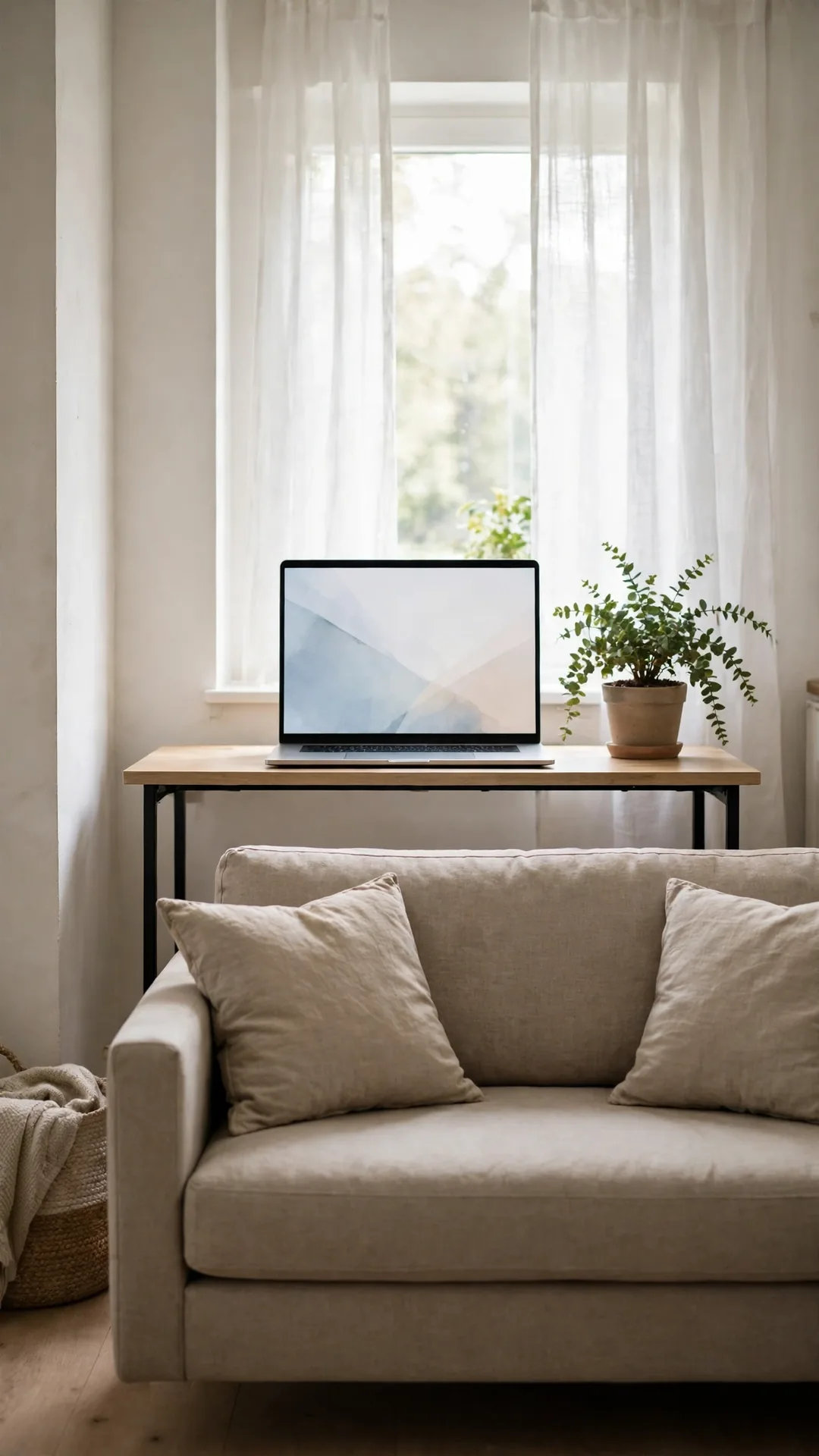
The space behind a sofa is often empty. A slim desk there turns it into a work zone with a view of the room. These standing desk ideas for small offices hide work in plain sight.
How to do it:
- Pick a desk 16 to 18 inches deep for the gap.
- Match the desk height to the sofa back.
- Run one power strip along the sofa base.
- Add a small plant at one end for style.
Best for: Living rooms with a sofa off the wall.
Budget: $90 to $260
Quick tip: Keep cables behind the sofa so nobody trips.
18. Divide a Room With Your Desk
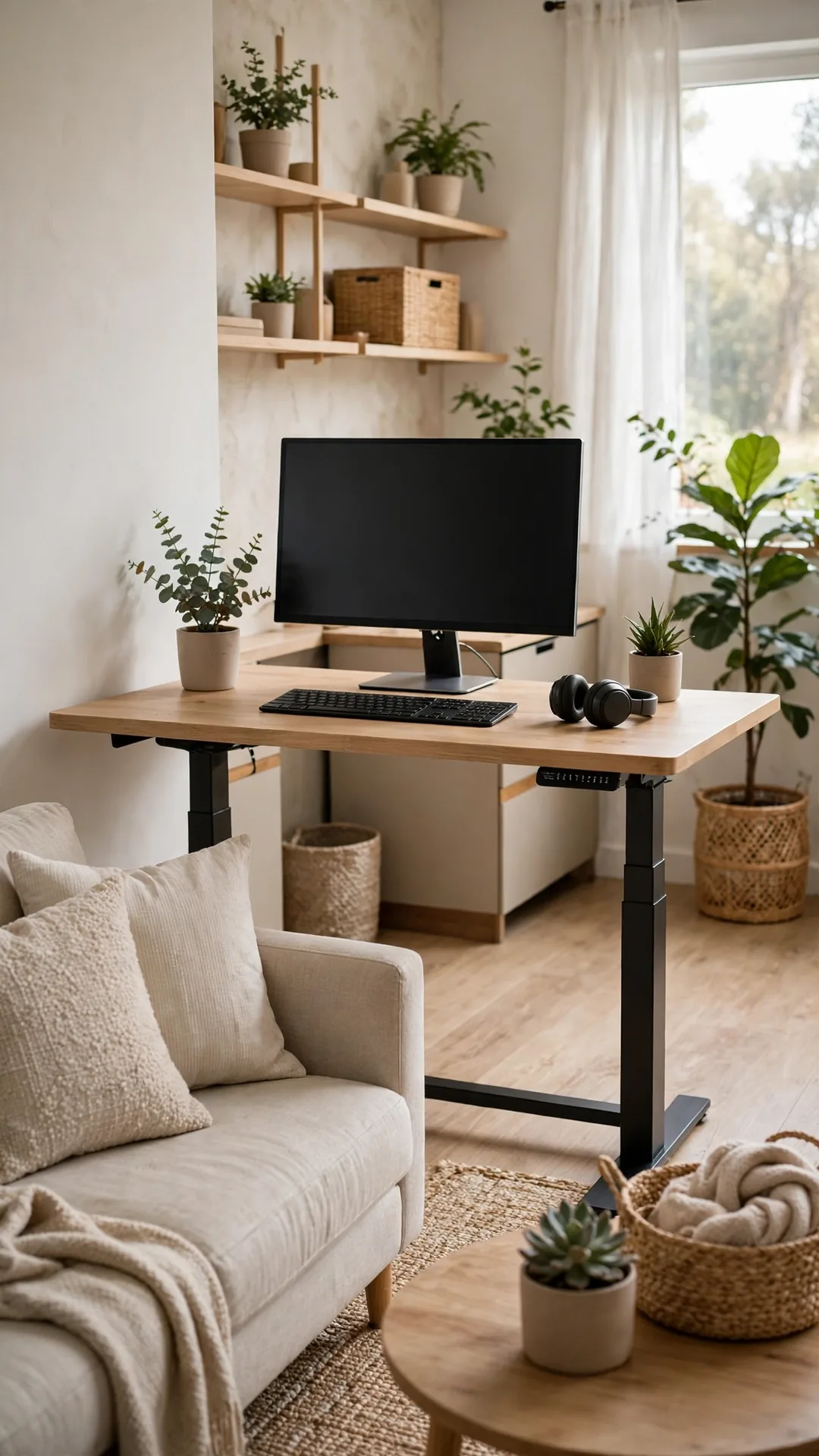
A standing desk can split one room into two zones. Put the desk back to the sofa and the office side appears. Pair it with these small office space ideas to finish the work side.
How to do it:
- Pick a desk with a finished back, not raw frame.
- Set the desk at a right angle to the wall.
- Add a rug under the desk to mark the zone.
- Keep the walkway around it 30 inches wide.
Best for: Studios that need a clear work zone.
Budget: $120 to $320
Quick tip: A tall plant at the desk end softens the split.
19. Choose a 40 Inch Electric Desk
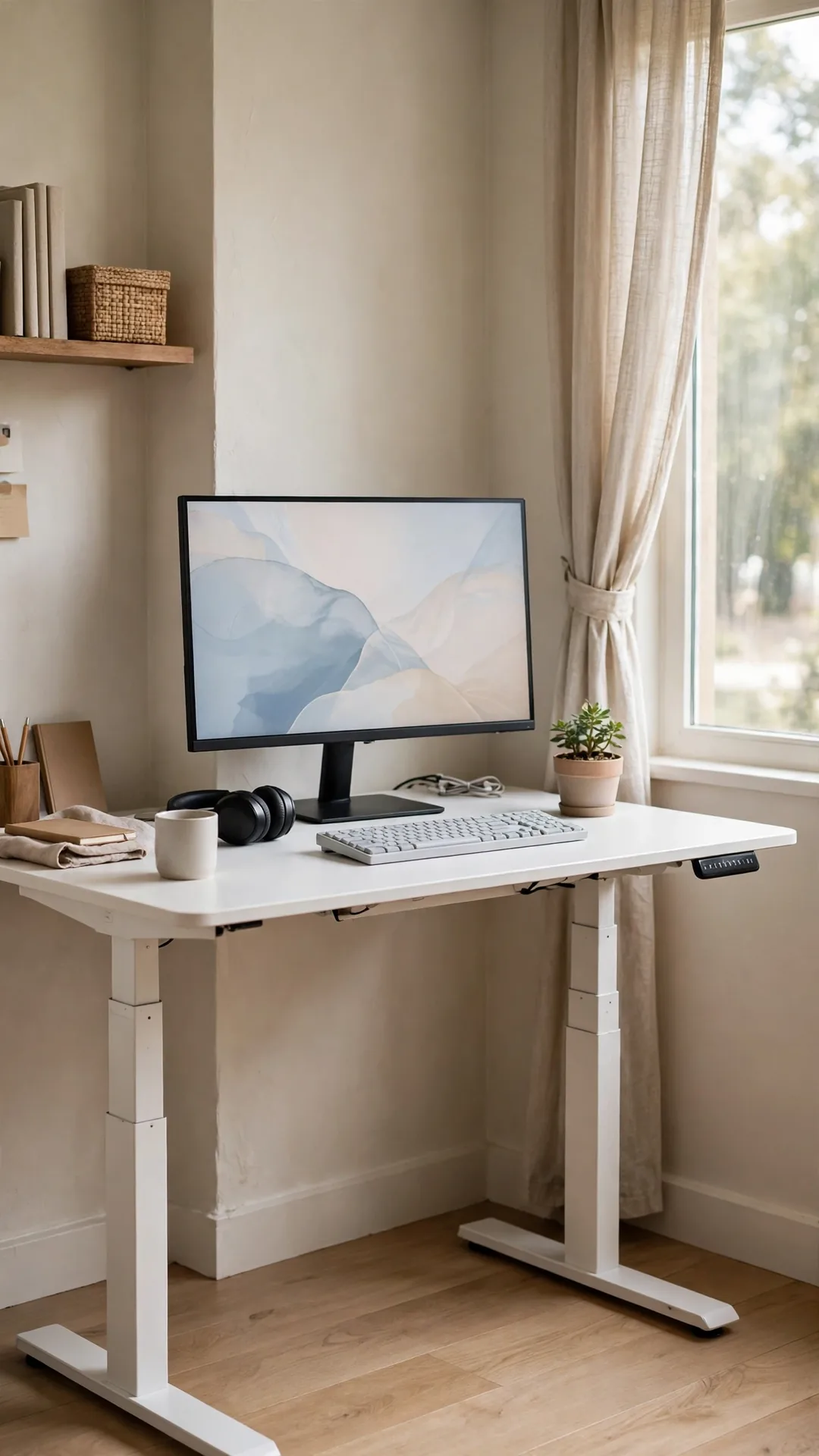
A 40 inch electric desk is the sweet spot for small rooms. It holds a monitor, a keyboard and a notebook. The motor lifts it from sitting to standing in seconds.
How to do it:
- Check the lift range, usually 28 to 48 inches.
- Pick a two motor frame for smooth, quiet lifts.
- Look for memory buttons for your two heights.
- Keep 4 inches of clearance behind it for cables.
Best for: Full time home workers with one wall free.
Budget: $200 to $450
Quick tip: Note your sit and stand heights on tape inside a drawer.
20. Try a Manual Crank Desk Frame
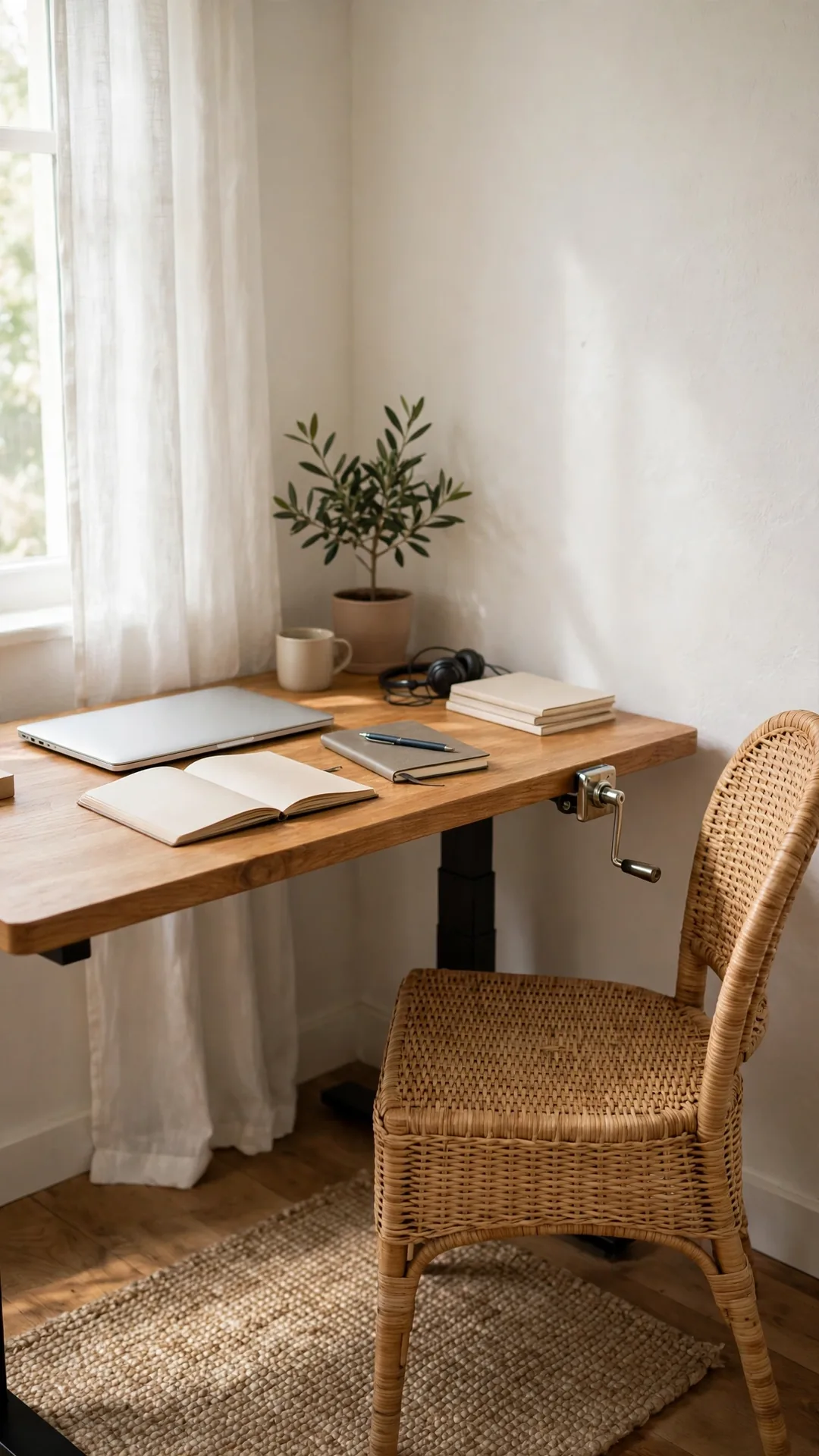
A manual crank desk costs less than an electric one. You turn a handle to raise or lower the top. These standing desk ideas for small offices prove you do not need a motor.
How to do it:
- Pick a crank that folds flat under the top.
- Check the lift range reaches 44 inches or more.
- Turn the crank in short bursts for even lifts.
- Keep the handle on the side you reach most.
Best for: Budget buyers who stand once or twice a day.
Budget: $150 to $320
Quick tip: A crank desk needs no outlet, so it fits any wall.
21. Mount a Floating Shelf Desk
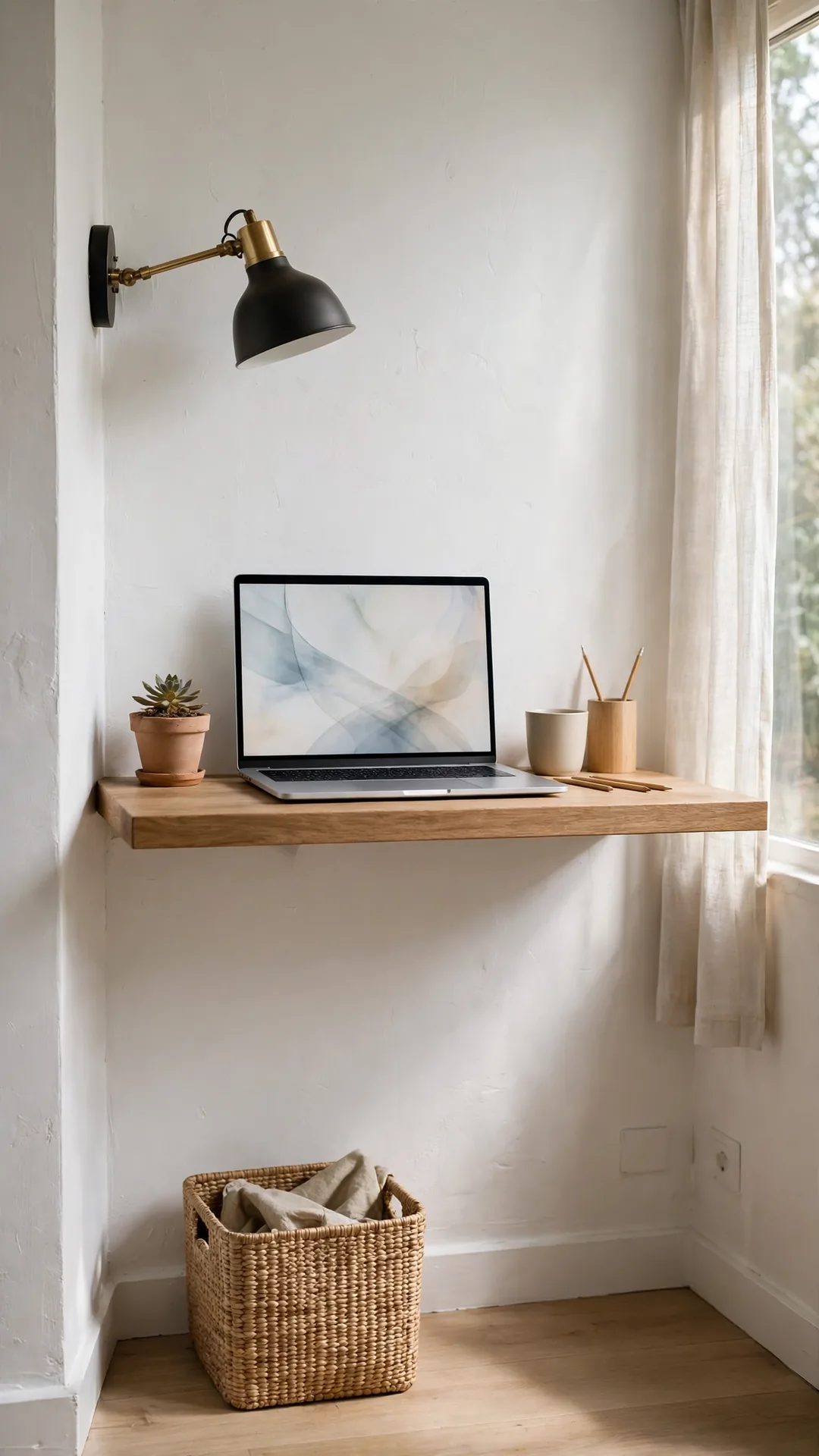
A floating shelf desk bolts to the wall and frees the floor below. It looks light and keeps a small room open. Your legs get full room to shift while you stand.
How to do it:
- Use a shelf 30 inches wide and 20 inches deep.
- Bolt it into studs, not drywall alone.
- Mount it at 40 to 44 inches high.
- Pick a solid wood shelf at least 1.5 inches thick.
Best for: Small rooms with solid walls and one free wall.
Budget: $50 to $140
Quick tip: A floating desk leaves room for a bin below.
22. Use a Slim Console Table as a Desk
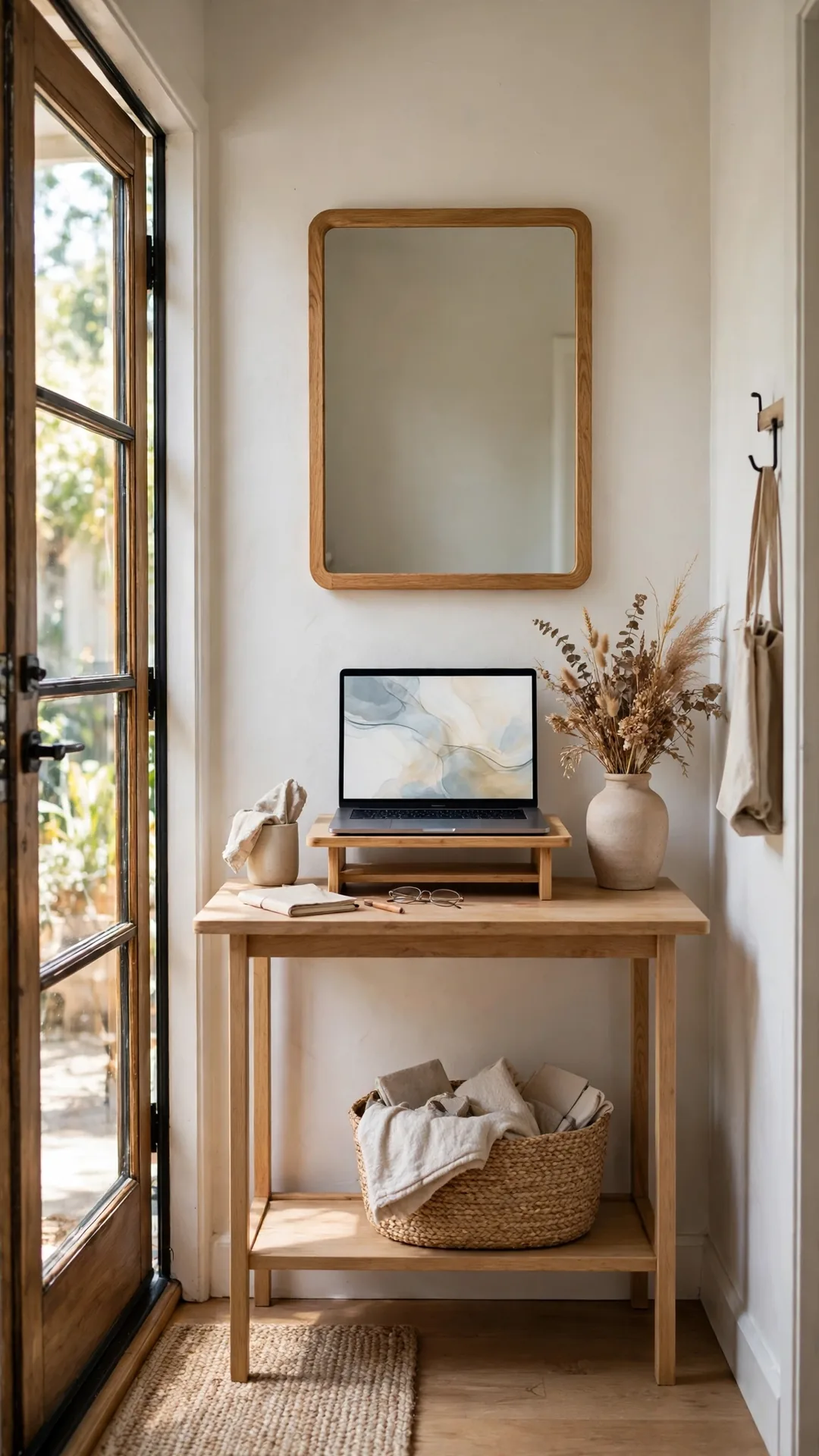
A slim console table makes a fine standing desk in a pinch. At 30 to 36 inches tall, it needs only a riser on top. These home desk ideas for a small space show more furniture swaps like this one.
How to do it:
- Pick a console 12 to 14 inches deep for tight spots.
- Add a monitor riser to reach eye level.
- Keep the lower shelf for a basket of supplies.
- Anchor it to the wall if it feels wobbly.
Best for: Entryways and halls that double as offices.
Budget: $70 to $200
Quick tip: A console behind a sofa works as a desk by day.
23. Pick a Desk With a Footrest Bar
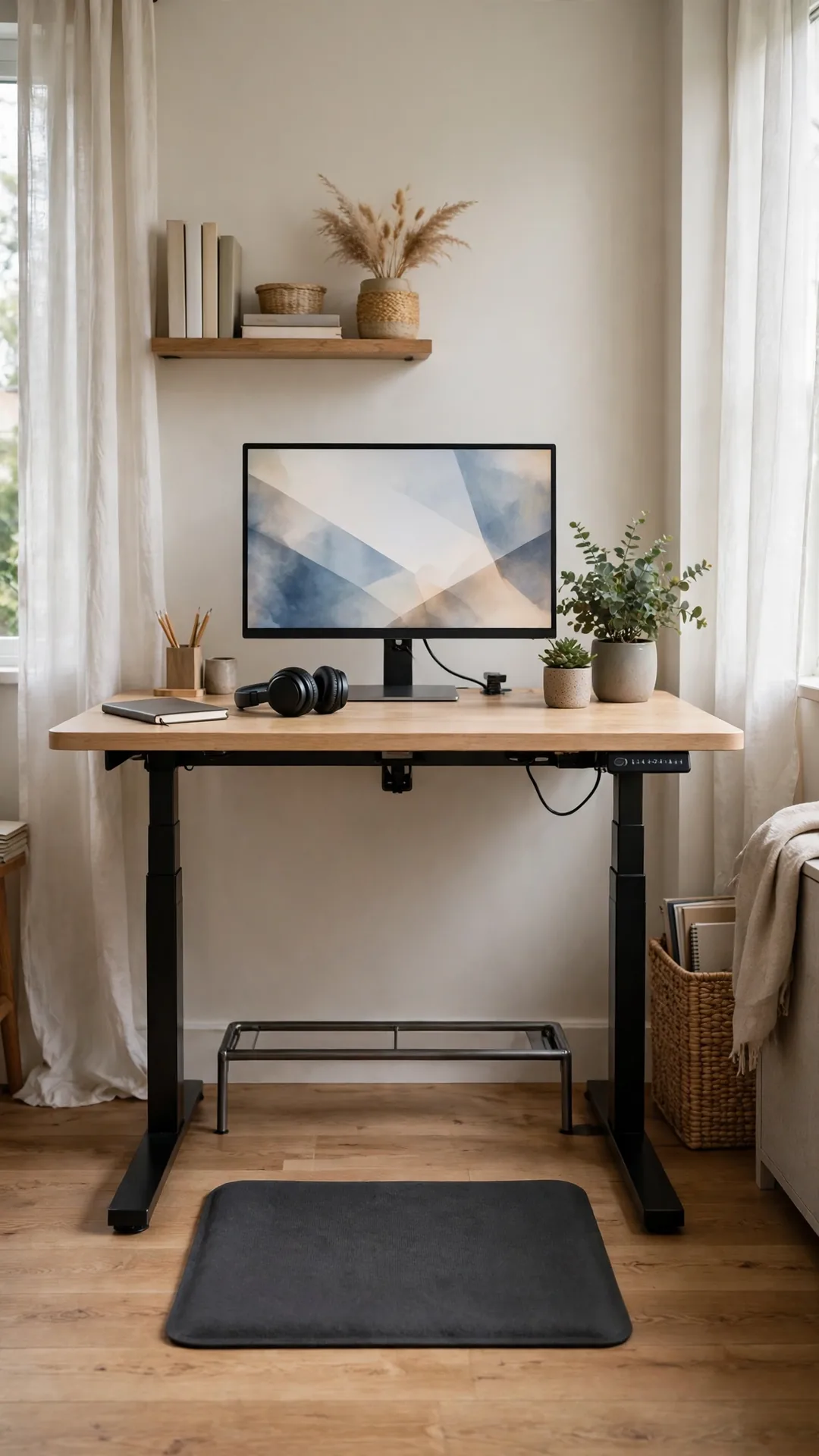
A footrest bar under the desk gives your feet a place to shift. You rest one foot up while you stand and work. These standing desk ideas for small offices care about comfort, not just space.
How to do it:
- Pick a bar 8 to 10 inches off the floor.
- Look for a bar with a non slip grip.
- Swap feet every 15 minutes or so.
- Add a mat under the bar for soft landings.
Best for: People who stand for long calls.
Budget: $120 to $300
Quick tip: A footrest bar doubles as a stretch bar.
24. Add a Desk With Built In Shelves
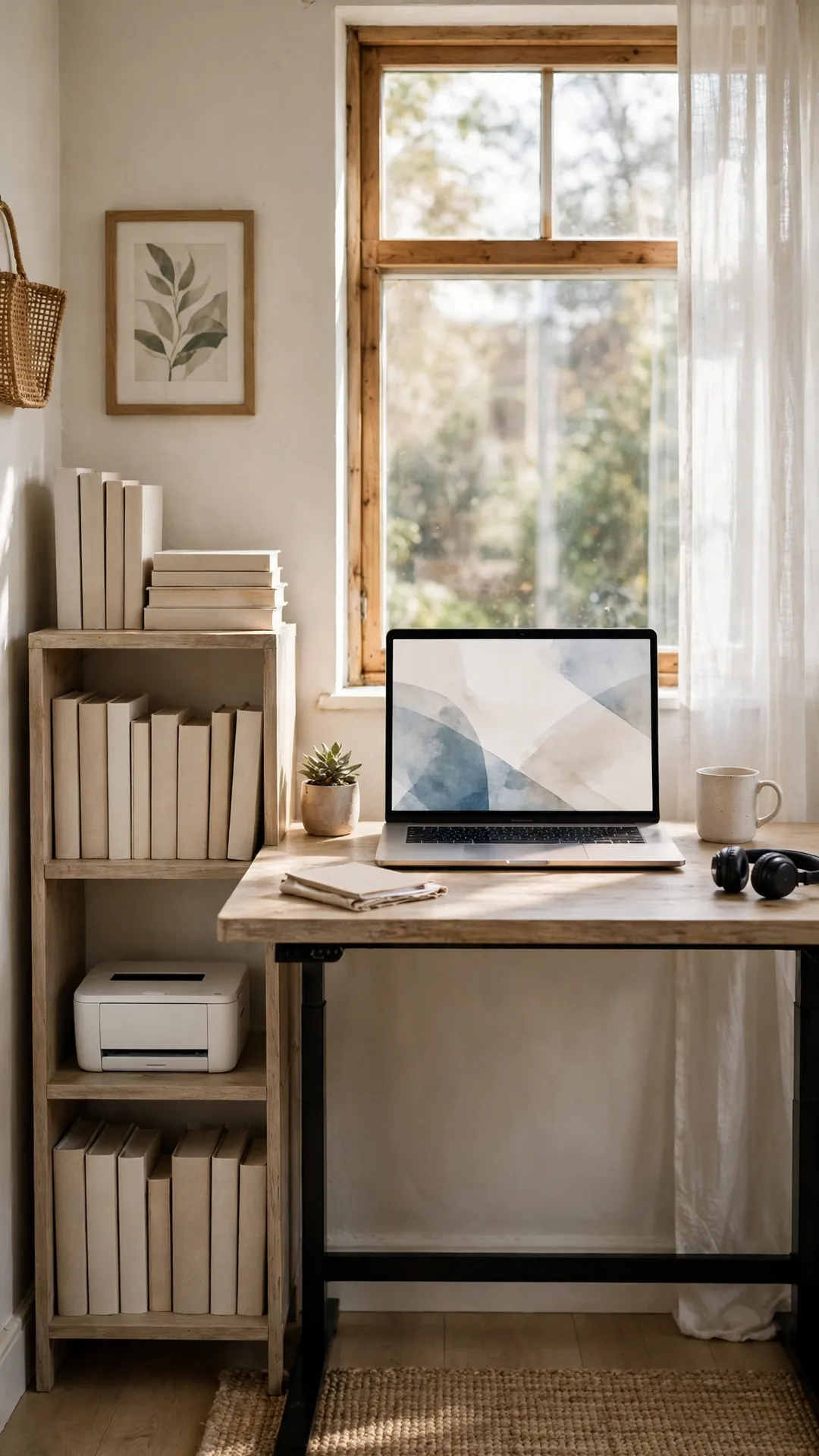
A desk with shelves built into the frame saves a bookcase. Books, bins and a printer live within reach. You keep the floor clear for standing room.
A 48 inch frame with shelves costs less than a desk plus a bookcase.
How to do it:
- Pick a frame with two shelves on one side.
- Keep heavy books on the lowest shelf.
- Leave one shelf open for a printer tray.
- Measure the full width before you order.
Best for: Small offices with no room for a bookcase.
Budget: $180 to $420
Quick tip: Put daily items at elbow height, not up high.
25. Choose a Desk With a Slim Profile
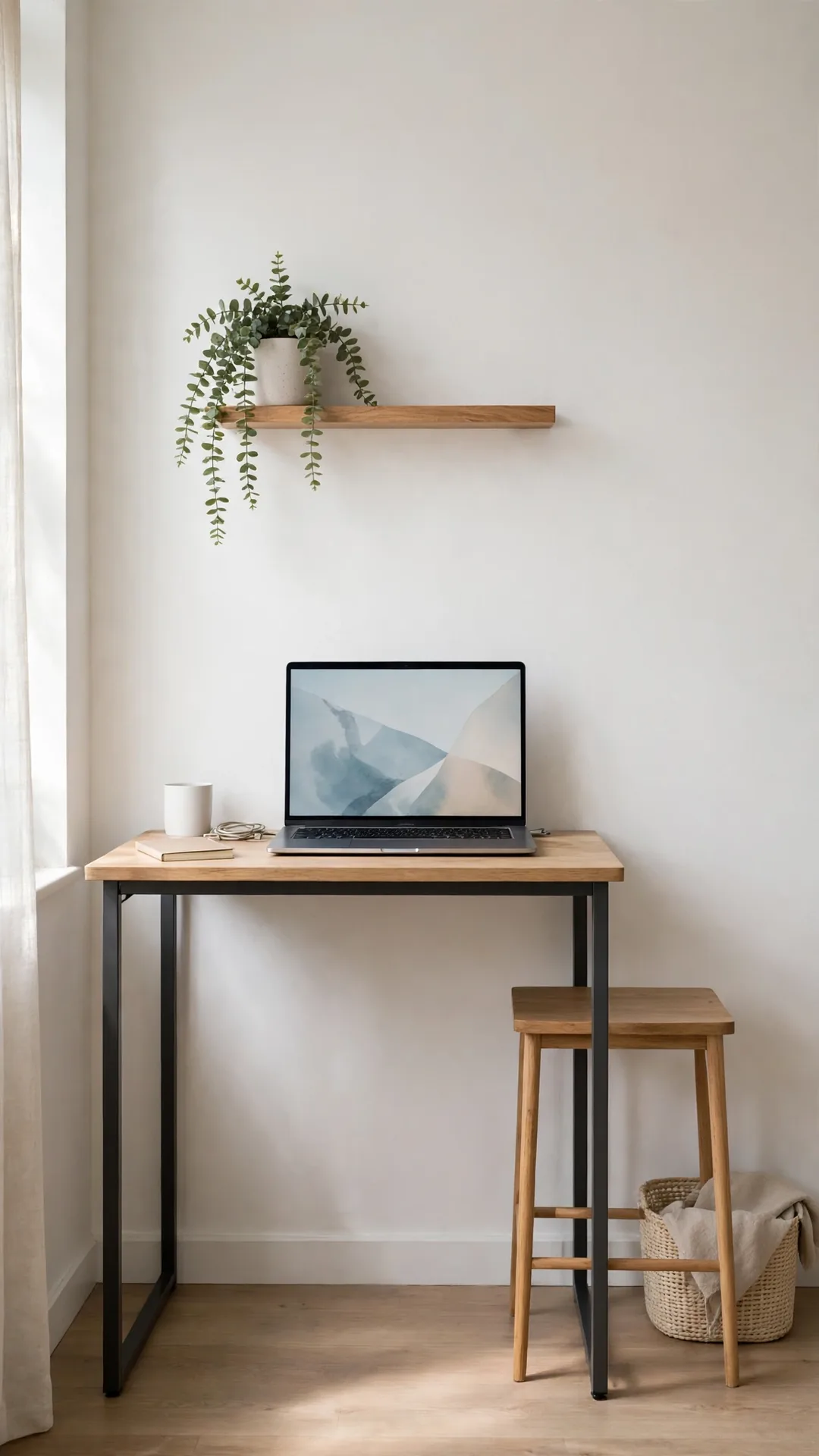
A slim profile desk is only 20 inches deep from front to back. It fits a laptop and a notebook and nothing more. That limit keeps the top tidy by default.
How to do it:
- Pick a top 36 inches wide and 20 inches deep.
- Mount the monitor on an arm to save depth.
- Keep a pen cup, not a tray, on the top.
- Use a laptop stand to lift the screen.
Best for: Narrow rooms and tight wall gaps.
Budget: $140 to $350
Quick tip: A slim desk pairs well with a wall shelf above.
26. Use a Corner L Shaped Standing Desk
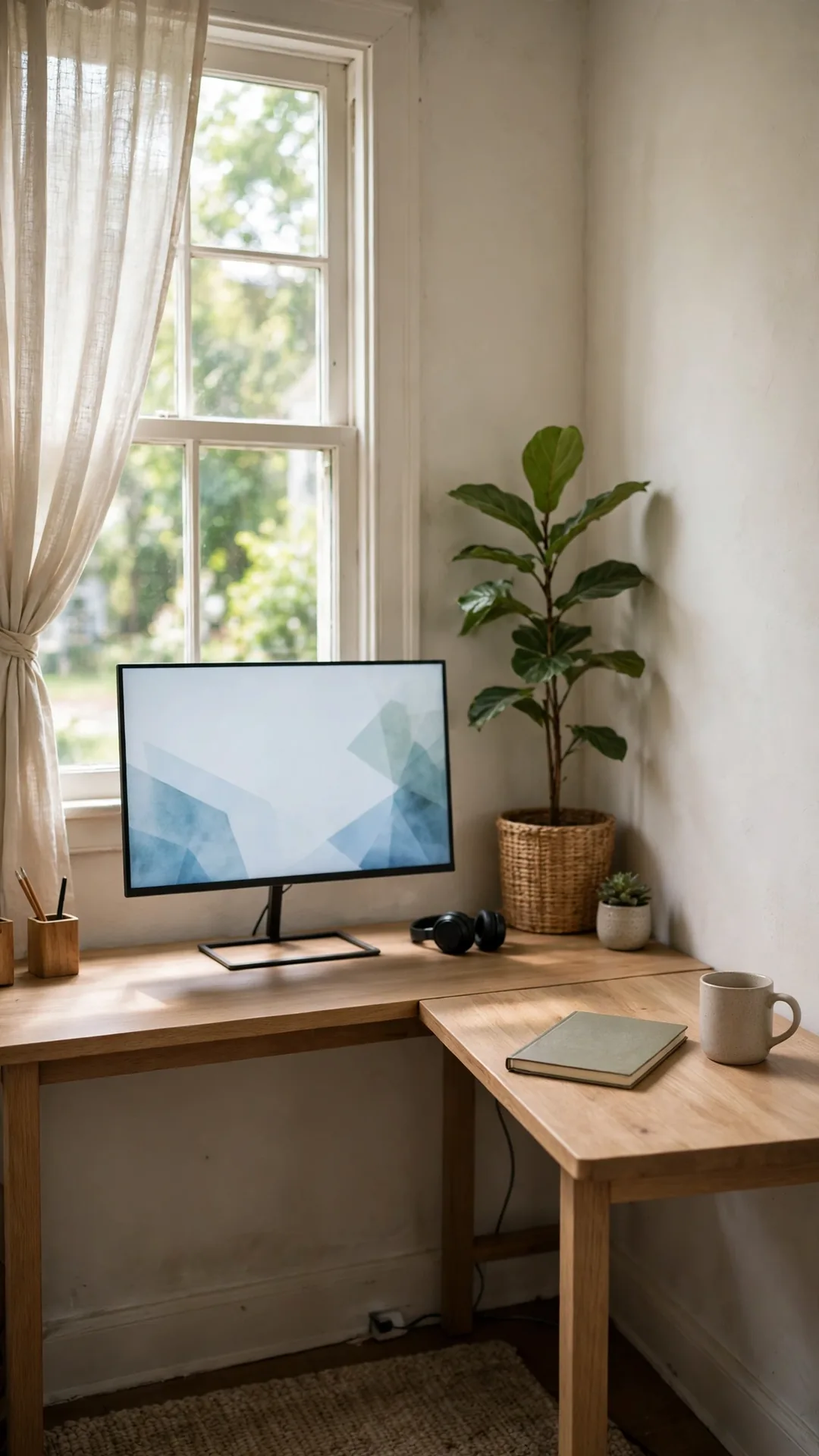
An L shaped desk wraps a corner and doubles your work surface. One arm holds the screen, the other holds notes. Pair it with these small space computer desk ideas for the full setup.
How to do it:
- Pick an L desk 48 inches on the long arm.
- Put the monitor on the arm with the best light.
- Keep the short arm clear for writing.
- Leave 30 inches of floor in front to stand.
Best for: Corner offices that need two work zones.
Budget: $220 to $500
Quick tip: A corner L desk needs one outlet, not two.
27. Try a Desk With a Keyboard Tray
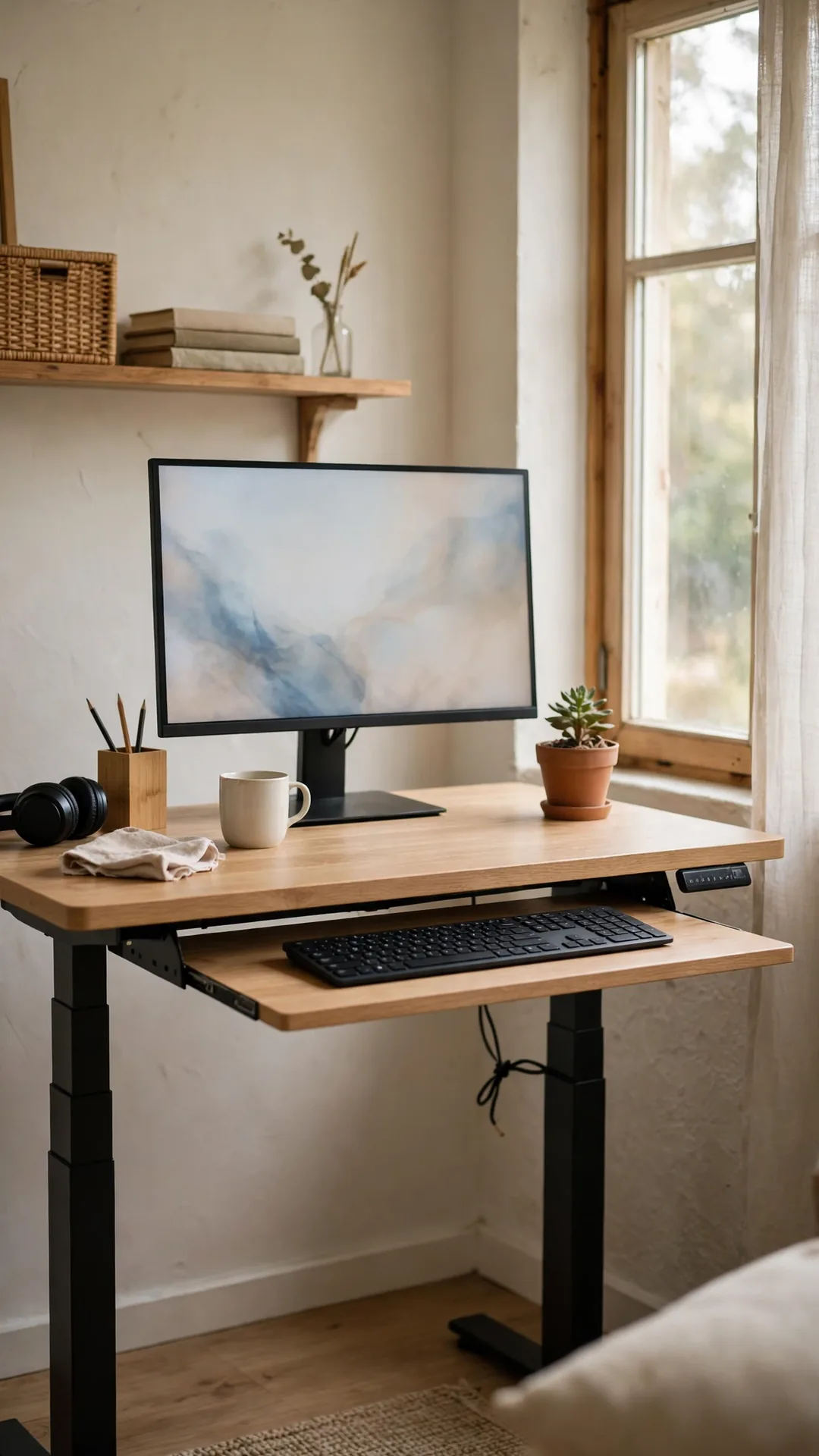
A keyboard tray slides under the desk top and frees the surface. Your wrists stay straight while your screen stays high. It is a small add on with a big comfort payoff.
How to do it:
- Pick a tray 24 inches wide for a full keyboard.
- Mount it 3 inches below the desk top.
- Check the slide holds 10 pounds or more.
- Add a wrist rest on the tray edge.
Best for: People who type all day at a standing desk.
Budget: $30 to $80
Quick tip: A tray lets you drop the keyboard without lowering the desk.
28. Set Your Screen at Eye Level
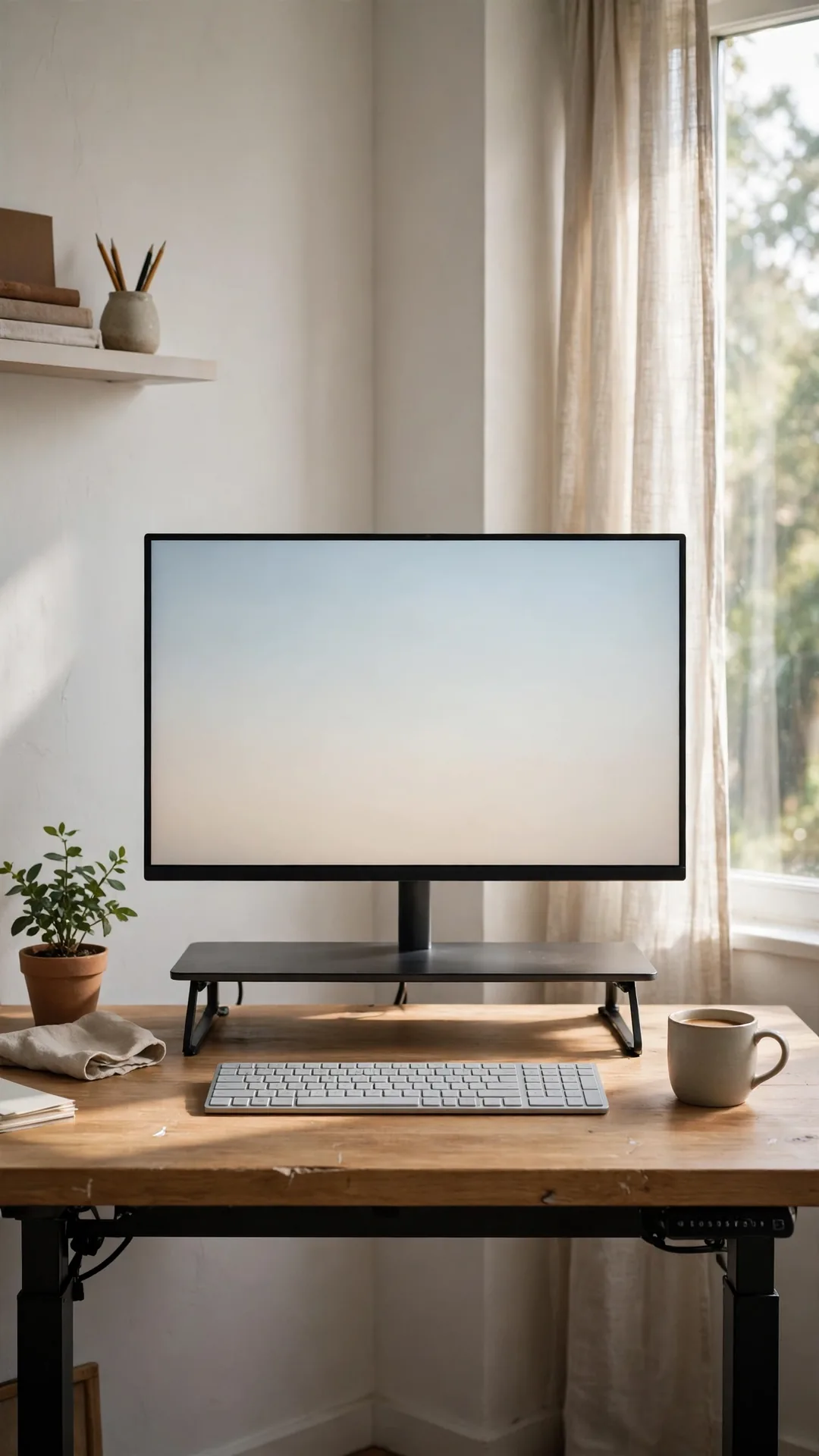
Your screen should sit at eye level when you stand. A monitor at the wrong height strains your neck fast. A riser or an arm fixes it in minutes.
How to do it:
- Set the screen top level with your eyes.
- Keep the screen 20 to 26 inches from your face.
- Tilt the screen back 10 to 20 degrees.
- Use a stack of books to test the height first.
Best for: Anyone with neck pain at a standing desk.
Budget: $20 to $90
Quick tip: Your eyes should meet the top third of the screen.
29. Stand on an Anti Fatigue Mat
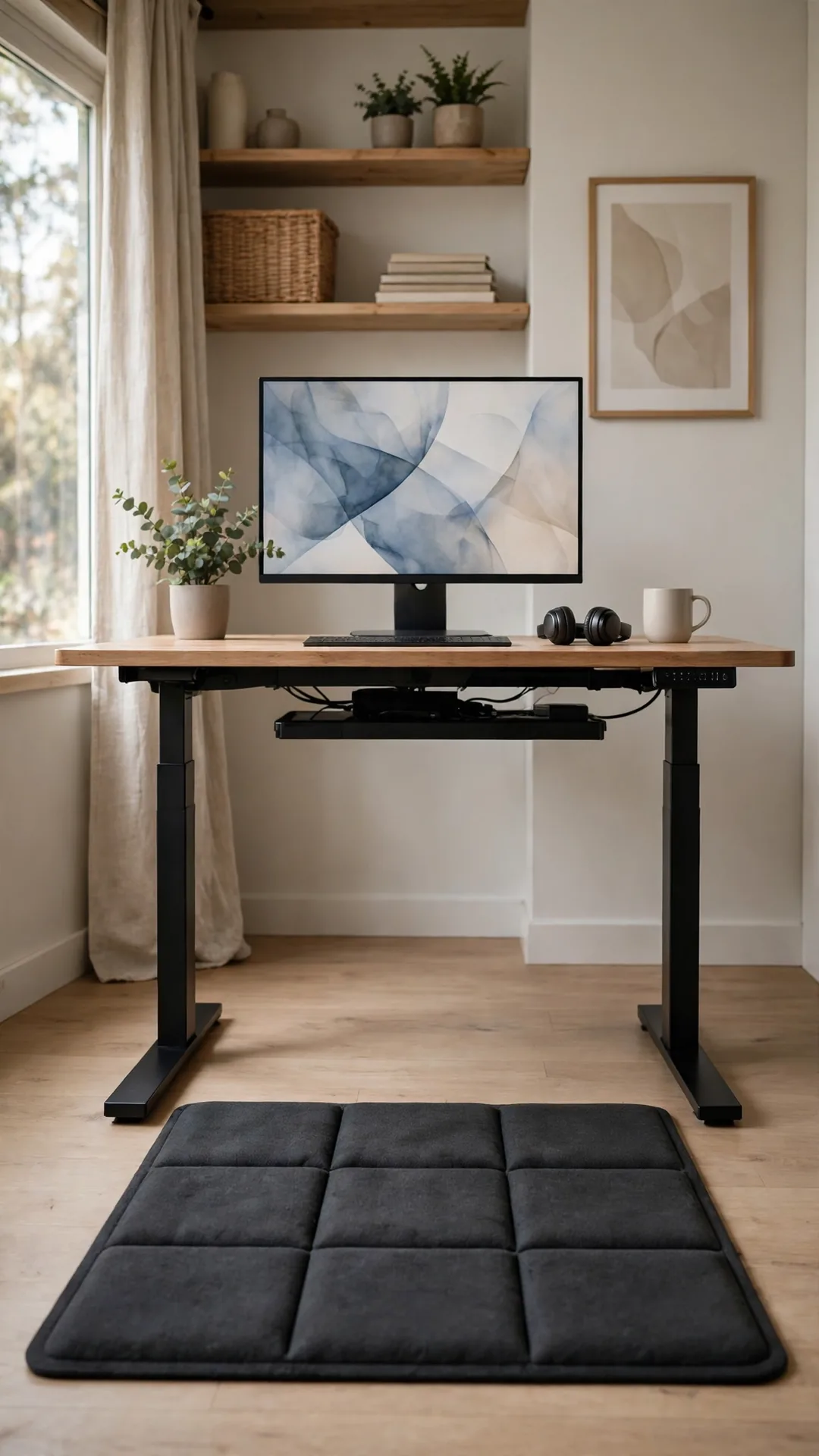
A hard floor tires your feet in an hour. An anti fatigue mat cushions each step and shift. These standing desk ideas for small offices start with the floor, not the desk.
How to do it:
- Pick a mat 20 by 32 inches for one work spot.
- Choose a mat at least 0.75 inches thick.
- Look for a beveled edge so you never trip.
- Pick a dark color to hide scuffs.
Best for: Tile, wood and concrete floors.
Budget: $25 to $70
Quick tip: Stand with shoes off on a thick mat for comfort.
30. Add a Footrest for Long Days
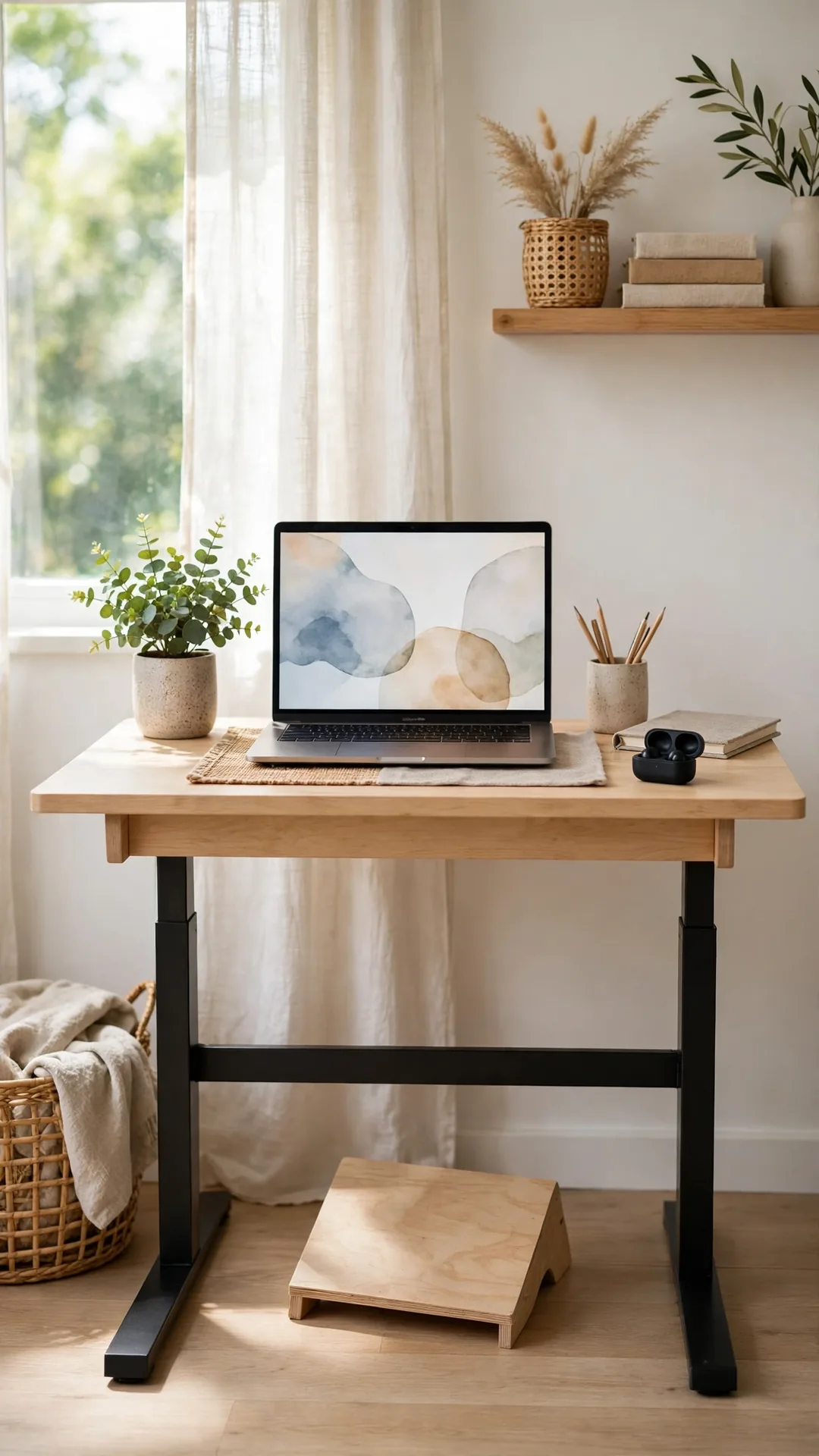
A small footrest gives your legs a break while you stand. Rest one foot on it and swap sides often. It cuts fatigue without a chair.
A sturdy box works as a test footrest before you buy the real one.
How to do it:
- Pick a footrest 6 to 8 inches tall.
- Choose a non slip top so your shoe grips.
- Place it 12 inches in front of the desk.
- Swap feet every 10 to 15 minutes.
Best for: Long work days with few breaks.
Budget: $20 to $50
Quick tip: A footrest also works as a calf stretch step.
31. Alternate Sitting and Standing Often
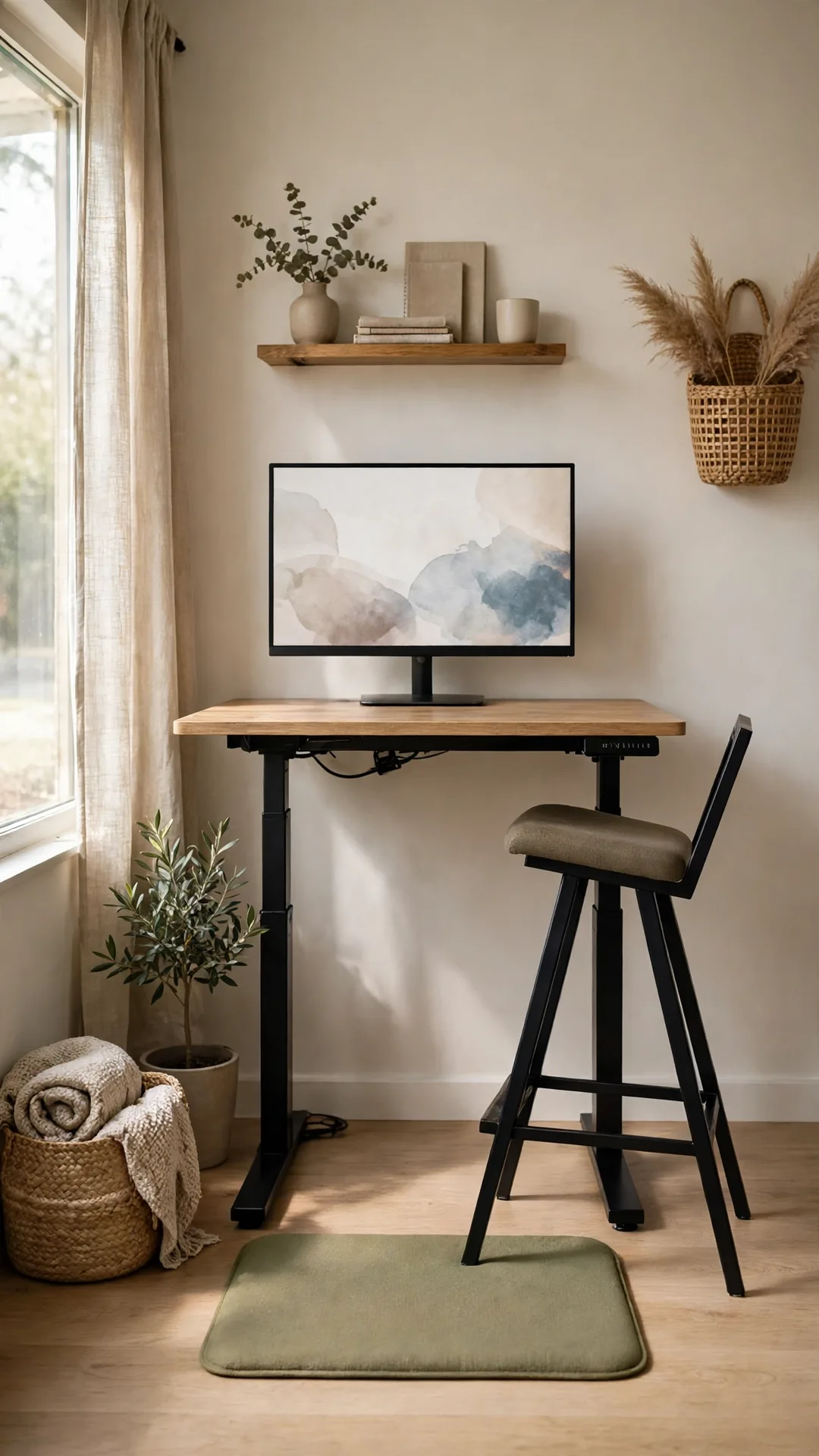
Standing all day is as tiring as sitting all day. The trick is to switch between the two every hour. Your body stays fresh when you mix it up.
A simple timer on your phone keeps the switch from slipping your mind.
How to do it:
- Stand for 30 minutes, then sit for 30.
- Stand for calls and sit for deep writing.
- Set a phone alarm for each switch.
- Keep a stool nearby so sitting stays easy.
Best for: New standing desk users.
Budget: Free
Quick tip: Start with two standing blocks a day, then add more.
32. Use a Monitor Arm to Free Space
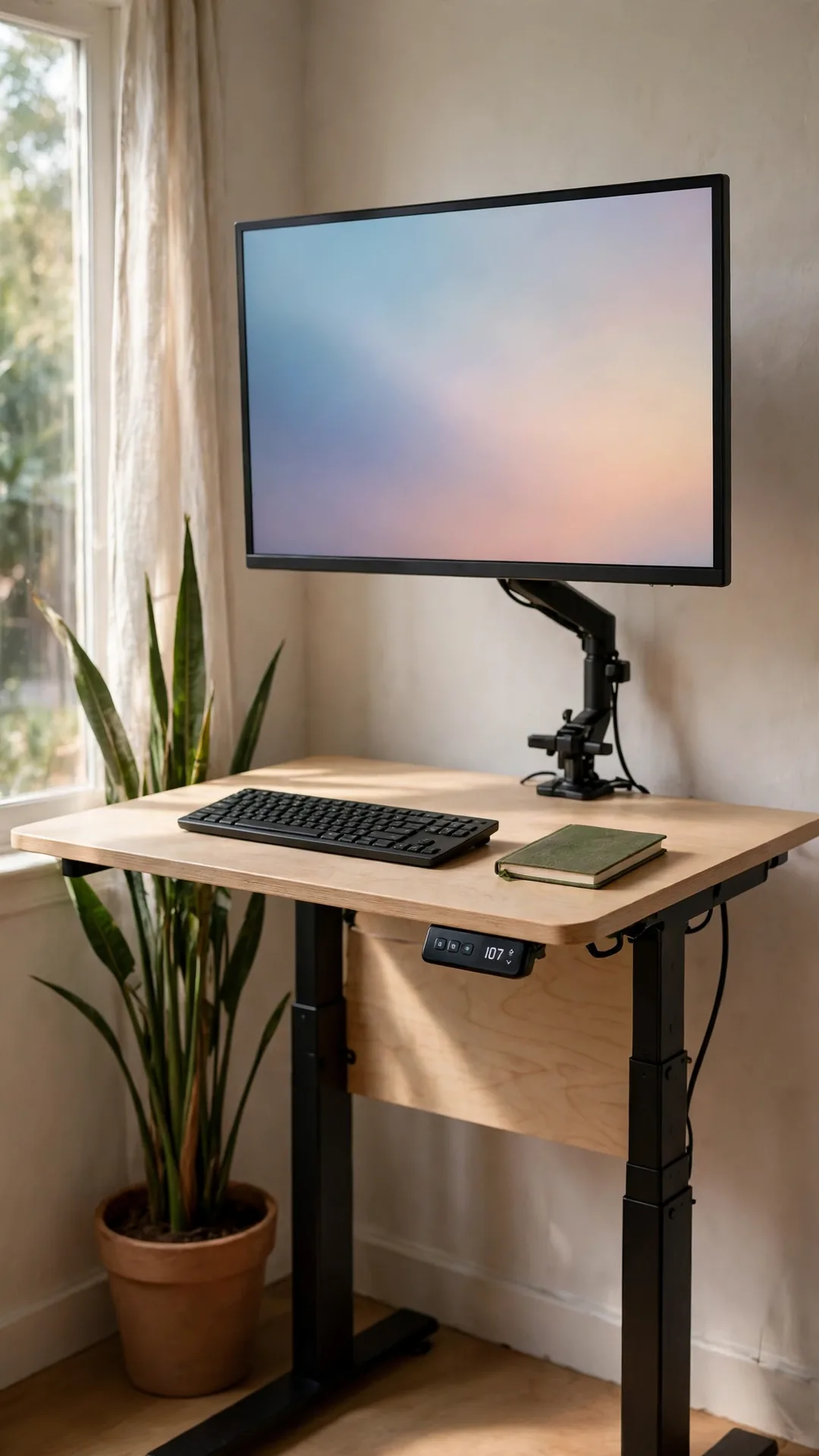
A monitor arm clamps to the desk edge and lifts the screen off the top. You gain back a full foot of desk depth. These standing desk ideas for small offices use arms to make tiny tops work.
How to do it:
- Pick an arm rated for your monitor weight.
- Check the clamp fits a top up to 2 inches thick.
- Route the cable through the arm channel.
- Set the arm so the screen sits at eye level.
Best for: Desks under 24 inches deep.
Budget: $30 to $90
Quick tip: A dual arm holds two screens on one clamp.
33. Rest Your Feet on a Balance Board
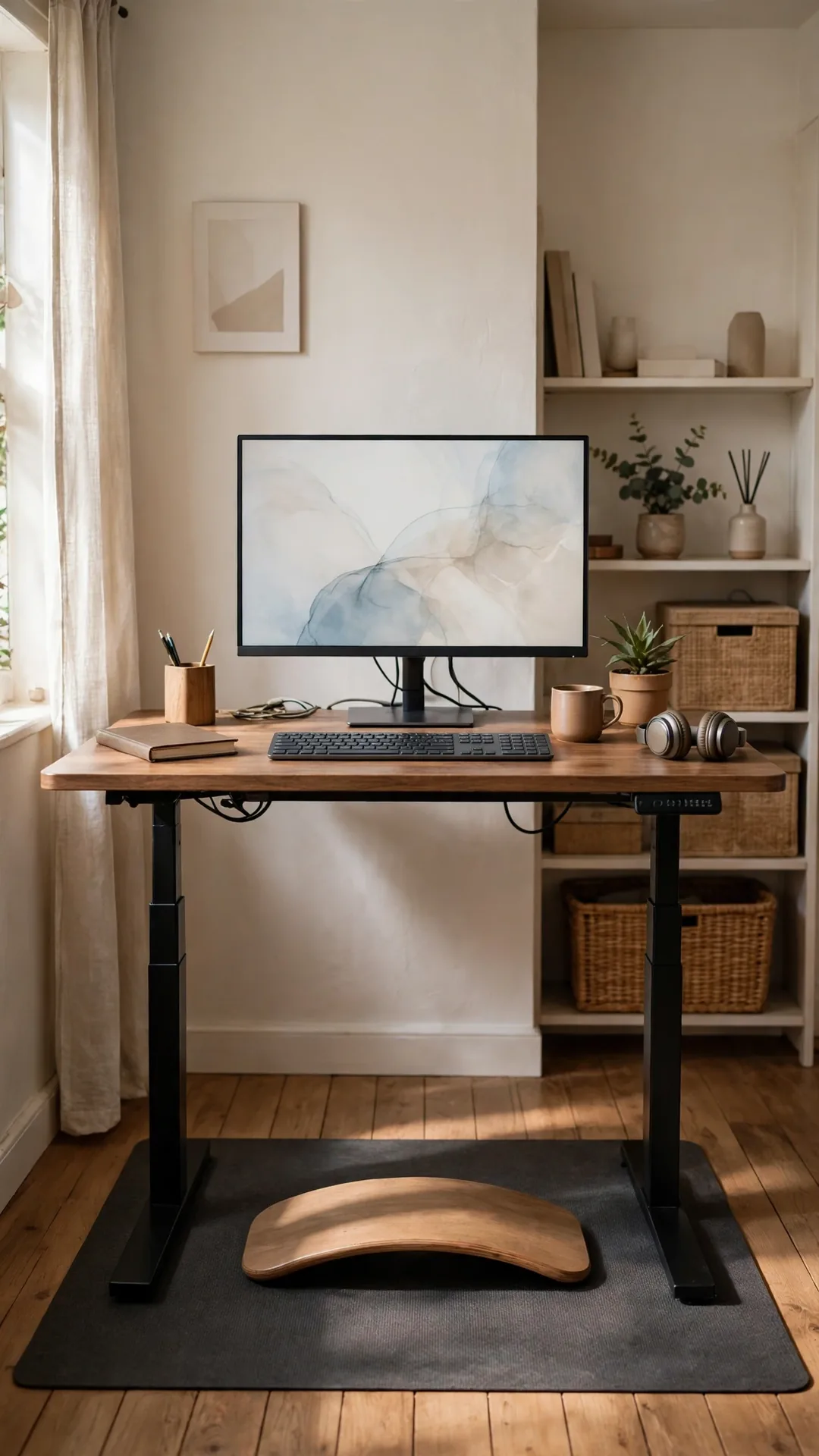
A balance board under your feet keeps you moving while you stand. Small shifts wake up your legs and core. It turns standing time into light exercise.
How to do it:
- Pick a board 18 inches wide with a grip top.
- Use it on a mat so it never slides.
- Start with 10 minutes at a time.
- Keep a chair nearby until your balance feels sure.
Best for: People who fidget while they work.
Budget: $30 to $80
Quick tip: Shift your weight side to side, not front to back.
34. Keep a Stool Nearby for Breaks
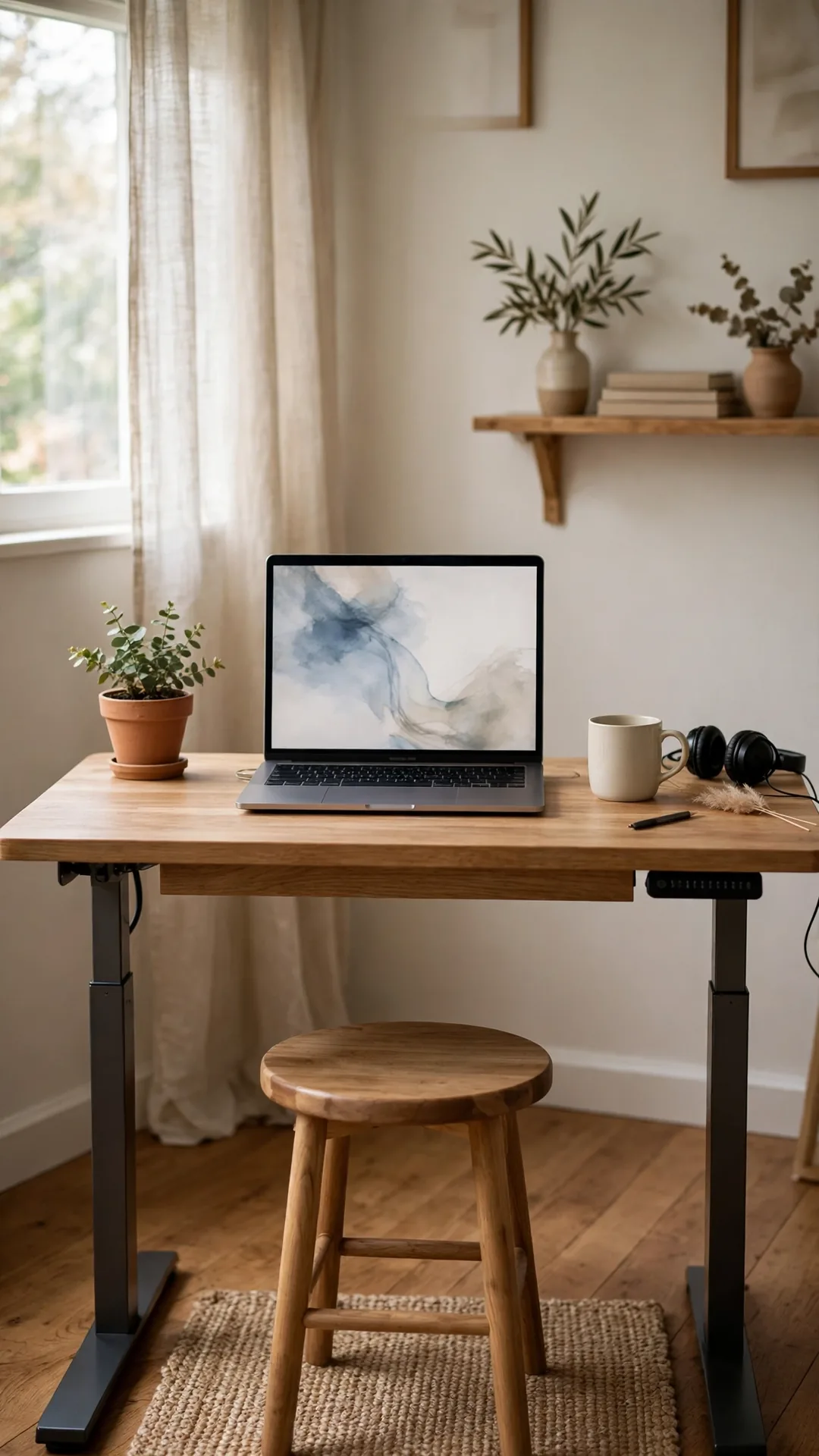
A stool beside the desk gives you a perch without a full chair. Sit for a few minutes, then stand again. It keeps breaks short and easy.
How to do it:
- Pick a stool 24 to 30 inches tall.
- Choose a round seat 14 inches across.
- Tuck it under the desk when you stand.
- Pick a light stool so you can move it fast.
Best for: Small offices with no room for a chair.
Budget: $30 to $90
Quick tip: A stool with a foot ring feels best for long sits.
35. Set Memory Presets for Two Heights
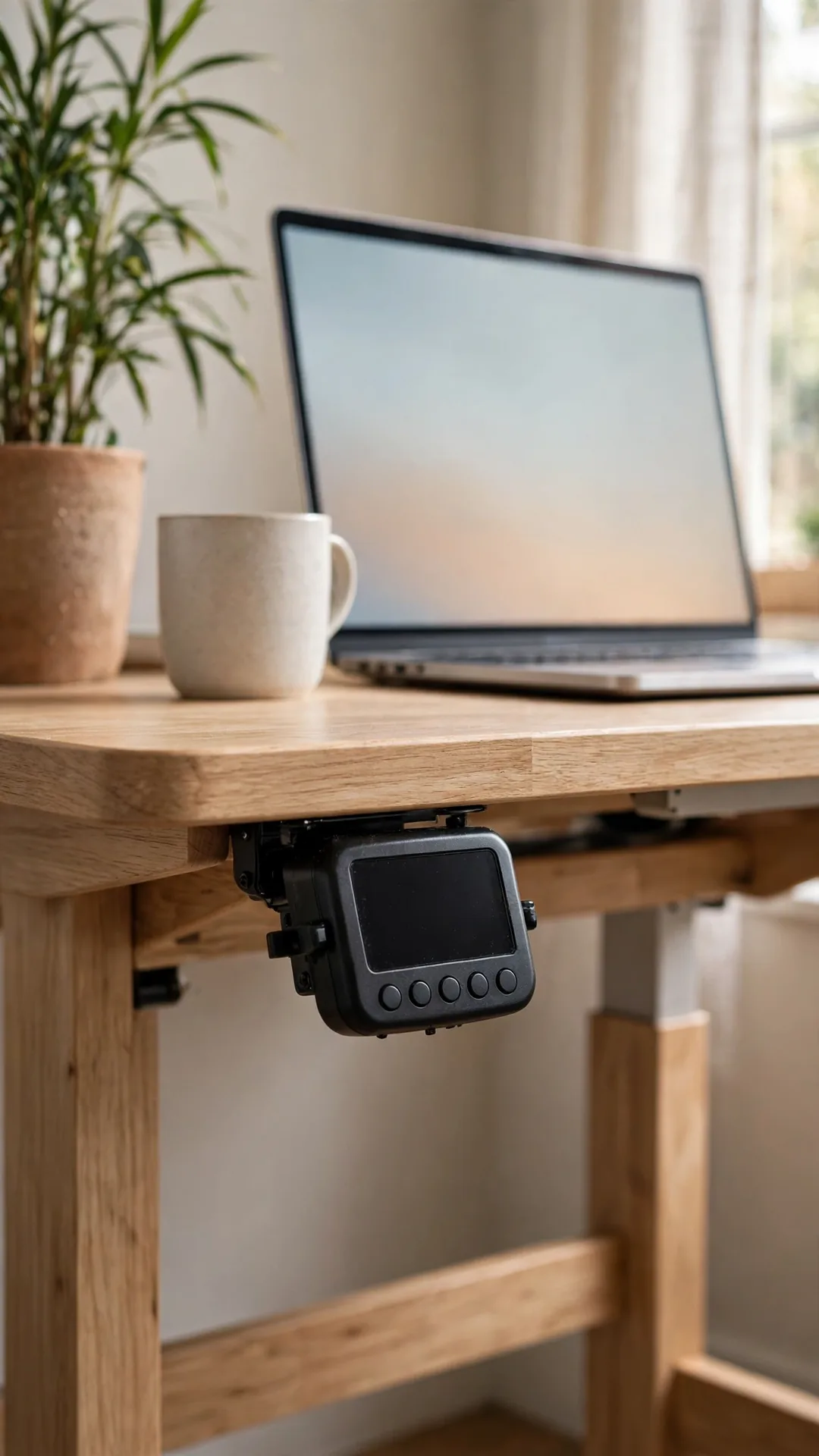
Memory presets save your sit and stand heights with one button. Tap once and the desk glides to the right spot. These standing desk ideas for small offices save time every single day.
How to do it:
- Set preset one for sitting and two for standing.
- Check your elbow height in each position first.
- Teach each family member their own preset.
- Test the presets after you move the desk.
Best for: Shared desks and electric frames.
Budget: Included with most electric desks
Quick tip: Write your heights on tape under the desk top.
36. Hide Cords in a Cable Tray
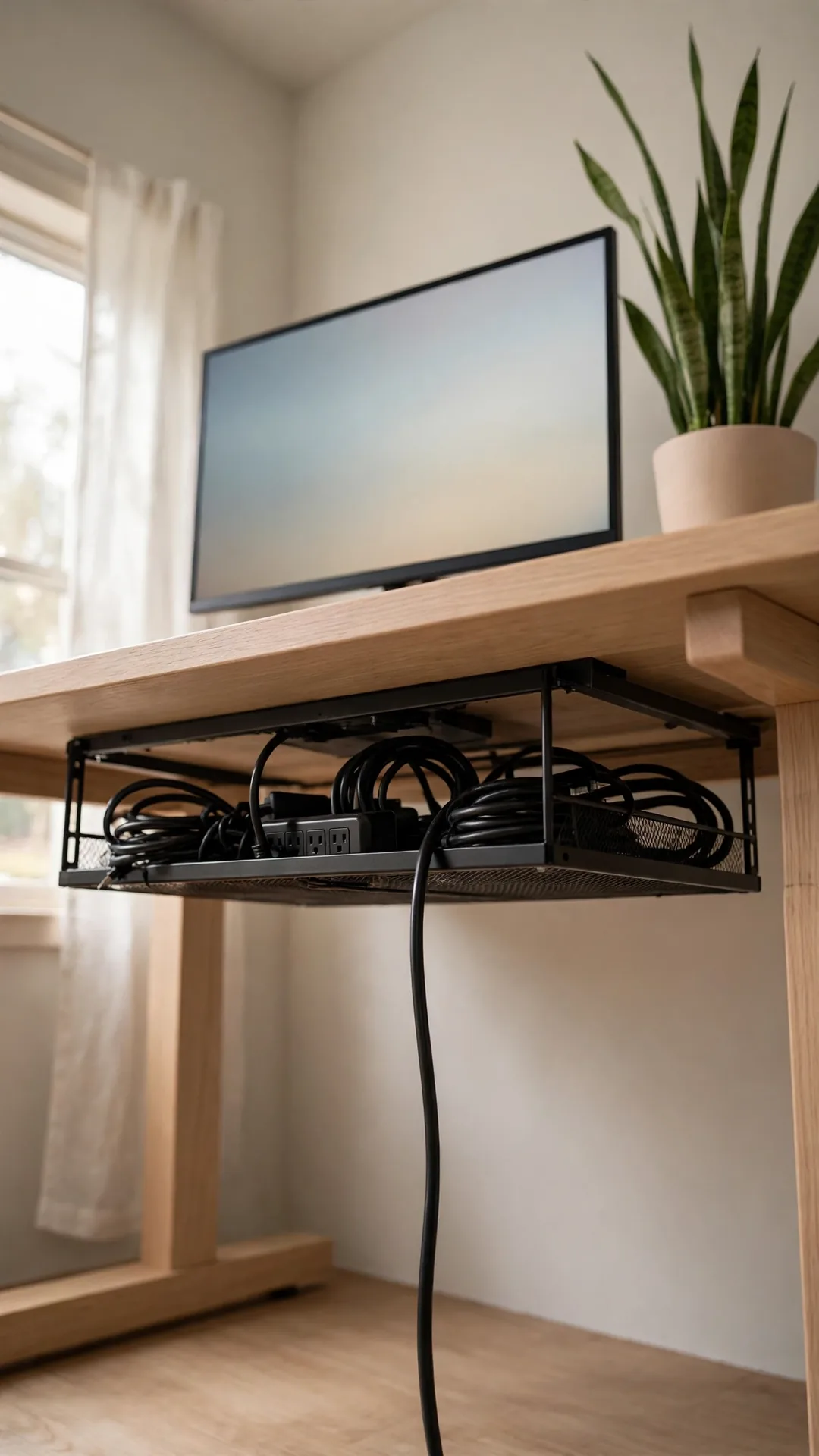
A cable tray under the desk hides every cord in one channel. The desk lifts and lowers without tangled wires. Your floor stays clear and safe.
How to do it:
- Pick a tray 16 inches wide for a small desk.
- Screw it to the underside of the top.
- Leave slack in each cable for the lift range.
- Use hook and loop ties, not zip ties, for easy changes.
Best for: Electric desks with more than two cables.
Budget: $15 to $40
Quick tip: Label each cable with tape before you tray it.
37. Hang a Pegboard Above the Desk
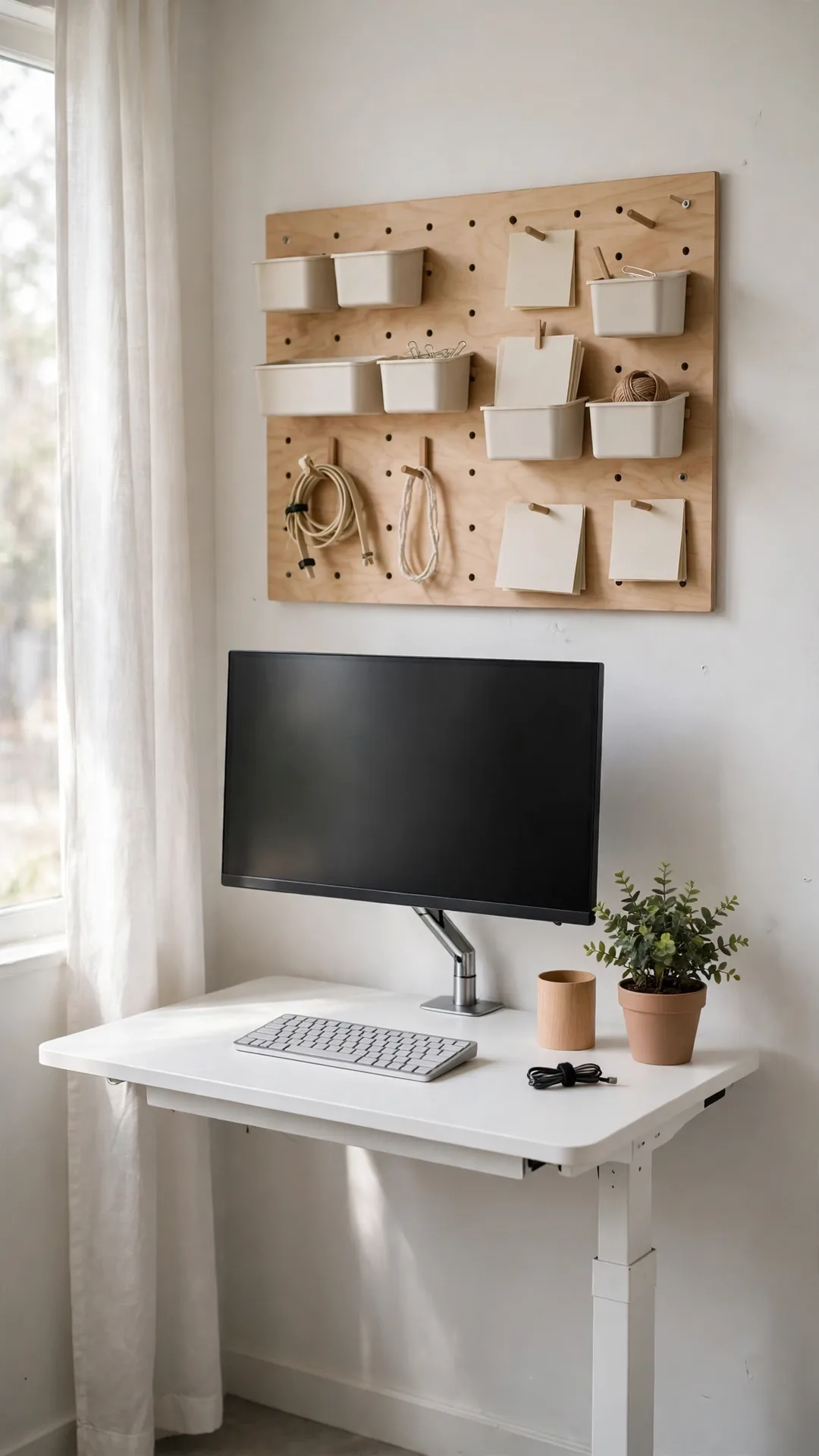
A pegboard above the desk holds tools, bins and notes on the wall. It turns dead wall space into storage. You reach supplies without leaving your spot.
How to do it:
- Pick a pegboard 24 by 32 inches for a small desk.
- Mount it 12 inches above the desk top.
- Use hooks, cups and small shelves on the board.
- Keep daily items at arm height, not up high.
Best for: Crafters and makers who work standing.
Budget: $25 to $70
Quick tip: Paint the pegboard the wall color for a calm look.
38. Add Floating Shelves Over the Desk
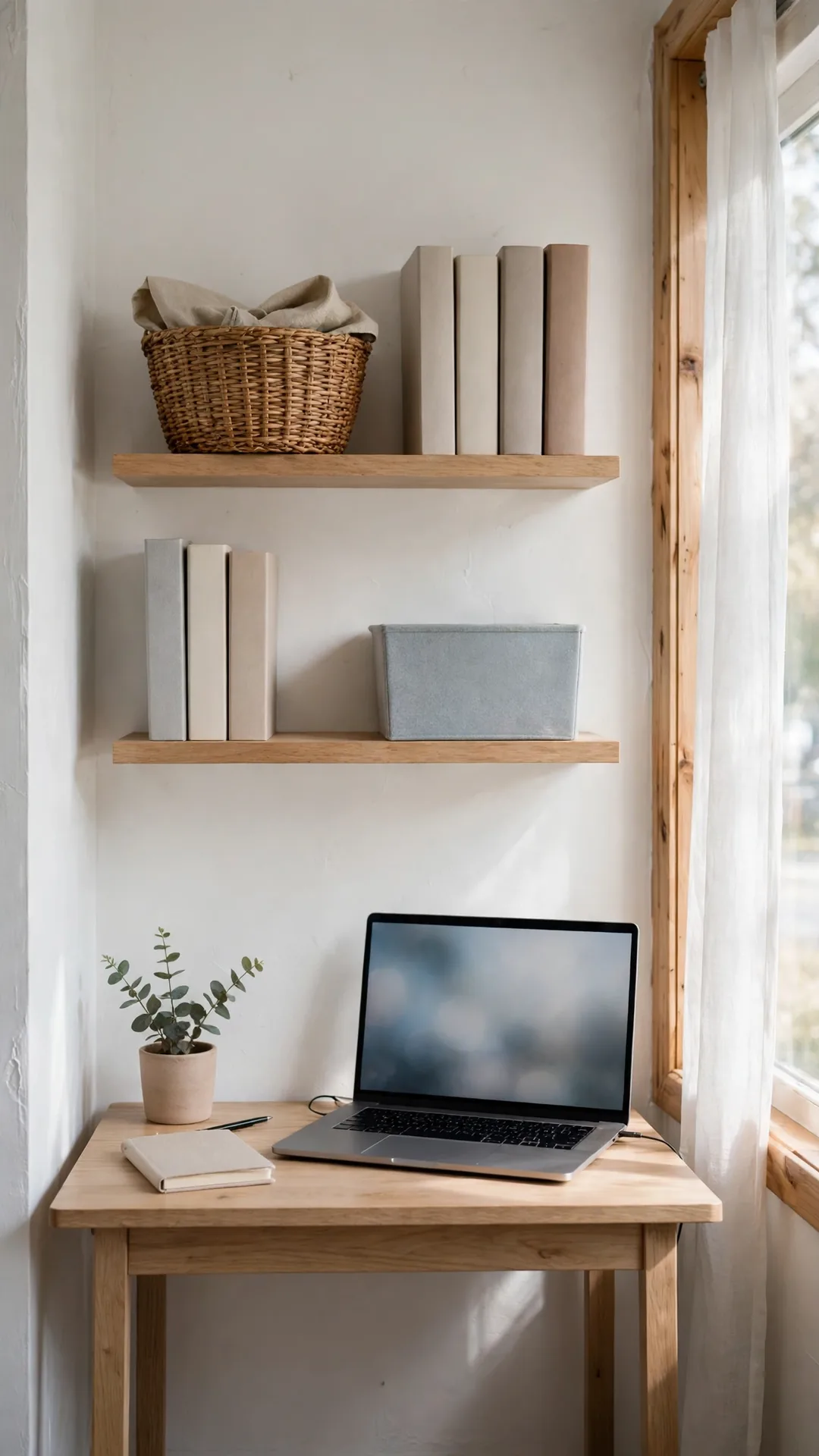
Floating shelves over the desk add storage without touching the floor. Books and bins sit above your screen. These standing desk ideas for small offices build upward, not outward.
Open shelves also keep reference books in sight while you stand and work.
How to do it:
- Mount the first shelf 18 inches above the desk.
- Use shelves 10 inches deep for books and bins.
- Bolt into studs for heavy loads.
- Keep the shelf above eye level clear of clutter.
Best for: Desks against a bare wall.
Budget: $30 to $90
Quick tip: Two short shelves beat one long shelf for balance.
39. Roll a Slim Cart Beside the Desk
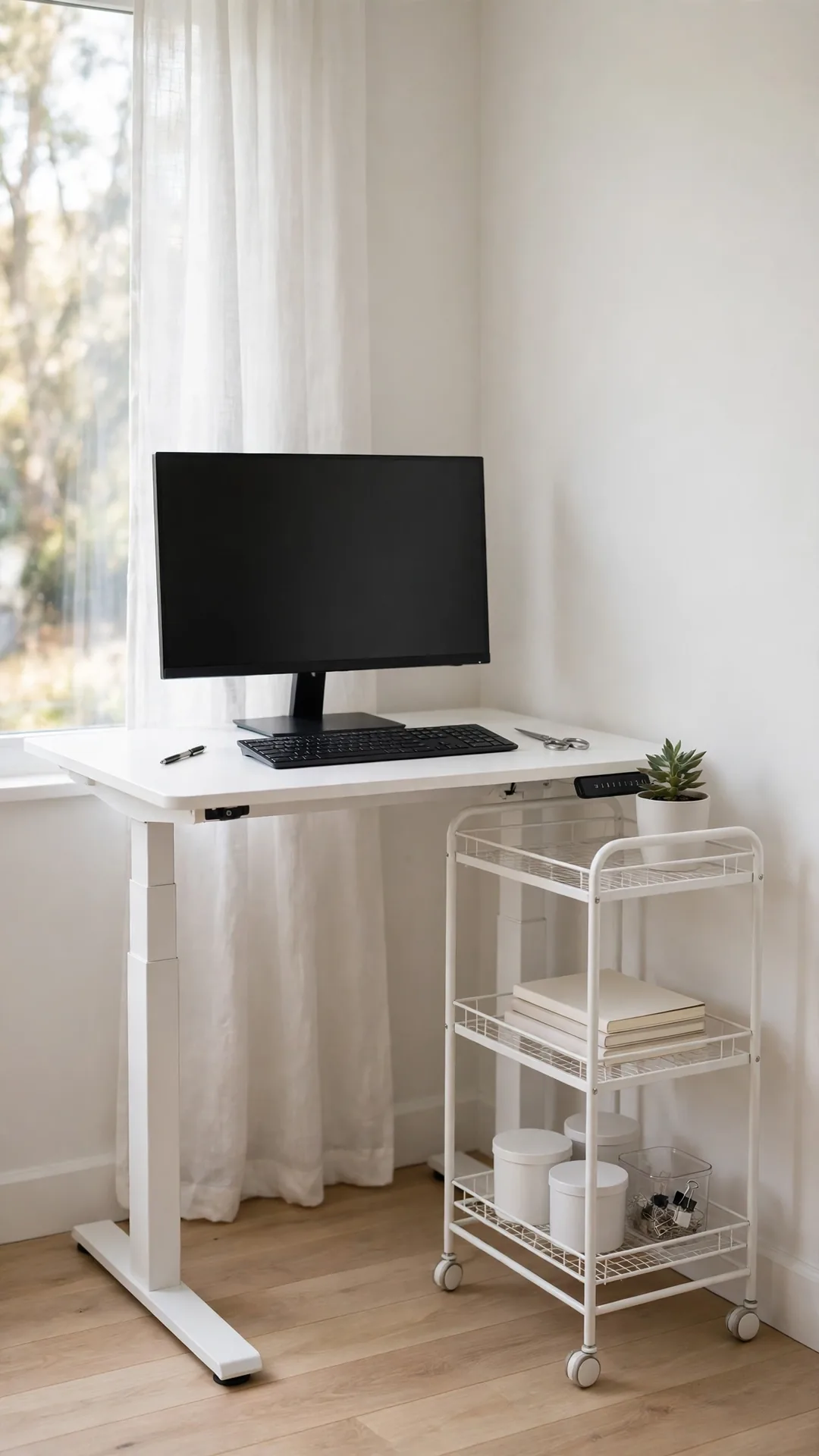
A slim cart beside the desk rolls in when you need it. It holds a printer, paper and spare cables. Roll it away when the work day ends.
A cart with a handle moves easier when it is fully loaded with supplies.
How to do it:
- Pick a cart 12 inches wide with three tiers.
- Choose locking wheels for a steady base.
- Keep the top tier for items you grab daily.
- Measure the gap beside your desk first.
Best for: Desks with no drawers.
Budget: $30 to $80
Quick tip: A cart in the closet doubles as pantry storage.
40. Style Your Desk With Boho Touches
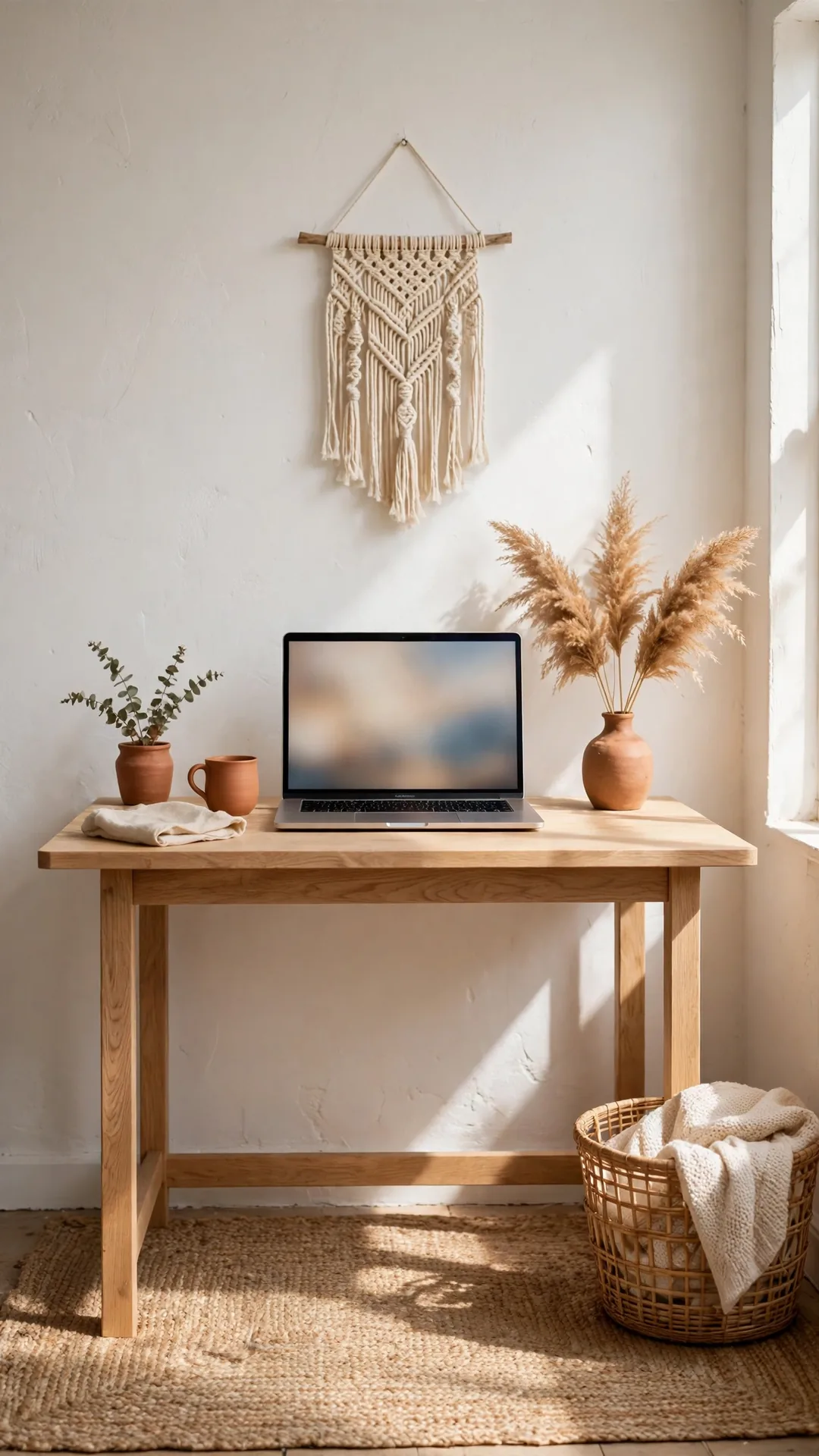
A few boho touches make a standing desk feel like home. A woven mat, a rattan basket and warm wood soften the metal frame. These boho small apartment decor ideas show how to layer the look.
How to do it:
- Add a woven desk mat under your keyboard.
- Use a rattan basket for cables and chargers.
- Hang a small macrame piece above the desk.
- Pick warm wood tones for the desk top.
Best for: Renters who want a soft, warm office.
Budget: $30 to $100
Quick tip: Keep boho pieces small so the desk stays clear.
41. Use a Wall File Holder for Papers
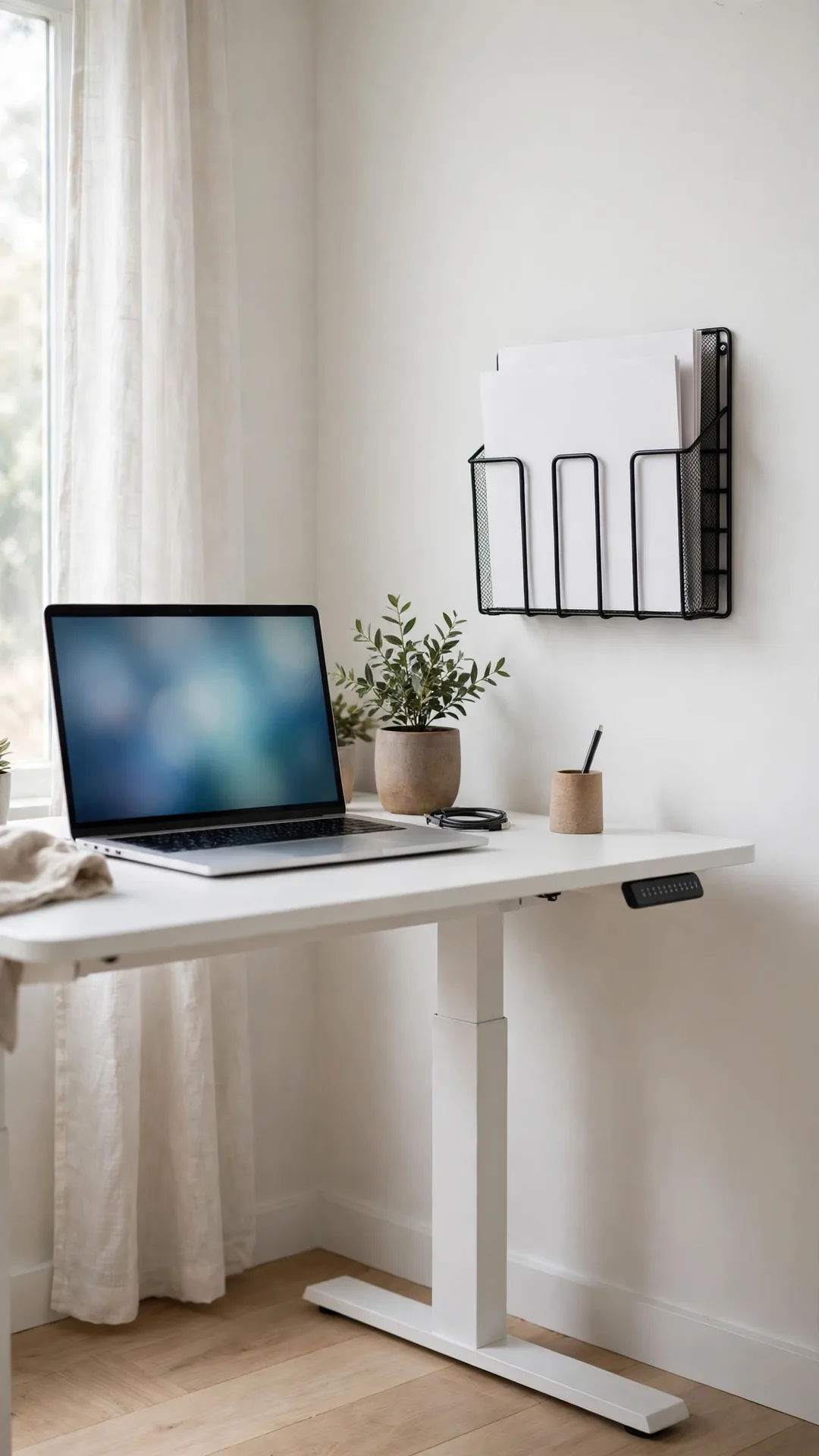
A wall file holder keeps papers off your desk top. Bills, notes and folders sort into slots by the wall. These standing desk ideas for small offices keep the top clear for work.
How to do it:
- Pick a holder with 3 to 5 slots.
- Mount it at arm height beside the desk.
- Label each slot with a plain paper tag.
- Clear the holder once a week.
Best for: People who still use paper at work.
Budget: $20 to $50
Quick tip: One slot for today, one for this week, one for filing.
42. Add a Small Drawer Unit Underneath
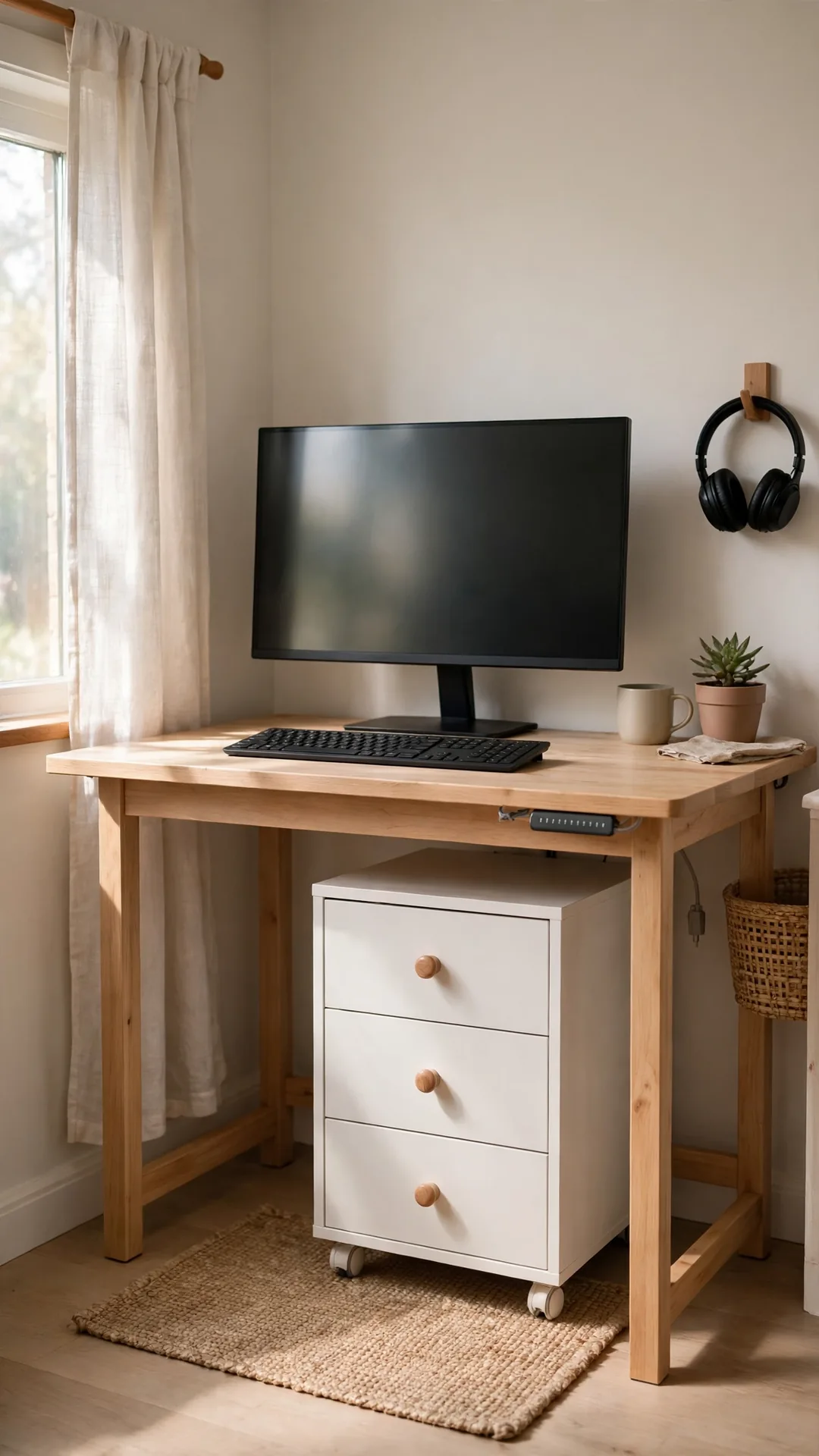
A small drawer unit slides under the desk and hides supplies. Pens, cables and notebooks stay out of sight. You keep the top clear without losing a thing.
How to do it:
- Pick a unit 15 inches wide and 18 inches deep.
- Choose 3 drawers for pens, paper and cables.
- Pick wheels so it rolls out for cleaning.
- Leave 2 inches of clearance under the desk top.
Best for: Desks with no built in storage.
Budget: $40 to $110
Quick tip: A drawer unit also works as a footrest in a pinch.
43. Match the Desk to Your Room Color
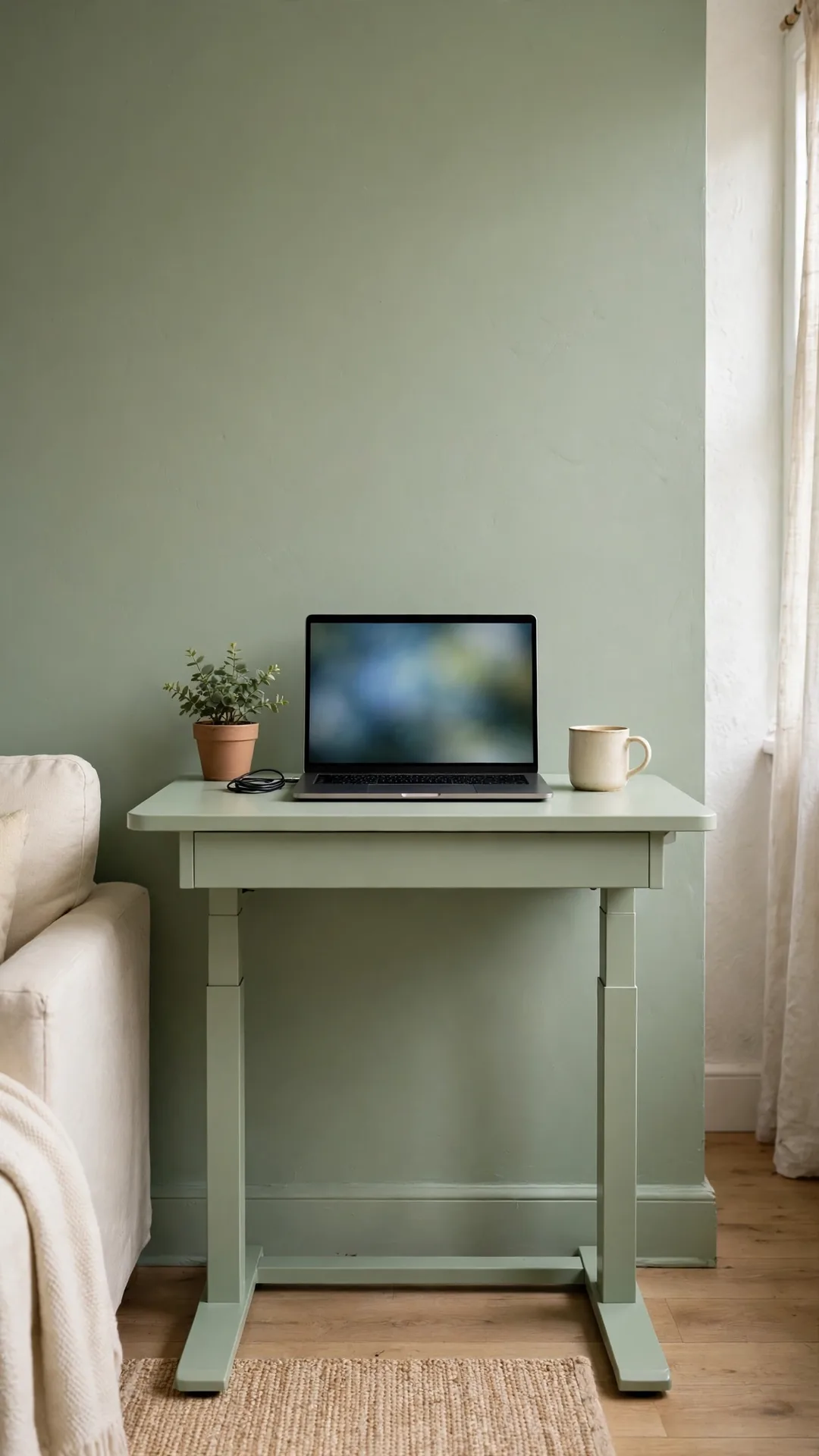
A desk that matches the wall color blends into the room. The office fades away when work ends. It suits living rooms where the desk stays in view.
How to do it:
- Paint a wood desk top the wall color.
- Pick a frame in white, black or wood to match.
- Keep the chair or stool in the same family.
- Add one plant for a soft color break.
Best for: Living rooms with a desk on show.
Budget: $20 to $80
Quick tip: Match the desk legs to the floor tone, not the wall.
44. Add Plants Around Your Standing Desk
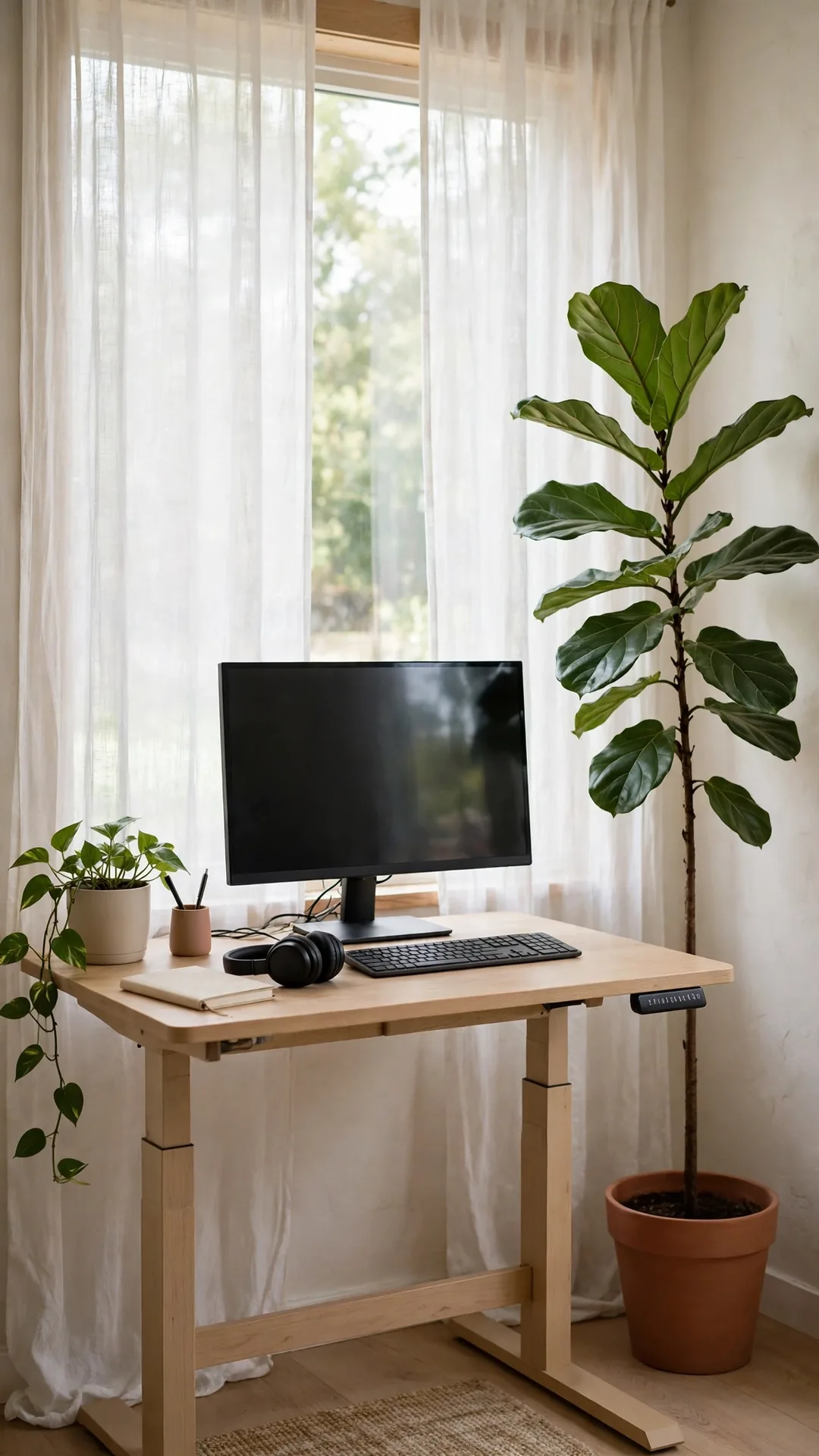
Plants around a standing desk soften the tech and clean the air. A tall plant beside the desk marks the work zone. These standing desk ideas for small offices feel fresher with green nearby.
How to do it:
- Pick a snake plant or pothos for low light.
- Set one tall plant on the floor beside the desk.
- Keep small plants off the desk top.
- Water on the same day each week.
Best for: Rooms with a window near the desk.
Budget: $20 to $60
Quick tip: A hanging plant saves floor and desk space.
45. Light Your Desk With a Clip Lamp
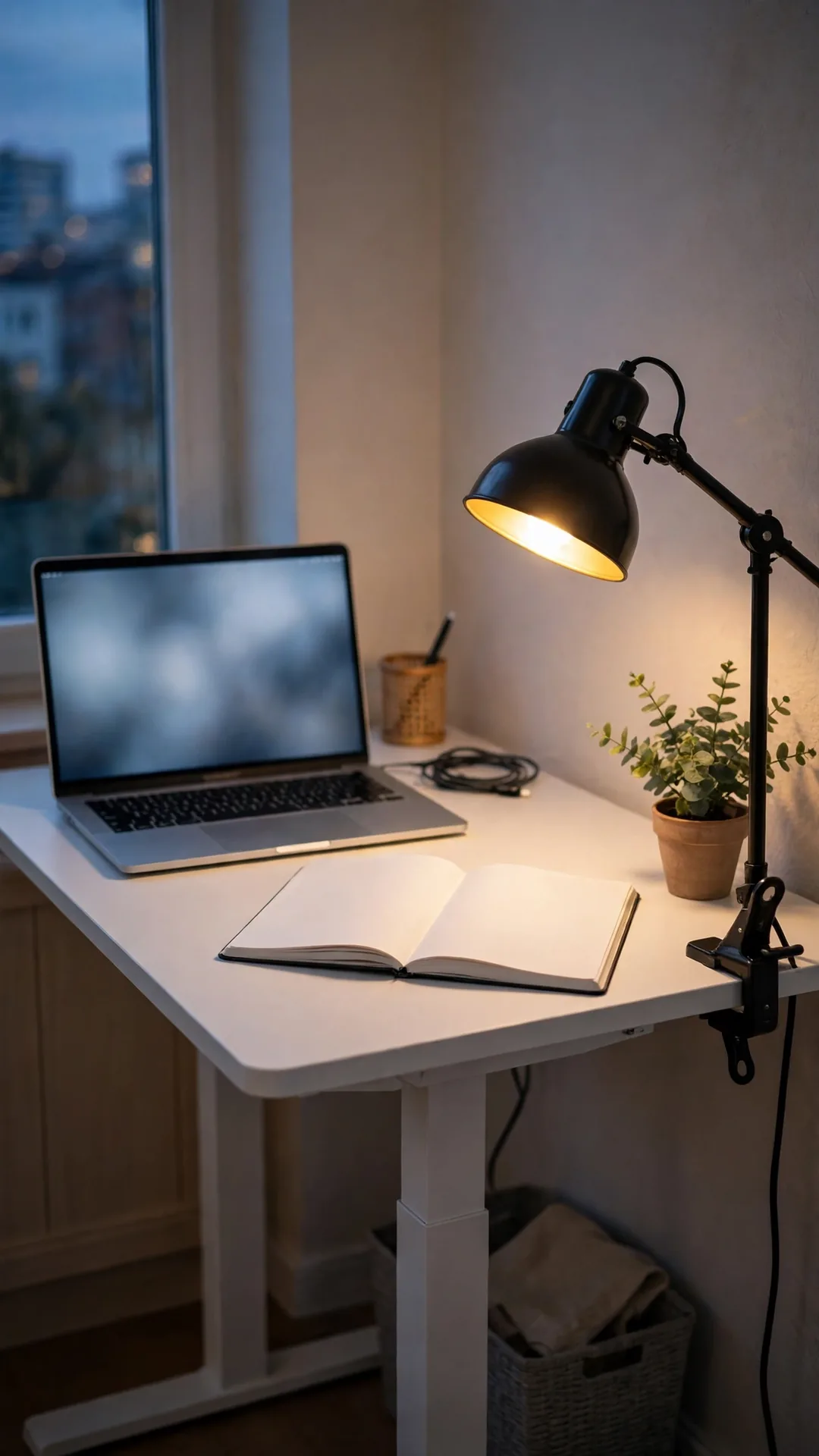
A clip lamp on the desk edge lights your work without a base. It frees the top for a laptop and notes. Clip it on, aim it down, and work.
How to do it:
- Pick a lamp with a warm 2700K bulb.
- Clip it to the back edge of the desk.
- Choose an adjustable neck for aim.
- Use an LED bulb to keep heat low.
Best for: Desks with no room for a lamp base.
Budget: $20 to $50
Quick tip: Aim the lamp at your notes, not your screen.
46. Use a Rug to Mark the Work Zone
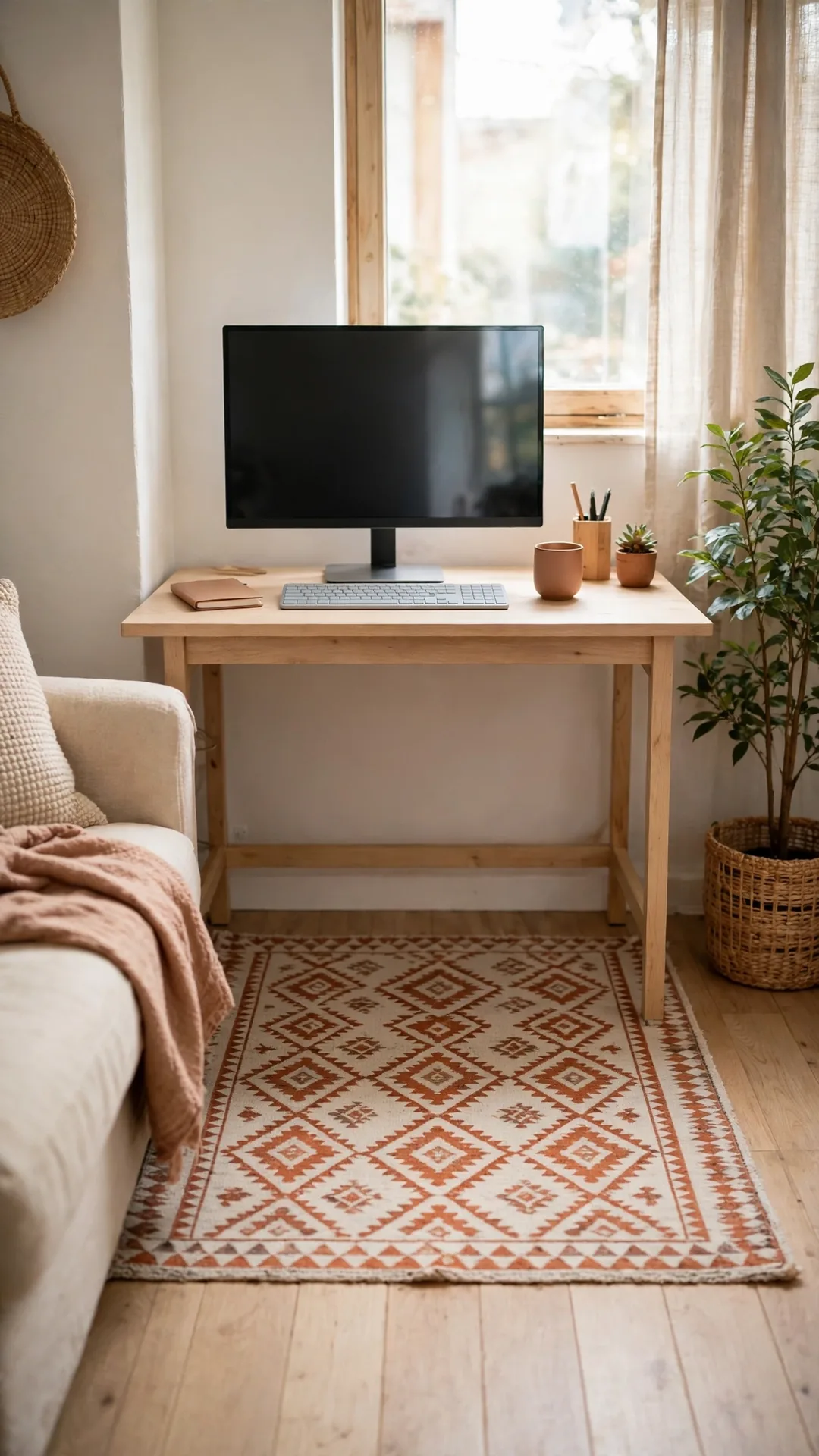
A rug under the desk marks the office zone in a shared room. It also softens the floor under your feet. The rug tells your brain that work starts here.
How to do it:
- Pick a rug 3 by 5 feet for one desk.
- Choose a low pile rug so the desk stays level.
- Pick a flat weave for easy chair and stool moves.
- Keep the rug color calm to suit the room.
Best for: Studios and shared living rooms.
Budget: $40 to $120
Quick tip: A rug pad under the rug stops slips.
47. Work From a Kitchen Nook Desk
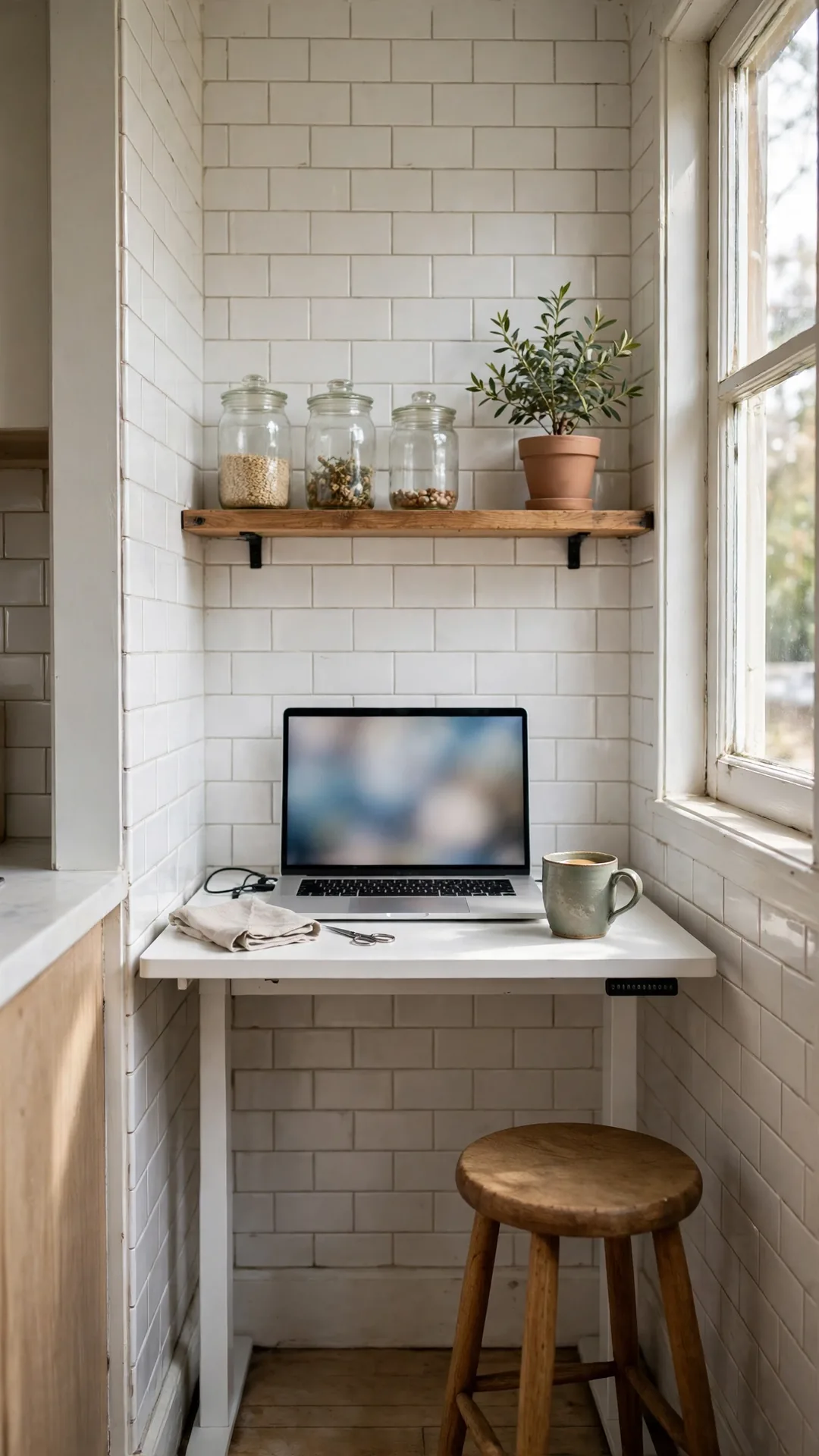
A kitchen nook with a desk turns dead space into an office. Pair the setup with these small U shaped kitchen ideas for the room around it. It ranks among the handiest standing desk ideas for small offices.
How to do it:
- Pick a desk 30 inches wide for the nook.
- Keep the desk clear of food and dishes.
- Use a stool that tucks under the desk.
- Add a small shelf above for office supplies.
Best for: Kitchens with an unused nook or corner.
Budget: $90 to $250
Quick tip: Work facing the room, not the wall, for light.
48. Share One Desk With a Partner
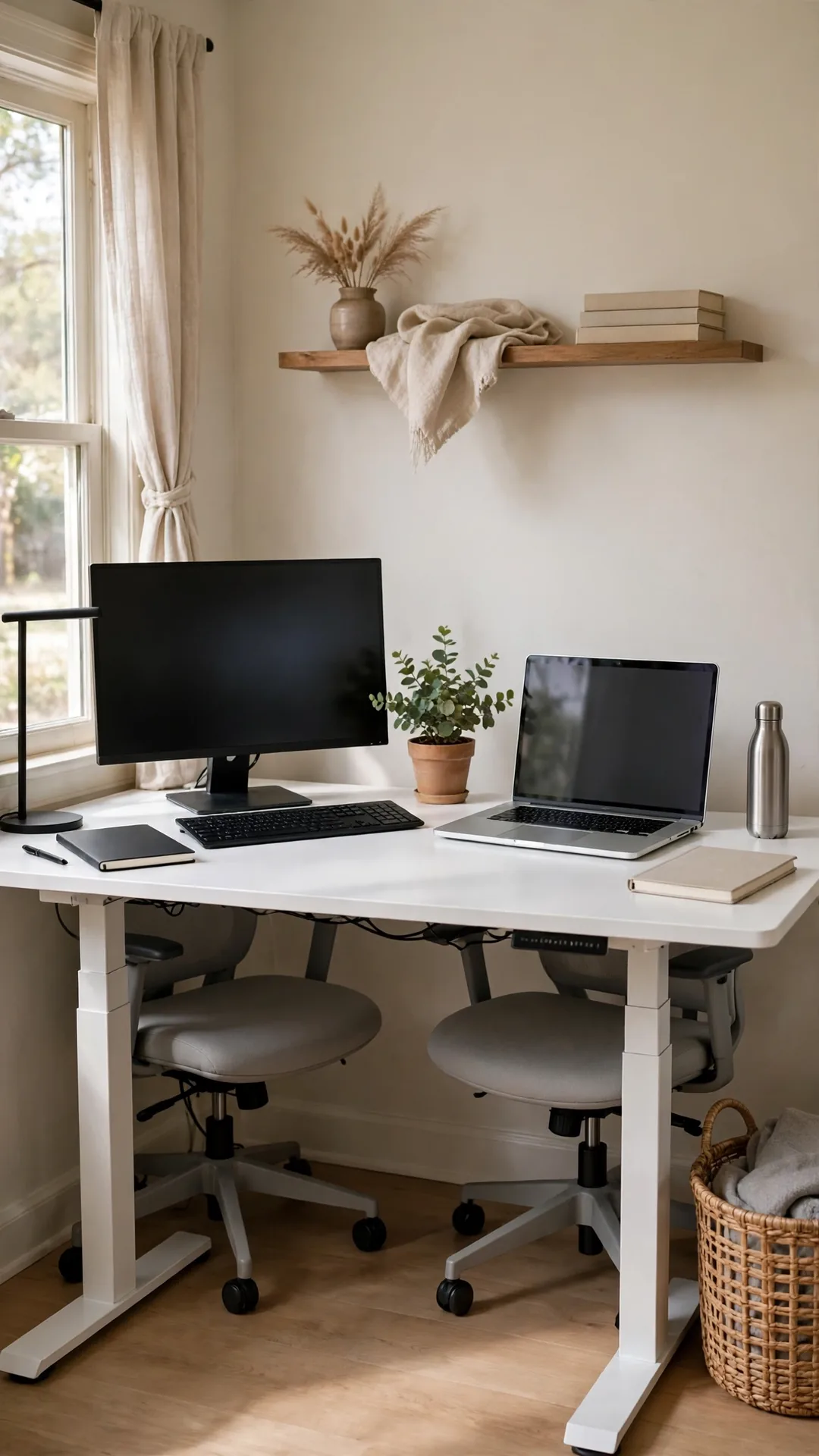
One standing desk can serve two people on different shifts. Each person sets their own height preset. A shared desk saves a whole room of space.
Two small desk lamps help each person see their own work zone clearly.
How to do it:
- Pick an electric desk with two memory presets.
- Keep two keyboard trays, one per person.
- Use a shared monitor arm for quick swaps.
- Set a simple schedule so shifts never clash.
Best for: Couples who both work from home.
Budget: $250 to $500
Quick tip: Each person keeps a small tray of their own gear.
49. Add a Privacy Screen Behind You
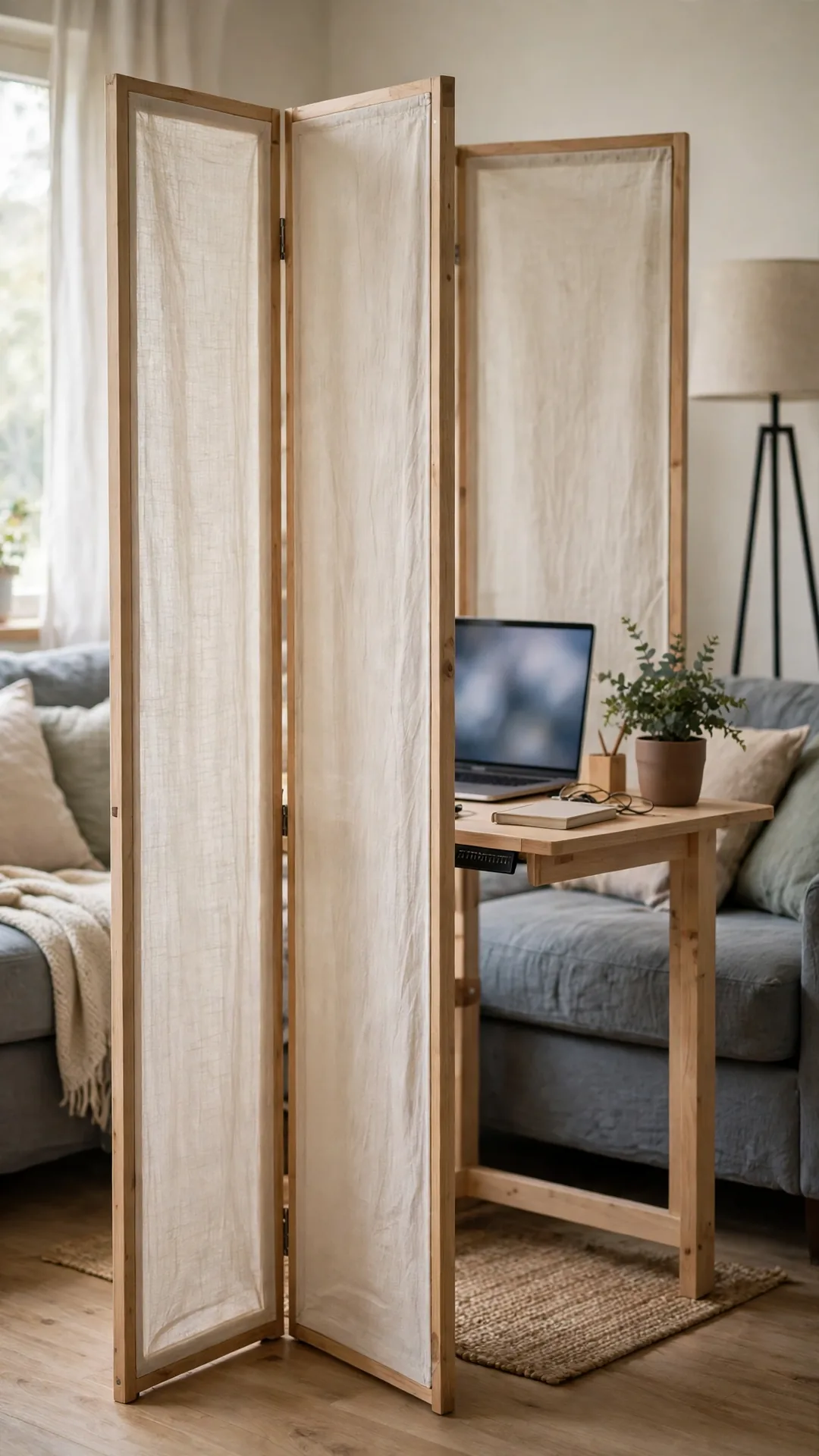
A privacy screen behind your desk blocks the view on video calls. It also marks your office zone in a shared room. Fold it flat when the day ends.
A screen with a fabric cover also softens echo on calls.
How to do it:
- Pick a screen 5 to 6 feet tall.
- Choose a folding screen with 3 panels.
- Set it 2 feet behind your chair or stool.
- Pick a light color so the room stays bright.
Best for: Shared rooms and video call workers.
Budget: $50 to $140
Quick tip: A screen also hides a messy shelf behind you.
50. Keep the Desk Facing the Room
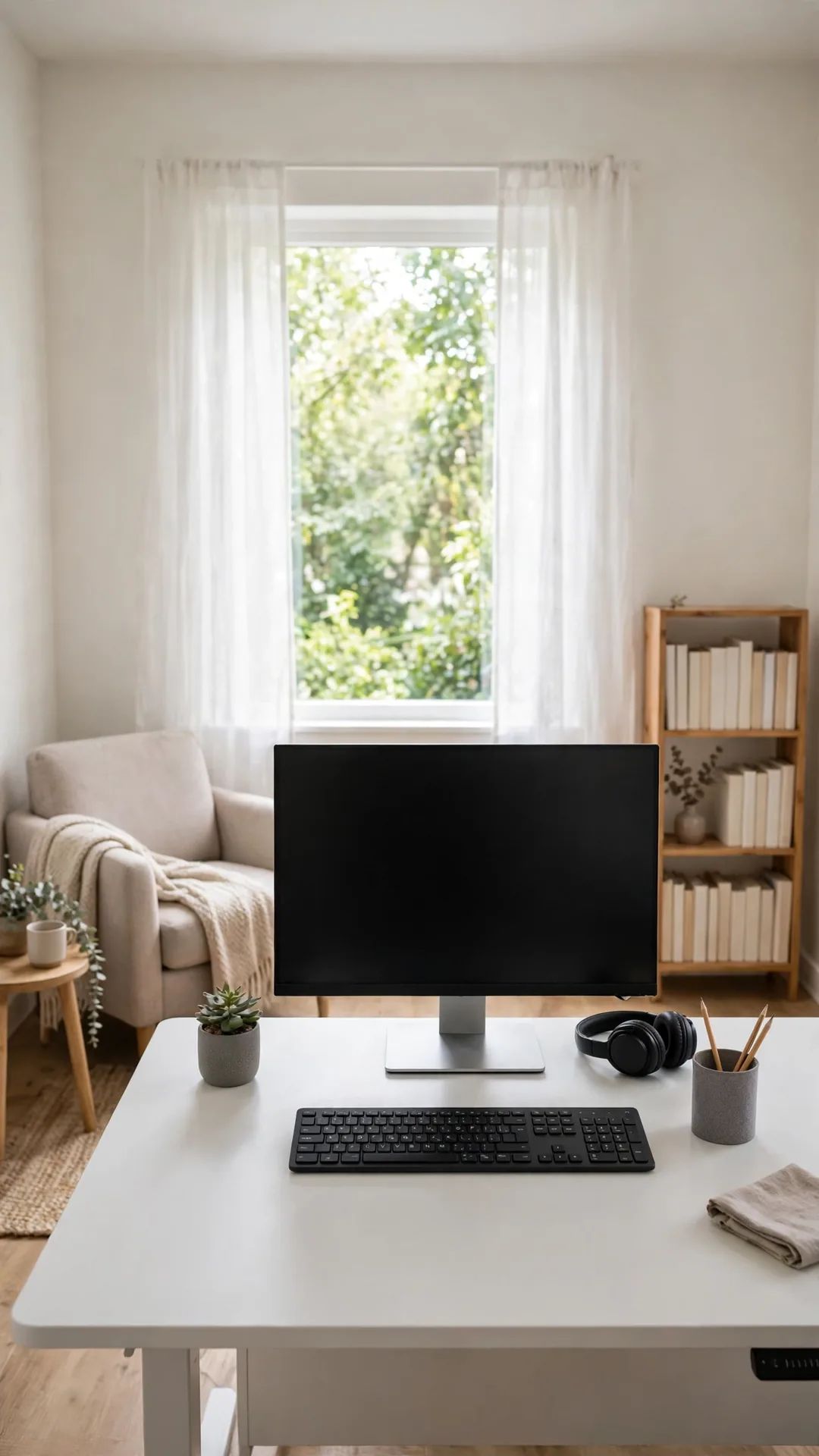
A desk that faces the room feels open and bright. You see the door, the window and the whole space. These standing desk ideas for small offices beat facing a blank wall.
How to do it:
- Put the desk back 12 inches from the wall.
- Run cables along the back edge with clips.
- Keep the desk back tidy, since it faces the room.
- Add a small plant at the back corner.
Best for: Rooms with a view worth facing.
Budget: $0 to $30
Quick tip: Face the desk toward the window for daylight.
51. Buy a Frame and Add Your Own Top
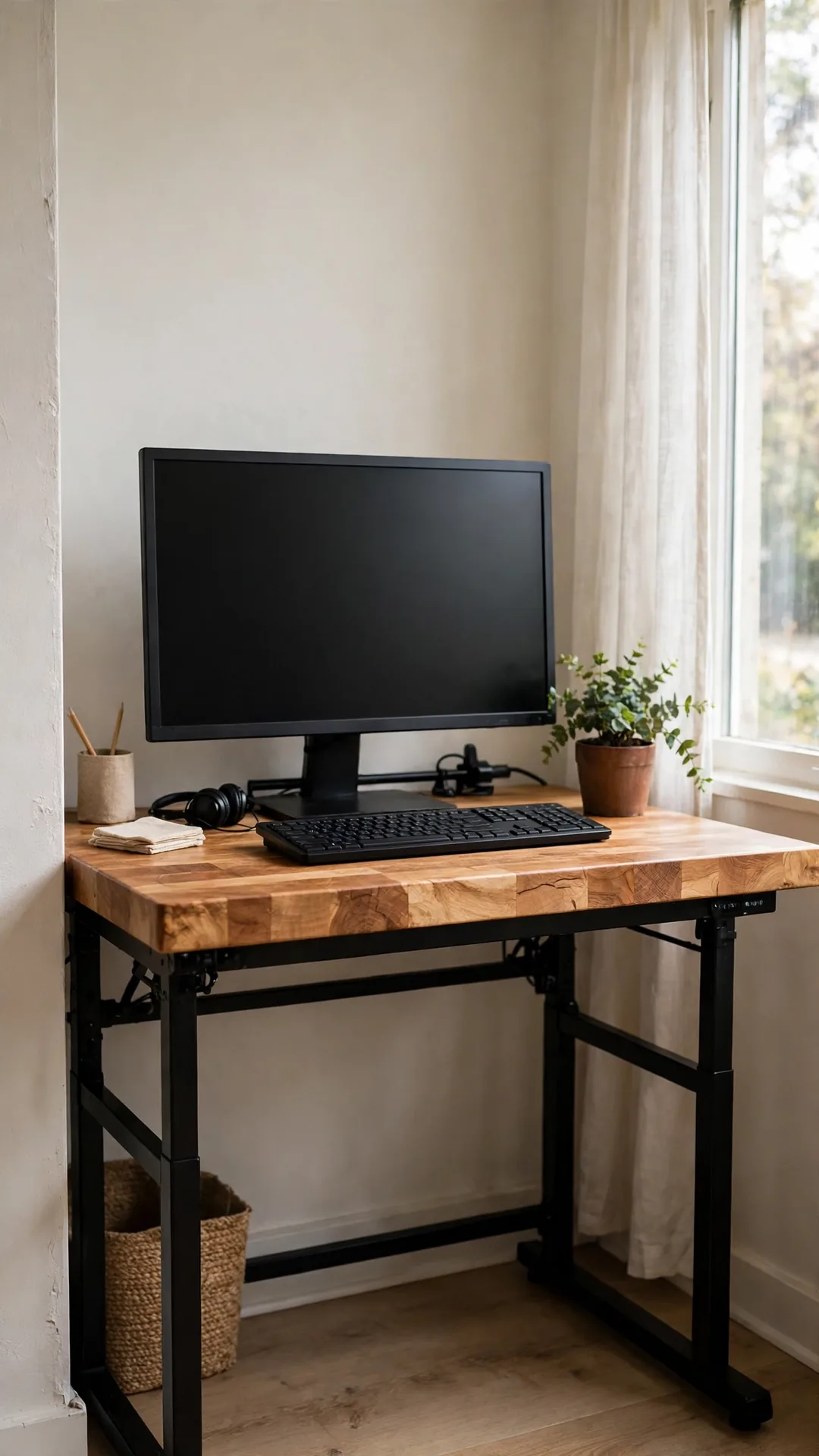
A standing desk frame plus your own top saves money. Buy the legs and motor, then add a wood top you like. It is one of the most flexible standing desk ideas for small offices.
How to do it:
- Pick a frame that fits tops 36 to 60 inches wide.
- Choose a butcher block top 1.5 inches thick.
- Sand and seal the top before you bolt it on.
- Check the frame weight limit for a heavy top.
Best for: DIY fans who want a custom size.
Budget: $180 to $400
Quick tip: A frame with a wide top range fits future moves.
52. Score a Secondhand Standing Desk
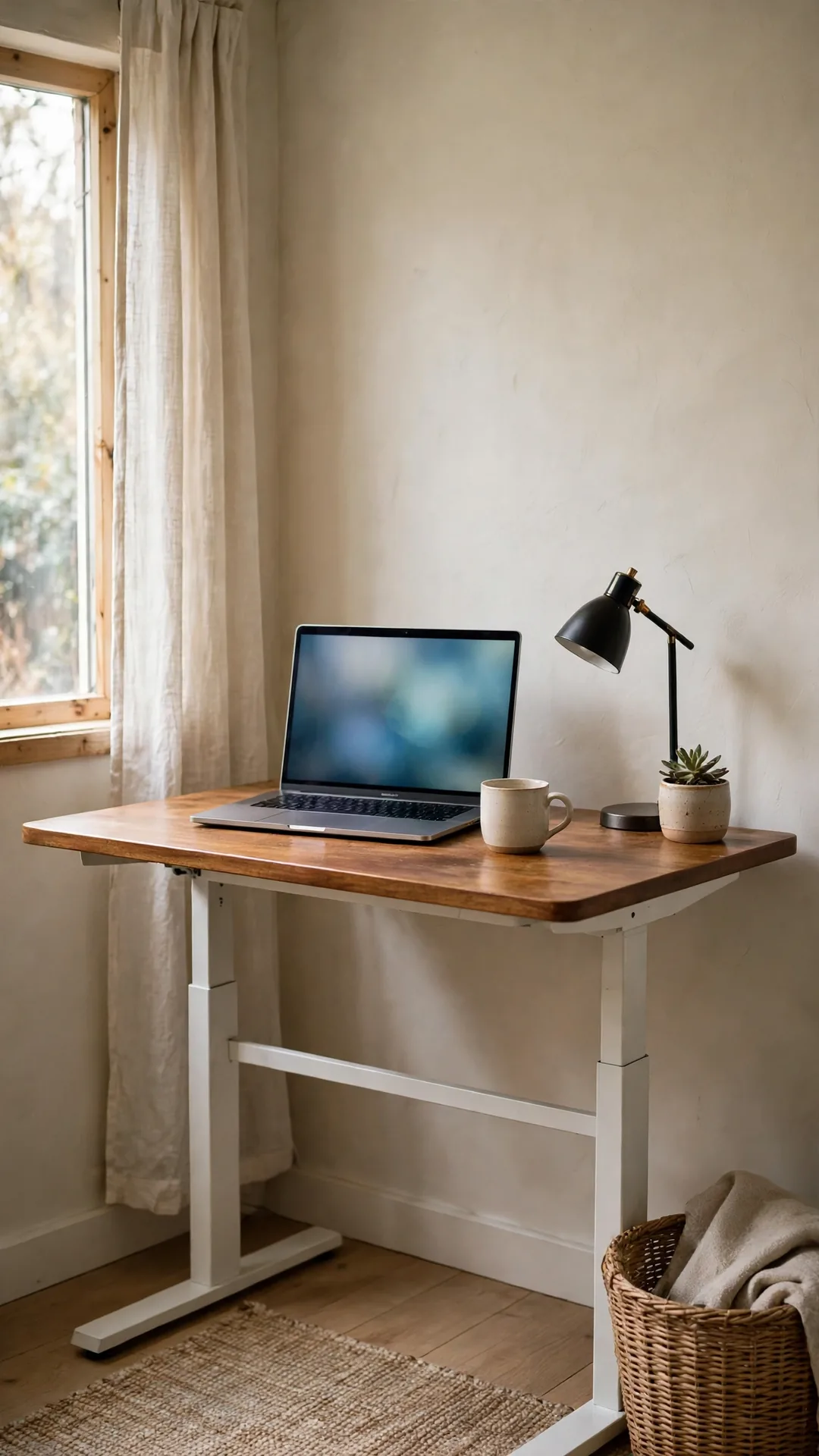
A secondhand standing desk costs half the price of a new one. Office closures and moves flood local listings. Check the motor and the top before you pay.
Local listings often include office chairs too, so check for a bundle deal.
How to do it:
- Test the lift through its full range.
- Check the top for deep scratches or stains.
- Ask for the power cord and the manual.
- Measure your car or van before pickup.
Best for: Budget buyers near a big city.
Budget: $80 to $250
Quick tip: Bring a friend, since frames are heavy.
53. End Each Day With a Desk Reset
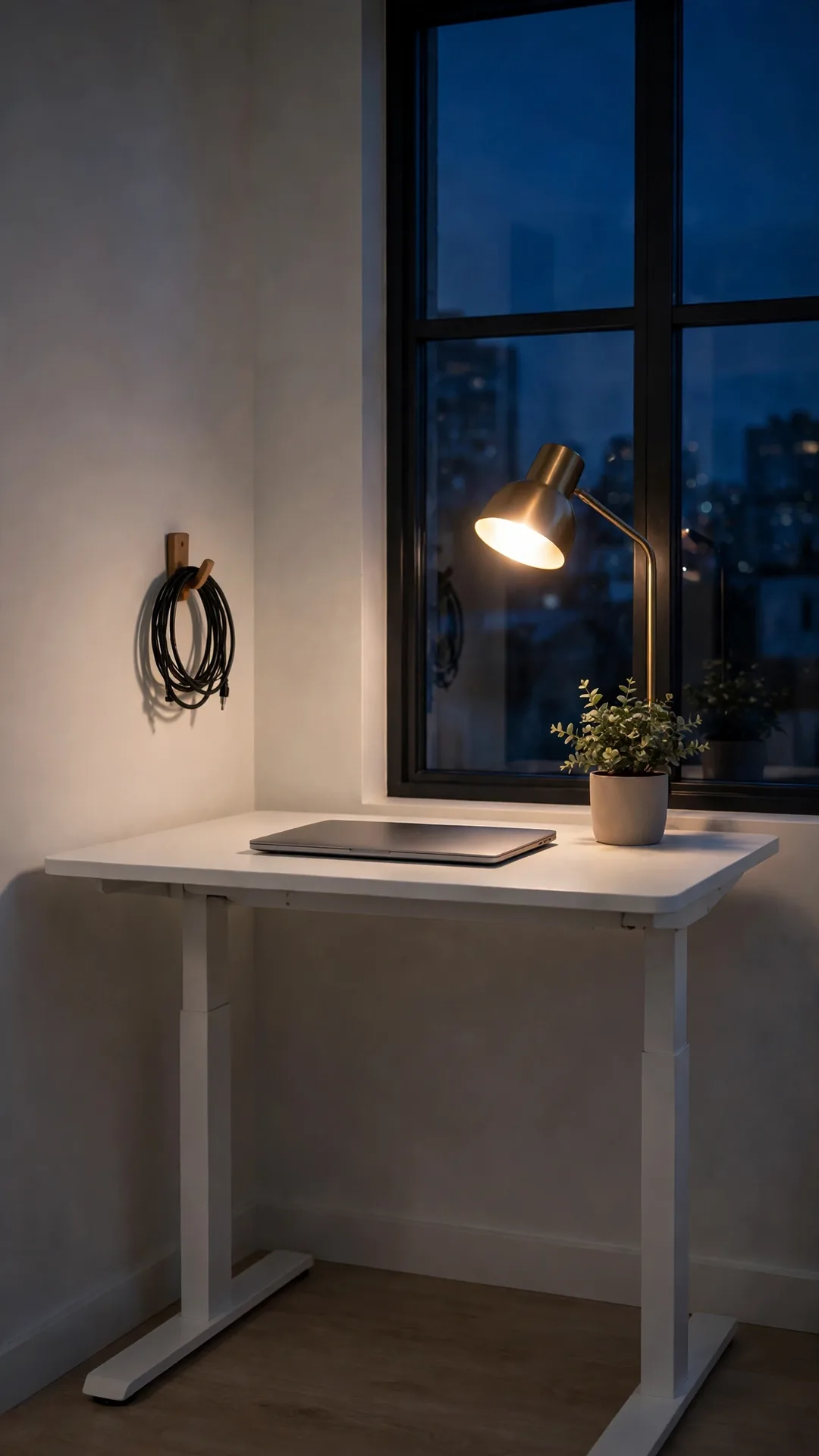
A tidy desk at night means a fast start in the morning. Clear the top, coil the cables and park the stool. These standing desk ideas for small offices end with a two minute reset.
How to do it:
- Clear papers into the wall file holder.
- Coil the charger cable on a hook.
- Wipe the top with a damp cloth.
- Lower the desk to sitting height overnight.
Best for: Anyone who shares the room after hours.
Budget: Free
Quick tip: A clear top makes the room feel bigger at night.
54. Plan Your First Week Standing
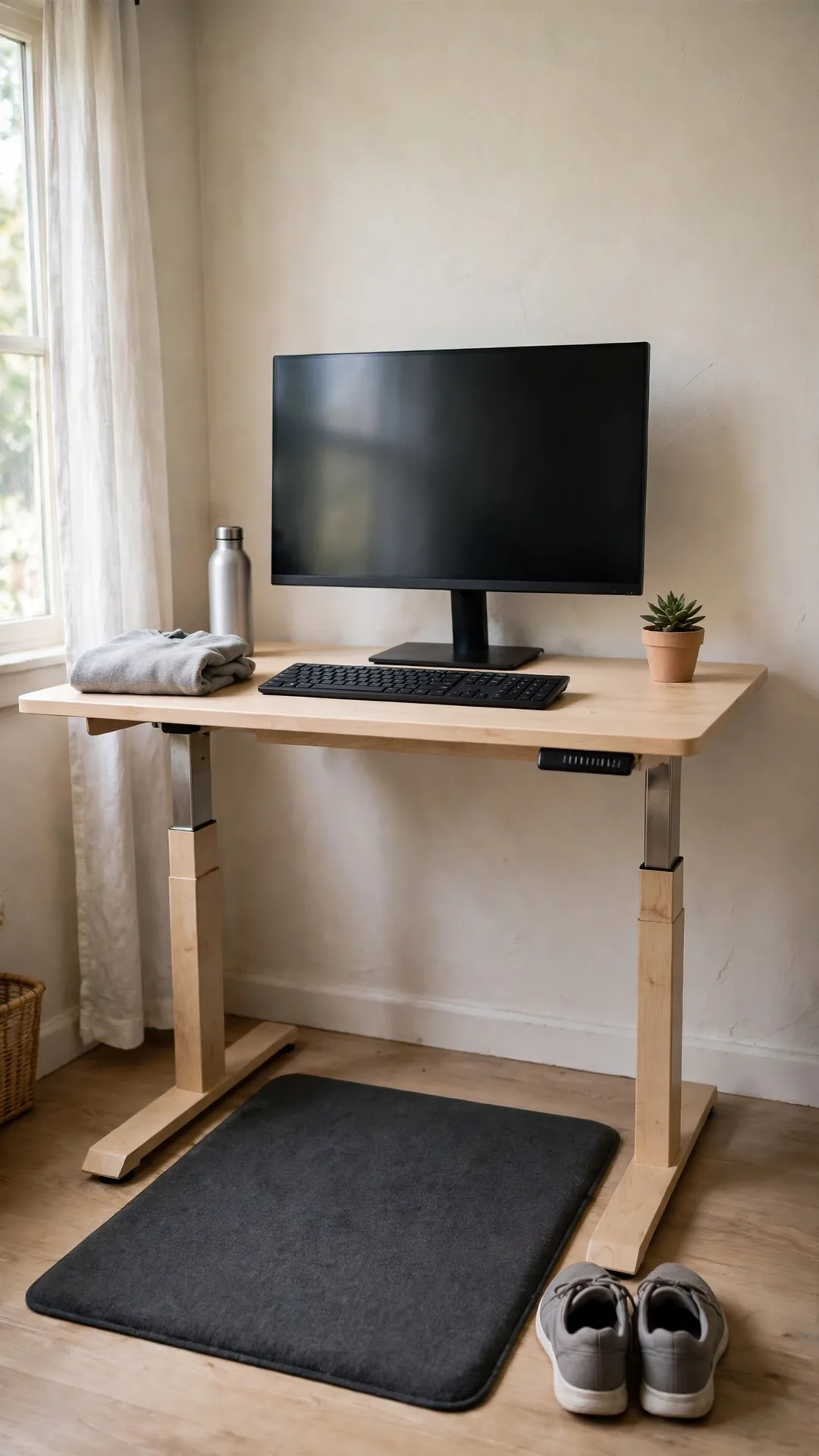
Your first week standing takes planning, not willpower. Short standing blocks build the habit fast. By week two, standing feels normal.
By day five most people stand through half the morning and only sit down for lunch and long calls.
How to do it:
- Stand for 20 minutes, three times on day one.
- Add 10 minutes to each block daily.
- Wear supportive shoes or stand barefoot on a mat.
- Track your blocks on a sticky note.
Best for: First time standing desk users.
Budget: Free
Quick tip: Sore feet mean shorter blocks, not quitting.
Stand Up and Start Small This Week
You do not need a big office to stand while you work. Pick one idea from this list and try it for a week. These standing desk ideas for small offices work best when you start small and build up. Save this post or pin your favorite idea to try next.
- 51 Bunk Bed Ideas for Small Kids Rooms That Wow Every Guest - November 26, 2026
- 55 Small U Shaped Kitchen Ideas That Cost Almost Nothing - November 26, 2026
- 58 Boho Small Apartment Decor Ideas You’ll Actually Use - November 25, 2026