
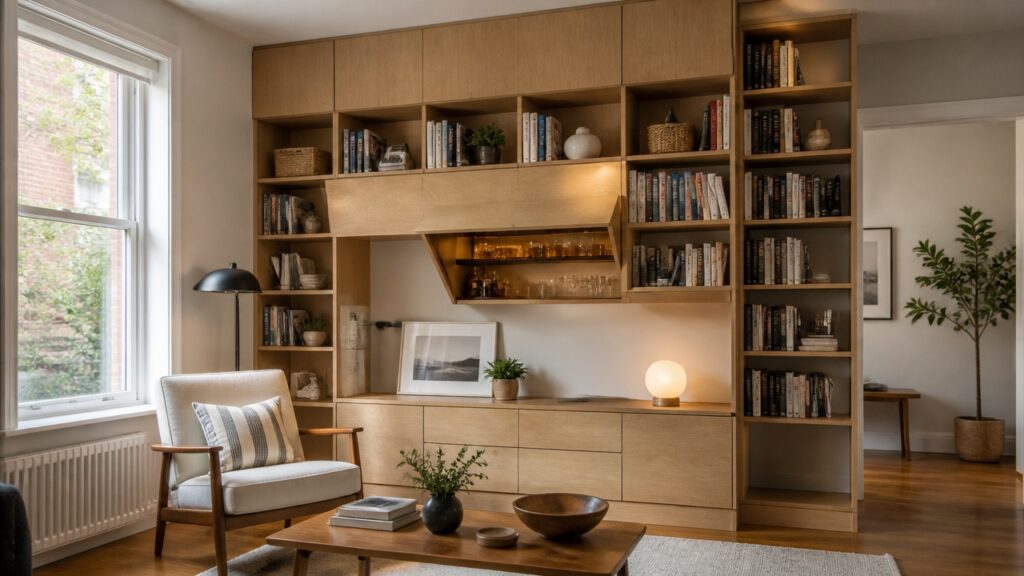
In the cozy corners of your apartment or tucked into the under-stair void, professional designers like Joanna Gaines and Neri & Hu have long extolled the virtues of maximizing vertical joinery and bespoke cocooning, with Jonathan Adler emphasizing layered lighting to evoke warmth without sacrificing openness. It’s these deliberate choices, think built-in bijoux shelves or repurposed corner niches, that transform cluttered spaces into curated retreats, where every inch is a carefully considered brushstroke. But as you consider your own palette and plan your joinery, a few expert insights might just inspire your next move.
How to Assess Your Small Space for a Library Nook
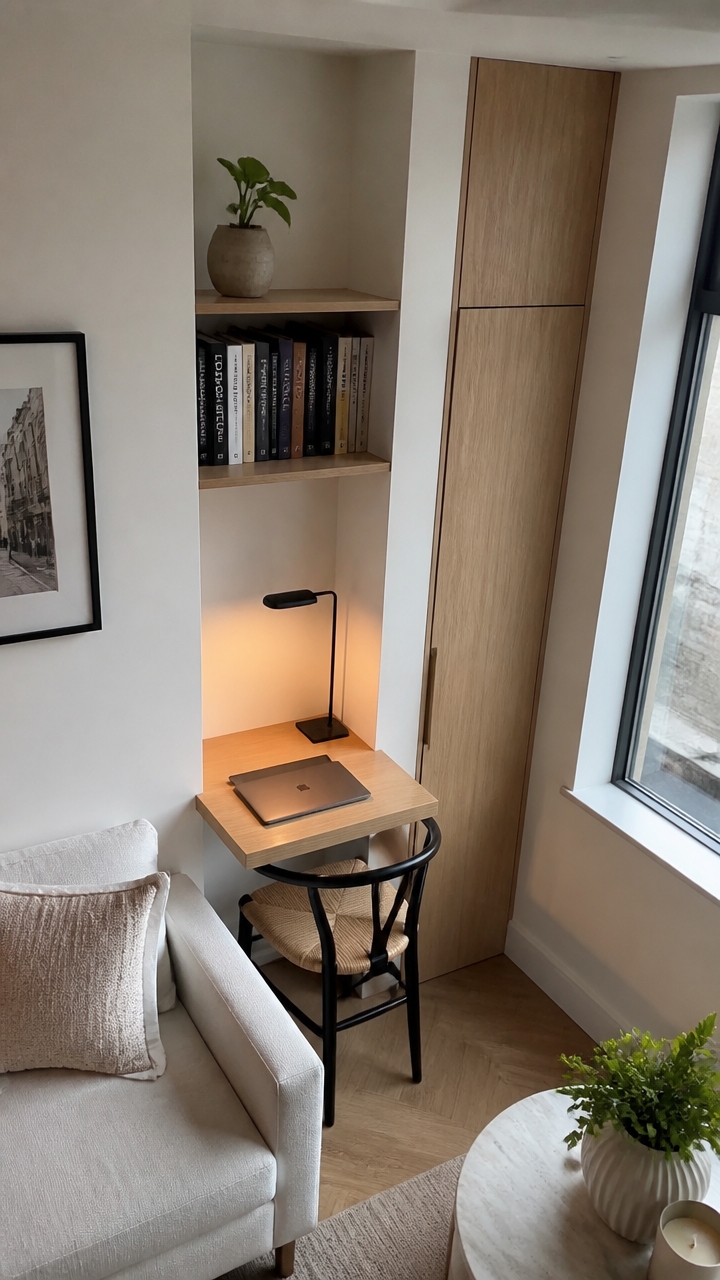
Accurately evaluating your small space is the essential first step to creating a functional and inviting library nook. Begin by measuring the entire area carefully, including corners, narrow spaces, and any height restrictions. Use a tape measure to capture precise dimensions, as even small discrepancies can affect your furniture choices and layout plans. Take note of architectural features like recesses, alcoves, or built-in shelving, which can be optimized for storage or cozy reading corners. Consider the proximity of natural light sources such as windows or skylights, as these can greatly enhance the reading environment and reduce energy costs. Keep an eye on existing furniture and whether it can be repurposed, for example, an unused side table can serve as a small bookshelf or side reading spot. Sketch multiple layout options to visualize how different arrangements will maximize storage, guarantee easy access, and create a comfortable, inviting space. A thorough space assessment helps you make informed decisions that transform even the tiniest nook into a welcoming library retreat.
Choosing Vertical Storage Options for Tiny Spaces
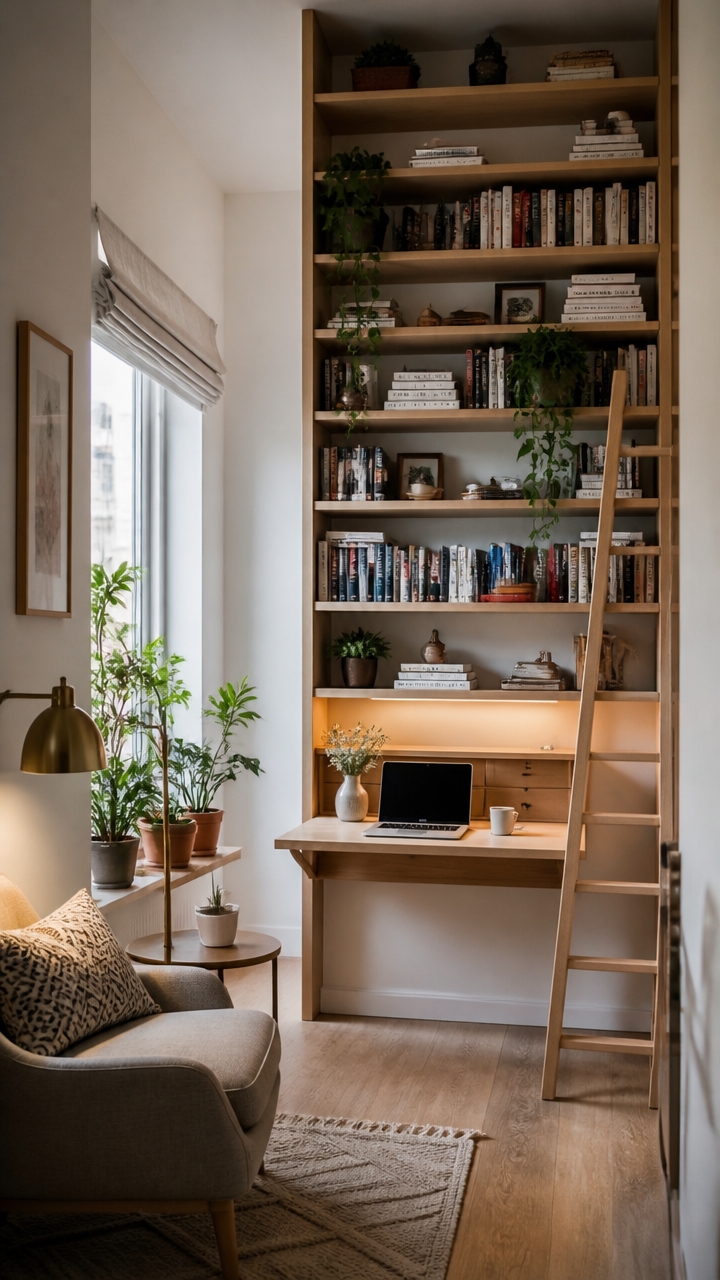
Maximizing your limited space begins with leveraging every inch of available vertical height. Installing tall, floor-to-ceiling bookshelves allows you to use vertical space efficiently, providing ample storage without taking up valuable floor area. When selecting these shelves, opt for slim profiles and sturdy materials that suit your room’s aesthetic. Make certain they are anchored securely to prevent tipping, especially in narrow or high-traffic areas. If the ceiling height permits, consider multilayered shelving units to add depth and organization options for different types of books and accessories. Incorporating adjustable shelving can also accommodate various items and changing needs over time. Using vertical storage strategies effectively helps to make small rooms feel more spacious and organized. By thoughtfully using vertical storage, you create a functional, organized library that feels spacious despite limited square footage.
Incorporate Multi-Functional Furniture to Maximize Your Space
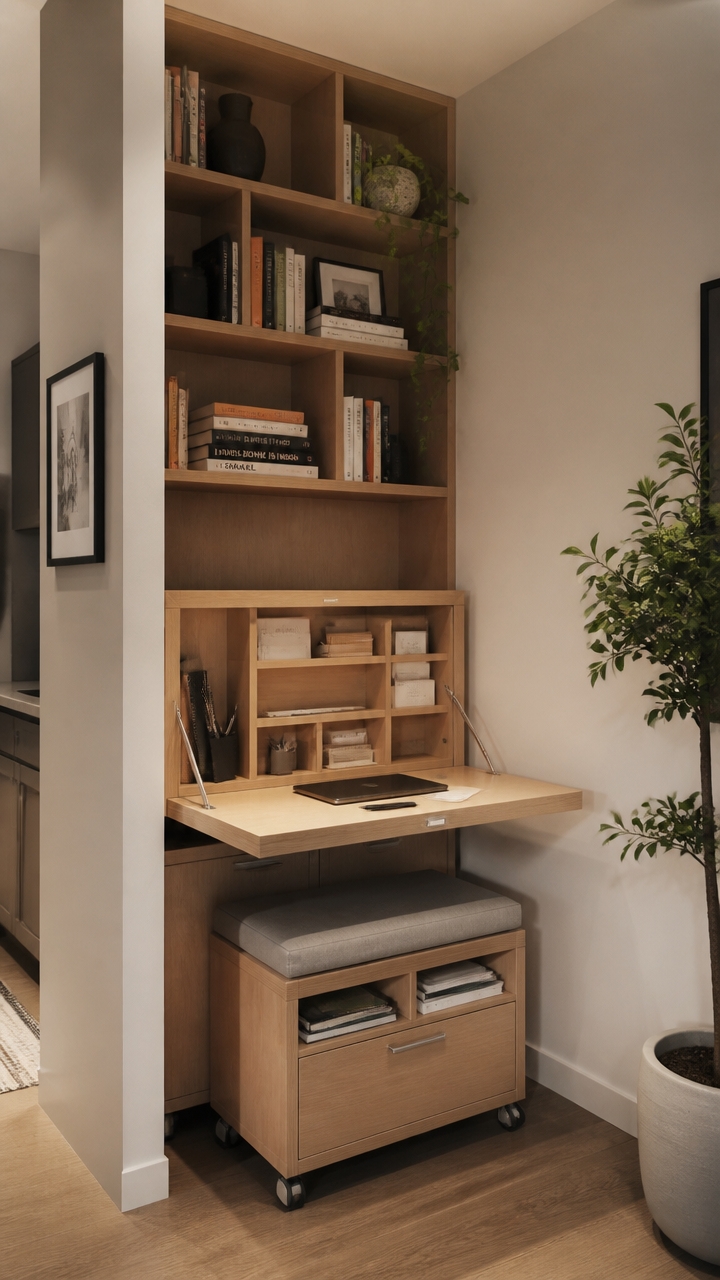
Incorporating multi-functional furniture into your small library space can dramatically enhance its utility and comfort. Pieces like storage ottomans serve dual purposes, providing comfortable seating while also offering hidden compartments for books, magazines, or reading accessories. Extendable desks or wall-mounted fold-out tables create flexible work surfaces that can be expanded when needed and tucked away to save space when not in use. Built-in benches with concealed storage provide a cozy reading nook that also keeps your supplies organized and out of sight. Modular and corner shelving systems allow for adaptable configurations that maximize every inch of your room, giving you the flexibility to rearrange as your needs evolve. Opting for furniture with adjustable or retractable features guarantees your space can be tailored for reading, working, or displaying your favorite decor, all without feeling cramped. Choosing the right space-saving strategies can turn a small library into a functional and stylish retreat.
Creative Ways to Use Corners and Dead Zones for Book Storage
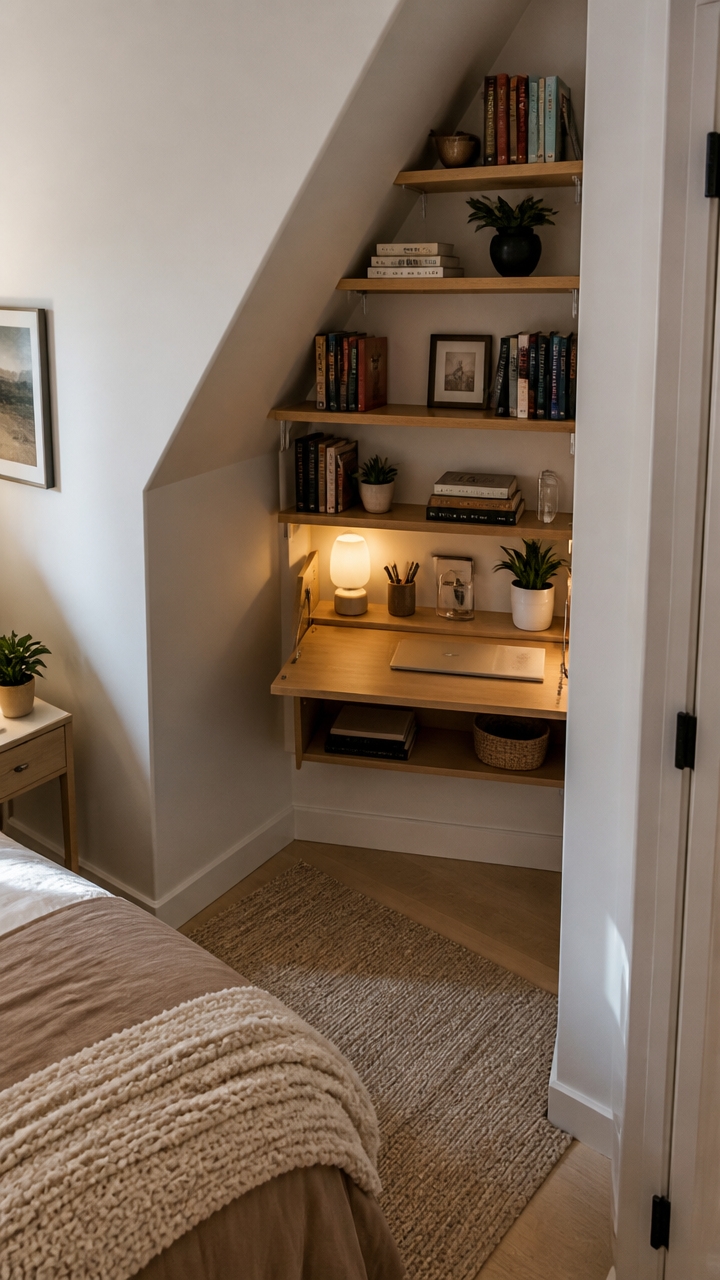
Use corner shelving units or custom-built corner bookcases to maximize vertical space in tight corners. These units are specifically designed to fit snugly into unused corners, making the most of often-overlooked areas. Installing tall, slim shelving that spans from floor to ceiling can dramatically increase storage capacity without encroaching on the main living area. Opt for materials like wood or metal that complement your existing decor, and consider adjustable shelves for flexibility as your collection grows. This approach turns awkward corners into practical, visually appealing storage solutions that keep books within easy reach while maintaining a tidy appearance. Incorporating space-saving strategies ensures you make the most of every nook and cranny in your small space.
Build an Inexpensive Floor-to-Ceiling Bookshelf
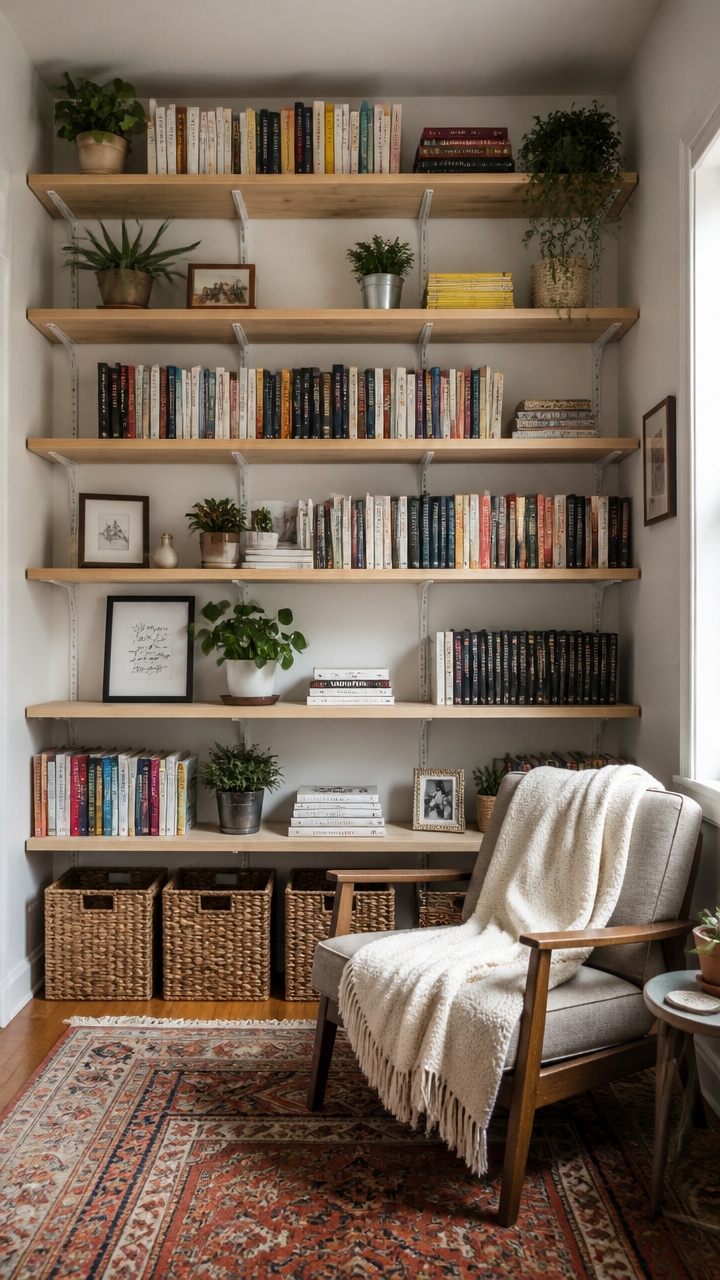
Building an inexpensive floor-to-ceiling bookshelf is a practical and budget-friendly way to maximize vertical storage in small spaces. Start by selecting affordable materials like plywood or particleboard, which are easy to cut and assemble. Using standard dimensions and modular designs allows you to create a customizable shelving unit without the need for complex carpentry skills. For added stability, incorporate inexpensive wall brackets or corner supports, especially for taller structures that may be more prone to tipping. Sand the wood surfaces smoothly and seal them with polyurethane or a sealant to enhance durability and give the shelves a polished look at minimal cost. Opting for open shelving with simple, straight-edged planks reduces waste and simplifies construction, making it easier to achieve a sleek, functional floor-to-ceiling library that fits seamlessly into any small space. Incorporating space-saving strategies can help you make the most of every inch of your small room.
Transform Under-Stair Spaces Into Cozy Reading Nooks
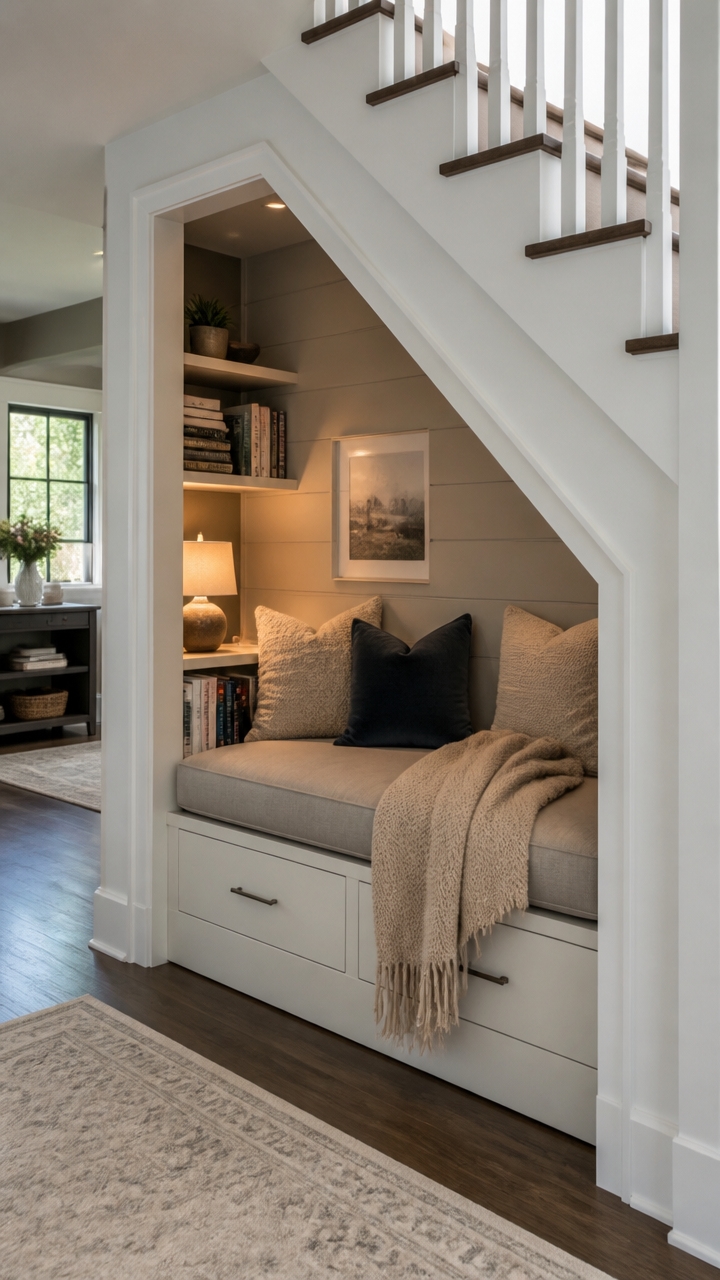
Transforming under-stair spaces into cozy reading nooks offers a perfect way to maximize small areas while creating inviting retreats. By customizing the space with built-in bookshelves along the walls, you can turn an often-overlooked corner into a functional storage solution that also adds charm. Incorporate a comfortable chair or a sleek bench with plush cushions to invite relaxation, complementing the cozy vibe. Layer soft lighting, such as fairy lights or a small table lamp, to create warm ambiance conducive to reading. Adding personal touches like artwork, small potted plants, or decorative accessories further enhances the inviting atmosphere. Using vertical space efficiently with tall shelving keeps the area organized and prevents clutter, while natural light through nearby windows or skylights makes the nook bright during the day. This thoughtfully designed corner becomes an intimate escape for quiet reading moments amidst limited space.
How to Use Floating Shelves to Maximize Floor Space
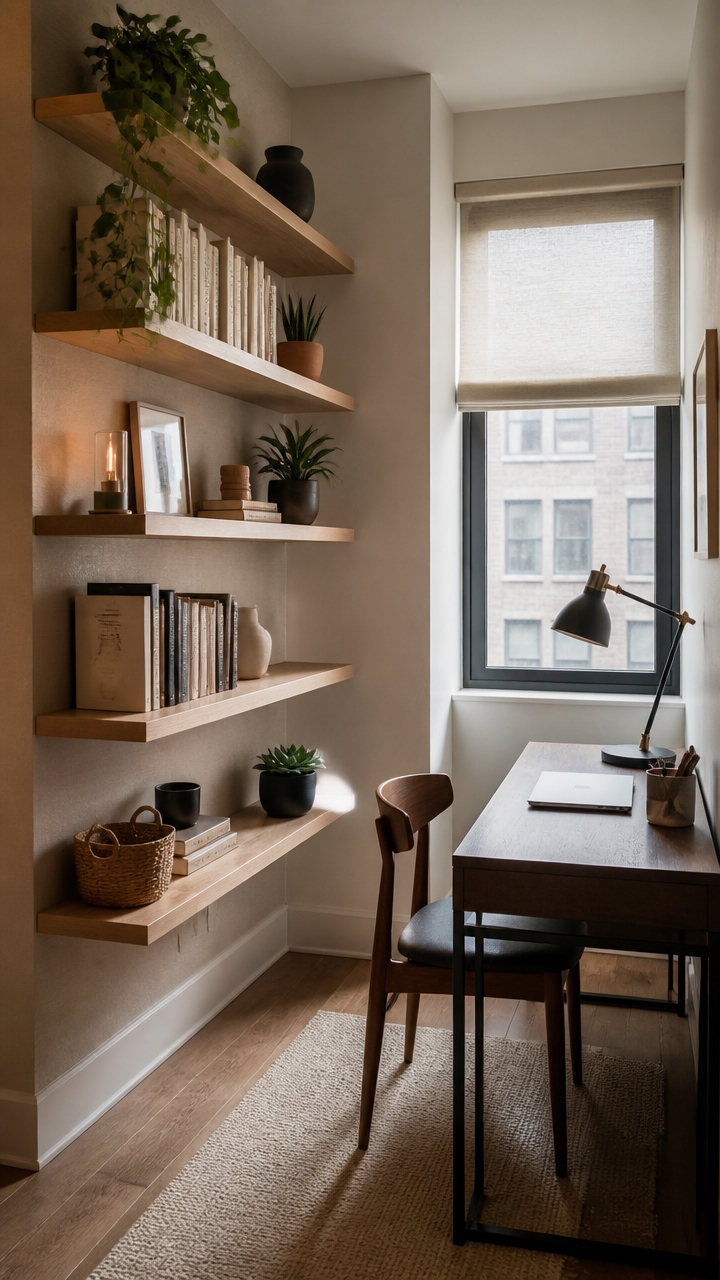
Floating shelves are a smart solution for maximizing floor space in small living areas. By mounting shelves directly onto the wall with hidden brackets or concealed hardware, you eliminate bulky furniture pieces that take up valuable floor real estate. This approach creates a clean, streamlined look that keeps the room feeling open and uncluttered.
Strategically placing floating shelves at various heights and depths allows you to optimize vertical storage. For example, installing narrow shelves above the doorways or windows can utilize wall space that is often left unused. Similarly, placing shelves between structural beams or in tight corners turns overlooked spaces into functional storage spots. This flexibility enables you to customize your storage layout to fit your specific room dimensions and style preferences.
Adding multiple rows of floating shelves creates a layered storage system, increasing capacity without reducing usable floor space. You can organize books, decorative objects, or small essentials on these shelves while maintaining a clear, open floor plan. Adjustable or modular shelf systems further enhance this setup by allowing you to reconfigure the arrangement as your collection grows or your needs change, making your small space both adaptable and efficient.
Design a Compact Yet Comfortable Reading Corner
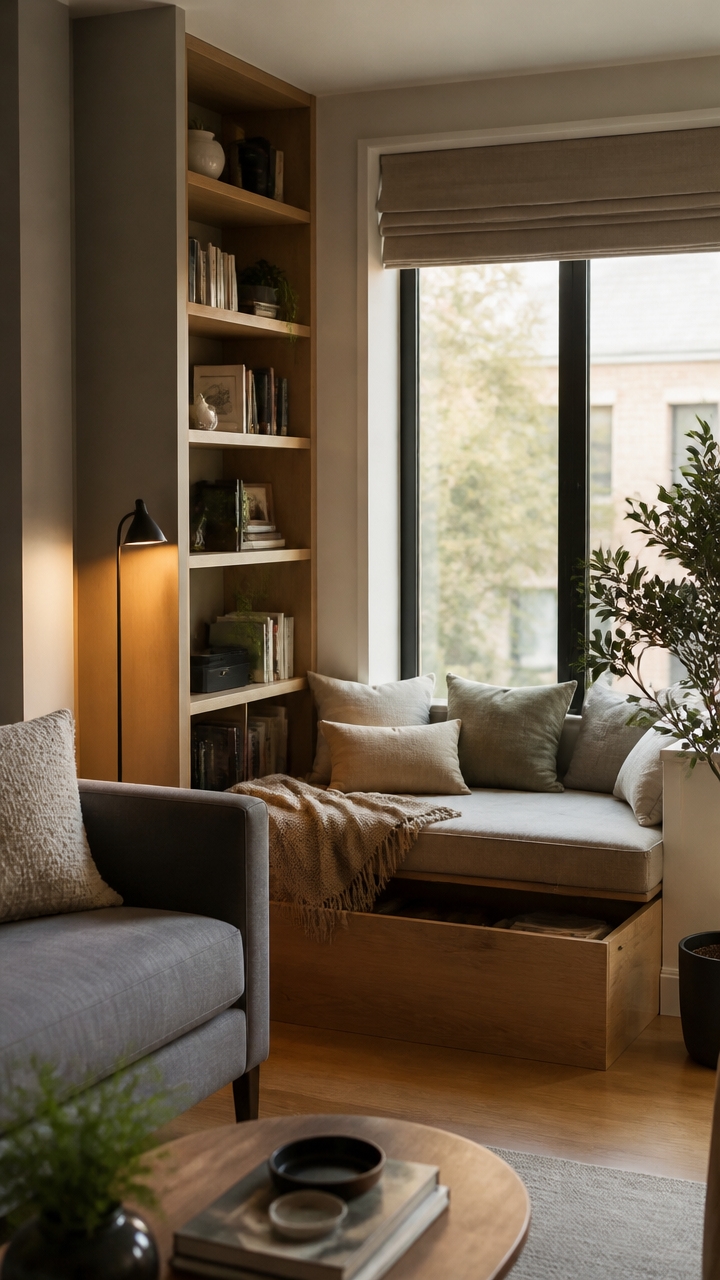
Utilize corners or under-stair areas to create cozy reading nooks with built-in shelving and comfortable seating. These spaces are often overlooked but can become inviting retreats with the right design. Installing custom-built shelves in corners maximizes vertical storage for books and decorative accessories without encroaching on available floor space. Pair this with a compact, cushioned bench or armchair that fits snugly into the corner, providing a dedicated spot for reading and relaxation. To enhance comfort, add cushions and throws that reflect your personal style. Incorporate layered lighting with wall sconces or adjustable reading lamps to create a warm, inviting ambiance while avoiding clutter. This approach transforms small, often neglected areas into functional and charming reading corners that make the most of your space.
Select Space-Saving Seating for Your Home Library
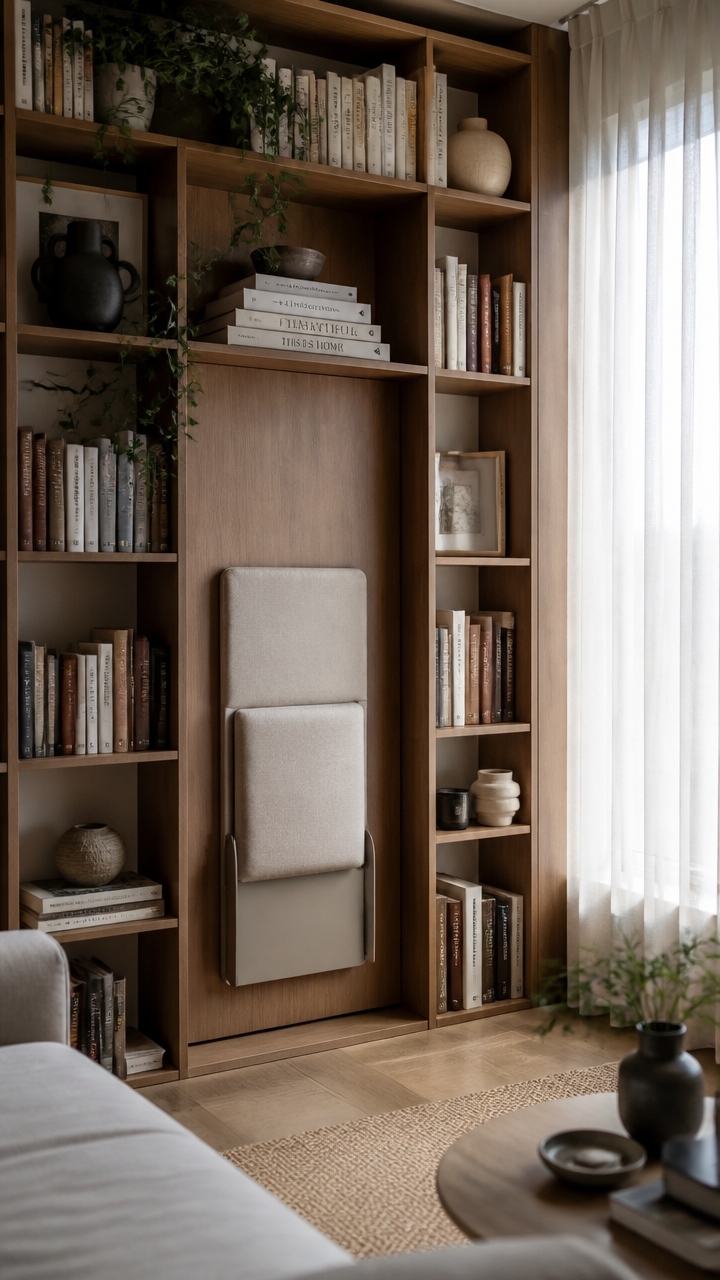
Opting for slim armchairs, compact loveseats, or foldable chairs is an effective way to maximize seating in a small home library without sacrificing comfort. These streamlined pieces are designed to occupy minimal space, allowing you to fit more seating options around your shelves or reading areas. Choose furniture with slender frames, light-colored upholstery, or sleek designs to keep the area feeling open and uncluttered. Foldable chairs can be easily stored away when not in use, making them ideal for flexible seating arrangements. Compact seating not only conserves space but also provides a stylish and functional addition to your cozy library nook.
Use Built-In Cabinets to Hide Clutter and Showcase Books
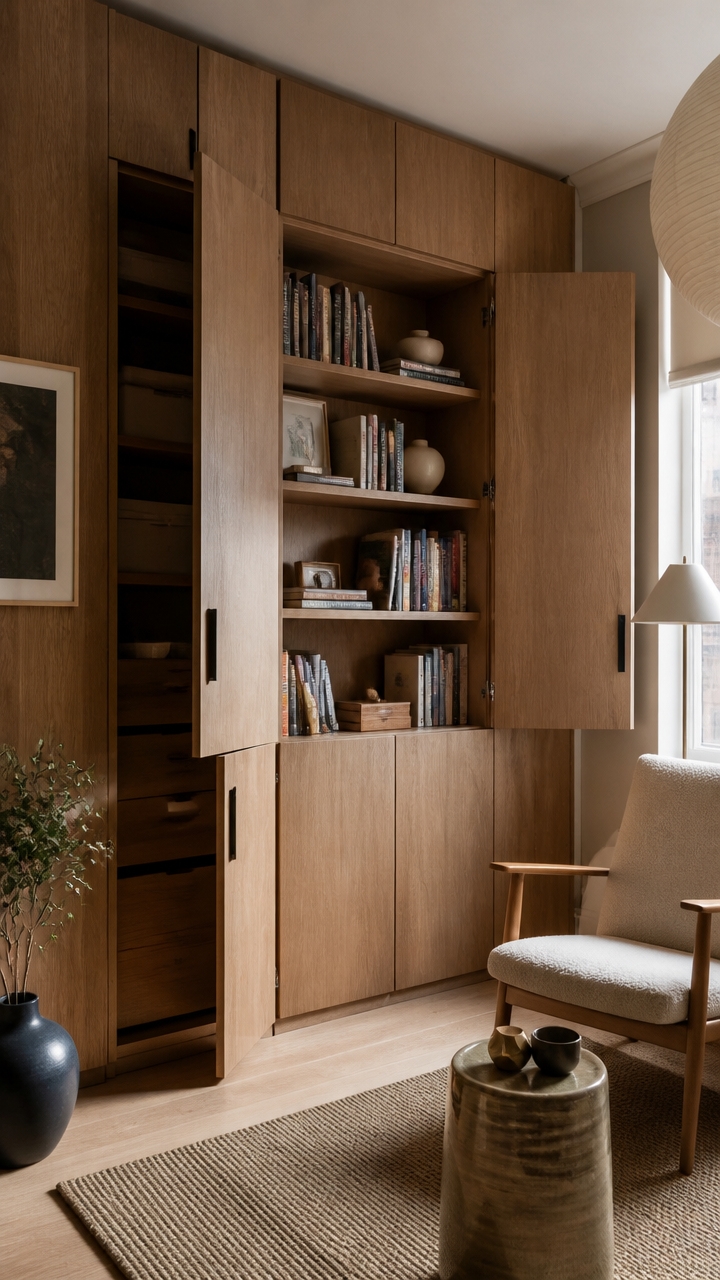
Built-in cabinets are a smart solution for small libraries, offering a seamless way to maximize storage while maintaining a clean, cohesive look. These custom solutions can be designed with a combination of open shelving and concealed storage, allowing you to display your favorite books or decorative items behind glass-front doors while hiding less attractive clutter behind closed panels. Strategically placing built-ins along empty walls or between windows can optimize space without overwhelming the room.
Incorporating hidden compartments or shallow drawers within the cabinetry palette provides discreet storage for items you prefer out of sight, such as remotes, stationaries, or other miscellaneous essentials. Materials like lightweight wood, painted MDF, or sleek laminate can be chosen to match your room’s aesthetic, ensuring the cabinetry blends seamlessly with existing decor. Proper proportions, considering the room size and shelving height, are key to avoiding visual clutter while still offering ample storage.
Organizing your collection with labeled or uniformly sized baskets within open shelves, combined with hidden compartments for less scenic items, creates a tidy and inviting library space. This approach allows you to enjoy your books and collectibles without visual noise, making the space both functional and aesthetically pleasing.
How to Layer Lighting for a Cozy Home Library
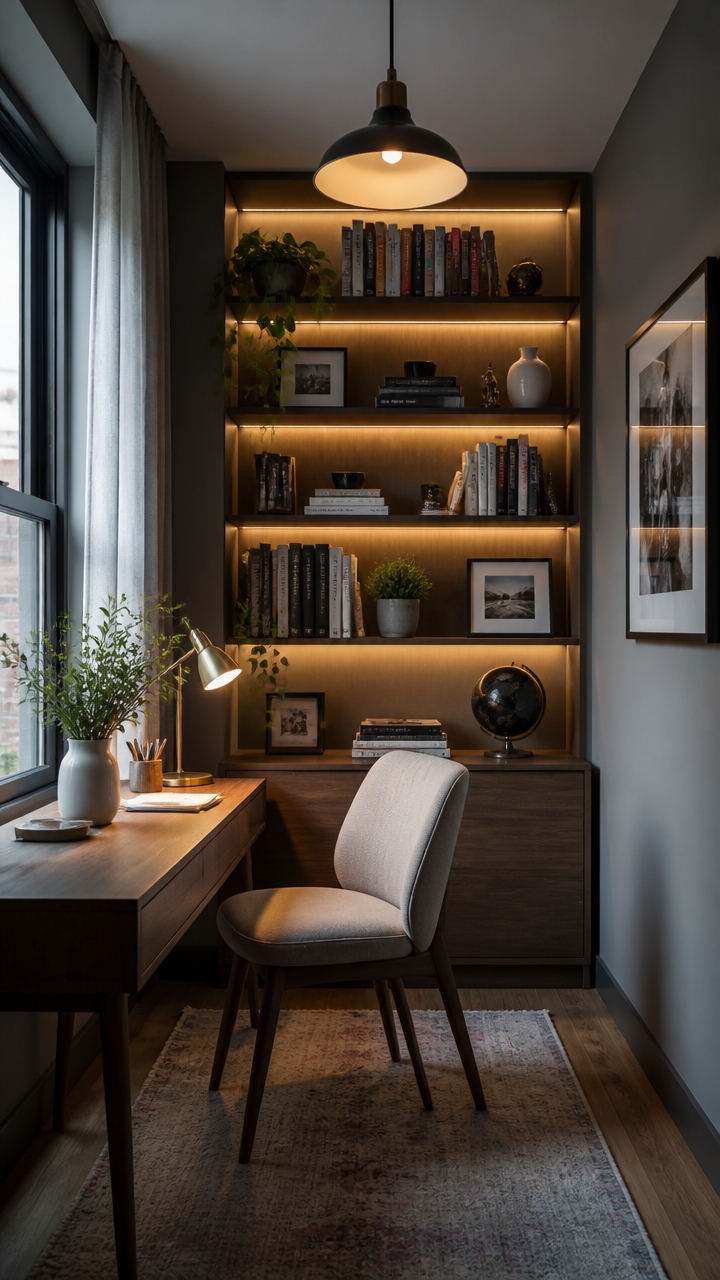
Layering lighting in your small home library creates a cozy and functional environment that invites relaxing reading sessions. Start with ambient lighting by installing ceiling fixtures or wall-mounted sconces that provide overall illumination without glare. Incorporate task lighting, such as adjustable table lamps or clip-on reading lights, directly near seating areas and workspaces to guarantee targeted brightness for reading or writing. Add accent lights, like small spotlights or LED strips, to highlight shelves, artwork, or architectural features, adding depth and visual interest. Using dimmable fixtures gives you flexibility to adjust lighting levels according to the time of day or mood, preventing eye strain during evening hours. Position these various light sources thoughtfully around the room so that each zone is well-lit and inviting, creating a layered lighting scheme that enhances both the aesthetics and functionality of your small library space.
Create a Mood With Layered Lighting in Small Spaces
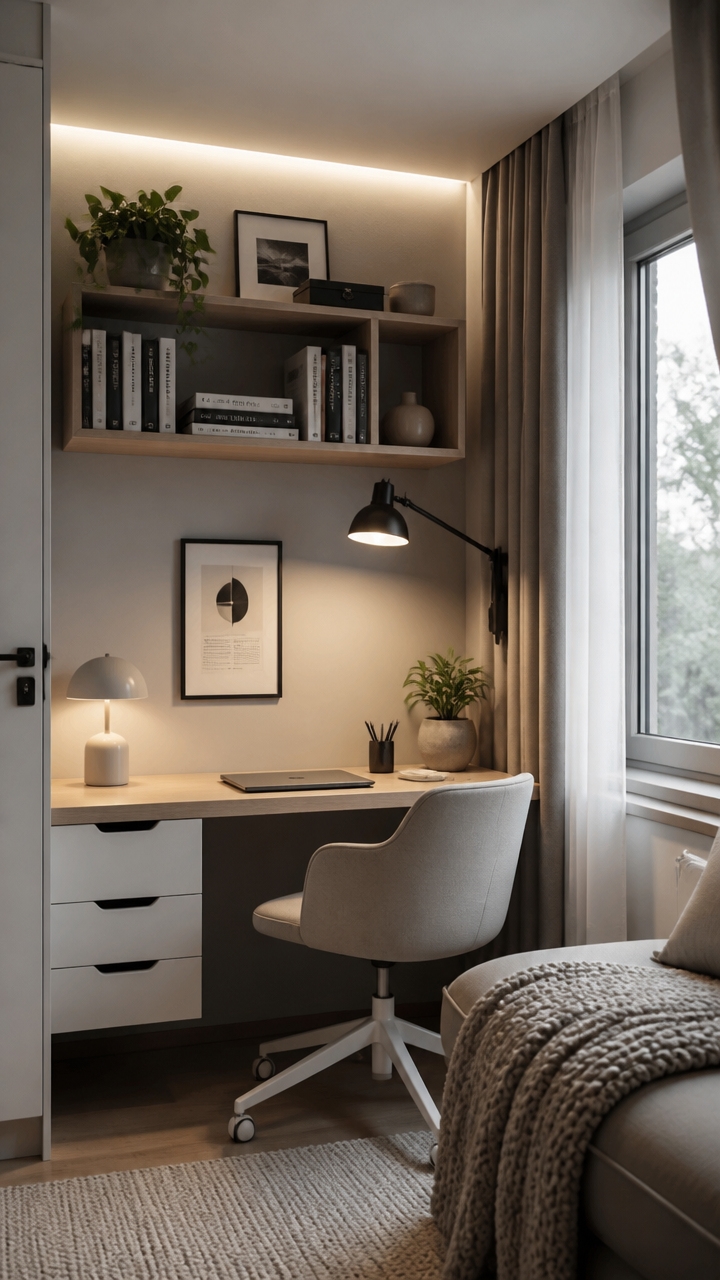
Layered lighting is essential for transforming a small home library into a cozy, inviting retreat. Combining ambient, task, and accent lighting helps create a warm atmosphere while providing the necessary brightness for reading and browsing. Ambient lighting establishes general illumination and sets the overall tone, while task lighting ensures focused light where it’s needed most, such as on reading nooks or desks. Accent lighting adds visual interest by highlighting decorative features or small collections, making the space feel thoughtfully curated and larger.
Using dimmable fixtures is especially practical in small spaces, as they allow you to adjust the light intensity based on the time of day or activity, reducing glare and eye strain. Incorporate adjustable lamps on tables or reading spots, and consider wall-mounted sconces to direct light precisely where it’s needed without cluttering the space. Strategically placing lights near shelves or artwork also helps highlight your collections and add layers of depth to the room’s design.
It’s important to maximize natural light by positioning windows thoughtfully and including reflective surfaces like mirrors or light-colored finishes to bounce daylight around the space. Ultimately, layered lighting makes a small library feel larger, more welcoming, and perfectly tailored for comfort and functionality.
Brighten Your Small Library With Accent Colors
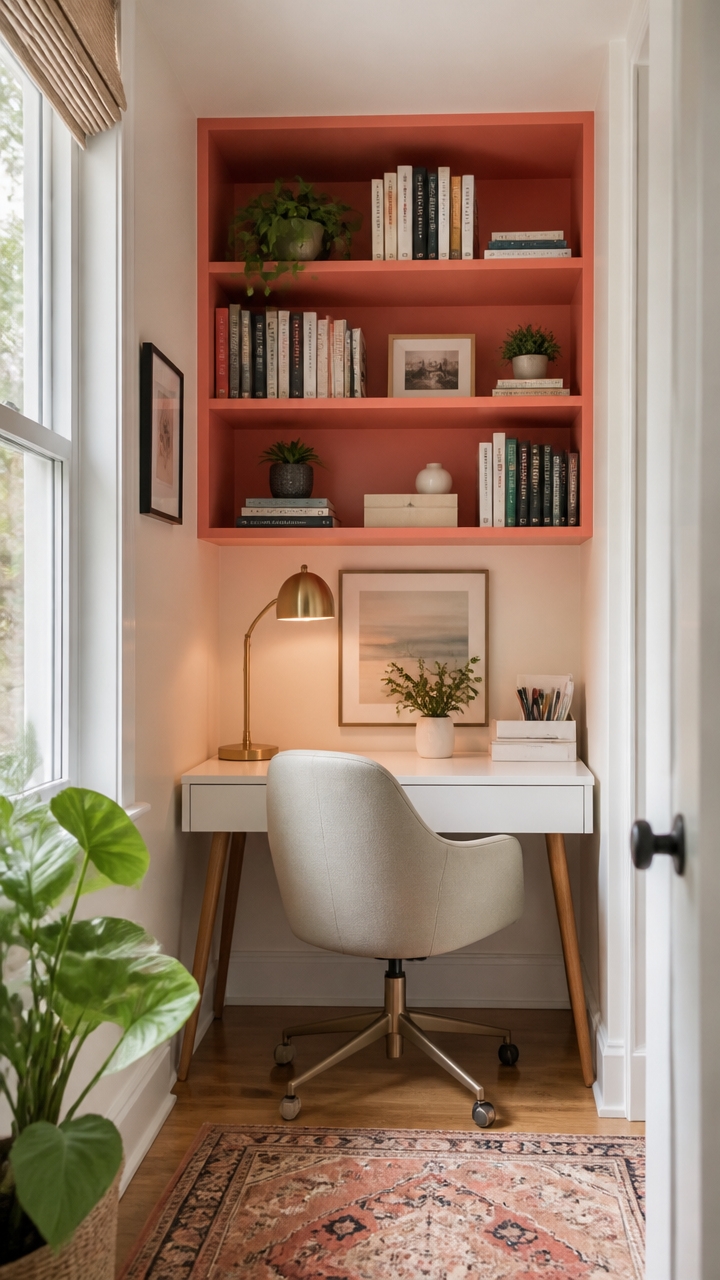
Using bold accent colors on your bookshelves and architectural details is an effective way to inject energy into a compact space. Start by choosing deep red, vibrant green, or other rich hues that stand out without overwhelming the room. Painting the back of the shelves or the edges of your bookcases with these colors creates a striking focal point, drawing the eye inward and giving depth to the space. Applying accent colors to trim around windows, door frames, or ceiling moldings adds visual interest and a sense of craftsmanship without cluttering the room. To keep the look balanced, pair these lively shades with neutral or white walls, which reflect light and make the space feel more open. Incorporating colorful accessories like decorative pillows, artwork, or small decorative objects in your accent hues can also enhance the vibrancy, tying the whole design together without sacrificing functionality. Strategically using vibrant paint shades on shelving or wall panels transforms a small, humble library into an inviting and lively retreat that feels curated and inspiring.
Decorate Your Space With Personal Book Displays
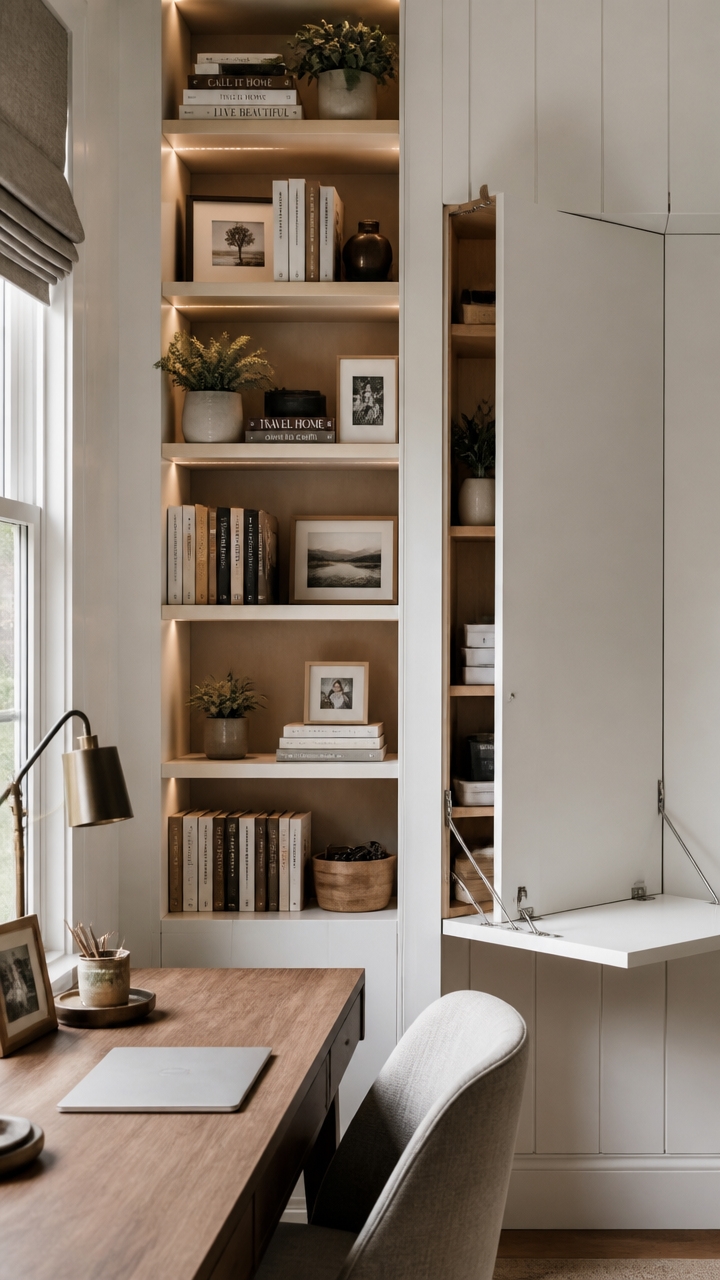
Personalized book displays can transform a small space into a reflection of your unique style and interests. By incorporating photos, collectibles, artwork, or meaningful mementos alongside your books, you create a visually mesmerizing and intimate environment. Place your favorite books at eye level on open shelves or built-in units to highlight them as focal points, making use of custom or floating shelves for easy access. Arranging books by color, subject, or size not only enhances visual harmony but also makes your display feel intentional and curated. Incorporate decorative bookends or themed accessories to add personality, break up open shelves, and maintain an inviting flow. Don’t shy away from mixing personal memorabilia, such as framed photos or small collectibles, within the shelving to highlight your interests and create a sense of storytelling within your small space. This approach makes your bookshelf not just a storage area but a meaningful showcase of your personality.
Add Greenery to Bring Freshness to Your Library Area
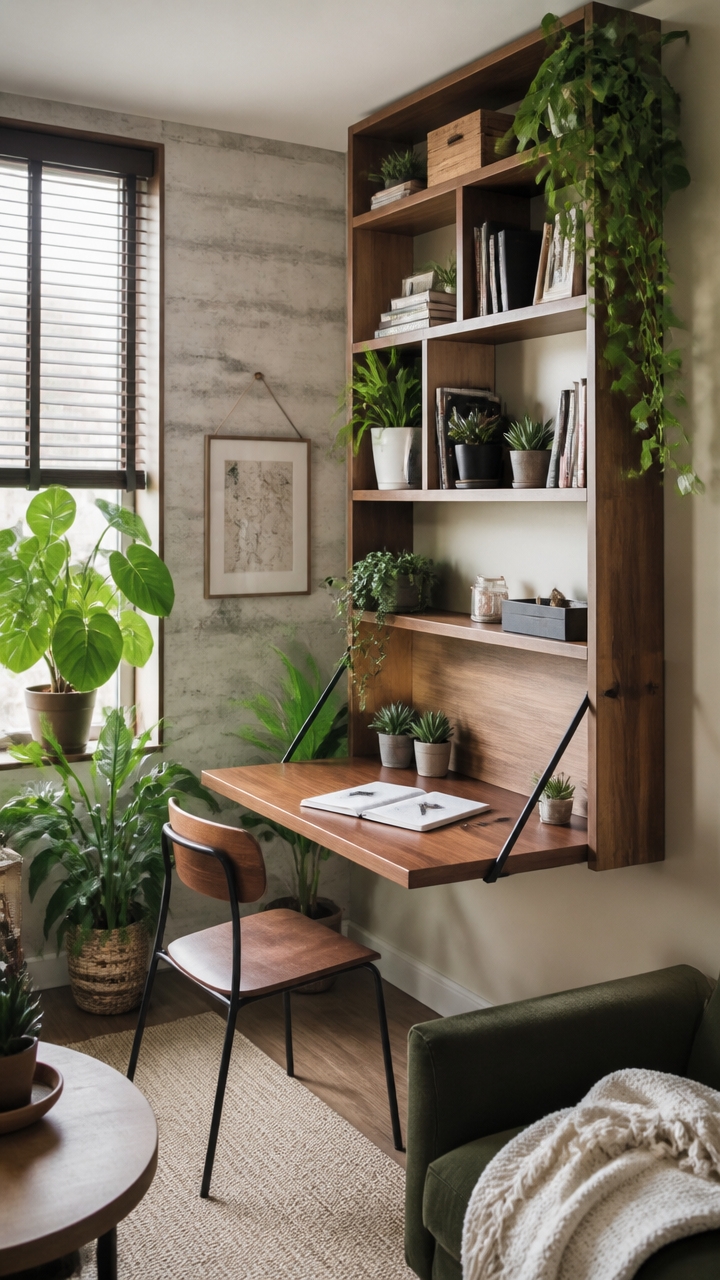
Incorporating plants into your small library creates a vibrant, calming environment that feels inviting and lively. Use hanging planters or wall-mounted holders to maximize shelf space while adding greenery. These vertical solutions keep plants accessible and visually appealing without cluttering your surface areas. Choose low-maintenance plants like ferns or pothos that tolerate low light and require minimal care, ensuring they thrive in indoor spaces with limited natural sunlight. Position small potted plants near seating areas or beside bookshelves to create cozy spots that invite relaxation and focus. For added dimension, incorporate taller, leafy plants such as peace lilies or rubber plants, which introduce height and lushness, giving your small library a balanced, natural ambiance.
Combine Shelves and Storage to Keep Your Library Tidy
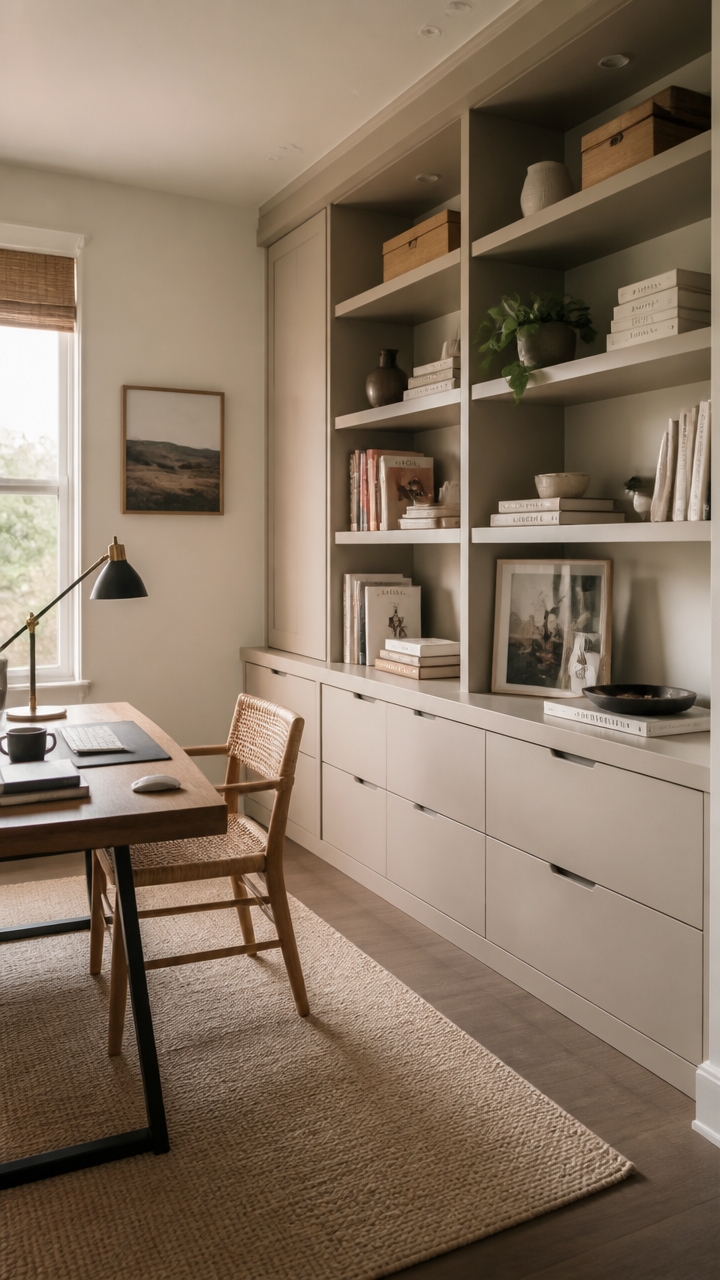
Integrating both open shelving and closed storage options creates a flexible and organized approach to small space libraries. Built-in shelves with glass doors allow you to display treasured collections or decorative items while protecting them from dust and damage. These doors provide a clean, streamlined look and make it easy to keep clutter out of sight when not on display.
Pair this with open shelving to hold frequently accessed books or decorative pieces, ensuring your most-used items are within easy reach. Incorporate closed cabinets or drawers beneath or adjacent to open shelves to conceal less attractive items or overflow books, maintaining a tidy appearance. This combination maximizes accessibility and organization without overwhelming the room.
When designing your shelving, consider proportions that suit your space, tall, wall-to-wall units help utilize vertical space efficiently, while smaller modules can fit into awkward corners or niches. Materials like wood or metal with glass accents can add style and durability. Proper organization within the closed storage, such as labeled baskets or dividers, will keep your library neat and easy to browse.
Repurpose Vintage and Reclaimed Items for Unique Decor
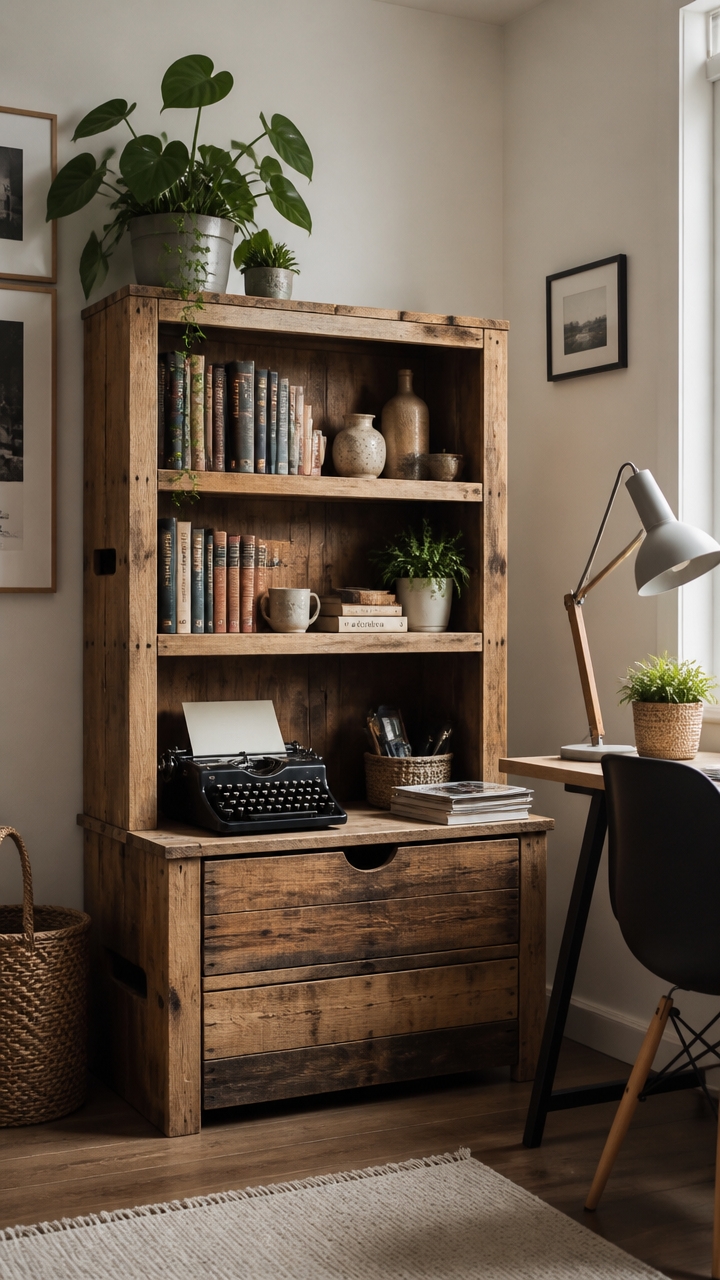
Repurposing vintage and reclaimed items for your small home library adds charm and a sense of history while maximising space efficiently. Vintage furniture, such as an antique desk or a distressed bookshelf, brings a unique character that elevates the decor beyond standard shelving. These pieces often have a solid build and interesting details that contribute warmth and personality to your layout. Placing a vintage desk in a corner can create a cozy reading nook or workspace, while repurposed bookshelves made from reclaimed wood can seamlessly blend storage with rustic appeal.
Utilizing reclaimed wood for shelving panels or wall accents not only offers a sustainable solution but also infuses the space with natural textures and earthy tones that make the area inviting. This kind of material choice can be tailored to fit small nooks snugly or be used as feature panels behind your books to create visual interest.
Display vintage collectibles, heirlooms, or antique finds within your library to introduce nostalgic elements that give your space a story-rich, personalized touch. Incorporate items such as vintage picture frames, old cameras, or decorative ceramics on your shelves as focal points that spark conversations and add layers of history.
Recycling or repurposing old cabinetry or architectural salvage, like an antique window frame or a distressed cabinet, can serve as clever storage solutions that maximise limited space while contributing to a vintage aesthetic. These pieces can be adapted to hold books, display collectibles, or tuck away small items, all while adding character.
Thrifted or salvaged accessories, such as vintage lamps, brass or bronze accents, or antique picture frames, elevate the overall decor. They introduce timeless appeal and give your small library a curated, story-rich ambiance, all without overwhelming the space. When choosing these elements, consider proportional sizing and placement to ensure they complement your existing layout without cluttering.
Incorporating vintage and reclaimed items not only enriches the personality of your small home library but also offers practical, eco-friendly solutions that make your space uniquely yours.
Organize Your Books by Genre, Size, or Color
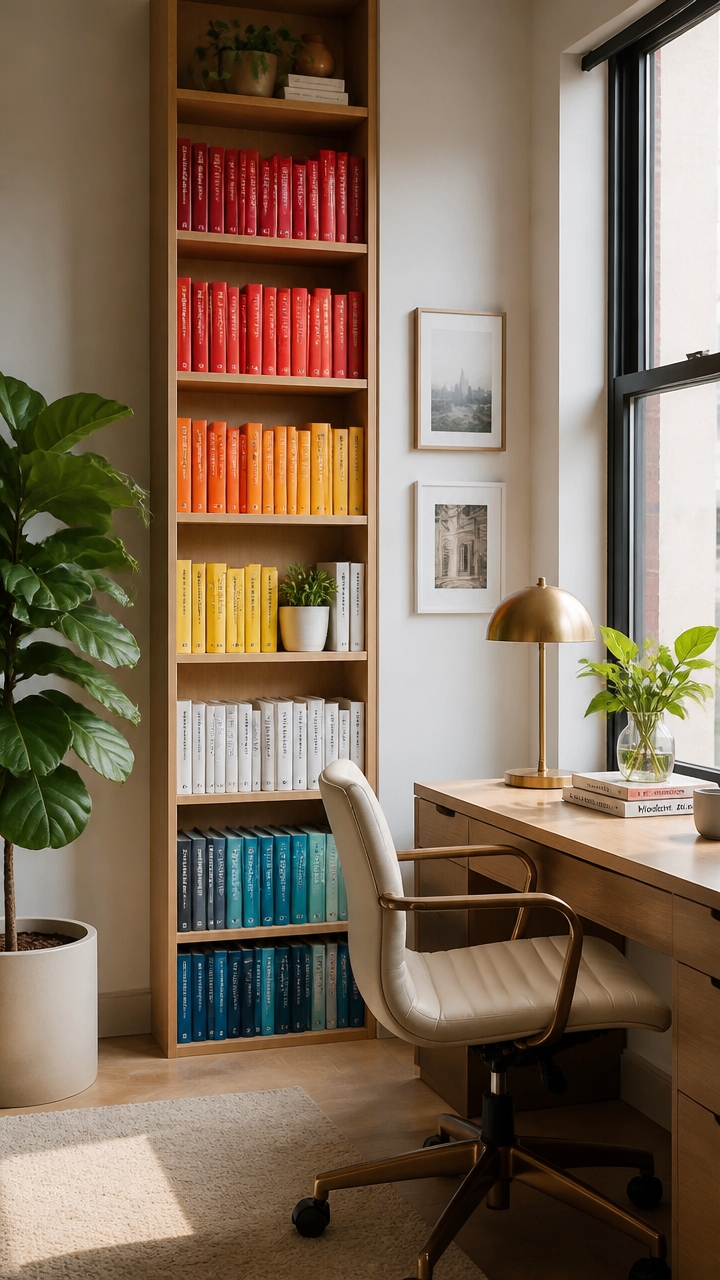
Organizing your books by genre, size, or color can transform a small library into a functional and visually appealing space. Sorting books by genre allows you to quickly locate fiction, history, or cookbooks without sifting through unrelated titles. It creates a logical flow that makes browsing more intuitive, especially if you’re someone who tends to read within specific genres. Arranging books by size helps create a neat, uniform look, especially on shelves where stacking or lining up books can otherwise appear cluttered. This method maximizes visual order and can make shelves feel less crowded, providing a clean, streamlined appearance. Sorting by color offers an eye-catching display that adds vibrancy and personality to your space. Bright book stacks or rainbow arrangements can serve as decor focal points, making even a small library area feel custom and lively. Using these categorization techniques allows for a personalized system that not only maximizes space but also enhances the overall aesthetic of your small book collection.
Use Paint Colors to Make Your Small Library Feel Larger
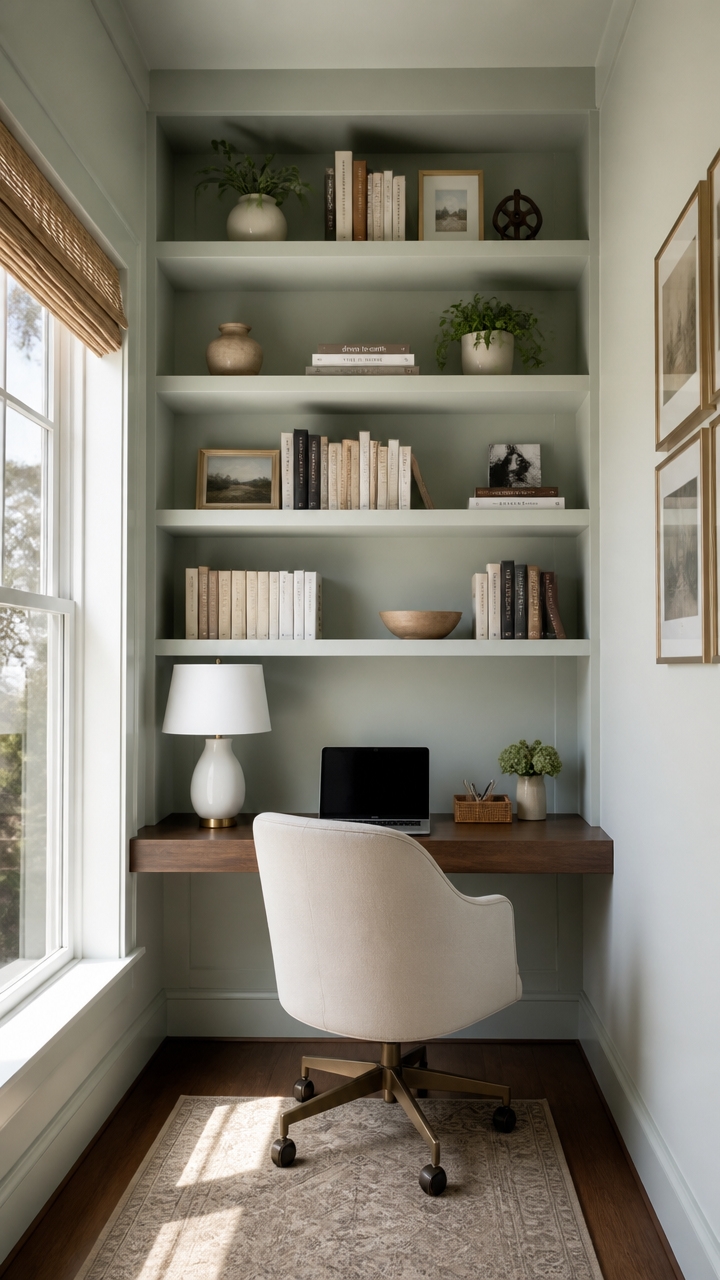
Choosing the right paint colors can dramatically influence the perception of space in a small library. Light, neutral hues like whites, beiges, or pale grays reflect more natural light, helping the room appear brighter and more open. Applying these shades to your walls creates an airy backdrop that doesn’t feel overwhelming, even in limited space. To enhance this effect, painting the ceiling a light shade can draw the eye upward, making the room seem taller and more spacious. Incorporating an accent wall in soft pastels or muted tones adds visual interest without creating clutter, helping to maintain an open feel. When selecting colors, consider the natural light available and aim for shades that brighten and reflect, making your small library a welcoming and expansive retreat.
Add Personal Touches to Make Your Library Reflect You
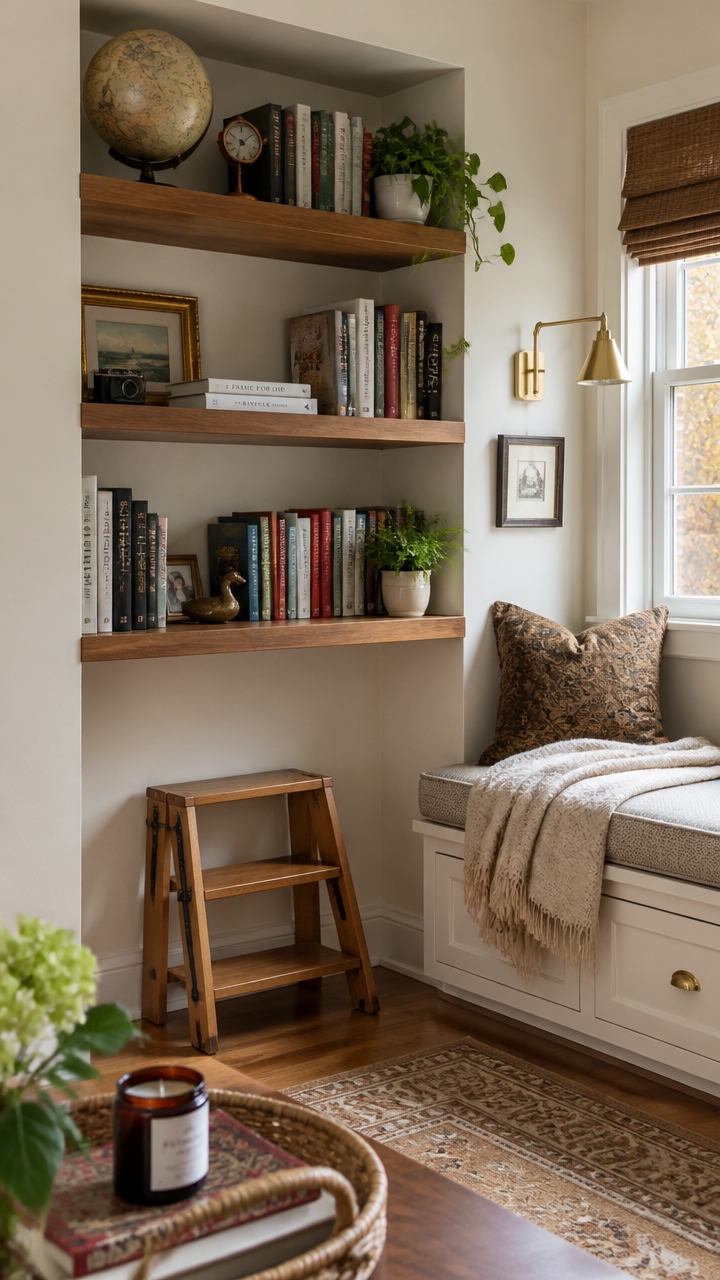
In small spaces, personal touches make your library feel welcoming and uniquely yours. Incorporate meaningful memorabilia like family heirlooms, travel souvenirs, or special keepsakes directly into your shelving. For example, you can display vintage items among your books or place treasured objects on open shelves to add character and sentimental value. These personal elements not only customize the space but also spark conversation and create a sense of connection to your memories and experiences. Regularly rotate items or add new finds to keep the display fresh and engaging, ensuring your library remains a true reflection of your personality.
Top Small-Space Library Design Ideas From Interior Experts
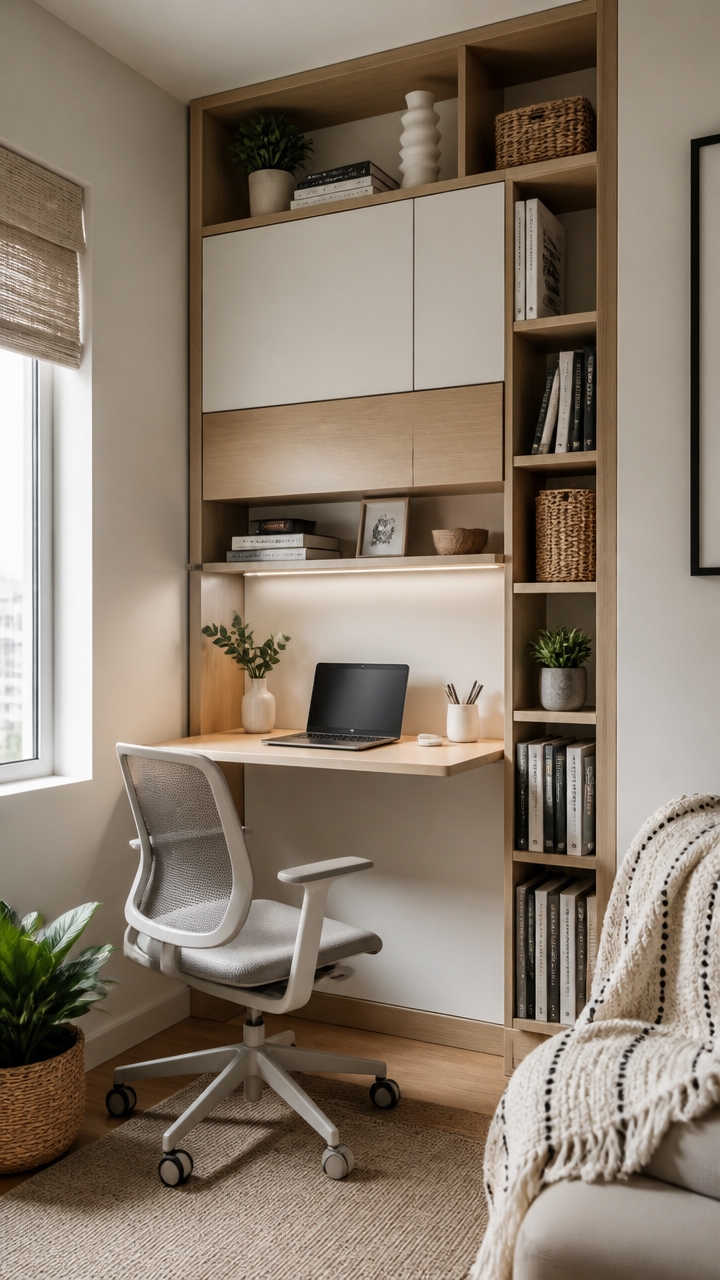
In small rooms, every inch counts, making corners, alcoves, and nooks excellent opportunities to maximize storage and functionality. By installing custom or modular shelving units in these often-overlooked areas, you can create dedicated book zones without sacrificing floor space. For example, a corner bookshelf can wrap around a room’s edge, providing ample storage for a sizable collection while maintaining an open feel. Alcoves built into walls can be transformed into cozy reading nooks with integrated shelving and a small chair, turning an awkward space into a focal point. When designing for tight spaces, consider floating shelves or tiered storage solutions that don’t overcrowd the room. Proper placement guarantees easy access to your books while freeing up the main floor area for seating or other functions. Incorporating these underused zones makes your small library both practical and visually appealing, leveraging every bit of available space to reflect your personal style and reading habits.
Final Takeaways
Back in your cozy nook, balancing stylish joinery, like the sleek, walnut “Hertford” shelving from Made.com with its delicate brass accents, and clever paintwork, such as Benjamin Moore’s “Hale Blue,” proves that thoughtful choices turn tight quarters into inviting retreats. Embrace the notion that every centimeter, from under-stair compartments to layered lighting, merits intention, because as seasoned designers say, it’s all about stitching a room so seamlessly that it feels like it’s always been yours, just waiting to be explored.

- 21 Creative Small Space Ideas You Need to Try - September 23, 2026
- 22 Small Space Computer Desk Ideas That Transform Any Space - September 23, 2026
- 20 Small Sewing Room Ideas Space Saving That Actually Work - September 22, 2026