
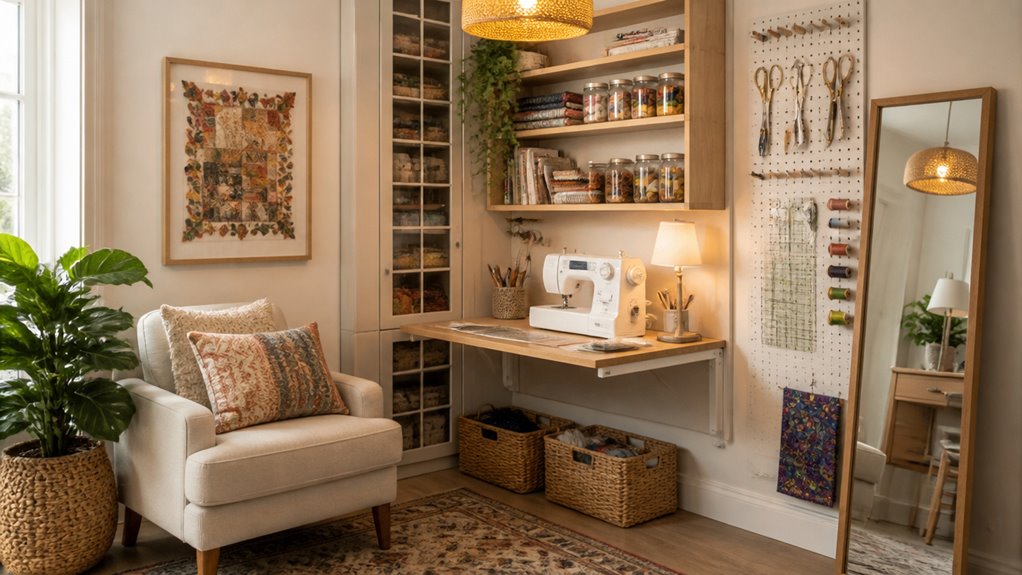
Imagine fitting a full sewing station into a closet space just 4 feet wide, sounds tricky, right? With smart organization ideas, even small rooms can feel roomy and functional. You’ll learn simple ways to maximize every inch, like using vertical storage or fold-away tables. Surprisingly, little changes can make your sewing area more comfortable and inspiring, but there’s more to explore if you want your tiny space to truly work for you.
Assess Your Tiny Sewing Space and Identify Your Needs
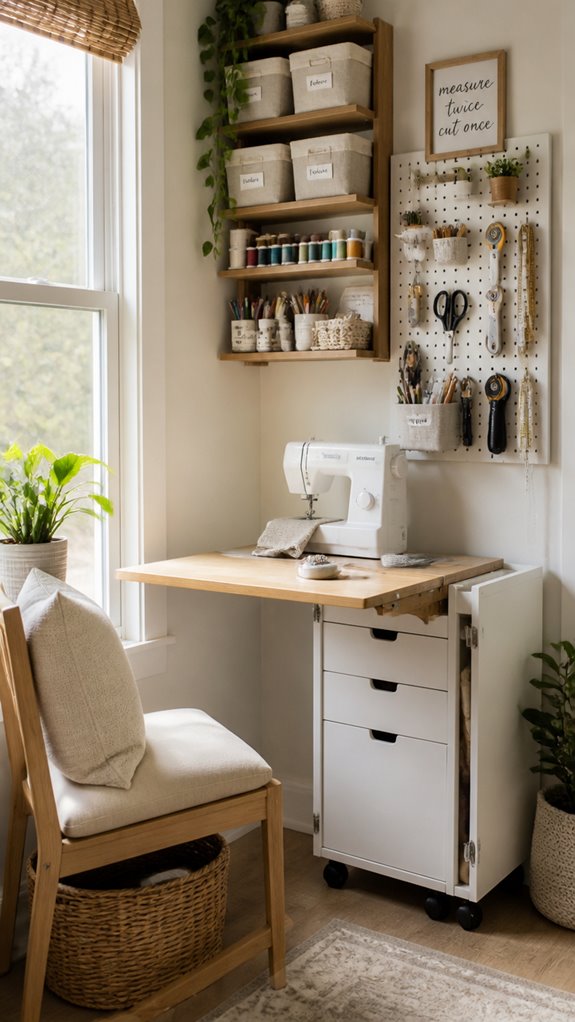
Before you dive into decorating or organizing, it’s a good idea to check out your tiny sewing space and figure out what you really need from it. Measure the area, noting windows, light, and obstructions. Think about how often you’ll sew, cut, or store supplies. Consider household needs too, so your small sewing space stays safe and functional for you. Additionally, space-saving strategies can help maximize every inch of your narrow setup.
Declutter and Clean Before Organizing Your Sewing Room
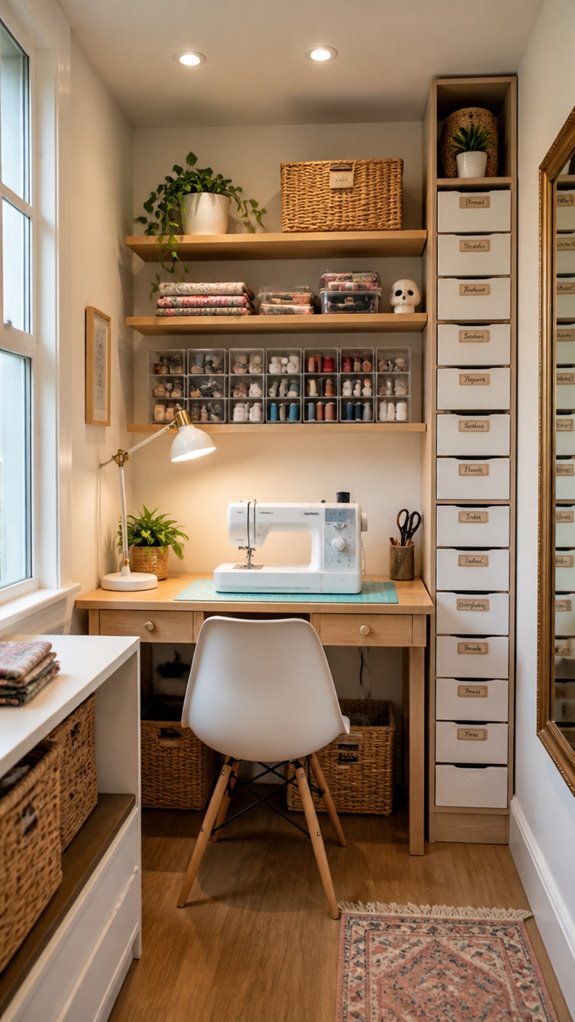
Wondering where to start when organizing your tiny sewing space? Begin with clutter, removing unused fabrics, tools, and odd bits. Next, do a thorough cleaning, wiping surfaces, vacuuming, and washing windows. Cleaning reveals helpful changes, while clearing clutter creates safety and space. Additionally, incorporating space-saving strategies can further optimize your small workspace. A clean, clutter-free room boosts efficiency and makes sewing more enjoyable, trust me, your workspace will thank you.
Choose Multi-Functional Furniture to Save Space
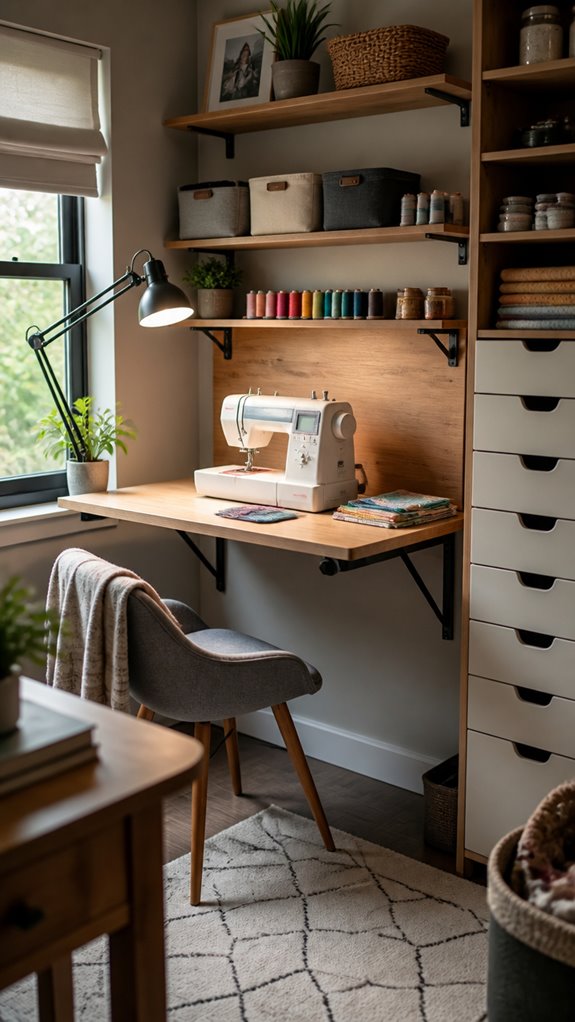
Choosing the right furniture can make your tiny sewing space feel much bigger and more functional. Multi-purpose furniture, like a storage ottoman, helps keep clutter out of sight while offering extra seating or a place to store supplies. A fold-down desk or a sewing table with shelves maximizes your space, making your room safer and more efficient for creative projects. Incorporating space-saving strategies such as multi-functional furniture helps optimize limited areas more effectively.
Use Vertical Shelves and Pegboards for Smart Storage
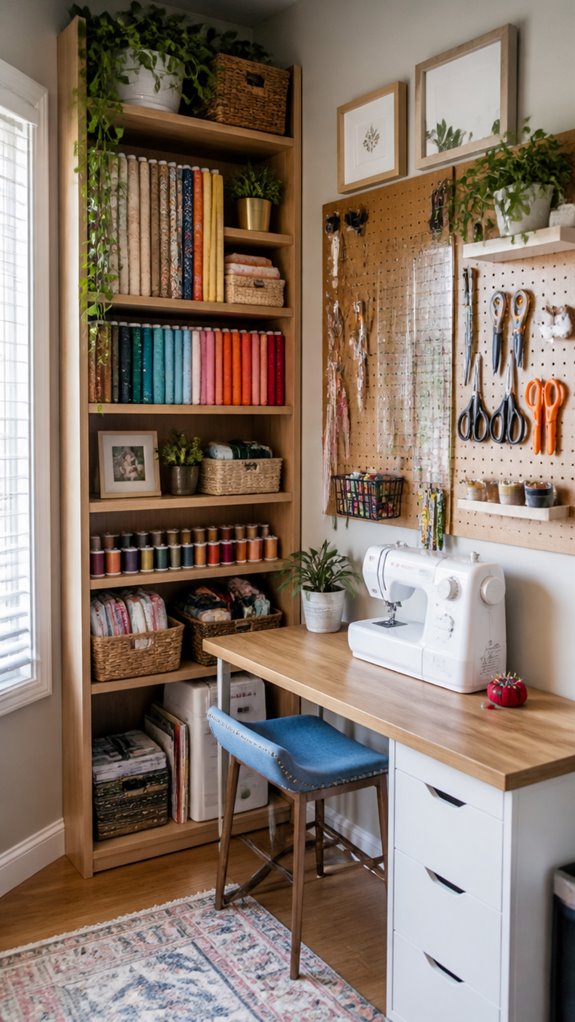
Using vertical shelves and pegboards is a smart way to maximize your small sewing room, especially when space is tight. Vertical shelves hold fabrics and tools without taking up floor space, while pegboards keep scissors, rulers, and other tools within easy reach. Adjustable hooks and shelves on pegboards make changing your setup simple, helping keep your workspace organized and safe. Incorporating compact storage solutions like space-saving furniture can further enhance your small space efficiency.
Hide Clutter With Pull-Out Cabinets and Under-Desk Drawers
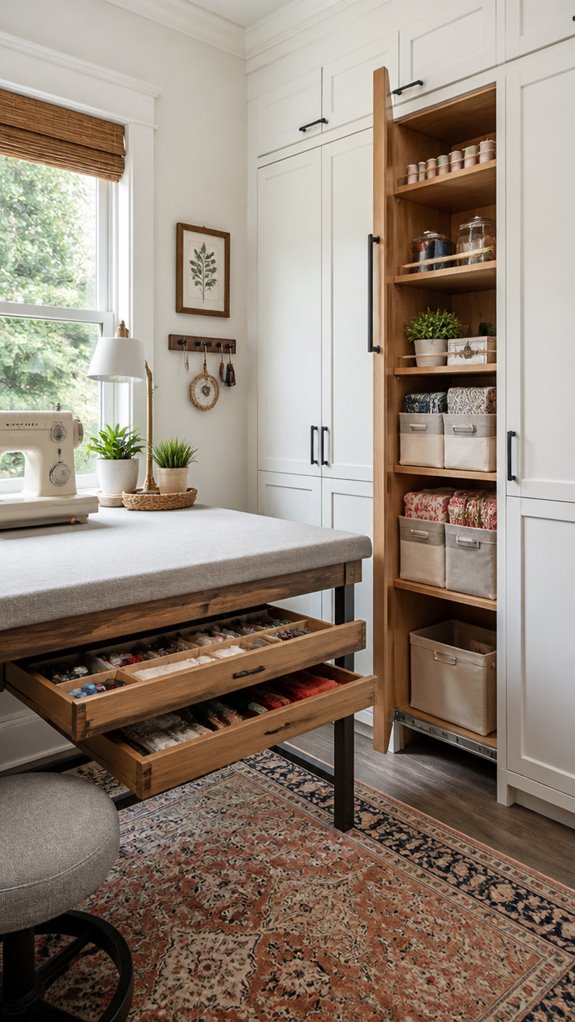
If clutter tends to pile up in your small sewing room, hiding it with pull-out cabinets and under-desk drawers can help. These storage options keep fabrics, tools, and accessories tucked away safely, reducing hazards. By maximizing vertical space and using these hidden compartments, you create a safer, more organized workspace, making sewing easier and more enjoyable without the mess.
Select Compact Work Surfaces That Do Double Duty
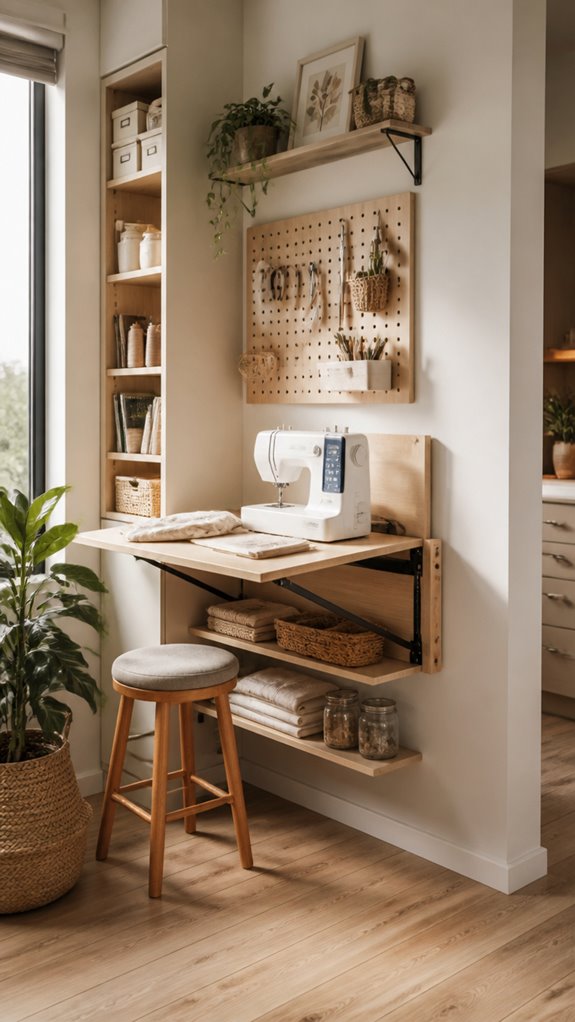
When space is tight, selecting multi-task work surfaces can make a big difference. Use a sturdy folding table or a sewing table with drawers that serve as both workspace and storage. These surfaces double duty, helping you stay organized and safe. They fold away when not in use, giving you more room to move around, no awkward clutter here.
Install Over-the-Door Organizers for Small Tools
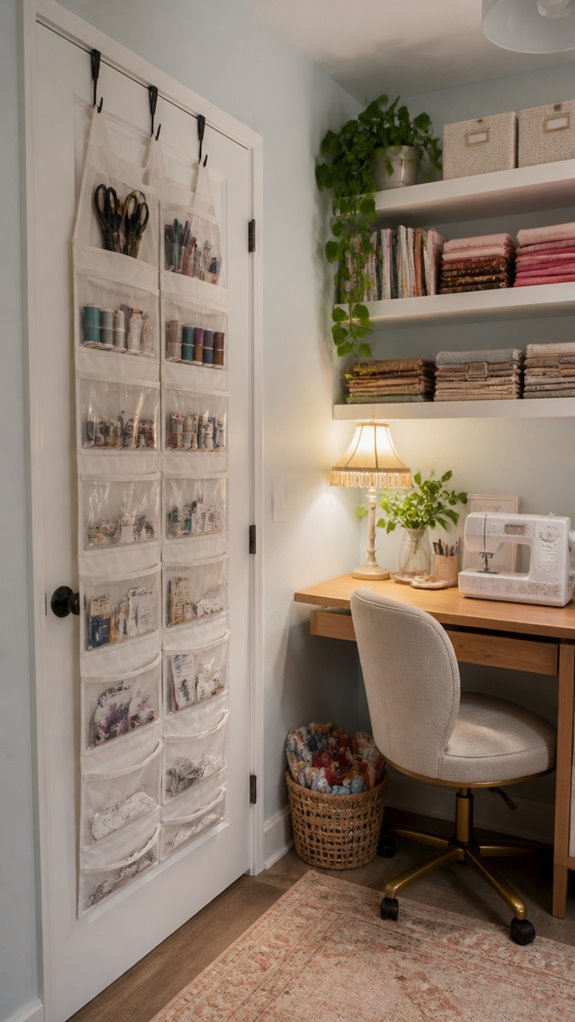
Looking for an easy way to organize your small sewing tools without taking up precious space? An over-the-door organizer is perfect. With clear pockets, you can quickly find scissors, thread, or needles, helping you secure your sewing supplies safely. It’s easy to install, cheap, and frees up drawers, making your sewing space less crowded and more efficient.
Brighten Your Small Room With Light Colors and Mirrors
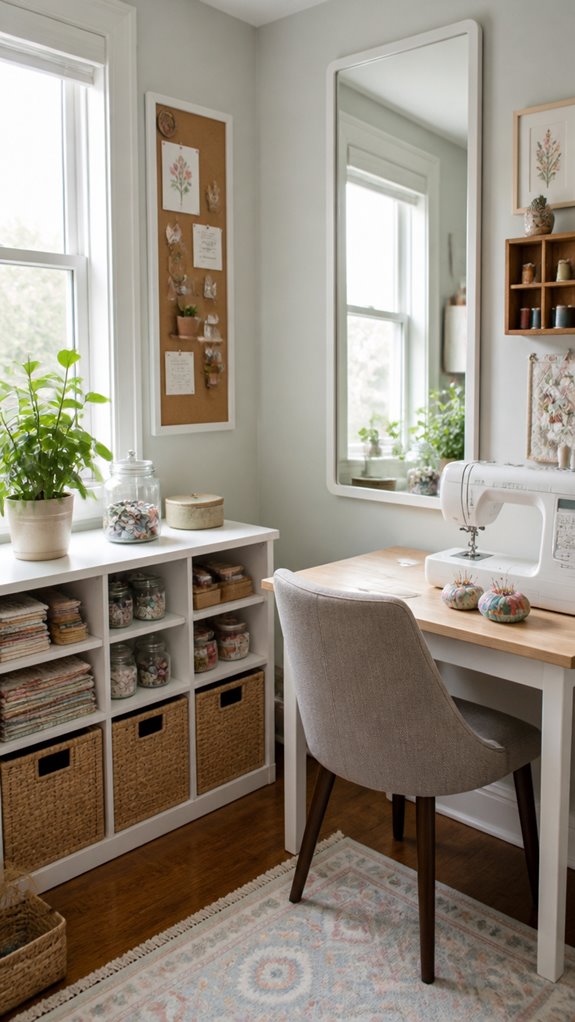
Brightening up your small sewing room doesn’t require major renovations, just a few smart choices. Use light-colored walls, like greige or linen, that reflect natural light. Place mirrors strategically near windows to bounce sunlight around and double the room’s perceived size. Light furniture also keeps the space open, making your sewing room feel joyful and safe.
Design Clear Zones for Sewing, Cutting, and Material Storage
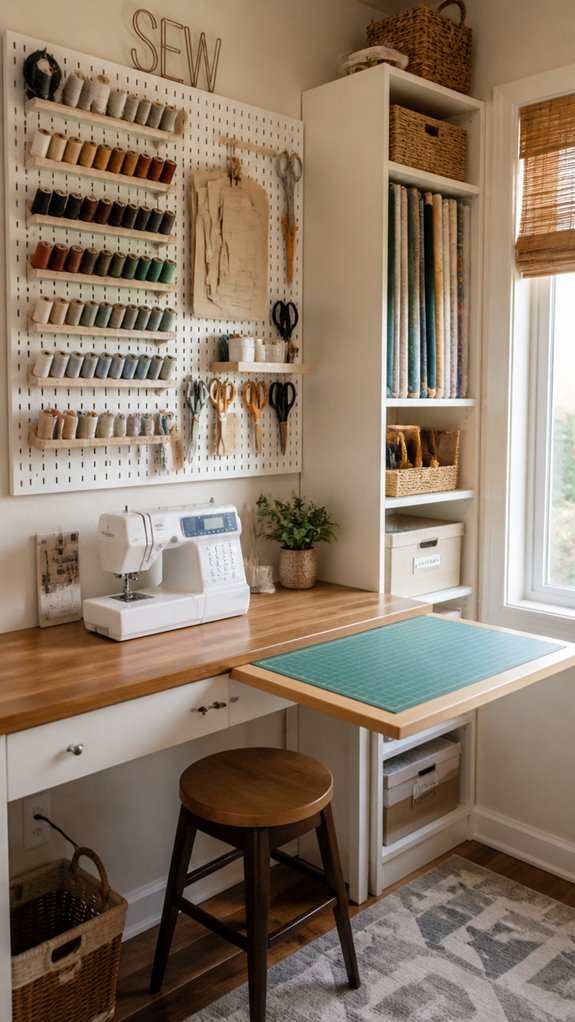
Creating clear zones in your sewing room is a smart way to maximize limited space and stay safe. Use shelves or different flooring textures to separate sewing, cutting, and storage areas. Designate a sturdy table for cutting, near natural light, while wall-mounted shelves or labeled bins keep fabric storage organized. This setup keeps everything accessible and clutter-free, making your space more efficient.
Reuse and Repurpose Furniture for More Storage
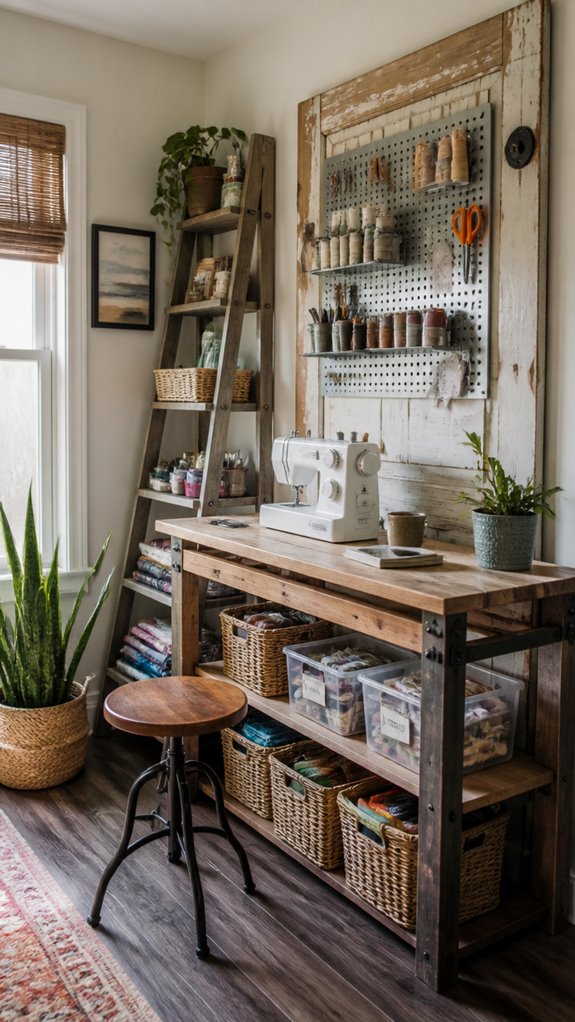
Reusing furniture is a clever way to add storage without cluttering your small sewing room. A sturdy sewing cabinet or old dresser can hold supplies safely, while repurposing a desk with drawers makes a functional sewing station. Adding shelves or hooks to existing furniture boosts storage, all while keeping your space organized and cozy, without buying new pieces.
Maximize Closet Space With Custom Organizers
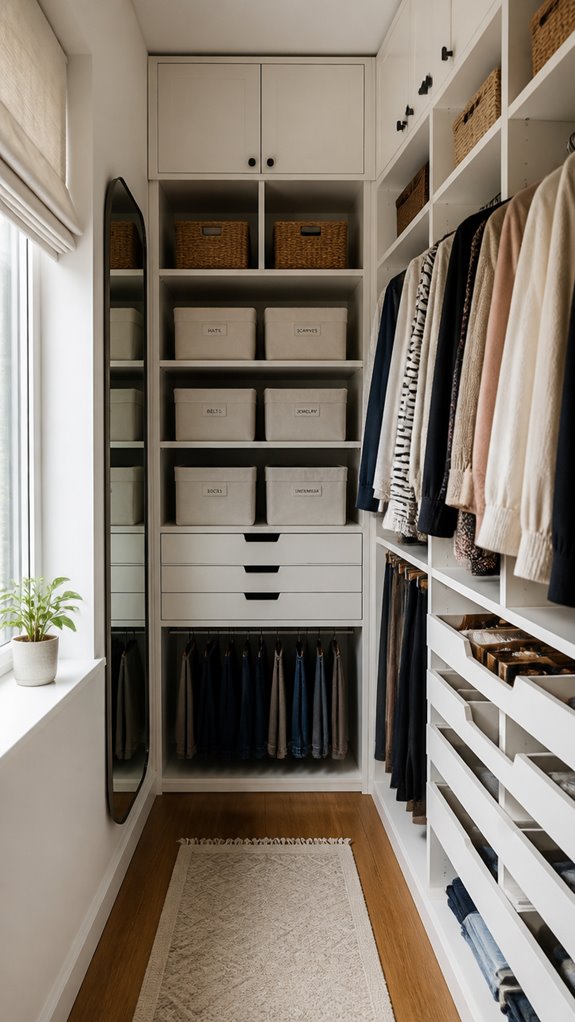
When space is tight, your closet becomes a hidden treasure chest for sewing supplies, if you use it wisely. Attach custom closet organizers to your closet door for quick access and added safety. Adjustable shelves, labeled containers, and hanging rods inside help keep everything organized, reducing clutter and making your sewing space safer. It’s a simple, smart fix.
Use Under-Table and Under-Bed Storage to Save Floor Space
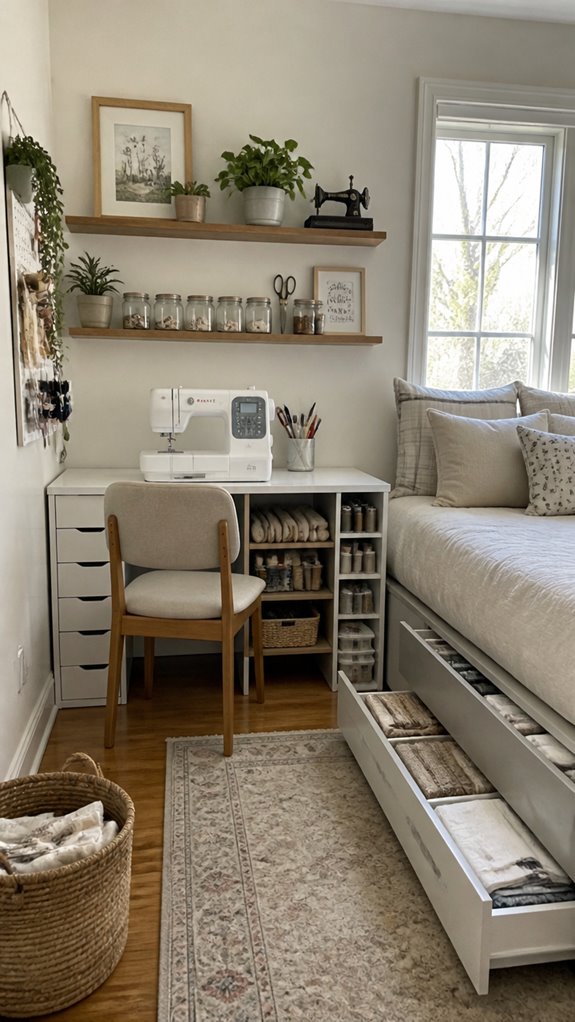
Using under-table and under-bed storage is a smart way to keep your sewing space tidy and your floor clear. With under-table storage like drawers or lift-up surfaces, you can hide supplies while keeping them within reach, including your fabric stash. Rollable bins or sliding drawers under your worktable or bed help store fabric, notions, or finished projects safely out of the way.
Include Foldable and Collapsible Gear for Flexibility
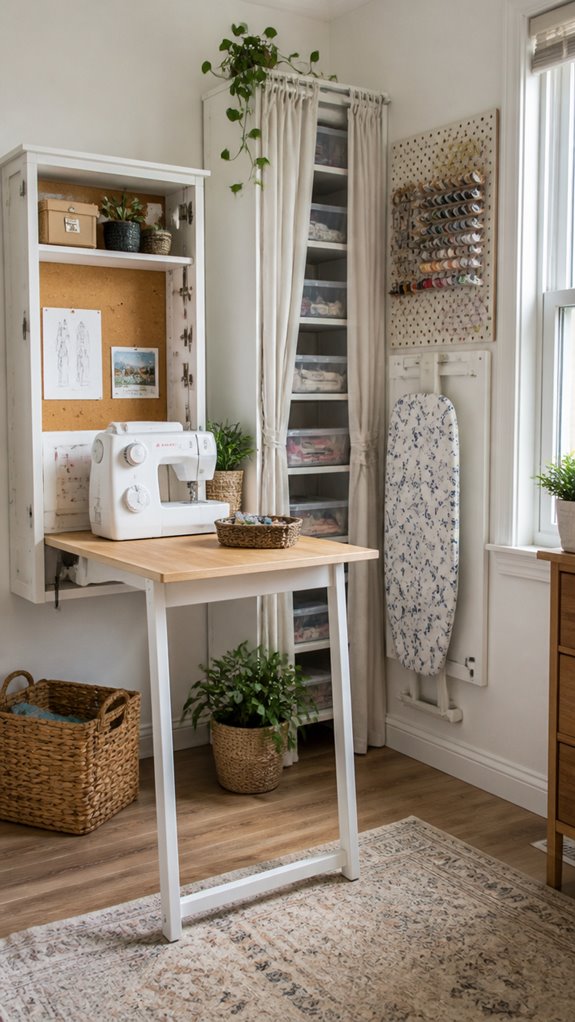
Folding or collapsing your sewing gear can make a big difference when space is tight. Collapsible storage options, like foldable sewing tables, keep your workspace safe and clutter-free. These can be tucked away when not in use, freeing up room for projects or cleaning. Plus, they’re sturdy, easy to move, and perfect for keeping your sewing area flexible and organized.
Keep Frequently Used Tools Within Easy Reach
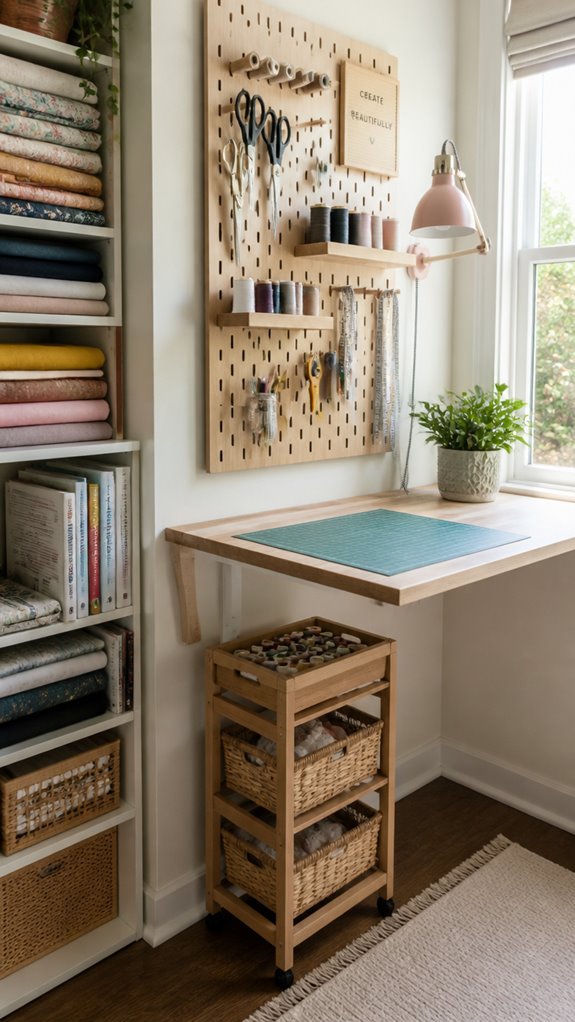
Keep your most used sewing tools within easy reach so you don’t waste time hunting for them. Use a pegboard or small trays on your sewing desk for scissors, rulers, and seam rippers, no more digging. Store essential supplies like thread and pins near your machine, in labeled bins or store compartments, to keep your workspace safe and efficient.
Incorporate Inspiring Decor Without Cluttering
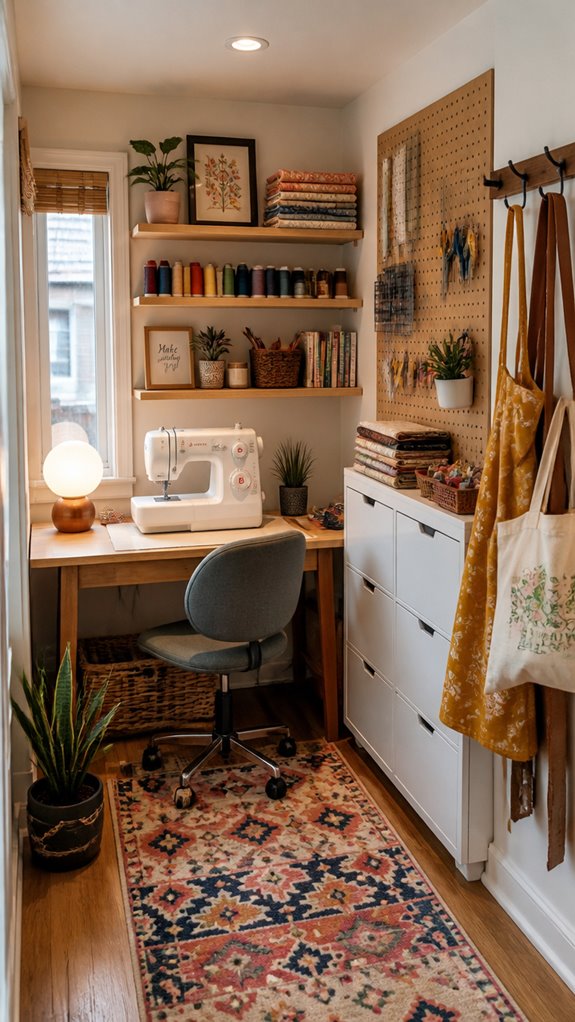
Adding inspiring decor to your small sewing room can boost your creativity, but it’s easy to let clutter sneak in. Choose a few wall colors, vintage prints, or textiles that motivate you, keeping surfaces clear of unnecessary sewing stuff. Decorate with baskets or fabric remnants that serve as both accents and storage. Rotate these items often to keep your space fresh and tidy.
Use Clear Storage Containers and Label Everything
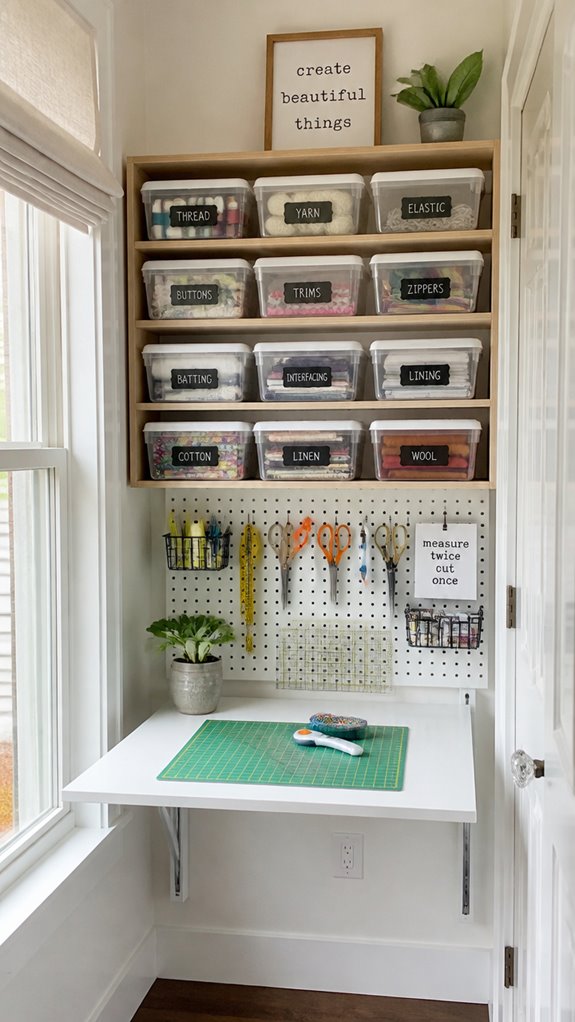
Using clear storage containers is a breakthrough when organizing your sewing space, especially if space is tight. Labeling containers with detailed descriptions helps you find supplies quickly and keeps everything safe and organized. These bins reduce visual clutter, making your small sewing area look more open. Regular updates to labels and proper categorizing will keep your workspace neat and efficient.
Optimize Your Sewing Space Layout for Easy Movement
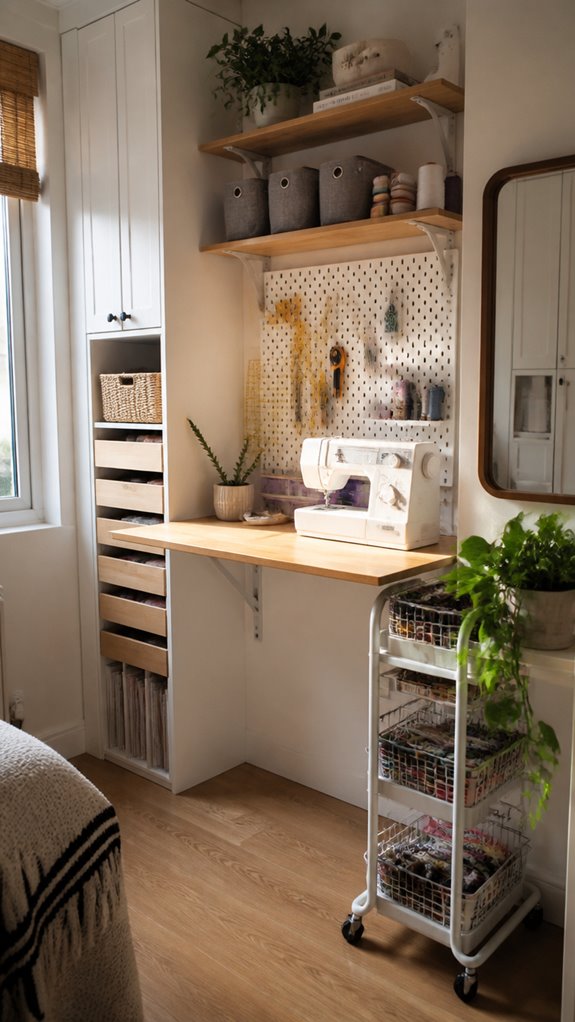
Organizing your sewing space well can make a big difference in how smoothly your projects go. In a small space, arrange furniture to keep pathways at least 3 feet wide for safe movement. Position often-used tools within arm’s reach, and use collapsible furniture to avoid clutter. Test different setups and adjust to find the best work space flow.
Review and Refresh Your Organization Regularly
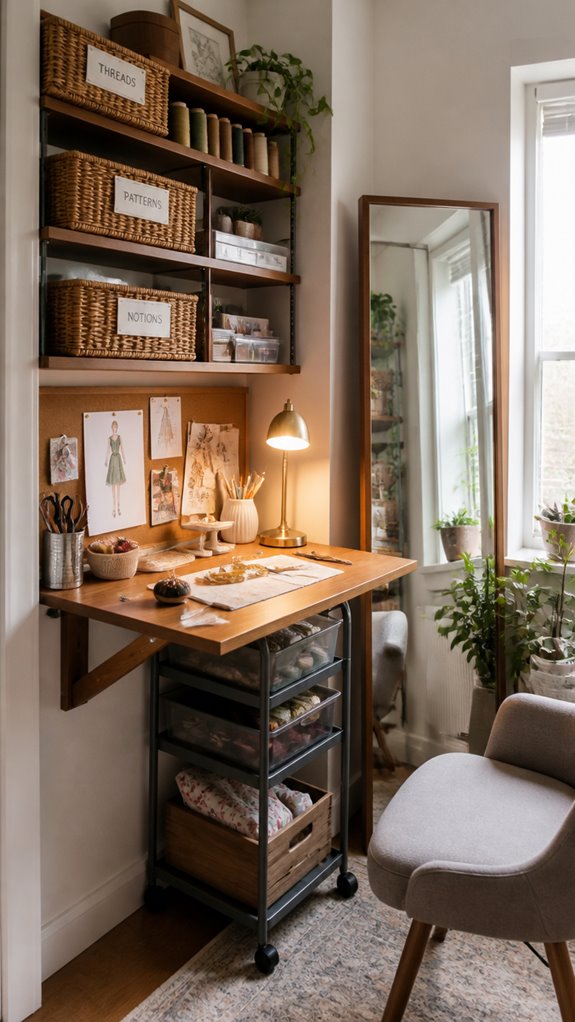
Even the best sewing setups can get cluttered over time, making it harder to find what you need. Regularly reviewing your organization and decluttering helps keep your workspace safe and efficient. Schedule seasonal cleanups to remove unused supplies, and reassess storage every few months. Staying proactive prevents mess buildup and keeps your sewing environment inspiring and easy to navigate.
Create a Portable Sewing Cart for Maximum Flexibility
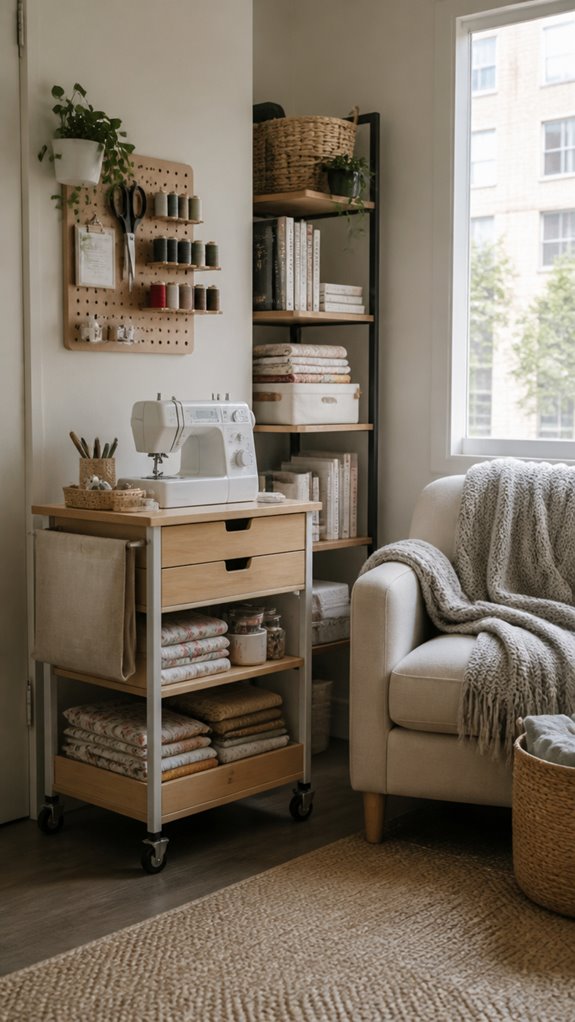
A portable sewing cart can be a revolutionizer, especially in small spaces where every inch counts. With casters, you can move it safely between rooms or near your workspace without risking accidents. Its multiple drawers and shelves help store tools neatly, saving floor space. Lightweight, durable materials keep it stable, so you can work confidently wherever your sewing takes you.
Make the Most of Natural Light in Your Small Sewing Room
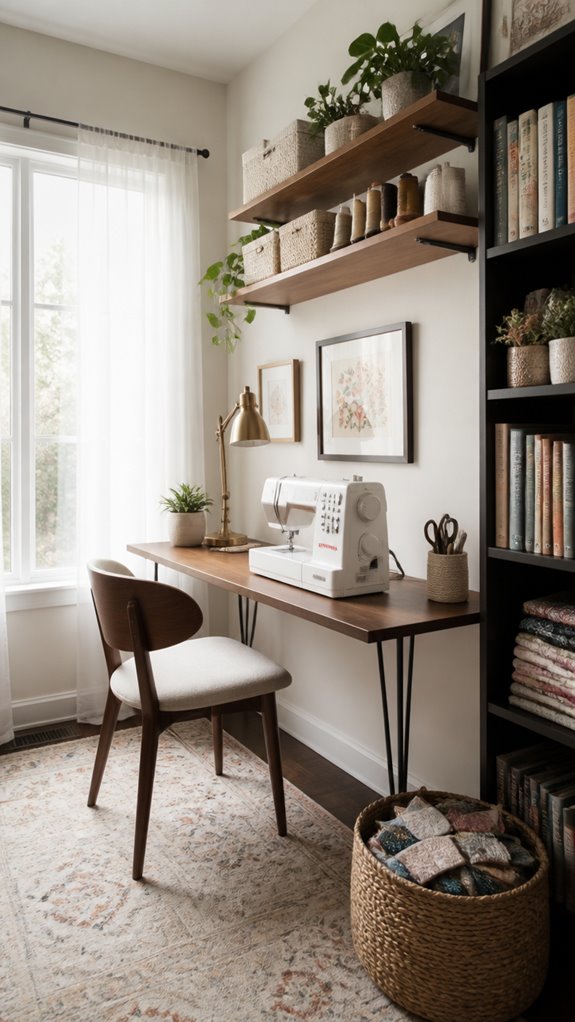
Harnessing natural light can make your small sewing room feel bigger, brighter, and much less gloomy. Installing large windows or skylights helps, and keeping windows unobstructed is key. Use light-colored walls and reflective surfaces to bounce sunlight around. Position your sewing space near windows, and add sheer curtains, so you get plenty of safe, beautiful natural light without glare or UV worries.
Plan Your Small Sewing Space for Easy Navigation
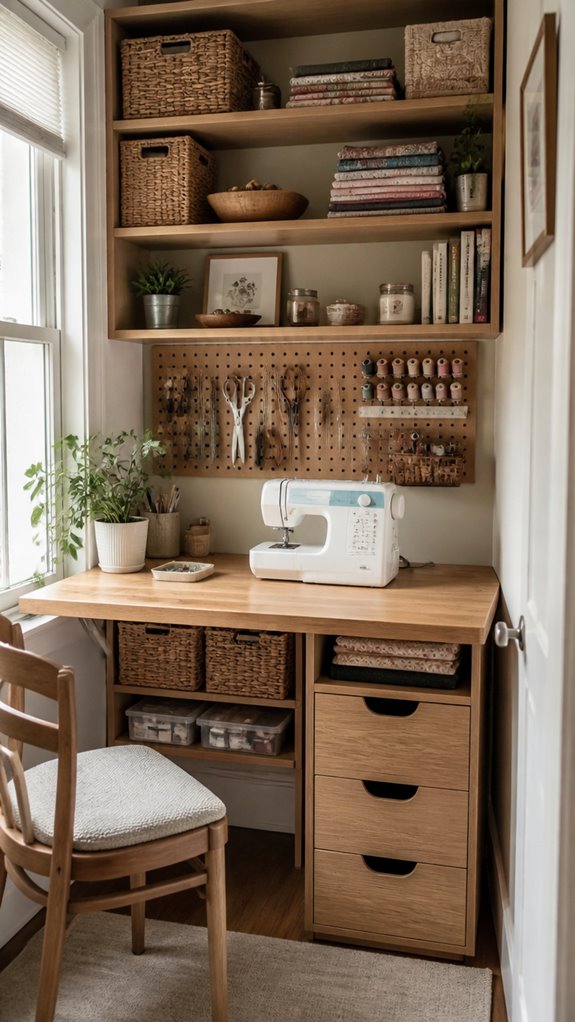
Planning your small sewing space carefully can make a big difference in how smooth your work sessions are. Use a dedicated sewing room, and think about where to store tools so they’re easy to find. Design clear zones for cutting, sewing, and storage, and use wall-mounted shelves to save floor space. Keep pathways unobstructed for safe, easy navigation.
Keep Your Space Organized and Inspiring for Continuous Creativity
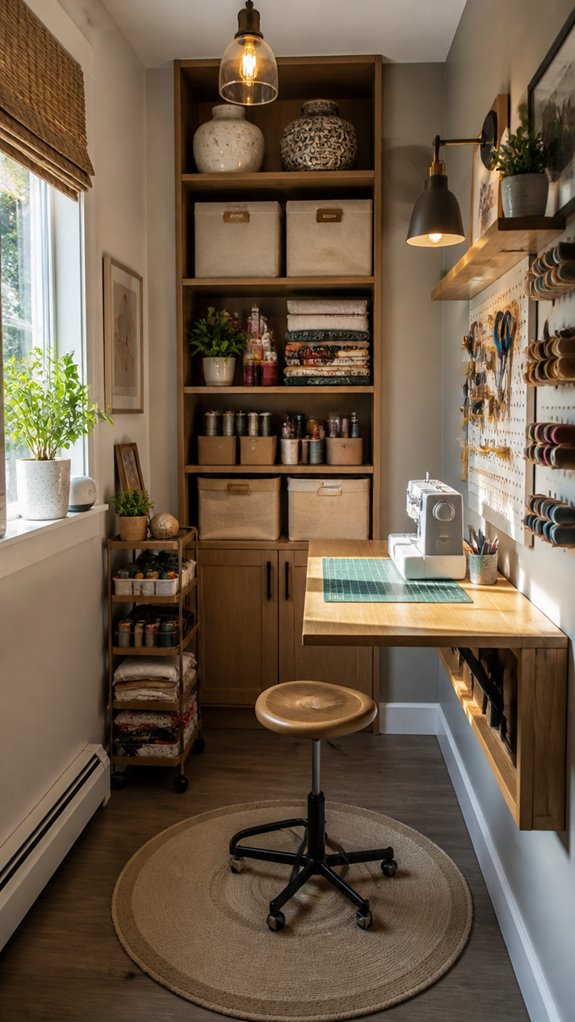
Keeping your sewing space organized helps you stay focused and sparks your creativity. Regularly declutter by removing unused supplies and fabric scraps, keeping your sewing machine safe and ready. Store organized tools in labeled bins or drawers, making them easy to find. Add inspiring visuals like fabric remnants or photos to keep your workspace lively and motivating.
Final Takeaways
So, with just a few smart moves, like using vertical storage, foldable surfaces, and plenty of light, you can turn your small sewing space into a cozy, efficient workshop. Keep everything labeled for quick finds, and stay tidy to keep your creativity flowing smoothly. It’s funny how a little organization makes a big difference, right? Before you know it, your tiny room will feel like a well-oiled sewing studio, ready for your next project.

- 20 Small Home Space Saving Ideas That Transform Any Space - September 28, 2026
- 23 Small Guest Room Ideas Maximize Space Designers Swear By - September 28, 2026
- 22 Small Space Apartment Ideas That Make a Big Difference - September 27, 2026